




Abstract
Traces of pesticides imazalil, cypermethrin and carbendazim are detected in plants used for human consumption. To explore whether their application in oral combinations will induce DNA breaks in hepatocytes, a subchronic in vivo experiment was performed in Swiss mice. Doses of 10 mg kg–1 of imazalil (im) and cypermethrin (cy), and 20 mg kg–1 of carbendazim (car) and their combinations (im, 10 mg kg–1 + cy, 10 mg kg–1; im, 10 mg kg–1 + car, 20 mg kg–1; car, 20 mg kg–1 + cy, 10 mg kg–1) were applied daily for 28 days. Afterward, DNA damage in hepatocytes was evaluated by comet assay. Individually, imazalil and cypermethrin damaged DNA at alkali-labile sites, while the tail moment (TM) of carbendazim alone was similar to control but with higher tail length. In combination with carbendazim clastogen, properties of imazalils and cypermethrins were potentiated compared to all other treatments and control. There were pronounced sex differences in pattern of fragmentation between treated groups. Higher long tail nuclei (LTN) in females indicate that certain cells in females were especially prone to total nucleus disintegration. Due to synergistic effects, low environmentally present concentrations of imazalil and cypermethrin in food, and especially their mixtures with carbendazim have genotoxic potential that could be particularly dangerous over prolonged exposure in mammalian organism.
Introduction
Significant traces of imazalil, cypermethrin and carbendazim are frequently documented in plants used for human consumption. 1 Imazalil or (+)-1-(2-(2,4-dichlorophenyl)-2-(2-propenyloxy)ethyl)-1H-imidazole (CAS No. 73790-28-0, 35554-44-0) is a widely used imidazole-antifungal pesticide and a food contaminant. Traces of this pesticide are mainly found in citrus fruits, 2 but they are sporadically detected in other fruits and vegetables in significant concentrations. 3 The best illustration of the extent of exposure to imazalil residues in every day consumption is the detection of this pesticide in some commercial soft drinks. 4 This compound is also used as a drug (enilconazole). Among other reported toxic effects, it is known that imazalil is a hepatotoxic compund. 5 Cypermethrin or (RS)-α-cyan-3 phenoxybenzyl-(1RS)-cis, trans-3-(2,2-dichlorovinyl)-2,2-dimethylcyclopropane carboxylate (CAS No. 52315-07-8) is the most widely used Type II pyrethroid pesticide. Cypermethrin is a synthetic pyrethroid insecticide used worldwide in agriculture, home pest control, protection of foodstuff and disease vector control. 6 It is highly accumulative and traces of cypermethrin may be found alongside dichlorodiphenyltrichloroethane (DDT) far from original application sites, for example in breast milk in endemic areas of South Africa. 7 The toxicity of cypermethrin is well studied in various animal models and is reported to cause neurotoxicity, endocrine disruption and hepatotoxicity. 8 –11 Carbendazim or methyl benzimidazol-2-ylcarbamate (CAS No. 10605-21-7) is a systemic broad-spectrum fungicide controlling a wide range of pathogens. Besides, it is used as a preservative in paint, papermaking, leather industry and as a preservative in fruits. Carbendazim may cause endocrine disruption. 12 It is also studied as a pharmacological compound. 13 For all three pesticides, there is evidence that they form radical oxygen species and cause lipid peroxidation, contribute to oxidative stress and thus influence DNA integrity. 14 In spite of a number of scientific articles on imazalil, cypermethrin and carbendazim in the last years, majority of experiments describing imazalil, cypermethrin and carbendazim toxicity or genotoxicity were conducted in vitro or ex vivo, where the toxic potential of these pesticides was recognized for each compound individually. In reality, exposure to single pesticide through food or water is rare. 15 Usually it is the combination of all remaining traces of pesticides and other pollutants that cause toxic effects, where they act as synergists, agonists or antagonists. 16 There is a growing evidence of various mutual actions of common pesticide residues from designed toxicological experiments that extrapolate risk estimation to humans by exposure to food-borne traces or residues. 17 Two of the analysed pesticides, imazalil and cypermethrin, are also potential therapeutic agents; thus, it is especially important to examine every potential aspect of their toxicology, when combined together. To the best of our efforts, no publications dealing with mutual genotoxic effects of combined exposure to imazalil, cypermethrin and carbendazim were found. The idea of this article is to compare the relations of combinations of these three pesticides simulating the entry route of low doses of these pesticides similar to how they appear in food. Conventional cytogenetic techniques such as micronucleus assay, sister chromatide exchange assay and chromosomal aberration test assess the genotoxicity of cells with high mitotic activity. For comparison of hepatic genotoxicity, instead of conventional cytogenetic techniques for liver genotoxicity, it is devised to be examined by alkaline comet assay. 18 All three chemicals reach liver cells and elicit toxic response there. The aim of this experiment was detection of DNA breaks in hepatocytes, a tissue that is on the front line of entry routes in the organism. 19 –21 We simulated combined subchronic exposure that occurs in humans and animals consuming food that has residues of imazalil, cypermethrin and carbendazim. We wanted to detect whether any particular combination of two out of three pesticides would have more pronounced DNA-damaging potential. Our results might serve as a directional guideline to further genotoxic evaluation of these three widely used pesticides.
Materials and methods
Animals and pesticide application
Experiments were carried out according to the guidelines force in Croatia (Law on the Welfare of Animals, NN# 19, 1999) and in compliance with the Guide for the Care and Use of Laboratory Animals, DHHS Publ. # (NIH) 86-123 and OECD guidelines for subchronic (28 days) toxicity testing in rodents. 22 Inbred Swiss mice, 60 ± 5 days, from the mouse colony of Faculty of Science, University of Zagreb, were used. The animals were maintained on a formulated commercial pellet diet and water was provided ad libitum. The animals were maintained under 12-:12-hour light–dark regime at 60% humidity. Within each group, the animals were housed according to treatment and sex (N = 10, 5 female + 5 male). Mice were receiving approximate NOEL (no observed effect level) doses. For example, according to Food and Agricultural Organization/World Health Organization (FAO/WHO), 23 it is reported that for mice a NOEL dose of imazalil is 8.1 mg kg–1(50 parts per million [ppm]). Based on similar reports of NOEL oral subchronic toxicity, we decided that the daily applied dose of imazalil closest to NOEL dose would be 10 mg kg–1. 24 A dosage of 10 mg kg–1 cypermethrin was used based on the reports of various oral short-term NOEL doses in mice. 25 –28 Carbendazim has higher lethal dosage 50 (LD50) for mice and higher oral NOEL genotoxicity dose than other two pesticides. 29 Based on these references, the applied dose of carbendazim dose would be three or four times higher than that of imazalil and cypermethrin. In order to stay closer to the applied doses of other two pesticides for easier comparison, it was decided to use only two-fold amount of doses of imazalil and cypermethrin and therefore the applied dose for carbendazim was 20 mg kg–1. Combinations of the doses were the same as with individual pesticides (imazalil, 10 mg kg–1 + cypermethrin, 10 mg kg–1; imazalil, 10 mg kg–1 + carbendazim, 20 mg kg–1; carbendazim, 20 mg kg–1 + cypermethrine, 10 mg kg–1) and were administered per os repeatedly every 48 hours. All three pesticides were of 95% technical grade and were obtained from the pesticide manufacturer Chromos d.d., Zagreb, Republic of Croatia. They were administrated as a corn oil suspension in a volume of 0.2 ml per mouse. Combinations of pesticides were not mixed before administration, they were rather given with separate gauges as individual pesticide in corn oil suspensions in a volume of 0.1 ml of pesticide A + 0.1 ml of pesticide B per mouse. Control group (N = 10, 5 female + 5 male) received 0.2 ml of corn oil following the same schedule. Every 24 hours, during the 28 days, the animals received doses of imazalil, cypermethrin and carbendazim per os, prepared as a corn oil suspension, in a volume of 0.2 ml per animal. The control group received the same volume of corn oil. After 24 hours, the last planned dose that was received on the 28th day of experiment. Body weight was recorded on each experimental day before the treatment. Animals were killed by cervical dislocation. Liver was isolated and weighed. The liver was processed on cool pads and all further procedures were carried out on ice. Single-cell preparation from liver for comet assay was prepared immediately by the method of Tusuda et al. and as recommended in Tice at al. 18,30 Briefly, the procedure was as follows: approximately 200 mg of liver was placed in 1 ml cold mincing solution (Hanks medium + 20 mM EDTA + 10% dimethyl sulfoxide [DMSO]) in a petri dish and chopped into pieces with scissor. After the pieces settle at the bottom of the petri dish, cells were collected from the supernatant; 10 μl of cell suspension was processed using comet assay. Approximately 20 mg of liver was ultrasonicated in cold phosphate-buffered saline (PBS; 1ml) for preparation of homogenate for enzyme assays. After centrifugation at 15,000 rpm for 15 min, supernatant of liver homogenate was frozen at –80°C until spectrophotometer analysis of enzyme assay protocols within the next 3 days. Control group data were within the normal reference range at the end of the experiment and they were the reference point for comparison with the treated groups. 31,32
The comet assay
The comet assay was carried out under alkaline conditions, as described by Singh et al.
33
The experiment and analysis were conducted according to the recommendations of the Fourth International Workgroup on Genotoxicity Testing: In vivo-Comet Assay Workgroup
34
and Tice et al.
30
Two slides per animal were prepared and examined using a 250× magnification fluorescence microscope (Olympus), with an excitation filter of 515–560 nm and a barrier filter of 590 nm. A total of 100 comets per animal were scored by KOMET 5, SCGE Analysis, Kinetic Imaging Ltd System.
35
Tail length (µm) and tail intensity (% tail DNA) were evaluated. From these measurements, the tail moment (TM) was derived and analysed based on the formula incorporated in KOMET software
35
:
The biochemistry assays
The experiment and biochemistry analysis were conducted according to the recommendations of the IFFCC (International Federation of Clinical Chemistry) methods in enzymology and were done with commercial kits (Sigma-Aldrich) on Hitachi 717 automatic analyser (Hitachi, Japan). All analysed parameters were measured from liver homogenate at room temperature. Briefly, the activity of LDH-P (lactate dehydrogenase-plasma) (E.C.1.1.1.27) was measured under 340 nm by pyruvate to lactate continuous turnover reaction measurement. AIP (alcaline phosphatase) (E.C.3.1.3.1.) was measured at 405 nm using 4-nitrophenilphosphate as a substrate for the reaction. AST (aspartate aminotransferase) (E.C. 2.6.1.1.) and ALT (alanine aminotransferase) (E.C.2.6.1.2.) were measured at 340 nm. Total protein concentration was measured by Biruet reaction. 36
Statistical analysis
Statistical analyses were performed using Statistica 9.0 software (StatSoft, Tulsa, OK, USA). Each sample was characterized for the extent of DNA damage considering the mean (± standard error of the mean), median and range of measured comet parameters. Accordingly in enzyme activity analysis, each sample was characterized by the mean (± standard deviation of the mean) and median. In both comet and enzymatic parameter analysis, the unit of measurement was the animal. In order to normalize the distribution and to equalize the variances, a logarithmic transformation of all data was applied. Multiple comparisons of comet parameters and enzyme activities between groups were done using multivariate analysis of variance (MANOVA) on log-transformed data. Post hoc analyses were conducted by Scheffé and Duncan test to establish the differences between the groups. The level 37 of statistical significance was set at p ≤ 0.05. Whole experiment was repeated twice and statistical analysis showed no differences between the first and the second experimental setup.
Results
At the end of the experimental period, the average body weights measured in the treated groups were slightly lower than that in the control group, but this difference was not statistically significant (Table 1 ). In all treated groups except imazalil and imazalil + carbendazim, the median weight was lower than control. Beside body weight, other biometric parameters such as weight gain, liver weight and hepatosomatic index are presented in Table 1. By calculating the weight gain as a difference in measured weight between last and first experimental day, the difference is shown more clearly. All treated groups had significantly lower (p ≤ 0.05) weight gain than control. In groups treated with individual pesticides imazalil and cypermethrin, the average trend of weight gain was lower compared to control but positive. In groups treated with combinations of pesticides the average weight gain trend becomes negative. Liver weight (Table 1) remained unchanged in all treated groups except in the group treated with combination of carbendazime + cypermethrin, where animals had significantly lower (p ≤ 0.05) liver weight compared to control. This was the only group with prominently lower and significantly different average hepatosomatic index compared to control and other groups. This indicates that some individuals in this group could not cope well with the treatment and began to lose weight. All other groups did not have hepatosomatic index different than the control group. The major biochemical markers of liver damage and hepatocyte cytotoxicity measured in homogenized tissue of treated animals indicate an array of subtle cytological changes due to treatment with pesticides and pesticide mixtures (Table 1). Total protein concentration in liver was slightly higher and significant (p ≤ 0.05) in all treated groups except imazalil compared to control. Protein concentration was significantly different between the treated groups. The highest protein concentration was in groups treated with combination of carbendazim + cypermethrin. Activity of LDH in liver of animals treated with cypermethrin was significantly (p ≤ 0.05) higher (p ≤ 0.05) than control, while in groups treated with imazalil + cypermethrin and carbendazim + cypermethrin, it was significantly (p ≤ 0.05) lower compared to control. From three individually applied pesticides, only imazalil did not influence AST activity in liver. Cypermethrin and carbendazim individually caused a slight elevation (p ≤ 0.05) in AST activity significantly different from control. Combinations of pesticides containing imazalil caused significantly (p ≤ 0.05) lower serum and AST activity in the liver (p ≤ 0.05). Combinations of carbendazim + cypermethrin caused elevation in AST activity compared to control (p ≤ 0.05). Similarly ALT activity was not affected by imazalil but was elevated (p ≤ 0.05) in the liver of animals treated with cypermetrin and carbendazim (p ≤ 0.05). Combinations of all three pesticides significantly lowered (p ≤ 0.05) the activity of ALT compared to control. Pronounced fall in ALT activity was observed in groups treated with combinations of pesticides compared to groups treated with individual pesticides. Generally, imazalil was the only applied substance that did not altered all of the measured enzymatic parameters within the liver, except AlP.
Changes in body and liver weight, hepatosomatic index and changes in biochemical cytotoxicity markers in the liver of mice after 28 days of treatment with imazalil, cypermethrine, carbendazime and their combinations

a Body weight was measured every second day of the experiment, for simplicity only last measurement of each treatment groups are shown. TP: total proteins in liver.
b Within rows the group is significantly different from the control group.
c,d,e,f,g,h Within rows means with different superscripts (letters) are significantly different (p ≤ 0.05). Different letters represent different treatment groups, respectively (c: imazalil, d: cypermethrin, e: carbendazim, f: imazalil + cypermethrin, g: imazalil + carbendazim and h: cypermethrin + carbendazim); NSWithin rows, means are not significantly different from the control group.
The TM of jointly analysed sexes per treatment group (Figure 1 ) was significantly higher (p ≤ 0.05) in imazalil, cypermethrin, imazalil + carbendazim and cypermethrin + carbendazim-treated groups compared to their controls. Among these, higher TM values were most prominent in for imazalil + carbendazim group than all other groups. Tail length in jointly analysed sexes per treatment group (Figure 2 ) was significantly higher (p ≤ 0.05) in all treated groups compared to the control. Again, the tail length was most prominent in imazalil + carbendazim group followed by groups treated with cypermethrin + carbendazim. The percentage of LTN was approximately 20–60% higher in all treated groups compared to the controls. Distinguished and significant (p ≤ 0.05) LTN differences were recorded between the sexes in all groups except in groups treated with imazalil, carbendazim and carbendazim + cypermethrin (Figure 3 ). From the same figure, it could be seen that females had higher percentage of LTN than males in treatment with cypermethrin, imazalil + cypermethrin and imazalil + carbendazim. Analysis of comet parameters after dividing the groups by sex reveals that all comet parameters in male were significantly different from their control male animals. In female animals, the tail intensity of females treated with carbendazim and imazalil + cypermethrin were not different than in control females. Similarly, the TM in females treated with carbendazim was not different compared to control females. All other parameters measured in females were significantly different from those of the control (Table 2 ). The TM was significantly different (p ≤ 0.05) between the sexes in all groups (Table 2) with the exception of the groups treated with cypermethrin and imazalil + carbendazim. Tail intensity was significantly different between the sexes in all treated groups except in groups treated with imazalil + carbendazim (Table 2). The number of LTN (Table 2) was significantly different between males and females in all groups except in carbendazim-treated group. Average tail length (Table 2), however, was not different between males and females in the control, in the groups treated with imazali + cypermethrin and carbendazim + cypermethrin.
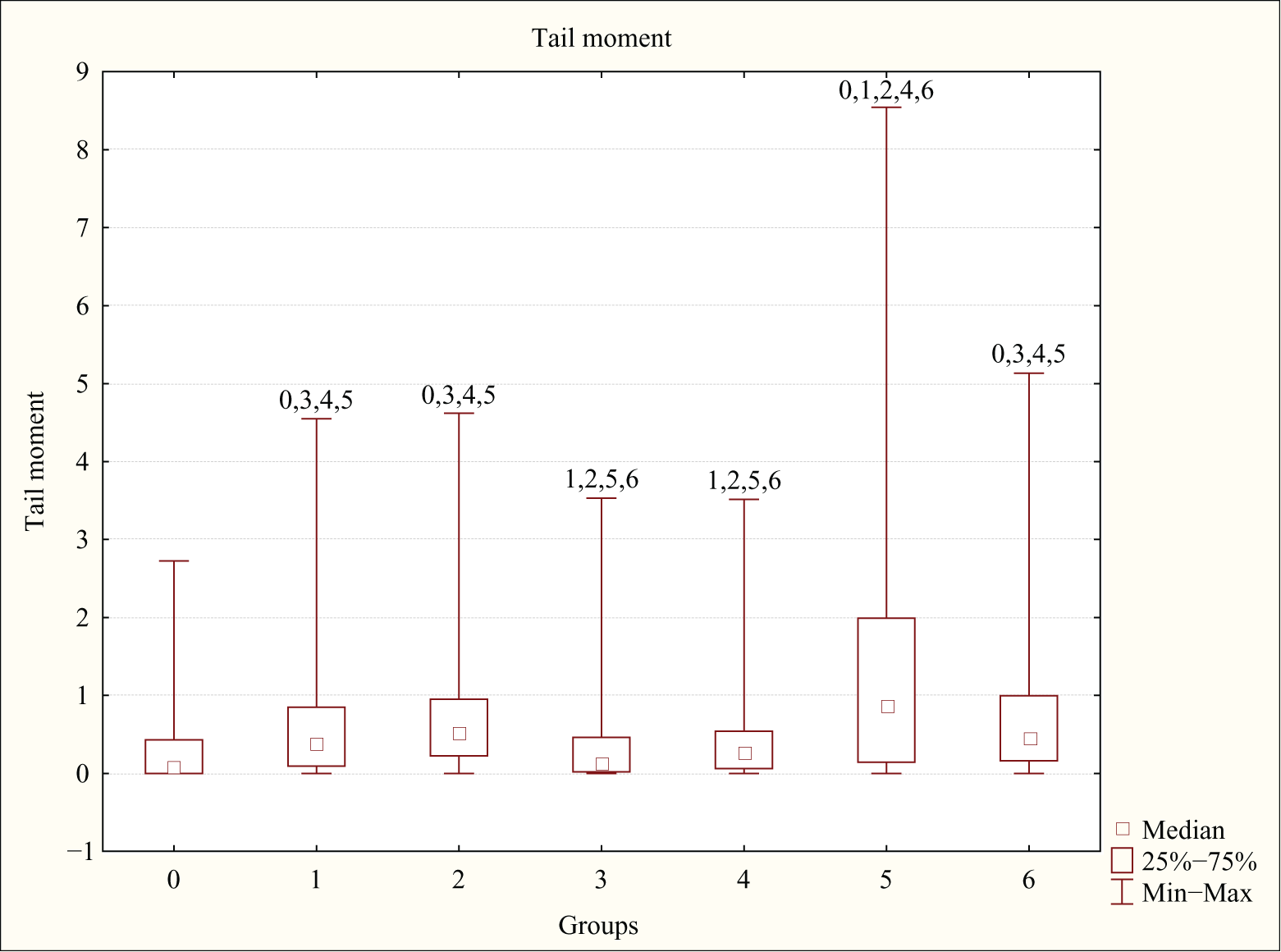
Tail moment in hepatocytes of mice (male + female) after the 28th day of repeated treatment with three different pesticides and their combinations. 0: control, 1: imazalil, 2: cypermethrin, 3: carbendazim, 4: imazalil + cypermethrin, 5: imazalil + carbendazim and 6: cypermethrin + carbendazim. 0The group is significantly different from the control group (p ≤ 0.05). 1,2,3,4,5,6Numbers above bars of a particular group represent other treatment groups which are significantly (p ≤ 0.05) different from that group.

Tail length in hepatocytes of mice (male + female) after 28th day of repeated treatment with three different pesticides and their combinations. 0: control, 1: imazalil, 2: cypermethrin, 3: carbendazim, 4: imazalil + cypermethrin, 5: imazalil + carbendazim and 6: cypermethrin + carbendazim. 0The group is significantly different from the control group (p ≤ 0.05). 1,2,3,4,5,6Numbers above bars of a particular group represent other treatment groups which are significantly (p ≤ 0.05) different from that group.

Long tail nuclei (LTN) in male (M) and female (F) mice hepatocytes after 28th day of repeated treatment with three different pesticides and their combinations. 0: control, 1: imazalil, 2: cypermethrin, 3: carbendazim, 4: imazalil + cypermethrin, 5: imazalil + carbendazim and 6: cypermethrin + carbendazim. 0The male or female group is significantly different from the control group of the same sex, respectively (p ≤ 0.05). 1,2,3,4,5,6The male or female group marked with a number is significantly different (p ≤ 0.05) from the same sex within differently treated group that is marked with the allocated number, respectively.*In the groups marked with asterisk there is a statistically significant (p ≤ 0.05) difference in measured values between the sexes.
Parameters of the comet test compared in male and female mice after 28 days of treatment with imazalil, cypermethrine, carbendazime and their combinations

a The group is significantly different from the control group of the same sex within columns (p ≤ 0.05).
b,c,d,e,f,g The groups of each sex marked with a superscript letter are significantly different(p ≤ 0.05) from the group of the same sex that is marked with that letter within columns, respectively (b: imazalil, c: cypermethrin, d: carbendazim, e: imazalil + cypermethrin, f: imazalil + carbendazim, g: cypermethrin + carbendazim).
h Male and female values are significantly different (p ≤ 0.05) from each other within the treated group, respectively.
NS Within columns, means are not significantly different from the control group of the same sex.
Discussion
Imazalil, cypermethrin and carbendazim are three frequently found residues in fruits and vegetables. In order to explore how these pesticides individually and in combinations interact with DNA, we decided to design the experiment as a subchronic 28th day repeated exposure to mixtures of these pesticides. Aim was to detect whether any particular combination causes more DNA brakes than individual pesticides. Results strongly support the hypothesis that combinations of low doses of imazalil, cypermethrin and carbendazim have genotoxic potential in vivo over subchronic time of bioavailability. Although it is logical to assume that different types of pesticides used concomitantly would increase the genotoxicity, this article demonstrates that there are differences in the extent of DNA damage between various combinations. Previous reports on DNA damage by combinations of imazalil, carbendazim and cypermethrin, to the best of our efforts were not found.
As presented in Figures 1 and 2 of jointly analysed sexes, individual pesticides showed significant increase in TM in hepatocytes of mice subchronically exposed to imazalil and cypermethrin but not carbendazim. Thus, imazalil and cypermethrin induced more DNA damage than carbendazim. On the contrary, the tail length was significantly longer in all three pesticides compared to control groups. Prolonged tail length in carbendazim means that although the quantity of DNA in tail (and consequently the number of broken sites) was similar to control, the fragments must have been shorter and traveled longer than in control animals. Probably, the difference between control and carbendazim is due to different location of alkali-labile breakable sites on DNA. Imazalil had TM more similar to cypermethrin. The difference between imazalil and cypermethrin was in fragment length, which was smaller in cypermethrin and thus traveled longer causing higher tail length values than those of imazalil. Consequently, it can be concluded that imazalil and cypermethrin cause similar amount of breaks and have affinities for different places on DNA, where they induce labile sites. Carbendazim individually had less potential in causing DNA damage than in combinations with either imazalil or cypermethrin or their combination. Combined with these two pesticides, carbendazime synergistically caused more damage than alone. Genotoxic properties of individual pesticides imazalil, cypermethrin and carbendazim were abundantly described in literature (but not in combinations). Earlier Patel et al. 38 used the comet assay to analyse the effects of cypermethrine on hepatocyte DNA, and showed that DNA breaks at alkali-labile sites are dose dependent. Among the applied doses, the authors used 12.5 mg kg–1 (similar to the dose used in this work) and established no difference in comet values compared to that particular dose in the control. Authors used five consecutive doses, while in this experiment it was 28 doses which resulted in higher comet score than in untreated animals. This means that the results presented here show that beside dose-dependent genotoxicity prolonged exposure to low doses of cypermethrin may cause genotoxic alterations in hepatocytes proving its clastogen properties. In other tissues, Sankara et al. 39 demonstrated that application of 25 mg kg–1 for 28 days resulted in significant increase in the frequency of micronuclei in bone marrow and DNA damage in blood cells of rats, listing cypermethrin among aneuplogens. Imazalil was also proven to be genotoxic in a variety of tests employing human leukocytes. 40 Imazalil was shown to increase the frequencies of the structural chromosomal aberrations and the rate of micronucleus in human in vitro lymphocyte assay in a dose-dependent manner. Carbendazim causes changes in chromosome number (aneuploidy) both in vitro and in vivo (in somatic cells and germ cells) as a result of its interference with mitotic spindle proteins. 41 The effects were seen in tests for the induction of micronuclei or aneuploidy in vivo after single high doses (100 mg kg–1 and above), with a NOEL of 50 mg kg–1. The mechanism by which aneuploidy is induced by carbendazim is well understood and consists of inhibition of the polymerization of tubulin, the protein that is essential for the segregation of the chromosomes during cell division. The nature of the mechanism is thus consistent with the identification of a dose that has no toxicological effect. Carbendazim does not cause gene mutations or structural chromosomal aberrations. Carbendazim is a known aneugen, but it remains unclear whether it is a clastogen. 42,43 In this work in Figure 1, it is shown that carbendazim does not have clastogen properties when applied alone. Similar to our results, it was shown before by SCGE (single cell gel electrophoresis) assay that carbendazim applied individually does not inflict DNA breaks. 44 However, Lebally et al. 45 showed by SCGE assay that carbendazim alone did not induce DNA damage in human lymphocyte culture but combined with etoposide it did. Furthermore, authors described that etoposide alone caused DNA breaks on alkali-labile sites that were completely repaired after 24 h, but in combination with carbendazim the damage could not be repaired. Whether carbendazim induces clastogenic genotoxic changes is still under discussion. 46,47 The results presented here are in concordance with the presumption that carbendazim potentiates genotoxic effects of other chemicals.
There were pronounced differences in DNA breakage at labile sites between male and female animals. Results presented in Table 2 and Figure 3 show more DNA breaks in all treated male and female groups than in their control, respectively. Tail intensity in male and female animals reveals that the tails of males in all treated groups had higher DNA content, except imazalil + carbendazim group, where the value was higher but not significant. Regardless of the different quantity of DNA in the tail of males and females, their fragments were of the same size and therefore they traveled the same distance. Similar tail length is measured in all groups of both sexes except in imazalil + carbendazim group. Imazalil, cypermethrine and carbendazime alone and combinations without carbendazim caused more DNA breaks in males than in females but with similar pattern of fragmentation (similar fragment length in both sexes). Combinations containing carbendazim caused more DNA breaks compared to other treatment groups and control. Breakage occurs specifically according to sex. In combination with imazalil, males had the higher number of the breakage sites with smaller fragments, while it was the opposite in combination with cypermethrine; but in females it caused smaller number of breakage sites with smaller fragments. The number of LTN was generally higher in females than in males, which indicates that a small percentage of damaged cells in females was especially sensitive to DNA damage with a tendency of total nuclear disintegration. Percentage of LTN in Figure 3 and TM, LTN number and medians of all measured values presented in Table 2 illustrate all the relations described in this discussion.
Until now, the molecular mechanisms of genotoxicity of these three pesticides are not yet elucidated and require further studies. Even less is known on the molecular mechanisms of effects caused by combinations of these three pesticides. For cypermethrin, it is speculated that as a small hydrophobic molecule it passes cell membrane and reaches the nucleus where it binds to DNA by its acid moiety, leading to destabilization and unwinding of DNA, which is the foundation of its genotoxic mechanism. Cypermethrin induced no excision-repairable DNA damage but led to DNA strand breakage and DNA hypomethylation in mouse hepatocytes. 38,48 For imazalil, it is known from a variety of experimental setup that it induced significant DNA damage in a dose-dependent manner. 49 Individually, imazalil, cypermethrin and carbendazim are known to cause generation of reactive oxygen species (ROS) and are metabolized by CYP (cypenzymes) enzymes. Thus, strand breaks measured in all treated groups by comet assay on alkaline-labile sites could be the result of direct modification of DNA, the processes of excision repairs, replication and recombination or the processes of apoptosis/necrosis. 14,50
Usually, DNA damage caused by ROS is repaired in a matter of hours; but in subchronic exposure experiment, like the one in our study, imazalil, cypermethrin, carbendazim and their combinations may cause severe disturbances in the physiological processes involved in ROS defense or ROS-inflicted DNA damage repair. Combinations may act as genotoxic not only by producing ROS species but also by DNA adducts (the accumulative damage). Comet measurements presented here may reflect both individual repair ability and DNA damage level. The measured values are equal between damage infliction during exposure time and repair over 28 days. By oral route, all three pesticides are biotransformed after the absorption. Besides monooxygenase biotransformation, there is evidence that in acid conditions, such as these in the stomach of the exposed animals, some pesticides in reaction with nitrite from food can be converted into nitrosamine, known to be mutagenic and clastogen compounds. 51 Thus, it was appropriate to test for genotoxicity in a subchronic experimental design such as the one presented in this study rather than in acute experimental setup. It is difficult to say whether the genotoxic effects measured here could be primary, caused by the pesticide, or secondary, caused by interaction of metabolites, potentially formed ROS, or possibly generated nitrosamine. Measured effect might be explained through inhibition or induction of monooxygenase enzymes or other specific and nonspecific biotransformation pathways. This is a very feasible explanation of differences in (increased) comet values between the combination groups containing carbendazim. Imazalil is very potent and it induces CYP 1A1 and inhibits CYP 3A4 and generally acts as an inhibitor of biotransformation enzymes. Carbendazim inhibits CYP 2D6, and for cypermethrin it is known that it has little effect on at least eight different CYP enzymes in the living organism. 52–60 Whether these inhibitions or activations of biotransformation enzymes create more metabolites and whether some of these metabolites can cause DNA damage is unknown but substantially assumed. Besides, changes in liver cytotoxicity markers were different and specific in all treated groups and indicate that there is a toxic disturbance in hepatocyte homeostasis (Table 1). According to cytotoxic analysis based on enzymatic assay, it could be concluded that in combinations containing carbendazim there are indices of necrotic processes. Degradation of nuclear DNA due to necrosis in some cells would contribute to higher comet scores. All three pesticides are known for their dose-dependent hepatotoxic properties from previous experiments. 34,61,62 Results obtained for individual pesticides were consistent with the ones in literature. Imazalil inflicted least cytotoxic damage since majority of the measured markers were not different compared to control, with the exception of alkaline phosphatase. 63 This indicates that DNA damage measured by SCGE assay is primary and not a result of cytotoxic, apoptotic, or necrotic death. Although data on imazalil toxicity are scarce, there is evidence from dog and mice experiments that imazalil has rapid absorption and elimination rate, 64 while cypermethrin, quite opposite, remains longer in the body. Most prominent increase in enzymatic activities was caused by cypermethrin, where all enzymes had increased serum activity except AST. Higher AlP point toward increased elimination processes through bile or potential cholestasis. Obstruction of bile-producing hepatocytes might occur after highly activated processes of elimination of cypermethrin residues. 64 This was the case in almost all other treatment groups as shown in Table 1. Thus, it may be argued that precisely these slightly different toxicokinetic properties between the two might allocate for differences in enzyme activation. Similar findings with approximately same doses and time of exposure were found in other vertebrates. 65 –68 Since both imazalil and cypermethrin were administered under same conditions (time/doses/animals), it is evident that cypermethrin, compared to imazalil had slightly more toxic potential. We conclude that this is probably due to cypermethrin’s high-lipofilic properties and higher bioaccumulation potential, which consequently potentiate the toxic effect through neuroendocrine disruption as well. Interestingly, when compared to cypermethrin and imazalil, carbendazim elevated the activity of only two serum enzymes and did not cause severe changes. Raised AlP activity proves that carbendazim is actively eliminated from the body through the bile too.
In conclusion, based on the results, we may hypothesize that in further toxicological studies, carbendazim as an inhibitor of selected biotransformational pathways and DNA repair mechanisms might potentiate a toxic effect of imidazole and pyrethroid pesticides.
According to the results of this experiment, it is concluded that over time the low concentrations of imazalil present in the environment and cypermethrin in food, and especially their mixtures with carbendazim, have genotoxic properties that could be particularly dangerous in mammalian organisms.
Footnotes
Acknowledgements
We are indebted to all the employees at the Department of Animal Physiology, who showed great persistence during the laboratory experiments.
The work was a part of projects supported by the Ministry of Science, Education and Sports of the Republic of Croatia, no. 119-0000000-1255.