




Abstract
Investigations into the nature of Bronze Age urban agriculture in Western Eurasia have shown that expanding populations utilised farming regimes that focussed on low-input cereal production. These management systems were capable of providing food for daily consumption and long-term storage, but could leave societies vulnerable to climatic fluctuations, with wider implications for the politics and ecology of these ancient states. This paper will present new stable carbon and nitrogen crop isotopic data from the Hittite capital of Hattuşa, Central Anatolia, providing a unique opportunity to consider the city both during its ‘heyday’ and in the aftermath of the Late Bronze Age collapse. The results present evidence for the effects of the 3.2 ka rapid climate event on the Hittite capital and consider how increased regional aridity contributed to the disintegration of the Hittite empire. The results reported also show that incoming Iron Age communities were forced to modify pre-existing farming practices to overcome continuing adverse climatic conditions in the region, demonstrating the resilience of these early farmers and the complexity of ancient food production systems.
Keywords
Introduction
Recent stable isotopic studies of archaeobotanical crop assemblages from Bronze Age Western Eurasia (c. 3000–1150 BCE) have focussed on the nature of urban agricultural production (e.g. Diffey et al., 2020, 2023; Nitsch et al., 2019; Styring et al., 2017, 2022), examining how growing populations changed their farming strategies to produce enough food for daily consumption and long-term storage. These studies show that early cities were fed through shifts to low-input (‘extensive’) cereal production, but these shifts could leave urban communities vulnerable to subsequent climate change and aridification, causing multi-year decreases in crop yield or complete harvest failures (e.g. Lawrence et al., 2021; Manning et al., 2023; Wilkinson et al., 2007). Here we build on these studies by presenting new stable carbon and nitrogen crop isotopic data from the ridge of Büyükkaya at the Hittite capital of Hattuşa, Central Anatolia, to investigate farming strategies before and after the Late Bronze Age collapse (c. 1650–800 BCE). In particular, we present evidence for the effects of the 3.2 ka rapid climate change event on the Hittite state-led agro-economy of Hattuşa and consider how an increase in regional aridity contributed to the final abandonment of the city and wider collapse of the Hittite empire. We also explore farming strategies after the collapse of Hattuşa and the Hittite empire and consider the degree to which significantly smaller Iron Age communities reverted to more labour-intensive farming strategies (cf., Bogaard et al., 2017; Styring et al., 2017). Finally, we assess how incoming Iron Age communities adapted their farming practices to cope with fluctuating climatic and social conditions, whilst living above the ruins of the Hittite city.
Site background
Climate
The Central Anatolian plateau currently has a continental climate with warm, dry summers and cold, wet winters (Dsa – humid continental climate, Koppen-Geiger classification). Rainfall averages c. 451 mm a year, with the majority of precipitation falling between March–June and November–January. 1 Conditions can vary significantly at the regional level, however, with occasional periods of intense drought (e.g. Hütteroth, 1982: 123, Schachner, 2022).
Palaeoclimate reconstructions have indicated that, from throughout the Neolithic and Bronze Age, until the end of the Late Bronze Age, climatic conditions on the plateau were fairly similar to those experienced today (Roberts et al., 2011; Ünal, 1977; Wick et al., 2003). During the Middle Bronze Age – Late Bronze Age the region experienced periods of increased humidity that allowed the expansion of cereal agriculture and the horticulture of trees and bushes (Koçaklı et al., 2024; Kuzucuoğlu et al., 2011; Roberts et al., 2011). During the Hittite period, conditions are thought to resemble those seen in modern Türkiye, including unpredictable episodes of drought (Dörfler et al., 2011). Nevertheless, the climate would have been allowed for the expansion of the large-scale rainfed arable farming systems needed to support the growth and maintenance of urban populations (cf. Diffey et al., 2020).
The end of this period, however, is marked by the significant regional 3.2 ka rapid climate change event, characterised by a shift towards more arid conditions. Multi-proxy evidence from Soreq cave spelaeothem records (Bar-Matthews and Ayalon, 2011), lake cores from Eski Acıgöl, Tecer Gölü, Nar Gölü and Mogan Lake (Allcock, 2013; Kuzucuoğlu et al., 2011; Roberts et al., 2011: 174; Dönmez et al., 2021) and sea cores from the Eastern Mediterranean (Schilman et al., 2001, 2002) indicate that this event occurred sometime between 1200 and 900 BCE. Furthermore, geochemical and pollen records from the Kureşler area in Western Türkiye (Ocakoğlu et al., 2019) and the Ankara province (Dönmez et al., 2021) show a decrease in conifer forests and an increase in Asteraceae steppic species, indicative of cold and arid conditions. Recently, Manning et al. (2023) pin-pointed a specific climatic episode in Central Anatolia to around 1198–1196 BCE using high resolution tree-ring records from the site of Gordion and δ13C stable isotope values of tree rings. This multi-year drought episode plausibly caused a major reduction in arable harvest size, intensifying agro-ecological stress on low-input farming systems that were already vulnerable to climatic fluctuations (Diffey et al., 2020). This climatic episode and general environmental downturn combined with other economic and political pressures (e.g. de Martino, 2022; Schachner, 2011; Weeden, 2022) likely contributed to the collapse of the Hittite empire and other major Late Bronze Age societies in the Eastern Mediterranean (e.g. Drake, 2012; Kaniewski et al., 2013).
Climatic conditions remained unsettled throughout the Iron Age (c. 900–350 BCE) with fluctuating wet and dry periods, although these changes do not appear to be well correlated among sites or regions (cf. Marston, 2017: 56). Lake core evidence from Nar Gölü and Lake Van indicate that the period of aridity continued until c. 600 BCE (Allcock, 2013; Roberts et al., 2011), but contemporary data from Eski Acıgöl points to a fluctuation between wet and dry conditions during the Iron Age (Kuzucuoğlu et al., 2011). By contrast, the spelaeothem records from Soreq Cave and Eastern Mediterranean Sea floor cores signal an end to aridification and an increase in humidity c. 900 BCE (Bar-Matthews and Ayalon, 2011; Schilman et al., 2001, 2002). Similarly, evidence from planktonic diatoms from Mogan Lake suggests that precipitation may have increased slightly and this correlates with pollen data pointing to an expansion of pine forests with the onset of slightly wetter conditions (Dönmez et al., 2021). Generally, however, conditions appear to have been drier than the period prior to the 3.2 ka event, but with significant regional variation throughout Anatolia.
Büyükkaya – History of occupation
The Hittite capital of Hattuşa is situated on the north-central Anatolian plateau, in Çorum province c. 210 km east of Ankara. It lies at an altitude of c. 900–1250 m a.sl. in an area typified by small, fertile intermontane plains and river valleys capable of supporting dry arable farming (Branting, 1996). The city was first established in c. 1650 BCE by Hattusili I and grew to encompass an area of c. 1.8 km2 (Bryce, 2002: 13, Seeher, 2006). Geographically, Hattuşa has two sections, the Lower City in the north dominated by the Büyükkale acropolis and the location of the large underground grain silo constructed in the early 16th century BCE (Seeher, 2006: 81; Diffey et al., 2020), and the Upper City in the south, populated by temples and possible industrial areas (Schachner, 2024). Radiocarbon dating has shown that the city did not develop homogenously and that not all areas were constructed and occupied contemporaneously throughout the Hittite occupation (e.g. Schachner, 2020). The city began to gradually decline during the first half of the 13th century BCE and was finally abandoned c. 1190 BCE (e.g. Seeher, 2010; Weeden, 2022). This breakdown of Hittite centralised control on the Central Anatolian plateau saw the fragmentation of the wider empire into smaller polities (de Martino, 2022), leading to the eventual disappearance of Hittite society, contemporary with the collapse of a number of other Late Bronze Age cities in the Eastern Mediterranean. Limited occupation at Hattuşa did continue, however, on Büyükkaya, the main area of focus for this paper, as set out further below (Figure 1).
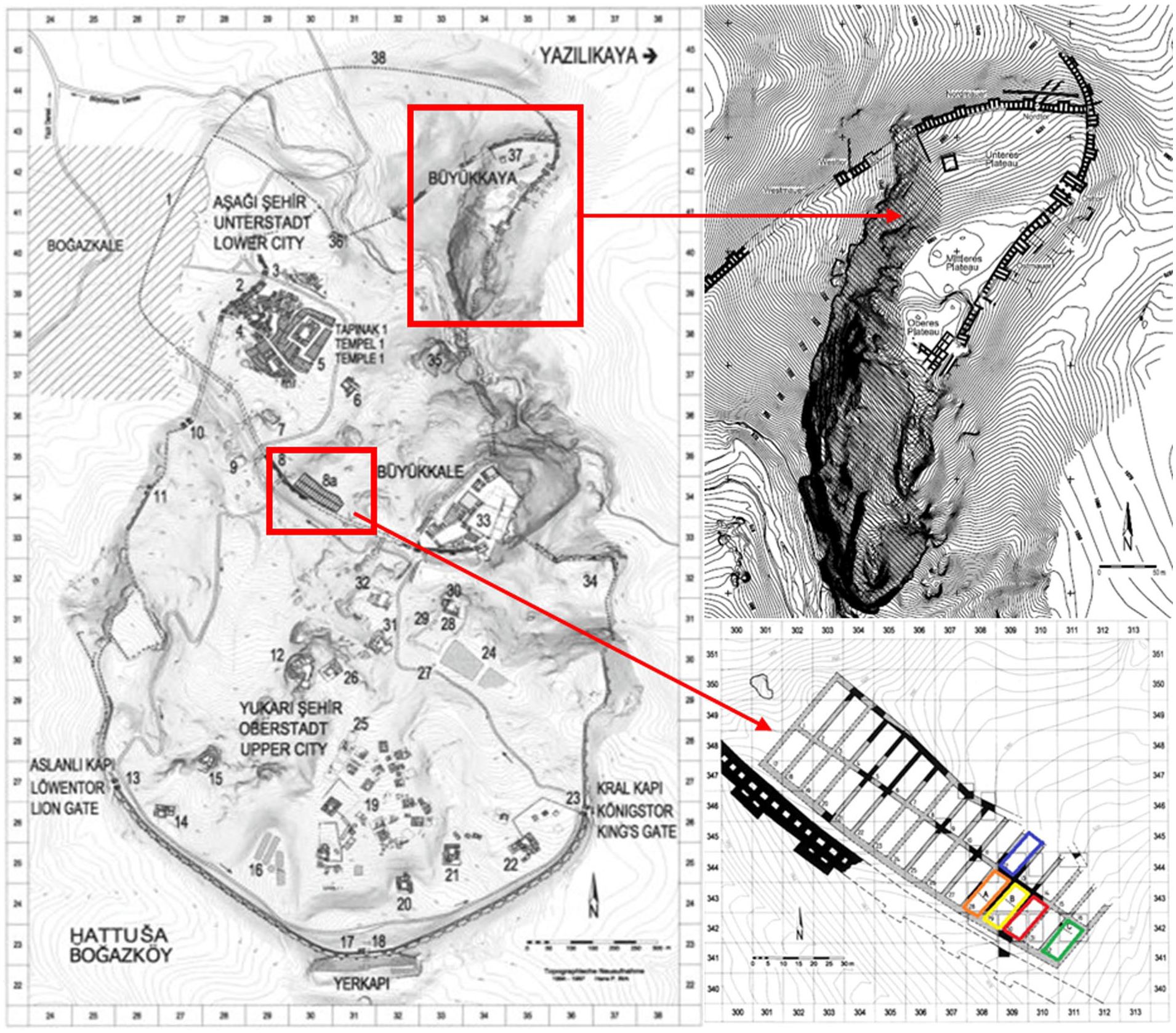
Map showing Hattuşa with the ridge of Büyükkaya and the large underground silo marked (from Seeher, 2006, 2021).
Büyükkaya is a mountainous ridge located to the northeast of the city, with a height of c. 100 m and length of c. 500 m. It is divided into three distinct plateaus (Upper, Middle and Lower) that are at least partially artificial and were created by earth infilling during the Old Hittite period (Seeher, 2021: 7–8). Büyükkaya was first excavated in the 1950s and again in 1993, and then from 1994 to 1998 by the Deutsches Archäologisches Institut directed by Jürgen Seeher. The area was occupied from the Chalcolithic period until the Middle Iron Age (Seeher, 2021: 11, 32, 128) and this paper will concentrate on results from the Hittite – Iron Age levels (Table 1).
Chronological periods and dates for the different occupation phases at Büyükkaya with estimated peak settlement size (from Seeher, 2021) and general climate classification.
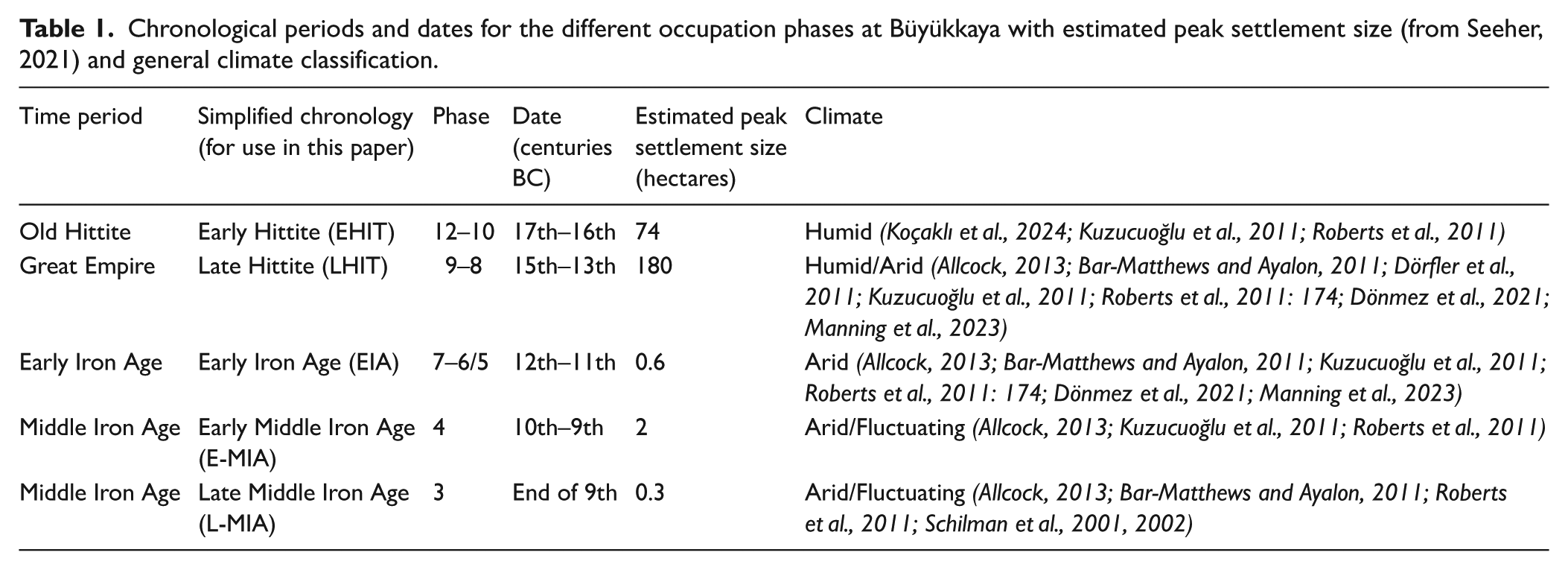
Overall, settlement on Büyükkaya went through several very different phases, summarised in Table 1. During the Hittite period, the ridge was used as a storage area, where crop resources from the wider Hattuşa hinterland were likely stored centrally for use as food, seed crop and/or animal fodder. Then, close to the end of the Hittite period, it was also used as an industrial area for the Hittite administration. After the Hittite collapse, a small Early Iron Age village was established where newly arrived inhabitants engaged in mixed farming within the local environs of the ridge, alongside metal-working and ceramic production. Following a possible occupation hiatus and the emergence of a new social group, the settlement grew and necessarily expanded its cultivation areas to feed a larger population. By the end of the 9th century BCE, however, the settlement of Büyükkaya shrank to its smallest size, with settlement restricted to one plateau, before eventual abandonment.
Old Hittite (phases 12–10)
During the earliest Hittite occupation of Büyükkaya, the area seems mainly to have been used for religious and administrative activities (Seeher, 2021: 32–62). Notable architectural features include a monumental building on the Upper Plateau which may have been a temple (Seeher, 2021: 32–35) and the construction of at least three underground silos on the Middle Plateau (Seeher, 2021: 57–62). These silos combined could have stored c. 2000–2300 m3 of cereal grain, which is considerably less than capacity of the large underground rectilinear silo located in the Lower City 2 (Diffey et al., 2020; Seeher, 2006) but nevertheless represents substantial crop-storage capacity on Büyükkaya. Defencive walls were also constructed to fortify the Middle and Lower plateaus as well as the entire Lower City (Seeher, 2021: 37–45).
Late Hittite Empire period (phases 9–8)
From the 15th to the 14th centuries BCE there appears to have been a cessation of activity on Büyükkaya and the abandonment of the large silos, but during the late 14th or early 13th centuries BCE occupation resumed, and the area was again used for grain storage. The remains of six smaller silo pits, with a combined capacity of c. 800–1000 m3, were located on the Lower Plateau as well as several buildings and ovens, which may have been associated with pottery production and/or other industrial activities (Seeher, 2021: 66–81, 85–87). Towards the end of the 13th century BCE Büyükkaya was again abandoned at the same time as the city itself was also in decline and the silos fell completely out of use (Seeher, 2021: 88).
Early Iron Age (phases 7–5)
After the abandonment of Hattuşa by the Hittite court and administration, Seeher (2021: 103–106) suggests that Büyükkaya was resettled by a new population group from the northwest, distinguished by new material culture, economy and architectural styles. It is unclear, however, to what extent this new population overlapped with any remaining Hittites, and there is evidence for Early Iron Age occupation in other areas of the abandoned city (Seeher, 2010; Seeher and Genz, 2023). This phase of occupation on the Middle Plateau of Büyükkaya is characterised by wooden structures and other pit buildings associated with metal-working, workshops and pig-keeping (Schachner, 2011: 314, Seeher, 2021: 101–103). It is likely that the Early Iron Age population at Büyükkaya was fairly small, covering an area of c. 0.6 hectares, with no archaeological evidence for the formation of social hierarchies (Schachner, 2021). Domestic occupation was primarily confined to the Middle Plateau, with only limited ceramic finds and various pits uncovered on the Lower Plateau. The new community was likely attracted to the area by the abundance of easily accessible construction material as well as the existing Hittite fortifications and proximity to fertile land for crops and livestock (Seeher, 2021: 105, Schachner, 2021).
Middle Iron Age (phases 4–3)
By the first half of the Middle Iron Age the settlement area on Büyükkaya had grown substantially, with numerous buildings scattered on all plateaux covering an area of c. 2.0 hectares (Seeher, 2021: 107–110). Changes in pottery style and motifs suggest there may have been a hiatus between the Early and Middle Iron Age settlements, although radiocarbon dating evidence is unclear on whether this was a distinct break in occupation (Seeher, 2021: 107–110). It is possible that the original EIA inhabitants were displaced or assimilated but evidence either way is currently lacking. Again, this society appears based on arable agriculture and livestock breeding, with zooarchaeological evidence indicating a focus on sheep for milk and an increase in the use of pigs. There is a lack of evidence, however, for specialised craftmanship, and families are thought to have lived in one-room buildings with numerous small pits for potential hermetic grain storage (Seeher, 2021: 140–141). During the second half of the Middle Iron Age (Phase 3), there was a distinct decline in population on Büyükkaya. The occupation area was limited to the c. 0.3 hectares of the Upper Plateau (Seeher, 2021: 128–129) and fortified by walls, indicating potential threats from outside social groups (Seeher and Genz, 2023). At this time Büyükkale in the Lower City of Hattuşa had become more extensively settled by Iron Age groups (Schachner, 2011: 315; Seeher, 2021: 144) and it is possible that the inhabitants of Büyükkaya moved down into the city. Certainly, by the end of the 9th century BCE the ridge was completely abandoned and was never permanently resettled (Seeher, 2021: 145).
Hypotheses
The 3.2 ka rapid climate change event and sustained aridity during the Early – Middle Iron Age are likely to have impacted crop growing conditions and farming strategies, and we aim to assess these impacts through measurements of stable carbon and nitrogen isotope values of archaeobotanical crop remains recovered from Büyükkaya. If crop conditions were not buffered from climate change through farming practices, we would expect to see drier growing conditions through lower Δ13C carbon isotope values, which reflect stomatal conductance, and possibly also higher δ15N nitrogen isotope values, which can be elevated by aridity. There are reasons for thinking that this ‘unbuffered’ reflection of wider climatic conditions is most likely to be observed in barley, as within ancient agricultural systems, Riehl et al. (2008), Riehl (2009), Riehl et al. (2014) has argued that hulled barley is more drought-tolerant due to its rapid growth earlier within the agricultural cycle (cf. Hillman, 1985). Within early agricultural systems hulled barley is less likely to have been irrigated and its cultivation reliant instead on annual rainfall. Riehl et al. (2014) have, therefore, been able to use the Δ13C values of hulled barley to independently verify aridity events, such as the 4.2 ka event in the Middle East. At Büyükkaya we would expect the stable carbon isotopic values measured from hulled barley to follow this pattern and provide the most representative picture of the local climate at Büyükkaya from the Late Hittite Empire – Middle Iron Age. Furthermore, we expect crop stable isotope values from the Hittite – Iron Age, to reflect the societal changes present in the archaeology of Büyükkaya. During these periods crop production would necessarily have changed from a large-scale, state-run agro-economy capable of supporting a capital city, to a subsistence system designed to feed a significantly smaller, more rural society. To this end, it is possible that crop stable isotope results from the Iron Age may indicate more variable growing conditions indicative of smaller-scale more intensive regimes, although a reversion to practices seen in the Neolithic is unlikely under continued aridity.
Methods
The measurement of carbon and nitrogen stable isotope values from archaeobotanical remains has become a valuable means of inferring both environmental and anthropogenic influences on plant growing conditions (e.g. Styring et al., 2024). Stable carbon isotope values have been used to infer water availability, and to distinguish seasonal climatic instabilities and periods of drought (e.g. Caracuta et al., 2012; Ferrio et al., 2005; Riehl et al., 2008; Wallace et al., 2013, 2015). This is due to stomatal conductivity during photosynthesis and the ability of plants to prevent water loss during periods of water stress by decreasing carbon dioxide assimilation rates in photosynthetic leaves (Chaves et al., 2002; Lisar et al., 2012). Stable nitrogen isotope values have been measured to infer potential levels of enrichment within the soil, such as the application of manure (e.g. Bogaard et al., 2007; Fraser et al., 2011). For a full description of carbon and nitrogen plant stable isotope ratios, please see the Supplemental Material 1.
Sample selection
The stable isotope study was focussed on the four most common charred cereals recovered from Büyükkaya: Hordeum vulgare ssp. distichon L. (2-row hulled barley), Triticum aestivum L./durum Desf. (free-threshing wheat), Triticum dicoccum Schubl. (emmer wheat) and Triticum monococcum L. (einkorn wheat). Seeds for single-grain stable isotope analysis were chosen based on a series of criteria. Initially, the aim was to select 10 grains per cereal species for each chronological period in which the species had been identified. Where possible these grains would also be chosen from a single context within each period, but much of the assemblage was poorly preserved, and so grains were occasionally taken from a number of contexts. Selected grains were first weighed, cross-sectioned and photographed to assess for large internal voids. Grains judged to have been charred at a temperature above that determined for the ‘optimal charring window’ (230°C – 260°C – Charles et al., 2015; Stroud et al., 2023) were removed from further analysis. In total, 110 grains from across the five chronological periods were selected to assess both variation within and between cereal crop species and variation through time (Supplemental Table 1).
Pre-treatment
Fourier Transform Infrared Spectroscopy (FTIR) was used to detect possible contamination that could potentially distort the results of stable isotope analysis (Vaiglova et al., 2014). Charred grains from each chronological period were screened and displayed peaks characteristic of carbonate contamination (870 and 720 cm−1) within measured spectra. All samples were pre-treated with 10 ml of 0.5 M HCL acid at 70°C for 30 min to remove any potential contamination (following protocol outlined in Vaiglova et al., 2014). The samples were then rinsed with distilled water until a neutral pH was achieved, dried in a freeze-dryer for 24 h, re-weighed and finally crushed for analysis.
Stable carbon and nitrogen isotope measurements
All stable isotope values were measured on an isoprime precision stable isotope ratio mass spectrometer coupled to a vario PYRO cube CNSOH elemental analyser at the Research Laboratory for Archaeology and History of Art (RLAHA), University of Oxford, UK. Plant δ13C and δ15N values were measured separately, but as part of the same stable isotopic run, using a carbon dilution of 2%. Accuracy or systematic error (u(bias)) was calculated using the variability in sample replicates (Supplemental Table 2), in-house calibration standards (alanine and seal) and in-house check standards (cow and leucine Supplemental Table 3). Overall, accuracy (u(bias)) was determined to be ±0.15‰ for δ13C and ±0.17 for δ15N and precision (u(Rw)) was determined to be ±0.11‰ for δ13C and ±0.19‰ for δ15N. Total analytical uncertainty (uc) was estimated to be ±0.19‰ for δ13C and ±0.26‰ for δ15N (following Szpak et al., 2017). All results (δ13C and δ15N) were corrected for the charring effect by subtracting 0.11‰ and 0.31‰ from the normalised values respectively (Nitsch et al., 2015). Carbon values were also converted from δ13C to Δ13C using the AIRCO2_LOESS system (Cleveland, 1979; Ferrio et al., 2005; Francey et al., 1999; Indermühle et al., 1999; Leuenberger et al., 1992) and the equation determined by Farquhar et al. (1989). This conversion allows the archaeological samples from Büyükkaya to be compared with the results of modern stable isotope studies. When comparing between the species an offset of −1.0‰ has been applied to the Δ13C values of the hulled barley grains and the limit of the ‘well-watered zone’ has also been adjusted. This is due to the physiological differences between hulled barley and wheat, specifically the earlier completion of photosynthesis and grain ripening in the former (Araus et al., 1997; Wallace et al., 2013).
Data reliability
After data normalisation one sample (BUK125) was removed from the rest of the analysis for having a δ15N value of −6.35‰, this was likely due to a machine error. Data reliability was assessed following Szpak and Chiou (2020), by plotting the C:N ratio again the δ15N values. There was no clear correlation between the two, indicating that there had been no diagenetic alteration (Supplemental Figure 1). Percent carbon (%C) and percent nitrogen (%N) were also plotted against values from modern charred cereals (Bogaard et al., 2013; Fraser et al., 2013) and from this it became apparent that five archaeological samples had particularly high %N values (Supplemental Figure 2). After a re-assessment of the cross-sectioned photographs, these seeds (with the exception of BUK 35) were re-classified as ‘borderline’ and may have been charred at temperatures too high for isotopic analysis. For this reason, these samples (BUK35, BUK36, BUK58, BUK113, BUK115) were removed from further analysis. All other isotope values from Büyükkaya were accepted as reliable results.
Results
All carbon and nitrogen stable isotope measurements from the Büyükkaya samples are provided in Supplemental Material 2. The standard deviation of the Δ13C values for each taxon indicate a considerable range within each species (hulled barley: 16.52 ± 0.98‰, free-threshing wheat: 15.93 ± 1.10‰, emmer: 16.37 ± 0.78‰, einkorn: 16.04 ± 0.72‰). All standard deviations are above the values reported for experimentally grown, averaged single-grain measurements reported for expected cereal inter-ear and intra-field variability (Styring et al., 2024). Similarly, the standard deviations of the δ15N values from Büyükkaya (hulled barley: 4.98 ± 2.73‰, free-threshing wheat: 2.82 ± 2.62‰, emmer: 3.87 ± 1.54‰, einkorn: 3.27 ± 1.23‰) were also notably higher than those taken from experimental single grain measurements. In particular, the standard deviation of δ15N values for hulled barley was considerably higher than the average 1.64‰ recorded from experimentally manured hulled barley from the same plot (Larsson et al., 2019). These results indicate a high level of variability within each of the cereals measured from Büyükkaya.
Chronological variation within species
Figure 2a to d shows the Δ13C values for all four cereal species by chronological period. From these figures it is apparent that several observations emerge that require consideration. First, in Figure 2a the majority of hulled barley Δ13C values, and all mean Δ13C values appear below the ‘well-watered’ threshold (cf. Wallace et al., 2013) and there is no significant difference between chronological periods (see Supplemental Table 4 for the results of statistical tests). There is, however, a notable decrease in values from the Late Hittite Empire to the Early Iron Age, with a 1‰ difference between the means of these samples (Table 2). In Figure 2b the results of an ANOVA test showed significant differences in Δ13C values of free-threshing wheat between the Late Hittite Empire and Late Middle Iron Age (p = 0.0235 (−2.63 to 0.15)), and between the Early Iron Age and Late Middle Iron Age (p = 0.01 (−2.65 to 0.29)). Overall, with regard to free-threshing wheat, three values from the Late Hittite Empire and three values from the Early Iron Age appear above the ‘well-watered’ threshold, but the majority of Δ13C results are located below this line and there appears to be a gradual decrease in Δ13C values throughout the IA. Figure 2c and d show the Δ13C values for emmer and einkorn wheat, which were only available for the Middle Iron Age periods. There is a significant difference in the Δ13C values of emmer between the Early Middle Iron Age and Late Middle Iron Age (p = 0.012 (−1.52 to 0.21)), with values again decreasing through time. The Δ13C values recorded for einkorn (Figure 2d) were all located below the ‘well-watered’ threshold.
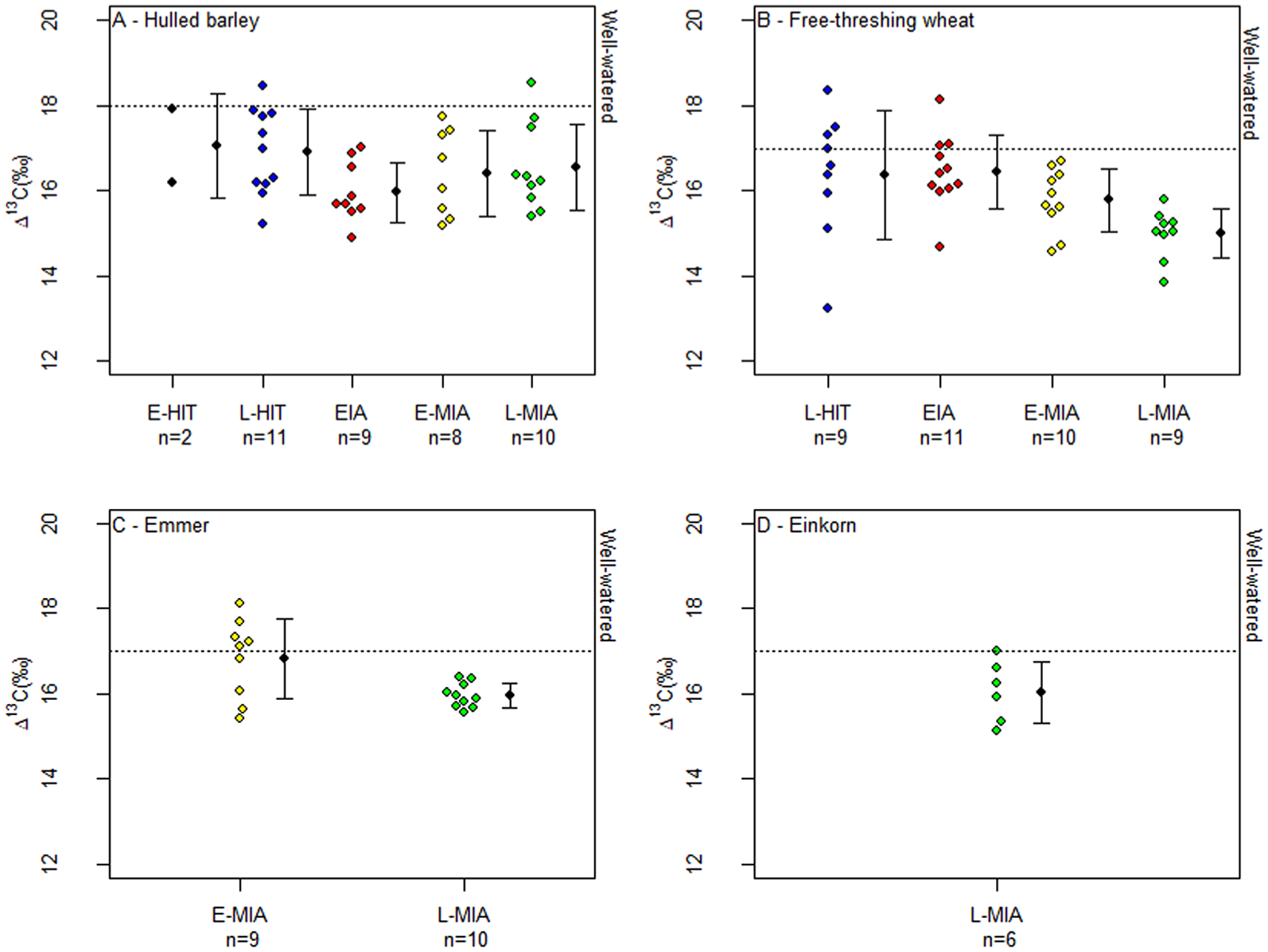
Δ13C values, means and standard deviations through time. (a) Hulled Barley, (b) Free-threshing wheat, (c) Emmer, (d) Einkorn. The dotted line indicates the lower limit of the ‘well-watered’ zone.
All means and standard deviations for carbon and nitrogen stable isotope values from each cereal species by chronological period.
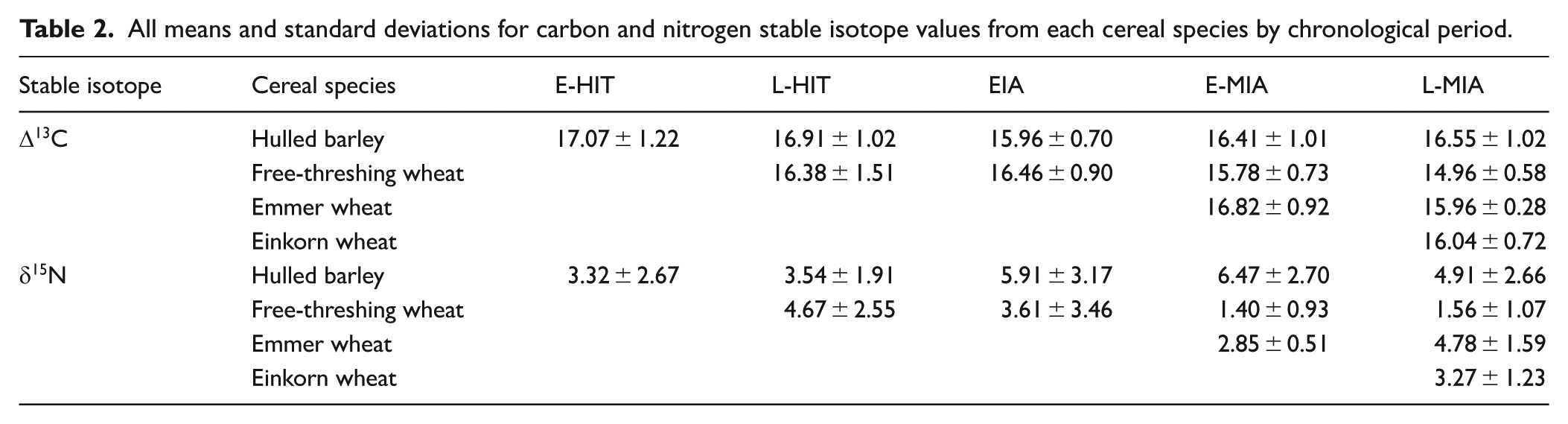
Figure 3a-3d shows the δ15N values for each cereal species by chronological period. Again, from Figure 3a there are no significant differences between the δ15N values of hulled barley by chronological period (Supplemental Table 4 – a Levene Test showed that the data groups do not have equal variances, F(3, 104) = 3.65, p = 0.012). Overall, however, the nitrogen results particularly for the Iron Age are very variable with δ15N values ranging from 0.33‰ to 10.00‰, (see Table 2 for means and standard deviations), and there is an increase in the mean δ15N values for hulled barley from the Hittite into the Iron Age periods. Free-threshing wheat (Figure 3b) δ15N values for the Late Hittite Empire and Early Iron Age periods are fairly variable with wide standard deviations. This changes in the Middle Iron Age periods, however, with a significant decrease both in terms of δ15N values and the range of these values. Figure 3c shows the δ15N values for emmer and there is a significant difference between the Early Middle Iron Age and the Late Middle Iron Age (p = 0.029). Between these two periods is an evident increase both in δ15N values and the level of variability indicated by these values. Finally, the δ15N values for einkorn from the Late Middle Iron Age are all located towards the lower end of the scale but again indicate a relatively high level of inter-species variability (Figure 3d).
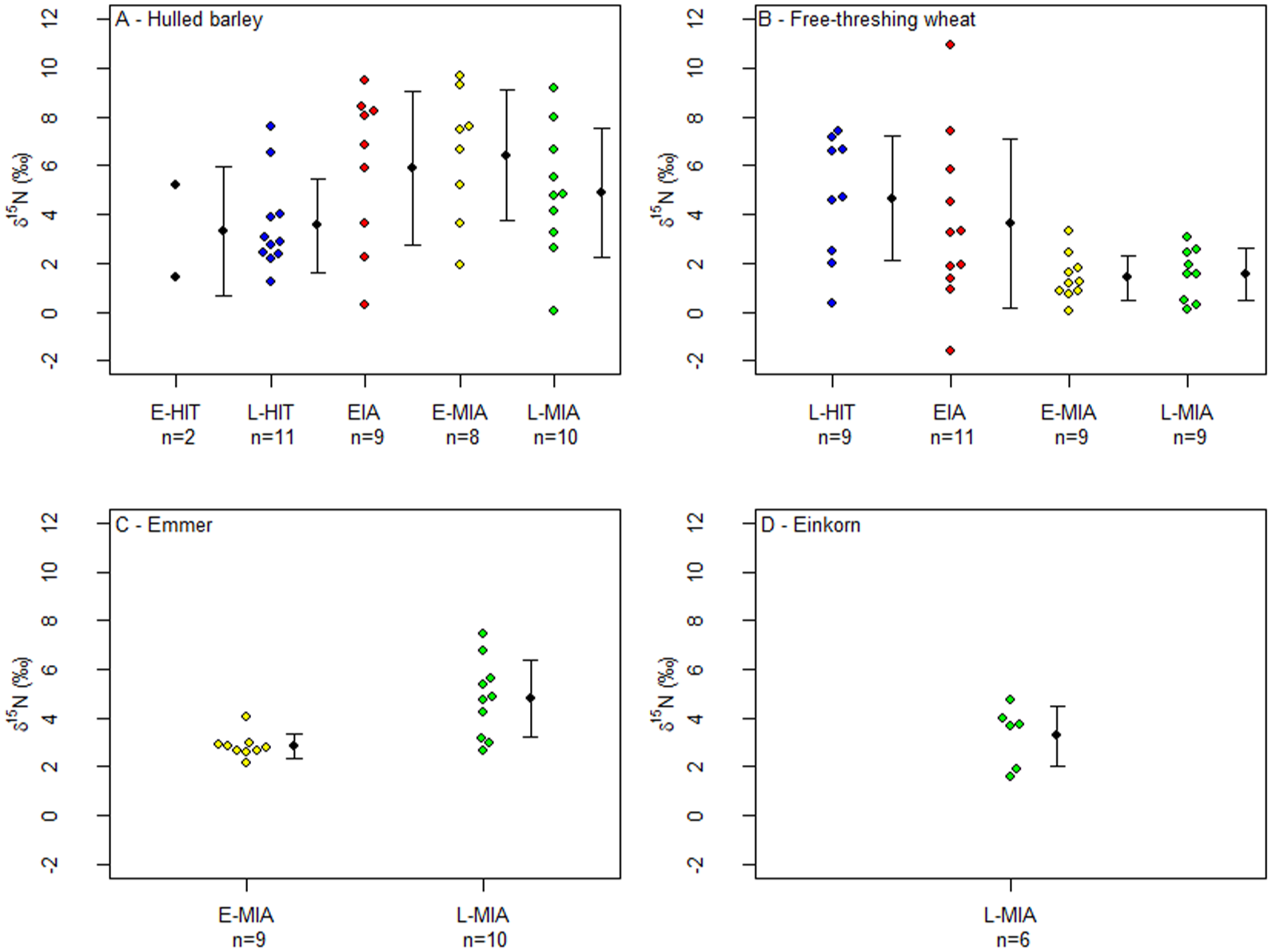
δ15N values, means and standard deviations through time. (a) Hulled Barley, (b) Free-threshing wheat, (c) Emmer, (d) Einkorn.
Chronological variation among species
Figure 4a-4d show the four chronological periods for which carbon isotope values are available for more than one cereal species. 3 During the Late Hittite empire period, hulled barley and free-threshing wheat have a similar range of fairly low values, possibly indicative of a reliance on rainfall. During the Early Iron Age, however, there is a significant difference between the two species (see Supplemental Table 5 for all statistical test results) with hulled barley values decreasing whilst free-threshing wheat values remain comparatively similar to those seen in the previous period. During the Early Middle Iron Age free-threshing wheat Δ13C values also decrease and are similar to the hulled barley values from this period. Δ13C values for emmer, however, are significantly higher, with five values recorded above the ‘well-watered’ threshold. Finally, during the Late Middle Iron Age the Δ13C values for all four cereal species are relatively low and appear below the ‘well-watered’ threshold. In particular, the values of free-threshing wheat decreased again from the E-MIA, and there is a significant difference between free-threshing wheat and the glume wheats.
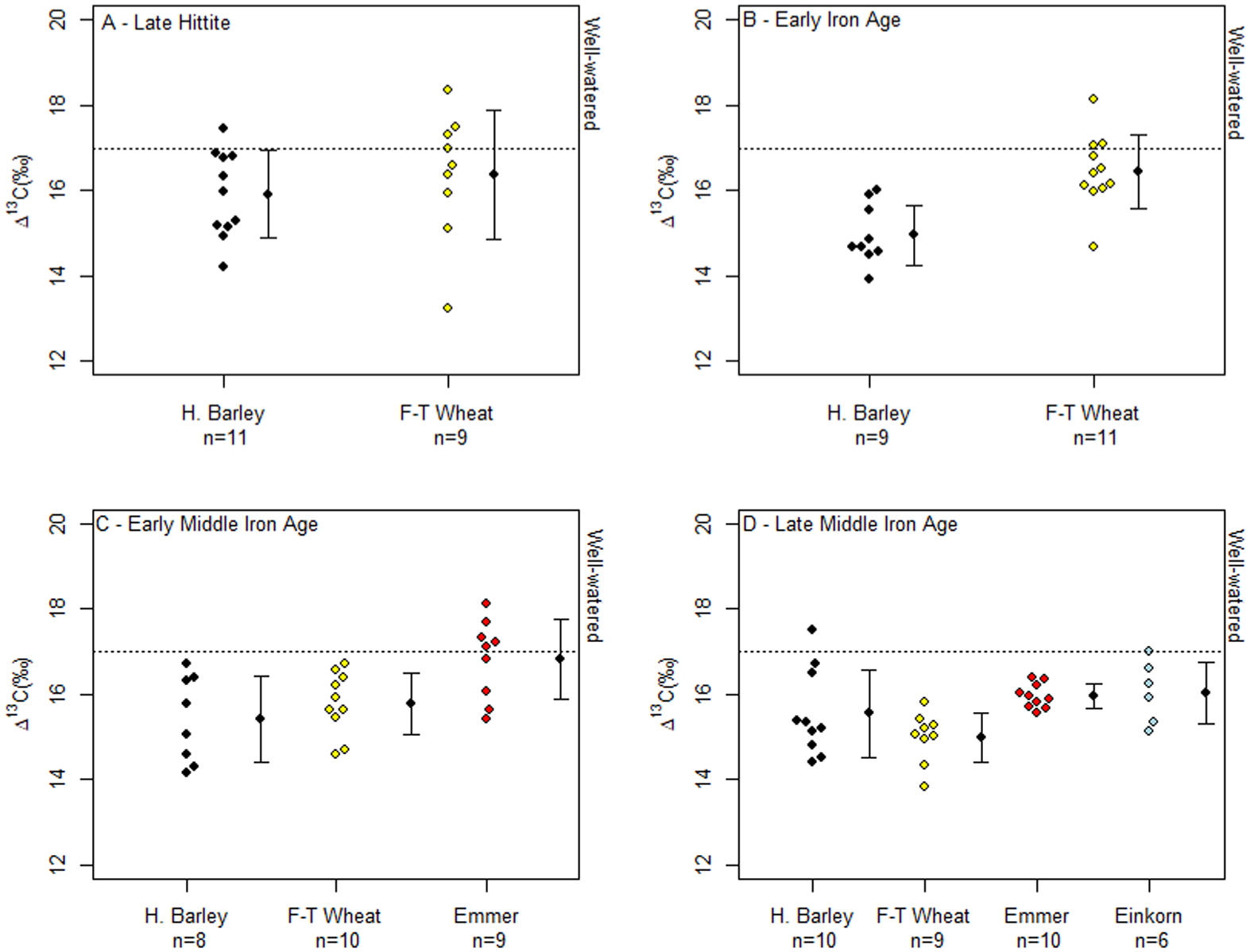
Δ13C values, means and standard deviations through time. (a) Late Hittite, (b) Early Iron Age, (c) Early-Middle Iron Age, (d) Late-Middle Iron Age. The dotted line indicates the lower limit of the ‘well- watered’ zone. An offset of −1.0‰ has been applied to the values of the hulled barley grains.
The stable nitrogen isotope values (Figure 5a–d) from the Late Hittite Empire period of both hulled barley and free-threshing wheat cover a similar but variable range from low to high values. This pattern continues in the Early Iron Age, with variability increasing and some markedly high δ15N values present in both species. During the Early Middle Iron Age, hulled barley δ15N values remained variable but with a higher overall mean (6.44 ± 2.70‰). By contrast, the values of free-threshing wheat decreased noticeably, and overall variability was reduced. The δ15N values for emmer overlap with the highest δ15N values of free-threshing wheat and there are significant differences between hulled barley and the wheats (see Supplemental Table 5). Finally, in the Late Middle Iron Age the nitrogen results for hulled barley and free-threshing wheat remain broadly similar to those of the Early Middle Iron Age and there remains a significant difference between the two species. The values of emmer, by comparison, appear elevated and there is now a significant difference between free-threshing wheat and emmer. The δ15N values for einkorn are situated between free-threshing wheat and emmer, with a mean value of 3.27 ± 1.23‰.
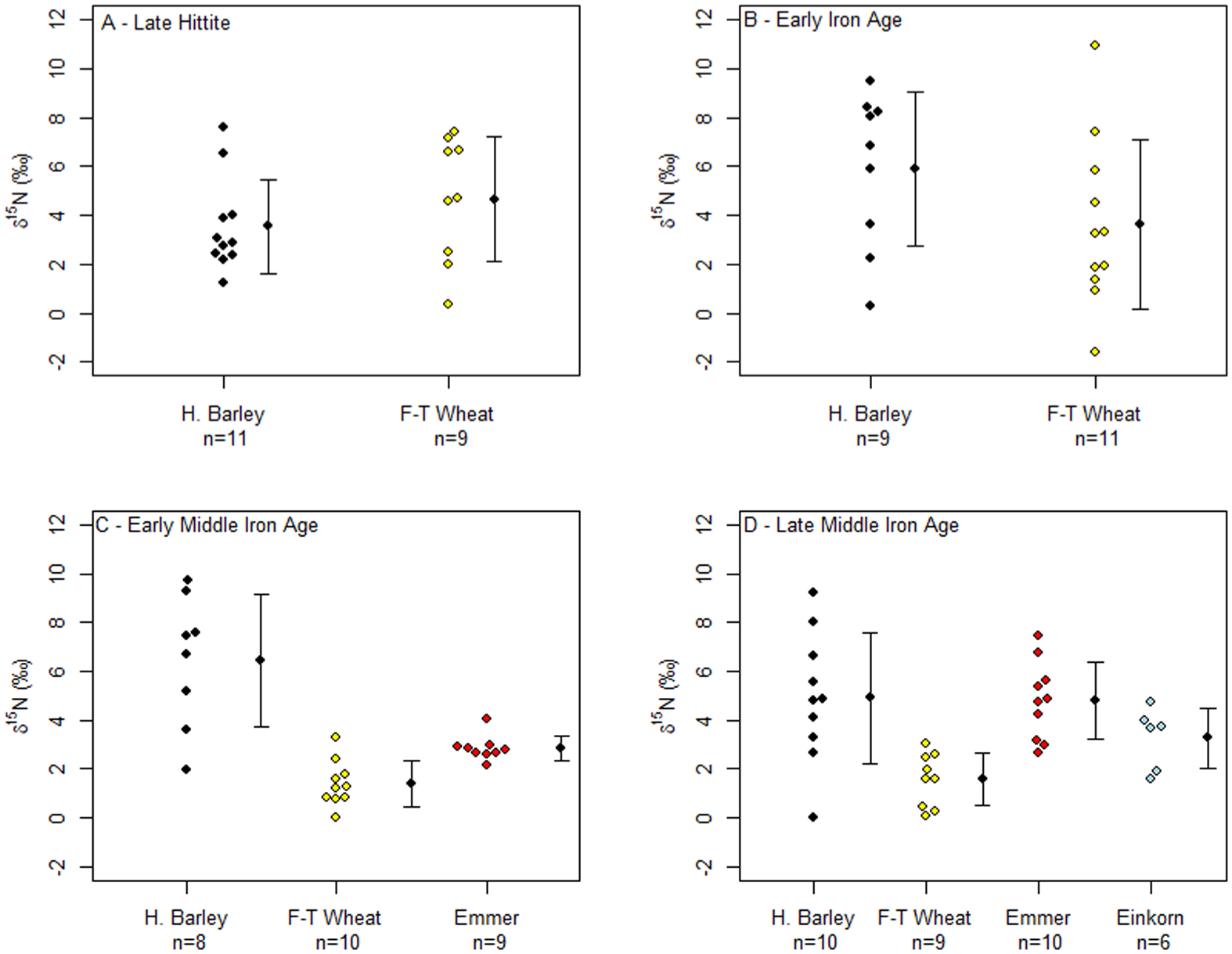
δ15N values, means and standard deviations through time. (a) Late Hittite, (b) Early Iron Age, (c) Early-Middle Iron Age, (d) Late-Middle Iron Age.
Overall, the carbon and nitrogen stable isotope results from Büyükkaya across the five time periods present a complex picture, particularly with regard to nitrogen values, indicative of the use of a range of cultivation conditions and/or locations with different land-use histories. These results also suggest that each cereal species may have been grown separately under a variety of husbandry practices and that these changed through time depending on the needs and preferences of each successive community.
Discussion
Climate change and plant watering status
As discussed above the Δ13C values of hulled barley are most likely to reflect climate variation and increased aridity within the agricultural systems of the Bronze Age Middle East (Riehl, 2009; Riehl et al., 2008, 2014). During the Late Hittite Empire – Early Iron Age, the decrease in Δ13C values of hulled barley (Figure 2a) plausibly reflects the increasingly arid climate and resultant worsening agricultural conditions at Hattuşa, contemporary with the independently verified aridification effects of the 3.2 ka rapid climate change event in the wider Eastern Mediterranean (e.g. Drake, 2012; Kaniewski et al., 2013; Manning et al., 2023).
Further support for the interpretation of hulled barley Δ13C values as most reflective of climate change amongst the cereals emerges from comparison of the Büyükkaya results with those from cereals stored in the large underground silo from the Lower City (Diffey et al., 2020), on the one hand, and with those of the Early Iron Age, on the other. Archaeobotanical remains recovered from the silo have been dated to the 16th century BCE when the Hittite empire was still growing and the weather was more favourable for arable agriculture. The results from the silo are, therefore, contemporary to the Early Hittite period on Büyükkaya (Seeher, 2006: 49). Overall, the underground silo results suggest that cereal crops from each individual chamber were cultivated under distinct growing conditions. In terms of the stable carbon results, Chambers 12 and 32 were grown in well-watered conditions, whilst Chambers 29 and 30 were indicative of drier conditions (Diffey et al., 2020 – Figure 6). The climate during the Early Hittite period was favourable for rain-fed agriculture and these differences are interpreted as the exploitation of different areas of the rural hinterland, including land more marginal for arable agriculture (Diffey et al., 2020, 2025). Comparison of the silo values with the Early Iron Age hulled barley Δ13C values from Büyükkaya, however, clearly shows that the latter values are lower than even the lowest values from the silo with just under a 1‰ difference between the means of the two datasets (Early Iron Age hulled barley: 15.96 ± 0.70‰, Chamber 30 hulled barley: 16.72 ± 0.34‰ – Figure 6). Furthermore, the Early Iron Age community on Büyükkaya was significantly smaller than the population of Hattuşa (see Table 1), implying that their need to use marginal land for farming would have been greatly decreased, and rather that the reduction in hulled barley Δ13C values was a factor of reduced rainfall rather than variable land exploitation.
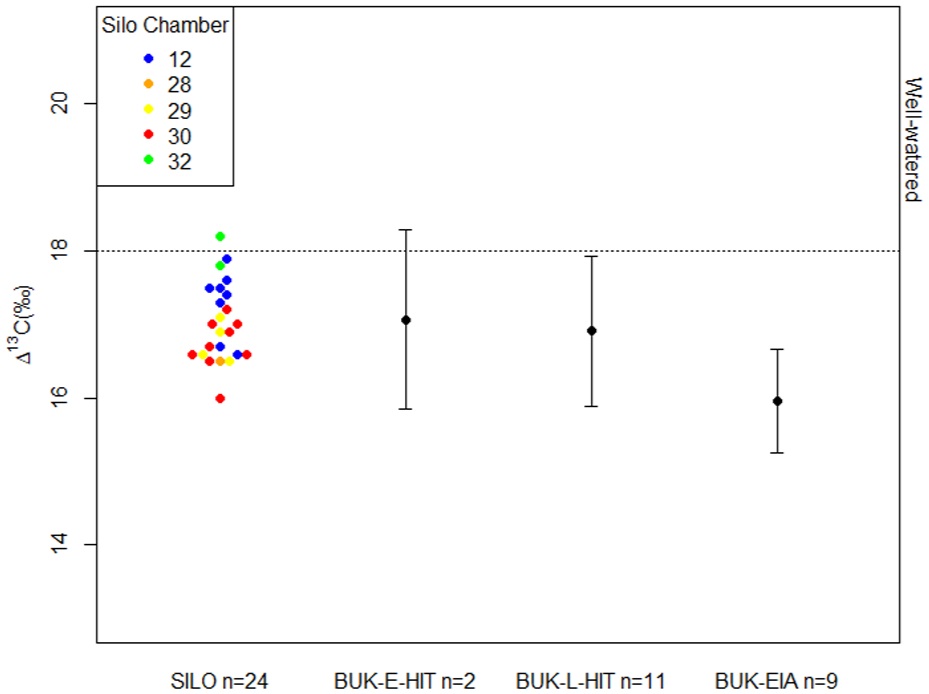
Δ13C hulled barley values from the Hattusa underground silo dated to the 16th century BCE (Diffey et al., 2020) and the means and standard deviations of the Early Hittite, Late Hittite and Early Iron Age from Büyükkaya. The dotted line indicates the lower limit of the ‘well-watered’ zone.
The hulled barley Δ13C values from Büyükkaya support the suggestion that famine was a contributing factor to the collapse of the Hittite empire. Lack of adequate water during barley tillering and grain filling can potentially decrease crop yields by 20%–50% (e.g. Aspinall et al., 1964). This decrease in barley productivity coupled with an even greater yield reduction of less drought-tolerant crops (i.e. wheat, pulses) over the course of multiple years plausibly contributed greatly to the disintegration of the Hittite agro-economic system. Certainly, by the end of the Late Hittite Empire period (c. 1215 BCE) there are records of grain shipments from the Egyptian Pharoah Meremptah to Hattuşa ‘to keep alive that land’ (Wainwright, 1960: 24) and there is evidence that King Tudhaliya IV also wrote to Ugarit asking for food. These statements suggest that the situation at Hattuşa was dire for those inhabitants left living in the city and would most likely have accelerated the final abandonment of Hattuşa (e.g. Schachner, 2020, 2022; Seeher, 2010).
With regard to the other cereal species, Early Iron Age farmers seem to have prioritised free-threshing wheat which is not as drought-tolerant as hulled barley, possibly cultivating it in naturally better watered areas in the Hattuşa hinterland (cf. Diffey et al., 2023). The carbon results of all four species (Figure 4c and d) remain consistently low during the Middle Iron Age, with the exception of emmer in the Early Middle Iron Age which, like free-threshing wheat in the Early Iron Age, appears to have been grown under slightly better watered conditions. By the Late Middle Iron Age, however, the growing conditions for all four cereals appear to be dry, with free-threshing wheat in particular grown under the driest conditions observed at Büyükkaya. In general, the Δ13C values of each cereal through time are relatively low, indicating that none of these crops was consistently grown under optimal watering conditions. To date, there is no archaeological evidence for the construction of large-scale irrigation systems at Hattuşa and such structures are not mentioned within the Hittite texts, so it is likely that cereal cultivation was reliant on annual winter-spring rainfall and the exploitation of the natural hydrology of the landscape around Hattuşa.
When considered overall, the stable carbon results from Büyükkaya point to the worsening aridification of climatic conditions from the Hittite to the Iron Age, as indicated by other independent climate proxies. During the Iron Age the Δ13C values from all four cereals suggest that climatic conditions remained dry, as indicated by lake core evidence (e.g. Roberts et al., 2011), and that moisture levels in the Hattuşa region did not return to those seen during the Early Hittite period. These conditions would have reduced overall cereal yields, potentially encouraging Middle Iron Age farmers to diversify the range of crops grown and to prioritise preferred cereal species.
Preferential species treatment and manure use
Recent studies in both Western Asia and the Aegean (Diffey et al., 2020, 2023, 2025; Nitsch et al., 2017; Styring et al., 2017) have documented the use of manure within Bronze Age agro-economies as a means of artificially enriching soils. The synthesis of these datasets has indicated that in northern Mesopotamia and the Aegean there is a negative relationship between manuring intensity, settlement size and urban density (Styring et al., 2022). This is because the use of manure is limited by its availability and the fact that it is a difficult resource to transport for any great distance. As the amount of land under cultivation grew to feed increasing populations, fields located further and further from the main settlement area, saw a decrease in manuring intensity. This is particularly clear at sites such as Tell Brak in northern Syria where the population was located in one central, densely packed urban area, with agricultural fields radiating outwards from the tell (Diffey et al., 2023; Styring et al., 2017). During the Hittite period when Hattuşa was at its peak it is likely that food resources were pooled from a wide agricultural hinterland, including smaller rural districts and large estates, through taxation (e.g. Yakar, 2000: 267; Bryce, 2002: 77). These resources were then stored centrally in the city, for example in the large underground silo (Seeher, 2006: 49; Diffey et al., 2020) and/or other silo facilities on Büyükkaya (Seeher, 2021: 57). Manure use during this period appears quite variable with a wide range of δ15N values from both the silo (Diffey et al., 2020) and Büyükkaya (Figure 5a), indicating that Hittite farmers used a variety of management systems with some fields preferentially manured, whilst others that may have been located further away from settlements or without access to domesticated animals, received less enrichment (cf. Bogaard et al., 2013; Styring et al., 2017).
During the Early Iron Age, the estimated size of the Early Iron Age community on Büyükkaya was only c. 0.6 hectares (Seeher, 2021: 105). This would suggest that the amount of cultivable land needed to feed this population would have been much smaller than the respective Hittite land, even considering the fact that Early Iron Age remains found in other parts of the city indicate that the population during this period included more than just the inhabitants of Büyükkaya. Additionally, the recovery of domesticated animal bones indicate that manure would have been available during this period. The range of δ15N values measured for hulled barley and free-threshing wheat during the EIA, however, remains very variable (Figure 5b), with low and high values signifying that crops were still being cultivated under a range of management regimes. It is notable that some crop δ15N values are considerably elevated. This could be due to the increase in aridity during this period (cf. Handley et al., 1999; Hartman and Danin, 2010) but it could also indicate that high amounts of manure were being applied to these crops (e.g. Fraser et al., 2011). Archaeological evidence indicates that pigs may have been being kept on the Middle Plateau with Pit 8/12 identified as a potential pigsty (Seeher, 2021: 93). Szpak (2014), has demonstrated that the δ15N values of pig manure are typically higher than those of cattle manure and that as the δ15N value of the manure increases so to do the relative values for the manured crops. It is possible that Early Iron Age farmers on Büyükkaya were manuring some of their fields with pig manure and this could account for the overall elevation of these δ15N values, from those of the Late Hittite Empire period. Currently, it is difficult to disentangle the effects of aridity from the use of higher amounts or different types of manure on δ15N values. Furthermore, increased aridity reduces the efficacy of manuring, as it is only advantageous when soil moisture is sufficient. To this end, the arid effects of the 3.2 ka event make it more likely that the high δ15N values recorded during the Early Iron Age are due to aridity rather than manuring, but future work based on the aridity modelling approach presented by Styring et al. (2017), however, could be used to provide clarity on this issue.
The Middle Iron Age, however, saw a change in agricultural regime choice at Büyükkaya, with different cereal species being treated in distinct ways. The change in nitrogen values (Figure 5c and d) and potential manure use from the Early Iron Age to the Middle Iron Age points to a change in agricultural practice consistent with the establishment of a new community. Seeher (2021: 107–110) states that from the Early Iron Age – Middle Iron Age there may have been a hiatus in occupation but that the evidence for this is unclear. Certainly, the nitrogen isotopic evidence indicates that there was a complete shift in agricultural regime choice, with hulled barley purposely cultivated in more enriched soils, whilst wheat species were grown with little or no manure. These differences in enrichment level could also be linked to changes in settlement size and the continued arid environmental conditions. During the Early Middle Iron Age, all three plateaus were inhabited (Seeher, 2021: 107–110) increasing the need to cultivate more land for subsistence. The availability of manure, coupled with the effort needed to transport it, may have encouraged Early Middle Iron Age farmers to manure the hulled cereals preferentially.
The preferential manuring of Middle Iron Age hulled barley and glume wheat over free-threshing wheat may be due to a lack of adequate rainfall that may have seriously affected free-threshing wheat yields to the stage that Middle Iron Age farmers chose to use limited manure resources on the more drought-tolerant hulled cereals. Linked to this theory are the large number of pits excavated from this period both inside and outside buildings, which have been proposed as potential hermetic grain storage (Seeher, 2021: 140). Evidence from the large underground silo indicates that only hulled barley and the glume wheats were kept in hermetic long-term storage systems (Diffey et al., 2017, 2020; Neef, 2001; Seeher, 2000a, 2000b). This may have been because emmer and einkorn when stored in the spikelet survive better long-term and/or because the hulled cereals are often used for both human and animal consumption depending on need (cf. Dörfler et al., 2011; Halstead et al., 2022). Certainly, ethnographic evidence has indicated that retention of the spikelet can help to preserve glume wheat grain in long-term storage, and that glume wheats can also be planted in the spikelet form (Halstead, 2014; Neef, 2001: 158). Eventually, however, it is possible that the reduction in population seen on Late Middle Iron Age Büyükkaya (Seeher, 2021: 128–129; Schachner, 2021) alongside continued unfavourable farming conditions and potential threats of violence, as evidenced by the construction of a fortification wall during this period, may have made the society of Büyükkaya unsustainable, leading to the eventual abandonment of the ridge and the movement of people to other parts of the site.
Overall, the results of stable isotope analysis from Büyükkaya show that the nature of agriculture changed significantly through time due to both climatic and societal shifts. During the Hittite period, agriculture appears to have been characterised by low-input, extensive cereal crop farming regimes, consistent with the results of previous stable isotope studies of the large underground silo at Hattuşa (Diffey et al., 2020). During the Iron Age, however, as climatic conditions remained challenging for rainfed farming, agricultural variability increased with the use of mixed-input regimes and the preferential treatment of some species. These changes may also be linked to the potential arrival of a new cultural group and the growth of the settlement in the Early Middle Iron Age, before the severe reduction in occupied area and population, leading to the eventual abandonment of Büyükkaya in the Late Middle Iron Age.
The wider Late Bronze Age – Iron Age agro-economy in the Eastern Mediterranean
The relative lack of stable isotopic studies on plant remains from the Late Bronze Age and Iron Age of Central Anatolia render the results of this paper contextually significant as they provide the unique opportunity to consider Hattuşa both during its ‘heyday’ and in the aftermath of the cities’ collapse. The evidence from Büyükkaya indicates that Hittite state agriculture remained focussed around low-input (‘extensive’) cultivation regimes throughout the Late Bronze Age, reliant on annual rainfall, but with variable inputs of manure, probably dependant on availability and distance from housing and/livestock penning areas. In this sense, the range of husbandry regimes and practices correlates mostly with the interpretation of assemblages from other urban Bronze Age settlements in the Aegean and Western Asia where the agro-economy is thought to have been controlled by a centralised administration system. At sites such as Liman Tepe in Western Anatolia (Maltas et al., 2022), Knossos (Isaakidou et al., 2022 and Methone (Diffey et al., 2025) in Greece and Tell Brak (Diffey et al., 2023; Styring et al., 2017) in northern Syria a form of low-input farming emerges, tailored to overcome local environmental and social challenges faced by the specific population. At Hattuşa in particular, arable yields were maximised by increasing the amount of land under cultivation and by obliging domestic households to contribute to state production by working on crown-lands and taxation of agricultural products (e.g. Yakar, 2000:267). This is demonstrated particularly clearly by the Hattuşa underground silo where the results from each individual chamber indicated the use of slightly different agricultural regimes pointing to the existence of a fragmented hinterland.
After the collapse of the Hittite empire, agriculture appears again to have remained concentrated around these low-input regimes. Certainly, during the Iron Age on Büyükkaya the establishment of a new significantly smaller social group and the effects of an adverse climate forced farmers to modify pre-existing farming practices, but the results of this paper do not indicate a reversion to more intensive practices as seen applied by Neolithic communities (cf. Bogaard et al., 2017). Instead, it appears that throughout the Early-Middle Iron Age, Büyükkaya farmers continued to practice ‘extensive’ farming but with the preferential treatment of the glume wheats over free-threshing wheat, due to enduring aridity, limited water and manuring resources.
Conclusions
The results of stable carbon and nitrogen isotope analysis of crop assemblages from Büyükkaya, Hattuşa represent the first such study of Iron Age crops from Türkiye. These results provide new insights into the effects of climate change on crop production during the Late Bronze Age Hittite collapse and its aftermath during the Early – Middle Iron Ages at Hattuşa. Alongside independent climate proxies and documentary evidence, this analysis has shown that increasing aridity during the Late Hittite Empire period probably strained the extensive cereal production system, likely causing a period of famine that contributed to the eventual demise of the empire. These drier climatic and agricultural conditions continued into the Iron Age, causing farmers to adopt an agricultural system that preferentially grew the hulled cereals with higher inputs of water and manure, potentially for long-term storage.
Agricultural production regimes appear to remain extensive but highly variable at Büyükkaya during the Early and Middle Iron Ages, despite smaller settlement size and continued climatic uncertainty and aridification. These results are consistent with a long-term process of extensification shaped by soil deterioration, climatic fluctuation and/or social networks, as observed under very different circumstances elsewhere, from the Aegean (Diffey et al., 2025) to the Rhineland (Hamerow et al., 2022). The isotopic results exclude a simple return to small-scale, intensive ‘Neolithic’ mixed farming practices for cereal production following urban collapse. Overall, the stable isotope results for cereals from Büyükkaya highlight the complexity of ancient food production systems and of farmers’ strategies for coping with fluctuating climatic and social conditions.
Supplemental Material
sj-docx-1-hol-10.1177_09596836251396091 – Supplemental material for New crop stable isotope evidence reveals the impact of the 3.2 ka rapid climate event on arable agricultural production at late Bronze Age – Iron Age Hattuşa, Central Anatolia
Supplemental material, sj-docx-1-hol-10.1177_09596836251396091 for New crop stable isotope evidence reveals the impact of the 3.2 ka rapid climate event on arable agricultural production at late Bronze Age – Iron Age Hattuşa, Central Anatolia by Charlotte Diffey, Reinder Neef, Andreas Schachner, Jürgen Seeher and Amy Bogaard in The Holocene
Supplemental Material
sj-xlsx-2-hol-10.1177_09596836251396091 – Supplemental material for New crop stable isotope evidence reveals the impact of the 3.2 ka rapid climate event on arable agricultural production at late Bronze Age – Iron Age Hattuşa, Central Anatolia
Supplemental material, sj-xlsx-2-hol-10.1177_09596836251396091 for New crop stable isotope evidence reveals the impact of the 3.2 ka rapid climate event on arable agricultural production at late Bronze Age – Iron Age Hattuşa, Central Anatolia by Charlotte Diffey, Reinder Neef, Andreas Schachner, Jürgen Seeher and Amy Bogaard in The Holocene
Footnotes
Author contributions
Data availability
Data discussed and presented in this paper will be included fully as part of the supplementary material section.
Ethical approval and informed consent statements
This article does not contain any studies with human or animal participants.
Funding
The authors disclosed receipt of the following financial support for the research, authorship, and/or publication of this article: This work was supported by Diffey’s British Academy Postdoctoral Fellowship (PF21\210039).

Supplemental material
Supplemental material for this article is available online.
Notes
References
Supplementary Material
Please find the following supplemental material available below.
For Open Access articles published under a Creative Commons License, all supplemental material carries the same license as the article it is associated with.
For non-Open Access articles published, all supplemental material carries a non-exclusive license, and permission requests for re-use of supplemental material or any part of supplemental material shall be sent directly to the copyright owner as specified in the copyright notice associated with the article.
