




Abstract
Alastair Dawson was a physical geographer and interdisciplinary Earth scientist who made outstanding contributions to understanding the development of the Scottish landscape and to Quaternary environmental change. His thoughtful and innovative research has had a lasting influence, particularly on glacial and periglacial geomorphology, interactions between ice-sheets, palaeoclimate and sea-level change, and the recognition and interpretation of Holocene tsunami deposits. His scientific and educational achievements are summarized in his publications, which include over 100 peer-reviewed research articles and six books.
Keywords
Introduction
Alastair Dawson was a physical geographer who made outstanding contributions in several areas of Quaternary studies (Figure 1). He followed in the tradition of the many pioneering Scottish Earth scientists to whom we owe our current understanding of Quaternary environmental change.
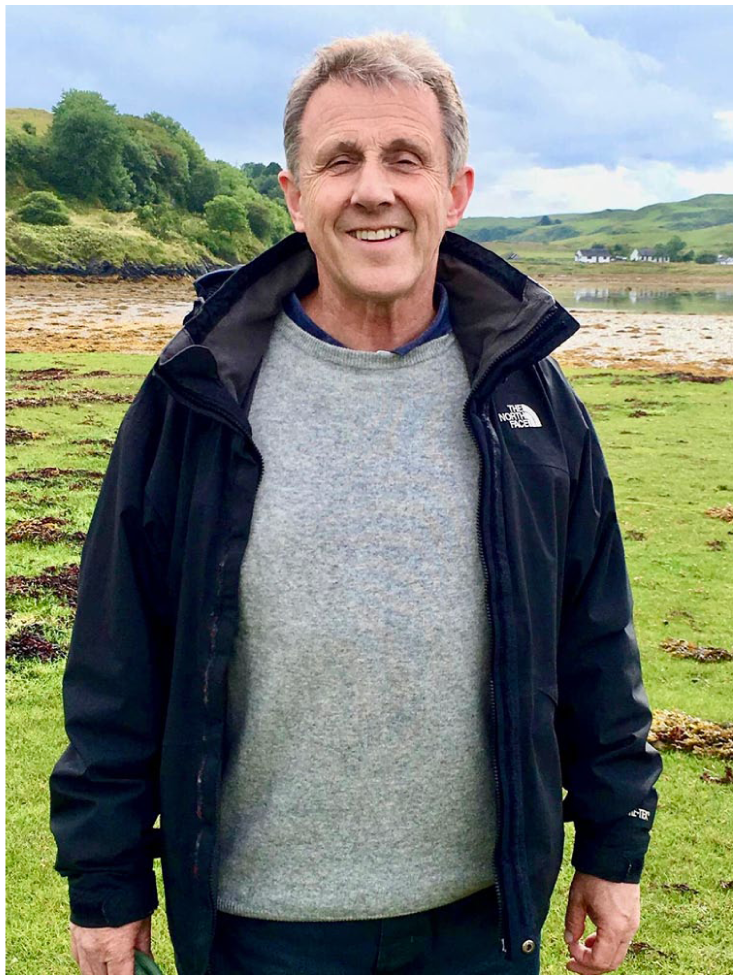
Alastair G. Dawson.
His vision and ingenuity allowed seminal contributions on tsunami geoscience, sea-level and climate change, glacial geomorphology, geoarchaeology and coastal studies. His works created the foundations for the development of new perspectives and interpretations in the reconstruction of British coastal landscapes.
His understanding of coastal sedimentary processes, his sharp intelligence and witness allowed him to contribute to new theories that reshaped our understanding of extreme events and long-term processes. His scientific efforts and extensive national and international collaborations span over 40 years of intense productivity producing some of the most influential references in several fields of Quaternary science. Alastair’s scientific endeavors resulted in over 100 peer-reviewed publications and 6 books.
Alastair was an inspiring teacher, mentor and colleague. He always stressed the importance of field data as a support for any model, whether originating from within physical geography, geology, or climate science. His work followed these principles, and this field and evidence-based approach was never shy of applying innovative methodologies to further comprehend field evidence and interpret them.
Alastair obtained his BSc (Hons) Geography from University of Aberdeen in 1974. His MSc Geography (“Landforms of Colville River delta, Alaska,” supervised by H. J. Walker) was obtained at the Louisiana State University, USA, in 1976. His PhD, supervised by J. B. Sissons, was obtained in 1979 from the University of Edinburgh with the title “Late Quaternary raised shorelines of Islay, Jura and Scarba, Scottish Inner Hebrides.” Toward the end of his PhD, he also worked as a Tutorial Research Assistant at the Bedford College, University of London, before establishing himself in Coventry, initially (in 1979) at Coventry Polytechnic and later (in 1991) at Coventry University where he became Professor of Quaternary Science in 1998. In 2004, after a brief spell at the University of St Andrews, he returned to the University of Aberdeen as a senior research fellow and Director of the Institute for Coastal Science and Management. From 2014 he was an Honorary Professor at the University of Dundee in his beloved Scotland.
Although bridging through many different topics within Quaternary Science (full reference to Alastair’s peer-reviewed contributions is presented), our work presents Alastair’s main contributions—Glacial studies, Tsunami deposits, Climate and sea-level changes.
Glacial and Quaternary shoreline studies
Alastair’s early career focused on the study of glacial morphology and coastal landscape changes in Scotland during the Quaternary. His initial publications were on a fossil rock glacier and a medial moraine on Jura (Dawson, 1977, 1979). However, it was his detailed field observations and measurements of glacial and coastal geomorphology, undertaken on Jura, Scarba and Islay for his PhD, that provided the foundation for his unrivaled expertise on Quaternary coastal evolution in the Inner Hebrides and established his eminence in Scottish Quaternary studies. His field skills and insightful analysis of the shore platforms and remarkable emerged shingle ridges of Islay and Jura were clearly evident in the influential publications that followed (Dawson, 1980a, 1980b, 1982, 1984, 1989, 1991, 2009). He later extended this work to other parts of western Scotland (Benn and Dawson 1987; Dawson, 1988; Sissons and Dawson, 1981), offering insights into glacial extents and patterns and processes of coastal evolution during the Devensian, and informed by studies of shore platform development in modern periglacial environments (Cooper et al., 2012; Dawson, 1980b; Dawson et al., 1987a, 1987b; Matthews et al., 1986; Rae et al., 2004). Alastair summarized key results of his work on Islay and Jura in the Geological Conservation Review (Dawson, 1993a, 1993b) and reviewed these more recently along with his studies from Colonsay, Tiree and Coll (Dawson and Ballantyne (2021).
Alastair’s enthusiasm for fieldwork and his observational skills were amply evident during the course of field excursions that he led to Islay and Jura for the Quaternary Research Association and in the accompanying field guides that he compiled (Dawson, 1983a, 1983b; Dawson and Dawson, 1997). Over the years he also led debate and discussion on Quaternary shoreline features in contributions to several QRA field guides to other parts of Western Scotland (e.g. Dawson, 2021a, 2021b; Dawson et al., 2023) (Figure 2).
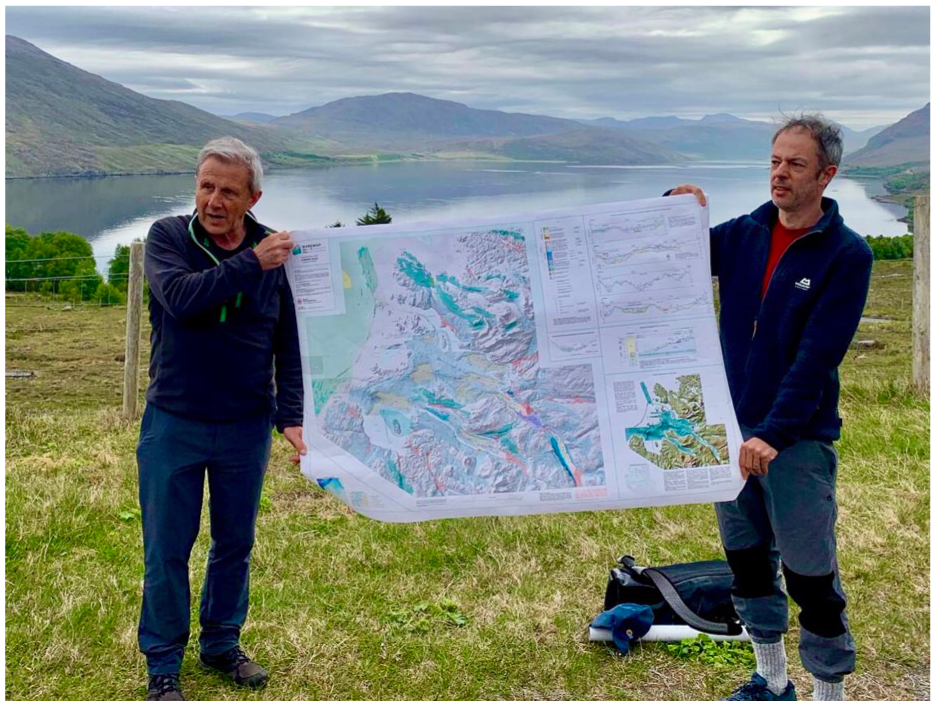
Alastair G. Dawson (left) during a Quaternary Research Association field meeting.
Through the 1980s, Dawson et al. (1986, 1987a, 1987b) examined frost-weathered rock platforms and sturzstrom landslides in Norway and Mull, illustrating the continuum of glacial and periglacial processes (Selby et al., 2000; Shakesby et al., 1987; Shakesby et al., 1989). Smith and Dawson (1985) and Dawson et al. (1987a, 1987b) emphasized the interaction between glacial retreat and coastal evolution, demonstrating the combined effects of ice, sediment, and hydrology on shaping landscapes.
In the 1990s, attention shifted to post-glacial shorelines and strandflat development. Dawson (1992a, 1994a, 1994b) investigated Quaternary shorelines on Tiree, Coll, and the Low Rock Platform, highlighting the interplay of glacial legacy and isostatic adjustment. These studies provided detailed geomorphological and sedimentological records, contributing to our understanding of Holocene coastal evolution and periglacial processes.
Other works combined age-estimation techniques with geomorphology to refine glacial chronologies and clarify ice-sheet dynamics, deglaciation rates, and geomorphological responses (Dawson et al., 2012; Gomez et al., 2014). Dawson et al. (2022) used 10Be exposure dating to establish timelines for Late Quaternary deglaciation in W Jura and NE Islay, while Kirkbride et al. (2014) documented Younger Dryas and Late-Holocene glaciers in the Cairngorm Mountains.
Integrated landscape evolution perspectives were presented in Ballantyne and Dawson (2003, 2019b) and Ballantyne et al. (2021) synthesizing geomorphological and sedimentary evidence across Scotland, highlighting the interactions between glacial, periglacial, and post-glacial processes. This work underscores the lasting imprint of glaciation on Scottish landscapes and informs broader interpretations of Quaternary environmental change.
Tsunami deposits
In the late 1980s and early 1990s, Alastair Dawson and colleagues produced the grounds for the development of tsunami geoscience, a new sub-discipline in Earth Sciences. His efforts on this topic were prolonged throughout his career, and he continued leading research in tsunami deposits until the end of his career.
In his famous paper from 1988: “The Storegga Slides: Evidence from eastern Scotland for a possible tsunami” he laid the foundations for this new subdiscipline in Europe. Many had encountered the Storegga tsunami deposits earlier, but the widespread sand in estuarine mud in NE Scotland was explained as something else. First as a flood layer (Sissons and Smith, 1965), later, as it was discovered in a larger area along the coast as a storm surge of unusual magnitude (Smith et al., 1985a, 1985b). Alastair was the one that put the evidence together and suggested that the fine sand layer was a tsunami layer generated by the Storegga Slide. Subsequently, several papers followed, mapping and radiocarbon dating the deposit (e.g. Dawson et al., 1989, 1990) and later studies focused on the detailed sedimentology of the deposits (Dawson et al., 1991; Dawson and Smith, 2000; Dawson et al., 2006; Long et al. 1989a, 1989b; Shi et al., 1995). These ground-breaking studies established a foundation for identifying tsunami deposits in the geological record.
These efforts continued in Bondevik et al. (2003, 2005a, 2005b), Costa et al. (2011, 2012a, 2012b, 2012c), and Dawson et al. (2003, 2004a, 2004b, 2004c, 2006) examining tsunami impacts in Norway, Portugal, and the North Atlantic, combining field evidence with historical and paleoenvironmental data (Andrade et al., 1994). Costa et al. (2015a, 2015b, 2020); Dawson et al. (2008, 2011, 2013); Dawson and Stewart (2007a, 2007b 2008a, 2008b) and Jaffe et al. (2008) investigated offshore tractive current deposition, boulder transport, and sedimentary archives. These studies highlighted both short-term impacts on coastal landscapes and long-term records in sediment cores.
Through the 1990s, his focus was on testing and refining methods to distinguish tsunami deposits from storm or even flood deposits (Cundy et al., 2000; Dawson, 2005; Dominey-Howes et al., 1999, 2000). Dawson (1994a, 1994b, 1996, 1999a, 1999b) and Dawson and Shi (2000) investigated tsunami sedimentological characteristics and its geomorphological impacts. Shi et al. (1995) and Dawson et al. (1996a, 1996b) documented coastal sedimentation associated with tsunamis in Indonesia, broadening the geographic scope of research. Same line of research was also conducted by Kortekaas and Dawson (2007)—Alastair’s most referred work—in southern Portugal where direct comparison between tsunami and storm deposit was made allowing for differentiation criteria to be forwarded which is still accurate presently.
Alastair Dawson’s vision and encouragement inspired the research teams that first identified and studied the sediments deposited by the November 1st, 1755 tsunami in the lowlands of Portugal’s southern coast, and also encouraged innovative research on the geomorphological fingerprints of that event in the barrier islands of the Eastern Algarve (Hindson et al., 1995, 1996). These pioneering investigations sparked a new way of understanding and assessing seismic and tsunami hazards across the Iberian Peninsula—a legacy that endures to this day.
In the early 2000s, after the 2004 Indian Ocean tsunami, field studies expanded globally, with detailed analyses of boulder transport, sediment textures, and stratigraphy. Furthermore, numerical modeling was increasingly integrated with field observations. Bondevik et al. (2005) and Dawson et al. (2020a, 2020b) compared simulated wave heights and inundation patterns with sedimentary records from the Shetland Isles and North Atlantic coasts. This integration improved understanding of tsunami dynamics and hazard potential, bridging geology, oceanography, and geophysics.
Most recently, Alastair’s tsunami deposits research has emphasized integrated approaches linking sedimentology, modeling, and hazard assessment. Dawson et al. (2020a, 2020b) and Costa et al. (2018) synthesized evidence from multiple regions along the Atlantic, emphasizing the global significance of tsunamis, detailing methods for identifying deposits, and discussing implications for risk mitigation.
Alastair Dawson was the father of tsunami geoscience and was responsible for its great scientific development.
Climate and sea-level changes
Another topic addressed by Alastair’s was climate change, sea-level and weather records throughout the Quaternary, particularly Scotland. His book So Foul and Fair a Day: a history of Scotland’s Weather and Climate (2009) perfectly illustrates these contributions that had started in the 1980s. Initially focused on establishing a baseline for understanding Holocene relative sea-level changes, Sissons and Dawson (1981), Dawson (1983a, 1983b, 1984, 1988) and Dawson and Smith (1983), Smith and Dawson (1985) documented post-glacial transgressions, shorelines, and ice limits in western Scotland.
Later, Dawson (1992b, 1994a, 1994b) and Dawson et al. (1997, 1998a, 1998b, 2001a, 2001b, 2017) analyzed peat deposits, intertidal sequences, inferring storminess patters, providing high-resolution records of Holocene relative sea-level change and coastal dynamics. This work highlighted the interactions between climate variability and sedimentary processes. An example was the link between the Storegga Slide and associated tsunami with sea-level fluctuations and the 8.2 ka cold event as presented in Long et al. (2016), Dawson et al. (2011), and Smith et al. (2004).
In the early 2000s, his research focused on climate variability’s regional impacts, on the North Atlantic Oscillation, storm frequency, and multi-proxy climate reconstructions. Dawson et al. (2000, 2002a, 2002b, 2003, 2004a, 2004b, 2004c, 2007b), Dawson and O’Hare (2000) and Emeis and Dawson (2003) combined historical records, ice-core data, and sedimentary archives to assess Holocene storminess, climatic variations and teleconnections between Europe and Greenland.
More recent research emphasizes high-resolution reconstructions and community adaptation (Matthews et al., 2012). McIlvenny et al. (2013), Orme et al. (2016), Muir et al. (2014), and Young et al. (2014) employed sediment cores, µXRF scanning, and historical records to reconstruct storminess, sea-level change, and local human responses. These studies demonstrate the growing emphasis on integrating environmental and societal perspectives.
Finally, modern research synthesizes centuries of data to inform hazard assessment and coastal management. Dawson (2008, 2021a, 2021b); Dawson et al. (2022); Jordan et al. (2010), and Dawson and Oliare (1998) examined climate variability, sea-level trends, and ocean-atmosphere interactions, providing long-term perspectives essential for understanding both past and future coastal and climatic changes.
Historical climatology
Alastair had a long-held interest in historical archive records of weather events which culminated in his engagingly eclectic book So Foul and Fair a Day (2009). A theme of historical climatology ran through his research for a quarter of a century and he would often enthuse about some ancient weather record or diary he had just discovered! He combined this passion with an initial examination of relationships between windstorms and volcanic eruptions (Dawson et al., 1997) before a novel series of cross-disciplinary papers employed documented weather history as both evidence for, and a consequence of, atmospheric changes in the wider North Atlantic region (Dawson et al., 2002a, 2002b, 2004a, 2004b, 2004c, 2007b, 2010). Some papers focused on the human impacts in Scotland of extreme events, notably the “Great Storm” of 2005 in the Outer Hebrides (Dawson et al., 2007a) and the Laki eruption of 1783 (Dawson et al., 2021). Others drew on earlier periods of abrupt change, notably the 14th century climate step (Dawson et al., 2007b; Dugmore et al., 2007). He further disseminated his expertise to a wide readership though his books and popular explanatory articles in Geography, The Conversation and The Geographer.
Final remarks
Alastair Dawson was an extraordinary multidisciplinary Earth and environmental scientist, renowned for his holistic understanding of the external geodynamic processes that affect the Earth’s surface. His pioneering work, always innovative and often far ahead of its time, will continue to influence Quaternary Science for many years to come. Yet beyond his scientific brilliance, Alastair was an exceptional human being, endowed with a keen intellect with a warm heart, and a wonderfully sharp sense of humor.
Alastair George Dawson is greatly missed.
Footnotes
Acknowledgements
The authors are thankful to Iain Stewart, John Gordon and César Andrade for their valuable comments on the initial version of this work and for their insights on Alastair’s work. The authors also acknowledge the very constructive contribution made by John Mathews (The Holocene Editor).
Author contributions
Funding
The authors received no financial support for the research, authorship, and/or publication of this article.
