




Abstract
Historical archives for the Roman Monarchic and Republican periods (753–29 BCE) offer a highly resolved series of observations of environmental and climatic phenomena in Central Italy. This paper presents a new collection of these historical archives, gathering 319 observations across the period. We introduce the historical character of these archives and point out aspects affecting their analysis and interpretation for reconstruction of past environmental and climatic conditions in Italy in the latter half of the first millenium BCE. Archival information is seen to be generally reliable from the fifth century BCE onward, providing a valuable source about regional past climate. The historical archives’ anecdotal nature along with complexities of their formation and transmission encourage cautious and closely contextualized interpretation, and we advocate the use of this information most of all to understand Romans’ changing experience of environment and climate. We offer comparison of this data to current understanding of regional climate conditions based on scientific proxies, especially speleothems and marine cores. These records show some convergence with the historical archives, and we discuss the possibility that this may reflect a relatively warm, wet climate period (Roman Warm Period) in Italy coterminous with Rome’s initial phase of imperial expansion.
Keywords
Introduction
Integrating climatic and environmental information recorded in archives of past societies (i.e. human observations and records) with scientific data is a key task for the comprehensive reconstruction of past environmental and climatic conditions (Brázdil et al., 2005; Brönnimann et al., 2018; Camenisch et al., 2020; White et al., 2023). Where available, archives of societies often provide the most highly resolved information for natural phenomena, especially for periods and places where instrumental observations are unavailable. At the same time, information found in archives of societies is necessarily shaped by human observation, making it critical to attend closely to social and cultural influences and posing challenges of interpretation. A long tradition of paleoclimatic studies in Early Modern Europe demonstrates the ability to extract meaningful records from the pre-instrumental period (Le Roy Ladurie, 1971; Pfister and Wanner, 2021). Recent literature reveals ancient Mediterranean societies as rich in historical archives for past climate and environment (e.g. McCormick et al., 2013; Meklach et al., 2021; Millar, 2021). The spread of writing across the region by the early first millenium BCE, combined with early and sustained interest in recording natural phenomena, grant considerable temporal depth to archives from ancient Mediterranean societies. Here, we present a comprehensive dataset of environmental information from Central Italy during the Roman Monarchy (753–509 BCE) and Republican period (509–29 BCE), representing 319 total observations, which we then compare with evidence of regional climate proxies.
We focus especially on the Republican period, when Rome progressively expanded political control across Italy and then the entire Mediterranean. A now-extensive literature explores the climate and environmental history of the subsequent Roman Imperial period (Erdkamp et al., 2021; Harper, 2017; Harper and McCormick, 2018; Harris, 2013; Izdebski and Mulryan, 2019; Zonneveld et al., 2024). Increasingly, the environmental history of the earlier process of Roman expansion draws focused interest (Bernard et al., 2023; Tan, 2023; Trentacoste and Lodwick, 2023). For historical climate research, the earlier period presents opportunities to evaluate the debated idea that warmer or more stable climate may have contributed to Roman state formation, and we consider here what light historical archives shed on this matter. Unlike for the subsequent Roman Imperial period, in the Republican period there is a relatively continuous and homogeneous archive of annually resolved observations stretching over hundreds of years. These sources come down to us not from direct documentation, but through their use and citation by authors who produced historical works in Greek and Latin, mainly during the last years of the Republic and the early Imperial period. This feature of the archives complicates their use, requiring specialist understanding of environmental notices in extant sources. Interest in these sources dates back well over a century (Seidensticker, 1886; Semple, 1931). There have been prior attempts to track particular phenomena like epidemics (Northwood, 2006), grain shortages (Garnsey, 1988; Virlouvet, 1985), or inundations of the Tiber (Aldrete, 2007), or to gather partial data into more temporally limited or diachronic assemblages (Conte, 2019; McCormick et al., 2013). This paper provides a new, comprehensive database based on an independent collection of historical information for environment and climate over the full Republican period (509–29 BCE).
We present archival information alongside comparison with current understanding of Italian climate in the later first millenium BCE derived from climate proxies. The integration of these datasets underscores the potential of the historical material to advance research on the climate and environmental history of Italy and the Central Mediterranean. However, responsible use of this material must account both for its complex correlation to scientific proxy information and for the particular characteristics of the archives’ formation and transmission to present day. We encourage the use of this archive most of all as a reflection of Romans’ experience of environmental conditions rather than as a direct or independent index of those conditions themselves.
Methods
The dataset collected here (Supplemental Data) was gathered from those ancient sources offering historical coverage of the Republican period as well as the preceding Monarchy. A considerable literature questions the facticity of historical accounts of Rome’s earliest recorded history, during the Monarchic period (753–509 BCE) when the city was supposedly ruled by a series of kings (Cornell, 1995; Forsythe, 2006; Wiseman, 2008). For completeness, we include data starting from the putative foundation of the city of Rome in 753 BCE, although the chronology and reliability of this earliest information is seriously doubtful. Traditionally, the Roman Republic began in 509 BCE, when monarchic rule was replaced by annually elected magistrates. This republican government continued with modifications down to 29 BCE, when the Emperor Augustus reestablished monarchic rule. From 509 to 29 BCE, the annual appointment of magistrates provides a chronological framework for archives. These archives, first created as a form of priestly reporting, included annual notices of natural phenomena (Rich, 2017). The complete contents are hard to reconstruct, but the archives progressively seem to have included fuller notices on aberrant meteorological phenomena. This aberrant nature is worth stressing: this is not a systematic phenological record, but the majority of events in the Roman historical archives are anecdotal, relating singular episodes of spectacular, extreme, or unusual nature, which caught the notice of our sources.
By the second or first century BCE, the priestly archive circulated as a self-standing but now lost collection (Frier, 1999). We do not possess direct witnesses to this collection, but we access it through a process of transmission. By the later third century BCE, Roman historical authors began to transform this and other available documentary sources into fuller historical narratives. Works in this tradition are called “annalist history” for their annually repetitive structure based on the Roman year (Latin annus). This annalist structure grants considerable chronological resolution. In some annalist works, it was typical to end or start the historical narrative of each year with a list of natural or supernatural phenomena reported on Roman territory that year (Rawson, 1971). Environmental information also appears in relation to the narration of each year’s political events. The earliest annalist histories are now lost, but later Roman authors, who form the basis of our analysis, worked directly with this information. Because most extant authors relied on this same ultimate source of now-lost reports, it is unsurprising to find 17% (N = 55) of events in our dataset attested across more than one ancient author. Repetition reflects the common source background ultimately going back to the priestly archive and does not indicate the significance of any particular episode.
Sources and categorization
The core of our database derives from autoptic reading of four authors who worked within or allied to the “annalist history” tradition: Livy, Julius Obsequens, Dionysius of Halicarnassus, and Cassius Dio. 1 Livy (64 BCE–17 CE) wrote the historical work, From the Foundation of the City (Ab urbe condita libri), narrating the entire history of Rome up to his day. Extant portions of his large work cover events between the foundation of Rome in 753 down to 293 BCE (Books 1–10), and from 218 to 168 BCE (Books 21–45), with the remainder only accessible via abbreviated Byzantine summaries. Livy regularly reported annual prodigies including environmental events, and, where it survives, his work is the best source. Gaps in Livy’s record can be filled in part by the work of Julius Obsequens, a Late Imperial writer who compiled Livy’s prodigy reports into a Book of Prodigies (Liber prodigiorum) transmitting information from 190 to 11 BCE. Dionysius of Halicarnassus (active ca. 30–7 BCE) wrote a historical work on Roman Antiquities in Greek covering events from Rome’s foundation (753 BCE) down to the start of the First Punic War (264 BCE). The first 10 of twenty books are preserved with fragments surviving from the others. The Roman senator Cassius Dio (ca. 164–after 229 CE) wrote a history in Greek of Rome from prehistory to his time. About two-thirds of his work is lost, but books 36–54 preserve and offer occasional reports of environmental information from 68 to 10 BCE. Parts of the remainder of his work on the Republican period come down to us through Byzantine summaries. These authors, despite different backgrounds and languages, organized materials according to the annalistic structure, presenting information in regular chronological order anchored by the names of the two high magistrates called consuls, elected to office every year of the Republican period.
Alongside these writers, we gather information from other sources whose reporting of environmental phenomena was fragmentary or unsystematic. Fragments from the large number of historians preceding Livy, whose works are now lost, are collected by Cornell (2013). Historians such as Thucydides, Polybius, Diodorus Siculus, or Valerius Maximus provide relevant information, even as they did not write only about Roman Italy or did not follow the annalist arrangement. Finally, we consider a selection of non-historical authors like the encyclopedist Pliny, whose scientific interests occasionally prompted environmental anecdotes (Millar, 2021).
To facilitate comparison, we sort archival information into categories used by other studies (cf. Brázdil et al., 2005; Meklach et al., 2021; cf. McCormick et al., 2013): earthquakes, eruptions, floods, famines and food crises, epidemics and pestilences, rain, snow, wind, storm, droughts, exceptional heat, eclipses and celestial visual effects (Table 1). “Other phenomena” forms a catchall of supernatural meteorological events such as rains of blood, milk, stones, soil, flesh, or oil. We separate droughts and exceptional heat events, as these do not always coincide in the sources, while global climate fluctuations such as NAO tend to produce drier but cooler conditions in the Central Mediterranean region (Bernard et al., 2023: 7).
Examples of each category of environmental information in Roman Republican sources.

Ancient terms for different climate events are typically stable across sources but not specific enough to offer much close detail. That is, Roman sources leave us generally able to identify an environmental event but unable to gage or quantify relative intensity, in contrast to sources for some other periods (cf. Camenisch et al., 2022; Pfister et al., 2018). Information not immediately interpretable as environmental or climatic episodes, but often transmitted alongside more easily interpretable information, is omitted from the database. We also exclude commonplace occurrences like lightning or thunder, as well as anthropogenic phenomena like famine explicitly attributed to war.
Where feasible, each observation is linked with latitudinal and longitudinal information for ancient sites from pleiades.stoa.org. While ancient sources meticulously pinpoint some events to specific cities or sites, 26% of entries are documented at a regional level. Underscoring the overall geographical resolution of this archive, only 2 of 319 entries were impossible to map.
Credibility and reporting biases
The historical archive presents inherent challenges owing to its creation and transmission. Because the historical record of early Rome passed through various hands already by the time it reached our first surviving accounts, there is long-running source-critical debate about editorial license or invention by ancient authors. Ancient sources already noticed how elite families embellished their ancestors’ accomplishments with fictitious accomplishments or false attributions. However, the language of environmental reporting is generally plain and consistent, suggesting that this defect appears less relevant in our case where information was probably originally based on priestly recording (cf. Table 1).
While we possess no firsthand witness to the process of priestly recording of natural phenomena in Republican Rome, the survival of early priestly calendars from neighboring Etruscan society offers circumstantial support for similar practices at Rome (Turfa, 2012). Some convergences between attested events and scientifically established natural phenomena lend support to the quality of archival information from priestly recording. These potential points of intersection between historical and scientific data do not absolve individual reports of possible error or invention but do offer general confidence to the claim that extant sources transmit information from a real priestly archive at least from the fifth century BCE. One form of convergence are solar or lunar eclipses. Such episodes placed by Livy or Obsequens in the years 203, 190, 188, and 168 BCE all correspond to eclipses known to have been visible at Rome in those years (Deman and Raepset-Charlier, 1974; Morrison et al., 2019). Another example takes us back to the fifth century BCE: Cicero relates reference by the early Roman poet Ennius (239–169 BCE) to an eclipse in “about the 350th year after the foundation of Rome.” The year corresponds closely with a known solar eclipse visible at Rome on the afternoon of 21 June 400 BCE (Rich, 2017; Skutsch, 1974).
A further possible convergence from the fifth century BCE comes from recent work on records of global volcanism in glacial ice. Ice core evidence indicates that a stratospheric eruption ca. 426 BCE (±5 years) was one of the largest globally of the last 2500 years, comparable in sulfate output to the enormous Samalas eruption of 1257 CE (Gautier et al., 2019; Sigl et al., 2015; Toohey and Sigl, 2017). That this eruption probably occurred in 426 BCE and caused global cooling for at least 2 years is indicated by tree ring evidence displaying exceptionally cold conditions in 425–424 and 422 BCE in the eastern Alps (Nicolussi et al., 2009), in 424 and 420–419 BCE in northern Scandinavia (Helama et al., 2010, 2022), in 425–424 and 421–419 BCE in the American Southwest (Salzer and Hughes, 2007), and in 425–423 BCE in Tasmania (Cook et al., 2006). This suggests that in 425–424 BCE, and perhaps for a few successive years, Italy experienced exceptionally cold conditions. Historical evidence indicates that the comparable Samalas event caused cold conditions and subsistence crises in Italy the year after the eruption (Guillet et al., 2017). 2 The ca. 426 BCE eruption corresponds to one of the more significant and detailed reports of severe aridity at Rome by our sources for the early period (Livy 4.30.8-9; Dionysius of Halicarnassus 12.9). In other periods, climate forcing following explosive eruptions can be seen to suppress agricultural production, leading to famine and increased susceptibility to disease. These links make it noteworthy that food crisis and pestilence on Roman territory are also reported in those years. The Republican period is otherwise relatively quiet in terms of explosive volcanic eruptions. Eruptions in the 160s and 140s BCE have recently been linked to political unrest in Ptolemaic Egypt (Ludlow and Manning, 2021), and volcano-forced cooling may possibly be linked to closely contemporary reports of famine and drought in Italy. At the very end of the Republic, global climate forcing resulting from the eruption of the Okmok volcano in 43 BCE has been connected to reports of unusually cold weather with impacts upon Roman food production possibly exacerbating political unrest (McConnell et al., 2020).
Another set of issues has to do less with reliability and more with the archives’ inherent limitations. Reporting was initially motivated by religious practice, as priests sought to develop responsive strategies or expiate bad omens on behalf of the Roman community. In this sense, the Republican archives flow from religious responses to environmental uncertainty well-attested in premodern societies (Gerrard and Petley, 2013; Pfister, 2006; Zanchetta et al., 2021). However, this motivation imposes certain characteristics. For one, reports are limited to territory controlled by Rome or its allies (Rawson, 1971; see below), while we do not possess similar information for non-Roman communities around the peninsula. The reason for the archives’ creation also focused recording on aberrant or unusual environmental phenomena, rather than recurrent or regular conditions perceived as normal.
The responsive nature of the record also means that information on environmental phenomena often accompanies records of highly unusual events that are hard to interpret in a scientific manner. Connected to this issue is the fact that records were subject to the state of interpretative knowledge of their time. Thus, we are limited in our ability to offer diagnoses of climate-forced disease episodes. We can only speculate whether vaguely described reports of transmission of famine-related disease between livestock and humans supports identification of rinderpest and measles, for example (Düx et al., 2020; cf. Dion. Hal. 9.67.1-2).
A final source of bias stemming from the archives’ religious purpose is the significant clustering of episodes at times of high community stress. The largest concentration of events in our database falls around 218–217 BCE. These years marked the start of the Second Punic War when the Carthaginian commander Hannibal dealt significant military losses to Romans in Italy. Roman sources saw these cataclysmic events as shaped by divine forces often manifesting in natural phenomena, while ancient authors already noted the high number of natural omens in the record of Hannibal’s invasion (e.g. Livy 22.1.8).
Chronological confidence and error
Scientists and environmental historians working with these archives should be aware of uncertainty relating to the dating of events. The calibration of reported dates with modern timescales is complicated by the historical development of the early Roman calendar, which transformed over stages from an early lunar calendar tied to the agricultural cycle to a lunisolar and more independent measure of time (Rüpke, 2011). In the Early Republic, the civic year did not start in January, but possibly in September or March (Bernard, 2023: 171, 193).
Another complicating factor is the circulation of two chronological systems among our sources, one reconstructed by Roman scholarly authors by the first century BCE, and the other based upon early calibration between Roman and Greek events. Ancient attempts to reconcile these two systems have introduced invention and error (Drummond, 1978; Oakley, 1997). Greek authors writing about Rome synchronized the sack of the city by Gauls to the year when King Dionysius I of Syracuse besieged the Greek city of Rhegium (386 BCE). Relying on a competing chronology, Roman sources dated the same event several years earlier, to 390 BCE. Sources reconciled these chronologies either by inserting extra magistrates in years between 390 and 300 BCE (333, 325, 309, 301), or by insisting that Rome suffered a period of anarchy in the later 370s. After 300 BCE, the two traditions report identical sequences of events, but the discrepancy increases uncertainty for the earlier period.
Confidence in the accurate calibration of environmental information thus increases as we move forward in time. For the earlier period, ancient authors sometimes note discrepancies of decadal scale in the placement of historical events, affecting our dating of particular environmental phenomena. For instance, Livy reports debate over the military accomplishments of Aulus Cornelius Cossus, who was elected to the offices of tribune of the plebs in 437 BCE and consul in 426 BCE. Citing the authority of the emperor Augustus, Livy favored dating Cornelius Cossus’ military success to 437 BCE, as he suggests that Roman military capacity would have been hampered by severe famine and pestilence at the time of Cornelius Cossus’ consulship (Livy 4.20.9; cf. Ogilvie, 1958). We are unable to clarify the sequence of events, although, as noted above, new evidence of volcanic activity offers support to Livy’s claim of stress on Roman food production at the later date. In general, we suggest operating with an age uncertainty of ±1–2 years after 300 BCE, ±5 for the period between 390 and 300 BCE, and ±10 for the initial Republican period from 509 to 390 BCE. Prior Monarchic information on climate should be treated with utmost caution.
Difficulties of interpretation and inference of climate conditions
Events like heavy rain, snowfall, or flooding have straightforward significance to the reconstruction of past climate. However, interpretation in other instances can be challenging. Famine in the ancient Mediterranean resulted as much from human factors (e.g. warfare, trade) as from climatic conditions (Alfani and Ó Gráda, 2017; Garnsey, 1988). Pestilence and disease may have indirect relation to climate changes, but rarely is this relationship made obvious or straightforward from the ancient sources.
Attempts to offer rational explanations for strange meteorological events classified as “other” in the database, many of which seem at first glance supernatural, date back to antiquity. Saint Augustine (City of God, 3.31) interpreted reports of rains of stone as hailstorms, while Cicero (On Divination, 2.27.58) suggested that rains of blood could be explained as precipitation mixed with iron-rich sand (cf. Mastandrea and Gusso, 2005: 175). Cicero’s rational explanation may find some basis in the resemblance of reports of “bloody” or “milky” rain to the climate conditions created by the annual Saharan dust storm, still observed today in Central Italy. 3 Ancient sources may transmit notices of the Sirocco, which causes dusty, dry conditions along the northern coast of Africa, storms in the Mediterranean Sea, and warm, wet weather in Southern Europe (Dutton, 2008). While passing over the Mediterranean, the Sirocco picks up moisture, resulting in white or red colored particles mixed with rain, called milk or blood rain already in meteorological research of the early 19th century (Giovene, 1803).
Further issues relate to how we infer prevailing climate conditions from Roman sources. For other periods, comparisons of documentary information to scientific data points to several forms of systematic bias (Hannaford and Beck, 2021; Kiss, 2017; White, 2019; already Bell and Ogilvie, 1978). Observers in some cases record only the first year of multi-year droughts or recurrent flooding, collapsing prolonged conditions into singular events. Otherwise, source interests in dramatic or abnormal episodes can create exaggerated impressions of extreme weather. Sources may, for example, report a week of heavy rain within an otherwise normal year, giving false impressions of overall conditions. Meanwhile, sources tend to record events with clear societal impacts like drought leading to crop failure or destructive flooding.
When considering Roman sources, these issues are relevant to differing degrees. The annual structure of the archives makes it unlikely to collapse multi-year events into singular episodes, as multi-year phenomena are observed in consecutive years in Roman sources (e.g. drought in 429, 428 BCE). We have seen the heaping of events at times of social stress, in particular around the Second Punic war; however, it is also the case that the prodigious quality assigned by Romans to bad weather events entailed some degree of reporting without reference to societal impacts or periods of stress. Above all, the discontinuous, anecdotal character of Roman coverage presents interpretive challenges. While we might infer that a climate event occurred in a year in which it is reported, we cannot assume it did not when such a report is absent, as it cannot be excluded that events either went unreported or were not transmitted to extant sources. These issues strongly urge against the use of these archives as independent witness to overall conditions across the Monarchic and Republican periods.
Results
Overall, our database captures 319 environmental episodes reported between 753 and 29 BCE, at an average distribution of about one event every two calendar years (2.3). The quantity of data may be compared to the catalog of McCormick et al. (2013) for the Roman Imperial period (100 BCE–800 CE), which collected 499 events at high confidence levels and 771 total events. Over half their high confidence data relates to Nile flooding (263), while the remainder situates geographically around the full Mediterranean. We thus emphasize the comparative density of our database for research on the Central Mediterranean during the period of Pre-Imperial Roman history.
Leaving aside the catchall category of “other” events, our database shows that Republican sources most of all reported celestial visual effects (16%), followed closely by notices of epidemics and pestilence (14%) (Table 2). The dominance of these categories of environmental episodes may be ascribed to the religious nature of this archive, as these were especially the types of events seen as divinely created and therefore demanding of religious responses.
Total attestations of climate and environmental episodes by category for the Monarchic and Republican periods (753–39 BCE).
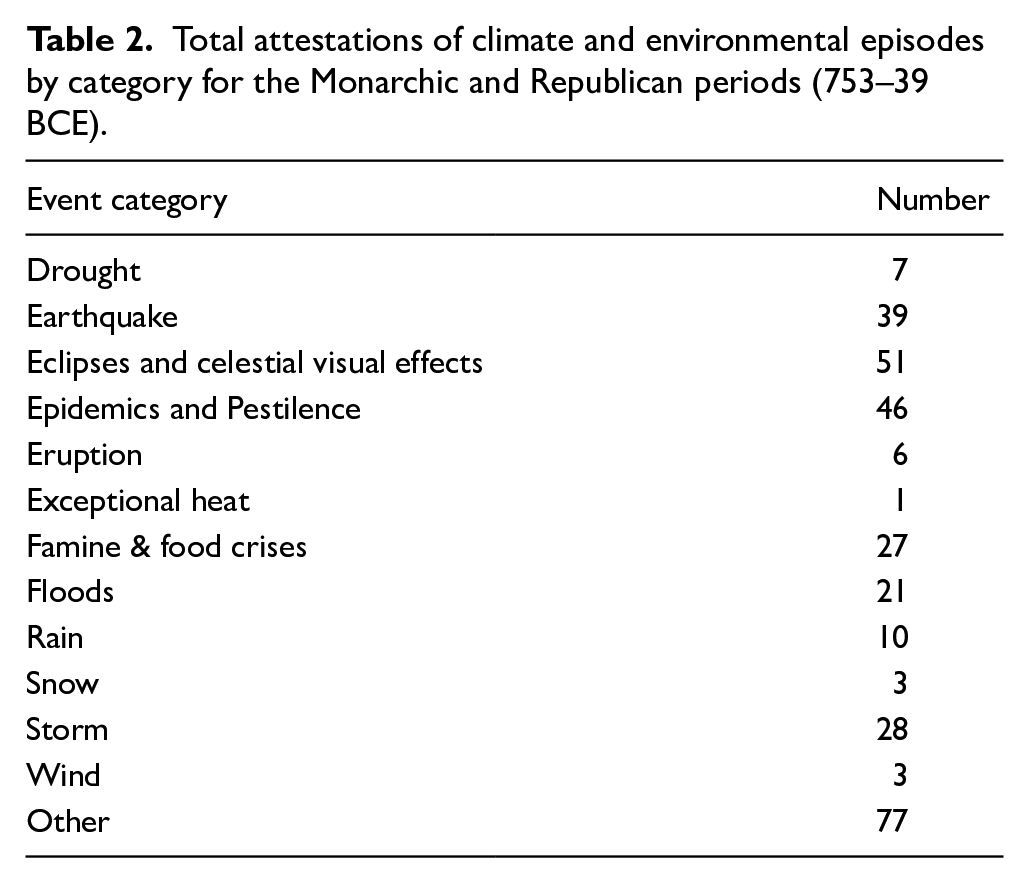
About a quarter (ca. 23%) of the archival database consists of directly reported climatic/meteorological events. Information on hydrological conditions dominates the climatic/meteorological information of the historical archive. Events indicating unusual rainfall levels make up ca. 21% of the entire archive. By comparison, only ca. 14% of those events of a climatic/meteorological nature, ca. 3% of the total, relate to temperature. It is possible this shows that extreme summer heat or winter cold were not as often interpreted as prodigious events than sudden, often destructive episodes of precipitation or flooding. The emphasis might also suggest the importance of hydrology in regulating the life of population and settlement in the Mediterranean where temperature fluctuations held fewer impacts than availability of water or hydrological events like floods.
The spatial trend in the archive (Figure 1) follows an expected pattern of expanding Roman territorial control. Reporting expands radially over time and becomes more frequent in certain regions following Roman military conquest or the subsequent creation of colonies.
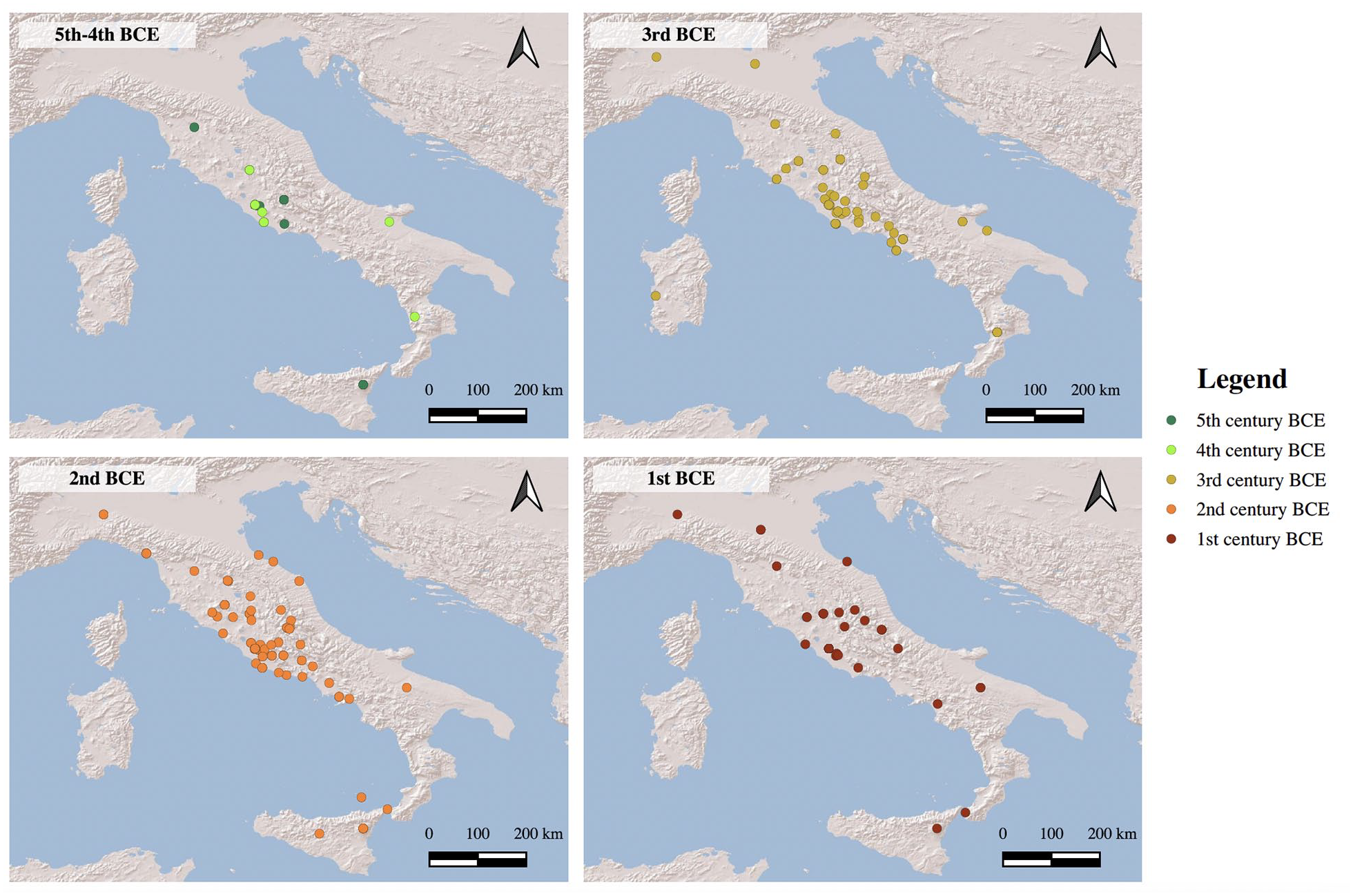
Spatial distribution of Roman Republican archival information over time.
Otherwise, we note several features of the temporal distribution of reported events (Figure 2). The number of reported episodes increases noticeably over time, although this trend is not consistently observed. Only seven events are recorded for the whole Monarchic period (753–509 BCE), followed by 41 from 509 to 400 BCE, 24 for the fourth century, 67 for the third century, 122 for the second century, and 58 from 99 to 39 BCE. The trend may in part be ascribed to the progressive widening of the geographical scope of reporting, which returned increasing amounts of data. However, it cannot be explained purely on these grounds, as some categories, for example epidemic disease, appear consistently across the archives’ full chronological extent. The trend is also not only a matter of source availability, as Livy’s narrative exists entirely for the first two centuries of the Republic, although the coverage of Julius Obsequens from 190 BCE onward may support some increase in data.
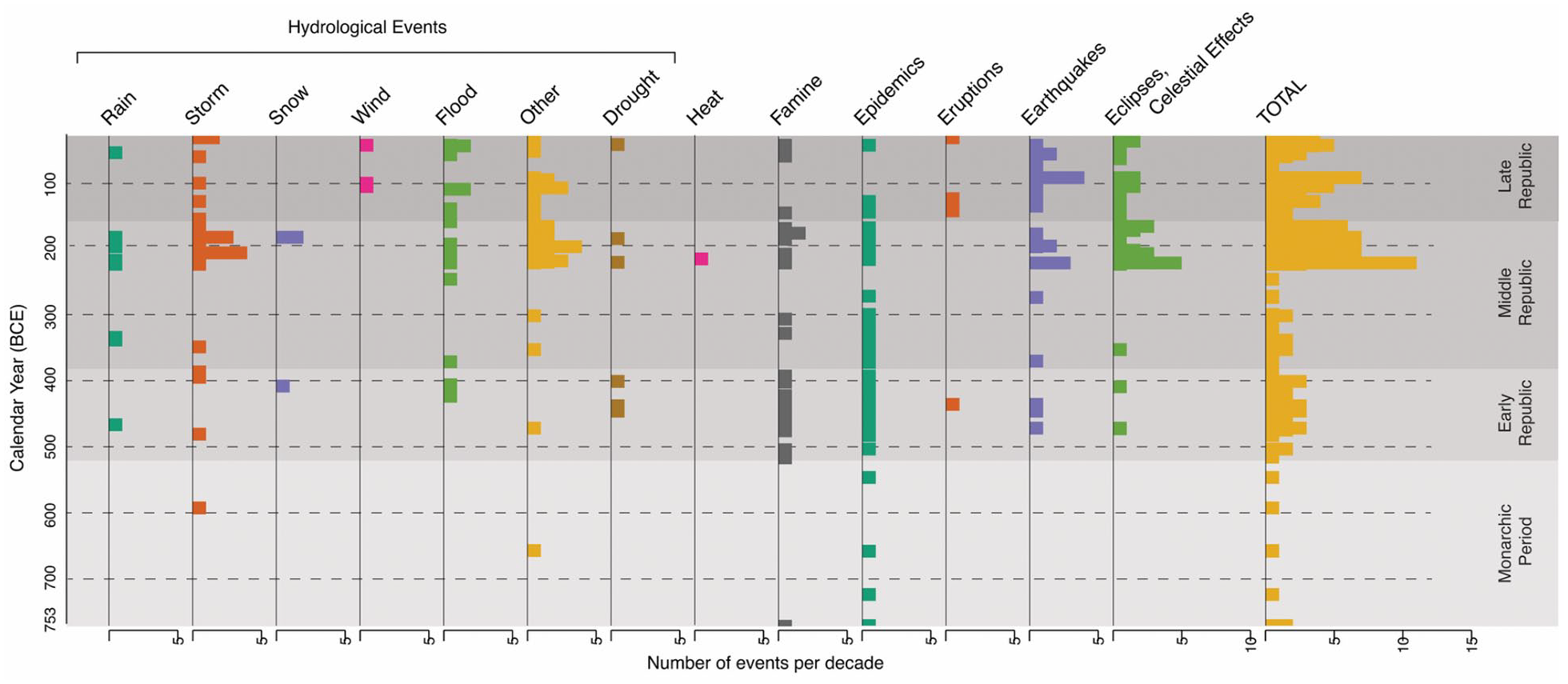
Temporal distribution of observations by decade in Roman Republican historical archives, 753–29 BCE.
Supporting the general credibility of the archive, the temporal patterning of some categories adheres to logical assumptions about underlying drivers. There is no noticeable correlation between different categories of events with the exception of a spike in most categories around the initial years of the Second Punic War, for reasons discussed above. Otherwise, contrasting patterns between famine and food crises on the one hand and epidemics and pestilence on the other conform to underlying expectations for each phenomena (Northwood, 2006), as reports of food scarcity diminish over the course of the early Republic, whereas disease reports remain relatively consistent across the full period. Famine depended not only upon environmental factors but upon access to trade networks, which expanded over time with Roman political power, whereas endemic disease was not necessarily affected by the same political process.
Discussion: Evidence for the Roman Warm Period?
A major consideration in analyzing this archival information is its possible reflection of the onset of a period of warmer, wetter, or more stable climate, the so-called Roman Climate Optimum or Roman Warm Period (RWP). The timing, extent, and historical impacts of this RWP are all topics of significant debate (Bernard et al., 2023; Bini et al., 2020; Erdkamp, 2021; Harper and McCormick, 2018; Zonneveld et al., 2024). There are also outstanding questions about how a climate shift during the Republican period may have contributed to Roman expansion. Despite some claims of straightforward linkages between temperature change and imperial integration (e.g. Margaritelli et al., 2020), the relationship between climate and human behavior in the region appears significantly complex (Bernard et al., 2023). As they show long-running interest in environmental phenomena extending well earlier than any RWP, the historical archives can inform this debate.
Increased wetness in the archive
Viewed in light of this debate, it is notable to observe the uptick starting in the early second century BCE in the frequency of exceptional weather events (rain, storm, wind, snow). After few events from these categories during the first three centuries of the Republic, the spike around Hannibal’s defeat of Rome at the Battle of Cannae (217 CE) is followed by fairly consistent reporting of bad weather for the remainder of the Republic. We set out to assess whether this trend might be taken to reflect destabilizing weather patterns or increased humidity in the region around 200 BCE. Indeed, we have offered reasons to endorse the quality of historical data already from the fifth century BCE, but we have also noted biases affecting interpretation, including a general increase in the fullness of the historical archives over time and its widening territorial ambit, as well as the availability of particular sources. This is not to deny the possibility that the archives reflect to some extent a shift in prevailing climatic conditions, rather that they are unlikely to do so in a simple manner.
Further complexity stems from problems noted above of inference based upon an incomplete record. This is well illustrated by one possible index of wetter climate, namely the temporal distribution of Tiber floods. After almost no reports of flooding for the Early Republic, Tiber floods become regular during the second century BCE. While some studies have linked the frequency of flooding to warmer, wetter climate conditions, it remains important to bear in mind contextual and interpretive aspects. While Tiber flooding in the city of Rome reflected seasonal and episodic rainfall upstream, flooding was also exacerbated by anthropic activities in the Tiber valley. Recent coring in the Tiber basin within the city of Rome establishes a major change in the paleochannel during the sixth century BCE when significant silting and erosion reshaped the river’s course through the city. Flooding at this time is attributed to warmer climate but also to urbanization in the upstream region as well as at Rome itself, as building activity and other timber-use intensified exploitation of stone and forest resources along the river valley, exacerbating erosion (Brock et al., 2021). Notably, sources do not report flooding in this period, unless we read very literally Livy’s mythological story that Tiber Island was formed in the earliest years of the Republic from the grain cut from the property of the expelled kings and thrown into the river (Livy 2.5.4). As noted above, however, the absence of reporting should not be interpreted as the absence of extreme flooding. Instead, this forms a case where independent environmental data reveals the incompleteness of the Roman archives, especially when moving backwards in time into the Monarchic period. This topic thus offers an example of both the limits of reporting underlying the historical archive and the interrelationship of natural and societal aspects.
Scientific proxy data
To pursue this issue further, we compare the magnitude, timing, and extent of the RWP in our record to scientific proxies in order to facilitate comparison with the historical archives. Roman-period proxy data for the Italian peninsula during the Roman Republican period remains fairly limited (Figure 3). There are abundant palynological studies, but the ability of Holocene pollen records to reflect climatic, as opposed to anthropic, signals is debated (Fyfe et al., 2018; Sadori et al., 2013). The most suitable proxy record for hydrological reconstruction is represented by δ18O in speleothems, shown to be a reliable indicator of precipitation in the Central Mediterranean region (Bini et al., 2020; Zanchetta et al., 2021). For Roman Italy, only a handful of speleothem records are available. Temperature proxies are supplied regionally by two marine records: an alkenone sea surface temperature (SST) record from the Gulf of Lyon (Jalali et al., 2016) and, for the later part of the period, a highly resolved dinoflagellate cyst signal from the Gulf of Taranto (Zonneveld et al., 2024).
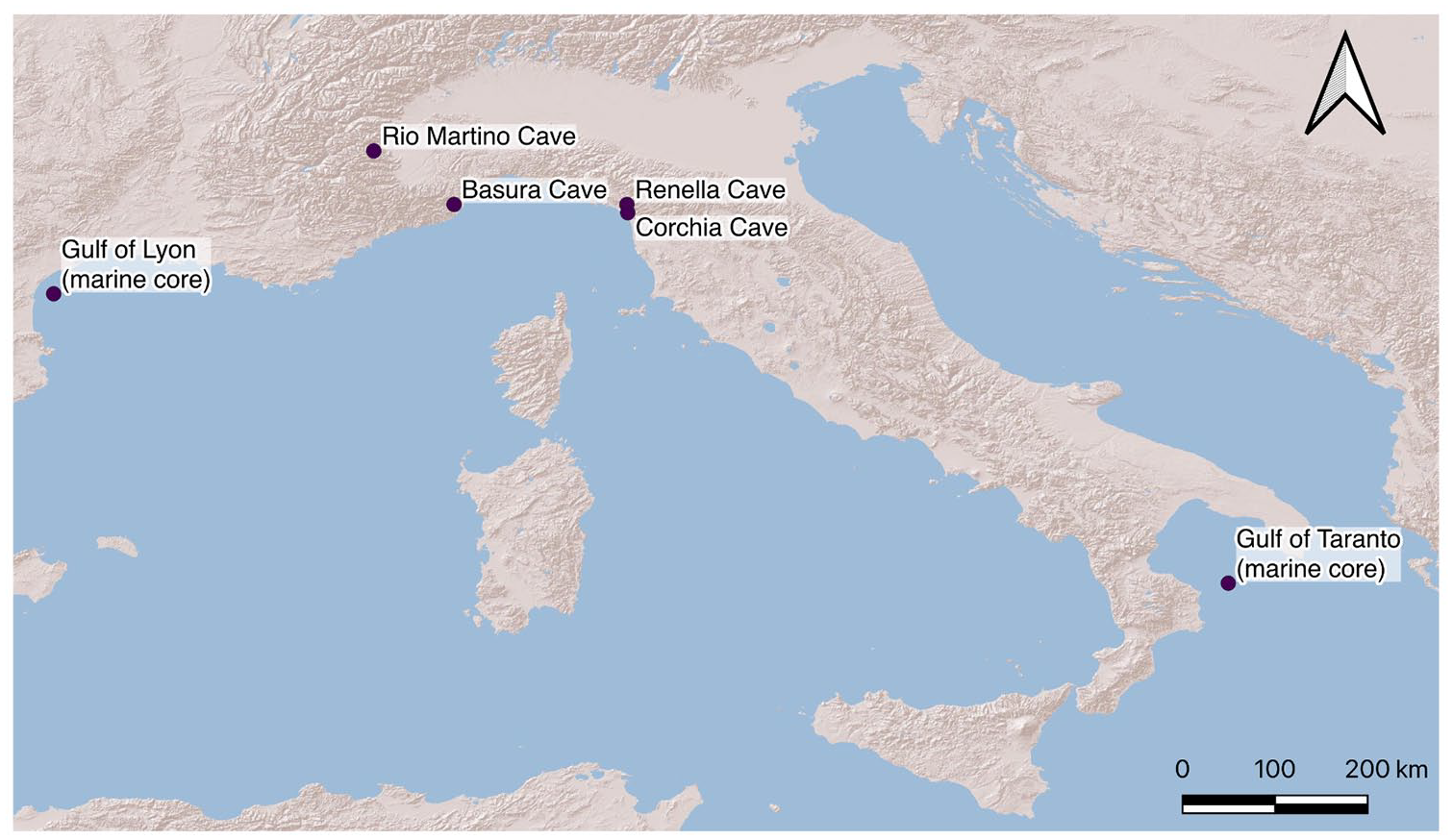
Location of speleothem and temperature proxies providing information about Republican Italy.
As is always the case, comparison of historical and scientific data for past climate must attend to the particularities of the different datasets. Along with issues inherent to the historical archives laid out above, we emphasize the different temporal characteristics exhibited by historical and scientific data. As largely anecdotal information, the historical data we receive are temporally discontinuous. Some types of events in the archive like drought or cold winters can indicate climatic conditions over seasons or years, but most reported events are of short duration, as with records of storms, floods or snowfall. Even if unusual, such events may fall within the range of prevailing climate conditions. It is important, therefore, not to take single episodic reports as indications of prevailing conditions but to focus on their frequency, as a climatic transition may be characterized not by one episode, but by change in the frequency of multiple events. Meanwhile, paleoclimatic proxies and records with which the historical account may be compared rarely have seasonal/annual resolution. At best, they often exhibit decadal or even secular temporal resolution. Most proxy records also have intrinsic limitations related to “sampling resolution” (i.e. sample size used for analyzing the proxy), with reported measurements representing an averaged number of years.
This situation warns against year-to-year comparison of historical and scientific records and encourages more diachronic perspectives. This remains the case in light of the promising new publication of a marine sedimentary record from the Gulf of Taranto offering the first subdecadally resolved proxy from Italy in the Roman period and covering the last two centuries of the Republic (Zonneveld et al., 2024). Based on changes in the association composition of dinoflagellate cysts that were fossilized in marine sediments, reconstructions could be made of changes in local south Italian temperatures and variability in precipitation in the southern Alps and eastern Apennines. Dinoflagellates are produced by marine algae living in the upper sunlit part of seas and oceans. Their species composition is highly sensitive to environmental and climate change, and in the Gulf of Taranto they produce cysts with a species-specific morphology in late summer/autumn. As a result, their sedimentary composition reflects late summer/autumn environmental conditions. Based on stable isotopic and tephra chronology, an age uncertainty of about 4 years has been estimated for the time interval overlapping the Late Republic. When combined with uncertainty of several years in our historical records, as discussed above, annually resolved comparison with scientific data appears challenging at present. Instead, we focus on using available scientific archives to consider longer duration trends in the climate history of the Roman Republican period.
Speleothem records covering the investigated period are mostly distributed in the northwestern Italian region. 4 Selected records are δ18O from Rio Martino Cave (Regattieri et al., 2019), Basura cave (δ18O composite record Hu et al., 2022), and the CC26 record from Corchia Cave (Regattieri et al., 2014; Zanchetta et al., 2007). For speleothems we use the “mean anomaly index” obtained by combining detrended, smoothed and normalized Mg/Ca, δ18O and δ13C time series, assuming that all three respond sensitively to hydrological variations and in particular to changes in cave recharge (Regattieri et al., 2014). This statistical treatment better highlights significant hydrological changes and is considered a more robust palaeohydrological indicator compared to a single proxy (Isola et al., 2019; Regattieri et al., 2014). The last record utilized is the δ18O record from Renella Cave, not far from Corchia, but located at lower altitude (Drysdale et al., 2006).
The selected records show some similarity in the δ18O trends but also some substantial differences (Figure 4). Records from Basura (Hu et al., 2022) and Rio Martino (Regattieri et al., 2019) show an interval of lower δ18O ca. 800–400 BCE, indicating wetter conditions. This feature is less evident in the Apuan Alps, where only the Renella record shows an interval of lower δ18O values between ca. 600 and 400 BCE. Three out of four records agree in showing a drier interval from ca. 350 to 250 BCE, while Corchia shows a return to wetter conditions. Then, Corchia, Renella and Rio Martino indicate drier conditions until the end of the first century BC. Consistently drier conditions occur from ca. 100 to 40 BCE, even if at Renella the maximum aridity occurs later.
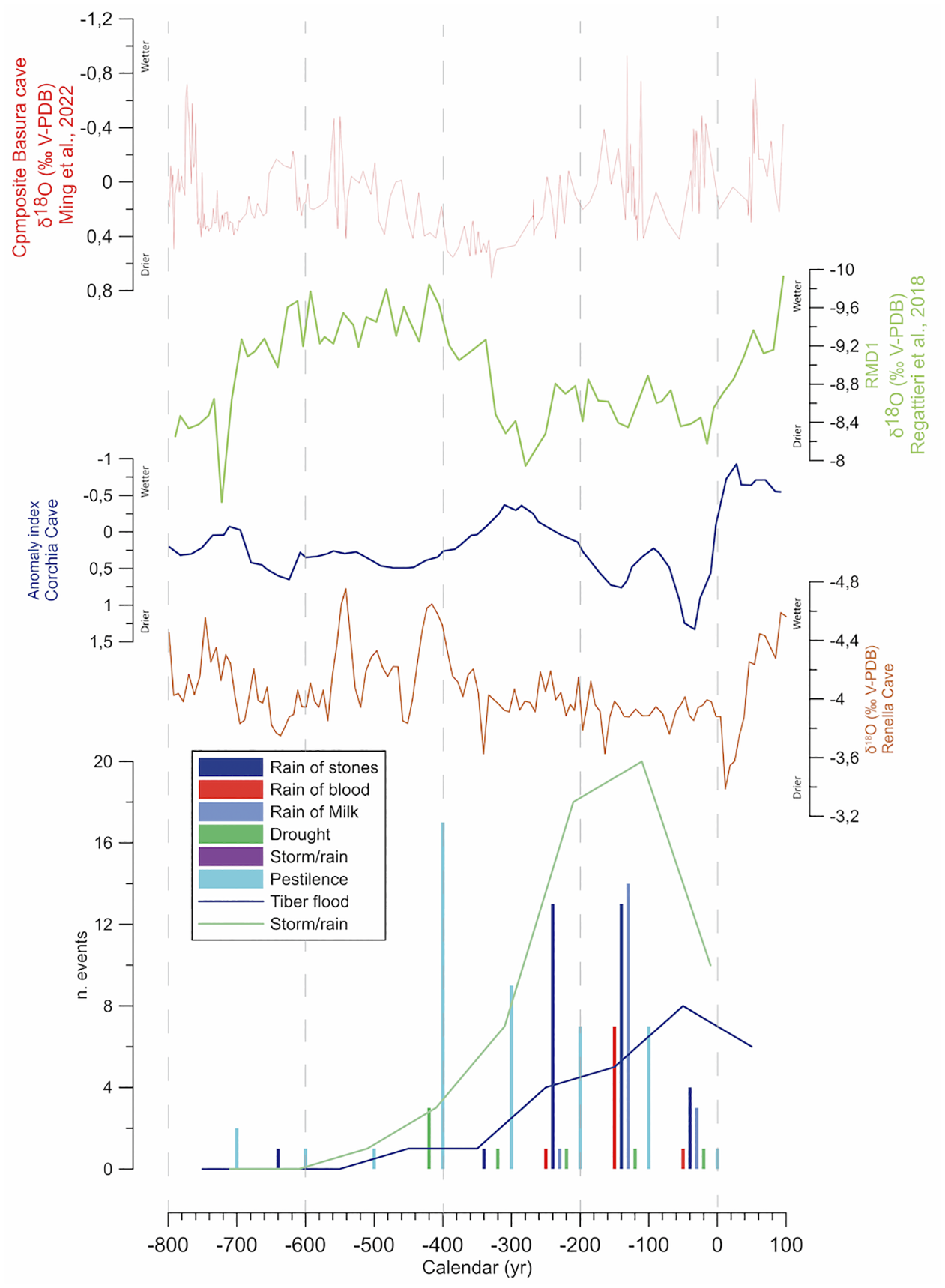
Trends in hydrological conditions in speleothems and Roman Republican historical archives.
Turning to temperature (Figure 5), the SST record from the Gulf of Lyon shows a dramatic step change in winter/early spring temperatures ca. 500 BCE where there is evident cooling of ca. 1.5°C, followed by several decadal scale oscillations ranging from ca. 18 to 15.6°C. Short multidecadal oscillations between ca. 500 and 0 BCE are identifiable even if the record is very noisy. The most convincing cooling interval occurs at 360 BCE, but other cooling events can be recognized, as at ca. 50 BCE. Warmer intervals are centered at ca. 165 BCE and ca. 35 BCE. The aforementioned marine core record from the Gulf of Taranto (Zonneveld et al., 2024) spans the later part of our interval, starting ca. 210 BCE. The general trend shows the highest late summer/autumn temperatures from ca. 210 BCE to about 90 CE, with temperature progressively declining afterward. The temperatures drop to values lower than recorded in the previous three centuries at about 125 CE after which they vary significantly. It is also noteworthy for comparing trends between proxies that the Gulf of Taranto record shows less discharge water between ca. 175 and 160 BCE and again between 48 and 41 BCE, corresponding roughly to phases of lower δ18O values in the Rio Martino and Corchia speleothem records.
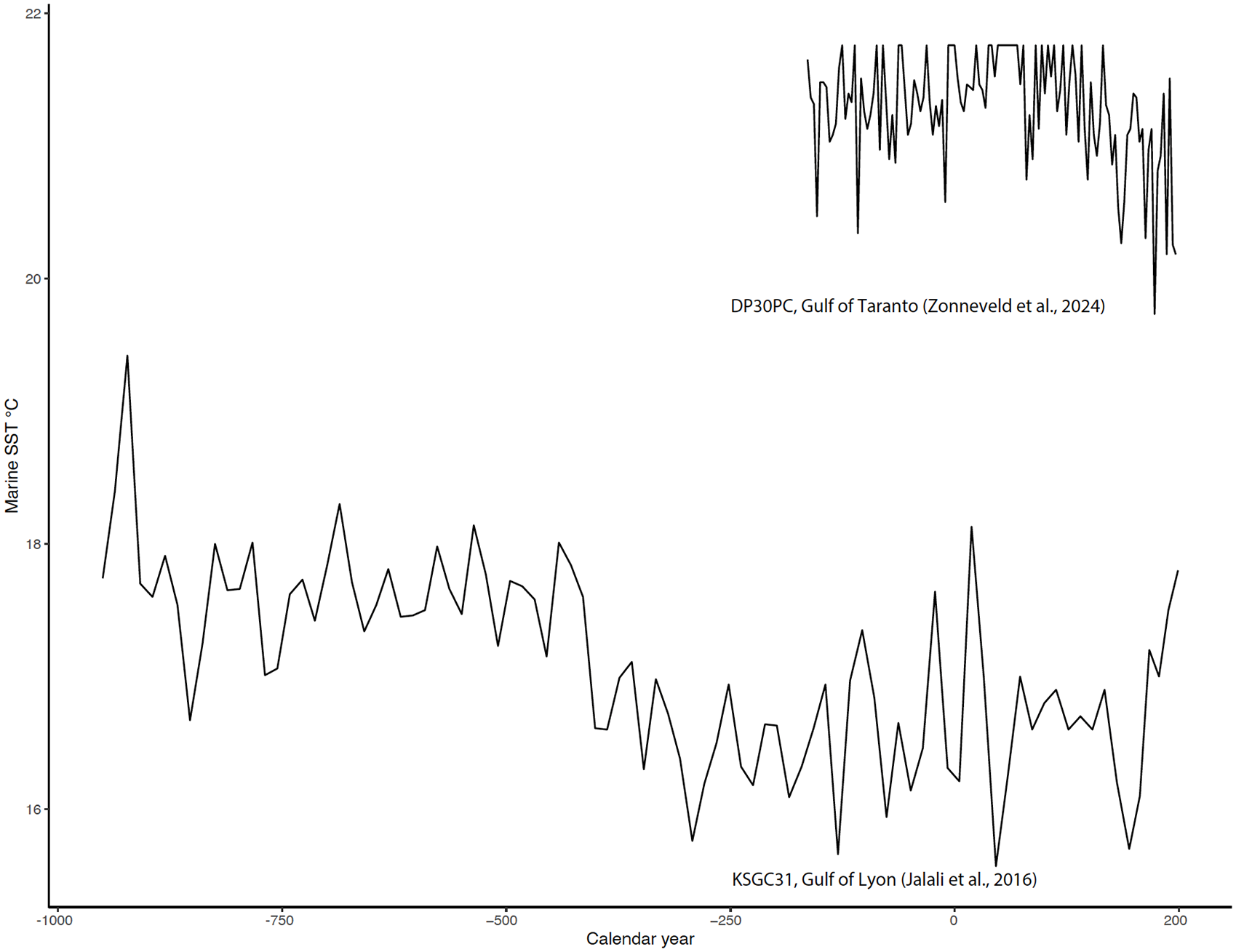
Marine temperature records from the Gulfs of Lyon and Taranto.
In sum, available scientific proxy evidence shows drier intervals shared by different Italian speleothem records between ca. 350 and 250 BCE and then again between ca. 100 and 40 BCE, with a wetter interval in between. There is notable synchronism between the timing of precipitation trends in the speleothem record and available sources of information for temperature, as the wetter period of ca. 250–100 BCE roughly coincides with a warmer period from ca. 210 BCE in the marine record from the Gulf of Taranto, while a warmer phase also appears in the Gulf of Lyon at a slightly later date, from ca. 165 to 35 BCE.
Comparison between historical and scientific archives
At broad temporal scales the scientific data shows that the Italian region around 200 BCE experienced a phase of warmer, wetter conditions equivalent to those described by the RWP, although these conditions manifested unevenly across Italy and the Central Mediterranean and continued to fluctuate across the Republican and into the Early Imperial periods. We may compare the broad trend to the historical archives, above all noting the comparative absence of hydrological events from the historical archives from Republican Rome between ca. 753 and 218 BCE before becoming frequent from 217 to 29 BCE. Rain, storms, wind, reports of milk- or blood-rains, interpretable as indications of storminess, as well as reports of flooding are most prevalent in the later third and second centuries BCE. We therefore note a convergence in the timing of the reporting of hydrological episodes in the historical archives with what we see in the scientific proxy evidence.
At the same, structural and specific problems of inference remain relevant. Clustering of reported events clearly occurs around a time of societal stress, during the Second Punic War. Additionally, the fullness of the archive over time may relate in part to the expanding territorial scope of observations following Roman imperial expansion, while the availability of Julius Obsequens’ work from 190 BCE also may support increasingly stable transmission of information. This encourages interpretation of the historical archives not as a direct index of environmental conditions but as a record of how contemporary Romans experienced them. For example, we return to the pattern of flooding. Increased wetness observable in scientific proxies ca. 250–100 BCE closely matches reports of floods, which appear in the archives sporadically during the earliest period (414, 397, 363 BCE) then more regularly after 241 BCE in 217, 216, 215, 214, 203, 193, 192, 189, 156, 137, 108 BCE, and then not again for 50 years. As discussed, we cannot infer that flooding did not occur in years without reports. However, the synchronism between scientific proxies and written observations supports the idea that increased wetness provoked flooding up to levels regularly observed by Roman recorders. For this period, the availability of independent paleoclimate information suggests that increased societal concern may in part have been shaped by climatic conditions alongside other biases or structural factors affecting the historical record.
Conclusion
Historical archives from the Roman Republican period offer attestations of environmental episodes over much of the latter half of the first millenium BCE. The observations collected here show a progressive increase in the frequency of reported extreme environmental events leading to a peak in the second to first centuries BCE. At very broad spatiotemporal scales, available scientific archives also show a phase of wetter, warmer weather in Italy around the second century BCE. This convergence raises the possibility that the Republican historical archives presented here may reflect regional shifts in hydrological and temperature conditions. However, it remains difficult to disentangle this possibility from the influence of historical and interpretive factors. Contextual interpretation should bear in mind that these archives’ information depended upon a complex process of transmission from the Early Republic (fifth century BCE), if not from the Monarchic period, to “annalist” historians writing in the first century BCE. We have offered reasons to endorse the quality of data already from the Early Republican period, but the archives are not a full phenological record. Their anecdotal information offers intermittent coverage focusing on exceptional events. Like sources for other periods, therefore, Roman archives cannot be used independently to infer climate conditions. What these historical archives directly reveal is Romans’ evolving experience and perception of natural events over the period. This does not exclude that Romans’ perceptions shifted partly in response to changes in prevailing climatic conditions, but interpretation should start by acknowledging the interplay between environmental change and the socially conditioned impulses to record environmental phenomena. The best approach is to work with Roman historical sources alongside independent forms of data. To that end, we close by noting the relative paucity at present of highly resolved scientific climate proxies for Italy over the first millenium BCE with which to compare trends in the historical archive. Study and publication of further scientific data, which can continue to be integrated with the historical archives presented here, will improve our ability to characterize both environmental conditions and societal responses during the critical period of Rome’s drive to empire.
Supplemental Material
sj-xlsx-1-hol-10.1177_09596836241307302 – Supplemental material for Historical archives from the Roman Monarchic and Republican periods show human perceptions of environment and climate change in Italy, 753–29 BCE
Supplemental material, sj-xlsx-1-hol-10.1177_09596836241307302 for Historical archives from the Roman Monarchic and Republican periods show human perceptions of environment and climate change in Italy, 753–29 BCE by Claudia Paparella, Seth Bernard, Monica Bini, Andrea Columbu, Ilaria Isola, Kyle Harper, Ruben Post, Karin Zonneveld and Giovanni Zanchetta in The Holocene
Footnotes
Author contribution(s)
Funding
The author(s) disclosed receipt of the following financial support for the research, authorship, and/or publication of this article: this work was supported by a Connection Grant (fund 511922) and an Insight Grant (fund 511934) from the Social Science and Humanities Research Council of Canada, and by the Canadian Research Knowledge Network.

Supplemental material
Supplemental material for this article is available online.
Notes
References
Supplementary Material
Please find the following supplemental material available below.
For Open Access articles published under a Creative Commons License, all supplemental material carries the same license as the article it is associated with.
For non-Open Access articles published, all supplemental material carries a non-exclusive license, and permission requests for re-use of supplemental material or any part of supplemental material shall be sent directly to the copyright owner as specified in the copyright notice associated with the article.
