




Abstract
Despite decades of lively debate about Taiwan’s role in the spread of early agriculture, crops and cultivation practices to the Indo-Pacific region, there is little archaeobotanical data from the island. Here we present the first directly dated and systematically analysed macrobotanical records from Taiwan obtained by flotation at the archaeological site Sanbaopi 5 (23°07′03′′N, 120°15′32′′E), representing the Dahu (1400 BCE–100 CE) and Niaosong (100–1400 CE) culture periods. The results suggest that Middle Dahu (900–100 BCE) communities in the study area practiced rainfed crop cultivation with mainly foxtail (Setaria italica) and broomcorn (Panicum miliaceum) millet and rice (Oryza sativa). Pulses (Vigna angularis, Glycine soja/max) were also part of the subsistence of local farmers and used as supplementary food and/or green manure. The archaeobotanical record together with archaeological site data for prehistoric China substantiates evidence that the Dahu culture originates in the Lower Yellow River region and migrated to Taiwan along the East China Sea coast. The emergence of the Dahu culture coincided with the spread of mixed millet-rice farming to the Korean Peninsula and Japan and was possibly related to enhanced economic and political expansion of the Shang and Western Zhou dynasties and the long-term weakening of summer monsoon precipitation. Pigeon pea (Cajanus cajan) and mung bean (V. radiata var. radiata) assemblages from the sixth century CE Niaosong period highlight the influx of goods, crops, knowledge and people from South and Southeast Asia via southern routes in the context of enhanced exchange across the South China Sea region.
Keywords
Introduction
Taiwan is one of the focal points of research on prehistoric cultural dispersal across Asia. The most prominent model for the origin of Austronesian-speaking peoples is the so-called Austronesian expansion, which grounds on the language-farming hypothesis and identifies the island as the origin of the spread of people, languages, technologies, material culture and agriculture across Mainland and Island Southeast Asia, Island Oceania and to Madagascar from around 2500–2000 BCE (Bellwood, 1984/85, 1997, 2005, 2017; Diamond, 2001; Diamond and Bellwood, 2003). The simultaneous dispersal of cultural traits and agriculture from Taiwan as suggested by the model has been mainly deduced from linguistic evidence (Bellwood, 2005; Blust, 1995, 1999; Pawley, 2003). However, a lack of robust evidence in the archaeological record has raised doubts about this scenario (Denham, 2013, 2018 and references therein). Recent linguistic studies (Klamer, 2019), pottery records (Cochrane et al., 2021) and human (Larena et al., 2021; Lipson et al., 2018; McColl et al., 2018) and rice (Oryza sativa) (Gutaker et al., 2020) genetics suggest that the spread of Austronesian languages, cultural traits and East Asian crops was neither a synchronous nor unidirectional (out-of-Taiwan), but spatio-temporally complex process. In addition, Alam et al. (2021), who genetically analysed traditional rice landraces grown by indigenous groups of Taiwan and the Philippines and combined the results with the findings of Gutaker et al. (2020), argue that tropical japonica-type rice spread from Mainland South East Asia across Island Southeast Asia from around 1500 BCE and that there was also a movement of this rice type from the northern Philippines to Taiwan around or before 650 CE.
Another aspect of the Austronesian expansion model that has been changed by new archaeobotanical studies conducted over the past few years is the perception about the first farmers who spread into southern continental China and Taiwan. It has long been dominated by a rice-centred perspective, partly due to the fewer and partly non-representative archaeobotanical records, which probably has influenced the hypothesis that these migrants originated in geographically close wet rice cultivating societies in the Lower Yangtze region (Bellwood, 2005; Chi and Hung, 2010; Higham, 2002; Higham and Lu, 1998; Jiao, 2007). However, recent studies indicate that, in addition to rice, foxtail (Setaria italica) and broomcorn (Panicum miliaceum) millet were also involved in this southward spread of agriculture, which occurred approximately 3000 BCE (Dai et al., 2021; Deng et al., 2018b, 2020; Ge et al., 2019; Tsang et al., 2017; Yang et al., 2018). Qin and Fuller (2019) postulated that rice and millet spread into southern continental China and Taiwan Island as components of a rainfed cropping systems. The authors argue that rainfed crop economies, such as the millet-based ones in the Middle/Lower Yellow River valley (Leipe et al., 2019; Robbeets and Wang, 2020), were more expansive compared to economies based mainly on wet rice cultivation, such as those in the Lower Yangtze region (Fuller, 2020). Population growth in societies focused on wetland or paddy field rice cultivation, such as those in the Lower Yangtze region, would have been largely absorbed locally by higher productivity and population concentration. By contrast, in agricultural systems based on rainfed crops, which have a much lower productivity and higher land demand, population growth and land degradation would have more likely prompted outward migration.
The origin of early agricultural populations who migrated to southern China is an important puzzle piece in understanding the Austronesian cultural evolution. Considering the first farmers who arrived in the region around 3000 BCE, different routes and origins have been discussed; via an inland route from the Middle Yangtze region or the Middle Huai River region or via a coastal route from Shandong (Dai et al., 2021; Deng et al., 2018b; Qin and Fuller, 2019; Sagart et al., 2018; Stevens and Fuller, 2017). A recent study of ancient and modern human DNA from East Asian individuals supports that the farmers who introduced agriculture to Taiwan around 3000 BCE originated from the Yangtze River Valley (Wang et al., 2021). In addition, Alam et al. (2021) argue that after the initial introduction of rice (likely tropical japonica-type) temperate japonica rice spread to Taiwan after 600 BCE, probably from northern China or the Korean Peninsula.
Archaeobotanical research has great potential to help disentangling the role of Taiwan in the evolution of the Austronesian cultural sphere and the spread of crops and agriculture across Southeast Asia and beyond. However, there are yet very few archaeobotanical data available from Taiwan. A recent phytolith-based study aimed to track the onset of rice cultivation on the eastern coast of the island has revealed the so far earliest evidence of this crop in the area, dating to ca. 2200 BCE (Deng et al., 2018a). Published macrobotanical data from Taiwan is limited to one record based on non-systematically analysed flotation samples from the Nanguanli East site on the coastal plains in the south-western part of the island associated with the earliest Neolithic Dabenkeng (also spelt Tapenkeng) culture (Tsang et al., 2017). Based on radiocarbon (14C) ages of six wood charcoal samples (Tsang and Li, 2009) collected from the same cultural layers the flotation samples were taken from, the record was dated to 3000–2500 BCE. Tsang et al. (2017) documented rice, foxtail and broomcorn millet as well as weedy yellow foxtail (Setaria pumila), but did not provide details of other botanical components in the flotation samples from Nanguanli East. In absolute numbers the millets dominate over rice and thus underline the relevance of rainfed cultivation in cropping systems of that time. While this study provides a first glimpse into the cropping systems of one of Taiwan’s earliest agricultural communities, it is unclear which wild plants or whether other crops were exploited by the earliest farmers and how the island’s agriculture developed over the following millennia.
Here we present the first directly dated archaeobotanical record obtained from systematic analysis of flotation samples from prehistoric cultural layers in Taiwan. The analysed flotation samples were collected from ash pit deposits at the Sanbaopi 5 archaeological site located in the Tainan Science Park (TSP), Tainan City, south-western Taiwan (Figure 1). A set of representative charred seeds was selected for AMS 14C dating and used for building an absolute chronology. The obtained results are discussed in context of available archaeological and archaeobotanical records from the TSP and from other study regions in East and Southeast Asia. For native spelling of romanised Chinese, Thai and Khmer terms in the text the readers are referred to Supplemental Material S1.
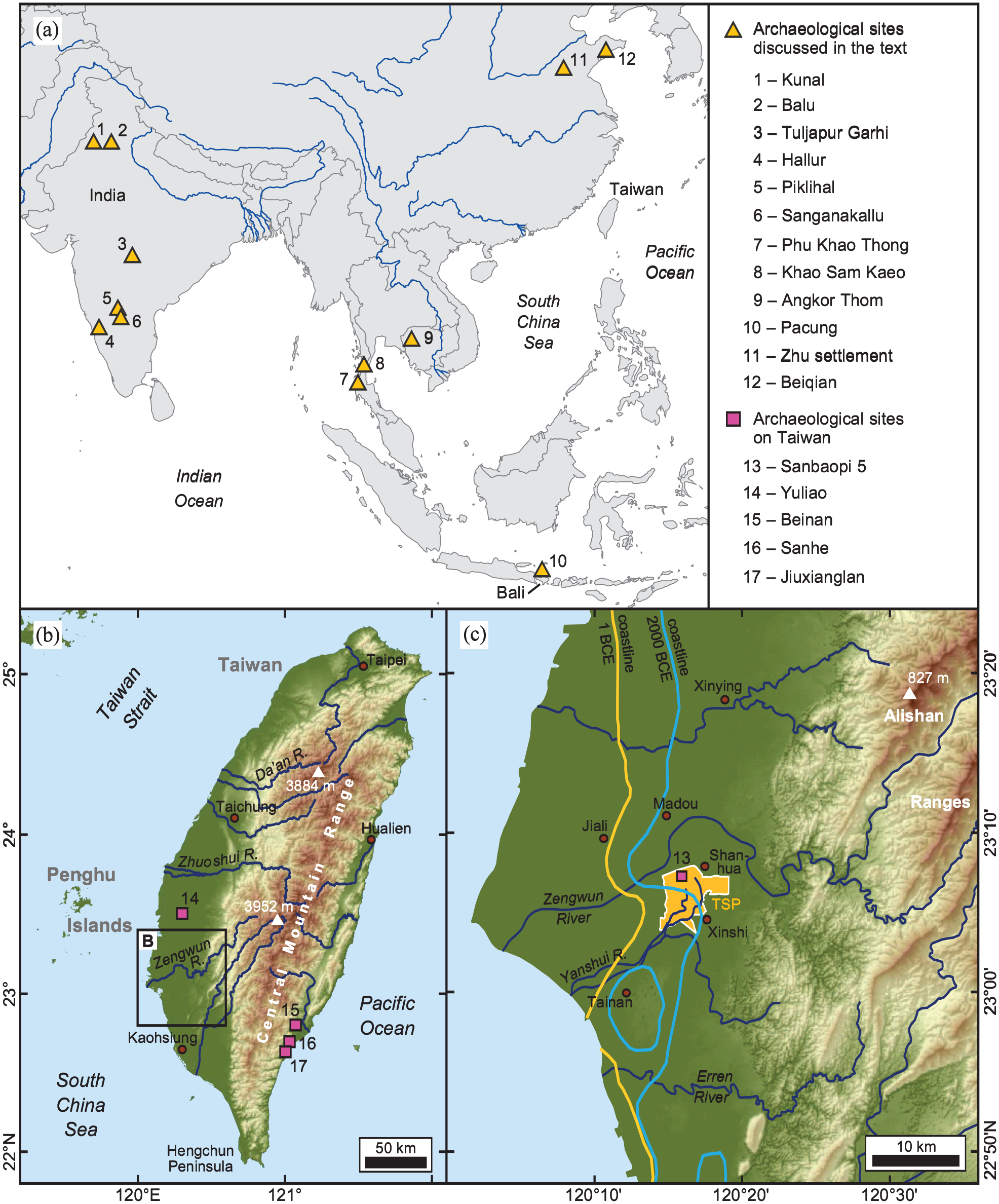
Map set showing (a) the location of Taiwan Island in the north-western Pacific Ocean and archaeological sites mentioned in the text; (b) the location of the study region in south-western coastal Taiwan; and (c) the location (23°07′03′′N, 120°15′32′′E) of the Sanbaopi 5 archaeological site within the Tainan Science Park Special District (orange polygon) in the central part of the Tainan City municipality ca. 15 km northeast of the city centre. Reconstructed ancient coastlines are drawn after Yang (2016). Digital elevation models are based on the GMTED2010 dataset (Danielson and Gesch, 2011).
Archaeological background
The Dahu culture represents the Late Neolithic in coastal south-western Taiwan stretching from the Zengwun River basin to the Hengchun Peninsula (Figure 1b) (Kuo, 2019). Tsang and Li (2015) date it between 1400 BCE and 100 CE, following the Middle Neolithic Niuchuozi culture (2300–1400 BCE) and preceding the Metal Age Niaosong culture (100–1400 CE). The Dahu period is further divided into the Dahu (1400–900 BCE), Wushantou (900–100 BCE) and Yuliao (100 BCE–100 CE) phases, with the latter often being designated as Final Neolithic (Kuo, 2019). The Yuliao phase in the regional periodisation for south-western Taiwan (Tsang and Li, 2015) is named after its archaeological type site Yuliao located in Chiayi County about 40 km north of the TSP (Figure 1b). Although Yuliao pottery stylistic changes marked by a decline in grey and black pottery in favour of brown, orange and red traditions (Kuo, 2019) are recognised in post-Wushantou assemblages, typical Yuliao pottery, which is mainly found in the region around the type site, is not clearly represented at sites within the TSP. Therefore, we use the equivalent term Final Neolithic to describe the interval between the Wushantou phase and the Niaosong period in the following.
The probably most characteristic feature of the Dahu culture is the production of grey and black pottery, which accounts for about 50% of all archaeologically documented earthenware. However, this type of pottery was not limited to the Dahu culture area, but was also used by the neighbouring contemporaneous Yinpu culture (1300 BCE–100 CE), which represents the coastal plains between the Da’an and Zhuoshui rivers north of the Dahu domain (Figure 1b). Both cultures interacted closely with each other and differ distinctly from other Late Neolithic cultures in Taiwan (Kuo, 2019). They also mark the arrival of new people by exhibiting clear differences from their respective predecessor cultures Niuchuozi and Niumatou Late (2300–1300 BCE) (Kuo, 2019; Tsang and Li, 2015). The origins of the Dahu and Yinpu cultures remain unknown. Kuo (2019) notes that the grey and black Yinpu pottery shares many traits with the Taying and Fulingang types from Shang/Zhou period sites in Fujian Province, which may point to a connection with the continent. On the other hand, Chen (2017) hypothesised that the Dahu and Yinpu cultures descend from local indigenous Middle Neolithic groups. It seems most likely that the Dahu and Yinpu cultures emerged through the mixing of the existing Niuchuozi and Niumatou Late populations with immigrant farmers. Population expansion, which started in the Middle Neolithic, is assumed to have continued during the Late Neolithic with a rise in site numbers and average size (Chen, 2017). This development is also mirrored within the TSP, where the Wushantou phase has the most sites (n = 20) of any cultural period (Tsang and Li, 2015).
Study site and regional environment
The archaeological site Sanbaopi 5 is located in the northern part of the TSP (23°07′03″N, 120°15′32″E; 3 m above sea level; Figure 1c) in the central part of Tainan City (Figure 1b). The wider area of this science park, designated as TSP Special District (Figure 1c), covers an area of 3350 ha. Within this district and adjacent areas 82 archaeological sites have been discovered between 1995 and 2015, making the TSP the largest contiguous site complex in Taiwan (Tsang and Li, 2015). Past surveys and excavations revealed a great amount and diversity of archaeological materials and features that have been grouped into prehistoric cultural periods, including the Neolithic Dabenkeng, Niuchuozi and Dahu, the Metal Age Niaosong, the mediaeval Siraya (1400–1650 CE) as well as recent historic periods.
Sanbaopi is the largest site complex of the Wushantou phase of TSP, covering about 10 ha, and is divided into five sections. Sanbaopi 1 spans the initial site extent, which was expanded several times parallel to the expansion of the TSP. Sanbaopi 5 marks the most recent expansion and was investigated by rescue excavation conducted between January and September 2019. The site covers an area of 10,648 m2. Excavation mainly brought to light cultural deposits of the Wushantou phase, but also few features related to the Final Neolithic and the Metal Age Niaosong period. The site consists of 220 ash pits, 10 shell mounds, seven pottery clusters, 157 human and five dog burials, five wells and one pit that contained what appears to be a hearth (Figure 2). The detected features were excavated in steps of 10 cm depth. Due to schedule restrictions, 90 ash pits were selected for sampling. Selection was based on the concentration of artefacts and soil discolouration with fills of darker colour (i.e. higher organic content) preferred for sampling. Most of the sampled ash pits were located in a depth between 10 and 70 cm. An exception is pit (P) 01, which contained a hearth at its bottom. It is comparatively deep stretching from 30 to 136 cm depth and sampling in 10-cm steps revealed that it comprised three partly overlapping depositional units, which suggests discontinuous use of this feature (Supplemental Material S2). It appears that the lower part (ca. 100–136 cm depth) represents a hearth or kiln indicated by red-coloured soil and the middle (ca. 70–110 cm depth) and upper (ca. 30–80 cm depth) parts represent ash pits. While the lower infill contained pot sherds associated with the Final Neolithic, the middle and upper infills contained sherds dated to the beginning of the Niaosong period. Another pit that is of post-Wushantou age is P02, which was filled with a cluster of pot sherds associated with the early Niaosong phase and a large number of charred seeds.
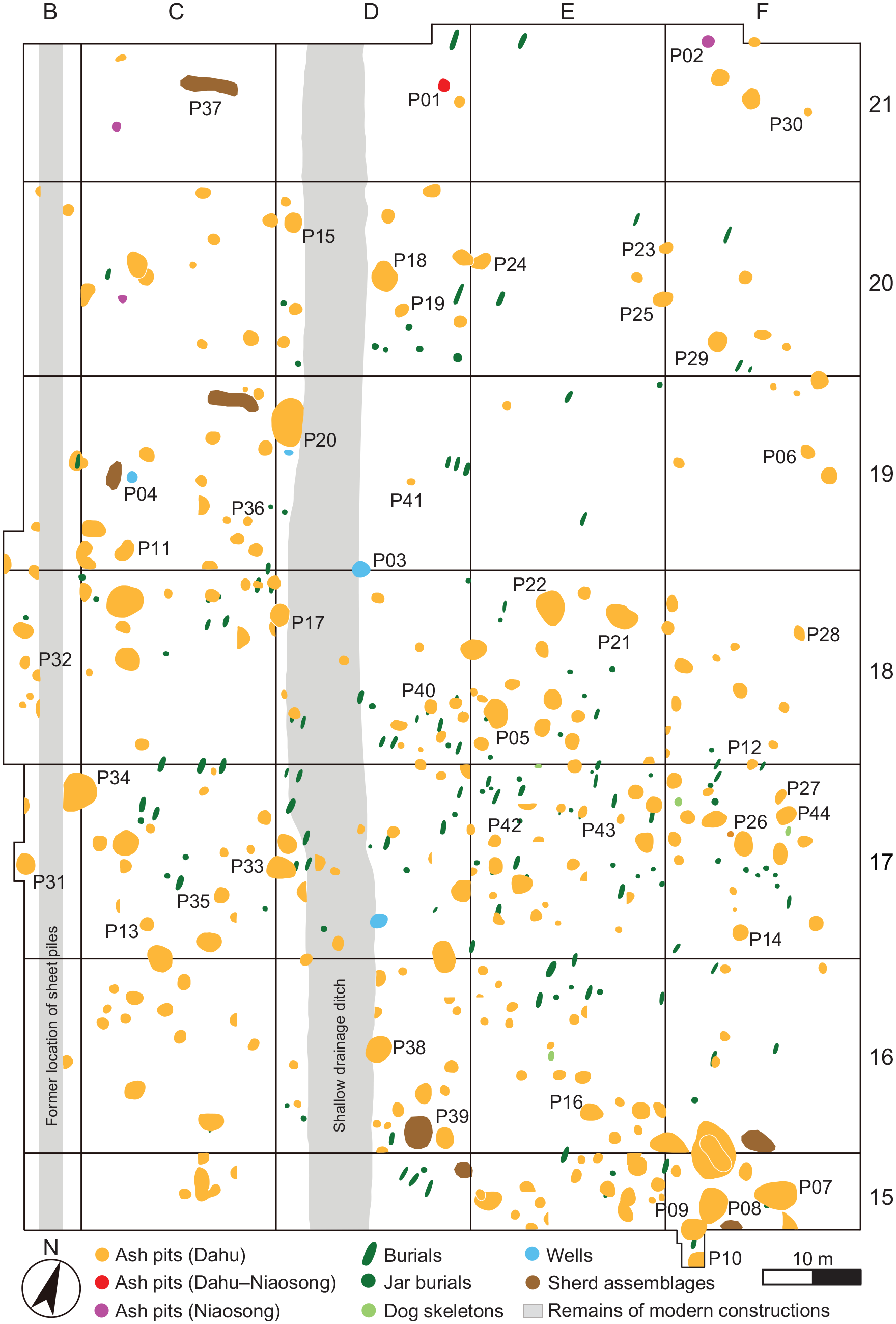
Sketch map showing the location of the archaeological features recorded at Sanbaopi 5. Ash pits are shown by cultural period, as suggested by the typology of the pottery they contained. Pits whose infill was archaeobotanically analysed are numbered (P01–44) (see Supplemental Material S3 for archaeobotanical records per pit).
The TSP is located on the flood plains between the Zengwun and Yanshui rivers, which originate in the mountains and foot hills of the Alishan Ranges, starting to rise about 10 km east of the park (Figure 1c). Although these rivers changed beds over the past millennia, deposits around Sanbaopi 5 show that a floodplain environment predominated also during site formation. Geoarchaeological surveys revealed that during ca. 1000 BCE–700 CE the TSP was traversed by several streams, which did not drain as the contemporary rivers towards the southwest (Figure 1c), but towards the northwest (Tsang and Li, 2015). Today the distance between Sanbaopi 5 and the South China Sea coast towards the west is about 20 km, but was significantly shorter in the past. The Holocene sea level high stand was reached around 4500 BCE, when the coastline was located east of the TSP and the site was submerged. After a period of relatively unstable sea levels that ended around 2700 BCE, the study region experienced retreat of the sea mainly driven by alluviation of the rivers draining from the mountain ranges in the east (Tsang and Li, 2015). Palaeocoastline reconstructions (Yang, 2016) indicate that the distance between Sanbaopi 5 and the coast ranged from about 1 to 5 km during the two millennia BCE that partially cover the Dahu period (Figure 1c).
Material and methods
In this study, deposits of 70 ash pits, three human graves and one pottery cluster of Sanbaopi 5 comprising a total volume of 9462 L were treated by flotation. The sampled ash pits were of different size. The smallest ones were around 80 cm in diameter, while the largest one had a diameter of 480 cm. The pottery cluster covered an area of ca. 2.5 m2. Except for one ash pit that is associated with the Niaosong period, all analysed features date to the Wushantou phase of the Dahu period.
Flotation for extracting the light fraction of the sediment samples was done using bucket flotation with nylon meshes with an aperture size of 250 µm. Only carbonised botanical remains were considered for identification. At counting, we omitted seed fragments that comprised less than 50% of the original seed size. This method was chosen to avoid artificial inflation of the total counts and to follow the principle of the minimum number of individuals. Poorly preserved seeds of cultivated millet, which either belong to broomcorn or foxtail millet, were counted as broomcorn/foxtail millet type. For photographic documentation of selected seeds, we used a Keyence VHX-2000 digital microscope.
A selection of carbonised seeds was directly dated using the AMS 14C dating facility at the Poznan Radiocarbon Laboratory in Poland. For conversion of 14C dates to calendar ages, we used the online version of OxCal v4.4 (Bronk Ramsey, 1995) and the calibration curve Intcal20 (Reimer et al., 2020). OxCal v4.4 was also used for plotting the probability distributions of the calibrated ages.
Results and interpretation
Radiocarbon dating
For absolute age determination of the recovered archaeobotanical assemblages, we dated a set of 14 charred seeds of rice, broomcorn millet, foxtail millet and Vigna originating from 10 different ash pits (Figure 3). In sum, the 95% confidence interval of the calibrated ages are bounded between 776 BCE and 650 CE, spanning the early Wushantou phase (Dahu period) to the early Niaosong phase (Niaosong period). The obtained ages are in line with the pottery records (Figure 2), indicating that most ash pits and other features at Sanbaopi 5 represent the Wushantou phase. While the 95% confidence interval of nine dates (776–412 BCE) span the first half of the Wushantou phase, one (Poz-121994: 368–173 BCE) falls into the second half, suggesting that most pits date to the earlier period. Pit density is highest in the southern half of the excavated area and decreases towards its northern end (Figure 2). On the northern boundary there are three pits containing pot sherds assigned to the Final Neolithic and/or Niaosong period, which may indicate the transition towards an area that was mainly used during post-Wushantou times. P01 contains three partly overlapping infills (Supplemental Material S2). The calibrated ages of Poz-121993 (346–51 BCE) and Poz-127724 (149 BCE–65 CE) confirm that the lowermost infill (100–136 cm depth) dates to the Final Neolithic. Poz-127723 (568–650 CE) dates to the early Niaosong phase, suggesting that the two upper infills (30–110 cm depth) containing pot sherds assigned to the beginning of the Niaosong period are younger than the pottery typology suggests. Located about 30 m east of P01 is P02, from which we obtained Poz-126439 with a 95% confidence interval between 436 and 637 CE, dating to the early Niaosong phase. Since the concentration of pot sherds and charred seeds within the 30–40 cm depth interval is well-confined, we assume that this deposit in P02 represents a single event and therefore assign the entire archaeobotanical assemblage to this age.
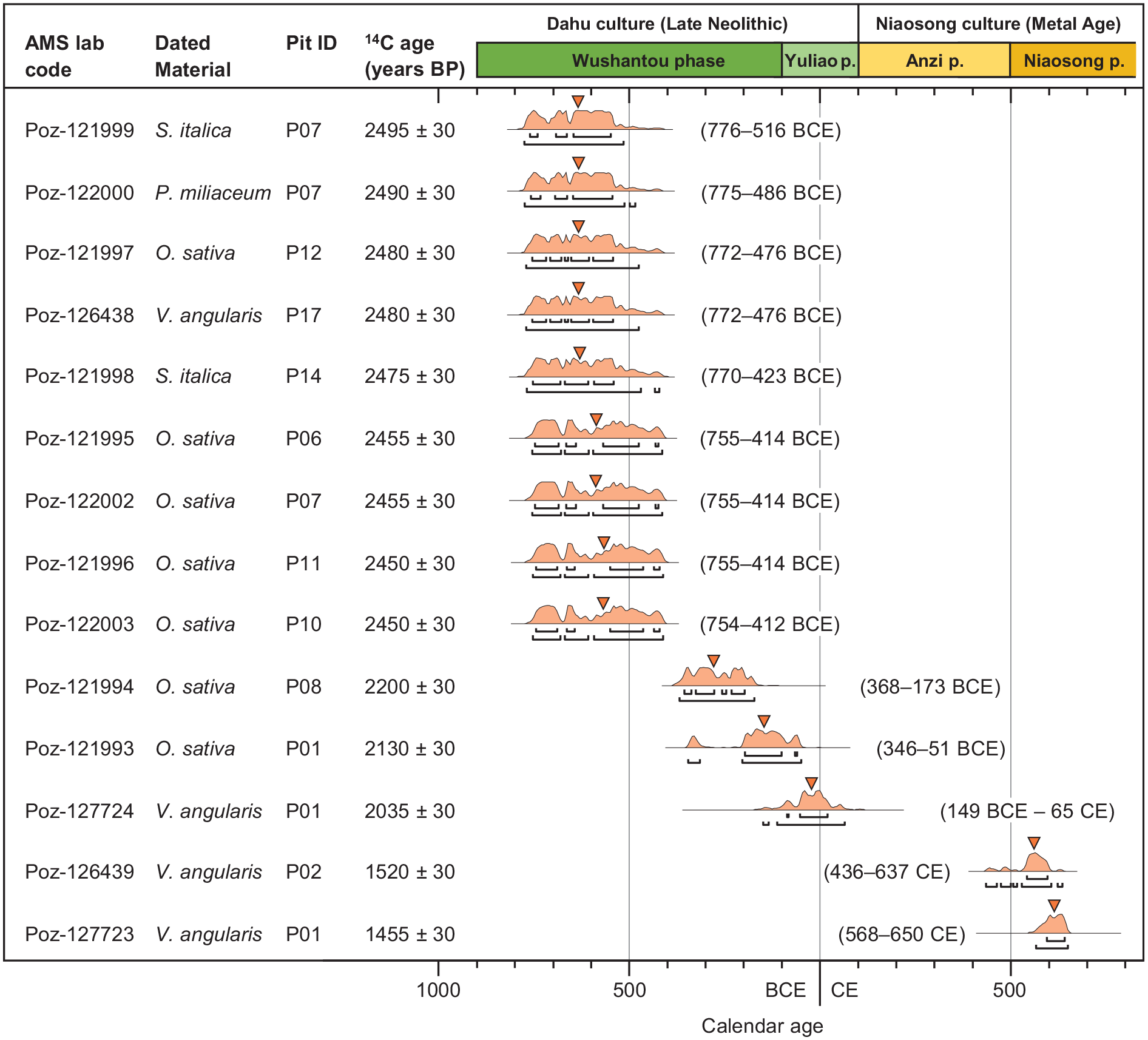
AMS 14C dates together with probability distributions (silhouettes), probability densities at 68% (upper square brackets) and 95% (lower square brackets and intervals in parentheses) confidence levels and medians (triangles) of calibrated ages of selected carbonised seeds from the analysed ash pit deposits of Sanbaopi 5. Archaeological cultures and phases for south-western Taiwan are drawn according to Tsang and Li (2015). Note that typical Yuliao phase pottery is not represented in the Tainan Science Park area, so this interval is referred to throughout the text as Final Neolithic (Kuo, 2019). See Figure 2 for location of pits.
Archaeobotanical record
Flotation revealed that of the 74 archaeological features sampled, 44 ash pits contained charred botanical remains, of which 42 are of the Wushantou phase, one (P02) of the Niaosong phase and one (P01) of the Final Neolithic and Niaosong phase. The records of the 42 Wushantou pits, pit P01 and pit P02 contain 61,627,124 and 237,294 plant remains, respectively. The Wushantou assemblages mainly comprise seeds, but also some complete and fragmented seed pods. The botanical remains were grouped into 40 different categories, including identified, unidentifiable and unidentified specimens (Supplemental Material S3 for detailed results). Besides remains of weedy plants (Setaria sp., Echinochloa sp. and other wild grasses), the record contains other wild plants, which probably represent foraging components used for dietary, medicinal or other purposes, such as Celtis sp. (hackberry), Cocculus sp. (moonseed), Melia azedarach (chinaberry), Nephelium lappaceum (rambutan) and Physalis alkekengi (bladder cherry). The identified remains of cereals and legumes are outlined in the following sections.
Cereals
The record associated with the Wushantou phase comprises remains of rice, broomcorn millet, foxtail millet and Coix lacryma-jobi (Job’s-tears) (Figure 4). While Job’s-tears is represented by only a single seed, the former three crops are more abundant accounting for ca. 90.9% of the total record (Figure 5). The remaining 9.0% split into 5.7% weedy plants and 3.4% other wild and ruderal plants. Considering only the three major crops, rice accounts for 0.4%, broomcorn millet for 1.9%, foxtail millet for 97.0% and seeds that either belong to one of the two millets recorded as broomcorn/foxtail millet type for 0.6%. Most of the millet seeds were recorded in samples from ash pit P07. In sum, 99.0% of all broomcorn and foxtail millet seeds originate from this pit. Exclusion of the P07 seed assemblage shifts the proportions of rice, broomcorn millet, foxtail millet and broomcorn/foxtail millet to 20.3, 27.3, 45.9 and 6.5% respectively (Figure 5), corresponding to a millets/rice ratio of about 4:1.
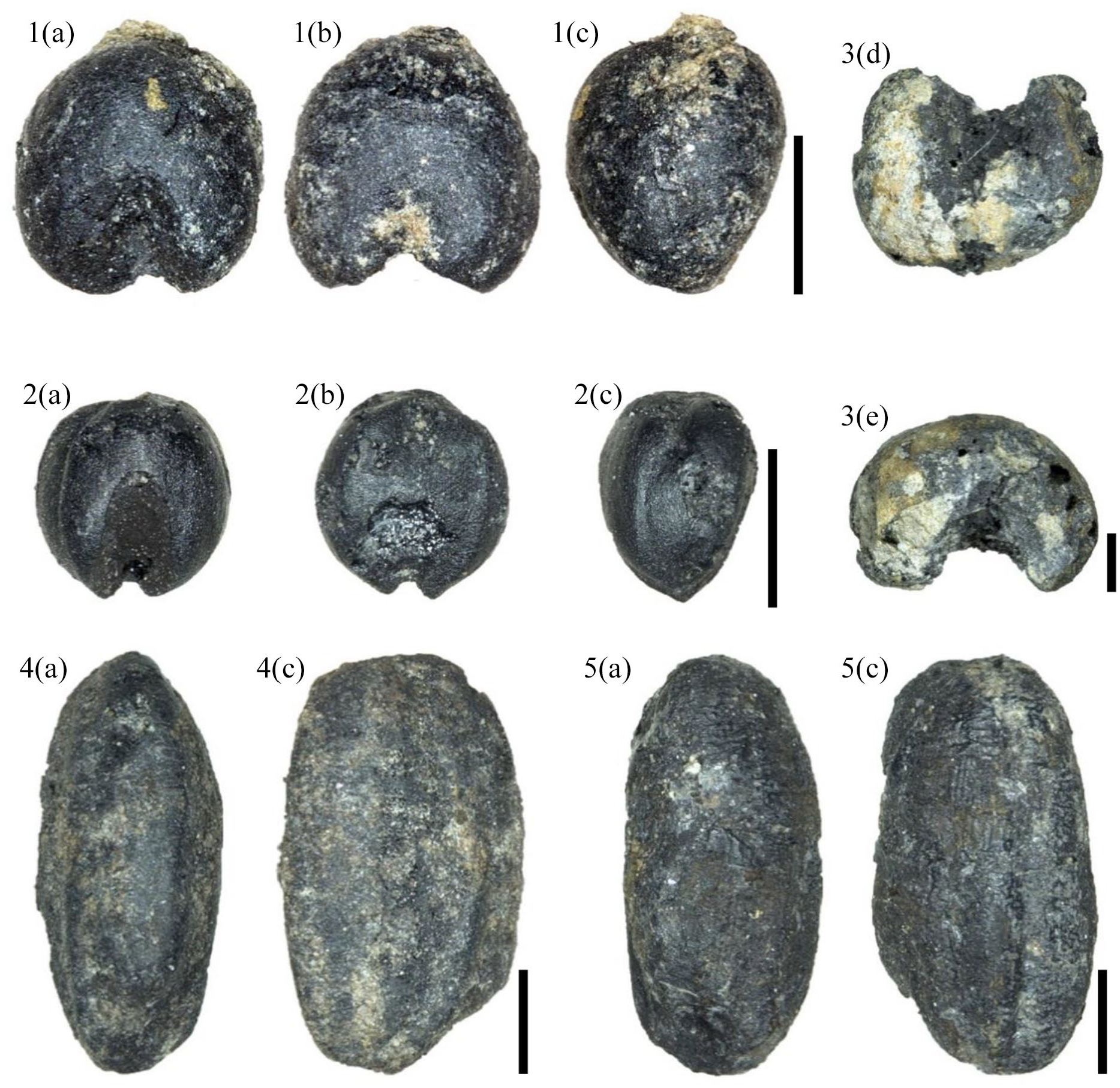
Carbonised seeds of 1 Panicum miliaceum (broomcorn millet), 2 Setaria italica (foxtail millet), 3 Coix lacryma-jobi (Job’s-tears) (seed kernel), 4 and 5 Oryza sativa (rice) from ash pits dating to the Late Neolithic Dahu period Wushantou phase. Seeds are shown in (a) ventral, (b) dorsal and (c) lateral view and Coix lacryma-jobi in (d) side and (e) top view; scale bars = 1 mm.
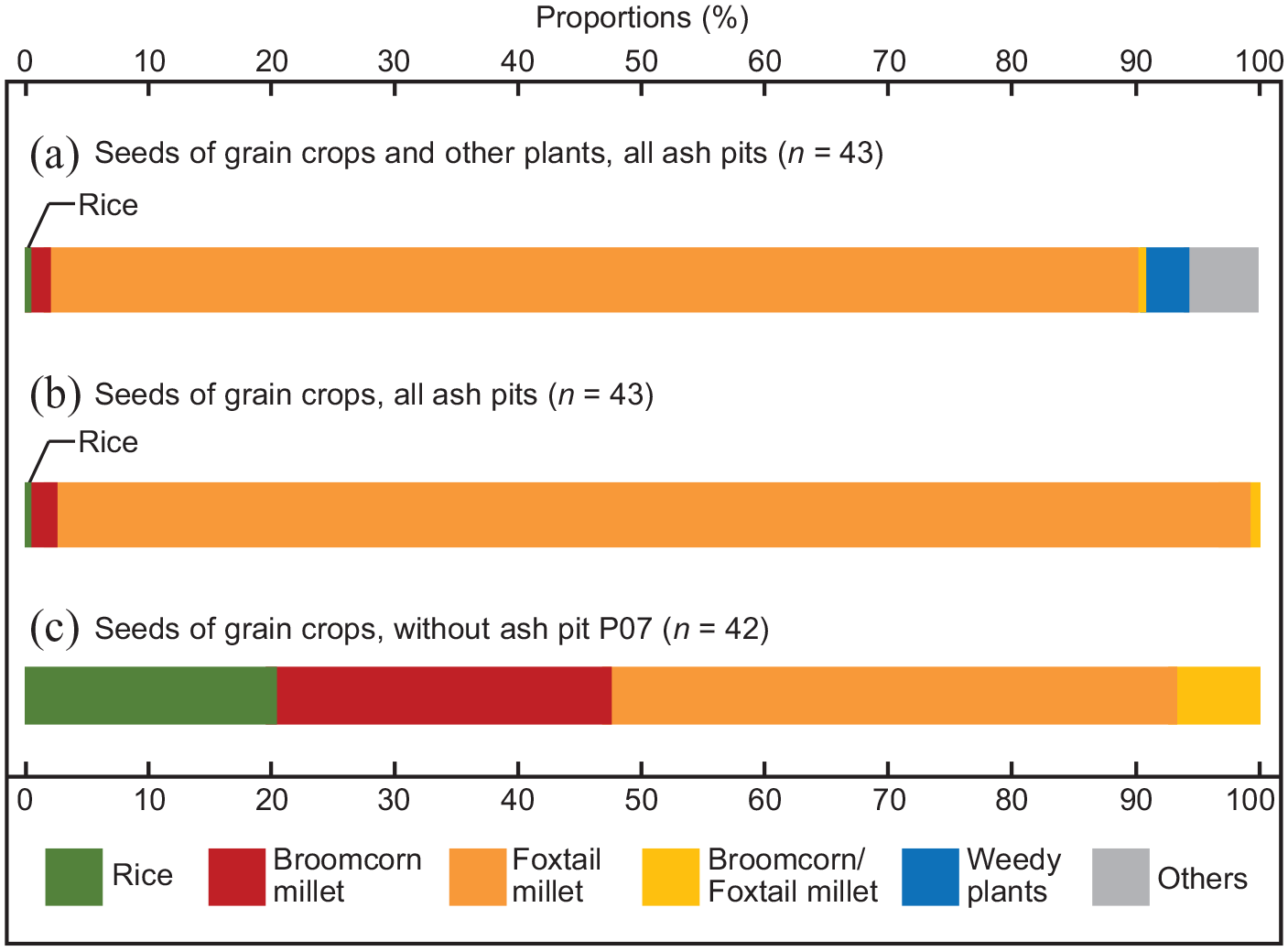
Relative taxa frequencies of the archaeobotanical assemblages from the Wushantou phase ash pits at Sanbaopi 5 showing (a) seeds of major crops, weedy plants and others for all ash pits and exclusively crop seeds for (b) all 43 ash pits and (c) 42 ash pits (excluding P07).
To estimate the importance of rice and millets, we calculated the ubiquity of the taxa using the sum of ash pits containing botanical remains as the unit of aggregation (Figure 6). This revealed occurrence frequencies of 63%, 42% and 60% for rice, broomcorn millet and foxtail millet, respectively. The ubiquity of both millets is 70%. There is a general dominance of foxtail over broomcorn millet seeds. Calculating the foxtail/broomcorn millet ratio gives a value of 2.3 when all pits except P07 are considered. For P07 this ratio is 59.6.
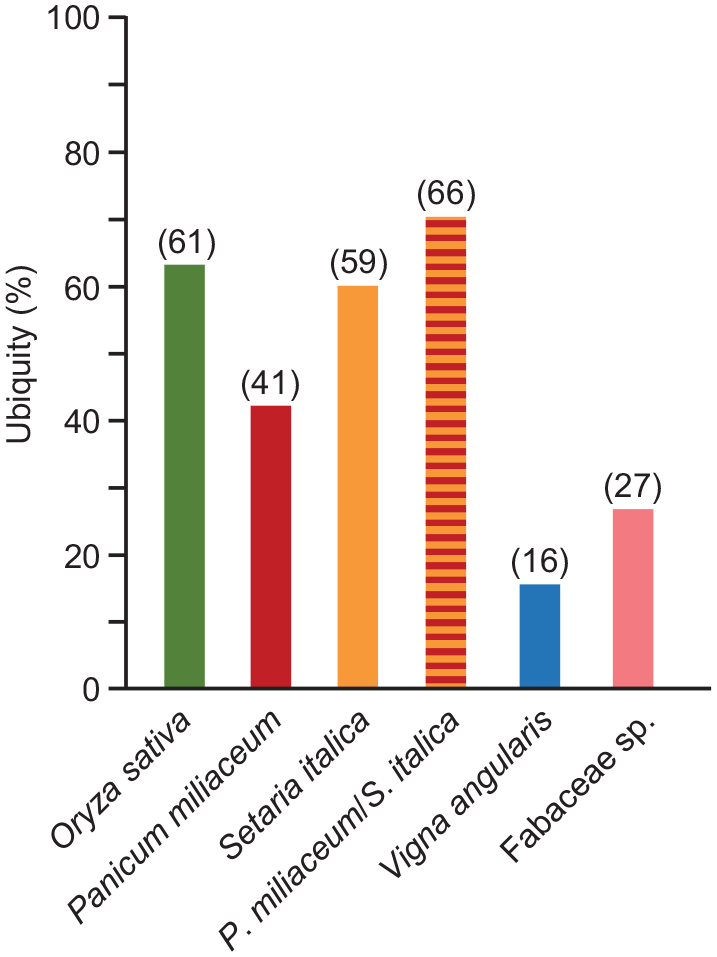
Ubiquities of frequently recorded taxa in the archaeobotanical assemblages from the Wushantou phase ash pits at Sanbaopi 5.
Pulses
Other plants of economic importance recorded in the Wushantou ash pits are pulses (Fabaceae). We distinguished three different morphological types. One is of spherocylindrical shape in ventral and lateral view, circular in cross-section and has an average length, width and thickness of 3.0, 1.7 and 1.9 mm, respectively (Figure 7, specimen 2). A total of 1147 pulses occurred in 13 different ash pits (ubiquity 30%). Parts of the seed coat, which show characteristic cracks, were still attached to most of the specimens. In addition, most of the pulses have bulbous protrusions on the ventral side that result from carbonisation. A few specimens retain remnants of the hilum, which appears circular, relatively small (diameter ca. 0.6 mm) with a narrow slit (indicating the faboid split, i.e. hilar groove) and a hilar rim. Size, overall seed shape and hilum structure are typical features of species that belong to genera, such as Tephrosia or Sesbania. However, the Fabaceae is one of the most diverse plant families and unambiguous identification of the documented pulses is currently not feasible.
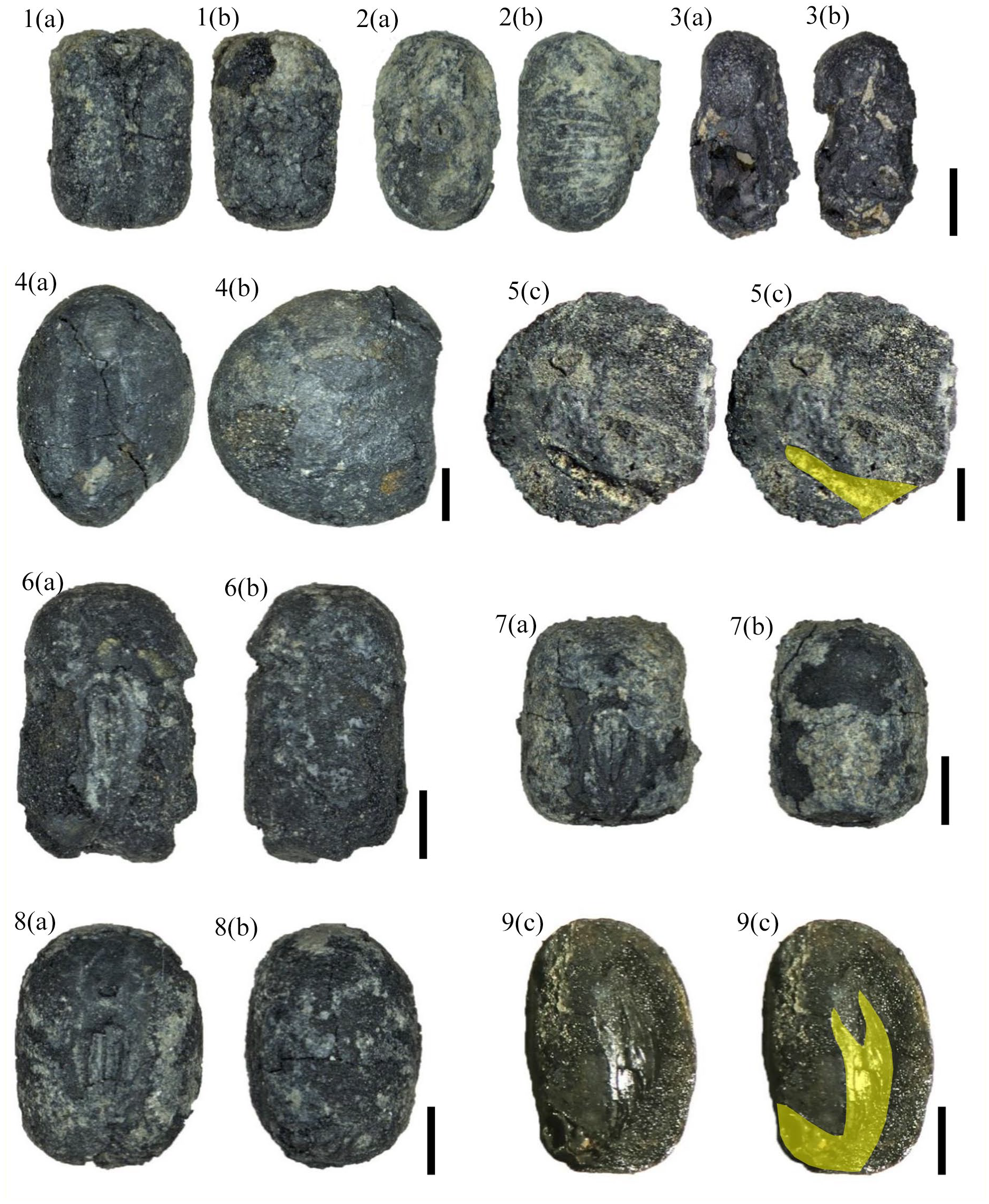
Carbonised seeds of 1 Vigna angularis, 2 Fabaceae sp., 3 Glycine soja/max (soybean) from the Late Neolithic Dahu period Wushantou phase and 4, 5 Cajanus cajan (pigeon pea), and 6–9 Vigna radiata var. radiata (mung bean) from the Metal Age Niaosong period. Seeds are shown in (a) ventral, (b) lateral and (d) cross-section views; (c) cotyledons with plumules are highlighted in yellow; scale bars = 1 mm.
Much less abundant with only two specimens found in P09 is the second type (Figure 7, specimen 3). Both pulses are poorly preserved and much of the outer part of the seeds including the hilum is missing. The most obvious feature is the relatively large bulbous radicle that has a rounded tip, which is typical for soybean. In terms of size, our specimens (length = 3.0, width = 1.5 and thickness = 1.5 mm) are comparable to soybeans found in different Longshan culture sites (Henan and Shandong provinces) and in Shang layers at the Daxinzhuang site (lower Yellow River region), which are extremely small, even smaller than some wild modern references (Lee et al., 2011). Lee et al. (2011) speculated that these Chinese archaeological records may represent undeveloped or immature seeds or may have shrunken due to continuous maturation after the point of maximum weight and size. This may also apply to the specimens tentatively identified as soybean from Sanbaopi 5. Even if this identification is correct, it remains unclear whether they underwent domestication or represent the wild progenitor G. soja, which occurs naturally in Taiwan (Hymowitz, 2004).
The third type (Figure 7, specimens 1), which we identified as Vigna angularis (see Leipe et al., 2022 for details), is represented by 83 specimens (ubiquity = 16%) from the Wushantou ash pits. This pulse was also recorded in high numbers in P02 dated to the Niaosong period. Based on volumetric measurement, the total number of V. angularis in P02 is estimated to ca. 193,700. Volumetric measurements showed that the Niaosong pulses are on average 1.7 times larger than those of the Wushantou phase (see Leipe et al., 2022 for details).
The V. angularis recorded in P02 dating to the Niaosong period were accompanied mainly by pulses of two other legume species. One of them is Cajanus cajan (pigeon pea), which is characterised by a roundish shape, a flat hilum end and a characteristic apostrophe-shaped plumule imprinted in some of the split cotyledons (Figure 7, specimens 4 and 5), typical morphological traits of this species (Fuller and Harvey, 2006). Length, width and thickness measurements of selected well-preserved seeds (n = 31) revealed arithmetic averages of 3.9, 3.8 and 3.2 mm and medians of 4.0, 3.8 and 3.2 mm, respectively. Fuller et al. (2019) note that a high length/width ratio is the most secure measure for separating domesticated from wild specimens. With a ratio around 1.0, the specimens from P02 exceed those of wild forms (C. cajanifolius) that range between 0.68 and 0.8, which allows taxonomic classification of these pulses as fully domesticated pigeon pea.
The other pulse in P02 is in terms of shape similar to V. angularis (Figure 7, specimens 6–9). Although the hilum is not found in the Dahu and Niaosong period V. angularis, it has been preserved in these pulses. It appears relatively short, elliptic to ovate and non-protruding (i.e. more or less flush with the seed coat surface). The most important morphological feature is the large plumule, whose length is more than half of that of the split cotyledon (Figure 7, specimen 9). Together, these traits are typical for V. radiata. According to Fuller and Harvey (2006), wild (V. radiata var. sublobata) and domesticated forms, that is mung bean (V. radiata var. radiata), may be separated along the length and width boundaries of respectively ca. 3 and 2 mm. All detected specimens from P02 have length and width measures that are above the suggested boundaries, thus represent domesticated mung bean. Based on volumetric measurement, the total numbers of mung bean and pigeon pea in P02 are estimated to around 41,300 and 2200 respectively. The relative frequencies of V. angularis, mung bean and pigeon pea in this pit are 81.7%, 17.4% and 0.9%, respectively.
Discussion
Plant use and cultivation during the Wushantou phase
The archaeobotanical record from Sanbaopi 5 provides evidence for the role of plant cultivation in the subsistence economy of Wushantou populations in south-western Taiwan. Seeds of rice, broomcorn and foxtail millet occur most frequently. In total numbers, both millets are more abundant than rice (Figure 5). However, the millet/rice ratio is biased by the seed record from P07 containing a bulk millet assemblage of thousands of grains. Excluding this pit from the entire record reveals a higher share of rice, although with more than 80% the millets still dominate. Ubiquity seems to be the most reasonable parameter for assessing economic importance. The ubiquity for broomcorn/foxtail millet (66%) only slightly exceeds that of rice (61%) (Figure 6).
A limited number of archaeobotanical records from Dahu cultural layers has been also reported from other archaeological sites in the TSP. Plant remains recovered by flotation associated with the Wushantou phase from the Youxianfang South 2 site presented in an archaeological excavation report (Tsang et al., 2006a) comprise 258 identified seeds. While a total of 68 seeds were assigned to rice, no millet grains have been reported. Another site with archaeobotanical remains from the Wushantou phase recovered without flotation is Wangang (Tsang and Li, 2010). Of 44 seeds, 11 were identified as rice. Millet remains were not found. During the excavations at the Sanbaopi South (Tsang and Li, 2014) and Sanbaozhu (Tsang and Li, 2012) sites, respectively 15 and 219 rice grains were recovered by flotation, but no millet remains. These published records suggest that rice was the only cultivated crop in the study area during the Wushantou phase, contradicting our findings. However, the records obtained without systematic flotation should be interpreted with caution, since millet grains, which have a very small size, may have been overlooked or misidentified.
The relative millet frequency and ubiquity data from Sanbaopi 5 suggest that foxtail millet was preferred over broomcorn millet. Whether this shows a preference of taste or better suitability for cultivation related to biotic or abiotic factors, such as climate conditions, is a matter of ongoing research in different regions. While the first motivation is difficult to test, the ratios from Sanbaopi 5 are in line with available data from other sites with prehistoric evidence for millet cultivation, which have fuelled the hypothesis that broomcorn millet thrives better under relatively dry climate conditions and foxtail millet under relatively moist conditions (Leipe et al., 2021; Liu et al., 2009) as is the case for the study region at least during the main growing season.
Although represented by only one seed kernel, Job’s-tears was probably another component of the prehistoric crop package in the study area. Liu et al. (2019) note that the significance of Job’s-tears in the Neolithic agriculture in China has been ‘severely’ underestimated probably due to poor preservation properties of charred macroremains, a lack of systematic archaeobotanical recovery and/or difficulties in identification. Poor preservation properties would explain why only one specimen was found in the current record, suggesting that Job’s-tears was more important as a food source than indicated by the single recovered seed. Most evidence for the use of Job’s-tears comes from microremains (starch residue and phytoliths), suggesting that the plant has been exploited in China as early as 28,000 years ago by Palaeolithic populations and was widely cultivated during the Neolithic period as part of the millet-rice farming systems in north-eastern China between the Yangtze and Liao rivers (Liu et al., 2019). Starch grain analyses evidence Job’s-tears use around 3500–2500 BCE in Guangdong Province (Yang et al., 2013), 3000–2000 BCE in Jiangxi Province (Wan et al., 2012) and 1500–1000 BCE in Yunnan Province (Dai and Yang, 2010). Charred remains of Job’s-tears seeds have been found in Wushantou phase layers at Youxianfang South 2 (n = 4) and Sanbaopi South (n = 2) (Tsang and Li, 2010, 2014). Together with the current find from Sanbaopi 5, these records are the so far first prehistoric macrobotanical evidence for this plant from the whole region including eastern and southern China. Due to the limited archaeobotanical record, the dispersal and domestication of Job’s-tears remains unexplored, limiting further discussion of the current finding.
Other plants, which have been domesticated in Asia several times are pulses. One of the three pulses distinguished in the archaeobotanical assemblages from Sanbaopi 5 is V. angularis, whose record suggests long-term use at the study site from the Wushantou to the early Niaosong phase (Leipe et al., 2022). Leipe et al. (in press) determined that the pulses dated to the early Niaosong phase are on average ca. 75% larger in volume than those dated to the Wushantou phase. This may indicate selection for larger pulses that would designate the Niaosong assemblage as V. angularis var. angularis (azuki) and the study region as another centre of azuki domestication/cultivation besides the Lower Yellow River region, the Korean Peninsula and Japan (Lee, 2013). Although additional studies are needed to verify whether domestication took place during this period, the V. angularis record from Sanbaopi 5 and finds of pulses from other archaeological sites in the TSP (see Leipe et al., 2022 for details and references) that may also represent this taxon point to a long history of use in the study region dating back to the beginning of the Neolithic age. Therefore, it should be considered that the tradition of its use was introduced to the region by those immigrating farmers that also brought along millet and rice cultivation. While it seems likely that V. angularis was locally cultivated during the Niaosong phase, it remains unclear whether the plant was grown as supplementary food source, soil manure or both during the Neolithic.
A similar question arises with regard to another, undifferentiated pulse (Fabaceae sp.), which occurred at relatively high frequency and ubiquity (Figure 6), suggesting that it was commonly used by the local community. However, it remains unclear what this plant was used for and whether it was collected or cultivated. Like mung bean, urd or soybean, other, less important legumes, such as Tephrosia or Sesbania species, have been used as green manures to improve soil structure and fertility, especially by increasing organic matter and nitrogen contents (Ladha et al., 1988; Naher et al., 2020). Thus, it is possible that this legume was grown for improving crop yields and that its pulses were harvested as supplementary food. That farmers have known and taken advantage of this fertilising property since millennia is documented, for example, by written sources from ancient Greece and Rome (Flint-Hamilton, 1999). Texts by contemporary scholars (see Flint-Hamilton, 1999 for details and references) attest that during the Roman period legumes had been also used for further purposes, such as medical effects. While legumes have moved into the focus of modern medicine only recently (Nikkhah, 2014), they have been widely used in traditional medicine for a long time (Duke, 1981), which should be considered as an alternative or additional role of the undifferentiated Fabaceae sp. recorded at Sanbaopi 5. The Qimin Yaoshu, a text concerned with agriculture, landscape management and food processing written by a Northern Wei dynasty official and dated to the middle of the sixth century CE (Li, 2001), also describes the value of different legumes as green manure. In addition, in ancient China, legumes were used in millet cultivation to increase yields and intercropped with mulberry (Morus spp.) (He, 2010).
The same may apply for the third pulse, which appears to be soybean. Despite its rare occurrence (two specimens), we cannot exclude that the plant was cultivated. Their size is small and thus does not allow to differentiate them as either wild or domesticated forms. Soybean populations of similar small size recovered from Late Neolithic Longshan period (3000–1900 BCE) and Shang period (1600–1045 BCE) layers at sites in the lower Yellow River region are believed to have been cultivated (Lee et al., 2011).
It is thinkable that legumes at the study site were minor components of intercropping practices and were grown in proximity to rice and millets serving as manure, cover crops and supplementary food. It is worth considering this function and use also in context of pulse domestication in other regions, such as northern China and India where pulse cultivation appeared in agricultural systems mainly based on cereal crops, such as rice, millets, wheat and barley. More attention should be paid to the potential role of pulses as manuring plants in early agricultural systems in future research.
The current record demonstrates that the Wushantou populations at Sanbaopi 5 were farmers who mainly focused on rice, foxtail millet and broomcorn millet cultivation. This is largely in agreement with finds from other Neolithic sites across the southern part of China. The growing number of archaeobotanical studies suggests that these three crops appeared in combination and were the mainstay of agriculture practices that begun to spread across the region by 3000–2500 BCE (e.g. Dai et al., 2021; Deng et al., 2018b, 2020; Yang et al., 2018). Around this time, this cultural package also appeared in Taiwan, associated with the Early Neolithic late Dabenkeng culture (Hsieh et al., 2011; Tsang et al., 2017). Tsang et al. (2017) analysed an abundant record of the three crops comprising around 120,000 grains from the Nanguanli East site (TSP, ca. 2 km east of Sanbaopi 5; Figure 1c) and calculated a relative composition of 7% rice, 28% broomcorn millet and 65% foxtail millet grains, which is in terms of the rice/millets and broomcorn/foxtail millet ratios in agreement with the current record. While no further details are provided on other macrobotanical remains present at this site, Tsang et al. (2006b) note the existence of an unidentified pulse in the collected samples. Remains of millet, rice and pulses were also found at Middle Neolithic Niuchuozi culture sites (Tsang and Li, 2009, 2015).
Qin and Fuller (2019) hypothesised that early agriculture in Taiwan was characterised by low-intensity farming systems in which millets were the main crops and rice grown on dryland was only a supplementary food source and developed as part of a migration of millet-rice farmers who spread across southern China and Southeast Asia (Fuller, 2020). The current archaeobotanical record agrees with this model in that remains of millet equal or outnumber those of rice and the identified weed remains (Table 1) are not indicative of rice cultivation in wet fields, but are mostly dry field colonisers (Fuller and Qin, 2009; Weisskopf et al., 2014). The absence of paddy field remains from Taiwanese Neolithic cultural layers further suggests cultivation of rice on a rainfed basis. According to Castillo et al. (2016), who postulated that legumes, such as mung bean, are usually grown in dryland cultivation systems, the pulses in the current record represent further evidence for rainfed cropping at Sanbaopi 5. Altogether, this suggests that agricultural practices of local groups primarily relied on rainfed cropping and probably persisted at least from the Early to Late Neolithic (about 2500 years) without notable transformations, which would challenge the assumption about the timing of the spread of paddy rice farming across southern China. Ma et al. (2020) hypothesised that the enlargement of coastal plains caused by marine transgression between 3000 and 2000 years ago in southern China and Southeast Asia entailed rapid spread of paddy rice cultivation. Our data does not support a shift to wet rice-centred farming at least around the study site, which advocates a spatio-temporally more complex transition towards more productive and labour-demanding wet rice cultivation within these macroregions (Alam et al., 2021).
Total counts of selected macrobotanical remains from ash pits at Sanbaopi 5 representing Wushantou and Niaosong phases layers.
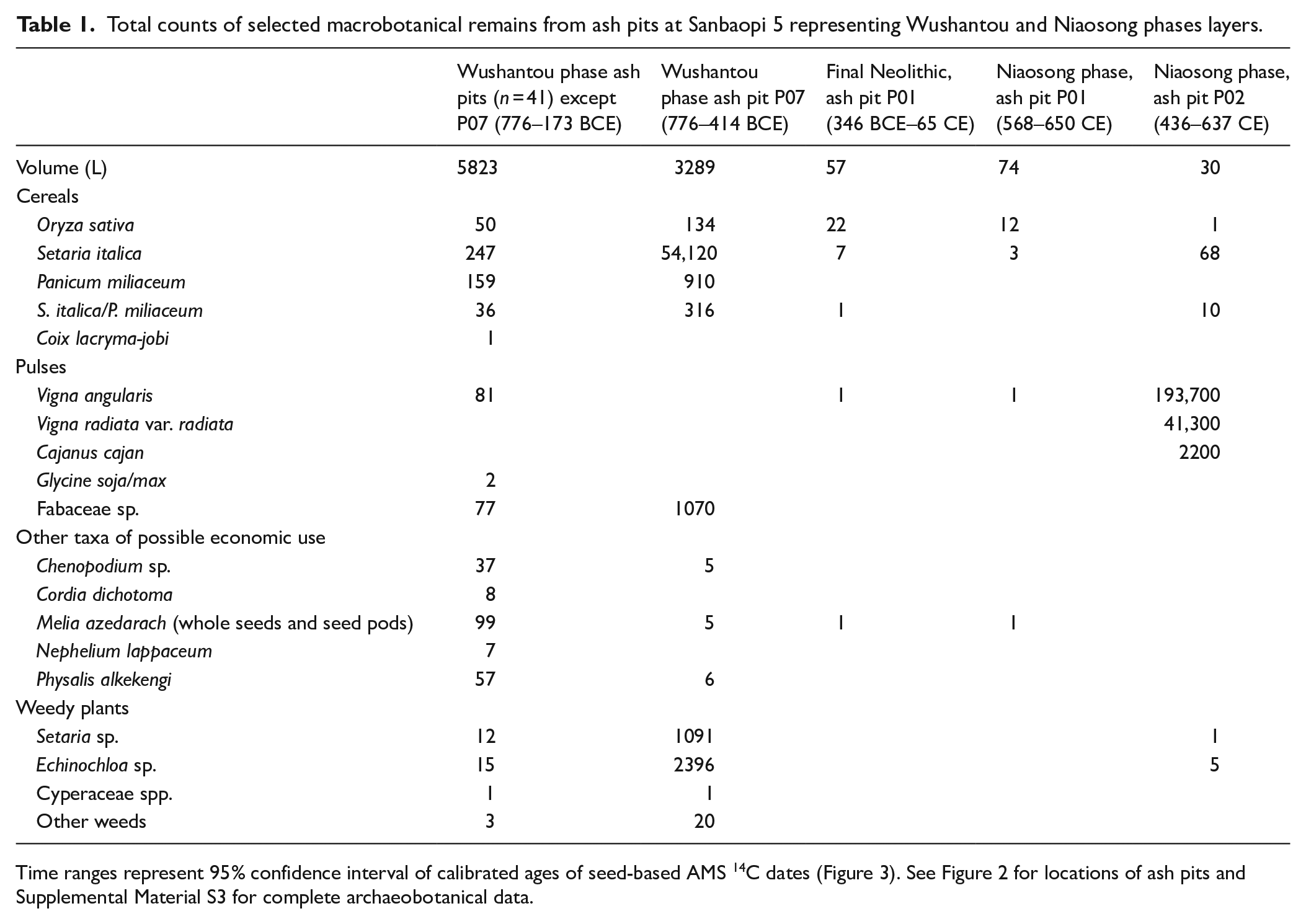
Time ranges represent 95% confidence interval of calibrated ages of seed-based AMS 14C dates (Figure 3). See Figure 2 for locations of ash pits and Supplemental Material S3 for complete archaeobotanical data.
Implications for the origin of the Dahu culture
The current and existing archaeobotanical records from the TSP also allow to re-evaluate the discussion about the origin of the Dahu culture. The crop package of local groups during the Wushantou (and likely Dahu) phase, consisting of millets, rice, Job’s tears and pulses, corresponds to that of Late Neolithic and Bronze Age communities in the Middle and Lower Yellow River regions (An et al., 2019; Crawford et al., 2005; He et al., 2017; Lee, 2013; Lee et al., 2007, 2011). Together with the findings on the introduction of temperate japonica rice in Taiwan by a recent study on rice genetics (Alam et al., 2021), this suggests that Wushantou populations originated in northern China. Although the modelling suggests that temperate japonica rice was introduced around or after 600 BCE (Alam et al., 2021), it seems possible that this happened some centuries early, i.e. at the same time as the formation of the Wushantou phase, which led to the reported Late Neolithic population increase (Chen, 2017; Tsang and Li, 2015). Immigration from northern China prior to the first millennium CE is in agreement with Wang et al. (2021), who proposed that 25% of the ancestry of Metal Age individuals from Taiwan originates in northern China and is indirectly related to the Yellow River region. Together with the archaeological record from the study region, this suggests that immigrants from northern China, possibly the Yellow River region, arrived in Taiwan as early as the second half of the second millennium BCE, leading to the establishment of the Dahu culture in south-western Taiwan from around 1400 BCE through the intermingling of the newcomers with the existing Niuchuozi populations.
Indeed, the Yellow River region is marked by increasing cultural and population dynamics around the middle of the second millennium BCE. During its maximum flourishing (Erligang period, ca. 1600–1400 BCE) in the Middle Yellow River region, the Shang dynasty made intensive efforts to gain access to key resources in neighbouring areas through colonisation and exchange of goods. An increasing spread of Shang activities towards the east is mirrored in the establishment of Erligang regional centres, such as Daxinzhuang and Qianzhangda in modern Jinan and Tengzhou (Liu and Chen, 2012) and archaeological site data for prehistoric China (Hosner et al., 2016; Wagner et al., 2013), showing a rise in site numbers in Shandong Province between 1750 and 1400 BCE (Leipe et al., 2020). During this period, around 1500 BCE, rice cultivation spread to the Korean Peninsula (Ahn, 2010; Leipe et al., 2020), initiating the Mumun period (ca. 1500–300 BCE), accompanied by a substantial population increase (Oh et al., 2017) most probably driven by rapid immigration (Lee, 2017). Around the same time (ca. 1600 BCE), a steep increase in site numbers is documented in what is now Fujian Province (Leipe et al., 2020), suggesting considerable immigration, which likely reached also Taiwan leading to enhanced population growth, as indicated by increasing site numbers and size, cultural variety and intercultural conflicts during the Late Neolithic (ca. 1500–1 BCE; after Chen, 2017 and references therein).
Remarkable is also the synchronicity in the onset of the cultural (population) peaks of the Mumun (i.e. Middle Mumun period; ca. 800 BCE) and Dahu (i.e. Wushantou phase; ca. 900 BCE) periods. Leipe et al. (2020) have discussed a relation of this enhanced population growth on the Korean Peninsula and the spread of agriculture to Japan to the eastward expansion of the Zhou kingdom from their domain in the Wei River region about 1045 BCE overthrowing the Shang state and setting up colonies in the East (including Shandong) (Shaughnessy, 1999). It is possible that the migrations to southern continental China and to Taiwan Island, like those to the Korean Peninsula and later to Japan, during the second half of the 2nd millennium BCE are the results of economic and demographic eastward expansions of the Shang dynasty and the Zhou kingdom. These developments may not only be related to internal anthropogenic factors, but may also have been influenced by a long-term decline in temperature and precipitation and the accompanying increasing deterioration of climatic conditions for farmers and agropastoralists in the northern regions of the Asian monsoon domain (including northern China and adjacent steppes), which may have led to a population expansion that triggered a knock-on effect resulting in emigration from the Lower Yellow River region (Leipe et al., 2020 and discussion therein).
Pulses from the Niaosong phase
The bulk record of pulses from P02 14C-dated to the beginning of the Middle Metal Age Niaosong phase (600–1000 CE) (Figure 3) contained besides V. angularis also mung bean and pigeon pea originating from outside Taiwan. Both are among the most important grain legume crops in Asia today (Hasanuzzaman et al., 2020). Existing evidence suggests that mung bean and pigeon pea were domesticated on the Indian Subcontinent and were cultivated there at least since the middle of the third millennium BCE and the middle of the 2nd millennium BCE, respectively (Fuller and Harvey, 2006). Early evidence for domestication (selection for pulse size increase) of V. radiata comes from archaeological sites in the upper Indus Valley (Kunal and Balu; third millennium BCE) and Maharashtra (Tuljapur Garhi; late second to early first millennium BCE) (Fuller and Harvey, 2006) and for pigeon pea from sites in Karnataka (Sanganakallu, Piklihal and Hallur; ca. first half of 2nd millennium BCE) in southern India (Fuller et al., 2019) (Figure 1a). Both crops later spread to Mainland Southeast Asia where they became incorporated into regional agricultural traditions. Archaeobotanical evidence for the eastward dispersal of these pulses is scarce. Pigeon pea has been reported only from two regions; from southern Thailand at the Phu Khao Thong and Khao Sam Kaeo sites (Figure 1a) dating to the late first millennium BCE (Castillo et al., 2016) and from Cambodia from a much younger cultural context (14th–15th century CE) at Angkor Thom (Figure 1a) (Castillo et al., 2018).
Today pigeon pea is regularly cultivated across large parts of Africa, South Asia and much of Mainland Southeast Asia, although occurrence of feral pigeon pea populations in southern China, Island Southeast Asia and north-eastern Australia suggests that in the past this domain stretched far beyond its modern limits (Fuller et al., 2019). The current find at Sanbaopi 5 represents the first archaeobotanical evidence of pigeon pea cultivation outside India and Mainland Southeast Asia. Furthermore, it provides a link to the Siraya culture (1400 CE to present), which has been colonising south-western Taiwan and is thought to have evolved from the Niaosong culture (Chen, 2017; Kuo, 2019; Yen, 2015). Ethnobotanical studies conducted at the beginning (The Provisionary Ad Hoc Committee of Taiwan Viceroyalty for Investigating Old Customs of Taiwan, 1998) and end (Wei et al., 2001; Zhao et al., 1998) of 20th century have shown that pigeon pea is considered a traditional crop of high importance not only by the Siraya, but also by many other ethnic groups of Taiwan, such as the Amis, Paiwan, Atayal and Saisiyat. It is possible that pigeon pea has been an important crop in the study region and likely other parts of the island since at least the sixth century CE.
Compared to pigeon pea, modern cultivation of mung bean is more widespread across Asia. Besides the Indian Subcontinent and Mainland Southeast Asia, it is commonly grown in Indonesia, the Philippines, China and Korea (Nair et al., 2020). Castillo et al. (2018) state that it is also the most commonly found pulse in the still few available archaeobotanical assemblages from Southeast Asia. In addition to the three sites with remains of pigeon pea, mung bean has been also found in a cultural layer at the Pacung site on Bali Island, Lesser Sunda Islands, Indonesia (Figure 1a) dating to the end of the first millennium BCE (Calo et al., 2015). Reports of early charred mung bean records from China are limited to Master thesis projects at archaeological sites in Shandong Province. Archaeobotanical work at the Zhu settlement site (Figure 1a) in south-western Shandong Province has revealed eight seeds from layers associated with the Spring and Autumn period (771–476/403 BCE) (n = 1), the Warring State period (476/403–221 BCE) (n = 4) and the Western Han dynasty (202 BCE–9 CE) (n = 3), which have been tentatively identified as mung bean (Ma, 2017). At the Beiqian archaeological site (Figure 1a) on the Jiao-dong Peninsula (eastern Shandong Province) 102 seeds identified as mung bean were recovered from Zhou dynasty (1045–256 BCE) layers (Wei, 2018). These records suggest that mung bean had been used in the Shandong region at least since the first millennium BCE, although the ages of the reported seed assemblages from these multi-phase sites has not yet been confirmed by direct dating. At least at the Beiqian, site contamination by redeposition of charred seeds has been reported (Jin et al., 2016). This concerns charred wheat grains from Dawenkou cultural layers, which were 14C-dated to the Zhou dynasty and modern times. The earliest sound evidence for mung bean use in the wider Lower Yellow River region is the Qimin Yaoshu (middle of the sixth century CE), which describes the pulse as part of intercropping systems and green manure (He, 2010).
The available archaeobotanical records of pigeon pea and mung bean do not provide a solid base for reconstructing the timing and routes of the introduction of both pulse crops to Taiwan. It is possible that they first spread to continental China before they reached Taiwan. An alternative scenario is that the crops arrived via Southeast Asia through maritime exchange connections across the South China Sea, which intensified from the middle of the first millennium BCE (Bellina et al., 2019; Calo et al., 2020; Hung et al., 2013). Records of glass beads and stone casting moulds from the archaeological sites Beinan, Sanhe and Jiuxianglan (Figure 1b) in south-eastern Taiwan dated to around 400 BCE is currently the oldest evidence for the onset of the Metal Age on the island and constitute a link between Taiwan and Peninsular Thailand via Island Southeast Asia (Hung and Chao, 2016). Possibly pigeon pea and mung bean first arrived to eastern Taiwan through enhanced exchange activities, which accompanied the formation of the Southeast Asian Metal Age (Hung et al., 2007). The mung bean record from Bali Island from the end of the first millennium BCE (Calo et al., 2015) makes this scenario plausible. If so, both crops are representative for the Metal Age on Taiwan, which, according to the current chronology, started in south-western Taiwan ca. 100 CE (i.e. around 500 years later than in eastern Taiwan) and support archaeological evidence that the earliest Metal Age goods and technologies spread to Taiwan from Mainland Southeast Asia via Island Southeast Asia (Hung and Chao, 2016). Moreover, the pulse record supports the demographic modelling results based on rice genetic data suggesting an introduction of tropical japonica-type rice to Taiwan from the Philippines around or before 700 CE (Alam et al., 2021). Future archaeobotanical work in southern East Asia and Southeast Asia will help improve our knowledge of maritime exchange networks in this vast region and how transmitted crops affected existing farming systems.
Conclusions
In sum, the current archaeobotanical data suggest that local Dahu communities practiced rainfed crop cultivation consisting primarily of foxtail and broomcorn millet and rice, supplemented by pulses and Job’s-tears. In line with other published data, it seems that this cropping system persisted during the Neolithic period after the introduction of an agricultural lifestyle ca. 3000–2500 BCE. There is no evidence that crop cultivation in the study region shifted towards more intensive paddy rice cultivation by the end of the first millennium BCE. However, further archaeobotanical investigations combined with direct dating are needed to gain a detailed understanding of long-term plant use in the study region.
The available archaeological, archaeobotanical and genetic evidence suggest that repeated immigration of farmers relying on low-intensity rain fed cropping systems was the prime driver for the assumed continuous Neolithic population increase on Taiwan and the cultural and demographic spread to Island South East Asia starting around 2500–2000 BCE. This is another contradiction to the hypothesis that the Austronesian expansion was linked to a farming-language dispersal originating in agricultural societies mainly based on intensive wet rice farming in the Lower Yangtze region.
Together with linguistic studies, human and rice genetics and archaeological data, the current results provide evidence that the Dahu culture emerged from the mixing of existing Niuchuozi populations with immigrant farmers from northern China. The rain fed cropping system of the local Wushantou groups, mainly based on millets and rice and supplemented by V. angularis (azuki/adzuki/red bean) and soybean, is similar to that of Late Neolithic/early Bronze Age communities in the Lower Yellow River region. It seems plausible that the southward migration of farmers to the southern continental part of China and to Taiwan Island in the middle of the second millennium BCE is linked to the contemporaneous spread of mixed millet-rice farmers to the Korean Peninsula and later to Japan and a result of the eastward expansion of the Shang dynasty (ca. 1600–1400 BCE) and Zhou kingdom (second half of 2nd millennium BCE) towards the Lower Yellow River region, possibly due to expanding agropastoralists from the Eurasian steppes and in response to the gradual Middle–Late Holocene decrease in summer monsoon precipitation.
Seeds of a yet undifferentiated legume are present in high ubiquities in the Dahu culture samples. As legumes are versatile, this plant could have served different purposes, including soil fertilisation, nutritional supplementation, medical treatment or a combination thereof. Future morphological studies based on modern reference collections will help to identify the recorded pulse taxon and its function. Furthermore, the record emphasises the role of pulses in early, low-intensity cropping systems and suggests that these low demanding plants were probably used more widespread in ancient Asia than known today.
The pigeon pea and mung bean assemblages directly dated to the sixth century CE Niaosong period are representatives of long-distant cultural influence from the Indian Subcontinent and increased exchange activities that commenced across South Asia, Southeast Asia and southern East Asia. The recovered pigeon peas are the first and mung beans the earliest robustly dated archaeobotanical evidence for the use of these crops in continental China and the island of Taiwan. They stress the influx of goods, crops, technologies and people from Southeast Asia via southern maritime routes, which likely let to the establishment of the Taiwanese Metal Age. This underlines that the formation of the Austronesian cultural sphere was a process of multidirectional movements of population, knowledge and cultural elements.
Supplemental Material
sj-docx-1-hol-10.1177_09596836221131689 – Supplemental material for Archaeobotanical evidence of plant cultivation from the Sanbaopi site in south-western Taiwan during the Late Neolithic and Metal Age
Supplemental material, sj-docx-1-hol-10.1177_09596836221131689 for Archaeobotanical evidence of plant cultivation from the Sanbaopi site in south-western Taiwan during the Late Neolithic and Metal Age by Christian Leipe, Jou-chun Lu, Ko-an Chi, Shu-min Lee, Hung-cheng Yang and Mayke Wagner in The Holocene
Supplemental Material
sj-pptx-2-hol-10.1177_09596836221131689 – Supplemental material for Archaeobotanical evidence of plant cultivation from the Sanbaopi site in south-western Taiwan during the Late Neolithic and Metal Age
Supplemental material, sj-pptx-2-hol-10.1177_09596836221131689 for Archaeobotanical evidence of plant cultivation from the Sanbaopi site in south-western Taiwan during the Late Neolithic and Metal Age by Christian Leipe, Jou-chun Lu, Ko-an Chi, Shu-min Lee, Hung-cheng Yang and Mayke Wagner in The Holocene
Supplemental Material
sj-xlsx-3-hol-10.1177_09596836221131689 – Supplemental material for Archaeobotanical evidence of plant cultivation from the Sanbaopi site in south-western Taiwan during the Late Neolithic and Metal Age
Supplemental material, sj-xlsx-3-hol-10.1177_09596836221131689 for Archaeobotanical evidence of plant cultivation from the Sanbaopi site in south-western Taiwan during the Late Neolithic and Metal Age by Christian Leipe, Jou-chun Lu, Ko-an Chi, Shu-min Lee, Hung-cheng Yang and Mayke Wagner in The Holocene
Footnotes
Acknowledgements
This study is a contribution to the projects ‘Taiwan – a stopover or melting pot? The development and spread of agriculture in East and Southeast Asia as part of fundamental economic and social transformation’ supported by the Gerda Henkel Foundation and ‘The spread of agriculture into Far East Eurasia: Timing, pathways, and environmental feedbacks’ funded by the German Research Foundation (DFG) grant TA 540/8-1. We acknowledge our gratitude to Yu-pei Chen (National Taiwan University, Taipei) for providing sample material from Sanbaopi 5 and a dedicated team of excavation workers that assisted in flotation, Wanyi Zhang (Lanzhou University, Lanzhou), Dominic Hosner (Shandong University, Qingdao and German Archaeological Institute, Beijing) and Tengwen Long (University of Nottingham Ningbo China, Ningbo) for providing Chinese publications, Antonella Aquaro (German Archaeological Institute, Berlin) and Robert N. Spengler III (Max Planck Institute for Geoanthropology, Jena) for discussions on seed identification and Pavel E. Tarasov (Freie Universität Berlin) for his valuable suggestions on the draft of this paper.
Funding
The author(s) disclosed receipt of the following financial support for the research, authorship, and/or publication of this article: This work was supported by the Gerda Henkel Foundation through a Research Scholarship (AZ 05/F/21) to Christian Leipe. Mayke Wagner acknowledges the German Archaeological Institute (DAI) for the financial support of the research projects ‘Bridging Eurasia’, ‘BAYCHRON’ and the GROUNDCHECK project ‘Food in a changing World’.

Supplemental material
Supplemental material for this article is available online.
References
Supplementary Material
Please find the following supplemental material available below.
For Open Access articles published under a Creative Commons License, all supplemental material carries the same license as the article it is associated with.
For non-Open Access articles published, all supplemental material carries a non-exclusive license, and permission requests for re-use of supplemental material or any part of supplemental material shall be sent directly to the copyright owner as specified in the copyright notice associated with the article.
