




Abstract
Reconstructing pre-industrial hurricane activity and aridity from natural archives places modern trends within the context of long-term natural variability. The first reconstruction of Atlantic hurricane activity in Jamaica was based on a sediment record previously obtained from a coastal lagoon. Specifically, an Extended Hurricane Activity (EHA) index was developed from high-resolution geochemical data that linked fluctuations in lake-level changes to rainfall variability associated with hurricane activity. Here, we analyse the same sediment core from which the EHA index was developed to assess the response of biological indicators, namely fossil diatom assemblages and sediment chlorophyll a (chl-a) concentrations, to hydrometeorological events (tropical cyclone-induced precipitation and droughts) over the past ~1500 years. The diatom assemblages responded sensitively to changes in salinity associated with lake-level changes driven by the balance of precipitation and evaporation. Aquatic production (inferred from sediment chl-a, which includes its main diagenetic products) and salinity (inferred from ITRAXTM µXRF chlorine counts) vary inversely following ca. 1300 CE, likely due to enhanced nutrient delivery from freshwater runoff during periods of elevated precipitation. Although the temporal resolution of our biological data is less-well resolved than that of the geochemical record, it generally tracks long-term trends in rainfall variability inferred by the EHA index over the past millennium. This further demonstrates the potential of using biological proxies from coastal lagoons to track past hurricane activity and aridity.
Introduction
Globally, the societal impacts of tropical cyclones, including human deaths and economic damage, have increased in recent decades. Questions persist, however, as to whether hydrometeorological events, including tropical cyclones and droughts, have exceeded their long-term natural variability and the extent to which their characteristics (e.g. frequency, intensity, rainfall) have changed in response to anthropogenic warming (Knutson et al., 2010; Nurse et al., 2014). Paleoenvironmental reconstructions of past hydroclimatic change from natural archives offer long-term perspectives on whether recent observational records lie outside the range of natural variability. In particular, paleolimnological investigations have shown promising results for reconstructing millennia-long hurricane and drought histories of coastal and island areas of the Atlantic (Burn and Palmer, 2014; Burn et al., 2016; Donnelly and Woodruff, 2007; Lambert et al., 2008; Liu and Fearn, 2000; Peros et al., 2015). Sediment cores used in tropical paleohydrological studies are often recovered from coastal lagoons, which, due to their sensitivity to seasonal rainfall variability and proximity to the ocean, make them excellent recorders of drought and hurricane-related effects including marine washover events (Palmer et al., 2020) and precipitation-driven lake-level changes (Burn and Palmer, 2015). Whereas many paleo-hurricane reconstructions rely on physical sediment properties (e.g. grain size) or geochemical analyses to reconstruct the frequency of tropical cyclones (Donnelly and Woodruff, 2007; Lambert et al., 2008; Liu and Fearn, 2000), only a few have demonstrated the potential of biological indicators (Hemphill-Haley, 1995; Horton and Sawai, 2010; Parsons, 1998; Peros et al., 2015).
A reconstruction of Atlantic hurricane activity over the past millennium was developed from a paleolimnological investigation of Grape Tree Pond (Figure 1), a coastal lagoon near Kingston, Jamaica (Burn and Palmer, 2015). Specifically, an Extended Hurricane Activity (EHA) index was generated from high-resolution geochemical data, using ITRAXTM µXRF core scans, that reflected lake-level changes in the study lagoon in response to rainfall variability associated with storms during the hurricane season. The EHA index provided a record of Atlantic tropical cyclone activity over three distinct global climate periods: namely the Medieval Climate Anomaly (MCA; ca. 900–1350 CE), Little Ice Age (LIA; ca. 1450–1850 CE) and Current Warm Period (CWP; ca. 1850 CE to present).
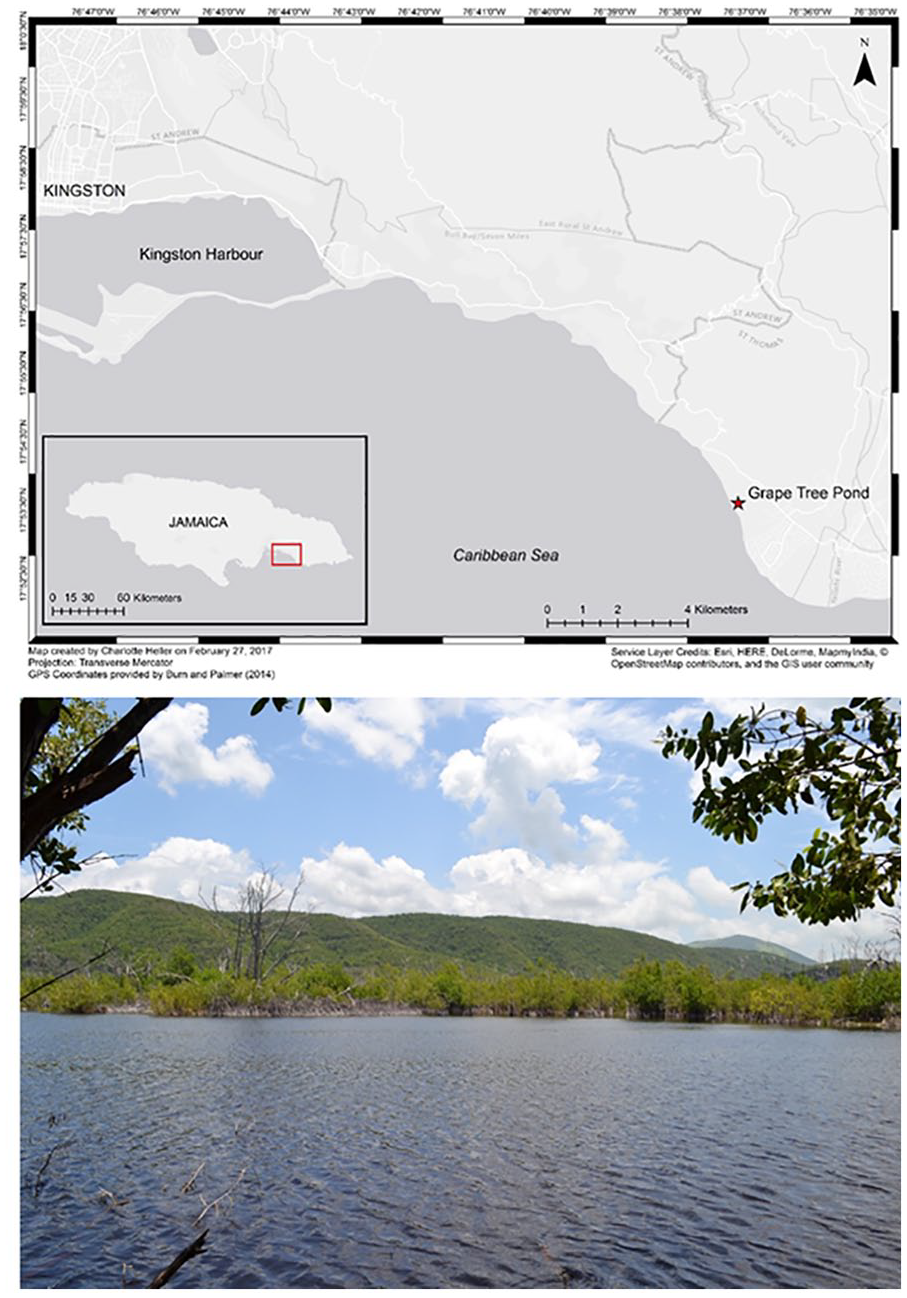
Map showing the study location in the Parish of St. Thomas, Jamaica (inset) and the location of Grape Tree Pond located ~20 km east of Kingston, Jamaica.
Here, we use the same sediment core (GT-3) from which the EHA index (Burn and Palmer, 2015) was generated to assess the response of biological indicators to past hurricane activity and drought conditions. We reasoned that, because the EHA index ultimately tracks changes in tropical cyclone-induced precipitation and drought via lake-level fluctuations in the study lagoon, biological indicators that are sensitive to lake-level shifts and salinity could be useful proxies for tracking past hurricane activity and drought conditions. Given the shallow nature of the study site (<1 m depth), an important control on the water chemistry is the evaporation to precipitation ratio, which, during extended drought periods, would lead to evaporative concentration of solutes and during wetter years would result in more dilute waters (Burn and Palmer, 2014). To this end, we analysed the sediment core for subfossil assemblages of diatoms (Bacillariophyceae), which respond sensitively to many limnological variables including salinity (Horton and Sawai, 2010; Horton et al., 2006), and have been used extensively to reconstruct the duration and frequency of past droughts, based on their salinity preferences (Fritz et al., 2010; Laird et al., 1998). We also measured trends in sediment chlorophyll a (chl-a) concentrations, which is commonly used to infer past changes in whole-lake production that occur with shifts in water chemistry and climate change (Michelutti and Smol, 2016; Michelutti et al., 2010). Our overarching objective is to assess the response of biological proxies to past hurricane activity and drought conditions in this region. We do so by comparing our biological data to the EHA index (Burn and Palmer, 2015), and the ITRAXTM µ-XRF-derived chlorine data (as a proxy for salinity) obtained from the same study lagoon.
Material and methods
Study site
The study site, Grape Tree Pond (17°53′37″ N, 76°37′06″ W), is a shallow (<1 m deep) freshwater-fed coastal mangrove lagoon located ~20 km east of Kingston, Jamaica (Figure 1). Limnological data recorded in July 2013 indicate warm temperatures (31.4°C), brackish conditions (salinity = 15.9‰), alkaline water (pH = 8.6), low dissolved oxygen (range 1.98–5.55 mg L−1) and elevated specific conductance (29,492 µS cm−1; Burn and Palmer, 2014). The lagoon is contained within a limestone catchment and surrounded by dense mangrove forests (Figure 1). To the south a ~100 m beach of coarse siliciclastic material separates it from the Caribbean Sea. The absence of distinct washover deposits within the sediment records indicate the lagoon is relatively well protected by its long beach and surrounding vegetation (Burn and Palmer, 2014). However, given the coarse properties of the local beach sands, the lack of storm-derived sedimentological evidence within the lagoon does not preclude the washover of sea water during storm surges associated with the passage of tropical cyclones. Nevertheless, these events would be limited to single occurrences and would likely have only a temporary influence on pond water chemistry. In addition, the concurrent increase in precipitation and surface water runoff from the storm would have a contrasting effect on salinity.
Grape Tree Pond is a closed basin system that receives fresh water from precipitation, surface runoff and groundwater flow. The pond receives most precipitation during the summer rainy season (May–October) and commonly experiences drought conditions during the dry winter season (November–April) when evaporation exceeds precipitation (Burn and Palmer, 2014). The lagoon’s high rate of sediment accumulation (~2.5 mm yr−1) and low rate of bioturbation make it an excellent candidate for paleolimnological study.
Sediment core recovery and analysis
Details of core collection and chronology are given in Burn and Palmer (2014). Briefly, three overlapping sediment cores were recovered from Grape Tree Pond using a Colinvaux-Vohnout drop hammer modified piston corer (Burn and Palmer, 2014). Cores were split lengthwise and sectioned at 1-cm intervals and stored in Whirl-pak® bags at 4°C until the time of processing. The chronology was developed by Burn and Palmer (2014) using five accelerator mass spectrometry 14C dates (±2σ) on well-preserved and identifiable terrestrial plant macrofossils from core GT-3. Radiocarbon dates were calibrated using OxCal 4.1 (Ramsey, 2001) and IntCal09 (Reimer et al., 2011). A composite sediment record was constructed by cross-correlating the sediment stratigraphic changes. An age-depth model was constructed using a smooth spline fitted through the calibrated radiocarbon dates from four of the terrestrial plant macrofossils using Clam 2.1 (Blaauw, 2010). The model was subsequently anchored to that of an annually-resolved coral growth rate record from the Yucatan Peninsula (Vásquez-Bedoya et al., 2012) for the interval 1773–2008 CE providing excellent chronological control during the recent historical period (Burn and Palmer, 2015). Core GT-3 was scanned for X-ray fluorescence using the ITRAXTM µ-XRF core scanner (Croudace et al., 2006) at Aberystwyth University equipped with a Mo X-ray tube, which was set to 45 kV and 50 mA. XRF scanning was performed at 1-mm resolution using an integration time of 15 s per measurement. The chlorine scan, measured in intensity counts per second (counts s−1), was normalized by dividing by the sum of ITRAX-derived Compton and Raleigh scattered intensities to account for the possible effects of water in the sediment matrix (Kylander et al., 2011).
Sediment was processed for siliceous microfossil analysis generally following Battarbee et al. (2001). Valves were identified to the species level based on taxonomic guides primarily of Krammer and Lange-Bertalot (1986–1991). Diatoms that resembled a species but could not be identified with complete certainty were labelled with that species name followed by ‘aff.’ (affinity). Fossil diatom assemblages are reported as relative abundances and the dominant taxa (defined here as ⩾5% relative abundance in at least one interval) are presented in a profile using the program C2 ver. 1.5.1 (Juggins, 2007). Spectrally-inferred chl-a concentrations (including the main isomers and diagenetic products of chl-a) were determined following methods in Michelutti et al. (2010). Lyophilized and sieved (125 µm mesh) sediment was analysed using a Model 6500 series Rapid Content Analyzer (FOSS NIRSystems, Inc.) operating over the range of 400–2500 nm. The area under the absorbance peak from 650–700 nm was used to infer sediment chl-a concentrations using the linear equation given in Michelutti et al. (2010).
Results
The sediment record spanned from ca. 500–2011 CE. For most of this history, the planktonic taxon Cyclotella meneghiniana dominated the diatom assemblage, recording greater than 60% relative abundance in all but three intervals (Figures 2 and 3d). From ca. 550–850 CE, C. meneghiniana fluctuated between 65% and 75% abundance, with lesser abundances of Halamphora coffeaeformis, Navicula erifuga and Nitzschia microcephala (Figure 2). From ca. 850–1250 CE, C. meneghiniana increased to over 80% relative abundance, with lesser abundances of H. coffeaeformis, N. erifuga, Envekadea vandlandignhamii, Nitzschia amphibia and N. microcephala. At ca. 1350 CE, C. meneghiniana declined to ~50% relative abundance, while H. coffeaeformis, and an unknown Amphora sp. recorded their highest values on record at ~17% abundance. From ca. 1450–1650 CE, C. meneghiniana reached amongst its highest values, exceeding 90% relative abundance. From ca. 1650–1725 CE, diatom valves were present but so rare that species counts were not practical. Following this period of low diatom concentrations, C. meneghiniana recorded its lowest relative abundance (26% abundance), while Mastogloia sp (aff braunii) increased to nearly 40% relative abundance, with lesser amounts of M. pseudosmithii, A. ovalis and Fallaciasubhamulata sp. (aff.). From ca. 1800–1900 CE diatom valves once again became too sparse to enumerate. Following ca. 1900 CE, C. meneghiniana increased to become the dominant taxon, with lesser amounts of H. coffeaeformis and N. amphibia. Taxa were grouped into broad categories of salinity preferences (e.g. hypersaline, fresh/brackish, fresh) based on available literature.
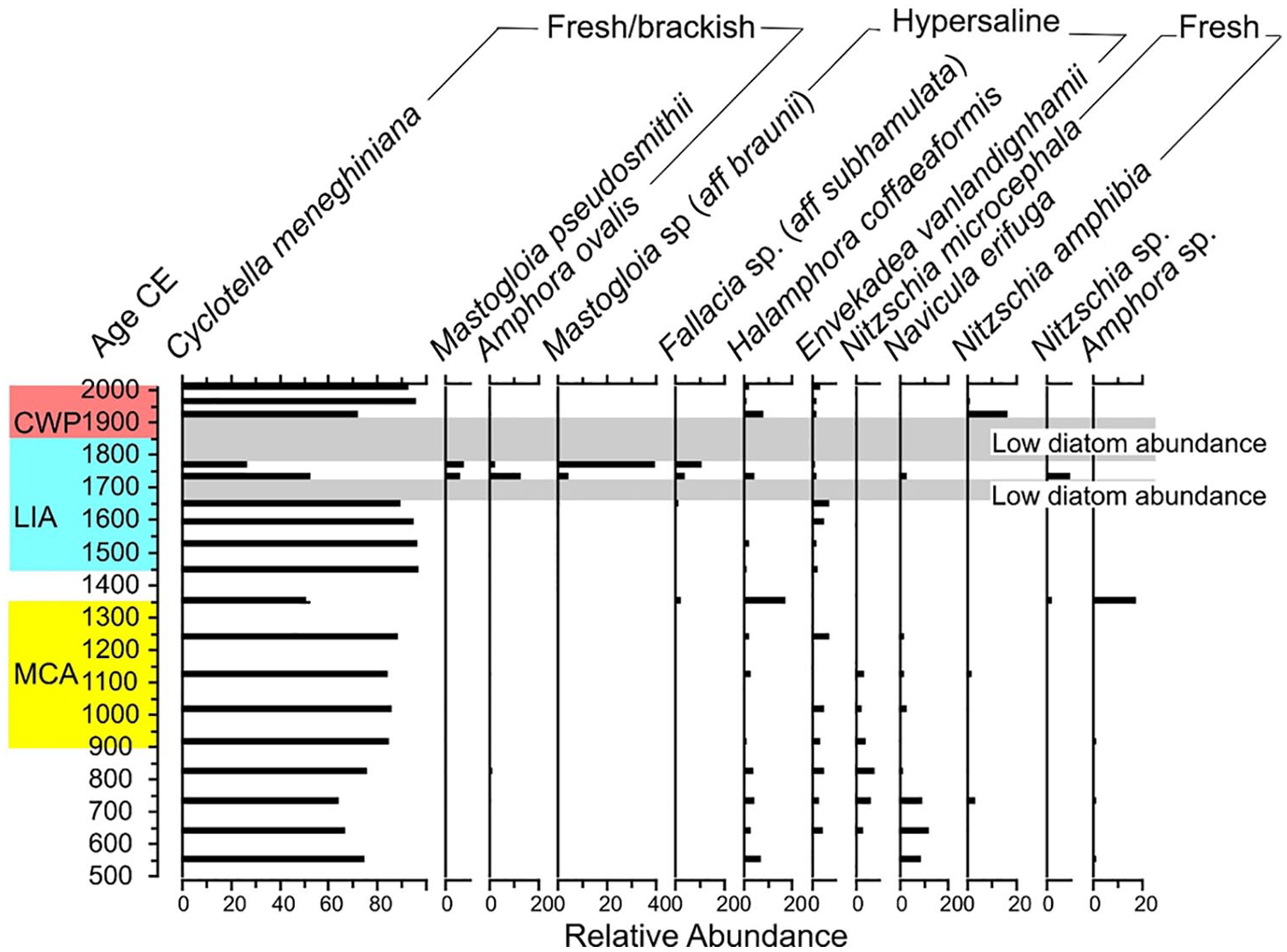
Subfossil diatom assemblages from Grape Tree Pond, Jamaica, showing dominant taxa (⩾5% relative abundance in at least one interval) grouped according to salinity preferences. The age-depth profile is from Burn and Palmer (2014). Intervals of low diatom abundance are shaded light grey.
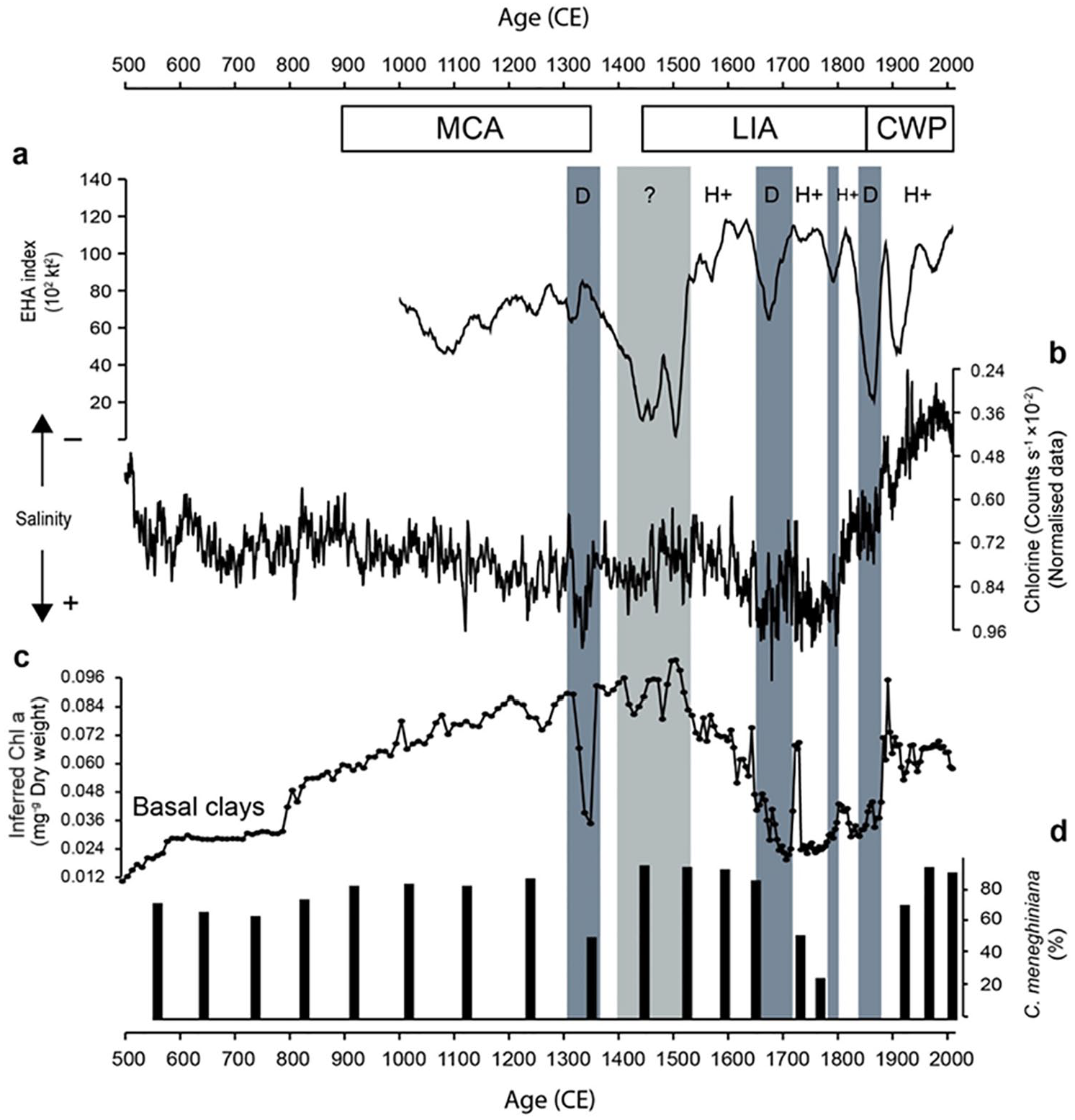
The Extended Hurricane Activity (EHA) index (a) compared with ITRAX µ-XRF chlorine counts (b), visible range spectroscopy-inferred sediment chlorophyll a concentrations (c) and relative abundances of Cyclotella meneghiniana (d).
The sedimentary chl-a profile recorded a steady rise from the base of the core up to ca. 1300 CE when values declined abruptly (Figure 3c). This decline corresponded to a notable decrease in C. meneghiniana. After ca. 1350 CE, chl-a concentrations increased rapidly and reached their highest values at ca. 1500 CE and then declined again reaching their lowest concentration at ca. 1700 CE, which corresponded to the period when diatom valves became too sparse to be enumerated. After ca. 1850 CE, chl-a concentrations increased towards the surface with a peak in concentration at ca. 1900 CE. The chl-a profile co-varied with chlorine counts (Figure 3b) from the start of the record at ca. 550–1300 CE but shifted to an antiphase relationship thereafter, with high chl-a values typically corresponding to low chlorine counts and EHA index values (Figure 3a), and vice versa.
Discussion
The truest test of whether our biological proxy data are responding to past hydrometeorological events such as hurricanes and drought events is by comparison to the EHA index of Atlantic tropical cyclones (Figure 3a), a measure of storm-induced lake-level change derived from sediments from the same coastal lagoon. The significant correlation between rainfall and the geochemical record (from which the EHA index is derived) allows for the reconstruction of hurricane activity because there is a strong connection between precipitation and tropical cyclone activity in this region (Burn and Palmer, 2015). The EHA index has been shown to correlate significantly with decadal changes in sea surface temperatures (SSTs; Smith et al., 2008), the Accumulated Cyclone Energy Index (Wang et al., 2008; Goldenberg et al., 2001) and a coral-based SST reconstruction from the Yucatan Peninsula (Vàsquez-Bedoya et al., 2012). Given the difference in the temporal resolution of the fossil diatoms, sediment chl-a data (1-cm intervals) and the high resolution (1-mm interval) ITRAXTM µ-XRF geochemical data from which the EHA index (Burn and Palmer, 2015) was developed, we compared the broad trends in interdecadal cyclone activity over the past ~1000 years. Specifically, the EHA index suggests hurricane activity was subdued during the warm period of the MCA, more pronounced and variable during the LIA, containing several distinct precipitation minima including from ca. 1400–1550 CE, ca. 1650–1720 CE, ca. 1780–1800 CE and ca. 1840–1880 CE, and then subdued again during the period of recent warming from 1950–2010 CE (Figure 3a; Burn and Palmer, 2014, 2015).
Regional changes in precipitation can alter the water chemistry and ecological characteristics of coastal lagoons via freshwater inputs that alter salinity (Milly et al., 2005) and nutrient concentrations (Orpin et al., 1999), among other variables. In the circum-Caribbean region, prolonged periods of precipitation and/or a more active hurricane season will increase freshwater inputs and reduce salinity concentrations (Burn and Palmer, 2014, 2015; Palmer et al., 2020). In contrast, reduced rainfall and the occasional occurrence of storm-induced washover events would lead to increased salinity through evaporative concentration of solutes and saline intrusion, respectively. The salinity tolerances of the diatom species preserved in the study core range from fresh to hypersaline, indicating the important role of changing salinity conditions (ultimately driven by rainfall variability and the passage of tropical cyclones) on assemblage composition.
The oldest portion of the fossil diatom record from ca. 550–900 CE extends beyond the time frame of the EHA index making direct comparisons impossible. The dominant diatom taxon during this period was Cyclotella meneghiniana (Figure 3d). This is a widespread taxon common in shallow, nutrient-rich coastal lakes (Wachnicka et al., 2010) and is considered salinity-indifferent, capable of living in fresh to oligosaline (<10 g l−1) waters (Cumming et al., 1995; Håkansson and Chepurnov, 1999; Lange and Tiffany, 2002). Although C. meneghiniana was the dominant taxon, this period contained amongst the highest abundances of low salinity taxa on record, which may indicate greater hurricane activity as increased precipitation would inoculate the lagoon with freshwater. This interpretation is supported further by the relatively low levels of sedimentary chlorine recorded at that time (Figure 3b) and a distinct lack of drought indicators (iron oxide concretions, authigenic carbonate and gypsum deposits) within the sediment record (Burn and Palmer, 2014).
During the MCA (ca. 900–1350 CE), when the EHA index showed subdued activity, the diatom assemblages were dominated (>80% abundance) by C. meneghiniana (Figures 2 and 3d). Few other dominant taxa (>5% abundance) were present during this period, excepting minor abundances of Halamphora coffeaeformis and Envekadea vanlandinghamii, both of which are tolerant of hypersaline conditions and commonly found in brackish waters (Sylvestre et al., 2001; Wachnicka et al., 2010; Zalat and Al-Wosabi, 2011). The stability of diatom assemblages during the MCA, combined with gradual increases in lagoon salinity (Cl) and production (chl-a; Figure 3b and c), suggests that environmental conditions were stable and conducive for the progressive development of the mangrove lagoon ecosystem. These gradual changes in water chemistry indicate lake-levels were also relatively stable at that time, which is consistent with the subdued levels of hurricane activity inferred from the EHA index (Figure 3a; Burn and Palmer 2015). The small rise in the hypersaline taxon, H. coffeaeformis, at ca. 1350 CE (Figure 2), corresponded to a significant rise in the chlorine counts (Figure 3b) and a concomitant drop in the abundance of C. meneghiniana (Figure 3d) and chl-a concentrations (Figure 3c; discussed in detail below). Taken together, this may reflect an extended period of below average precipitation that was not previously recognized in the ITRAXTM geochemical data (Burn and Palmer, 2014).
During the LIA (ca. 1450–1850 CE), when the EHA index suggested more pronounced and variable hurricane activity, we documented amongst the largest changes in assemblage composition for the entire record (Figures 2 and 3d). Notably, after a period of relative stability dominated by C. meneghiniana from ca. 1450–1650 CE, diatom abundances dropped dramatically such that they were too low to be enumerated. Interestingly, this period of low diatom abundances corresponded to the Maunder sunspot minimum (ca. 1645–1715 CE), one of the coldest intervals of the LIA. Following a short-lived reappearance of brackish and hypersaline diatoms from ca. 1730–1770 CE, abundances again declined to such low numbers that enumeration was not feasible from ca. 1780–1920 CE. In these two zones of low valve counts, diatom remains were practically absent even after tripling the amount of sediment used for other intervals. Although this is a qualitative observation, this drop in diatom abundance coincided with the presence of authigenic gypsum and calcite deposits within the sediment record indicating the occurrence of distinct precipitation minima in the study lagoon from 1650–1720 CE, 1780–1800 CE and 1840–1880 CE (Figure 3). Moreover, these minima corresponded to low values of the EHA index (Figure 3a) and high values of chlorine within the sediment record (Figure 3b). Such protracted periods of drought probably resulted in a myriad of limnological changes including lower water levels, increased salinity, elevated pH and the supersaturation of dissolved carbonates (Burn and Palmer, 2014). Diatom production could have been affected by any of these physical or chemical changes, although complete desiccation seems unlikely given the continued presence of sediment chl-a (discussed below). We also note that drought-related changes including desiccation, high pH and sediment carbonates are all associated with poor preservation (Flower, 1993; Flower and Ryves, 2009; Flower et al., 2006) and may explain the low abundances in these intervals. In a paleolimnological study of a South African coastal lagoon, poor preservation of diatoms in a section of the sediment core was associated with inferred high alkalinity and dry conditions with reduced water levels (Gordon et al., 2012). However, we recorded no obvious signs of diatom valve dissolution either within or bookending these zones of low abundance.
The LIA period also highlights two discrepancies between the EHA index, chlorine counts and the biological proxies (Figure 3). Drought conditions are inferred from ca. 1400–1550 CE based on the presence of authigenic carbonates and iron-oxide concretions in the sediment record and a corresponding decrease in the EHA index. In contrast, the diatom, chlorine and chl-a records suggest wetter and fresher conditions prevailed at that time (Figure 3b–d). This discrepancy may, in part, be a result of the coarser sampling resolution of the biological proxies; however, we are currently unable to reconcile why the signals are distinctly different at that time. The period of enhanced hurricane activity from ca. 1715–1780 CE corresponds to a period of high lagoon water salinity, hypersaline diatom taxa and low productivity as indicated by the chlorine counts and chl-a data, respectively. Given the established relationship between lake-level change and hurricane-induced precipitation, we would expect lagoon salinity to have decreased at that time. The most parsimonious explanation for this discrepancy is that storm surges and sea-spray associated with this period of enhanced hurricane activity introduced salt-water into the lagoon, which would have increased its salinity and suppressed aquatic production without necessarily emplacing a washover deposit within the sediment record.
Following the period of low abundances, which ended ca. 1920 CE, diatoms were again common in the sedimentary record, dominated once again by C. meneghiniana, with lesser amounts of the freshwater N. amphibia and the hypersaline H. coffeaeformis (Figure 2). Abrupt changes in diatom diversity resulting in mixed assemblages of brackish, freshwater and hypersaline taxa can indicate the sudden influx of freshwater inputs from hurricane events (Horton and Sawai, 2010). Associated increases in hurricane-induced precipitation and lake levels are also inferred from a sudden decrease in salinity (Cl; Figure 3b) and consequent increase in production (chl-a; Figure 3c) during the late 19th century, a well-documented period of enhanced tropical cyclone activity across the Caribbean Region (Vecchi and Knutson, 2011). The subsequent period of progressively increasing hurricane activity is supported by the lowest levels of sedimentary chlorine in the record and a more stable level of production indicating a possible freshening of the lagoon (Figures 3a–c). During the late industrial period (ca. 1950–2010 CE), when the EHA index suggests a return to a more subdued state, the assemblage is dominated (>90%) by C. meneghiniana. Although there are only two diatom intervals post 1950 CE, the stability of the assemblages during this period suggests minimal changes in the limnology of the lagoon which agrees with the EHA index of subdued hurricane activity.
Overall, the subfossil diatom assemblages appear to respond to changes in salinity driven by variability in precipitation/evaporation ratios. In coastal lagoons, precipitation can also exert a dominant control on aquatic production (Anthony et al., 2009), although this relationship is often complex. For example, several studies have documented a direct relationship between production and precipitation due to increases in freshwater runoff delivering nutrients and terrestrial organic matter (Velez et al., 2018; Gordon et al., 2012; García-Rodríguez et al., 2010). Conversely, other studies have documented increased production during drought conditions explained by lower-than-normal water levels making it easier for wind to resuspend sediments and release nutrients from the lake bottom (Niemisto et al., 2008; Søndergaard et al., 1992). Also, reduced lake volume during droughts can concentrate the products of organic matter decomposition specifically nutrients such as phosphorus and ammonia (Jones, 2013).
In the Grape Tree Pond record, sediment chl-a concentrations and lagoon salinity (as inferred from µ-XRFTM chlorine counts) both record gradual increases over time from the start of the record at ca. 550 CE–1300 CE (Figure 3). Following ca. 1300 CE and continuing to the present, the relationship between sediment chl-a and salinity appears to be largely antiphase. At present, we are uncertain why the relationship between aquatic production and salinity switches from in-phase to antiphase following ca. 1300 CE, but the timing does correspond to the onset of more pronounced and variable hurricane activity compared to more subdued activity during the MCA. The inverse relationship between aquatic production and salinity over the past ~700 years is consistent with several studies of coastal lagoons that conclude elevated production during wetter years is likely due to enhanced nutrient-rich runoff from the surrounding catchment (García-Rodríguez et al., 2010; Gordon et al., 2012; Inda et al., 2006; Velez et al., 2018).
Conclusions
Our study is amongst the few to describe freshwater diatoms from Jamaica (La Hée and Gaiser, 2012; Podzorski, 1985; Webber et al., 2005). The subfossil assemblages encompassed a wide range of salinity preferences indicating the important role of evaporation to precipitation ratios in governing species composition. The subfossil assemblages generally tracked broad patterns of millennial-scale hurricane variability via the influence of lake-level fluctuations on salinity concentrations. These data indicate that subfossil diatom assemblages preserved in coastal lagoons may be useful proxies of past hurricane activity, particularly in settings where fluctuations in lake-level changes are sensitive to hurricane-related rainfall variability.
Although we cannot be certain of the exact mechanism behind sediment chl-a variations, the general antiphase relationship with paleosalinity (as inferred by chlorine counts) post ca.1300 CE indicates the importance of precipitation as a dominant driver of aquatic production and hints at the potential of this pigment to track hurricane activity and drought conditions. The rapid, non-destructive and inexpensive nature of spectral chl-a determinations (Michelutti and Smol, 2016) make this proxy even more attractive to lake sediment-based reconstructions of paleo-hurricanes.
Research Data
sj-xlsx-1-hol-10.1177_09596836211019095 – for The response of diatom assemblages in a Jamaican coastal lagoon to hurricane and drought activity over the past millennium
sj-xlsx-1-hol-10.1177_09596836211019095 for The response of diatom assemblages in a Jamaican coastal lagoon to hurricane and drought activity over the past millennium by Charlotte A Heller, Neal Michelutti, Michael J Burn, Suzanne E Palmer and John P Smol in The Holocene
Footnotes
Funding
The author(s) disclosed receipt of the following financial support for the research, authorship, and/or publication of this article: This research was funded by the Natural Sciences and Engineering research Council of Canada by a grant to JPS. MJB acknowledges support from the UWI New Initiative Programme and UWI Study and Travel Grant. Comments made by two journal reviewers improved this manuscript.

References
Supplementary Material
Please find the following supplemental material available below.
For Open Access articles published under a Creative Commons License, all supplemental material carries the same license as the article it is associated with.
For non-Open Access articles published, all supplemental material carries a non-exclusive license, and permission requests for re-use of supplemental material or any part of supplemental material shall be sent directly to the copyright owner as specified in the copyright notice associated with the article.
