




Abstract
In the broader discussion on how to organize protection in the future of work, social partners sought to tackle the question of whether on-location platform workers are employees or freelancers. Extant literature investigating responses to platform work concentrates on institutions as main explanatory factor. While this provides valuable insights, it overlooks actors’ creativity and motivation as factors that allow to break away with existing constraints. This paper tackles such a shortcoming by developing a theoretical angle that looks at how uncertain actors actively shape institutions through learning processes. Using a qualitative methodology, it compares Danish and Dutch social partners’ responses to the question of platform workers’ contract classification. It finds that Danish social partners agreed on the need to shelter the centrality of collective bargaining for labour market regulation, while their Dutch functional equivalent stressed the urgency to re-think the way flexibility and protection are linked. Positions of Dutch social partners were considerably more polarized than in the Danish case. This work contributes to the i) scholarship on social partners and non-standard work in contemporary capitalist economies and ii) understanding of how the relationship between protection and flexibility is being re-defined in view of the future of work.
Introduction
The rise of comparatively less protective working arrangements generally referred to as non-standard work has made the strict relationship between the ‘standard’ employment contract and protection increasingly problematic in mature capitalist economies (Bosch, 2004; Kalleberg, 2011). This issue has recently gained new impetus following the growth of a specific kind of non-standard work associated with the digitalisation of the economy, namely platform work (Srnicek, 2017). The question of whether platform workers, especially in food-delivery or ride-hailing sectors, should qualify as employees or independent contractors has indeed been divisive over the last years. A host of actors ranging from governments and traditional social partners to independent workers’ organisations and platforms have been involved in decision-making processes on the matter.
Institutionalist scholarship has argued that institution-specific regulatory flashpoints explain country differences in responses to platform work (Thelen, 2018). While this provides valuable insights, it downplays the role of various actors in seeking to shape paths that deviate from existing configurations. Literature in the sociology of work has partly filled this gap by taking a more agential spin which focuses on how ‘old’ and ‘new’ social actors organize to face representational challenges stemming from novel forms of digital work (Cini et al., 2022; Trappmann et al., 2020; Vandaele, 2021). What both strands of literature have not satisfactorily investigated is the active process through which agents make sense of novel challenges like platform work and seek to address them under conditions of uncertainty.
In this paper, I address this gap by scrutinizing decision-making processes of one actor type, that is, traditional social partners, on the contract classification of platform workers. I ask two research questions. First, what is the impact of social partners’ active tending and creativity on the rules linking employment contract and protection? Second, to what extent do their decisions reflect the broader model of industrial relations and labour market? To tackle such questions, I assume actors to take decisions under conditions of radical uncertainty that open up room for creative agency. To understand how actors employ creative agency, I adopt the concept of institutional work: the purposive/unintentional practices of skilled and reflexive individuals or organizations that ‘creatively navigate within their organizational fields’ (Lawrence and Suddaby, 2006: 219) with the aim of moulding institutions. In turn, to account for the drivers of institutional work, I recur to the scholarship on learning and theorize three learning mechanisms, that is, puzzlement, experimentation and knowledge accumulation, which are intertwined and constitute what I term the ‘learning circle’ of institutional work.
Adopting a qualitative methodology that relies on semi-structured elite interviews with members of social partner organisations, I compare social partners’ institutional work in Denmark and the Netherlands. The latter countries were chosen in view of the central role of social partners in the regulation of labour markets and social security in the respective ‘flexicurity’ models. Such a case selection is helpful to grasp how and why strong social partners are addressing a novel form of work that has the potential to weaken mechanisms of collective solidarity.
The paper finds that Danish and Dutch social partners actively took part in decision-making processes on the contract classification of platform workers as part of a broader discussion on the relationship between protection and flexibility in the context of the digital transformation of work. Danish social partners generally agreed on the need to shelter the centrality of collective bargaining, while their Dutch functional equivalent stressed the urgency to re-think the way flexibility and protection are linked. The article also finds that social partners involved in such processes did not act following interests defined a priori by the institutional setting; rather, they embarked upon learning processes aimed at reducing the freezing effect of uncertainty. It therefore not only contributes to the scholarship on social partners and non-standard work in contemporary capitalist economies, but also to the understanding of how agential factors shape the relationship between protection and flexibility as well as technology in the current digital transformation.
Understanding responses to platform work: Knightian uncertainty and learning-driven institutional work
Digitalization of work has been largely debated with regard to its employment and social protection implications (Behrendt et al., 2019; Neufeind et al., 2018). A specific manifestation of it, that is the rise of on-location digital platforms like Uber, Deliveroo and Glovo has triggered numerous responses that tackle the question of whether platform workers should qualify as employees or independent contractors. The contract classification of workers comes with notable implications given the structural differences in the protection of dependent and autonomous work (Spasova et al., 2017). While the rules linking employment contract and protection have been contested since the generalized rise of non-standard work (Schmid, 1995), the development of platform work gave such a contestation new political impetus.
The variety of responses addressing the rules linking contract classification and protection interrogates scholars interested in dynamics of institutional continuity and change on a fundamental conundrum, that is, the relationship between existing constraints and the room for agency to deviate from them.
According to Thelen (2018), challenges stemming from platforms give rise to different institution-specific regulatory ‘flashpoints’ that led to the formation of institution-specific actor coalitions which are in turn responsible for various regulatory responses. Hence, regulatory responses depend on the particular institutional setting of a country. While this approach valuably acknowledges the importance of actors in institutional change, it turns out to be problematic in that it assigns relevance to them insofar they are translators of institutional dictates. As Emmenegger (2021: 622) put it: ‘Agency, understood as the motivation and the creativity that drive actors to break away from structural constraints, is still conspicuously absent from these [institutionalist] accounts’. By contrast, more substantial consideration has been devoted to agency in the sociology of work scholarship, especially with regard to organisational practices of and relationship between traditional social partners and newly-emerged, independent platform workers groups (Joyce et al., 2023; Tassinari and Maccarone, 2020; Trappmann et al., 2020; Vandaele, 2018).
Despite such a valuable focus on agential factors, the active process through which actors (try to) understand novel challenges and based on their understanding take decisions remains something of a black box. Yet is important to comprehend such a process as it amounts to the locus in which actors use their creativity and motivation to re-think and re-signify existing rules when faced with novel phenomena. To this end, I assign uncertainty a central place in the understanding of institutional action. Following Blyth (2002: 9), I understand uncertainty as entailing ‘situations regarded by contemporary agents as unique events where the agents are unsure to what their interests actually are, let alone how to realize them’. After the work of Knight (1921) Blyth terms Knightian this kind of uncertainty. Such a definition comes with a crucial implication: interests are not necessarily given; by contrast, they undergo repeated, context-specific (re)formation phases in which actors have the room to leave their mark on institutions in a non-predetermined fashion. ‘Knightian uncertainty’, thus, opens up room for creative agency.
To account for what actors do with creative agency, I adopt the concept of ‘institutional work’, that is, the purposive/unintentional practices of skilled and reflexive individuals or organizations that ‘creatively navigate within their organizational fields’ (Lawrence and Suddaby, 2006: 219) with the aim of moulding institutions. A practice perspective to institutions entails investigating inside institutional processes ‘the work of actors as they attempt to shape those processes, as they work to create, maintain and disrupt institutions’ (Lawrence and Suddaby, 2006: 219). In this vein, then, institutions are not mere self-reproducing independent mechanisms, but constantly re-created entities in which actor’s creativity and motivation play a central role. In order to identify the drivers of institutional work under conditions of Knightian uncertainty, I propose that we focus on learning dynamics. As Moyson et al. (2017: 162) note: ‘at its most general level, “policy learning” can be defined as adjusting preferences and beliefs related to public policy’. Acknowledging the complexity of policy processes and the limited capacity of human beings to deal with it, scholarship on learning has identified various learning modes that happen at the individual, organisational and structural level (Common, 2004; Rose, 1991; Sabatier and Jenkins-Smith, 1993). Nonetheless, mechanisms underpinning different learning modes have remained largely undertheorized. I here introduce three learning mechanisms that help making up for such a shortcoming and identifying drivers of institutional work.
Puzzlement occurs when knowledge about a certain phenomenon is insufficient and guiding questions on it are formulated. This amounts to a learning moment in the sense that it allows to formulate hypothetical solutions that serve as compass to navigate uncertainty. Experimentation refers to the practical application of hypothetical solutions developed while puzzling. Because of time pressure to act and given the recent nature of the phenomenon at stake, actors will most likely not have a well-rounded understanding of it. Therefore, they will engage in trial-and-error processes that will support or refute the validity of their decision. Because it provides information on what works and what does not to tackle the novel challenges, experimentation here becomes a form of learning. Finally, knowledge accumulation consists of piling up different data that help understand how to address the phenomenon at stake. In my understanding, such mechanisms are strictly intertwined in what I refer to as the ‘learning circle’ driving institutional work under Knightian uncertainty (Figure 1): puzzlement leads actors to accumulate the minimum amount of knowledge to experiment. Experimentation, then, leads to a more refined understanding of the situation until a new puzzlement phase begins. Learning circle.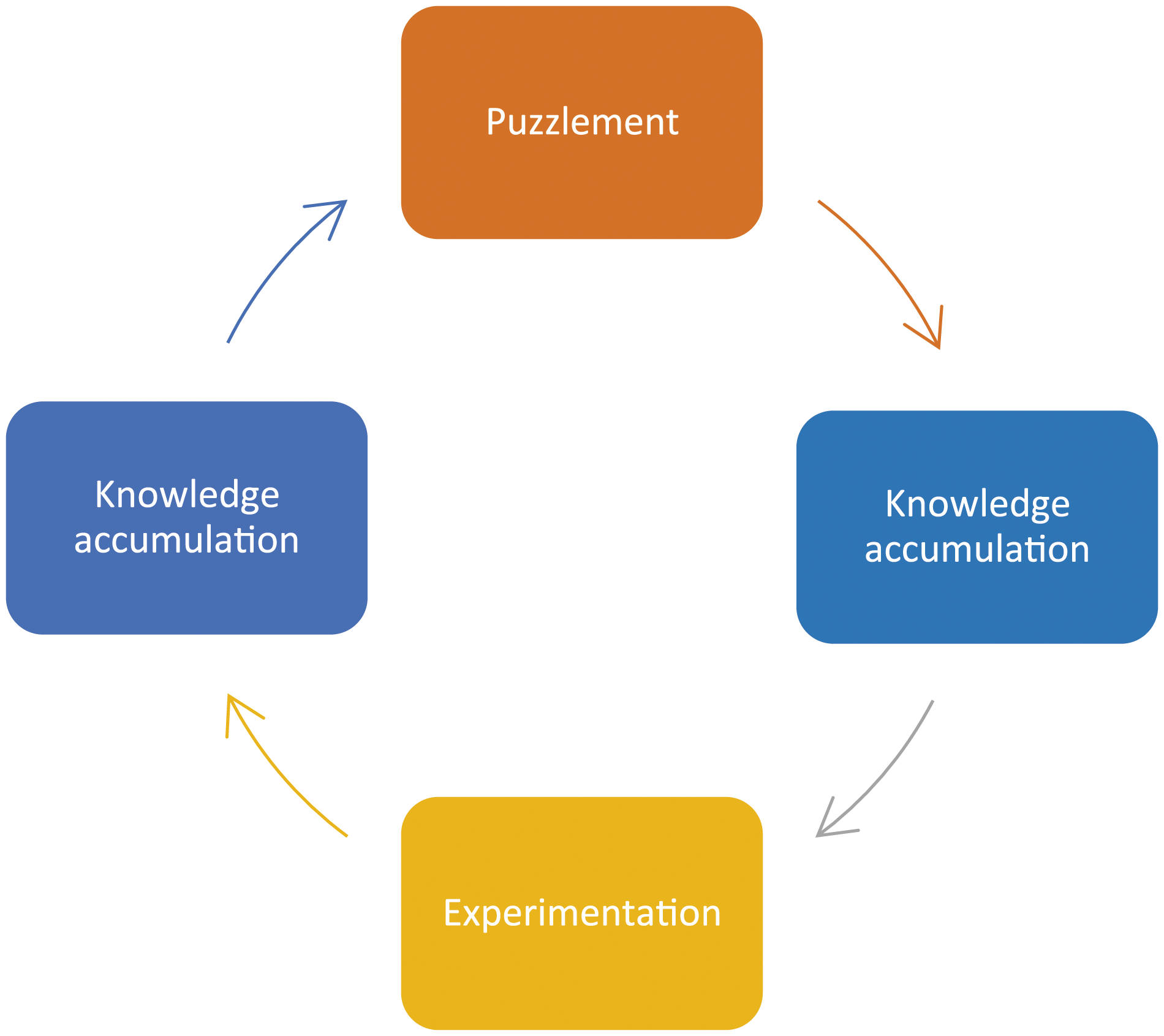
The two following sections will apply this theoretical angle to the analysis of social partners’ institutional work on the contract classification of platform workers. Before turning to that, the next section elaborates on why it is relevant to focus on social partners in the first place.
Non-standard work and traditional social partners
The debate on platform workers’ contract classification has its roots a broader discussion on how to organise protection in flexible and precarious labour markets (Armingeon and Bonoli, 2006; Kalleberg, 2011; Schmid and Wagner, 2017). Traditional social partners have been especially concerned with such developments (Durazzi, 2017; Emmenegger, 2014; Prosser, 2018).
On the one hand, a significant strand of literature has considered trade unions as member-based organisations that prioritize the protection of ‘insiders’ thereby fostering dualization (Emmenegger, 2009; Rueda, 2005). Hyman (2001) has nonetheless challenged this argumentation, maintaining that trade unions are also class actors opposing to different degrees the capitalist system. This makes them prone to represent the interest of workers at large – regardless of membership (Meardi et al., 2021). On a more practical level, representation of ‘outsiders’ may become a necessary strategy for trade unions to revive their action and influence in a context of declining union membership and increasing precarious work (Frege and Kelly, 2004). Carver and Doellgast (2021) recently found evidence for both dualism and solidarity in unions’ responses to precarious work. Dualism, however, accounted for 26% of cases under scrutiny while solidarity was found in the remainder of the cases.
On the other hand, as Streeck (1987) showed, the weakening of industrial relations structures has also challenged employer organisations which found themselves ‘managing the uncertainty’ deriving from the need to constantly adjust to a new economic environment. Employer organisations’ strategies and responses have nonetheless remained relatively under investigated in IR scholarship (Barry and Wilkinson, 2011).
Solo and bogus self-employment
Traditional social partners have struggled with representing the interests of a specific manifestation of non-standard work, that is economically dependent self-employment: a form of autonomous work in which the contractor is markedly dependent from one client and therefore more vulnerable in economic terms (Dekker, 2010; Eurofound, 2017). While interests of zero-employee ‘micro-businesses’ are hard to represent for traditional employer organizations as they differ from those of usual companies, trade unions have had a hard time organizing such workers effectively as they are often fragmented and dispersed (Jansen, 2020). Difficulties in accessing collective representation come on a pair with lack of adequate protection (Oostveen et al., 2013). Existing discrepancies between coverage of employees and self-employed are problematic for economically dependent self-employed, who have reduced access to employment protection and, at the same time, do not have the resources to build their own shelter against socioeconomic risks as expected from self-employed. Differences are notable especially when it comes to contributory schemes such as sickness, unemployment, occupational injuries and accident-at-work benefits (Eurofound, 2017; Matsaganis et al., 2016). Such differences become even more relevant in cases of ‘bogus self-employment’, that is, where economically dependent self-employed work as de facto employees (Thörnquist, 2015).
The question of how to adequately protect economically dependent self-employed and bogus self-employed re-surfaced in the public debate following the growth of digital platforms such as Uber and Deliveroo, which rely on independent contractors presenting a marked economic dependency on the platform. Social partners were central protagonists in such discussions.
Social partners and the contract classification of platform workers
Platforms such as Uber and Deliveroo, have repeatedly stressed the need to disrupt current labour market rigidities by mobilizing ‘idle’ resources. According to them, the reliance on solo self-employment is one of the ways to do so as it allows firms and workers to benefit from needed flexibility. Such a business model comes with two implications. First, drivers or couriers are collaborators – not employees – of the platform and are therefore left out of dependent work protection. Second, platforms are digital loci that facilitate intermediation between supply and demand of good and services – not employers.
In light of such a disruptive attitude, the question of platform workers’ contract classification has become markedly politically salient. Indeed, the use of independent contractors not only speaks exactly to the already problematic question of economically dependent self-employment, but it also touches the broader issue of how to reconcile flexibility and protection in the digital future of work. It is around such a contested relationship that social partners’ action on platform workers’ contract classification revolved.
The emergence of a new category of precarious workers with limited protection further challenged unions’ representational capacity while opening up room for experimenting new practices of representation. Generally, trade unions have contested the logic of individualized protection on which the platform business model relies. In so doing, they have stressed that the limited degree of autonomy of platform workers should be an element to re-classify their contracts into employment contracts (Cini et al., 2022; Vandaele, 2018). Less frequently, they have argued against re-classification and in favour of extending collective bargaining to independent platform workers (Marenco, 2023). Moreover, unions have had a constant dialogue – often turned into a close collaboration – with self-organized groups of platform workers (Borghi et al., 2021; Vandaele, 2021).
From their part, employer organizations have generally been supportive of platforms, seen as an opportunity of innovation and employment creation (Daugareilh et al., 2019). However, their relationship has not always been one of mutual support. Because platforms do not conceive of themselves as employers, they have long excluded the possibility to join employer organizations. Becoming members of such organisations would have meant legitimizing a way of regulating labour market that they had long criticized. After years of relatively cold relationships, most platforms have now some sort of ties with employer organizations although mutual scepticism seems to be not wholly overcome (Marenco, 2023).
Against this background, I investigate the learning-driven institutional work of Danish and Dutch social partners in decision-making processes on the contract classification of platform workers. Before turning to the presentation of findings, the next section explains the rationale underpinning such a case selection and elaborates on the methodology.
Case selection rationale and methodology
Denmark and the Netherlands have been widely associated to the concept of ‘flexicurity’ (Wilthagen, 1998), namely, a labour market model based on the coordination of employment and social policies (Keller and Seifert, 2004) in which the former must ensure the best conditions for job creation and growth and the latter must guarantee acceptable protection levels to all – irrespective of their position in the labour market (Madsen, 2002).
While ‘flexicurity’ has long been indicated as the most effective model to adapt social security systems to contemporary labour markets, criticisms have been raised as to how flexibility has been too frequently privileged over protection (Bredgaard and Madsen, 2018; Jørgensen, 2009; Van Oorschot, 2004). Indeed, preliminary empirical observations show that the question of how to ensure a protective and productive future of work was highly debated in Denmark and the Netherlands. Hence comparing Danish and Dutch social partners helps understanding the extent to which and how social partners in ‘flexicurity’ countries are re-thinking the existing relationship between protection and flexibility in the midst of the digital transformation.
Methodologically, this paper relies on 17 semi-structured elite interviews (10 Denmark, 7 Netherlands) with trade unionists and employer organizations’ representatives and experts. Interviews were carried out both in person and, due to restrictions imposed by the pandemic, online. Carried out in English, interviews aimed at understanding actors’ position and action on platform workers’ contract classification. A focus was put on actors’ motivation for action in a context of uncertainty. The choice of interviewees followed a non-probability snow-ball sampling technique (Tansey, 2007) which “involves identifying an initial set of relevant respondents, and then requesting that they suggest other potential subjects who share similar characteristics or who have relevance in some way to the object of study” (Tansey, 2007: 770). A thematic analysis (Miles and Huberman, 1994) using MAXQDA was conducted to analyse interview data.
The next sections present the findings.
How to protect the Danish model? Social partners’ institutional work on the contract classification of platform workers in Denmark
Interviews with Danish social partners show that their main preoccupation in relation to platform work was to be able to benefit from technological innovation while sheltering the Danish labour market model (Madsen, 2004). In this respect, the question of platform workers’ contract classification was worrisome as platforms’ reliance on self-employment leaves an increasing number of workers out of collective bargaining thereby potentially undermining the centrality of collective bargaining. Thus, disagreements did not arise on whether the Danish model should be protected, but on how it should be sheltered and especially in relation to the following question: To what extent is self-employment-based platform business model fit for Danish system of collective bargaining? Faced with Knightian uncertainty wrought by a novel form of work whose implications are not known, social partners engaged in learning processes that led them to provide different answers.
3F-Hilfr agreement: Groundbreaking innovation or dangerous precedent?
The so-called ‘Hilfr agreement’ was signed in April 2018 between 3F Private Sector, Service and Catering section and Hilfr, a Danish digital platform offering cleaning services 1 (Ilsøe, 2020). The idea to begin negotiations with a digital platform took shape during the works of the so-called Disruption council, a discussion forum organised by the government to foster exchange on the digital transformation (DK- TU2). The agreement made the headlines as one of the first examples in the world of collective agreement successfully combining protection and flexibility in platform work.
Interviews with negotiators reveal first and foremost how the agreement was negotiated in a context of ‘confusion about how platform work actually works’, especially due to the fact that Hilfr did not organise Hilfr workers prior to starting negotiations (DK-TU2). In the words of the interviewee: “How do we approach this question? How do we actually find out what is their interest? Is what they want the same as traditional workers, so less hours, higher wage, more security, more holiday? Is this their interest? We don’t actually know” (DK-TU2)
Lack of knowledge illustrates the centrality of learning and in particular the importance of puzzlement in the signing of the Hilfr agreement: not only was 3F unsure about Hilfr’s interests, but it was also uncertain about what the best choice for the union would be. Thus, indeterminacy of interests emerges as an important element to understand the origins of this agreement.
Initial puzzlement and ensuing knowledge accumulation made actors realize that a traditional collective agreement would not be adequate to overcome disagreements especially on the contract classification of workers. On the one hand, Hilfr could not commit to a standard employment relationship. On the other hand, 3F could not sign an agreement for self-employed workers. To overcome such differences, 3F representatives highlight how Hilfr approached the union demanding their availability to create a new model of collective agreement that would provide adequate protection while not forcing Hilfr to give up on its freelance model (DK-TU2). 3F agreed on such a proposal and negotiations started. Danish Industry (DI), employer organisation that stepped in into ongoing negotiations between 3F and Hilfr, played an important role in such a phase. Not only did DI compensate for the fact that Hilfr did not have previous experience in collective bargaining (DK-EO2), it also ‘made things slower, harder, but also more legitimate’ (DK-TU2). DI supported the experimental hybrid optional collective agreement initially put forward by Hilfr, as it was clear that their business model could not support a traditional collective agreement that would apply to every worker on the platform.
The final text of the agreement assigned to cleaners the status of freelancers for the first 100 h of service. After the first 100 h, they automatically become employees – if they do not explicitly oppose such an option. De facto, and crucially, the agreement left the decision of being covered or not by the agreement itself in the hands of workers, which is a considerable novelty for collective agreements in Denmark (Munkholm and Schjøler, 2018; DK-TU2, 3; EO1, 2). Freelancer workers were called ‘Hilfrs’, while employees were referred to as ‘Superhilfrs’. Another novelty was the temporary character of the agreement. Indeed, parties signed the agreement for a 1-year trial period, which is not common in Denmark where perennial agreements are normally signed. Parties were pushed to experiment an innovative solution given the novelty of the matter at stake (DK-TU2).
The innovative character of the agreement, however, has generated significant scepticism within social partners. Interviewed in October 2020, 3F representatives who had been involved in the negotiations highlighted how the union had become significantly more knowledgeable than it used to be on how to negotiate agreements with digital platforms. As a result, the union concluded that the agreement needed to be modify. Part of this realization resulted from information collected through a survey conducted with workers on their working conditions and access to protection. This shows how unions did not have a predetermined position on platform workers’ contract classification; rather they changed their minds while going through the ‘learning circle’ of institutional work. Along similar lines, the DI representative stressed how: ‘We don’t consider this as tomorrow’s way of making collective agreement at all’ (DK-EO2).
Internal divisions within 3F: Learning from disagreements
While 3F Service section became sceptical of its own experimentation by accumulating knowledge, 3F Transport section has always opposed such a model.
According to 3F Transport, the approach enshrined in the Hilfr agreement is detrimental as it could set a potentially dangerous precedent in the Danish way of making collective agreements. Indeed, the possibility for workers to decide to be covered or not by the agreement risks undermining the strength of collective bargaining system. For this reason, ‘we don’t want to copy that’, even though ‘we are learning of it’ (DK-TU3). Therefore, 3F Transport did not follow the Hilfr agreement approach during the negotiations with two important platforms, namely Just Eat and Wolt. While dialogue with the former was easier as the platform conceives of itself as a company employing couriers, negotiations with Wolt have been harder due to the platform considering itself as a mere intermediary between supply and demand of services. Even though 3F and Wolt have gradually began to have closer discussions, their claims have remained far apart as the union wanted couriers to be employed and Wolt opposed such a solution as it would drastically reduce working time flexibility (DK-TU5). One of the options Wolt put on the table was to sign an agreement similar to the Hilfr deal, which would have allowed them not employ workers. 3F Transport section rejected such a proposal as it deemed it inadequate for the reasons explained above. The attitude of 3F Transport well exemplifies not only the centrality of knowledge accumulation, but also how learning is about discovering new things as much as it is about sticking to existing rules because the ones under experimentation are deemed unconvincing.
A last point, which goes beyond diverging approaches to collective agreements with digital platforms, has to do with the attitude of social partners towards the presumption of employment mechanism proposed by Frederiksen government in January 2022. Broadly defined, a presumption of employment is a statutory measure prescribing that (platform) workers are employees unless proven otherwise. Both trade unions and employer organizations have long opposed the idea of introducing a statutory measure regulating working conditions in platform work as they would see it as a threat to social partners’ independence. However, because they realized they had not managed to develop adequate solutions within the scope of collective bargaining, trade unions slowly changed their position in this regard and came to be supportive of such a measure. By contrast, employers stuck to their original mind, highlighting how a statutory measure is not needed and risks undermining social partners’ independence.
Thus, what we learn here is that social partners and platforms’ positions on the question of platform workers’ contract classification were not simply predetermined. To the contrary, the outcomes resulted from learning processes in which actors’ interests took shape not necessarily in the way one would expect. Indeed, the position of 3F service was initially more similar to that of platforms than to 3F Transport. Then, 3F service and Danish Industry learnt about the negative implications of the experimental model of collective agreement they had signed and modified their position, showing the centrality of learning in the determination of interests. Similarly, the deviation in the position of unions on the presumption of employment provides another empirical illustration of learning by knowledge accumulation.
How to re-think the Dutch labour market? Social partners’ institutional work on the contract classification of platform workers in the Netherlands
The contract classification of platform workers was widely debated in the Netherlands as part of a broader discussion on how to re-think the relationship between protection and flexibility. Labour market flexibilisation occurred in the last decades and especially the strong incentives to become a self-employed have become a matter of concern not only because freelancers are generally less protected than employees, but also due to fact that they pay comparatively less taxes, which is problematic for the sustainability of the social security system.
While no collective agreement was signed that directly regulates platform work, discussions were intense and often divisive. In what follows, I shed light on learning processes through which trade unions and employer organizations sought to overcome Knightian uncertainty and re-think the relationship between protection and flexibility to make the most of the digital transformation of work.
Strengthening the employment relationship, taming flexibility: The case of FNV
Confirming the interest of traditional worker representatives in non-standard work, Dutch trade unions have consistently shown interest in representing platform workers – especially food-delivery couriers and drivers. The most active trade union has been the ‘Federation of Dutch Trade Unions’ (FNV). The latter has understood platform work and particularly the question of contract classification as a manifestation of a bigger problem that affects the Dutch labour market, that is, the high share of vulnerable and bogus self-employment as a result of the spectacular increase in self-employment occurred in the last decades. In order to put a brake on such a trend, platform workers – and individuals that work under comparable conditions – should qualify as employees and not as self-employed and be therefore fully included in collective bargaining. Existing rules would allow to distinguish between genuine and false self-employment, yet political will to apply them has been insufficient so far (NL-TU2). For this reason, FNV opposes the option to create a third status – between employment and self-employment – to regulate platform work.
Despite the fact that FNV has consistently supported one specific regulatory solution, interviews show how uncertainty ushered in by the novelty of platform work has open up room for learning within the organisation. Puzzlement concerned the broader role of unions in a labour market that features blurred boundaries between employment and self-employment. As one FNV unionist puts it: “How do we think about labour regulation? I know it’s a general question, but we need to figure it out: How do we do with labour organization? How do we deal with the question of self-employment? How do we ensure that the world is doing better?” (NL-TU3)
Crucial part of FNV’s institutional work was the launch of a platform work public campaign through which the union sought to advance its position. The experience of the campaign, which entailed support in demonstrations, communication and lawsuits, allowed FNV to acquire knowledge about working conditions in the on-location platform economy and develop sounder strategies to represent workers’ interests. Words of a FNV policy officer are telling in this regard: “It’s getting better because we’re really understanding what’s happening. […] It’s only by really being there, understanding how that works [that unions can accumulate the necessary knowledge to push their policy proposal forward].” (NL-TU1)
The campaign brought FNV increasingly closer to platform workers especially in food-delivery and ride-hailing sectors, which led to the setting up of FNV riders union in 2018, a FNV section entirely devoted to food-delivery platform work. Nonetheless, this was a difficult process for the union as it had to strike a balance between their existing policy proposals and the needs of platform workers. In the words of the interviewee: “Because the interest of the workers is not the general interest […] it’s difficult to find a way which is in accordance with our policy […] but we are really trying to start from there and showing what’s happening and then kind of develop a policy proposal that fit into our general political strategy.” (NL-TU1)
The setting up of FNV riders can be thus interpreted a case of experimentation to overcome uncertainty on how to represent platform workers. Another way for FNV to support an employment contract solution for regulating platform work was to support a proposal circulating at the government level in 2020 purporting the introduction of a presumption of employment mechanism. Such a measure nonetheless did not find sufficient political support and never translated into law.
In sum, FNV has consistently maintained that platform workers ought to qualify as employees and sought to learn how to develop practices that would support its stance.
A contract-neutral approach for the future of work: AWVN and VNO-NCW’s institutional work
Dutch employers have shown appreciation for the innovative character of the platform economy, stressing how the existing privileged relationship between employment contract and protection is ill suited for current and future labour markets (NL-EO1, 2). According to them, the best way to re-think the Dutch labour market is to favour a contract-neutral approach to protection by loosening the strict relationship between employment contract and protection in such a way that a larger number of workers is protected regardless of their contract classification. Employers’ institutional work aimed at advancing such a claim, which starkly departed from unions’ positions.
AWVN and the ‘platform future of work’
In 2019, the General Employers’ Association of the Netherlands (AWVN) created the ‘Platform Future of Work’ (PFW). PFW aims at steering reflection on how to change the Dutch labour market so that major imbalances would decrease without hindering innovation. Interviews with member of AWVN show that during months ahead of the launch, the organization went through a puzzlement phase in which a number of questions were formulated to achieve a better understanding of challenges at stake. Questions mostly concerned the role of flexibility in current and future labour markets (‘How can we make our system more flexible for work that is organized on the spots, on the day and by the hour?’) and the importance of protection (‘How do we make a sustainable backup system for people when they lose their job? And not only being for unemployment, unemployed, but also losing capabilities, losing knowledge, not being able to learn fast enough to have value on the labour market…’) (NL-EO2). Platform work was a significant part of these reflections, especially with regard to the contested relationship between protection and flexibility. One of the founders of PFW stressed how economically dependent self-employed – both in and out platform work – need more protection, yet this cannot happen at the expense of autonomy, which is an asset for many of such workers (NL-EO2). Indeed, PFW developed a clear position since the beginning: the strict relationship between the employment contract and protection constitutes a major obstacle to the realization of a desirable future of work as it differentiates workers according to their contract classification. To tackle such an issue, PFW proposes to ‘leave behind is a system that divides on the basis of contract, we really want a system that is supportive for everyone...regardless of what position you have in the labour market, this is what we really are striving for with our platform’ (NL-EO2).
VNO-NCW and the ‘platform collective’
In this context, the ‘Association of Dutch Enterprises – Netherlands Christian Employers Association’ (VNO-NCW) also actively sought to respond to representational challenges stemming from digital work. To this end, VNO-NCW established the so-called ‘Platform Collective’ (hereinafter: the Collective) as a lobby tool within one of its member organizations, that is ‘NLDigital’. While the latter was previously called Nederland ICT, such a denomination was changed after a puzzlement phase in which the organization self-reflected on how employer organizations should represent digital companies in the current economic system. ‘The Collective’ was thus set up in a context of puzzlement and knowledge accumulation on representational challenges in the digital transformation of work.
A very diverse set of platforms is part of ‘the Collective’ ranging from Booking.com, Microsoft and Meta to Uber and Deliveroo. The latter two, which are directly concerned with the contract classification of platform workers, published a statement via ‘the Collective’ in February 2021 in which they stressed the importance of flexibility for platforms to operate and for workers to reap the benefits of autonomy at work. Because platform workers are free to organize their work, they cannot qualify as employees. As a result, the only qualification to maintain such a flexibility is self-employment. Instead of sticking to the binary division between more protected employees and less protected self-employed, the two platforms suggest to adopt a contract neutral approach and “look for solutions where everyone who works has protection and security” (NL-EO1). The interviewee from ‘the Collective’ echoes the position of Uber and Deliveroo by underlining the need to move towards a more contract-neutral approach. Consistently, VNO-NCW – as well as AWVN - have been against the presumption of employment mechanism proposed by the government in 2020 as one of the possible options to regulate the question of platform workers’ contract classification. 2
In sum, employer organisations have consistently maintained that platform workers should have access to more protection without having to qualify as employees and sought to learn how to develop practices that would help them support their stance.
Discussion and conclusion
Evidence presented above illustrates how Danish and Dutch social partners actively took part in decision-making processes on the contract classification of platform workers as part of a broader discussion on the relationship between protection and flexibility in the context of the digital transformation of work. The article finds that social partners did not act following interests defined a priori by the institutional setting; rather, they embarked upon learning processes aimed at reducing the freezing effect of Knightian uncertainty. Hence decisions on the question of platform workers’ contract classification resulted from the ‘learning circle’ of institutional work rather than from rational priorities functionally derived from given interests. To put with a member of the Dutch Socio-Economic Council (SER) who had first-hand experience of social partners’ institutional work on the contract classification of platform work: “There was simply a lack of knowledge because no one anticipated this. If you discover a new planet you didn’t know about, you don’t immediately understand its physics” (NL-EXP1)
It is through such learning dynamics that social partners have contributed to creating and re-creating the rules linking employment contract and protection. This finding not only throws light, like aforementioned sociological literature has done, on the role of agency in shaping the regulation of platform work; it also uncovers cognitive mechanisms that have been loosely identified so far through which agency is able to mould decisions and institutions. To be sure, this does mean that the ‘flexicurity’ institutional setting did not matter. By contrast, it did influence social partners’ action by establishing the broad contours of action. Yet actors’ interests and decisions were not simply deducted from such contours, rather they took shape in learning processes in which the concept of ‘flexicurity’ was constantly re-thought and re-signified.
Empirically, the article finds that Danish social partners generally agreed on the need to shelter the centrality of collective bargaining to tackle the digital transformation successfully, whereas their Dutch functional equivalent stressed the urgency to re-think the way flexibility and protection are linked. Disagreements were remarkable especially in the Dutch case. While trade unions stressed how platform workers – and vulnerable self-employment more broadly - should qualify as employees and therefore be included in collective bargaining, employers argued for a contract-neutral approach that weakens the strong association between employment contract and protection. Positions of social partners were less polarised in Denmark, which allowed for more experimentation of which the Hilfr agreement is a prime example. Crucially, learning took different forms in the two cases. In the less contentious Danish case, learning regarded both instruments to address the question of contract classification and positioning towards the matter as stances of trade unions and employers changed remarkably over the process analysed. Differently, in the Dutch case, learning was mostly about seeking to identify the correct instruments to attain a desirable outcome whose substance remained fundamentally unvaried – employment status for trade unions, contract-neutral approach for employers. This finding somewhat aligns with renowned research on social learning by Hall (1993) that theorizes first-, second-, and third-order learning.
Beyond the empirical case under scrutiny, this article makes a threefold broader contribution. First, it contributes to the scholarship on social partners and non-standard work by providing further evidence of social partners’ activity in representation of peripheral workers (Meardi et al., 2021). Such an activity does not only translate into a re-definition of their self-understanding as organisations, but also into development of practices that involve novel actors such as platforms and independently organised groups of platform workers to understand which a further dialogue between IR and social movement literature is in order (Atzeni and Cini, 2023). Second, it takes part into the debate on understanding continuity and change in contemporary capitalist societies. In particular, the article illustrates how labour market institutions of a country are not enough to understand the dynamics driving the process of regulation of novel forms of work, as the relationship between protection and flexibility is being re-defined through learning-driven institutional work in which creative agency plays a central role. An actor-centred, learning-based perspective will be helpful to grasp the drivers of regulation especially in the current initial phase of the digital transformation. Third, and relatedly, the paper also contributes to an understanding of technology that is not a mere given, but the result of a social process that defies deterministic accounts of how society evolves (Neufeind et al., 2018).
To conclude, future research may find interesting to investigate learning-driven institutional work of social partners on facets of digitalisation like artificial intelligence and algorithmic management that concern as well the relationship between protection and flexibility. This would allow having a deeper understanding of how social partners are tackling digital technologies. Additionally, it would be promising for future studies to investigate learning-driven social partners’ institutional work aimed at reinforcing collective bargaining beyond contract classification. Indeed, recent research has shown that a change in the contract classification does not necessarily lead to improvement in employment and social protection of platform workers (Hooker and Antonucci, 2022). Finally, given the transnational dimension of platform work, future research should also scrutinize how social partners are seeking to influence the rules linking contract classification and protection at the EU level. The Proposal for a Directive on platform work, currently under negotiations, is at present the main locus of conflict on the contract classification of platform workers and beyond (Spasova and Marenco, 2022).
Supplemental Material
Supplemental Material - Platform work meets flexicurity: A comparison between Danish and Dutch social partners’ responses to the question of platform workers’ contract classification
Supplemental Material for Platform work meets flexicurity: A comparison between Danish and Dutch social partners’ responses to the question of platform workers’ contract classification by Matteo Marenco in European Journal of Industrial Relations.
Footnotes
Acknowledgements
I wish to thank Guglielmo Meardi for his insightful comments on earlier versions of this manuscript.
Declaration of conflicting interests
The author(s) declared no potential conflicts of interest with respect to the research, authorship, and/or publication of this article.
Funding
The author(s) received no financial support for the research, authorship, and/or publication of this article.

Supplemental Material
Supplemental material for this article is available online.
Notes
Author biography
References
Supplementary Material
Please find the following supplemental material available below.
For Open Access articles published under a Creative Commons License, all supplemental material carries the same license as the article it is associated with.
For non-Open Access articles published, all supplemental material carries a non-exclusive license, and permission requests for re-use of supplemental material or any part of supplemental material shall be sent directly to the copyright owner as specified in the copyright notice associated with the article.
