




Abstract
Using firm-level data from 28 European countries, this paper explores the relationship between two types of innovation (process and digital) and different forms of control (direct and indirect) at the workplace. We find that (1) digital innovation is more common than process innovation; (2) more innovative firms record higher levels of indirect control (especially related to algorithmic management) and lower levels of direct control; (3) the relationship between innovation and control is not uniform across European regions. These findings nurture the debate on the future of work as the process of digitalisation may promote a shift towards indirect forms of control and contribute to reducing the degree of direct control. Moreover, these changes may also affect the bargaining process and lead to a redefinition of managerial roles, though it should be acknowledged that social and institutional factors play an important role in shaping this process.
Introduction
The growing debate on the rise of new technologies and the changing nature of work embraces many areas. Among these, a crucial topic is represented by the relationship between innovation and the work organisation of the firms. This paper contributes to this debate by focussing on the link between innovation and a specific dimension of work organisation which is control. To do so, we use data from the European Company Survey which provides establishment-level information for 28 European countries.
While the relationship between innovation and workers’ control at the workplace has always been important, it is becoming even more critical, as new technologies are rapidly changing the way people work. In this respect, one novelty of this paper is that it explores the relationship between innovation and forms of control focussing on the role played by two types of innovation, process innovation and digital innovation. While process innovation generally refers to the introduction of a new or improved process of production that differs from those previously in use (OECD/Eurostat, 2018), digital innovation narrows the perspective, referring specifically to the introduction of digital software and devices in the production process.
At the same time, it should be acknowledged that also the type of control that workers are subject to can be multiform. Drawing from Edwards (1982), we distinguish between direct control, which is applied and exerted directly by managers and supervisors, and indirect forms of control which are mediated by machines, computers and other digital devices. The distinction between different types of control is becoming increasingly pivotal in our times. Indirect control includes the deployment of digital tools employing data analytics to direct, command and monitor employees. This points to the application of algorithmic management which consists of the use of computer-programmed procedures for the coordination of labour input (Baiocco et al., 2022). As digitalisation increases the amount and expands the domain of data collected and at the same time boosts the computing power to process it, it fosters the possibility of introducing algorithmic management of the workforce. It immediately follows that digitalisation is at the core of the debate on the future of work as it has a pervasive impact along several dimensions of the labour process (Berger and Frey 2016; Wood 2021).
Considering these elements, it becomes clear the importance of assessing the relationship between the introduction of different types of innovation and the type of control that workers exerted at the workplace. Specifically, the paper addresses the following research questions. What is the relationship between different types of innovation (process and digital) and forms of control (direct and indirect) of the workforce? Are there relevant differences between process and digital innovations in the way they link to different forms of control? Are there significant differences across European regions or the relationship is uniform?
Answering these questions is relevant for different reasons. To the best of our knowledge, studies that evaluate simultaneously the relationship between different types of innovation and forms of control are very scarce. Moreover, while some research investigates the link between innovation and work organisation at the country or company level (see next section), cross-country studies are limited. This adds to the fact that there is little evidence concerning the use of algorithmic management. Most of the existing literature on this topic usually deals with case studies and/or is delimited to a subset of industries and is often restricted to platform workers (e.g. Mateescu and Nguyen 2019; Wood 2021). This paper represents a step forward as we use a representative dataset of European firms which cover the whole spectrum of industries and provides a comprehensive picture of different ways of control of the workforce.
This study is also relevant from the policy perspective, contributing to the discussion on the future of work. It emerges a strict relationship between the adoption of digital tools and the deployment of algorithmic management. Hence, it is possible that, with the diffusion of new technologies, there might be a qualitative shift in the forms of control that workers are subject to, from direct control to indirect ones. More importantly, while some trends are similar across European regions, the relationship between innovation and forms of control can be significantly different across groups of countries. This indicates that while there may be similar tendencies that emerge once an innovation takes place, institutional factors have an important role in shaping the impact of technology on work organisations. Finally, the results suggest that the level of direct control may reduce in favour of indirect control (mediated by machines and algorithms), which poses questions on the possible evolutions of managerial roles.
The rest of the paper is structured as follows. The Innovation and work organisation. An overview of the relevant literature section summarises the relevant academic literature. The Data section presents the data used for the quantitative analysis and the Descriptive statistics section provides descriptive evidence on the relationship between process and digital innovation and control (direct and indirect). Here, the preliminary evidence shows that innovation is associated with a higher level of indirect control, and lower levels of direct control. This link is investigated econometrically in the Econometric analysis section, while the Conclusions section discusses the main results and their relevance for policy.
Innovation and work organisation. An overview of the relevant literature
The introduction of innovations has always accompanied changes in the way humans perform their activities. The examples in this respect are countless. The invention of the wheel implied the reduction of strength that humans needed to employ in their work, the first industrial revolution and the capitalist mode of production led to the substitution of skilled labour for unskilled labour and an increase in the repetitiveness of work, digital tools allow to increase the flexibility of rhythms of work, etc.
Different authors have tried to study the link between innovation and the changes in the production process. One of the first scholars to focus explicitly on this topic was Braverman (1974), who argued that the introduction of machines contributed significantly to the intensification of the forms of control and command over the workforce, especially in those contexts with lower workers’ involvement in the decision process. The relationship between innovation and work organisation has become even more important in our times, with the advent of new vectors of technological change, such as automation and digitalisation.
In what follows, we shall distinguish between two types of innovation, process and digital innovation. Process innovation is an old-established concept in the literature, although the term has undergone different definitions. The most recent one is included in the Oslo manual, which defines process innovation as ‘a new or improved business process for one or more business functions that differ significantly from the firm’s previous business processes and that has been brought into use in the firm’ (OECD/Eurostat, 2018: 21). At the same time, the rise of digital technologies has brought some novelties into the field of economics of innovation studies. Nowadays, it is increasingly more common to find digital innovation as an analytical category. In this case, it is not easy to find a common definition of digital innovation (for a discussion on the concept, see Hund et al., 2021). Here, it is convenient to follow the pioneering work of Nambisan et al. (2017: 224) who conceive digital innovation as ‘the creation of (and consequent change in) market offerings, business processes, or models that result from the use of digital technologies’. It can be appreciated that digital and process innovation bear similarities, as both can affect the process in which a certain output is carried out. As we will see in the following section, there can be some overlapping between the two concepts, although the distinction is useful from a theoretical and empirical perspective.
While technological advancements have always had a significant impact on the economy, the current wave of innovation is especially noteworthy due to its increasing importance and pervasiveness. With data collection and processing capabilities developing at an unprecedented pace, the potential of these technologies is expanding rapidly (Schwab, 2017). As a result, there is a growing concern over how new technologies are impacting work organisation, which is garnering significant attention.
There is no consensus regarding the effects that new technologies can have on work organisation and control exerted over the workforce. 1 In this respect, it is possible to distinguish at least two contrasting views. Some authors are more prone to stress the benefits that new technologies would bring to working conditions. Brynjolfsson and McAfee (2014: 166) claim that despite in the short run there may be considerable challenges in the labour markets, digital technologies will lead to ‘less need to work doing boring, repetitive tasks and more opportunity for creative and interactive work’. Analogously, Kaasinen et al. (2020) maintain that Industry 4.0 will bring higher autonomy to the workforce and according to Becker and Stern (2004) computerisation and automation will be accompanied by a reduction in repetitive tasks in favour of complex and advanced ones. Focussing on the health sector, Leso et al. (2018: 331) in the fourth industrial revolution we are witnessing the disappearance of ‘routine tasks and [we will] achieve a greater autonomy and self-development’. Others maintain that the process of digitalisation can have even broader benefits and, for example, could help to improve workers’ psychological health and well-being (Carpanzano et al., 2018).
Other authors have a less optimistic view regarding the impact of new technologies on work activities. Edwards (1982), who was a pioneer in the study of the relationship between digital technologies and forms of control, holds that the introduction of digitally enabled machines is not neutral and is bound to the reduction of workers’ autonomy. Digital technologies promote a shift from direct forms of control (operated by managers and supervisors) to indirect forms of control in which the functions of managers are mediated by machines, digital devices and algorithms that determine the pace and control of the workers and their activities.
As we shall see below, this distinction is especially valid for our times (and our study). It could be argued that with the rise of digitalisation, the role of technical control and algorithmic management to monitor employees’ performance may grow in importance and pervasiveness relative to direct control, modifying the traditional relations of authority at the workplace.
In line with this idea, another group of scholars has recently highlighted how the process of digitalisation may foster the standardisation of tasks performed by workers. Digital-enabled machines have the capacity of acquiring information and workers’ knowledge on specific tasks (such as the ability to solve problems as they emerge during a production phase). Computers codify and store tacit knowledge, incorporating it into instructions and procedures to be followed once similar events occur. The capacity of codifying analytical tasks into simple procedures fosters workers’ repetitiveness and standardisation. In this respect, using data from different waves of the European Working Condition survey, Bisello, (2019) find that the increase in computerisation at the job level has a positive impact on the degree of standardisation. Butollo et al. (2019) focus on the effects of data-based process management, digital assistance systems, and other Industry 4.0 applications and find that the deployment of digital technologies increases the degree of standardisation. Along these lines, Delfanti’s (2021) study of an Italian Amazon warehouse highlights that algorithmic direction dispossesses workers of the knowledge that would otherwise be necessary to carry out the job and make their operations more repetitive, while Green et al. (2021) have recently found that in the UK organisational innovation has led to an increase in work intensity.
Moreover, the possibility to introduce new forms of control using digitally enabled machines has been crucial in the decision to grant remote work to employees. Felstead et al. (2003) investigate the extent to which new technological devices have been introduced to replicate visibility and direct control showing that this was the case mostly for more technologically sophisticated organisations, like telecommunication. Taskin and Edwards (2007) address the question of the impact of telework on workers’ autonomy and control focussing on the public sector in Belgium. According to their findings, telework strengthened supervision and managerial control over workers by superimposing new practices to old and more traditional ones. Similar results have been found in recent qualitative studies on the effect of the massive shift towards telework induced by the Covid-19 crisis (Fana et al., 2021).
As discussed so far, it can be appreciated that findings on the impact of innovation on work are very diverse and that it is difficult to identify a unique outcome that follows from the introduction of a certain technology. Partly, the diversity in findings may relate to the fact that the above-mentioned studies often focus on specific contexts (firms, industries or countries), technologies and tasks (e.g. standardisation content, control and repetitiveness) without providing a more comprehensive analysis. The diverse outcomes observed in the literature may be attributed to the significant variability in the impact of technology on tasks across different contexts. Indeed, the effects of technology on work tasks can be non-uniform and vary significantly depending on the context in which it is deployed. For example, a digital device can be introduced to monitor closely workers or allow them to work more autonomously. Therefore, it becomes important to consider the relationship between the deployment of new technologies and work organisation as the interplay between technological features and human agency. This interpretation contrasts with the idea of technological determinism, intended as the ‘tendency of assigning technology (whether hardware or software) the decisive powers to initiate and shape work and broader economic relations’ (Thompson and Laaser, 2021: 140).
Several scholars have highlighted the importance of human agency, social relations and institutions in determining the impact of technology on tasks. This idea is key in the Labour Process Theory, whose proponents argue that technology adoption is not neutral, and their effects cannot be predetermined abstracting from the social context in which they are deployed (Friedman, 1990). As Noble (1979: 103–104) puts it, ‘technology is not an autonomous force impinging upon human affairs from the “outside,” but is the product of a social process, a historically specific activity carried on by some people, and not others…. In short, technology bears the social “imprint” of its authors’.
Different authors provide support for this view. Studying the rapid diffusion of computers, Orlikowski (1991) showed that information technology can reinforce control of the workforce as well as guarantee more autonomy and flexibility of operations, depending on the way they are implemented. More recently, the theoretical underpinnings of the labour process theory have been readapted to account for emerging phenomena such as algorithmic management (Kellogg et al., 2020) or the gig economy (Gandini, 2019). Some empirical and field studies confirm that despite new technologies enabling a high degree of control, the achievement of these possibilities is often determined by the organisational environment in which innovations are introduced (Moro et al., 2019; Wood et al., 2019).
Overall, the main take-home message emerging from this literature is that the way technological progress impacts the organisation of work is not deterministic, but it is also the result of specific institutional settings and human agency having an important role in shaping the way technology is adopted. Different institutional settings and varieties of work organisation practices can be found across different countries. It is a common practice for academic research to study work organisation and production patterns grouping countries with similar characteristics.
There is no unique way to group European countries into regional clusters. A widely used classification is that of Amable (2003), who groups European countries into four groups: Liberal Market Economies (Anglo-Saxon countries), the Coordinated economies (Central European countries), the Nordic Model (Scandinavian countries) and the Southern European countries. Note that the original formulation did not account for Eastern European countries. This aspect is addressed by other authors who update this classification including Eastern European cluster (Visser, 2009).
While the cross-regional evidence on the relationship between technology and control is still scant, this country clustering has been employed in a wide number of studies, including research on work organisation and tasks. For example, Esser and Olsen (2012) employ it to analyse the regional differences in the level of autonomy and job security within Europe. Kornelakis et al. (2017) use this classification to study the relationship between the involvement of workers in the decision process and productivity across different regional clusters. Other studies find that Nordic countries record higher levels of autonomy among the workforce which contrasts with Southern European countries and most Eastern European where traditional Taylorist forms of work organisation prevail (Eurofound, 2009). In the same vein, Gallie and Zhou (2013) show that there are important differences between European regions in the organisational tasks performed at the workplace. They find that employees’ involvement in work organisation is higher in Nordic countries, followed by UK and Ireland, Central, Southern and Eastern European countries and impute these differences to different historical and industrial relation traditions. 2 Considering these insights, it is reasonable to infer that the relationship between innovations and workers’ control can be different across groups of countries.
To sum up, the existing literature has shown that innovations are often related to changes in the work organisation and affect the type of control that workers are subject to. The process of digitalisation may intensify these processes qualitatively, introducing new elements into the picture, and quantitatively, accelerating the changes in the work organisation. However, the direction of these changes is not predetermined and can vary significantly depending on the type of innovations introduced and the form of control on which the researcher focuses. Therefore, it is possible to draw the first hypothesis that will be explored in the paper:
There can be significant differences in the relationship between types of innovations (process and digital) and forms of control (direct and indirect). At the same time, several scholars illustrate that this link is mediated by institutional factors which can alter the intensity in which this relationship operates. From these considerations, we derive the second research hypothesis:
The relationship between different types of innovations and forms of control can vary across European countries/regions. We perform the empirical analysis from an innovative angle. To the best of our knowledge, most of the works mentioned above are either firm or country-specific, while only few studies cover a cross-country representative sample of firms. Our paper overcomes these limitations, employing a representative cross-country database of firms. Moreover, no other contribution specifically explores different types of innovation and their relationship with direct and indirect forms of control.
Data
The empirical analysis is performed using data from the most recent wave (2019) of the European Company Survey (ECS) conducted jointly by Eurofound and Cedefop. The ECS is carried out on a regular base by Eurofound and it collects data from more than 20,000 establishments with at least 10 employees across 28 European countries. The ECS consists of two different sets of questions that are addressed respectively to firms’ managers and employee representatives. Given the nature of our investigation, we employ the managers’ survey which includes questions that specifically address innovation strategies and work organisation of the firms. We use the 2019 edition of the ECS because, different from previous editions of the survey, it contains a special focus on workplace practice – that is, the tasks – and methods of production performed within the firms.
As mentioned above, we employ two different innovation indicators. The first one is process innovation (innoproc) which captures whether, since 2016, the company has introduced significant changes in the production process of goods and services. Notice that this definition is close to that provided by the Oslo Manual (see the Innovation and work organisation. An overview of the relevant literature section above). 3 The second indicator, digital innovation (diginn), captures whether, since 2016, the firm has introduced any software that was specifically developed or customised to meet the needs of the establishment. As common in this type of study (Cassetta et al., 2020), both variables are binomial and take values of 1 in case there is innovation and 0 otherwise.
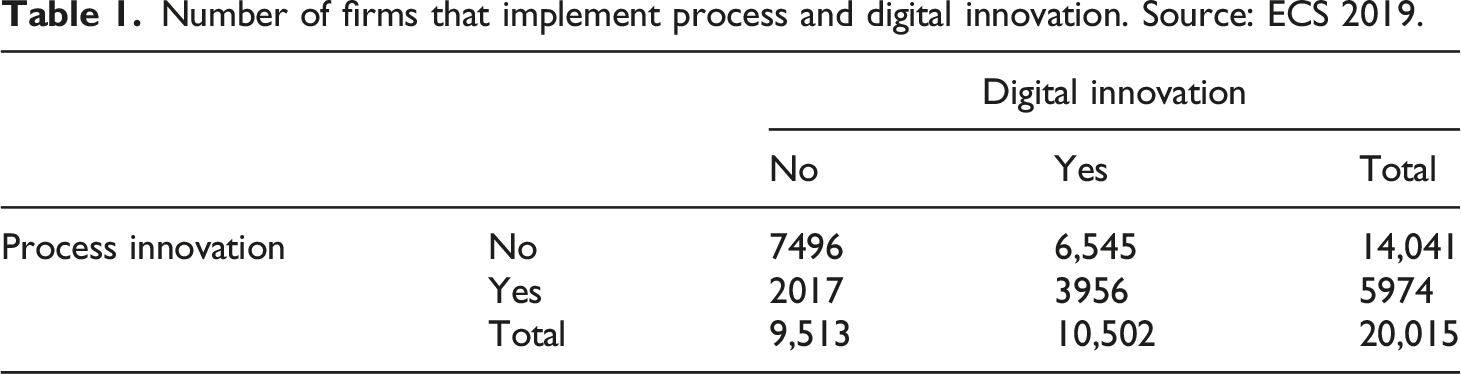
One possible objection may be that digital innovation is a subgroup of process innovation so the former should always be accompanied by the latter. However, the definition of digital innovation employed in this paper does not necessarily imply process innovation. For example, firms can introduce specific software to monitor the production process without leading to significant changes in the production process of goods and services.
As stated above, our outcome variables identify two different forms of control employees are subjected to, namely, direct and indirect control. We employ two indicators of direct control. The first one (dirctrl1) measures the extent to which managers define workers’ tasks and supervise directly whether employees follow the tasks assigned to them or, on the contrary, managers create an environment in which employees are more autonomous in the organisation of their tasks. The second indicator of direct control (dirctrl2) maps the share of employees that independently organise their work and schedule their tasks.
Indirect control instead refers to those forms of control mediated by machines, digital tools, algorithms and monitoring devices which determine the activity of the workers and its pace. We can distinguish between two indicators of indirect control. The first one, technical control (techctrl), measures the share of employees whose pace of work is determined by machines or computers. The second indicator, data analytics (datanalytics), refers to the application of algorithmic management, to monitor workers and their activities. More specifically, the survey asks whether the company uses data analytics to monitor employees’ performance. The inclusion of this latter variable is quite original and offers a precise measure of the extent to which algorithmic management is used as a mechanism of control of the workforce. Hence, the difference between technical control and forms of control that employ data analytics is that technical control is not necessarily digitally enabled and does not necessarily involve data collection and processing to monitor employees.
It is worth stressing that the different forms of control are not mutually exclusive and may operate simultaneously. Moreover, the adoption of one form of innovation may influence a given type of control but not others. For example, there is evidence that the digitalisation of workplaces is often associated with an increase in technical control and algorithmic management and at the same time a reduction in the level of direct control exercised by managers (Butollo et al., 2019).
All the variables of interest are binomial. Those variables that were originally multinominal (dirctrl2 and techctrl) have been redefined. We recorded the variable dirctrl2 to have a value of 1 if less than 40% of the employees organise autonomously their work, and 0 otherwise. Similarly, techctrl takes a value of 1 in the case at least 40% of the workforce the pace of work is determined by machines or computers, and a value of 0 otherwise. For more details about the construction of the indicators, see Supplementary Appendix Table S1 in the appendix.
It follows that, concerning direct control variables, values of 0 indicate that workers take decisions autonomously, while values of 1 that managers decide the tasks performed by employees. In the case of indirect control indicators, a value of 0 indicates that workers do not have their pace determined or monitored by machines while 1 means the opposite.
Descriptive statistics
Number of firms that implement process and digital innovation. Source: ECS 2019.
We then consider the relevance of process and digital innovation among European firms (Figure 1). Since one of the objectives of the paper is to explore possible regional differences across European countries, we split the 28 European countries into four groups: Central European (CE) countries, Southern European (SE) countries, Eastern European (EE) countries, and Nordic Countries (NC).
4
This grouping largely reflects the common clustering procedure of European countries that has been discussed in the Innovation and work organisation. An overview of the relevant literature section and is commonly employed in empirical research (e.g. Esser and Olsen, 2012; Fana and Villani, 2022; Gallie and Zhou, 2013; Riso, 2020; Forth et al., 2017)
5
Figure 1 shows the already mentioned fact that digital innovation is more common than process innovation across all the regions. As to regional specificities, the most salient difference is the highest presence of innovative firms among Southern European countries and the lower propensity of Eastern European countries to engage in digital innovation compared to the other group of countries. Process innovation and digital innovation. Average values by region. Source: Authors’ elaboration using ECS 2019.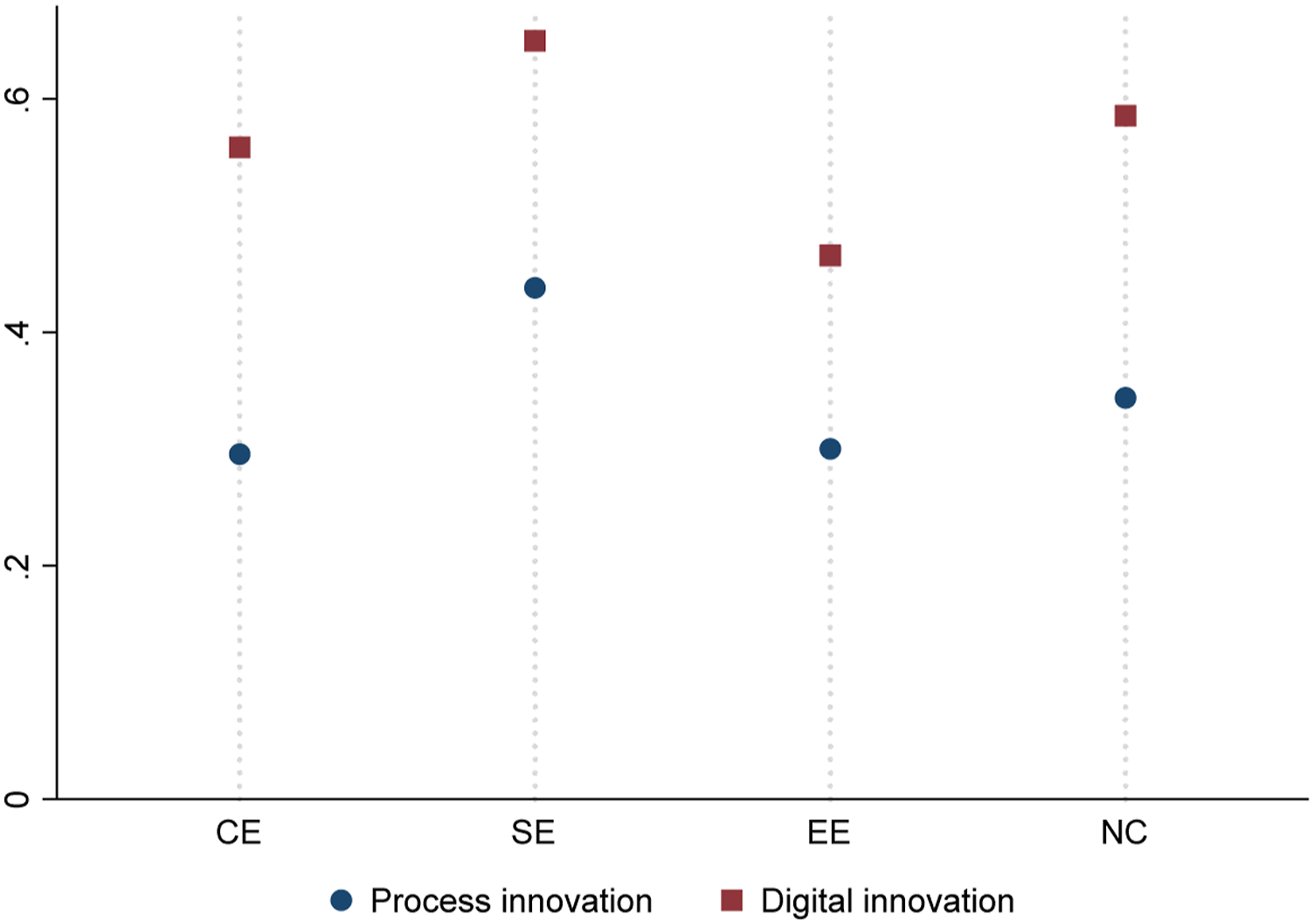
A peculiarity emerging from the figure is that firms in SE countries appear to be the most innovative ones, while those in Central European countries result to be the least innovative. This picture stands against common sense, which usually depicts the opposite situation, with Central countries more innovative compared to Southern countries. This outcome is not a novelty when employing ECS data and it has been discussed also by other authors. Grande et al. (2020) consider that this result may be influenced by firm sampling. The ECS covers exclusively firms with at least 10 employees, so that ‘if countries vary […] in the size composition of firms, then the comparison would be affected’ (Grande et al., 2020). Importantly, it should also be considered that these results are substantially in line with other similar surveys realised in recent years. For example, the latest edition of the European Innovation Scoreboard (Hollanders and Es-Sadki, 2021: 6) reports that Southern European countries report the fastest growth in the innovation index, followed by NC, which is coherent with the values of Figure 1. Therefore, it is not uncommon that higher levels of innovation are found in regions that are less technologically advanced. A similar point is also made by the authors of the European Innovation Scoreboard, who argue that ‘between 2014 and 2021, there has been a moderate rate of convergence in innovation performance between Member States, with lower performing countries, on average, improving their level of innovation performance at a higher rate than higher performing countries’. (Hollanders and Es-Sadki, 2021: 20). In light of these considerations, it is plausible to find SE countries among those with the highest innovative scores at the moment of the survey.
Figure 2 reports the average values for all four control indicators presented in the previous section in the four European regions. It can be appreciated that there are some relevant differences in the values across different groups of countries. On the one hand, workers in EE countries (followed closely by SE countries) experience higher levels of control (both direct and indirect). This is coherent with other research and with the relatively low attention that the topic of employee monitoring finds in the policy agenda and industrial relations (Riso, 2020). On the other hand, NC stands out from the other groups of countries as the region where workers are subject to the lowest degree of control and enjoy relatively higher autonomy in the organisation of their tasks. This aspect is in line with the Nordic Model of management (Brandl, 2020; Rolfsen, 2013) which embeds a high degree of autonomy, trust and participation of the workforce in the decisions involving the production process. At the same time, it can be observed that the heterogeneity across regions varies across indicators. Regional heterogeneity is more evident when we consider direct control indicators, while it is more nuanced in the case of indirect control indicators. This aspect suggests that while firms can have quite different degrees of formal control, indirect control exercised via monitoring tools and equipment is more equally distributed across European countries. Direct and technical control indicators. Average values by region. Source: Authors’ elaboration using ECS 2019.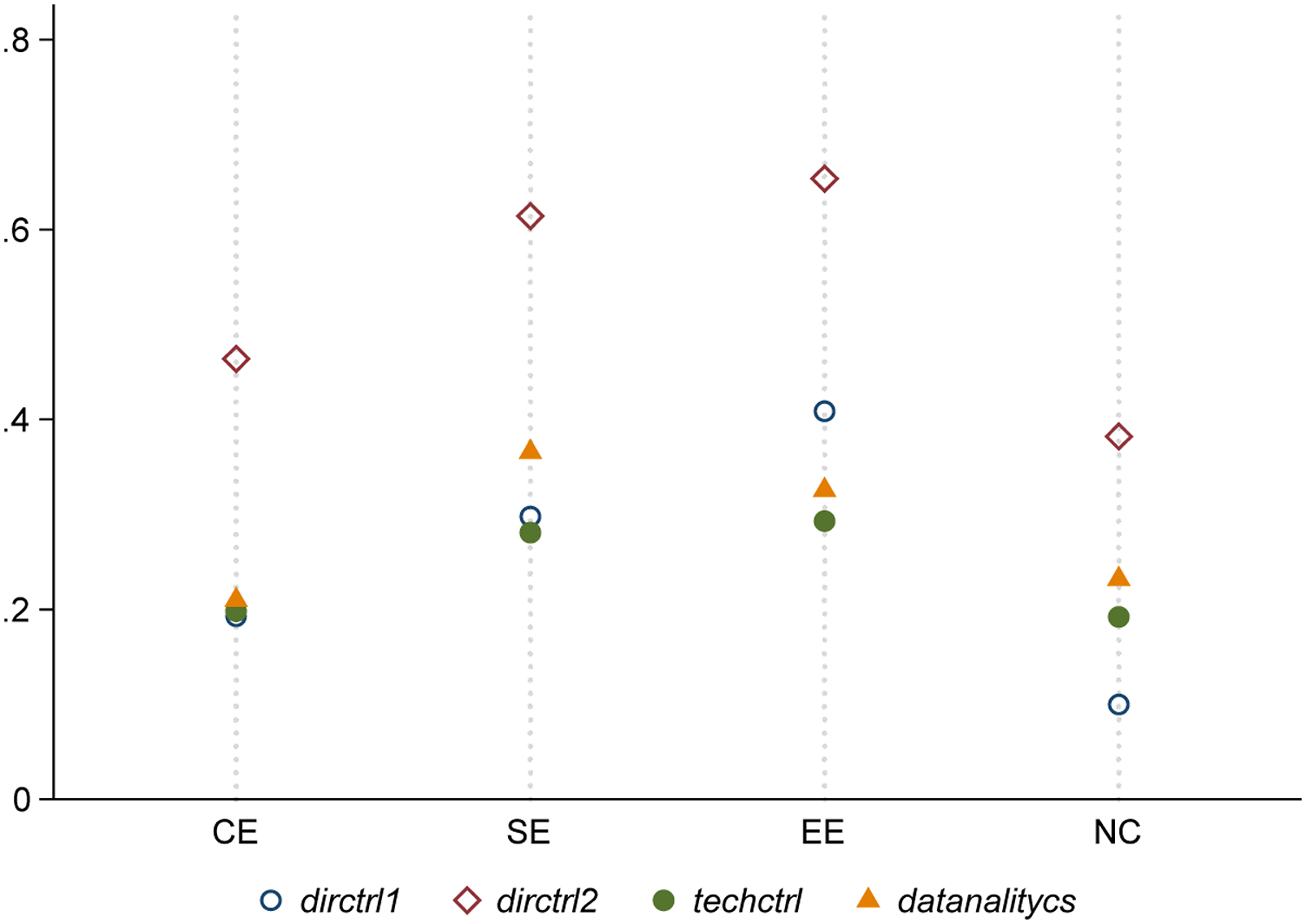
In relation to the previous point, Figure 3 provides a preliminary exploration at the country level of the relationship between innovation (process and digital) and the indicators of direct and indirect control. Results show that there is a mild positive relationship between process innovation and the level of direct and indirect control. Countries with a higher level of process innovation are also those where firms control more (directly and indirectly) their employees. The opposite relationship holds for digital innovation and direct control (especially dirctrl1). Although the correlation is not particularly strong, more innovative countries are also those where the level of technical control is below the average level. The relationship between average values of digital innovation and indirect control is more nuanced, although continues to be negative. Z-scores of process and digital innovation versus z-scores direct and indirect control indicators. Note: The x axis shows the z-scores of process innovation (left panel) and digital innovation (right panel). Source: Authors’ elaboration using ECS 2019 data.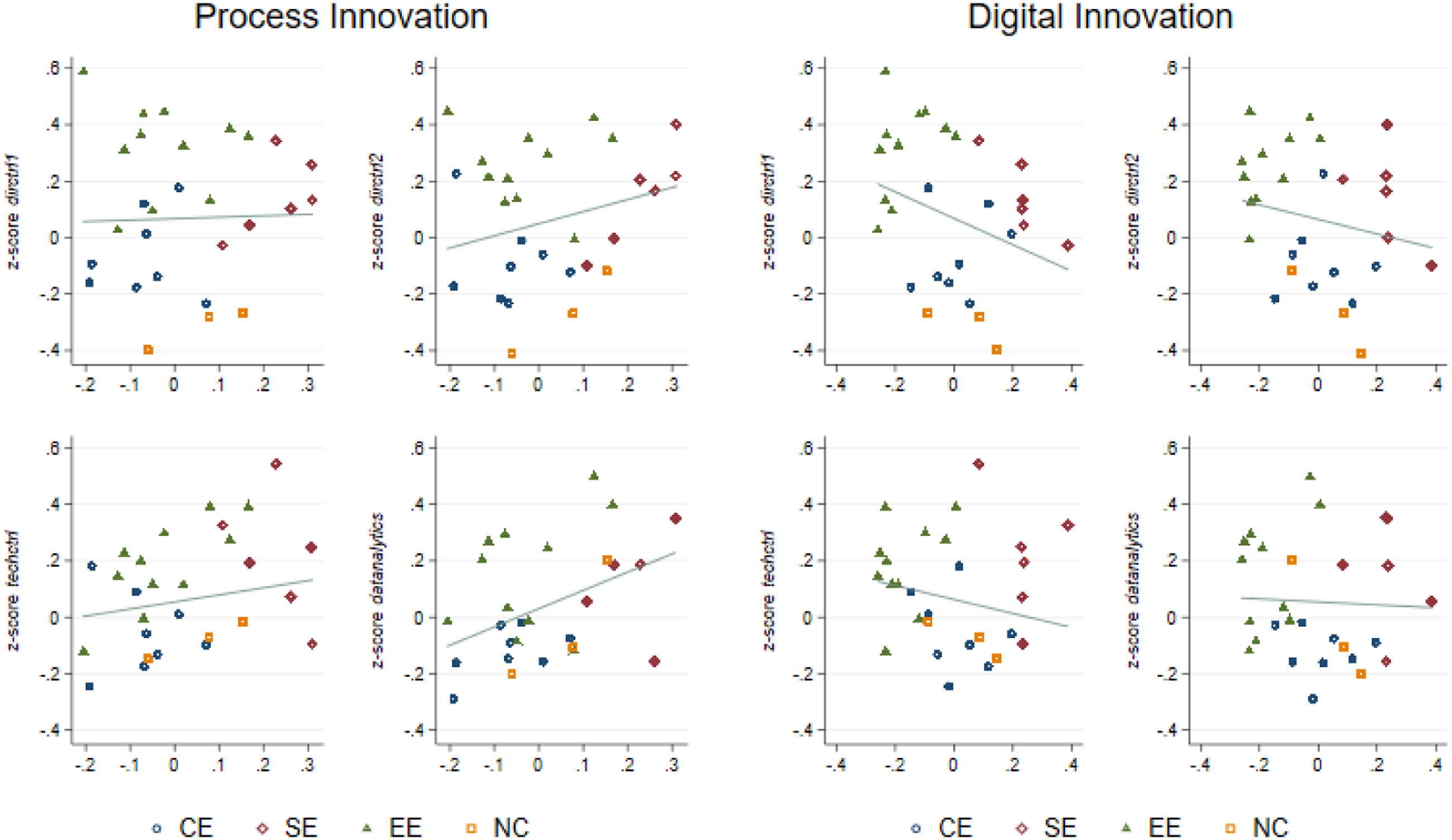
Another interesting feature to highlight is that the groups of countries are quite clustered. Broadly speaking, CE countries tend to concentrate in the bottom-left quadrants, indicating a below-average level of innovation and a below level of control. EE countries mostly gather in the upper-west quadrant, with relatively high levels of control and a lower degree of innovation. SE countries (upper-east quadrants) are on average more innovative and with a higher degree of control, while NC record the lowest degree of control while being relatively more innovative.
Mean values of different forms of control between innovative and non-innovative establishments.
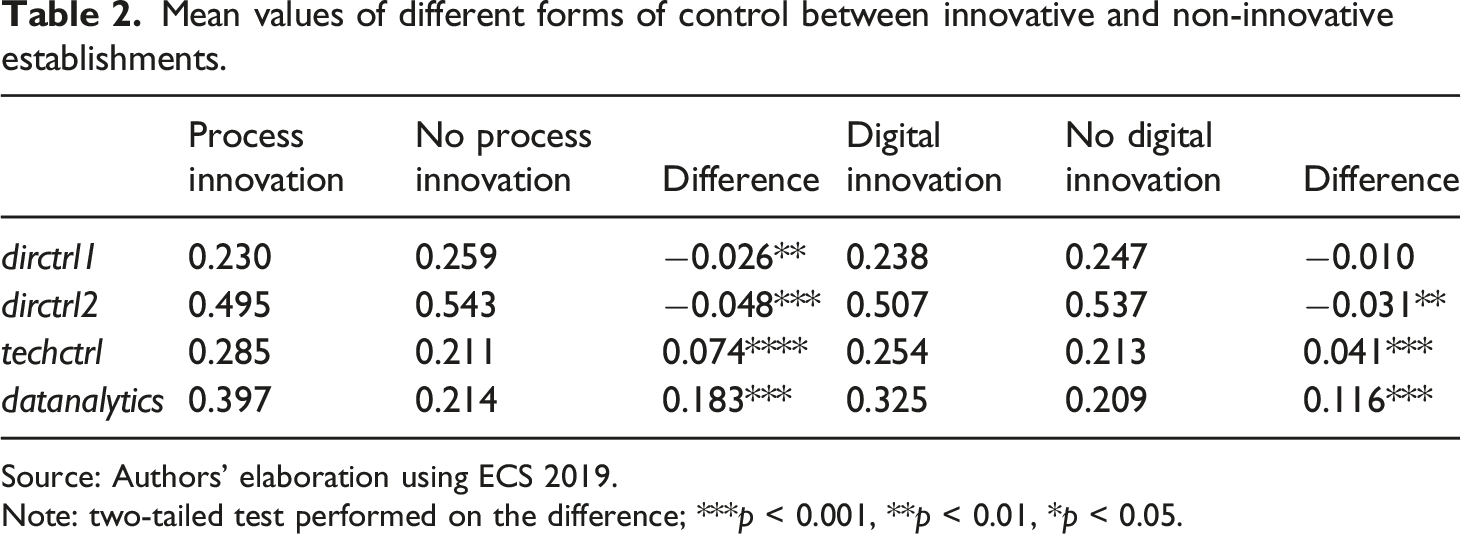
Source: Authors’ elaboration using ECS 2019. Note: two-tailed test performed on the difference; ***p < 0.001, **p < 0.01, *p < 0.05.
Overall, what emerges from this preliminary analysis is that there is a link between innovation and technology. Importantly, this relationship is not unidirectional, and it seems that there are some differences across groups of countries. In the next section, we explore in more detail these links with the use of econometrics.
Econometric analysis
To explore the relationship between innovation and organisational practices, we estimate the following logistic regression. This technique of analysis is common in studies that employ ECS and similar data (e.g. Addison and Teixeira, 2020; D’Andria and Uebelmesser, 2021; Forth et al., 2017; Jansen, 2014; Wiß, 2017).
6
Formally, the model writes
Summary statistics.
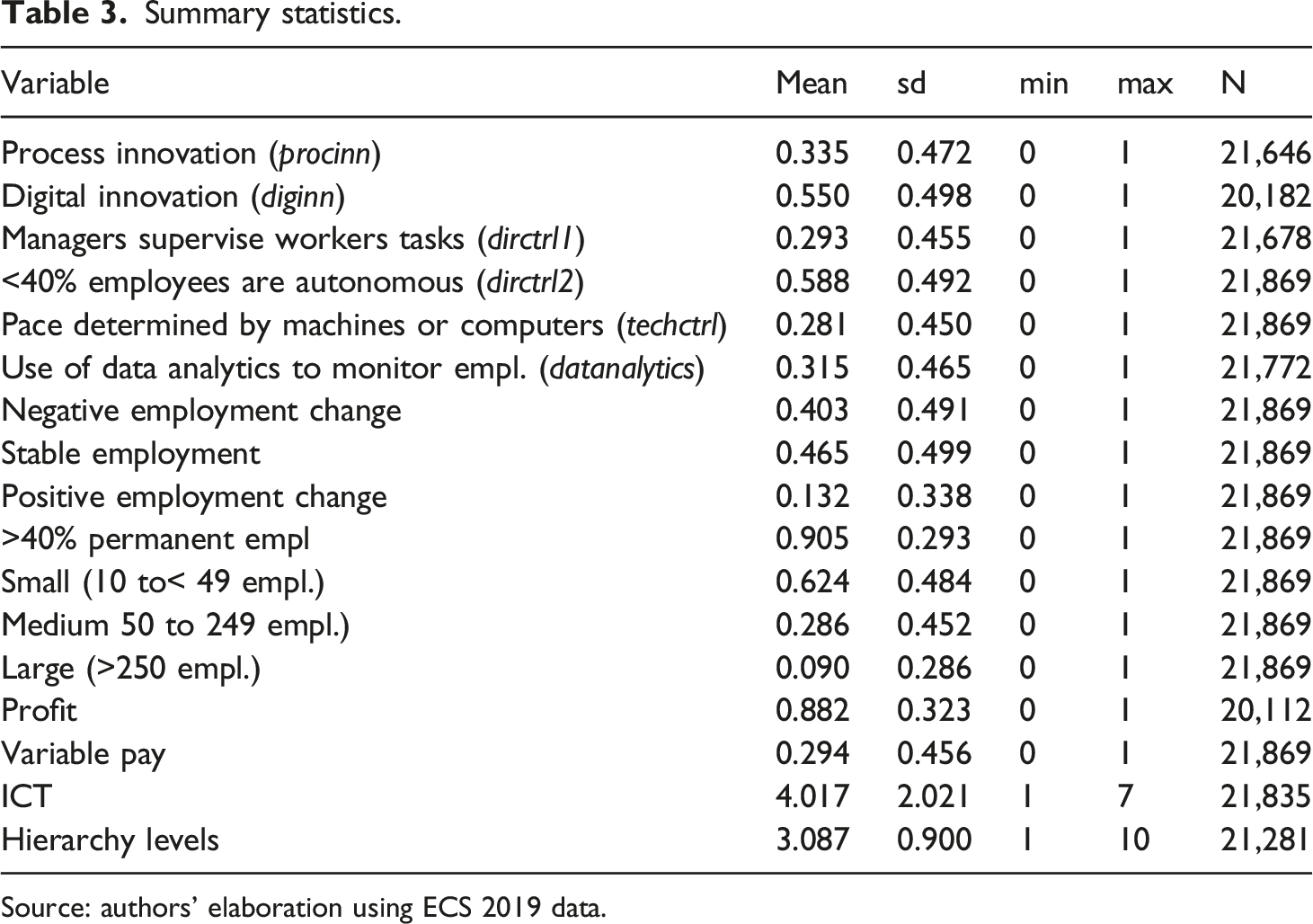
Source: authors’ elaboration using ECS 2019 data.
Marginal effects of process and digital innovations on forms of control resulting from model (1).
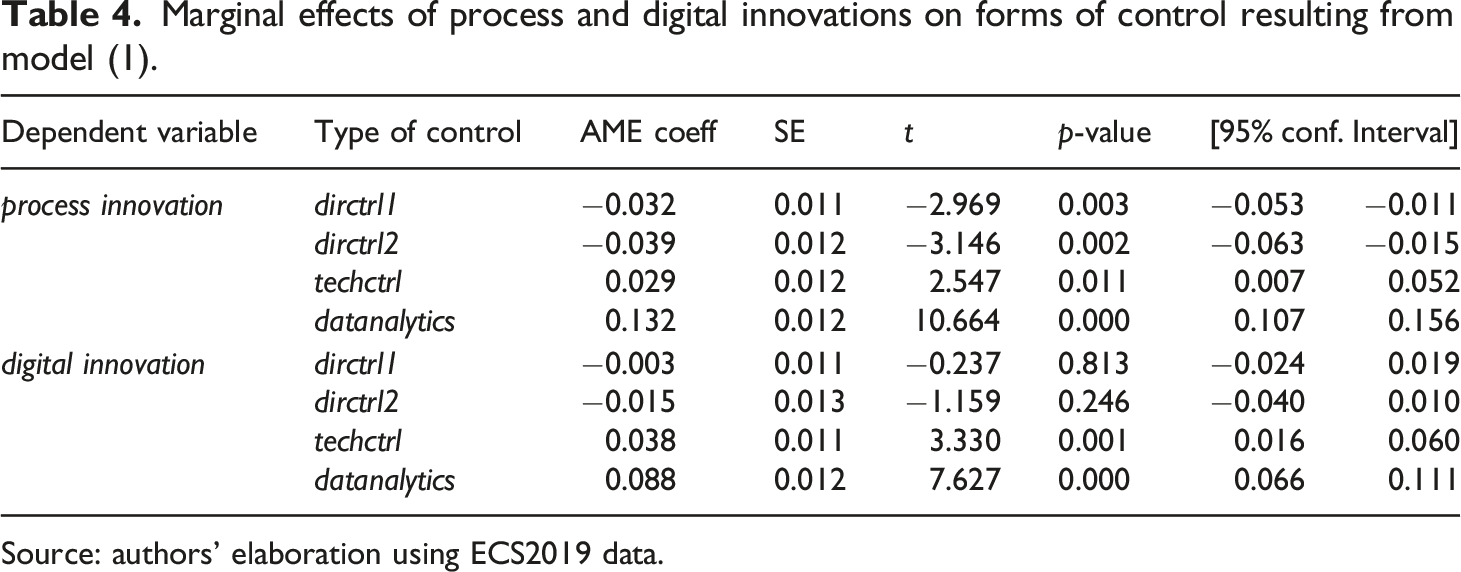
Source: authors’ elaboration using ECS2019 data.
Hence, while the second type of direct control is still more widespread (see Figure 2), the relationship between innovation and control is more solid in the case of technical control and data analytics. Part of this outcome may relate to the fact that a necessary condition for indirect control to exist is that firms need to have introduced digital tools and software. Nevertheless, as we shall see in a moment, this does not always imply that more digitally innovative firms lead to higher levels of indirect control.
These findings provide interesting insights into the relationship between different types of innovation and control which appoints to a diversified picture of the type and level of control at the workplace. In general, more innovative firms are associated with lower direct managerial control (only in the case of process innovation) and higher levels of indirect control. These results may indicate a changing nature of control at the workplace. With the diffusion of new technologies in the future, it may be foreseen a generalised reduction of direct control in favour of technical control that is mediated by digital devices and more intensive use of algorithms to monitor workers’ activities and determine their pace of work.
Within this context, it is noticeable that digital innovation bears no significant correlation with direct control. This seems to indicate that digital technologies may not influence traditional managerial practices, contrary to what happens with indirect forms of control.
Overall, these findings suggest that the diffusion of innovation practices could lead to the intensification of less tangible (indirect) forms of control, while having a negative, although smaller, influence of the degree of direct control. Although we cannot perform a precise estimate of the net effect on the overall level of control, our evidence may imply that the diffusion of innovation practices could lead to a lower degree of workers’ autonomy. While workers may perceive only a minor reduction in the traditional (direct) forms of control they become subject to stricter vertical command mediated by algorithms and digital devices.
Besides the main independent variables, there are some effects related to the control variables that are worth mentioning (see Supplementary Appendix Tables S2–S5 in the Appendix). First, both direct and indirect control tends to increase with the size of the firm. This is an expected outcome, since bigger firms may need to implement tighter procedures to efficiently coordinate the production process. At the same time, the higher the share of workers whose pay depends on managers’ appraisal the lower the direct control they are subject to and the higher the indirect control they experience, especially in terms of data analytics. This finding suggests that the use of algorithmic management could be a tool in managers’ hands to carry out their traditional tasks: evaluate, discipline and command other’s work and working conditions (including earnings). The fact that the coefficient for direct control is negative may suggest that managers’ appraisal of workers is not exercised via human control but is mediated by tools and data analytics.
We also find some weak evidence that the type of employment relationship is related degree of direct control workers are subject to. Although we do not have clear evidence in this sense, we can propose some possible mechanisms driving this result. A higher share of permanent employees increases the probability of a more autonomous work environment from direct control. This may be because of different reasons. Permanent employees may have a deeper knowledge of the production process within the firm and therefore need to be less monitored than temporary workers. At the same time, workers’ opposition to managerial control may be stronger in establishments characterised by a higher share of permanent workers. Finally, an expansion of the workforce is associated with higher direct control compared to a situation of decreasing employment. This may be related to the fact that firms hiring new employees may need closer supervision of the workforce. The coefficients related to the use of computers (ict) are negative in the case of direct control and positive in the case of indirect control. This is reasonable as it suggests that computers act as an enabler of indirect forms of control and are partly a substitute for direct human control.
Similar results are found when process and digital innovation are employed in the same specification (see Supplementary Appendix Table S6 in the appendix).
As an additional robustness test, we added a second dependent variable to capture data analytics. This variable (datanalitics2) captures whether there has been a change in the use of data analytics. Results for these estimations are reported in Supplementary Appendix Table S7 in the appendix. Also in this case, it can be appreciated that there is a strong and positive correlation between innovation and the increase in the use of data analytics. 9
Estimation results of model (1) with regional fixed effects (full specification). Note: The table shows logit coefficients.
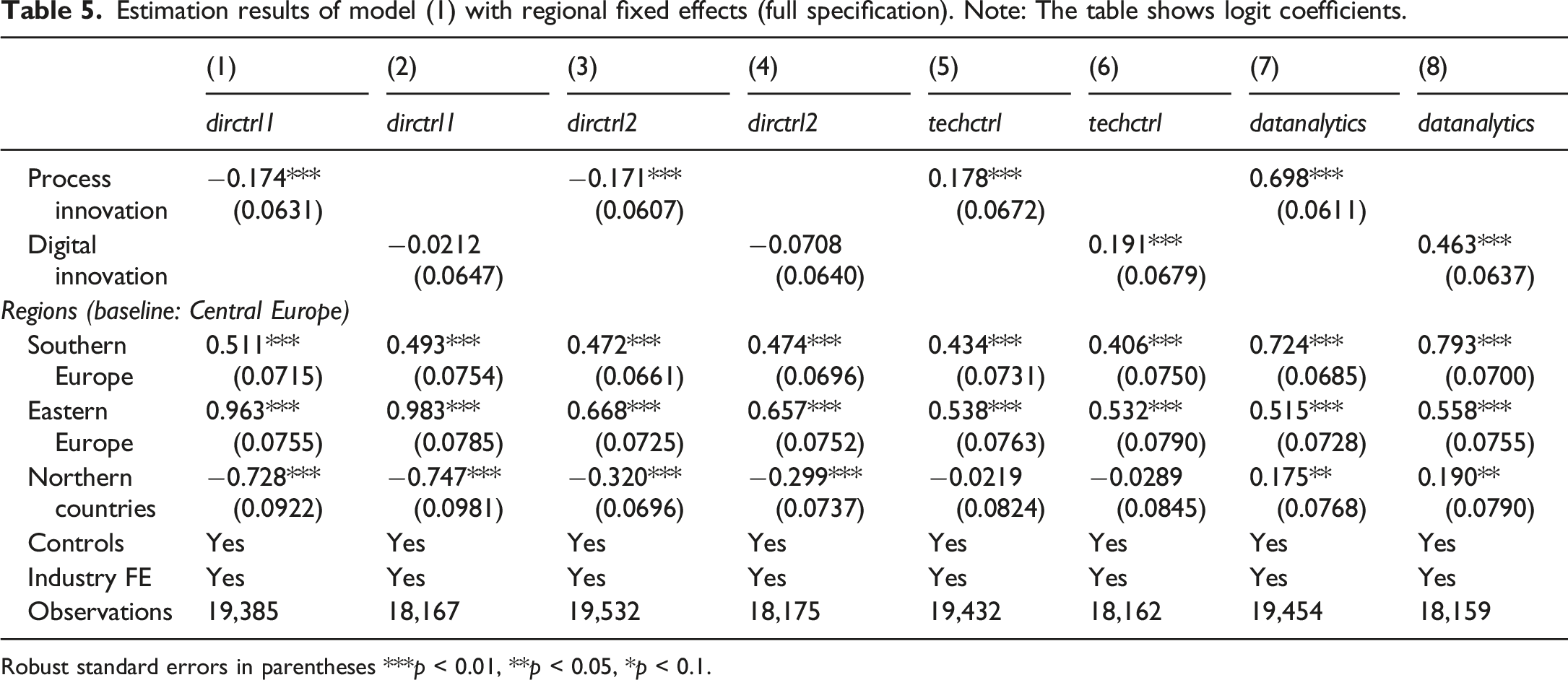
Robust standard errors in parentheses ***p < 0.01, **p < 0.05, *p < 0.1.
In light of the evidence reported in Table 5, we move one step further to establish the relationship between innovation and forms of control within country clusters and to what extent this effect differs across them. We thus run region-specific regressions of model (1). From this analysis (Figure 4), it emerges that there are interesting differences across groups of countries. Marginal effects by region. Note: the distance from 0 indicates the higher/lower level of direct and indirect control. Statistical significance at 95%.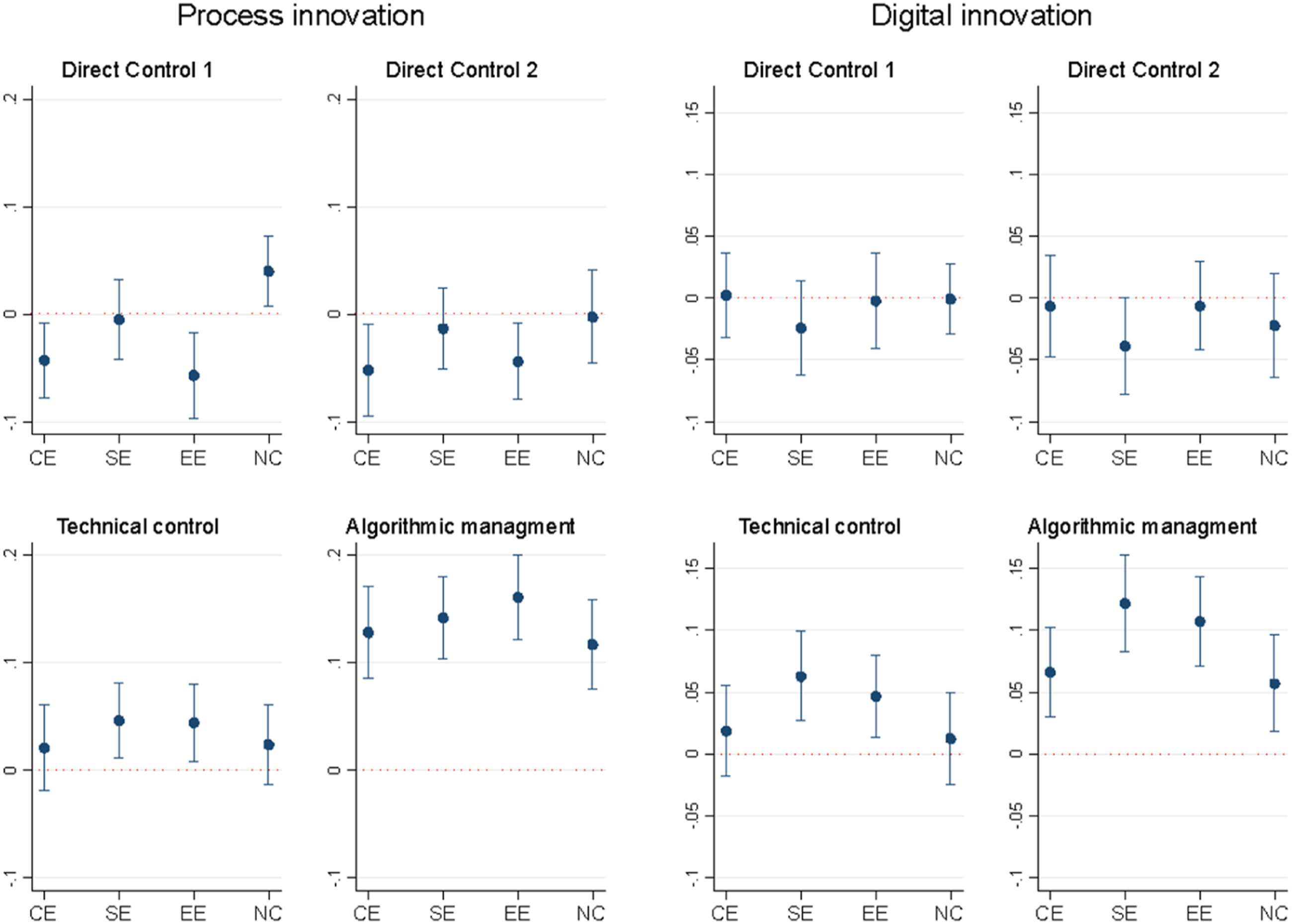
The negative relationship between process innovation and both indicators of direct control holds for CE and EE countries (as in Table 5) but they are not statistically significant in SE countries, while it is slightly positive in NC. Digital innovation tends not to be significantly associated with direct control in any of the regions analysed (with the only exception of drctrl2 in SE, although the margins are barely significant).
More interesting results are found when looking at the relationship between innovation and indirect forms of control. In this case, CE and NC tend to record a much weaker relationship compared to SE and EE countries. Notably, the relationship between process and digital innovation is not significant in the case of technical control, indicating that in CE and NC being more innovative does not entail stricter control exerted by machines or computers. The more pronounced variability emerges also when looking at the relationship between digital innovation and algorithmic management.
To establish to what extent these regional differences are statistically significant, we run the pooled regression model and test whether the marginal effect of each type of innovation is the same across regions via the adjusted Wald test (see Supplementary Appendix Table S8 in the appendix). The results of this test show that in the case of process innovation, we cannot reject the null hypothesis of equal effects across regions only in the case of technical control. As to digital innovation, the difference across clusters of countries is statistically significant only in the case of algorithmic management. In line with the visual inspection emerging from Figure 4, these results are coherent with the idea that the relationship between innovation and algorithmic management can be distinct across groups of countries. Overall, this analysis reveals that there are some differences between regions regarding the relationship between innovations and the degree of control.
Summing up the results of this section, we can stress that the relationship between innovation and control is stronger in the case of indirect forms of control than it is for direct control. This is a noticeable result that indicates that in more innovative firms the functions of control exerted by tools and algorithmic management, rather than direct control exercised by managers, is higher than in less innovative firms. This evidence, however, should not make us overlook the role played by more traditional ways of monitoring. Even though innovation shows a weaker relationship with direct control than with indirect control, direct control (especially dirctrl1) is still very pervasive among European firms (see Figure 2). It is likely that in the future indirect forms of monitoring workers’ performances will become relatively more present, direct control is still an important feature of work organisation.
Conclusion
This paper has explored the relationship between innovation and control at the workplace. To do so, we have employed information from the latest edition of the ECS, which is one of the few datasets that map both innovation indicators and organisational methods at the firm level. A major novelty of this paper is that it distinguished between two types of innovation, process and digital, and two forms of control, direct and indirect. Notably, we could also differentiate between a more traditional modality of indirect control, which employs machines and digital tools, and data analytics.
The empirical findings provide a multifaceted picture. First, innovation has opposite relationships with direct and indirect control. More innovative firms tend to record lower levels of direct control. Within these firms, workers are supervised less closely by the management although the difference between innovative and non-innovative firms is small. However, this finding does not imply that more innovative establishments record a generally lower level of control. More innovative firms are also those in which indirect forms of control (i.e. the pace of work is determined/monitored by a machine and data analytics) are more developed.
At the same time, there are some differences between types of innovations. While process innovation coefficients are statistically significant for both direct and indirect control (although with different signs), digital innovation is not significantly associated with direct forms of control. This seems to indicate that this type of innovation bears a strong link with mediated types of control but does not influence the (direct) managerial process of decisions. These findings provide support to those authors (e.g. Edwards, 1982) who consider that the rise of new digital devices can contribute significantly to the rise of new forms of control, mediated by machines and digital devices.
These results are even more important considering the progress of digitalisation in European companies. The evidence shows that digital innovation is more widespread than process innovation. Thus, the positive link between digital innovation and indirect control is likely to be more pervasive than the link between process innovation and control. The process of digitalisation of the firms will likely continue to expand in the future and so could intensify the role of indirect forms of control. In this respect, it is interesting to observe that the link between innovation and indirect control is stronger in the case of data analytics than it is for technical control. This finding relates to the rising importance that data management has in monitoring workers through the deployment of new digital technologies.
Despite our study does not allow to provide a causal link between innovation and increased monitoring at the workplace, it is possible to assert that the degree of indirect control (especially algorithmic management) may increase over time both in absolute levels and in relative terms compared to the level of direct control and technical control.
These aspects posit numerous novelties and challenges to the way work is organised. Higher indirect control may change the way social relations are shaped within firms. One possibility is that the disintermediation of the relations of production derived from higher indirect control will increase employees’ alienation from the process of production, as has been argued by other authors (Glavin et al., 2021). The rise of indirect control may also entail an intensification in the fragmentation of the relations of production, impacting the workers' representation institutions (e.g. such as unions) and affecting the bargaining process (Wood, 2021).
Of course, the pace of production, the use of algorithms, and the monitoring devices are not natural phenomena and are ultimately determined by humans, so there is no a priori outcome that derives from their deployment. Our findings should not be interpreted as a deterministic and unavoidable result of the introduction of new technologies where the human agency has no role to play. In this respect, it is relevant to observe that there are some differences between regions in the way process and digital innovation relate to direct and indirect control. The link between innovation and indirect control is much stronger in SE and EE countries than it is in CE countries and NC. These results suggest that there is some variability in the way innovations relate to forms of control. Institutions and organisational practices may differ considerably across countries and can evolve in time, resulting in some heterogeneity in the impact that new technology has on the work organisation. Digital innovations offer new tools for monitoring and coordinating the production process but the ultimate impact that this innovation will have on the workers will also depend on the use that is made of it.
More generally, these findings posit some important questions that link to the literature on the future of work and managerial roles (Jarrahi et al., 2021; Vallas and Kovalainen, 2019). Should be confirmed that innovation entails a reduction in the degree of control directly exerted by the management, then a good portion of the duties carried out by managers may tend to become obsolete. This consideration leads to asking what will happen to managerial occupations. This process may induce a change in the absolute requirements of managerial positions (with a reduction of their presence) and/or a qualitative modification in their functions, with a lower content of direct monitoring. This mechanism may have important implications for the literature on automation and job polarisation/displacement (e.g. Goos et al., 2009), as would entail that jobs at the top of the occupational distribution could be replaced following the introduction of new technologies.
In conclusion, this paper sheds light on the link between different forms of innovation and direct and indirect control, but also provides hints for future research. In this respect, one possibility is to assess the changes in the work organisation associated with the introduction of technology over a longer period. A key aspect that needs to be explored in more detail is to what extent the introduction of new technologies replaces traditional forms of control. On a related ground, further research could focus on the nature of innovations. It would be also possible to conceive innovation not entirely as an exogenous factor, but rather as being codetermined by the level of controls within the establishment, which would presuppose a bidirectional link between innovation and forms of control. It would also be relevant to exploit the causal nexus between types of innovations and forms of controls. In this respect, data availability represents a major obstacle which, nonetheless, may be overcome by developing more targeted surveys.
More research is also needed on the institutional factors and social forces that may play a role in mediating the impact that innovation has on the tasks performed by workers. As other scholars have noted (e.g. Pärli, 2022; Yeung, 2018), this is a crucial duty in light of the several challenges posed by new technologies and the need for novel policies to cope with these changes. Acknowledging the fact that there is no a priori outcome that derives from the introduction of new technologies and that different factors can influence the impact they have on the work organisation may help to smooth those positions that envisage a deterministic outcome that follows the introduction of new technologies. Last but not the least, it is paramount to reconcile the debate on the introduction of new technologies with the improvement of working conditions.
Supplemental Material
Supplemental material - Is it all the same? Types of innovation and their relationship with direct control, technical control and algorithmic management
Supplemental material for Is it all the same? Types of innovation and their relationship with direct control, technical control and algorithmic management by Marta Fana and Davide Villani in European Journal of Industrial Relations
Footnotes
Disclaimer
Findings and opinions expressed in this paper do not necessarily reflect those of the Joint Research Centre.
Declaration of conflicting interests
The author(s) declared no potential conflicts of interest with respect to the research, authorship, and/or publication of this article.
Funding
The author(s) disclosed receipt of the following financial support for the research, authorship, and/or publication of this article: This work was supported by the Centre of Advanced Studies (JRC, EC)
Supplemental material
Supplemental material for this article is available online.
Notes
Author biographies
References
Supplementary Material
Please find the following supplemental material available below.
For Open Access articles published under a Creative Commons License, all supplemental material carries the same license as the article it is associated with.
For non-Open Access articles published, all supplemental material carries a non-exclusive license, and permission requests for re-use of supplemental material or any part of supplemental material shall be sent directly to the copyright owner as specified in the copyright notice associated with the article.
