




Abstract
Feminist scholars have focused on paid domestic labour as a site of gendered inequalities structured by race, gender, class, and citizenship. However, men are largely absent from feminist intersectional understandings of everyday interactions within paid domestic labour. This paper draws on an interview study of South African domestic workers focusing on their talk about interactions with male employers. The analysis demonstrates that talk about routines of the physical and symbolic absence of men can become normalised within domestic labour discourse. This is a narrative that is only brought to light once men's (lack of) presence is made a topic. The conspicuous absence of analyses of this kind within paid domestic labour studies points to unfinished and troubling feminist projects.
In highlighting women's differentiated experiences of housework, studies of paid domestic labour have almost exclusively explored women's views and experiences of (what is traditionally considered to be) women's activities and work, allowing the role of men to fade into the background and become completely absent. When men are present in popular and scholarly imaginations, the focus is on gendered abuse and exploitation of domestic workers by them (see e.g., Huang & Yeoh, 2007; Human Rights Watch, 2006; Mkandawire-Valhmu et al., 2009; Weiss, 2017). While such studies are important in protecting and valuing domestic workers, research about the everyday, mundane role of men in paid domestic labour is rare.
To address this gap, the present study explores domestic worker accounts of contact with both male and female employers and how these dynamics are justified. We demonstrate how symbolic and material distance from the male employer within the private spaces of the home are normalised. Yet, in discursively reinserting male employers into the institution of paid domestic labour, we argue that domestic workers articulate accounts of patriarchy that are otherwise made absent in this field, namely (a) patriarchal gendered power, (b) patriarchal gendered stereotypes, and (c) patriarchal gendered sexuality. For the purposes of this paper, the term “patriarchy” also encompasses norms of heteronormativity and masculine dominance. We further argue that academic discourse similarly silences men's place in domestic labour. This silencing of patriarchy flags limits and limitations of the feminist project. We aim to demonstrate how research exploring men's mundane, everyday roles in paid domestic labour reveals both the ideological underpinnings of this institution and our blind spots in studying it.
Feminist approaches to studying paid domestic labour
The following review is not intended to cover all aspects of the study of paid domestic labour but rather to trace its focus on women within feminist studies (for an insightful look at why paid domestic labour itself has been an absent topic more generally, see Lautier, 2002). This review will demonstrate how studies of paid domestic labour have assumed that it is an outsourcing of “women's work” from one woman to another woman, making it a transaction exclusively between women, with very little, if any, reference to men. This is often implied but can also be stated explicitly. For example, academics speak about paid domestic labour as being “associated with women” (Moras, 2008, p. 378); “between the housewife and the domestic worker” (Romero, 1992, pp. 30–31); “between middle-class white ‘madams’ and their still working-class black ‘maids’” (Ally, 2010, p. 80); and “between women positioned as either domestic workers or employers” (Fish, 2006, p. 107). This is also reflected in the titles of publications about paid domestic labour, such as Between Women: Domestics and Their Employers (Rollins, 1985) and Maids and Madams: A Study in the Politics of Exploitation (Cock, 1980). In addition, the paid domestic labour relationship is sometimes categorised as “maternalism” (see Arnado, 2003; Moras, 2013; Read, 2019) to delineate it as a uniquely feminine variation of paternalism occurring exclusively between women. This is not an exhaustive list by any means but rather exemplifies the typical academic focus on women.
The (almost exclusive) attention to women in paid domestic labour developed from analyses of unpaid domestic labour, which has traditionally been viewed as “women's work.” Historically within feminist scholarship, domestic labour was thought to be a “great equaliser of women. Whatever else women did – jobs, school, childcare – we also did housework” (Ehrenreich, 2002, p. 86). Studies of unpaid domestic labour were initially focused on who cleaned, what was cleaned, and on whose behalf, highlighting gendered divisions of labour as reinforcing women's subordination within the space of the home in a wider patriarchal system (Duffy, 2007; Ehrenreich, 2002). Paid domestic labour was generally overlooked by second-wave feminists who instead questioned the gendered, patriarchal dynamics at work in unpaid domestic work within the household (Anderson, 2001). Initial attempts to understand paid domestic labour largely zoomed into the entanglement of gender, class, and race with a specific focus on women and their differentiated positionalities within this institution (see Cock, 1980; Rollins, 1985), largely leaving the role of men absent. Men's absence has occurred partly because some researchers have uncritically adopted the assumption that domestic work is women's work, and others have made a choice to focus on the dynamics of hiring women of another race, class, and/or citizenship to perform domestic duties in middle to upper class households.
Feminist research initially drew attention to the class implications of hiring someone to clean and care for a household (see Anderson, 2001; Dickey, 2000; Ehrenreich, 2002). According to these types of studies, by hiring another woman to maintain the cleanliness and care of a household, middle and upper class women are freed from the daily cleaning, dusting, mopping, washing, and tidying of the home and can thus enter the workforce to increase the income of their household or engage in community and/or volunteer work outside of the home (Anderson, 2001). However, these studies implicitly reinforced the assumption that domestic work is women's work, and that domestic duties are transferred directly from the female employer to the female worker.
Scholarship developed to demonstrate how domestic labour represents entanglements of gender, class, and race to become a site of extreme exploitation (Cock, 1980; Duffy, 2007; King, 2007; Lutz, 2011; Romero, 1992). This dynamic is particularly evident in studies where constructions and experiences of domestic workers of colour are contrasted with those of White workers such as au pairs (see Pratt, 1997; Zarembka, 2002). In addition, relations between employers and workers (especially in former colonial contexts) often include remnants of the master–servant relationship (Hansen, 1990; King, 2007; Stoler, 2002). Paid domestic labour is often constructed as a site of class and racial antagonisms that are resisted, negotiated, and managed between women in the home (Archer, 2011; Murray & Durrheim, 2019, 2021).
All of these structural forces are further brought to bear on migrant domestic workers, who are subject to the intersection of gender, race, class, and citizenship. Transnational migration studies often focus on the vulnerabilities, abuses suffered, and coping mechanisms of migrant domestic workers (Akalin, 2007; Huang & Yeoh, 2007; Weiss, 2017), or on their shifting identities, positionalities, and constructions (Lan, 2003a, 2003b; Pratt, 1997; Stiell & England, 1997). This is where men are mentioned most often in paid domestic labour, as the exploitation and abuses of the institution are perhaps at their most extreme.
A Billigian reading
While both paid and unpaid domestic labour continue to be the purview of feminist scholarship, the absence of men from its paid iteration is simultaneously conspicuous and ubiquitous, which seems especially strange considering the centrality of men in studies of its unpaid form. Talk about men and academic studies about men are seemingly absent from the topic of paid domestic labour. One is left with the questions of whether men are indeed absent, how they are made absent, and whether this absence matters.
Michael Billig's (1997, 1999) scholarship potentially provides a useful framework for understanding absence as being grounded in language, fundamentally social, and saturated with ideology. Billig (1999) argues that a troubling topic must be seamlessly replaced with a different topic to shift attention away from the first topic. It is in this way that a noticeable absence can be avoided (Billig, 1997, 1999). Billig (1999, p. 54) argues that such silencing: might be considered as a form of changing the subject. It is a way of saying to oneself “talk, or think, of this, not that.” One then becomes engrossed in “this” topic, so “that” topic becomes forgotten, as do the words one has said to oneself in order to produce the shift of topic.
Absences are only possible when all participants—whether on a microlevel such as in interpersonal interactions, or on a macrolevel such as within whole societies—collaborate within and under societal norms, such as politeness and conformity, to keep troubling topics from rising to the surface of conversation (Billig, 1999). Indeed, collaborative interpersonal interactions can reveal the ideology that has become the common sense of a culture or society, allowing even simple, mundane interactions to provide clues as to what is remaining collectively unsaid or unsayable (Billig, 1999; Durrheim & Murray, 2019).
Johnstone (2008, p. 72) states that “learning to notice silence means learning to ‘de-familiarise’. It requires learning to imagine alternative worlds and alternative ways of being, thinking, and talking.” In this study, one possibility for “imagining alternative worlds” is to reinsert men into the conversation about paid domestic labour to see how speakers make sense of men's place within the institution. How might disturbing the assumption of their normalised and routinised absence point to how their presence is troubling for participants, both domestic workers and academics studying this institution? This paper presents an analysis of talk that interrupts the assumption that paid domestic labour occurs exclusively between women by reinsterting men into conversations about paid domestic labour. For participants in paid domestic labour, the normalisation of men's absence or distance is a form of social action that can keep attention on interactions between women, as opposed to the troubling interactions that include men.
For academics, we argue that noticing women's interactions as opposed to paying attention to men's role in domestic labour is also avoiding a taboo. One potential source of academic discomfort with paid domestic labour is that it is a reminder of feminism's long-standing, unfinished projects that continue to impact the most marginalised of women. As Tronto (2002, p. 47) argues, “the incomplete feminist revolution left unresolved the fundamental questions of how to allocate responsibility for child care [and other domestic responsibilities] in our society.” Feminism is left asking how best to engage within the field of domestic labour in promoting a strategy for change, namely ameliorative steps, radical reforms, or revolutionary change (Tronto, 2002). Regardless of the way forward, domestic labour as a topic continues to be disconcerting for all of its participants, including its scholars.
We suggest that reinserting men into a focus on paid domestic labour brings the disturbing intractability of patriarchy to the fore, which is demonstrated in how domestic workers articulate accounts of men's (lack of) presence within the space of the domestic sphere; namely focusing on (a) patriarchal gendered power; (b) patriarchal gendered stereotypes; and (c) patriarchal gendered sexuality. Reincorporating men into talk about paid domestic labour reminds us that the feminist project is still incomplete, raising the disturbing question of how—and even whether—feminism as a project can bring equality to the lives of women like domestic workers.
Methods
The authors have supervised Research Psychology Masters students in research projects about paid domestic labour annually since 2009. This has resulted in a vast archive of data from years of interviews with employers and workers. Throughout our supervision, both authors and the students we have supervised have assumed the employers to be female. In our attempt to explore male roles in the domestic labour hierarchy, we found very few references to men over the years, leading us to ask, “where are the men?” While they have occasionally been felt or implied, they have rarely become the focus.
Therefore, to explore domestic worker talk about gendered interactions with male and female employers, Research Psychology Masters students interviewed seven domestic workers from the province of KwaZulu-Natal, South Africa, as part of their module requirements for 2022 under the first author's supervision, focusing specifically on men in paid domestic labour. The research was approved by the authors’ university’s Social Science Research Ethics Committee. Each students recruited and interviewed one participant. Participants were recruited using convenience sampling, partially because of the ethical complications of social contact that still lingered from the COVID-19 pandemic. Selection criteria included being currently employed by a heterosexual couple as a paid female domestic worker, making talk about both male and female domestic work employers possible. All of the participants had at least a basic proficiency in English, and all interviews were conducted in English.
The seven participants were all Black women and ranged in age from 23 to 57, with an average of 32; all were single except for the eldest. The educational levels of the participants varied greatly, with one not having completed high school, two having completed high school, two pursuing certificate-level qualifications, one with an incomplete undergraduate degree, and another with a bachelor’s degree in social science. Participants had been in their current employment for a range of 5 months to 14 years, with an average of 5 years.
The interviews aimed to make gendered hierarchy and intimacy explicit, specifically exploring talk about the worker and the male employer. The interview was divided into four main sections: (a) basic demographic questions, (b) roles, (c) boundaries, and (d) relationships. Questions often moved from roles/boundaries/relationships with family members in general to the male employer in particular. The questions progressed toward whether there were tensions in terms of their role in the household, if there were ever times they were alone with the male employer, and how they saw themselves as a woman within someone else's home. The interview and its analysis worked to turn attention to the topic of the male employer where attention would otherwise have been kept on the female employer, thereby subverting and interrupting the silencing that would normally have occurred. The troubling nature of this subversion was felt by all of the interviewers, who expressed concerns about potentially offending the participants or making the interview an uncomfortable experience.
The interviews were transcribed using a form of Jeffersonian Lite transcription to indicate basic elements of talk-in-interaction (see Table 1). The interview data were analysed using an ethnomethodological approach (see Baker, 2003), underpinned by Billig's (1997, 1999) theoretical framework of dialogic repression. The analysis was applied to sections of talk where the male employer was made a topic, to show how his presence—whether material or symbolic—is kept absent from paid domestic labour, from themes of patriarchy that emerged, namely hierarchy, stereotypes, and sexuality. The analysis aims to suggest that, while domestic labour is commonly viewed as a female domain, the (re)introduction of the topic of the male employer into domestic worker talk demonstrates that paid domestic labour, just as its unpaid form, is still saturated with patriarchal norms that are evident and must be managed in talk.
Transcription conventions.
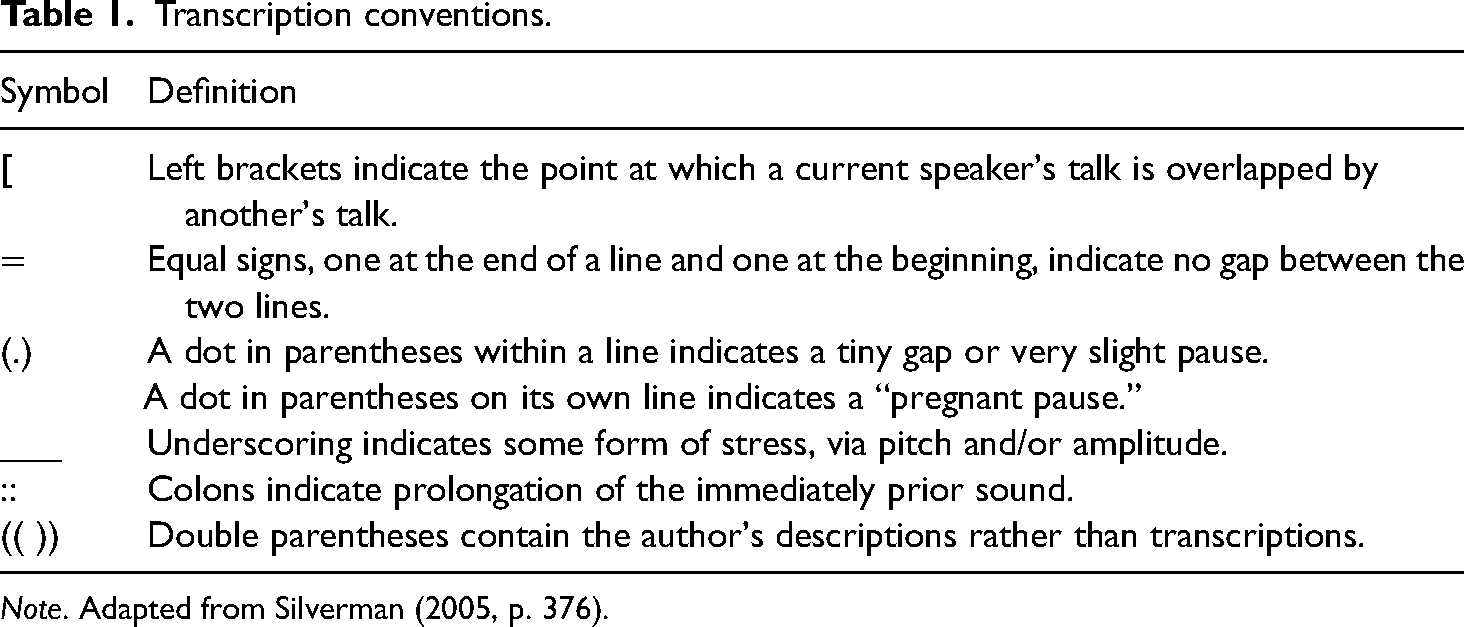
Note. Adapted from Silverman (2005, p. 376).
Analysis and discussion
The analysis presented below explores domestic worker talk about their (lack of) interactions with their male employers, with a specific focus on contrasts between male and female employer roles in paid domestic labour. The interviewer (“Int” hereinafter) explicitly and intentionally raise the topic of men in conversations that are usually assumed to be exclusively about women and their work. In the analysis, we demonstrate how men are routinely made absent in domestic labour relationships and how, when they are made a topic of conversation, domestic workers articulate accounts of heteronormative patriarchy and its norms, namely: (a) patriarchal gendered power, (b) patriarchal gendered stereotypes, and (c) patriarchal gendered sexuality.
Patriarchal gendered power
In this section, we will be focusing on talk about hierarchy within the domestic labour relationship between the worker, the female employer, and the male employer. We demonstrate how the flow of information indicates an implicit “chain of command” from the male employer to the female employer to the worker.
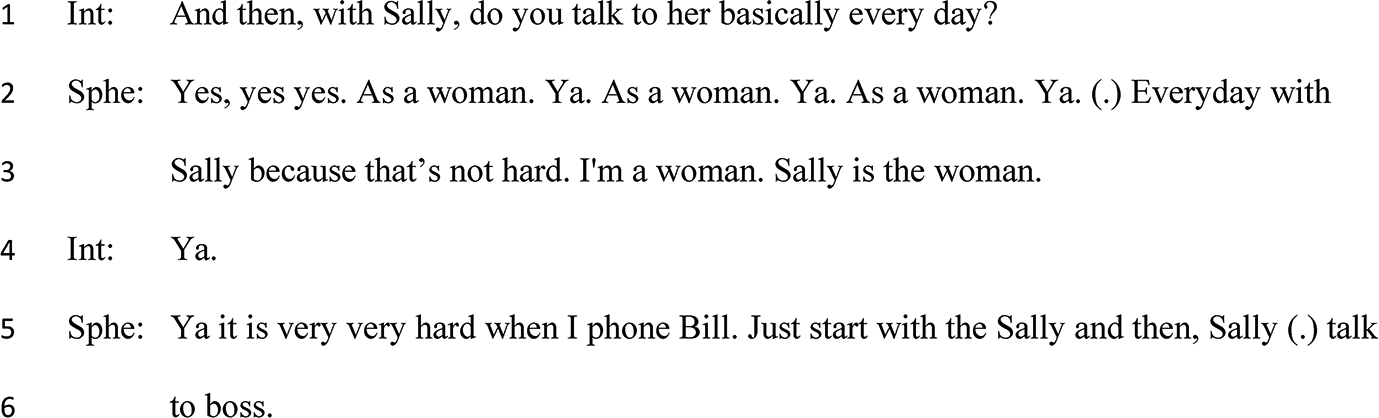
Extract 1 shows the flow of information and points of contact that were common across the interview data. Sphe establishes the frequency of conversation between herself and her female employer. She justifies this daily contact through their common womanhood, a framing she repeats in various forms (“As a woman. Ya. As a woman” and “I am a woman. Sally is the woman”). By contrast, conversations with Bill are “very hard.” Therefore, Sphe speaks directly to Sally, who then passes information to Bill, who is labelled as “boss.” Bill's maleness makes him both distant and higher up in the domestic labour pecking order. These types of interactions—or lack thereof—were the dominant pattern expressed in the data. This gendered chain of command echoes gendered hierarchies that are traditionally found in society broadly, and in the domestic sphere specifically. In this case, the domestic worker becomes an extension of patriarchal gendered hierarchy.
There were occasionally times when the female employer was spoken of as the “boss,” as in Extract 2 below. While these presentations were rare, they were often based on the frequency and types of communication between the female employer and the worker, and still echoed elements of patriarchal power structures.

Nandi notes that she interacts directly with the female employer, including instructions about work-related activities, expectations, and accountability. Based on this, Nandi concludes that “the wife is my boss” (Lines 3–4). Had this talk ended with Line 6, it would be easy to assume that the male employer is absent from this relationship. Instead, he is made present in the talk through the interviewer's probe in Line 7. Because of this probe, Nandi must speak about the male employer and his involvement. According to Nandi, payments made to her are in the male employer's name (Line 10). This involvement, made overt through notifications on her phone and an increase in her bank balance, is presented as her only form of contact with him.
This chain of command is slightly more nuanced than many other constructions in the data because the male employer is absent in many ways. Here, there is no mention of conversations, directions, or instructions. However, he is present in a crucial aspect of the domestic labour relationship: “paying the bills” (Line 11). Even if that is his only role, this still sets up a hierarchy. Having “the husband's name” (Line 10) linked with payment is a reminder of the source of payment and who has the material power, even if that person remains unseen and unheard. The material power of paying for Nandi's work translates into symbolic power, making him Nandi's boss's boss.
All of the above extracts have an undercurrent that flows just beneath their surface; a current that echoes gendered hierarchy. This is made explicit in Extract 3, where cultural norms of patriarchy are shown to permeate domestic labour relationships.
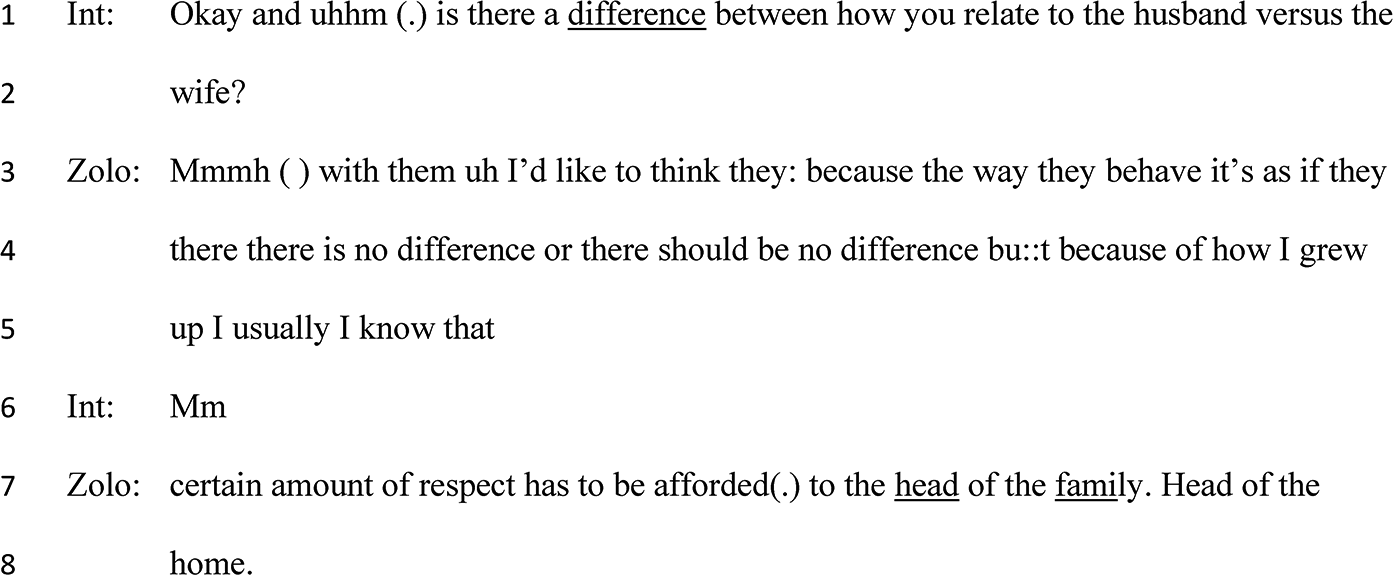
Here, the interviewer brings the contrast between the male and female employers to the fore of conversation. Zolo speaks about the different gendered norms and expectations that exist for the employer's household versus her household. The employers are presented as lacking gendered hierarchy or power imbalances both in terms of practice (“there is no difference,” Line 4) and principle (“there should be no difference,” Line 4). However, Zolo sets herself and her upbringing apart from these assumptions by using patriarchal titles for the male employer such as “head of the family” (Line 7) and “head of the home” (Lines 7–8).
This repeated presentation of the man as the “head” also positions him as someone to whom both the female employer and worker are subordinate. Zolo is subordinate to both the male and female employers, and the female employer is subordinate to the male employer. The man is the woman's/madam's boss and head. However, these hierarchies are only made explicit when men are brought into the conversation about paid domestic labour. Without talk about men, these domestic workers might have been able to construct their domestic labour relationship as purely dyadic and between women, operating outside of the wider patriarchal norms of society.
Patriarchal gendered stereotypes
The stereotypical nature of domestic labour was another prominent and recurring theme in the data. Stereotypes of masculine professional and domestic norms and expectations run throughout the data. In the following extracts, stereotypes about men and how and when to interact with them are made evident in the talk as men are made a topic of conversation, especially in contrast to how domestic workers expect to interact with their female employers. Again, echoes of traditional patriarchy underscore talk about paid domestic labour interactions.
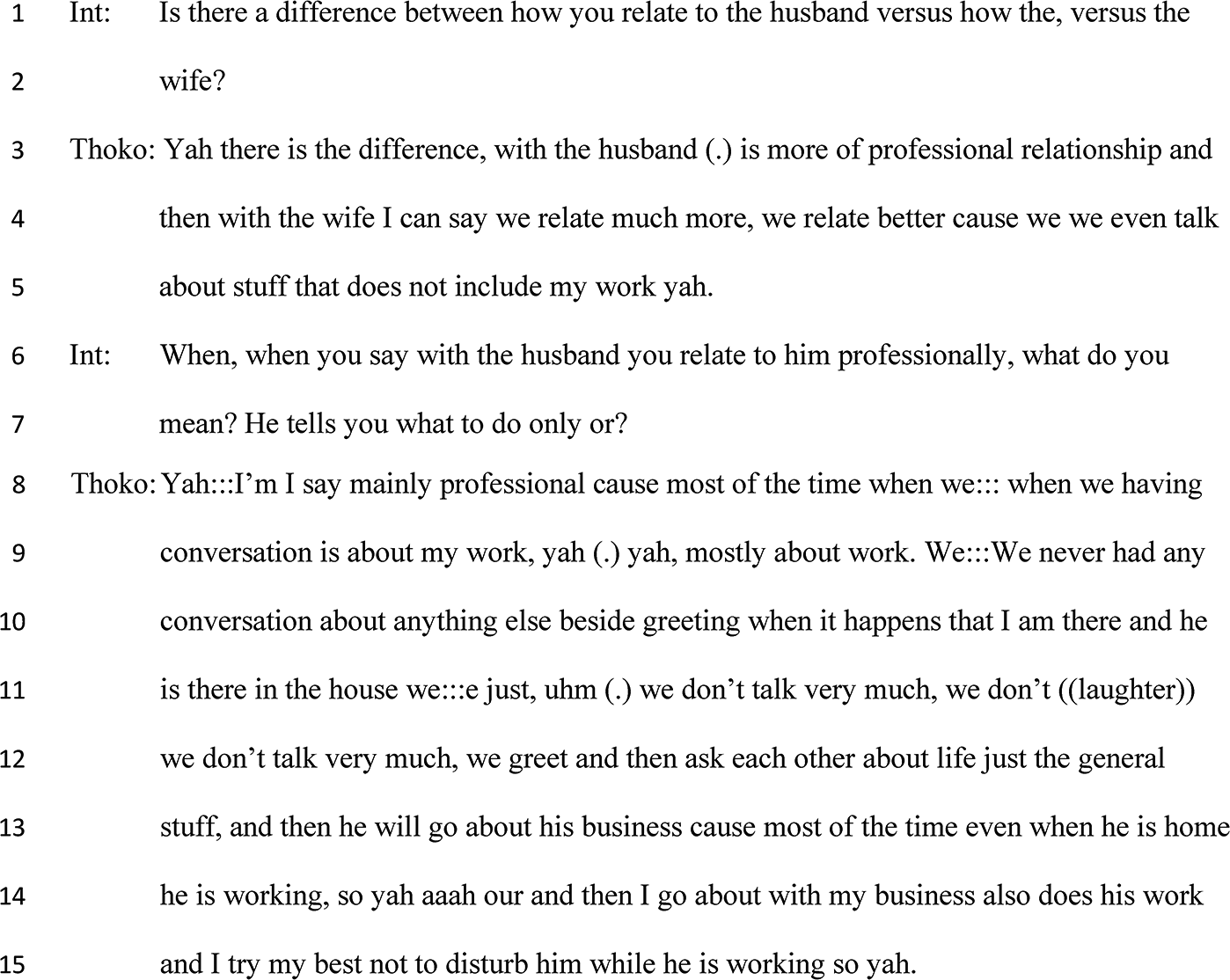
In Extract 4, Thoko compares and contrasts the relationships she has with her male and female employers, indicating that the difference is a “more professional relationship” with the male employer. With the female employer, Thoko speaks about a broader range of topics, extending to “stuff that does not include my work” (Line 5), which implies that they might speak about more personal topics. While Thoko does not expand on a list of topics, one assumes it might be point of commonality and difference based on their experiences as women, as is expressed by Sphe in Extract 1 (“as a woman”).
Thoko goes into much greater detail to explain the nature of her relationship with the male employer. With him, Thoko emphasises the frequency of conversations (“we don’t talk very much,” Lines 11 and 12) and their content (“conversation is about my work,” Line 2). Thoko goes to great lengths to show that their interactions stay within the realms of general politeness such as greeting (Lines 10 and 12), not disturbing him while he works (Line 15), and allowing each other to “go about [his/my] business” (Lines 13 and 14). In this extract, both parties are brought together because of work. Just as there is a certain professionalism that is expected in the stereotypically masculine workplace, Thoko presents herself as an ideal worker who does not mix work and home (see Davies & Frink, 2014). Instead, she keeps things professional, and everyone goes about their business. While Thoko presents her relationship with the female employer as going beyond the labour-related nature of their relationship, she restricts her interactions with the male employer to maintain the stereotypical patriarchal “strictly business” framing. In Extract 5 below, Sphe indicates similar gendered stereotypical dynamics with her male employer, albeit in the domestic as opposed to the professional arena.
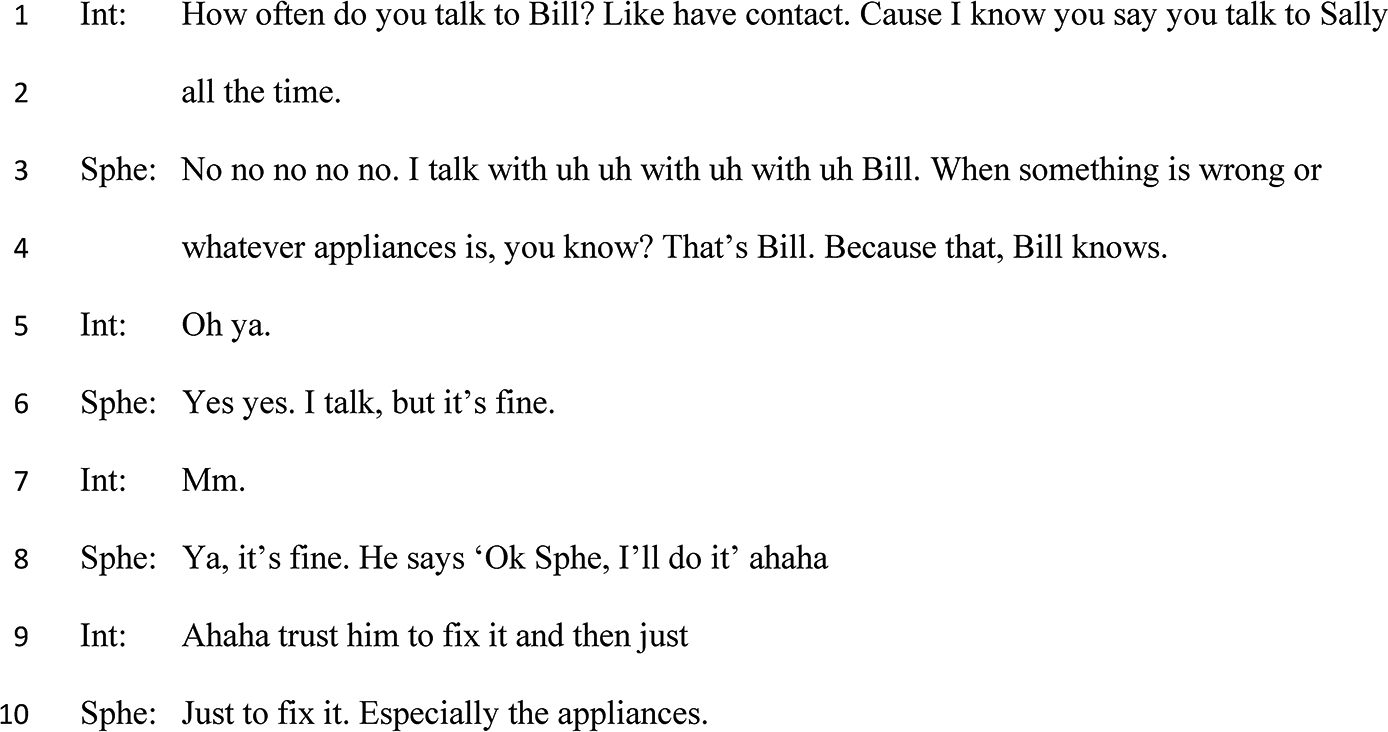
In Extract 1, we have already been presented with Sphe's talk about her relationship with Sally, a relationship founded on common womanhood and shared experiences “as a woman.” Here, in Extract 5, we learn more about Sphe's contact with Bill. Her contact with Bill reflects stereotypically gendered domestic interactions and identities. Sphe speaks to Bill “when something is wrong” (Line 3) or when an appliance is malfunctioning. When things break, she calls for the man. When he is called, Bill takes over the task for her. For Sphe, Bill acts as a type of maintenance man. He is the archetypal man who says little but comes in to fulfill his manly duties with the appliances. She relies on him “just to fix it” (Line 10).
There are some important commonalities and differences in these two extracts. Both extracts construct the relationships between the worker and the female employer as informal and familiar, with regular communication. In both extracts, contact with the male is minimal and kept in the realm of the polite and professional. These contrasts rely on common sense about gender stereotypes and proper relations between genders in the home and the workplace. However, in Extract 4, Thoko presents herself as largely avoiding contact with her male employer, keeping a professional distance, both going about their respective professional tasks and responsibilities, as is common in traditional, ideal office cultures (Davies & Frink, 2014). In Extract 5, Sphe seeks out assistance and contact with her male employer in order to fulfill domestic duties and expectations, mirroring gendered domestic relationships. In this way, the domestic labour talk mimics and provides accounts of patriarchal gendered stereotypes, whether at work or in the domestic sphere. This talk normalises and reinforces patriarchal stereotypes, allowing for them to continue operating as the status quo.
These stereotypes only come into view when someone other than the women is accounted for. If these workers had only been speaking about their female employers, the contrast between the stereotypes of men and women and how they interact would have probably remained absent. By making men visible, accounts of patriarchy and its stereotypes come into sharp focus.
Patriarchal gendered sexuality
The previous section points to the range of constructions of paid domestic labour that exist and how the domestic worker's role and place in the household can vary. Indeed, the domestic workers can be positioned as being simultaneously an employee and “part of the family,” creating potential for ambiguity, uncertainty, and blurred boundaries.
Much of the interpersonal work in paid domestic labour involves the maintenance and navigation of boundaries that communicate and reinforce hierarchy, intimacy, and belonging. Gendered boundaries and related taboos are ever-present, but rarely articulated. In Extract 6, Zolo speaks explicitly in gendered terms about “that line” which often goes unspoken in paid domestic labour.
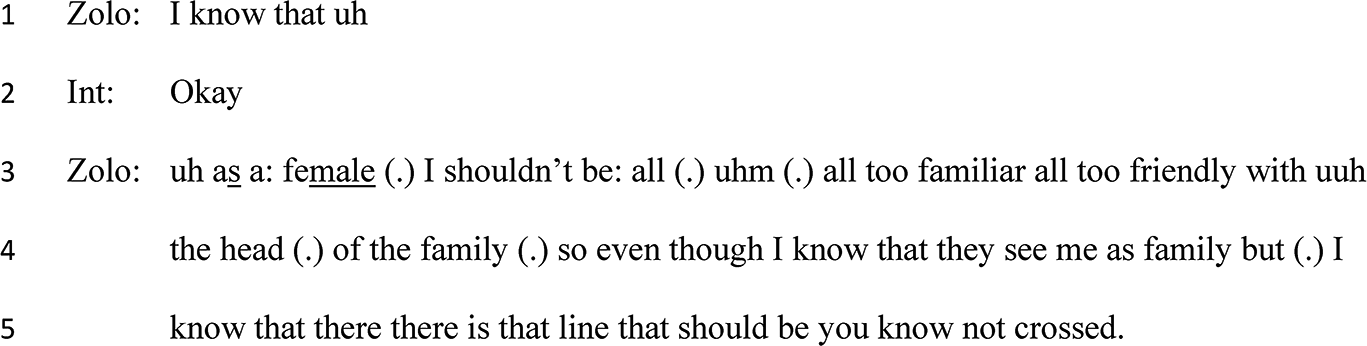
Zolo frames herself not as a worker or employee, but “as a female” (Line 3). As a female, Zolo notes that she avoids being “all too familiar all too friendly” (Line 3) with the male employer of the household, presumably as a male. Note the difference here between “shouldn’t” (Line 3) and “couldn’t.” “Couldn’t” implies something impossible, whereas “shouldn’t” has connotations of something forbidden or taboo. Zolo could become familiar with the male employer but shouldn’t. Her inclusion or categorisation within the intimate circle of the household “as family” (Line 4) is one thing, but intimacy as a female with the employer as a male is presented as “that line.” It is an unspoken, taboo boundary that should not be crossed.
This is another old colonial theme linked to patriarchy, namely that of male sexuality (Ginsburg, 1999; Stoler, 2002). In this short extract, Zolo shows what is implicitly at stake in the relationship between domestic workers and male employers. Boundaries must be established and maintained because of the possibility (threat?) of embodied actors coming into contact and forming intimate, potentially sexualised interactions with each other. To have frequent contact or conversations with a male employer is to invite the possibility of intimacy, sexual attraction, and competition between the female employer and the female worker for the attentions and loyalty of the male employer (Ginsburg, 1999; Nyamnjoh, 2005; Stoler, 2002). Similarly, in Extract 7 below, Zinhle presents herself as responsible for navigating and negotiating the threats of male sexuality, both as a worker and as a woman.
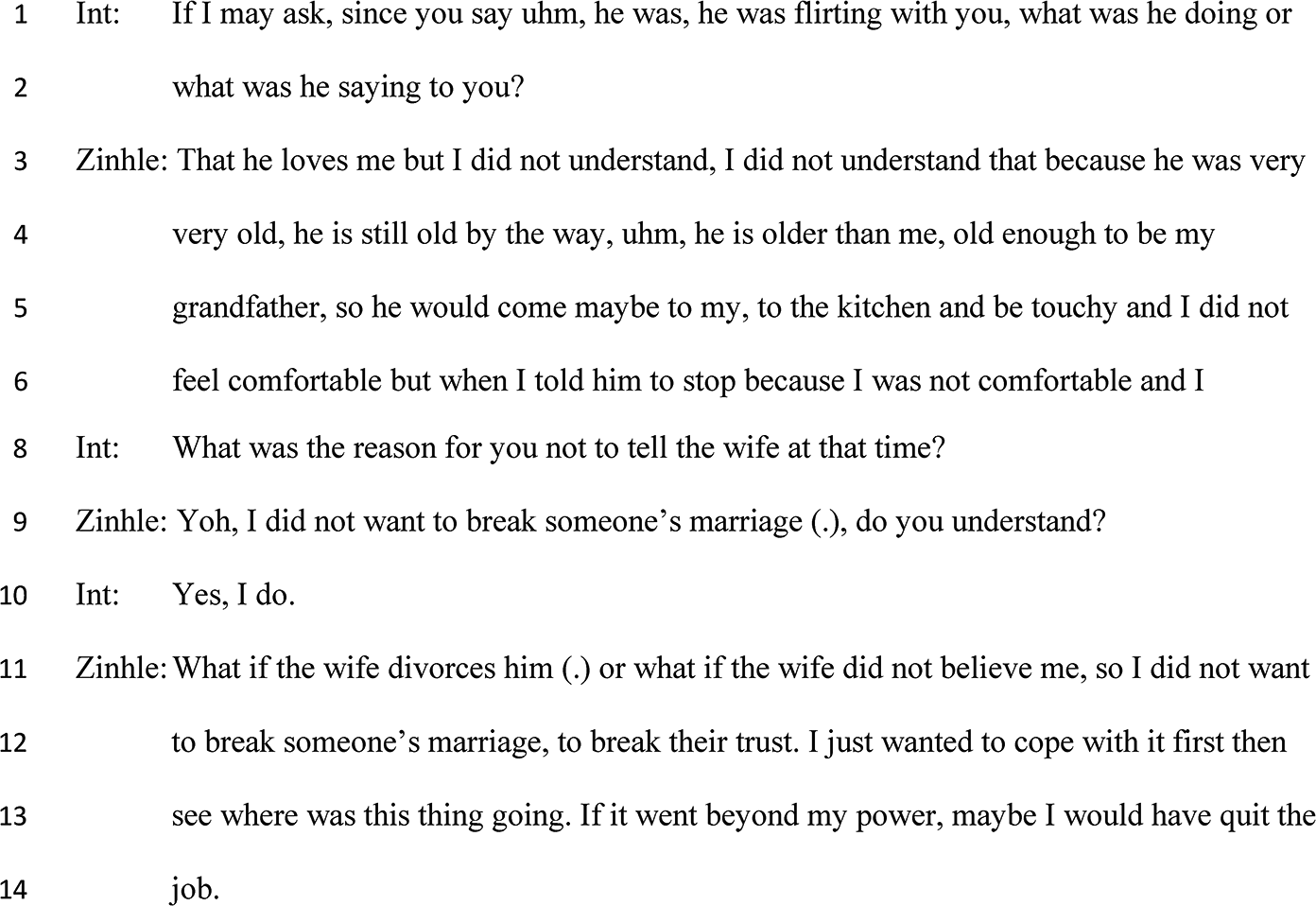
Extract 7 provides the clearest example of a male employer presented as being (too) familiar and intimate with a domestic worker. In Zinhle's presentation, her male employer is primarily a husband who is unfaithful to his wife, as opposed to an employer who is sexually harassing his employee. There are many elements of the situation that Zinhle highlights to make this a troubling and unwelcome interaction. The employer's age and marital status are mentioned as reasons why Zinhle does not welcome his advances. His physical advances and where they take place (“the kitchen,” Line 5) also contribute to Zinhle's discomfort (Lines 6–7). While Zinhle explicitly rejects her male employer's sexual advances (Lines 6–7)—which include physical (“be touchy,” Line 5) and verbal (saying that “he loves me,” Line 3) elements—she presents her options thereafter as either silently staying or silently leaving (Lines 12–14). Both options maintain the employers’ marriage and neither option includes speaking to the female employer. For Zinhle, the responsibility for their marriage continuing without fragmentation rests on her (“I did not want to break someone's marriage,” Lines 11–12).
In all of Zinhle's talk about this situation, she does not mention the rights and protections that should be afforded to her as an employee. Instead, the boundaries regarding Zinhle's place in the home have blurred to such a degree that she speaks about herself more in terms of a woman rejecting a married man's sexual advances than as a vulnerable employee who has been taken advantage of by her male employer. This can be seen when Zinhle speaks about her potential options had the situation gone “beyond [her] power” (Line 13), which implies a scenario wherein the male employer continued harassing her. Zinhle does not speak about this in terms of a worker with legal rights as a citizen and labourer who could engage the male employer within the judicial system. Rather, she speaks about her individual power as a woman, with no other alternatives beyond her own voice and exit from the employment relationship. This is the risk of contact with the male employer. The worker can, by her very embodied presence as a woman in the house, shift from being a female employee to a potential sexual partner in the eyes of the male employer. In such scenarios, the blurred boundaries between being a household member and a household employee inherent in paid domestic labour can impede the worker's use of legal recourse.
All of this echoes and articulates a gendered sexuality consisting of men who make sexual advances toward the women around them; women who are the objects of those advances; and patriarchal institutions of marriage that are either ignored or protected. In an understanding of paid domestic labour devoid of men, the home is presented as a place of chores and care with a decidedly maternal flavour. It is not without its pressures and potential for exploitation, but its participants are shielded from (the threats and dangers of) masculine sexuality by virtue of its absence. Once men are brought back into the conversation, the potential for the topic of sexual abuse and harassment arises.
Conclusions
Paid domestic labour is often conceptualised as an interaction between women that is an expression of inequalities and oppression based on macropolitical structural forces of race, gender, class, and citizenship. A critical reading of paid domestic labour research leaves the reader with a glaring question: where are the men? Domestic labour studies have traditionally focused on interactions, inequalities, and idiosyncrasies that exist between the female employer and the female worker. The relationship is almost exclusively constructed as dyadic and female.
Drawing on Billig's (1997, 1999) scholarship on absence, this study demonstrates the troubling, recalcitrant foundations of this institution. A critical understanding of absence allows analysts to notice how certain lines of conversation and social action can seamlessly overshadow and replace others, thereby becoming “sedimented into habits of life” (Billig, 1999, p. 56). We adopt this perspective to investigate and topicalise the absence of men within paid domestic labour talk and, by extension, studies produced by many feminist scholars. The norms of domestic labour work to keep men physically and symbolically absent. Had comparisons and contrasts between male and female employers not been invited by the interviewer, it is quite possible that men would have remained completely absent from the conversations. Once men were reinserted into conversations about paid domestic labour, domestic workers articulated potentially troubling accounts of patriarchy that exist within this institution.
These accounts include unmistakable traces of patriarchal gendered power, stereotypes, and sexuality. The chain of command and the subsequent flow of communication presents a clear hierarchy, not just between the male employer and the worker, but also between the male employer and the female employer. Similarly, the participants in this study speak about their interactions with their male employer in ways that echo gendered stereotypes of men in the workplace (interacting on a professional level) and the home (someone who is called to fix the vacuum). Participants also speak about men in ways that mirror patriarchal sexuality by speaking of men as sexual initiators who (have the potential to) make advances on domestic workers as sexualised beings.
Through these accounts, it is clear that the majority of interaction happens between women, keeping the man on the margins of the domestic labour relationship. The absence of men is normalised and taken for granted. The common gender of the female employer and the female worker is presented as grounds for conversations that deepen and extend beyond the employment relationship. However, being on the margins does not mean that men are marginalised. Their minimal contact and minimalistic communication with the domestic worker reinforce their place in the order of things. While feminists have written a great deal about men's involvement in unpaid domestic labour (for examples, see Breen & Cooke, 2005; Sullivan, 2000), they have paid much less attention to (nonabusive) men in paid domestic labour. Despite their apparent absence from the workings of paid domestic labour, as has been seen in the analysis, their absence looms large when compared to the interactions of the women and communicates positioning within a hierarchy.
In the move from unpaid to paid domestic work, men are able to shift from (traditionally) being uninvolved in women's work to becoming the unseen manager's manager of women's work. While the relationship between the female employer and the female worker is one in which gender, race, class, and citizenship intertwine (Gaitskell et al., 1983; Glenn, 1992; Lutz, 2011), the (re)introduction of the male employer into this context repositions the entire institution as one that functions within and mirrors the wider structures and norms of patriarchy. This study ultimately demonstrates how even though domestic labour is thought of as a feminine institution that occurs between women, it is a crystallisation of everyday patriarchy. Not only do the domestic labour talk and its absences (re)produce patriarchy, the talk also reinforces patriarchal norms, thereby maintaining the status quo.
It is clear that men are not only materially and symbolically made absent from the institution of paid domestic labour, they are also absent from academic publications about paid domestic labour. We suggest that it is far less troubling to pay attention to race, class, and womanhood than it is to notice that the norms of patriarchy are still operating in the domestic sphere, even after decades of feminist scholarship and activism.
We argue that paying attention to men provides a troubling reminder that paid domestic labour is an unintended consequence of a particular, incomplete feminism, embodying its unaccomplished goals and unfulfilled ideals (Tronto, 2002). As Billig (1999, p. 100) argues, “by avoiding certain topics or lines of questioning, [we] can collaborate to keep disturbing thoughts from being uttered.” We argue that the patriarchal underpinnings of unpaid domestic work continue to be mirrored in paid domestic work. This is uncomfortable for feminist scholars because not only has the feminist project of creating equality between sexes had unintended consequences by essentially creating paid domestic labour (Tronto, 2002), but the workers in paid domestic labour are drawn from among the most vulnerable of women, according to an intersectional paradigm (Ally, 2010). Not only has the feminist project fallen short of bringing equality in the home, but it has also placed the burden of upholding patriarchy on those that are most marginalised by it (Tronto, 2002). By avoiding the topic of men within the institution of paid domestic labour, feminist scholars are able to tiptoe around some of the practical shortcomings of feminism.
Footnotes
Declaration of conflicting interests
The author(s) declared no potential conflicts of interest with respect to the research, authorship, and/or publication of this article.
Funding
The author(s) received no financial support for the research, authorship, and/or publication of this article.
