




Abstract
Background
Squat exercises have been widely employed in fitness, rehabilitation, sports performance, and strength training under either free weight or weight-bearing conditions.
Objectives
To report the evidence regarding the core contribution of biomechanical changes in the trunk and lower limbs of physical practitioners. Performance outcomes from engaging core activity during squat exercises with various recruitment techniques were analyzed, specifically including the abdominal brace (AB), abdominal hollow (AH), abdominal drawing-in maneuver (DIM), and volitional preemptive abdominal contraction (VPAC).
Method
Four electronic databases, PUBMED, WEB of SCIENCE, Google Scholar, and SCOPUS, were searched until 1st April 2024. Study methodological quality was scored by two independent researchers using the modified Downs and Black checklist. Biomechanical studies focusing on the effects of core recruitment techniques on the lower extremities in deep squats were systematically reviewed. Dependent variables were analyzed as indicators of full squats for training, rehabilitation, and fitness exercise.
Results
Six articles fulfilled the eligibility criteria. The evidence indicated that core recruitment techniques during deep squats could increase lower limb muscle activation, specifically the rectus femoris, biceps femoris, and gluteus maximus, and body stability at depth squats and avoid potential injury. Further evidence indicated that core recruitment techniques could have a positive effect on lower limb kinematics during squatting, providing evidence for squatting as a rehabilitation exercise.
Conclusions
The findings indicate that core engagement may affect the trunk, lower limbs, and athletic performance. Differences in the effects among the existing studies were possibly due to the limited scope of these studies. Further exploration is needed for a comprehensive and consistent understanding of this complex issue.
Introduction
The squat exercises have a long history in fitness, rehabilitation, sports performance, and strength training. The squat is a functional movement during loaded or unloaded conditions. It is accomplished by flexing and extending the hip, knee, and ankle joints as several movements are employed during daily activities and sports. The squat is considered a closed kinetic chain movement in which the external load is expressed through the distal end of the limb while the limb is immobilized on the ground. 1 Physical trainers widely use the weighted barbell squat, and it is a key part of several strength training programs for functional use in sports and life. 2 As previously reported and widely accepted, deep squats could improve performance and minimize injury risks. The squat increases the strength of the leg muscles and active the core recruitment so that the experienced practitioners in the squat exercise could improve the core and lower body strength and conditioning for sports and exercises, preventing potential injuries due to weak strength.3,4
The core is anatomically described as a box that encompasses various muscle groups. Several existing studies reported the relationship between the abdominal muscles in the core region and deep squatting. 5 Specifically, the core comprises the rectus abdominis in the anterior region, the internal and external obliques on the lateral sides, and the erector spinae, lumbar multifidus, and quadratus lumborum in the posterior region. Additionally, the diaphragm defines the upper boundary, the pelvic floor marks the lower boundary, and the iliopsoas form the base of the core. 5 These core muscles act as a central hub through which forces are transmitted along the kinetic chain to the upper and lower extremities. 6 The core creates favorable conditions for different movements, and the core muscles form rigid cylinders to resist the inertial forces that perturb the torso (trunk). Under static conditions, the resistance generated by the core muscles (e.g., synergistic contraction of the abdominal and back muscles) forms a closed loop, allowing for spinal stability. During exercise, core strength prevents the spine from inappropriate twisting, side bending, or flexion, allowing the body to remain balanced during static and dynamic conditions. Previous studies showed that the intentional activation of core muscle engagement could alter kinematic changes in the trunk and lower extremities, the degree of muscle activation, and the ability to improve athletic performance.7,8 The core engagement during deep squats showed that consciously engaging the core in the movement could improve physical stability via controlling the position of the torso over the pelvis to maintain posture for power production and transfer. 9 After high-load deep squat training, core and hip capacity and technique improved accordingly. 10 Additional studies showed that core strength, core proprioception, and neuromuscular control of the core are also risk factors for lower extremity injuries in the athletic population. 11
The core plays a crucial role in lower body movement, making it essential to understand the strategies for recruiting core muscles. Current research in the literature identified several methods for engaging the core, including abdominal bracing, abdominal hollowing, abdominal drawing-in through Pilates breathing, breath-holding, and both mouth and nose breathing. Analysis of these recruitment techniques revealed that all of them activated core muscles, such as the rectus abdominis, external oblique, internal oblique, and erector spinae.7,8,12–16 Specifically, the abdominal bracing, combined with instructions to activate the abdominals maximally without hollowing the lower abdomen, was performed in a standing neutral-spine position with the feet shoulder-width apart. Abdominal hollowing, performed in the same position as the abdominal bracing task, involved participants being instructed to draw the navel maximally toward the spine. 17 Specifically, during exercise, participants were trained in a supine hook, lying with hips at 40–60°, knees flexed between 90° and 100°, arms placed along the torso, and draw the navel towards the spine gently, hold the contraction, and breathe normally. The manual investigator mediated for muscle contraction to the Anterior Superior Iliac Spine (ASIS). The success of a correctly performed contraction of the transversus abdominus muscle was considered to be a slowly developed, deep tension in the abdominal wall continuously for up to 10 s (s). 18 A similar approach, called VPAC (Volitional Preemptive Abdominal Contraction), is the abdominal drawing-in maneuver (ADIM) and abdominal bracing maneuver (ABM). 12 Regardless of the method, the main requirement was to recruit as many core abdominal muscles as possible during the squat.
Considering the limited research on core muscle recruitment and squat exercises, the influence of core recruitment and engagement during squatting needs to be thoroughly investigated, considering the vital role in improving athletic performance and preventing injury risk. Therefore, it is essential to understand the effect of core muscles on various aspects of squat biomechanics. This systematic review aimed to investigate the evidence and decipher relevant key information regarding the biomechanical characteristics of the trunk and lower limbs and performance outcomes from active core engagement with various recruitment techniques during squat exercises.
Methods
Search strategy
This study was conducted per the Preferred Reporting Items for Systematic Evaluations PRISMA 2020 guidelines Reporting Items checklist, 19 with registered protocol strictly following the PRISMA statement with the International Register of Prospective Systematic Evaluations (PROSPERO). Four electronic databases, including the PUBMED, WEB of SCIENCE, and SCOPUS, were searched until 1st April 2024. The search strategy was limited to publications in the English language and those involving human participants. Additional manual searching of the reference lists of identified papers and discussions with field experts (e.g., biomechanics) regarding relevant publications were conducted.
Specific keywords included the following three concepts: Concept 1 covers ‘core’ (core* OR abdominal brace* OR abdominal hollow* OR abdominal drawing-in) AND Concept 2 covers ‘squat’ (squat* OR single leg squat* OR back squat*) AND Concept 3 covers ‘biomechanics’ (biomechanics OR lower limb muscle activity OR performance). The search strategy involved the identification of relevant papers, with all terms searched, such as title, abstract, and keywords.
Inclusion and exclusion criteria
The inclusion criteria were as follows: (1) English-language articles; (2) studies reporting lower extremity biomechanical data or athletic performance as an outcome measure; (3) studies including changes in trunk and lower extremity kinematics and kinetics during deep squatting or athletic performance profiles in participants using core-activation (core engagement) techniques; (4) studies involving movements with similar motion patterns of front squats, back squats, single-leg squats, and squat hops, among other movements; (5) the core muscle recruitment techniques including abdominal bracing, abdominal hollowing, abdominal pullbacks, and other forms of techniques that could affect trunk muscle recruitment and motor engagement.
The following exclusion criteria were also defined: (1) No lower extremity biomechanical analysis; (2) Research primarily focused on exercises other than squats; (3) Experiments on the impact of squat exercises on core muscle groups rather than the impact of core muscle groups on squat exercises; (4) Non-original articles (e.g., reviews or conference proceedings) or articles written in non-English languages.
Risk of bias assessment
Two independent researchers (raters) assessed the methodological quality of each study using a modified Downs and Black checklist. 20 The discrepancies between raters were resolved by consulting a third researcher (Q.M.). Optimized for this systematic review, the resultant checklist included ten relevant conditions for observational analysis studies, providing a profile of the methodological strengths and weaknesses of each study. Each condition was either met (marking a score of 1) or not (marking a score of 0). Consensus resolved any disagreements.
Data extraction and synthesis
The information about the participants (gender, age, height, weight, BMI), sports type, intervention, and outcomes were extracted from the original article and synthesized in the summary of the included studies, as presented in Table 1.
Summary of key information for included studies.
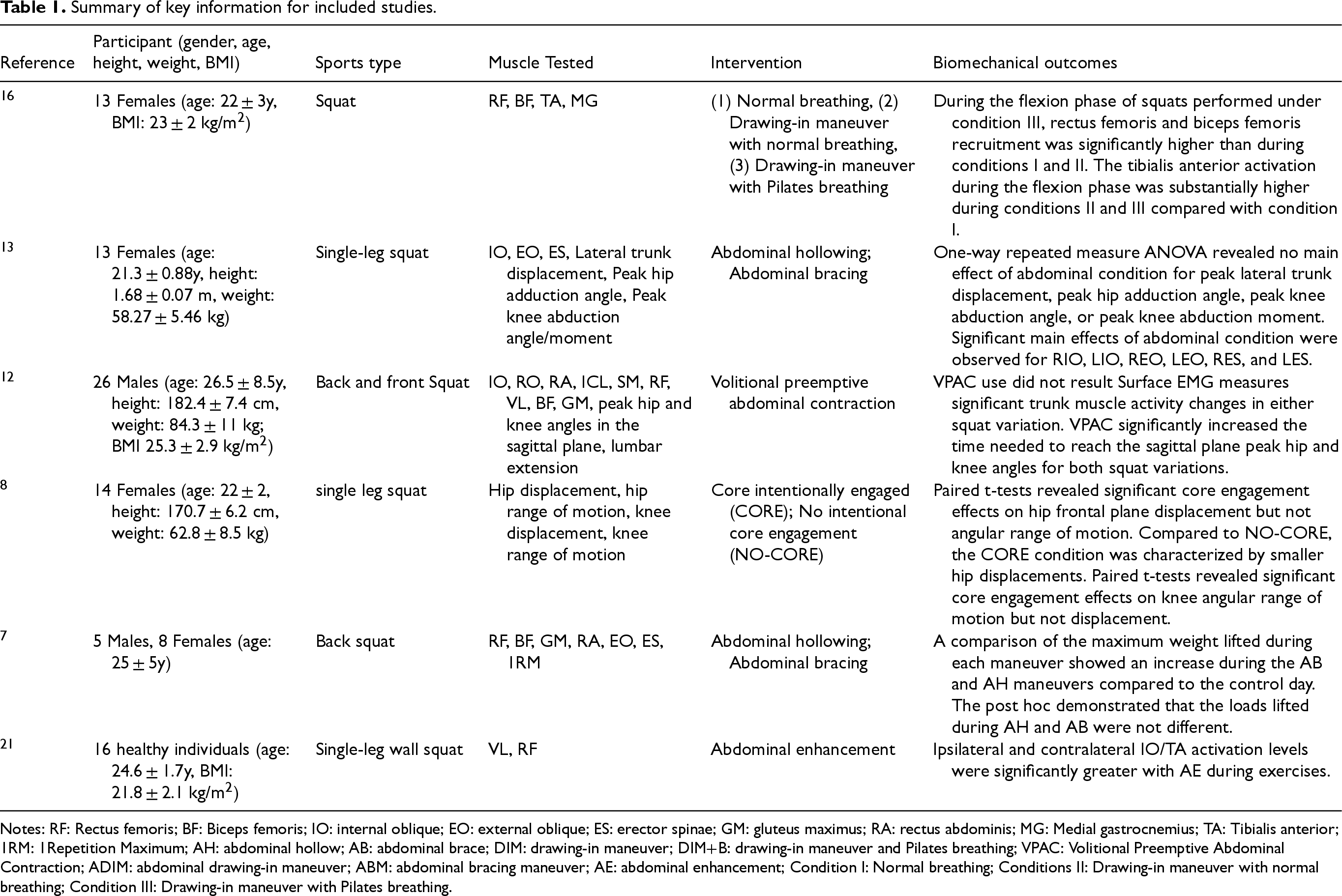
Summary of key information for included studies.
Notes: RF: Rectus femoris; BF: Biceps femoris; IO: internal oblique; EO: external oblique; ES: erector spinae; GM: gluteus maximus; RA: rectus abdominis; MG: Medial gastrocnemius; TA: Tibialis anterior; 1RM: 1Repetition Maximum; AH: abdominal hollow; AB: abdominal brace; DIM: drawing-in maneuver; DIM+B: drawing-in maneuver and Pilates breathing; VPAC: Volitional Preemptive Abdominal Contraction; ADIM: abdominal drawing-in maneuver; ABM: abdominal bracing maneuver; AE: abdominal enhancement; Condition I: Normal breathing; Conditions II: Drawing-in maneuver with normal breathing; Condition III: Drawing-in maneuver with Pilates breathing.
A total of 291 records were found from the following databases: PUBMED (124), Web of Science (166), and Scopus (1). Removal of duplicates resulted in 141 eligible articles. After the first selection, 101 articles were excluded by determining that the titles and abstracts were irrelevant or did not meet the inclusion criteria. In this way, 40 full-text was reviewed. Further, 13 articles unrelated to the deep squat exercise, 10 articles unrelated to exercise biomechanics, and 11 articles unrelated to the core technique were removed. Finally, the eligibility and selection process resulted in the inclusion of 6 articles for this systematic review. A flow diagram summarizing the literature selection process is shown in Figure 1.
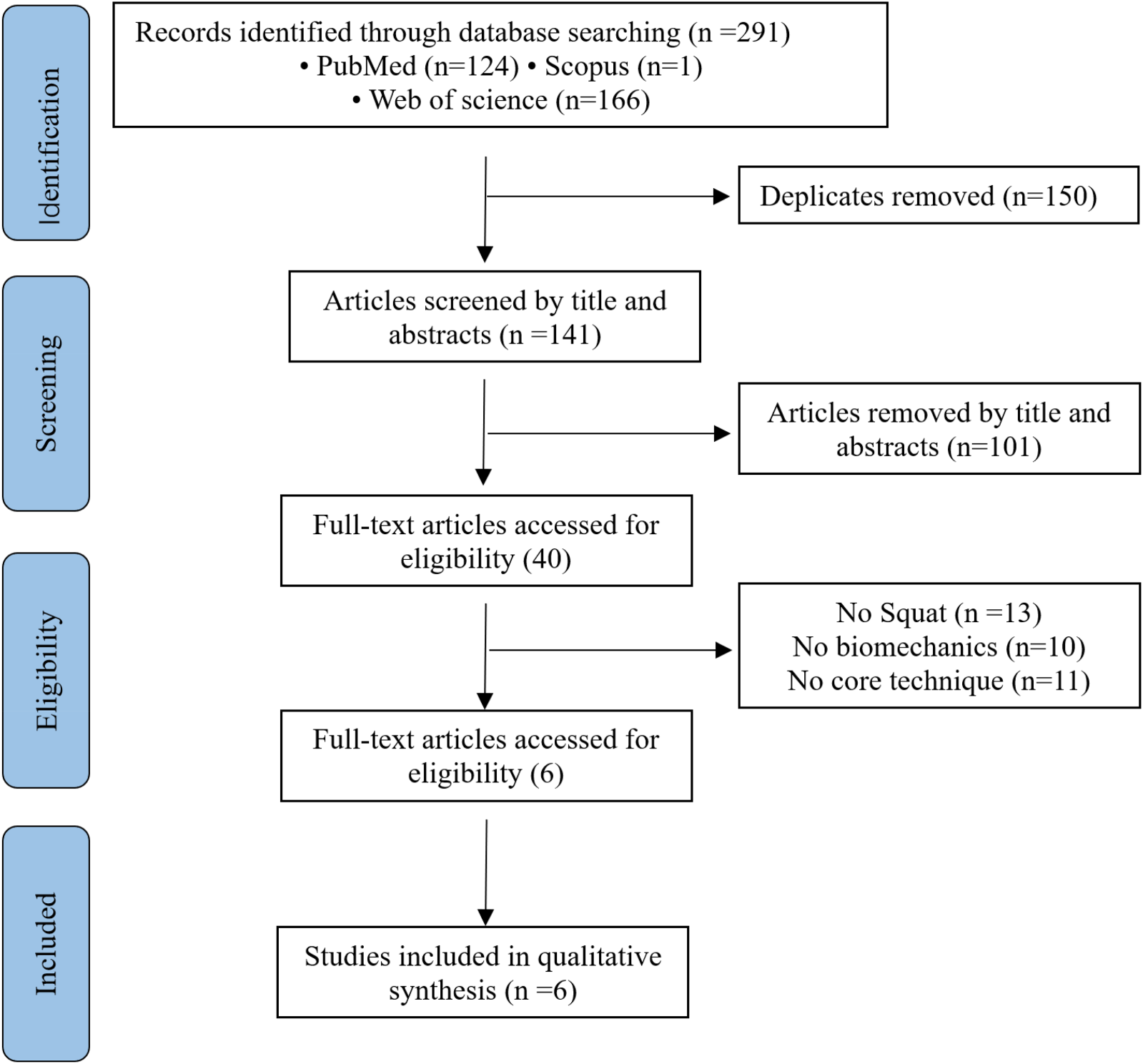
Flow diagram of the study selection process.
The review included a total of six studies comparing deep squats with different core muscle recruitment techniques7,8,12,13,16,21 (Table 3), with four comparing changes in lower extremity muscle EMG before and after the intervention,7,12,16,21 three comparing changes in lower extremity kinematics before and after the intervention,8,12,13 one comparing both lower extremity muscle dynamics and lower extremity kinematics before and after the intervention, 12 and one examining the effects of different breathing techniques on front and back squatting performance and analyzing the changes in lower extremity muscle dynamics. 7
Description of core physical fitness exercises assessed in the included studies.
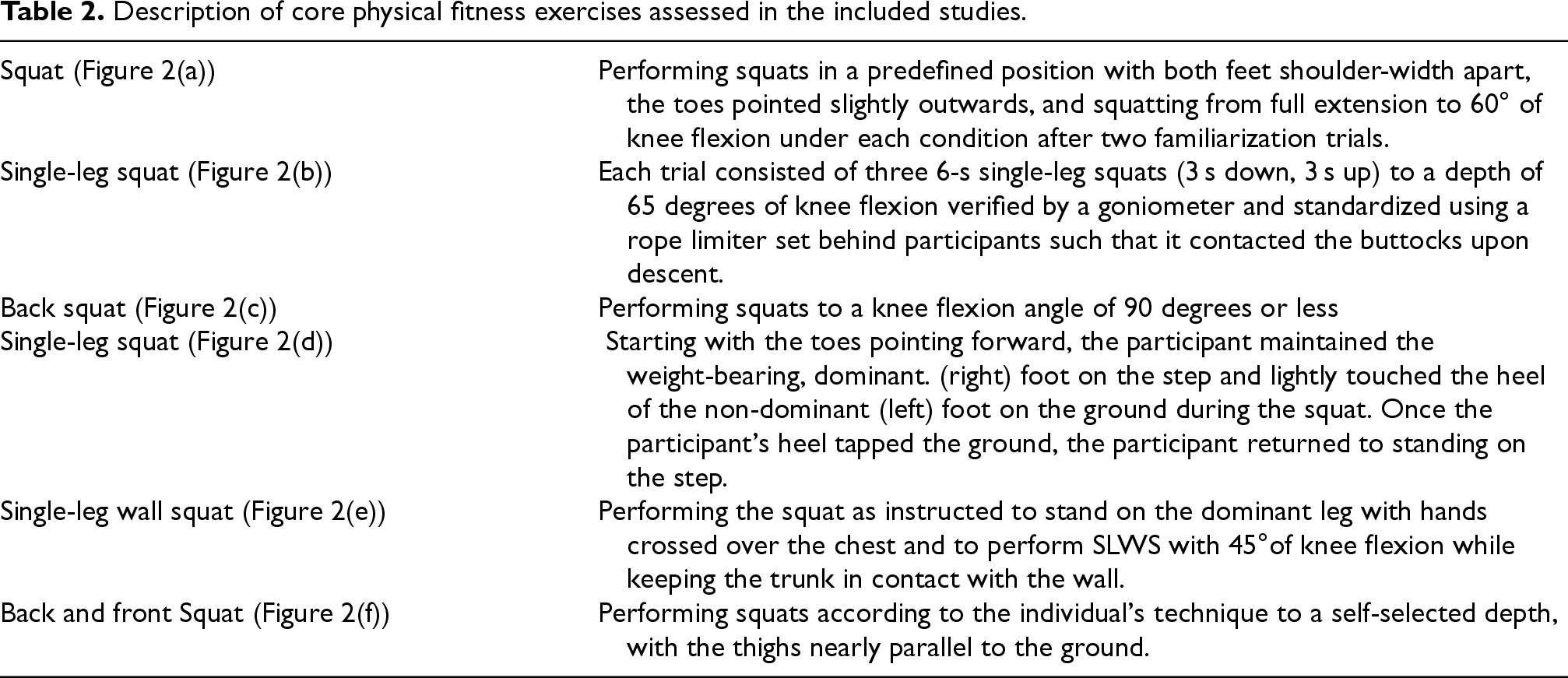
Description of core physical fitness exercises assessed in the included studies.
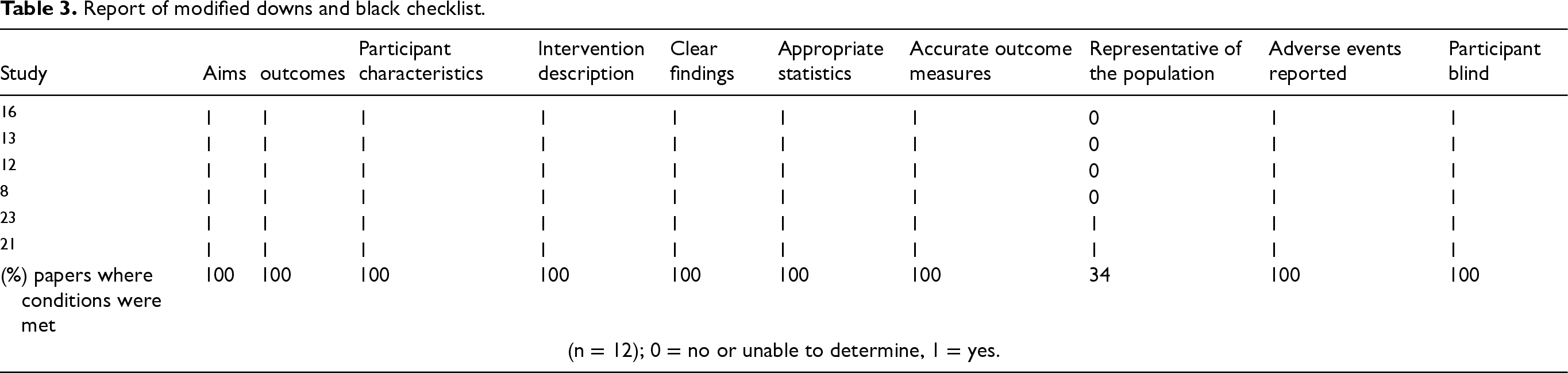
Report of modified downs and black checklist.
The included studies had 95 participants, with 48 females, 31 males, and 16 participants of unspecified gender. Regarding the strategy of increased core engagement during squats, the included studies mainly reported the abdominal muscle recruitment techniques to alter the level of core engagement during exercise. Specific methods, with significant improvement, included abdominal bracing, abdominal hollowing, abdominal pullback, and autonomic pre-contraction of the abdomen. Under this condition, the included studies analyzed different squat types, such as squat, single-leg squat, back squat, single-leg wall squat, and front squat, as further explained in Table 2 and Figure 2. Four studies examined both-leg deep squat,7,12,16,21 and two examined single-leg deep squat.8,13
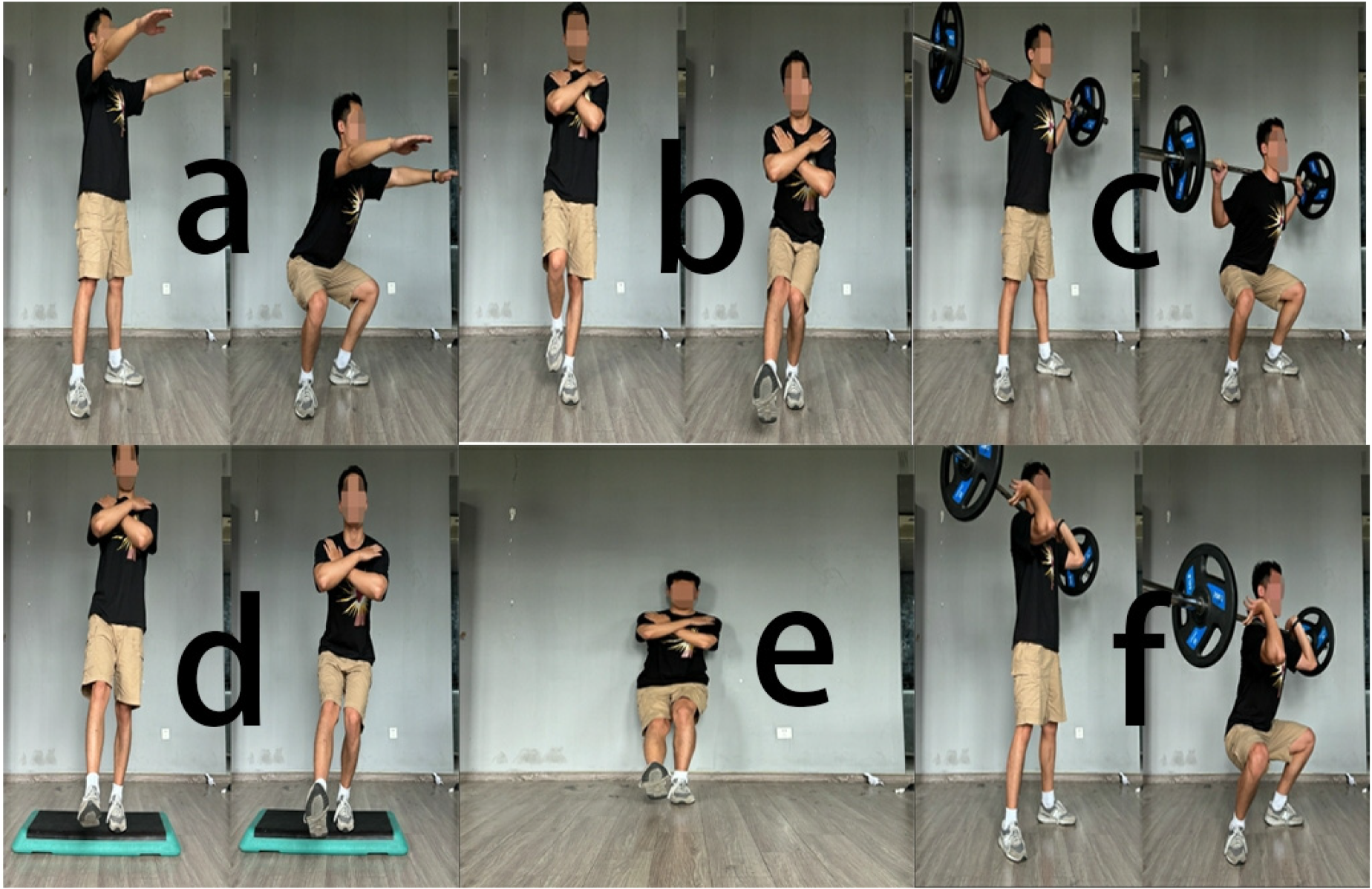
Illustration of squats as described in
The included studies primarily aimed to investigate the biomechanical features of the lower extremity to reveal injury risks and squatting performance, specifically focused on the significant alterations observed in squat-like movements following technique interventions. The main lower extremity biomechanical parameters examined were the effects of the intervention technique on the muscle activities of the gluteus maximus, quadriceps femoris, biceps femoris, and kinematics of hip, knee, and ankle joints.
Due to poor reliability observed in items addressing external validity in the complete D&B Quality Index, 20 we performed an updated risk of bias assessment using a 10-point checklist (Table 3). Each item was rated with either 1, referring to a low risk of bias, or 0, referring to a high risk of bias. If certain items could not be categorized, 0 was assigned. 22 All studies stated the aims, methodologies, outcomes, findings, participant characteristics, and outcome measures. All articles were accepted based on the quality check.
Muscle activity
Regarding the effects of various intervention techniques on trunk and lower limb biomechanical parameters and exercise performance, four articles investigated electromyographic changes.7,12,16,21 Two papers showed significant changes in the activation levels of lower limb muscles, including rectus femoris, biceps femoris, tibialis anterior, vastus medialis, and vastus lateralis, during deep squatting with the intervention of abdominal muscle recruitment techniques (DMI, DMI + B). It was further shown that the activation levels of rectus femoris and biceps femoris during the flexion phase of deep squat were significantly higher under the condition of drawing-in maneuver with Pilates breathing (DIM + B) than the condition of drawing-in maneuver with normal breathing (DIM) and normal breathing. 16 Tibialis anterior muscle activation was significantly higher during the conditions of DIM and DIM + B than during normal breathing conditions. As reported in another study, 21 the activation level was higher during centrifugal movements. However, the activation level of the rectus femoris did not change with the abdominal enhancement (AE) technique (Table 4).
Descriptive statistics of electromyographic activity (expressed as a percentage of maximum voluntary contraction, %MVIC) in each study by exercise.
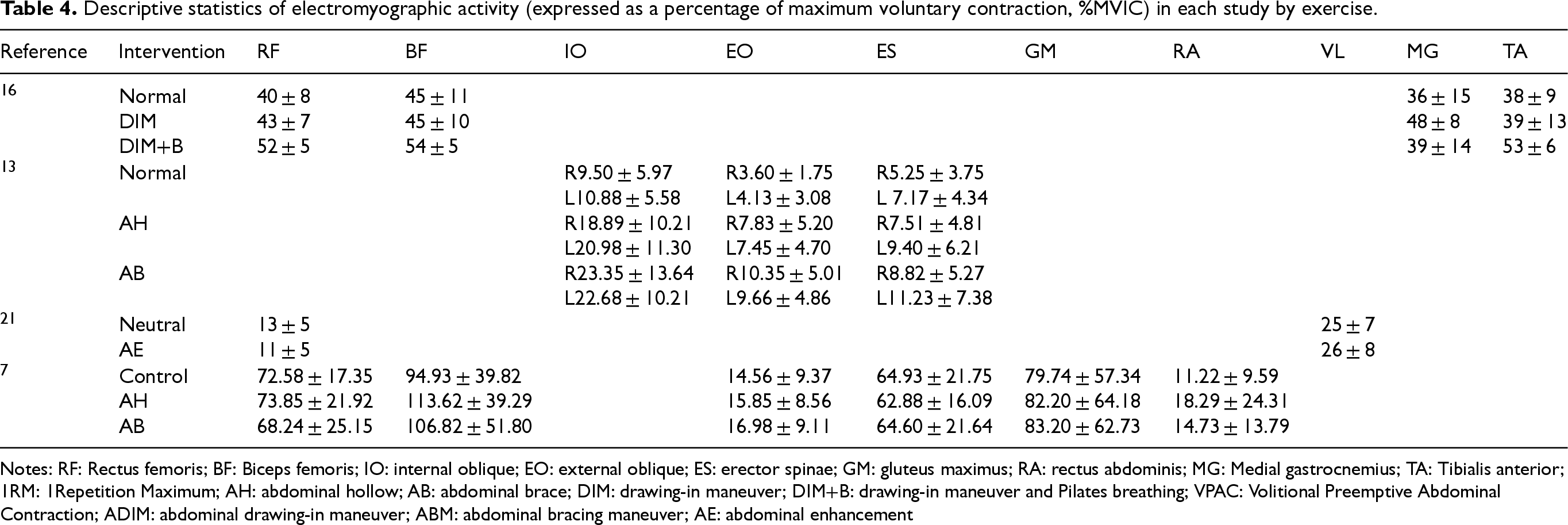
Descriptive statistics of electromyographic activity (expressed as a percentage of maximum voluntary contraction, %MVIC) in each study by exercise.
Notes: RF: Rectus femoris; BF: Biceps femoris; IO: internal oblique; EO: external oblique; ES: erector spinae; GM: gluteus maximus; RA: rectus abdominis; MG: Medial gastrocnemius; TA: Tibialis anterior; 1RM: 1Repetition Maximum; AH: abdominal hollow; AB: abdominal brace; DIM: drawing-in maneuver; DIM+B: drawing-in maneuver and Pilates breathing; VPAC: Volitional Preemptive Abdominal Contraction; ADIM: abdominal drawing-in maneuver; ABM: abdominal bracing maneuver; AE: abdominal enhancement
Whereas recent findings 7 were contrary to a previous study, 16 there was no statistical difference in the activation levels of rectus femoris, biceps femoris, gluteus maximus, erector spinae, rectus abdominis, and internal and external abdominal obliques under the intervention of abdominal brace (AB) and abdominal hollow (AH). However, 1RM back squat performance improved under the AB and AH intervention conditions compared to the control group. Furthermore, a recent study 12 reported no significant changes in the activation level of the lower extremity muscles (LE) in the VPAC (ADIM, ABM) condition. A significant effect of squatting changes was found in trunk muscle activity. Substantial increases in trunk muscle activity were observed for the internal obliques (IO) and external obliques (EO), as well as the iliocostalis lumborum (ICL).
Regarding the effects of various intervention techniques on lower limb biomechanical parameters and sports performance, three articles investigated kinetic factors.8,12,13 As presented in Table 5, the abdominal support and hollowing techniques had no significant effect on lateral trunk displacement, hip adduction angle, and knee abduction angle. 13 As reported in the study, 8 there was a substantial change in hip coronal plane displacement with core engagement, i.e., CORE. There was a significant effect on the knee range of motion but no impact on displacement. The VPAC technique increased the arrival time of the peak angle in the hip and knee sagittal plane, and VPAC resulted in a significantly decreased lumbar extension. 12
Descriptive statistics for kinematics.
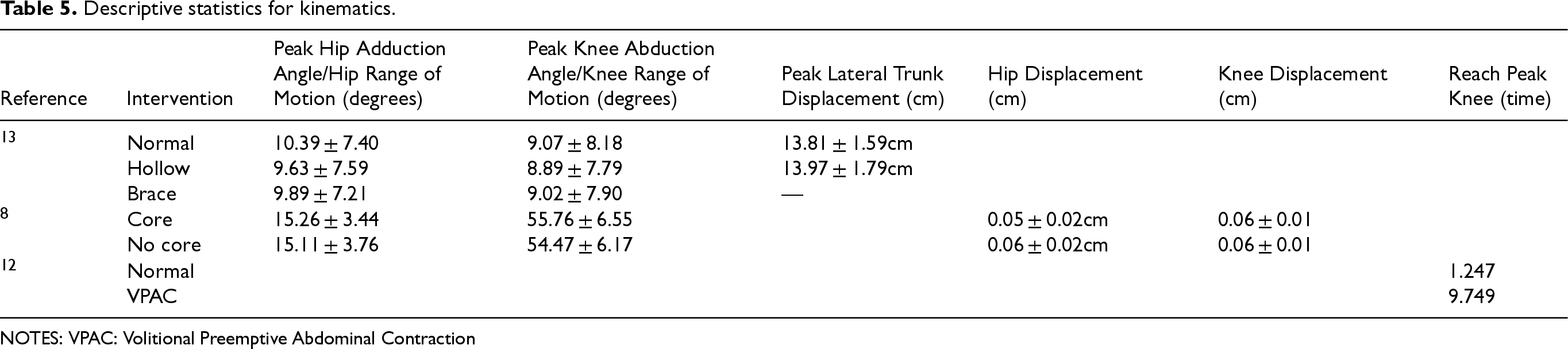
Descriptive statistics for kinematics.
NOTES: VPAC: Volitional Preemptive Abdominal Contraction
As for the weight-bearing squat, there was a significant improvement in 1RM back squat performance in the AB and AH groups compared to the control group, with no significant difference in performance between AB and AH. 7
Discussion
This systematic review aimed to identify and characterize the biomechanical effects of core recruitment techniques on the lower extremities while performing deep squats. According to the findings of this review, the muscle activity in the trunk and lower extremity was mainly analyzed, with five articles analyzing the muscles, specifically including the rectus femoris, biceps femoris, internal and external abdominal obliques, rectus abdominis, and gluteus maximus. Three articles analyzed kinematic data involving lateral trunk displacement, hip adduction angle, knee abduction angle, hip displacement, and knee angle. One study also described the athletic performance (weight-bearing squat) of the back squat 1RM with an abdominal technique intervention. Findings from the current review may provide practical implications for fitness enthusiasts, athletes, and general populations to develop and select abdominal core strategies during the deep squat exercise.
For the muscle activation in the lower limb, it was concluded that the rectus femoris, biceps femoris, and tibialis anterior showed significant changes during the intervention. 16 The activation of medial femoris and lateral femoris muscles significantly increased with the enhancement of AE. 21 The explanation was that these integrated activities increased awareness during the task while performing deep squatting exercises using the abdominal muscle recruitment techniques. Several studies also found that the increased synergistic contraction of the lumbar muscles improved the stability of limb movements. Increased synergistic activation of the abdominal core muscles improved the stabilizing function of the lower limb muscles, which may be related to increased muscle activation.24,25 Specific to this finding, the practice may apply to knee injury rehabilitation. These exercises may be helpful for the early stages of knee rehabilitation and training to improve motor control, especially for the relatively weak quadriceps after injury or surgery. 26 There was no significant difference in muscle activation of the rectus femoris, biceps femoris, and gluteus maximus under AB and AH abdominal recruitment techniques. 7 Further, there was a substantial increase in 1RM back squat, and the explanation may be that the increase in 1RM back squat performance was not due to increased muscle activation of the lower limbs under the AB and AH interventions but because the AH and AB techniques could increase the intra-abdominal pressure (IAP). 7 The increase in the IAP could maintain the spine in a stable position, thus preventing deficiencies in the deep squat and improving the performance of the 1RM back squat. 7
Further findings suggested that the abdominal activation (bracing or hollowing) technique had no short-term effects on peak lateral trunk displacement, peak hip adduction angle, peak knee abduction angle, or peak knee abduction moment during the single-leg deep squat in females, as compared to the non-activated control group. 13 The VPAC significantly increased the time to peak angles of hip and knee joints in the sagittal plane for both profound squat variations. 12 Core engagement during the deep squat resulted in significantly reduced hip displacement in the frontal plane but had no effect on the angular range of motion. 8 Although core engagement led to a significantly greater angular range of knee flexion, it did not influence knee displacement, which is likely due to the increased range of motion in knee flexion in the “core” condition compared to the “no core” condition. This pattern of feed-forward recruitment of core muscles may provide a more stable neuromuscular basis for squatting movement and stability of the planar hip joint. 8
As recently reported, 7 there was a significant increase in squatting after 1RM with the core technique intervention compared to the control group. The explanation may be that the increase in 1RM back squat performance was not due to increased muscle activation of the lower limbs under the AB and AH interventions but because the AH and AB techniques could increase IAP. AB is the voluntary co-contraction of the abdominal muscles and AH involves drawing the belly button into the spine. The increased IAP can keep the spine stable, prevent deep squat deficiencies, and elevate the performance of the 1RM back squat. 27 The other explanation might be a psychological issue; for example, subjects were psychologically affected under the conditions of the AH and AB techniques. The AB and AH techniques increased the IAP, thus stabilizing the spine, preventing unnecessary chest flexion and extension, and deficits in the deep squat. 28 Another possible explanation for the increased external loading due to the AB and AH techniques was that the abdominal stabilization cue affected the psychological steadiness. Task-specific activation strategies have been found to increase the intensity of performance. 29 Mental strategies, such as instructing participants to perform the AB or AH, could eliminate negative and distracting thoughts that may negatively affect weightlifting and allow participants to focus on the movement. Psychological strategies like instructing the participant to focus on the execution of either AB or AH can remove negative and distracting thoughts that may impact the lift negatively and allow the participant to focus on cues that can improve performance.
Another point that this study aimed to explore was all the core techniques related to breathing. Whether the AB, AH, ADM, or other core activation techniques, the practical application of the techniques required breathing to complement. Specifically, the AH technique is required to tuck the navel inward toward the spine maximally. An exhale would be required to maximize the navel inward toward the spine. Otherwise, the navel could not be maximized toward the spine, and there would still be a large distance between the navel and the spine because of the presence of gas in the abdomen. 17 Similarly, “DIM + B” techniques were coupled with Pilates breathing, 16 including concentration (attention while doing the exercises), centering (tightening the abdominal muscles, lumbar multifidus, and pelvic floor muscles, using stretches responsible for the static and dynamic stabilization of the body), control of posture and movement during the exercises, precision (accuracy of the exercise technique), fluidity (smooth transitions in the movements), and coordinated breathing. These core activation techniques may perform abdominal pull-backs or bracing movements, but the breath is also synchronized. Breathing is another essential factor while using various core techniques, which may need to be considered in past studies, thus deserving attention in future studies.
There are several limitations to be considered when interpreting the findings of this review. Firstly, due to the limited research on this specific topic, current studies could not demonstrate comprehensive changes in the trunk and lower extremity and athletic performance, which may be affected by the active core contribution with the “Core Recruitment Technique” intervention. Secondly, current studies have not been conducted with detailed experimental designs on the muscular contribution during deep squats, making it difficult to draw generalizable conclusions from a few existing studies. Thirdly, the focus of existing studies showed great variations with emphasis on lower limb or trunk kinetics. Others focused on kinematic changes to obtain evidence for injury prevention and performance improvement using different core techniques. Either way, future research is needed to populate the field of squat exercise with active engagement of core contribution. In addition, this study did not perform the meta-analysis based on a limited number of studies included, to explore the relationship between breathing and core recruitment techniques in depth; there may be existing correlations, but no direct evidence could be found from the existing literature. In the future, the relationship between respiration and core engagement techniques shall be explored to decipher for squatting training.
Conclusion
The finding of this review points to the fact that core engagement under the influence of core recruitment techniques affects the trunk, lower limbs, and motor performance. Current studies need to reach a consensus about the advantages or disadvantages. Specifically, the study of drawing-in maneuvers and Pilates breathing concludes significant changes in the lower limb muscles from the intervention, and the analysis of 1RM concludes no changes in the lower limb muscles under the intervention. Overall, both intervention techniques could benefit the practice and improve the sport performance. Due to the limited studies in the literature, it is difficult to achieve a comprehensive and consistent understanding of the complex relationships between core, breath, and the biomechanical performance of squats, thus deserving further investigation.
Footnotes
Acknowledgment
This study was supported by the National Natural Science Foundation of China (12202216), Ningbo Natural Science Foundation (2023J128), and “Mechanics+” Interdisciplinary Top Innovative Youth Fund Project of Ningbo University (GC2024006), and K.W. Wong Magna Fund in Ningbo University.

Author contributions
CONCEPTION: HS, QM.
PERFORMANCE OF WORK: HS, XY, YW.
INTERPRETATION OR ANALYSIS OF DATA: XY, YW.
PREPARATION OF THE MANUSCRIPT: HS, WY, QM.
REVISION FOR IMPORTANT INTELLECTUAL CONTENT: XY, JF, YG.
SUPERVISION: QM.
Funding
This study was supported by the National Natural Science Foundation of China (12202216), Ningbo Natural Science Foundation (2023J128), and the “Mechanics+” Interdisciplinary Top Innovative Youth Fund Project of Ningbo University (GC2024006), and K.W. Wong Magna Fund in Ningbo University.
Declaration of conflicting interests
The authors declared no potential conflicts of interest with respect to the research, authorship, and/or publication of this article.
Data availability
Data relating to the results and findings of this review are available from the corresponding author.