




Abstract
This article investigates how social investment welfare provision affects a novel subjective wellbeing concept ‘subjective capacity’ that is understood in terms of agency, resilience, optimism and a sense of purpose. It explains how social investment service provision, such as early childhood education and care, active labour market policy, and active ageing support influence subjective wellbeing across the critical life stages of parenthood, unemployment, and ageing. The subjective capacity approach enables this study to move beyond traditional wellbeing concepts such as income or happiness, and thereby offers a deeper understanding of the influence of social investment. Utilizing data from Eurofound’s European Quality of Life Survey, OECD’s Social Expenditure Database, and Labour Market Programme statistics, this study employs linear multilevel regression models to analyze cross-level interactions between policy effort (in terms of expenditure) and consecutive life-course stages on subjective capacity. Specifically, in-kind expenditure on family and old-age policies demonstrates significant positive effects. However, the influence of labour market policies is less pronounced. With higher in-kind spending, parenthood is associated with a positive impact on optimism and a sense of purpose. By contrast, unemployment exhibits minimal changes in agency, optimism, and purpose, yet yields positive effects on resilience. Ageing positively influences agency and resilience, with minimal impact on optimism and purpose.
Keywords
Introduction
The cross-national differences in subjective wellbeing have gained increasing scholarly and political attention since the 1980s (Diener, 1984). However, only in recent years have these disparities started to be linked to public policy design and delivery (Helliwell et al., 2018). This study aims to address this gap by introducing a novel wellbeing measure, ‘subjective capacity’, that looks into dimensions of agency, resilience, optimism, and a sense of purpose. By utilizing subjective capacity, this study moves beyond traditional wellbeing metrics such as happiness and life satisfaction, offering a more nuanced understanding of how welfare states influence individual wellbeing. Focusing on critical life-course experiences by many people: parenthood, unemployment, and ageing, this study provides insights into the social investment perspectives of welfare states and their implications for subjective wellbeing. It underscores the importance of public and social policy, particularly the emerging trend towards social investment, in shaping subjective wellbeing outcomes. This perspective emphasizes active engagement through policies that empower individuals to navigate challenges during critical life stages.
The use of subjective capacity as a wellbeing measure addresses the limitations of traditional metrics by adopting a more eudaimonic perspective. This approach captures dimensions of agency, resilience, optimism, and purpose, aligning closely with the active engagement focus of social investment policies. By examining parenthood, unemployment, and ageing, this study emphasizes the psychological effects of welfare provision, contributing to more effective policy design.
Parenthood, unemployment, and ageing are crucial from a subjective wellbeing perspective as they carry risks due to financial constraints, time pressures, and psychological strains (Ervasti and Venetoklis, 2010; Gray et al., 2019; Jahoda, 1982; Nomaguchi and Milkie, 2020; Sage, 2018). These stages also demand significant commitments from the welfare state, given the substantial expenses linked to family, labour market, and old-age policies. In particular, modern Western societies increasingly prioritize social investment, which focuses on effective but often expensive proactive measures such as education, training, childcare, and employment support, rather than solely providing financial relief (Bakker and Van Vliet, 2021).
Research has demonstrated that policies can mitigate the negative impacts of challenging life-course stages on subjective wellbeing. Family policies, such as parental leave, childcare provisions, and flexible working hours, have reduced wellbeing disparities between parents and non-parents (Pollmann-Schult, 2018; Radó, 2020). Employment-related measures, including unemployment benefits and job assistance schemes, alleviate the adverse effects of unemployment on happiness and life satisfaction (Crost, 2016; Högberg et al., 2019; Kamerāde and Bennett, 2018; Voßemer et al., 2018). For ageing populations, while evidence on policy impacts is limited, pension insecurity is the only factors found to be linked to reduced life satisfaction (Olivera and Ponomarenko, 2017). Country differences in subjective ill health among older individuals suggest potential policy effects (Marques et al., 2015).
Traditional wellbeing studies have often focused on metrics like happiness and life satisfaction, leaving a gap in understanding how welfare states can influence broader aspects of subjective wellbeing. This study addresses this gap by using a subjective capacity index consisting of agency, resilience, optimism, and a sense of purpose to move from hedonic to eudaimonic wellbeing measures. Hedonic measures focus on happiness and satisfaction, while eudaimonic measures emphasize fulfillment of one’s values, aspirations, potential, and purpose (Huta and Waterman, 2014).
This study investigates the impact of social investment policies on critical life-course stages, differentiating between in-kind and cash expenditures. In-kind expenditure reflects an active ‘capacitating’ approach requiring individual engagement, while cash expenditure represents a passive ‘compensating’ approach. Social investment emphasizes freedom to act, rather than merely freedom from want (Hemerijck and Huguenot-Noël, 2022). While material wellbeing returns from social investment are well-recognized (Bakker and Van Vliet, 2021; Bonoli, 2013; Card et al., 2018; Finch and Bradshaw, 2021; Hemerijck et al., 2016; Kluve, 2010; Lindert, 2021; Nelson and Stephens, 2011; Schmid, 2015; Taylor-Gooby et al., 2015; Vandenbroucke et al., 2011), the psychological effects remain unexplored.
This study makes notable contributions in three key dimensions: (1) Introducing Subjective Capacity: This refined measure of subjective wellbeing integrates dimensions of agency, resilience, optimism, and purpose, offering a comprehensive and nuanced understanding of the relationship between the psychological state and welfare provision. (2) Highlighting Life-Course Dimensions: It underscores the interplay between wellbeing and social investment across commonly experienced life stages, including parenthood, unemployment, and ageing. (3) Linking Wellbeing and Policy Expenditure: By establishing correlations between subjective wellbeing and in-kind expenditure, this study deepens understanding of the relationship between individual wellbeing and social investment policies.
Therefore, the current study answers the research question:
How does social investment welfare provision, characterized by a strong emphasis on service provision, shape subjective wellbeing, conceptualized as subjective capacity, particularly across the domains of parenthood, unemployment, and ageing?
Social investment, secure functioning, and subjective capacity
Social investment emerged as a response to the economic and social changes of the 21st century (Hemerijck et al., 2016: 7). Scholars propose a transformation of the welfare state to balance compensating passive and capacitating active policies, focusing on children, families, education, and labour markets (Vandenbroucke et al., 2011: 21). This means shifting from pure cash benefits to services that activate and empower citizens. Social investment emphasizes both compensating and capacitating policies, unlike the 20th-century welfare state, which focused predominantly on compensation (Bouget et al., 2015; Vandenbroucke et al., 2011). The key change is from a repair-oriented approach to one that prioritizes risk prevention and the enhancement of capabilities (Hemerijck et al., 2016; Vandenbroucke et al., 2011: 5). Europe, especially the EU, strongly advocates this approach, though its adoption varies by country (Hemerijck et al., 2016: 8-9).
Social investment prioritizes not only addressing the material needs and freedom from want but also enabling individuals to exercise their freedom to act (Hemerijck and Huguenot-Noël, 2022). In-kind policies capacitate individuals by addressing freedom to act, while in-cash policies provide passive compensation addressing freedom from want. Most social investment literature focuses on material wellbeing returns such as employment, income, poverty reduction, and economic participation (Bonoli, 2013; Card et al., 2018; Finch and Bradshaw, 2021; Lindert, 2021). While material returns are recognized, the psychological impacts are less understood. Social investment claims to enhance individual and family agency, necessitating empirical evidence on subjective returns. The current study anticipates that freedom to act will lead to positive subjective outcomes like increased agency, resilience, optimism, and a sense of purpose. However, freedom to act depends on freedom from want, as in-cash policies are essential for in-kind policies. Thus, social investment is defined in terms of in-kind expenditure, considering cash expenditure.
By highlighting freedom to act, social investment emphasizes the promotion of capabilities (Bouget et al., 2015). This aligns with Amartya Sen’s (1992) and Martha Nussbaum’s (2011) views that wellbeing comes from capabilities, advocating for supportive social policies. Moreover, the normative foundation of social investment relates to secure functioning, as proposed by Wolff and de-Shalit (2007). Secure functioning emphasizes the importance of having and anticipating various levels of functionings. It focuses on security over one’s future, which allows people to use and enjoy a greater number of capabilities, which positively affects wellbeing by reducing chronic stress and insecurity. These refer to the presence of certain factors that are more likely to secure other valuable functionings. While Wolff and de-Shalit mention examples such as housing and healthcare, for this study, fertile functionings encompass robust psychological capacities that not only reflect the state of affairs in one’s life but are also crucial for genuine wellbeing. The security provided by social investment through social services and benefits is expected to influence individuals’ subjective capacity, their sense of optimism, resilience, purpose in life, and agency.
Subjective capacity allows this study to explore beyond traditional measures of happiness and satisfaction, which are momentary and past-oriented (Huta and Waterman, 2014). It enables an investigation of what kind of agency people have, whether they think they can withstand certain life crises, whether they retain hope in their future, and whether they find purpose in what they do. These indicators signify much more than happiness and satisfaction: agency refers to an individual’s capacity to act according to their values; resilience indirectly reflects an individual’s social, psychological, and economic resources; optimism indicates the presence of signs of material improvement that people can identify and have reason to believe in; and purpose in life is usually a good indicator of self-realization. Subjective capacity thus allows for the capture of a forward-oriented approach to understanding wellbeing which reflects active confidence and hope about one’s own future, rather than something past-oriented.
Rooted in eudaimonia, subjective capacity involves fulfilling one’s values, aspirations, potential, and purpose (Huta and Waterman, 2014). Inspired by Carol Ryff’s model (Ryff (1989), which includes autonomy, environmental mastery, personal growth, positive relations, purpose, and self-acceptance, this study adapts these concepts to assess modern societies and social investment. Agency reflects an individual’s capacity to act, resilience pertains to their capacity to bounce back from challenges, optimism measures capacity to have a positive outlook, and purpose captures the capacity to feel a sense of meaning in life. These domains offer a detailed examination of different facets of subjective capacity, enabling a more targeted assessment of individual’s fertile functioning. By examining these domains, the current study highlights their roles in fertile functionings and the impact of social investment on wellbeing.
Life-course perspective
The influence of social investment should be particularly evident during critical life-course stages which pose a risk to people’s functionings. During parenthood, unemployment, and ageing, one’s functionings are threatened due to financial constraints as well as time and psychological strains. These constraints can result in poorer subjective wellbeing outcomes during these stages (Blanchflower, 2021; Gray et al., 2019; Nomaguchi and Milkie, 2020; Sage, 2018). Family services, active labour market support, and active ageing policies are linchpin social investment policies constituting significant investments in modern welfare states (Bakker and Van Vliet, 2021). Therefore, social investment welfare provision aiming to alleviate the actual time and economic constraints during life-course stages, and thus the stress and a sense of insecurity, should positively affect the psychological functionings during these critical stages. Capacitating family, labour market, and old-age policies should enhance individual functionings as well as ease labour market transitions and work-life reconciliation, and compensating policies should not only provide income during times of need but should also ease the financial shock of parental leave, unemployment, and retirement.
Becoming a parent often negatively affects happiness, life satisfaction, and mental health due to stress from economic, time, and cultural constraints (Nomaguchi and Milkie, 2020; Rizzo et al., 2013). However, family policies can alleviate some of this stress. For example, parental leave positively impacts life satisfaction, happiness, and mental health (Glass et al., 2016; Radó, 2020). High-quality early childhood education and generous family policies also improve parental wellbeing (Glass et al., 2016; Pollmann-Schult, 2018). These policies reduce the time, economic, and psychological constraints of parenthood by improving work-life reconciliation (Nomaguchi and Milkie, 2020). While the existing literature lacks a specific exploration of the capacity aspect, it provides insights into how policies may impact subjective capacity. Chronic stress from parenthood increases depression, distress, and anxiety, overshadowing its positive rewards (Glass et al., 2016). Family policies, particularly in-kind services, improve parental life satisfaction, happiness, and mental health, thereby enhancing subjective capacity in areas like optimism and a sense of purpose, which are particularly vulnerable to chronic stress (Carver et al., 2010; Park, 2010).
Labour market exclusion affects both financial and subjective wellbeing, with unemployment negatively impacting happiness, life satisfaction, and mental health (Gray et al., 2019; Sage, 2018; Suppa, 2021). It reduces self-esteem, purpose, and personal identity, and increases social stigma (Ervasti and Venetoklis, 2010). Active labour market measures, such as workfare programs and educational opportunities, moderate these negative effects by reducing distress, anxiety, and depression, while improving life satisfaction, social support, motivation, and self-efficacy (Crost, 2016; Högberg et al., 2019; Leemann et al., 2016; Rose, 2019; Voßemer et al., 2018). Unemployment benefits also positively impact happiness and mental health (Kamerāde and Bennett, 2018; Voßemer et al., 2018). Active labour market programmes are therefore expected should thus influence subjective capacity by strengthening individuals’ self-efficacy and resilience, and their sense of purpose.
The relationship between subjective wellbeing and age is complex, despite the presumed U-shaped curve showing higher wellbeing in youth, a dip in midlife, and an increase in older age (Blanchflower, 2021; Ulloa et al., 2013). In relation to old-age policies, pension insecurity has been found to negatively affect life satisfaction (Olivera and Ponomarenko, 2017) and country differences have been found to account for 20% of the variance in older people’s ill-health, suggesting policy impact (Marques et al., 2015). According to Zaidi and Howse (2017), instead of disengaging from social roles, ageing individuals should maintain some activities for as long as possible to have better overall wellbeing. Active ageing policies and the promotion of activation, participation, and independence should thus increase older people’s physical, social and mental wellbeing capacities (European Commission, 2022; Kvist, 2015; Walker and Zaidi, 2016). The impact is expected to be notably potent in terms of fostering agency, by promoting independence and cultivating a sense of purpose, through active engagement.
Life-course stages like parenthood, unemployment, and ageing are not static but consist of multiple phases and transitions that can vary in their effects on functionings (Bernardi et al., 2019). Early parenthood differs significantly from later stages of parenthood, as do the challenges of unemployment or ageing at different points in life. However, this research focuses on broad trends rather than phase-specific nuances due to data limitations. By examining the overall influence of social investment policies on critical life-course stages, this study provides a foundational understanding of their impact on subjective wellbeing.
Data, variables, and research strategy
Data
To investigate the influence of social investment welfare provision, understood in terms of a strong emphasis on service provision, on subjective capacity and its domains at critical life-course stages, micro-level wellbeing data and macro-level policy expenditure data are used. The micro-level wellbeing data is drawn from the 4th round (years 2016-2017) of Eurofound’s European Quality of Life Survey (EQLS) (Eurofound, 2018). The EQLS was chosen because it includes factors relevant to the concept of subjective capacity. Moreover, the EQLS enables cross-sectional analysis across Europe, examining various levels of social investment adoption. The original sample size consists of 36,908 individuals aged 18 to 95 including 28 EU member states and 5 candidate countries. Countries not in the Organisation for Economic Co-operation and Development (OECD) were dropped due to the availability of expenditure data. Focusing on parenthood, unemployment and old-age as main groups of interest (see Table A.1 for definitions), the final sample size consists of 23 EU member states, comprising 21,076 individuals aged 18 to 65 in parenthood models, 14,449 individuals aged 18 to 65 in unemployment models, and 24,164 individuals aged 18 to 95 in old-age models where the 18-64 year-olds are used as a reference group. The sample size per country ranges from 647 to 1722 individuals. Micro-level data is matched with the Social Expenditure Database (SOCX) (OECD, 2022), and Labour Market Programme statistics (OECD, 2013) from the year 2016 to examine the relationship between social investment and subjective capacity and its domains. The OECD expenditure data enables us to grasp some key elements of social investment as it includes both in-kind and cash expenditure.
Variables
The subjective capacity of an individual is measured using four dimensions: agency, resilience, optimism, and purpose in life, which offer a detailed perspective on wellbeing outcomes associated with social investment policies. All dimensions were operationalized using self-reported survey items from the EQLS. Agency was measured by the item: “I feel I am free to decide how to live my life”. Resilience was assessed with the item: “When things go wrong in my life, it generally takes me a long time to get back to normal” (reverse-coded). Optimism was captured by the item: “I am optimistic about my future”, and a sense of purpose was measured with the item: “I generally feel that what I do in life is worthwhile”. The dimensions are used as separate variables to test whether policy expenditure has varying impacts on the wellbeing dimensions based on the life stage, and also function as an index to examine the overall impact on subjective wellbeing. Subjective capacity index (Table A.1) is a composite measure. The four dimensions have equal weight demonstrating high internal consistency (Cronbach α: 0.7).
The key independent variables capture life-course states at the micro level, including parenthood (whether the respondent has children), unemployment (employment status), and ageing (whether the respondent is aged 65 or older). Parents, unemployed individuals, and older adults report lower levels of average subjective capacity (on a 1–5 scale: 3.7, 3.4, and 3.6, respectively) compared to the general population (3.8). While it would have been valuable to distinguish between parents with young children and those with older children, the data unfortunately does not allow this distinction.
Policy expenditure is assessed by examining the spending on family benefits, labour market measures, and old-age benefits, each measured as a percentage of total GDP (see Table A.1 for detailed description). In-kind family policy expenditure, which includes services such as early childhood education, home help, and other support services, ranges from 0.3% to 2.2% of GDP (see OECD 2022 for country rankings). Active labour market policy expenditure, covering services such as job training, employment incentives, and rehabilitation, ranges from 0.2% to 2.0% of GDP (see OECD 2013 for country rankings) whereas in-kind old-age policy expenditure, which covers residential care and home-help services for older adults, ranges from 0.0% to 2.2% of GDP (see OECD 2022 for country rankings). The old-age in-kind policy expenditure consists mostly of long-term care (Table A.1), which is why its correlation was tested with the Active Ageing Index. The Index measures how well older people can live independent lives, participate in paid employment and social activities, and have the capacity for active ageing (European Commission, 2022). The correlation between the Active Ageing Index and in-kind expenditure for old age is strong (Cronbach’s α: 0.8). Hence, in-kind expenditure for old age is also utilized as a proxy for active ageing to ensure consistency with the analyses conducted for other life-course stages.
Given that social investment also encourages compensating social policy expenditure as a part of secure functioning, passive cash social policy expenditure is interacted with specific life-course stages to enable the examination of the influence of in-kind expenditure on subjective capacity, independent of freedom from want. Essentially, it aims to examine the additional value of in-kind policies alongside cash policies.
This study controls for the variables gender, age, relationship status, educational level, and GDP per capita except when included as the main independent variable in the models. Age is treated as a continuous variable ranging from 18 to 65. Treating age as a continuous variable rather than a categorical one provides a more nuanced understanding of its linear effect on subjective capacity, capturing variations across the entire age range without losing information due to arbitrary categories. Relationship status is expressed as a dummy variable, equal to 1 if the respondent has a partner in the same household and 0 if not. Finally, educational level is included as it might have an effect on both subjective wellbeing and experiences of parenthood, being unemployed, and ageing (Andersen, 2009; Nomaguchi and Milkie, 2020). Educational level is defined as having higher education (tertiary degree attainment), expressed as a binary variable equal to 1 if a respondent has a higher education and 0 if not. Descriptive statistics are shown in Table A.2.
Research strategy
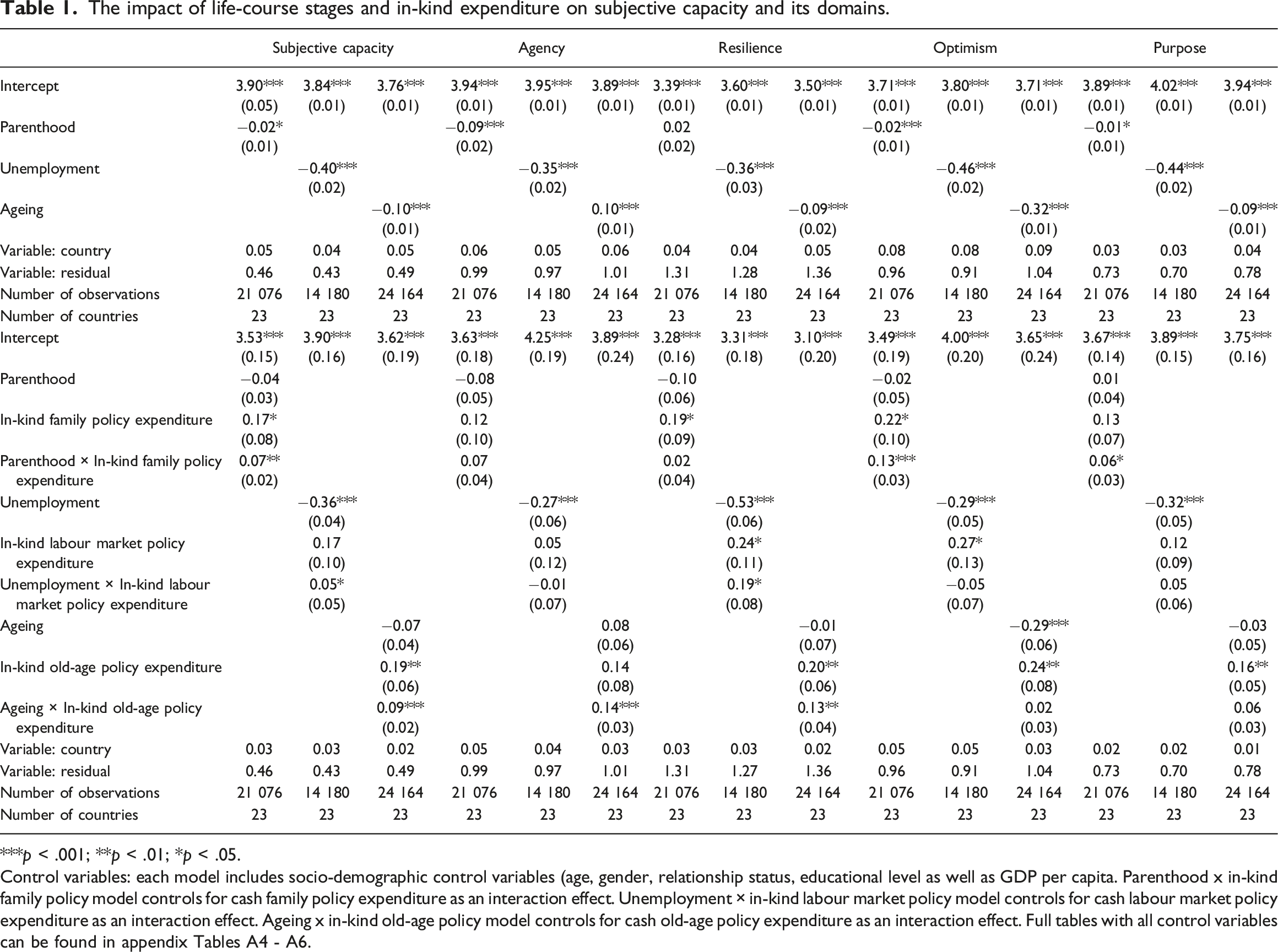
The impact of life-course stages and in-kind expenditure on subjective capacity and its domains.
***p < .001; **p < .01; *p < .05.
Control variables: each model includes socio-demographic control variables (age, gender, relationship status, educational level as well as GDP per capita. Parenthood x in-kind family policy model controls for cash family policy expenditure as an interaction effect. Unemployment × in-kind labour market policy model controls for cash labour market policy expenditure as an interaction effect. Ageing x in-kind old-age policy model controls for cash old-age policy expenditure as an interaction effect. Full tables with all control variables can be found in appendix Tables A4 - A6.
Similarly, the rest of the analyses employ linear multilevel regression models, with individuals nested within countries, to reflect cross-country variations in macro-level policy expen across 23 countries. These models estimate random intercepts to account for country-specific differences and use robust standard errors. Cross-level interactions between policy expenditures (family, labour market, and old age) and sociodemographic characteristics (having children, being unemployed, and ageing) are included to assess how these expenditures influence individual subjective capacity across different life-course stages. Population weights for cross-sectional, within-EU analyses (Eurofound, 2018) were applied to all models to ensure representativeness. The data analyses were performed using lmer-function from lme4 package in R (Bates et al., 2015). Likelihood ratio tests were used to obtain p values. p values less than 0.05 were considered as indicating statistical significance. The robustness checks, including diagnostic tests for multicollinearity, residual normality, and heteroscedasticity, and sensitivity analyses excluding outliers, confirmed that the results were consistent and supported the reliability of the main findings.
To understand the influence of social investment welfare, particularly service, provision on subjective capacity across different life-course stages, Table 1 shows cross-level interactions between policy expenditure and having children, being unemployed, and ageing. These models show macro-level effects of in-kind expenditure on parents unemployed individuals, and older adults’ subjective capacity, while controlling for sociodemographic characteristics, GDP per capita, and interactions between cash expenditure as life-course stage.
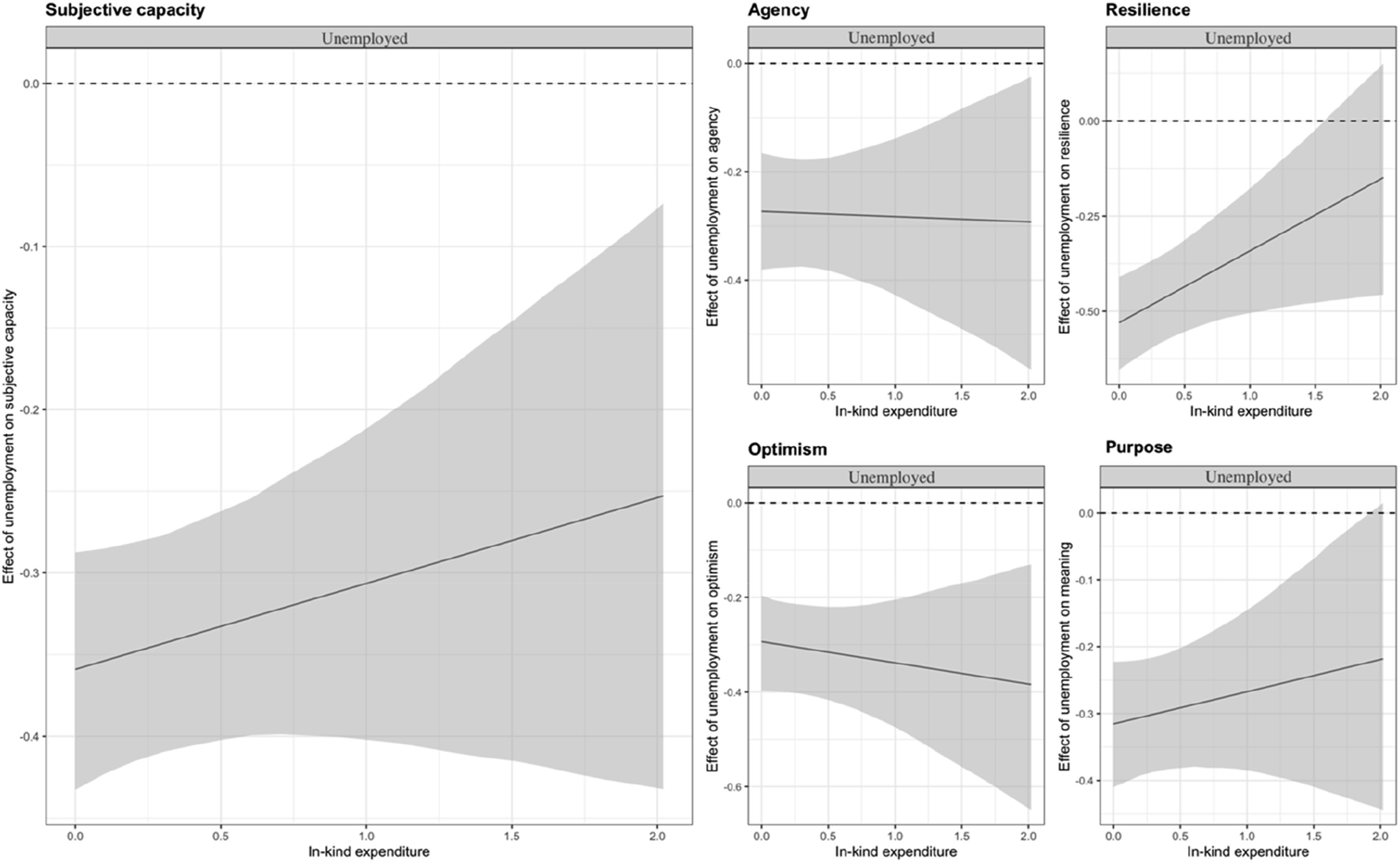
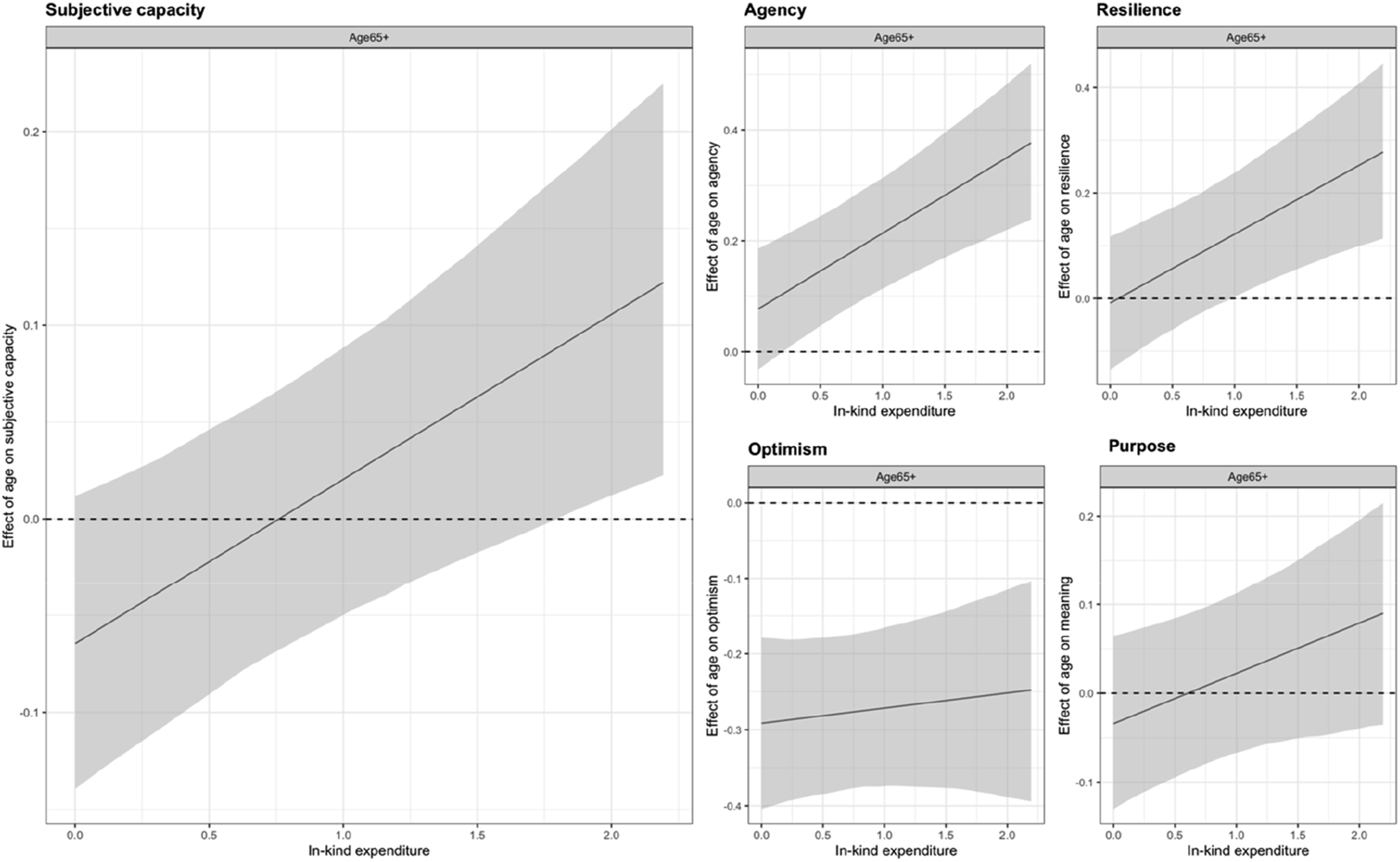
To visualize how the impact of social investment service provision affects the subjective capacity domains during parenthood, unemployment, and ageing, Figures 1–3 analyse interactions specific to wellbeing domains. The figures are based on the models in Table 1. The figures show macro-level effects of in-kind expenditure on parents (Figure 1), unemployed (Figure 2), and ageing individuals’ (Figure 3) agency, resilience, optimism, and a sense of purpose, controlling for socio-demographic characteristics, GDP per capita, and cash policy expenditure. The moderating effect of in-kind family policy expenditure on parental subjective capacity. The moderating effect of in-kind labour market expenditure on subjective capacity of unemployed. The moderating effect of in-kind old-age policy expenditure on ageing individuals’ subjective capacity.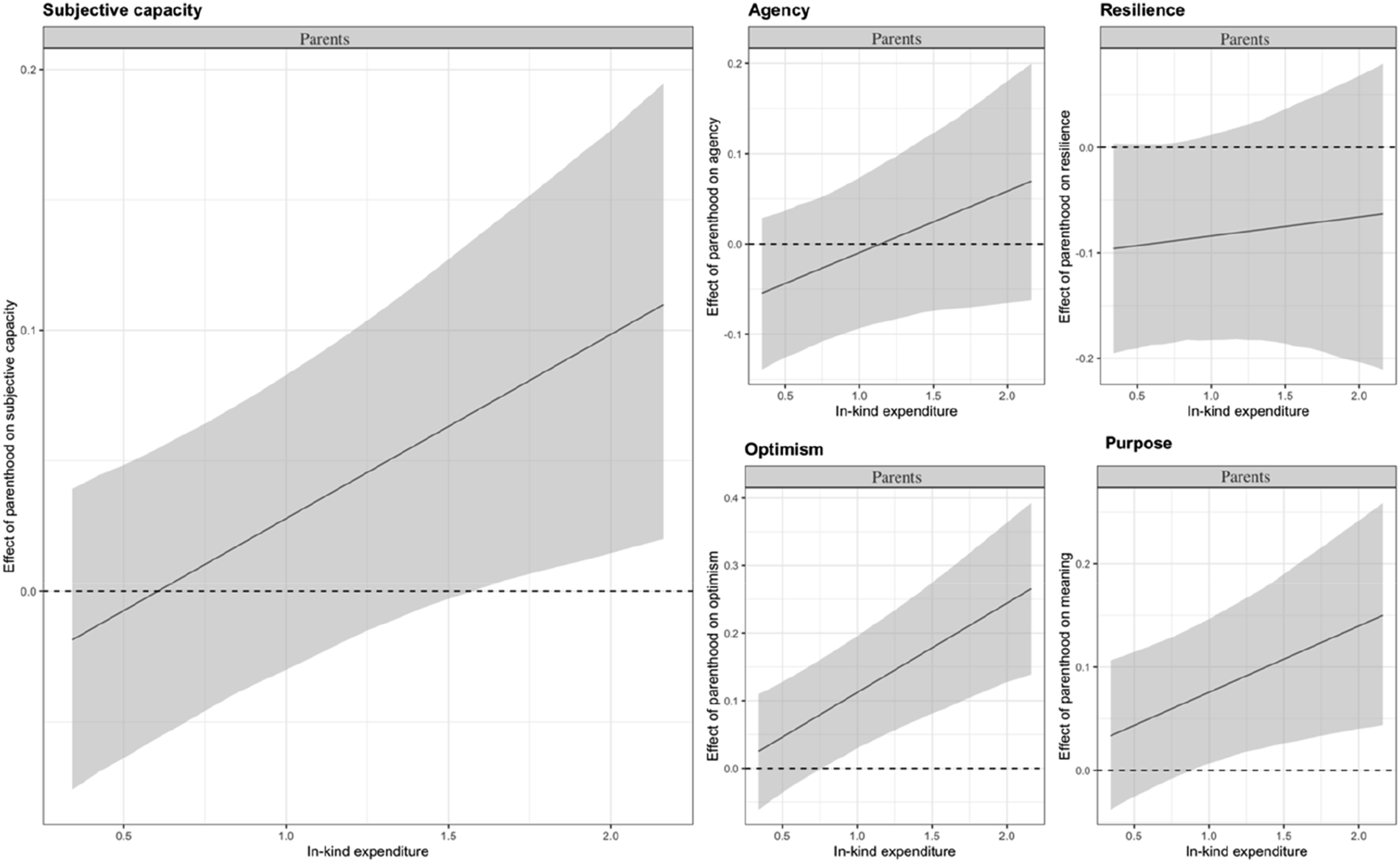
Results
The overall effect of total in-kind expenditure on the general population’s subjective capacity appears to be positive (Table A.3). When examining various domains of subjective capacity, the impact remains fairly consistent, with optimism showing the most positive effect and purpose in life demonstrating the least positive influence. All results exhibit statistical significance.
The influence of life-course stages on subjective capacity and its various domains tends to be predominantly negative (Table 1). Comparatively, parents exhibit lower levels of subjective capacity, agency, optimism, and purpose in life when contrasted with non-parents. Those who are unemployed, in comparison to those who are employed, experience notably lower levels across all aspects of subjective capacity. Moreover, individuals aged 65 and above, when compared to those aged between 18 and 64, generally demonstrate reduced levels of subjective capacity, resilience and purpose, particularly in optimism, although they exhibit higher levels of agency.
Parental wellbeing
The analysis from the linear mixed-effects regression model (Table 1) reveals that family policy in-kind expenditure serves as a significant moderator, mitigating the negative impact of parenthood on subjective capacity. The significant positive interaction effect between parenthood and in-kind expenditure (β = 0.07, p < .01) indicates that parents receiving higher in-kind social investments report higher subjective capacity (compared to non-parents).
In-kind family policy expenditure moderates the negative relationship between parenthood and subjective capacity across multiple domains (Table 1, Figure 1). The results are, however, statistically significant only with regard to optimism and purpose. The interaction effect between parenthood and in-kind expenditure shows a significant positive relationship with optimism (β = 0.13, p < .001,) and purpose (β = 0.06, p < .05). This suggests that parents appear to benefit from higher in-kind family policy expenditure as they report greater levels of optimism and a stronger sense of purpose compared to non-parents.
Navigating unemployment
While unemployment is consistently associated with lower subjective capacity, higher levels of active labour market policy expenditure mitigate this negative effect of unemployment (Table 1). The interaction effect between unemployment and in-kind expenditure (β = 0.05, p < .05) suggests that higher in-kind social investments are associated with a modest improvement in subjective capacity among unemployed individuals, potentially mitigating some of the negative effects of unemployment.
The interaction between active labour market policy expenditure and unemployment shows varying effects across different domains of subjective capacity (Table 1, Figure 2). Only the interaction effect between unemployment and in-kind expenditure on resilience is positive and statistically significant (β = 0.19, p < .05). This suggests that increased in-kind labour market services may help mitigate the adverse impact of unemployment on individuals’ resilience, potentially by providing essential services and support that improve coping mechanisms during periods of unemployment.
Active ageing
Higher levels of old-age in-kind expenditure are associated with improved subjective capacity among ageing individuals (Table 1). The significant positive interaction effect between being aged 65 or older and in-kind old age policy expenditure (β = 0.09, p < .001) suggests that increased in-kind old age services are associated with higher subjective capacity among older adults. This indicates that such investments may provide essential services and support that bolster older individuals’ perceived abilities and resources.
In-kind old-age policy expenditure plays a significant role in moderating the negative relationship between ageing and subjective capacity across its domains (Table 1, Figure 3). The significant positive interaction between ageing (Age 65+) and in-kind expenditure on both agency (β = 0.14, p < .001) and resilience (β = 0.13, p < .01) indicates that increased in-kind old age policy is particularly effective for older adults. These social investments increase older individuals’ sense of independence and their ability to cope with challenges, thereby boosting their overall agency and resilience. The effects related to optimism and purpose in life are statistically non-significant.
Discussion
The objective of this study was to determine the impact of social investment welfare provision, understood in terms of a strong emphasis on service provision, on subjective capacity; to assess whether this impact varies across different life-course stages experiences by many; and to explore how the welfare state influences subjective capacity domains during parenthood, unemployment, and ageing. The findings suggest that social investment service provision acts as a moderator. Parenthood, unemployment, and ageing negatively affect subjective capacity, but this negative impact is mitigated by in-kind expenditure within a country. This moderating effect is most pronounced during parenthood and ageing, and less significant in the context of unemployment.
The impact of social investment welfare provision varies across different life-course stages. Particularly during parenthood, the effect is significant, suggesting that social investment, through its support of family services such as early childhood education and care, and work-life balance policies, may alleviate the stress associated with parenthood, resulting in higher levels of subjective capacity. This aligns with prior research highlighting the significance of family services for parental subjective wellbeing (Glass et al., 2016; Nomaguchi and Milkie, 2020). Similarly, in the context of ageing, in-kind expenditure has a positive influence, possibly due to social investment initiatives promoting active ageing. Given the close correlation between active old-age policies and the Active Ageing Index, the findings imply that by fostering activation during inactive periods of individuals’ lives may enhance subjective capacity. However, the impact of being unemployed on subjective capacity is less pronounced. Although in-kind labour market policies slightly moderate the negative relationship between unemployment and subjective capacity, they do not exert a significant influence. The psychological and financial upheaval caused by being unemployed may be too formidable for policies to entirely offset.
Finally, the subjective capacity domains were affected differently in different life-course stages. In the context of parenthood, optimism and purpose were positively impacted. The interaction models revealed positive correlations between parenthood and optimism and purpose when considering in-kind policy expenditure and controlling for sociodemographic factors, GDP per capita, and cash family policy expenditure. These findings align with theoretical frameworks suggesting that family services, which alleviate the stress of parenthood, improve optimism and a sense of purpose (Glass et al., 2016).
During unemployment, agency and optimism showed minimal change or slight decline with active labour market policy expenditure, while resilience had positive effects despite still being negatively associated with being unemployed. This suggests the psychological strain of unemployment may outweigh the benefits of these policies. However, active labour market policies that offer job-related functions, such as time structure and participation (Jahoda, 1982), can foster resilience during joblessness (Leemann et al., 2016). The insights regarding resilience hold significant appeal for policymakers, hinting that the implementation of active labour market measures can enhance resilience, thereby contributing to the strength of the labour market.
Similar to parenthood, in-kind policy expenditure positively influenced all subjective capacity domains during ageing. While there are limited previous studies on this topic, insights from the literature on active ageing offer valuable perspectives. Scholars suggest that promoting activation and participation enhances physical, social, and mental wellbeing in ageing individuals (European Commission, 2022; Kvist, 2015; Walker and Zaidi, 2016). These activation initiatives and services may bolster resilience and provide a sense of purpose, similar to their effects in unemployment and job-related programmes. Nonetheless, there seems to be an increase in agency and resilience with ageing, aligning with in-kind expenditure, suggesting that agency, as well as resilience, can be influenced by social investment for ageing individuals.
The main limitations of this study are related to data. The limitations of the Eurofound data may have influenced the study’s findings. Specifically, the inability to differentiate parenthood by the age of the youngest child could have obscured variations in subjective capacity during different parenting stages. Additionally, the cross-sectional nature of the unemployment data, capturing only a single time point, may not fully reflect the cumulative effects of unemployment over time. Furthermore, the lack of differentiation regarding the need for assistance among the elderly could have impacted the analysis of ageing-related subjective capacity. These data constraints suggest that the observed relationships might be more complex than the study indicates. Moreover, Eurofound data is limited in terms of observations, years, and countries. Multilevel modeling ideally requires around 25 country cases for standard errors below 2% (Bryan and Jenkins, 2015), and with only 23 countries, cross-level interaction terms may be biased downward. Despite Elff et al.’s (2016) suggestion that unbiased estimates can come from fewer cases, caution is advised in interpreting results. The statistical data, while imperfect, offers valuable insights into social investment and subjective capacity. Another limitation is the lack of clarity in operationalization. Although key elements of social investment and subjective capacity are captured, considering institutional factors and historical development (social investment) and refining questions about agency, resilience, optimism, and purpose in life (subjective capacity) could strengthen the study. Longitudinal analyses could also enhance understanding of causal relationships between social investment policies and subjective wellbeing.
Overall, the findings contribute to the social investment literature, which has largely concentrated on material wellbeing outcomes. The results of this article indicate that social investment’s emphasis on freedom to act through service provision enhances individuals’ subjective capacities, thereby making a significant contribution to the growing interest in subjective wellbeing returns within the social investment debate.
Supplemental Material
Supplemental Material - The influence of social investment on subjective capacity throughout the life course
Supplemental Material for The influence of social investment on subjective capacity throughout the life course by Annika Lehmus-Sun in Journal of European Social Policy.
Footnotes
Acknowledgments
I am grateful to Anton Hemerijck and Heta Pöyliö for their valuable suggestions and comments. I also thank the two anonymous reviewers, whose feedback greatly improved the manuscript.
Declaration of conflicting interests
The author declared no potential conflicts of interest with respect to the research, authorship, and/or publication of this article.
Funding
The author disclosed receipt of the following financial support for the research, authorship, and/or publication of this article: This work has received funding from the European Research Council (ERC) under the European Union’s Horizon 2020 research and innovation programme (grant agreement No 882276).
Data Availability Statement
The Eurofound data that support the finding of this study are openly available in the UK Data Service at https://ukdataservice.ac.uk/. The OECD data are openly available in the OECD iLibrary at  . The relevant code for data structuring and analysis is available as supplementary files online.
Supplemental Material
Supplemental material for this article is available online.
References
Supplementary Material
Please find the following supplemental material available below.
For Open Access articles published under a Creative Commons License, all supplemental material carries the same license as the article it is associated with.
For non-Open Access articles published, all supplemental material carries a non-exclusive license, and permission requests for re-use of supplemental material or any part of supplemental material shall be sent directly to the copyright owner as specified in the copyright notice associated with the article.
