



Abstract
Economic insecurity has recently received increasing attention as a determinant of material deprivation. We contribute to this line of research by analysing the relationship between temporary employment and material deprivation. We argue that temporary workers face exacerbated deprivation because they may forego basic needs to provide for an uncertain future. Using German panel data for the years 2008–2020, we find that temporary employment increases material deprivation among workers, particularly in low-income households. This finding is robust to our controlling for important variables such as household income and needs, individual- and household fixed effects and when considering lagged independent variables. The association is not driven by young or highly educated workers who may be more likely to hold temporary jobs without experiencing sustained material deprivation. We also find that temporary agency work, perceived job insecurity and firm turnover rates aggravate material deprivation. This supports the theoretical assumption that the impact of temporary employment on material deprivation is driven by the economic insecurities faced by temporary workers.
Keywords
Introduction
Across European countries, temporary employment relationships have become an integral part of labour markets (Latner, 2022). While temporary employment relationships provide employers with flexibility in personnel management, research highlights that temporary workers fare worse than permanently employed workers along many dimensions. Temporary workers receive lower pay than statistically similar permanent workers (Fauser and Gebel, 2023), face a higher risk of entrapment in temporary jobs (Barbieri et al., 2019) and of becoming unemployed (Gash and McGinnity, 2007). Additionally, temporary staff have less access to training and lifelong learning opportunities, which may hamper their long-term labour market integration (Inanc, 2015).
As consequence, extant studies found workers on temporary contracts to be at a higher risk of income poverty than permanent workers (Amuedo-Dorantes and Serrano-Padial, 2010; Horemans, 2018; Van Lancker, 2012). However, operationalizing poverty solely using a low-income threshold has been criticized, as it only captures poverty indirectly, and may miss important facets of the living conditions of people experiencing poverty (Ringen, 1988). An additional approach to poverty measurement is to assess directly the extent of households’ material deprivation, that is, their inability to satisfy basic needs (Alkire et al., 2015; Mayer and Jencks, 1989; Nolan and Whelan, 2010).
In this study, we investigate whether employees on temporary contracts experience increased material deprivation compared to employees on permanent contracts. Our main contribution is to study material deprivation, for the first time in detail, as an outcome of contract type. Studying this outcome is important because it can have far-reaching detrimental consequences, including physical and mental health problems (Blázquez et al., 2014; McCarthy et al., 2018), development problems among children (Schenck-Fontaine and Panico, 2019; Yoo et al., 2009), and distress and violence in relationships (Conger et al., 1990; Schneider et al., 2016; Williams et al., 2015).
We posit that temporary employees are more susceptible to material deprivation compared to their permanent counterparts due to both their lower household incomes and heightened economic insecurity. A key contribution of our study is the disentanglement of these two underlying mechanisms. Theoretically, economic insecurity can directly impact the material deprivation of low-income workers through precautionary saving behaviours. In essence, individuals may sacrifice immediate material needs in favour of setting aside funds for an uncertain future. Following the premise that individuals seek to stabilize their consumption patterns over time, they may curtail current expenditures and bolster emergency savings in anticipation of potential income declines, such as those resulting from the termination of fixed-term contracts (Carroll, 1997; Carroll and Samwick, 1998).
Our analysis is based on the German Panel Study Labour Market and Social Security (PASS) which is a unique dataset focusing on low-income households. PASS contains an exceptionally rich set of indicators to measure material deprivation over a period of 13 waves (2008–2020). The panel data allow us to use estimators that account for individual selection based on time-constant unobserved heterogeneity. As an additional contribution, we consider the link between material deprivation and a specific type of temporary employment: temporary agency work. Furthermore, we investigate economic insecurity more broadly by looking at two alternative predictors: perceived job insecurity and firm turnover rates.
While our context is Germany, we believe that our results may be relevant for other European countries for two reasons. First, temporary employment is widespread and temporary employees are more affected by income poverty than permanent employees universally across Europe. In Germany, one in nine workers is currently temporarily employed, which is close to the European average (OECD, 2021), and 40% of workers who start a new job are initially hired on a fixed-term basis (Hohendanner, 2019). In 2023, 12.8% of temporary and 4.6% of permanent workers were at risk of income poverty compared to 12.6% of temporary workers and 5.2% of permanent workers in the EU-27 (Eurostat, 2024). Second, temporary employment evolved as a major source of individual economic insecurity not only in Germany, but across all European countries (Burgoon and Dekker, 2010; Lübke and Erlinghagen, 2014). Economic insecurity might therefore also be an explanatory factor for heightened deprivation of temporary workers beyond the German case.
Background
Determinants of material deprivation
According to Townsend, people are poor if ‘their resources are so seriously below those commanded by the average individual or family that they are, in effect, excluded from ordinary living patterns, customs and activities’ (Townsend, 1979: 31). From this perspective, low income captures poverty only indirectly because there is variation in how it translates into social exclusion and material deprivation (Bradshaw and Finch, 2003; Iceland and Bauman, 2007; Mayer and Jencks, 1989). Measuring material deprivation directly is thus indispensable for research on the causes and consequences of poverty (Brady, 2003; Heflin and Iceland, 2009; Kus et al., 2016). Material deprivation is often operationalized by asking people whether they have the financial means to possess goods and participate in activities that are regarded as customary in their social context (Nolan and Whelan, 2010). Despite a general downward trend (Andreß, 2018), official statistics show that 13% of the German population suffers from material deprivation (Eurostat, 2022).
The evidence on the determinants of material deprivation is far from complete. It has mostly focused on the role of income, asserting that, perhaps surprisingly, its explanatory power for material deprivation is limited (Berthoud and Bryan, 2011; Mayer and Jencks, 1989). However, ongoing lines of research have shown that income dynamics over longer periods of time are relevant in determining risks to experience material deprivation (Berthoud and Bryan, 2011; Whelan et al., 2004).
While understanding the role of income levels and dynamics in explaining material deprivation has proven fundamentally important to evaluate social policies (Notten and Guio, 2023), the issue of economic insecurity has only recently received some attention. Western et al. (2012: 342) describe economic insecurity as ‘the risk of economic loss faced by workers and households as they encounter the unpredictable events of social life’. Recent studies show that disruptive life events such as job loss, income shocks or changes in household structure often trigger material deprivation and hardship (Despard et al., 2018; Heflin, 2016; Rodems and Pfeffer, 2021).
We contribute to the literature on the determinants of material deprivation by analysing temporary employment, as opposed to permanent employment, bearing both the risk to experience a low income but also economic insecurity.
Why do temporary workers suffer more material deprivation than permanent employees?
Low income
Temporary employees can be expected to suffer from increased material deprivation compared to permanent employees because of reduced household income. Research has shown that temporary employees suffer wage disadvantages with respect to permanent employees in many countries across the globe (Fauser and Gebel, 2023). In addition, wage and career mobility is lower for workers on temporary contracts (Latner and Saks, 2022). As a consequence, temporary employees suffer from higher poverty risks than comparable permanent employees (Van Lancker, 2012). Part of that difference may be also explained by temporary employees’ lower labour market attachment (Amuedo-Dorantes and Serrano-Padial, 2010; Horemans, 2018). Considering the link between household income and material deprivation, we hypothesize:
Temporary employees experience increased material deprivation compared to permanent employees.
Economic insecurity
In addition to facing lower household incomes, temporary workers are more prone to experiencing material deprivation compared to permanent workers due to heightened levels of economic insecurity. Workers associate temporary employment relationships with an elevated risk of becoming unemployed (Lübke and Erlinghagen, 2014) and report heightened feelings of socio-economic insecurity (Mau et al., 2012; Scherer, 2009). A substantial body of literature in economics demonstrates that individuals who harbour concerns about their future income tend to curtail present spending and accumulate precautionary savings to cushion against unforeseen hardships (Zeldes, 1989). Consequently, even if temporary employees earn comparable incomes to their permanent counterparts, they may exhibit reduced spending tendencies. Consequently, they may find it more challenging to meet their basic needs compared to equivalent permanent employees.
The economic insecurities associated with temporary contracts could be buffered by loans and credits. However, in Germany and other European countries, access to bank credit systems is more difficult for workers with temporary contracts. As many temporary workers face an uncertain labour market future, they can only guarantee a regular income until the end of their contract (Bertolini and Moiso, 2020).
Due to heightened economic insecurities faced by temporary employees, we expect the following:
Temporary employees experience increased material deprivation compared to permanent employees, even after accounting for disparities in household income. Precautionary saving may have different consequences for households depending on their socioeconomic position. While emergency savings may act positively as insurance against the risk of future deprivation for middle-class households (Gjertson, 2016), the need to cut spending can cause material deprivation among low-income households in the present, as these households need most or all of their current income to meet their basic needs. Participating in social activities, replacing worn-out furniture and clothing, or going on vacation can seem unaffordable until households know what the future holds. Indeed, empirical studies show that job insecurity is associated with reduced consumption (Benito, 2006; Lozza et al., 2012, 2020) and that precautionary saving is relevant for low-income households (Gourinchas and Parker, 2001).
The disparity in material deprivation between temporary and permanent employees will be most pronounced among low-income households.
Data and methodology
Data and sample
We analyse data from PASS, which is conducted by the Institute for Employment Research (IAB). PASS is an annual household survey covering the German resident population, and it has been running since 2007. Households that receive means-tested welfare benefits are oversampled, which makes PASS a unique dataset for research on low-income households, unemployment and poverty (Trappmann et al., 2019). In each wave, 8000–10,000 households are surveyed. The sample is refreshed regularly to account for panel mortality.
Our study uses 13 waves (2008–2020) of the survey. We measure material deprivation at the household level, while we measure temporary employment and other important sociodemographic characteristics at the individual level. We ascribe to all members of the household the individual characteristics of the main earner. The main earners are individuals who work in employment subject to social security contributions and who obtain the highest labour income in their household. Using the characteristics of the main earner as independent variables is common in the literature because the employment of the main earner matters most for the socioeconomic situation of the household (Berthoud and Bryan, 2011; Figari, 2012). However, we choose the individual and not the household as the unit of analysis. Using this data structure is common in panel data studies of material deprivation because if we analysed households longitudinally, only those with an unchanged composition, that is, with no one moving in or out, could be kept in the sample (Duncan and Hill, 1985). This would threaten the external validity of the results. A second reason for choosing individuals as the unit of analysis is that the results are automatically weighted by household size. Please note that characteristics typically considered time-constant within individuals, such as migration background, may exhibit variation over time within the structure of this dataset whenever the main earner in the household changes. 1
The goal of our study is to identify the risks of material deprivation for the working population, particularly people who have a low income and are at risk of working poverty. Households whose main source of income is either unemployment benefits or marginal employment 2 are therefore excluded from this study. We also exclude households if their main earner is self-employed, a civil servant or in the military because these groups operate in distinct labour markets and thus may differ systematically from regular employees with respect to how they experience job insecurity. Since we apply estimators that rely on panel data and run analyses with lagged independent variables, we only keep individuals in the sample who are observed at least twice. In total, our sample of analysis is made up of 9417 individuals with 45,356 person-years in 5544 households. Descriptive statistics on the sample can be found in Table A1 in the Online Appendix.
Temporary employment
In our study, we use the type of employment contract, that is, temporary contract versus permanent contract, as the main independent variable. The indicator for temporary employment is available for each wave of the survey.
We complement the analysis by considering temporary agency work, a specific form of temporary employment. We use a dichotomous variable indicating whether workers are employed at temporary work agencies, which is available in each wave of the survey. Temporary employment agencies hire workers and lend them to different firms for limited periods. In the 2010s, in Germany, approximately 2 to 3% of all workers were employed at temporary work agencies (Eurostat, 2021). These workers are less integrated in a firm’s workforce and often lack representation in unions or work councils (Holst et al., 2010). This makes them particularly vulnerable to economic insecurity (Håkansson et al., 2017).
Economic insecurity
We argue that apart from a lower income the economic insecurity faced by temporary workers increases their risk to experience material deprivation. To corroborate this theoretical idea, we complement our analyses with two additional indicators that are related to the working conditions of temporary workers: subjectively perceived job insecurity and firm turnover rates.
Subjective job insecurity and firm turnover rates are good indicators of the economic insecurities faced by temporary workers. Research has shown that temporary workers more often perceive their jobs to be in danger (Lübke and Erlinghagen, 2014), and a recent study by Inanc and Kalleberg (2022) found perceived job insecurity to be strongly related to economic insecurity. Also, Scherer (2009: 539) could show that differences in household income problems between temporary and permanent employees can partly be attributed to differences in perceived job insecurity between the two types of employees. Furthermore, temporary workers more often work in firms with a higher turnover of employees (see also, Centeno and Novo, 2012), which can be considered a contextual source of job insecurity. Organizational restructuring and downsizing have been shown to strongly affect psychological outcomes of workers, such as perceived job insecurity (Probst, 2003). A study by Gallie et al. (2016) found that, in particular, workforce reductions have a strong effect on perceived job insecurity.
The indicator for subjectively perceived job insecurity is measured in PASS by asking respondents to evaluate the statement ‘My job is in danger’. We combine all respondents who (strongly) agree with this statement into one category and use those who (strongly) disagree as the reference group. The indicator is available in PASS data from wave 7 (2013–2020). To compute firm turnover rates, we leverage administrative data, exploiting PASS’s capability to connect survey data with the social security records maintained by the German Federal Employment Agency, contingent upon respondents consenting to the linkage process. These social security records furnish a unique firm identifier along with details regarding the entirety of colleagues associated with each survey respondent. Turnover is computed as the proportion of workers departing from a survey respondent’s firm during a given year t relative to the average firm size in years t and t – 1. The linked data extend up to wave 12 (2018) of the survey.
Material deprivation
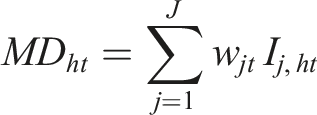
We measure material deprivation using 20 indicators that capture essential goods and activities, which characterize the common living standard in Germany (for an overview, see Table A2 in the Online Appendix). The various items pertain to deprivations regarding housing quality, nutrition and clothing, consumption, social and cultural participation and financial means. For each of the 20 indicators, the respondents are asked whether their household has a certain good or engages in a certain activity. If they answer ‘no’, they are asked whether they forgo this good or activity for financial or other reasons. Following the literature on material deprivation (Nolan and Whelan, 2010), we use an item as an indicator for deprivation only if it is forgone for financial reasons. This is because we do not seek to measure merely variation in consumption preferences across households (Andreß, 2018). For our main analysis, we construct a sum index of material deprivation. However, we also present a robustness check where each single indicator is regressed on temporary employment (see Figure A1 in the Online Appendix).
For the sum index, we aggregate the deprivation indicators according to this formula
Empirical strategy
We argue that temporary employment relationships may be associated with a higher risk of experiencing material deprivation than permanent employment relationships because of a lower income and the economic insecurity faced by temporary employees. We test these hypotheses in a stepwise manner. First, we estimate the following fixed effects linear regression model, without controlling for household income:

The outcome of interest is denoted by y and measured for person i in household h observed in year t. The outcomes are measured at the household level, but the data are analysed at the person level. This has the same effect as using household-level data and weighting the estimates by household size. The main explanatory variable temp_empl indicates the contract type of the household’s main earner: permanent (0) versus temporary (1). It is assigned to all persons living in the household. As control variables, we consider characteristics of the household and of the main earner of the household that may be associated with both temporary employment and material deprivation in the vector of control variables X’. We control for observable differences between individuals in terms of household composition, age (categorical), education, gender, migration background, unemployment experience (quadratic term) and housing tenure. The control vector also contains an indicator for whether the main earner changed employers since the previous interview to account for the potentially endogenous selection of individuals into specific firms that may offer more or less permanent job positions. This should have a similar effect as adding employer fixed effects to the model, which we cannot do because we rarely observe multiple workers from the same firm in the survey data. The year fixed effects (
We include fixed effects for every observed person-household combination (
Next, we proceed to examine whether the impact of temporary employment on material deprivation remains after accounting for disparities in household income.
4
This analysis aims to shed light on the theoretical proposition that temporary employment exerts an independent effect on material deprivation, attributable to heightened economic insecurity, rather than solely through income differentials:

In an additional model, we add lags of temporary employment and household income and its square to equation (2). This step accounts for the possibility that the effect of temporary employment on material deprivation may be delayed. In addition, it addresses the potential issue of reverse causality; that is, if we found no significant association between material deprivation in year
Results
Temporary employment and material deprivation
Stepwise fixed effects regression of material deprivation on temporary employment.
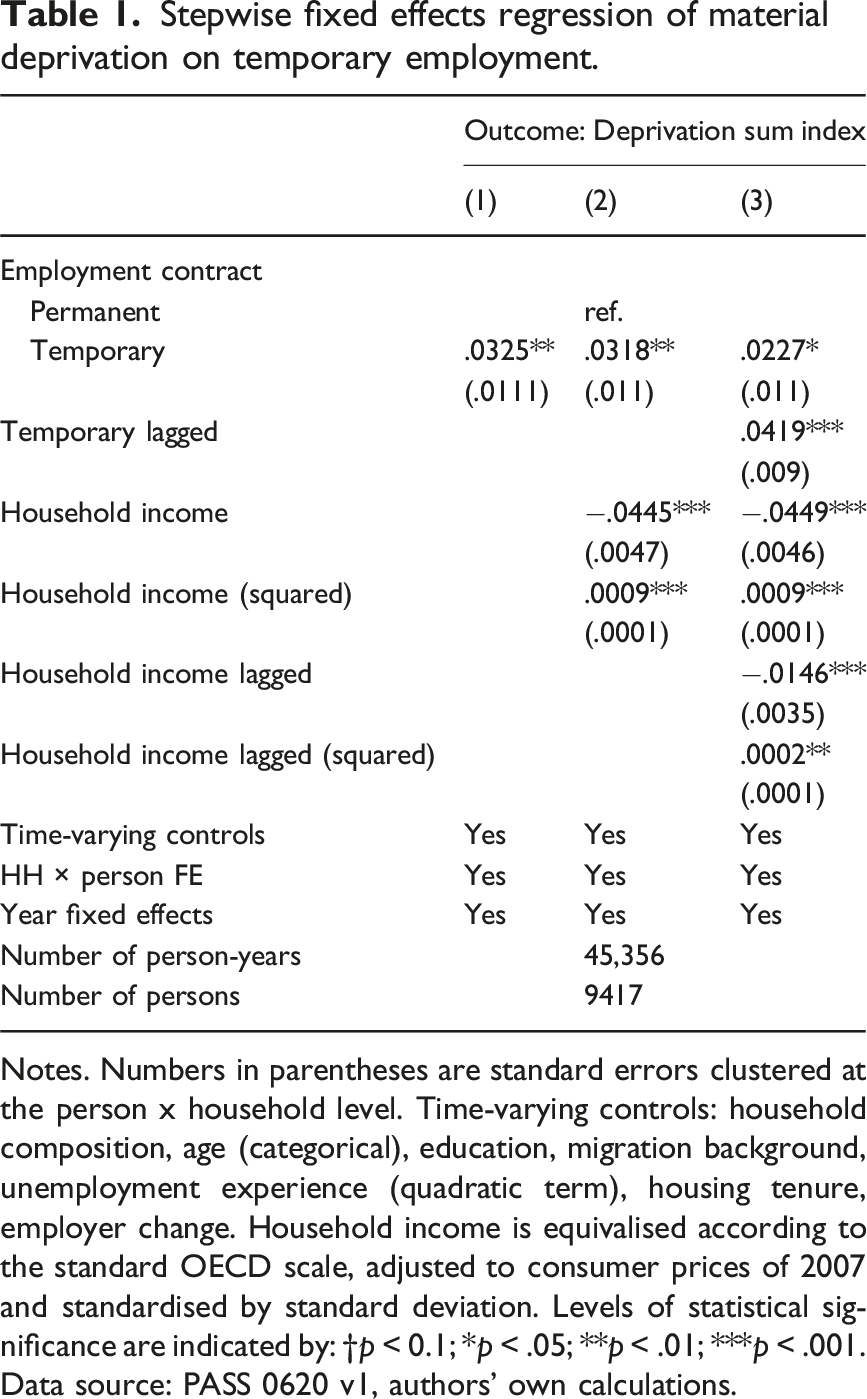
Notes. Numbers in parentheses are standard errors clustered at the person x household level. Time-varying controls: household composition, age (categorical), education, migration background, unemployment experience (quadratic term), housing tenure, employer change. Household income is equivalised according to the standard OECD scale, adjusted to consumer prices of 2007 and standardised by standard deviation. Levels of statistical significance are indicated by: †p < 0.1; *p < .05; **p < .01; ***p < .001. Data source: PASS 0620 v1, authors’ own calculations.
The effect of temporary employment hardly varies across equations (1) and (2), suggesting that household income does not mediate the relationship between temporary employment and material deprivation. However, upon closer examination within the fixed effects framework, this outcome seems plausible. For income to serve as a mediator in our analysis, within-individual shifts in contract type would need to be substantially correlated with short-term within-individual changes in household income that are in consequence responsible for changes in the material deprivation of households. However, substantial household income disparities between temporary and permanent workers may materialize predominantly in the medium and long term, driven by career risks such as lower wage trajectories (Fauser, 2020) and recurring periods of unemployment (Fuller and Stecy-Hildebrandt, 2015; Giesecke and Groß, 2003). Consistent with this notion, our analysis reveals household income as a mediating variable in the correlation between material deprivation and temporary employment only within a pooled OLS regression model (Online Appendix, Table A4). A plausible interpretation of this finding, consistent with prior literature (Berthoud and Bryan, 2011), is that the pooled OLS model also captures the medium- and long-term dynamics between material deprivation and its predictors, while the fixed effects model focuses solely on the effects of immediate changes in the predictors.
In column 3 of Table 1, we report regression models that allow for dynamic relationships by including lagged values of the temporary employment and income variables. The effect of temporary employment on material deprivation may be lagged because households probably need some time to adjust their spending to their changing circumstances. We find highly statistically significant associations of material deprivation and the lagged values of temporary employment and income. The coefficient for lagged temporary employment is larger than the coefficient for temporary employment measured in the same year as the deprivation experience. We conclude that changes in material deprivation in reaction to temporary employment occur mainly in the year after an employment change. This evidence supports the implicit assumption that the association is not driven by reverse causality. Furthermore, it points to the idea that precautionary saving may be a relevant mechanism to explain our findings because accruing savings in response to insecurity is likely a longer-term process.
Effect size and heterogeneities
Having established the presence of an independent effect of temporary employment on material deprivation, we now turn our attention to assessing the magnitude of this effect. In our preferred specification (Table 1, column 2), the estimated effect of 0.0318 appears relatively small compared to the mean of the outcome (0.2945). However, this average effect masks significant heterogeneity across household income levels. To explore this heterogeneity, we enhance equation (2) by introducing an interaction term between household income, equivalized according to the OECD scale (Hagenaars et al., 1994), and temporary employment. Subsequently, we calculate the marginal effects of temporary employment on material deprivation across the spectrum of household incomes. Figure 1 presents these results, indicating marginal effects of approximately 0.1 at the lower end of the income distribution. Consequently, for individuals with low household incomes, the weighted material deprivation index is exacerbated by roughly 1/3 of the mean if temporary employment, rather than permanent employment, constitutes their household’s primary source of income – a socially significant effect. Marginal effects of temporary employment on material deprivation across the distribution of household incomes (95% confidence intervals).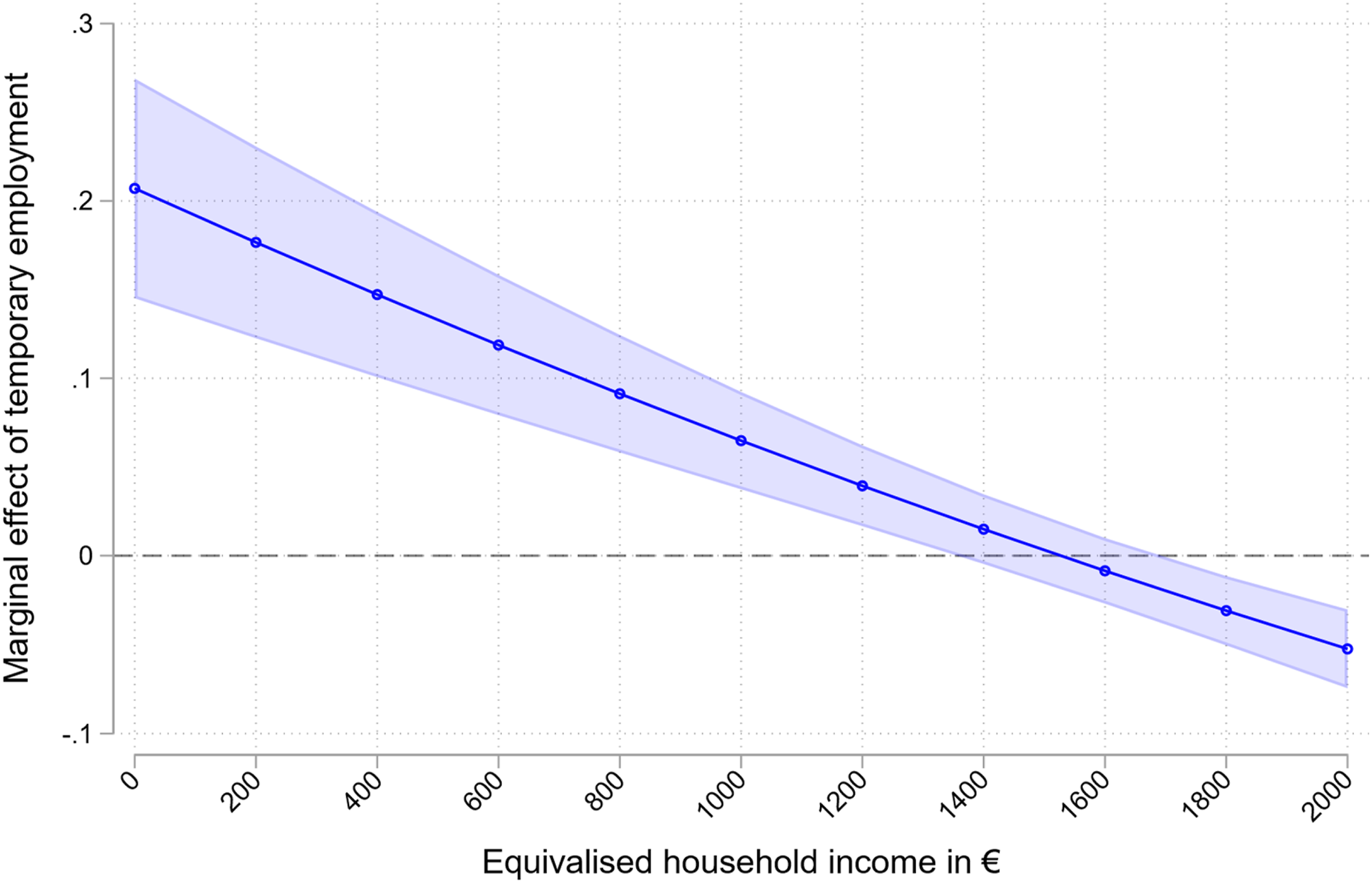
Furthermore, our analysis unveils that the positive effect of temporary employment on material deprivation applies exclusively to individuals with equivalized household incomes below approximately €1400 per month. From this, we infer that low-income workers facing employment insecurity encounter a compounding disadvantage, resulting in exacerbated material deprivation. Thus, economic insecurity emerges as a pivotal risk of working poverty. Conversely, middle-income and high-income workers appear insulated from material deprivation irrespective of their employment contract type.
Inspecting further heterogeneities, we did not find significant differences in the association between temporary employment and material deprivation across groups defined by age or educational attainment (see Figure A2 in the Online Appendix). However, single households are more strongly affected by temporary employment than couples without children. Cohabitating partners in the household, potentially serving as additional earners, seem to buffer economic insecurities related to temporary employment (see also, Morgenroth et al., 2022). Furthermore, we investigate the role of single deprivation indicators, finding that the largest associations with temporary employment are observed among indicators that are not considered highly essential by the majority of the population but can reflect important aspects of social exclusion (see Figure A1 in the Online Appendix).
The role of temporary agency work and economic insecurity for increased material deprivation
Fixed effects regression of material deprivation on temporary agency work and economic insecurity indicators.
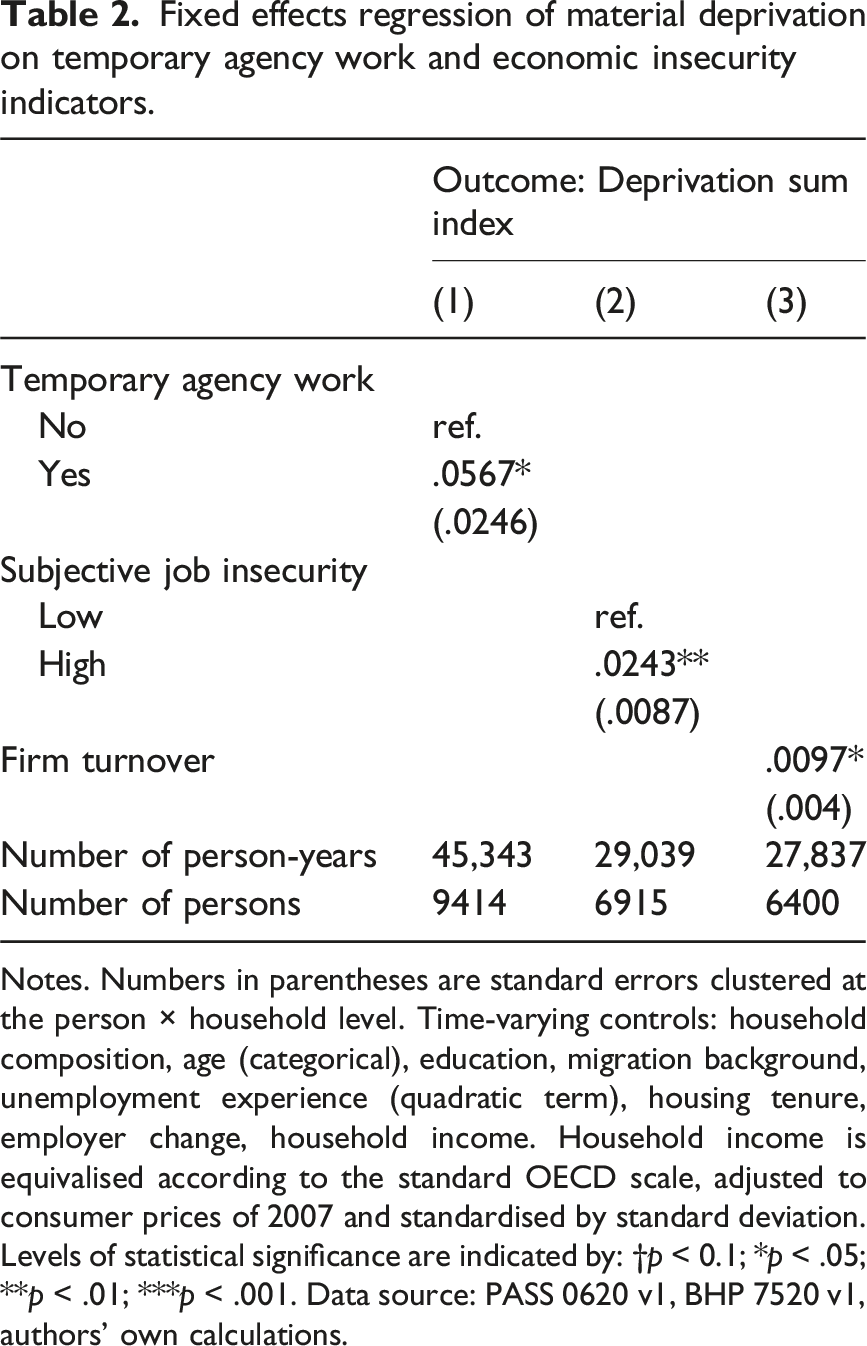
Notes. Numbers in parentheses are standard errors clustered at the person × household level. Time-varying controls: household composition, age (categorical), education, migration background, unemployment experience (quadratic term), housing tenure, employer change, household income. Household income is equivalised according to the standard OECD scale, adjusted to consumer prices of 2007 and standardised by standard deviation. Levels of statistical significance are indicated by: †p < 0.1; *p < .05; **p < .01; ***p < .001. Data source: PASS 0620 v1, BHP 7520 v1, authors’ own calculations.
Discussion
This study examines the association between temporary employment and material deprivation using German panel data spanning 2008 to 2020. We aim to contribute to the literature on the poverty risks of temporary workers by investigating material deprivation as a ‘direct’ measure of poverty (Amuedo-Dorantes and Serrano-Padial, 2010; Horemans, 2018; Van Lancker, 2012). In addition to increased poverty risks, temporary employment is strongly associated with economic insecurity (Lübke and Erlinghagen, 2014; Mau et al., 2012; Scherer, 2009). We disentangle lowered household incomes and heightened economic insecurity as two causes of increased material deprivation of temporary workers compared to permanent workers. We measure material deprivation using an extensive composite index encompassing many essential goods and activities and thus addressing the multidimensional nature of this concept (Nolan and Whelan, 2010). Leveraging panel data allows us to estimate fixed effects regression models that effectively mitigate selection bias arising from time-constant unobserved factors. The findings indicate that temporary workers are at an increased risk of material deprivation compared to permanent employees, even after accounting for differences in household income. While the average effect size is modest, socially significant effects are observed among workers on low incomes.
Furthermore, we find that temporary agency work, which is often considered a particularly precarious form of temporary employment, exhibits a stronger association with material deprivation. Additionally, perceived job insecurity and firm turnover display positive associations with material deprivation. These findings underscore the crucial role of economic insecurities linked to temporary employment arrangements in driving the impact of temporary employment on material deprivation. In summary, the results support the theoretical proposition of the article that low-income workers, who heavily rely on their income for basic needs, may curtail spending in response to economic insecurity arising from temporary employment. This reduction in spending can reach a threshold where it compromises their ability to meet basic needs effectively.
Our study is based on data from a single European country. While Germany may be regarded a representative case due to its alignment with the European average in terms of poverty risks of temporary workers, understanding whether the relationship between temporary employment and material deprivation varies across European countries requires further investigation. Given the widespread experience of economic insecurity among temporary workers across Europe (Lübke and Erlinghagen, 2014), it is plausible that they also encounter increased material deprivation compared to their permanent counterparts. However, variations across countries may arise due to cross-European variation in unemployment benefit schemes and social security systems, which could serve as buffers against economic insecurities associated with temporary employment to varying extents.
The findings of this study are subject to some limitations and make way for further research. First, the fixed effects estimate implies a causal relationship only under the assumption that there are no unobserved time-varying variables influencing both the likelihood of holding a temporary job and experiencing material deprivation. Second, while we discuss precautionary saving as a plausible mechanism linking economic insecurity to material deprivation among temporary employees, our article does not empirically analyse this mechanism. This could be an avenue for further research. Third, our analysis focuses exclusively on the working population, using permanent employees as a reference group and excluding the unemployed. In research on temporary employment, the choice of reference group fundamentally affects a study’s research question and design (Latner and Saks, 2022). By excluding the unemployed, we restrict our examination to the short-term effects of temporary employment. We neglect long-term career risks associated with temporary employment, such as lower wage growth and heightened unemployment risk, which could further exacerbate the material deprivation of temporary workers compared to permanent workers in the long run. Additionally, we cannot rule out the possibility that exiting unemployment through either temporary or permanent contracts alleviates material deprivation to a comparable degree. Since a recent study found that risks of income poverty of previously unemployed persons are reduced in the case of both contract forms to a similar extent (Gebel and Gundert, 2023), this would be a promising area for further research. Fourth, we only focus on the effects of temporary employment among main earners. Temporary employment of secondary income earners or young employed people residing with their parents may affect the material deprivation of a household as well.
From a policy perspective, our study contributes to the ongoing debate regarding the merits and drawbacks of ‘flexible’ employment arrangements such as temporary contracts (Latner and Saks, 2022). While in theory, reducing firing costs through temporary contracts in settings with high levels of employment protection could incentivize employers to hire more workers, recent empirical evidence suggests that firms often replace permanent positions with temporary ones rather than creating additional jobs (Daruich et al., 2022). Given its positive association with material deprivation, temporary employment may thus impose a burden on workers while creating only small economic benefits.
Supplemental Material
Supplemental Material - Do temporary employees experience increased material deprivation? Evidence from German panel data
Supplemental Material for Do temporary employees experience increased material deprivation? Evidence from German panel data by Martin Friedrich and Nils Teichler in Journal of European Social Policy.
Footnotes
Acknowledgements
Both authors contributed equally. The authors would like to thank Regina Riphahn, Brigitte Schels, Gesine Stephan, Mark Trappmann, the editor and two anonymous referees for their valuable feedback. Furthermore, we are grateful to the participants of the 2021 annual meeting of the Population Association of America (PAA) and seminar participants at WZB, DZHW, IAB and the University of Erlangen-Nuremberg for their helpful comments on our article. This research was generously supported through two graduate scholarships of the IAB (GradAB programme).
Declaration of conflicting interests
The author(s) declared no potential conflicts of interest with respect to the research, authorship, and/or publication of this article.
Funding
The author(s) received no financial support for the research, authorship, and/or publication of this article.

Supplemental Material
Supplemental material for this article is available online.
Notes
References
Supplementary Material
Please find the following supplemental material available below.
For Open Access articles published under a Creative Commons License, all supplemental material carries the same license as the article it is associated with.
For non-Open Access articles published, all supplemental material carries a non-exclusive license, and permission requests for re-use of supplemental material or any part of supplemental material shall be sent directly to the copyright owner as specified in the copyright notice associated with the article.
