




Abstract
This article explores the relationship between intergenerational cohabitation and welfare attitudes focusing on the perspective of cohabiting adult children in Europe. Cohabitation constitutes a common support arrangement for young adults who face labour market risk, reducing their need for state-based welfare, but might also lead to feelings of frustration when the dependency clashes with social norms, increasing the incentives to demand policies that enable emancipation. Using data from the 8th wave of the European Social Survey, I fit ordered logistic models for a sample of 6895 young adults in 16 European countries, focusing on attitudes towards unemployment benefits and basic income. Results indicate that the link between labour market risk and attitudes is weaker when young adults live with their parents. Moreover, living with parents is associated with higher demand for basic income schemes, but this effect is weaker in countries where cohabitation constitutes a common support arrangement. These findings highlight the relevance of considering the household context when studying the link between labour market risk and welfare attitudes, and suggest that norms regarding the division of responsibilities between families and the state might hold back demand for state-based welfare in familialistic countries.
Introduction
Like social policy, families act as a mechanism of redistribution and support for their members in moments of need through the supply of financial assistance, care work and practical help, playing an important role in the arrangement of welfare in virtually all current societies. In this regard, there is a division of responsibilities between the state and families in welfare provision where both institutions support individuals in often complementary ways (Naldini, 2004; Zapf, 1984). This interplay has been an object of thorough study from a policy-outcome perspective, emphasizing how social policy contributes to shaping family support and intergenerational obligations (Esping-Andersen, 1999; Naldini, 2004; Saraceno and Keck, 2008, 2010) and exploring whether state-based welfare provision crowds out or crowds in support from families (Deindl and Brandt, 2011; Motel-Klingebiel et al., 2005). However, little has been said about how, in turn, the safety net provided by families and the dependencies and responsibilities arising from it might affect individual attitudes towards different social policies. Disentangling this relationship is important to deepen our understanding of the complex interrelations between the state, families and individuals in welfare provision.
Some relevant contributions in the labour market risk literature have discussed the buffering role of the household and how the safety net provided by a securely employed partner can lessen the impact of labour market risk on attitudes (Abou-Chadi and Kurer, 2021; Häusermann et al., 2016). However, it remains unexplored whether other family arrangements beyond partnership, like exchanges of intergenerational support, might play a similar role.
When it comes to supporting young adults, families often resort to intergenerational cohabitation, meaning that children remain at or return to the parental household to ensure their basic needs are covered. In the European context, cohabitation is particularly common in Mediterranean and Eastern countries, where it acts as a form of support for young adults in a context of difficult labour market integration and scarce state-based welfare provision (Ayllón, 2015; Gentile, 2010; Mandic, 2008). Conversely, in Continental and especially Scandinavian Europe, where conditions for labour market access are more favourable and the state takes the main responsibility for individual welfare, intergenerational cohabitation is comparatively less frequent (Albertini and Kohli, 2013; Buchmann and Kriesi, 2011; Mandic, 2008).
As cohabitation substitutes or complements social policy in supporting adult children when they experience labour market risk, it might reduce the need for public welfare of those in an insecure labour market position, moderating the effect of labour market risk on welfare attitudes. However, living with parents might not always be perceived as an ideal alternative. If social norms dictate that the main goal of adult children is to establish themselves independently, those who are dependent on cohabitation may develop feelings of failure and frustration (White and Rogers, 1997) and look for alternative sources of support.
The arguments above are developed and tested in this article. Understanding whether cohabitation impacts demand for welfare provision and what the nature of this link is can shed light on the complex interactions between cultural and institutional factors in the division of responsibilities between families and the state. To this end, the following research question is formulated: RQ: How do the welfare attitudes of adult children differ depending on whether they receive support through intergenerational cohabitation?
To address this question, I employ data from the 8th wave of the European Social Survey (ESS) for 6497 young adults (18–39) from 16 European countries. The study considers attitudes towards unemployment benefits and basic income schemes, both of which constitute social transfer policies targeted to supporting individuals with labour market risk. The data are analysed using ordered logistic models and bivariate probit regression. To ensure that findings are robust, sensitivity analyses are conducted using an alternative generalized linear estimator, leading to similar results.
Theory
Intergenerational cohabitation is a cross-nationally uneven phenomenon. It is well established that the prevalence of cohabitation varies across European countries following a South–North gradient (Albertini et al., 2007; Albertini and Kohli, 2013), meaning that in Mediterranean Europe young adults generally live with their parents until a comparatively advanced age while, at the other end, children in Scandinavian countries rarely stay in the parental household after they enter their twenties. Continental states are located in between and Eastern countries are characterized by comparatively but not extremely late home-leaving (Ayllón, 2015; Buchmann and Kriesi, 2011; Giuliano, 2010; Mandic, 2008). These differences are reflected in Figure 1 (data from Eurostat, 2024). Proportion of young adults (18-39) living with parent(s) by country, 2016.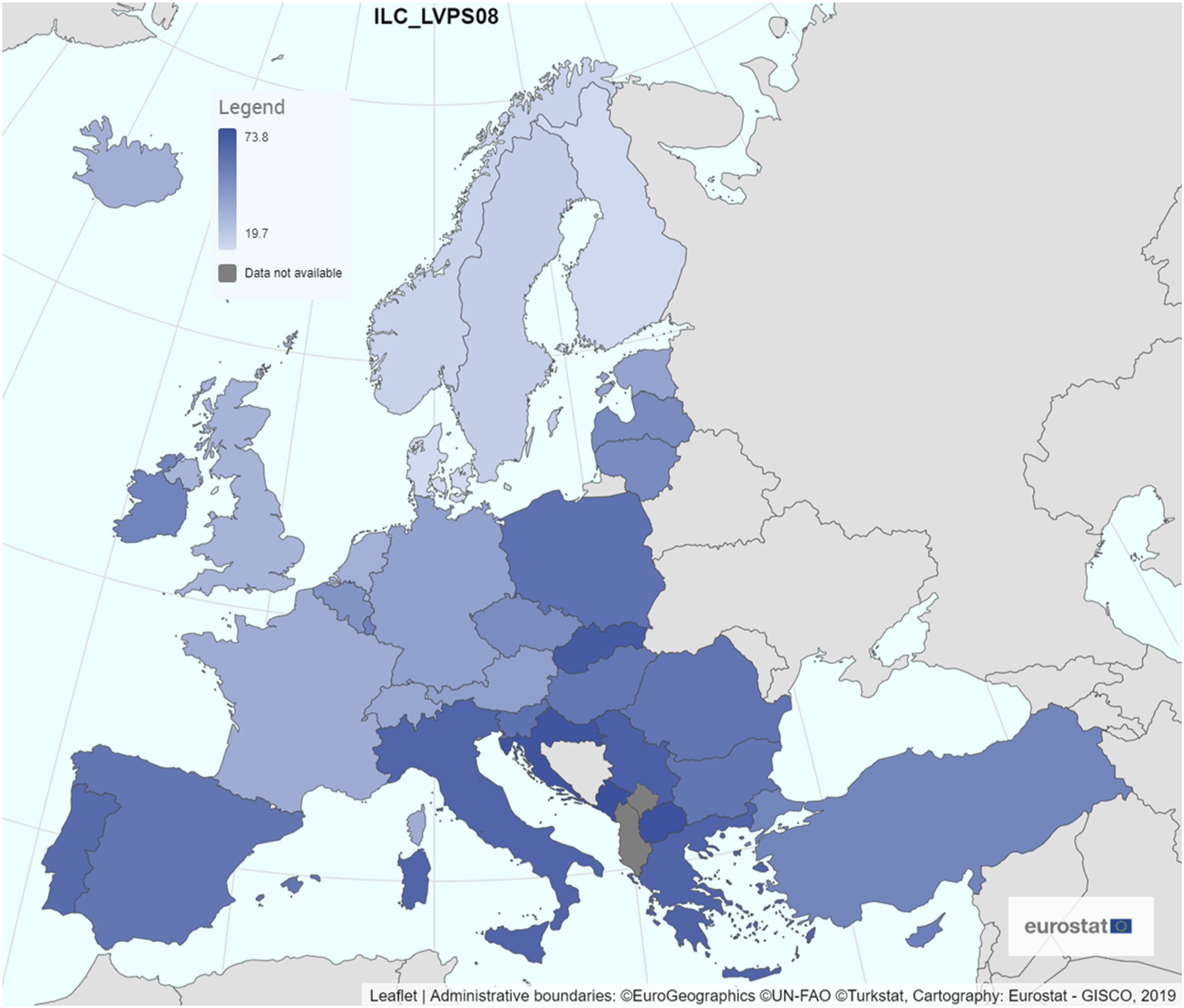
A suggested explanation for the unequal distribution of intergenerational cohabitation is the variation of labour market entry conditions across states. There is evidence that in Mediterranean countries the youth experience particularly high rates of labour market risk (De Lange et al., 2014; Häusermann and Schwander, 2012), generally facing extended periods of labour market instability between their training and achieving secure employment regardless of their educational level. Families provide support through cohabitation during these periods, but once stable labour market status is attained young adults emancipate quickly (Buchmann and Kriesi, 2011; Gentile, 2010; Mazzotta and Parisi, 2015). Extending the analysis to Eastern Europe, Mandic (2008) highlights how the prevalence of informal employment, second economy and domestic production among the youth delays emancipation in this region. In sum, intergenerational cohabitation supports adult children with the risks associated with labour market entry, and these risks are more pronounced in Mediterranean and Eastern Europe, leading to higher rates of cohabitation.
Labour market risk interacts with a second structural factor: state-based welfare provision. When facing labour market instability, young adults may be supported by the state, weakening or suppressing the need for intergenerational cohabitation (Mandic, 2008). According to Buchmann and Kriesi (2011), in countries where the welfare of young adults is considered a responsibility of the state rather than the family social policies and benefits enable adult children to emancipate more easily. On the contrary, when welfare provision is based on the principle of subsidiarity, intergenerational cohabitation becomes the main available source of support with labour market risk. Ayllón (2015) finds that the association between labour market risk and intergenerational cohabitation is strong in Mediterranean and Continental Europe, but nonexistent in Scandinavian countries. Therefore, although social policy and intergenerational cohabitation complement each other, they constitute to some extent alternative forms of support for young adults who experience labour market risk.
State-based support might be articulated through a set of different policies which include, among others, income-maintenance transfers, training programmes and housing allowances (Mandic, 2008). In this article I focus on the first type, looking at attitudes towards two types of social transfers: unemployment benefits and universal basic income. Although fundamentally different, both policies are oriented towards income maintenance during employment shocks (Fabre et al., 2014) and can provide support to young adults when facing labour market risk, representing alternatives to intergenerational cohabitation. Unemployment benefits cover both contributory unemployment insurance and means-tested unemployment assistance schemes to which only unemployed individuals are entitled (Vodopevic, 2004), whereas basic income constitutes a specific benefit through which everyone receives a monthly payment to cover essential living costs regardless of their other income sources (Fabre et al., 2014; Lee, 2018).
In both cases, there is evidence that attitudes towards these policies are associated with labour market risk (Busemeyer and Neimanns, 2017; Lee, 2018; Schwander and Häusermann, 2013; Vlandas, 2021). From a self-interest approach to attitude formation (Meltzer and Richards, 1981), experiencing unemployment or atypical (involuntary part-time or fixed-term) employment produces incentives to demand policies and benefits that support individuals with the financial strains associated with employment insecurity (Häusermann et al., 2015, 2016; Rehm, 2009; Rueda, 2005). However, if intergenerational cohabitation constitutes an alternative to social policy to support young adults with labour market risk, living with parents might reduce the incentives that connect risk and demand for state-based welfare, weakening their association.
The capacity of the household safety net to moderate the link between individual labour market risk and attitudes has been explored in the contributions of Häusermann et al. (2016) and Abou-Chadi and Kurer (2021) with a focus on partnership. Häusermann and colleagues show that living with a securely employed partner neutralizes the effect of individual labour market insecurity on welfare attitudes when the respondent is a woman, but not for men. The authors argue that this finding reflects a male-breadwinner logic: men’s preferences are shaped in individual terms as they tend to be the main economic providers in the household whereas women, especially those who face labour market insecurity, often rely on the safety net provided by their partners, leading to the observed moderation effect. In turn, Abou-Chadi and Kurer propose a competing mechanism and find evidence that the presence of one high-risk person in the partnership suffices to substantially increase support for radical-right parties among both members. The present study extends the household safety net argument to the case of intergenerational cohabitation. As discussed above, living with parents reduces need for public welfare among young adults who face labour market risk. Therefore, it is expected that living with parents will weaken the association between labour market risk and demand for unemployment benefits and basic income schemes.
Beyond labour market and social policy factors, a big part of the cross-national variation in intergenerational cohabitation can be explained by social norms. It is generally assumed that Mediterranean societies constitute strong family cultures characterized by a normative understanding that families have the duty to support their members in need, while in Scandinavian weak family cultures individuals take priority over the family and solidarity is considered a duty of the state (Lucifora and Meurs, 2012; Reher, 1998). According to Kohli et al. (2008), these opposing cases constitute the ends of a South–North gradient. As this gradient matches that of cohabitation, several authors have claimed that culture is a key explanatory variable for the differences in intergenerational cohabitation rates across European countries (Alesina and Giuliano, 2010; Giuliano, 2010; Iacovou and Parisi, 2008; Mazzotta and Parisi, 2015; Naldini, 2004). Culture does not only help explain the prevalence of intergenerational cohabitation but also how individuals perceive and experience it. Fingerman et al. (2017) suggest that in societies where intergenerational cohabitation constitutes a normative arrangement adult children value living with their parents positively. In the same line, Naldini (2004: 71) states that in Italy and Spain it is culturally desirable for young people to live with their parents for an extended period. Conversely, when social norms dictate that the main developmental goal of adult children is to emancipate from their parents, cohabitation might be perceived as an unwanted dependency and lead to feelings of failure and frustration (Albert and Ferring, 2018; van Gaalen et al., 2010; White and Rogers, 1997). Thus, in strong family cultures individuals will perceive living with parents as a legitimate form of support and have fewer incentives to demand complementary state-based welfare but, when social norms do not endorse this arrangement, it will be regarded as an unwanted dependency and lead to greater demand for social policies that enable emancipation.
In line with the theoretical exposition, the following hypotheses about the relation between intergenerational cohabitation and welfare attitudes are proposed:
H1: There is a positive association between living with parents and attitudes towards unemployment benefits (H1a) and basic income schemes (H1b).
H2: The association between living with parents and attitudes towards unemployment benefits (H2a) and basic income schemes (H2b) will be stronger in countries where cohabitation is non-normative.
H3: The association between labour market risk and attitudes towards unemployment benefits (H3a) and basic income schemes (H3b) will be weaker for those adult children who live with their parents. To sum up, two parallel mechanisms are expected: a self-interest one by which cohabitation moderates the effect of labour market risk on attitudes (H3) and a normative one by which cohabitation increases demand for state-based welfare only when it does not constitute a normative arrangement (H1 and H2).
Methods
Data source and sample
The hypotheses are tested using data from the 8th wave of the European Social Survey, corresponding to the year 2016. This is the most recent application of the module on welfare attitudes, which includes different policies beyond the usual item about attitudes towards redistribution. The selected wave covers 23 countries with a universe consisting of all persons aged 15 years or over resident in private households within each country, regardless of their nationality, citizenship or language. Individuals were sampled following strict random probability methods, with a minimum sample size of
Variables and operationalization
The study employs two different dependent variables: attitudes towards unemployment benefits and attitudes towards basic income schemes. The chosen indicators take the shape of ordinal scales measuring support for each type of policy.
The main independent variables of interest are intergenerational cohabitation, labour market risk and country-level cohabitation norms. Intergenerational cohabitation is measured through the household grid. To ensure sufficiently big group sizes in all countries, respondents are marked as cohabiting when they are living with at least one parent or step-parent regardless of the parent’s gender, producing a binary variable. Regarding labour market risk, two main approaches to measure the concept have been proposed: some studies employ a categorical indicator of labour market status at the moment of the interview, classifying respondents as securely employed, atypically employed or unemployed (Emmenegger, 2009; Rueda, 2005). Other authors have argued that political attitudes are shaped not only by the individual’s current situation, but also by their expectations concerning future labour market risk. These contributions use the rates of unemployment or atypical employment in the respondent’s occupational group as an indicator of current, but also expected future labour market risk (Rehm, 2005, 2009; Schwander and Häusermann, 2013). Rovny and Rovny (2017) show that, while these two approaches are proxies for the same concept, they capture different dimensions of it and lead to different conclusions when researching political attitudes. Hence, the choice of a labour market risk indicator must be made carefully and based on theoretical arguments. The literature on intergenerational cohabitation indicates that cohabitation arrangements are dependent on the child’s insecure labour market status, and end quickly once secure employment is found (Ayllón, 2015; Buchmann and Kriesi, 2011; Mandic, 2008). Therefore, a status-based measure of labour market risk represents a better option when it comes to studying the role of intergenerational cohabitation in moderating the link between labour market risk and welfare attitudes. A four-level factor is defined classifying the respondent’s main activity in the last 7 days into one of the following categories: securely employed (full-time job with indefinite contract), atypically employed (involuntary part-time job, fixed-term contract or family work), NEET (not in employment, education or training) and in education. The ‘in education’ category has been included to cover a substantial group of young adults who are not in employment but do not necessarily share the same concerns and attitudes of those who are classified as NEET. Alternative models using Rehm’s (2009) measure of unemployment rate by occupational group are available in the Supplemental Materials. At country-level, the operationalization of cohabitation norms constitutes an important methodological and conceptual challenge. Although databases like the European Value Survey include questions about family values and intergenerational obligations, none of these refer to cohabitation, but rather to the importance of family in life, gender roles and care provision for the elderly. Given that different support arrangements are normative in different societies, a measurement that is not explicitly connected to cohabitation might be misleading. Because of this, norms are measured through the country rates of intergenerational cohabitation in the ESS data. This indicator constitutes a proxy that admittedly captures not only social norms but the whole economic, institutional and cultural context that explains intergenerational cohabitation. The downside of this solution is that it becomes unclear whether the effect is driven by social norms or by the availability of state-based welfare. On the bright side, it offers an opportunity to explore the debate about the role of culture in familialistic countries. If social norms play a central role in determining cohabitation rates, living with parents should have a lower impact on welfare attitudes when rates are higher. On the contrary, if cohabitation is involuntary and driven by a lack of social policy alternatives, higher cohabitation rates should be linked to higher demand for state-based welfare.
Additionally, several controls are added to the models. First, all models contain three household-related factors: household total net income measured in country deciles, total number of people living in the household and whether the respondent’s partner or spouse lives in the household. A second group of variables encompasses three usual sociodemographic controls: age in years, a gender dummy and an educational level dummy indicating whether or not the respondent has completed higher secondary education. Third, support for gay rights and church attendance have been added to control for the influence of cultural orientations. These factors are included due to their theoretical association with both intergenerational support (Albertini and Kohli, 2013; Ayllón, 2015; Deindl and Brandt, 2011) and welfare attitudes (Alesina and Giuliano, 2011; Häusermann et al., 2016; Rehm, 2009). Moreover, all models incorporate country random intercepts to account for unobserved cross-national variation. In-detail explanations of the operationalization of all variables are available in the Supplemental Materials.
Model specification
Cumulative logistic regression models are employed given the ordinal nature of the dependent variables. The parallel lines assumption for ordinal models has been tested and confirmed for the key predictors and both dependent variables using Brant’s test (Brant, 1990; Erkan and Yildiz, 2014). Models are fit following a hierarchical fashion, progressively adding parameters and comparing nested models using AIC and the Chi-Square Test. The starting model contains the main activity variable plus relevant controls and country random intercepts, but not cohabitation. A term for cohabitation, its interaction with activity and a cross-level interaction with cohabitation rates are subsequently added. Following Heisig and Schaeffer (2019), a random slope for the cohabitation term is added to every model containing a cross-level interaction. For the sake of conciseness, only a summary of the coefficients for each model is reported in the Results section, but full tables for all models are available in the Supplemental Materials.
Moreover, several robustness checks have been implemented (see Supplemental Materials). Most importantly, bivariate probit models have been used to deal with a potential issue of endogeneity between welfare attitudes and intergenerational cohabitation. Although all the common explanatory variables present in the theory have been controlled for, authors like Mazzotta and Parisi (2015, 2021) have called attention about the possibility that factors like ability, intelligence or personality traits jointly determine intergenerational cohabitation and other outcomes. These models are discussed at the end of the Results section.
Results
Exploratory results
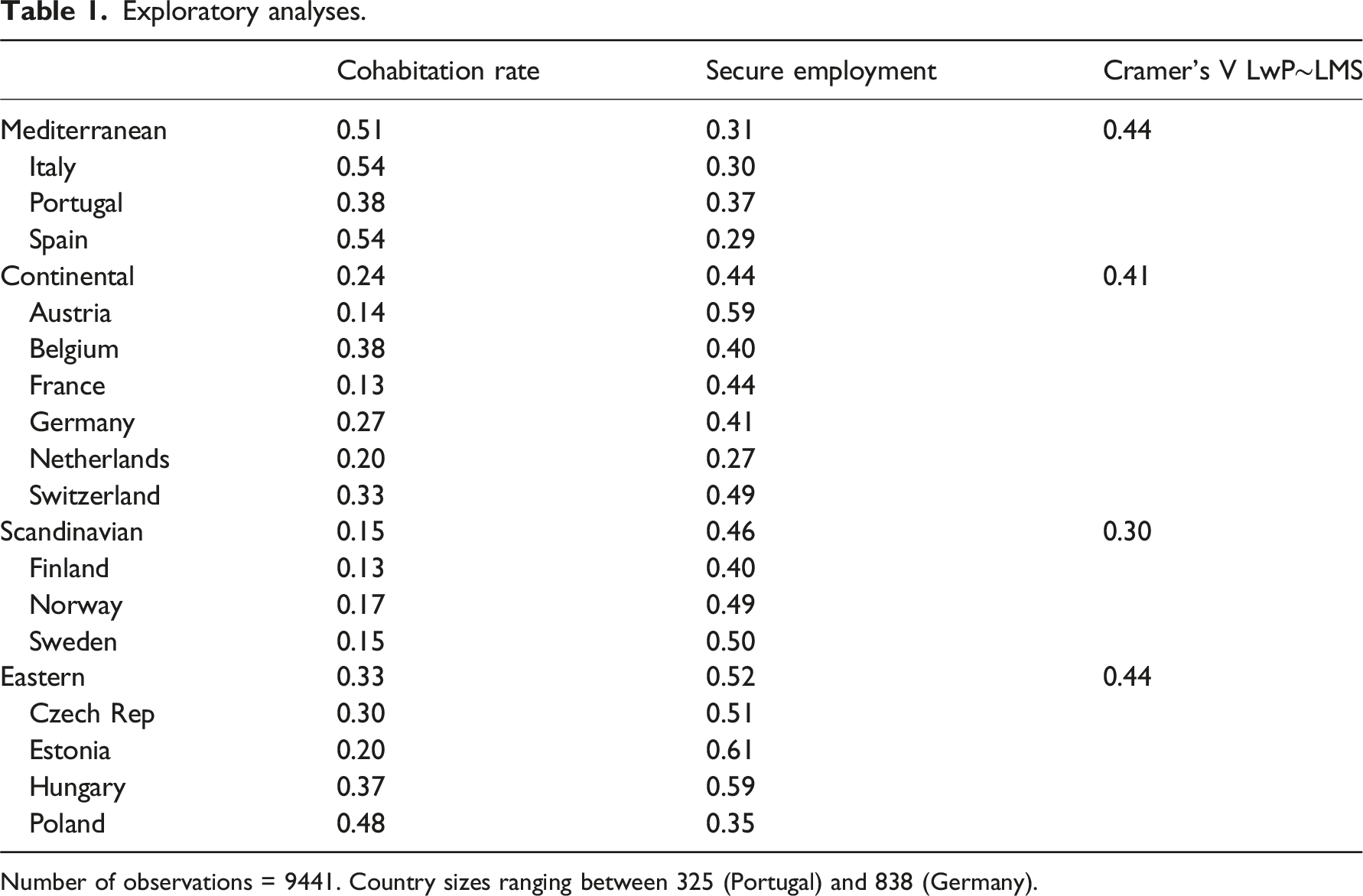
Exploratory analyses.
Number of observations = 9441. Country sizes ranging between 325 (Portugal) and 838 (Germany).
The rates of intergenerational cohabitation across Europe follow the expected pattern. Half of the people between 18 and 39 years of age live with their parents in Mediterranean countries, while only 15% of them do so in Scandinavia. Eastern (33%) and Continental (24%) countries are positioned in between. These two last groups also show higher internal heterogeneity.
Regarding labour market risk, Mediterranean countries present the lowest rates of youth secure employment, partly because of a wider spread of education before the age of 25 and partly because of a greater incidence of unemployment and atypical employment afterwards. As expected, secure employment is considerably more extended among the Scandinavian and Continental youth. Expectations are not met in the case of Eastern European countries where, contrary to theory, more than half of the sample participates in secure employment.
Finally, the association between living with parents (LwP) and labour market status (LMS) measured through Cramer’s V is, although noteworthy in all clusters, strongest in Mediterranean and Eastern European countries and weakest in Scandinavian states, matching the theoretical assumptions.
Logistic regression models
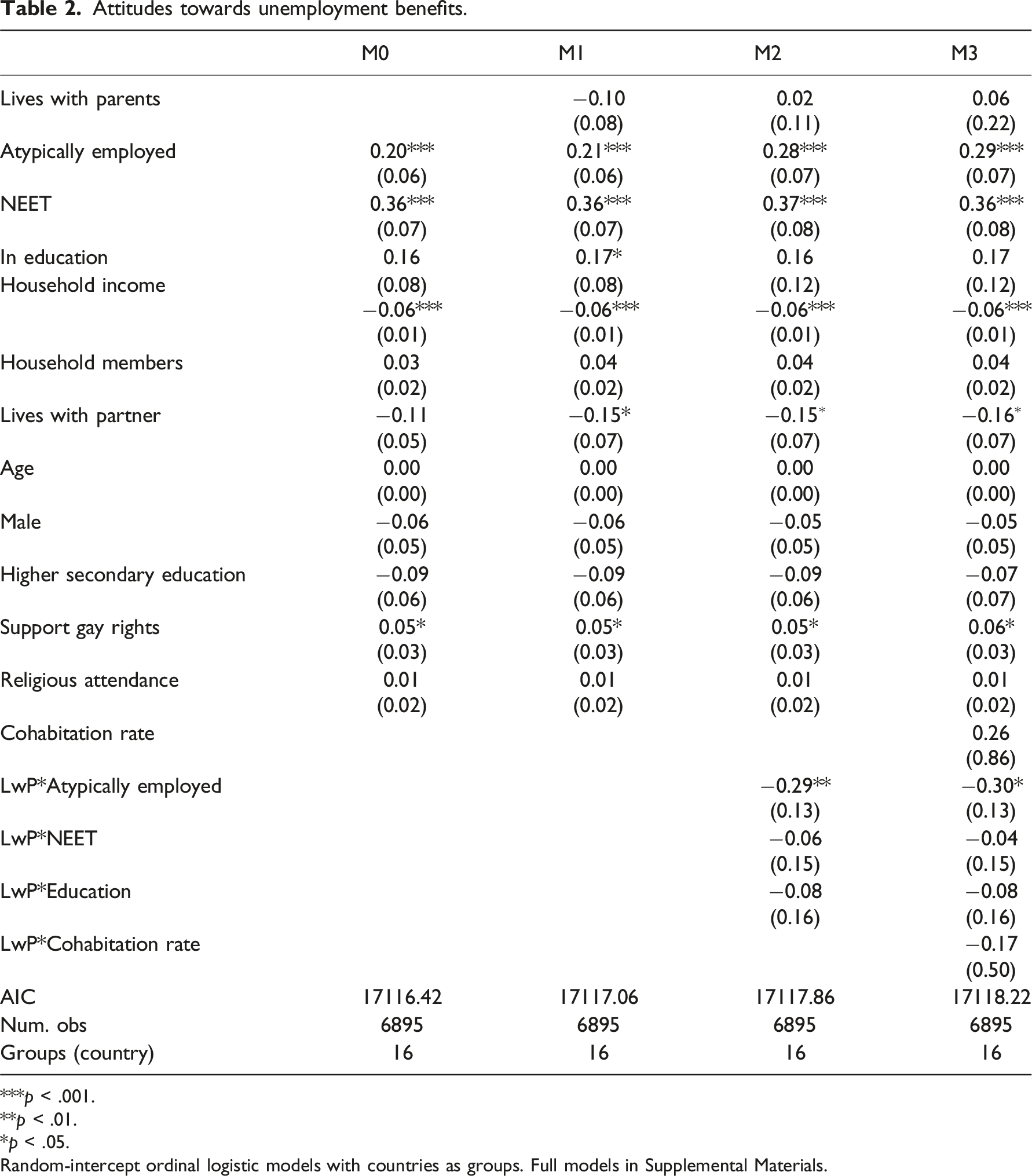
Attitudes towards unemployment benefits.
***p < .001.
**p < .01.
*p < .05.
Random-intercept ordinal logistic models with countries as groups. Full models in Supplemental Materials.
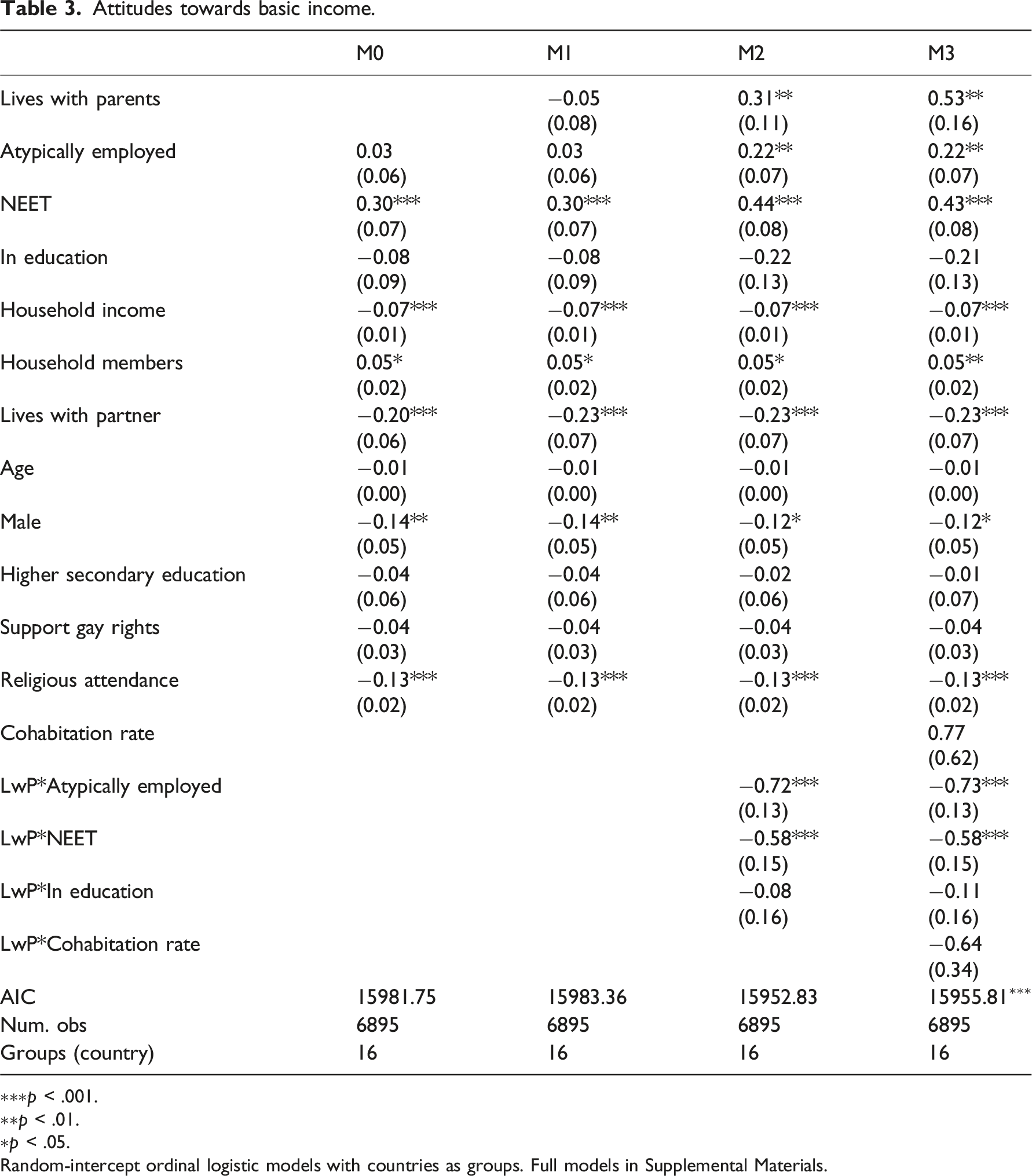
Attitudes towards basic income.
∗∗∗p < .001.
∗∗p < .01.
∗p < .05.
Random-intercept ordinal logistic models with countries as groups. Full models in Supplemental Materials.
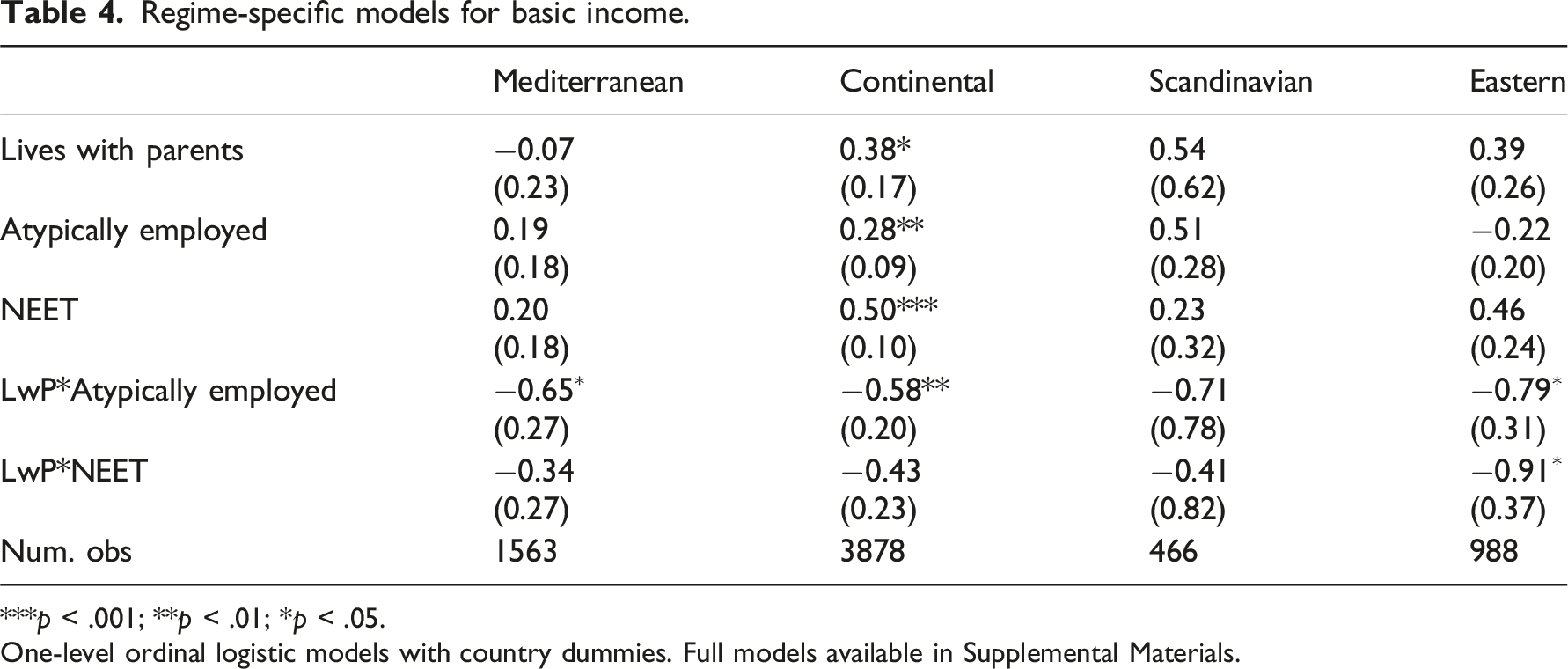
Regime-specific models for basic income.
***p < .001; **p < .01; *p < .05.
One-level ordinal logistic models with country dummies. Full models available in Supplemental Materials.
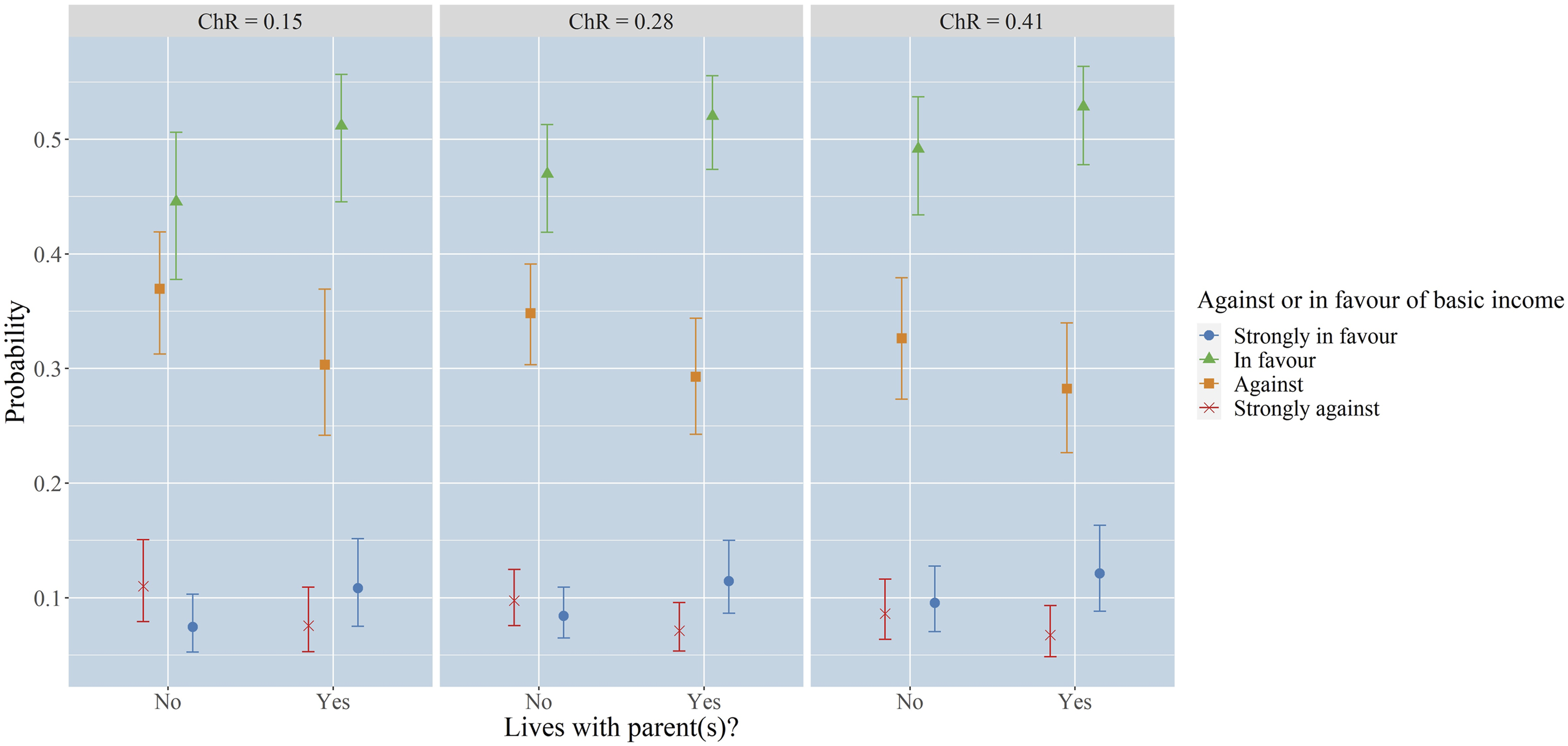
Living with parents, activity status and attitudes towards basic income schemes.
Finally, Hypothesis 3 receives the most support. First of all, being atypically employed or in the ‘NEET’ group clearly increases the odds of supporting unemployment benefits with respect to being securely employed or in education when the respondent does not live with parents (Models 0 to 3). Nevertheless, living with parents seems to cancel out the impact of atypical employment on support for unemployment benefits (Models 2 and 3). The same is not true for the ‘NEET’ group, for which there are no significant interactions. These results suggest that intergenerational cohabitation acts as a safety net for those who are employed but face a high risk of unemployment while, once actual unemployment status is entered, individuals demand support in the form of unemployment benefits irrespectively of whether they live with their parents or not. Hypothesis 3a is therefore accepted only for atypical employment. Conversely, intergenerational cohabitation clearly moderates the impact of both atypical employment and unemployment on attitudes towards basic income. Both activity categories significantly increase the odds of supporting the implementation of basic income schemes when the respondent does not live with their parents, although the effect of atypical employment is only visible when considering its interaction with cohabitation (Models 2 and 3). The interactions between living with parents and being atypically employed or in the ‘NEET’ category are negative and highly significant (Models 2 and 3), providing evidence that intergenerational cohabitation negatively moderates the impact of labour market risk on demand for basic income. Thus, Hypothesis 3b is accepted. The predicted effects of labour market risk on attitudes towards basic income depending on cohabitation are reflected in Figure 3. Looking at the regime-specific models (Table 4), living with parents negatively moderates the link between labour market risk and support for basic income in all clusters but the Scandinavian, with the effect being strongest in the Eastern group and no clear differences between Mediterranean and Continental countries. Living with parents, cohabitation rates and attitudes towards basic income schemes.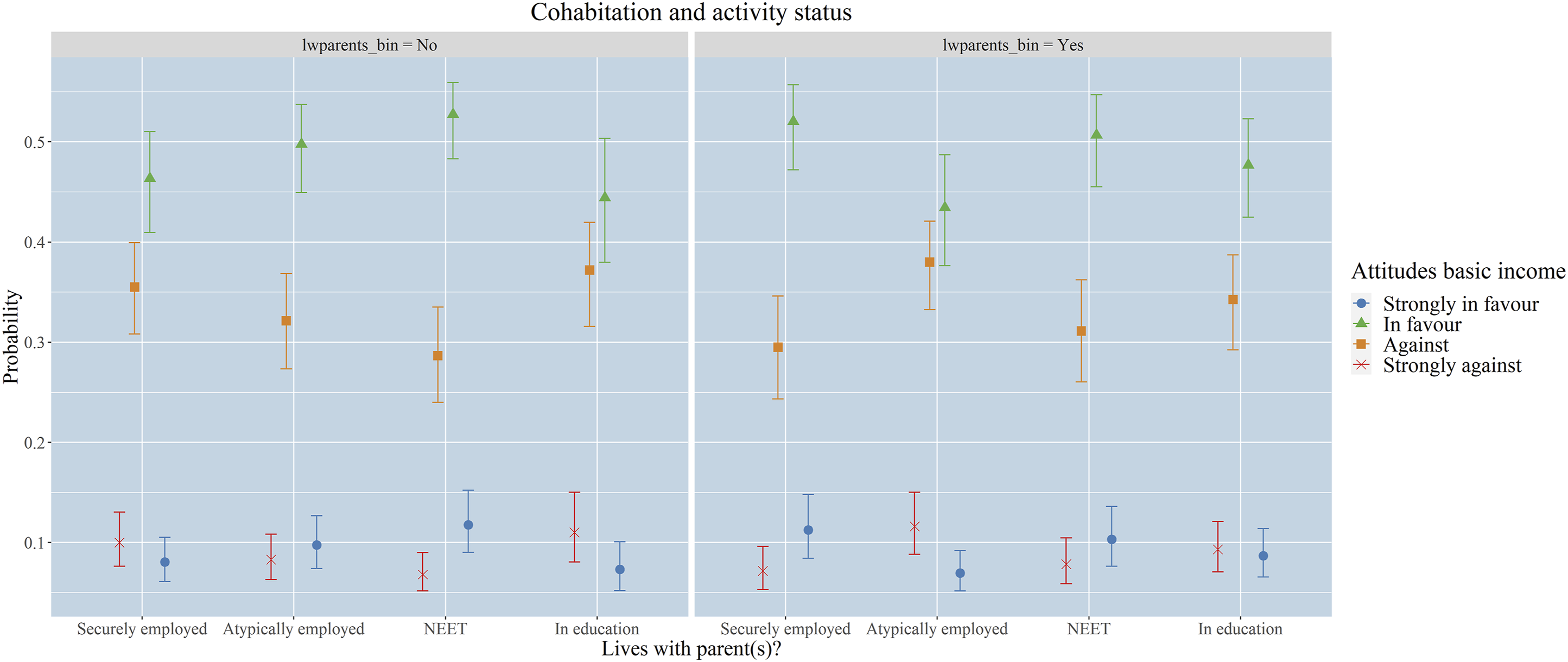
Concerning the rest of the predictors, a higher household income and living with a partner both reduce the odds of supporting unemployment benefits and basic income schemes, while the number of household members increases them for basic income and has no impact on attitudes towards unemployment benefits. Surprisingly, age is not a significant predictor of attitudes, perhaps because of the limited age range of the sample (18–39), while male respondents are less supportive of basic income, but not significantly different from female respondents when it comes to unemployment benefits. It is also surprising that educational level does not seem to play a role in attitude formation. Support for gay rights, which was introduced as a proxy for cultural orientations, is positively associated with support for unemployment benefits, while the other proxy, religious attendance, reduces the odds of supporting basic income. With regard to the country-level predictors, cohabitation rates (M3) are not significantly associated with attitudes.
Bivariate probit model
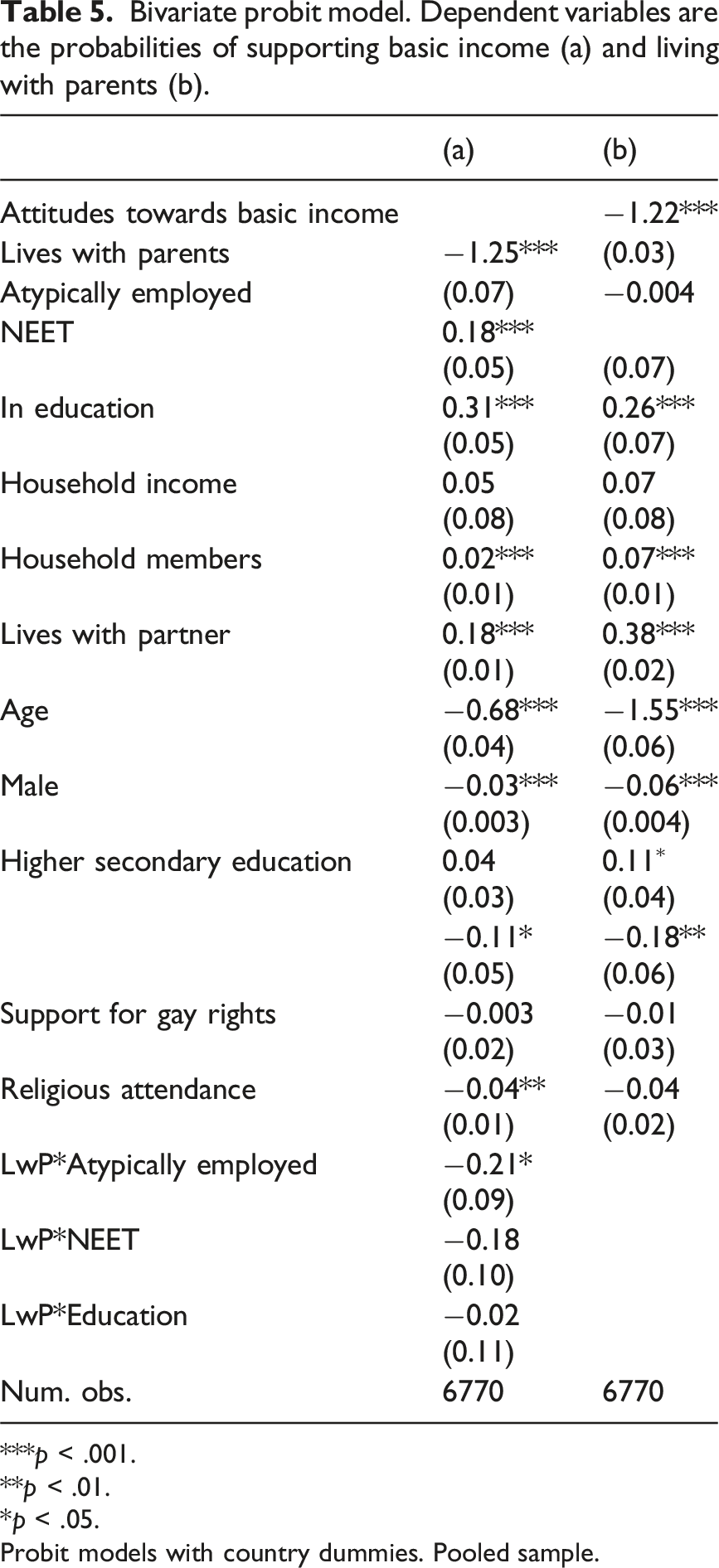
Bivariate probit model. Dependent variables are the probabilities of supporting basic income (a) and living with parents (b).
***p < .001.
**p < .01.
*p < .05.
Probit models with country dummies. Pooled sample.
The results differ from those of the ordinal logit models in important ways. First, there is a clear association between living with parents and demand for basic income, but the sign is now negative. This suggests that, overall, young adults who live with their parents have fewer reasons to support the implementation of basic income schemes, as they are already protected by a household safety net. Hence, Hypothesis 1b would be rejected. Second, being atypically employed or in the NEET category clearly increase the probability of supporting the implementation of basic income schemes. Third, the results still suggest that living with parents moderates the impact of labour market risk on attitudes towards basic income, but the evidence is now less clear. The negative interaction between cohabitation and atypical employment is significantly different from zero with a confidence level of 0.98, whereas the significance level for the NEET interaction is only 0.91, far from the conventional 0.95 threshold. This matches the results for attitudes towards unemployment benefits (Table 2), suggesting that the safety net provided by intergenerational cohabitation can moderate the attitudes of those who are employed and face a high risk of unemployment, but that this safety net may not be enough once actual unemployment is entered.
Discussion
The purpose of this study was to assess how participating in arrangements of support through intergenerational cohabitation affects the welfare attitudes of adult children in different European countries. The analysis is framed within a larger inquiry about how states and families interact and share responsibilities in welfare provision, and how this interplay affects public opinion. An important strand of the specialized literature has been concerned with the way social policy contributes to shaping family support arrangements and social norms regarding the duties of families in welfare provision. This article changes the perspective of the analysis and tests whether and in which circumstances family support through cohabitation might affect demand for two forms of state-based welfare provision: unemployment benefits and basic income schemes. The results reported above support the idea that intergenerational cohabitation plays a role in the formation of welfare attitudes, albeit there are important differences across countries and depending on the policy type that is considered.
Regarding Hypotheses 1 and 2, living with parents seems to be linked with an increase in the chances of supporting basic income schemes, but not unemployment benefits, and this effect appears to be conditional on the extent to which intergenerational cohabitation constitutes a normative arrangement in the country, although the low significance levels do not allow us to draw definitive conclusions. Following my theoretical model, the observed positive association between cohabitation and attitudes would be driven by a perception of cohabitation as an unwanted non-normative dependency that leads to a desire for emancipation, which would in turn be enabled by the implementation of basic income schemes. Therefore, this link would be stronger in those countries where cohabitation does not constitute a normative support arrangement. Indeed, the regime-specific models suggest that living with parents leads to higher demand for basic income in all country clusters except the Mediterranean one where, according to theory, intergenerational cohabitation constitutes a socially normative family support arrangement.
These results draw a scenario in which demand for public welfare provision for the youth in the form of basic income schemes and, possibly, other social assistance income maintenance benefits would be held back by the normative role played by families in the Mediterranean and Eastern European countries, precisely those regions where the levels of welfare provision for the youth are lowest. In these countries, the impact of the high levels of youth unemployment and atypical employment on demand for state-based welfare is softened by the safety net provided by intergenerational cohabitation. On the contrary, in Continental and Scandinavian Europe intergenerational cohabitation does not constitute a normative arrangement and its capacity to moderate the effect of unemployment and atypical employment on demand for basic income schemes is lower as it is not considered a legitimate alternative to state-based welfare provision.
However, the estimates of the effect of living with parents on support for basic income could be biased by the existence of unobservable factors that influence both attitudes and cohabitation. When such factors are accounted for using a bivariate probit model, evidence arises that living with parents leads to lower support for basic income, suggesting that a self-interest logic of preference formation based on the risk-buffering capacity of the household safety net prevails over normative considerations about the legitimacy of living with parents.
In turn, Hypothesis 3 is overall supported by the data. There is evidence that intergenerational cohabitation weakens the effect of labour market risk on demand for unemployment benefits and basic income schemes. According to my argument, this association is explained by cohabitation functioning as a safety net for young adults who experience labour market risk and reducing the need for alternative state-based forms of support. In this sense, the article contributes to the literature on labour market risk and welfare attitudes, highlighting the need to consider how household contexts, not limited to partnership factors but also including intergenerational support, might buffer the impact of labour market insecurity on welfare attitudes.
Nonetheless, the moderating capacity of intergenerational cohabitation does not seem to be unconditional. For both attitudes towards unemployment benefits and, once unobservable confounders are accounted for, towards basic income, living with parents cancels out the effect of atypical employment, but not that of being unemployed. A possible interpretation of these results is that the safety net provided by intergenerational cohabitation has the capacity to affect welfare attitudes when individuals face high labour market risk but are still in employment, whereas once an individual becomes unemployed their own activity status becomes more salient for preference formation, regardless of family support.
The conclusions drawn above must be treated carefully, considering the limitations of the study. First, while the research design allows to determine the occurrence of intergenerational cohabitation, it lacks information about its specific purposes. This means that adult children who receive support from their parents are treated the same as those who are support providers or share the parental household for other reasons. Although according to previous research cohabitation between adult children and parents corresponds most often to downward intergenerational solidarity, treating all cohabitant individuals as a homogeneous group introduces a certain degree of error in the analyses. Second, this study does not consider other types of intergenerational solidarity that occur between households, like financial transfers. Since these arrangements also constitute alternatives to social benefits and policies, they might play a role in the formation of attitudes. Were that the case, omitting transfers from the models could introduce bias in the estimates of the cohabitation effects, as both types of support are correlated. Third, as discussed above, the rates of cohabitation in a country are not an ideal operationalization of social norms towards living with parents but rather a proxy based on the well-established theoretical assumption that living arrangements are driven by cultural factors. Fourth, individual normative factors are not part of the analysis given the lack of measurements of family norms in the employed questionnaire. This means that, in assessing the role of cohabitation norms, the study overlooks those cases where individuals’ own values and preferences go against social norms. Last, the assessments of statistical significance for the cross-level interaction might be unreliable due to the low number of countries in the study (see Bryan and Jenkins, 2016).
Besides these limitations, this article makes a relevant contribution to the field of welfare attitudes to the extent that it signals the need to consider intergenerational cohabitation and, more broadly, family support when studying the formation of attitudes. In this sense, this study constitutes a first step to tackle a wide research gap located at the intersection of two rich bodies of literature: the one on family solidarity and family welfare, and the one on preference formation and welfare attitudes. Future research in this direction should aim at exploring a wider array of forms of intergenerational solidarity, including not only financial support but also care work. Furthermore, the perspectives of not only support receivers but also providers need to be considered in order to disentangle the different mechanisms that drive attitude formation depending on the position of an individual in their network of familiar dependencies and responsibilities. Finally, the gender perspective should not be overlooked, acknowledging that the division of family support, even from an intergenerational point of view, is very much a gendered one. For these recommendations to be implemented some serious data availability limitations need to be overcome. In this vein, an emerging body of literature on family solidarity and welfare attitudes would benefit from the introduction in comparative surveys like the European Social Survey of modules on networks of family support alongside the already implemented modules on welfare attitudes.
Supplemental Material
Supplemental Material - Intergenerational cohabitation and welfare attitudes among European young adults
Supplemental Material for Intergenerational cohabitation and welfare attitudes among European young adults by Gonzalo Arévalo-Iglesias in Journal of European Social Policy.
Footnotes
Declaration of conflicting interests
The author(s) declared no potential conflicts of interest with respect to the research, authorship, and/or publication of this article.
Funding
The author(s) disclosed receipt of the following financial support for the research, authorship, and/or publication of this article: This work was supported by the Deutscher Akademischer Austauschdienst under Grant number 57572629.
Ethical statement

Data availability statement
All codes and data used to produce the results in this article are available for public access. The corresponding links can be found in the Supplemental Materials.
Supplemental Material
Supplemental material for this article is available online.
References
Supplementary Material
Please find the following supplemental material available below.
For Open Access articles published under a Creative Commons License, all supplemental material carries the same license as the article it is associated with.
For non-Open Access articles published, all supplemental material carries a non-exclusive license, and permission requests for re-use of supplemental material or any part of supplemental material shall be sent directly to the copyright owner as specified in the copyright notice associated with the article.
