




Abstract
Artificial Intelligence (AI) is central to the Fourth Industrial Revolution, with promising implications for various aspects of human activities. However, its potential to promote environmental sustainability through carbon emission reductions remains largely unexplored and debated. This study provides updated insights using panel data spanning 2012–2021 for 29 developed and 18 emerging economies. Empirical estimates derived from the Bayesian linear regression technique, implemented via Markov Chain Monte Carlo experiments, highlight the significant carbon emission-reducing effects of AI in both developed and emerging economies. Nevertheless, it is important to note that these effects remain tenuous in both contexts. The limited impact of AI is attributed to insufficient budgetary allocations toward carbon emission-reducing AI tools. Therefore, increased investments in these technologies are crucial to optimize their carbon mitigation potential, thereby fostering greater climate change resilience in these nations. Notably, the study reveals that AI has contributed more substantially to carbon emission reductions in developed economies compared to emerging ones. This disparity is linked to the relatively low financial commitments of emerging economies toward the deployment of carbon emission-reducing AI technologies. Additionally, the interaction of AI with resource utilization, human capital, eco-productivity, and income levels has demonstrated notable carbon emission-reducing effects. Although it is observed that these effects are more pronounced in developed countries. The study concludes by outlining specific policy recommendations to enhance the effectiveness of AI in mitigating carbon emissions across varying economic contexts. Remarkably, the inferences herein could apply to other economies.
Keywords
Introduction
Sustainable Development Goal 13 (SDG 13) emphasizes the urgency of climate action through the implementation of strategies that enhance climate change resilience. Specifically, Target 13.1 encourages all countries to develop and strengthen adaptive capacities to mitigate the adverse impacts of climate change. The necessity of such resilience strategies cannot be overstated, given the severe consequences of uncontrolled climate change on humanity and the environment. Climate change is widely recognized as one of the most significant global risk factors, threatening health, survival, and sustainable development. 1 Among its notable effects, increased climate variability is currently undermining life expectancy and quality of life.2,3 Additionally, global warming and its associated impacts have resulted in substantial losses to wildlife, degradation of natural resources, biodiversity decline, and escalating environmental pollution.
Given the profound implications of climate change on health, economic stability, and environmental ecosystems, world leaders are increasingly committed to identifying effective strategies to build resilient societies, with artificial intelligence (AI) emerging as a pivotal enabler of climate resilience. Recognized for its transformative potential, AI has been lauded at global forums, including the Geneva Summits, for its role in helping countries mitigate climate impacts and achieve sustainable development goals. Platforms such as “The AI for Good Global Summits” underscore AI's multifaceted contributions to poverty reduction, environmental protection, resource conservation, and pollution mitigation. By evaluating and promoting innovative AI-driven solutions, these summits highlight AI's capacity to support humanity in adapting to climate variability and addressing its adverse consequences. They also reinforce the critical roles of AI in achieving resilience and sustainability.4,5
Studies have demonstrated the remarkable capabilities of artificial intelligence (AI) to learn from experience and develop innovative methods for reducing environmental pollution. 6 Advanced AI tools, such as algorithms for mapping nonlinear relationships between chemical and biological inputs and outputs, pollutant removal optimization systems, air quality prediction models, and intelligent control mechanisms, have been deployed for pollution abatement and environmental restoration efforts.5,7 Similarly, AI techniques like artificial neural network algorithms have proven effective in detecting and controlling large-scale desertification, monitoring environmental conditions, and identifying underlying causes of climate variability. 2 These applications underscore AI's transformative role in addressing pressing environmental challenges and fostering sustainability.
Artificial intelligence (AI) holds immense potential for fostering smart societies and advancing sustainable development. However, critical questions arise regarding the effectiveness of AI in enabling societies to adapt to climate variabilities and whether significant progress has been achieved in mitigating climate change through AI-driven protocols. These pressing questions underscore the need for further investigation, as existing empirical assessments of the relationship between AI and environmental performance are scarce. A more comprehensive empirical evaluation is crucial to equip policymakers with the insights needed to make informed and strategic decisions for environmental sustainability.
The limited studies available offer conflicting perspectives. On one hand, some scholars8,9 suggest that AI significantly enhances societies’ capacities to mitigate the adverse effects of climate change and environmental variability. On the other hand, Nie et al., 10 Wang et al., 11 Chen et al., 12 and Liu et al. 13 express skepticism regarding the efficacy of AI in advancing environmental sustainability. These studies emphasize the heterogeneous impacts of AI on environmental performance across countries and over time, reflecting varying levels of technological adoption, resource allocation, and institutional quality. This divergence in findings complicates the task of policymakers, limiting their ability to formulate cohesive strategies to address environmental challenges. Without clearer empirical insights, these contradictions risk exacerbating challenges in environmental governance and impeding effective policy coordination. Thus, robust empirical investigations are indispensable to reconcile these conflicting views and provide actionable guidance for policymakers aiming to enhance climate resilience and environmental sustainability.
The projected contributions of artificial intelligence (AI) to climate resilience may not yield uniform benefits across different categories of countries. This realization underscores the importance of examining the unique circumstances of 47 global economies, categorized into developed and emerging nations. While carbon emissions represent a global challenge affecting all environments, developed and emerging economies have witnessed disproportionately higher emissions in recent decades (Figure 1(a) and 1(b)). This trend is largely attributed to extensive industrialization in these regions. Recently, these economies have begun to adopt AI technologies as potential tools for mitigating carbon emissions. However, available evidence (Figure 1(c) and 1(d)) indicates that emerging economies lag significantly behind developed nations in AI investments. Notably, Figure 1(b) shows a consistent decline in carbon emissions in developed countries, while Figure 1(d) highlights a steady increase in AI investments, particularly in these economies, over the years. In contrast, while emerging economies exhibited a notable rise in AI investments in 2020, a gradual decline followed in 2021. These discrepancies raise critical questions: What are the implications of these varying AI investment patterns on carbon emissions? Have these investments translated into significant reductions in emissions? Are developed countries deriving greater benefits from AI-driven carbon abatement strategies than emerging economies? To address these questions, this study undertakes a robust empirical analysis aimed at uncovering whether AI technologies are effectively aiding societies in curbing rising carbon emissions. The findings will provide crucial insights into the relationship between AI and carbon emissions, enabling policymakers to make targeted and effective adjustments to climate strategies in both developed and emerging economies.
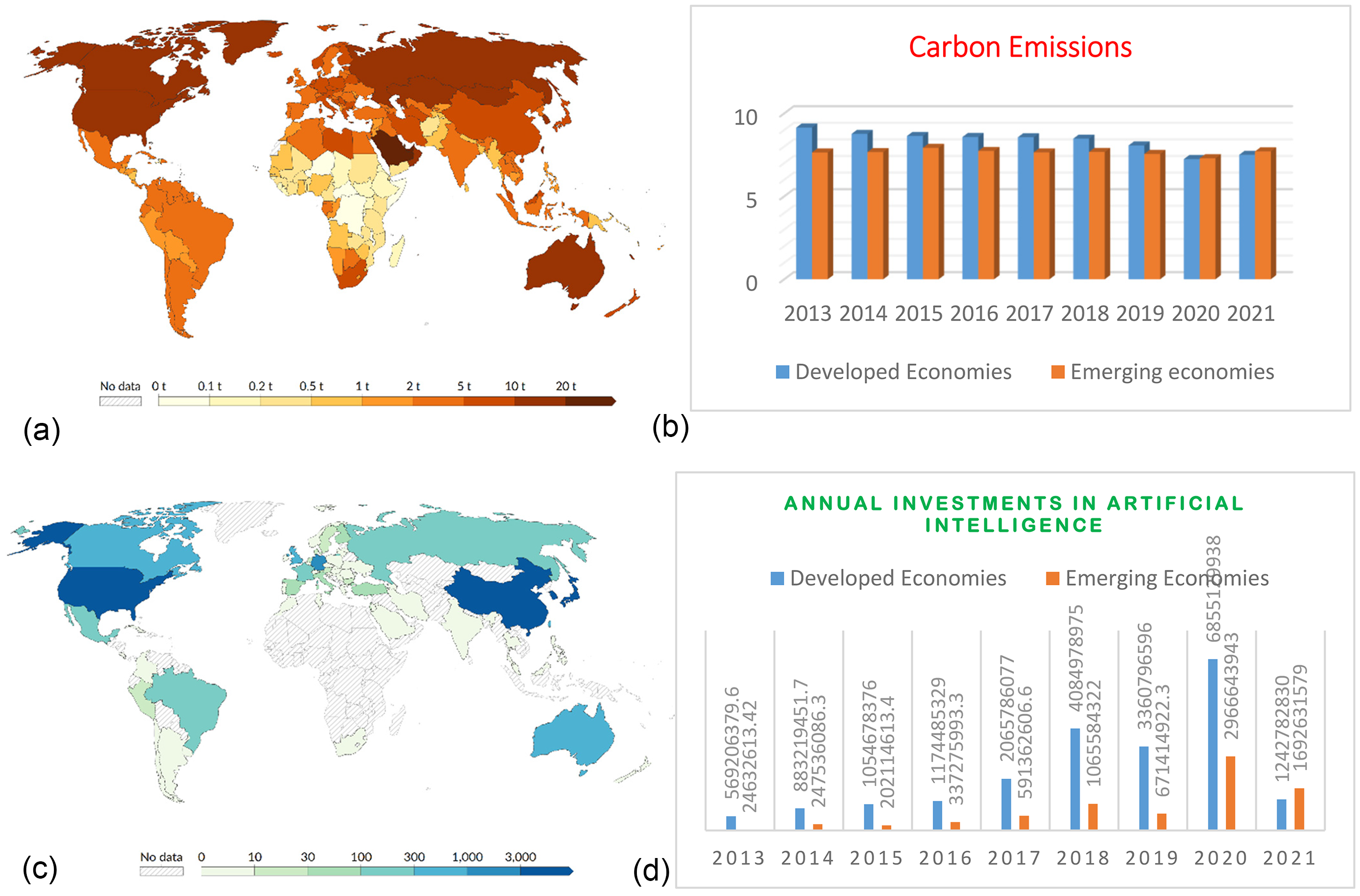
(a and b) Geographical distributions and graphical illustrations of carbon emission in developed and emerging economies.
Ultimately, this study contributes novel insights to the empirical literature through its broad objectives and robust methodological approach. Research exploring the effects of AI investments on carbon emissions remains limited, despite the critical importance of such investigations given the profound negative impacts of carbon emissions on the environment. The comparative analysis of developed and emerging economies is particularly noteworthy, as existing studies predominantly focus on specific contexts, such as Chinese provinces. By broadening this scope, the study provides policymakers in both developed and emerging economies with comprehensive empirical evidence to optimize AI investments for addressing climate variability challenges effectively.
Moreover, the inclusion of AI-control variable interactions in analyzing their impact on carbon emissions introduces another innovative dimension to the literature. This focus reveals how AI technologies can amplify the contributions of factors like human capital, resource utilization, and income toward climate resilience—a perspective largely absent in prior studies. Additionally, the study addresses methodological limitations in existing research. Most prior investigations rely on classical frequentist econometric techniques, often applied to datasets with short time spans. Such an approach may have contributed to inconsistent findings and limited policy implications. In contrast, the current study employs a Bayesian estimation framework, which is more flexible and capable of producing robust estimates regardless of data limitations. This methodological advancement enables deeper and more reliable insights into the AI–carbon emission nexus. The findings from this study are crucial for mitigating the adverse effects of carbon emissions and strengthening climate change resilience. By providing actionable insights, this research equips stakeholders with the tools to make informed decisions for sustainable development. Essentially, these notable strategies amplify the novelty of this study and enhance its global relevance.
The other components of the study include related literature in section “Literature review”, methodology in section “Data and methodology”, data analysis and discussion in section “Data analysis and discussions”, and summary and policy prescriptions in section “Conclusion and practical implications”.
Literature review
Theoretical literature
The relationship between artificial intelligence (AI) and carbon emission reductions is deeply rooted in the technological innovation theory (TIT), originally proposed by Schumpeter. 14 TIT posits that technological advancements can enhance energy efficiency and carbon 15 productivity, ultimately contributing to climate change resilience. 16 This framework underscores the application of AI in optimizing energy usage across various sectors, including manufacturing, agriculture, transportation, and construction. The theory further highlights the role of AI algorithms in managing energy efficiency within households and industrial operations. The theory also emphasizes their potential to minimize energy wastage and reduce carbon footprints for a cleaner environment.15,17
These theoretical propositions illustrate how AI can facilitate energy use optimization through predictive maintenance of energy systems, enhanced energy management and forecasting, and integration with renewable energy sources. Current discussions have increasingly focused on the potential of AI to contribute to carbon emission reductions and bolster climate resilience. However, recent empirical studies present countervailing views regarding the nexus between AI and carbon emissions. A comprehensive analysis of these empirical findings provides critical insights into the ongoing debate. To further elucidate the pathways through which AI impacts carbon emissions and environmental sustainability, Figure 2 presents a conceptual map detailing the channels of AI's influence. This map integrates theoretical and empirical perspectives, illustrating AI's multifaceted role in advancing energy efficiency, promoting renewable energy adoption, and enhancing overall environmental progress.
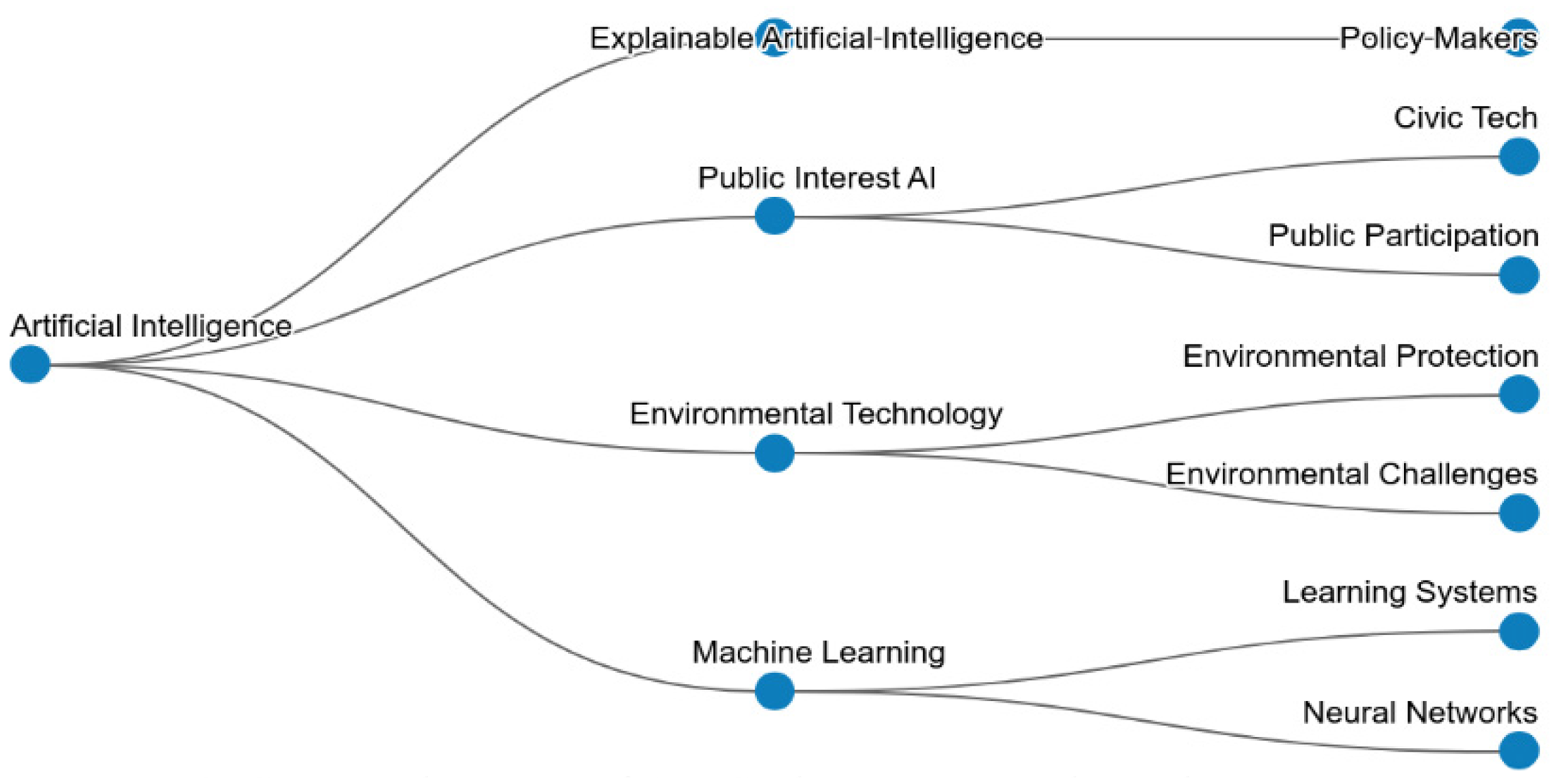
Concept depiction of AI–carbon emission channels. Source: Scopus.
Empirical literature
There are notable empirical debates regarding the contributions of artificial intelligence (AI) to carbon emissions and environmental sustainability. For instance, Chen et al. 8 investigated the relationship between AI and ecological footprints across 72 global economies from 1993 to 2019. Using both random and fixed effects model estimates, the study concluded that AI significantly improves environmental outcomes in these countries. However, it also noted varying effects (both positive and negative) across different quantile distributions of the ecological footprint, suggesting the need for further empirical investigation. A similar inference was made by Li et al., 18 who examined 35 countries between 1993 and 2017. Their findings, based on a fixed-effects panel estimator, highlighted the significant inhibitive effects of AI on carbon emissions and energy intensity in the sampled countries. 7 extended this argument by investigating the heterogeneous effects of AI on carbon emissions, focusing specifically on China's industrial sector. In a related study, Lv et al. 19 further explored sector-specific AI–carbon footprint relationships in China during the period 2000–2017. Similarly, Meng et al. 20 emphasized regional variations in AI's contributions to carbon emissions, specifically in the context of Chinese provinces. Collectively, the conflicting findings from these studies underscore the need for more in-depth empirical analyses to better understand the role of AI in mitigating carbon emissions.
Based on estimates from a spatial Durbin model using annual data from 2006 to 2019, 2 concluded that artificial intelligence (AI) contributed to carbon emission reductions across 30 Chinese provinces, with stronger effects observed in western and central China. In contrast, Gaur et al. 21 emphasized the dual nature of AI's implications for carbon emissions. Their system-of-systems analysis suggests that while AI can reduce carbon emissions, it can also exacerbate them in certain contexts. This finding underscores the need for further evaluations of AI's contributions to carbon emissions beyond the Chinese context. Liu 9 explored both temporal and regional variations in AI's role in China's decarbonization efforts, noting differential positive and negative effects across regions, particularly after 2013. Further evidence of these heterogeneous effects was provided by studies,10,22–24 all of which found significant regional disparities in AI's impact on carbon emissions.
Furthermore, Wang et al. 25 identified both heterogeneous effects and energy rebound effects in the dynamics between AI and carbon emissions in China. Based on this finding, the study suggests that, with increased awareness and investment, AI adoption could potentially have more favorable effects in less industrialized regions compared to their more industrialized counterparts. Song et al. 26 utilized a micro-level longitudinal dataset from global industries to argue that AI can decrease carbon emissions. However, they caution that AI must be adopted with care, as it may not provide a comprehensive solution to climate change challenges. This highlights the importance of considering the contributions of other variables and the interactions of AI with these factors, which is central to the present study. Wang et al. 27 explored a U-shaped relationship between AI and carbon emissions, influenced by the moderating effects of natural resources, using data from 66 global economies between 1993 and 2018. In a similar vein, Wang et al. 11 relying on estimates from the entropy model and global datasets spanning 2010 to 2019, emphasized the significant carbon emission-reducing effects of AI. Conversely, Yang et al. 28 examined the AI–carbon emission relationship over the period 1997–2020 in 74 global economies, finding a nonlinear, inverted U-shaped dynamic. Their study noted that AI exacerbated carbon emissions beyond a certain threshold in these countries. Given these varied findings, further empirical evaluations, especially considering the small datasets used in many studies, are crucial to better understanding the AI–carbon emission relationship and informing policy decisions.
The evolving role of AI in carbon abatement and environmental progress has been the subject of significant empirical inquiry, with recent studies offering divergent viewpoints on the AI–carbon emission relationship. Chen et al. 12 identified a U-shaped relationship between AI and carbon emissions in China, suggesting that AI's impact on emissions varies at different stages of economic development. This perspective was supported by a series of studies, including Liu et al., 13 Dong et al.,29,30 Liu et al., 31 Nahar, 32 Tian et al., 33 and Wang et al., 34 which observed similar heterogeneous effects in China, 50 developed countries, and 22 selected countries. While these studies highlight the complexity and variation in AI's impact, others have reported more muted effects. For example, certain studies15,35,36 and Liu and Zhou 37 suggest that the relationship between AI and carbon emissions is both weak and heterogeneous, particularly in China and the USA. Conversely, Qing et al. 38 argued that AI effectively reduced carbon emissions in leading economies between 2008 and 2021, and this view was echoed by Long et al. 39 for Belt and Road Initiative (BRI) countries, 40 for China, and Shoha et al. 41 for the United States. These conflicting findings underscore the need for further empirical research to clarify the true extent and mechanisms through which AI can contribute to environmental sustainability.
In a countervailing narrative, Shah et al. 42 argue that AI has exacerbated carbon emissions in East Asia and Pacific countries. Their findings, derived from classical econometric methods such as OLS, DOLS, FMOL, and the generalized method of moments (GMM), suggest that AI has not been as effective in curbing emissions in this region as some of the other studies indicate. This contrasts with the view held by proponents of AI's inhibitory effects, who argue that AI can help mitigate ecological footprints. For instance, Wang et al.27,34 highlight AI's potential to reduce ecological footprints in 30 Chinese provinces and 67 selected economies, respectively. However, Yin and Zeng 4 and Xie and Wang 43 also support the notion of a nonlinear and U-shaped relationship between AI and carbon emissions, particularly in China and 74 selected economies. In a similar vein, Zhong et al. 44 emphasize that the impact of AI on carbon emissions varies across countries, with demographic factors playing a significant role in shaping these outcomes. These diverse perspectives underscore the complexity of the relationship between AI and carbon emissions, suggesting that AI's effectiveness is context-dependent and influenced by various national and regional characteristics.
Summary of knowledge gaps
Evidently, the contrasting arguments within the literature regarding the AI–carbon emission nexus have had notable implications for policy administration. Some scholars argue that AI effectively mitigates carbon emissions, while others contend that its inhibitory effects are either ineffective or absent altogether. Additionally, certain studies suggest that the relationship between AI and carbon emissions is heterogeneous, varying across countries and regions. However, a significant limitation of these prior studies, contributing to their conflicting conclusions, is their reliance on classical frequentist estimators. Given AI's evolving nature and the resulting data limitations, classical econometric methods often struggle to provide accurate insights due to the short time spans involved. In contrast, the Bayesian estimator emerges as a more appropriate tool for addressing these challenges. Its robustness allows for reliable estimates despite the limited data, making it an ideal choice for analyzing the AI–carbon emission relationship.
Furthermore, many earlier studies focus predominantly on China and a select few economies, limiting the generalizability of their findings. The narrow focus of these studies restricts the development of comprehensive, globally relevant policy insights. The current study, which examines 47 global economies, including both developed and emerging nations, provides a broader perspective on the dynamic between AI and carbon emissions. Thus, this study hypothesizes that AI serves as an effective tool for mitigating carbon emissions in both developed and emerging economies, while also expecting to uncover varied effects across these groups. This approach not only expands the geographic scope of AI's impact but also addresses the methodological limitations of previous studies, offering more nuanced insights into the role of AI in environmental sustainability.
Data and methodology
Definition of data and sources
The empirical estimates of this study are derived from an annual panel dataset covering 47 countries, comprising 29 developed and 18 emerging economies, with a consistent time span from 2013 to 2021. The panel data framework, which involves 47 cross-sections (N) and 13 time periods (T), allows for a comprehensive analysis of the relationship between AI investments and carbon emissions across different economies. Due to data limitations, the study is confined to these 47 countries (Appendix A). The study also conducts a comparative analysis between developed and emerging economies, providing deeper insights into the specific implications of AI on environmental quality. Data for the relevant variables were sourced from reputable global repositories, including the International Federation of Robotics, Our World in Data, World Development Indicators, and the United Nations Conference on Trade and Development. These sources provide detailed information on variables such as AI investments, carbon emissions, and other economic and environmental indicators, which are further elaborated in Table 1. This structured approach allows for a robust exploration of AI's role in carbon emission mitigation and environmental sustainability across diverse global contexts. The use of panel data econometrics enables an assessment of the differential effects of AI in developed versus emerging economies, which is crucial for informing targeted policy recommendations.
Description of variables.
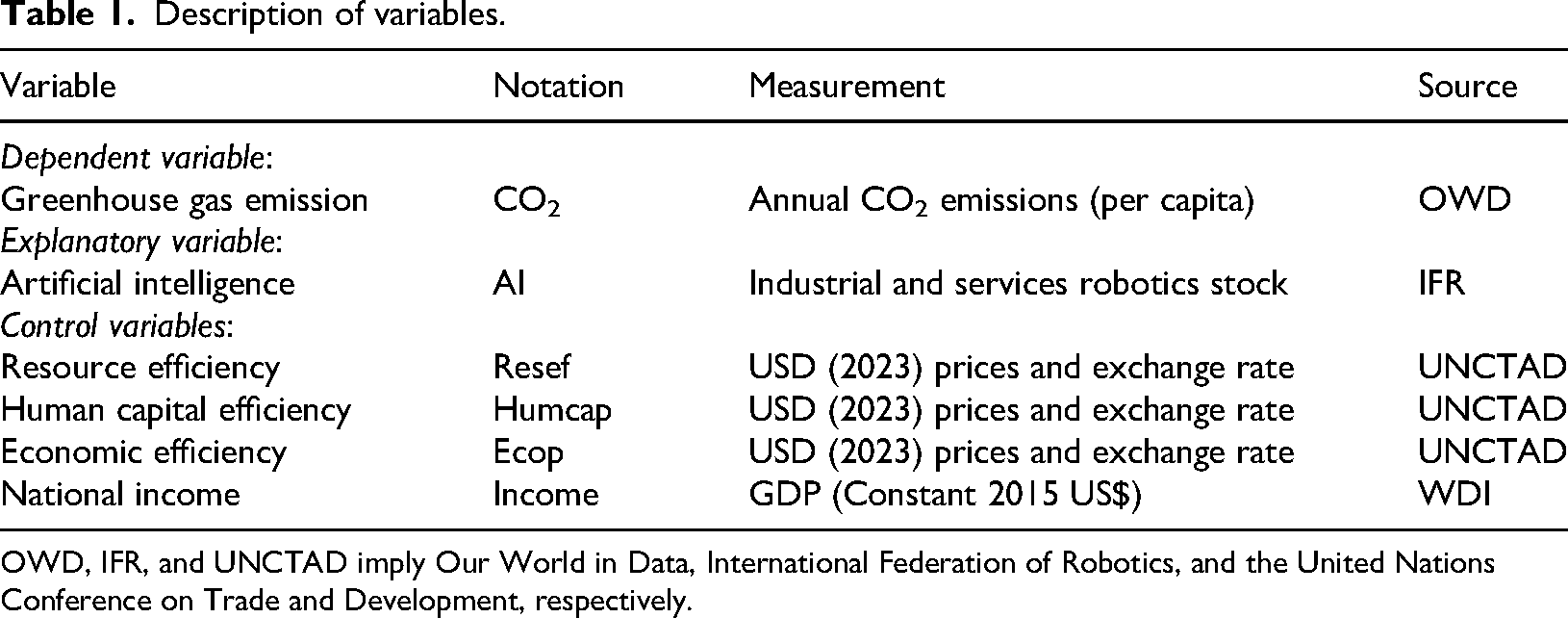
OWD, IFR, and UNCTAD imply Our World in Data, International Federation of Robotics, and the United Nations Conference on Trade and Development, respectively.
Model specification
This study adopts the recently modified Dynamic Integrated Model of Climate and Economy (DICE), as updated by Barrage and Nordhaus.
45
The original DICE model, proposed by Nordhaus in 1996, provides a framework for analyzing optimal paths in the context of economic growth, natural resource management, and climate change mitigation. It offers a comprehensive method to examine how policies can address global warming, particularly aiming to limit temperature rise to 2 °C as outlined in the Paris Agreement.
46
The current study extends the climate economics literature by incorporating the role of AI in facilitating greenhouse gas (GHG) reductions. This is done by modifying the DICE model to integrate AI as a contributing variable for improved environmental performance in 47 selected economies. By doing so, the study seeks to better understand how technological innovations, such as AI, can support climate change mitigation efforts and inform policy decisions to reduce CO2 emissions. The climate equation (Eq. 1) derived from the modified DICE model will help quantify the specific implications of AI on CO2 reduction, thereby providing insights into its potential contributions to environmental sustainability in the context of climate change.
Relying on the modified climate equation (Eq. 1), we present the framework highlighting the contribution of AI to carbon emission reductions in Eq. (2).


As mentioned earlier, the inclusion of selected control variables in this study is motivated by several empirical findings and theoretical inferences. Efficient use of natural resources plays a crucial role in achieving environmental sustainability and fulfilling Sustainable Development Goals (SDGs) 7 (Affordable and Clean Energy) and 13 (Climate Action).49,50 In a similar vein, human capital development is fundamental to improving environmental quality. Enhanced human understanding, critical thinking, and reasoning contribute to raising awareness about the importance of environmental health for human survival. 33 Economic productivity, which measures how efficiently an economy allocates its scarce resources to generate optimal returns, is vital for reducing environmental pressures and promoting sustainable economic growth. Furthermore, economic affluence (GDP) can have both positive and negative implications for environmental quality. While some studies have highlighted the adverse effects of income growth on the environment,51,52 others have emphasized the importance of economic prosperity in funding environmental sustainability initiatives. 53 Given these considerations, the study incorporates these variables as control factors in analyzing the relationship between AI and environmental quality.
Econometric techniques
The preliminary empirical analysis of this study includes descriptive statistics, correlation analysis, and the cross-sectional dependency (CD) test. These preliminary tests are critical for providing foundational insights into the data structure before advancing to more sophisticated econometric modeling. Descriptive statistics offer an initial overview of the dataset, highlighting trends, outliers, and basic patterns across the variables. Correlation analysis then explores relationships between key variables, helping to identify potential multicollinearity or significant associations. The cross-sectional dependency test is particularly important in panel data analysis, as it checks for dependencies across cross-sectional units, ensuring the robustness of results. 54 These preliminary diagnostics are essential for establishing the validity of subsequent model estimations.
CD test techniques
Unlike several existing studies,
55
this research relied on four recently introduced cross-sectional dependence (CD) procedures for inferring the potential convergence among the enlisted economies. This step follows the standardized procedure designed to ensure both convergence and potential error spillover among panel member countries.
56
These newly introduced CD test procedures include the methods given in Pesaran,
54
Fan et al.,
57
Pesaran et al.,
56
and Juodis and Reese.
58
In contrast to the conventional CD techniques, these recent procedures offer more reliable estimates of cross-sectional convergence, as supported by Uche
59
and Murshed.
60
The mathematical notations corresponding to these procedures are detailed in equations 5–8.



Marginal effects evaluation
Unlike the classical frequentist econometric procedures commonly used in some prior studies,7,12,13 this study utilizes Bayesian linear regression. The decision to adopt this method is premised on insights from Nuzzo, 61 Dinh et al., 62 and De Sisto et al., 63 who applied the Bayesian technique to investigate the relationship between natural resources and environmental sustainability. One of the key advantages of Bayesian linear regression is its robustness, especially in cases of small sample sizes. 64 Unlike classical estimators, which provide point estimates without accounting for prior knowledge of distributions, the Bayesian approach incorporates prior knowledge to estimate posterior distributions. 65 This allows the Bayesian method to effectively handle potential heterogeneities and uncertainties in panel data sets, making it a more reliable choice for this study.
The Bayesian linear regression model in this study utilizes Markov Chain Monte Carlo (MCMC) simulations through Gibbs sampling to assess the convergence of posterior distributions.61,66,67 This technique effectively addresses the complexities of multidimensional problems, even when prior or likelihood distributions lack conjugate structures, thus enhancing the reliability of the estimates.
66
By applying these methods, the study examines the intricate relationship between AI and environmental performance across 29 developed and 18 emerging global economies. This robust estimation approach helps policymakers better understand the dynamics involved and guide them in optimizing AI's potential for sustainable environmental ecosystems. The application of Bayes’ rule, grounded in conditional probabilities introduced by Thomas Bayes,
68
allows for a more nuanced estimation of the parameters involved, facilitating a deeper understanding of these complex relationships. Eq. (9) illustrates the typical Bayes’ rule.

Data analysis and discussions
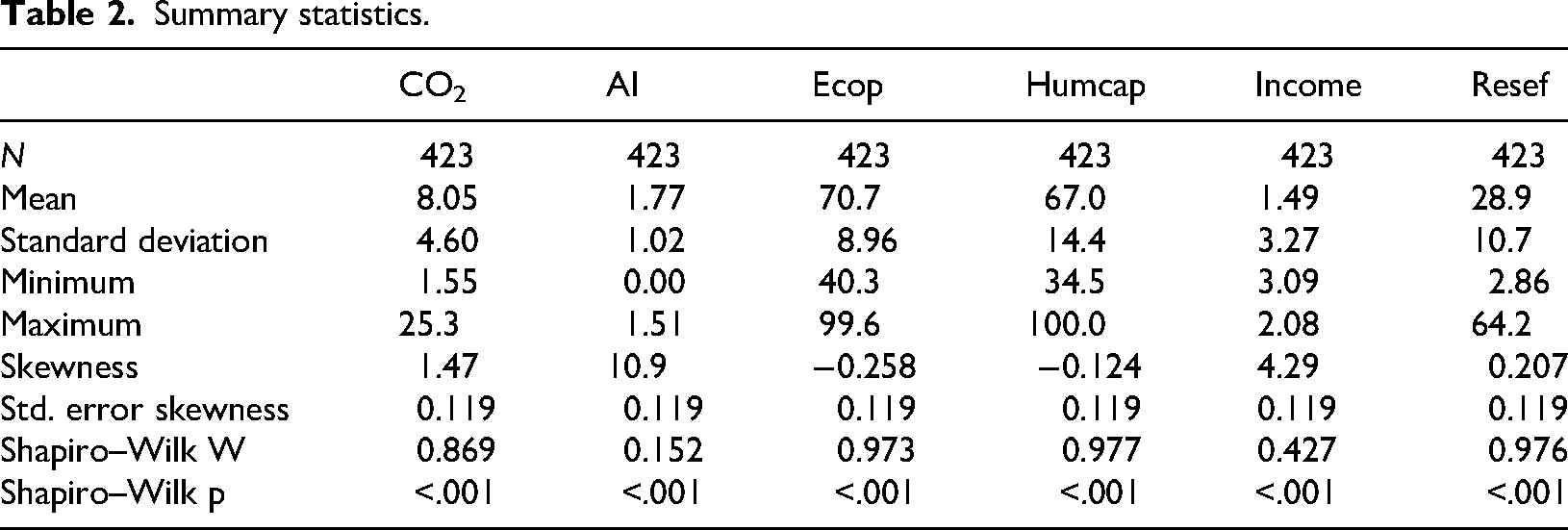
In this section of the study, the descriptive statistics, correlation analysis, and cross-sectional dependency test offer essential insights into the relationship between AI investments and carbon emissions across the selected countries. Table 2 summarizes the data characteristics. On average, AI investments across the 47 countries stand at 1.77, while CO2 emissions average 8.05. The data reveal considerable variation in human capital, resource efficiency, and economic productivity, with human capital showing the greatest dispersion. In contrast, AI and income show more convergence. Notably, the Shapiro–Wilk test indicates that the data deviates from normal distribution for all variables, which is expected given the characteristics of real-world data. 69 Despite these deviations from normality, the Bayesian regression model remains robust, effectively handling such issues. 69 Furthermore, the marginal analysis controls for heteroscedasticity by using the return series of the variables, which helps ensure more reliable estimation results. This approach is particularly important for assessing the complex and potentially non-linear relationships between AI and carbon emissions. It is also essential for understanding the contributions of other factors, such as human capital, resource efficiency, and economic productivity.
Summary statistics.
The correlation analysis results, as summarized in Table 3 and depicted in Figures 3 and 4, provide key insights into the relationships between AI and environmental performance across the 47 countries. Table 3 presents the Bayesian Pearson correlation matrix, which highlights the relationships between the variables. In Figure 3, the graphical illustrations of the Bayes Factor (BF) prior and posterior density plots are shown within a 95% credible interval, offering a Bayesian perspective on the relationships. Meanwhile, Figure 4 displays the correlation matrix, helping to visualize potential multicollinearity issues among the predicting variables. The analysis shows no evidence of multicollinearity among the panel variables, as indicated by the correlation matrix in Table 3 and Figure 4. This absence of multicollinearity means that the variables can be used simultaneously in the predictive models without risk of redundancy.
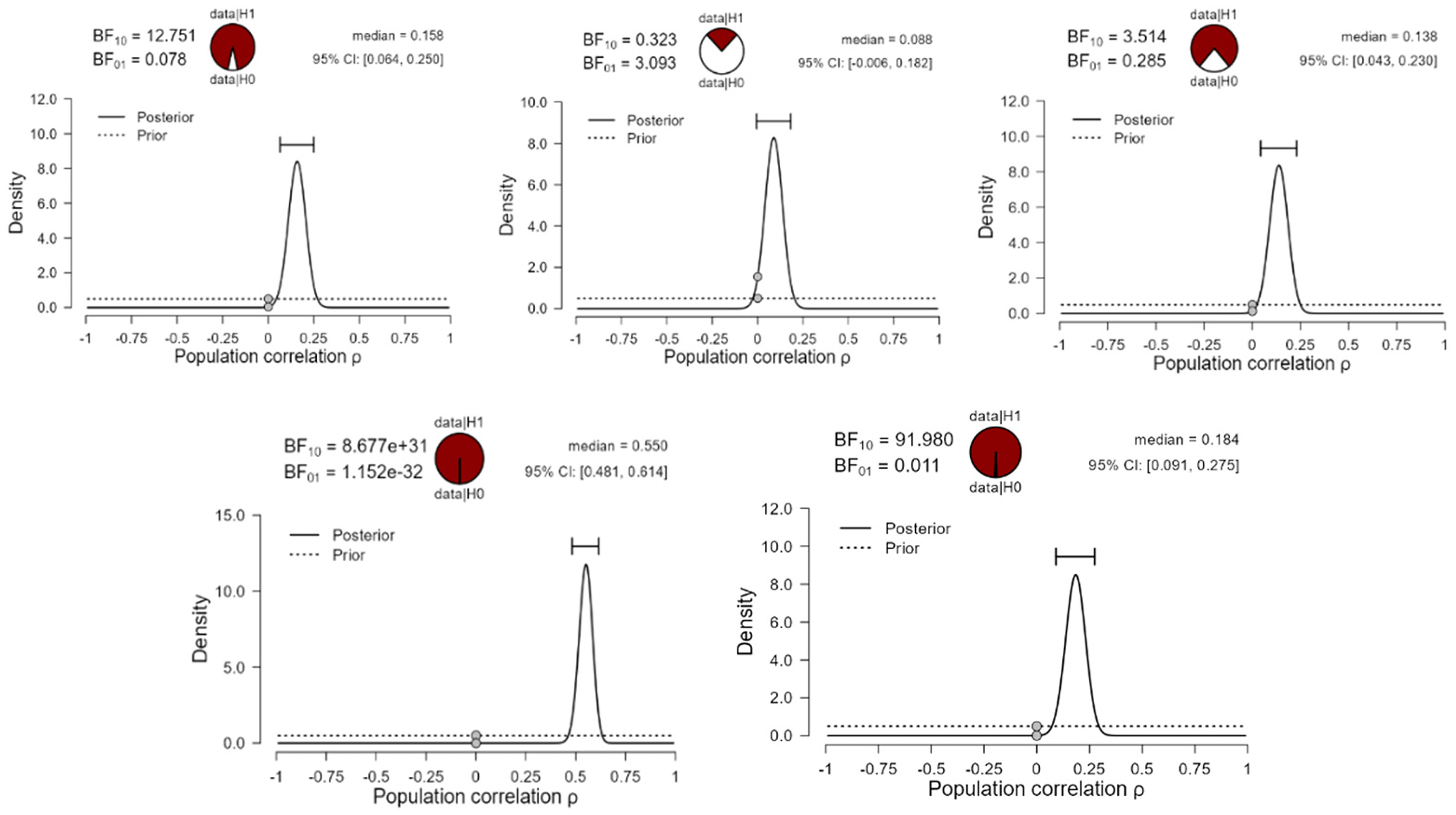
Bayes factor (BF) prior and posterior density plots.
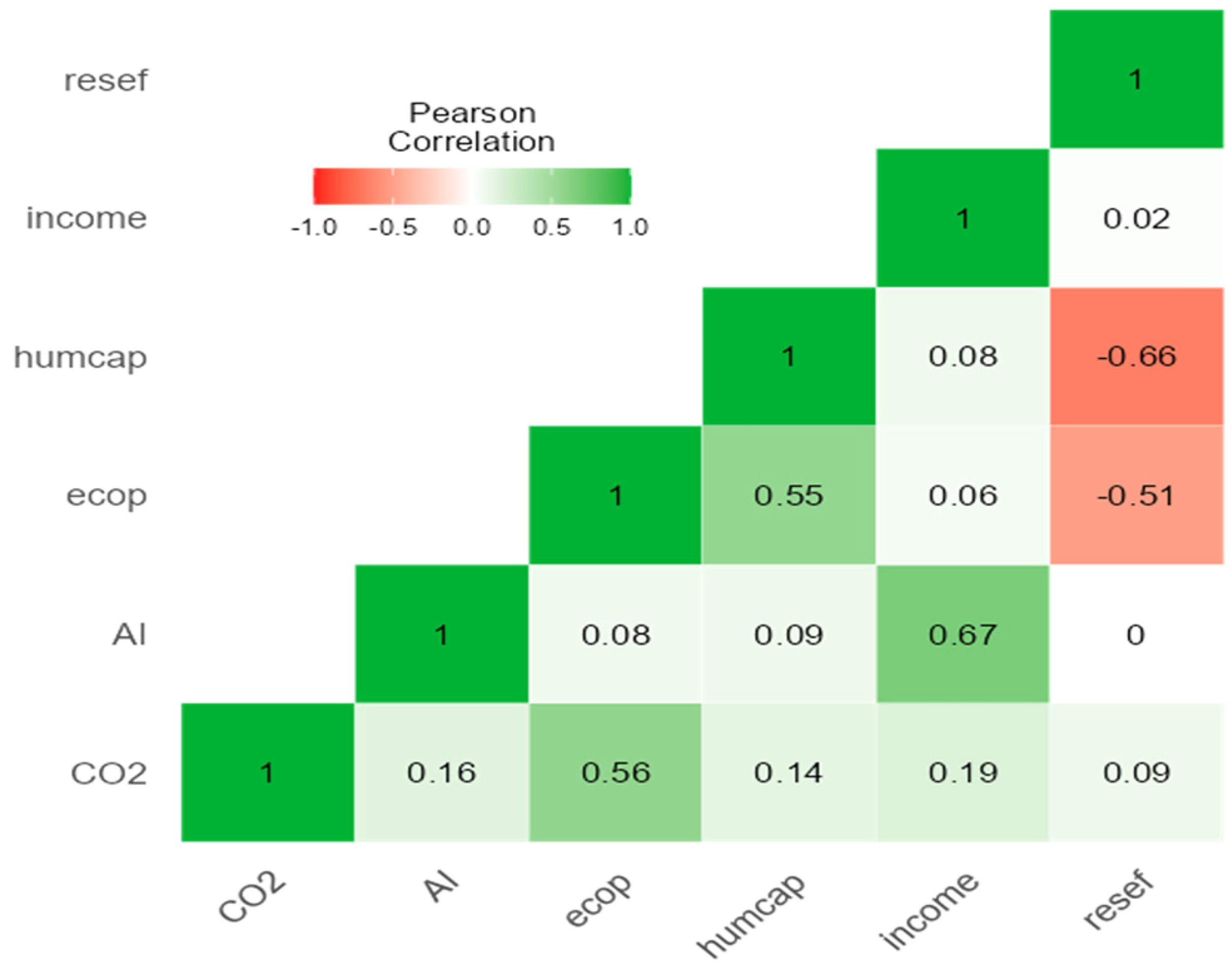
Correlation heatmap.
Bayesian Pearson’s correlation matrix.
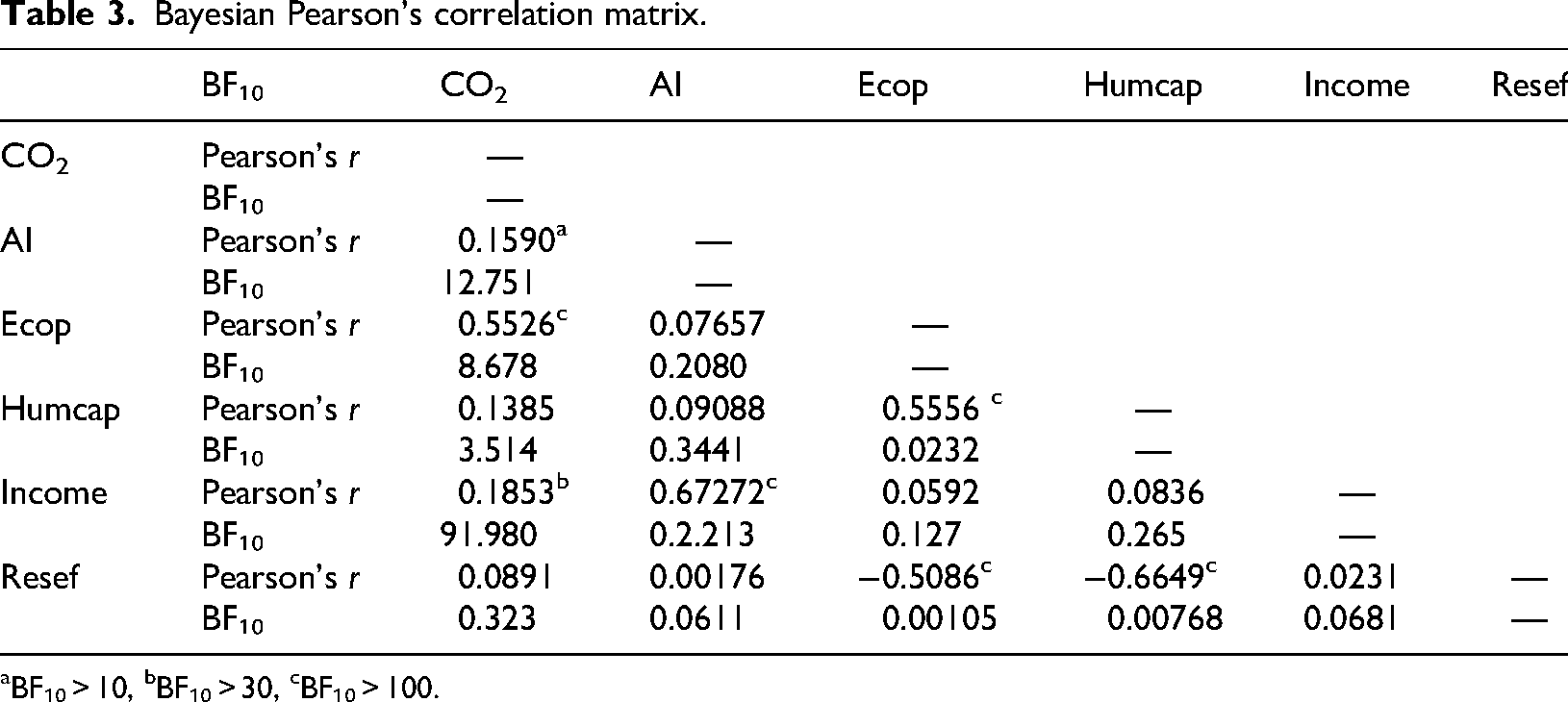
BF₁₀ > 10, bBF₁₀ > 30, cBF₁₀ > 100.
Moreover, the Pearson correlation coefficient reveals a moderate positive correlation between CO2 emissions and the enlisted predictors, suggesting that AI, human capital, and economic factors are linked to carbon emissions in some capacity. However, it is noteworthy that human capital and resource efficiency exhibit an insignificant correlation with CO2 emissions in this context, highlighting potential areas for further investigation. A unique feature of the Bayesian analysis is the Bayes Factor (BF10), which helps assess the likelihood of accepting the null hypothesis. This method, unlike traditional frequentist techniques, provides more nuanced insights into model validation by quantifying the strength of evidence for or against hypotheses.61,67 The inclusion of the Bayes Factor adds robustness to the analysis, particularly when evaluating the probability of environmental performance outcomes under various scenarios.
More insights from Table 3 and Figure 3 suggest strong evidence to reject the null hypothesis for AI, anecdotal weak evidence for resource efficiency, anecdotal positive evidence for human capital, moderate evidence for economic productivity, and very strong evidence for income. These inferences are based on the weights of their BF10 and the shaded areas of the unit circles (upper half of the density plots) of the correlation between each predictor and carbon emission. The shaded areas are predominantly in favor of the alternative hypothesis except for resource efficiency. Likewise, the posterior graphs (thick line in the lower half of the density plots) for each correlation provide relative plausibility of the relationship based on posterior knowledge. Accordingly, unlike the flattened prior density lines (dashed lines), the posterior density lines (thick lines) provide more credence for positive correlation.
The outcome of the CD test is summarized in Table 4. The evidence emanating from the summarized results (Table 4) predominantly underscore the absence of cross-sectional independency among the selected countries. This outcome is significant since it provides strong evidence to pool these countries for a streamlined result. Besides, the outcome provides enough evidence to reject the null of cross-sectional independence among the listed countries. On this premise, the consequential inferences apply to all the enlisted countries.
Summary of the CD test.
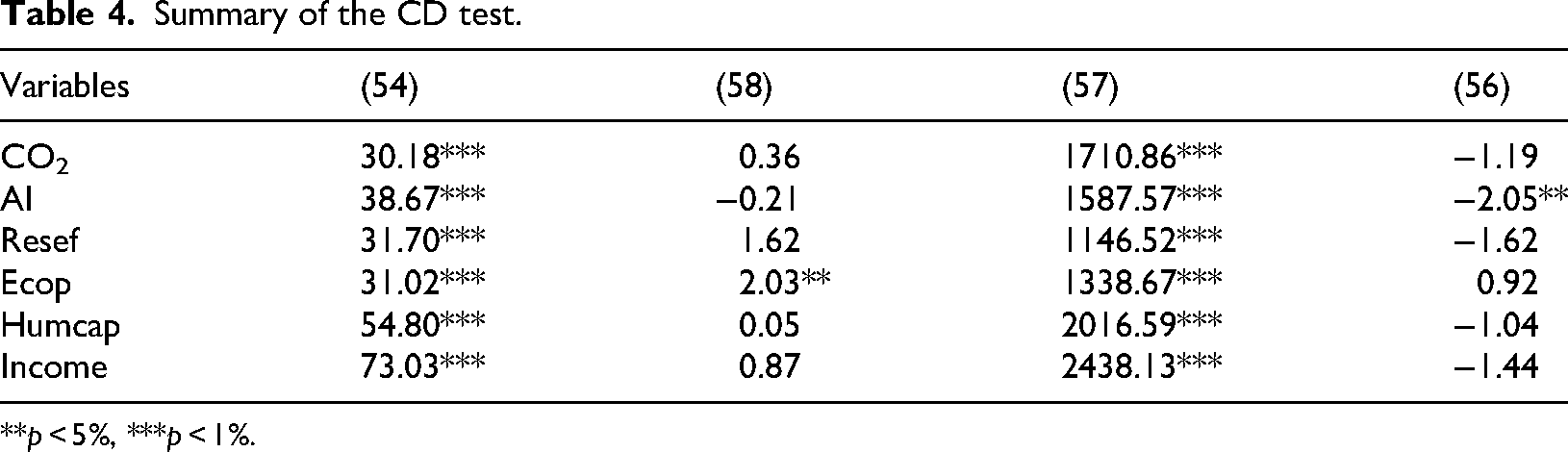
**p < 5%, ***p < 1%.
Marginal effects analysis
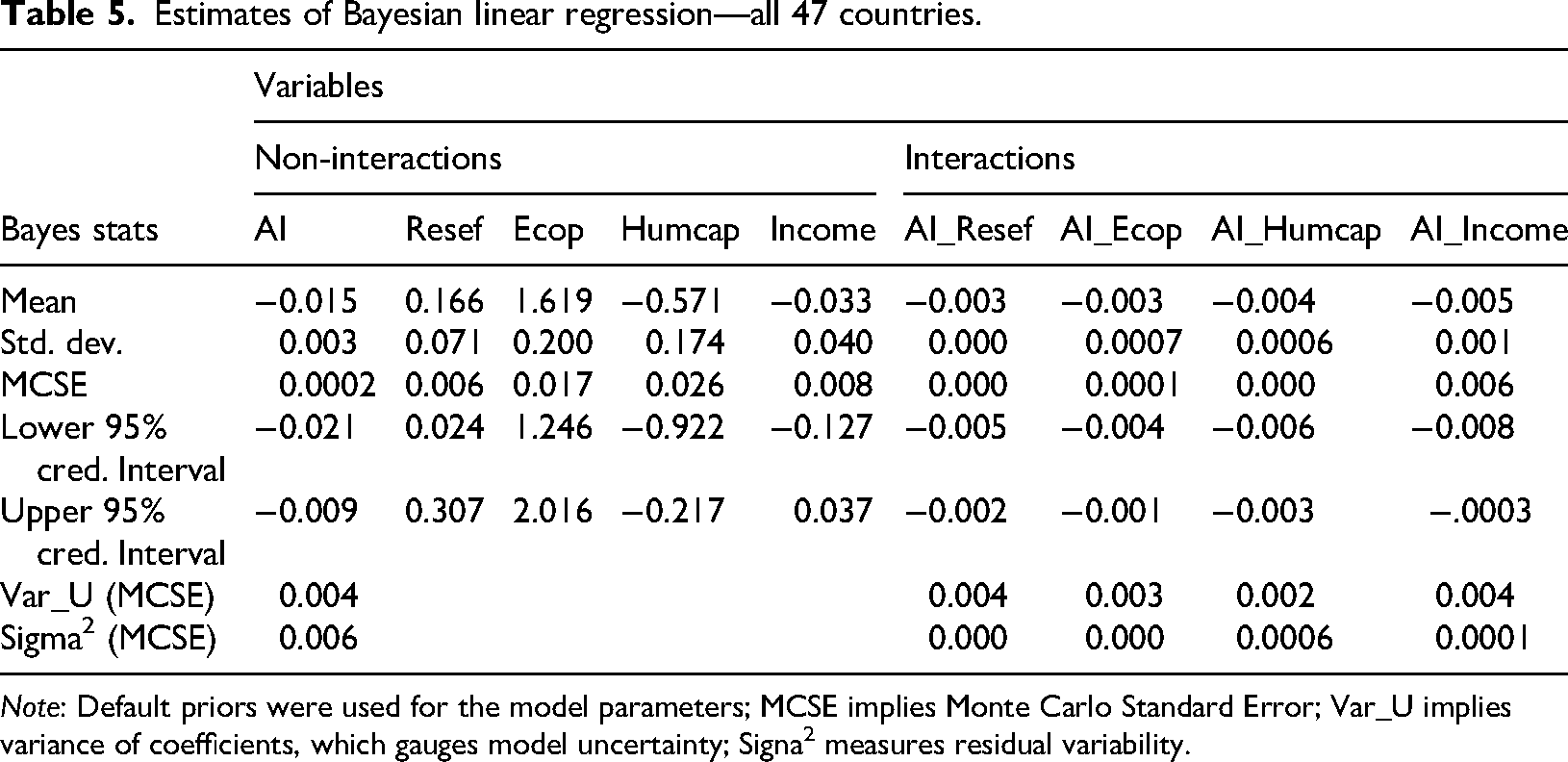
The marginal effects analysis in this study explores the AI–carbon emission relationship using three specifications: (1) the entire sample of 47 countries, (2) developed economies, and (3) emerging economies. This comprehensive approach allows for a robust comparison across different groupings. Additionally, the study investigates how AI interacts with key control variables—resource efficiency (AI_Resef), economic productivity (AI_Ecop), human capital (AI_Humcap), and income (AI_Income)—to influence carbon emissions. The results are presented in Table 5, providing estimates for the relationship across the three groups. In each categorization, AI is expected to enhance the impact of the control variables on carbon emission reductions, reinforcing the notion that AI can support environmental sustainability through its widespread application across various sectors. The analysis highlights the differential effects of AI based on the level of economic development, offering valuable insights into policy approaches tailored for developed versus emerging economies.
Estimates of Bayesian linear regression—all 47 countries.
Note: Default priors were used for the model parameters; MCSE implies Monte Carlo Standard Error; Var_U implies variance of coefficients, which gauges model uncertainty; Signa2 measures residual variability.
The empirical analysis of the 47 economies (Table 5) was conducted using Markov Chain Monte Carlo (MCMC) simulations, with 12,500 iterations and a burn-in rate of 2500. The MCMC sampling resulted in 10,000 valid samples, yielding an acceptance rate of 1, indicating that all 100,000 iterations were successfully validated. This acceptance rate ensures convergence, as the efficiency rate of 45% surpasses the required threshold of 10%. 61 The marginal effects results from this analysis reveal a significant inverse relationship between AI investments and carbon emissions across the 47 economies. Specifically, a unit increase in AI investments is associated with a reduction of 0.015 in carbon emissions, as indicated by a posterior mean of −0.015, a standard deviation of 0.003, and a Monte Carlo standard error (MCSE) of 0.000. Additionally, the Bayes 95% credible intervals of the lower (−0.021) and upper (−0.009) equal-tails further confirm the statistical significance of this finding. This highlights the role of AI in mitigating carbon emissions, offering a key insight for environmental policy across these global economies.
The Bayesian regression analysis offers valuable insights into the effects of control variables on carbon emissions across the 47 economies. Resource efficiency and economic productivity both exhibit significant positive effects on carbon emissions, underscoring the importance of optimizing these factors in the context of environmental policy.33,49,70 Conversely, human capital development demonstrates a significant carbon emission-reducing effect, highlighting the role of skilled human resources in fostering environmental sustainability. 33 Income, however, shows an inconsistent relationship with carbon emissions, as reflected by the Bayes 95% credible intervals that suggest both negative and positive impacts. This inconsistency challenges the hypothesis that higher income consistently mitigates carbon emissions, which has been debated in the literature. 45 Furthermore, the interactions between AI and the control variables offer substantial improvements in reducing carbon emissions. AI's integration with GDP produces the largest carbon emission-reducing effect (−0.005), followed by its interaction with human capital (−0.004). Interactions between AI and resource efficiency, as well as eco-productivity, also lead to smaller but still significant reductions in emissions (−0.003). These findings align with the growing literature on the transformative potential of AI in achieving environmental sustainability goals. The findings reemphasize the importance of AI in enhancing the effectiveness of other key factors, including human capital and economic productivity.42,62
The marginal effects estimates presented in this study highlight the robustness and precision of the Bayesian linear regression model applied to analyze the effects of AI and the selected control variables on carbon emissions across the 47 economies. Notably, the negligible Monte Carlo Standard Error (MCSE) values of all the models underscore the reliability of the estimates, confirming the convergence of the model after 10,000 MCMC iterations. The Bayesian diagnostics plots, as depicted in Figure 5(a) and (b), further strengthen the credibility of the findings. Figure 5(a) presents the diagnostic plots for the carbon emission effects of AI and the control variables without interactions, while Figure 5(b) visualizes the plots for the effects of AI interactions with the control variables. These diagnostic plots rule out potential concerns such as serial correlation or synchronization issues, thereby providing strong evidence for the accuracy of the model outcomes. 61 The findings suggest that the Bayesian framework is a robust tool for capturing complex relationships in panel data, especially when working with small sample sizes or data that deviate from normal distributions. 62 This is particularly important for policy development aimed at enhancing the use of AI for mitigating carbon emissions and promoting sustainable economic practices.
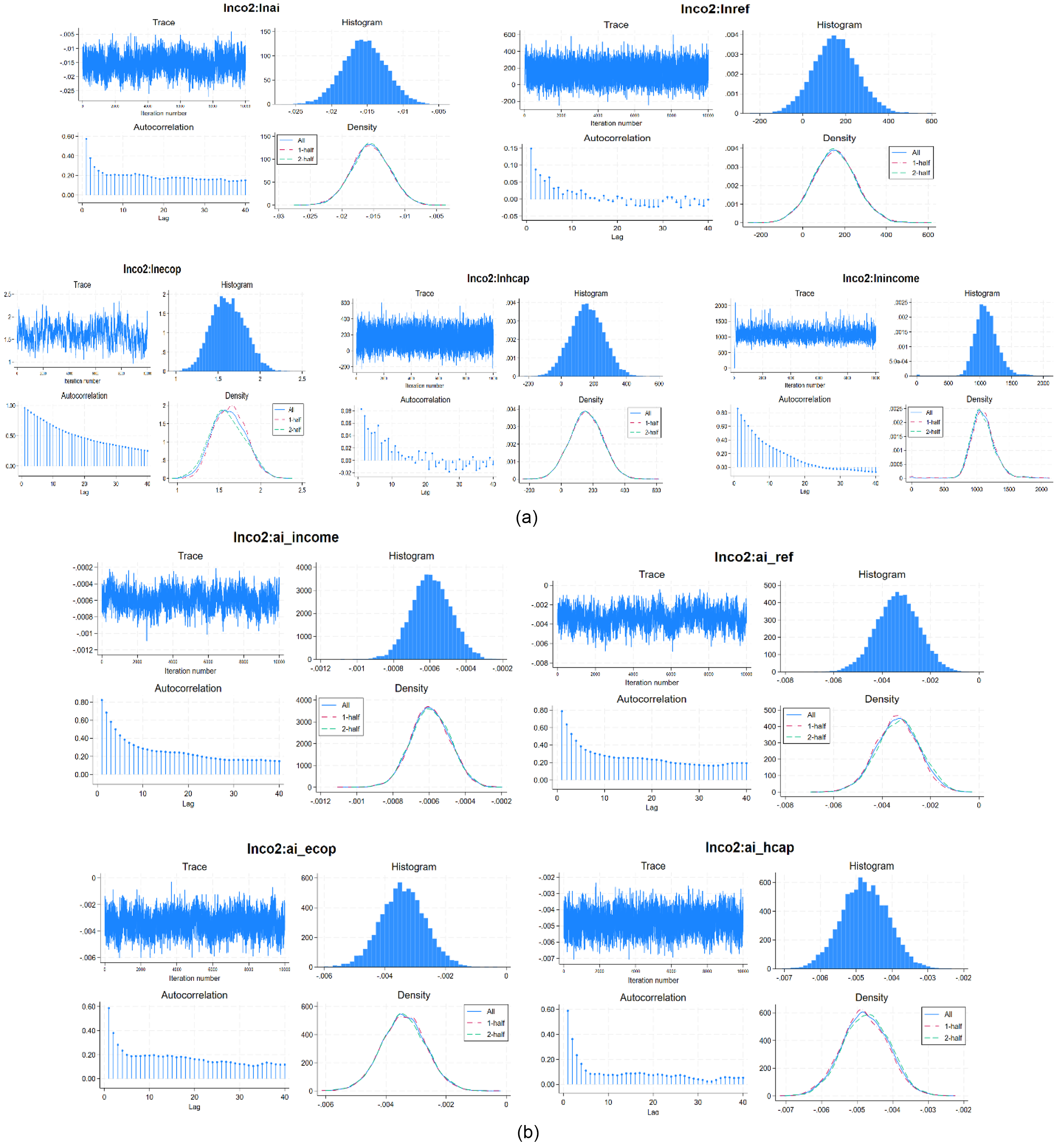
(a) Bayes diagnostic plots of non-interactive effects. (b) Bayes diagnostic plots of interactive effects.
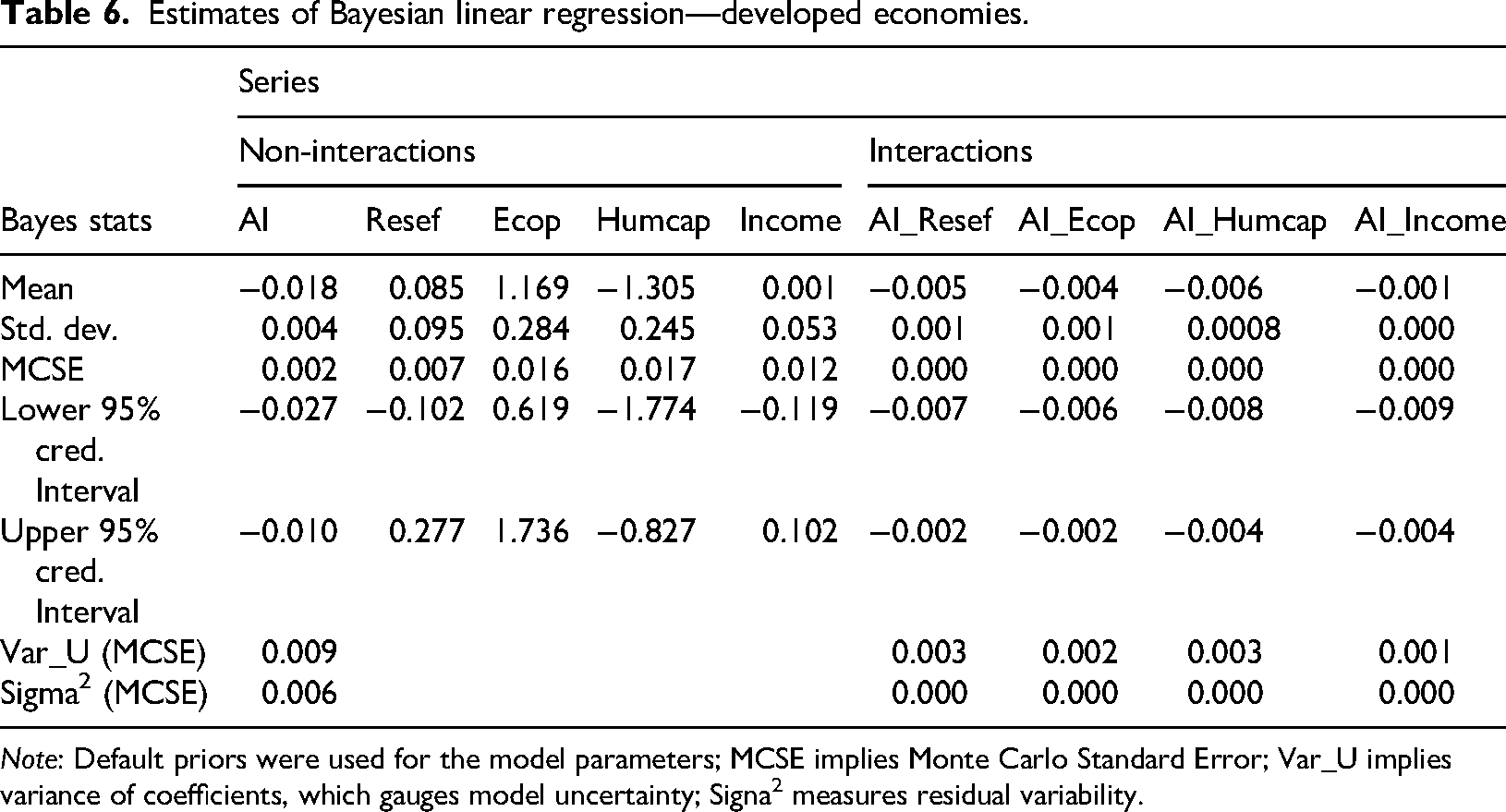
The Bayesian linear regression analysis for the 29 developed countries, as detailed in Table 6, reveals notable findings regarding the effects of artificial intelligence (AI) on carbon emissions. Specifically, the inverse relationship between AI and carbon emissions suggests that a 1% increase in AI investments leads to a reduction of 0.018 in carbon emissions. This result is robust, with the lower and upper bounds of the Bayes 95% credible interval consistently showing negative values, confirming the reliability of this relationship. In terms of the control variables, the study finds that economic productivity does not exhibit carbon-reducing effects in developed countries, which is consistent with the credible interval's bounds. Additionally, while resource efficiency and income show inconsistent positive effects on carbon emissions, human capital development demonstrates a significant and consistent carbon-reducing effect. Specifically, a 1% improvement in human capital efficiency leads to a 1.305% reduction in carbon emissions, a result supported by the consistency of the credible interval bounds and minimal Monte Carlo standard errors (MCSE). These findings suggest that AI investments, coupled with human capital development, play a crucial role in mitigating carbon emissions in developed economies, underscoring the importance of targeted policies in these areas. The overall reliability of the model is further validated by Bayesian diagnostics, which exclude any concerns regarding model inefficiency or data inconsistencies.
Estimates of Bayesian linear regression—developed economies.
Note: Default priors were used for the model parameters; MCSE implies Monte Carlo Standard Error; Var_U implies variance of coefficients, which gauges model uncertainty; Signa2 measures residual variability.
The interactions between AI and the control variables in developed countries largely replicate the overall findings of the study, but with more pronounced carbon emission-reducing effects in developed economies. In particular, AI interactions with human capital, resource efficiency, and eco-productivity yield stronger reductions in carbon emissions compared to the broader sample. Specifically, AI-human capital interactions produce the most substantial reduction in carbon emissions (−0.006), followed by AI-resource efficiency (−0.005) and AI-eco-productivity (−0.004). Notably, the interaction between AI and income (AI_Income) shows less pronounced effects in developed countries compared to the overall sample, with only a minimal reduction in carbon emissions (−0.001). This suggests that while income plays a role in carbon emissions, its interaction with AI is less impactful in developed economies than in the broader global context. The Bayesian diagnostic plots (Supplementary Figure 1) confirm the robustness and reliability of these results, ruling out concerns regarding serial correlation or lack of synchronization in the model. These findings provide valuable insights for policymakers in developed economies aiming to optimize AI's role in reducing carbon emissions.
The relationship between AI, the control variables, and carbon emissions in the context of the 18 emerging economies is summarized in Table 7. The Bayesian regression results highlight that AI has a significant carbon emission-reducing effect in these emerging economies. Specifically, a 1% increase in AI investments leads to a 0.008% reduction in carbon emissions, a finding corroborated by the consistent negative values of both tails of the Bayes 95% credible interval. This result, though consistent with the broader findings from all 47 economies and the 29 developed economies, indicates a relative decline in the impact of AI on carbon emission reductions in the emerging economies. This suggests that while AI can play a role in mitigating carbon emissions in these economies, its contribution may not be as pronounced as in developed countries, likely due to differences in infrastructure, technological adoption, and economic conditions. These findings contribute to understanding the role of AI in environmental performance and its potential for driving sustainability in emerging economies, where technological capabilities may differ from those in developed regions.
The empirical results for the 18 emerging economies, as shown in Table 7, indicate that resource efficiency and eco-productivity significantly exacerbate carbon emissions. This conclusion is supported by the consistently positive posterior equal-tails of the Bayes 95% credible intervals, which validate the exacerbating effects of these two variables. In contrast to the findings for developed countries, human capital in emerging economies does not consistently reduce carbon emissions, and income has an insignificant effect on carbon emissions. These inconsistencies highlight the need for targeted policy interventions that address specific contextual factors in emerging economies.
Regarding AI interactions with control variables, the results show that AI interactions with human capital and income produced the most significant carbon emission-reducing effects, while AI-resource efficiency interactions had a smaller, but still notable, impact. The reduced effectiveness of AI interactions in emerging economies compared to developed economies suggests that further investment in infrastructure, education, and economic productivity may be necessary to fully harness AI's potential for carbon mitigation. The reliability of these results is confirmed through the MCSE, Var_U, and sigma2 statistics, along with the Bayesian diagnostic plots (Supplementary Figure 2), which eliminate concerns about potential biases or inefficiencies. This robust empirical analysis underscores the importance of context-specific strategies for leveraging AI to reduce carbon emissions in emerging economies, as their unique economic and technological challenges may require tailored solutions.
Discussion of findings
The overall findings of this study underscore AI as a significant driver in reducing carbon emissions across the sampled countries, aligning with the technological innovation theory. This theory posits that increased investments in AI can foster environmental wellness through enhanced efficiency and reductions in carbon emissions. Empirical evidence further supports this, showing positive carbon emission-reducing effects in countries like the USA, Canada, and the UK.11,28 The study reveals that AI's impact on carbon emissions was more pronounced in the 29 developed countries compared to the 18 emerging economies. This difference is likely due to the limited AI investment in many emerging economies, a factor that hinders the full potential of AI in driving environmental sustainability. Nonetheless, both groups of economies—developed and emerging—are encouraged to increase their financial investments in AI. By doing so, they can further reduce carbon emissions, improve environmental quality, and better contribute to achieving Sustainable Development Goals (SDGs), particularly SDGs 7 (Affordable and Clean Energy) and 13 (Climate Action), as well as broader goals of climate change resilience and sustainability. To optimize AI's environmental benefits, global economies must align their policy frameworks and investment strategies, ensuring that AI is leveraged for long-term sustainability goals.
This study makes a significant contribution by exploring the effects of AI interactions with key control variables—resource efficiency, human capital, eco-productivity, and income—on carbon emissions across both developed and emerging economies. While the contributions of these control variables to carbon emissions have been extensively explored in existing literature,49,71 the novelty of this study lies in its focus on AI's interaction with these variables. This perspective is grounded in the growing role of AI across all sectors of human activity, as it holds transformative potential for reducing carbon emissions. The Bayesian model employed in this study provides novel statistical insights, reinforcing the critical role of AI in driving reductions in carbon emissions through its interactions with the control variables. These effects were consistently observed in both developed and emerging economies. This aligns with previous research, such as Shiqing et al., 72 which highlights AI's potential to mitigate the resource curse in China by enhancing resource utilization efficiency. However, a key finding of this study is the unexpected outcome regarding the interaction between AI and eco-productivity, which exacerbated carbon emissions in emerging economies. This result suggests that emerging economies are still heavily reliant on traditional, energy-intensive production techniques, which limits the effectiveness of AI in reducing emissions. To address this, it is critical for these economies to invest more in AI technologies and integrate them into their production systems. Such investments could decouple economic growth from carbon emissions, ultimately improving environmental sustainability. These insights emphasize the need for both developed and emerging economies to increase their AI investments to enhance carbon emission reductions and ensure long-term environmental wellness.
The interactions between AI and the control variables show more significant carbon emission-mitigation effects in developed countries compared to emerging economies. This difference can largely be attributed to the lower levels of AI investment and slower innovation processes in emerging economies. These economies have not decoupled their production systems from carbon emissions at the same pace as developed nations, which negatively impacts their environmental and climate performance. To address this gap, emerging economies need to integrate AI more comprehensively into their economic activities. By increasing investments in AI, particularly in technologies designed to reduce carbon emissions, these economies can better align their growth with environmental sustainability. This would help prevent income growth from contributing to higher carbon emissions, as observed in the study's analysis of the AI-income relationship. However, despite these findings, AI's overall contribution to carbon emission reductions remains modest in both groups of countries. The weak effects observed in AI-control variable interactions highlight the need for increased investments in AI tools specifically aimed at decarbonization.
While other AI applications may have received investment, prioritizing AI technologies focused on carbon reduction will be essential for further progress in achieving environmental goals. Furthermore, the unexpected outcome of AI-eco-productivity interactions in emerging economies suggests a need for more targeted research. Understanding the reasons behind this inconsistency could help optimize AI's role in mitigating carbon emissions, particularly in sectors with high energy intensity. These insights align with broader discussions in the literature6,9,31 on the need for more focused AI investments to address environmental goals and sustainability challenges. Ultimately, increasing AI investments in both developed and emerging economies will support efforts to meet Sustainable Development Goals (SDGs), particularly in the areas of affordable and clean energy (SDG 7) and climate action (SDG 13).
Conclusion and practical implications
Conclusion
The role of AI in driving environmental wellness, particularly through carbon emission reductions, remains a complex and evolving subject. While numerous studies have explored this relationship, many have produced imprecise results due to various methodological limitations. These limitations often stem from issues such as the choice of representative variables, the selection of countries for empirical analysis, and the statistical tools used for estimation. For instance, many prior studies have relied on classical econometric techniques, which can be problematic when data is limited or spans only a short period. Classical methods tend to produce biased estimates under these conditions, leading to potentially flawed inferences about the effects of AI on carbon emissions. In contrast, this study leverages a Bayesian estimation protocol, which is known for its robustness, even when data samples are small. This approach allows for more reliable and accurate insights into the dynamics of AI's impact on carbon emissions, addressing the shortcomings of previous studies.
Additionally, this study enhances the analysis by considering the interactions between AI and key control variables such as resource efficiency, human capital, eco-productivity, and income—an aspect often overlooked in prior research. The incorporation of these interactions offers a more nuanced understanding of how AI can influence carbon emission outcomes across different global economies. By utilizing annual data from 47 countries, including 29 developed and 18 emerging economies, this study provides a more comprehensive and updated perspective, which is crucial for informing policy decisions aimed at achieving global decarbonization targets. The novel use of Bayesian estimation and AI-control variable interactions sets this study apart from previous research. It particularly offers fresh insights into the potential of AI to contribute to environmental sustainability goals.
Practical implications
The robust empirical findings from the Bayesian model underscore the significant role of AI in mitigating carbon emissions across both developed and emerging economies. These results provide a clear policy implication: countries should prioritize increased investments in AI technologies that directly contribute to carbon emission reductions. Given the current limitations of AI contributions to carbon reduction, it is essential to ensure more targeted investments in AI tools that address this issue. For developed and emerging economies alike, the path toward achieving decarbonization targets is hindered by insufficient investments in AI solutions for environmental sustainability. Policymakers must thus implement strategies to encourage investments in AI technologies with the potential to reduce carbon emissions. Without these investments, the ambitious 2030 decarbonization goals and the long-term 2050 net-zero emission targets will remain unachievable.
The analysis also reveals that emerging economies are lagging behind developed economies in leveraging AI for carbon emission reductions. This discrepancy is largely due to the limited integration of AI into these economies’ production systems. To overcome this, emerging economies should adopt policies that promote financial support for AI-driven carbon reduction tools. Sustainable AI practices, including the adoption of energy-efficient AI applications, should be at the forefront of policy agendas to ensure that these economies can achieve their environmental targets. Adopting more AI tools could help reduce dependency on energy-intensive practices, accelerating the decoupling of economic growth from environmental degradation. Therefore, it is crucial for policymakers to foster the development and implementation of AI solutions that align with sustainable growth and environmental goals.
The results of the study reveal that AI's integration with key control variables—such as resource utilization, human capital, and eco-innovation—produces stronger carbon emission-reducing effects. This emphasizes the importance of incorporating AI into various aspects of national economies to foster more sustainable practices. A key recommendation is the channeling of a substantial portion of national income into AI-driven solutions, which would enhance its ability to mitigate carbon emissions. This approach could help counteract the carbon emission exacerbating effects often associated with rising national income. Moreover, aligning AI with human capital development can also have profound impacts. The study suggests that as human capacity improves through AI-driven initiatives, societies are better equipped to manage both natural resources and carbon-emission-prone technologies. As such, investing in AI not only boosts economic productivity but also promotes sustainable development and environmental stewardship.
The successful realization of decarbonization goals hinges significantly on the integration of AI with manufacturing and industrial techniques. Policymakers must prioritize budgetary allocations that support AI tools capable of reducing carbon emissions. Given that emerging economies are lagging behind developed countries in terms of AI investment, it is critical for these economies to ramp up their AI initiatives. Such investments would not only enhance the efficacy of AI in carbon emission reduction but also ensure these economies keep pace with global sustainability targets. Thus, policymakers should focus on increasing investments in AI technologies that can drive both economic growth and environmental improvements, particularly by addressing the existing gaps in emerging economies.
Limitations of the study and suggested future inquiries
This study aims to explore the relationship between AI and carbon emissions in both developed and emerging economies, offering valuable insights despite certain limitations. One major challenge encountered was the lack of sufficient AI data for many emerging and developing economies, which may have constrained the ability to generalize findings to all such countries. Nevertheless, the results derived from the selected economies remain meaningful within their contexts. Future research could expand this analysis by incorporating data from more emerging and developing countries, provided that data availability allows for such an expansion. Additionally, future studies could consider the broader implications of AI on various environmental sustainability metrics beyond just CO2 emissions. This would allow for a more comprehensive understanding of AI's role in achieving multiple Sustainable Development Goals (SDGs). Another potential avenue for future research involves the application of time-variant and non-parametric statistical methods, which could provide a comparative perspective to the Bayesian linear regression model used in the current study. These steps would enrich the academic discourse and offer further policy recommendations for leveraging AI in environmental sustainability.
Supplemental Material
sj-pdf-1-eae-10.1177_0958305X251410126 - Supplemental material for Advancing climate change resiliency through artificial intelligence: The moderating roles of resource efficiency, eco-productivity, and human capital in developed and emerging economies
Supplemental material, sj-pdf-1-eae-10.1177_0958305X251410126 for Advancing climate change resiliency through artificial intelligence: The moderating roles of resource efficiency, eco-productivity, and human capital in developed and emerging economies by Nicholas Ngepah, Emmanuel Uche, Ali Shaddady and Nazatul Faizah Haron in Energy & Environment
Footnotes

Funding
The authors received no financial support for the research, authorship, and/or publication of this article.
Declaration of conflicting interests
The authors declared no potential conflicts of interest with respect to the research, authorship, and/or publication of this article.
Supplemental material
Supplemental material for this article is available online.
Author biographies
References
Supplementary Material
Please find the following supplemental material available below.
For Open Access articles published under a Creative Commons License, all supplemental material carries the same license as the article it is associated with.
For non-Open Access articles published, all supplemental material carries a non-exclusive license, and permission requests for re-use of supplemental material or any part of supplemental material shall be sent directly to the copyright owner as specified in the copyright notice associated with the article.
