




Abstract
Energy poverty is a global concern affecting the quality of life and human well-being. Artificial intelligence (AI) can be optimal for eliminating energy poverty. This study examines the influence of AI in alleviating energy poverty directly and indirectly through various channels. Existing literature in this context has investigated the impact of AI on energy poverty through technological innovation while this study examines these effects through commercial, industrial, and transportation sectors. Based on domestic energy deficiency, we selected 20 domestic energy-deficient organization for economic cooperation and development (OECD) countries, and based on data availability, the time span ranged from 2000 to 2019. We applied static and dynamic panel data models and several robust estimates. Findings indicate that AI adoption is significant in alleviating energy poverty for selected OECD countries at macro and sectoral levels. Mechanism analysis showed that AI has the potential to overcome energy poverty by enhancing GDP share, technological innovation and reducing domestic energy deficiency. From sectoral analysis, Further estimates confirmed that the consequences of AI on energy poverty are long-lasting. Smart AI technologies strengthen energy systems in terms of production and supplies overcoming excess energy and save transmissions and distribution losses and encourage overall energy sector development. Our findings provide new insights for eradicating energy poverty in selected OECD countries through smart and efficient energy-saving sensor technologies in commercial, transportation, and industrial sectors and indirectly through determinants of energy poverty like economic growth, technological innovation and energy deficiency.
This is a visual representation of the abstract.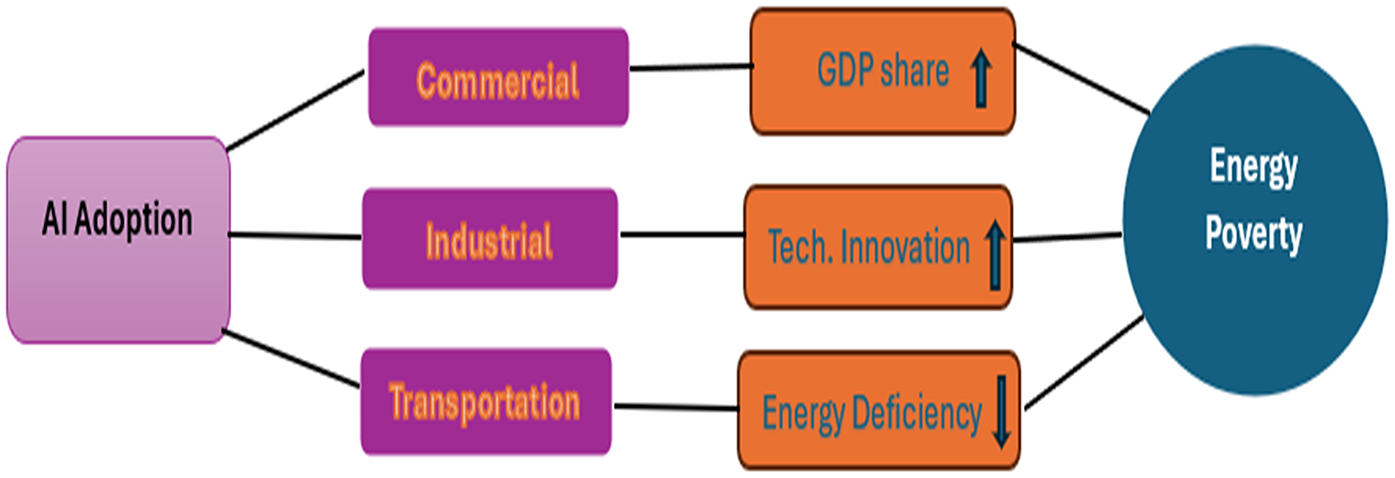
Keywords
Get full access to this article
View all access options for this article.