




Abstract
Electricity trade plays a pivotal role in Africa's energy transition pathway, aiding in the distribution of new infrastructure costs, addressing the intermittency of renewable energies, and capitalising on their spatial concentration. Despite these advantages driving the establishment of a regional single electricity market, trading volumes remain relatively low. This study empirically explores Africa's cross-border electricity trade's influence on renewable electricity generation. Utilising a fixed effects model, data for 21 African countries from the World Bank and the International Energy Agency spanning 1996 to 2020 is collected and analysed. The results reveal that a 1% increase in electricity trade significantly raises the share of renewables in total electricity output by approximately 0.05%. Additionally, it is noted that net-exporting countries exhibit weaker positive impacts from electricity trade compared to net importers. Our results highlight the importance of governance quality as a driver of growth in the sector.
Introduction
The crucial role of electricity generation capacity in fostering economic development and growth in developing countries has been extensively deliberated in economics and development literature.1,2 However, its rapid expansion exacerbates carbon emissions, posing significant environmental challenges and further complicating the achievement of (already ambitious) net-zero targets. As electricity consumption grows in sectors such as housing, transportation, and digital services, there is an increased imperative for implementing effective policies and strategies that target greenhouse gas reduction in the electricity sector. 3 However, this requires massive investments in energy infrastructure and its supporting technologies, 4 constituting concerns for African economies that have yet to achieve industrialisation and alleviate energy poverty. 5
While acknowledging the undeniable impacts of climate change and the value of transitioning to greener energy, many African economies also highlight the historical advantage enjoyed by industrialised nations, who have relied solely on fossil fuel for over a century to achieve their development and electrification goals – rights that have not been equally available to all. 6 While there have been efforts to facilitate the energy transition, several wealthy economies have fallen short of meeting their annual pledge of $100 billion, which is crucial for funding these initiatives. 7 Despite these challenges, the energy sector remains central to addressing climate risks. African countries must collaborate to advance the transition to renewable energy, while also tackling issues related to intermittency and security of supply.
Several studies have examined the trade openness and carbon emissions nexus.8,9 Trade openness, especially in the electricity sector, is essential in dealing with the intermittent nature of renewable energy sources. By engaging in trade, countries can diversify their energy portfolios, lower the costs associated with balancing power from renewables, and stabilise the variability inherent in renewable energy technologies. 10 African economies can significantly enhance energy accessibility, achieve energy security, and stimulate the development of renewable energy through active engagement in electricity trade. Rose et al. 11 have demonstrated that integrated electricity markets can expand the use of domestic energy resources, increase system reliability, and play a crucial role in Africa's economic development.
Integrated electricity markets face several drawbacks that can impede their expansion and success. These challenges include regulatory complexities, infrastructural limitations, and the need for harmonisation across diverse energy policies, 12 and it is argued that countries aware of the distributional consequences of electricity trade might choose to refrain from participating. 13 Cross-border electricity trade promotes dependency between countries, making them vulnerable to external supply disruptions.14,15 Its ability to drive price convergence 16 by decreasing consumer costs and producer profits in importing countries and increasing producer gains and consumer costs in exporting countries may not appeal to stakeholders. 17 Poor governance and the lack of robust climate policies can significantly undermine the potential decarbonisation benefits of cross-border electricity trade. Without effective oversight and strategic policy frameworks, the ability of such trade to contribute to greenhouse gas reductions may be severely limited.18,19
Oseni et al. 20 emphasise that several key conditions must be met before engaging in electricity trade. These include a commitment to free trade, sufficient transmission capacity, and appropriate institutional frameworks. These prerequisites must be underpinned by a strong governance system that ensures non-discriminatory conduct in cross-border electricity trade, grants all market participants the opportunity to commercialise energy with neighbouring countries, and maintains the efficiency, cost-effectiveness, and energy security of all interconnected networks. 21 Furthermore, Ritter et al. 22 underscore the critical role of interconnections in enhancing renewable energy penetration. They caution that delays in expanding interconnections can lead to increased carbon emissions and higher electricity generation costs.
In response to calls for a unified electricity market in the region, 23 this article investigates the effects of current cross-border electricity trade flows on renewable energy development. To our knowledge, this is the first empirical attempt to quantify the impact of cross-border electricity trade on the share of renewable energy within Africa's electricity markets and to determine the direction of causality between these elements. The paper is organised as follows: the literature review section reviews the existing literature. The data and methodology section details the data sources, modelling approach, and estimation procedures. The results and discussion section discusses key findings, while the conclusions and policy implications section concludes.
Literature review
The theory of international trade underpins the conceptual basis for cross-border electricity trade. This theory posits that countries can gain comparative advantages through trade due to abundant resources, robust energy infrastructure, lower production costs, and excess production capabilities. From an economic point of view, this enables regions with the least expensive spinning capacity at any given time to supply areas with the highest demand, leading to lower wholesale prices and increased consumer surplus. However, due to the heterogeneous nature of electricity consumption patterns and price volatility, 24 and unlike traditional trade, trade in electricity markets is typically limited to areas with the required transmission capacity, 25 allowing for bidirectional exchanges.
A unique aspect of cross-border electricity trade is that resource abundance does not directly translate into pricing advantages, as traditional international trade theory might suggest. Instead, electricity prices are influenced by the dynamics of how power flows through interconnections. Both long-term comparative advantages and short-term shortages impact the pricing of traded electricity, challenging the applicability of the law of one price. Antweiler 26 suggested that the highly variable nature of electricity demand, combined with its upward-sloping marginal costs creates the need for reciprocal load smoothing, which is the basis for cross-border electricity trade. Thus, electricity trade not only optimises resource use, but also serves as a strategic buffer for countries against potential supply disruptions.
Numerous studies have examined the benefits of cross-border electricity trade in different countries, emphasising the need for regional integration. 27 Integration facilitates the competition and scale effects of electricity trade, heightens the security of supply and promotes renewable energy adoption.28,29 Singh et al. 30 noted that enhancing cooperation for cross-border electricity trade supplements domestic investment and increases the availability and reliability of electricity networks, resulting in economies of scale in investments and more cost-efficient expansions of renewable energy infrastructure. Lytvn et al. 31 emphasised that the presence of obstacles to cross-border electricity trade requires increased collaboration.
The literature asserts that via integration, countries can overcome problems like intermittency and spatio-temporal characteristics that impede the use of renewables in power generation and invest more in renewable energy capacity. Timilsina 32 showed that a regional electricity market in South Asia would result in a 2.7-fold increase in hydropower capacity. Highlighting the importance of integrated electricity markets and cross-border electricity trade, Boz et al. 33 analyse data from 48 countries across America, Europe, and Asia to explore the effect of international trade on the fuel mix of participating countries. Their results show that cross-border electricity trade reduces the use of fossil fuels in electricity generation and increases electricity supply from solar and wind energy sources, resulting in more efficient renewable electricity production. Song et al. 34 stated that by promoting technological spill-over and environmental regulation, integration encourages renewable energy supply and decreases fossil fuel consumption.
Quantifying the extent of this benefit for selected countries, Qadir et al. 35 estimate that a 1% rise in the energy import levels would lower carbon emission levels by 0.245 kg per $ of GDP and increase renewable electricity production by 0.41 kWh in Central Asian countries. Yuan et al. 36 highlighted that by expanding transmission capacity from Quebec to the Northeast states of the United States, the value of transmission capacity development to the economy would be much greater than the cost spent in the generation of electricity, with values ranging from $0.38 to $0.49 per kWh in New York and $0.30 to $0.33 per kWh in New England by 2050.
However, Klopcic et al. 37 stated that, contrary to the hypothesis that increased cross-border electricity trade flows and increased market competition lead to lower electricity prices for end users, this is not the case for countries in the European Union because cross-border electricity trade does not necessarily increase the number of electricity providers, and thus electricity prices do not fall. Timilsina et al. 38 demonstrated that increased cooperation and trade among South Asian countries would reduce coal use, increase the share of renewables from 25% to 31% and reduce carbon emissions by 8%. Motalebi et al. 39 showed that given Canada's hydropower capacity, the United States’ abundant solar resources, and different load patterns, increasing electricity trade between both countries could help decarbonise their electricity systems more cost-effectively and enable them to take advantage of their low-carbon resources.
Green et al. 40 show how Denmark leverages its neighbours’ hydroelectric capacity through trade to effectively smooth its load curve and reduce the cost of its intermittent wind power. Chang and Li 41 found that increased trade fosters renewable energy development and results in more significant cost savings in Southeast Asian countries. Murshed 42 established a unidirectional relationship from trade to renewable energy development and argued that trade between South Asian countries would foster renewable energy adoption. Jha et al. 43 established causality from cross-border electricity trade to renewable energy development for OECD and BRICS countries, highlighting that cross-border electricity trade reduces the barriers to renewable energy development.
Focusing on Africa, Graeber et al. 44 show that increased cooperation within Southern Africa would lower the economic and environmental cost of electricity markets. They estimated a cost saving of about US$2–4 billion and a reduction in carbon emissions by about 55% due to optimised investments in generation and transmission capacity. Valickova et al. 45 stated that, while trade has many benefits, southern African countries have yet to reap the benefits of increased trade. Muntschick 46 stressed that the region still underperforms in this regard. Gnansounou et al. 47 emphasised that the tremendous resources required to revive existing energy infrastructures and build modern technologies in the face of West Africa's political and economic conditions call for regional integration.
Modelling its potential benefits, Adeoye et al. 48 found that increased cross-border electricity trade lowers the unmet demand resulting from load shedding. a However, the study mentioned that more trade will only benefit the region's decarbonisation goals if unexplored renewable sources such as hydro and solar are incorporated into the existing energy mix. Kanyako et al. 49 estimated that a fully integrated market in the region between 2018 and 2050 would result in net annual savings of approximately $3 billion USD. In producing a road map for electricity planning in North Africa. Brand 50 stated that the region could see substantial economic gains worth up to €3.4 billion if they cooperated, became more integrated, and increased their interconnection.
Similarly, Remy et al. 51 showcase the benefits of electricity trade in the region. Their study examined two scenarios: shallow integration, where countries retain autonomy over generation planning and optimise trade only along existing and committed interconnectors, and tight integration, where electricity generation and interconnections are optimised regionally. It found potential gains of $7.6 billion for shallow integration and $18.6 billion for tight integration from 2020 to 2030. The study also provided evidence that tighter integration significantly lowers carbon emissions compared to shallow integration.
The empirical literature has employed a wide array of methods to examine the impact of cross-border electricity trade on the participating countries’ fuel mix, carbon emissions and other variables of interest. Table A1 (in Appendix 1) summarises some of the most relevant snippets of the empirical literature, including the method employed, data utilised and key results. However, these studies are limited by their scope of analysis, focusing on energy as a whole rather than focusing on electricity markets. Also, these studies were concentrated in regions other than Africa. In addition to low energy access and consumption levels, Africa does not have the infrastructure and wholesale and retail power markets available in developed countries, making recommendations that fail to account for these realities ineffective.
This study seeks to address these gaps in the literature by contributing to the sparse empirical evidence on the impact of cross-border electricity trade in Africa. It investigates the distinctiveness of this relationship between net exporters and net importers. Also, it focuses specifically on the electricity sector (rather than broadly defined energy), utilising a wide range of explanatory variables specific to renewable generation. Furthermore, the study establishes a causal relationship between cross-border electricity trade and the utilisation of renewable energy in total electricity output by conducting appropriately defined Granger-causality tests. Lastly, it provides insights into the implications of electricity trade for the region's goal of establishing a single electricity market and discusses policy implications.
Data and methodology
Data
The analysis focuses on 21 African countries b and covers the period from 1996 to 2020. Data for the study were sourced from the International Energy Agency, 52 World Bank 53 and Energy Information Administration. 54 The share of renewables in total electricity output is measured by the percentage of electricity production from renewable sources, and cross-border electricity trade flows are captured by the sum of electricity exports and imports (measured in terajoules).
Economic, socioeconomic, and political factors such as economic development, foreign direct investment (FDI), population, governance quality, and alternative fuels identified in the literature as factors promoting renewable energy development are included as control variables.55,56 These variables include GDP per capita in constant 2015 U.S. dollars, FDI net inflows as a percentage of GDP, total population, and oil prices (west Texas intermediate) in dollars per barrel. Principal component analysis is applied to create an aggregate index for governance quality to address the issue of high correlation among the World Bank's six governance indicators (control of corruption, regulatory quality, government effectiveness, political stability, rule of law, and voice and accountability).57,58 To reduce the occurrence of heteroscedastic error terms, all level variables are transformed to their logarithmic forms, and oil prices are included in their lagged form to capture the delayed effects of oil price changes. Table 1 provides a detailed summary of all variables, sources, and definitions.
Key variables, definitions, and sources.
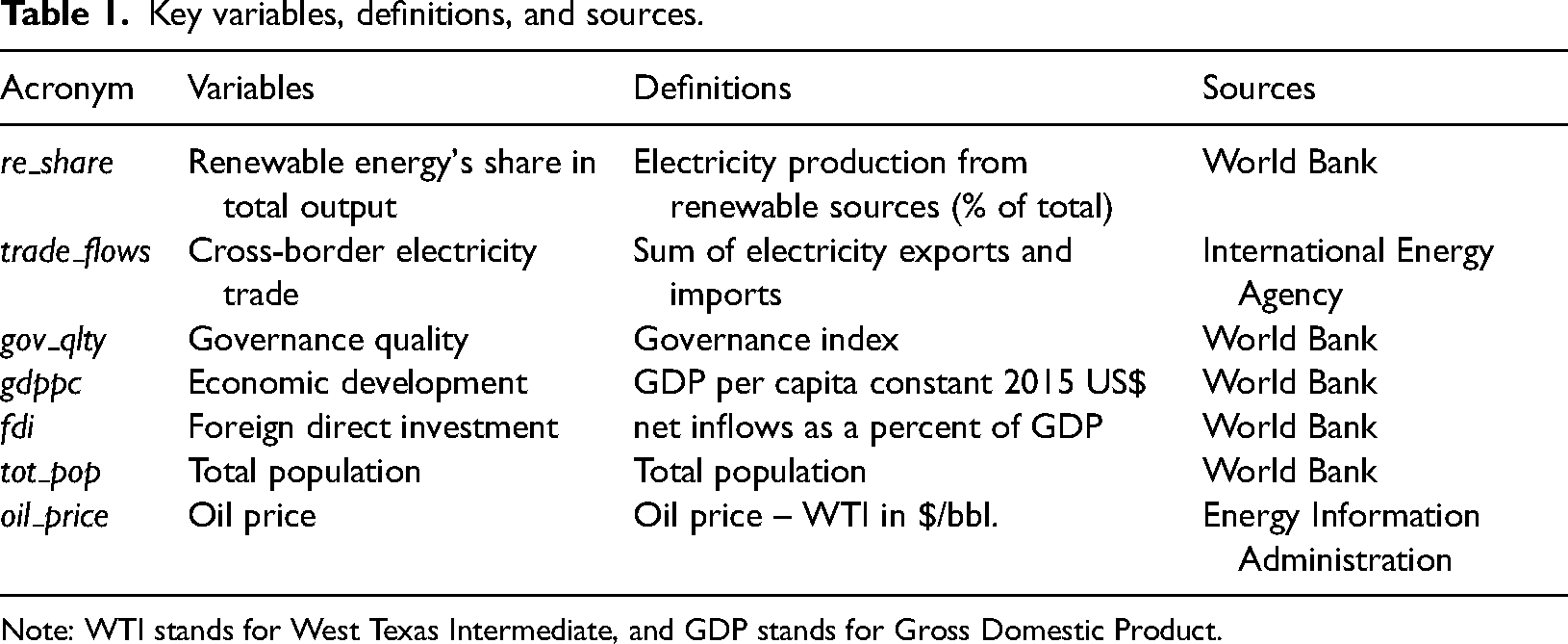
Note: WTI stands for West Texas Intermediate, and GDP stands for Gross Domestic Product.
Descriptive statistics
Table 2 shows descriptive statistics of the key variables. The mean value for renewable energy's share (
Summary statistics.
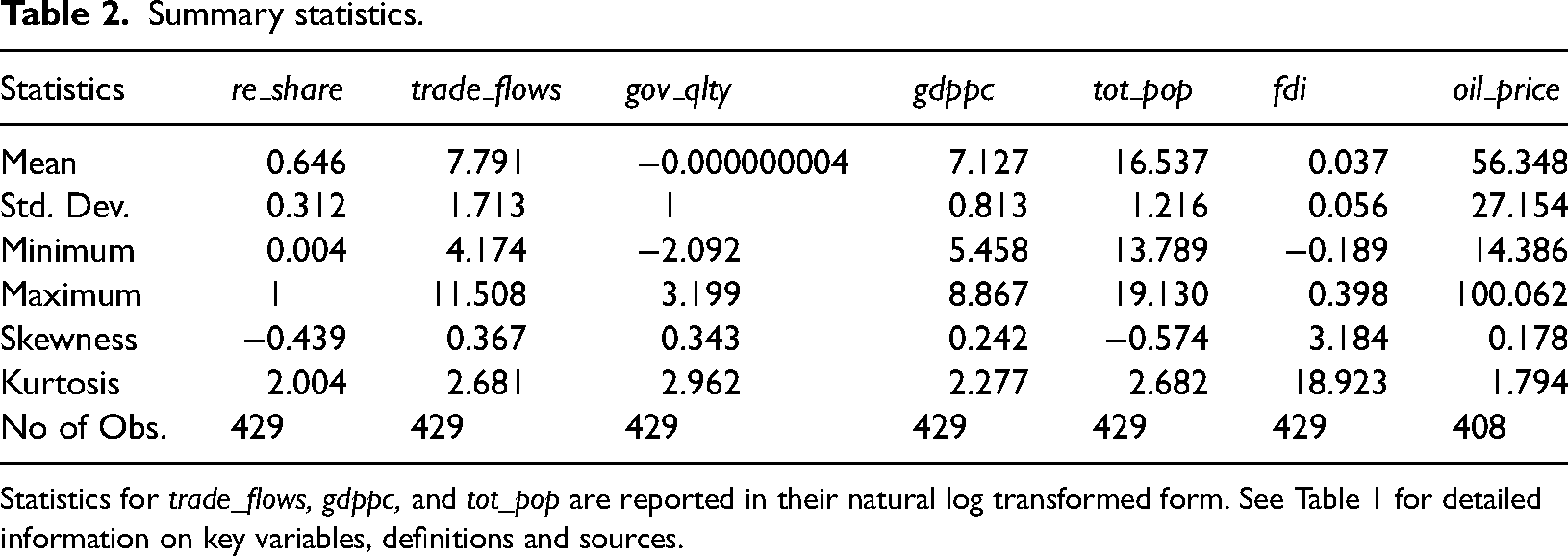
Statistics for trade_flows, gdppc, and tot_pop are reported in their natural log transformed form. See Table 1 for detailed information on key variables, definitions and sources.
Figures 1–3 represent the share of renewables in total electricity output, electricity trade flows, and selected African countries’ export and import positions in the sample. As illustrated in Figure 1, different countries have different shares of renewable in their total electricity output. The DR of Congo, Mozambique, Namibia and Zambia record renewable shares in total electricity output greater than 70%, while South Africa records less than 1%. An upward trend in South Africa's renewable energy contribution has been observed in recent years.
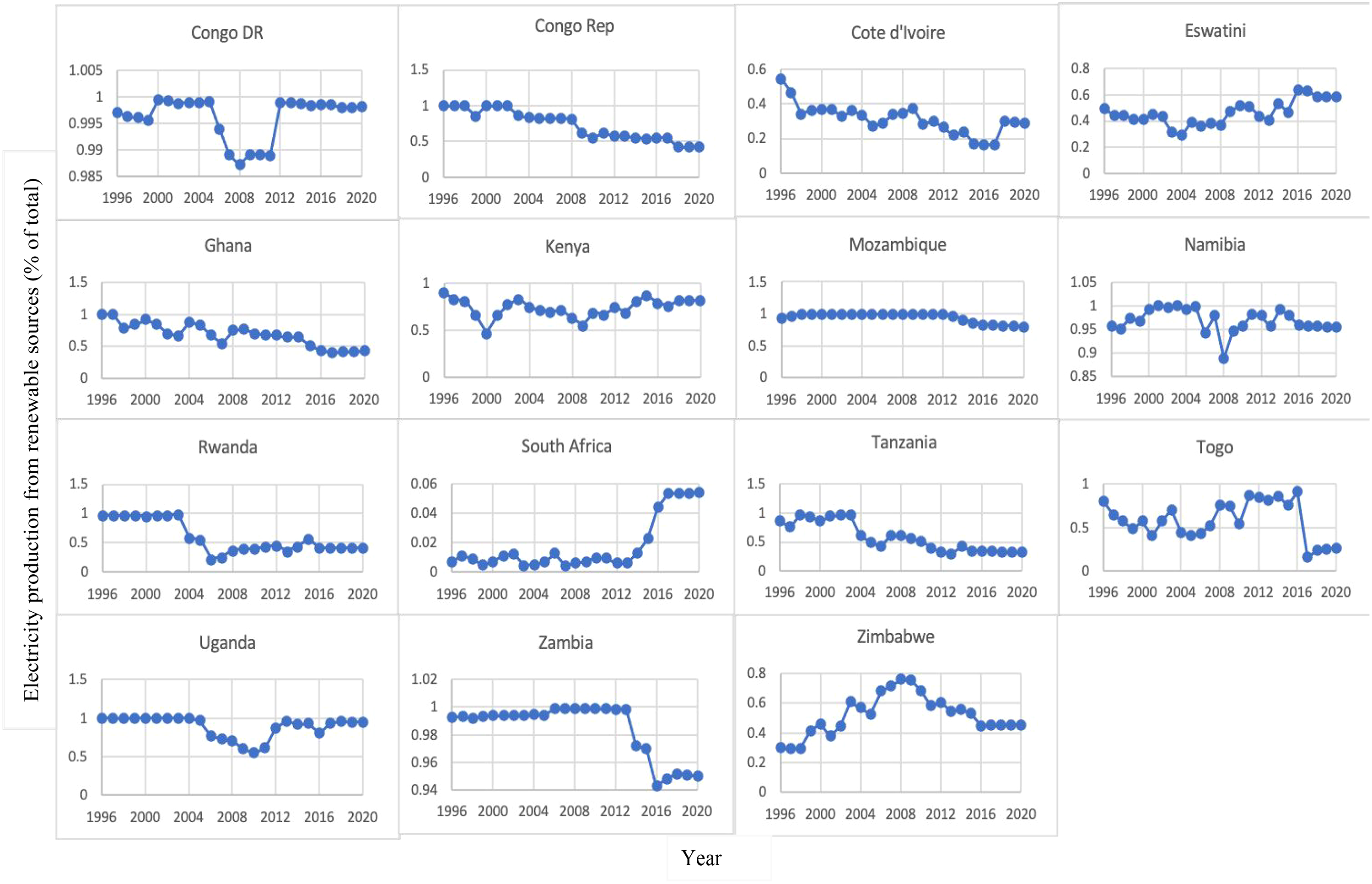
Renewable's share in total electricity output for selected countries (1996–2020).
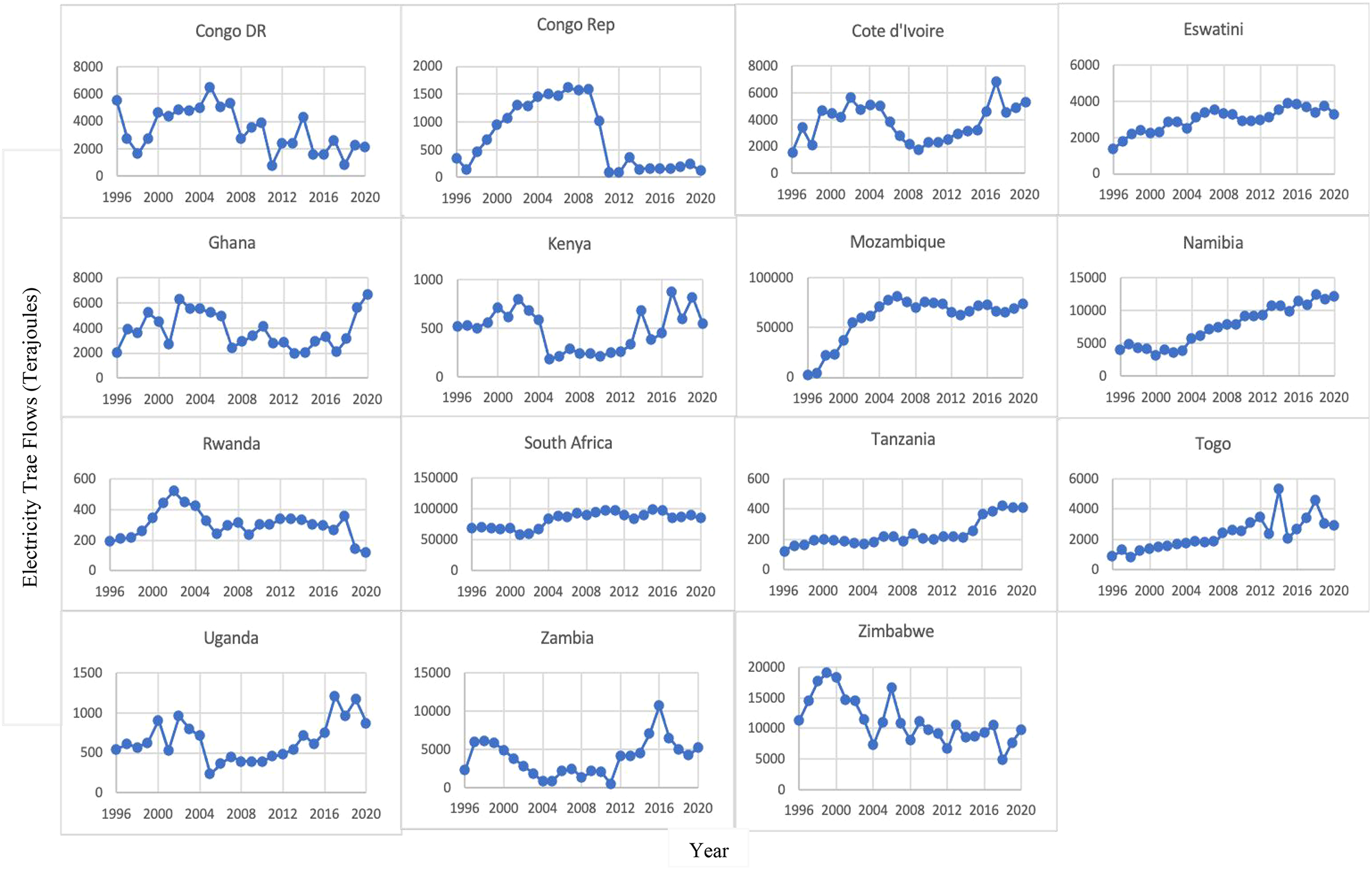
Electricity trade flows for selected countries (1996−2020).
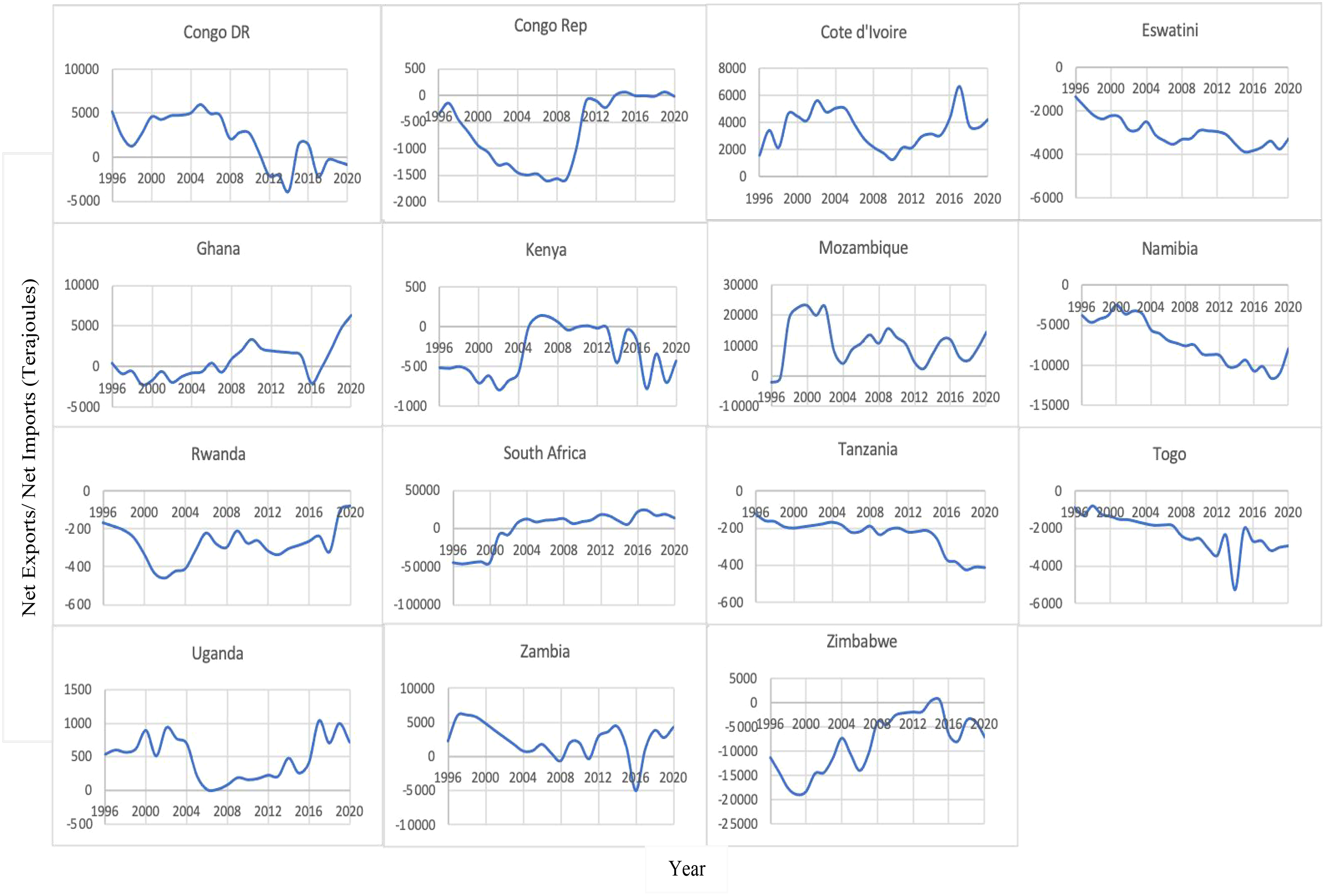
Nature of electricity trade flows for selected countries (1996−2020).
As depicted in Figure 2, electricity trade flows have varied across different countries over the years. Countries such as South Africa and Mozambique exhibit the highest electricity trade flows, exceeding 50,000 terajoules (TJ), while countries such as Rwanda, Uganda, Kenya, Eswatini, and the Congo Republic have much lower trade flows, below 5000 terajoules (TJ). Figure 3 illustrates countries’ different roles in electricity trade: some are purely exporters (e.g. Uganda and Côte d’Ivoire), others are predominantly exporters (e.g. South Africa and Zambia). Conversely, some countries depend entirely on imports to cover their domestic electricity demand (e.g. the Congo Republic, Namibia, Rwanda, Tanzania, Togo, Eswatini, and Zimbabwe), while others are predominantly importers (e.g. Kenya). Additionally, some countries engage in both the export and import of electricity (e.g. Ghana and the Democratic Republic of the Congo).
Model specification
To examine the impact of cross-border electricity trade on renewable's share in total electricity output, an unbalanced panel data regression model is specified such that:
To ascertain the causal relationship between the share of renewable generation and electricity trade flows, panel causality models following the methodology of Dumitrescu and Hurlin
59
were specified as follows:

The non-Granger causality test considers the heterogeneity of causal relationships. It provides an average Wald statistic to test the alternative hypothesis that causal relationships exist for at least one panel subsection (
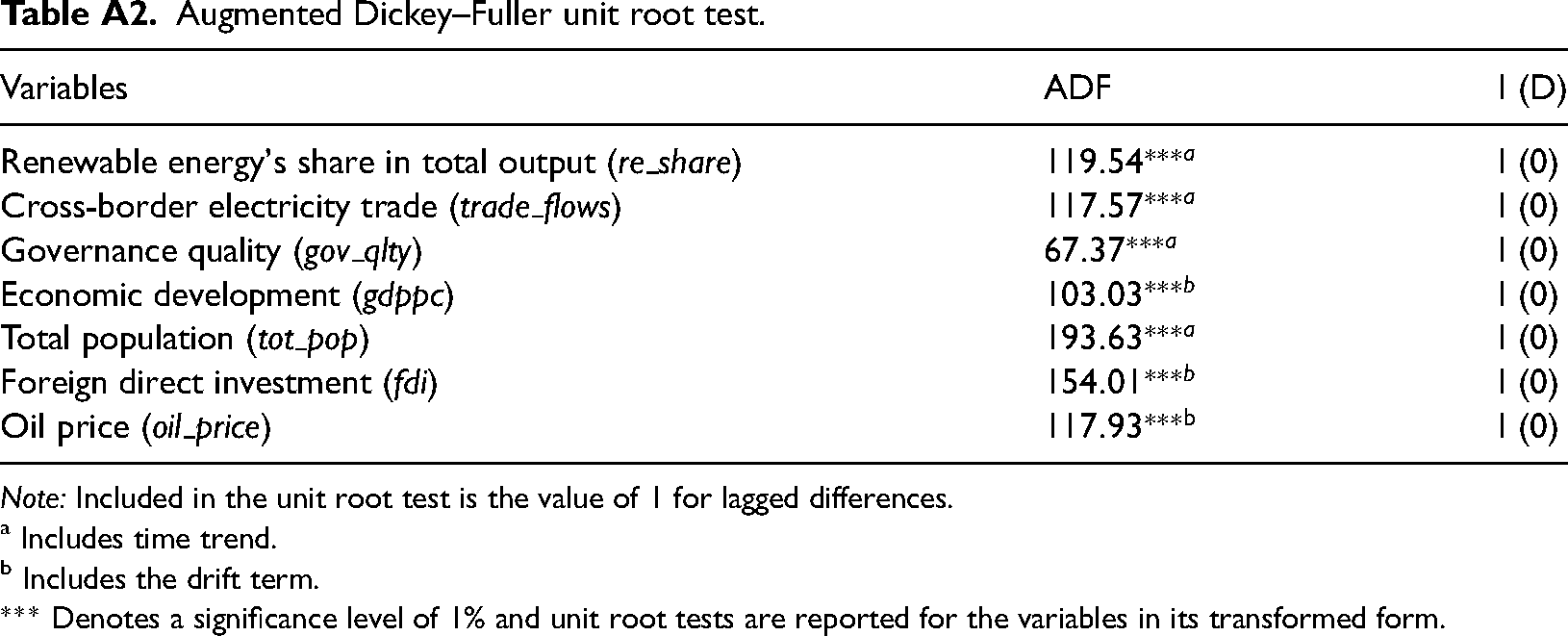
A multicollinearity test was conducted to ensure that the variables are not highly correlated, contain distinct information, and can be included in the regression model. Using the Variance Inflation Factor test, we estimated coefficients less than 10, indicating no highly correlated variables. Unit root tests indicated that the variables are stationary (see results in Table A2). The Hausman test was applied to compare the fixed and random effects coefficients to determine the most efficient and consistent model specification. The chi-square statistic of 25.21 and a p-value of .0003 led to the rejection of the random effects model. The Breusch-Pagan Lagrange Multiplier test confirmed the use of the fixed effects model. Unlike the random effects model, which assumes homoscedasticity, the fixed effects model accounts for individual-specific effects and does not assume homogeneity of variances across individuals, providing robustness against heteroscedasticity. The Pesaran cross-sectional dependence test, with a p-value of .5221, showed no significant evidence of horizontal cross-sectional dependence in the panel data, confirming the efficiency of the estimates.
Results and discussion
The fixed effects regression estimates are presented in Table 3. The results are shown in different specifications to demonstrate the robustness of the coefficients to the inclusion and exclusion of variables. In all specifications except equations (1) and (6), there is a positive and significant relationship between cross-border electricity trade (
Regression results.
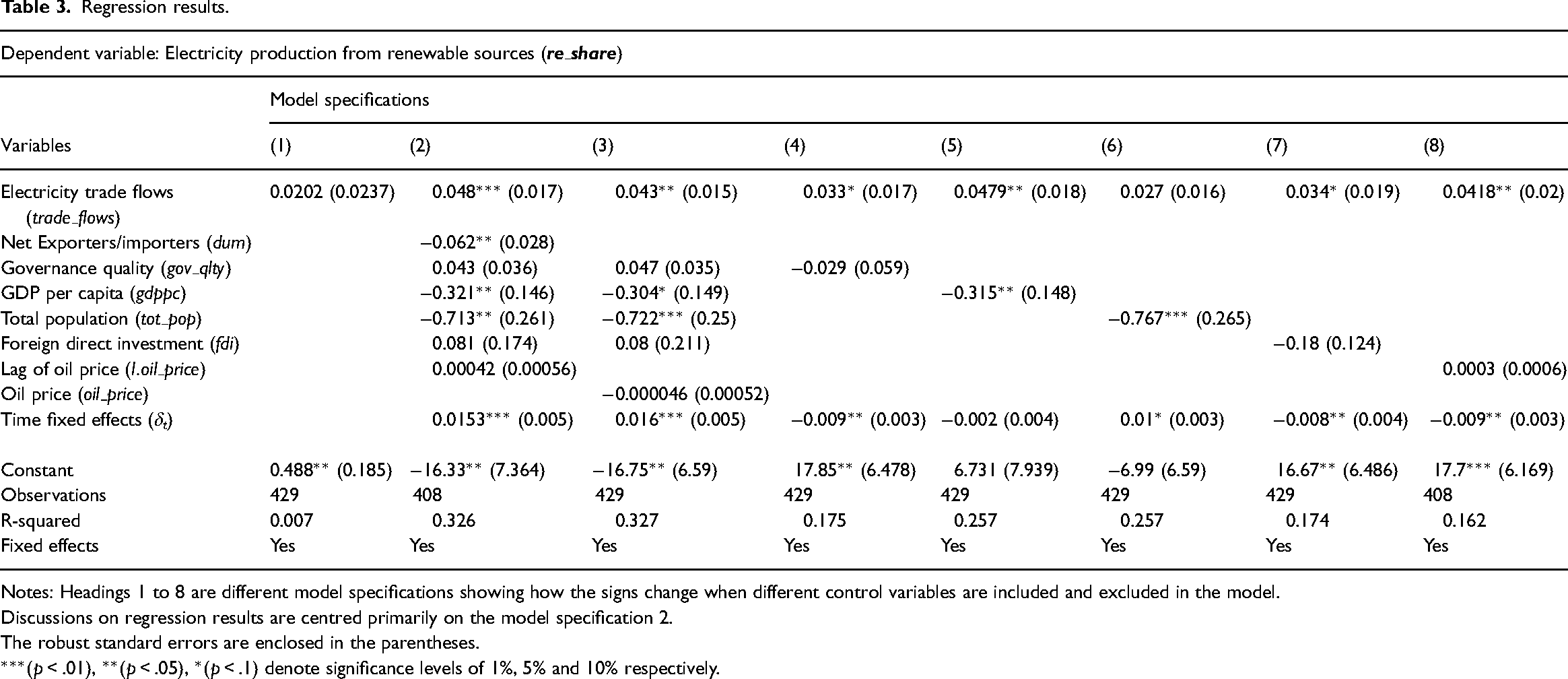
Notes: Headings 1 to 8 are different model specifications showing how the signs change when different control variables are included and excluded in the model.
Discussions on regression results are centred primarily on the model specification 2.
The robust standard errors are enclosed in the parentheses.
***(p < .01), **(p < .05), *(p < .1) denote significance levels of 1%, 5% and 10% respectively.
The empirical results indicate that a one percent increase in trade flows will increase the share of renewables in total electricity output by approximately 0.05%. This suggests that as countries engage more in cross-border electricity trade, the adoption of variable renewable energy sources in electricity systems is likely to be enhanced. These findings are consistent with similar studies that highlight the benefits of cross-border electricity trade in promoting renewable energy integration.33,36,43
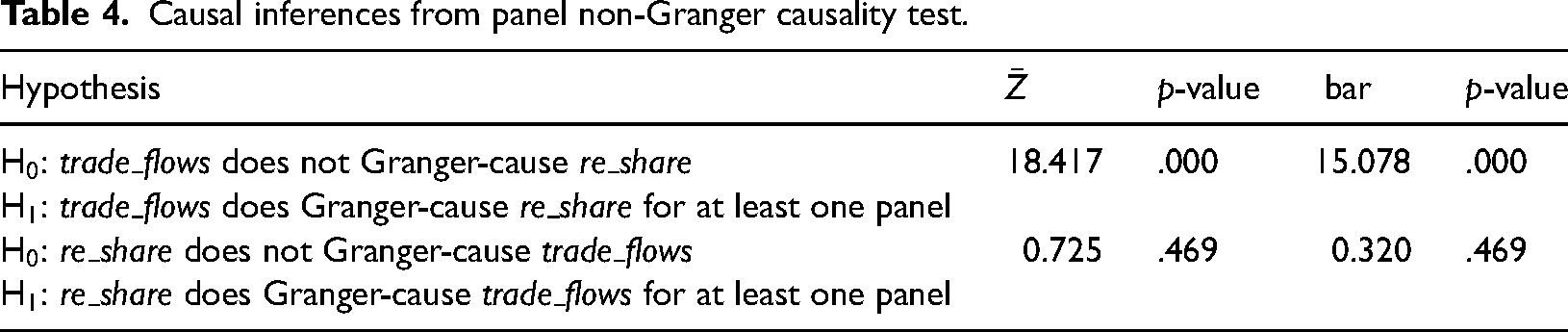
The causality results (equations (2) and (3)) illustrate a unidirectional causal relationship, as shown in Table 4, flowing from cross-border electricity trade (
Causal inferences from panel non-Granger causality test.
However, the empirical results also reveal a negative and significant relationship between the dummy variable for net exports and net imports (
Despite being insignificant, a positive relationship between governance quality (
An inverse relationship between population and the share of renewable energy in total electricity output is observed. The regression estimates show that a larger population does not promote renewable energy development in the region. Sub-Saharan Africa hosts more than 60% of the world's poorest people and has the highest regional poverty rate at 41%, 63 which may make countries less driven to invest in new renewable energy infrastructure while struggling to meet the basic needs of their populations. No significant impact from FDI on the share of renewables in total electricity output was observed. A continuous and sustained increase in oil prices is required to achieve divestment from fossil fuels.
Conclusions and policy implications
This study empirically examined the relationship between cross-border electricity trade and the share of renewable generation output using panel data for 21 African countries over 24 years. The results confirm a positive and statistically significant relationship between these two variables, indicating that increased engagement in cross-border electricity trade in the region will promote renewable energy development and accelerate progress towards achieving energy transition goals. Therefore, future policies should encourage greater levels of integration and investment in grid interconnections to enhance cross-border electricity trade.
The empirical results also suggest that the impact of cross-border electricity trade varies across countries, with distributional effects depending on whether a country is a net exporter or importer. On average, African countries that are net importers will experience faster growth in their share of renewable energy than countries that are net exporters. This implies that without effective pro-renewable policies, cross-border electricity trade will decarbonise some African countries’ electricity networks more than others. These effects can be further leveraged through the use of appropriately selected policy instruments, such as carbon taxes and green subsidies, which can discourage the use of fossil fuels and incentivise further investment in renewable electricity generating capacity. Such policies would foster the use of renewable energy in exporting countries and reduce the disparity in the decarbonisation potential of cross-border electricity trade.
The study emphasises that although countries engage in cross-border electricity trade, the inherent characteristics of their respective electricity systems can hinder the decarbonisation potential of such trade. Abundant domestic fossil resources and its associated infrastructure, and technological expertise create economic incentives for countries to rely on them for electricity production instead of investing in new technologies. Also, geopolitical factors and favourable economic structures and environment that encourage fossil fuels hinders renewable energy adoption. Therefore, without a robust regulatory framework and institutions in individual countries that encourage the use of cleaner fuels in electricity systems and prioritise best practices, the decarbonisation role of cross-border electricity trade will be limited. For example, as seen in Figure 1, South Africa, which exports a significant amount of electricity, generates only around 6% of its electricity from renewable sources.
The study acknowledges that there are fundamental barriers such as differences in market design, domestic transmission tariffs, regulatory and administrative issues in many African countries’ electricity systems that restrict effective integration. 64 Despite the creation of regional power pools to promote regional-level planning and align inter-country electricity policy, electricity trade volumes remain notably low. There is no doubt that future trade policies must establish a fair and cooperative trading environment to fully leverage the decarbonising benefits of cross-border electricity trade in Africa. This requires more than just fundamental planning, regulatory frameworks, infrastructural investments, and market designs to address participation barriers. It necessitates an equitable and non-discriminatory trading environment based on cooperation and mutual trust, achievable only through effective governance in each country. The study underlines the importance of governance quality in promoting participation in cross-border electricity trade and suggests that more research be done to uncover the relationship between governance quality and cross-border electricity trade.
Footnotes
Acknowledgements
All authors would like to thank the journal editors, four anonymous referees and NBS workshop participants for their helpful comments. The views expressed are ours alone.
Declaration of conflicting interests
The authors declared no potential conflicts of interest with respect to the research, authorship, and/or publication of this article.
Funding
The authors disclosed receipt of the following financial support for the research, authorship, and/or publication of this article: This work was supported by the HORIZON EUROPE Climate, Energy and Mobility (Grant No. 101081377).

Notes
Appendix
Empirical review summary. FDI: foreign direct investment; GDP: gross domestic product. Augmented Dickey–Fuller unit root test. Note: Included in the unit root test is the value of 1 for lagged differences. a Includes time trend. b Includes the drift term. *** Denotes a significance level of 1% and unit root tests are reported for the variables in its transformed form.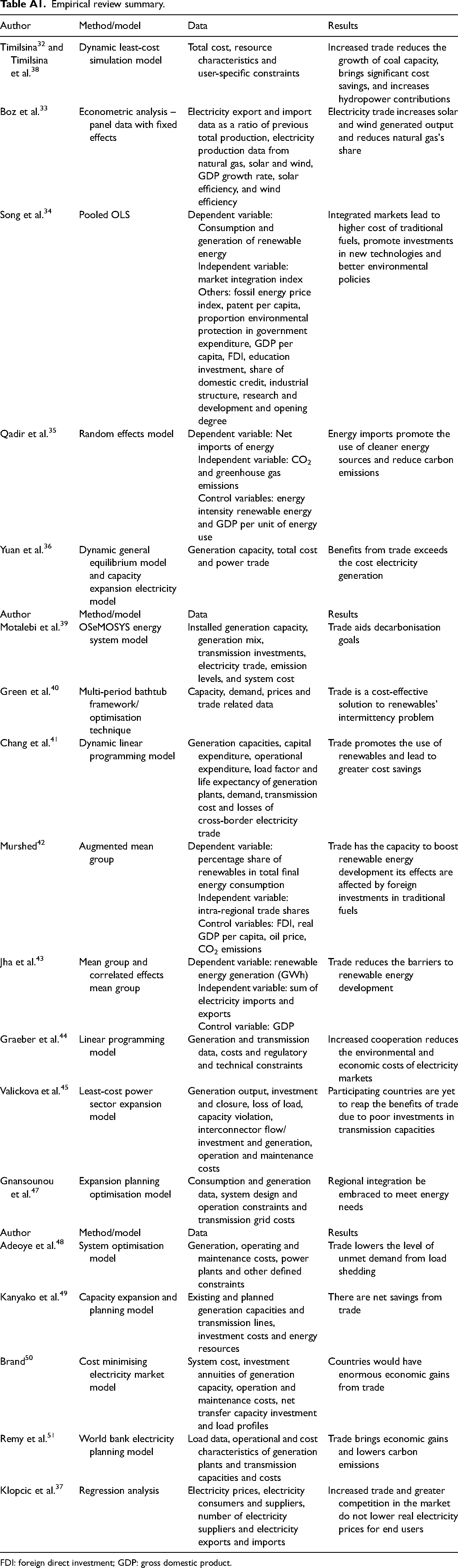
Author
Method/model
Data
Results
Timilsina
32
and Timilsina et al.
38
Dynamic least-cost simulation model
Total cost, resource characteristics and user-specific constraints
Increased trade reduces the growth of coal capacity, brings significant cost savings, and increases hydropower contributions
Boz et al.
33
Econometric analysis – panel data with fixed effects
Electricity export and import data as a ratio of previous total production, electricity production data from natural gas, solar and wind, GDP growth rate, solar efficiency, and wind efficiency
Electricity trade increases solar and wind generated output and reduces natural gas's share
Song et al.
34
Pooled OLS
Dependent variable: Consumption and generation of renewable energy
Independent variable: market integration index
Others: fossil energy price index, patent per capita, proportion environmental protection in government expenditure, GDP per capita, FDI, education investment, share of domestic credit, industrial structure, research and development and opening degreeIntegrated markets lead to higher cost of traditional fuels, promote investments in new technologies and better environmental policies
Qadir et al.
35
Random effects model
Dependent variable: Net imports of energy
Independent variable: CO2 and greenhouse gas emissions
Control variables: energy intensity renewable energy and GDP per unit of energy useEnergy imports promote the use of cleaner energy sources and reduce carbon emissions
Yuan et al.
36
Dynamic general equilibrium model and capacity expansion electricity model
Generation capacity, total cost and power trade
Benefits from trade exceeds the cost electricity generation
Author
Method/model
Data
Results
Motalebi et al.
39
OSeMOSYS energy system model
Installed generation capacity, generation mix, transmission investments, electricity trade, emission levels, and system cost
Trade aids decarbonisation goals
Green et al.
40
Multi-period bathtub framework/optimisation technique
Capacity, demand, prices and trade related data
Trade is a cost-effective solution to renewables’ intermittency problem
Chang et al.
41
Dynamic linear programming model
Generation capacities, capital expenditure, operational expenditure, load factor and life expectancy of generation plants, demand, transmission cost and losses of cross-border electricity trade
Trade promotes the use of renewables and lead to greater cost savings
Murshed
42
Augmented mean group
Dependent variable: percentage share of renewables in total final energy consumption
Independent variable: intra-regional trade shares
Control variables: FDI, real GDP per capita, oil price, CO2 emissionsTrade has the capacity to boost renewable energy development its effects are affected by foreign investments in traditional fuels
Jha et al.
43
Mean group and correlated effects mean group
Dependent variable: renewable energy generation (GWh)
Independent variable: sum of electricity imports and exports
Control variable: GDPTrade reduces the barriers to renewable energy development
Graeber et al.
44
Linear programming model
Generation and transmission data, costs and regulatory and technical constraints
Increased cooperation reduces the environmental and economic costs of electricity markets
Valickova et al.
45
Least-cost power sector expansion model
Generation output, investment and closure, loss of load, capacity violation, interconnector flow/investment and generation, operation and maintenance costs
Participating countries are yet to reap the benefits of trade due to poor investments in transmission capacities
Gnansounou et al.
47
Expansion planning optimisation model
Consumption and generation data, system design and operation constraints and transmission grid costs
Regional integration be embraced to meet energy needs
Author
Method/model
Data
Results
Adeoye et al.
48
System optimisation model
Generation, operating and maintenance costs, power plants and other defined constraints
Trade lowers the level of unmet demand from load shedding
Kanyako et al.
49
Capacity expansion and planning model
Existing and planned generation capacities and transmission lines, investment costs and energy resources
There are net savings from trade
Brand
50
Cost minimising electricity market model
System cost, investment annuities of generation capacity, operation and maintenance costs, net transfer capacity investment and load profiles
Countries would have enormous economic gains from trade
Remy et al.
51
World bank electricity planning model
Load data, operational and cost characteristics of generation plants and transmission capacities and costs
Trade brings economic gains and lowers carbon emissions
Klopcic et al.
37
Regression analysis
Electricity prices, electricity consumers and suppliers, number of electricity suppliers and electricity exports and imports
Increased trade and greater competition in the market do not lower real electricity prices for end users
Variables
ADF
I (D)
Renewable energy's share in total output (
I (0)
Cross-border electricity trade (
)
I (0)
Governance quality (
)
I (0)
Economic development (
)
I (0)
Total population (
)
I (0)
Foreign direct investment (
)
I (0)
Oil price (
I (0)