




Abstract
Oleaginous yeast-derived biodiesel production utilizing zero-value organic waste biomasses has been prioritized to curb environmental pollution, global warming, and rising bioenergy demands. Lipomyces starkeyi is a promising lipid accumulator among various oleaginous yeasts due to its potency for lipogenesis utilizing a diverse variety of substrates and tolerating various fermentation inhibitors produced during biomass pretreatment. The prevalence of saturated and monounsaturated longer-chain fatty acids (C16–C18) in triglyceride of L. starkeyi improves the quality of the produced biodiesel. Nevertheless, variations in substrate types, fermentation conditions, and modes of fermentation influence the growth of L. starkeyi and its lipid productivity and profile. This review will comprehensively discuss the lipid production potency of oleaginous L. starkeyi during variations in substrate composition and fermentation conditions and their impact on lipid production and its quality to facilitate industrial production of L. starkeyi-derived biodiesel utilizing zero-value organic waste.
This is a visual representation of the abstract.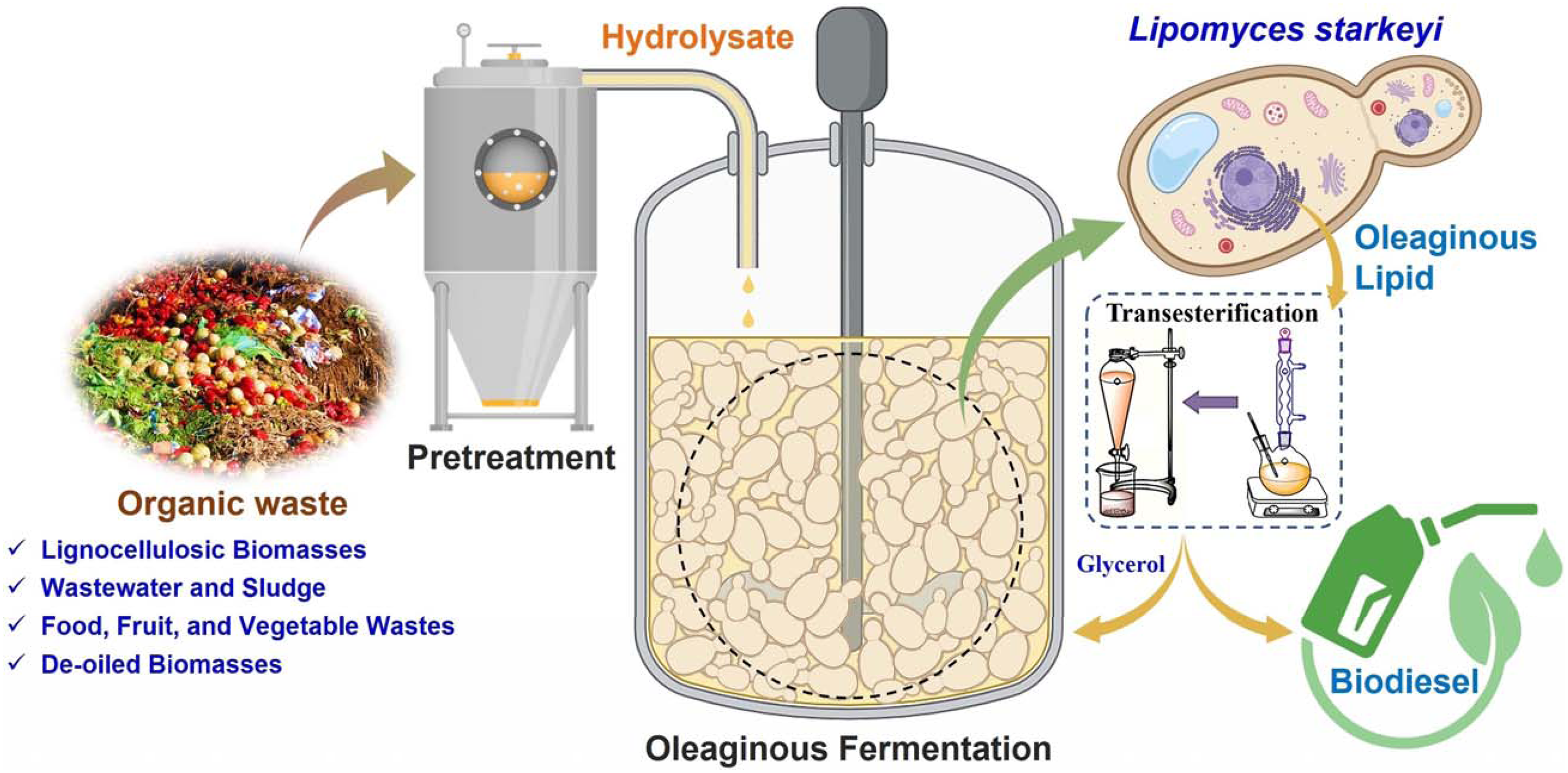
Get full access to this article
View all access options for this article.