



Abstract
Since the industrial era, the selection of energy sources to facilitate economic advancement has been criticized because of the resulting ecological calamity. This has prompted the introduction of radical approaches such as ISO 14001, which tackles the drivers of pollution. Therefore, this study analyses the ISO 14001—environment nexus from three distinct points of view: BRICS, MINT, and G7 countries from 1999–2020. Also, our work fills an extant gap in assessing structural change and innovation’s role in augmenting the relationship. The Driscoll and Kraay estimator is employed as an analytical tool for cross-sectional dependence and slope homogeneity, while the fixed effects approach provides sufficient robustness checks on the findings. While some outcomes vary per bloc, others are relatively similar across the three blocs. That is: (1) ISO 14001 shows an abatement portfolio for only the G7 bloc, and the Full sample. (2) Structural change showed potential for abating carbon emissions in all blocs. (3) Technology led to an increase in pollution in all blocs except for the MINT economy. (4) ICT in the form of mobile phones also help reduce carbon emissions in all three blocs except for their composite. (5) Renewable energy helps reduce carbon emission in all blocs except for G7. ISO 14001 shows the potential to encourage green growth. As a result, policymakers should work to enhance ISO 14001 certification, which might serve as a management tool to promote sustainable development.
Introduction
Economic activity, industrial operations, unsustainable resource exploitation, and resultant emissions have increased the environmental burden. 1 Inciting external pressure on businesses to respond to these difficulties and address climate change and social and ecological deterioration issues is paramount among environmental stakeholders. As a result of these urgent issues, companies have begun to include sustainability in their fundamental business plans. Most businesses now prioritize improving the ecological environment and hastening the development of ecological civilization. This is due to the introduction of an Environmental Management System (EMS) such as ISO 14001 (i.e., a set of standards put forward by the International Organization for Standardization (ISO) focused on environmental sustainability) to respond to environmental degradation. With the fast change of old and new drivers of industrialization, the world has agreed to adopt an environmental policy aimed at long-term environmental protection. 2 This alternative development route combines environmental aims with economic and social goals termed “green growth.” 3 Green growth is described as progress that protects biodiversity and environmental quality. This measure emphasizes businesses’ commitment to preventing environmental deterioration. Green growth, which frequently relates to the idea of low-carbon progress 4 or the sustainability and protection of the environment, 5 successfully exploits environmental resources that reduce pollution and lessen environmental damage.6,7 As worldwide ecological pollution and ecological harm become significant problems, ISO 14001 can assist in achieving the dual goals of worldwide environmental conservation and global economic prosperity. New research suggests that while business operations are one of the primary causes of the world's sustainability issues, they may also be a crucial component of the solution. Such phenomenon instigates studies to better understand the nexus between ISO 14001 and Sustainable development. Hence this study is predicated on five strands to promote policy formation. (i) Why focus on how ISO 14001 can provide sustainability in three economic blocs (Brazil, Russia, India, China and South Africa (BRICS); Mexico, Indonesia, Nigeria, and Turkey (MINT) and Canada, France, Germany, Italy, Japan, the United Kingdom and the United States (G7) )? (ii) The relationship between ISO 14001 and Sustainable development. (iii) The moderating roles of innovation to instigate sustainable development. (iv) Prospect of structural change to promote sustainable development. (v) Gaps in prior literature. These ideas are further explained below chronologically.
First, concerns to research on BRICS, MINT, and G7 countries, are critical, particularly given the unfavorable potential of their policy syndrome on carbon emission externalities related to economic development, investment, consumption, and financial access, inter alia.8,9 Due to varying socioeconomic, environmental, and rapid industrialization levels, these economies’ ecology is exposed to an increasing rate of pollution, which is a cause for concern. 10 Therefore, it is imperative to find immediate responses to the by-product of the driver of growth (i.e., within the remit of business) in these economies before the situation worsens. Unfortunately, most countries in BRICS, MINT, and G7 have most of their business frameworks fueled by the use of fossils. Hence a significant issue among BRICS, MINT, and G7 nations is advancing economic growth goals without jeopardizing individual member countries’ ambitions for sustainability. However, reports indicate the reverse, as most fall short of reaching the 2030 goal of carbon neutrality. 11 Hence these economic blocs have reached a consensus on the necessity to abate rising carbon emissions, as they are members of several environmental accords. In addition, they believe that efforts should be focused on the emergence of environmental concerns and the bigger socioeconomic causes of such consequences. 12 Thus, there is a need to determine how business-focused policies such as ISO 14001 help achieve carbon neutrality across a range of countries; in our case, BRICS, MINT, and G7. Additionally, these economies must exert leadership where sustainability is becoming an increasingly important factor for health and global warming threats. If the issue of climate change is not addressed within these regions, these blocs are unlikely to achieve Sustainable Development Goal 13 (SDG13). Consequently, research should be conducted to determine how ISO 14001 influences the interaction between technological innovation and structural change to promote ecological responsibility.
Secondly, according to existing studies, the current environmental paradigm has failed to curb environmental deterioration and achieve sustainable development, 13 making ISO 14001 seem a new panacea to address climate change issues as nations still fall short of their environmental targets. Although conventional government rules have significantly reduced industrial pollution, firms frequently claim that the regulations’ prescriptive character makes them expensive. 14 Additionally, because facilities often work to achieve these limits, there is no incentive to cut their pollutants further. Conventional laws have come under fire for setting an acceptable pollution threshold. Here is where ISO 14001 is different. It stipulates resource utilization in ways that abate emissions and uses environmentally friendly resources to ensure sustainable consumption, production, and development. From a commercial perspective, the importance of the term “sustainable development” in the global discussion has made the EMS a crucial success element for survival in the market. 15 However, academia is still unsure if, indeed, ISO 14001 helps achieve the target of reaching SDG13. Unfortunately, given the 2030 target, the existing situation regarding the progress made in many countries towards SDGs remains overwhelming, especially SDG 13. This calls for empirical analyses to establish such facts.
Thirdly, technological innovation defines new ways of doing things without exploiting scarce resources. Policymakers posit that technological innovation helps to abate CO2 emissions and improve environmental quality. 16 To achieve green growth, it is critical to employ low-carbon technologies that can deliver the desired benefits while being ecologically sustainable. Technological advancements have been crucial in transforming society from a traditional to a green economy. 17 Innovation promotes green energy production in order to channel the development of sustainable growth and aid in the transformation of technological practices in organizational operations and industrial processes.18,19 Transcendent technology discovery, according to Song et al., 20 aids in meeting national power requirements by supporting greener technologies that lower CO2 and other air pollutants. 21 Considering the fact that clean energy is a crucial component of sustainable resource policy, nations must invest in Research and Development (R&D) and green technology innovation to benefit from clean energy, especially advanced economies like the BRICS, MINT, and the G7. They appear complicit in increased pollution output. Primarily, technological innovation should be a driving force behind new production options, particularly those with a lower environmental effect, allowing these countries to continue producing without endangering the world.
Fourthly, structural transformations or transitions are necessary to resolve persistent societal problems. Numerous studies show that structural change helps countries’ socioeconomic development.22–24 Currently, gas and oil are the main energy sources that power economic activity, but they also contribute to climate change. However, sectors such as tourism and e-commerce are associated with increasing the use of environmentally-friendly technology, significantly having favorable environmental quality externalities. In this sense, most nations are transitioning from a secondary sector that is more dependent on energy to one that is more focused on generating income. Xiao et al. 25 and Soummane et al. 26 discovered that the variance in energy usage was significantly influenced by the transition from energy-intensive industries to non-energy-intensive sectors during the early phases of structural formation, which is an important step toward reducing carbon emissions, thereby, making it pertinent to understand the role it plays in achieving carbon neutrality.
Lastly, the study addresses the relevant gaps in earlier literature. Theoretically, the material that has hitherto been published has focused on the relationship between ISO 14001 and industrial environmental performance without considering the larger goal of achieving sustainable development.27,28 However, our work tries to bridge this gap by contextualizing the implementation of 1SO 14001 to achieve SDG13 and drive the prospect of SDG 7. Secondly, past research has primarily focused on the direct association that ISO 14001 has on the environment without considering the role of dynamic events like structural change or the spread of technology in accomplishing the stated objectives. This holistic approach recognizes that ISO 14001 is not just about individual company practices but also about contributing to global sustainability. As such contributes to a more comprehensive understanding of ISO 14001's role in the context of SDGs, emphasizing the need to consider both direct environmental effects and broader societal impacts.
Despite a bulk of research, there still remain significant gaps. Even though the results of numerous studies point to a connection between sustainability adoption and environmental performance, there must be some restrictions. It is arguable that not all breakthroughs in sustainability generate ecological stewardship, and the practical problems of how and when sustainability is lucrative remain largely unanswered.29,30 Therefore, managers are not well-informed on how they might profit from adopting sustainability technologies within their sectors because this link typically remains a black box and the limitations of the positive relationship remain unclear. The types of sustainability innovations that have commercial potential for either increased value or profitability are an inclusive benefit of sustainable development. Other major gaps detailed in prior works include the limited empirical studies that have been conducted on the effects of ISO 14001 on environmental performance using secondary data. Moreover, the corresponding studies have not yet clearly established the circumstances under which the implementation of ISO 14001 alters the number of pollutant emissions.20,31
This study contributes by providing a fresh understanding of the relationship between EMS implementation and environmental performance, which is important for practitioners, policymakers, and academics. This study explicitly explores the issue of whether adopting sustainability strategies actually results in the realization of social and environmental advances or if it merely results in their celebratory adoption. Hence this current study endeavors to bring four fundamental novelties to the ISO 14001 literature by: (a) First, arguing that businesses, firms, and industries are also responsible for the role sustainable development plays through environmentally-friendly inputs. (b) Broadening corporate responsibility and environmental stewardship knowledge in the worldwide business literature. (c) Enhancing policy formation and streamlining as it sets a framework for comparative analysis among the three significant economic blocs of BRICS, MINT, and G7. (d) Addressing an environmental concern, this study suggests a more comprehensive framework that combines EMS (organizational innovation utilizing ISO 14001), technology innovation, and structural transformation (i.e., service added value). The use of empirical data is one of the study's main strengths. The research is based on quantitative data from recognized organizations like the World Bank and ISO surveys, a departure from the qualitative trend of assessing EMS contribution to improving the environment.
The following is the structure of this study. The next part goes over the theoretical foundation and hypothesis formulation in depth. The methodology is then presented, including the population, data, and statistical techniques used. Finally, we review the results and highlight the debate sparked by major insights and the study's primary conclusions and consequences.
Theoretical underpinnings
The most pressing issue for policymakers is how to reduce environmental deterioration without jeopardizing economic and social progress. According to the environmental Kuznets curve (EKC), some argue that economic expansion is both the primary cause of and the cure for environmental degradation. According to the EKC theory, environmental degradation increases throughout the early phases of economic expansion as the trend of fossil energy use rises. However, in higher phases of economic growth, emissions decrease and environmental quality improves due to technical advances in energy technology that support ecologically-friendly energy.32,33
Some feel that economic expansion, by fostering less polluting technology, may alleviate environmental challenges. 18 Furthermore, when structural transition occurs, the percentage of industry decreases while the share of services increases, and these sectoral shifts may benefit less-polluting sectors. 18 Furthermore, when income levels rise, population growth rates decline, reducing the strain on the environment. The primary challenge that emerging countries face is the proverbial “grow now, clean up later”. 18 A delicate balance is necessary.
After contextualizing the EKC, the previous development paradigm broke down, and discussions about sustainable development began. This brought a perspective to the main driver of the environmental crisis which is related to the industry (i.e., Business). 34 This idea stems from a human understanding of the finiteness of the planet's resources and the resulting necessity to protect the natural assets, encouraging more sustainable development models. This has borne the ISO 14001, a regulatory framework that guides the operation of firms to be environmentally conscious of abating excess pollution emissions. 35 Nonetheless, scholarly dispute persists over whether companies that participate in voluntary efforts provide better environmental outcomes than those that do not. ISO 14001 uses established rules to aid companies in dealing with environmental challenges and improving ecological conditions.36–38 Several studies have found that the credential of ISO 14001 is associated with strong environmental awareness, responsibility, and legitimacy.39,40 This is because environmental concerns are no longer regarded as a cost factor. Instead, they become urgent aspects in the construction of a sustainable world, the advancement of corporate image, and the improvement of dependability and performance. ISO 14001 has created EMS standards to prevent diverse uses and standardization of operations in various nations.
Sustainability (ISO 14001)—environmental
To accomplish the United Nations’ Sustainable Development Goals (SDGs), all economic sectors must employ a range of sustainable development innovations that lower their environmental and social impacts.41,42 ISO 14001 is one of them. Previous evaluations attempted to clarify the findings on the link between sustainability innovations (ISO 14001) and environmental quality. Tariq et al., 43 for example, analyzed the drivers, repercussions, facilitators, and mediators of green innovations, but their study was inconclusive and recommended more research on how organizational characteristics influence green innovations and their effects. Their work was pivotal in providing insight into how adopting EMS can lead to some environmental gain.
Many businesses saw sustainability initiatives primarily as cost drivers.44,45 They were perceived as inventions that needed large initial investments with a long return period and offered only little environmental advantages. For most organizations, these management systems are rather complicated, involving large investments in employees, training, and, most crucially, in developing paper trails to prove their adherence to the law governing their environmental operations.28,46,47 Recent studies, however, indicate a strong and positive association between ISO 14001 and environmental advantages.48–50
We contend that the ambiguous findings are due to at least two factors. The first is a misunderstanding that ISO 14001 is entirely responsible for enhancing the environment inside the corporate context. Facilities operating in nations that have adopted technical innovation, increased information and communication technology (ICT) penetration, or even stronger legislation for renewable energy deployment are likely to obtain superior environmental advantages. 51 We believe that legislative flexibility encourages ISO 14001 users to look for more cost-effective ways to decrease their environmental impacts and hence achieve better environmental results.
A second explanation for the inconsistent results might be because previous research ignored the growth pattern of different nations or economic conditions.52,53 Endogeneity emerges as a result of unobserved country-specific variables, such as unobservable proportions of economic development, economic structures, and, to a significant extent, policies surrounding ISO 14001 acceptance. As a result, the error term may be positively connected with ISO 14001 adoption and distinct blocs when assessing the relationship between ISO 14001 and environmental performance. Unless this association is appropriately accounted for, the impact of ISO 14001 may be overestimated.
Technological innovation, renewable energy, structural change, ICT penetration, and environmental performance
Although there is sparse literature on the subject, some scholars have highlighted how some forms of innovations might improve environmental performance and reduce pollution-driven resource consumption.54,55 A wealth of materials supports the critical significance of renewable energy, ICT adoption, and technology advancements in reducing carbon emissions.56–58 Specifically, Wang et al. 59 discover that environmental innovation and renewable energy usage have an important impact in lowering carbon dioxide emissions in G7 nations. Chishti and Sinha 60 expressed that environmental quality is promoted through technical innovation in the BRICS economies. The same indication was seen in the MINT economics which shows that innovations helps improve carbon emissions.61,62
However, few works have tried to ascertain these composite groups and ascertain a comparative analysis. On this basis, our study would: (1) conduct a comparative analysis among three blocs of which, two are advanced economic blocs (BRICS and G7) and one is an emerging economy bloc (MINT), to provide a whole report on the role ISO 14001 plays in sustainable development. (2) Control for the relationship between ISO 14001 and sustainable development, while looking at structural change, technological advancement, ICT, renewable energy development and economic growth.
Methodology
In the past decade, the green growth narrative has attracted a lot of attention. Green development not only safeguards the environment and people but also efficiently institutes the management of scarce natural resources. 49 This article seeks to illustrate one such design (i.e. ISO 14001) that guarantees the aforementioned. The gains of ISO 14001 are rarely discussed in the literature. Given the obscurity surrounding ISO 14001's function, a quantitative longitudinal economic strategy was used in order to provide data that could be extrapolated to the study's goal. BRICS, MINT, and G7, the most industrial economies, were invested in providing an extensive report. The premise of the Technology Acceptance Model supports this investigation. Since the tenet of ISO 14001 promotes the adoption of cutting-edge clean technology that slows down environmental degradation. The framework of ISO 14001 dictates that certified firms use environmentally friendly inputs, also it requires the use of innovation to handle outputs (waste, CO2). This is plausible with the introduction of clean technology. 49
Econometric model
Improving the framework of Marinova and Altham
63
and the previous research, our study posits that the ISO promotes emission reductions within the context of technological advancement and induces structural change due the appreciation for green growth. We also discuss major control variables such as renewable energy, information and communication technologies and economic development. These are is provided in our theoretical model below in equations (1) and (2) as follows:


Descriptions of data and sources.
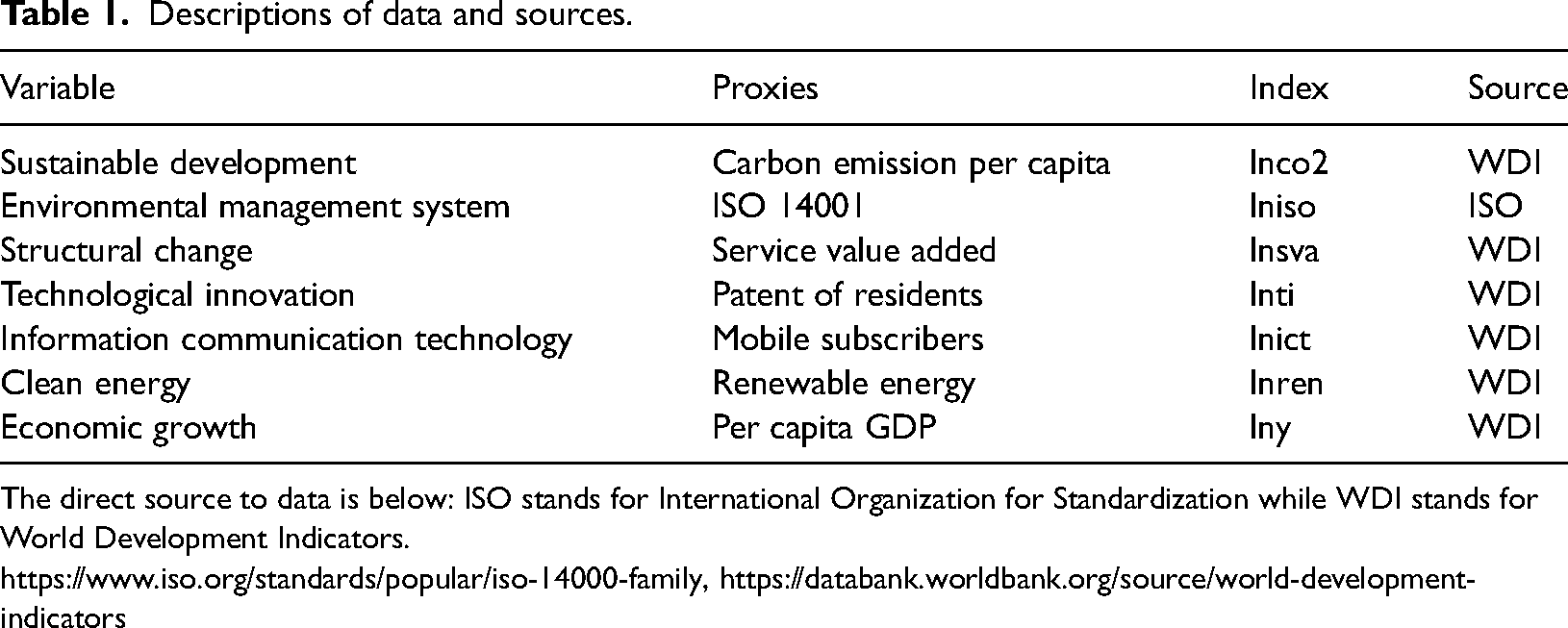
The direct source to data is below: ISO stands for International Organization for Standardization while WDI stands for World Development Indicators.
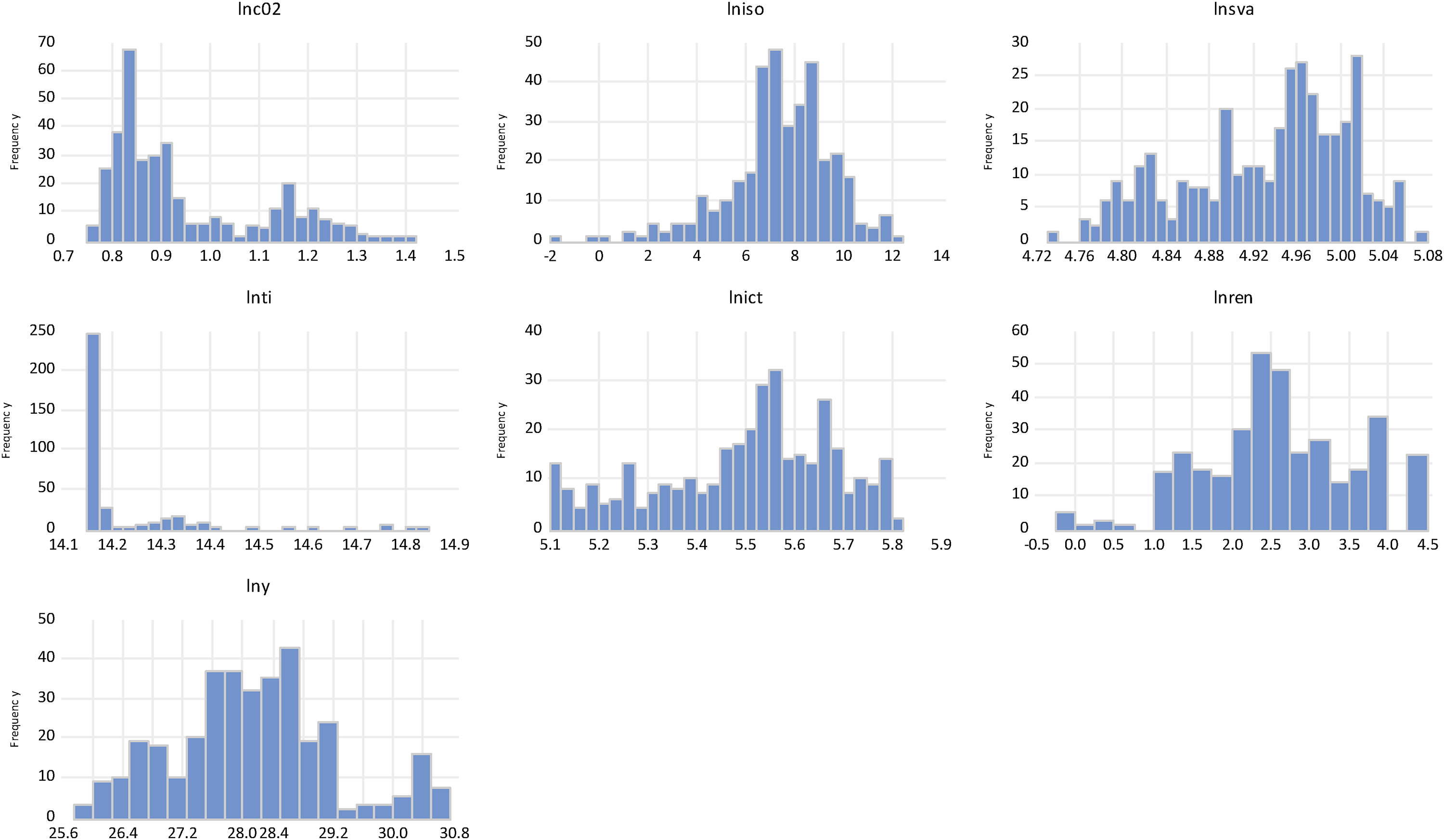
Distribution table of variables.
Variable measures
This article investigates the relationships between ISO 14001 and sustainable development, technical innovation, ICT, renewable energy, and economic growth from 1999–2020. The time period was dictated by the availability of ISO data.
Dependent variable
Sustainable development: The necessity for improved policy coherence in sustainable development is undeniable. Our work took a conspicuous look at SDG13 as it serves as the by-product of most industries. Also, many academics believe that carbon emissions are the primary cause of the deteriorating environment. Therefore, carbon emission is proxied to indicate sustainable development.
Independent variables
ISO 14001: There is widespread consensus that EMSs are instrumental in creating an environmentally sustainable society. The implementation of ISO 14001 is to improve the environment. It is an essential strategic push for the development and application of industrial control systems for enhanced sustainability.
Technological Innovation: One of the crucial factors in assessing the success of sustainable development is innovation vitality, as posited by Singh and Chan. 65 By transforming traditional sectors into green economies, technological innovation helps to alleviate the severe environmental problem and continually promote sustainable growth. Here technological innovation is proxied by patents of residents. 66 We discarded the use of any ICT indicators as it served as control variables, in our study.
Structural change: Environmental deterioration may be reduced in many nations by adjusting the organizational framework and the positioning of economic activity. Structural transformation helps the economy thrive without increasing carbon dioxide emissions due to energy use. This study proxied structural change with service added value as it is seen as an economic sector associated with less emission. 67
Control variables
Information communication technology: The growth of ICT has transformed how information is shared, processed, and used within businesses. It has also significantly contributed to the achievement of a SDG by reducing the need to cut down trees. This is proxied by mobile phone subscription.68,69
Renewable energy: There is an urgent need to design and execute policies promoting the widespread adoption of renewable energy in order to decrease environmental deterioration, 70 while maintaining a high level of economic activity. The use of renewable energy is the proxy variable for the energy revolution in this article. This is because renewable energy is regarded as an example of clean energy, 71 and increasing the proportion of renewable energy generation and consumption is thought to be the best course for the transition to a sustainable energy economy.
Economic growth: The economy and the environment are mutually dependent. 72 The economy will grow quickly and sustainably when there is no pollution and a healthy environment because a healthy workforce that can carry out commercial operations effectively is made possible by a decent environment.
Econometric estimation approach
To delve into the main hypothesis testing, preliminary tests were conducted, which helped us to choose the best method. These tests included: (a) Pairwise correlation matrix, (b) cross-sectional dependency test, (c) second generational panel unit root tests, (d) Collin multicollinearity test, (e) Westerlund cointegration test, and (F) Pesaran, Yamagata homogeneity test. After these tests, we used robust analysis to test for the hypothesis, namely: (i) Driscoll Kraay for the principal analysis and (ii) Pool OLS with fixed effects. We then finalized our analysis with the Dumitrescu-Hurlin causality test.
Consequently, we used a pairwise correlation matrix 73 to check for multicollinearity. 74 This is a traditional model which has some deficiencies; hence we further used the Collin multicollinearity test proposed by Philip Ender/UCLA. 75 This provides a variance inflation factor (VIF). It evaluates the degree to which the parameters in a regression model are correlated with one another. We continue to understand our data with an initial experiment for cross-sectional dependency. This is because the errors in panel-data modeling are likely to have significant common shocks and undiscovered components, which could render the hypothesis testing insignificant. This test was conducted using Bias-Corrected scaled Lm 76 and Pesaran cross-sectional dependence tests. 77 Also, these tests ensure a more robust panel unit assessment to ascertain the stationarity of our data, whether at level or first difference. The next step involves determining whether the series has a stationary process in order to prevent erroneous regression estimates. Therefore, this study chooses to do advanced cross-sectionally augmented panel unit (CIPS) and covariate augmented Dickey-Fuller (CADF) panel unit root tests. 78
Due to the potential stationary state of the research variables’ linear combination at the level, the stationary level at the first difference I (1) necessitates analyzing cointegration associations amongst the variablestion under consideration. Since it can deal with the CD problem pertaining to the stationary state of the linear combination of the series or the existence of a cointegration connection, the Westerlund 79 panel cointegration test is used in this situation. The findings of this test are presented in line with the Westerlund cointegration test and based on the panel (Pt, Pa) and group statistics (Gt, Ga). We also used the Pesaran, Yamagata homogeneity test Pesaran and Yamagata 80 to ascertain heteroskedastic and/or serially correlated errors.
The long-run analysis, which is at the core of the statistical approach, is examined in this study. For that, Driscoll-Kraay's 81 econometric instruments and fixed effects estimators 82 are utilized. These deal effectively with statistical problems like heteroskedastic and autocorrelation, inter alia, and conclude with from the Dumitrescu-Hurlin causality test. 83
Results
Descriptive analysis and correlation matrix
The alarming pace of environmental degradation championed by businesses has made it necessary to comprehend the function of an international standard organization footprint dubbed ISO 14001 to assist decrease the menace under the operation of technological innovation and structural change. Geared by that purpose, the study begins with a data statistic dataset (see Table 2). For all data sets, results showed economic growth to have the highest mean for the full sample (Economic growth (lny) = 28.12), BRICS (Economic growth (lny) = 27.960), MINT (Economic growth (lny) = 27.139), and G7 (Economic growth (lny) = 28.797). With the exception of technology innovation, the values of skewness indicate that the variables carbon emission, ISO 14001, structural change, ICT, renewable energy, and economic growth are regularly distributed. On the other side, kurtosis establishes how steep a distribution is. When the Kurtosis value is 0, the dataset as a whole has an equal steepness; nevertheless, whereas a value above 0 denotes a steeper distribution, a value below 0 denotes a less steep distribution.
Descriptive statistics.
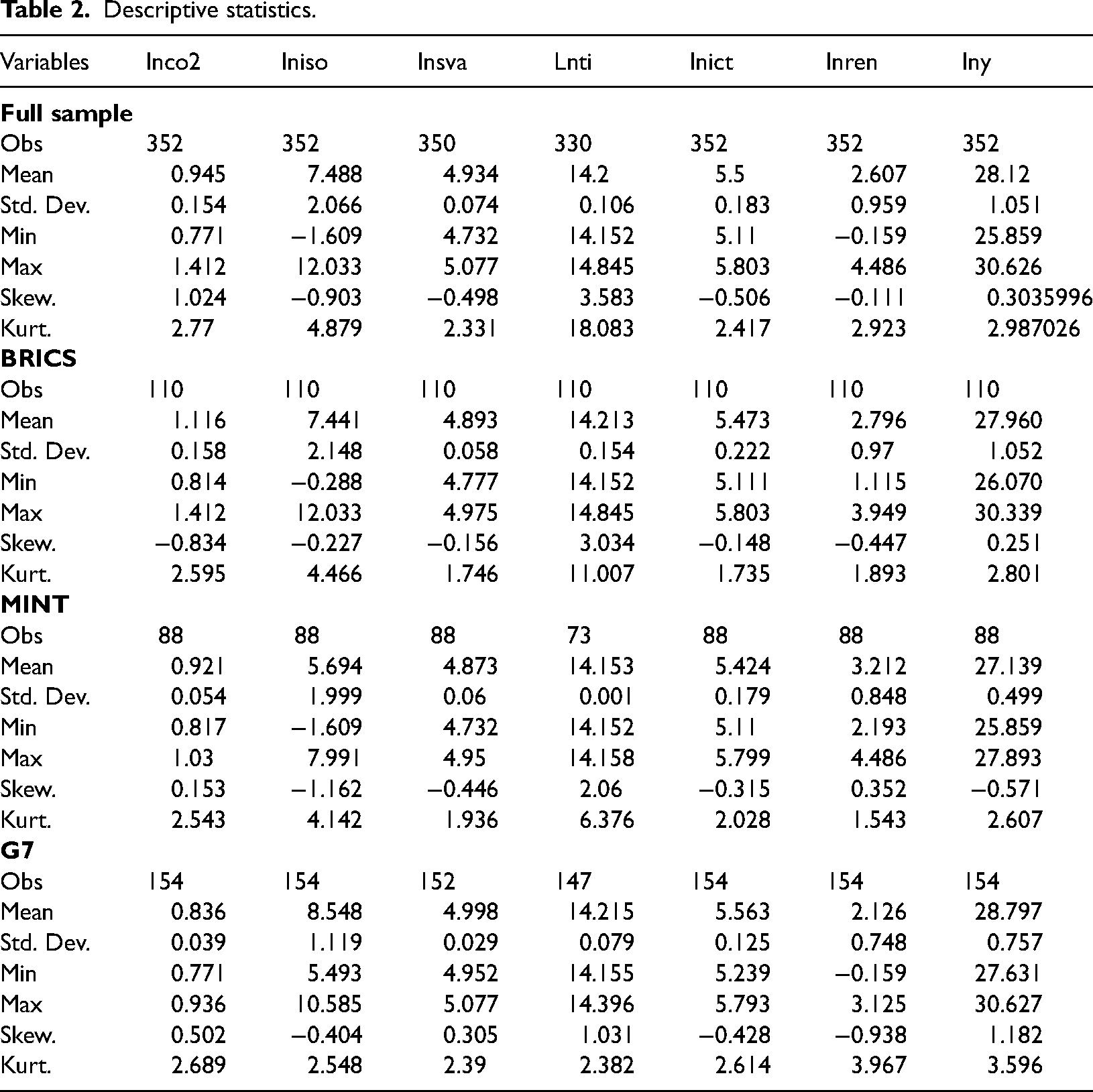
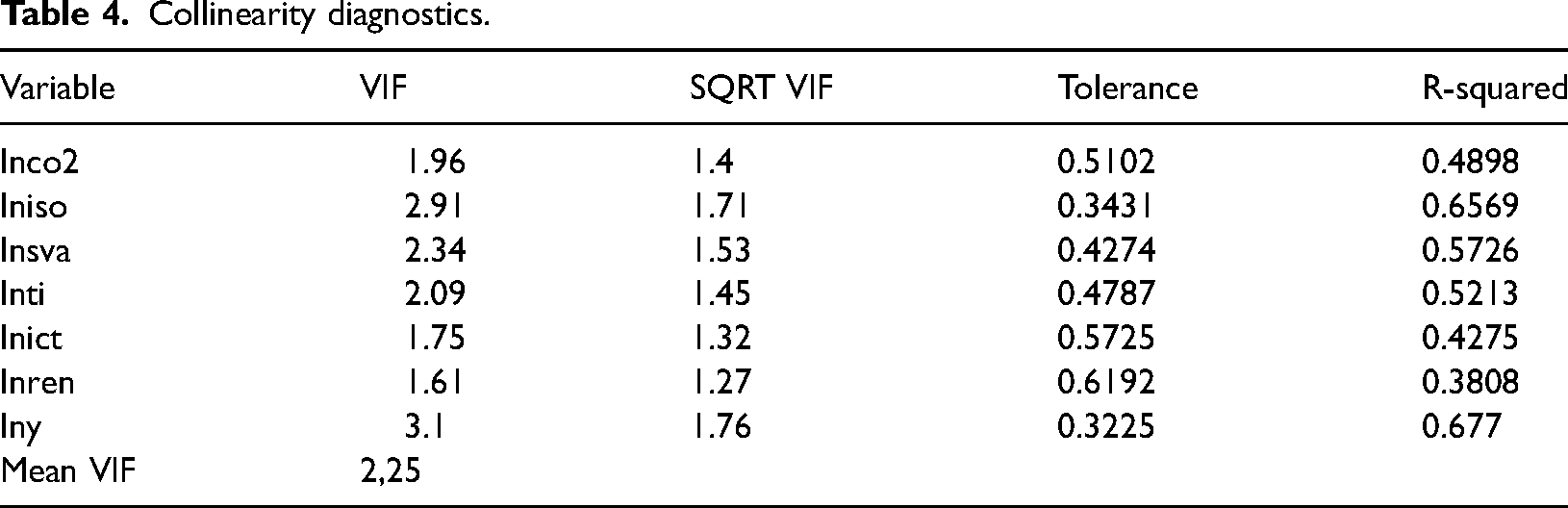
Table 3 displays the Pairwise correlation matrix and the model's significant variables. All the regressors are shown to be significantly correlated to carbon emissions, the explained variables. The outcome also demonstrates a mixed correlation connection between the factors. However, although most are positive, a few are negative. Also, according to Schober et al. 84 and Xie et al., 85 ascertaining regressor with coefficient −/ + 0.75 association with the explained variable indicates the presence of no multicollinearity. We further did a robust multicollinearity test using Collin, 86 as shown in Table 4, which confirmed no multicollinearity among the variables.
Pairwise correlation matrix.
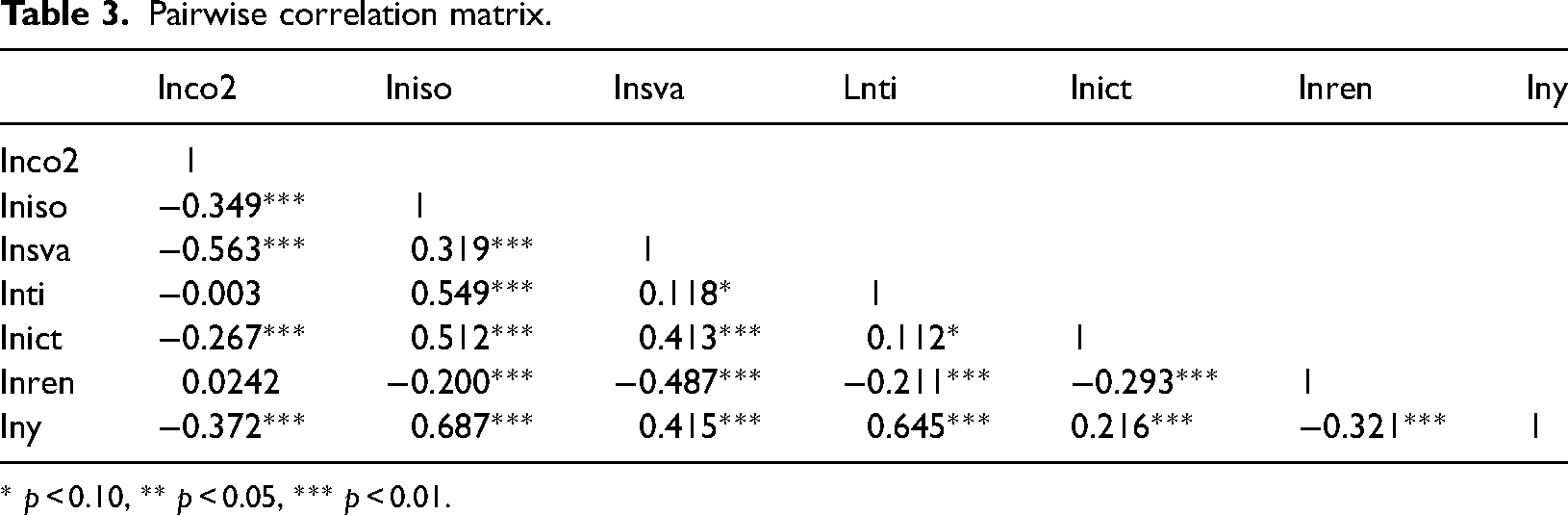
* p < 0.10, ** p < 0.05, *** p < 0.01.
Collinearity diagnostics.
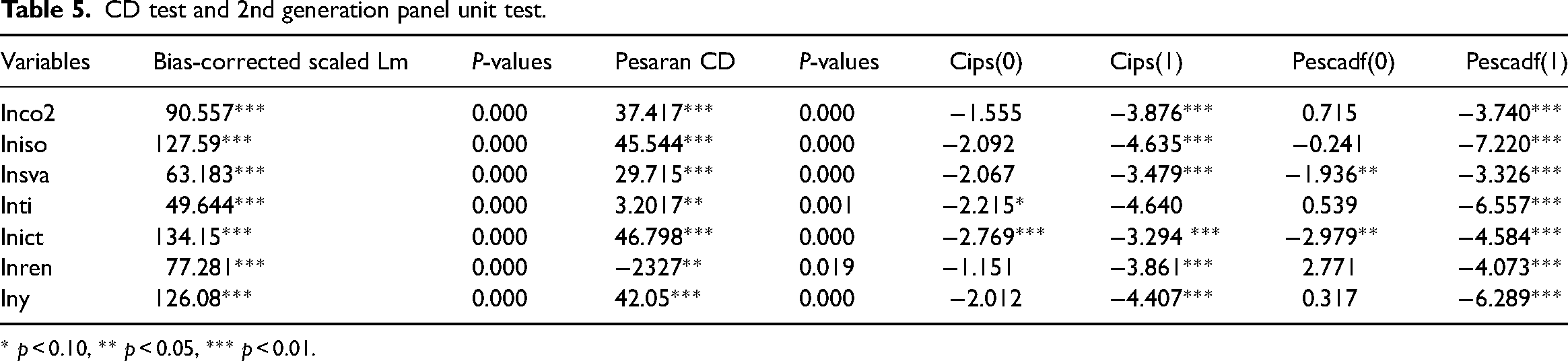
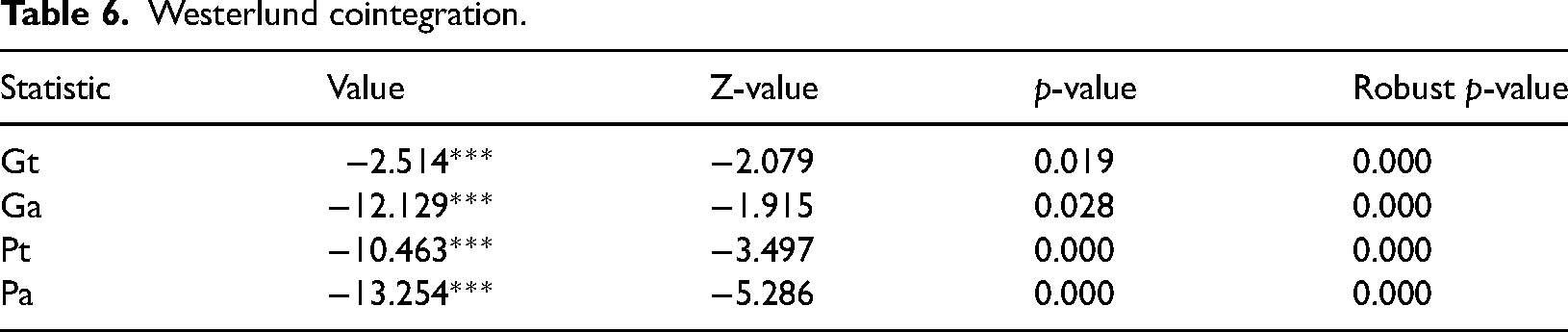
The CD test was run later in our pre-estimation process to examine the cross-sectional dependence impact between the variables. In other words, the CD test investigates the country-to-country spillover impact. Therefore, the existence of a cross-sectional dependency suggests that shocks in any of the research variables taken into account for one nation may influence the variables of another country. Adopting the first-generation panel unit root test in this situation would result in erroneous estimations. The second-generation unit root test is applicable in this situation. In addition, Table 5 shows the outcomes of the CD test and the unit root testing. At a 1% level of significance, it is seen that the existence of cross-sectional effects among the variables is established. This 87 model was used to check for CD test. Table 5 also shows results for the Panel Unit root test, the results of the unit root test, which are displayed in Table 4, demonstrate that the majority of the series are non-stationary at level, although other variables are non-stationary at level but become stationary after the first difference. This indicates that the research variables have unit roots. We then evaluate if the variables in our investigation are cointegrated (see Table 6). The cointegration analysis looks at the potential for long-term relationships between variables. It has been shown that there might be up to seven long run nexuses that already exist. We follow through to also check for slope heterogeneity as shown in Table 7.
CD test and 2nd generation panel unit test.
* p < 0.10, ** p < 0.05, *** p < 0.01.
Westerlund cointegration.
Slope heterogeneity 80 .

* p < 0.10, ** p < 0.05, *** p < 0.01.
Panel regression results
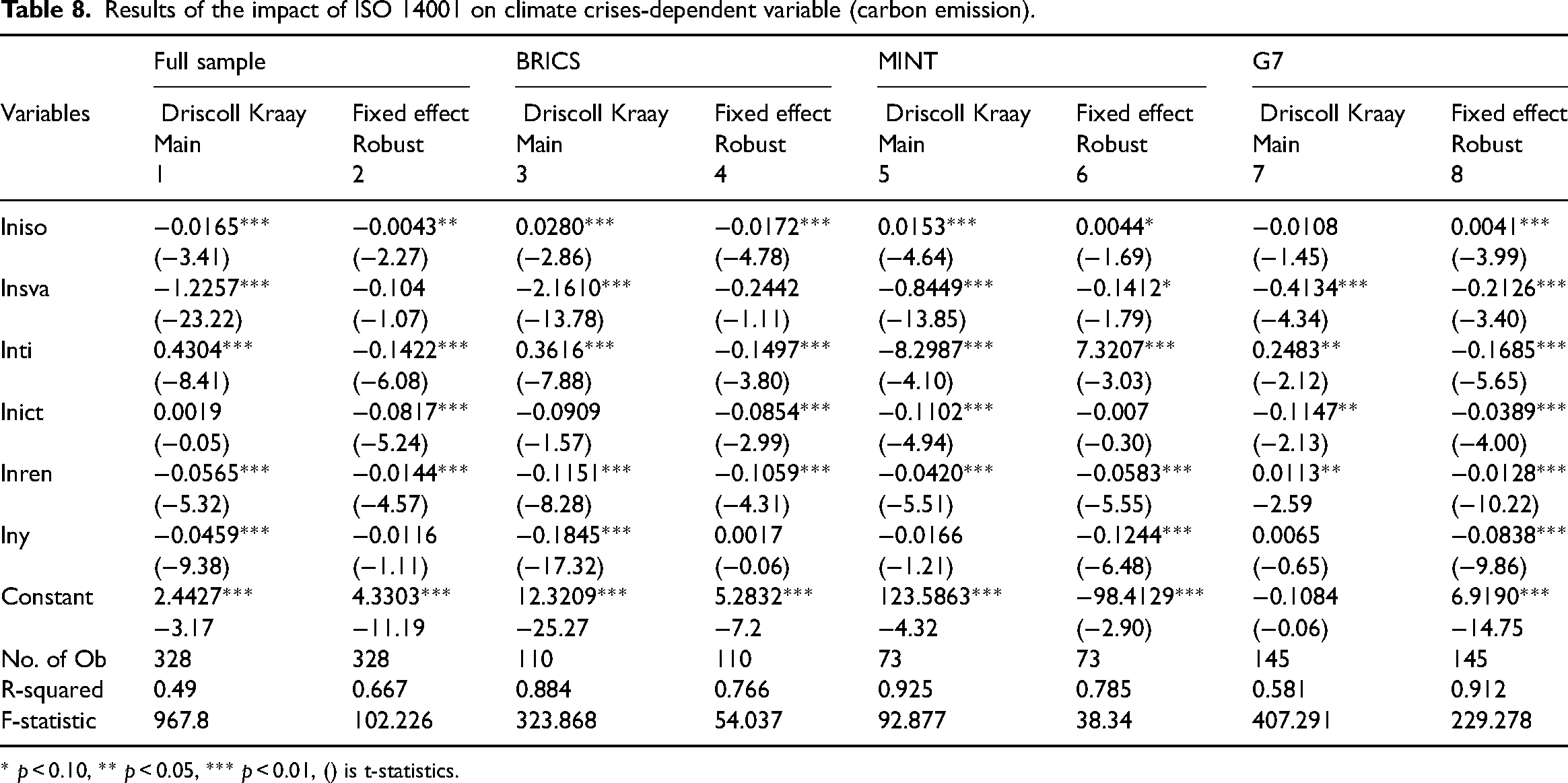
The estimates of the Driscoll-Kraay and the fixed effects are presented in Table 8. The Driscoll-Kraay is used for the main analysis, and the fixed effect was used for robust analysis to test the extent of reliability of the main results. We attempt to ascertain whether ISO 14001 mitigates carbon emissions in BRICS, MINT, and G7 economies. Columns [1], [3], [5], and [7] in Table 8 represent the PSCE-
Results of the impact of ISO 14001 on climate crises-dependent variable (carbon emission).
* p < 0.10, ** p < 0.05, *** p < 0.01, () is t-statistics.
With regards to the environmental impact of structural change proxied as service value added, the results show that structural change is negatively related to carbon emissions for all blocs. This indicates that changing production builds on service-rendering positively responding to sustainable development. Specifically, a percent change in service value added will lead to a decrease in carbon emissions by 1.23%, 2.16%, 0.84%, and 0.41% for the full sample, BRICS, MINT, and G7 countries, respectively. However, the results were contrary to an earlier work by Samargandi. 91 Although this result may suggest a shift from a more industrialized sector to a service dependent one, it is only rational for countries to adopt energy efficient technologies and strategies to reduce emissions. Our results agree with earlier reports by Wang et al., 92 Okamoto, 93 and Wiedmann et al. 94 This also implies that if these advanced economies of BRICS, MINT, and G7 would adopt the tertiary sector channel form of production, abatement of carbon emission would follow suit, proving a framework towards sustainable production a component of sustainability development.
For technological innovation on carbon emission, the results varied. It showed a possible positive relationship for the full sample, BRICS, and G7 and a negative effect for MINT economies. This is contrary to our expectation as we expected improved technology to help reduce carbon emissions. These results specifically detail that a percentage change in innovation may lead to a 0.43%, 0.36%, 0.25% increase in carbon emission for the full sample, BRICS, and G7, but an 8.30% decrease for MINT economies. It can be argued that the adoption of the technology within these blocs (BRICS and G7) may have accelerated the rise in fossil energy consumption. Another plausible reason could be attributed to the argument of the EKC where it is possible that these economic blocs are at the stage of development where any additional technology innovation would invoke the law of diminishing returns. Our findings are tangential with works in the extant literature.66,95,96
Further, the environmental impact of ICT indicate that the level of ICT among the blocs produces similar outcomes except for the full sample, with specific results suggesting that a percentage change in ICT leads to a 0.11% for MINT and G7 nations. ICT significantly reduces carbon emission levels, thus corroborating the studies of Wang et al. 97 and Chatti and Majeed. 98 The viable explanation will be that ICT has become a norm, and ICT over the period has shown a propensity for greening the environment. Also, ICT aids easier dissemination of ISO 14001 information, leading to better environmental performance. ISO 14001 is also a competitive edge for Business, and ICT provides room for industry to learn best practices from their peers to meet market need. However, for the full sample and BRICS, it showed no relationship, which could lead to speculation of poor implementation of ICT policies within the BRICS countries. However, literature indicates that ICT has the potential to help reduce carbon emissions, as expressed by Zafar et al. 99 and Weili et al. 100
Following extant literature, renewable energy usage leads to a reduction in carbon emissions. Our result thus aligned to the literature for the full sample, BRICS, and MINT economies. Renewable energy is a component of green growth, and as such, it is expected to help improve environmental quality via zero emissions. Increasing the availability of green sources would enable countries to substitute carbon-intensive fossil fuels while reducing global warming emissions substantially. It is worth noting that the findings aligned with Yang et al. 101 and Li et al. 102 who argued that the expanded deployment of renewable technology and energy can help accomplish the emissions reductions required to limit global warming to no more than 2 °C, thereby averting the most severe effects of climate change.
The last control variable, economic growth, provides varying results for the distinct blocs. The results reveal statistical significance and a negative effect of economic growth on carbon emissions for the full sample and BRICS nations. However, although the effect is not significant in BRICS and G7 countries, a negative effect is recorded in the former with a positive effect in the latter. The significant negative effect could be attributed to the fact that countries have either started a structural change or implementation of ISO 14001, leading to signs of reduction in pollution emissions. However, the results were contrary to popular opinions.103,104
Robust fixed effects
The outcomes produced by the fixed effects approach, as displayed in columns [2], [4], [6], and [8], do not differ substantially from those of the primary analysis. Reporting on the significant difference, unlike the Driscoll-Kraay, which showed a positive relation between ISO 14001 and carbon emission for the BRICS bloc, it exerts a negative association when analyzed using fixed effects and falls in line with policy recommendations and available literature.46,105
Also, the relationship between technological innovation and carbon emission Driscoll-Kraay estimation provides a positive relation for the full sample which is contrary to contemporary literature.106,107 However, the fixed effects findings aligned with major finds, which expressed an inverse relationship between innovation and carbon emissions for full sample BRICS and G7. These results and extant literature are similar.108–110
Dumitrescu-Hurlin causality test
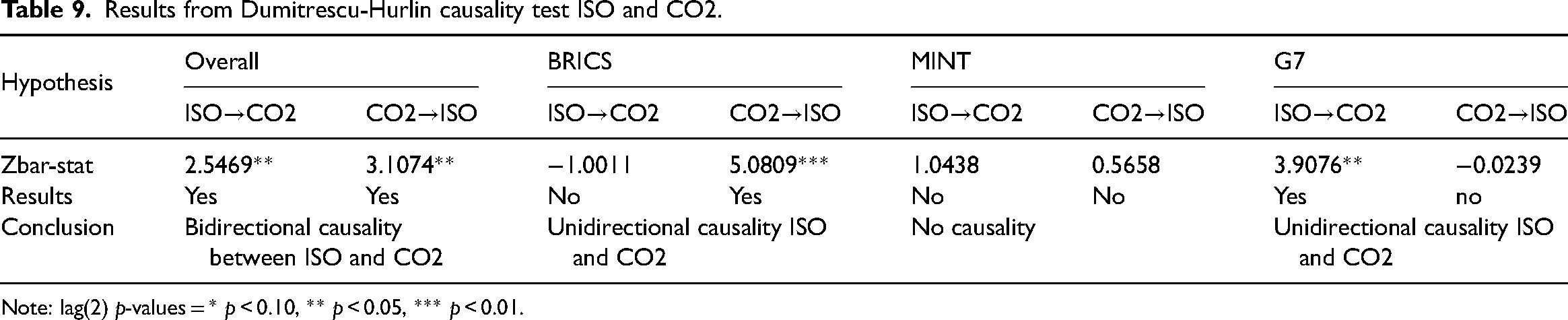
The need for performing causality test directional path between the variables is espoused in previous work.111–113 Causality test provides the basis to ascertain the directional path between the variables which inform better policy streamlining. We, therefore, used the causality test to determine how ISO 14001, structural change, and innovation affect CO2 emissions across the full sample, BRICS, MINT, and G7 nations. The causality test results are shown in Tables 9 to 11. Table 9 shows: (i) bidirectional relationship between ISO 14001 and carbon for the full sample; (ii) a unidirectional causality between carbon emission and ISO 14001 in the BRICS bloc; (iii) no causality in the MINT bloc and (iv) a unidirectional causality between ISO 14001 and carbon emission in G7.
Results from Dumitrescu-Hurlin causality test ISO and CO2.
Note: lag(2) p-values = * p < 0.10, ** p < 0.05, *** p < 0.01.
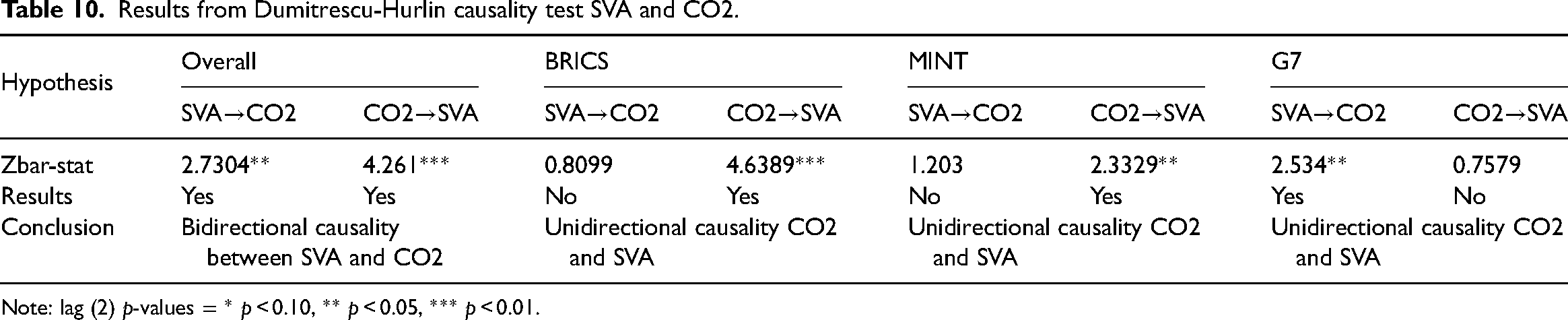
Results from Dumitrescu-Hurlin causality test SVA and CO2.
Note: lag (2) p-values = * p < 0.10, ** p < 0.05, *** p < 0.01.
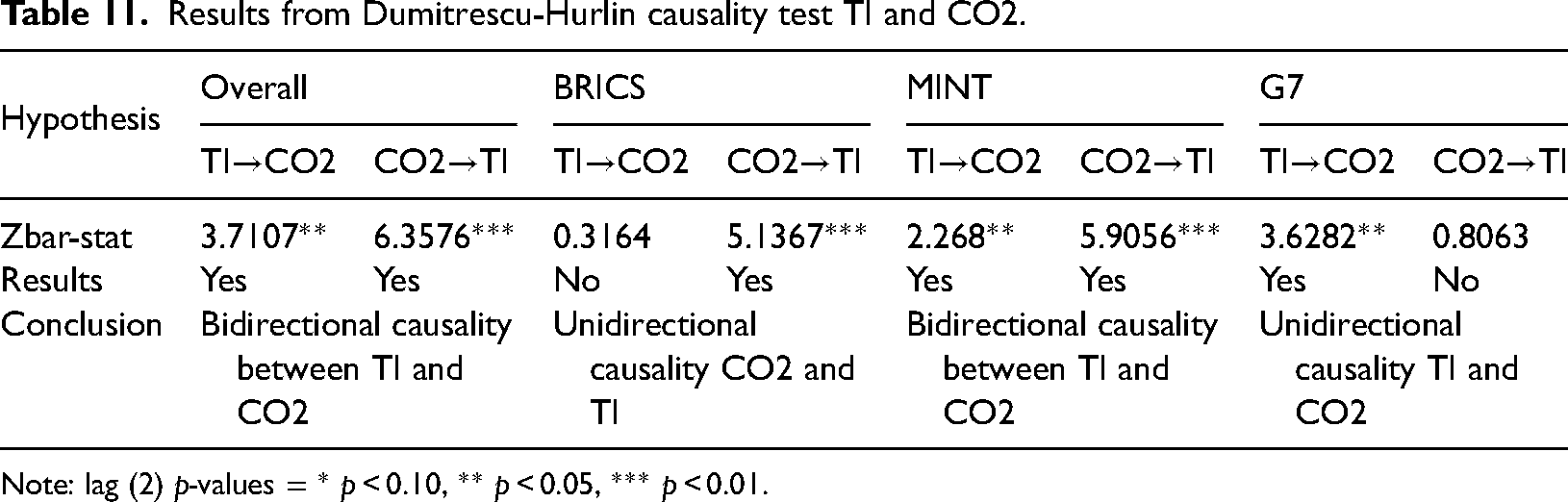
Results from Dumitrescu-Hurlin causality test TI and CO2.
Note: lag (2) p-values = * p < 0.10, ** p < 0.05, *** p < 0.01.
The evidence of a two-way causal link implies that implementing ISO 14001 will reduce carbon emissions, while excessive pollution will stimulate the implementation of ISO 14001 throughout the entire sample. For the BRICS countries, the one-way direction denotes that the climate crisis induces the adoption of ISO 14001 for the purposes of achieving environmental sustainability. For MINT countries, there is an absence of a relation, suggesting that more policy intervention is needed to stimulate the industry towards the adoption of environmental management strategies. For G7 the one-way direction also tells that implementing ISO 14001 helps reduce air pollution.
Table 10 shows that: (i) a bidirectional relationship between structural change and carbon emissions for the full sample; (ii) a unidirectional causality between carbon emission and structural change in the BRICS bloc; (iii) a unidirectional causality between carbon emission and structural change in MINT; and (iv) a unidirectional causality between carbon emission and structural change in the G7.
This finding suggest that the two-way direction between structural change and carbon emission is an indication that the shift from pollution-intensive industries reduces carbon emission, and also a surge in air pollution encourages a transition to low carbon sectors of the economy within the full sample. For the BRICS economies, climate crisis has prompted a transition to a low carbon emission industry following the one-way direction. The same can be said for the MINT countries which also have adopted a shift to less pollution-driven sectors of the economy to help mitigate carbon emissions. However, the G7 nations seem to have taken the first step to transition to environmentally-friendly sectors of the economy.
Table 11 shows: (i) a bidirectional relationship between technological innovation and carbon emissions for the full sample; (ii) a unidirectional causality between carbon emission and technological innovation in the BRICS bloc; (iii) a bidirectional relationship between technological innovation and carbon emission for MINT countries; (iv) a unidirectional causality between technological innovation and carbon emission in G7. The results show that technological advancement helps to reduce carbon emissions, and crises associated with pollution also leads to the usage of new technologies within the full sample. The next dynamism is within the BRICS economies; the global warming threat has pushed them into adopting green technology. The MINT countries follow the tread for the full sample having a two-way relationship. However, G7 had a one-way direction, indicating that technological advancement has been instrumental in reducing air pollution. The overall results suggest that industries and governments are interested in meeting SDG13 and are encouraged to synergize their processes to help them gain wholesome results in the long term.
Conclusion and policy direction
This study adds to the corpus of work that examines the rise in popularity of non-governmental environmental governance strategies and their function as an alternative to traditional regulations. The most prominent of these strategies, ISO 14001, has produced conflicting performance results. While some earlier research has shown that certification improves environmental performance, others have found no benefit. Hence, this research aimed to use several concurrent theoretical models to understand better organizational practices geared towards sustainable development. The analysis was conducted with Driscoll and Kraay estimator as an approach robust to cross-sectional dependence and slope homogeneity. In contrast, the fixed effect approach provides sufficient robustness checks on findings.
First, this research sheds light on the primary premises of the conventional paradigm that is now dominating research on the effect of ISO 14001 certification. The empirical evidence of the study supports the findings of the few critical studies that have questioned the effectiveness of the ISO 14001 standard. However, unlike most traditional or critical approaches to this norm, this research does not focus primarily on the good or bad effects of certification solely. It also considers management practices and activities that are not strictly mandated by ISO 14001 but may impact environmental performance. This involves improving input through the use of technologically advanced machinery, integrating ICT into service delivery, and an externality if the production structure evolves from primary and secondary to the tertiary sector. The results are bulleted as: (1) ISO 14001 shows an abatement portfolio for only the G7 bloc and the full sample. (2) Structural change showed potential for abating carbon emissions in all blocs. (3) Technology led to an increase in pollution in all blocs except for the MINT economy. (4) ICT also helped reduce carbon emission in all three blocs except for their composite. (5) Renewable energy helped reduce carbon emission in all blocs except for G7 which saw ISO 14001 encourage pollution. As a result, policymakers should work to enhance ISO 14001 certification, which might serve as a watershed moment in the battle for sustainability.
Our results have far-reaching consequences for not only the three economic blocs, but the whole world, because they offer policymakers fresh insights into the ISO 14001-environmental degradation nexus. Policymakers should proceed with considerable care when interpreting the outcomes of this study. They may be able to quickly incorporate EMSs into climate change mitigation and adaptation activities, resulting in significant reductions in emissions. Furthermore, the study proposes a hybrid or integrated approach, indicating that ISO 14001 implementation should not be a stand-alone industry activity. Other accidental adoptions of specific practices (technology advancement, promotion of green ICT infrastructure, promotion of green growth to disseminate EKC hypothesis, including the ISO 14001 standard) would assist in achieving the goal of sustainable development.
Policy implications
The findings of this study advance theory by examining a strategic aspect of sustainable production, putting out fresh research questions, and reiterating connections suggested by other studies. It also implies that while evaluating the effects of ISO 14001 or modeling EMS, future studies should take the strategic position of a new input of productions into account. In this study, we demonstrate how ISO 14001 has the potential to increase sustainability across the board when implemented in the proper situations. It serves as a tool for sustainability, in other words. It may be used by businesses and nations as a whole to take advantage of the synergies brought on by productions going green.
First, due to the varied effect of ISO 14001 on reducing carbon concentration in various economic blocs, the governments should adopt separate policies from a national requirements standpoint when stimulating the implementation of ISO 14001. The influence of ISO 14001 on environmental benefits is not obvious in MINT and BRICS, demonstrating inadequate incentives for ISO development within these blocs. As a result, it is vital to rely on government involvement to push a campaign aimed at businesses in this region to solve the market failure of EMS and achieve the quick progress of adoption of ISO 14001 standards. From the G7's perspective, the impact of ISO 14001 on carbon intensity reduction is more visible and important. At this stage, the government may use policy to push more enterprises to continue to use the ISO framework in their operations, and other blocs can look to the G7 for best practices as the fight against environmental degradation is all-encompassing.
Second, there is a clear disparity in the amount of innovation in renewable energy technology among economic areas, and the influence of ICT on carbon intensity likewise demonstrates variation. As a result, in addition to the central government's renewable energy development guidelines, local governments must provide additional incentives for renewable energy technical innovation. The rationale for this is to assist in spreading the benefits of technical innovation and ICT penetration to all economies. As a result, governments should establish complementary policies based on current conditions in order to better support the inventive development of renewable energy technology innovation and ICT penetration.
In essence, the level of innovation, renewable deployment, and ICT penetration are increasing quicker in economically developed countries due to increased alternative investments, modern industrialized structure, and skill, among other factors. As a result, it is incumbent on the government to collaborate with industry to accelerate development that would offer a supportive framework for green growth, which is linked to the aforementioned.
Specifically for emerging countries—BRICS & MINT Economies:
Governments can provide financial incentives such as provide tax breaks, subsidies, or low-interest loans for businesses that implement and achieve certification with ISO 14001. Governments and other treaty agencies can offer capacity building training programs and workshops to educate businesses on the benefits of ISO 14001 and how to implement it effectively. This can help address knowledge gaps and skill shortages. Establish recognition programs or awards for businesses that demonstrate leadership in environmental sustainability through ISO 14001. Sector-specific regulations should be aligned to considering the development of targeted regulations for specific industries within these economies that promote cleaner production practices aligned with ISO 14001 principles. Knowledge sharing: Facilitate knowledge-sharing programs between G7 and BRICS/MINT economies. This could involve exchange programs, joint research projects, or mentorship initiatives. Collaborate with BRICS/MINT countries to ensure alignment between their environmental regulations and ISO 14001 standards. This can help streamline international trade and promote global best practices. Provide funding or tax breaks for research and development in clean technologies specifically targeted for developing economies. Partner with BRICS/MINT countries to develop green infrastructure, such as renewable energy grids or sustainable transportation systems. This can create new markets and opportunities for businesses in both regions.
Advanced economies—G7
Limitations
However, several limitations were encountered during these investigations. Firstly, the contextual variability across these diverse regions—spanning economic structures and cultural norms—significantly influenced the effects of ISO 14001. Secondly, challenges related to data availability and quality arose, as obtaining reliable data on ISO 14001 adoption, environmental performance, innovation, and structural changes proved difficult. Thirdly, researchers grappled with endogeneity and causality issues; firms self-selecting into ISO 14001 certification could potentially bias results. Fourthly, accurately measuring environmental performance while controlling variables like innovation and structural change required meticulous consideration. Additionally, accounting for time lags, firm heterogeneity, and the influence of external factors (such as regulations and market conditions) was crucial. Researchers also emphasized caution regarding symbolic adoption and the need to ensure that findings are generalizable beyond specific contexts. In summary, robust research designs and thoughtful analysis remain essential for advancing our understanding of ISO 14001's impact in these diversed country groups.
Footnotes
Declaration of conflicting interests
The authors declared no potential conflicts of interest with respect to the research, authorship, and/or publication of this article.
Funding
The authors received no financial support for the research, authorship, and/or publication of this article
