



Abstract
A tremendous amount of plastic and tire waste is generated every day. Pyrolysis gives a sustainable plastic and tire waste management solution by transforming them into high-value carbonaceous materials (i.e., char). Char made from plastic or tire waste can be used as a modifier for asphalt binder (i.e., bitumen), in order to improve the properties and performance of base bitumen. In most cases, the char is produced from waste feedstock at ≤300°C, most likely due to the high volatile matter content in feedstock. These chars have been proven experimentally to enhance the deformation resistance, rutting resistance, stiffness, and elasticity of bitumen. The optimal dosage of char in the modification process is highly associated with the kind of waste feedstock and pyrolysis conditions under which the char is made. The present review highlights the promise of the char materials derived from plastic and tire waste for use in materials applied to civil and construction industries, which is aimed specifically at expanding the application of chars made from plastic and tire waste beyond their typical applications, such as in environmental remediation and catalysts.
Introduction
Plastic waste has a very complex nature and is resistant to chemical and biological degradation. 1 In addition to plastic waste, tire waste is a major global waste problem. 2 Landfill, incineration, and mechanophysical recycling are typically used methods for disposing of plastic and tire waste.3–5 However, these practices are often limited by low economic return, high energy consumption, environmental issues, and low product quality. 1 A recent report prepared by Organisation for Economic Co-operation and Development said that only 9% of plastic waste is recycled, and the bulk of the plastic waste is managed improperly. Mismanaged waste has negative effects on the environment and human health, 6 such as the leaking of microplastics from waste into ecosystems.7,8 Nevertheless, developing sustainable plastic and tire waste treatment approaches is much slower than increasing demand for the sustainable management of such waste.
Thermochemical recycling of plastic and tire waste is considered not only an alternative to the conventional plastic and tire waste recycling methods but also an effective plastic and tire waste upcycling technology. 9 The thermochemical conversion process allows energy recovery from plastic waste 10 and conversion of plastic waste into value-added commodity chemicals. 11 It has been proven that thermochemical plastic waste treatment can be environmentally benign 12 and economically viable. 13 Of different thermochemical recycling approaches for plastic and tire waste, pyrolysis is practicable due to several reasons. First of all, pyrolysis enables to treat mixed plastics (even contaminated ones). 14 The scale of a pyrolysis process can be varied flexibly, allowing the installation of the process at sites in which feedstock is abundantly available. 15 Pyrolysis process is versatile as it can make products in different phases (e.g., solid, gas, and liquid)16–18 by simply varying operational parameters (e.g., temperature, heating rate, and feed and/or vapor residence time). 19 Furthermore, the environmental footprint of pyrolysis is smaller than that of landfilling, gasification, and incineration. 20
The pyrolysate in solid phase, called char, has a range of applications with proper upgrading to functional materials. For instance, plastic- or tire-waste-derived char has been used in carbon sequestration, 21 soil conditioning, 22 environmental remediation, 23 catalysis, 24 and energy storage. 25 The application of plastic- or tire-waste-derived char to a modifier for asphalt binder (i.e., bitumen), however, has gained considerably less interest in spite of the need for developing a sustainable alternative.
In this regard, this review has made an effort to make it wider the applicability of plastic- or tire-waste-derived char beyond its typical applications in environmental remediation and catalytic materials. To this end, the most recent outcomes accomplished with char made from plastic and tire waste as modifier for bitumen are introduced and discussed. Moreover, this review is aimed at enhancing the significance of pyrolysis as a method to synthesize sustainable materials potentially applicable to civil and environmental engineering.
Producing char from plastic and tire waste
In pyrolysis of plastic, the plastic feedstock is initially decomposed to wax. The wax is a source of liquid pyrolysate which is further converted into aromatics and non-condensable gases, and then char finally accumulates. 26 The char formation in plastic waste pyrolysis is attributed to secondary repolymerization. 27 Char production prefers a slow heating rate lower than 80°C/min to achieve long enough vapor residence time for more efficient secondary cracking reactions. 28 Figure 1 shows examples of physical appearance of tire-waste-derived char and polypropylene (PP)-waste-derived char.
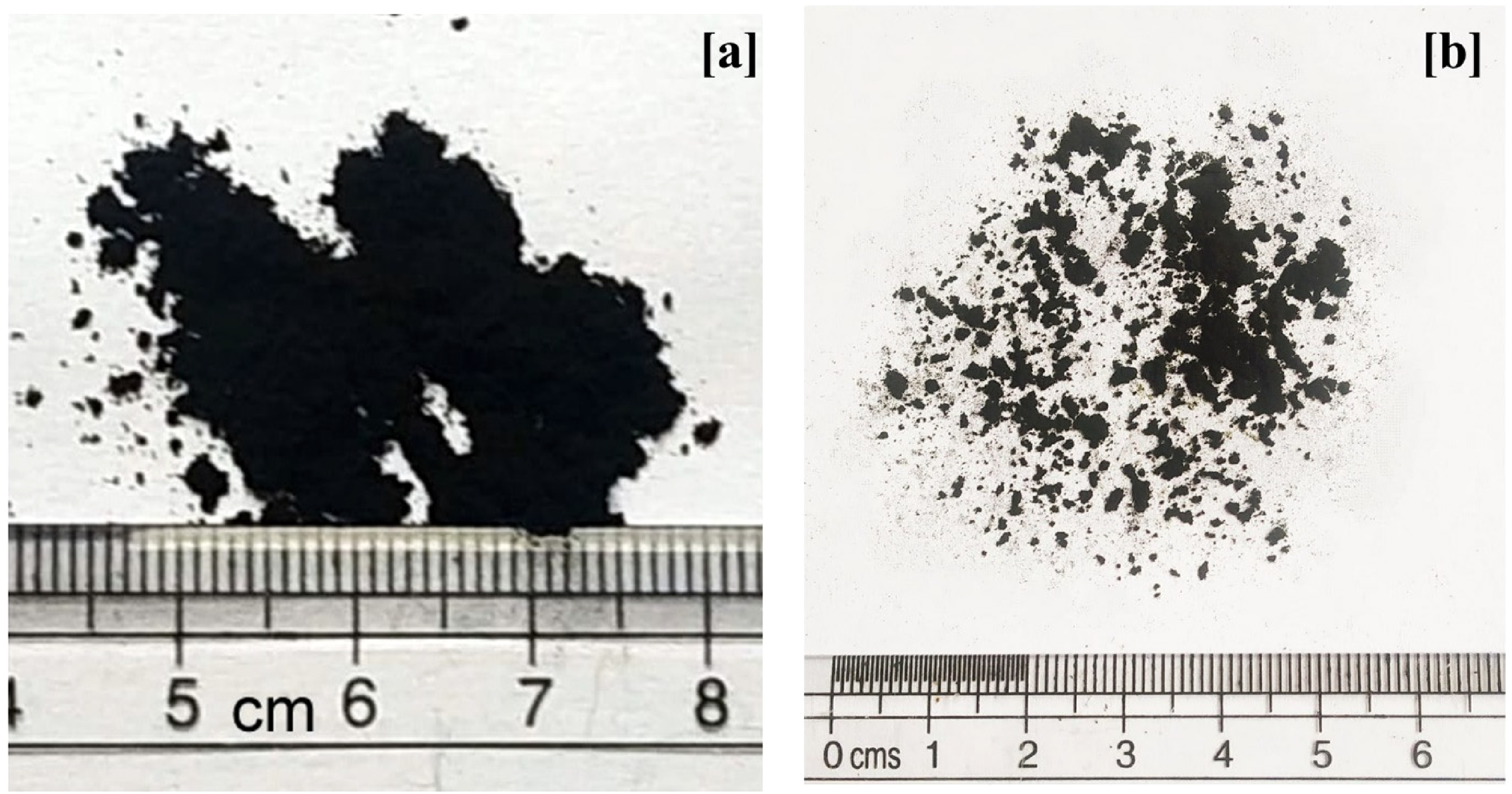
Examples of physical appearance of (a) tire-waste-derived char and (b) polypropylene-waste-derived char. Reprinted from Kumar et al. 29 and licensed under CC BY 4.0.
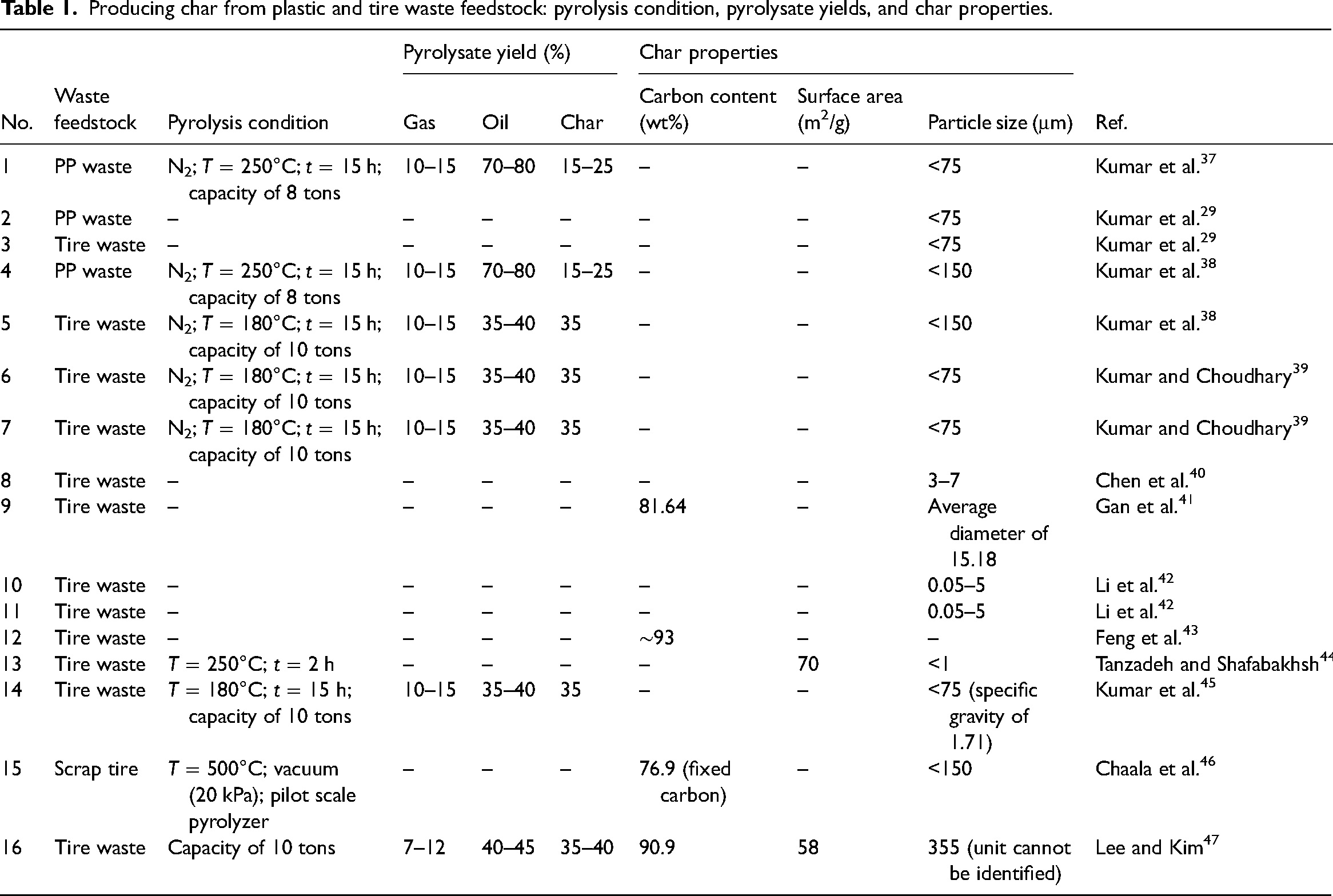
Plastic pyrolysis often results in low char yields in comparison with biomass pyrolysis, and the char yield tends to decrease with an increase in pyrolysis temperature. 30 In order to maximize the char yield obtained from plastic waste, the pyrolysis needs to be operated at lower temperatures than typical biomass pyrolysis temperatures (e.g., >300°C). In Table 1, pyrolysate yields and resultant char properties associated with pyrolysis conditions are summarized for plastic and tire waste feedstocks. The char yield ranged from 15 to 40 wt%, depending on pyrolysis conditions. For instance, an increase in pyrolysis temperature decreased the char yield, since more gases were evolved at higher temperatures. 31 Most pyrolysis processes listed in Table 1 were carried out at <300°C, as such feedstock has high volatile matter content and low fixed carbon content.32,33 In some cases of pyrolysis of tire waste having a high content of fixed carbon compared to typical plastics (e.g., PP), 34 it could be carried out at >300°C for producing char. In general, biomass-derived char has a lower carbon content than the plastic- or tire-waste-derived char. This is primarily because biomass contains less carbon than plastic and tire waste.35,36 The chars made from plastic or tire waste employed for modifier for asphalt binder had particle sizes ranging from 0.05 to 150 μm (Table 1). Char properties other than particle size have very rarely been reported.
Producing char from plastic and tire waste feedstock: pyrolysis condition, pyrolysate yields, and char properties.
Use of plastic- or tire-waste-derived char as a modifier for asphalt binder
In road construction and asphalting of streets, bitumen is mainly used as a binder in the road layers; thus, it is an important material in civil industries. A variety of technologies has been developed for the modification of bitumen. Among them, it has been demonstrated that plastic waste can enhance the plastic deformation resistance of rubberized bitumen, verifying the feasibility of the valorization of plastic waste toward performance-increasing bitumen modifiers for asphalt concrete.48–50 A diselenide-crosslinked polyurethane elastomer was employed to modify bitumen, which improved self-healing properties of the bitumen. 51 Porous asphalt mixtures modified with polymer having a high vinyl content exhibited higher elastic response, better fatigue resistance, and improved resistance to rutting than asphalt mixtures with typical polymer-modified bitumen. 52 Zhang et al. used crumb rubber made from tire waste in order to improve the performance of bitumen and mitigate environmental pollution. 53 Other studies also indicated that crumb rubber markedly enhanced the resistance to fatigue and low-temperature cracking and rutting of bitumen.54,55 Polyethylene (PE) and crumb rubber have been proven to be good additives that improve the technical properties of bitumen, such as aging resistance and thermal stability. 56
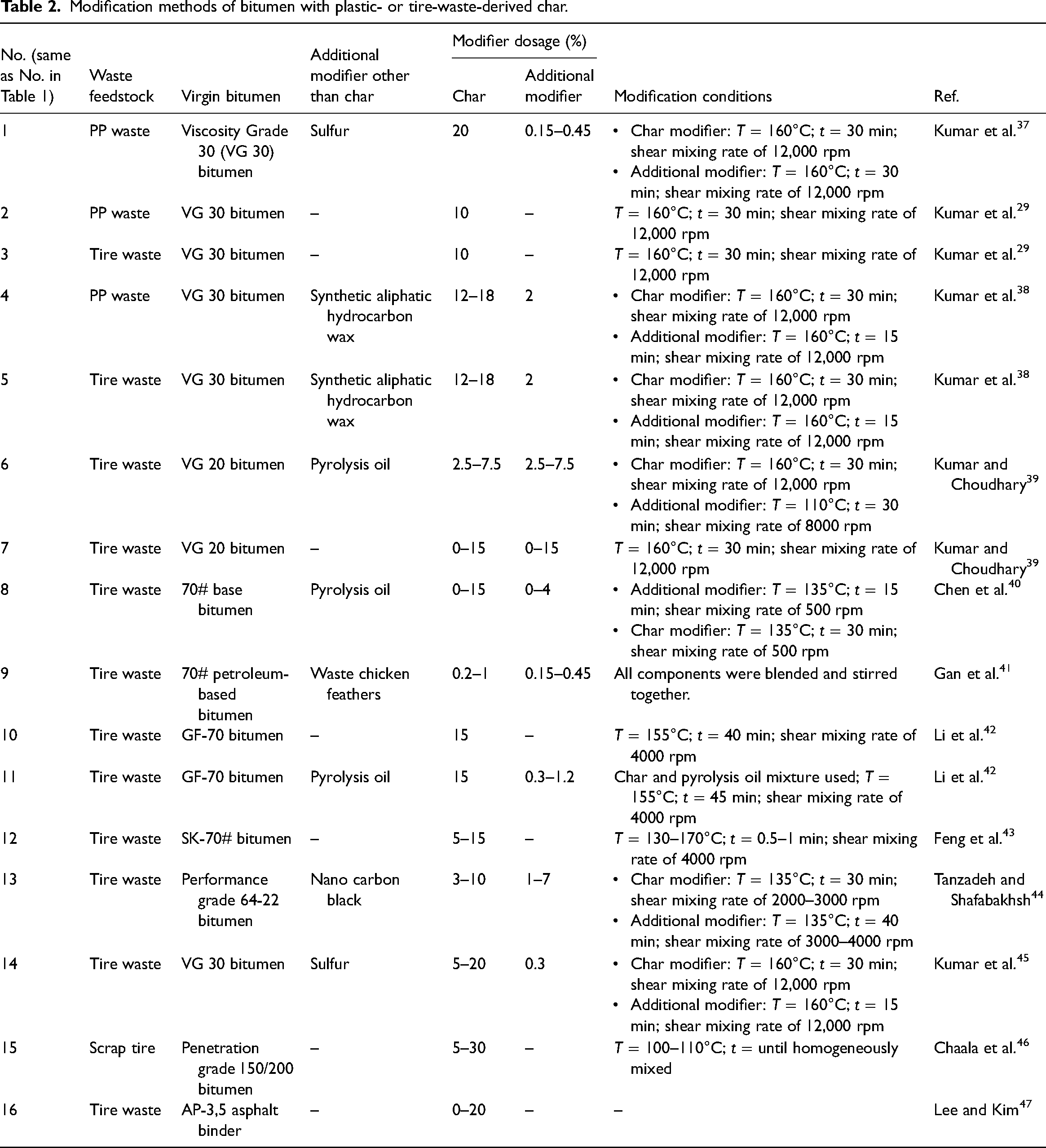
Tables 2 and 3 summarize studies relevant to bitumen and mixtures modified with plastic- or tire-waste-derived char. Tire waste has been employed most widely as the feedstock for the preparation of char applied to a bitumen modifier. Figure 2 shows an example of the appearance of bitumen modified with tire-waste-derived char. The pyrolysis of plastic waste to derive char has been conducted at lower temperatures (e.g., below 300°C) than the temperatures at which pyrolysis is typically conducted (e.g., over 300°C). 57 This is most likely because most plastics are completely volatilized over 300°C, with no remaining solid residue.58–61 There is no notable difference in the bituminous binder modification effects between conventional concrete carbon black42,62,63 and plastic- or tire-waste-derived char.46,64
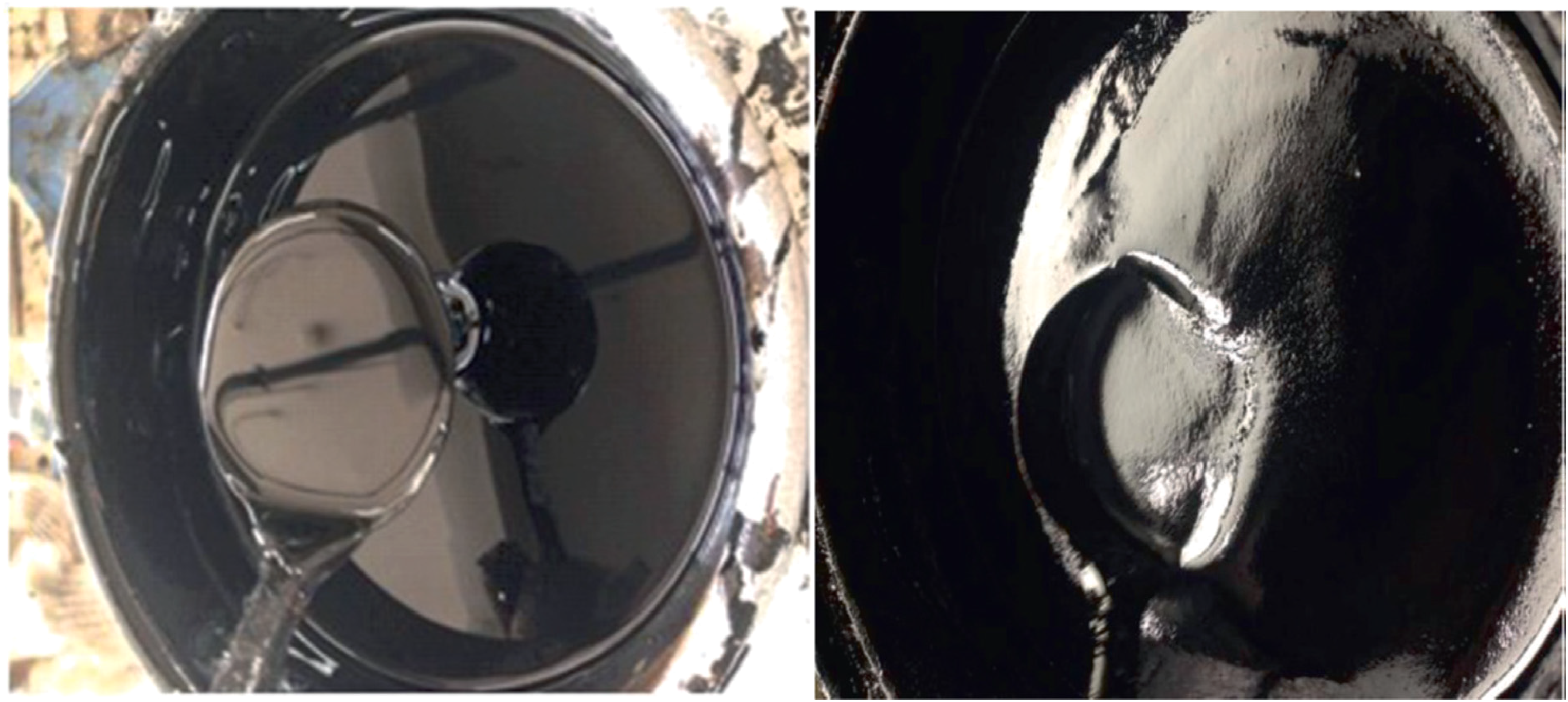
Examples of appearance of bitumen modified with char derived from tire waste. Reprinted from Feng et al., 43 Copyright (2021) with permission from Elsevier.
Modification methods of bitumen with plastic- or tire-waste-derived char.
Effects of the bitumen modification with plastic- or tire-waste-derived char.
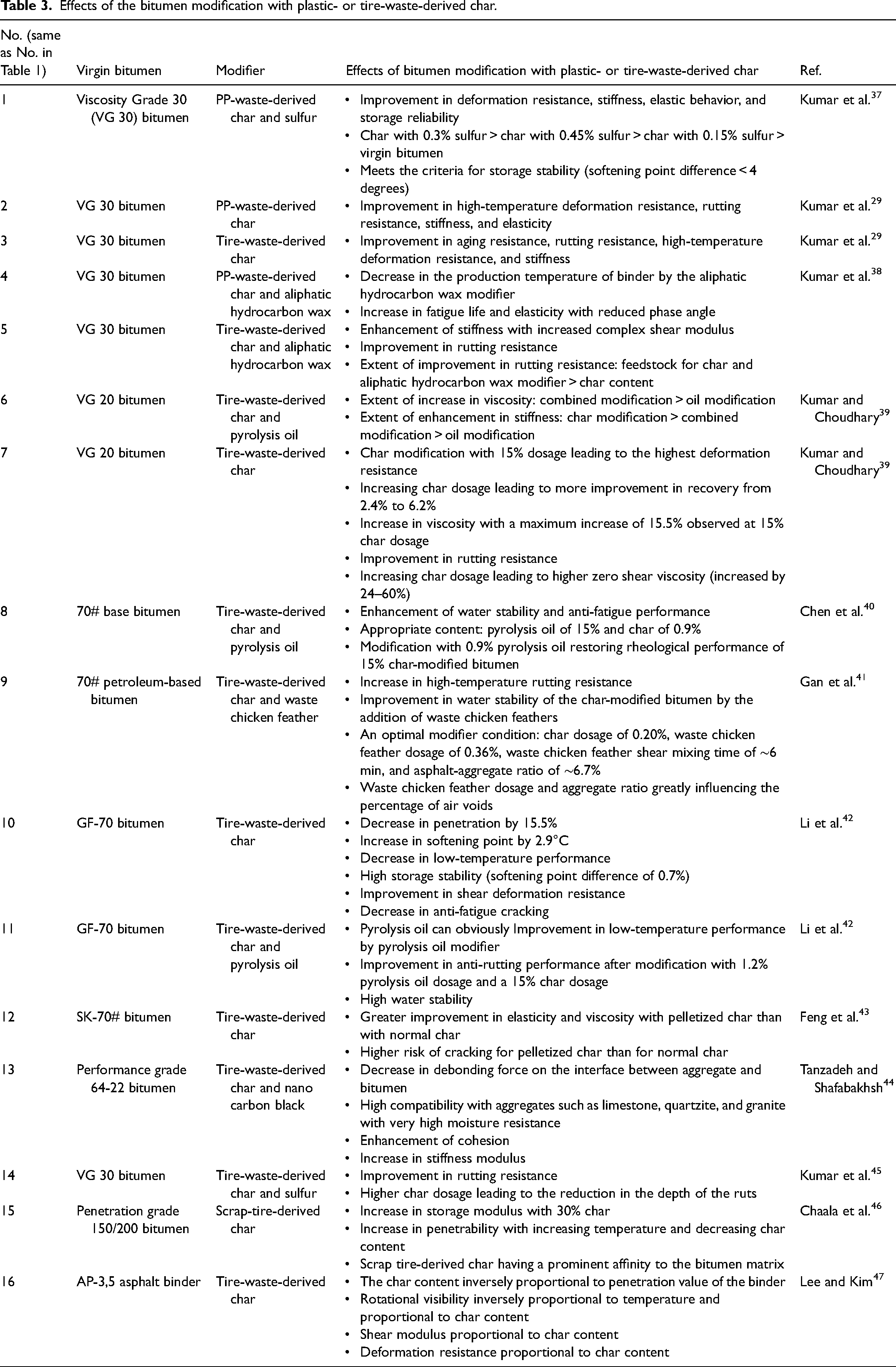
Modification of bitumen with plastic- or tire-waste-derived char could enhance mechanical properties of bitumen, rutting resistance, and temperature sensitivity. Meanwhile, modification with an appropriate dosage of the modifier did not decrease low-temperature crack resistance and fatigue resistance. 64 A longer time to mix the modifier and virgin bitumen led to more uniform and improved performance of the bitumen. Additional modifiers, such as pyrolysis oil, sulfur, wax, other kinds of carbonaceous materials (e.g., nano carbon black), and organic waste (e.g., waste chicken feather), are also used as well as the plastic-waste-derived char in order to improve the performance of bitumen. These modifiers serve as component balance additives and softening agents, which increase fatigue resistance and low-temperature crack performance and decrease anti-rutting performance in comparison with virgin bitumen. Nevertheless, the effects of using a combination of the char and oil for the modification of bitumen have not been fully elucidated yet.
The Kumar and Choudhary group have recently published several papers and proceedings presenting approaches to asphalt binder modification based on char materials derived from tire and PP waste with promising results (No. 1–7 and 14 in Tables 2 and 3).29,37–39,45,57 They found that the two different chars enhance the high-temperature deformation resistance properties of bitumen. Bitumen modified with tire-waste-derived char exhibited higher aging resistance than virgin bitumen or bitumen modified with PP-waste-derived char, associated with their different spectroscopic and rheological indices. 29 The char-modified bitumen samples also showed good fatigue performance. Effects of additional modifiers, such as sulfur and synthetic aliphatic hydrocarbon wax (a byproduct of the Fischer–Tropsch synthesis process 65 ), were also explored. The modification of bitumen with a 20% dosage of a PP-waste-derived char resulted in high storage stability. 37 The incorporation of sulfur further improved storage stability of the bitumen modified with the PP-waste-derived char. Among different sulfur dosages between 0.15 and 0.45 wt%, a 0.3 wt% sulfur dosage gave the best performance of the char-modified bitumen. The addition of synthetic aliphatic hydrocarbon wax decreased the temperature required to produce the bitumen modified with the char, leading to improved resistance to fatigue cracking and rutting. 38 Such results have demonstrated that modification with the plastic- or tire-waste-derived char and the extra additive has great potential for use in road pavements.
Although experimental studies have proven that mixing char derived from plastic or tire waste with bitumen improves the bitumen properties (Table 3), each study has used its own procedure and characterization method. This means that direct comparison of different bitumen modification methods with plastic- and tire-waste-derived chars is rather difficult. This problem needs to be resolved for further development and optimization of the use of plastic- and tire-waste-derived chars in bitumen modification.
Concluding remarks
Pyrolysis enables to achieve both the volume reduction in plastic and tire waste and the synthesis of functional materials such as char. Plastic- and tire-waste-derived chars can be employed as a modifier for asphalt binder (bitumen). It has been experimentally proven that plastic and tire waste is successfully converted into industrial asphalt binder modifier, which could be a more eco-friendly alternative to disposal.
In this review, the overview of the latest data about using plastic- or tire-waste-derived char as the bitumen modifier is provided. In most available studies on using plastic- or tire-waste-derived char as a bitumen modifier, the char is made at temperatures lower than 300°C. This is most likely because such waste feedstock contains high amounts of volatile matter. Several research groups have demonstrated that the modification of bitumen with chars made from plastic and tire waste improves aspects of the bitumen performance including deformation resistance, rutting resistance, stiffness, and elasticity. Optimum modification conditions (e.g., dosage of char) highly depend upon the kind of waste feedstock and pyrolysis conditions under which the char is produced.
In spite of some progress in improving properties and performance of the original materials, direct comparisons of the experimental results available in earlier studies are not easy. This is because experimental conditions and procedures used by different research groups are different and necessary details are not always given. In order to overcome these limitations, the standardization of experimental methods and procedures for producing bitumen modifier from plastic or tire waste-derived char is required with categorizing plastic and tire waste associated with specific applications. In addition to technological developments, methods for plastic and tire waste collection and transport need to be carefully considered and enhanced to make the application of plastic- and tire-waste-derived chars more feasible.
Footnotes
Declaration of conflicting interests
The authors declared no potential conflicts of interest with respect to the research, authorship, and/or publication of this article.
Funding
The authors disclosed receipt of the following financial support for the research, authorship, and/or publication of this article: This work was supported by the National Research Foundation of Korea (grant no. RS-2023-00209044).
