




Abstract
Rapid growth in the global population and associated elevated reliance on modern technology has resulted in increased demand for energy consumption. This has resulted in an increased focus on the development and generation of advanced sustainable energy systems. The swift implementation of sustainable renewable energy resource utilization and improvement in their efficiency by the modification of current technologies are the possible solutions that gave rise to the emergence of geothermal technology as a potential alternative. Geothermal technology is a non-carbon renewable energy resource that could be utilized efficiently to fulfil the energy demands while mitigating the climate change threat. According to the surveyed literature, the global geothermal energy power plant installation capacity has reached 14.3 GWe to successfully implement this sustainable alternative. In order to have a successful and uninterrupted way forward, it is essential to evaluate the constraints both in terms of technicality and economic feasibility to establish an approved framework. Moreover, the governance and monitoring regarding the social and environmental impact alongside the legal challenges should also be addressed. The significant barriers include increased capital cost, site selection, superiority of resources at diverse levels of rock bottoms, and obstruction from nearby residents that need to be addressed appropriately. As a result, policymakers will continue to seek measure that have least negative impact on environment.
Introduction
Energy availability is one among the key factors of any society's progress. Burning organic fuels to create meaningful labor or power accounts for a large amount of today's energy. The supply of these fuels is restricted because of rising worldwide principal energy mandate and the necessity to expedite the decarbonization process; the shift from the traditional fuel-dependent power technologies to the renewable power technologies is emerging as a more crucial necessity for ecological preservation alongside the development of renewable energy resources. 1 Renewable energy resources can deliver a broader range of advantages, including greenhouse gas reduction, energy independence, and local economic growth.2,3 Renewable and sustainable technologies, including biomass, hydro, nuclear, and geothermal energy, is also alternative technology to global warming as well as to fulfil the energy demand.4,5
Geothermal energy is among the furthermost available sources of renewable energy, and it is often regarded as a reliable and self-sufficient source. Because the weather conditions cannot affect this technique, it is generally characterized by high reliability, which is a considerable benefit, particularly in the generation of energy. 6
Although it might be geographically constrained, geothermal energy is available at nearly the same level all of the time. 7 Compared with traditional systems, geothermal energy has the added benefit of reducing operational costs. 8 In certain nations, such as El Salvador (covering roughly 24%–26% of the power with 13% of the design capacity), Hawaii (25% of electricity), and Iceland (27%–29% of power), geothermal energy already plays an important role (Geothermal power generation is meeting ∼16% of the country's demand).9,10 In general, the transferring of heat energy to water from a geothermal reservoir and transferring it to a ground-based power production system is among the utmost effectual route to harvest geothermal energy. 11 Shallow geothermal heat pumps-based schemes, conversely, offer air-cooling and warmth without relying on the Earth's stored heat.12,13
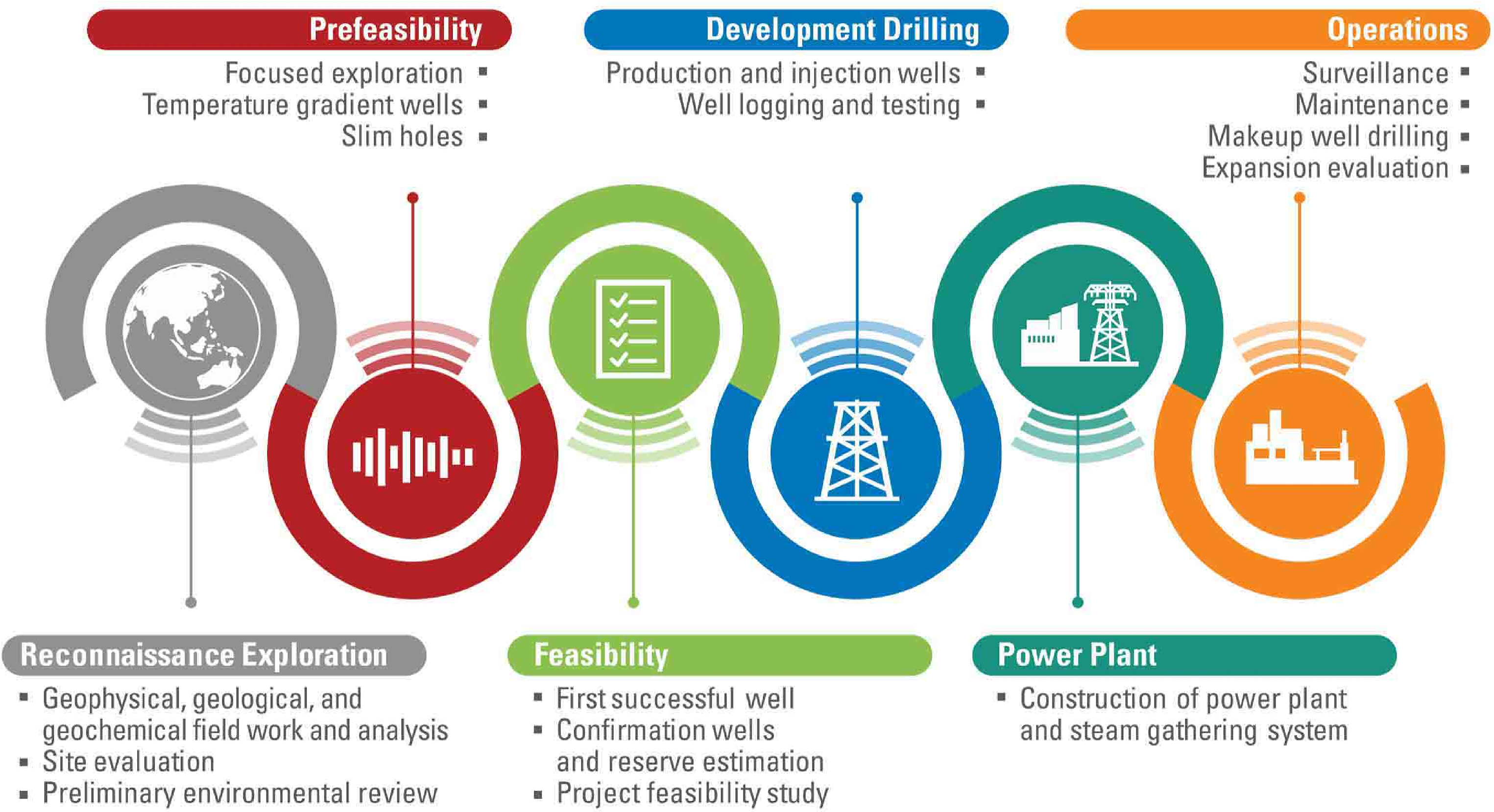
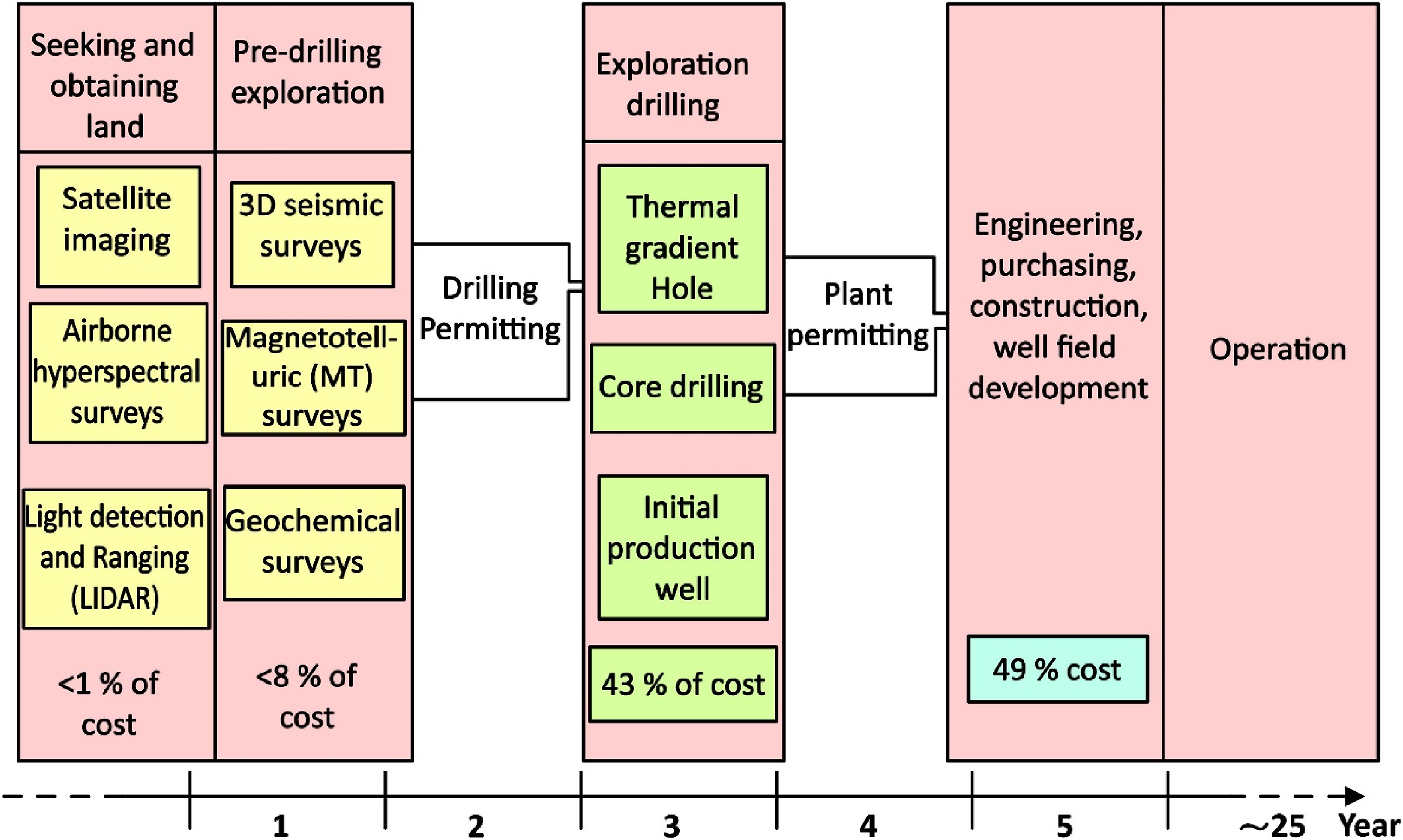
The geothermal project requires several developmental phases, as shown in Figure 1. These developmental phases are severely dependent on the time constraint (Figure 2). Although geothermal energy has few environmental consequences as related to conventional fuels, management of fluid flow is also a challenge that requires considerable attention, and issues voiced throughout the implementation of project give rise to the specific frameworks for assessing geothermal energy project sustainability.14–16 Direct-use and domestic heating systems, electricity production power plants, and geothermal heat pumps are the three basic types of geothermal energy systems. 17
Because the underground temperature gradient causes the temperature to increase with depth, geothermal systems with high-temperature values necessitate a long drilling of well. The bulk of geothermal energy systems employs the less deep version, in which heat is taken out via a ground-source heat pump (GSHP). Certain improved geothermal power units, which are converting into business units, are using GSHP. A number of power plants, on the other hand, are still in the testing phase to improve their methodological functioning; geothermal systems working on supercritical concept are still a new technology that is currently being researched and re-visited in research laboratories. The heated water received from the high-temperature reservoirs (>240°C) is often partly converted to steam. 23
Schlumberger stands in a unique place to assist the geothermal engineering by involving in hundreds of geothermal projects, which are situated in >50 countries, securing around 70% share of overall geothermal projects operating worldwide, as shown in Figure 3. The majority of nations lack legislative frameworks or standards for the construction of geothermal power facilities.13,24
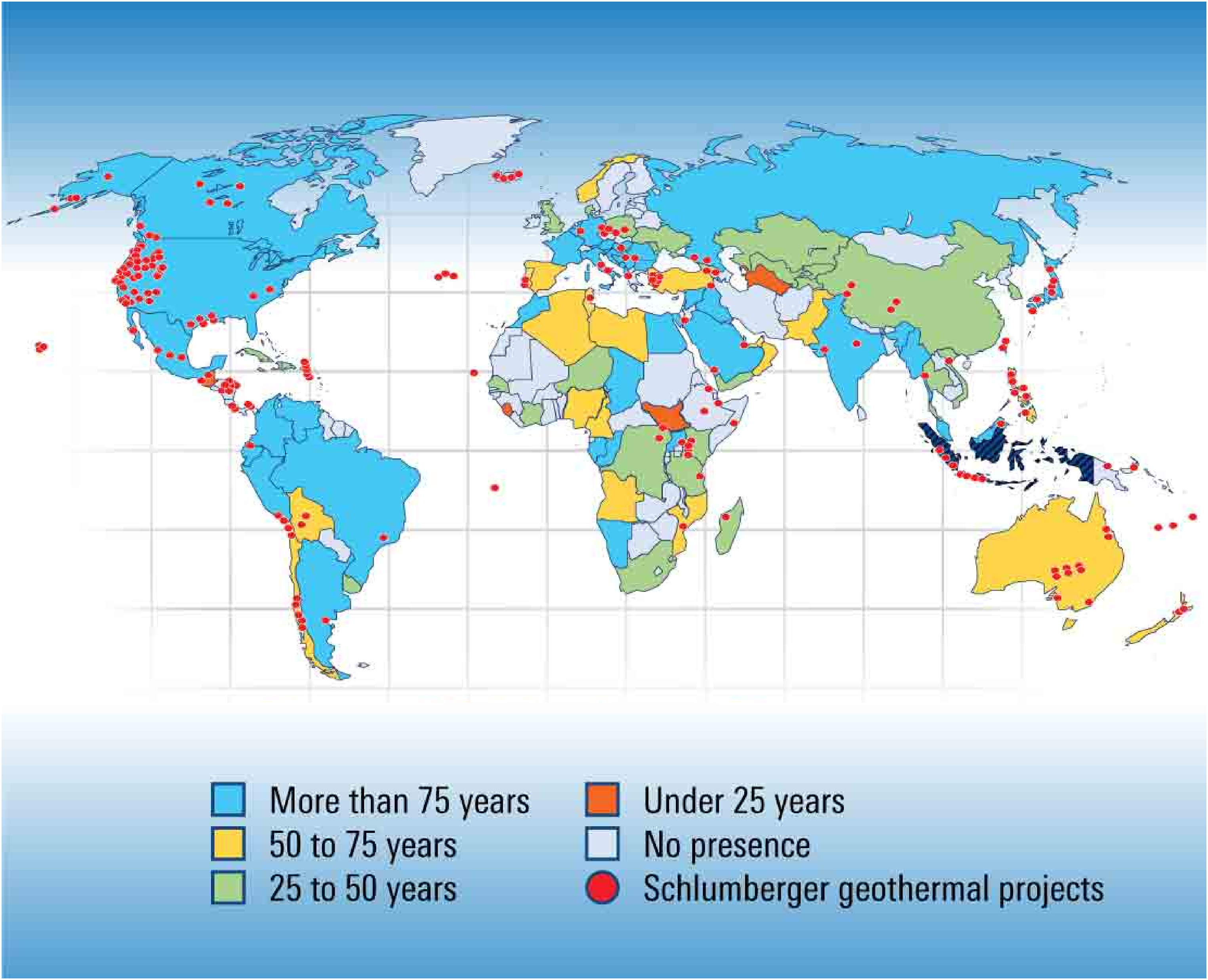
Years of Schlumberger's presence in different geothermal projects worldwide.
Although, there are some numerous reports available in the literature with respect to different aspects. For example, Recently, Cunha et al. 25 focused on the using geothermal energy piles to enhance energy-efficient buildings. Soltani et al. 26 reviewed the adapted nanotechnology in the geothermal heat pump and heat exchangers with emphasis on parametric study on liquid suspension. Mott et al. 27 reported the sources, environmental impact, and the management of boron in geothermal energy. However, the detailed production methods of geothermal energy focusing on parametric investigation and environmental impact were missing in this review. Hence, the goal of this paper is not only to discuss the state-of-the-art production methods (direct and in-direct method/technologies) but also the investigations of different parameters of geothermal energy. The objective of this article is also the environmental and social impact of geothermal energy. The toxic effects of land, air quality, and the quality of water are also elaborated with brief discussion on local employment and awareness in public. Finally, the current challenges in their production technologies and their possible strategies/remedies to overcome.
Geothermal parametric investigations
As per the recent estimates issued by the Think Geo Energy Research 2022, there is around 15,854 MW of geothermal energy projects installed by the end of 2021 worldwide (Figure 4). In order to further enhance the installation capacity worldwide, adequate geothermal parametric investigations are essential. There are four key elements of a geothermal unit, which include a heat source, a reservoir, and a fluid, which can carry and transfer the heat and recharge area. 28
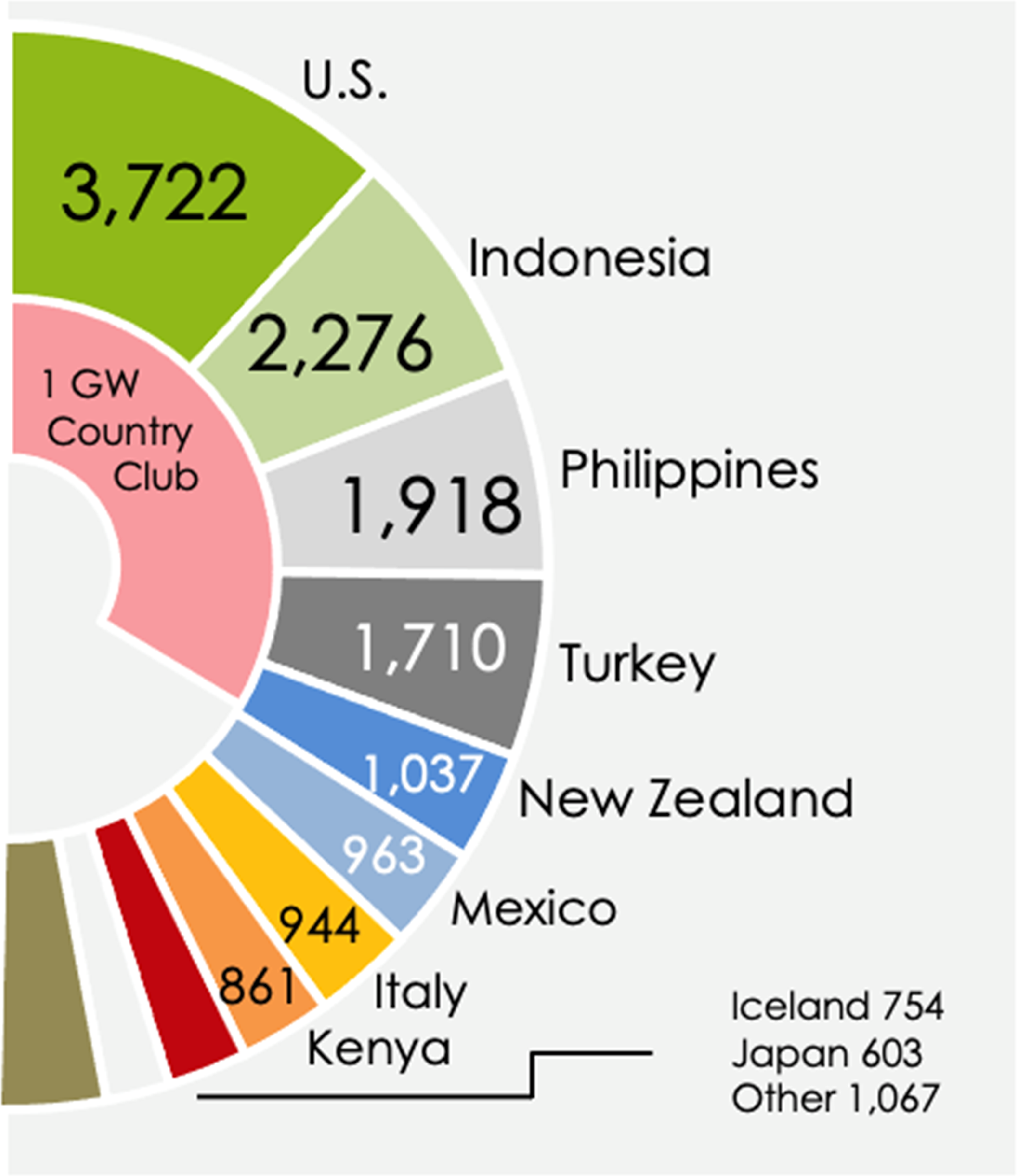
Top 10 geothermal countries by the end of 2021.
The selected heat source is usually a magnetic body that has cooled down, however, partially molten. A reservoir is based on the volume of rocks, which are used for the extraction of heat. 29 It also contains hot fluid, such as hot water, vapor, or gasses. The colder rocks are usually around the geothermal reservoir. These rocks are hydraulically linked to the reservoir. Therefore, with the stimulation of buoyancy in the direction of the discharge region, the fluid can transfer from the rocks with a low-temperature exterior to the reservoir and be directed to the reservoir with a hot reservoir. 30
Conditions
A geothermal system can only be defined because of its practical energy production systems. Majorly geothermal systems are considered for electricity generation, whereas heat from geothermal system is used to process space heating applications. However, there is a conditionality where the geothermal system used for electric power generation should produce and generate approximately 10 kg of steam for the generation of one-unit electricity. In order to produce large quantities of electricity, it is necessary to generate large volumes of fluid so that hundreds of megawatts can be produced. Therefore, it is necessary for the geothermal system to generate a bulk of high-temperature fluid or reservoirs which has the tendency to be re-energized with the fluid that is usually heated after contact with the rocks.
The available reservoir at the depth can be drilled. The availability of the reservoir at a depth of less than 1 km is not possible; however, currently, drilling more than 3 to 4 km is not feasible. Another important element regarding drilling is that the drilled fluid should be capable of producing and supporting 5 MW of electricity production, which indirectly can be related to the steel production of 10 tons per hour. For this purpose, it should be in the permeable zones, which are usually the fractures supporting a high rate of flow. Some geothermal systems can produce 15 MW energy. However, now the wells in geothermal fields are spaced to support 25 to 30 MW electricity production. Locations having high fractures and shattered rocks can produce 100 MW per square km in small areas because of little interference between wells. The geological setting regarding geothermal reservoirs varies accordingly. Currently, the largest geothermal fields are in the rocks ranging from limestone to shale, volcanic rock, and granite. Volcanic rocks are the most common types of single rocks where the reservoirs are usually located. Therefore during the location of the reservoirs, it is necessary to consider the presence of tectonic elements, for example, the presence of high-heat flow instead of the rock units. 31
Geothermal energy can be produced in the areas having dense covers of thermally shielding deposit encapsulant to the basement rocks that have a comparatively ordinary heat-flow. 32 However, the geothermal structures created on the thermally shielding model are not preferred because of their low grades in comparison to the volcanic heat flows. The identification of the model that can be used for a geothermal unit in the volcanic zone depends on the source, which may include the interrupted the molten rocks under the zone having less deep basins. 33
Process
There are various methodologies for the exploration of geothermal energy reservoirs. 34 In accordance with the basic approaches used, majorly two groups of direct and indirect methods are introduced.
Indirect or structural methods
This method gives information regarding geological parameters that can be used for the identification of structures or geological bodies, which gives information for geothermal systems. These methods are classified as:
Seismic methods
This method regarding the acceleration of geothermal sites is used for having information regarding every aspect of this spectrum which may include both active and passive methodologies. Seismic methods are used for the measurement of sound velocity distribution 35 and any anomalies found on the Earth in accordance with the sound waves. The active method produces sound waves with an external source, including explosions and hammer devices. The passive method is used to determine the seismic activity on the Earth, which gives information regarding the constraints that can have a noteworthy effect on the geothermal system. Seismic approaches depend on electric waves having diverse speeds, which travel over diverse rock categories and are reproduced at discontinuous in between establishments.
Seismic reflections are also used for the prediction of the thickness and depth of the geological construction. This information can be based on the breadth of the aquifer or the crystalline basement roof depth that is needed to be used for a Petro thermal project. Seismic methodologies can also be used for the detection of substantial faults having hydraulic conductivity and can also be used for the representation of a target for hydrothermal projects. 36
Magnetic methods
This method is used for geothermal survey collected with an enormity measurement and seismic diversion used for geological plotting erections. Magnetization can be of two categories, including tempted magnetization having the similar direction as the inherent Earth's field, and everlasting magnetization, which prevails in igneous rocks and be contingent on the characteristics of the rocks. This method is used for the identification and location of masses of igneous rocks having a high concentration of magnetite. 36 It is defined by the magnitude and direction of the magnetization, including its history, shape, properties, and position of the anomalous body. The strength of the magnetic field is represented by γ (gamma) or nT (nanotesla). Magnetometers are simple equipment and are easy to use.
Magnetic measurements are aimed at identifying the location of hidden intrusive during geothermal exploration. 37 These measurements also estimate the depth or trace of buried dykes and faults. The measurements are also used to locate reduced magnetization due to thermal activity. These measurements are completed on the ground with the help of consistent measurements along with parallel profiles. 38
Gravity measurements
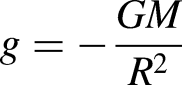
These measurements are used for the detection of geological developments having variable concentrations. The distinct intensity results in diverse gravitational forces, that can be determined and are presentable in 10–3 cm/s2 or mgal. The thickness of rocks is dependent on their porosity and composition of rocks. Limited saturation can also have a significant influence on the value of rocks. The normal density is considered to be ∼2 and 3 g/cm3. This force is relational to the mass of the object while decreasing the distance, which is evident from the equation
39
Direct methods
These methods are used to gain data on constraints usually prejudiced by geothermal systems.
Electrical methods
Surface electrical approaches are used in the geothermal energy investigation. The use of these methodologies can be supported by the concept, i.e., the temperature increase with the conductors’ electrical conductivity. With the wall rock hydrothermal alteration, there is an increase in the host rock’s conductivity at geothermal unit. This is also associated with thermal mineral leftovers in the cracked areas. 39 These methods are considered efficient geophysical methods for surface investigation and the key procedure that can be used in the delineation of geothermal fields. The constraint that can be used includes the rocks’ electrical resistivity, which can be correlated with heating value and the alteration of rocks used for the conceptualizing of geothermal unit. In this methodology, electric current is induced on Earth, generating an electromagnetic indication that is scrutinized at the earth's surface. Electrical methodologies can include different measurements for different types.
In direct current technique, the current is produced and inserted in the ground with the help of electrodes and the surface. The observed indication is the form of electrical signal that is produced on surface. In TEM methodology, the current is induced with a variable magnetization by a meticulous origin. The indication is monitored through a decreasing magnetic field which is available at the surface from the secondary magnetic field. In MT technique, the current is induced with the help of variations in time of the magnetization of Earth. The observed signal is considered the electromagnetic field available at the surface.
Thermal methods
These methods are based on two distinct techniques; the first one is based on boreholes for the shallow probe method, which are used for measuring thermal gradients. Thermal gradients are useful as they allow the measurement of flowing heat, if and only if, value of thermal conductivity is notorious. The latter technique is based on satellite-equipped quantification, which is used to identify thermal inertia and the temperature of surficial materials and Earth. 40 Thermal methodologies are involved in the direct measurement of temperature and, therefore, can be correlated with the properties of geothermal systems. However, as these methodologies are applicable to surface methods, therefore they are not viable for deeper wells. Information other than the shallow levels is estimated from the existing wells which are typically shallow wells ranging from 30 to 100 m in depth.
Other methods
Remote sensing method
Remote sensing can be used in geothermal services for the detection of topographic features which can be related to geothermal activities. Remote sensing can be used for the detection of thermal anomalies with the use of thermal infrared imagery. 41
Induction method
The induced divergence technique is used for the measurement of polarizable minerals available in pore rocks’ spaces containing water. The polarizable natural resources must be available on the earth's surface for water injection. It is generally utilized for geothermal examination. 36
γ-ray spectrometry method
This is used for surveying allowing heat estimation in the course of the radiation-emitting deterioration of thorium, uranium, and potassium in rocks. The generated heat is targeted for the geothermal application. Therefore, enhancements in the
Technologies
Geothermal technologies are segmented into four classifications; which include the traditional hydrothermal technique, enhanced geothermal units, low-temperature geothermal units, and the direct utilization systems together with the installation of the geothermal heat pumps. The former three classes are involved in power generation, however, the latter is utilized for heating/cooling for heated water generation systems. Conventional geothermal systems have been in development for the last hundred years leading to the maturation of power generation technology. 43
Geothermal source requires fluid, heat, and permeability for electricity generation. 44 Conventional systems contain all three components; therefore, they are widely present in different geologic settings without clear surface manifestation of the underlying resources. Naturally, the available system really does not require drilling more than 3 km 45 ; however, in order to fulfill technical allegations depth of more than 10 km is required. 46 The development of hydrothermal systems for characterization of the resources is needed after understanding the surface and identifying a geothermal prospect the reservoir is accessed through drilling. After the confirmation of resource size and extent, the development of the power plant is initiated at the site. Geothermal systems operating at low temperatures take heat from fields 150 degrees or less. 47 These systems are directly used in the Organic or Kalina Rankine cycle, which is usually used in low-temperature geothermal systems. These lesser productivity demands an increase in equipment requirements at power plants which can be cost-prohibitive.
Since its inception at Fenton Hill in the 1970s, EGS has progressed. EGS is creating net thermal energy by cycling water through stimulated portions of rocks with a depth of 3 to 5 km after field tests have been done globally for more than 30 years. It is now possible to simulate large rock volumes, drill in the regions for the establishment of reservoirs, generate a connection in a controlled environment, circulate the fluid without losses in commercial areas and generate power for electricity by using thermal energy is produced at the surface. This system comes with certain concerns, which are based on five issues. These issues include short-circuiting in the flow, high injection practice requirements, water loss, geochemical impact, and induced seismicity. However, these issues and concerns can be resolved and managed through proper monitoring and operational alterations. Individual power plants having 1 to 50 MWe capacity can be distributed and combined leading to the large power plants which are capable of producing thousands of MWe. For direct heating and heat pump applications, shallow geothermal energy has been efficiently used for individual buildings for homes, 48 giving a few kilowatts thermal (kWt) therefore should be applied continuously.
For these applications, stimulation of deeper reservoirs having EGS technology is not required. Instead, EGS can be deployed in large-scale districts leading to combined heat, generating electricity, and heating/cooling for buildings without any on-site storage. These co-gen applications are not possible for other renewable resources. 49 For direct use, drilling 305 m or less can be considered cheaper and could be efficiently used for cooling/heating systems. This energy can be used for improving operations in domestic systems. The cost of operation for the ground heat-exchange-assisted cooling system is lower in comparison to air heat exchanger systems. However, the only challenge comes with its increased installation cost. In both the systems, heat pumps could be used to release or draw the heat. Currently, the installation cost of the ground-exchange system is three times more than the installation cost of the air-exchange system.
Environmental impact
The environmental impacts assessment of the geothermal schemes is essential, as the number of projects is continuously increasing and the number of active wells for geothermal power generation is expected to surpass 10,000 by the decade-end, resulting in a total installed capacity of 36 gigawatts (GW) in 2030, as forecasted in Figure 5. Geothermal energy has a modest impact on the environment compared to fossil fuel power stations that emit greenhouse gases, 50 which is shown in Figure 6. The environmental impact of geothermal energy is significantly reduced because of the introduction of better technology and the realization of environmental protection needs. 51 Therefore, geothermal energy production is considered among the most efficient and environmentally benign sources to be used for electricity generation.49,51–54
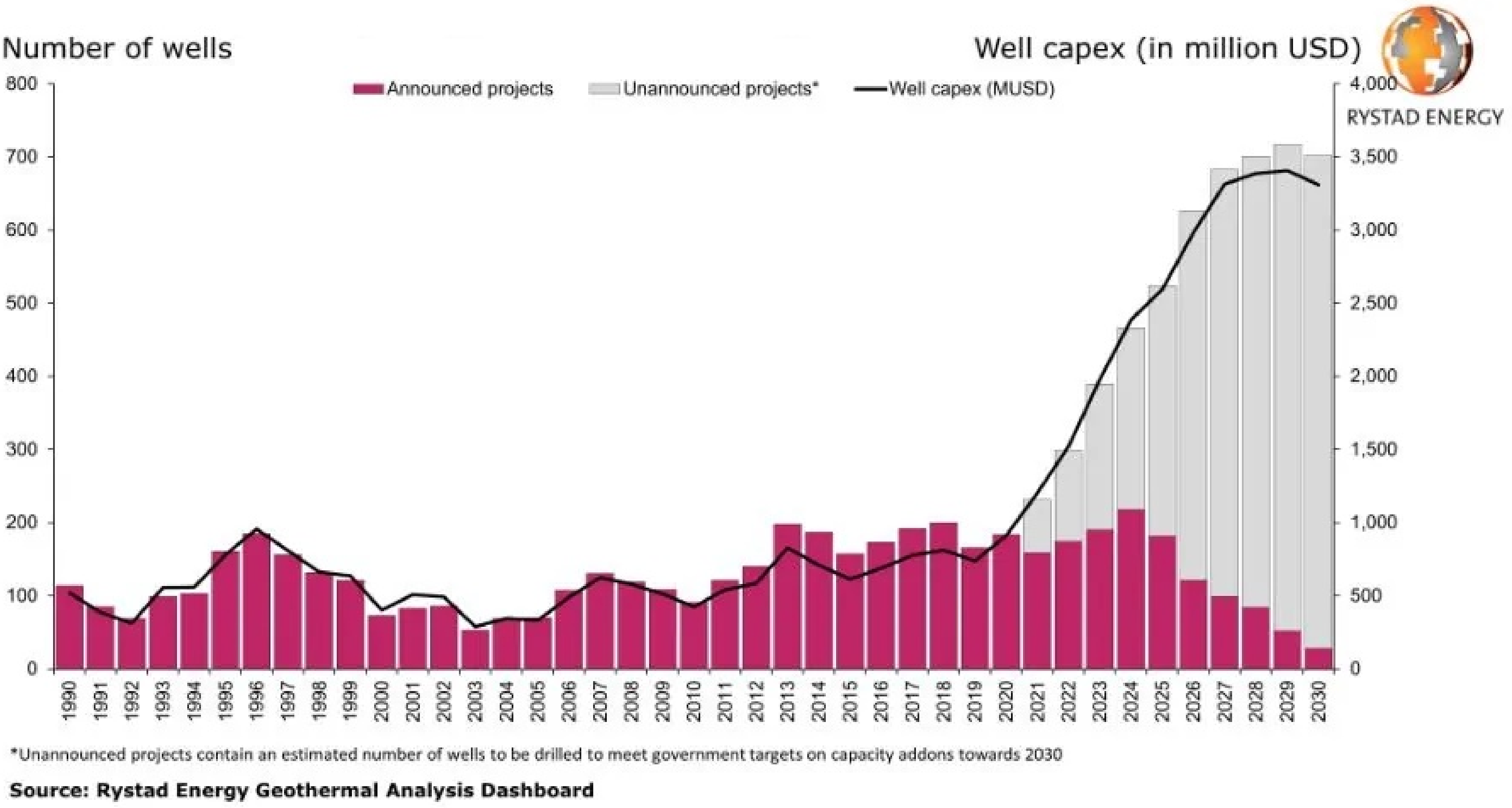
Well drilled globally for geothermal power generation and related CAPEX.
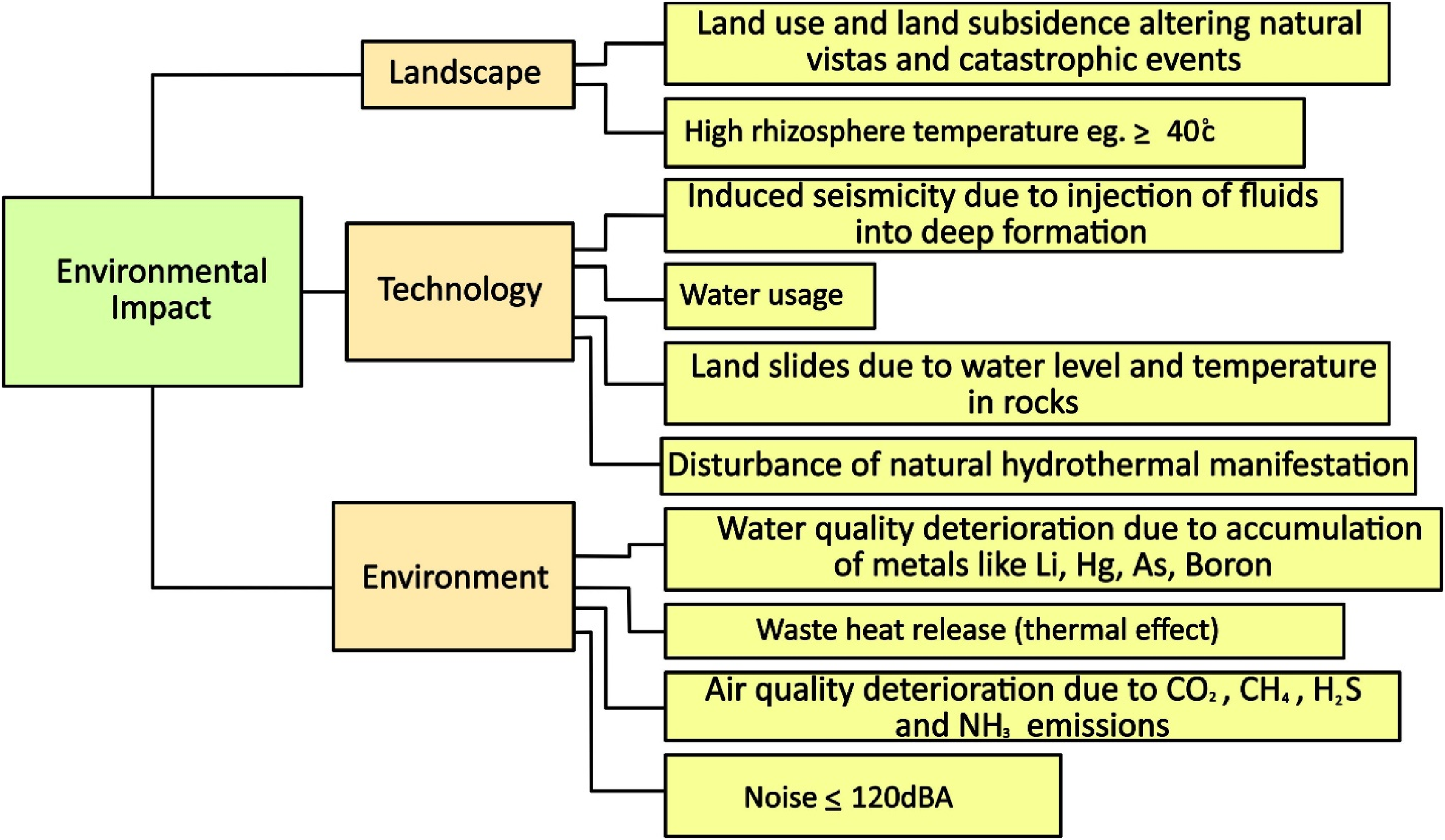
Potential environmental impacts of geothermal energy establishment. 21
Emissions
Although the generation of geothermal energy is thought to have relatively little of an environmental impact, the emissions of dissolved gases cannot be disregarded. 55 For example, the deep pressurized hot water sources are equipped with dissolved gases with metal, including carbon dioxide, ammonia, hydrogen sulfide, and ammonia. The gases are released during the process of depressurization and cooling, leading to the generation of various oxidation products, including Sulphur dioxide and nitrogen oxides. Due to elevated temperature of these thermal geothermal fluids, the number of gases may vary from 2% to 10% in weight, having various other trace elements, which may include Hg, As, B, Rn, and Sb. The presence of methane is considered harmful as it directly reacts with the ozone layer leaving a short-term greenhouse gas impact. Mercury and arsenic are considered to affect the human body by entering the food chain. Various other solid particles on water-soluble gases also infiltrate aerosol particles that are emitted from the cooling towers. These particles can deposit in soil and wash out in the rain, becoming part of underground water tables or water bodies.
Geothermal plants are preferred because of their low levels of pollution in comparison to other plants that are directly involved in carbon dioxide emissions. The major pollutants, including NOx, SO2, and other primary particulate matter, are not released or emitted by geothermal plants; however, the chances of the production of the secondary particulate matter because of oxidation of H2S and NH3 still prevail. In conventional geothermal plants without abatement systems, the emission of SO2 and NOx is considered 1% compared to the plants powered by fossil fuels of equal size. 56
Another major source of emissions of the geothermal plants is the construction equipment, transportation, and wells. While during the operation of the geothermal system, the emissions can be from pipeline drains, steam traps, project events, and cooling towers. 14 The ratio of emissions associated with the fuel is almost negligible; however, the building infrastructure, which includes the construction of the plant, power lines, and well completion, needs to be considered. The binary plants which work within closed-loop manner are unable to produce any liquid or gaseous emission; therefore, they can be declared zero-emission.
Toxic effects on land
The resources of geothermal energy are situated in national and protected areas having an environmental and visual impact. Geothermal power plants also occupy a particular area of land, which can be temporary during the construction and reclamation or permanent during the plant operation. Because geothermal energy generation is centered on the utilization of resources under the surface, therefore, underground manipulation, change, and depletion of geothermal reservoirs are all linked to the uses underground. Ground formation is an important consideration during the process of geothermal energy production. Pumping geothermal water from the depths can be related to the disruption of the delicate balance that exists between different layers of Earth. 57
Due to different operations, various surface disturbances may occur, especially during drilling. However, operations like drilling have a temporary impact on the removal of drill rigs; usually, the ponds are drained, and the landscape is reshaped. Similarly, areas of geothermal corporations are likely to have landslides. Geothermal fields are associated with volcanic rocks; therefore, these fields are associated with thermal alteration in these areas. Chemical pollution during this process is mainly involved in the discharge of chemicals through steam, where the dissolved chemicals can cause potential harm to the environment. In this scenario, the spray is considered to be an issue, especially during the testing period, which can be involved the damage to vegetation in the surrounding areas. The harmful concentrations of the chemicals in the liquid fraction are also involved in causing direct damage to the surroundings. 51
The effects of geothermal energy production and direct usage on the environment are often minimal and within control. Geothermal plants use little land and water, emit little carbon dioxide, hydrogen sulfide, and ammonia, all of which may be lessened by using the right mitigation measures. Even though the global effects of other possible pollutants like mercury, boron, and arsenic are poorly understood, they may have an influence on the ecosystem locally and regionally. By diminishing species variety and community composition, geothermal plants can change the vegetation and wildlife environment. Landslides, earthquake-induced seismicity, and subsidence are all tiny but potentially dangerous dangers. Reclamation costs over the long run can be greatly decreased by integrating timely reclamation into plant operation and thereafter while improving ecosystem recovery. 52
Environmental policy
Geothermal energy is well-thought-out an environment-friendly resource for energy production because of its low environmental impact. However, there is a need to have policies that can support geothermal energy systems. There are two basic principles, including risk-based and precautionary principles, that can be applied to the prevention and management of groundwater pollution or contamination across the globe. The European Union has already established the water framework directive or water policy, which is implemented to prevent the pollution of underground water.
An environmental and managemental regulation is required before implementing a geothermal energy system to ensure that environmental laws are followed. 58 It also includes the protection of wildlife and the associated flora and fauna at the site of the geothermal project. Sometimes deeper geothermal systems are established where more than 400 m depth is required. In various countries, mining laws are applied for deeper geothermal systems. For instance, in Germany, gentle handling is considered a mining convention; therefore, even if there is shallow geothermal energy, various mining laws are applied, ensuring sustainable use of resources. Similarly, the European Union has also tried to prevent and reduce fluoridation gasses or greenhouse gasses through regulations in accordance with the Kyoto Protocol. As a result, policymakers will continue to seek measure that have least negative impact on environment. 59
Social impact
Local employment
Compared to competitive energy-generating resources, the geothermal energy production system is aimed at introducing local populations through local production and consumption. One of the major benefits of this renewable energy system is the environmental benefits. Among other benefits, the utilization of local resources develops and produces new jobs, leading to the reduction of unemployment in the regional economy and government. The employment ratio in the geothermal sector is lower compared with traditional energy sectors; this share of job production can be increased with the establishment of geothermal energy production systems in accordance with the implementation of renewable energy policies. Although the geothermal energy sector has a limited contribution yet, it has contributed to the generation of a hundred thousand jobs across the globe until 2018. The locality where the geothermal production system is established is considered to provide direct, and indirect employment, which indicates the dynamics of resource utilization leading to the depiction of a direct impact on the economy. The benefits of geothermal energy sources are considered to have 2.5 against 1 USD investment leading to the growth of the global economy. One of the strongest features of the establishment of the geothermal system is the creation of employment and its positive impact on econotoxicmic activities. 60
Awareness in public
The implementation of innovation involving other technologies considers society as an obstacle or a hurdle in the establishment of advanced technology which needs to be overcome. 61 There is a constant struggle between the stakeholders having their own resources and the party demanding the establishment of new technology. 62 Some innovations are effortlessly rejected by society, while some become politicized and become intractable problems. The awareness regarding geothermal energy is less among the general public in comparison to wind and solar energy.14,63–67 However, there were need to develop some tactics for public awareness of geothermal energy and it can be achieved by public–private collaborations. 68 As per the recently released GeoVision report (May 2019) by the U.S. Department of Energy, it was confirmed that the public's awareness of the impacts of several energy sources on our society is very unsatisfactory, as depicted in Figure 7, and the majority of the population is unaware of this alternative renewable resource for energy production. Emerging technologies and societal transitions regarding low carbon levels have a level of uncertainty; therefore, the public needs to be aware of the observation of the prejudicial and technocratic decisive progression regarding that something or removal of the technology. 69
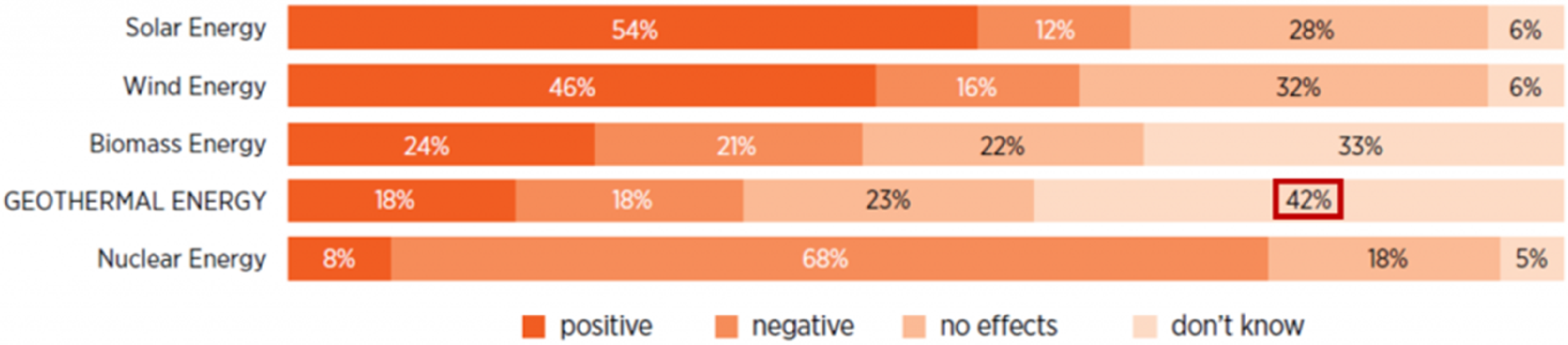
Public awareness of the impacts of several energy sources on our societies within the next 20 years. 22
Although the availability of social acceptance regarding thermal energy is less, the scope of geothermal energy is growing worldwide. Paragraph of public geothermal energy is differentiated, and a positive attitude is continuously evolving with time in different places. It is often observed that communities having geothermal technology have very limited knowledge regarding the project, which can be due to a lack of communication procedures to reach the majority of the citizens. Lack of community involvement in the project leads to uncertainty, which causes a negative perception and sometimes opposition among the public. Other factors may include the political and economic dominance of opposition parties. 70 Different types of social responses that emerge against geothermal energy are based on the social structure and cultural background. Different hurdles and opposition regarding the establishment of a geothermal energy system include noise and induced seismicity leading to a negative perception among the public.
Conclusion and outlook
Increasing environmental and climatic concerns have raised the necessity to reduce fossil fuel emissions and replace them with a sustainable energy system. A workable power supply system with its cost-efficiency, reliability, and environment-friendly approach can resourcefully employ the domestic networks and resources, leading to the development of a diverse range of benefits. In this regard, geothermal energy has emerged as one of the efficient alternatives and a potential contributor to the energy sector. Along with low carbon greenhouse gas emissions, geothermal energy also has a minimum land footprint. Although the energy system may pose hazards to the geology of the area, however, with the help of management and legal measures, these hazards can be reduced. The economic and environmental benefits of the geothermal energy could be involved in the promotion of energy utilization, improvement in energy security, reduction in the emissions of CO2, GHG, and other pollutants, reduction in freshwater consumption, and provision of a flexible operation scheme. Assessment of environmental impacts and benefits can directly contribute toward the establishment of a geothermal system as the most appropriate option to deal with the increasing demand for energy. Avoidance of its adverse impacts can be reduced by careful selection of the site, efficient regulation, and the implementation of appropriate monitoring systems. It is necessary for various regions to sustenance the establishment of geothermal energy systems for which development of human capacity, implementation of technical-aid, improved fundings, especially for surveying, and the risk assurance mechanism for the catalyzation of investment are required. The formation of regulations and laws can provide development and implementation of the renewable resources, which could be helpful in the attainment of the development goals.
The development and installation of geothermal energy will take 5 to 6 years, comprising the following steps: an initial examination, surveying, test-drilling, field development, erection of power plant, production, and maintenance. Following are certain challenges that come with the establishment of geothermal energy.
One of the greatest challenges includes land suitability and availability. Moreover, the lack of direction regarding the establishment of geothermal systems in terms of energy policy and resources can also be considered another institutional barrier. In various nations, geothermal energy is not recognized as a suitable substitute energy resource for the general public. In certain cases, local authorities are not interested. Therefore, they are aware of its benefits. The lack of human resources in the government institutions who can help launch and establish geothermal energy, including its promotion and regulation, is a significant challenge for the complete employment of geothermal energy. 71 This causes delays in grant applications, which results in a significant knowledge gap about several factors necessary for setting up geothermal systems.
The majority of the geothermal possessions are available in controlled and preserved zones. Environmental impact assessment is required in order to introduce or present any policy or regulation that can be originated by a land management activity. Nevertheless, investigation and agreement of these variations may take an extended time which will delay the project. In certain cases, the availability of different regulations can conflict with others. The geothermal energy systems are not directly related to water-land pollution; therefore, EIA is required for the use of natural land resources. There is a need to critically assess the uncertainties and errors that come with policymaking against geothermal energy systems.
Geothermal energy systems are equipped with the characteristic of having a small footprint leading to minimal environmental impact. It is involved in the lessening of GHGs leading to the provision of a reliable and sustainable energy alternative. However, there are certain technical and operational problems that may include corrosion, formation of scales during the drilling and rehabilitation of wells leading to scaling with metal sulfides, silica, and calcite barriers in raw water, and encouraged microearthquakes. Minerals can be precipitated in the reservoirs with different mineralogy and reinjection techniques. Deposition of calcite is common in alkaline reservoirs. The presence of silica also has a great influence on permeability alteration. Other technological barriers include the knowledge gap and the uncertainty related to technology. Other issues may include lack of expertise, non-availability of technology and industry, complexity, increased risk, and lack of R&D. Design issues may include steam fraction, capacity, and water impact, which can have a significant impact on geothermal energy systems. Similarly, lack of training regarding technical assistance and lack of technical experts also contributes to technical barriers.
Economic feasibility is considered an important element for the establishment of any project. Therefore, the economic feasibility of a geothermal energy system is an important barrier. The rate of growth and the total volume of the geothermal systems are considered to be lacking behind wind and solar systems deterring local leaders of the community from actively participating in geothermal energy establishment. Increased initial installation cost adds to the financial barriers leading to increased challenges in its installation and development. Generally, the geothermal schemes may take five to seven years from their development to their marketable utilization. The capacity of the geothermal resources could not be established even through drilling; therefore, a scarcity of drilling skills and crew can hinder the exploration of geothermal resources.
Changes in the environment are one of the world's fundamental problems. Particular attention should be made to reducing the environmental impact caused by industrial activity. Scientists have recommended specific ecological protection regulations to assist societies in meeting politicians’ objectives. Clean energy generation, particularly from renewable resources, is critical and must be handled. Renewable and sustainable resources produce clean energy while causing less environmental degradation, but they also present challenges. The ecological challenges also apply to geothermal resources, mainly working fluid discharge in open geothermal heat exchangers and disposal in geothermal heat pumps.
Geothermal energy system possesses great potential as the installed capacity of the system can go up to 70GWe by 2050. Since its establishment, there have been forty years of expansion practice, including its establishment at 18 different sites. With time additional power plants are being made to order, and the progress has entered into a new era on the basis of new developments in geothermal science. Combined heat and power systems: In comparison to the power generation system, the combined system is used to increase the geothermal sources utilization rate by >50%; therefore, the combined system is considered efficient for hot, dry rock. It is necessary for the policymakers to establish a vibrant visualization and strategies for geothermal utilization. This is also important to support the idea and the policies derived with the help of active communication with the implementation of geothermal experts in government institutes. Moreover, regional and local populations should also be communicated, and specific spatial planning should be distributed within the region. In the geothermal industry, there are various challenges which are explained as follows: There is a probability of the expansion of different capabilities in existing models; therefore, there is a need to develop and introduce new techniques for these models on the basis of updated information and field measurements. Fusion of data and information modeling with the help of available geological knowledge, exploration of data, downhole geophysics, and other data, including seismic monitoring, can be used to improve the management of the reservoirs.
New technologies can help in the development and steer fracture networks. It may include placement and detonation of controlled explosives and installation of smarter tracers. Implementation and utilization of technological advancements to recover from mistakes, including short circuits. Alterations in the laws are also necessary for advancement in geothermal development. In a typical system, the authority, directive and the administration of geothermal systems should be handled by the government headquarters, where knowledgeable professionals and staff should be responsible for the communication of the laws and regulations regarding geothermal systems. A framework is required to establish policy; therefore, the government should be involved in explaining the use of resources. In other words, there is a necessity for a centralized and authorized body that tends to formulate and execute the rules and laws for regulating energy and natural resources. Pricing mechanisms, including power purchase agreements (PPAs) and feed-in tariffs (FITs), are also required for the commercial viability of this technology. Subsidizing the unsuccessful well sites for the investigation and provision of right guarantees and increased tax benefits can be regarded as strong incentives for the developers.
Emission-free energy sources, such as geothermal heat, will account for a growing share of energy production in the coming years. The main advantage of nanoparticle suspensions is that they improve the heat transfer efficiency of geothermal power plants. There are some disadvantages to using nanofluids, including the complex process of nanofluid production, problems with non-uniform dispersion, increased wall shear stress leading to increased pressure drop, and an increase in heat exchanger wall temperature due to nanofluids’ lower specific heat capacity. Various nanofluid heat carriers for geothermal heat exchangers have been reviewed, including nanoparticles such as Al2O3, CuO, TiO2, and SiO2 with different base fluids (e.g., water, ethanol, and ethylene glycol), which have the potential to improve geothermal heat exchanger characteristics.
Footnotes
Declaration of conflicting interests
The author(s) declared no potential conflicts of interest with respect to the research, authorship, and/or publication of this article.
Funding
The author(s) received no financial support for the research, authorship, and/or publication of this article.
