




Abstract
This study examines the determinants of modern cooking fuel choices in Korea. The ordered probit model is estimated using an extensive online survey of Korean household energy consumers. Our empirical results showed that age, gender, and education are significant determinants of modern cooking fuel choices among the socioeconomic demographic variables: females, older people, and highly educated people are more likely to prefer electricity. Also, electricity is more likely to be preferred over natural gas by people who have a higher preference for district heating. Two psychological factors significantly influence cooking fuel choices. People whose behaviors are environment-friendly and people who are more health-conscious are more likely to prefer electricity over natural gas or propane. There are three important insights into the cooking fuel transition toward electricity. First, as interest in health and climate change has significantly increased in recent years in Korea, it may stimulate the transition from natural gas or propane to electricity. Second, electrification of cooking methods will be beneficial for the environment if electricity generation becomes less carbon-intensive. Since electricity in Korea is mainly generated by fossil fuels, it is crucial to implement more aggressive policies toward renewable sources in the energy mix for electricity generation. Third, the public should better understand why this problem cannot be overlooked because the energy mix is important in mitigating climate change. The better the people understand the exact relationship between energy consumption and pollutant emissions, the more effective and environmentally sound will the energy mix policy become.
Introduction
What determines household energy choices? Decades of research show that empirical results for energy choices are somewhat mixed. The energy ladder hypothesis points to “income level” as the main factor affecting household energy choices. According to this hypothesis, as income level increases, people change from traditional fuels (e.g. animal dung and firewood) to modern fuels (e.g. gas and electricity) through transitional fuels (e.g. coal and kerosene).1,2 Several studies support the hypothesis that income drives fuel-switching.2–5 A recent country-level analysis of solid fuel adoption found “GDP per capita” to be the strongest link to the use of solid fuel in cooking. 6
Although higher-income households tend to use more modern fuels, some studies shown in Table 1 found evidence that, unlike the energy ladder hypothesis, two or more fuels are consumed together instead of replacing the existing fuels with more modern fuels. This phenomenon is referred to as “energy stacking”. In their findings, high-income households are more likely to use modern fuels, but they keep using traditional and transitional fuels. Energy stacking is observed because many factors, as shown in Table 1, affect the decision regarding fuel energy choices. 1 Therefore, as income increases, higher-income households include modern fuels in their choice set for cooking fuels, but the final composition of cooking fuels depends on socioeconomic, demographic, behavior, cultural, and energy device characteristics.
Factors determining cooking fuel choice.
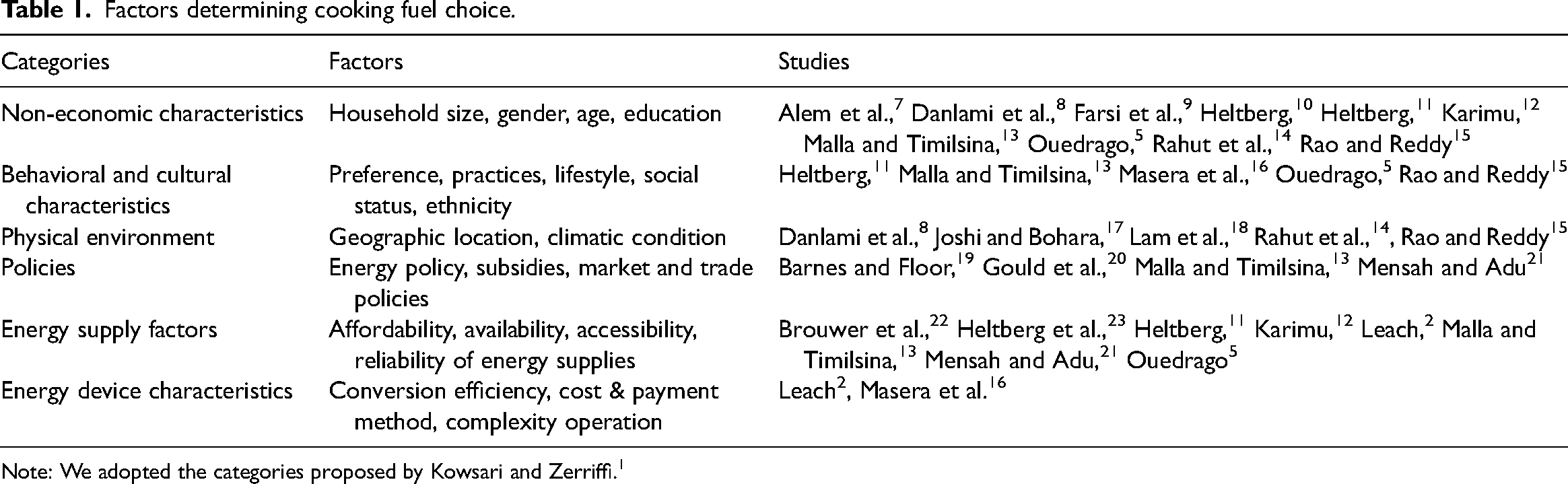
Note: We adopted the categories proposed by Kowsari and Zerriffi. 1
Most existing studies have focused on household fuel transitions from solid to cleaner fuels in developing countries. Burning solid fuels (1) causes indoor air pollution, leading to severe respiratory problems and (2) harms the environment as it causes deforestation.
24
Thus, fuel transition studies are important in developing countries because understanding the determinants of fuel transition can help policymakers in designing policies that induce households to use cleaner fuels. The study of fuel transition is critical in developed countries to address indoor air pollution and climate change. Since natural gas is harmful to indoor air quality, switching from natural gas or propane to electricity, can mitigate the adverse health effects. Also, electrification could play a critical role in reducing carbon dioxide (CO2), depending on the energies used for electricity generation.25,26 In this context, the current policy paradigm in South Korea (hereafter Korea) has moved toward decarbonizing the transportation, building, and industrial sectors by replacing fossil fuels with electricity. Unlike the industrial and transportation sectors, where energy transition is still slow due to technological and economic reasons, using electricity for cooking in the building sector is feasible. Korea has a 100% electricity access rate, indicating that fuel availability for electricity is guaranteed. Recently, electricity has attracted attention as a new cooking fuel because of the development of electric stoves in Korea. Unlike gas stoves, electric stoves have relatively low fire or gas leak accident risks and do not emit pollutants, such as carbon monoxide. Excellent thermal efficiency is another reason for the rising demand of electric stoves. However, despite the growing demand for electricity in the cooking sector, only 7.2% of Korean households used electricity as their main cooking fuel in 2016.
27
In the case of the United States and Japan, the proportion of households using electricity was 63% and 30.1%, respectively, in 2015.28,29 Comparatively, the proportion of households using electricity in Korea is relatively small. It appears that there may be barriers to electricity as a cooking fuel in Korea. Instead, the Korean cooking sector is currently dominated by natural gas. In 2016, the proportions of households using natural gas and propane gas were 63.6% and 29%, respectively, in Korea.
27
Natural gas has been the subject of intensive investigations concerning its role in energy transition. It has been perceived as a clean fuel in carbon-intensive economies as it produces fewer emissions than coal, when combusted.
30
However, in countries where coal use is declining, natural gas no longer holds an important position.
31
Natural gas cannot be a clean substitute for other fossil fuels due to its methane emissions, a stronger greenhouse gas than
In examining the overall picture of fossil fuel phase-out and net-zero emissions building (NZEB), electrification of cooking methods has become more prominent. Im and Kim 33 analyzed Korean household data to conclude that electric cooking significantly reduces GHG emissions. Gas cooking produces 2.6 times more CO2 emissions than electric cooking, according to the 2018 energy mix in Korea, where renewable energy sources accounted for only 6.2% of electricity generation. They suggested that the CO2 emissions gap in gas and electric cooking will increase to 3.2 times if renewables account for 20% of the power generation by 2030.
The main purpose of this study is to examine the determinants of cooking fuel choices, focusing on two modern cooking fuels. The fuel stacking literature shows that it is challenging to completely replace natural gas or propane with electricity. However, an increase in the degree of electrification in cooking methods will benefit the environment in the long run, if electricity generation becomes less carbon-intensive. Considering the potential role of electrification in mitigating climate change, we try to focus on the factors associated with choosing electricity over natural gas or propane.
Furthermore, this study contributes to the literature by examining psychosocial factors as determinants of modern cooking fuel choices. Laitner 34 and Kowsari and Zerriffi 1 argued that human behaviors regarding energy use, should not be overlooked in better understanding the fuel transition. However, few studies analyze the behavioral aspects involved in cooking fuel choices. This study considers three behavioral factors: environmental attitude, environmental behavior, and health concern. When people perceive electricity as a cleaner fuel, if they are environmentally conscious, they may prefer electricity over natural gas or propane in cooking. Additionally, because electricity, unlike natural gas or propane, emits no indoor pollutants and toxic chemicals and poses low safety and accident risks, people who value health and safety may prefer electricity over natural gas or propane in cooking. Examining these three factors in modern cooking fuel choices, will provide crucial insights into understanding human behavior in choosing alternative cooking fuels.
There are three reasons why we focus on Korea. First, few studies assess cooking fuel choices in developed countries such as Korea. As the transition of cooking fuel toward electricity can mitigate climate change and improve indoor air quality, it is beneficial to investigate the fuel-switch between modern fuels such as natural gas or propane and electricity, which are most commonly used in developed countries. Second, natural gas and propane are dominantly used as cooking fuels in Korea, while the demand for electricity is growing. Also, there is no technological barrier in replacing natural gas with electricity in the Korean domestic cooking system. Third, the Korean government has declared the attainment of carbon neutrality by 2050, and low-carbon energy sources can play a crucial role in achieving this goal. Therefore, the electrification of cooking methods can become a possible policy option in Korea.
In this study, we estimate the ordered probit model using extensive online survey data of Korean household energy consumers. We find that the transition in modern cooking fuel from gas to electricity is influenced by environmental attitude, environmental behavior, health concerns, gender, age, education level, and heating energy preference. Regarding psychological factors, there are two important insights. First, as interest in health and wellness grows, it may stimulate the cooking fuel transition toward electricity. Second, people who make eco-friendly choices, are more likely to prefer electric stoves, implying that electricity is perceived to be an eco-friendlier fuel. From the policy perspective, as electricity is mainly generated by coal power in Korea, switching from gas to electricity for cooking may not reduce carbon emissions. Therefore, the government should make efforts to increase electricity production generated by less- or zero-carbon energy. This policy effort is critical because the benefits of electrification of cooking methods are more likely to increase as the proportion of zero-carbon electricity increases.
Material and methods
Survey design
A web-based survey was conducted in 2018 with male and female adults aged between 19 and 69 years. To reduce sampling errors, Hankook Research, one of the largest research firms in Korea, extracted the survey samples using the proportional allocation method considering the population's regions, genders, and ages. We employed population information of registered residents published by the Ministry of the Interior and Safety of Korea, to extract the survey samples in September 2018. Hankook Research recorded about 430,000 potential respondents as survey samples, randomly selected as of August 2018. Our target survey sample size was 1010. Thus, we randomly sent out survey questionnaires until the desired amount of replies was obtained. Dispatch of questionnaires to 7432 people elicited 1010 responses, the response rate being 13.6%. For several groups used in extracting the samples, we checked whether our sample distribution was similar to the target population distribution for region, age, and gender; we did not observe critical issues for sample errors.
To measure electricity-based cooking preferences, we surveyed preferences for gas and electric stoves. As shown in Table 2, gas and electric stoves have different benefits and shortcomings depending on purchase cost, usage charges, safety, eco-friendliness, taste of food, and ease of use. This information was given to respondents before they answered the survey questionnaire. Fernandez 35 showed that household demographics and product features influence decisions to replace home appliances. Therefore, we assumed that consumers select cooking appliances according to their preferences and financial conditions, after comparing the benefits and shortcomings of these appliances.
Description of gas and electric stoves.
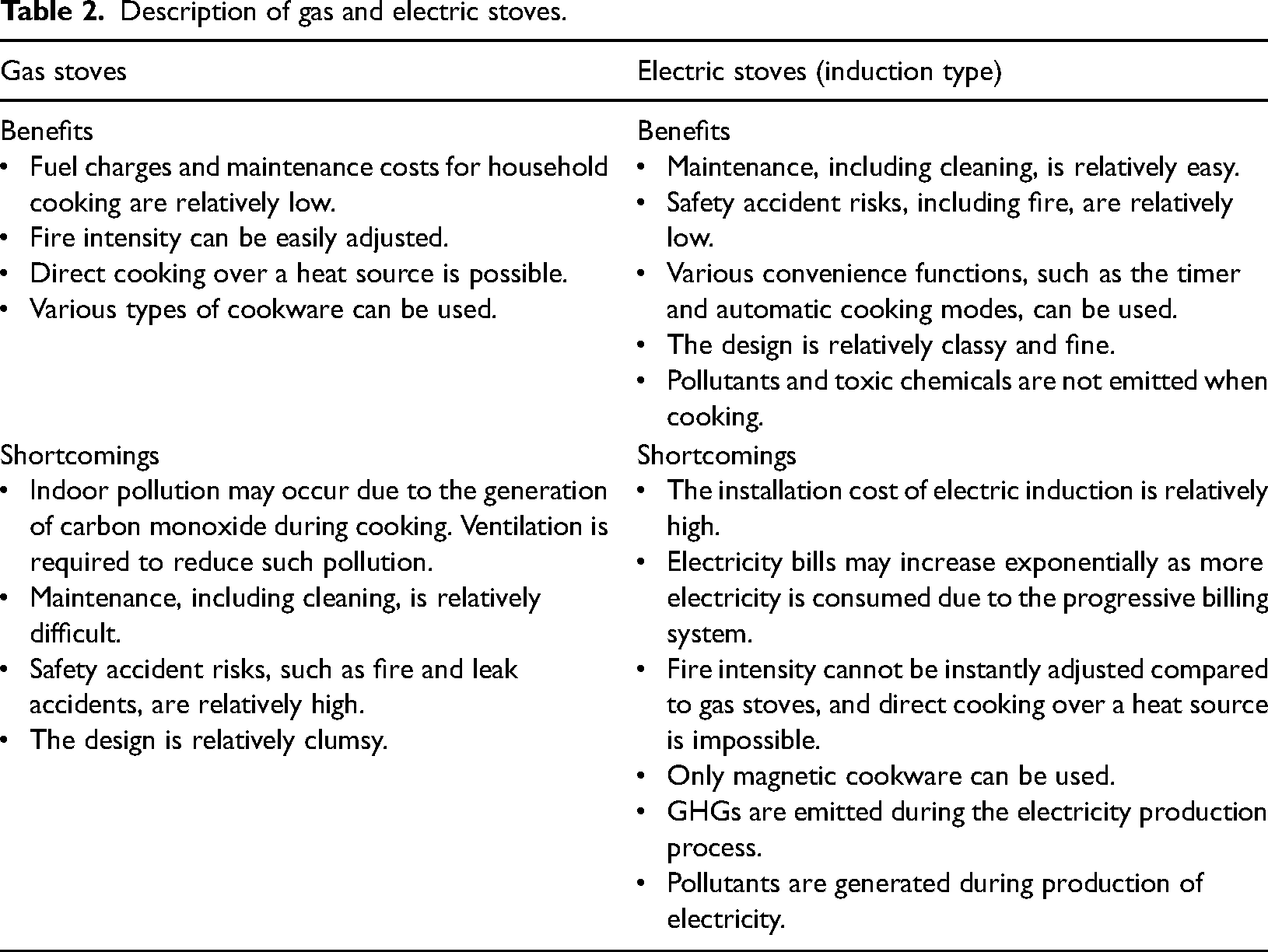
The following question was asked to respondents to measure their preferences between gas and electric stoves: “Regardless of the cooking appliances you are currently using, which of the following cooking appliances do you prefer?” The respondents chose one of three choices: (1) gas stoves, (2) electric stoves, and (3) no preference. In the ordered probit model, we used a dependent variable that has a value of three for “electric stove preference,” a value of two for “no preference,” and a value of one for “gas stove preference.” The values of this dependent variable, reveal preference ranks for electric stoves.
The crucial variables examined were environmental attitudes and behavioral and health concerns. First, we adopted the revised New Ecological Paradigm (NEP) scale proposed by Dunlap et al. 36 as a tool for measuring environmental attitudes. It is a widely used tool that consists of 15 items to measure an individual's pro-environmental concerns. The respondents answered each question on a five-point Likert scale. The environmental attitude variable was created by adding all responses for this scale. For responses closer to one, that is, eco-friendlier preferences, reverse coding was performed, such that higher scores represent an eco-friendlier attitude. Table 3 lists the items used to measure environmental attitudes.
Questions for measuring environmental attitudes.
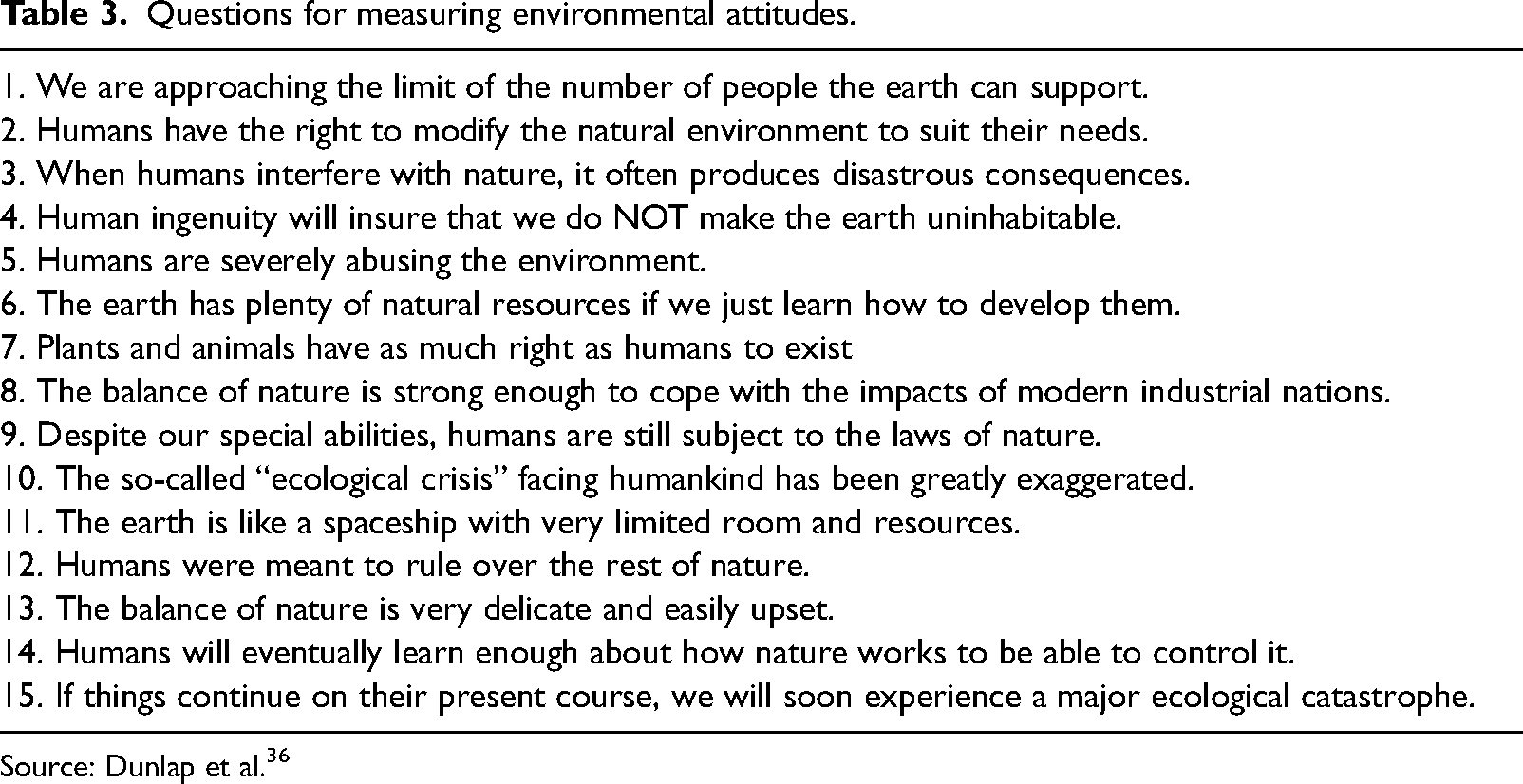
Source: Dunlap et al. 36
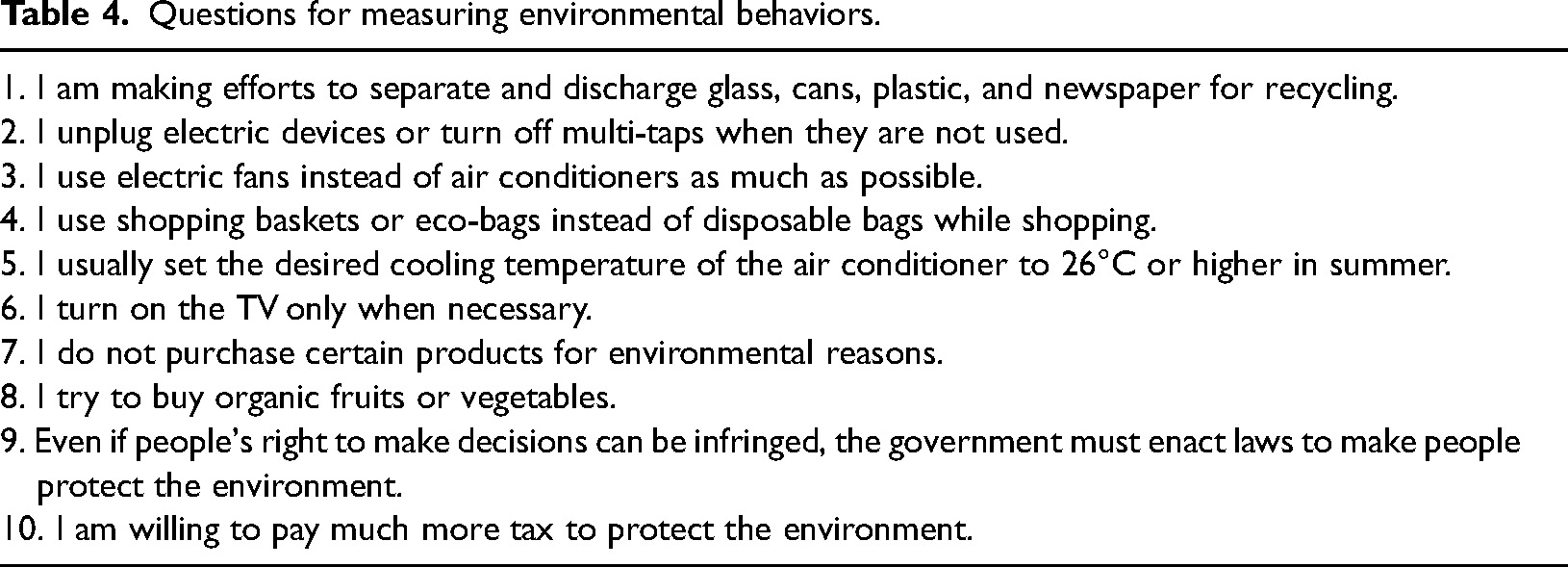
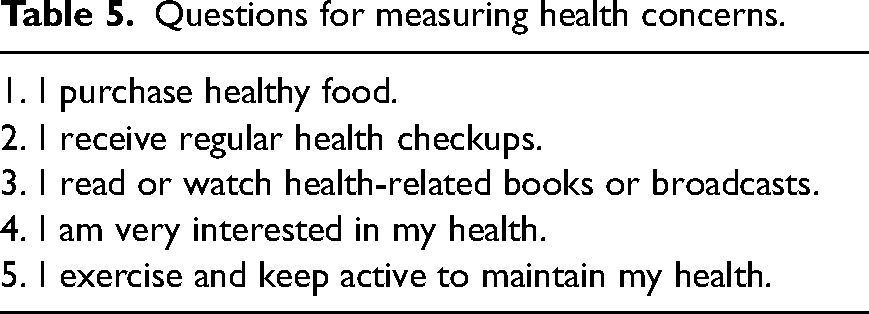
There is considerable debate on whether the NEP scale can be used as a single variable. 37 To address this issue, following Dunlap et al., 36 we conducted the principal-components analysis (hereafter PCA) to test whether the NEP items should be broken into two or more dimensions. Our PCA results failed to find strong evidence for treating the NEP scale as multiple variables. Thus, following Dunlap et al., 36 we treat the NEP scale as a single variable for environmental attitudes. Second, based on the studies of Hungerford and Peyton, 38 Kim et al., 39 and Lee, 40 we measured environmental behavior, using the questions listed in Table 4, on a five-point Likert scale. The environmental behavior variable was created by adding all responses. Similar to environmental attitude, the PCA results support this method as well. Third, gas stoves emit indoor air pollutants during incomplete combustion. If not properly ventilated, people's health can be adversely affected. Following Hwang and Lee, 41 we measured health concerns based on the questions listed in Table 5 on a five-point Likert scale. Similar to environmental attitude and behavior, we summed the scores of all responses to create the health concern variable in which higher values represent higher health concerns. We also applied PCA to test whether the items for health concerns had two or more substantiative meaningful dimensions and confirmed the appropriateness of treating the set of five items as a single variable.
Questions for measuring environmental behaviors.
Questions for measuring health concerns.
We included socioeconomic and demographic variables in the explanatory variables (age, gender, marital status, education level, income, housing ownership, number of household members, and residential area). These variables were used in previous studies that examined the energy ladder or energy stacking hypotheses. We also considered the dummy variables for electricity and heating system preferences and the cooking frequency variable. As explanatory variables, these variables may affect preferences for electric stoves.
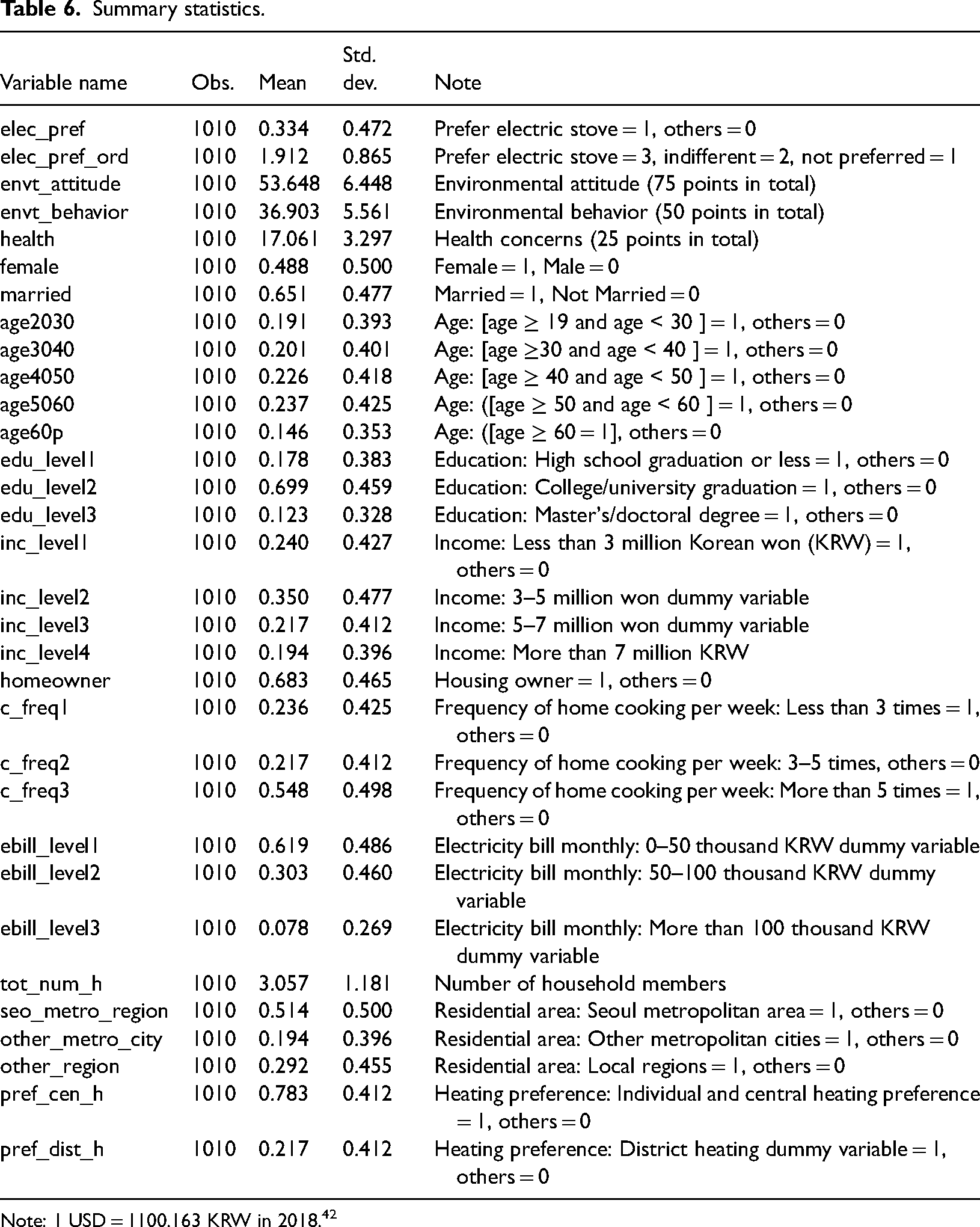
Table 6 lists the summary statistics of all variables used in the regression analysis. As shown in the second row (elec_pref), 33.4% of the respondents preferred electric stoves. The average values for the environmental attitude, behavior, and health concern variables were 53.6, 36.9, and 17.1, respectively. Female respondents accounted for 49% of the total samples in our data, while married respondents represented 65%. The average age of the respondents was approximately 44 years. The average number of household members was three. Furthermore, 51.4% of the respondents lived in the Seoul metropolitan area, 19.4% lived in metropolitan cities, and 29.2% lived in other regions. 70% of the respondents had graduated from 2- or 4-year universities and 12% had master's or doctoral degrees. The people in the income bracket “between 3 and 5 million KRW” exhibited the highest proportion (35%), followed by “less than 3 million KRW” (24%), “between 5 and 7 million KRW” (21.7%), and “more than 7 million KRW” (19.4%). About 68% of the respondents owned housing. The respondents who cooked at home “five times or more” per week, represented the highest proportion (54.8%), followed by “less than three times” (23.6%) and “between three and five times” (21.7%). Finally, 78.3% of respondents preferred individual heating, using natural gas or propane as fuel.
Summary statistics.
Note: 1 USD = 1100.163 KRW in 2018. 42
Ordered probit model
The levels of electric stove preferences were arranged such that indifferent preferences corresponded to the middle of the preference scale. To reflect the rank of electric stove preferences, the ordered probit model was adopted to analyze its determinants.
In the ordered probit model used in this study, the following latent variable was considered:
The ordered probit model is as follows:


Results and discussion
Results
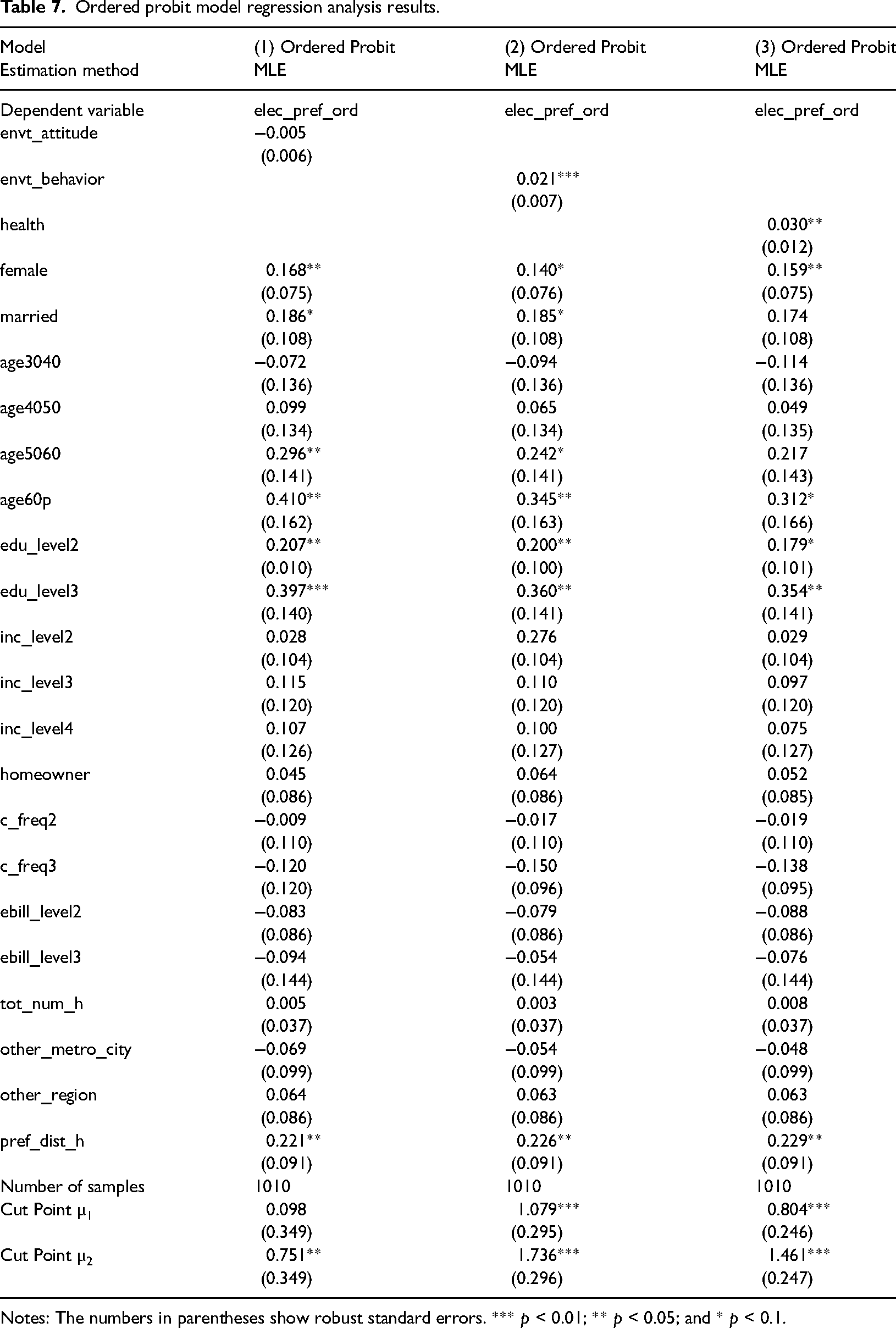
The determinants of cooking fuel preference were identified by estimating an ordered probit model. Table 7 lists the regression results. The first column in Table 7 lists the regression analysis results of only the environmental attitude variable, among the three psychosocial variables as the explanatory variables. The second and third columns list the regression analysis results of the environmental behavior and health concern variables as the explanatory variables, respectively.
Ordered probit model regression analysis results.
Notes: The numbers in parentheses show robust standard errors. *** p < 0.01; ** p < 0.05; and * p < 0.1.
The first column in Table 7 indicates no statistically significant relationship between environmental attitude and the probability of preferring electric stoves. However, as listed in the second column, we found that people with eco-friendly behaviors tend to prefer electric stoves. The third column indicates that people with health concerns are more likely to prefer electric stoves.
Next, we investigated the results for the statistically significant estimates of other explanatory variables for models (1), (2), and (3). First, our findings show that females are more likely to prefer electric stoves, but the statistical significance becomes relatively weak in model (2). Second, the probability of preferring electric stoves increases with age, with older people preferring electric stoves, but the statistical significance becomes relatively weak in model (3). Third, those who graduated from college/university and achieved master's or doctoral degrees are more likely to prefer electric stoves than those who graduated only from high school or lower education. Therefore, as education level increases, the probability of preferring electric stoves increases. Finally, people who prefer district heating were more likely to prefer electric stoves.
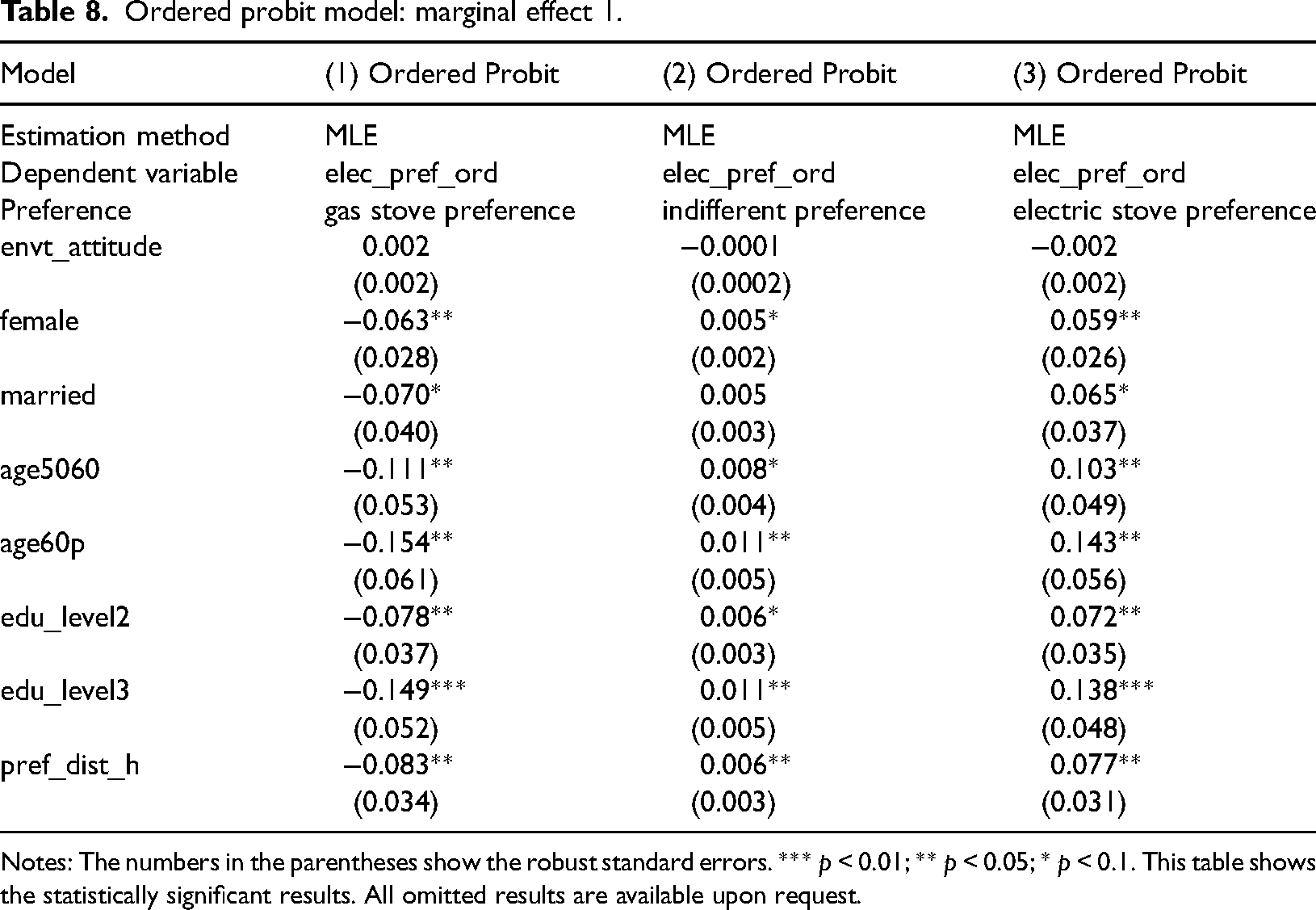
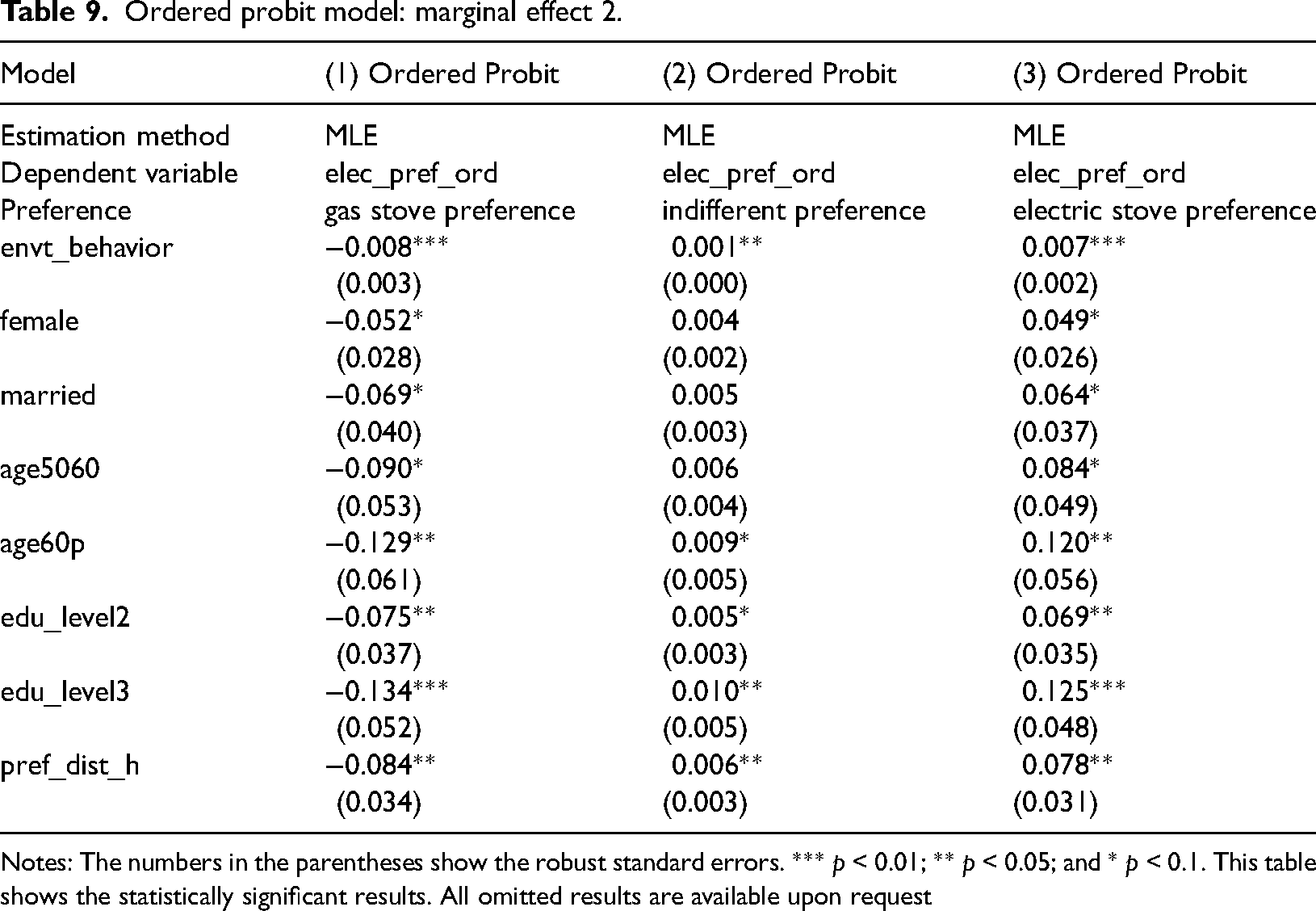
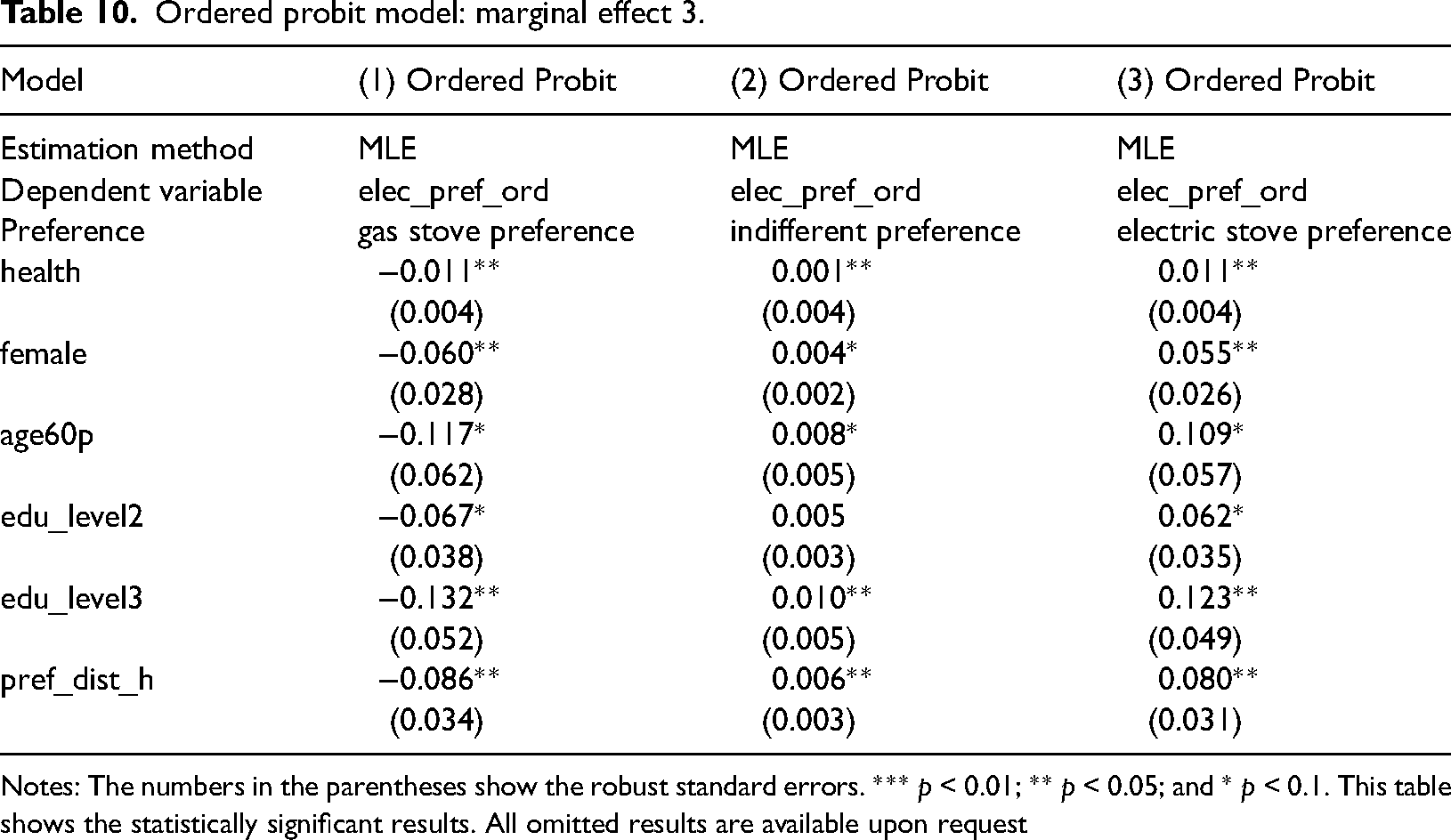
To examine the effects of changes in the explanatory variables on the probability of preferring electric stoves, we estimated marginal effects. The results are listed in Tables 8–10. In each table, the first column lists the changes in the probability of preferring gas stoves caused by changes in the explanatory variables. The second column lists the changes in the probability of indifferent preferences. The third column lists the changes in the probability of preferring electric stoves.
Ordered probit model: marginal effect 1.
Notes: The numbers in the parentheses show the robust standard errors. *** p < 0.01; ** p < 0.05; * p < 0.1. This table shows the statistically significant results. All omitted results are available upon request.
Ordered probit model: marginal effect 2.
Notes: The numbers in the parentheses show the robust standard errors. *** p < 0.01; ** p < 0.05; and * p < 0.1. This table shows the statistically significant results. All omitted results are available upon request
Ordered probit model: marginal effect 3.
Notes: The numbers in the parentheses show the robust standard errors. *** p < 0.01; ** p < 0.05; and * p < 0.1. This table shows the statistically significant results. All omitted results are available upon request
We first considered the marginal effects of models (1) and (2) in Table 7. These results are listed in Tables 8 and 9. In both models, signs of the coefficients of different income levels were apposite for gas and electric stoves, but the difference was not statistically significant. This indicates that modern cooking fuel transitions do not solely follow the energy ladder model, but other factors also contribute to fuel preferences. As the environmental attitude score increased, the probabilities of indifferent preferences and electric stove preferences decreased while that of gas stove preferences increased, but the difference was not statistically significant. In contrast, as the environmental behavior score increased, the probabilities of indifferent preferences and electric stove preferences increased, while that of a gas stove preference decreased, which was statistically significant. In addition, when the environmental behavior score increased, the probabilities of electric stove preferences exhibited a more significant increase than that of indifferent preferences.
Regarding the marginal effects of other explanatory variables for models (1), (2), and (3) in Table 7, the probability of preferring gas stoves decreased among females, whereas the probability of indifferent and electric stove preferences increased. The statistical significance was relatively strong for electric stove preferences. As age increased, the probability of preferring electric stoves increased, while that of preferring gas stoves decreased. In particular, for people aged 60 and over, compared to young people aged between 20 and 30, the probabilities of gas stove preferences and indifferent preferences decreased, while that of preferring electric stoves increased. There was a relatively strong statistical significance for the decrease in the probability of preferring gas stoves and the increase in the probability of preferring electric stoves. As the education level increased, the probabilities of gas stove preferences and indifferent preferences decreased, whereas that of preferring electric stoves increased. There was a strong statistical significance for the decrease in the probability of preferring gas stoves and the increase in the probability of preferring electric stoves. For the respondents who prefer district heating, the probability of preferring gas stoves decreased, whereas probabilities of no preference and electric stove preferences had a statistically significant increase.
The marginal effects of model (3) in Table 7 are listed in Table 10. A closer examination of health concern variable reveals that as health concerns increase, the probability of preferring gas stoves decreased, whereas those of indifferent and electric stove preferences increased. When the health concern score increased, there was a significant increase in the probability of preferring electric stoves. There was a strong statistical significance for the decrease in the probability of preferring gas stoves and the increase in the probability of preferring electric stoves, owing to the increase in the health concern score.
Discussion
The literature shows that income level is one of the major determinants of fuel-switching from traditional to modern fuels, but we found that this is not so when switching from high- to higher-quality fuels. Instead, our empirical results show that other factors are important determinants of electricity preferences in Korea. Instead of income level, socioeconomic factors such as gender, age, education level, district heating preferences, and psychosocial factors, including health concerns and environmental behavior, are likely to affect cooking fuel choices. Our main findings are as follows:
First, females are more likely to display preferences for electric stoves as they are more likely to cook. This is because individuals who cook may select cooking appliances by considering the cooking fuels’ ease of use, maintenance, and health impacts. Our survey for cooking fuel perceptions showed that electric stoves are preferred over gas stoves in terms of their ease of use and maintenance. In addition, women may be more likely to worry about the negative health impacts of using gas, caused by indoor air pollution. Second, older people who are more likely to have health vulnerabilities, prefer electric stoves as they are perceived to emit less indoor pollutants and be safer. Third, electricity-based cooking is more preferred as the education level increases, which supports the previous findings, establishing a positive relationship between advanced fuels and education level. Education can help improve awareness about the negative effects gas has on human health. Our results suggest that providing a higher level of educational support, may promote electrification. Fourth, people who prefer district heating are more likely to prefer electric stoves. It shows that people who prefer heating fuel with a high energy efficiency believe that energy efficiency is also an important factor when selecting cooking fuels. This implies that the relevant authorities should consider an energy policy with bundled services of district heating and electric cooking. Bloess et al. 43 suggested that heat-electricity integration is the most cost-effective technique to replace fossil fuels and decarbonize the energy sector. Currently, gas is supplied in the Korean residential sectors for two main purposes: heating and cooking. If gas heating and cooking are replaced by district heating and electric cooking, it will help in achieving NZEB. Fifth, people who are actively engaged in protecting the environment are more likely to prefer electric stoves. Empirical analysis shows that people who pursue environment-friendly behaviors are more likely to prefer electric stoves than those with positive environmental attitudes. Environmental behavior refers to the degree to which actions are taken to protect the environment, while environmental attitude can be defined as the degree of awareness of the finiteness of natural resources and the role of humans in their depletion. This distinction implies that individuals with strong environmental preferences may express their preferences more actively, while environmental attitude is a passive characteristic. Therefore, people with active environmental behaviors, strongly prefer electric stoves motivated by their firm perception of electricity as an eco-friendly fuel. This explanation is supported by our survey, with 80.6% of respondents supporting the fact that electricity yields less pollution than gas. Lastly, people with higher health concerns are more likely to prefer electric stoves. This is because they may perceive electric stoves to be safer than gas stoves, in terms of indoor air pollution. Ali and Ali 44 showed that health consciousness is the key psychological factor in consumption decisions regarding wellness food, and our results support their findings.
Policy implications and conclusion
Policy implications
This study examines the determinants of modern cooking fuel choice in Korea. Our results showed that age, gender, and education are significant determinants for modern cooking fuel choice among the socioeconomic demographic variables: females, older people, and people with higher education, who are more likely to prefer electricity. Also, electricity is more likely to be preferred to natural gas by people who have a higher preference for district heating. Two psychological factors significantly influence cooking fuel choice. People who possess environment-friendly behaviors and people who are more concerned about their health are more likely to prefer electricity to natural gas or propane.
This study provides three important insights into the cooking fuel transition toward electricity. First, health concerns and environmental behaviors could play a crucial role in cooking fuel transition to electricity as a more desirable alternative in society. Switching to modern cooking fuels in developed countries is a critical component in mitigating indoor air quality problems. The use of gas stoves can contribute to poor residential indoor air quality.45,46 Pollution caused by gas stoves is associated with respiratory and health ailments.47,48 Since the interest in health and wellness has significantly increased in recent years among the Korean people, this social trend may stimulate the transition from natural gas or propane to electricity. In addition, as social concerns over global climate crisis have rapidly grown, people have become aware of the potential impact of climate change. This phenomenon could encourage them to become more environmental-friendly, thereby positively influencing the cooking fuel transition to electricity. Second, we should understand the indirect emissions caused by electricity consumption. The crucial question is whether electricity is an environment-friendly cooking fuel. With the given energy mix in Korea, the answer is “yes” in terms of direct emissions, but it is “no” in terms of indirect emissions. According to the International Energy Agency (hereafter IEA), in Korea, coal-fired power generation accounted for 43.8% of the total power generation in 2018 (survey year). 49 With the large proportion of coal-fired power generation, electricity cannot be assessed as a cleaner energy source than natural gas or propane because of the various pollutants (e.g. carbon dioxide, nitrogen oxides, and sulfur oxides) emitted in the coal power generation process. Holland et al. 50 pointed out that electric vehicles are not zero-emission vehicles because electricity is generated by burning coal and natural gas. Tessum et al. 51 also claimed that electric cars are best for improving air quality when powered by natural gas or renewable energies, such as wind, water, or solar power, while they are the worst when powered by coal. Therefore, the government must make significant efforts to push toward the decarbonization of the power sector. According to IEA, although the proportion of coal in electricity production had been reduced to 33.7% in 2021, coal still occupies the largest proportion in power generation sources, whereas renewables occupy only 8.6%. 49 Electrification can rather accelerate climate change when electricity generation heavily relies on fossil fuels. We strongly recommend implementing more aggressive policies toward renewable sources in the energy mix for electricity generation. Third, our empirical results showed that people with environment-friendly behaviors are more likely to prefer electricity, which implies that people consider electricity as a cleaner cooking fuel over natural gas. We provided respondents with information about the possibility of indirect emissions while using electricity when surveying preferences for cooking stoves. Our research design shows that, despite the potential carbon emission from electricity generation, eco-friendly people are more likely to choose an electric stove over a gas stove. This result implies that people may not have a full understanding of the problem of indirect emissions when consuming electricity indoors. The public should have a clearer understanding of why this problem cannot be overlooked and that energy mix is important in mitigating climate change. The better people's understanding of the exact relationship between energy consumption and pollutant emissions, the more effective an environmentally sound energy mix policy would become. One possible channel to increase the awareness of indirect emission is for the government and media to provide accurate information on the proportion of fossil fuels in electricity generation.
Conclusion
The results of our study, through statistically significant evidence, show that females, older people, highly educated citizens, people actively engaged in environment conservation, and people with health vulnerabilities are more likely to prefer electricity-based modern cooking methods over gas or propane-based fuels. Therefore, policy-makers should consider these factors in achieving NZEB goals. They should promote higher education and environment-friendly behaviors. Efforts should be made to spread awareness regarding the negative effects of gas-based cooking methods. For such initiatives to have significant effects, the Korean government should implement aggressive policies toward renewable sources in the energy production composition of the country.
Footnotes
Acknowledgements
We would like to express our appreciation to three anonymous reviewers for their constructive comments and suggestions.
Declaration of Conflicting Interests
The authors declared no potential conflicts of interest with respect to the research, authorship, and/or publication of this article.
Funding
The authors disclosed receipt of the following financial support for the research, authorship, and/or publication of this article: authors acknowledge financial support from the Korea District Heating Corporation (grant number: KDHC-2018) with additional support from Korea Environment Industry & Technology Institute (KEITI) through Climate Change R&D Project for New Climate Regime, funded by Korea Ministry of Environment (MOE) (grant number: 2022003560007).
