




Abstract
One of the biggest environmental challenges for scientists and researchers is to minimize energy crisis by utilizing renewable energy without impacting the climate. Natural dyes based organic solar cells are third generation dye sensitized solar cells (DSSC) which are bio safe, low cost, and relatively easy to fabricate with flexibility than Silicon based solar cells. In this study dye sensitized solar cells are modelled and simulated using diffusion model. The simulations are carried out in MATLAB software to investigate the electrical characteristics. The simulations are performed for three different DSSCs made of pomegranate, beetroot and N-719 dyes. Physical parameters are extracted and their impact on the performance of solar cells is studied. Additionally, the effects of variations in electrode thickness and irradiance are also investigated. The results indicated that short-circuit current, open-circuit voltage and output power increased by decreasing the electrode thickness. Simulated results are in good agreement with the experimental results of preassembled DSSCs. A set of parameters based on electrical considerations is delivered which will not only help to study the impact of physical parameter of DSSC but will also help to control and improve the performance and efficiency of Dye sensitized solar cells.
Introduction
Global demand of energy is increasing day by day and the researchers are focusing on various option. Out of these carbon-free energy sources are being given due attention. It may be mentioned that one of the biggest technological challenge for scientists is development of systems utilizing renewable energy contained in water, wind or sun without impacting the climate. 1 In this regard, growth of photovoltaics has been close to exponential during last two decades but low efficiency and use of toxic materials are main challenges for photovoltaic technologies. 2
Dye-sensitized solar cells (DSSC), invented by Brian O'Regan and Michael Grätzel in 1991, are environment friendly third generation solar cells inspired by the photosynthesis process in plants. 3 In comparison to conventional silicon-based solar cells, DSSCs are low cost, versatile in terms of colors and structures, and they perform well under diffused light. 2 Their price to performance ratio make them a key player in the photovoltaic market, especially in building-integrated photovoltaic (BIPV) applications. 4
Since conversion efficiency of DSSCs is lower than other types of solar cells therefore much efforts have been devoted by researchers to improve their efficiency. For this, many attempts have been made by using different synthesis methods, semiconductors photo electrodes, counter electrodes and dyes.5–7
Physical and chemical phenomena which take place inside DSSCs are complex compared to conventional solar cells therefore understanding of basic working mechanisms is very important to develop highly efficient DSSCs. Numerous models have been proposed and calibrated parameters were extracted to interprets the internal properties and electrical characteristics of DSSCs. Modeling and simulations of DSSC is a daunting task and several researchers have attempted to extract the affective parameters to establish a robust models to evaluate their performance.
Diffusion differential equations are widely used to model the electrical characteristics of DSSCs. It is based on the assumptions that charge transport in the semiconductor occurs via diffusion assuming a constant diffusion length. By using diffusion equations, Soedergren et al. theoretically analyzed the photoelectrochemical behavior relating electron transport, and photogeneration and recombination. 8 Later on, Meng Ni. et al. solved the electron diffusion differential equation and developed a diffusion model to study the DSSC performance with varying electrode porosity. 9 The effect of porosity on light absorption and electron diffusion on overall current –voltage characteristics was studied. Diffusion differential equation based simulation study in MATLAB were reported by Habeib et al., where electrical characteristics were simulated based on internal parameters such as diffusion length, diffusion coefficient, lifetime etc. 10 The electrical behavior under varying temperature, irradiant, absorption constant and photoelectrode thickness was also studied. Following the same, Ramesh et al. simulated electrical characteristics of DSSC with titania aerogel photo anode. 11 The simulated results matched well with the experimental values. Aboulouard applied diffusion model on natural dyes based DSSCs and simulated its electrical characteristics on MATLAB software.12,13
Maldon et al., extended the diffusion model by including the time dependence. 14 They presented numerical solutions of the fractional diffusion model to demonstrate the effect of the fractal geometry of TiO2 on short-circuit current density, open-circuit voltage and efficiency. Rudra et el, performed diffusion model based simulations by using critical parameters extracted from electrochemical impedance spectroscopy (EIS) data. 15
Single diode model based analytical approach and SPICE simulation results were reported by de Andrade et al., to predict the entire I-V curve, maximum power point and the fill factor with different values of series resistance, parallel resistance, ideality factor, reverse saturation and photo generated current. 16
Likewise, Yeoh et al. modelled DSSC by a single diode equivalent circuit and a proposed method based on successive substitutions. 17 They estimated photo-generated current, saturation current, ideality factor and series resistance by using this model.
Apart from diffusion differential equations as highlighted above, some other models and algorithms were also proposed. Vinoth et al., investigated internal parameters with Single-diode model by applying symbiotic organism search (SOS) algorithm implemented in IPython software and validated the results by Lambert-W function. 18
Similarly, Kumar et al. performed single-diode simulations in a tiberCAD based microscopic model (TCMM) to obtain parameters for predicting maximum efficiency for an unknown electrode's thickness (L). 19 Based on continuity, transport and Poisson's non-linear differential equations, Gong et al., proposed a simplified model and performed MATLAB simulations. Later they further improved their model by applying Schottky barrier and Butler-Volmer equation.20,21 Their presented model fitted the experimental J–V characteristics more accurately.
Recently, Tayyeb et al., realized a generalized simulation model in MATLAB/SIMULINK interface by using basic photovoltaic circuit equations. 22 The simulation results are reported for DSSCs with different photoanodes and dyes.
So far very few simulations results are reported for natural dyes based DSSCs. In recent years Supriyanto et al., modelled natural dyes DSSCs based on diffusion differential equation and performed MATLAB simulations to investigate optimum thickness of semiconductor oxide and diffusion coefficient.23–25 The same numerical study was carried out by Aboulouard et al., by using the absorption coefficient of olive leaves and hibiscus flower. 13 As photosensitizer, natural dyes cells produce much lower efficiency compared to complex metal dyes or organic dyes DSSCs. Therefore, it is important to identify best variety of natural dyes.
In this research, we have used single diode model to simulate current –voltage characteristics of natural dyes based DSSC. Simulation are performed for DSSCs prepared from pomegranate and beetroot extracts. Physical parameters are extracted and their impact on the performance of these cells is studied. Simulation results are compared with experimental results. The detailed set of parameters based on electrical considerations is delivered which will not only help to study the impact of physical parameter for effectively simulating natural dyes based DSSCs but will also help to control and improve their performance and efficiency.
Experimental details
The DSSCs are sensitized by locally made natural dyes of pomegranate and beetroot and commercially available anthocyanin dye N 719. For the preparation of natural dyes, fresh pomegranate and beetroot were purchased from local food market. Maceration technique was used for the extraction of natural dyes. For making photo anode, mesoporous titania electrodes were used. Platinum coated FTO glass was used as counter electrode. The titania photo anode was annealed at 450°C for 20 min to remove moisture from the mesoporous layer of titania. Each titania electrode was separately dipped in pomegranate, beetroot and N-719 dyes and then left to stain for 24 h at room temperature. The DSSCs were assembled by stacking the sensitized photo anode and counter electrode, adding redox couple electrolyte and sealing by placing 60µm thick gasket. Details of assembling procedures of DSSCs are given in reference 5. Device schematic is shown in Figure 1(a).
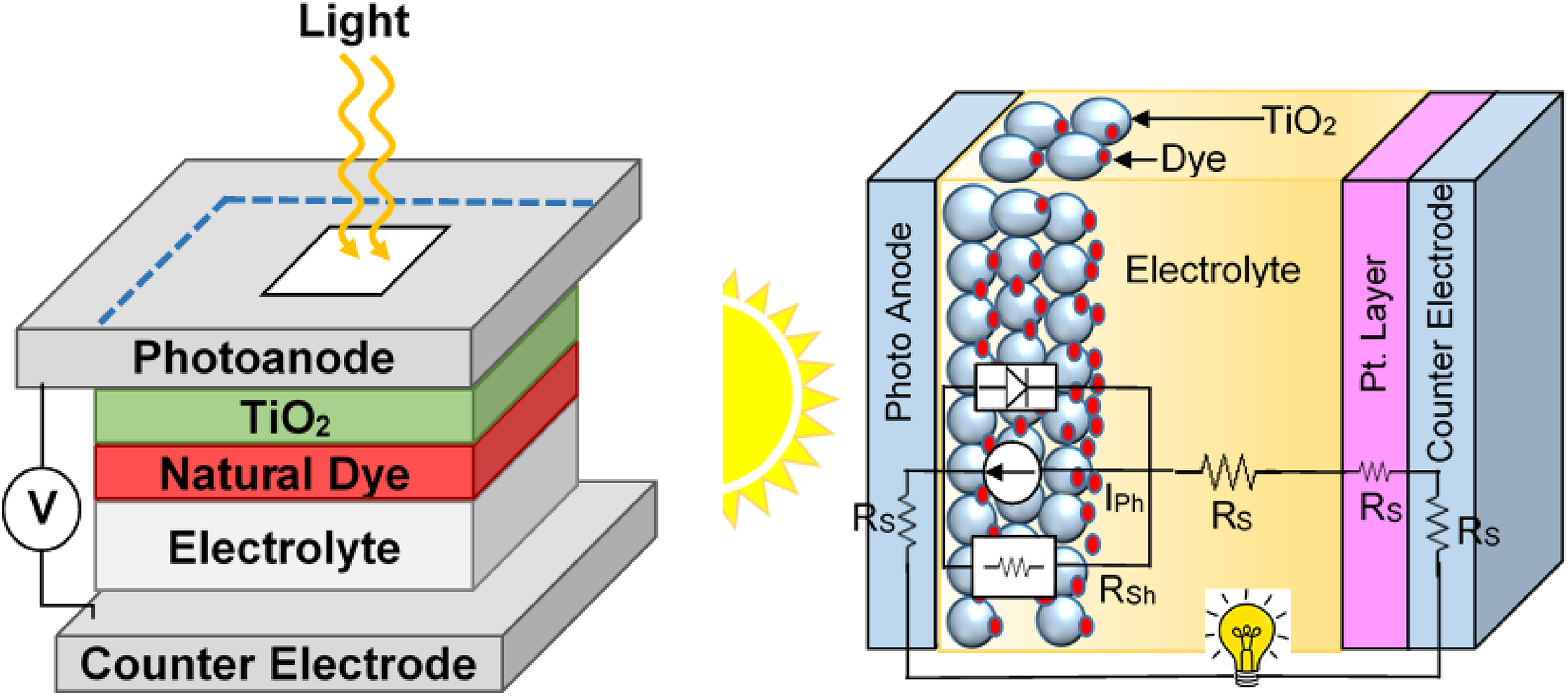
(a) Device schematic of DSSC (b) Electrical parameters associated with DSSC parameters.
Standard components, materials and solvents of high quality were used in fabrication. Electrical characterization of assembled devices was performed by using LCR meter under 1 sun illumination (100 mW/cm2). Standard light source Light of 1.5G Class AAA solar simulator was used. A sweeping voltage was applied in the direction from short circuit to open circuit condition. Open circuit voltage (VOC), Short circuit Current (ISC) were measured and ideality factor (n) and power (P) were extracted.
Mathematical Model
A typical DSSC system consists of two conducting electrodes a semiconductor oxide layer, a dye and an electrolyte solution. The electrical parameters associated with these parts are shown in Figure 1(b). The counter electrode is coated with a highly conducting catalyst material such as platinum or carbon. The working electrode (photo anode) has a layer of nanoporous semiconducting oxide sensitized by a dye. The redox couple (I−∕ I−3) electrolyte solution is used to complete the cycle of current flow.
When sun light falls on cell then photons are absorbed by the dye and electrons are generated due to the photoexcitation of dye as given by equation (1);




The reduced part of the couple regenerates the photo-oxidized dye molecules through the reaction given by equation (5);

For an irradiated DSSC, electron injection from excited dye molecules, transport in semiconductor oxide (TiO2), and recombination with redox electrolyte at the TiO2/electrolyte interface can be described by the continuity diffusion equation
26
;

Here Dn is electron diffusion coefficient, G(x) and R(x) are electron generation and recombination given by;



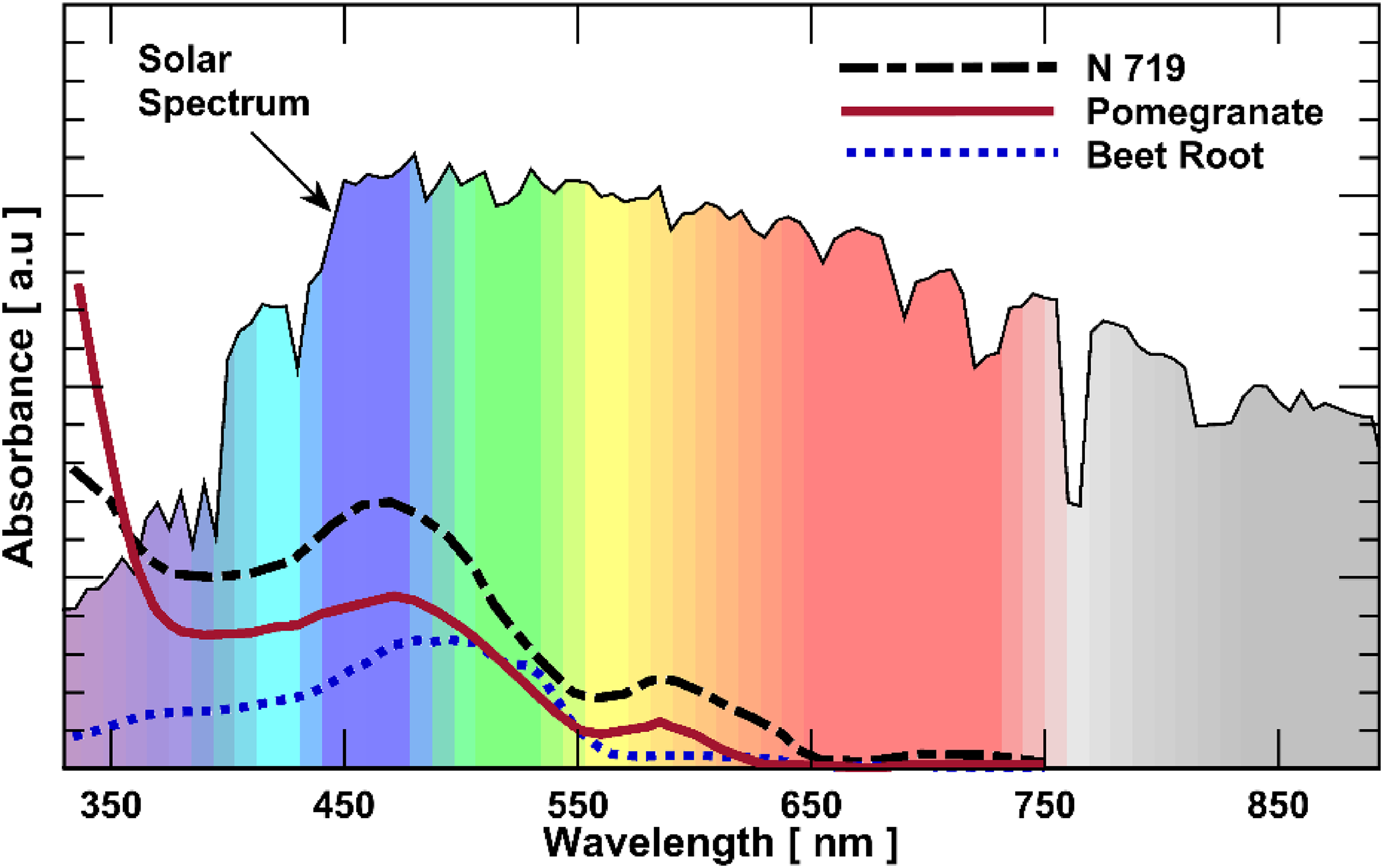
Absorption spectra of natural dyes in comparison to general solar irradiance spectrum.
The generated electrons diffuse into inner film covering a distance d and producing a current. The boundary conditions at illuminating substrate or electrode becomes n(0) = n0 and (dn/dx)x=d = 0. Under illumination condition, density of electrons in conduction band increases to ‘n’ as another boundary condition.The diffusion equation is applied to mobile charge carriers assuming steady-state operation is given by equation (10);

By applying boundary conditions, the analytical solution for photocurrent drawn at TCO and TiO2 interface under short circuit condition (ISC) and current for single diode model are extracted from the differential equation of electron diffusion model,27–29 as given by equation (11) and (12);



In this study, the DSSCs are modeled as a one-dimensional, homogeneous medium consisting of titanium dye oxide TiO2, dyes, and redox electrolyte. Their equivalent circuit is considered single diode model as shown in Figure 1.
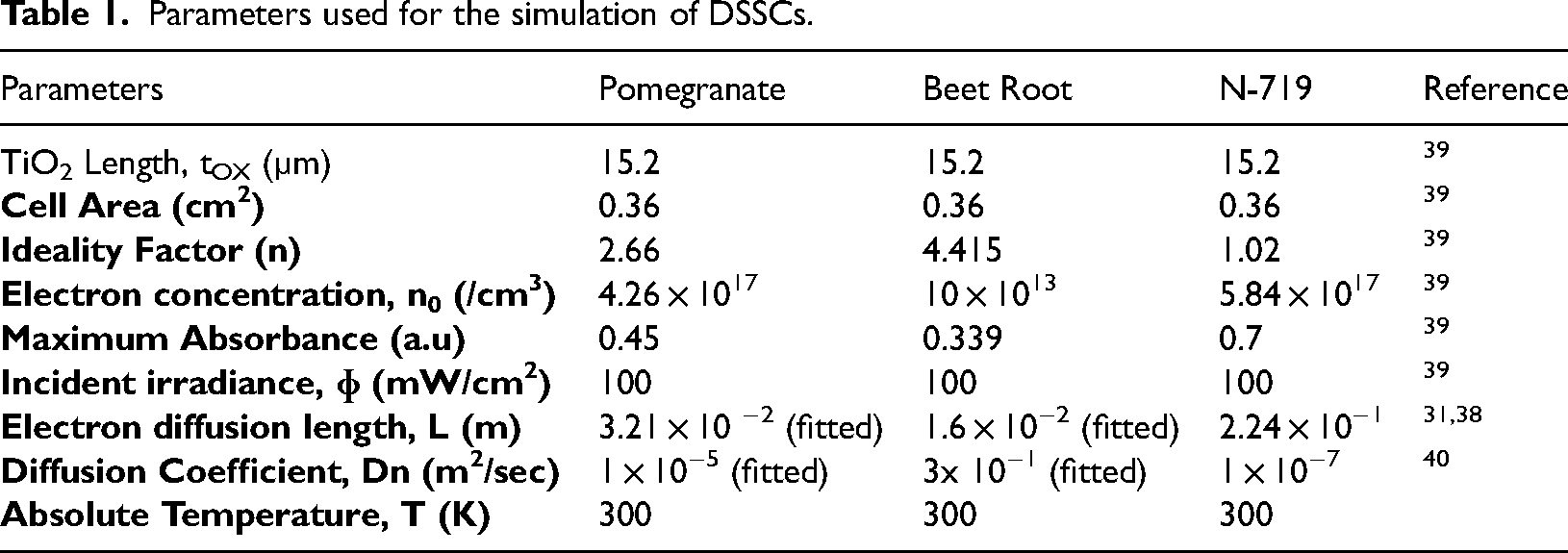
A MATLAB program has been written to simulate the J-V characteristics of DSSCs. The basic methodology and simulation process for the estimation of current densities is illustrated in the flow chart shown in Figure 3. In the start constant parameters have been defined as listed in Table 1
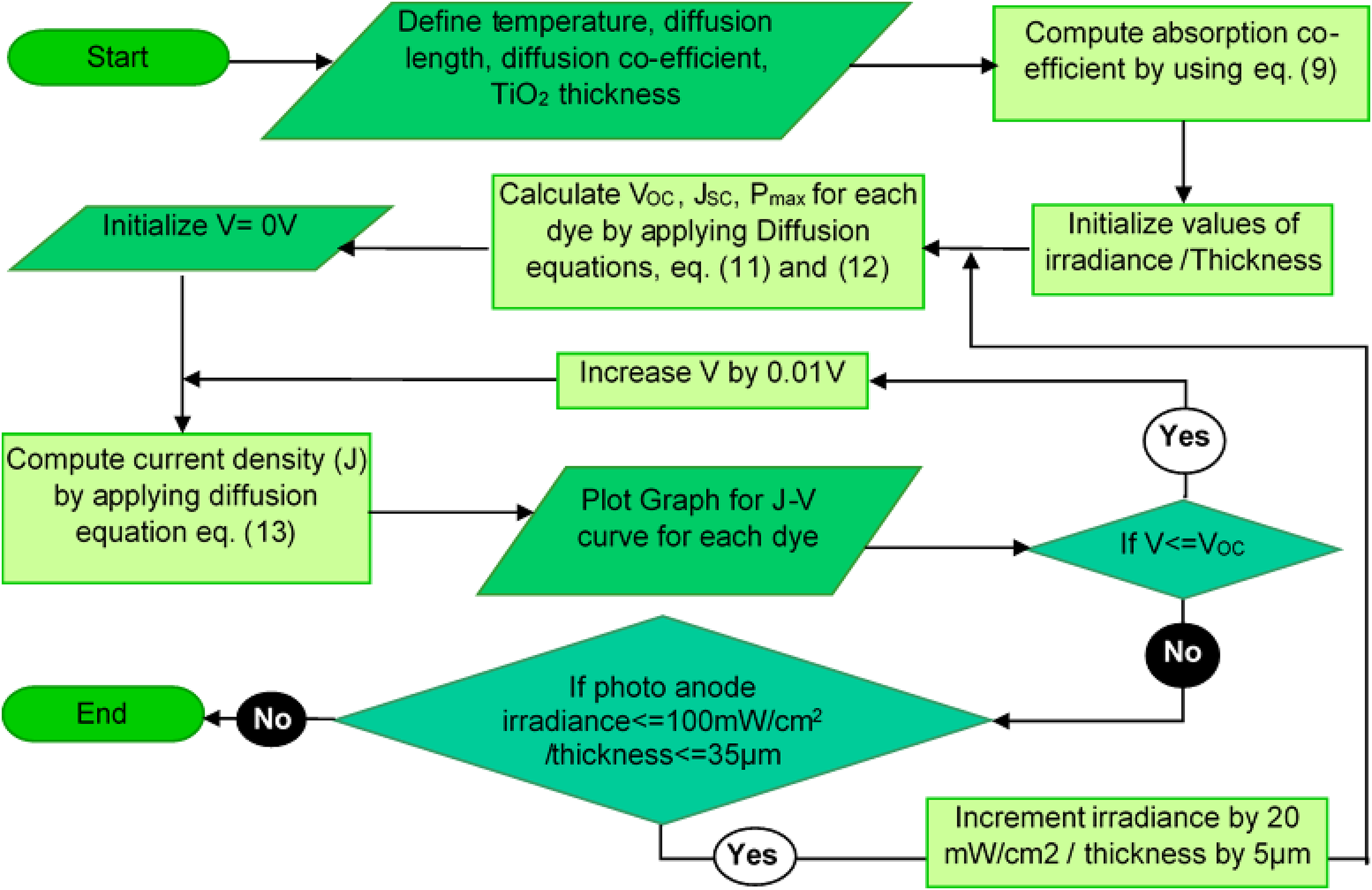
Flow chart showing the basic simulation process.
Parameters used for the simulation of DSSCs.
Voltage, irradiance and TiO2 thickness are initialized and open circuit voltage and short circuit currents are calculated by using eq. 13. Current densities are computed for a voltage step size of 0.01V.
Results and discussion
Current –voltage characteristics
The electrical behavior of DSSCs has been simulated by using equation (11), (12) and (13) and the performance parameters such as open circuit voltage(VOC), short circuit current(ISC) and maximum power (PMAX) are obtained. The operating conditions, material properties, geometrical and fitting parameters obtained from literature and experimental data are employed for these simulations. These parameters are listed in Table-1. The unknown parameters i.e., diffusion length and diffusion coefficients are fitted for natural dyes solar cells. For an optimized performance the diffusion length should be greater than or at least equal to the oxide thickness. Secondly the diffusion coefficient should be in the range of 10−2 to 10−5 cm2/sec.34 In our simulations best fit with the experimental results was obtained at quite low values of diffusion length (Ln) and diffusion coefficient (Dn). This might be attributed to the fact due that interfacial voltage loss at counter electrode/electrolyte and TiO2/TCO interfaces is not included in the electrical model. Under irradiance the electrons undergo recombination at these interfaces and current –voltage characteristics are adversely effected. Secondly, Schottky barrier height at the TiO2/TCO interface and contact resistances, which limit the performance of DSSCs, are also not incorporated in this model. One possible reason might be low natural dye content in DSSCs. The simulation and experimental results are shown in Figure 4. It can be seen that at low voltages the DSSC behaves almost like a constant current source having values of current close to short-circuit current JSC. With increasing voltages, the current decreases exponentially and reaches a value of zero at open-circuit voltage (VOC). Small short circuit currents with high open circuit voltages are obtained for all the cells which is often observed in practice for DSSCs. 30
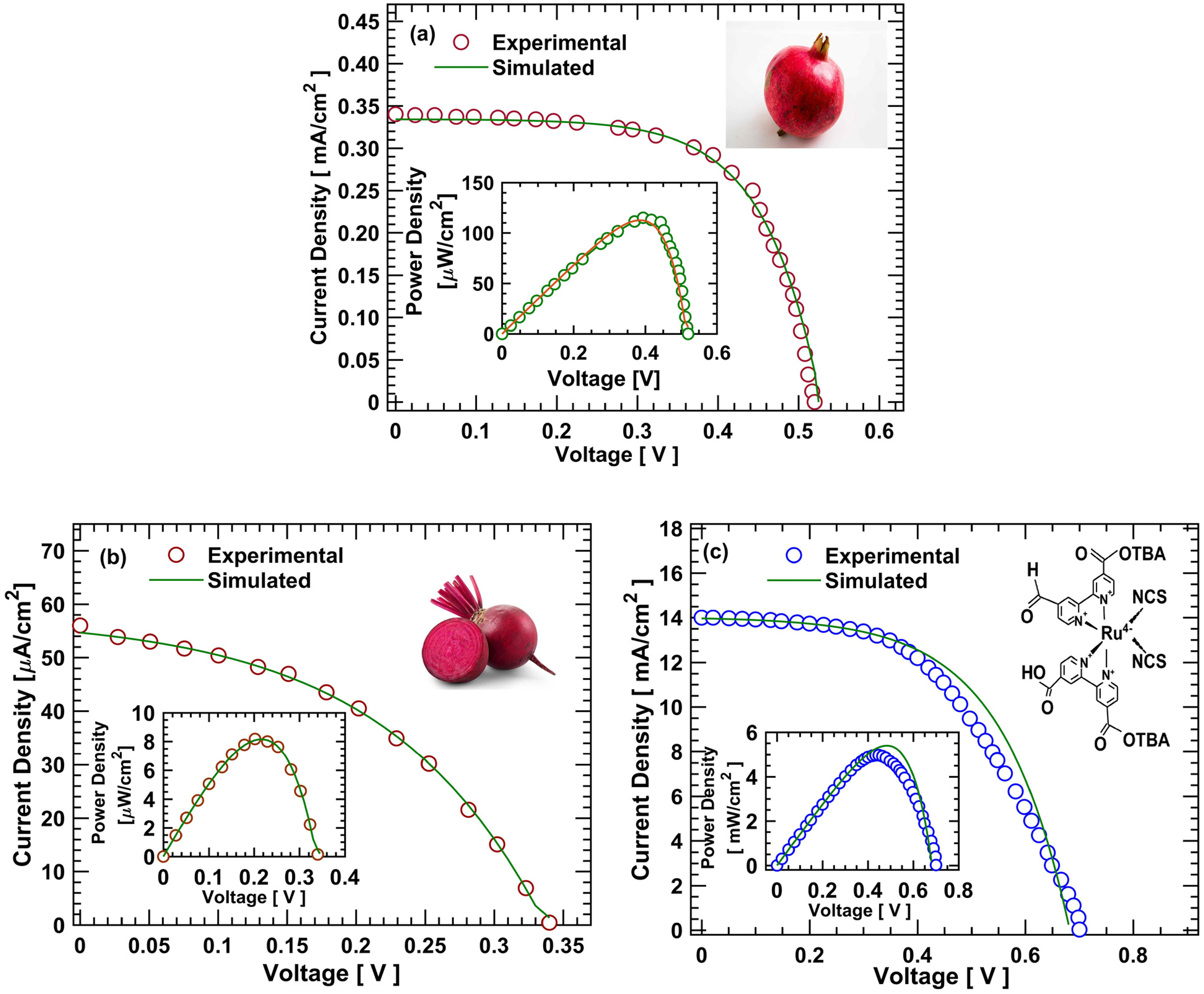
Simulated and experimental current -voltage (J-V) characteristics of dye sensitized solar cells made from (a) pomegranate (b) beet root (c) N 719 dyes, insets are power vs voltage (P-V) characteristics.
The simulated current densities agree reasonably well with the experimental measurements for pomegranate and beet root extract dyes DDSCs. For N 719 dye DSSC the current is slightly underestimated at some points. This might be due to the reasons that the resistive losses are not considered and the photon-to-electron conversion efficiency is assumed to be 100% in this model. Moreover, the optical loss due to the absorption by triiodide is also not considered here.
It is observed that DSSC of N-719 demonstrated the highest VOC and JSC than natural dyes cells. This is attributed to the absorbance coefficient of N-719 which is higher than the absorbance coefficient of the natural dyes as shown in Figure 1. It can be seen in equations (11), (12) and (13) that the magnitude of the voltage and electric current is proportional to the absorbance coefficient of the dye. The absorbance coefficient of natural dyes may be improved by mixing different natural dyes into one dye.31,32 A higher electron concentration in N 719 can also be a reason of high current and thus a higher voltage. The minor discrepancies at the maximum power point may be attributed to the internal resistance of the electrolyte, which has not been considered in this study. 20 Another main reason for this discrepancy between simulation and experimental results is charge recombination in the device. 11
It can be seen in Figure 4 that the simulations performed by diffusion model marginally over predicts the current in DSSCs. This may be attributed to the fact that the effects of series resistance RS and shunt resistance RSH is not considered in this model. 20
Effect of irradiance variation
The current-voltage characteristics were simulated by varying the illumination intensities from 10 – 100mW/cm2 at constant cell temperature. The effect of irradiance variations on J-V and P-V characteristics are shown in Figure 5, 6 and 7. Here we notice that the performance of DSSCs is greatly influenced by variation in irradiance. Both current and voltage increased with increasing irradiance and showed an increasing trend continuously with increase in the intensity of illumination. The output current increased linearly with irradiance, as shown in ISC vs Irradiance plots in Figure 5(c), Figure 6(c) and inset of Figure 7. This increase in photocurrent is contributed by the large number of photo excited electrons, generated due to enhanced dye excitation under increased irradiance. 16
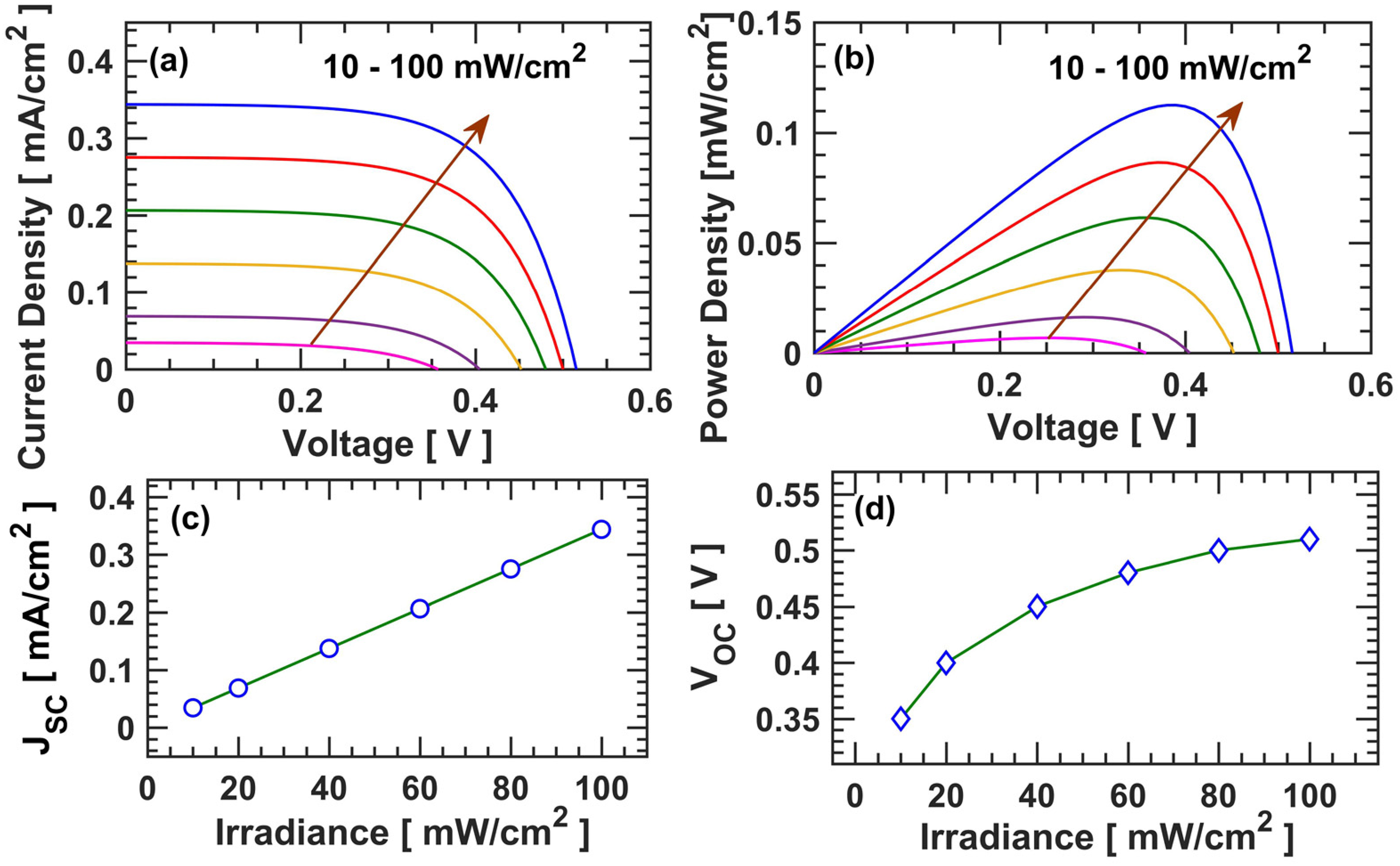
The effect of irradiance on pomegranate dye based DSSC (a) J-V characteristics (b) P-V characteristics (c) JSCVs. irradiance (d) VOC vs. irradiance.
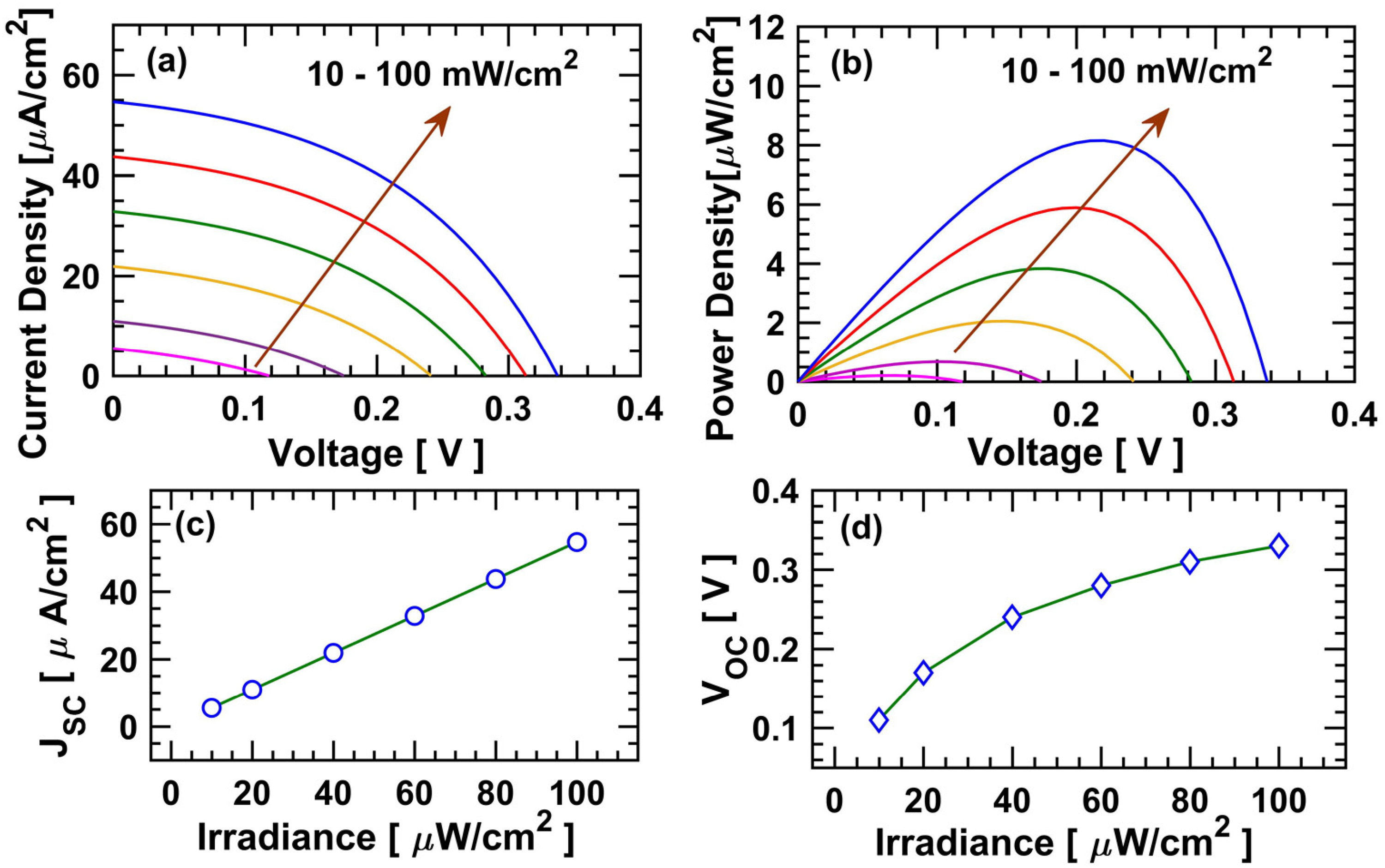
The effect of irradiance on beetroot dye based DSSC (a) J-V characteristics (b) P-V characteristics (c) JSCVs. irradiance (d) VOC vs. irradiance.
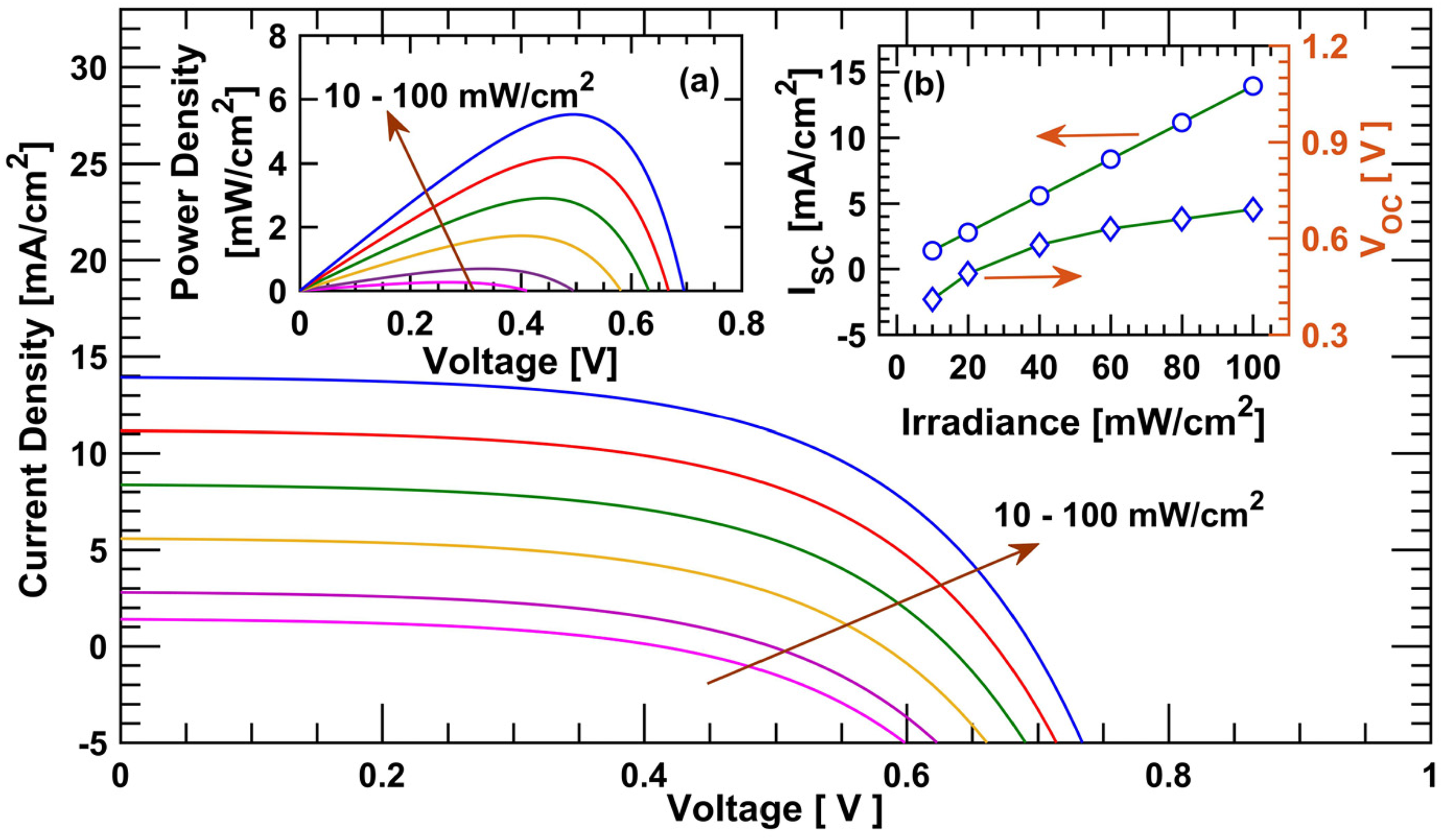
The effect of irradiance on the current voltage characteristics of N 719 dye based DSSC (a) P-V characteristics (b) variations in JSC and VOC vs. irradiance.
The open circuit voltage also increased with the irradiance and the relation of the voltage of the DSSC with the irradiance is logarithmic as shown in VOC vs Irradiance plots in Figure 5(d), Figure 6(d) and inset of Figure 7. The increase in electrode voltage with increased radiation is attributed to the emission of electrons from a higher electron density of 4.26 × 1017,1 × 1014 and5.84 × 1017 /cm3 for pomegranate, beetroot and N-719 DSSCs respectively. The simulations results are in agreement with the simulation and experimental studies reported earlier in the literature.33–35
Effect of photo anode thickness
The thickness of oxide layer on photo anode affects the performance and efficiency of dye-sensitized solar cells. Therefore. the current –voltage (JV) characteristics were simulated for pomegranate, beet root and N 719 dyes based DSSCs at different electrode thickness. The thickness of TiO2 has been varied from 5 to 35 µm and its effect on short circuit current and open circuit voltage has been studied. A significant decrease in JSC and nominal decrease in VOC was observed with decrease in oxide thickness, as shown in Figure 8.
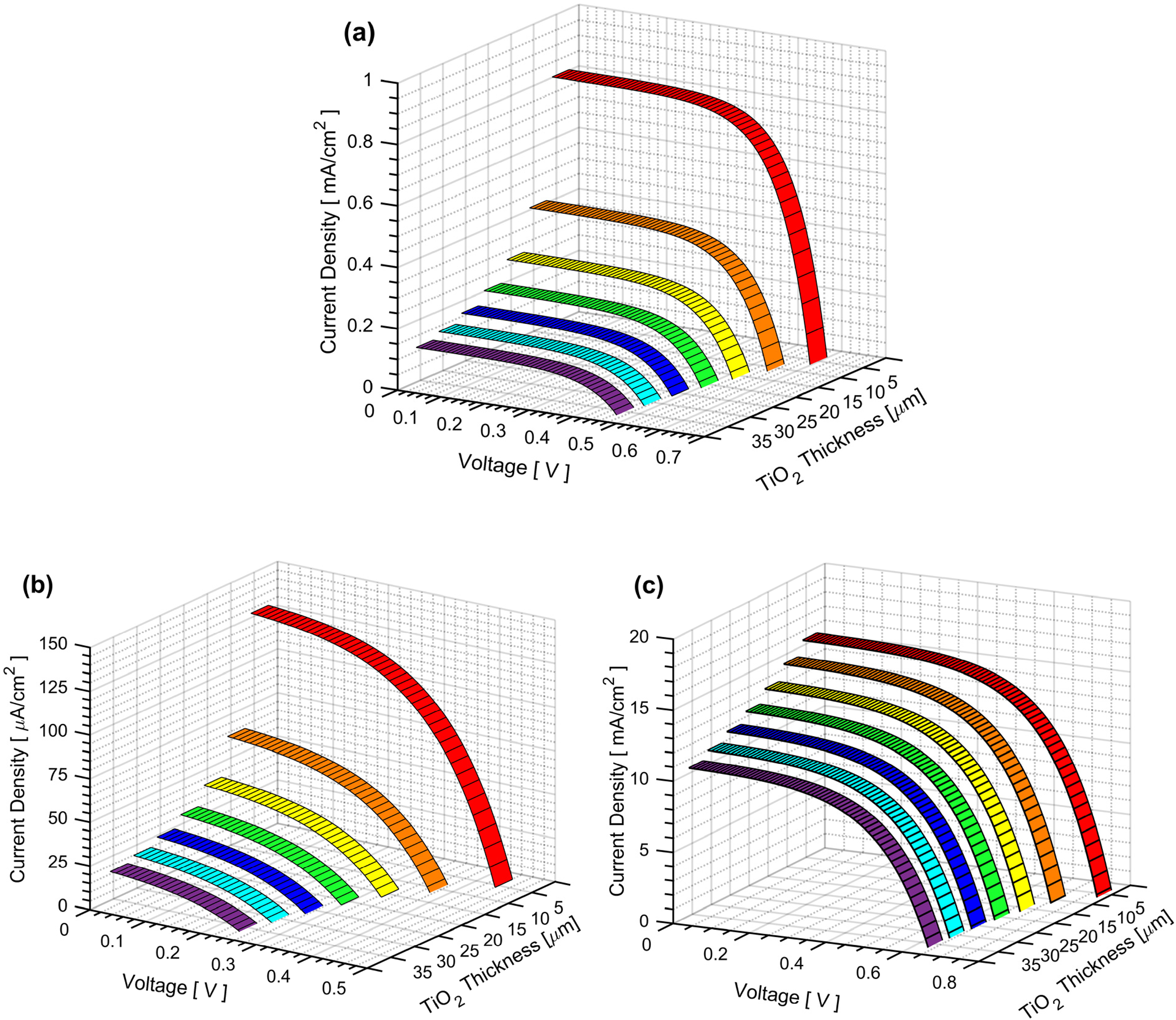
Variation of J–V characteristics with different electrode thickness for (a) pomegranate (b) beetroot dye DSSC and (c) N 719 dye DSSCs.
Generally, improvements in dye loading and photo generation are observed with an increase in oxide thickness on photo anode. Therefore, short circuit currents increase with increase in oxide thickness.36,37 However, when the oxide layer, with a certain porosity and pore size, exceeds the light penetration depth then current starts decreasing due to recombination. 38 Contrary to short circuit current, a decrease in open circuit voltage is often observed with increase in oxide thickness. This is attributed to low current density due to decreased light transmission through thick oxide layer. Due to increase in oxide thickness the internal series resistance of the current pathways also increases and intern reduces the photo voltage. 36 As a result, maximum power point and fill factor also decrease with increase in semiconductor oxide thickness of photo anode.
Our simulations yield a decrease in short-circuit current and increase in open circuit voltage with increasing TiO2 electrode thickness. This may be due to the reason that recombination of electrons and ions in the electrolyte which plays an important role in the operation of DSSC are not incorporated in the model. Furthermore, decrease in current with increasing electrode thickness indicate an increase in the cell internal resistance not incorporated in the studied model. The optimal electrode thickness is relatable to different dye molecules having different light absorption coefficients. Additionally, the optimal electrode thickness and its corresponding electrical characteristics are also sensitive to temperature and intensity.
The efficiencies of natural dyes based DSSCs are quite low and may vary based on geographical locations and extraction methods from local fruits and vegetables. In this study we have made an attempt to simulate pomegranate and beetroot extracts based DSSC and a list of parameters is presented. The simulation results are in good agreement with the experimental results. However, the performance of DSSCs may be simulated more effectively by obtaining an optimized model incorporating all the loss mechanisms and having a set of more reliable parameters.
Conclusion
The electrical characteristics of eco-friendly natural dye sensitized solar cells have been simulated. Solar cells were sensitized by the natural dyes obtained from pomegranate and beetroot extracts and N 719 metallic dye. Current-voltage characteristics have been simulated using diffusion equations for a single diode model. A set of parameters based on experimental data, literature and fitting parameters are employed for these simulations. Simulation results are compared with experimental results and they agree well with the experimental measurements. Effect of variations in electrode thickness and irradiance are also simulated which yield that performance of the DSSCs is improved by decreasing electrode thickness and increasing irradiance. The simulation work will provide a better understanding of the behavior and performance of the cells. However, the process of charge transport is complicated in DSSCs and many issues need to be investigated in order to control and improve their performance.
Footnotes
Declaration of conflicting interests
The author(s) declared no potential conflicts of interest with respect to the research, authorship, and/or publication of this article.
Funding
The author(s) received no financial support for the research, authorship, and/or publication of this article.
