




Abstract
The current study investigates three important characteristics of corporate culture, i.e., information sharing, technological openness, and corporate innovation to address the research gap about how they affect corporate culture to enhance green corporate social responsibility in the automobile sector of China. The data were tested and examined using PLS-SEM. The findings indicate that information sharing, technological openness, and corporate innovation contribute to enhancing green corporate social responsibility. More precisely, the corporate culture encourages information sharing and innovation among employees and connects them to increased corporation operations that may facilitate the acquisition of advanced manufacturing skills. The study demonstrated that corporate culture is critical to effective corporate integration and that information sharing and corporate innovation tend to be powerful determinants of green corporate social responsibility. Additionally, the study emphasized that these characteristics are the source of corporate social responsibility and adopting these characteristics will assist corporations in enhancing the green corporate social responsibility.
Keywords
Introduction
In the digitalization period, ventures, notably those in the automobile sector, confront both internal and external obstacles to ensure their continued survival in the globalized economy. 1 Companies face external issues such as rising expansion, technological transformation, and worldwide competitiveness hazards. They faced extra pressure to enter a new market. As a result, enterprises must concentrate their efforts on all facets of corporate value, including efficiency, durability, affordability, uniqueness, and customer orientation, to obtain corporate social responsibility (CSR) and remain in front of their competitors. 2 CSR is a state of affairs where businesses work considerably more intuitively or competent than their opponents. Furthermore, the marketplace is always developing, and these benefits are only available in the near run due to shorter lead times, technological innovation, and internationalization. Particularly in today's global environment, where products and services are increasingly entwined, the core capability underpinning predominance should distinguish the advantage over its rivals; otherwise, no real CSR emerge. It has developed into a critical end measure in the present study, begging the issue, “What are the influential characteristics that contribute to the expansion of CSR in a competitive environment?”
Competence in business cannot be evaluated without considering corporate culture (CRD), as all corporate developments have occurred due to an elevated environment. Hogan and Coote stressed the critical nature of CRD, stating that it has a sizable impact on staff sentiments and great leads to improved success. 3 Corporate culture is defined as “ethical visions, attitudes, and impressions of employees regarding the corporate setting”. 4
Earlier research identified corporate patterns based on a “creative, supportive, and efficient culture”, 5 while Denison and Mishra identified four civilizations based on “ability to adapt, purpose engagement, and coherence”. 6 The ability to adapt and purpose engagement are geared outwardly, whereas involvement and coherence are oriented inwardly. For the first time, Cameron and Quinn 7 constructed a competing value framework (CVF) model with four distinct culture patterns: formation theory, hierarch, business, and tribal society. 8 These cultural patterns are built on adaptability and durability, frequently argued to improve corporate performance. Thus, CRD has perceptive implications for fostering or impeding information exchange and innovative activities that impact corporate growth. 9
Information resources, openness and invention, notably, are thought to be crucial for achieving acrylic CSR and achieving a long-term sustained innovation dynamic corporate environment.10,11 Information sharing (INS) is critical for corporate firms to gain desirable results since it contribute to increasing fresh expertise through partnering and emergence, substantially boost, and educate people of the sharer's life choice process, all of which are necessary for the success of CSR. 12 Conversely, only possessing knowledge assets does not provide the opportunity to boost the overall system's overall efficiency action retention and transfer are expected to handle information effectively, overcoming several obstacles to the efficiency. In addition, information sharing-based engagement fosters mutual trust and respect, contributes to developing an insight culture, and fosters innovation. 13
The term “innovation” connotes “uniqueness,” “achievement,” and “revolution. 14 The relevance of corporate innovation (CIN) for both content and process development in companies. 15 Camisón and Villar–López claim, in particular, that CIN is a critical source of CSR and that proactive businesses are somewhat adaptable in embracing newer strategies and capacities to create new possibilities and capitalize on current ones. 16 Thus, corporations’ advancement through INS and CIN demonstrates a fruitful path to competition and corporate greatness. Before that, a study established that CRD is a precursor of INS and CIN, which both contribute to an operating value. 17 Additionally, CRD is highlighted as a critical aspect of learning and corporate innovation. 18 The findings demonstrate that CRD adds greatly to INS and CIN and that INS and CIN are appropriate ways to benefit CSR. 17
Additionally, CRD nature allows it to maximize stakeholder interests and handle corporate ecological problems such as workforce presidency and progress, especially in China's automobile enterprise. According to the latest report by Imran et al. 1 on Chinese perception, China has a “collectivism that values concord, coherence, and societal sense of belonging.” Notably, societal revolutionizing in nations such as China is not easy, and most individuals, due to a lack of insight, are unaware of the critical role of culture in corporate success. Moreover, less attention has been made to analyzing the pathways via a CRD-based CSR, 19 which does not adequately demonstrate which culturally particular levels impair corporate social responsibility. Particularly, the necessity of civilization as a necessary mechanism for managing information transfer and innovation is sometimes understated. Additionally, the existing literature puts in place objective support for the interrelated process and persistence of information sharing, technological openness (TOP), and corporate innovation to gain a corporate social responsibility. Hence, progressing the research necessitates a more particular knowledge and interpretation of the connections between CRD, INS, TOP and CIN as a precursor to the concept of CSR, primarily in China automobile industry. To overcome this disparity, a detailed investigation was conducted.
This investigation pursued three objectives. This investigation begins by examining the moderating role of information sharing on corporate culture and connections of corporate social responsibility. Information resources considered significant financial assets eventually empower workers’ real-time visibility, endowing them with information and relevant capacities that boost CSR. Second, this research assessed the mediating function of corporate innovation in the affiliation among corporate culture and corporate social responsibility. According to Hogan and Coote, CRD and TOP is critical for fostering creativity and corporate outcomes. 3 As a result, this study asserted that CRD, INS, TOP and CIN are valuable corporate components in light of the resource-based view theory.20,21 According to Barney, a firm's “all information resources, TOP competencies, corporate practices, corporate qualities” helps the fir help “grasp the concept and execute strategies that increase its effectiveness and efficiency”.21,22 Lastly, this study explicitly examines how corporate culture sustains corporate social responsibility by incorporating information sharing, TOP, and innovation. This novel proposed model contributes to the body of research and gives thoughts to industrial executives on how to fully appreciate local trends basis information sharing, openness and creativity to be more competitive.
Literature review
Corporate culture
Corporate culture is viewed as a corporation's asset 19 and a fundamental capability responsible for fostering conformity between a corporation and its people's values, which is connected with “corporations effectiveness.” 23 Cameron and Quinn 7 characterize CRD as “the shared values, ideas, and presumptions that members of a corporate share.” The beliefs, values, practices, and attitudes that form a corporate people's behavior are corporate culture. Similarly, each corporation runs uniquely due to culture, tech, and people resources. This defining characteristic sets it apart from other companies. According to Ahmed and Shafiq, 24 “the only truly important thing that leaders do is develop and govern culture.” CRD is a critical component of good company performance the reason for this is because it sets a set of policies and guidelines that may steer and create an atmosphere conducive to global endurance. CRD enables new training to expedite operations. It may result in people appreciating the corporation's underlying value and developing a mutual impact on corporations’ aspirations, increasing their involvement. Cameron and Quinn categorized corporate cultures into four classifications: formation theory, clan, authority, and capitalism. 19
Formation theory fosters a dynamic and innovative workplace. It promotes resilience, versatility, and inventiveness in an environment where innovation and vulnerability are encouraged. The major objective of businesses is to acquire integrating more channels to the combination to provide a wider spectrum of products and strengthen their skills through fresh approaches. Clan culture fosters an environment that is welcoming, supportive, and pressure-free. It enables businesses to focus on expanding personnel and team cohesion to collaborate as a community. Flexibility is a priority for leaders, and ongoing advantages are accomplished by concentrating on professional growth. Teamwork, involvement, and harmony are all highly valued. An authoritative structure is characterized by work standards, systematic procedures, explicit regulations, and policies governing internal operations and strives to be good coordinators to maintain long-term consistency, efficacy, and competence. Capitalism culture promotes an efficient and effective environment, with an emphasis on exterior interactions with providers and buyers, all to obtain CSR. The emphasis placed by leaders on production and working hard to secure and integrate the group. Thus, business reputation and accomplishment now become primary considerations for quantifiable metrics.
Information sharing
Information sharing evolved due to the information management idea, which Malik and Kanwal 25 defined as “the open dialogue, data, expertise, and abilities throughout the corporation.” Using INS to enhance corporate capacities is critical in today's economy, as it fosters ingenuity and accelerates innovation for firms. 26 Significantly, information resources enabled new business opportunities and encouraged employees to share information to tackle crucial challenges by developing innovative initiatives to enhance the working process. 27 This demonstrates that it is critical not only to gain information but also to share it. As a key factor, INS enhances corporate ability to manage information resources and enables individuals to accomplish the corporation's objectives more efficiently. 28 According to Wang and Noe, 29 INS is a critical corporations resource for obtaining CSR. Thus, corporate upheavals and diversity policy require information-sharing activities to foster possibilities for staff to increase their self-efficacy, enhance their learning, and disseminate information to various authorities concerned. “Environment and infrastructure, managerial support, culture, and technology” are the four aspects that contribute to INS. 30 Additionally, INS is incorporating and integrating multi-stage procedures. It is conceivable via the assistance of technology and people, facilitating interaction in two distinct ways, such as “implicit knowledge” to other personnel through swapping and socializing and confiscating comparable unique and competence and wisdom of tremendous value that lead to corporation's success.
Technological openness
Personality traits influence how people behave in a range of situations and can assist businesses in better understanding how people utilize technology. Individuals’ assessments of technology's utility are determined by their eagerness to explore. 31 In the last several years, findings have widely focused on the effect of transparency on human-technology interactions. Because it indicates an individual's susceptibility to novel concepts and encounters, TOP has been associated with an inquisitive mind, ingenuity, and intellectual pursuits. 32 Individuals with a high TOP have the drive to learn and comprehend novel concepts and the ability to accept new technology. 33 Due to their various origins and life experiences, individuals vary in their openness to technology. 34 Similarly, Watjatrakul 35 discovered that those motivated to significantly raise one's competences desire to do so in an ever-changing world. 36 TOP has a major impact on the practical importance of new technologies. Workers that can try new things are more motivated, which benefits the corporation's ability to stay ahead of the competition.
Corporate innovation
The term “innovation” has been interpreted in several ways. The OECD estimates innovation is considered as “the addition of a new or greatly boosted commodity (service or good), or procedure, a new branding strategy, or a new corporate method in business practices, worksite organization, or ability to resolve conflicts.” 37 Innovation is a possible sign of inventiveness that leads to a corporation's growth and is critical to market success. Corporate innovation refers to the help of effective new strategies and corporate techniques for internal or external reform. 38 CIN directly correlates between corporate success, sales growth, and expansion. 39 According to a recent study, 40 high capabilities are fueled by invention. Administrative functions play a critical role in strengthening internal/external corporate systems through innovation. Numerous authors14–41 emphasize the importance of CIN in sustaining business growth and overall profitability. Additionally, CIN contributes to company performance excellence by fostering workspace knowledge ability, contentment, and flexibility, which are conducive to the corporation's progress. Because CIN has the potential to produce value, management should use persuasion to support creative practices that improve business ability to improve on a global scale. According to Chatzoglou and Chat zoudes, 42 inventions can offer products, processes, and technology advancements, which aid in implementing new and more effective marketing strategies for future studies on a company's productivity. Hence, innovation is vital for comprising a total and creating a corporate social responsibility. Only leading companies can deliver superior performance and maintain economic stability in the face of ecology.
Corporate social responsibility
Strategic planning cannot be successful without a corporate social responsibility, a policy directed at boosting the value proposition. 43 As per CA, “A business that excels its opponents in profitability,” means having a corporate social responsibility. To be competitive in today's market, a corporation must maintain its corporate social responsibility over the competition. 44 In addition, producers must constantly evaluate and control the integrity of their product lines to maintain a CSR, given that opportunities exist in all areas. Novelty and creativity is very necessary in corporate atmosphere, as they contribute to improving a product. A supportive and learning work environment receptive to information sharing and new ideas requires leadership aid. CSR may be the outcome of CRD, or it may be the result of modern corporations’ increased access to and use of information and new ideas.45–47 Another theory holds that the junction of a corporation's structure, CRD, INS, TOP, CIN, and strategy is critical to achieving business excellence.16,17 Consequently, to maintain a corporate social responsibility and to, effectively take advantage of business opportunities, and capture the primary market share required to sustain in the corporate world. 48 Corporations should focus on developing the capability and capacity required to accomplish distinction in advancement, risk, and return and a preference toward challenging the status quo.
Modeling framework and hypothesis development
Modeling framework: Resource-Based Theory (RBT)
The “Resource-Based Theory” (RBT), also known as the “corporation's resource-based vision,” outlines how a corporation owns, deploys, and exercises its resources.21–49 These qualities and resources, which generate extraordinary profits, are frequently associated with CSR. According to Camisón and Villar–López, 16 RBT is “a competence that relates to the deployment and reconfiguration of resources to increase productivity and accomplish strategic objectives.” CSR will grow and achieve business excellence due to these resources and core skills with distinct qualities. The uniqueness of a corporation's strategic competence is determined by its rarity, value, and unique nature, which enables a corporation to repurpose and precisely allocate vital resources to encourage knowledge and creativity. Information research has just been tied with RBT and its elaboration of the “Information sharing Perspective.” 50 Information sharing resources have traditionally been the backbone of a business, generating, integrating, and sharing knowledge to provide greater values. Consequently, RBT tied intangible corporate assets (such as training and expertise) to deliver a greater profit than by mobilizing resources. The ability to create values is not contingent on the availability of economical and tangible holdings to establish the value of wisdom capabilities. For instance, CRD, like a core part, is critical to the long-term viability of CSR. 21 More precisely, when businesses understand their cultural effectiveness, they can evaluate the benefits of culture in effectively managing information as a competitive move and expanding business excellence. Notably, RBT, in conjunction with CIN, is critical for corporations since the essence of CRD in terms of innovation creates a management structure that strengthens the corporate capability to innovate as an absorptive capacity. It defines innovation as “a corporation's capacity to value new information and knowledge, assimilate it, and apply it, and this capacity is crucial in creating a creative outcome.” 51 The RBT may completely explicate comprehension of CRD, INS, TOP, and CIN; when properly aligned with a firm's strategic assets and core competencies, it can sustain a corporation's CSR. Because this theory asserts that if CRD is successfully implemented at various levels of the business, it results in distinctive competencies that enable good productivity through research and technology.16–19 The theoretical methodology, which RBT backs, aids in the establishment of unified manifestations of sharing information and innovation via corporate culture, hence reinforcing CSR. As per justified theory arguments, Figure 1 depicts the study's framework.
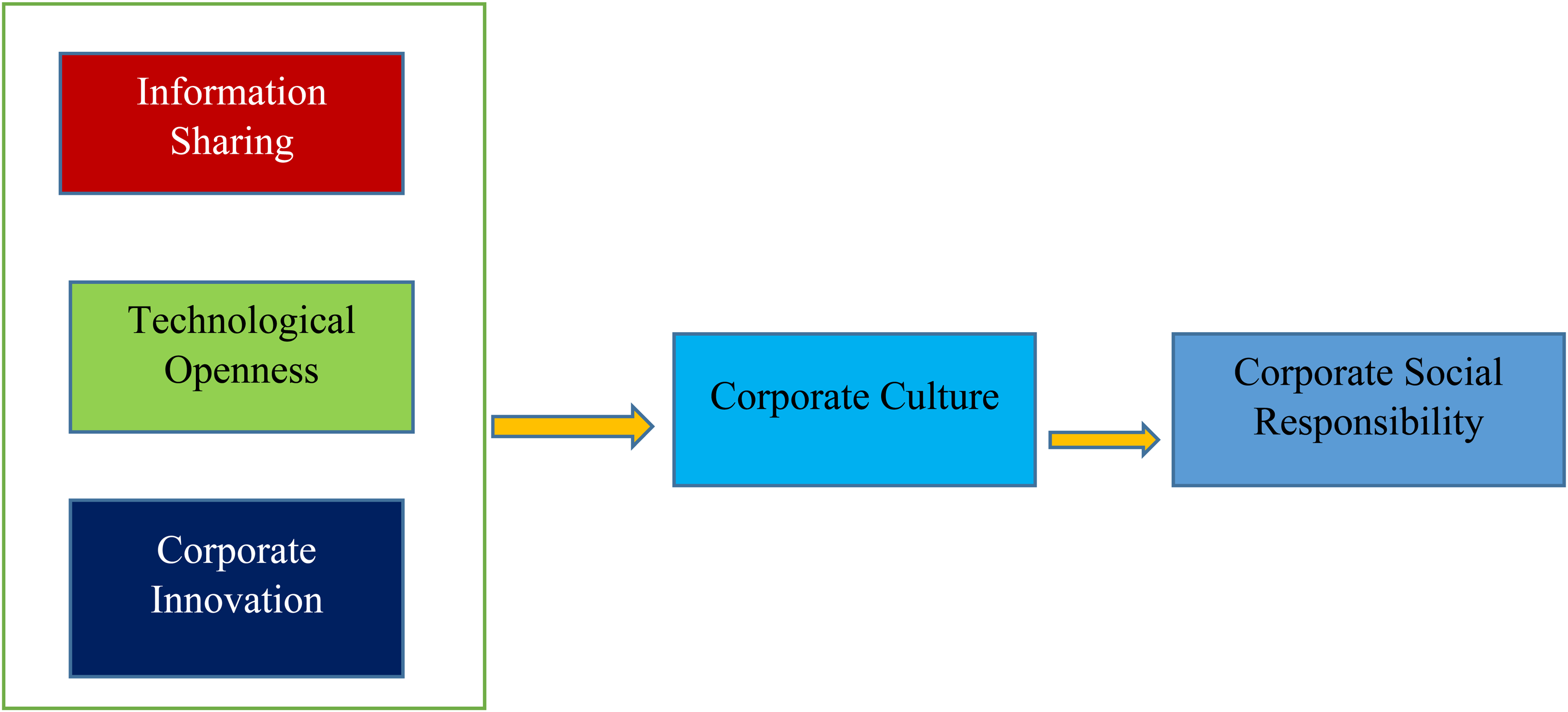
Conceptual modeling study's framework.
Hypotheses development
Corporate culture, corporate social responsibility, and information sharing
As per the corporate framework, CRD provides a consistent learning environment where individuals can acquire, develop, and exchange knowledge as they carry out their functional duties. Information management describes corporate as “associations that constantly gather and utilize information.” 52 As a business owner, you need to know what you can and can't do to offer value to your company. Consequently, much consideration has been paid to the most successful ways of generating and improving corporate knowledge as a valuable resource. Corporate culture is crucial when it comes to increasing productivity and problem-solving skills. 53 CRD and employee motivation can influence employees’ attitudes about information sharing can be maintained at work, which boosts productivity. 54 An educated workforce is essential to a company's success. 55 CRD and INS are associated in numerous studies.17–56 To be specific, CSR is beginning to view information as a different asset, 57 and sharing information is fundamental to knowledge creation and transition into fruitful achievements. 58 According to a study of 100 high-performing institutions, a strong corporate culture is essential for boosting corporate performance (CP) and steering an institution toward CSR. To be competitive in today's global economy, a corporation must have strong capabilities in CRD. 59 As per Schwartz and Davis, “Too good worse or, a corporative culture has a stronger impact on an institution's ability to execute strategic goals, particularly when the corporation alters its policy vision.” 60 The use of CRD can improve the productivity and efficiency of industrial businesses. On the other hand, a trained staff is an effective tool for integrating corporate values into product/service practices that result in CSR. 61 Consider CRD strategic function in boosting INS, which can increase the company's performance and promote CSR, as it is important to consider. A recent study emphasized the importance of K-12 education in establishing a creative culture and maintaining CSR. 62 Research has shown that CRD is a substantial precursor to INS 17 and that INS success positively predicts CSR. 63 The following is a hypothesis that can be formed from this investigation based on previous findings:
Corporate culture, corporate social responsibility, and corporate innovation
Culture serves as a platform for people and technology, 61 promoting a better awareness of the larger system and the development of new ideas and procedures. 64 Without a doubt, CRD improves employee attitudes toward work and equips them to work collaboratively across functional departments, effectively communicate, have proven practices and competence, make smart decisions, and optimize client relationships, all of which are vital for business production efficiency and CSR. 24 Additionally, CRD is crucial for fostering innovative thinking by presenting a systematic pathway for companies to manage the competencies that drive corporate performance. 65 Martins and Terblanche highlighted the importance of corporate innovation, 66 stating that innovation is critical to a business's success since it helps businesses to operate differently to stay one step ahead of their competition. However, in today's market, technology change at a breakneck pace. Thus, corporate innovation is critical from a strategic standpoint to strengthen overall corporation's systems. 67 While innovation is critical for product and service advancement, 68 a company's greatest difficulty is achieving CSR by “acts of innovation.” Although when product life cycles shrink, increased competitive pressures become a critical factor for industrial enterprises to improve their business efficiency through innovation. Thus, to constantly outperform the market, a corporation must have a CSR and innovation as a deciding element that augments positively in reaction to environmental changes and establishes CSR. Therefore, for comprising a total, automobile corporations must continually update their understanding of technological advancements and adjust their business models appropriately to maximize performance.69,70 As a result, by utilizing high-tech tools and advanced mechanisms, business operations can be accelerated, resulting in CSR; hence, many become allies to achieve desired results in a competitive marketplace. 71 Similarly, CEOs are constantly looking for novel ways to provide new products/services and better the world's gradually competitive environment. Prior research68–72 directly correlated between CRD and CIN. Similarly, numerous research confirms that CRD and CIN are critical strategic tools for achieving CSR.73,74 In light of the preceding discussion, this study presents the following hypothesis:
Corporate culture, corporate social responsibility, and technological openness
According to Martins and Terblanche, 66 a corporate culture defined by values, norms, and beliefs is a vital element of technological innovation. Corporate culture has grown in popularity to comprehend and observe human behavior. Culture is the symbolic component; it provides context for human thinking and activity inside the system. 75 Researcher shared fundamental assumptions that the group acquired while resolving its external adaption challenges. Technology has been linked to corporation structures, and performance, and growth rate is drivers of corporate strategy. 76 Likewise, technology and growth can be linked to corporate culture using a similar rationale. Technology plays a critical role in the success of businesses. Deal and Kennedy 77 observed that since corporations’ culture defines how things are done, one approach to conceiving the link is to associate Thompson's technological classification schemes with certain elements of a corporation's culture. Thompson's typology is applicable for this study since it incorporates a vital component for service-sector businesses. The corporation culture study considered the possibility of technology transforming corporation structures and processes. Despite the fact that this persistent interest in the relationship between technology and organizational culture, the variety of actual repercussions for businesses has remained unsatisfactorily described. One of the primary purposes of open innovation is to ensure a company's rapid reaction to changing markets and technologies. Christensen 78 emphasizes the relevance of the ability to sense these technologies when he warns of the advent of disruptive innovation driven by some low-function and low-cost technologies that could pose a challenge to leading enterprises. Another objective of open innovation is to amass knowledge for manufacturing innovation. For instance, Chen et al. 79 examined the relationship between various knowledge sources and product innovation, while Lee et al. 80 examined the effect of external product knowledge breadth or depth on product innovation. Tsai 81 also identified absorptive capacity as a moderator between collaborative networks and product innovation success. To reap the full benefits of open innovation, it will be critical for the company to have the necessary competencies. However, prior research on open innovation has mostly ignored the organization's ability to lead an innovation successfully. As a result, there is a lack of awareness of the competencies required and the process for achieving the desired results while striving to secure the company's corporate social responsibility through open innovation.
Corporate culture, corporate social responsibility, information sharing, technological openness, and corporate innovation
Corporate social responsibility is a state of affairs in which automobile enterprises function more productively or efficiently than their rivals. Numerous culture-based research indicated that CRD as a social force significantly aligns human capital with a corporation's roadmap, 82 resulting in a strong company culture that has a considerable impact on other levels. 83 Thus, one could argue that to maintain a strong culture; management actions must be connected to the necessary assumptions, beliefs, and values reflected in the corporation's practices and collective wisdom. As a result, corporations that place a higher premium on internal culture are more profitable than those with a lower premium on culture. Additionally, corporation's capacities can be developed through prospective information sharing and innovation, 84 hence increasing a corporation's competitiveness. As a result of this study, management is posited to be task-oriented and often apply new information and innovation to their immediate work. CSR can be mobilized by a business's knowledge assets and preference for new products and services. 67 It may enhance and develop basic managerial values to build new-improved company skills in a competitive environment.45–85 Financial and physical resources enable businesses to channel their unique intangible assets (e.g. innovation culture, competitive strategies, and management performance), mobilized knowledge, and innovativeness.56–86 Additionally, corporate culture support provides a competitive edge and enables the adaptation of procedural and scientific procedures to accomplish CSR and sustained firm growth dependent on information and innovation capabilities.38–87 Information sharing and innovative capacities are critical preconditions for CSR driven by CRD. Additionally, a study demonstrates that information is required for both innovation and competition. 47 When the effectiveness of CRD is adequately addressed to obtain CSR, the mechanism of INS and CIN can be accelerated.17–88 Additionally, CRD affects INS and CIN as an influencing factor.44–89 CRD enables businesses to explore new sources of knowledge and innovation to grow their CSR. 44 According to the (RBT), a firm's resources (e.g. finance, human capital, knowledge assets, and innovative skills) are the major sources of CSR.20,21 Additionally, corporate structure can be enhanced through innovation to build a new company model as a competitive strategy. Thus, managers should strive to foster INS, creativity, and innovation among staff to increase corporate efficiency, critical for developing CSR. As a result, this study hypothesizes that CRD, INS, TOP, and CIN are critical drivers of CSR acquisition and suggests the following hypothesis:
Research methodology
Target population
Taking into consideration the Chinese participants, Chinese cities can be classified into four categories based on their development stages: first-tier, second-tier, third-tier, and fourth-tier. Economically, socially, and culturally, first-tier cities are the most developed. Second-tier cities include the provincial capitals and are moderately developed. The third-tier cities are typically medium-sized cities within each province, whereas the fourth-tier cities are located at the county level. 90 In this context, we conducted an inclusive questionnaire survey in ten Chinese cities between February and April 2022, including Beijing, Shanghai, and Shenzhen (first-tier), Jinan, Chengdu, and Hefei (second-tier), Zhongshan, Xiangfan (third-tier), Chang chun, and Xinmin (fourth-tier). The reason behind selecting these cities is because they are fairly indicative of China's almost 700 cities. 90 Furthermore, cities in the western half of the country, such as those in Xinjiang, Tibet, Qinghai, Gansu, and Yunnan provinces, do not meet the sample selection criteria; thus, they were excluded from the survey. Another reason is that, being the world's leading hubs for vehicle technology innovation (KPMG, 2021), promoting automobile technology in these cities would have important policy consequences for the automobile sector. As a result of questionnaire survey, 554 responses were received.
Questionnaire development
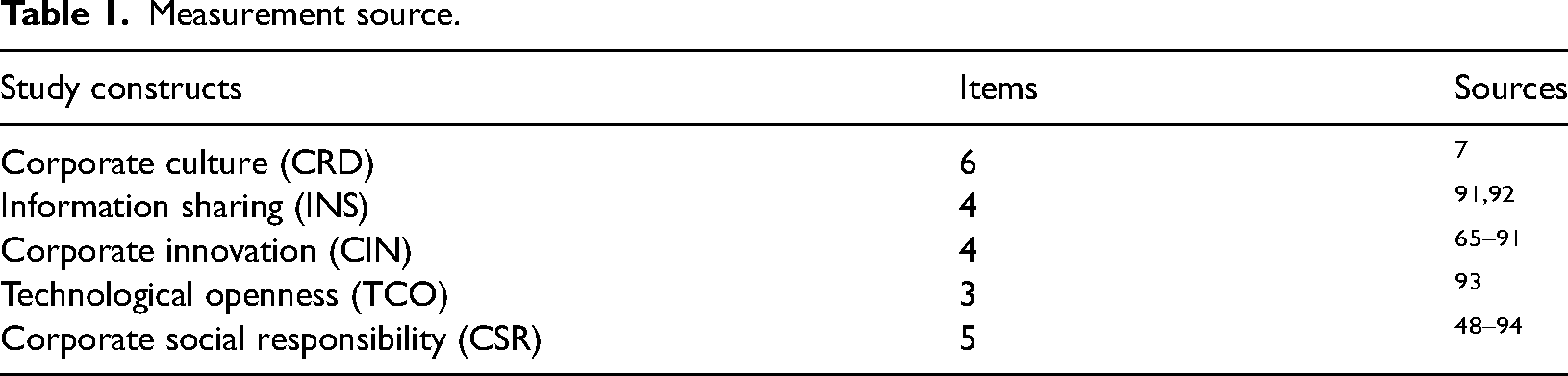
The questionnaire's items were largely derived from previous research that had been thoroughly reviewed. Table 1 details the data sources utilized to calculate each item and the questionnaire's development. The questionnaire was self-administered and consisted of two sections: one for profiling and another for the items used to assess each construct. Section A included six questions on gender, age, marital status, education, household income, and occupation. Section B included 23 questions, seven of which were about corporate culture. Four issues concerned information exchange and corporate innovation, while the remaining three concerned technology openness. Five inquiries regarding corporate social responsibility. On a seven-point Likert scale ranging from 1 (strongly disagree) to 7, items in Section B were scored (strongly agree).
Measurement source.
Results
Measurement model
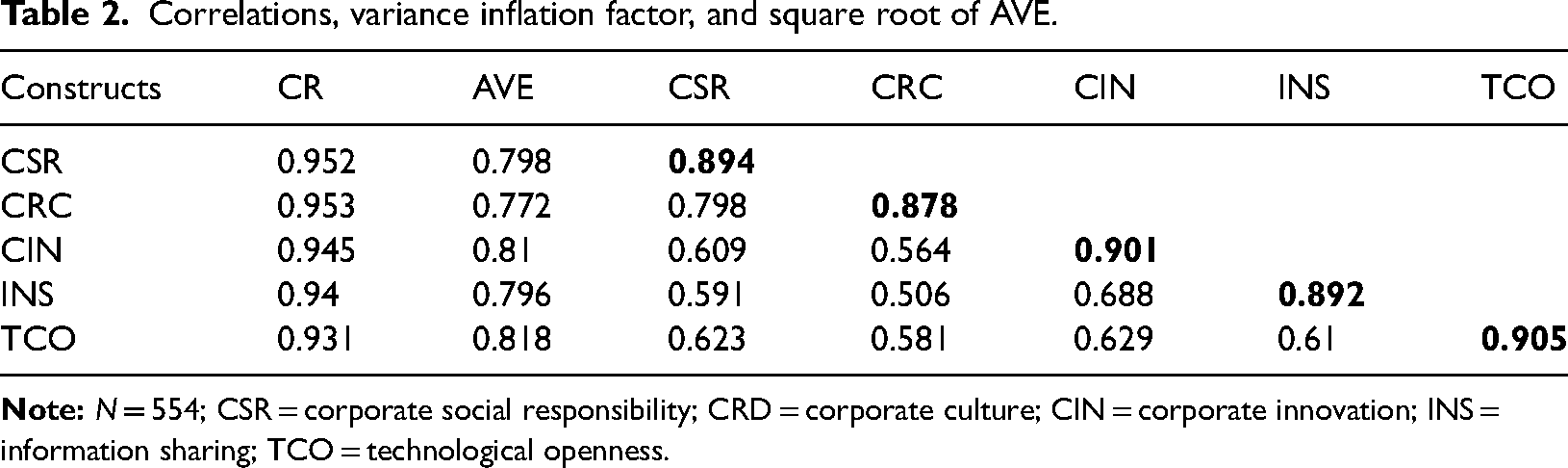
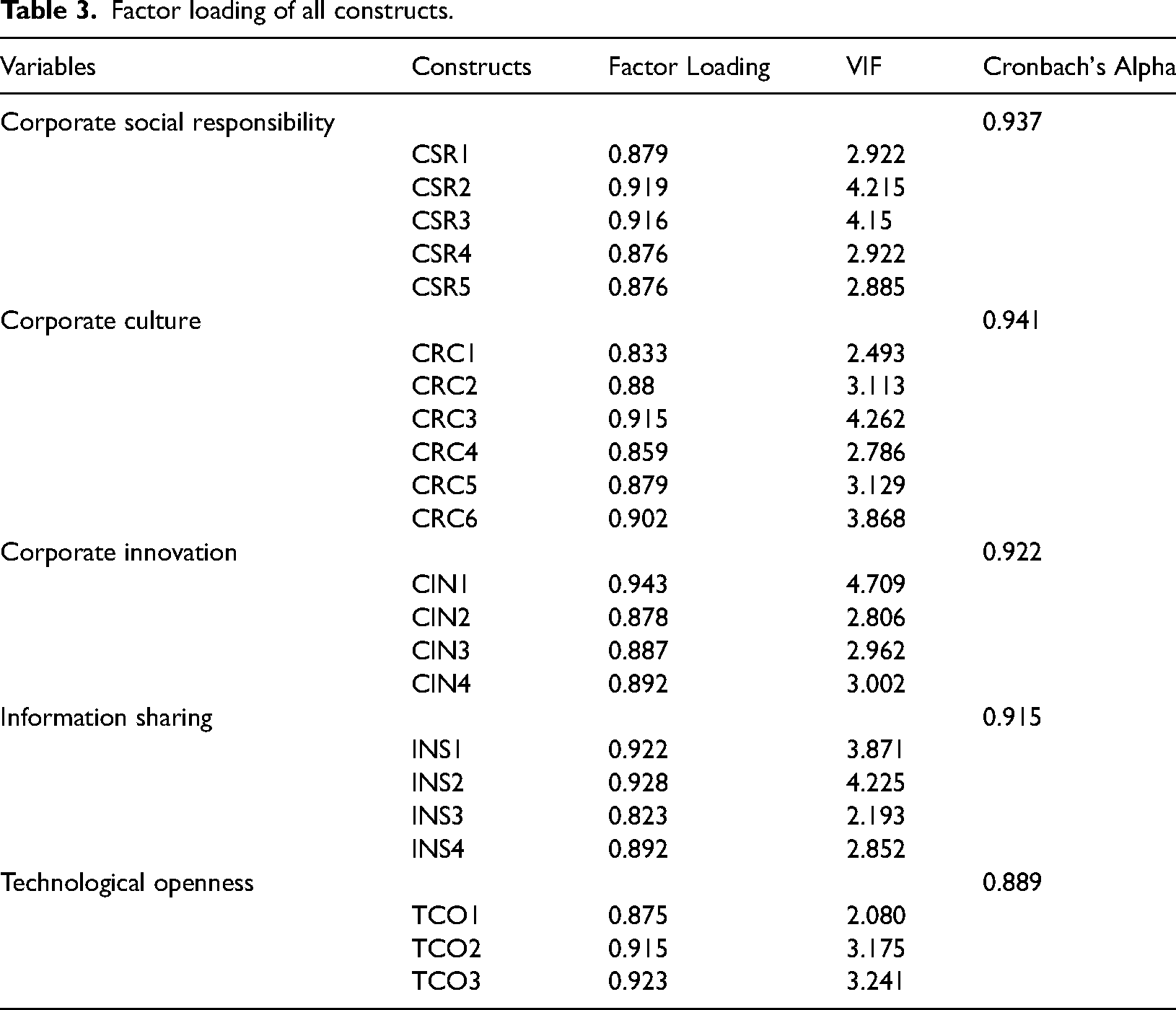
The current study used the structural equation modeling technique for data analysis by using SmartPLS. For example, this method allows the researchers to test the theoretical question listed in the model specification. We deployed a confirmatory factor analysis it included all of the multi-item measures in verifying the model's validity and reliability. It's evident that the CFA model is well-suited to the data, as seen by the strong chi-square (X2) value of 883.058 and the modest SRMR (0.045) and NFI (0.891) values. Thus according CFA outcomes, we may accept that each parameter leads to a constructed variable that is above the predicted value of 0.50 95 (See Table 3). Additionally, the Cronbach alpha values are acceptable since it is higher than the criterion of 0.70 value. High reliability and converging validity were found in all of the measures. AVE (average variance extracted) and composite reliability were also measured (CR). A criterion of 0.50 was met for both the average variance and composite reliability in this research, as established by Fornell and Larcker (1981) (See Table 2). It thus follows that each latent variable's average variance must outweigh the square correlation between each pair of its components in order to assert discriminant validity. 96
Correlations, variance inflation factor, and square root of AVE.
Factor loading of all constructs.
Common method variance
To evaluate the common method variance (CMV) firstly, we conducted Harman's one-factor test. 97 Harman's one-factor experiment allows all measurements to be loaded into exploratory factor analysis, assuming that a single factor is accountable for most covariance. By using SPSS 22, we performed a factor analysis of all indicators used in the model. The outcomes disclosed that the total explained variance of a common factor is 31.56%, indicating that common method bias in our research is not the main trouble. In addition, in order to assess the variance of the common approach, we used a technique that was proposed by Kock (2015) in SmartPLS 3. By this technique, the framework should be handled with the common method variance if the variance of VIF is far more than 3.3. That's the indication that the framework should be treated with common method variance. 98 The research has found that the factor level VIF value would be less than the recommended threshold of 3.3 when taking into account that the model is segregated from the variability associated with conventional methods.
The explanatory power of the model (R2)
In this study, the coefficient of determination among the constructs. Corporate culture accounts for 40.4% (R2 = 0.404) of the information sharing, corporate innovation, and technological openness. Although, all predictor variables account for 63.6% (R2 = 0.636) of the corporate social responsibility which shows an adequate explanatory power of the model.
The predictive power of the model (Q2)
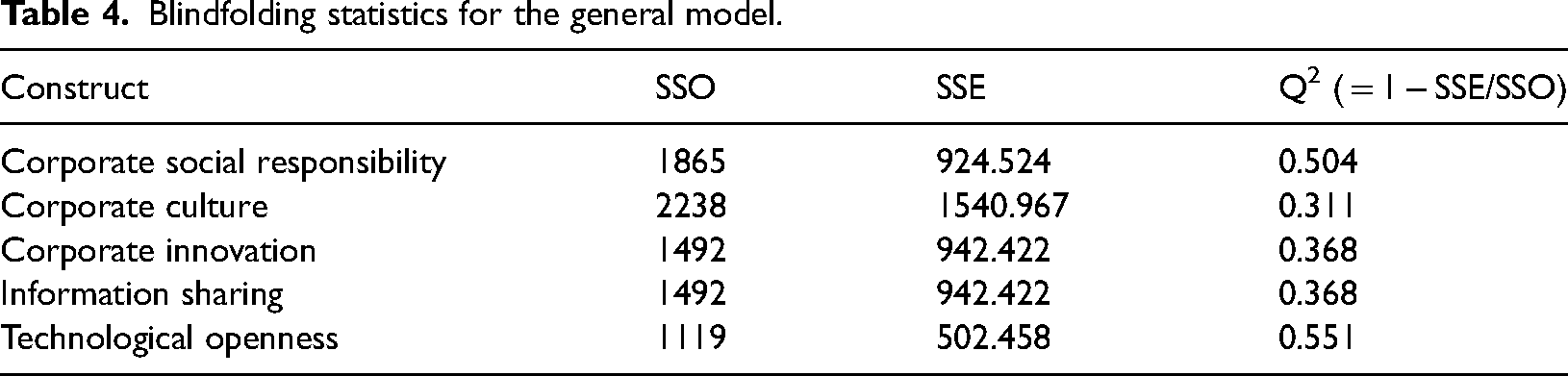
We conducted the Geisser (1974) and Stone (1974) that Smart PLS may be verified by using blind fold strategy to see if the our model is effective. It is proposed by Hair et al. (2016), a structural model possesses systematic examination if the Q2 score of all dependent constructs in the route model is surpassed zero (> 0). In this investigation, Table 4 reveals that the statistical significance as the Q2 scores of all beyond zero, which implies extrinsic conceptions have predictive relevance for the attribute under discussion.
Blindfolding statistics for the general model.
Hypotheses results
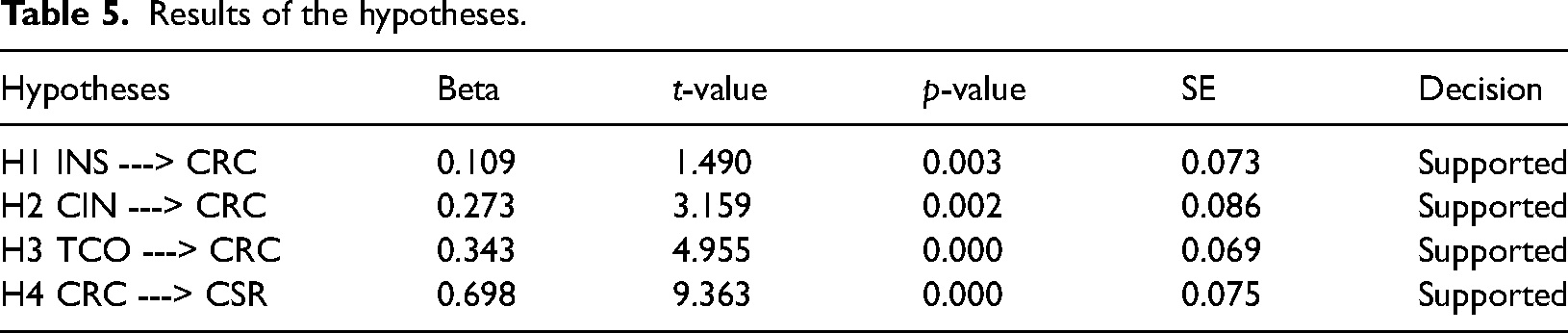
We tested hypotheses by using SmartPLS bootstrapping procedure with 5000 sub-samples (Hair et al., 2011). The results of the analysis using partial least square (PLS) reveal that corporate information sharing has positively and significantly related to corporate culture (β = 0.109, t = 1.490, p = 0.003). Hence, H1 supported the study. For hypothesis 2, corporate innovation is positively associated with corporate culture (β = 0.273, t = 3.159, p = 0.002). Furthermore, technological openness has also a significant and positive impact on corporate culture (β = 0.343, t = 4.955, p = 0.000). Hence, H2 & H3 also supported the study. In last, we found significant relationship between corporate culture and corporate social responsibility (β = 0.698, t = 9.363, p = 0.000). Hence, H4 supported the study (See Table 5). The schematic presentation of hypotheses testing is represented in Figure 2.
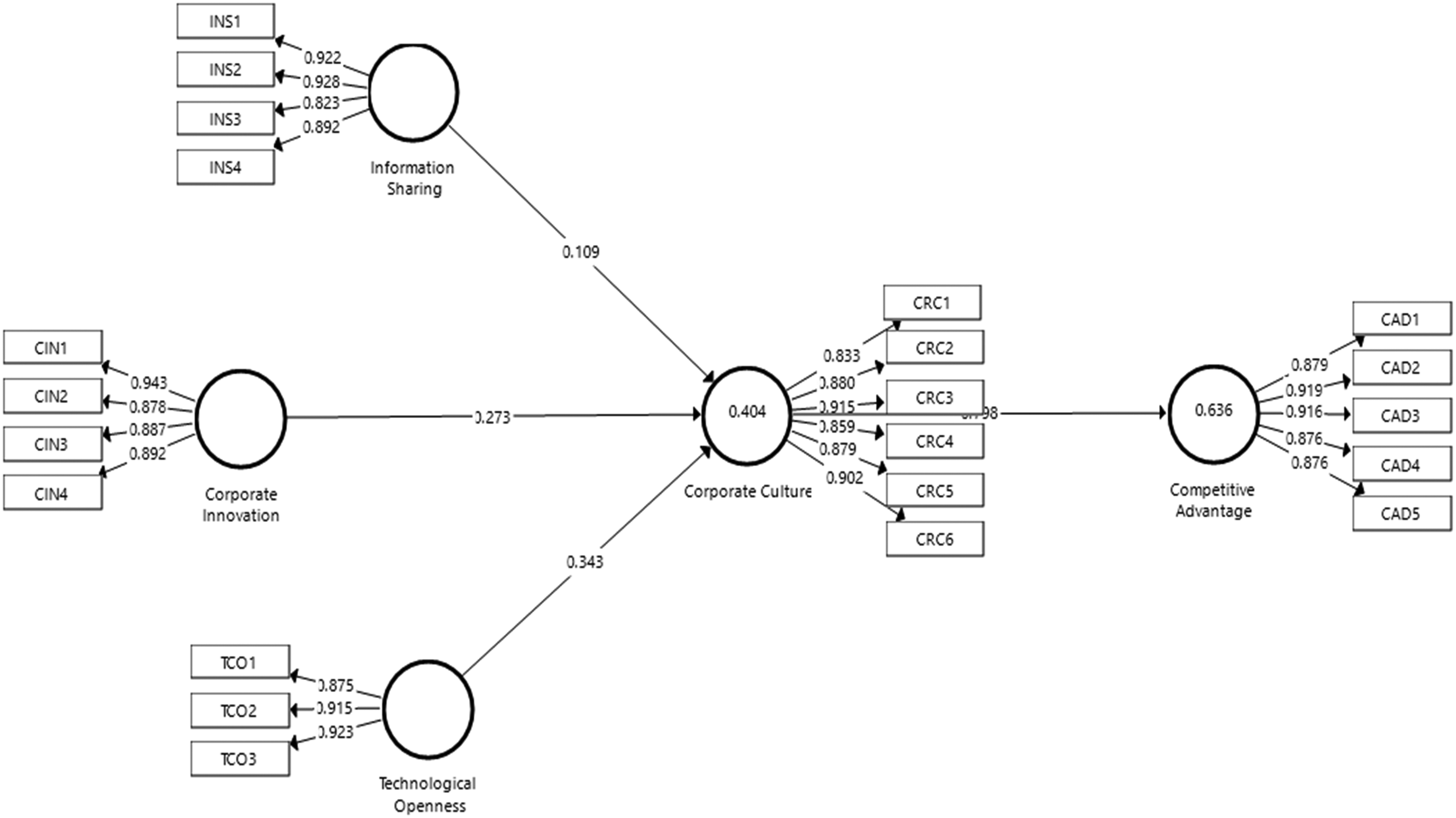
Hypotheses results.
Results of the hypotheses.
Conclusions and policy implications
The present investigation clarifies and thoroughly discusses acquiring a competitive edge in the automobile market, demonstrating that CRD, INS, TOP, and CIN as vital resources58–88 structure a corporation's key stakeholders for the progress of production and activities. 68 Our research model is verified using data from 554 industrial managers. Information, technological openness, and innovativeness could thrive in a nurturing environment, benefiting the corporate sector by enabling it to compete globally through the launch of new products and practices; additionally, it has deep impacts on the drastic reformation of entire industries. Earlier published research has established that information sharing, technical openness, and innovativeness boost corporate capability to contribute to CSR.72,73
Study provide a diagnostic tool for manufacturing companies to help them improve their managerial competencies, manufacturing operations, and financial reporting. Thus, due to its distinctive features, culture influences corporations to question preconceived notions about their product/service range, thereby ensuring their competitiveness. The research adds to theory verification by evaluating CRD, INS, TOP, and CIN as critical drivers of CSR acquisition. This is consistent with the “resource-based vision” idea of corporations,21,22 as information sharing and innovation are critical strategic resources for a corporation's creation of new company values and capabilities. Hence, for protracted today's highly competitive context, managers must emphasize boosting the capacities of their corporations through “information, technical openness, and innovation” to preserve CSR.
The author 99 argues that the country's real estate sector counteracts efforts to reduce carbon dioxide emissions. Increasing the construction sector by one percent will boost Turkey's carbon output by 0.010% in the short term and 0.009% in the long term. Based on findings, Turkey should create innovative methods for green real estate markets in order to boost environmental quality through the promotion of green investment initiatives. Furthermore, the findings of Pata and Samour 100 also have an emphasis on environmental sustainability and investigate the influence of nuclear energy on carbon emissions. The results show that it minimizes emissions while increasing factor load capacity. Another study of Samour et al. 101 adds to the body of knowledge examines how the growth of the banking sector in South Africa has affected environmental quality. The findings show that a rise in bank lending to markets will lead to a rise in project and investment spending and the tightening of risk management systems, both of which may have an impact on economic growth and energy consumption, ultimately leading to an increase in emissions. This finding demonstrates that South African policymakers should use the growing banking industry to promote clean energy and green manufacturing.
In a similar vein, a study conducted in Turkey 102 recommended that the government create a structure that provides monetary incentives, such as reduced taxation on green energy projects. Furthermore, a carbon tax, one of the most effective ways to reduce environmental pollution, should be implemented in Turkey's policy markets. Authors103,104 also highlight the importance and emphasize that government should implement environmentally friendly technologies that serve to sustain the environment and develop culture. In recent years, concern about the long-term health of the planet's ecology has been a prominent topic of conversation,105–107 to reduce carbon emissions 108–110 and achieve environmental sustainability.111,112
It is widely believed, according to the notion of value-based management, that the fundamental purpose of executives should be to maximize the firm's value for its shareholders. Environmental stewardship is a vital component of CSR. Regarding business greening, this should be the driving force behind environmental sustainability. Ecological sustainability could become the primary social responsibility challenge for corporations. Managers must therefore be able to identify how firms may become more socially responsible, environmentally sustainable, and commercially competitive. Executives must become more competent at combining the market and nonmarket strategies of their organizations. Corporations must acknowledge the significance of information technology and systems in the development and implementation of environmental programs. Specifically, the firms stress more regular employee discussions on environmental issues. It will also contribute to increased staff awareness. Governments around the world are developing significant policies and actions to address this problem. To sustain the environment, it is the responsibility of businesses to construct a culture that promotes sustainability and boosts the industry's overall performance. Businesses should establish a sustainable culture and viewpoint on customer behavior.
Theoretical implications
The study findings are utilized in the philosophy and practice of corporations studied in various ways. This study contributed information to the automobile sector by evaluating the productive effect of o corporate culture in enhancing corporate competencies. Previous research examined only a subset of elements, including outperformance, collaborative obligation, functional harmonization, and multifunctional task forces.113,114 Until now, most of the literature has analyzed the putative association conceptually rather than explicitly assessing the effect of CRD on CSR. As a result, we extend the current literature and provide statistical evidence for the direct relationship between rich cultural values and CSR. Multiple studies show that INS and creativity do not lead to higher CSR.67–115 Additionally, they underscore that cultural norms underpin INS and CIN promotes CSR. 116 CRD encourages and integrates information and creative methods into positive tasks as a corporate catalyst Additionally, INS and CIN create a broad basis for cultural values and aid in interpreting group dynamics. A previous study corroborated our findings that CRD has a significant impact on information maintenance. 117 In contrast, another study established the critical role of culture in innovation success. 118 Finally, this study determined the double implications of INS and CIN on CSR using CRD as a forecast of INS and CIN. Incorporating dual facilitators shows significant evidence for a partially mediated model (PMM) of CSR effect on CSR. Because the unified occurrence and persistence of INS and CIN are mostly unknown in the automobile industry, this is the first attempt to examine these drivers in the proposed connection. Thus, when a company model is substantially restructured, CRD is more critical to ensuring INS and innovation and providing novel outputs. 119 The findings of this study complement earlier research indicating that information and innovation are critical strategic tools that industrial businesses must possess to remain effective over time. 67 As a result of this research, a novel business model for the automobile sector functioning in an extremely competitive world is presented. Additionally, we complement and verify the literature by developing a framework for information sharing and corporate innovation facilitated by available personal resources62–118 using resource-based theory. Additionally, this study contributed significantly by establishing a deeper knowledge of culture's complexity, which incorporates CRD, INS, TOP, CIN, and CSR.
Managerial implications
The managerial insights are designed to aid corporate executives and practitioners. For starters, our research confirms quantitatively that all four cultural aspects positively affect CSR, highlighting the necessity of managers to focus on any cultural value to reap the benefits of a unique cultural context. Even though cultural shifts are difficult in developed economies such as China because the bulk of citizens is unaware of the critical role of culture incorporation growth due to a lack of information, leaders are advised to establish a corporate culture that embodies the organization's mission and facilitates cooperative relationship amongst management and workforce. It would enable managers to create value and profitability in business-to-business ecosystems (e.g. high-quality products, digital services, improved client insights, and process design). 120 Nonetheless, addressing all four key categorizations would provide the finest results in the form of determining CSR by relying on probable corporate core values. Likewise, nurturing and retaining a society requires devotion and tenacity. The results confirmed that considering CRD as a target for engaging personnel support to maximize a corporation's efficiencies in a volatile environment might just be appropriate.74–121 Second, an influencing atmosphere that is ancillary and distinguished by resilience and transparency for communication within the organization, vulnerability, leadership, coordination, would however contribute substantially to INS initiatives and invention as a tool for extending CSR. 67 As a response, folks will be able to interpret the organization's strategy and operations the most effective ways of progressing business via knowledge transfer and optimal use of its expertise in the workplace. In particular with respect, executives ought to put time in formulating cultural practices in ways that strengthen newer corporate entity abilities. Those certain abilities should be able to soak up knowledge from better understanding, bump up entrepreneurial spirit and office economic output, and permit representatives and colleagues to better address hurdles in a surroundings that is viable. Therefore, highlighting all four cultural typologies may yield CSR most predictive management values. Additionally, culture formation and maintenance necessitate dedication and perseverance. The findings suggest that concentrating efforts on CRD may be valuable for boosting human resources and enhancing business performance in a dynamic situation. 74 Second, including an influential culture that values adaptation accessibility in internal memos, pushing boundaries, having transparent, work together as a team, and ethical integrity, among other traits, will considerably benefit INS activities and innovation as a tool for growing CSR. 18 This will lead to the utilization of technical business advantages made possible by wisdom and the productive application of that information to increase work productivity and innovativeness, thereby assisting individuals in fully grasping corporations’ processes and developing the most productive strategies for business advancement. Additionally, leaders must invest time in cultivating cultural values to foster novel corporation capabilities that dissipate information from specialized individuals and boost innovativeness and office economic output, bolstered not only by representatives but also by employees needed to overcome obstacles in a competitive marketplace. More precisely, executives should penalize managers for updating their managerial skills, manufacturing techniques, and usage of high-tech equipment and procedures. They should then communicate this expertise to lower-level management to increase workplace efficiency, ultimately increasing CSR. Prior work suggests that INS and CIN and innovation are key parts of human development and the key cause of CSR in all areas of the economy.62–122 Finally, our study developed a novel business tool to support business operations in coping with harsh competitive conditions by enhancing their corporate terrain and enabling them to gain new ways of connecting and retaining clients in B2B rivalry. Likewise, the study's findings indicated the automobile industry's willingness to evolve in today's competitive environment by embracing a good culture of information sharing and organizational innovation that increases CSR. Notably, China has struggled to meet global trade requirements for over a decade due to a lack of domestic automobile supplies and a scarcity of spare parts. 123 Thus, the role of automobile industry policymakers is critical in the current situation for evaluating specific policies aimed at mitigating these obstacles and designing future strategies and influential culture, as well as securing that awareness is managed properly and innovative steps toward the sustainable development of the automobile industry in China are taken efficiently. Industrial practitioners must encourage their employees to foster information sharing and innovative thinking and cultivate a quality culture. However, this analysis has a few limitations that should be considered in future research. First, the study omitted rural areas and only analyzed ten big Chinese cities. Awareness, education, and income, for instance, might vary significantly between urban and rural regions. Future studies can solve these constraints by including customer feedback from rural areas and other cities. Second, the analysis was limited to only automobile industry, future researcher can explore others sectors in the future. Therefore, perceived consumer behavior is also a fundamental perspective that should be incorporated in future study to expand the existing body of knowledge.
Footnotes
Declaration of conflicting interests
The authors declared no potential conflicts of interest with respect to the research, authorship, and/or publication of this article.
Funding
The authors disclosed receipt of the following financial support for the research, authorship, and/or publication of this article: This work was supported by the Fujian Province Social Sciences Plan Project, Education and Research Project for Young and Middle-aged Teachers of Fujian Province, (grant number FJ2020B065, JAS20039).

Appendix A
Questionnaire items and constructs.