




Abstract
As an important field, energy trade significantly impacts China and the United States. Energy and climate policies in the U.S. impact China’s energy industry differently. Climate and energy policies have also changed in tandem with changes in the U.S. regime. By comparing the energy policies of the Biden and Trump administrations, the impact of different U.S. energy and climate policies on China’s energy industry was discussed, and the industry's development status was analyzed. In addition, corresponding strategies for China's energy industry's rapid and stable development are proposed. The current research results show that: (i) China has become an importer of traditional fossil energy in the United States since the Trump period, and U.S. energy and climate policies have had different impacts on China’s energy industry; (ii) China's natural gas imports from United States in China rose from 2.19 million tons (Trump period) to 8.98 million tons (Biden period); however, China's oil imports from United States continued to decline, from a maximum of 8.427 million tons (Trump period) to 1.147 million tons (Biden period); (iii) China’s photovoltaic solar cell exports under Biden period increased by 43.7% compared to the Trump period (2020). In addition, United States energy and climate policies will lead to increased demand for photovoltaic solar cells in the global market, which has a positive impact on China's new energy industry represented by solar photovoltaics.
Introduction
Energy is already a global issue, and energy security is related to national security. The United States is one of the most active countries in planning energy strategies. 1 Its energy strategy has played a huge role in ensuring its own energy security and promoting economic development. For the 100 years leading up to 2019, the United States has been the world's largest energy consumer. 2 “Throughout the history of the U.S. economic take-off and foreign relations, everything is closely related to energy, and the energy strategy is of great strategic significance to the United States.” It can even be said that “the U.S. energy strategy is the foundation for American world hegemony.” As one of the largest energy consumers in the world, the US government has always paid attention to the scientific planning, orderly development and rational utilization of energy. The history of the founding and rejuvenation of the United States is a history of energy development and energy utilization. 3 As early as 1920, the United States established the Federal Power Commission to regulate the development of water conservancy. 4 During World War II, the United States began to develop a specific energy strategy in a planned way. In 1941, the U.S. government implemented the "Manhattan Project" to strengthen the control and development of special energy during wartime 5 ; in August 1946, President Truman signed the "Atomic Energy Act" to guide the development and utilization of atomic energy in the United States during peacetime. 6 In order to adapt the rapid development of the domestic economy, in 1977, the United States specially established the Department of Energy, which is specifically responsible for the formulation and implementation of energy strategies and energy policies. 7
Since entering the twenty-first century, the U.S. government has paid more attention to energy strategy. In 2001, bush administration established a National Energy Policy Development Group led by the Vice President to study and formulate long-term energy plans for the United States. 8 In 2006, the "Advanced Energy Program" was proposed for implementation. 9 During the Obama administration, the United States formulated and issued related documents to vigorously implement an "all-round" energy strategy, with special emphasis on the role of clean energy in addressing climate change. After Trump took office, the policy of the previous administration was changed; the regulations on fossil fuels was restrictive; the development of traditional energy continuously was encouraged to relax, and implementing the strategy of "American first" was focused. 10 In 2021, Biden successfully entered the White House and vigorously promoted a clean energy strategy based on basically achieving traditional energy independence. 11
As an important field, energy trade significantly impacts both China and the United States. 12 Meantime, mitigating the impact of climate change on human society has become a hot spot in today's international politics and environmental diplomacy. With the change in the U.S. regime, the different energy and climate policies introduced by the United States have varied impacts on China’s energy industry. The climate- and energy-related policies promulgated by the Biden administration aim to suppress the development of new energy technologies in China and limit China's carbon emissions and industrial transfer. 13 Simultaneously, the new space for cooperation between China and the United States expanded to a certain extent. New opportunities for reconstruction and sound development of China-U.S. relations were created. 14 Currently, there are rarely summary discussion for difference between the impact of United States energy and climate policies (Biden and Trump period) on China’s energy industry.
Objective and structure of this study
This study illustrated the discrepancy of climate and energy policy enacted by Trump administration and Biden administration. The current situation of China’s energy industry was roughly displayed. The impact of U.S. energy and climate policies on China’s energy industry was evaluated. The opportunities and challenges for the future development of China's energy industry are prospected
The evolution of u.s. energy policy between Trump administration and Biden administration
Interpretation of the trump administration’s climate and energy policy (2017.1.20-2021.1.20)
After Trump took office, the administration successively introduced and implemented several important policy actions centered on the "America First Energy Plan,” most of which are in the fields of energy and climate. 15 One year after his administration, great changes have taken place in the U.S. energy industry policy, energy trade policy, and climate response policy: Energy prices and oil imports were reduced to revive the traditional fossil energy and nuclear energy industries; Continuing the shale revolution and rebuilding roads, schools, bridges, and public utilities using revenue from U.S. energy production; reducing support for new energy sources and vigorously revitalizing coal-related industries to revive the U.S. coal industry and further creating jobs; the Paris Agreement (2016) was withdrawn and relevant climate policies was abolished to promote the development of the U.S. Energy Industry; promoting energy development prioritizing the protection of clean air and water, natural habitats and natural resources. 11 These policies rarely participate in global climate protection and governance.
At the international level, the Trump administration has proposed strengthening the U.S. national energy independence and encouraging energy exports, hindering the development of new energy sources. 10 Two guidelines have been issued based on the original U.S. foreign energy policy: promoting domestic energy independence, increasing the safety of domestic energy, and diversifying the international import market. Second, the promotion of domestic energy exports was promoted. Its requirements focus on advancing and improving the construction of energy facilities in the United States. On this basis, existing oil and gas pipeline networks and LNG export platforms must be expanded and upgraded to make them more modern.
Under the impact of the epidemic, the general trend of US energy independence has not changed. In 2019, for the first time, domestic energy production in the United States exceeded consumption. 16 In 2020, as the COVID-19 gradually got out of control, the cumulative GDP of the United States in the first three quarters fell by 3.8% year-on-year, and the unemployment rate soared to 14.7% in April. As an important engine of the economy, the U.S. energy industry has been hit hard by the weak demand caused by the epidemic. In the first half of the year, exports of many energy products were almost devastated. According to data reported by the U.S. Energy Administration (EIA), the primary energy import and export of the United States has reached a balance since June, and the total cumulative primary energy export in the first 10 months of 2020 was still greater than the total import.
Interpretation of biden administration’s climate and energy policy (since 2021.1.20)
With the implementation of anti-epidemic measures such as vaccine promotion and the gradual recovery of the domestic and global economies, energy demand will certainly increase significantly. The Biden administration has continued the Democratic Party's consistent attitude and stance on energy and climate policy simultaneously considering the development of clean and traditional fossil energy. 17 The Biden administration advocates the development of the clean energy industry, including phase-out subsidies for inefficient fossil fuels, converting related resources into investments in clean energy infrastructure, and creating policy support to promote the development of the new energy industry chain vigorously. Wind power, photovoltaic power, and energy storage are key support fields.
Internationally, Biden has taken tough measures to no longer separate trade policy from climate goals and not allow countries, including China, to be destinations for polluting companies. U.S. would impose a "carbon adjustment fee or quota" on products from countries that fail to meet climate and environmental obligations; blocking China’s subsidies for coal exports and transfer carbon emissions, or transferring pollution to other countries through the Belt and Road Initiative; working with the U.S. partners in BRI countries to provide alternative investments in low-carbon energy sources; reforming IMF and regional development bank standards on debt repayment priorities for development projects, taking into account unsustainable climate and debt costs. The Biden administration will formulate future bilateral trade agreements based on the commitments made by partners on climate protection. 18
If the Biden administration quickly resorts to harsh fossil energy policies, it will not only hinder the development of some local economies that were originally prosperous in drilling and mining industries, but also may hand over the share of the global oil and gas market to Saudi Arabia and Russia. It was strongly opposed by Republicans and those in the oil and gas industry.
Comparison of the policies of the biden and trump administrations
The Trump administration refuses to face the seriousness of the current climate issue. It opposes the administration, putting it on the agenda for research or any positive policies to address the issue (shown in Table 1). The Trump administration has been passive in its handling of environmental policies. Trump insists on leading the U.S. toward “energy independence," and his energy policy focuses on loosening regulations on the development of traditional fossil energy industries such as coal, oil, and gas, and continues to reduce the development of new energy industries. However, the Biden administration argues that energy and climate policies are inextricably linked and cannot be treated differently. 19 From a long-term perspective, Biden administration’s policies are more in line with the trend of international economic and political globalization, which is relatively favorable to the development of China's energy industry.
Comparison of trump administration and biden administration on climate and energy policy.
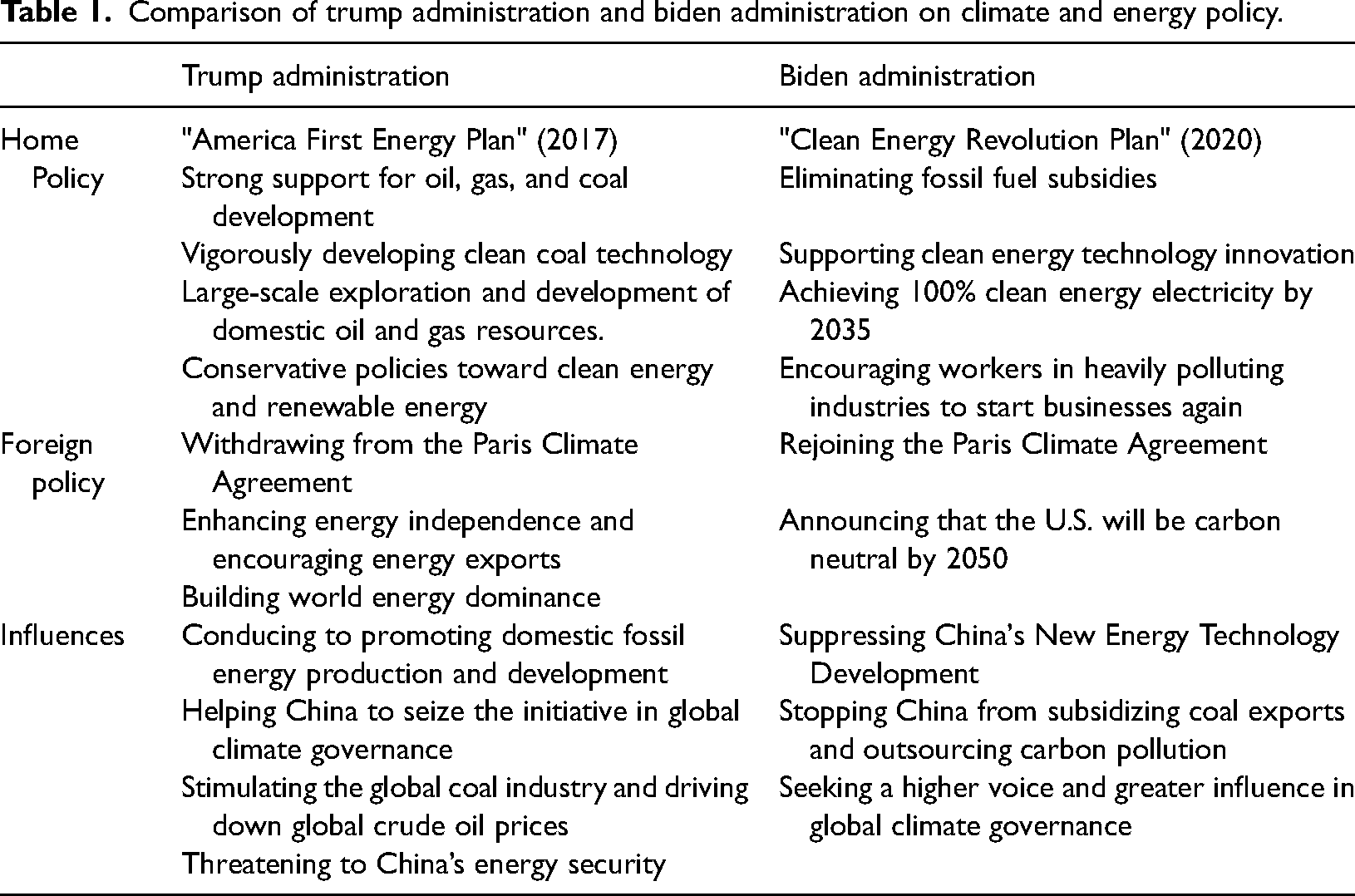
Comparison of trump administration and biden administration on climate and energy policy.
Overall, the U.S. climate and energy policies have undergone a fundamental shift, and China will face greater challenges in politics, trade, and technology. However, there is still cooperation in the competition. Compared with other highly political issues in green cleaning, there will be more common voices between China and the United States.
Large total energy resources with low per capita distribution
China has a vast expanse of land rich in energy with low per capita distribution. 20 According to statistics from the National Energy Board (Figure 1), with the continuous innovation and development of science and technology, China's total energy output, especially for clean energy, is increasing year by year.
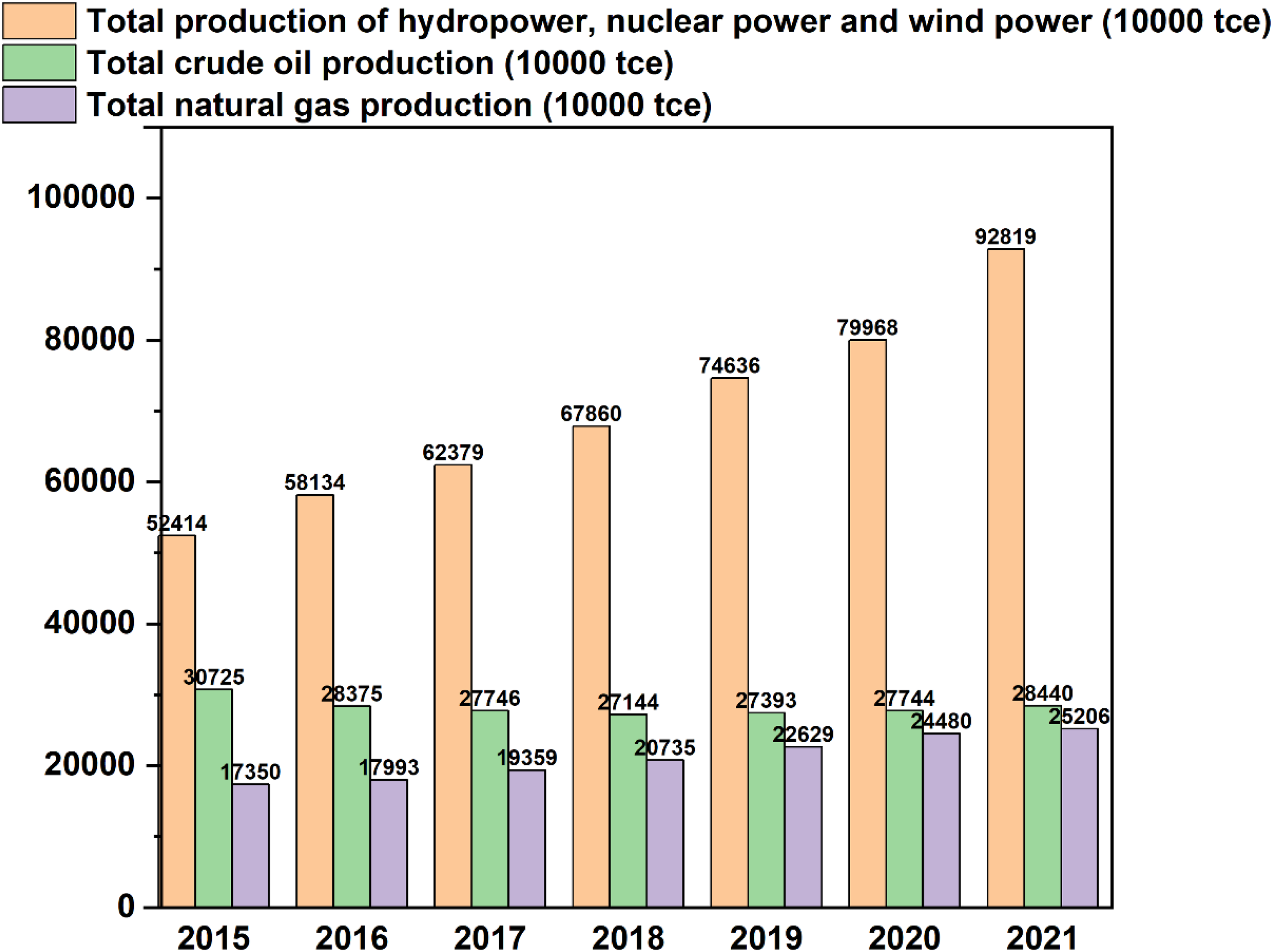
Total energy production in China from 2015 to 2021. Data source: National Bureau of Statistics.
Although China has vast land and abundant resources, the terrain is high in the west and low in the east The western region is relatively more complex, with many mountains and plateaus, whereas plains and hills dominate the eastern region, and the overall distribution of resources is very uneven. 21
According to the exploration results, most of China's natural gas resources are distributed in the Tarim Basin, Sichuan, Chongqing, and other locations. Natural gas resources in the Tarim and Sichuan basins are relatively more abundant, accounting for more than 40% of the total resources. Therefore, exploring and developing natural gas resources for China is difficult. The distribution area of China's oil resources is small and uneven. At present, proven oil reserves are mostly concentrated in the Heilongjiang, Shandong, and Liaoning provinces. Because the topography of the eastern part of China is flatter than that of the western part, exploration difficulty is relatively low. The distribution of coal resources in China is uneven. Most of these are in the economically backward northwestern region of China. Examples include Shanxi, Inner Mongolia, Shaanxi, Xinjiang, and Guizhou.
Coal-based energy structure and lower proportion of clean energy
Figure 2 indicates that China's energy structure is unbalanced. It has abundant coal resources, but oil and gas resources are scarce. In addition, the technical threshold and cost of coal use are relatively low. In China, more than one-third of coal is used to generate electricity in thermal power plant to meet the huge demand for electricity. Therefore, coal occupies a dominant position in the composition of energy, and other energy sources complement each other. China's demand for and use of coal ranks first worldwide. According to the current allocation of energy resources, owing to the characteristics of China's resource distribution and use, it is difficult to change the energy consumption structure in China with coal as the main form in the short term. 22
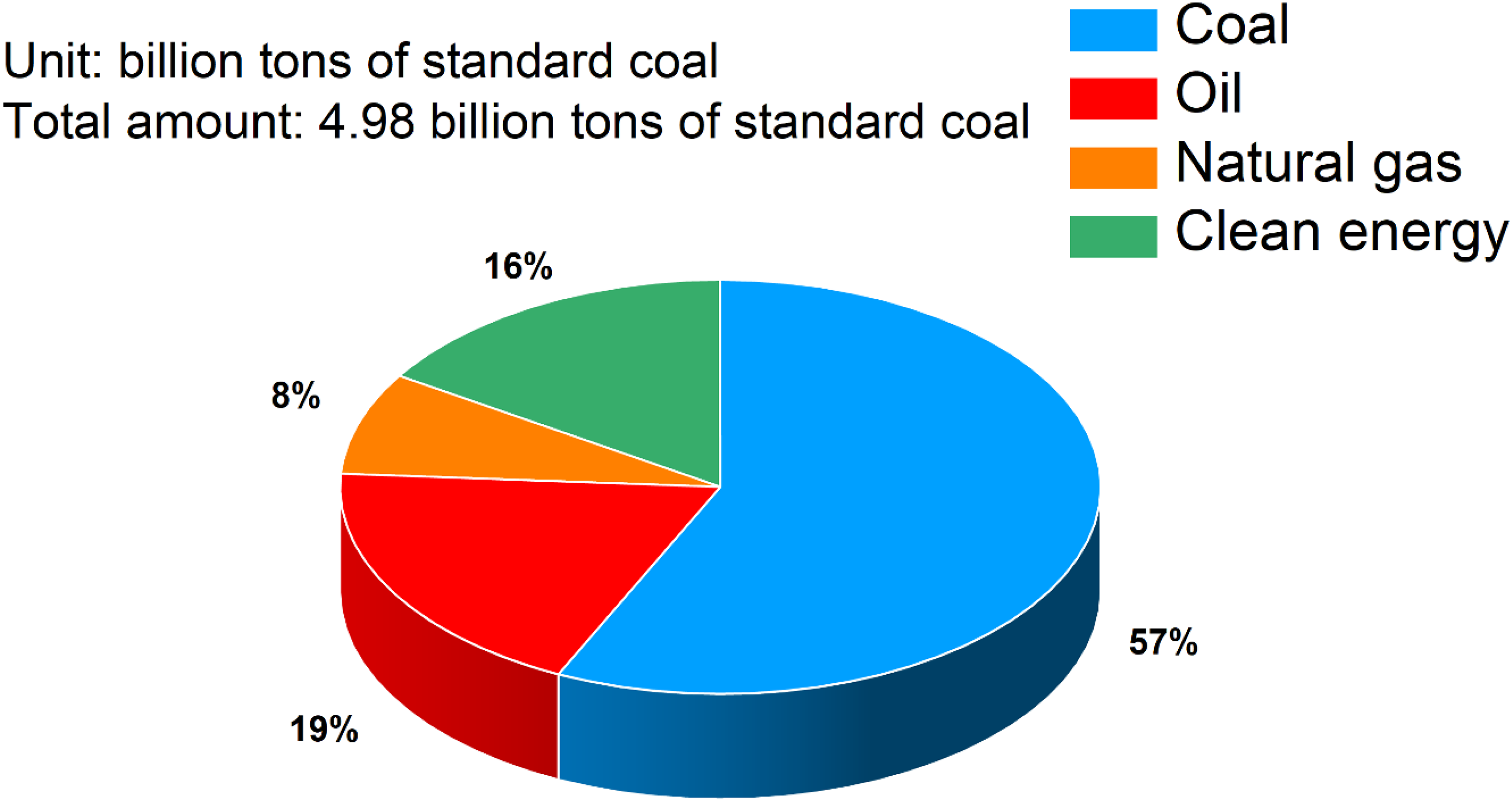
China's coal and other energy consumption ratio is 2020. Data source: National Bureau of Statistics.
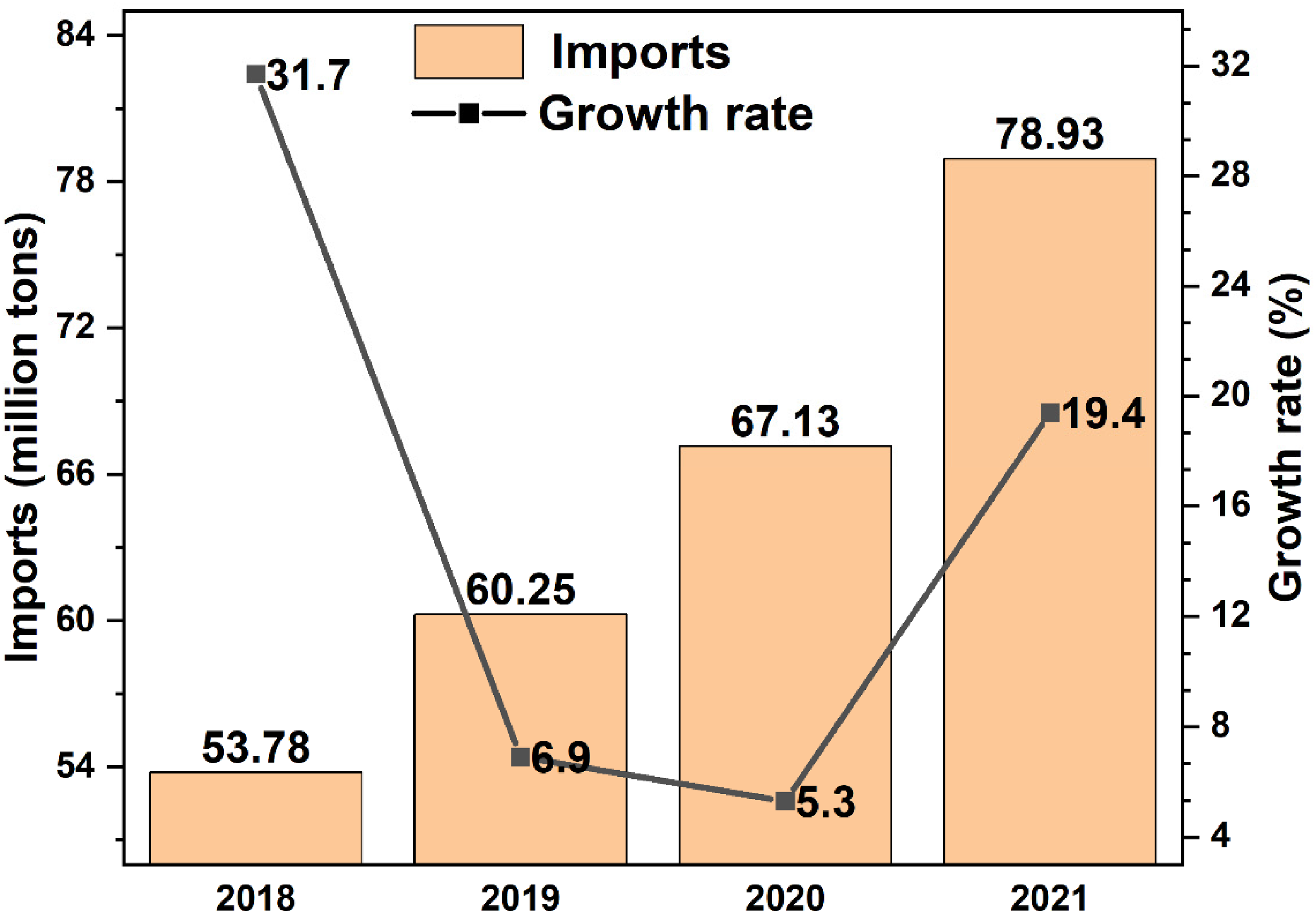
China's natural gas imports and its growth rate from 2018 to 2021. Data source: National Bureau of Statistics.
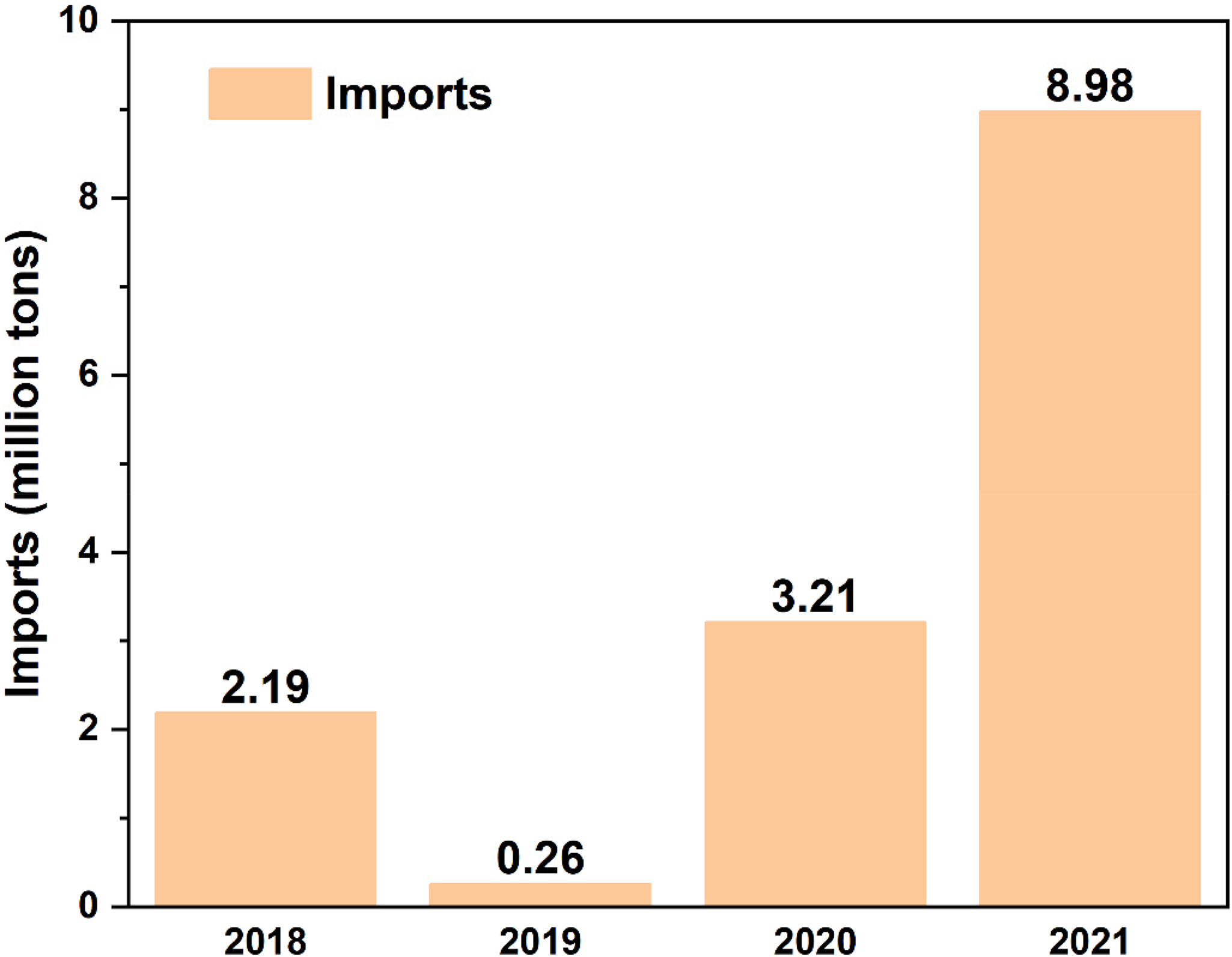
China's natural gas imports from the United States from 2018 to 2021. Data source: National Bureau of Statistics.
Impact on China's fossil fuel imports
Natural gas industry
As liquefied natural gas (LNG) is clean and efficient, China's demand continues to grow (Figure 3). The policy of diversifying imported gas sources is the key to ensuring the long-term supply security of natural gas in China. Therefore, there are many importers of LNG in China. The volume of LNG imported from Australia ranks first in China's total imports. Generally, the transportation of liquefied natural gas is a high-tech and difficult industry. China currently only has an LNG terminal in the Pearl River Delta (Shenzhen Bay, Dapeng), which is conducive to receiving LNG from the waters off northwestern Australia. 23 By 2021, China's LNG imports reached 78.93 million tons, making it the world's largest importer of LNG. In 2018, the sales of LNG in the United States increased by 60% compared to the previous year (Figure 4), becoming a net exporter of LNG for the first time, with a daily output of nearly 5 million barrels of LNG, ranking fourth in the world. China imported LNG from the United States in 2016. In November 2017, China Gas signed a non-legally binding memorandum of understanding with Delfin, a U.S. LNG company. The memo stated that China Gas is interested in purchasing 15-year long-term LNG through Delfin, 3 million tons per year, or approximately 4.5 billion cubic meters. However, after the outbreak of the China-US trade war in 2018, China quickly responded by formulating a list of tariffs on the US, including LNG, which hindered the export of US LNG to China. In the trade war, China lost a potentially large supplier to the United States, which could be overcame partly by diversifying imported gas sources form other country. However, the United States lost an important Chinese market. 24
Although the Biden administration does not encourage the development of traditional fossil energy, it has a certain degree of openness and flexibility in related technical cooperation and domestic product exports. It hopes to benefit from it to promote domestic economic recovery and employment growth. Therefore, its impact on China's natural gas imports from other countries is not significant.
Oil industry
In recent years, owing to the rapid growth of U.S. crude oil production, the proportion of crude oil exported to China has also increased rapidly. In 2019, the United States became a net oil exporter for the first time in 70 years, with a daily crude oil production capacity of more than 12 million barrels and an unprecedented increase in export capacity. It has become the third-largest oil exporter in the world. With the rapid improvement of China's economy, the oil demand is growing rapidly (as shown in Figure 5), and China's position in US crude oil exports has become increasingly important.
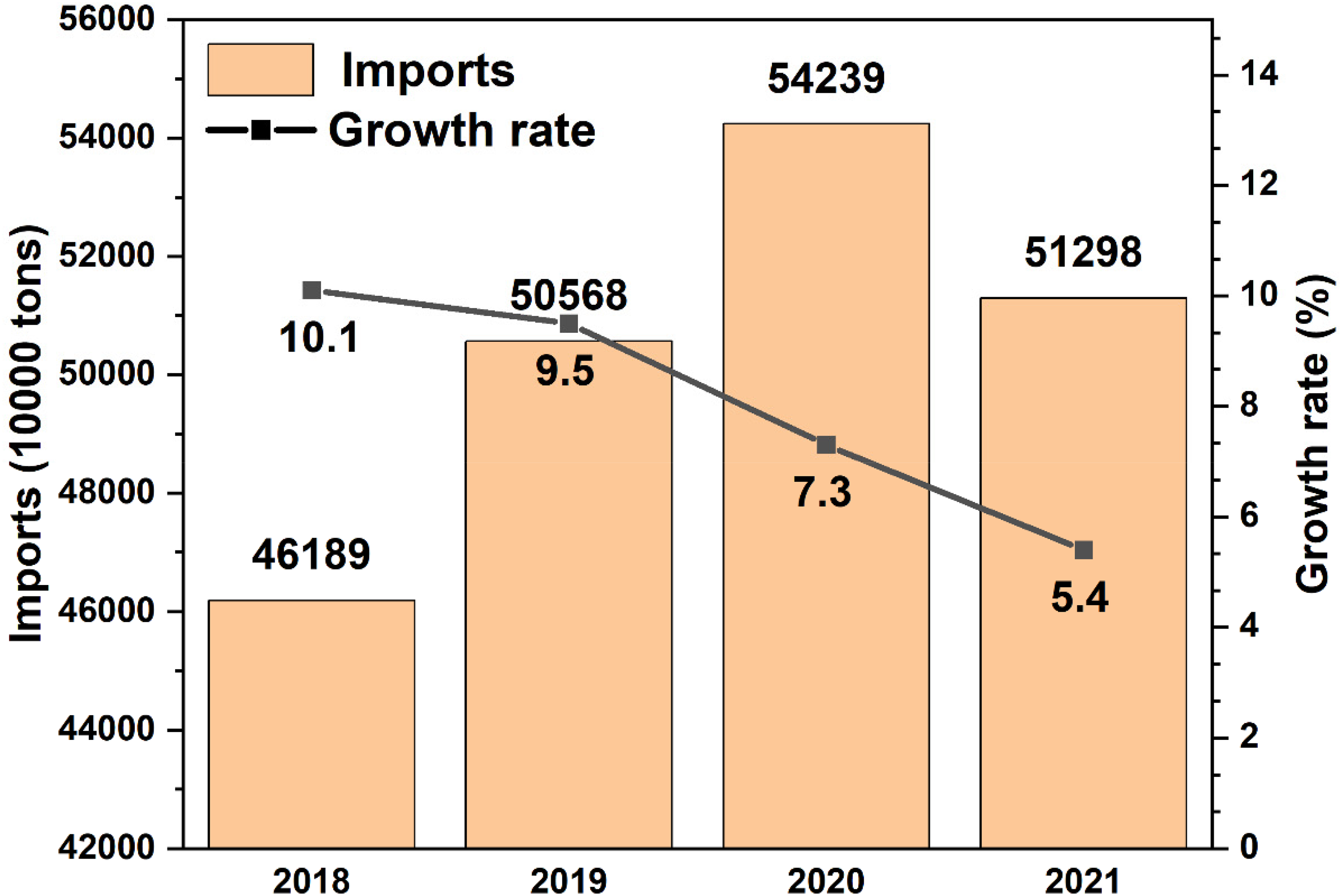
China's oil imports and its growth rate from 2018 to 2021. Data source: National Bureau of Statistics.
From the data in Figure 6, it can be concluded that US energy and climate policies under the background of the trade war have little impact on China's oil imports from the world in the short term but have a huge impact on China's oil imports from the United States. China has proposed new tax measures on U.S. crude oil as the trade war escalates. 25 The overall market sentiment is pessimistic. Many Chinese companies are worried that crude oil imports will be taxed in the future, and have adjusted their plans to switch to oil from other countries, such as Russian crude, which results in the decrease in oil imports from the United States from 2018 to 2021. Therefore, if the trade relationship between the two sides continues to deteriorate, China can also counteract US trade sanctions against China by imposing tariffs on US crude oil imports in the future.
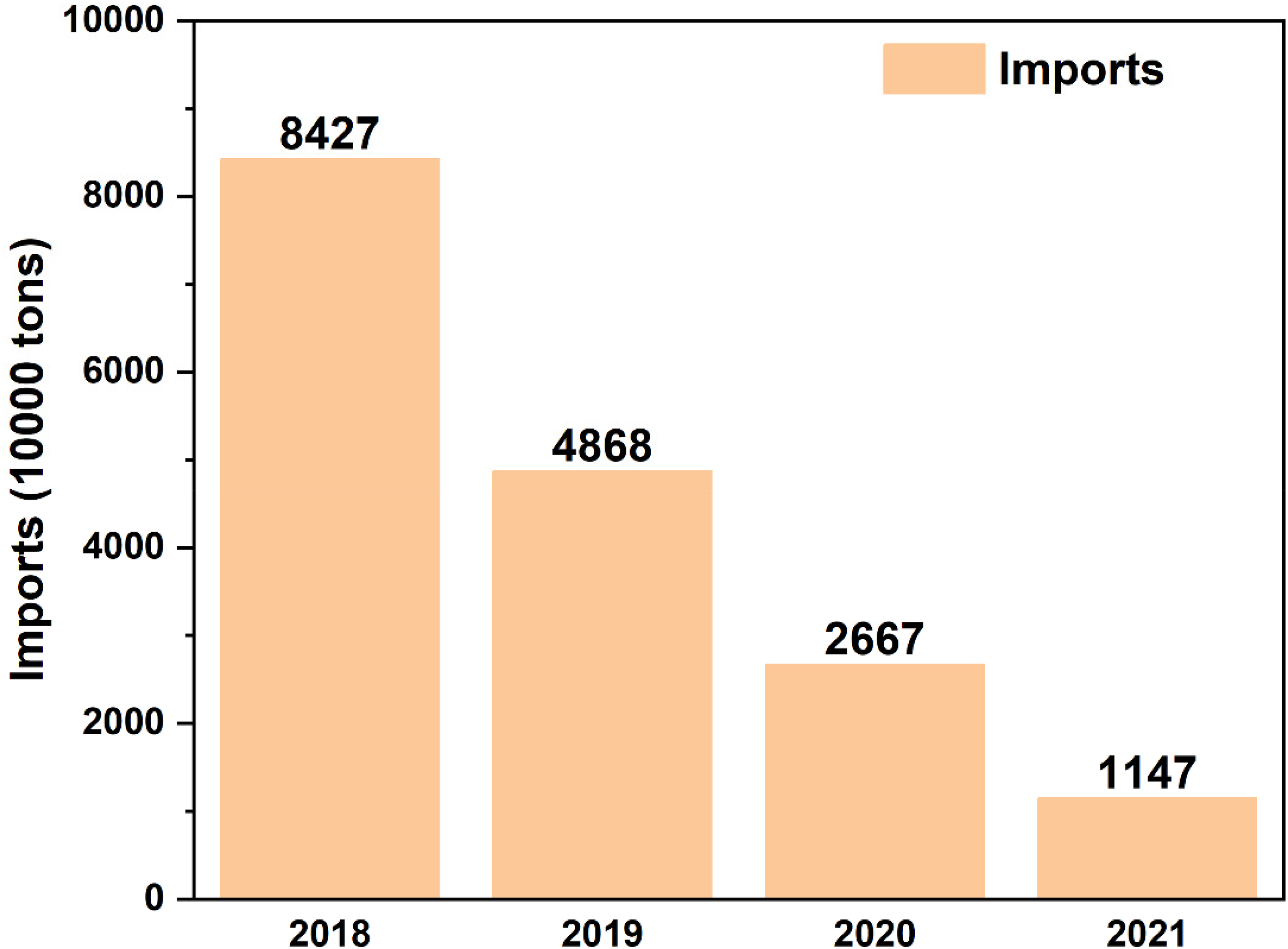
China's oil imports from the United States from 2018 to 2021. Data source: National Bureau of Statistics.
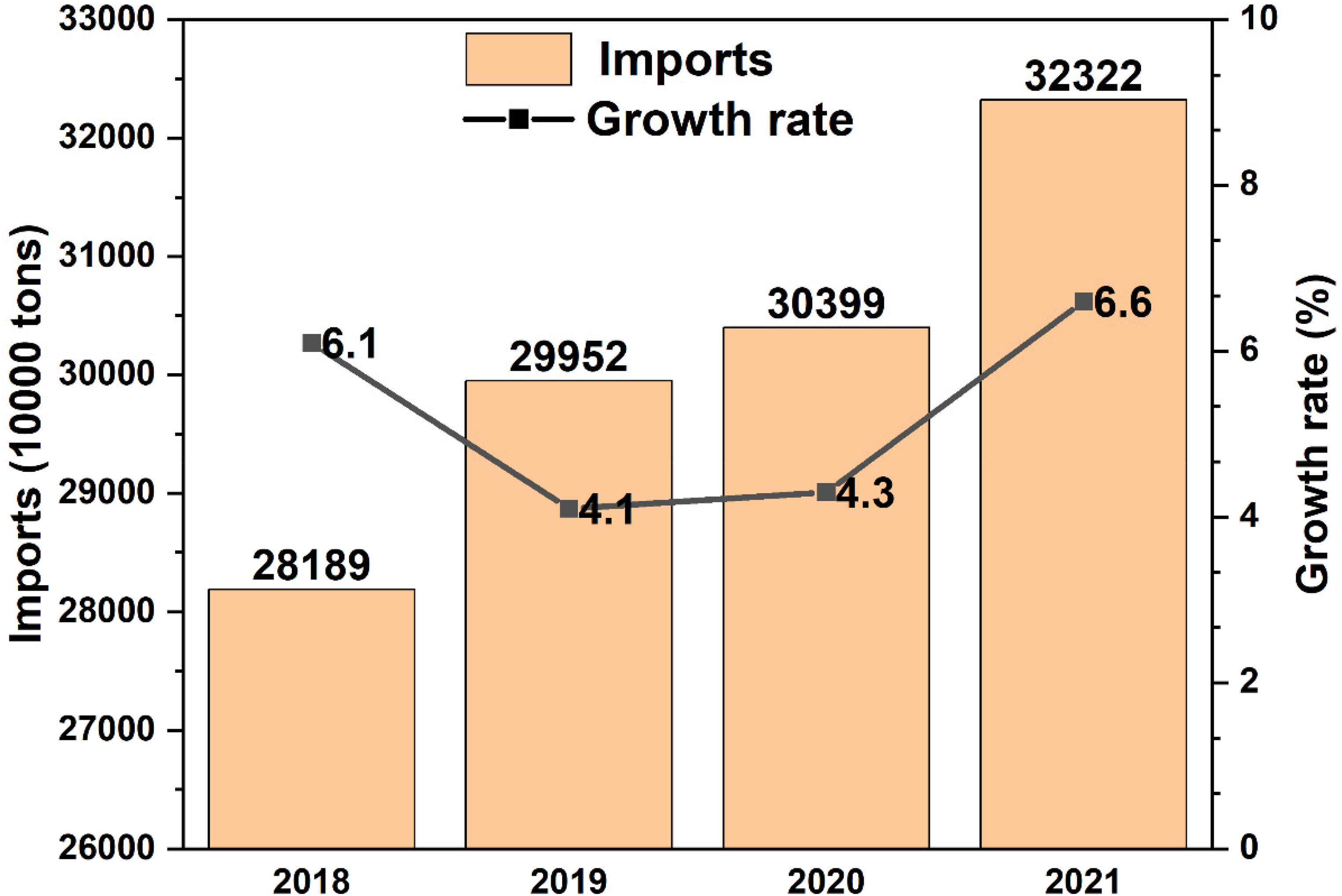
China's coal imports and its growth rate from 2018 to 2021. Data source: National Bureau of Statistics.
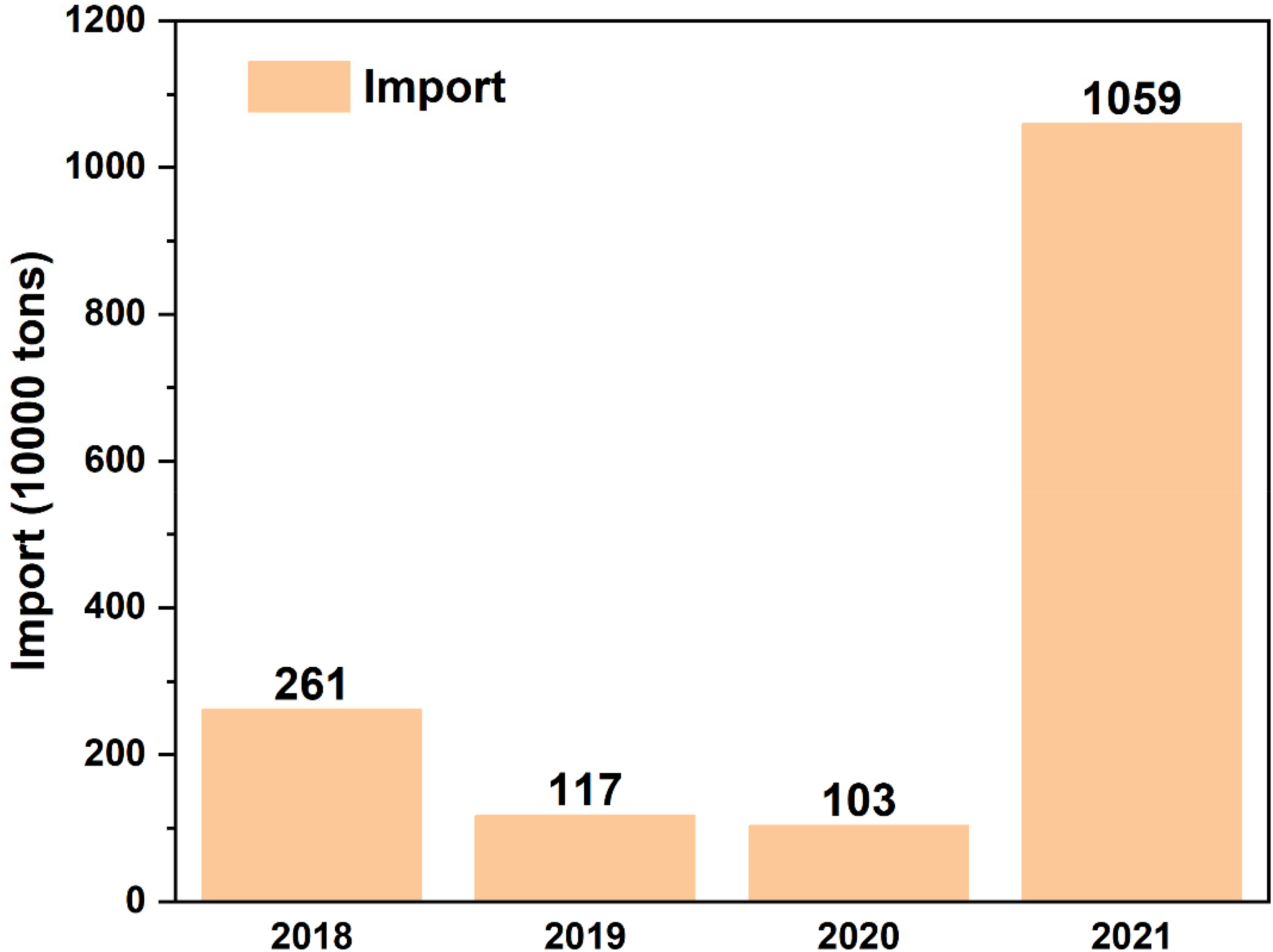
China's coal imports from the United States from 2018 to 2021. Data source: National Bureau of Statistics.
In terms of coal imports, U.S. exports to China account for only about 1 percent of China's total coal imports each year. China's coal imports are mainly from Indonesia, Australia, Mongolia, and Russia. According to statistics, in 2018, China's coal imports from these countries reached 96% of China’s total imports. Figure 7 shows China's coal imports and its growth rate from 2018 to 2021. The amount of coal China can import from the United States is very low, at no more than 1000 tons per year. In 2021, China’s imports surpassed thousand tons for the first time (Figure 8), which was linked to a domestic power shortage last year. Therefore, in the trade context war, the impact of US energy and climate policies on China's coal industry has gradually emerged. On the one hand, China's coal resources are relatively rich; US policy has not affected China's coal imports from other countries. 26 However, suppose trade friction escalates, or trade relations between the two sides continue to deteriorate. In that case, the United States may win over some countries in choosing positions, leading to a geopolitical crisis. China must take precautionary measures in advance.
Impact on the development of China's new energy industry
Impact on China's solar photovoltaic industry exports
The distribution of solar energy resources in China is relatively uniform. Compared with other clean energy sources, such as hydropower, wind power, nuclear power, etc., the application of solar power generation is relatively less restricted. 27 At present, China's photovoltaic power generation technology is relatively mature, safe and reliable. As the world's largest photovoltaic producer, the Chinese market's own consumption potential is far from being tapped. Under the slogan of starting domestic demand, many photovoltaic companies have turned their attention to the domestic market, trying to explore the domestic demand market by building photovoltaic power plants, resulting in the problem of overcapacity.
As shown in Figure 9, the Trump administration's energy and climate policies have hugely impacted China's solar photovoltaic industry. For a long time, the United States has hindered the research and development of China's photovoltaic industry. Since China's first-tier photovoltaic companies have developed advanced technologies and formed a complete supply chain and mature industrial clusters, these policies have little impact on them. 28 However, there is no doubt that the evolution of US trade policy is still a big blow for small and medium-sized solar photovoltaic enterprises that are not fully developed and are not competitive in China. These policies have greatly reduced orders for photovoltaic products exported from China to the United States, which has had a certain impact on China's photovoltaic enterprises specializing in exporting to overseas markets.
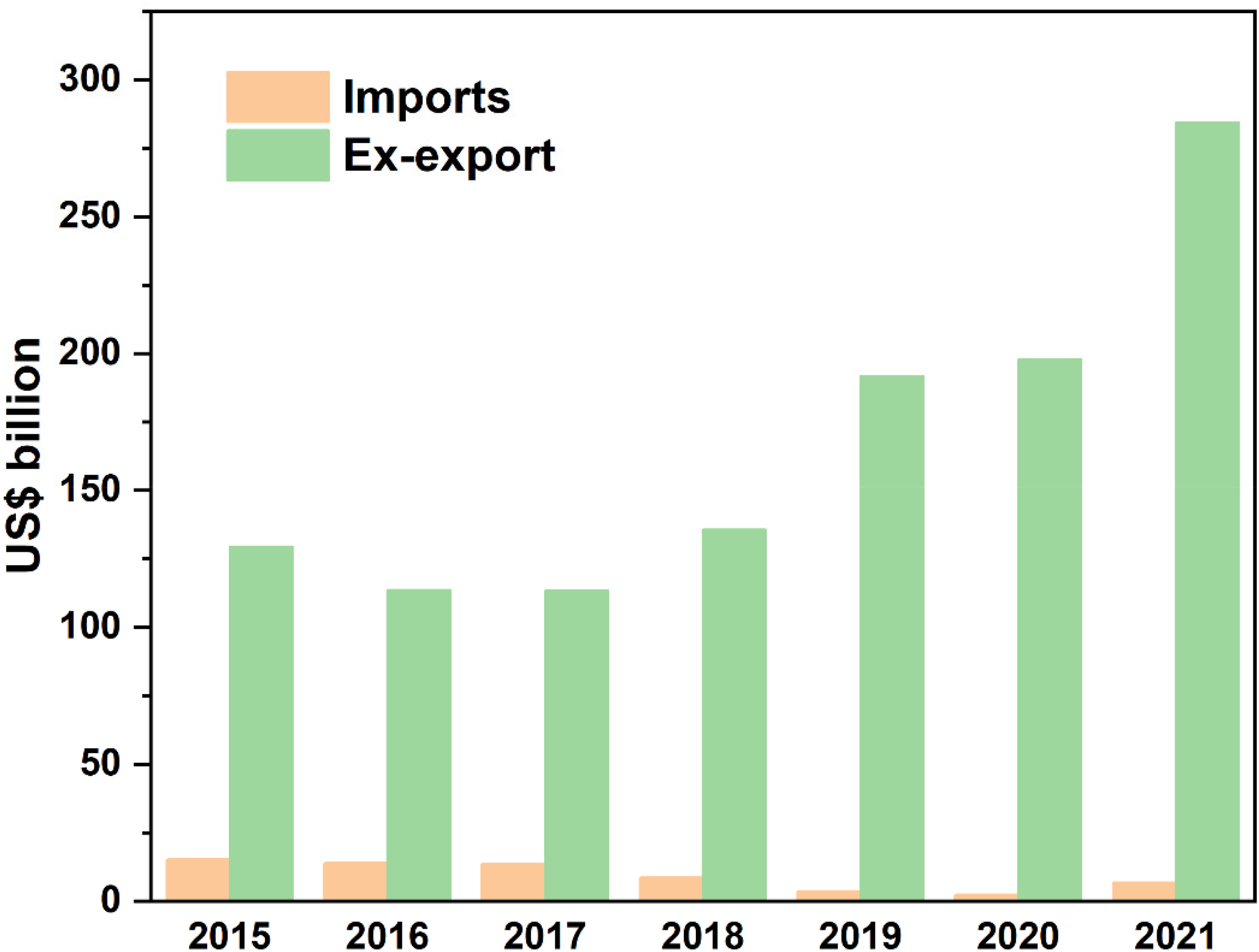
Statistics on imports and exports of photovoltaic solar cells in China from 2015 to 2021. Data source: China Pharmaceutical Industry Association.
Under the guidance of the Biden administration's energy and climate policies, China's photovoltaic solar cell exports in 2021 will increase by 43.7% over the previous year, and its energy and climate policies will increase the global market's demand for photovoltaic solar cells. This has a positive impact on China's industry in China. However, in the long run, the Biden administration will consider the interests of the United States and compete with China in clean energy. Therefore, future U.S. policy changes and adjustments and the U.S. impact cannot be ignored by China.
Cooperation in the field of clean energy has been one of the highlights of cooperation between China and the United States. While it was affected by the Trump administration, it remains an area where both sides are actively committed to working together. Biden plans to vigorously develop new energy and make it a new "weapon" for the United States in international competition, which shows that the United States intends to compete with China in the international market for new energy. Therefore, both parties must promptly communicate effectively and coordinate policies and actions in the research, development, and application of new energy technologies. 7
The "Clean Energy Revolution Plan" implemented by the Biden administration vigorously advocates a clean transformation of energy to achieve the effect of gradually replacing traditional energy and give full play to the innovation and technological advantages of the United States in the global market, including clean energy technology and battery technology. 29 China is the world's largest manufacturer of photovoltaic cells, lithium-ion batteries, and electric vehicles (EVs). 30 The Biden administration's energy and climate policies will bring innovation and development opportunities to new Chinese energy companies. In addition, the Biden administration advocates a multilateral free trade policy, which will help electric vehicle battery manufacturers in other countries and companies focus on developing clean energy to learn advanced technologies, thereby promoting the development of the entire green energy industry.
Enlightenment and countermeasures for China's energy security and climate policies
Broadening energy import channels and strategies
Combining the energy crisis brought by the Russian-Ukrainian war to the world and China's energy situation, to ensure national energy security, China must first expand the channels and methods of energy import and carry out oil and gas business cooperation with other countries. For example, Mexico, Venezuela, Brazil, and other countries may offer more attractive bargaining chips than the United States when competing with the United States for the Chinese market. This can effectively reduce the cost of China's energy imports and increase the channels for China's energy imports.
The second is to increase strategic cooperation with many countries, speed up construction, and innovate the means of energy transmission and storage. Add multiple transport ports and further deepen cooperation in constructing natural gas pipelines with Central Asia and the Middle East countries to improve China's energy situation and enhance its energy transmission and storage capacity. China should also increase its investment in China-friendly countries. On the one hand, China must actively build new ports to break the blockade and control of China's shipping channels by the United States. On the other hand, China must vigorously develop new channels for land energy strategies.
The most important key element of the multinational strategic cooperation is that the two sides should have high complementarity in industry. High complementarity can maintain the stability of the strategic cooperation and play a decisive role in the common development of both parties. Broadening energy import channels and strategies can optimize China's energy structure and achieve mutual benefit.
Increasing technological innovation and promoting energy transformation and upgrading
China should learn from the practices of the United States to gradually phase out subsidies for inefficient fossil fuels, turn related resources into investment in clean energy infrastructure, and create policy support to promote the development of the new energy industry chain vigorously. Wind power, photovoltaics, and energy storage should be listed as key support areas. New energy technology and equipment manufacturing are important foundations for developing new energy. A large amount of core equipment for nuclear energy, wind energy, solar energy, and other energy sources is heavily dependent on imports, which restricts the development of China's new energy industry to a certain extent and affects the country's energy security. Therefore, to accelerate the research and development of new energy conversion and utilization technologies, improving the independent R&D capabilities of the new energy equipment manufacturing industry has become an important way for the country to improve energy security.
There are some suggestions for Chinese government to accelerate the development of China's new energy industry and increase technological innovation: (i) To further increase the prospecting and mining reserves of new energy basic raw materials, accelerating the overseas layout of some key new energy strategic materials, and establishing raw material bases to ensure the self-sufficiency rate of the raw material supply end of the new energy industry chain to a certain extent; (ii) To continue to strengthen the funding for key projects of new energy in universities or research institutions, strengthening the patent layout of core technologies, and focusing on supporting the research and breakthroughs in key technologies of "stuck neck"; (iii) To encourage the central and local governments to build new energy industry platforms, the government should to guide the establishment of special funds and key project investment funds to boost the development of the new energy industry and the construction of key projects, and strengthening the financial support of green finance for new energy-related enterprises; (iv) To build a talent introduction platform for the new energy industry, implementing the talent policy, attracting the outstanding overseas talents and international students, and promoting international exchanges of talents.
China should improve its ability to protect the environment, cope with climate change, and actively promote energy transformation and up-gradation. China should also adhere to the backing of independent innovation, relying on the "domestic cycle" of production, circulation, and consumption, combined with the "dual cycle" of openness and mutual promotion at home and abroad, comprehensively consider the global climate governance situation, continue to promote the construction of China's ecological civilization, and actively promote low-carbon development. The introduction, research, and development of carbon environmental protection technology strengthen international exchanges and mutually beneficial cooperation and seize opportunities for international green development. China should support Biden's "clean energy revolution plan", vigorously advocate a clean energy transition to achieve the effect of gradually replacing traditional energy sources, ensure that carbon peaks and carbon neutrality goals are achieved on schedule, and provide Chinese solutions for global climate governance
Analyzing the essence of the China-us trade war and seeking the possibility of cooperation in the energy field
In the face of pressure from the United States in all aspects, China can no longer simply passively "see and accept” and should take the initiative to carry out long-term strategic planning and layout. In the China-US trade confrontation, both sides have advantages and disadvantages. If this is the case for a long time, both sides will suffer. China should learn selectively from the successful experience of the United States in international trade cooperation. In the field of energy cooperation, China must flexibly deal with the import and export of energy between China and the United States. The Biden administration has issued a positive climate and energy policy so that China and the United States have common goals and a basis for cooperation on climate issues. Therefore, China should handle trade friction between China and the United States with a flexible and open attitude and approach and actively seek space and possibilities for cooperation in new energy development technologies and applications.
Conclusion
With the acceleration of globalization, U.S. energy and climate policies have had different impacts on China's energy industry. Compared with the Trump administration, China's imports of U.S. natural gas (Biden administration) have increased significantly, while oil continued to decline during the two administrations, from 8.427 million tons during the Trump period to 1.147 million tons during the Biden period. The energy and climate policies of the Biden period will lead to an increase in the demand for photovoltaic solar cells in the global market, which will have a positive impact on China's new energy industry represented by solar photovoltaics. For China, it should support Biden's "clean energy revolution plan", vigorously advocate a clean energy transition, ensuring that carbon peaks and carbon neutrality goals are achieved as scheduled, and providing Chinese solutions for global climate governance.
Footnotes
Declaration of conflicting interests
The author(s) declared no potential conflicts of interest with respect to the research, authorship, and/or publication of this article.
Funding
The authors disclosed receipt of the following financial support for the research, authorship, and/or publication of this article: This work was financially supported by the National Natural Science Foundation of China (No. 51709254), Youth Innovation Promotion Association, Chinese Academy of Sciences (No. 2020335), Key Research and Development Program of Hubei Province, China (2020BCA073), and National Science & Technology Fundamental Resources Investigation Program of China (2019FY100600).
