




Abstract
The conflict between rapid economic development, resource mismatch, and ecological damage is growing more severe. Industrial structure upgrading, as a bridge between economic activity and the ecological environment, is a crucial strategy for solving ecological and environmental problems. Based on the mediating effect and threshold models, this study selected 30 provincial panel data points in China from 2000 to 2020 to study the impact of environmental regulation and technological innovation on industrial structure upgrading. According to the findings, environmental regulation has a “U” shaped impact on industrial upgrading and passes the three threshold tests, with technological innovation playing a partially positive mediating role. There is regional heterogeneity in the impact of environmental regulation on industrial upgrading, with a “U” shaped impact on the eastern regions; there is inhibited industrial upscaling in the central and western areas. Foreign trade hinders industrial development in the eastern region but promotes rapid development and achieves structural adjustment in the central and western areas. The expansion of fixed asset investment hinders industrial restructuring. Government regulation can encourage industrial structure upgrading in all regions. We propose policy recommendations based on China’s current situation. The development of technological innovation should be promoted, and environmental rules should be differentiated according to local conditions. This study has a certain guiding significance and reference value for balancing environmental governance and economic development, effectively implementing an innovation-driven development strategy, and formulating China's regional development strategy.
Keywords
Introduction
Over the past 40 years since its reform and opening-up, China's economy has grown rapidly, transforming from a backward agricultural country to a developed industrial country, with its total economic volume becoming second place in the world. 1 However, it is undeniable that China's rapid economic development has harmed its natural resources and ecosystems. 2 Crude production has long controlled the evolution of Chinese businesses. 3 The proportion of pollution-intensive enterprises in the secondary industry, especially in steel and cement, has been high. 4 The industrial process wastes many resources, and wastewater and waste gas are discharged, forcing China to pay a heavy price for the environment. 5 According to the 2020 Global Environmental Performance Index (EPI) report, China ranked 120th out of 180 countries and regions, with a score of 37.3. 6 Environmental pollution has led to the frequent occurrence of severe weather and natural disasters, seriously affecting people's daily lives, physical and mental health. 7 Thus, it has become a prominent obstacle to China's high-quality economic development. 8 The root cause of environmental problems lies in low-structured industrial levels, and environmental pollutants depend largely on the local industrial structure. 9 However, inefficient competition, resource wastage, and structural convergence are the main problems of the current industrial structure. 10 Economic individuals generally lack intrinsic incentives for industrial structure optimization and upgrading. 11 We must seek new driving forces to promote industrial structure development based on the existing industrial policies. 12 Therefore, optimizing the industrial structure is of utmost significance for developing China's economy. 13
To address the environmental contamination caused by the traditional industrial structure, China has implemented a basic state policy to save resources and protect the environment. The 14th Five-Year Plan and the 2035 Vision proposed to “enhance the quality and stability of the ecosystem and accelerate the green transformation of the development mode”. In addition, China’s environmental legislation has been increasingly enhanced. In 2014, China issued the Environmental Protection Law regarding environmental policy-building. With the promulgation of the Regulations for the Implementation of the Environmental Protection Tax Law in 2017 and the Environmental Protection Law in 2018, environmental taxation has become a new generation of fee collection systems for decontaminating emissions. Environmental regulations can impose strong constraints on businesses and lead to changes in the industrial structure. 14 The compliance costs of environmental regulations raise enterprises’ pollution control and production costs, weakening their technical innovation and competitiveness. 15 The “Porter hypothesis” suggests that the cost of pollution management has increased due to tighter environmental regulations. However, smaller pollution-intensive enterprises are forced to exit the market due to higher pollution control costs. The transformation of large pollution-intensive enterprises into green industries will be a win and will promote industrial structure upgrading. 16 Therefore, we must determine whether environmental regulations promote the upscaling of China’s industrial structure. For rational resource allocation and the development of emerging industries, the technological innovation capacity of the society must be fully mobilized. 17 Technological innovation is one of the most effective methods of balancing economic development and environmental protection.18,19 Stimulating the emergence of new industries through technological innovation motivates the industrial structure towards a rationalized, advanced, and green transformation.20–22 The “Porter hypothesis” contends that environmental rules can serve as a driving force for technological progress. 16 If this is valid in China, can it fulfill the goal of “pollution control at the source” by encouraging technical innovation, enhancing environmental regulation, and indirectly promoting industrial restructuring? In addition, due to China’s uneven economic development, environmental regulations and technological innovations vary by region. 23 Therefore, regional heterogeneity must be considered when analyzing the interconnection between environmental regulation and industrial structural upgrading.
Most research has focused on the influence of environmental regulation on industrial restructuring and optimization. However, few studies have been conducted on the interconnection between environmental regulation, technological innovation, and industrial structure. Therefore, this study attempts the following extensions. First, we use Chinese provincial panel data to study the impact of environmental regulation on industrial structural upgrading and assess the endogeneity of technological innovation and industrial structural upgrading through an instrumental variables approach. Second, because of regional heterogeneity, we explore these issues based on the national, eastern, central, and western areas. Third, we study the mediating role of technological innovation on the interconnection between environmental regulation and industrial structure by presenting the mediating effect and threshold models. Furthermore, we discuss whether there is a nonlinear relationship between environmental regulation and industrial structure upgrading.
The remainder of this paper is organized as follows. Literature review presents literature on the relationship between environmental regulation, technological innovation, and industrial structure. Methods presents the hypotheses of the study and the model used, correlated variables, and data sources. Empirical results and analysis discusses the results. Conclusions and policy implications presents conclusions and policy recommendations from the study.
Literature review
Studies on the interconnection between environmental regulation, technological innovation, and industrial structure upgrading fall into three main categories.
Environmental regulation and technological innovation
Environmental regulation has different effects on technological innovation. First, environmental rules can hinder technological innovation. Palmer et al. 24 argued that corporate funding for technology R&D investments can be squeezed if environmental regulation is strict. Chintrakarn 25 concluded that environmental regulation inhibits technological innovation in manufacturing firms. A later study by Kneller and Manderson 26 further supported this view. Harrison et al. 27 noticed that command-and-control environmental legislation policies effectively improved air quality, but reduced the total factor productivity of firms. Jiang et al. 28 defined environmental supervision in terms of industry and region. They found that, for technology-intensive firms in China, industrial supervision negatively affected their innovation behavior, due to the additional costs of combating environmental pollution. Second, environmental rules promote technological innovation and support the “Porter hypothesis”. Porter and Van der Linde 16 argued that appropriate environmental regulation could facilitate more innovative activities. Although it can increase costs in the short run, it can improve firms’ productivity in the long run. Using the example of U.S. manufacturing firms, Brunermeier and Cohen 29 found that significantly higher investments in contamination control increased the number of green patent rights. Using a probit model, de Miguel and Pazo 30 analytically studied the mechanisms of environmental legislation on the innovation of local manufacturing firms in Spanish regions, showing that both are positively influenced. Appropriate environmental regulations promote technical innovation.31,32 Third, there is an uncertain interconnection between environmental rules and technological Innovation. Jaffe and Palmer 33 investigated the patent output of US firms and found no significant relationship with environmental regulations. Rexhaeuser et al. 34 concluded that environmental regulation policies are heterogeneous and have different effects based on time, industry, and region. Yuan et al. 35 introduced a quadratic environmental regulation component and discovered that environmental legislation has an inverted “U-shaped” influence on technical innovation in China's manufacturing departments. Due to different environmental regulations, there may be nonlinear effects such as a “U-shaped” and “V-shaped” relationship.36,37
Technological innovation and industrial structure upgrading
Technical innovation is the driving force behind the industrial structure, and most previous studies have been based on empirical and theoretical analyses. Peneder 38 used data from 28 OECD countries and found that technological innovation influenced industrial structure development by affecting the income elasticity of demand. Wahab and Lawal 39 found that technological innovation and industrial structure have a two-way causal relationship, with the former influencing industrial structure and the latter reacting to the process and direction of technological change. Desmet and Rossi-Hansberg 40 applied the DSGE framework to macroeconomics and found that industrial structural upgrading was achieved through the alternating effects of technological innovation and leading industries. By analyzing the development of the Romanian industrial structure, Russu 41 found that industrial structure rationalization was dependent on scientific and technological advancement. Romagnoli and Romagnoli 42 found through statistical data on Italian industries that the evolutionary restructuring of the industrial system relies mainly on technological progress, as technical innovation can enhance the competitiveness of firms. Alvarez and Argothy 43 further concluded that the performance of publicly traded companies was strongly linked to investment in technological innovation. Wang et al. 44 concluded that marine science and technical innovation could rationalize the composition of the marine industry.
Environmental regulation and industrial structure upgrading
With the global economic downturn, environmental pollution, ecological damage, and other crises, the influence of environmental regulation on industrial structure upgrading have become an urgent area of study. Some scholars conclude that environmental regulation supports industrial structural upgrading and the “Porter hypothesis” effect. This suggests that environmental regulations would assist firms to acquire green production equipment and technologies, increase productivity, and enhance their technological innovation capacity, thereby promoting structural transformation and upscaling.16,45,46 Zhou et al. 47 confirmed the relationship between firm behavior, performance, and environmental regulations in China, with strict environmental regulations driving firms with greater innovation capacity to go green. Shao et al. 48 examined environmental regulations promoting industrial structure in resource-and non-resource-based cities. Wang et al. 49 tested that all three types of environmental regulation could significantly contribute to industrial development. Other scholars argued that implementing environmental regulation would hinder industrial structure upscaling. The “cost of compliance” effect argued that strict environmental regulation would lead to increased costs of ecological management, 50 have a crowding-out impact on enterprise technological innovation and product development, crowd out enterprises’ R&D capital investment, and weaken their technological innovation capacity and competitiveness,51,52 eventually hindering industrial structure upgrading. 53 Countries or regions with more lenient environmental standards might take on pollution-intensive enterprises from other countries or areas to promote local employment and economic development, eventually developing into pollution refuges.54–56 However, Zhang et al. 57 found that pollution-heavy industries in Beijing, Tianjin, Hebei, and other nearby cities did not transfer because of formal environmental regulations. This suggests that the phenomenon of pollution transfer may not be valid. Other scholars have demonstrated that environmental regulation has a nonlinear effect on industrial upgrading. Wang and Liu 58 demonstrated that formal environmental supervision has an inverted “U” shape and informal environmental supervision has a positive “U” shape on industrial structure upscaling in the three major economic zones in China. In addition, because of regional disparities in economic growth, resource availability, 23 other conditions of industries, and the development stages of different enterprises, 59 there are considerable differences in how environmental regulations affect industrial structure upgrading.
Most of the existing literature concentrates on the interconnection between environmental regulation, technological innovation, and industrial structure upgrading, and relatively little on the linkage between the three. The influence of environmental regulation on industrial structural restructuring and upscaling may have a nonlinear relationship. Therefore, this study introduces a quadratic term for environmental regulation and performs threshold regression analysis to test its nonlinear impact. In analyzing the influence of environmental regulation and technical innovation on industrial restructuring, most studies have focused on the national level, ignoring regional diversification. Therefore, this study examines the interrelation between environmental regulation, technical innovation, and industrial structure upscaling, and considers the heterogeneity of regional differences to provide specific policy guidance for China’s industrial upgrading.
Methods
Research hypothesis
The direct influence of environmental regulation on industrial structure upgrading
When the level of environmental legislation is low, enterprises have little initiative in pollution control and lack sufficient incentives to develop new products. The company’s cost of treating the environment may also increase owing to environmental regulations and the crowding out of their R&D investments. Under profit maximization, pollution-intensive enterprises with larger production scales choose to pay pollution fines and expand their production scale. Therefore, the share of pollution-intensive industries increases initially upon environmental regulation. In contrast, the percentage of high-tech industries and services decreased, inhibiting industrial structure upgrading. Because of the ever-increasing stringency of environmental regulations, companies will introduce advanced pollution control equipment and technological innovations. There is a progressive shift in enterprise production from pollution-intensive to technology-intensive industries that produce more environmentally friendly products. Thus, stricter environmental regulations encourage structural improvements in the industrial sector.
Hypothesis 1: Environmental regulation has a “U-shaped” impact on industrial structure upgrading.
Technological innovation as a mediating variable
Companies will continue to promote technological development under the appropriate environmental regulations. To reduce the consequences of pollution, new combinations of elements emerge when companies innovate and improve their production techniques. This change and transformation expand to the national level through linkages between industries, resulting in productivity progress and industrial upgrading. Particularly, in long-term strategic development, strengthening environmental legislation can increase enterprises’ investment in R&D and the adoption of advanced green development technologies. That is, environmental regulation inspires enterprises to develop their own innovation ability and uses the reverse force mechanism to boost the restructuring of the industrial structure to a green, low-carbon, environment-friendly, and service-oriented economy.
Hypothesis 2: Technological innovation has a positive mediating effect on the interconnection between environmental regulation and industrial structure upscaling.
Regional differences in the influence of environmental regulation on industrial structure upscaling
Because of China’s uneven economic growth, the implementation of high-intensity environmental legislation in economically developed and resource-rich regions will force clean production and the use of clean energy and innovation in production processes, thus regulating and improving the industrial structure. In less developed areas, heavy industry and high pollution enterprises are concentrated, the implementation of environmental rules will put pressure on enterprises, and the lack of green technical innovation capacity will hinder their production activities.
Hypothesis 3: Regional variations exist in the ability of environmental regulation to upgrade industrial structures.
Model establishment and variable description
Model
Based on the theoretical hypothesis, this study refers to the mediating effect test model proposed by Wen
60
; the quadratic term of environmental regulation is introduced in the model.
58
The following model is developed considering control variables such as industrial scale, foreign trade, and government regulation.



where i is the province and t is time.
We use the stepwise causality method for testing. Model (1) is to test the direct influence of environmental regulation on industrial structure upgrading. Model (2) is to test the effect of environmental regulation on technological innovation. Model (3) is the total impact of environmental regulation on industrial structure upgrading. If all the above get significant results, it indicates that the mediating effect is significant.
To investigate whether there is a nonlinear relationship between environmental regulation and industrial structure upgrading in China, we use the threshold regression model proposed by Hansen
61
to empirically test Model (4) with environmental regulation as the threshold variable. The meanings of the variables included in the model remain unchanged and

Variable definition
Explained variable
Industrial structure upgrading (STRU) – This shows the dynamic process of change in the proportion of the three industries. That is, the leading sector in the economy evolves from agriculture to manufacturing, and then to the service industry. Therefore, a crucial criterion for deciding it is determining whether the development direction is changing towards “service”. Referring to Wang et al. 12 and Zhou et al., 62 it is the proportion of value-added in the tertiary and secondary industries.
Explanatory variable
Environmental regulation (ER) – There are two main categories: formal and informal. This study refers only to formal environmental regulations, which can be measured using a single indicator, such as GDP per capita, environmental taxes, environmental investment, energy intensity, and ratio, or a composite indicator. Referring to Zhao and Sun, 23 Wang and Liu, 63 and Du et al., 64 this article constructed a composite measurement system using industrial wastewater emissions, industrial sulfur dioxide emissions, and industrial solid waste generation as the base indicators. The composite index of environmental regulation was a positive indicator, with higher values indicating a stronger influence of legislation.
First, the three indicators of each province were linearly normalized to eliminate the indicator magnitude, such that the data of each indicator was between 0 and 1.

Second, the characteristic weight





Intermediary variable
Technological innovation (TECH): Technological innovation indicators are calculated from two perspectives: outcomes and input. For input, we primarily use technology and innovation investment to reflect innovation ability. We drew on Argyres and Silverman 65 to choose the number of patents granted to calculate the degree of technological innovation from an output perspective. It is also logarithmicized to mitigate heteroscedasticity. The higher the number of patent applications granted, the stronger the technological innovation capability and the stronger the improvement in the green transition of the industry. Hence, the indicator prediction coefficient was positive.
Control variables
Here, three more critical influencing factors of industrial structure upgrading were selected and introduced as control variables.
Industrial scale (SCAL): A correlation exists between the size and structure of an industry. Large-scale industries mean a better development industry, which means investment in technology and equipment. The proportion of total social fixed asset investment to GDP was used to determine the regional industrial scale of each province. The larger the industry scale, the higher the level of industrial structure, and the more contributive it is to industrial structure upgrading; thus, the indicator prediction coefficient is positive. Foreign Trade (TRAD): Considering open foreign policy, foreign direct investment is one of the external factors of industrial structure change; the adjustment in the scale of its investment will alter the dynamics of structure development in the area. The total imports and exports of foreign-invested enterprises were converted to RMB at the year’s average exchange rate. The proportion of total imports and exports to GDP was used to express the degree of foreign trade. The larger the foreign trade, the more conducive it is to industrial restructuring; thus, the indicator prediction coefficient is positive. Government Regulation (GOV): The level of government spending is closely associated with the economic development status, and reflects the financial strength of a country or region. Government fiscal spending directly affects the direction of industries, which in turn affects the adjustment of industrial structure. We use the share of government fiscal expenditures to GDP to measure government regulations. The impact of budgetary spending on the industrial structure is long-term; budgetary expenditures in a specific industry will increase the capital stock of that industry. Furthermore, more fiscal spending means more beneficial industrial restructuring; thus, the indicator prediction coefficient is positive.
Data sources and descriptive statistics
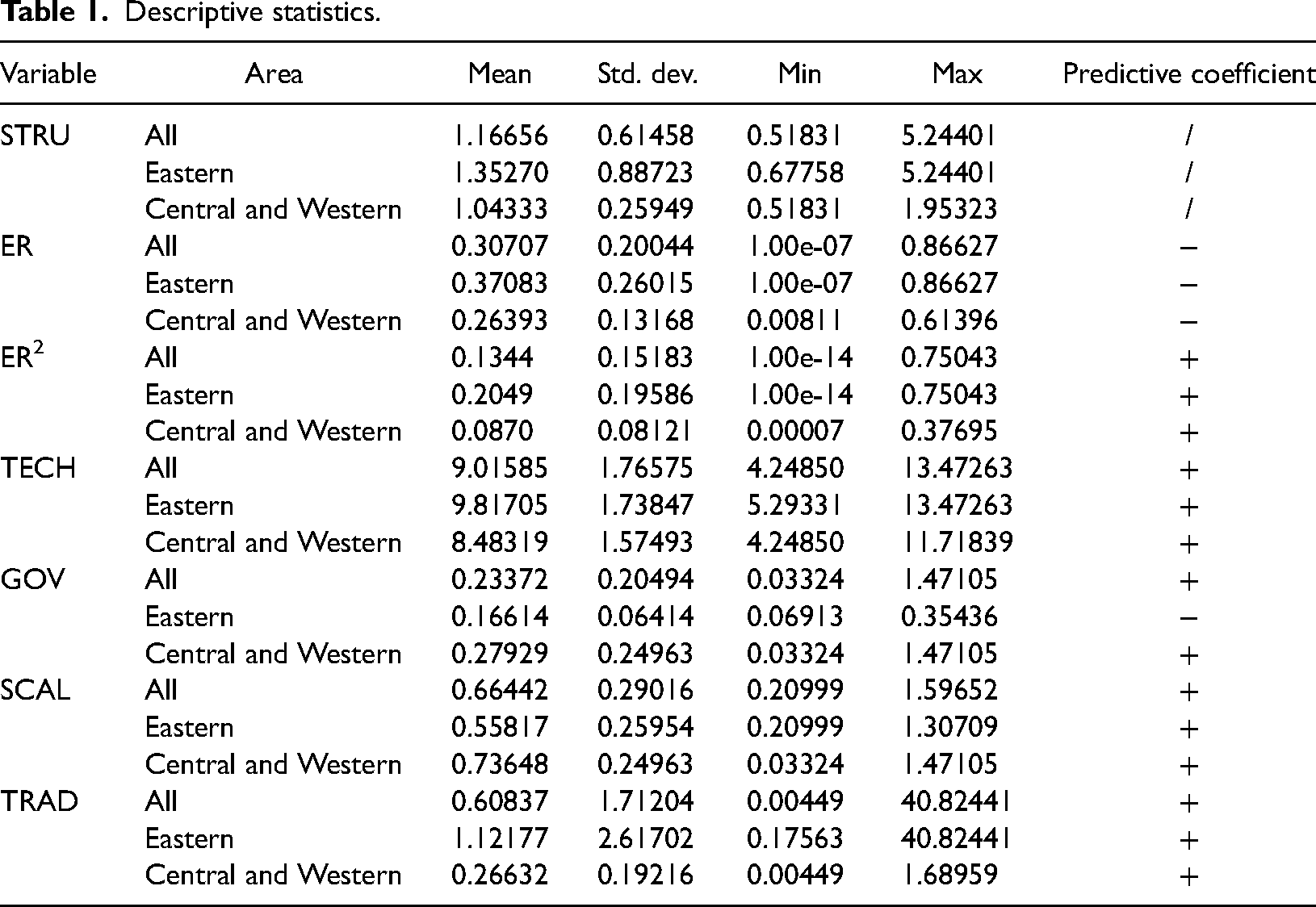
Due to the restricted availability of data, the samples for this research were chosen from information on 30 Chinese provinces and autonomous areas, excluding the Tibet Autonomous Region, Hong Kong, Macao, and Taiwan. The study period was from 2000–2020. The data were attained from the China Statistical Yearbook, China Environmental Yearbook, and WIEGO database for the corresponding years. Table 1 presents the descriptive statistics for the variables.
Descriptive statistics.
Empirical results and analysis
Variable multicollinearity test
Among the six explanatory variables, the correlation coefficient between government regulation and industry scale is the largest (0.4880). The maximum variance expansion factor is shown in Table 2 (1.72); it is much less than 10. Therefore, there was no multicollinearity between variables.
Multiple collinearity test.

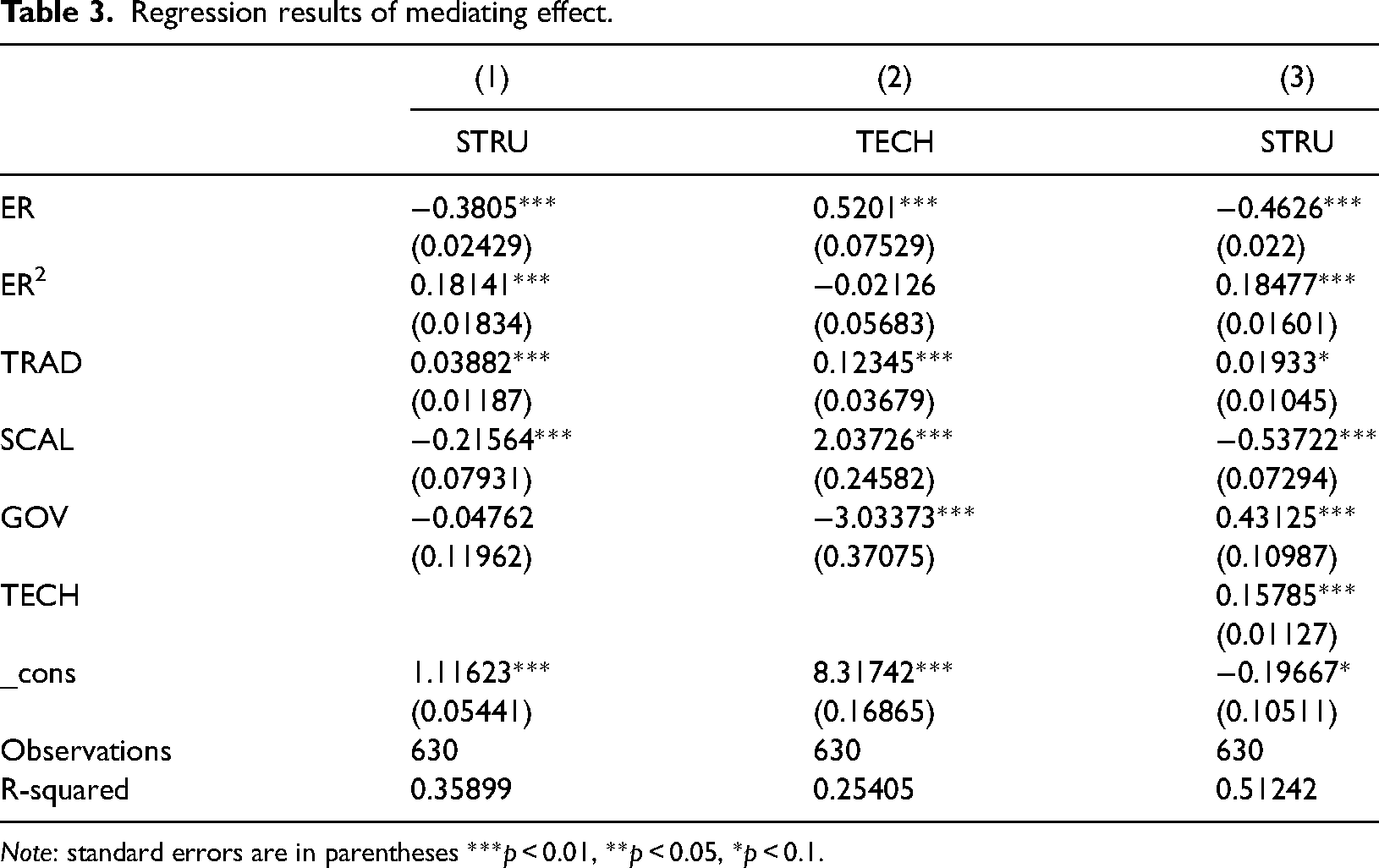
Regression results of mediating effect.
Note: standard errors are in parentheses ***p < 0.01, **p < 0.05, *p < 0.1.
Mediating effect regression analysis
The regression results are shown in Table 3. Column (1) shows the direct influence of environmental regulation on industrial structure upgrading, excluding technological innovation. The results show that the primary coefficient of environmental regulation is negative, while the second coefficient is positive, both at the 1% significance level. There is a “U” curve interrelationship between industrial structure upscaling and environmental regulation. This implies that there is an optimal interval for choosing the intensity of environmental regulation and that it plays a promoting role, only when a specific threshold is crossed. Thus, hypothesis 1 is valid. The results of this study differ from those of some authors.58,66 The reason for the “U” shape is that, when environmental policies are first implemented, enterprises will invest more in contamination control to meet environmental standards. This can affect enterprises’ production and reduce their productivity. The “cost of compliance” effect occurs early in the environmental regulations implementation in China. However, environmental regulations have become increasingly stringent; companies will offset the cost of following environmental regulations, changing production processes and procedures, and developing energy-efficient and clean products. Furthermore, the public’s demand for eco-environmental quality and the need for eco-products and services is increasing. To meet this demand, productive enterprises adjust their production plans, production scales, and product structures. Thus, increasing the proportion of green industries in the national economic system and forcing the transformation and upgrading of industrial design. Column (2) shows that the influence of environmental regulation on technological innovation has an inverted “U” shape. This finding supports the results of Yuan et al. 35 The primary coefficient of environmental regulation is positive at the 1% significance level, whereas the secondary coefficient is not significant. This indicates that China is on the left side of the inverted “U” curve. Moderate environmental regulations can inspire the advancement and operation of corporate ecological management technologies, leading to the transformation of low-technology industries. However, excessively stringent environmental regulation policies can disincentivize firms’ technological innovation. This discourages firms from investing in product R&D and prevents them from developing relevant technological advancements. Therefore, when the government formulates policies regarding environmental regulation, it should consider environmental protection and the carrying capacity of businesses, avoid overly strict environmental regulations that weaken enterprises’ innovation and independent research capabilities. Column (3) shows the total effect of environmental regulation on industrial structure upgrading. Both the environmental regulation and technological innovation coefficients are significant, demonstrating that technological innovation has a partially positive intermediary effect. Hypothesis 2 is valid. Similarly, Wang and Liu 58 reported on the three major economic zones in China. The regression results showed that appropriate environmental regulation strategies must be adopted to achieve positive promotion effects. Environmental regulations can also promote industrial structure upgrading by improving enterprises’ independent innovation ability and technological innovation. Thus, the government should increasingly help businesses develop new technologies to improve their industrial structure and efficiency.
Regarding the other control variables, foreign trade (TRAD) contributes to both industrial structure upgrading and technical innovation. The more significant the proportion of foreign investment, the better the promotion effect. This indicates that foreign investment can provide cutting-edge technology and managerial abilities that compensate for the shortage of domestic construction funds. Enterprises perform expansion and reproduction, optimize resource allocation, and continuously extend the scope of high-productivity industries through technological innovation, thereby enhancing and improving the industrial structure. Industrial scale (SCAL) has a significantly negative influence on industrial structure upscaling and a significantly positive effect on technological innovation, both at the 1% level. This presents that industrial-scale performance has an inverse inhibitory effect on industrial structure upscaling. If the scale of the industry, or proportion occupied by fixed-asset investment, is large, some resources will flow into the fields related to the construction and acquisition of fixed assets. This eventually leads to an uneven distribution of capital investment and a decline in the rationalization of industrial development. The effect of government regulation (GOV) is significantly negative on technical innovation and significantly positive on industrial structure at the 1% level. Greater government fiscal spending hinders technological innovation, which is inconsistent with the expected results. In the traditional concept, government financial expenditure provides specific economic and technical support to the development of enterprises and promotes technological innovation. However, government fiscal spending on innovation does not consistently achieve expected results, due to severe information asymmetry between the government and enterprises, as enterprises cheat innovation subsidies occasionally. Besides, government investment in innovation activities may encourage firms' innovation investment by raising the price of innovation factors, thus reducing firms' motivation to invest in innovation.
Endogeneity test
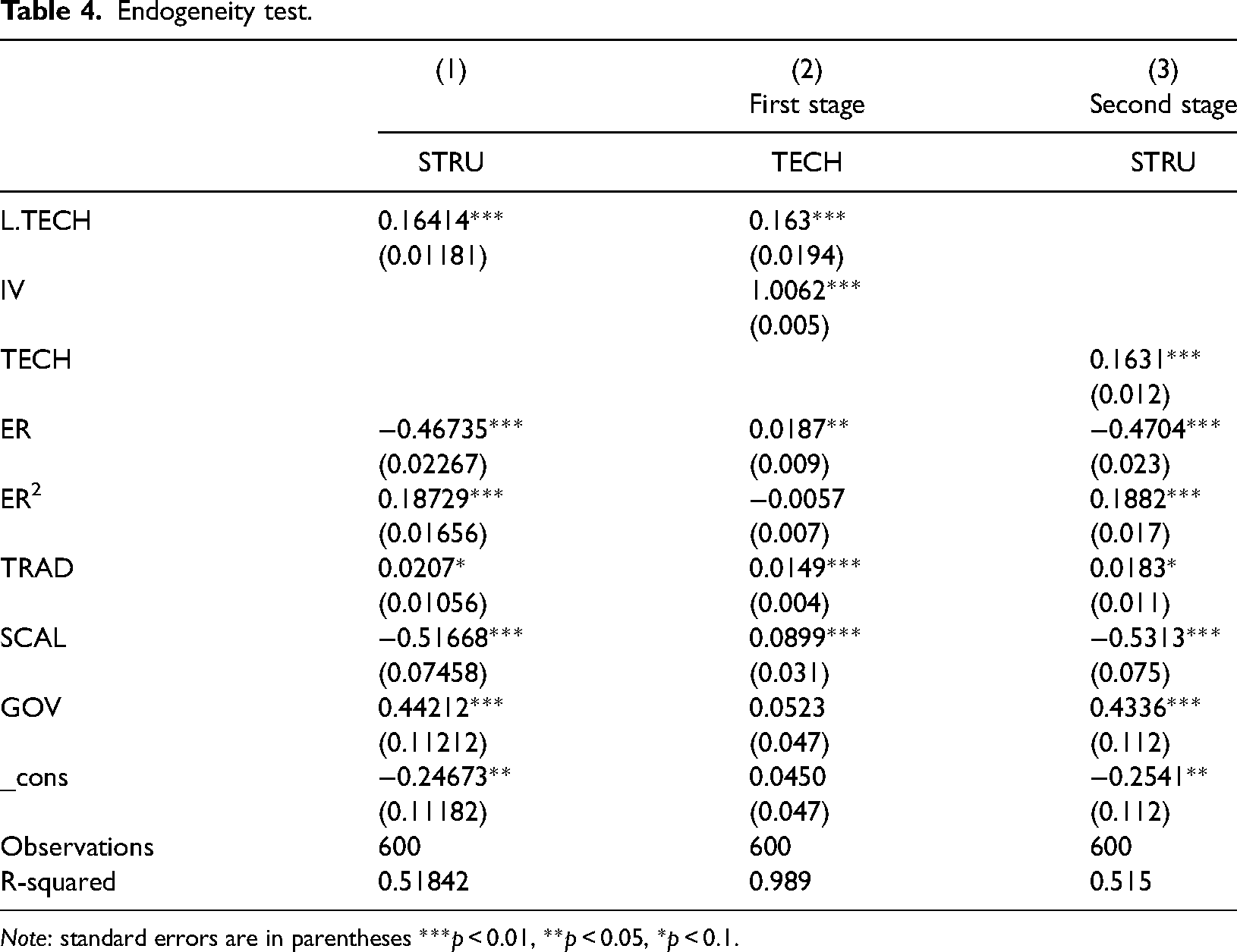
Considering the possible two-way causality between technological innovation and industrial structural transformation, we present the one-period lag of technological innovation as the core explanatory variable to ensure consistency of the regression results. Furthermore, this variable is used as an instrumental variable for model estimation using two-stage least squares (2SLS). The estimated results are shown in Columns (1), (2), and (3) of Table 4. The regression results of Column (1) show a positive and significantly correlated regression coefficient for the lagged period of technological innovation (as a proxy variable), consistent with the mediating effect regression results. Columns (2) and (3) are the lagged periods of technological innovation as an instrumental variable in the 2SLS estimation. The Anderson test significantly rejects the original hypothesis of non-identifiability, and the Cragg-Donald Wald test implies that the selected instrumental variables are not weak. The regression results show that the coefficient of technological innovation remains significantly positive and is not affected by endogeneity.
Endogeneity test.
Note: standard errors are in parentheses ***p < 0.01, **p < 0.05, *p < 0.1.
Robustness test
We used the following two approaches to further investigate the stability of the estimation findings:
Choosing other indicators to measure the explained variable.
This study refers to Yuan and Zhu’s
67
research method to determine the industrial structure upgrading index, using the proportion of output of the primary, secondary, and tertiary industries to the GDP. It gives a higher weight to the tertiary sector, is more sensitive to tertiary industry changes, and better measures the extent of regional industrial structure upgrading. The specific calculation formula is as follows:
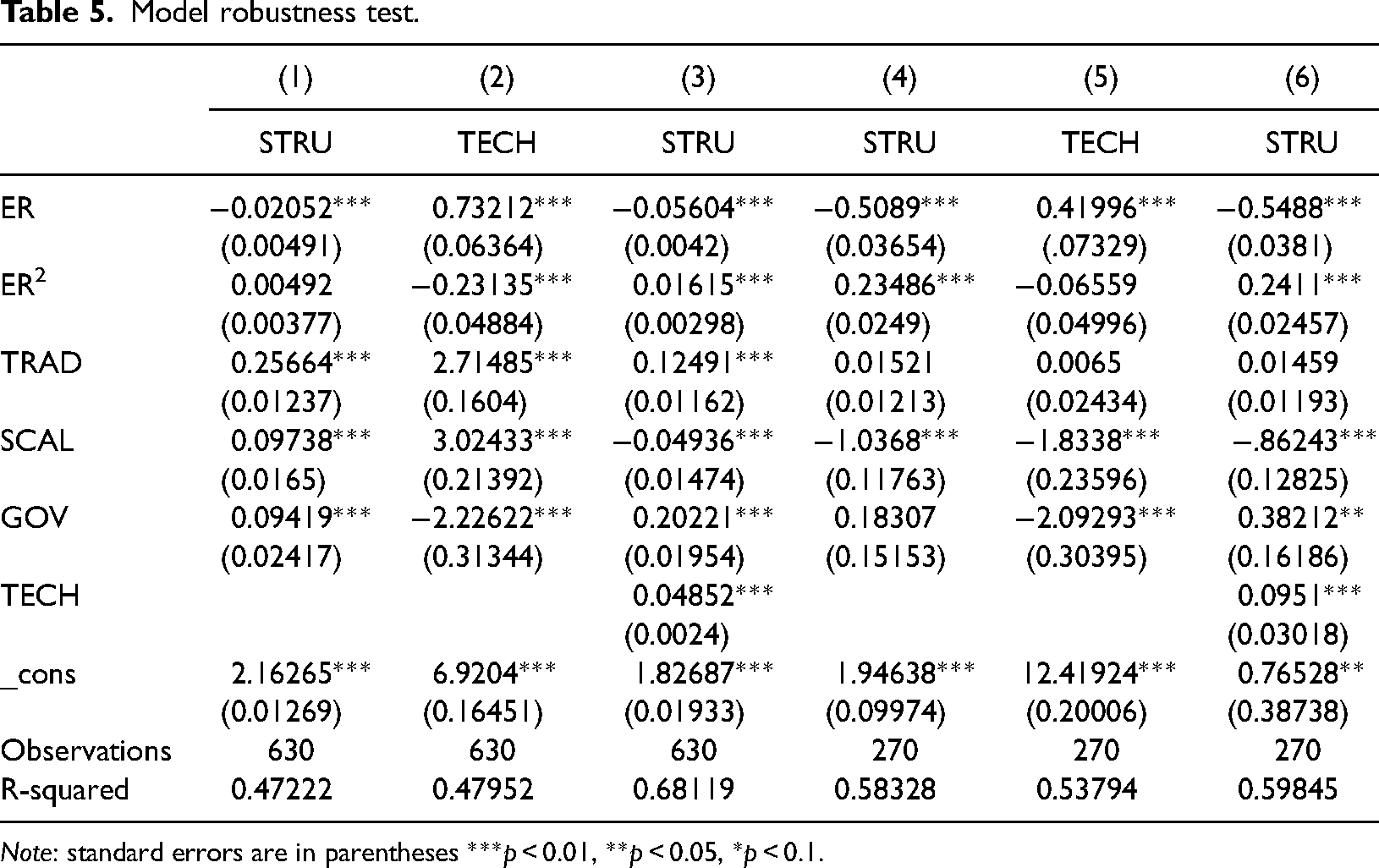
Table 5 shows the regression results in columns (1), (2), and (3). After changing the explained variable, technological innovation still plays a partial positive mediating role, suggesting that the former paper’s findings are robust.
2. Re-selection of study year intervals.
Model robustness test.
Note: standard errors are in parentheses ***p < 0.01, **p < 0.05, *p < 0.1.
Since 2012, China’s environmental regulations have entered a comprehensive upgrading stage. Environmental issues and the construction of an ecological civilization have been given prominence. Therefore, this study excluded the sample data before 2012 and conducted a stability test with the sample data of each region from 2012 to 2020. The regression results are shown in Columns (4), (5), and (6) of Table 5. After changing the time interval of the study, technological innovation still had a positive mediating effect. The analysis above is sufficient to demonstrate the robustness of the previous conclusions.
Regional heterogeneity
According to Table 6, the regression coefficients of technological innovation in all regions are positive and significant, but the promotion effect is better in the eastern regions. The effect of environmental regulation on industrial upgrading in the eastern region is “U” shaped. This is the same regression result as the national. However, it significantly inhibits industrial growth in the central and western areas. Therefore, Hypothesis 3 is valid. This indicates that the eastern region can respond more quickly to the rising costs of cleaning up pollution by reorganizing products and developing new technologies, thus driving industrial development. While the western region is less developed; thus, its development is the primary goal of local governments. Therefore, a large inflow of pollution-intensive industries and implementing environmental rules will make it harder to improve industrial structures. For the central regions that rely on resources for development, heavy industry has a solid development base and an unreasonable industrial structure. Their innovation base is weak and R&D power is insufficient. The central region has taken over the transfer of some contaminative substandard enterprises from the eastern area and transnational pollution-intensive enterprises. Therefore, the implementation of environmental regulations will not affect these production activities, making it difficult to achieve industrial restructuring. The industrial scale has a significantly negative influence on industrial structure upscaling in the eastern area and a significantly positive impact in the central and western areas, both at the 1% level. In the eastern areas, the expansion of industrial scale will not encourage the adjustment and restructuring of industry due to the smaller scale of fixed asset investment in the tertiary industry relative to the primary and secondary industries; furthermore, the scale of investment is not reasonable enough. Since the expansion of the fixed investment scale reduces market liquidity, some social resources are used in fields related to the construction of fixed assets and investments, resulting in an unreasonable development of industrial structures. The central and western areas have distinct regional characteristics, including high-quality mineral resources and mining development. Therefore, in contrast to other regions, investing more fixed assets in the central and western areas are conducive to speeding optimizing and adjusting the industrial structure. Foreign trade promotes the industrial transition of the central and western regions because of the comparatively low economic status. Imports and exports can bring technical support and capital investment to the central and western areas, promoting the industrial structure in an advanced direction. However, it inhibits the industrial structure upscaling and there is a “pollution paradise” effect in the eastern areas. This is because China’s current environmental regulations are relatively weak compared to developed Western countries. Foreign investors have shifted highly polluting industries to China to avoid the rising costs of stricter environmental regulations in their countries, which causes severe environmental problems. Generally, foreign companies have more competitive advantages in the market, which suppresses the growth of local companies and hinders their transformation to green and clean industries. This result is agreeable to the findings of Song et al. 68 Government regulations have contributed to upgrading the industrial structures in all regions and match with the national regression results. Table 1 shows that government spending in the western and central areas is more important than in the eastern areas as China has implemented the Western Development, Northeast Revitalization, and Belt and Road policies to address the issue of uneven growth between areas, and government spending has been well utilized.
Regional heterogeneity test.
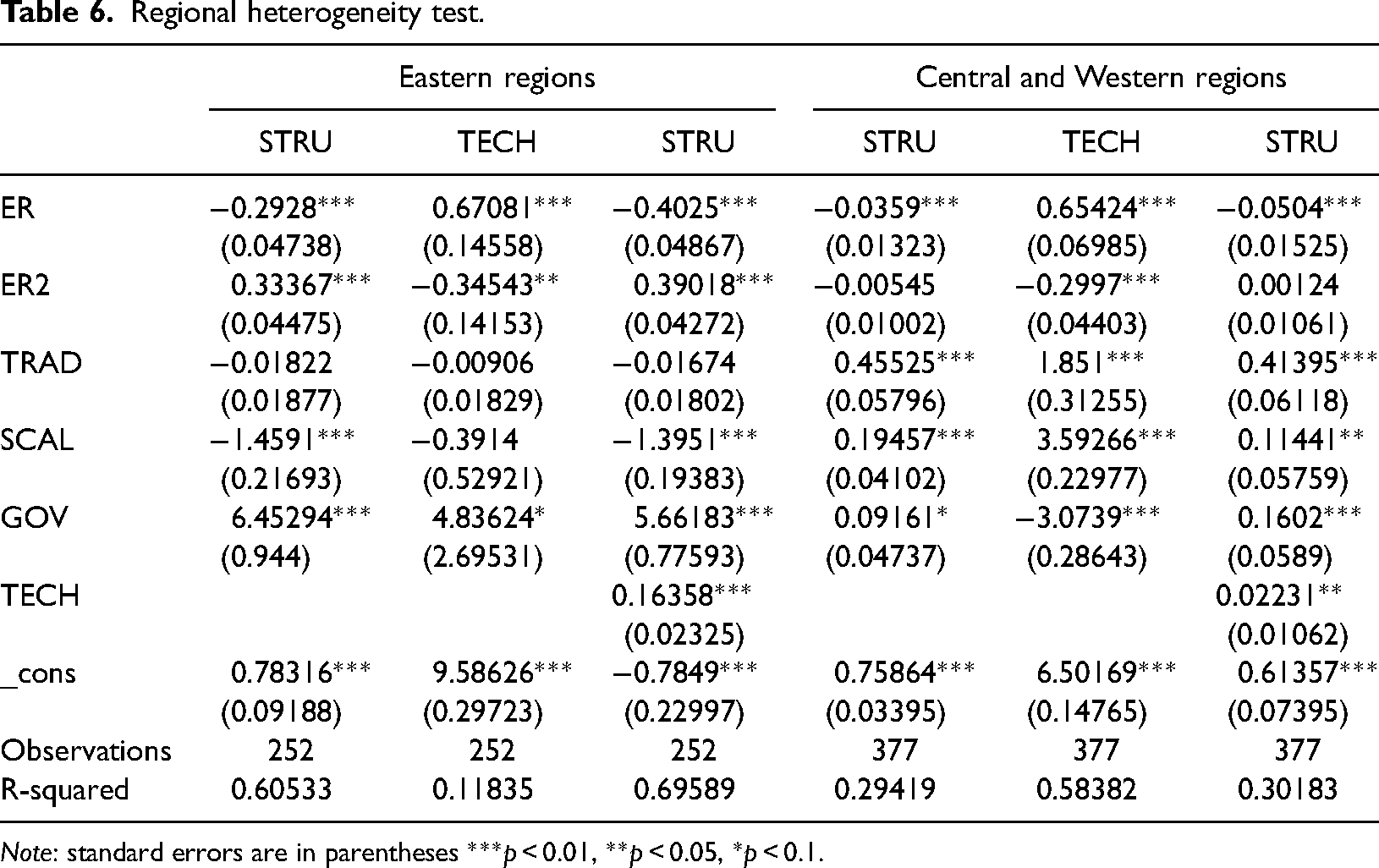
Note: standard errors are in parentheses ***p < 0.01, **p < 0.05, *p < 0.1.
Threshold test
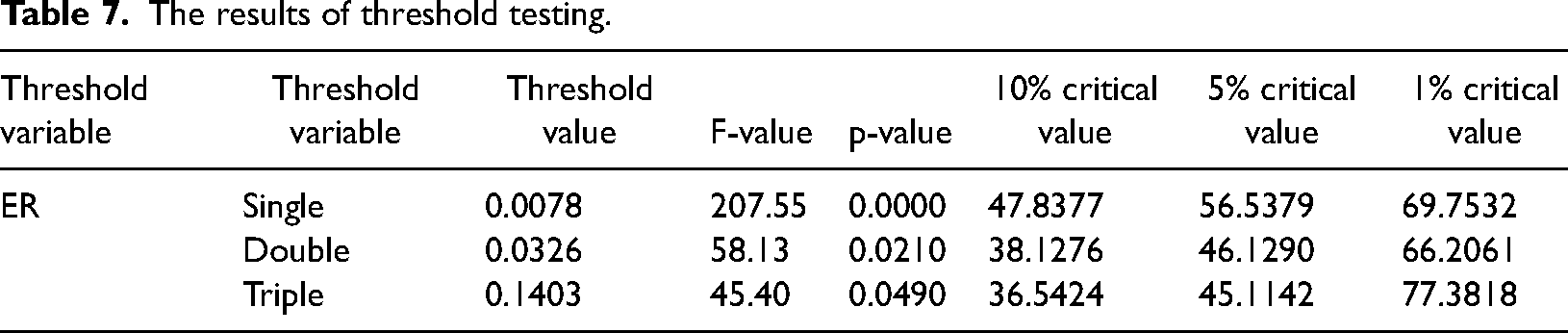
This study uses environmental regulation as a threshold variable and is repeatedly sampled 1000 times. From Table 7, the F-statistic is significant at least at the 5% level, in the three thresholds, suggesting that there is a three-threshold effect on the influence of environmental regulation on industrial structure upgrading.
The results of threshold testing.
The regression results in Table 8 show that when ER ≤ 0.0078, 0.0078 < ER ≤ 0.0326, and 0.0326 < ER ≤ 0.1403, the regression coefficients were −1.422, −0.835, and −0.289, respectively. The inhibitory effect of environmental regulation gradually decreases, and the last three regression coefficients pass the significance test. When ER > 0.1403 and the regression coefficient is 0.0165, environmental regulation promotes industrial development, but the positive effect is not significant. In summary, the inhibitory influence of environmental regulation on restructuring industrial structures gradually decreases with the level of environmental laws. When the threshold value exceeds 0.1403, the speed of industrial structure development accelerates. Therefore, the government should enhance the application of environmental rules to exploit the importance of environmental legislation in boosting the industrial development. Environmental supervision promotes the enhancement of environmental quality and stimulates the restructuring of industrial structures through a series of transmission mechanisms. The government should force enterprises to improve and develop their industrial structure while focusing on environmental protection, thus realizing the double dividend of ecological conservation and structural adjustment.
Regression results of the threshold effects.
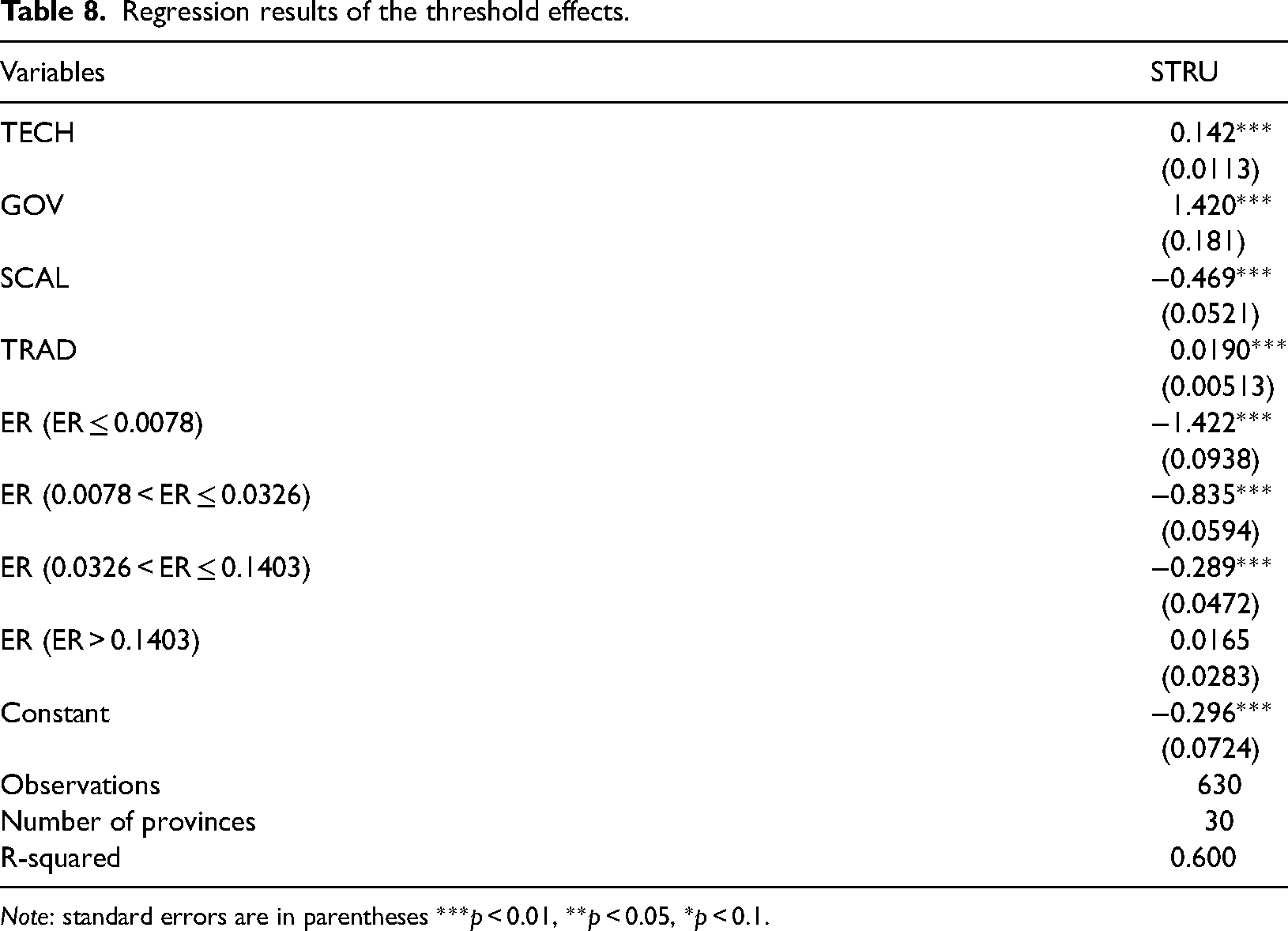
Note: standard errors are in parentheses ***p < 0.01, **p < 0.05, *p < 0.1.
Conclusions and policy implications
This study uses mediating effect and threshold models to analyze the influence of environmental regulation and technological innovation on industrial structure upgrading while considering regional heterogeneity. The main findings are as follows.
The direct influence of environmental regulation is “U” shaped on upscaling industrial structure and inverted “U” shaped on technical innovation, with China on the left side of the inverted U-shape. Strengthening environmental legislation inspires firms to conduct technical research and develop their innovative capabilities. Technological innovation partially mediates the impact of environmental rules on industrial structural restructuring and passes endogeneity and stability tests. There is regional heterogeneity in the influence of environmental rules on industrial structure upscaling. The influence of environmental rules on industrial structure upscaling in the eastern regions is “U” shaped. However, in central and western areas, environmental regulatory policies can constrain business transformation. Technological innovation is more vital to boosting industrial restructuring and improvement in the eastern region. Environmental regulation was selected as the threshold variable, and the results passed the three-threshold test. As environmental regulations become more stringent, it tends to favor industrial structure upgrading; thus, environmental regulation becomes a “push-back” mechanism for companies to adjust their production methods and achieve industrial advancement. Foreign trade crowds out the market of enterprises in the eastern regions and suppresses the development of local enterprises, indicating a pollution paradise effect in the eastern area. However, in the central and western areas, it can drive rapid development and achieve structural restructuring. In the eastern area, the expansion of fixed asset investments hinders industrial restructuring. In contrast, in the western and central areas, it promotes industrial structure upgrading. Government participation can encourage upgrading industrial structures in all areas.
Considering China’s current circumstances, this study offers policy suggestions to maximize the structural influence of environmental rules and encourage industrial structure optimization and improvement.
First, we develop a reasonable environmental regulatory policy. In the empirical analysis, it was found that environmental regulations had varied influences on the adjustment and improvement of industrial structures. It is necessary to develop a strong environmental regulation policy to effectively emphasize its positive impact on the upward curve. In addition, we should realize that environmental regulations are not blind to deindustrialization. Despite China’s industrialization leading to serious environmental problems, China remains in the late stage of industrialization. In the context of slowing down economic growth, inappropriate environmental regulation may disrupt the unstable industrial foundation and bring the economy to a standstill. Therefore, appropriate environmental regulation policies should be formulated to reduce market distortion.
Second, environmental legislation should be chosen according to local situations. Environmental regulation varies significantly by region, thus, differentiated environmental policies are required for different areas. The results demonstrate that environmental legislation promotes industrial restructuring through technological innovation in the eastern area, but not in the central and western areas. Therefore, the government should reduce the environmental management standards and ecological regulation costs in central and western areas. It should boost funding for pollution prevention and control, optimize the investment environment, and attract foreign investment to achieve industrial structure optimization. The eastern region has a high degree of marketization. Thus, strict environmental policies force companies to innovate technologically and to produce clean products.
Third, promoting the development of technological innovation and strengthening the positive interaction between environmental rules and technical innovation. The empirical results show that introducing new technologies substantially promotes industrial development. Therefore, we should vigorously promote technological innovation efforts and drive industrial restructuring with technological innovation. Enterprises should increase their investment in technological innovation and combine technology introduction with independent innovation. Applying innovation achievements directly to the production process, reduces production costs, improves production performance, and promotes the transformation of traditional industries. Environmental regulations drive industrial restructuring through technological innovation, but its impact is nonlinear. To foster science and technology innovation, we should set a reasonable level of environmental control, focus on the beneficial interaction between the two, and fully utilize the intermediary function of technological innovation.
Fourth, governments should guide industrial investment from capital to science and technology investment and vigorously promote the advancement of clean industries. The results show that foreign investment in eastern China inhibits industrial structure upgrading. Therefore, we should correctly guide the capital investment of each enterprise, and encourage foreign enterprises to maximize the introduction of foreign investment in clean industries, and avoid or eliminate high-energy-consuming industries. This creates a good investment and development environment for foreign direct investment. Based on the regional differences between natural resources and factor endowments, we introduce foreign direct investment according to local conditions and formulate practical and feasible foreign investment objectives and policies.
Undeniably, there is room for improvement in this regard. Although this article discusses the intrinsic connection between environmental regulation, technological innovation, and industrial structure upgrading, more factors must be considered. This article only discusses overall industrial structure upgrading without a detailed classification study of industries. Therefore, future research should start from the perspective of complex industries and consider various factors to promote environmental protection and industrial structure upscaling more comprehensively and systematically.
Footnotes
Author contributions
Conceptualization, Chong Huang and Yuqing Miao; formal analysis, calculation, and writing-original draft preparation, Yuqing Miao; methodology and data curation, Yuqing Miao and Chong Huang; writing–review and editing, Kedong Yin and Chong Huang; supervision, Chong Huang. Both authors have read and agreed to the published version of the manuscript.
Declaration of conflicting interests
The author(s) declared no potential conflicts of interest with respect to the research, authorship, and/or publication of this article.
Funding
The author(s) disclosed receipt of the following financial support for the research, authorship, and/or publication of this article: This work was supported by the Major Program of National Social Science Foundation of China (grant number No. 14ZDB151).
