




Abstract
Today in Russia, there is a growing number of anti-abortion policies even though the birth rate is not a key factor affecting the demographic situation in the country. In this article, I investigate how the anti-abortion discourse is constructed in the media. For this purpose, I analyse a dataset of 5 hour-long episodes of the tabloid talk show Pust’ Govoriat. More specifically, the aim of this article is twofold. I seek to demonstrate to what extent the discourse displayed in the show is shaped and shapes by the Russian government’s family policies and, consequently, public opinion. On the other side, I aim to understand how speakers verbally and non-verbally negotiate morality, norms, gender roles and identities to negotiate if abortion is acceptable or not. I advocate that the tabloid talk show, like many other state-funded media products in Russia, is utilised as a government’s tool for anti-abortion propaganda and depoliticisation of social problems.
Introduction
The topic of abortion has been studied from various perspectives in recent years. Primarily, scholars are concerned with how abortion is discussed in public forums such as mass media and courtrooms, as well as private and medical contexts in countries such as Germany and the US (Ferree et al., 2002), Ireland (Ralph, 2020), England (Beynon-Jones, 2017), Uganda (Larsson et al., 2015), Canada (Saurette and Gordon, 2013) and Bolivia (Rance, 2005).
Beynon-Jones (2017) conducts a discourse analysis of women’s accounts from the perspective of Feminist Studies and Psychology. Drawing on the analysis of the social construction of stigma and discursive psychology, Beynon-Jones analyse the language women use to represent their experiences and construct unstigmatised identities. Ferree et al. (2002) analyse abortion discourse in the public spheres of Germany and the US and concluded that the connection between abortion and gender is politically constructed, more pronounced in Germany than in the US. Moreover, the authors argue that themes of women’s autonomy and non-state intervention have gained prominence in both countries with the rise of feminism. Other works on abortion fall within the fields of Politics (Swigger, 2017), Reproductive Health (Chełstowska, 2011) and Media Studies. All scholars agree that mass media perpetuates ‘abortion negativity’ (Purcell et al., 2014), often based on social myths and non-scientific facts, such as women’s mortality rates (Sisson and Kimport, 2014). For example, Koralewska and Zielińska (2022) analyse anti-abortion discourse in the Polish right-wing press. Scholars argue that in Poland, right-wing parties, the press and the Church present abortion as a national and cultural threat. Levy (2014) analyses the popular prime-time TV show on American TV, Grey’s Anatomy, in which the main character decides to have an abortion. The author claims that despite breaking the abortion taboo on American television, American society does not fully accept pro-abortion positions. Sisson and Kimport (2014) systematically track and analyse abortion plots in American film and television, showing that media representations of abortion-related plotlines are frequent and consistent with existing cultural theories and social beliefs. As for other TV genres, Bannink and Albaladejo (2018) investigate the genre of political interviews concerning the representation of abortion. The authors show how the Spanish politician adheres to patriarchal principles and does not acknowledge women’s rights.
The rhetoric and imagery of Russia’s new pronatalist ideology have their roots in Soviet Union tradition, in which maternity has been viewed as a state function, a concept that Issoupova (2000) terms ‘state-mother-child’ triad (p. 31). This ideology focuses on ‘creating associations between fertility, social adequacy, patriotism, and ethnic and national homogeneity’ (Rakhimova-Sommers, 2014: 177). Such a pronatalist ideology gained traction after the collapse of the Soviet Union when Russia’s demographic situation worsened. Since the beginning of the new millennium, women’s fertility has been considered in terms of the country’s ethnic and political survival, becoming an integral component of Putin’s ‘traditional values’ agenda, which opposes ‘Western values’. Bernsand and Törnquist Plewa (2019) indicate that the current regime can be characterised by a ‘few basic ideological tenets such as anti-westernism, antiliberalism, and traditional values’ (p. 4). Today’ traditional values’ agenda is becoming more visible, especially due to the demographic crisis that has intensified for the last 3 years during which ‘the country has lost around 2 million more people than it would ordinarily have done as a result of was, disease and exodus’ (The Economist, 2023). Recent policy developments, such as the ban on abortions in private clinics (Minzdrav RF, 2023), the court case regarding LGBT propaganda (BBC, 2023b) and the law banning sex change (BBC, 2023a), clearly illustrate that anti-abortion, homophobic and conservative views on family are core elements of the traditional values discourse framed by Putin as a departure from Western countries (Putin zaiavil chto zapad kak men’shinstvo ne vprave naviazyvat’tsennosti miru, 2022). Over a decade ago, President Putin called for a ‘comprehensive population conservation strategy’ (Putin, 2012), further supported by numerous cultural institutions. The Orthodox Church was central in formulating and spreading ethical, moral and religious values, mainly regarding marriage, childbirth and homosexuality. The Church has actively participated in the anti-abortion campaign initiated in the 2010s, focusing on the message of reproduction as a means of fulfilling a woman’s social and moral duty.
This study examines how abortion is discursively constructed within tabloid talk show in the Russian context. This area still needs to be researched, and the study aims to address this gap. By considering the various political, cultural and societal dimensions intertwined with the abortion topic, I will first trace the discursive strategy used in the talk show to frame the social problem of abortion in Russia. Second, I will explain the discursive tools talk show participants employ to delegitimise abortion. Lastly, I will demonstrate the extent to which the discourse presented in the show shapes and is shaped by the Russian government’s family policies and, consequently, public opinion.
Before delving into my theoretical framework and data, I will provide some background information about the talk show I am analysing.
Background: Pust’ Govoriat talk show
Pust’ Govoriat (henceforth PG) has been broadcast on Channel One in Russia since 2001. Channel One is a Russian federal TV channel positioned as the main TV channel in the country (First Channel website, 2015). In addition to Russia, Channel One’s broadcasting extended to former USSR countries like Kazakhstan, Kyrgyzstan, the Baltic States, Ukraine, Belarus and Moldova. 1 The channel’s theoretical audience exceeded 250 million viewers. By the end of 2020, 51% of the TV channel’s shares were held by the Russian state, 29% by the National Media Group and 20% by the insurance company SOGAZ (Sobolev et al., 2021). Hutchings (2013) states, ‘Putin, having wrested control of national broadcasting from the oligarchs, used television to shape public opinion and establish domination over political elites’. Consequently, Channel One is the principal federal channel in Russia, and the state primarily funds its media products. I agree with Oates (2009), who argues that despite different media owners, ‘realistically there is no media outlet that can challenge the Kremlin’s monopoly on power and information’ (p. 29). In this sense, Chanel One ‘follows the Kremlin’s line particularly closely’ concerning news and socio-political shows (Tolz and Hutchings, 2015: 32). I argue that this tendency is not limited to news coverage or political programmes but also extends to entertainment TV shows.
PG has been considered one of the most popular talk shows on Russian television, and before 2005, it had several previous names, including The Big Laundry and Five Evenings. The Russian talk show resembles the American show The Jerry Springer Show in terms of genre, although it was initially supposed to be similar to The Oprah Winfrey Show (Vetkina, 2022). The show examines what is considered the main problems of the population, discussing them in a provocative manner (divorce proceedings, removal of parental rights, dramatic marriages, children’s issues), as well as social and mental conditions (crime, drug addiction, suicide, prostitution), and sometimes even issues of national significance (terrorist attacks, migration). The average number of viewers was around 4 million. The show also had a Youtube channel where its popularity was evident: the most highly-rated episode had around 17.2 million views, while the least-rated one had 1.4 million views. For the period from August 17, 2020, to August 23, 2020, PG was the number one show in the rating among all Russian talk shows, with an average audience of 508.6 thousand viewers, a rating of 3.4%, and a share of the available audience of 13.7% (Dannye po auditorii SMI, 2020). In 2017, PG won the TEFI Russian national television award seven times, a testament to the show’s impact on Russian culture. However, today, the PG show has stopped broadcasting its episodes due to the war.
The organisation of space and interaction in PG can explain how political power and values hierarchies are asserted in the programme. On the stage in the studio, there are several sofas where the programme’s guests sit, each invited in their own time. The show’s guests are ordinary people, resembling the home audience regarding class, finances and education (Levchenko, 2018). The constructed identity makes the guests relatable, understandable and interesting to the target audience. As Grindstaff (2002) puts it, ‘ordinary means something very specific [. . .] it does not necessarily mean “average,” “typical” [. . .] ordinary people on talk shows discuss mostly personal matters pertaining to sexuality, identity, interpersonal relationships, family conflict, and victimisation or abuse, and their expertise stems from first-hand experience rather than formal educational or professional credentials’ (pp.18–19). The experts sit opposite them, at the foot of the amphitheatre with the audience. Between the experts, at the centre of the semi-circular amphitheatre, the host usually stands to begin the show, physically dividing the experts into two camps, which will then represent opposing positions (see Figure 1). The experts typically include well-known singers, actors, social media celebrities, psychologists, lawyers, State Suma deputies and representatives of the Russian Orthodox Church. The public discussion led by these experts cannot be described as formal and fluent. Experts are willing to provide simple and accessible commentary (Livingstone and Lunt, 1994). During heated debates, the primary function of these experts is not to offer a professionally informed view but to express moral judgemental opinions about other people’s lives (who is right and what is true). ‘Collective decisions’ often remain unresolved, as these heated disputes result in no compromise or solution. Matza (2009) argues that adopting such a dialogue type on Russian TV has become an instrument of state power manipulation, with the state interested in depoliticising and personalising social problems. The studio audience behind the experts is open for comments, and the host walks between the rows of viewers. The studio audience’s reactions are usually expressed through mutual exclamations of approval or disapproval, such as booing and applauding, often conveyed paralinguistically. The studio audience’s contributions could sometimes be scripted, such as prompts on an electronic screen indicating how to react at a particular moment. As for the target audience’s status among all talk show genres, Livingstone and Lunt (1994: 46) conclude that ‘the lower one’s social class and the older one is, the more likely one is to watch’. The same idea was provided in Hall’s (2007: 260) analysis, which claims that ‘typical viewers were characterised’. Grindstaff (2002) also provides evidence of the more significant proportion of females among the TV talk show audience, noting that trash talk shows are ‘traditionally geared toward women’ (p. 18). Regarding PG’s target audience, the work of Bogachev provides sociological details and states that the PG audience consists of ‘housewives, pensioners, the unemployed, workers and employees with a small salary, as well as citizens attracted by the topic of the programme. The report prepared by the Transcontinental Media Company clarifies that Pust’ Govoriat is watched by men over 45 years old and women over 35 years old’ as bored, lonely, passive and lazy people with extra free time, mostly female and lower class, and not particularly educated (Bogachev, 2013: 316). Before the war in Ukraine, the PG show aired Monday to Thursday at 7.50 pm, followed by the Vremia news broadcast at 9 pm.
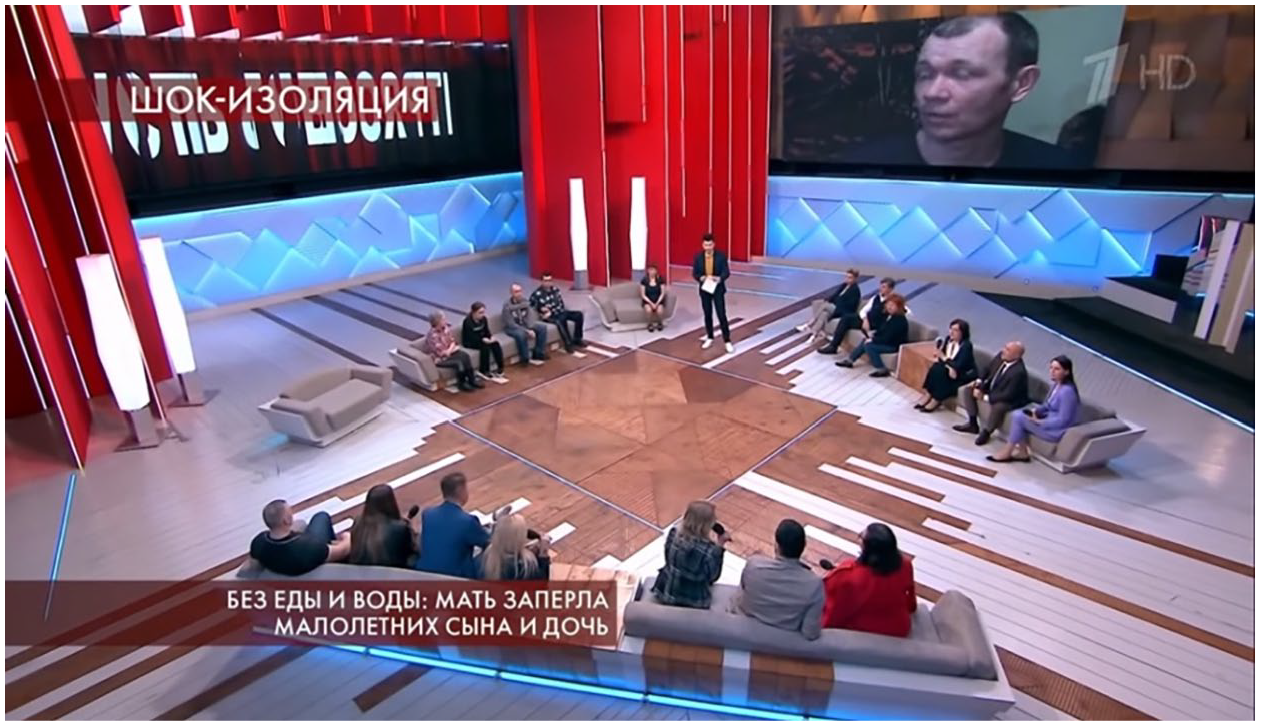
PG studio arrangement 2020 (screenshot: YouTube.com).
From its beginning (2001) till 2017, the show’s host was Andrei Malakhov. He is a famous and wealthy Russian showman who has always been associated with PG and Channel One. In 2017, he quit and was replaced by Dmitrii Borisov, who continues to host the programme. The host, as the show’s central figure, assumes different roles. Livingstone and Lunt (1994) highlight the complexity of the host’s role and write that ‘he is the chair of the debate, the adored hero of the talk show, a referee, a judge, a therapist, a manager or all of these at once’ (p. 56). Even during messy heated arguments on the tabloid talk shows, participants maintain a particular order and hierarchy, deferring all the power and control to the host, who in turn follows the producers’ directions.
Scholars indicate that analysing media talk in general, and a tabloid talk show, in particular, has its intricacies. As Cragin (2010) puts it, ‘the challenge of talking about the talk show as a genre is to consistently integrate an understanding of its hybrid nature: how it is both amoral and highly moralistic, both chaotic and highly controlled’ (p. 155). The complex nature of this genre is evident in the fact that talk shows are both real and staged, informative and entertaining, public and private, spontaneous and scripted. The artificial realism of talk shows is a ‘commonplaces of contemporary culture [. . .]. The borders between actors and real people, between script and genuine reactions are blurring, creating a sort of hyperreality in which real life reverse into a spectacle and vice a versa’ (Biressi and Nunn, 2005: 96). As highly hybridised quintessential postmodern texts, talk shows have been a topic of interest in discourse studies (e.g. Haarman, 2001; Hutchby, 2001; Myers, 2001; Thornborrow, 2015; Tolson, 2006). Despite their prominence and public significance, the top-rated Russian talk show has never been studied from the discourse analytic perspective. I am concerned with how the discourse around such a sensitive and controversial topic as abortion is constructed in a hybrid environment. I am also focused on the social, cultural and political message behind the heated conflict co-produced by the talk show participants.
In the next section, I will explain the theoretical framework of this study.
Conceptual framing
By examining the tabloid talk show through a critical lens, I employ Critical Discourse Analysis (CDA), which views discourse, following Foucauldian description (Foucault, 1975), as a social practice and treats any utterance (spoken or written) as inherently ideological. To analyse how PG represents abortions, I follow Fairclough’s (1995, 2003, 2013, 2018), approach which provides a theoretical foundation for conceptualising the interrelation of discourses (ways of representing), genres (ways of acting and styles (ways of being/identifying). This triad allows for the inclusion of various levels in my analytical toolkit. I approach family discourse as a way of representing (discourses); tabloid talk show interactions as a way of acting (genre); and construction of identities, morality and norms as a way of identifying (styles). The prioritisation and acceptance of one speaker’s negotiated norms over others are tied to Bourdieu’s (2002) notion of diverse forms of capital, where specific identities and social classes gain dominance over others. Thus, the negotiation of what is deemed good or bad, helpful or harmful, as articulated by a politician or a well-known celebrity, is more likely to be heard. The concept of a speaker’s status, enabling the commitment to specific values about morality and normality, aligns with Van Leeuwen’s (2008) theory of legitimation.
Van Leeuwen employs Bernstein’s (1990) concept of recontextualisation, aiding him in explaining how knowledge of social practice is socially co-produced and developed within specific social situations. In the process of recontextualisation, identifying and structuring all elements of social practice (actors, times, locations, etc.) are crucial. Van Leeuwen’s (2008) approach centres on how ‘social practices (including discursive practices) are turned into discourse (representations of social practices)’ (Wodak and Van Leeuwen, 1999: 93). Among the transformation variants in Van Leeuwen’s theory, legitimation is the focal point in my analysis. Through legitimation, ‘ideologies can come to be accepted as part of common sense’, and ‘a set of beliefs and values becomes accepted by virtue of the fact the society accepts the authority of those disseminating them’ (Flowerdew and Richardson, 2018: 3). Arguments, opinions and stories in the show not only represent social practices but are also serve to evaluate and legitimise (provide reasons) or delegitimise (critique) social practices.
In my analysis, I adopt three categories of legitimation that aid in understanding how PG participants align their views and ideology with values, rendering them acceptable and normative. The first type of legitimation is authorisation, wherein speakers invoke ‘the authority of tradition, custom, law, and/or persons in whom the institutional authority of some kind is vested’ (Van Leeuwen, 2008: 105). Legitimation is tied to individuals’ positions and roles within a specific social hierarchy. For instance, a teacher for a class, a doctor for patients, a boss for employees, or even an expert whose power is rooted in a higher level of knowledge or a role model. Authority can also be personal (as in the above examples) and impersonal (such as the Russian Orthodox Church or a public organisation). The second type of legitimation involves moral evaluations, through which speakers reference value systems. Hints within the text are often expressed through adjectives on the scale of good and bad, healthy and unhealthy, beautiful and ugly and so forth. Van Leeuwen cautions that such adjectives represent only the tip of the cultural iceberg, and the ‘analysts can only “recognise” that top based on our cultural knowledge’ (Van Leeuwen, 2008: 110). Another type of legitimation is rationalisation, encompassing instrumental rationalisation (referencing goals, uses and effects of social practices) and theoretical rationality (referring to nature, scientific theories and facts presented through definitions, explanations and predictions).
Attempts to accuse, justify, or judge someone else’s words and actions on the tabloid talk show are linked to speakers’ stances. Therefore, I connect legitimation strategies to stance-taking in my research, which bears significant sociolinguistic potential. ‘Speakers’ intonations, words, gestures index certain stances that, in turn, are assigned to the cultural matrix (DuBois, 2007) and conventionally associated with particular [. . .] social relationships (including relations of power)’ (Jaffe, 2009: 2–3). Thus, the non-verbal means characterise many conversations in my data, rendering the material multimodal. Production specifics influence this multimodal and mediated nature of the analysed talk. Non-verbal elements such as editing, camera angles, specific sound effects, photos and video clips shown in the studio play a crucial role in (de)legitimising particular ideologies and directing them towards the ‘overhearing audience’ (Heritage, 1985). Consequently, the concept of multimodality (Van Leeuwen, 2008) significantly contributes to my theoretical framework.
CDA has always been focused on media products because, as Fairclough (1995) notes, ‘media texts do not merely “mirror realities”, they constitute versions of reality depend on the social positions, and interests, and objectives of those who produce them’ (pp. 103–104). Tabloid talk shows are not solely shaped by the ideologies but also ‘institutionalise certain kinds of manipulation’ (Grindstaff, 2002: 249) and place real people’s stories ‘into a theatrical context that fictionalises their performances to some degree [. . .] in the selection and juxtaposition of images, the choice of music and narration, the presence of cutaways and reaction shots, the artful shaping of storylines’ (Grindstaff, 2002: 251).
Before delving into the detailed analysis, I provide relevant background information about the data.
The data
I collected data from both the official website of the PG show, https://www.1tv.ru/shows/pust-govoryat, and its YouTube Chanel, https://www.youtube.com/channel/UCD9jSZLsftoOACtkrDNZlsg. I used keywords and hashtags to search for relevant episodes discussing family issues. The keywords included kinship terms and words related to pregnancy, motherhood and abortion. The search yielded a corpus of 16 episodes centred around the family discourse. The average duration of each episode is 1 hour. I first watched and transcribed these episodes using a transcription notation adopted from Jefferson (2004: 24–31). Subsequently, I conducted the content analysis using the NVivo programme, which assisted in categorising the data into existing topics and trends, including anti-abortion discourse. Following this, I carried out a discourse analysis that focused on the talk’s phonetical, lexical, grammatical and interactional features. I also performed a corpus-based critical discourse analysis in the Word Sketch software to demonstrate how my key arguments align with various episodes of abortion spanning the period from 2010 to 2020. Lastly, I delved deeply into the construction of morality and family identities, the expression of gender roles and family norms, and the broader political, social and cultural implications that arise. I argue that detailed critical discourse analysis offers a richer understanding of the tension or coherence between the dominant state family policies, media discourse and familial norms, roles and values.
In the forthcoming analysis, I address a specific episode of PG in which participants discuss the moral right of women to have an abortion. This episode, titled Ubit’ nel’zia rodit’ (Убить нельзя родить – To kill impossible to give birth), aired on July 6, 2010. The intentional use of amphiboly in the episode’s title presents two contradictory possibilities. The meaning of the phrase hinges on the placement of the missing comma. The audience is prompted to insert the comma either after the first word (убить – to kill) or before the third word (родить – to give birth). Those who advocate for placing the comma after the first word are positioned as supporters of abortion, with the phrase implying abortion is equivalent to murder. Conversely, who suggests placing the comma before the third word are portrayed as individuals with anti-abortion views. I will illustrate how participants negotiate the moral acceptability or unacceptability of abortion.
De-politicisation of the social problem of abortions among teenagers
A resident of Chelyabinsk, Vika Zubkova, found herself pregnant at 16. The father of her future child is also a teenager and lacks financial resources. Vika’s mother, Nadezhda Zubkova, believed it was too early for her daughter to become a mother. Nadezhda presented Vika with an ultimatum: either she must undergo an abortion or leave the house. However, Vika chose not to abort her child and left her mother’s home while still pregnant. In the studio, Vika appeals to the audience for financial assistance to address her housing problems, as she has no place to live. This discussion unfolded shortly after Vika gave birth to her child, and the conflict between the mother and the daughter had been initiated earlier in the same episode. The participants in the talk show construct opposing identities for Nadezhda and Vika. Nadezhda is portrayed as heartless and brutal, while Vika is presented as the victimised daughter. Among the experts invited to discuss the issue of abortion are Elena Khanga, a well-known radio and TV host, and Elena Mizulina, a State Duma deputy. Additionally, the role of a documentary film presented during the episode holds significance.
The following excerpt illustrates the employment of authority legitimation (Van Leeuwen, 2008) and the de-politicisation strategy.
Participants: A(udience) B(oris) – a gynecologist EK (Elena Khanga) – a TV presenter
This excerpt commences with a lengthy and uninterrupted contribution (lns 1–15) from Elena Khanga. 2 Elena serves as the primary speaker in the episode who delves into the topic of abortion on a societal and state level. Her initiation of interaction with Nadezhda is marked by her instruction to ‘ask her mother a question’ (line 1), emphasising the imperative for all mothers to engage in conversations with their daughters. Through the pronoun ‘those’, Elena constructs a shared identity encompassing all mothers, with further specification provided by the dependent clause ‘who watch our programme’. This construction indirectly prompts female viewers to contemplate their daughters’ upbringing. In lines 5–8, Elena shifts her focus to the state by stating ‘the second question is for the state’, linking it to sex education. She inclusively aligns herself within the broader category of Russian citizens by using the genitive case of the first-person plural pronoun ‘we’ (line 5). This linguistic choice establishes a sense of textual and pragmatic cohesion that reinforces group identity and unity (Boyd, 2013). In lines 7–8, Elena introduces a new addressee responsible for conducting sex education. The addressee remains unspecified as she employs the indefinite pronoun ‘someone else’ and the modal verb ‘maybe’. Consequently, Elena refrains from explicitly naming the addressee. However, her non-verbal cues – such as turning her body towards the priest beside her – indicate that she implicitly addresses religious institutions (see Figure 2a and b). Through editing techniques, the camera zooms in to unequivocally identify the priest to the audience. This visual cue substitutes for verbal clarification. Without directly naming the church representative, Elena’s discourse reaches out to the priest, positioning the Russian Orthodox Church as a bastion of high morality within the social hierarchy pertaining to sex education. The process of authority legitimation (Van Leeuwen, 2008) encompasses both personal and impersonal aspects, as Elena concurrently addresses the priest individually and the broader Russian Orthodox Church institutionally. Elena employs deictic devices to communicate her point without explicitly specifying what should be conveyed to teenagers. In lines 13–14, she asserts, ‘if you have a lifestyle like this, then you will have the following consequences’. Elena employs the demonstrative particle and pronoun ‘like this’, which lack a specific referent within her utterance. Within a broader context, the interlocutors understand that ‘lifestyle like this’ alludes to engaging in sexual activity, while ‘the following consequences’ imply an unwanted pregnancy. Though words like sex, sexual life, pregnancy and abortion remain unspoken, their implicit presence underscores taboo lexis. Elena encourages mothers to engage in discussions about contraception, sidestepping direct references to sex and pregnancy. By selecting the singular form of the pronoun ‘you will’, she singularises the generic phenomenon of abortions in Russia as if it were an individual instance. This technique enhances immediacy and vividness in her argumentation (Grenoble, 1998), augmenting its persuasiveness. The audience (line 16) echoes Elena’s sentiment with applause.
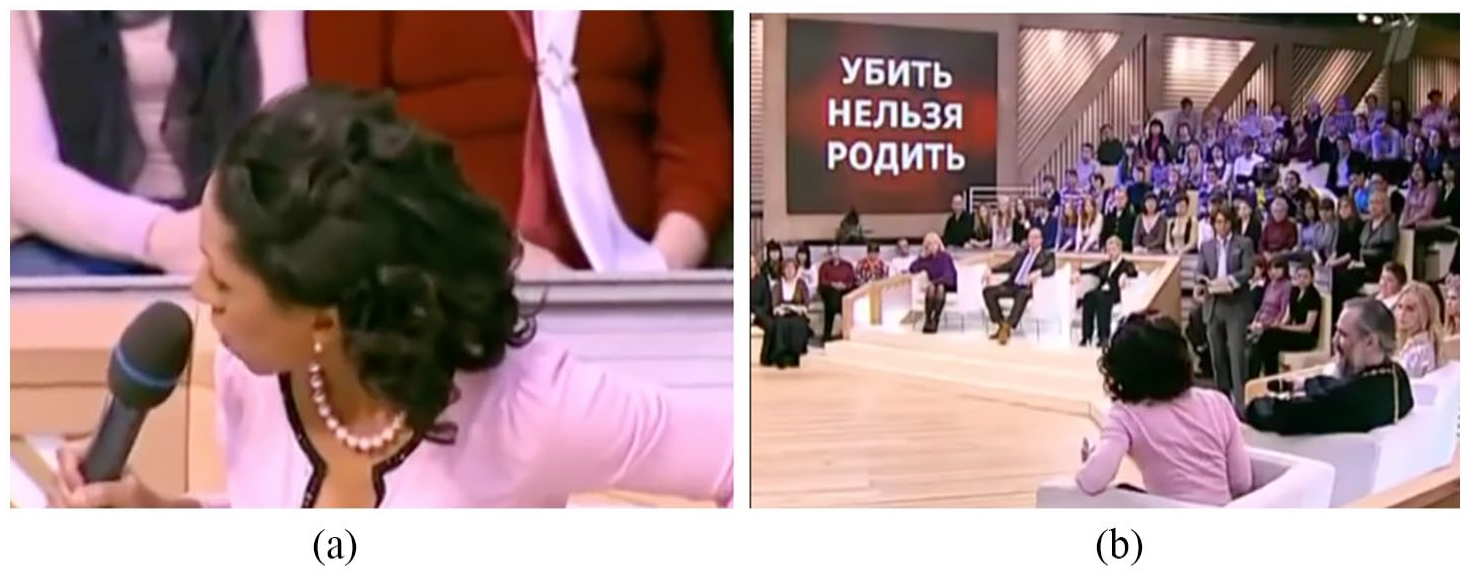
(a and b) Elena Khanga addresses the priest.
Gynaecologist Boris endeavours to attenuate the state’s responsibility (line 18) and depoliticise the issue of abortion by attributing it to this specific family dynamic: ‘the part of this problem still lies in this family’ (line 19), ‘there was already an example in this family’ (line 43). Boris adopts a cooperative stance with the state, using the first-person plural pronoun and verb ‘we will not be able to cope with this’. The inclusive ‘we’ aligns Boris’ agency with that of the state. While discussing the state’s role, Boris asserts, ‘within the framework of the state program only. . .’ (line 18), emphasising ‘only’ with a rising intonation to underscore that the abortion issue is not exclusively the state’s responsibility. In line 22, to bolster his standpoint, Boris employs discursive strategies such as the second-person plural imperative ‘believe me’ (line 19), ‘look’ (line 19) and a rhetorical question ‘you know what’ (line 22). Non-verbally, Boris gestures towards Nadezhda, the girl’s mother who urged her to have an abortion at 16. His gestures complement and reinforce his words, with his pointing at Nadezhda on the couch in the studio functioning as an additional tactic to isolate blame and attribute the abortion issue to this specific family.
Excerpt 1 illustrates how participants deploy a depoliticisation strategy to shift responsibility from the state to an individual family. Similar strategies are evident across other episodes within the corpus. Notably, national abortion statistics and governmental programmes intended to address abortion-related concerns are omitted through recontextualisation. Regarding morality, the Russian Orthodox Church emerges as an authoritative entity entrusted with disseminating views on reproduction and family dynamics to young girls. This appeal to a respected religious institution legitimises the anti-abortion standpoint. Moreover, the excerpt highlights the negotiation of patriarchal gender roles, as the agency of males – integral to the reproduction process – is excluded, thereby reinforcing the norm that absolves fathers of moral responsibility.
Pseudo-rationalisation as a tool of delegitimising abortions
The analysis of the second excerpt reveals the transformation of rationalisation (Van Leeuwen, 2008) into a concept termed pseudo-rationalisation. Additionally, it underscores the utilisation of multimodal resources by the talk show production team to promote anti-abortion ideology.
Participants: GT (Galina Tsarеva) – a film director H(ost) A(udience)
The Host introduces a short segment from the documentary film ‘Russkii Krest’ (The Russian Cross), directed by Galina Tsareva, which carries significant connotations in its title. ‘Krest’ (cross), besides its geometric meaning, holds two significant interpretations in Russian: it symbolises Christianity and signifies hardship and suffering (Ozhegov and Shvedova, 1997). Through this title, the documentary director seemingly suggests that the elevated abortion rates in Russia cause suffering and pain for women while also invoking Christian doctrines that deem abortion a sin. This reference aligns with a prior non-verbal appeal to a priest within the episode.
The video employs a sepia-toned image (see Figure 3). This choice is deliberate, as sepia toning imparts a warmer hue and enhances retro and vintage qualities to photographs. In photography, a warmer tone often elicits a more sentimental response (Ellis, 1975). Accompanied by sombre music, including a drum roll reminiscent of execution scenes, the presenter’s voice adopts a mournful tone. Rather than presenting abortion facts objectively, the presenter’s style takes on horror genre elements. The documentary displays visuals of an operation room, medical instruments and a surgeon clad in surgical attire. Analogies are drawn, likening the vacuum aspiration procedure to a vacuum cleaner clearing debris from a carpet. The removal of the foetus is depicted in gruesome detail, resembling child murder. The film refers to the foetus in a woman’s womb as an ‘infant’, evoking an association with a child up to a year old, and ‘child’, invoking images of a person in their childhood.
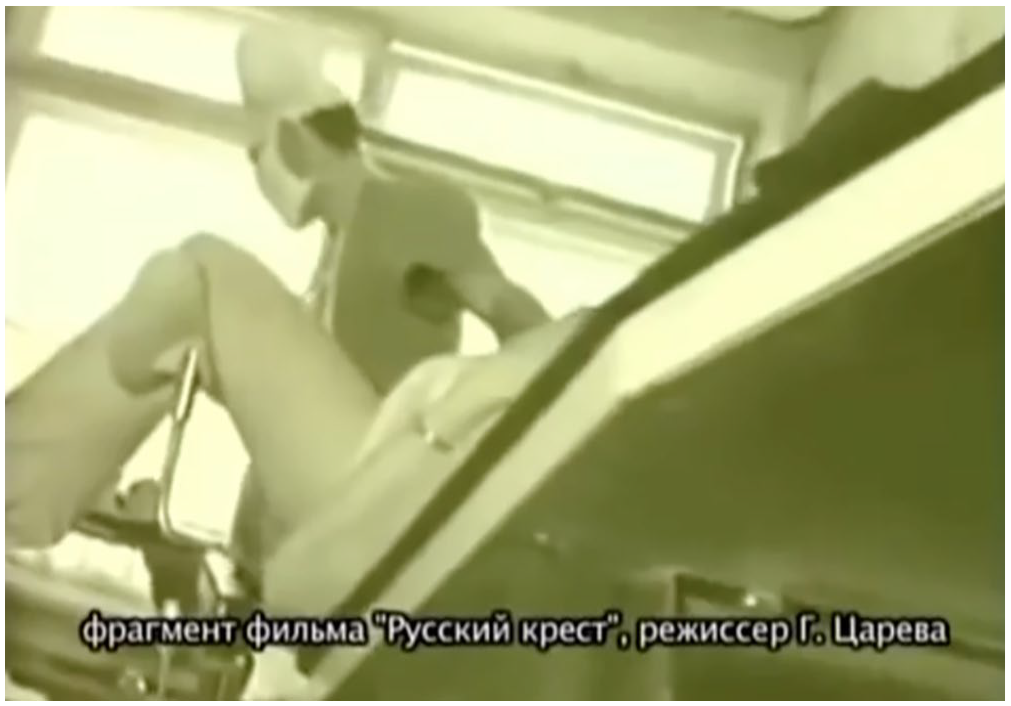
Screen capture of the Russkii Krest film.
Furthermore, the diminutive suffix -ek is added to the word ‘rebiyonok’, creating ‘rebiyonochek’, which emphasises both size and affection. This linguistic manoeuvre paints the foetus as an already-born child with whom women are expected to establish a bond. Following this image, the film depicts the abortion procedure in distressing terms: ‘when the body of the trapped baby is dismembered, its mouth opens wide in a soundless scream, the child’s body is cut into pieces and sucked out into a special container’. Notably, the excerpt captures Vika’s emotional reaction as she cries and hides her face (see Figure 4) – a close-up that recontextualises the response.
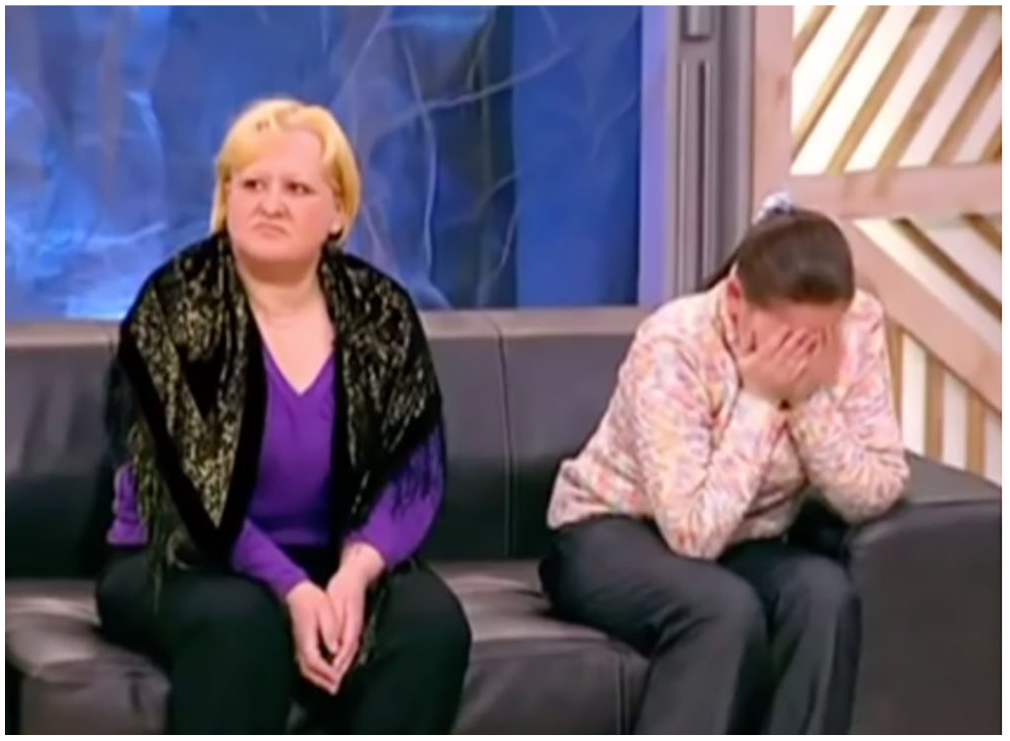
Vika’s reaction to Russkii Krest film.
This sequence of diverse multimodal resources, each bearing specific semantic significance, is orchestrated by the show’s producers to construct a discourse intolerant of abortion. To achieve this, they aim to establish a quasi-rational foundation for anti-abortion discourse. The film seeks to achieve this by utilising medical and biological terminology, presenting medical professionals, depicting surgery and showcasing surgical instruments. Such legitimation is commonly termed rationalisation (Van Leeuwen, 2008), usually involving references to nature, scientific theories and facts presented through definitions, explanations and predictions. In this context, the legitimisation of anti-abortion discourse is termed pseudo-rationalisation. The documentary employs explanations and information that appear pseudo-scientific. Following the screening of ‘Russkii Krest’, the Host engages with Galina Tsareva, the documentary director, inquiring if such content is necessary. Galina confirms its significance, viewing the film as a potential solution to address rising abortion rates (lines 6–8). Galina employs a conditional sentence, ‘if they had seen all this horror, they would have thought whether it is worth. . .’ (lines 7–8), to further construct pseudo-rationalisations by predicting the film’s potential impact. This transformation in depicting abortion receives applause from the audience (line 9).
In summary, this analysis of the excerpt underscores how the documentary ‘Russkii Krest’ seems primarily geared towards delegitimising abortions through the reference to pseudo-scientific elements, a concept I termed pseudo-rationalisation.
Evidence for the state policy in making
In this segment, the conversation shifts to involve a representative of the Russian government, State Duma Deputy Elena Mizulina. 3
Participants: A(udience) B(oris) – a gynaecologist EM (Elena Mizulina) – a State Duma Deputy H(ost)
In line 1, the Host addresses State Duma Deputy Elena Mizulina by an informal form of her name Len (from Elena), which indicates their familiarity. The Host initiates the dialogue unexpectedly. He formulates ethical and existential problems to the representative of the legislative authority in Russia ‘ we don’t care’, we don’t believe in anything’ (ln 1), ‘we and:: neither:: respect anyone (.) nor we listen to any opinion’ (ln 2). In his considerations about morality, the Host uses the first-person-plural pronoun ‘we’ and the verb ending to convey a collective issue affecting society. The structure of the Russian language permits flexible word order, and word switches indicate theme-rheme correlation. To emphasise the portrayal of moral decline, the Host uses syntactic parallelism and employs dual, emphatic negation through particles and negative pronouns. However, the direct translation of this construction into English does not perfectly capture the Russian syntactical pattern due to the absence of double negation in English. In Russian, the Host’s statement is ‘ни во что не верим/никого не уважаем/никого не слушаем’, which includes three consecutive double negations.
Elena Mizulina’s presence on the show is not characterised by spontaneous speech; she delivers a well-prepared narrative agreed upon by the producers. She begins her discourse with a politician’s authority, signifying her intent to present authoritative information. She employs phrases like ‘well, in fact’ and the cataphoric deixis ‘here is what’ (line 4) to signal forthcoming credible information. Elena establishes the prevalence of abortions in the country, supporting her statement with statistics closely aligned with data from the Federal State Statistics Service (2021). This precise usage of numbers suggests a level of pre-planning in her speech.
The first interruption Elena encounters comes from the Host’s affirmation (line 8), which furthers the presentation by calculating daily abortions – 5000. The Host emphasises ‘day’ with a rising intonation. Though the Host’s calculation appears to be incorrect (the actual number is 3419 abortions per day, based on Elena’s yearly figure), presenting statistics from a broad perspective and narrowing it down to an individual instance makes a more substantial impact. Elena continues by stating the number of abortions per minute – ‘there are two abortions every minute’ (line 9), complemented by accompanying gestures. The camera’s focus on Elena’s body language accentuates her argument (see Figure 5), enhancing its persuasiveness.
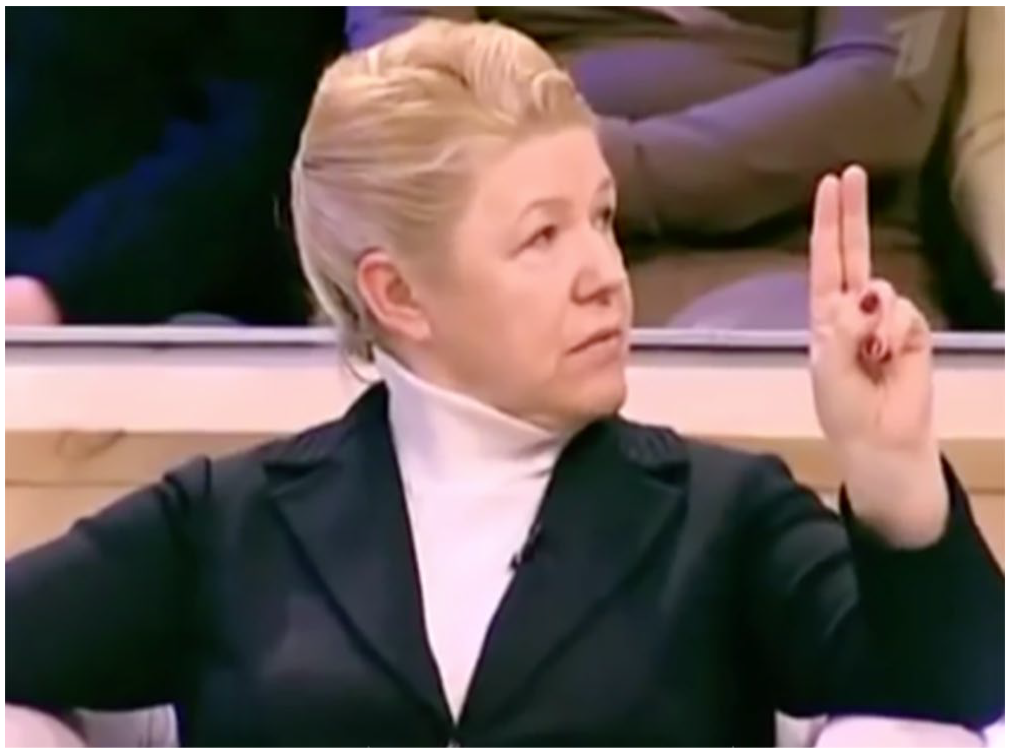
State Duma Deputy Elena Mizulina talks about abortion statistics in Russia.
This strategy of particularising general statistics persists, albeit in a different form. Elena employs the shared identity ‘we, Russian women, do two abortions every minute’ (line 10), conveying collective agency through the use of the first-person plural and invoking the notions of nation and gender (Van Leeuwen, 2008). This presentation style enhances Elena’s demonstration of the inclusive agency. Her rhetoric employs metaphors depicting Russia as endangered and suffering, such as ‘Russia is living through a demographic crisis’ (line 5) and ‘the country is dying out’ (line 11).
Elena then returns to the specific case of the family in question. She contributes to the ongoing conflict between Nadezhda (who advocates abortion) and Vika (who opposes it). Vika had previously constructed her identity as a young, resilient and unsupported mother. Elena Mizulina co-constructs this identity for Vika by making identity claims like ‘the girl turned out to be strong in spirit’ (line 15) and ‘it’s a strong girl, you will succeed in life, you’ll be great’ (line 25), followed by applause from the studio audience (lines 17, 26). Through adjectives like ‘strong’ and ‘strong in spirit’, Elena exercises moral evaluations (Van Leeuwen, 2008), framing Vika’s refusal to abort at 16 as morally commendable. Elena avoids addressing Vika by name, opting for deictic and generalised non-personal references, allowing her attitude to apply to any girl in a similar situation. Her evaluation constructs abortion as child murder, and those who resist it are deemed strong. This view is reinforced by the studio audience’s enthusiastic applause after Elena’s contribution (lines 17, 26).
In the subsequent analytical section, I will present a corpus-based analysis of PG episodes on abortion aired from 2010 to 2020, further supporting my key arguments.
Corpus-based discourse analysis of abortion
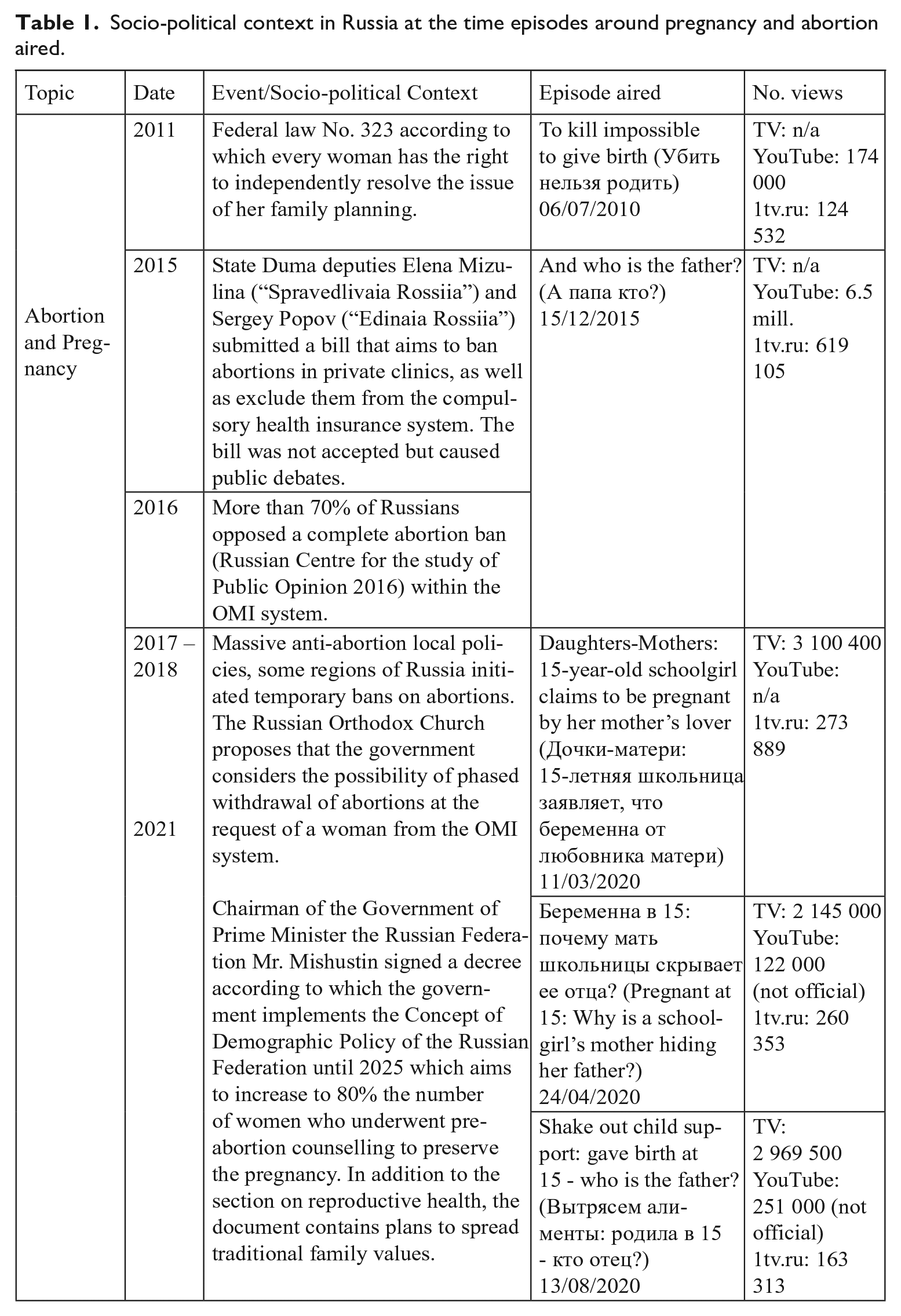
Table 1 discusses the criteria for selecting episodes for the corpus. The broadcast date was chosen as a criterion to focus on episodes aired from 2010 to 2020, coinciding with significant social and political events related to family discourse in Russia. Another criterion was the number of views across different distribution channels (TV, official websites and YouTube). However, TV ratings were not available for episodes before 2020. Overall, the corpus consists of 40,180 words spread across five episodes. The selected years coincide with various policies, church initiatives and anti-abortion actions in the country. Although state representatives are present in the episodes, the discourse largely avoids discussing political and socio-economic aspects of abortion. This is evident from the analysis of the keywords in multi-word terms of the corpus (see Figure 6). From Figure 6, it can be concluded that main concepts that are discussed in the collected episodes are linked to familial concepts such as ‘child’s father’ (отец ребенка), ‘own mother’ (собственная мать), ‘lover’ (любовник), ‘legal wife’ (законная жена), ‘underaged child’ (несовершеннолетний ребенок), ‘DNA test’ (тест ДНК). The concepts around laws, policy, state funding and government do not arise at all, which can signal that the topic of abortion and pregnancy is framed as a de-politicised personal or individual issue in each family.
Socio-political context in Russia at the time episodes around pregnancy and abortion aired.
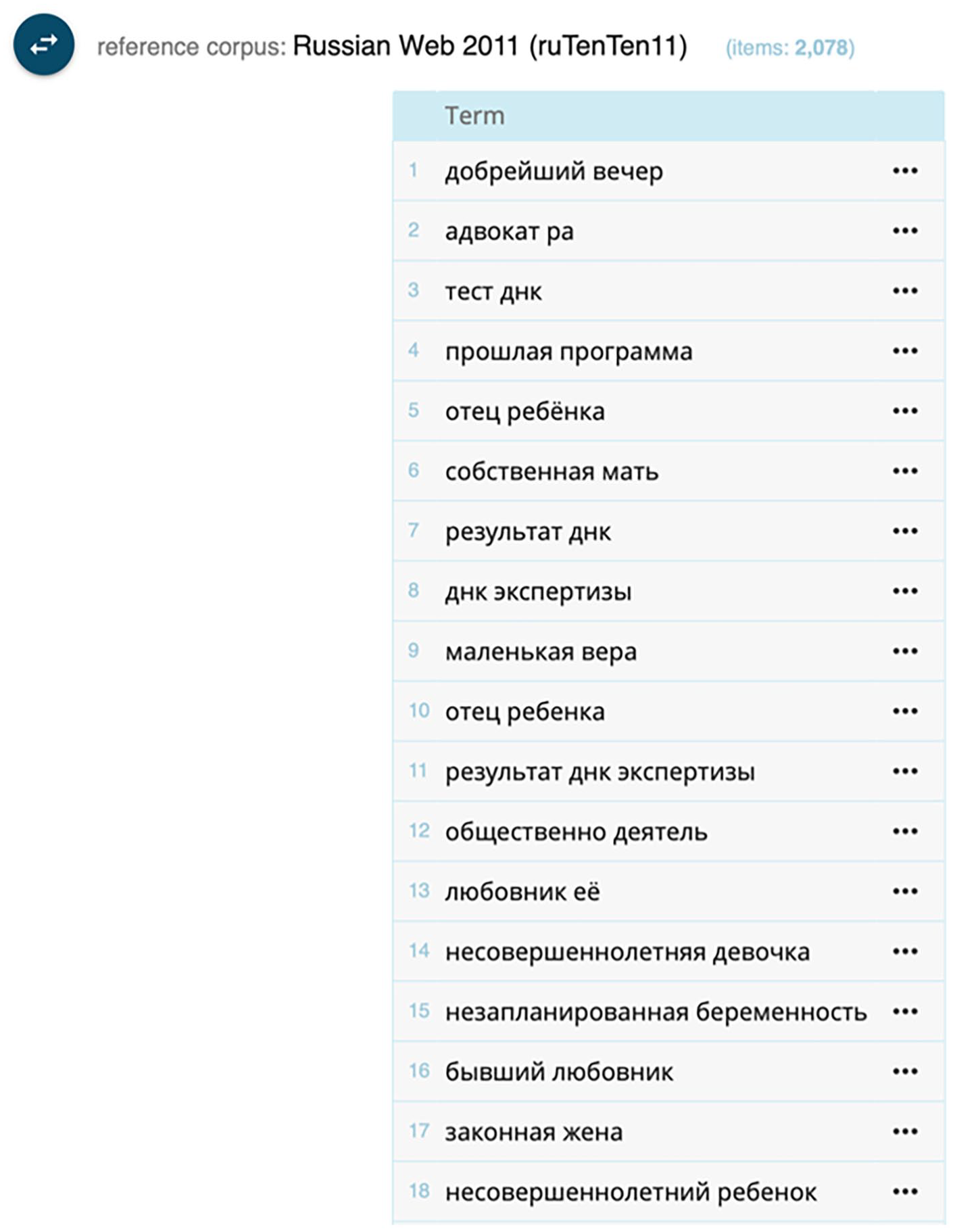
Keywords in multi-word terms.
Baker et al. (2008) and Pearce (2008) argue that in corpus-based discourse analysis, collocates are taken as indicators of ideologically vested discourses. Collocation analysis is essential in its ‘connection to meaning and how this reflects how people make sense of the world through discourse’ (Kreischer, 2019), and it ‘embodies associations, connotations and assumptions’ (Stubbs, 1996: 172). Therefore, analysis of collocations can be informative of ideological attitudes. A closer look at collocates and concordances around the term abortion represents that abortion and pregnancy are represented as stereotypically females’ zone of responsibility, supporting conservative and patriarchal views promoted in the show.
The most frequent verb that collocates with abortion is ‘to do’ (сделать аборт). As seen from Figure 7, in most cases, the verb has feminine endings or refers to certain female actors. The same tendency can be observed with the most frequent preposition ‘for’ that collocates with the word abortion (на аборт) (see Figure 8) that is usually accompanied by the words’ woman/women’ (женщина/ы) and ‘she’ (она). Such a patriarchal framing according to which the decision to have children and to build a family is primarily the women’s responsibility is supported by public opinion polls. Pisklakova-Parker and Efanova (2021) provide the following statistics in their study. ‘According to findings of the Research Centre study sponsored by the Council of the Eurasian Women’s Forum under the Federation Council of the Russian Federation and by Google:
71% of Russians share the opinion that a woman fulfills her highest mission when she becomes a good wife and a mother;
The majority of women (89%) believe that a man should provide for the family, while only 45% of women agree with the statement that women should financially sustain themselves;
One-third of Russians (32%) believe that a woman must decide between a professional career and a family, and this figure is even higher among parents’ (p. 32).
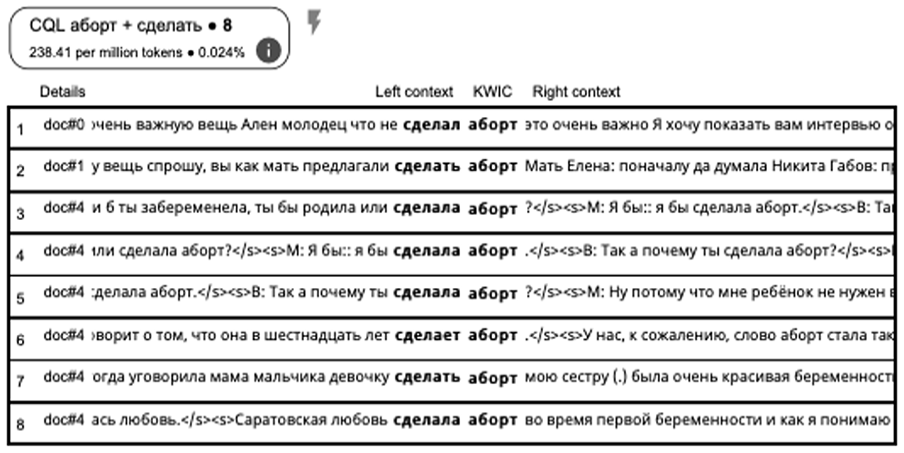
Concordance lines for ‘do abortion’ (сделать аборт).
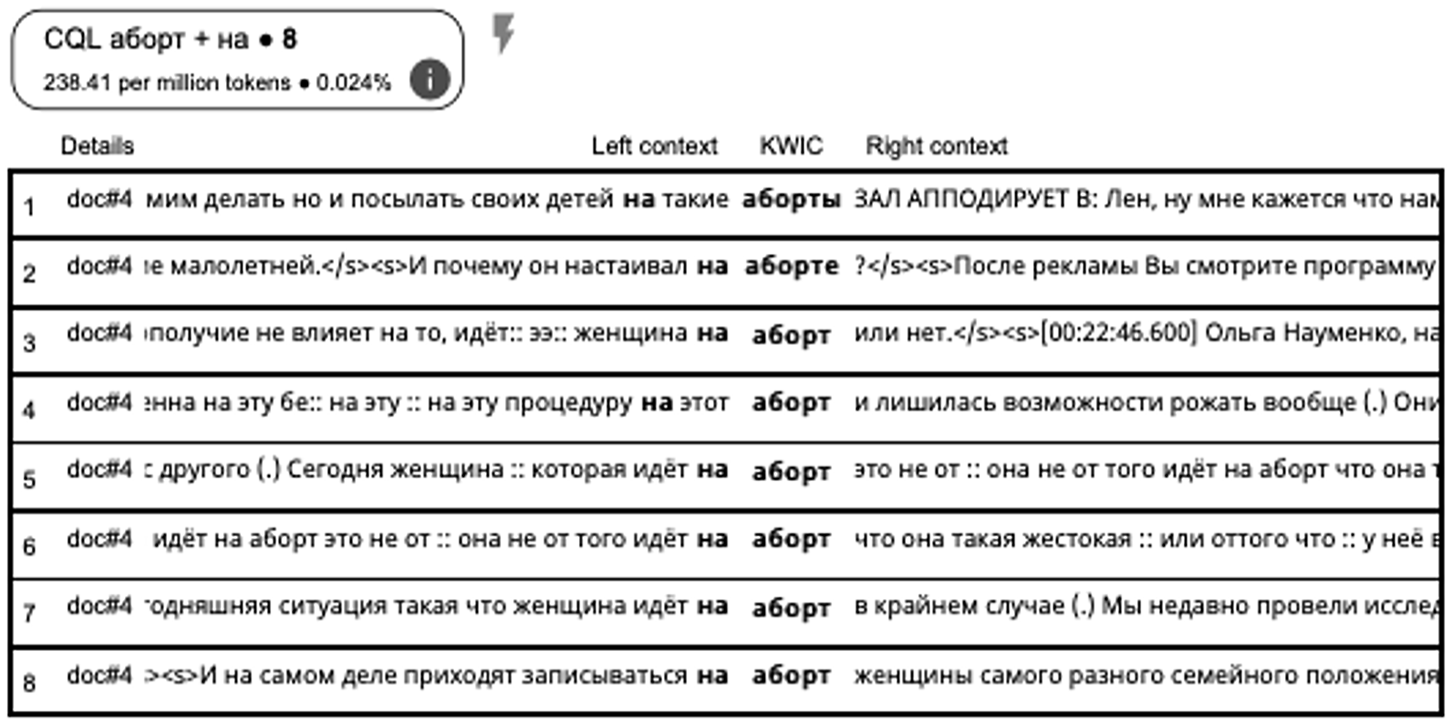
Concordance lines for ‘for abortion’ (на аборт).
These views are reflected in the PG corpus and especially evident when analysing the lemma ‘mother’ (мать) (see Figure 9). Figure 9 shows a word sketch of the word мать (mother). The WordSketch has grouped the collocates of мать into six grammatical patterns. The first group shows the word in the structure {mother + verb}, and mothers are described as those who do particular actions, such as признать and признаться (to confess), ходить (to go), дать (to give), мочь (to be able to). The second column gives cases when adjectives modify the word мать. There are examples of mothers being referred to with adjectives such as многодетная (a mother of many children), родная мать (birth mother), генетическая (genetic), собственная (own), любящая (loving), безутешная (inconsolable), безупречная (flawless). When a group of collocates of a particular word has a similar meaning, then this is called a ‘semantic preference’ (Stubbs, 2001: 65). Semantic preference ‘points to the relation between a lemma and a set of semantically related words’ (ibid.). For example, such words as родная (birth), генетическая (generic) and собственная (own) indicate that the mother has a preference for the concept of biological ownership of someone. Another example, the third column demonstrates that the collocates сердце (heart), горе (grief), утроба (womb), мозг (brain) stress the biological nature of motherhood.
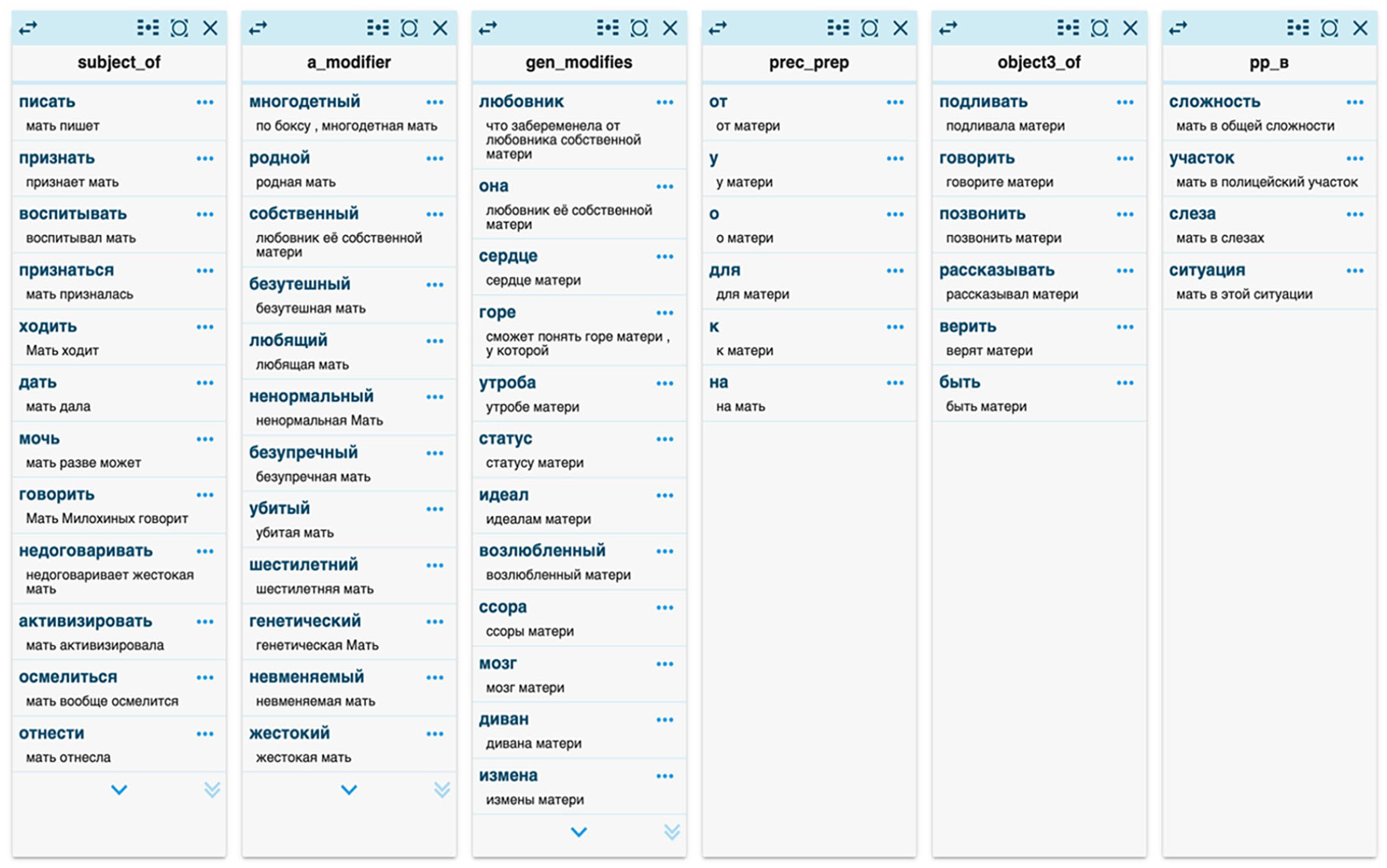
Word sketch for the lemma {мать – mother}.
Figure 10, for example, shows a concordance from the frame {a_modifier}, where the adjective is родной. The concordance shows cases when мать (a mother) is used with as adjective родная (birth). Interestingly, the adjective in these concordance lines functions not to indicate kinship or biological affinity. However, it carries particular connotations and presuppositions of morality, according to which such a mother cannot do immoral things. Such a preference is termed discourse prosody, which reveals the speaker’s evaluative stances (Baker et al., 2008). For example, in lines 1, 2, 3, 7, 9 bad things that are not expected from birth mothers are questioned (the use of question words неужели (really), могла ли (could she), почему (why). This explains how PG status-building or discourse identity-building functions of attributes are utilised. As noted earlier, the word мать – mother (289) appears much more frequently than the word отец - father (191). Also, I argued that in the episodes, the mother’s identity is constructed as if she is the sole bearer of the responsibility for her children and the sole performer of the childcare duties. Some of the concordance lines indicate the same assumption, for example, отец не воспитывал (father did not bring up); отец не слышал (father did not hear); отец не принимал (father did not accept); без отца (without father). The conceptualisation of female actors in PG reflects popularly held sexist opinions. The corpus-assisted analysis of such words as мать – отец (mother-father); женщина – мужчина (woman – man); девушка - парень (young woman – young man); муж – жена (husband-wife) shows that female actors tend to have more negative characteristics. Across the dataset, women and wives are represented as guilt-bearers. Men and husbands, despite their aggressive actions and addictions, are conceptualised as strong, beloved and forgiven. Such a representation of asymmetric power relationships in which women are a weaker social group mirrors the persistence of gender-based stereotypes. It confirms conclusions made as a result of qualitative analysis.
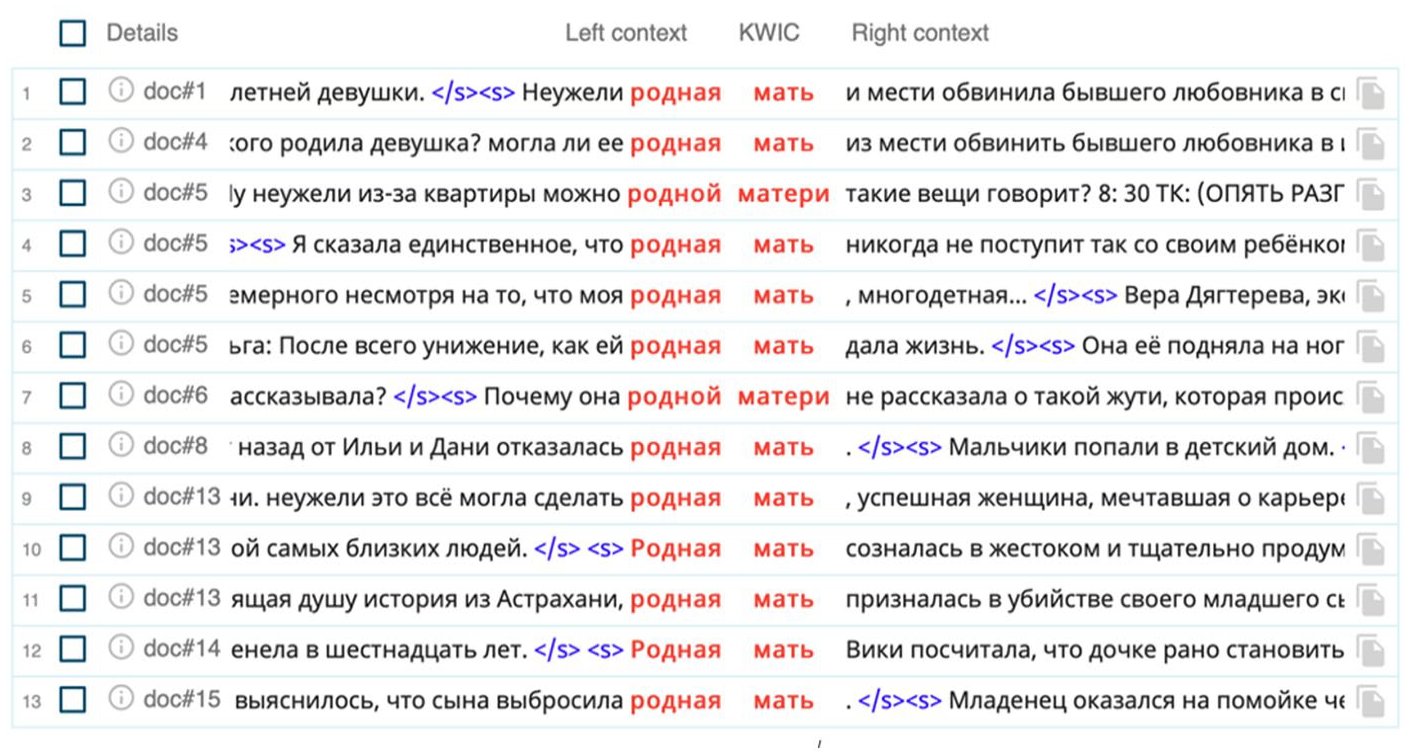
The concordance lines for {родная мать – birth mother} in PG corpus.
Moreover, examples from the corpus show that along with 49 times the word ‘abortion’ is used, there are 15 examples when abortion is substituted with the word ‘murder’ (убийство). Remarkably, such words as ‘embryo’ (эмбрион), ‘fetus’ (плод / зародыш) are not found in the corpus. All these terms are replaced by such words as ‘child’ (ребенок), used 225 times, and ‘baby’ (малыш), used 10 times. These all can illustrate the tendency to preudo-rationalise the discourse around conception, pregnancy and abortion.
In conclusion, the corpus-based analysis sheds light on the ideological underpinnings of the discourse, reflecting and reinforcing traditional gender roles and patriarchal views.
Discussion and conclusion
In the article, I analyse how anti-abortion discourse is constructed in the Russian tabloid talk show, drawing on qualitative and quantitative critical discourse analysis. Anti-abortion propaganda is deployed among the host, representatives of the Church, show business, healthcare and politics.
Within the excerpts, the Russian Orthodox Church becomes the reference point through which participants negotiate morality using legitimation techniques (Van Leeuwen, 2008). For example, a pseudo-scientific movie titled ‘Russian Cross’, with Christian symbolism carries specific connotations and associations with sin and suffering. Detailed discussions about foetal development and descriptions of vacuum aspiration, accompanied by images of unborn children, depict abortion as murder and sin. Corpus analysis also reveals that the term’ abortion’ is frequently substituted by the word ‘murder’. Another reference to the Church is made by a TV presenter Elena Khanga, who addresses the priest sitting in the front row and places responsibility on him for educating young girls. Through this non-verbal reference, the speaker alludes to the Orthodox Church’s views on the upbringing of young girls, thereby establishing patriarchal gender roles. The Church’s declaration of involvement in all aspects of public life attempts to ‘extend the influence in schools through courses on Orthodox culture’ (Bernsand and Törnquist Plewa, 2019: 16), financial ties with the state (Reiter et al., 2016), and Patriarch Kirill’s efforts to prevent abortions find echoes in the analysed conversations. These elements constitute distinctive features of how anti-abortion rhetoric is presented in Russia, distinguishing it from other national contexts.
Another noteworthy feature is the reference to the state. State Duma Deputy Elena Mizulina, for example, presents compelling statistics to argue that the country ‘is dying out’, subsequently shifting the focus to discussions about responsibility and morality within specific families. Episodes related to pregnancy and family-building align with messages about reproduction as a means of social fulfillment, mirroring the Duma’s incentives and discussions on this topic. While all analysed PG episodes include political representatives, there are no references to family policies, economic and demographic conditions, laws, or women’s rights. Instead, female individuals are questioned about their moral behaviour. Drawing on Fairclough’s triad of styles, genres and discourses (2003), the analysis above demonstrates the integration of certain ‘ways of being’ into specific ‘ways of acting,’ which, in turn, shape particular ‘ways of representing’. Through the concept of ‘dialectic reasoning’ (Fairclough, 2013, 2018), I illustrate how communication between talk show participants, who co-construct an anti-abortion discourse, exemplifies the dialectical relationship between discursive acts and the embedded social contexts. Russian political, social, cultural and religious contexts (State Duma and Orthodox Church positions) shape the anti-abortion discourse within this show, which, in turn, influences public opinion and the socio-political realities, including legislative changes.
The analysis reveals that childbirth is portrayed as a gendered issue, assigning all responsibility to women. Corpus analysis also demonstrates that the concept of motherhood appears more frequently in the episodes, depicting women’s apparent social and individual fulfillment. A detailed analysis of concordance lines reveals that the concept of biological motherhood carries certain presuppositions of traditional and conservative morality, dictating what a true mother should or should not do. Collocation analysis reflects patriarchal and sexist perspectives, suggesting that women are burdened with more negative characteristics and presented as guilt-bearers. The corpus analysis showcases discursive shifts in the portrayals of fathers. In constructing family identity, males are depicted as absent fathers and husbands. I propose that the concept of the absent man serves as a cultural script reflecting societal general anxiety and uncertainty about the role of fathers in contemporary Russian militaristic reality.
Drawing from Van Leeuwen’s (2008) theory of discourse as the recontextualisation of social practice, I view all interpretations of abortion as transformations of discourse. The social practice of abortion is recontextualised through a sequence of semiotic elements: Abortion at a young age – any abortion as a crime – any abortion as murder – abortion as a sin. This occurs despite legislation permitting abortion at the patient’s request for up to 12 weeks, funded by the state budget, safeguarding every woman’s right (Federal Law No 323, 2011). Notably, the voices of celebrities on the highly-rated talk show endorse intolerant attitudes towards abortion. From the CDA perspective, these practices establish power dynamics between men and women and social, cultural, religious and political groups. These patterns around abortion discourse reflect the broader traditional values agenda established in Russia since the 2000s under Putin’s leadership. This agenda has gained increased media coverage in recent times. The critical discourse analysis of family discourse, particularly regarding abortion, applied to a media product with a multi-million audience, not only reveals what and whose interests are promoted but also explains why the enduring popularity of anti-abortion movements in Russian society. This popularity is evident in initiatives such as regional abortion moratoriums (Mishina, 2018), the government plans to reduce abortions (Rasporiazhenie, 2021), the Russian Orthodox Church’s calls to ban abortions (V RPTS prizvali poetapno zapretit’ aborty v Rossii, 2021) and the Ministry of Healthcare’s readiness to restrict abortions in private clinics (Minzdrav RF, 2023). These trends persist despite medical, economic, scientific and historical developments. The urgency of the anti-abortion discourse is particularly pronounced today due to the state’s need to address the demographic crisis stemming from Russia’s invasion of Ukraine and the declaration of partial mobilisation. In the last 3 years, the authorities’ stance on abortion and related propaganda was influenced by shifts in political dynamics. With the war in Ukraine worsening the country’s demographics, conservative and religious groups have been known to engage in campaigns against abortion, emphasising traditional values and women’s moral duty. In this sense, anti-abortion discourse can be viewed as one of the Kremlin’s tools to promote a conservative, patriarchal and traditional agenda that extends beyond news and current affairs into entertainment genres dealing with social issues ostensibly unconnected to politics.
Footnotes
Acknowledgements
I am truly thankful for the guidance of Prof. Lara Ryazanova-Clarke of the University of Edinburgh whose very detailed comments helped me to do this work.
Declaration of conflicting interests
The author declared no potential conflicts of interest with respect to the research, authorship, and/or publication of this article.
Funding
The author disclosed receipt of the following financial support for the research, authorship, and/or publication of this article: This publication is part of the PhD research that was funded by the International Bolashaq Scholarship.