




Abstract
The realm of sustainable energy systems has seen the salt gradient solar pond (SGSP) emerge as an eco-friendly solution for thermal energy storage. This research explores the use of an East-West (EW) reflector and coal cinder additive (CC) to enhance the energy efficiency of the inner zones of a salt gradient trapezoidal solar pond (SGTSP). In this work, SGTSP with EW and CC systems were designed, fabricated, and analyzed based on an energy point of view and compared with standard SGTSP systems. It also provides a shading area analysis based on the slant angle of the SGSP system, offering valuable insights into the system’s performance for low-grade heat source thermal applications. The study found that the EW reflector significantly increased the average solar intensity by 33.2%. The addition of coal cinder additive raised the average temperature of the lower convection zone by 24.1%. The SGTSP with EW reflector and coal cinder (SGTSP-EWR&CC) reached a maximum average temperature of 83.85°C, with a 42% higher energy efficiency in the lower convection zone compared to the conventional SGTSP (SGTSP-C). Further, the SGTSP’s potential for thermal energy storage and providing practical strategies for enhancing its energy efficiency is showcased.
Introduction
In modern times, the Salt Gradient Solar Pond (SGSP) is highly regarded as an efficient and cost-effective system for capturing solar radiation and storing it as thermal energy for extended durations. Usually, the SGSP is an engineered reservoir containing saline water, characterized by three well-defined regions: the lower convective zone (LCZ), the non-convective zone (NCZ), and the upper convective zone (UCZ). The LCZ is positioned at the bottom and comprises water with a high salt concentration, serving as the primary storage for thermal energy. The thermal energy stored has diverse applications, including electricity generation,1,2 industrial processes,3,4 space heating,5,6 and water desalination.7,8 Above it lies the NCZ, which contains water with a gradually decreasing salt concentration from the bottom to the top. This setup acts as an insulating layer, effectively reducing convection currents between the LCZ and the UCZ. The UCZ is at the top and contains water with a low salt concentration. It serves as a solar energy collector, facilitating efficient penetration into the SGSP. Additionally, the UCZ acts as a protective layer for the SGSP surface, safeguarding it from the influence of external weather variations.
A parametric study is essential in understanding the behavior and performance of a solar pond. 9 In the literature, several studies explore the parametric analysis of SGSP, examining aspects such as geometric shape and size,10–13 shading area,14–16 zone thickness,17,18 and the type of salt employed.19–22 One study 10 examined rectangular and circular SGSPs with similar cross-sections and volumes. The results indicated that the rectangular SGSP achieved a higher maximum temperature of 74°C, exceeding the circular SGSP, which reached a maximum temperature of 71°C. In another comparative study, 11 scientists experimentally assessed the efficiency of square and circular SGSPs with equal volumes. The findings showed that the circular SGSP reached a maximum temperature of 66.8°C, while the square SGSP attained a slightly lower temperature of 65.8°C. Furthermore, researchers used simulation in a separate study 12 to model the temperature distribution in rectangular and trapezoidal SGTSP. They observed that the SGTSP exhibited a 5°C higher temperature distribution than the rectangular SGSP due to reduced heat storage layer loss. This suggests that a solar pond with a trapezoidal structure is particularly effective for energy harvesting compared to other pond designs. Additionally, Sayer et al. 13 conducted a numerical analysis comparing two SGSPs of different sizes. The first pond, a small-scale one, measured 4 m × 2 m × 0.9 m, while the second pond, a large-scale one, was significantly larger at 30 m × 100 m × 0.9 m. Both ponds had UCZ, NCZ, and LCZ depths of 0.2 m, 0.4 m, and 0.3 m, respectively. The study’s results revealed that the larger pond exhibited substantially higher temperatures than the smaller pond. Karakilcik et al. 14 experimented on a rectangular solar pond to study how shading influenced the energy efficiency of each zone. The study revealed that the shaded case resulted in the LCZ having an energy efficiency of 28.11%, while the unshaded case had a higher energy efficiency of 37.25%. Considering the impact of shading, Khalilian et al. 15 analyzed the energy and exergy distributions and efficiencies of a square solar pond. They found that the pond achieved a maximum energy efficiency of 3.27% without shading and 3.65% with shading. Furthermore, when comparing trapezoidal SGSP with cuboid SGSP by Dhindsa et al., 16 the investigation indicated that the average yearly ratio of sunny areas for the trapezoidal pond was 11% higher than that of a cuboid pond.
Several research efforts have been dedicated to different aspects 8 to improve the performance of salt gradient solar ponds. Some studies have concentrated on enhancing thermal performance,23–25 while others have focused on minimizing evaporation losses.16,26–29 Additionally, certain research has explored the potential benefits of coupling sensible heat storage with latent heat storage,30–34 and further investigations have aimed at improving the overall stability of the ponds.4,12,35,36 Similarly, scientists have also studied the factors contributing to the decrease in efficiency of salt gradient solar ponds.37–44 Wang et al. 23 experimented to investigate the impact of varying porosity levels (61%, 65.5%, 67%, and 74%) of a porous material on salt diffusion within Salt Gradient Solar Ponds (SGSPs). The results indicated that the porous material could delay salt diffusion from the Lower Convective Zone (LCZ) to the Upper Convective Zone (UCZ), with lower porosity leading to slower diffusion. Assari et al. 24 conducted a comparative study on two cylindrical SGSPs of equal volume in Dezful, Iran. One of the ponds had the LCZ equipped with two layers of pebbles acting as a porous material. Over the experimental period, temperature measurements from thermocouples placed at different heights showed that the SGSP with the porous material had a higher LCZ temperature than the pond without it (approximately 5.56% higher). Using porous material at the bottom of the SGSP reduced heat loss, contributing to the increased LCZ temperature. Additionally, manual salt concentration sampling indicated that salt diffusion in the SGSP with porous material was 14% slower than in the conventional pond during the 45-days experiment and 33% slower during the 90-days experiment. A simulation study 25 examined the exergetic performance of SGSPs using different porous media, such as marble, limestone, and coal cinder. The findings revealed that coal cinder had the highest average exergy efficiency of 20.70%, followed by limestone at 17.77% and marbles at 16.62%. In a study conducted by Ruskowitz et al., 26 they explored methods to reduce evaporation losses of SGSP (by employing various cover types. They tested plastic covers on 99% and 60% of the surface, floating disks on 88%, and floating hemispheres on 97%. It was discovered that covering 88% of the SGSP surface with floating disks proved to be the most effective in minimizing evaporation compared to the other covers. This cover reduced the evaporation rate from approximately 4.8 to 2.5 mm/day, raised the LCZ temperature from 34°C to 43°C, and increased the amount of stored heat from 179 to 220 MJ. In a different study investigating the impact of transparent covers, 27 such as glass, polycarbonate, and mica, on a small cylindrical SGSP, it was revealed that the glass cover exhibited the highest efficiency of 17.86% among all covers tested. In another approach, Sayer et al. 28 proposed a novel technique, suggesting the addition of a 0.5 cm layer of paraffin to the SGSP surface. Their 71-days analysis showed that the paraffin layer eliminated evaporation from the SGSP. Bezir et al. 29 introduced a novel covering system for SGSP, marking its first application in this context. This system comprises two covers that can be controlled by an electric motor, allowing them to rotate between 0 and 180°. When closed, these covers act as a shield, and when open, they serve as reflectors. The analysis of three cases (without cover, with cover, and with reflector) demonstrated the effectiveness of these covers in reducing heat loss from the pond surface during the night and enhancing thermal performance during the day. In a different study, 16 the effects of using a reflective surface on SGSP performance were investigated through both numerical and experimental analyses. The findings revealed a remarkable 25% improvement in the SGSP’s performance when a reflective surface was employed. To further enhance the trapezoidal solar pond’s (SGSP) efficiency, the utilization of reflective surfaces to increase input energy during the daytime and transparent covers to minimize evaporative, convective, and radiative energy loss from the upper convection zone (UCZ) could be considered.
The proposed research introduces a novel approach to enhancing the performance of SGTSP, specifically by incorporating reflector and coal cinder additives. This addresses a significant gap in the existing literature, which lacks experimental studies on this combination for solar energy extraction in SGTSP. The main novelty of this work is the introduction of SGTSP with an East-West reflector and coal cinder (SGTSP-EWR&CC) to achieve year-round solar energy harvesting. This unique combination of additives and system configuration has not been extensively explored, making it an innovative contribution to the field.
The research aims to investigate the impact of various factors, such as the East-West reflector, coal cinder, solar irradiance, and ambient temperature, on the performance of SGTSP in thermal storage applications. By analyzing these parameters, valuable insights have been acquired regarding the temperature distribution, salinity distribution, stability, and efficiency of the SGTSP-EWR&CC system. Furthermore, the research intends to compare crucial parameters between the conventional SGTSP (SGTSP-C) and the SGTSP-EWR&CC systems. This comparative analysis showcases the advantages and potential improvements offered by the SGTSP-EWR&CC system.
Experimental setup and procedure
Construction of two experimental solar ponds, including a conventional SGTSP (SGTSP-C) and SGTSP with EW-reflector and coal cinder (SGTSP-EWR&CC) at Bannari Amman Institute of Technology, Sathyamangalam, Erode, Tamil Nadu, India (11.5034°N latitude, 77.2444°E longitude). Figure 1 shows the experimental setup of SGTSPs, while Figure 2 provides a schematic view of SGTSP- EWR&CC. A detailed description of the SGTSP-EWR&CC fabrication & experimentation is discussed as follows. Pictorial view of SGTSP experimental setup. A schematic diagram of SGTSP-EWR &CC.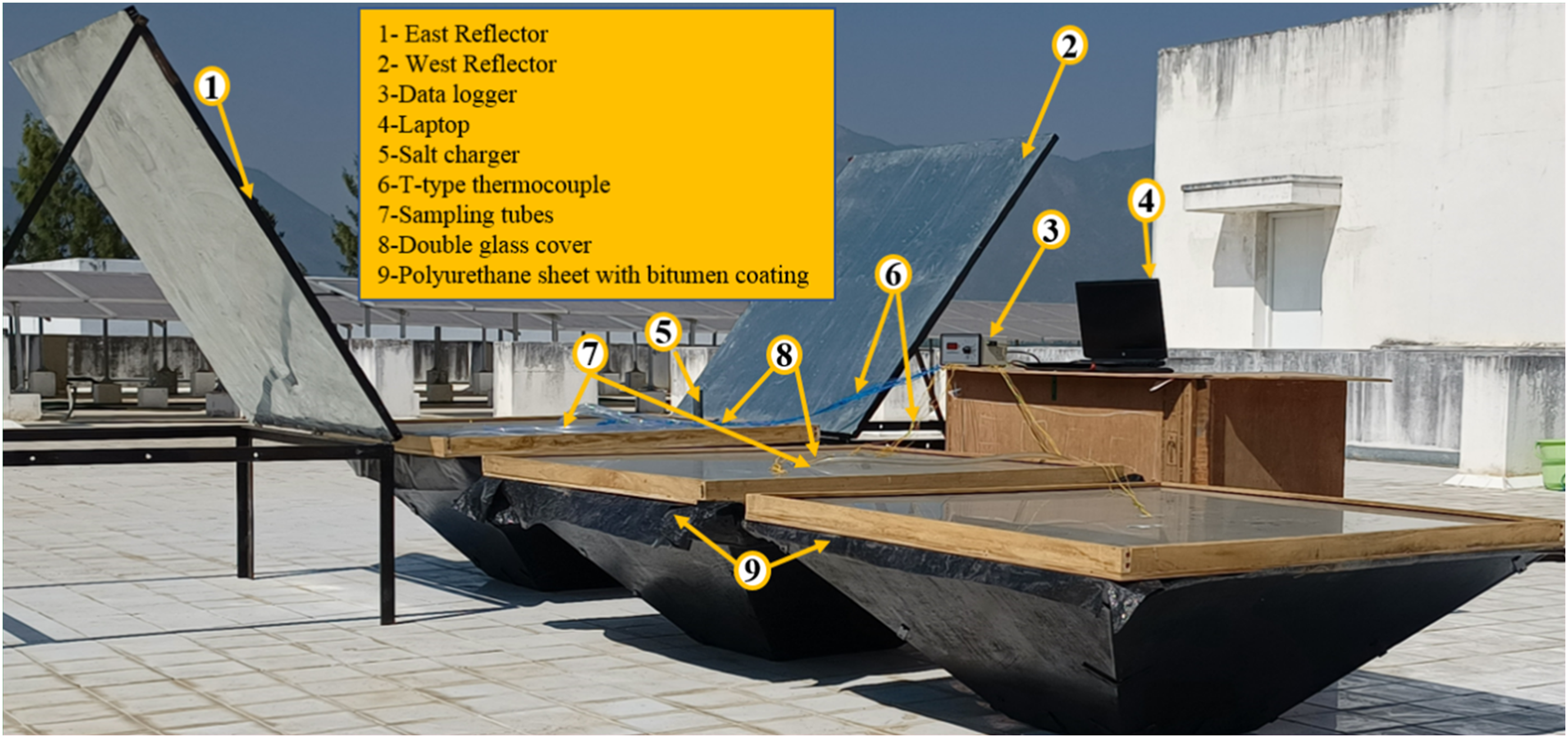
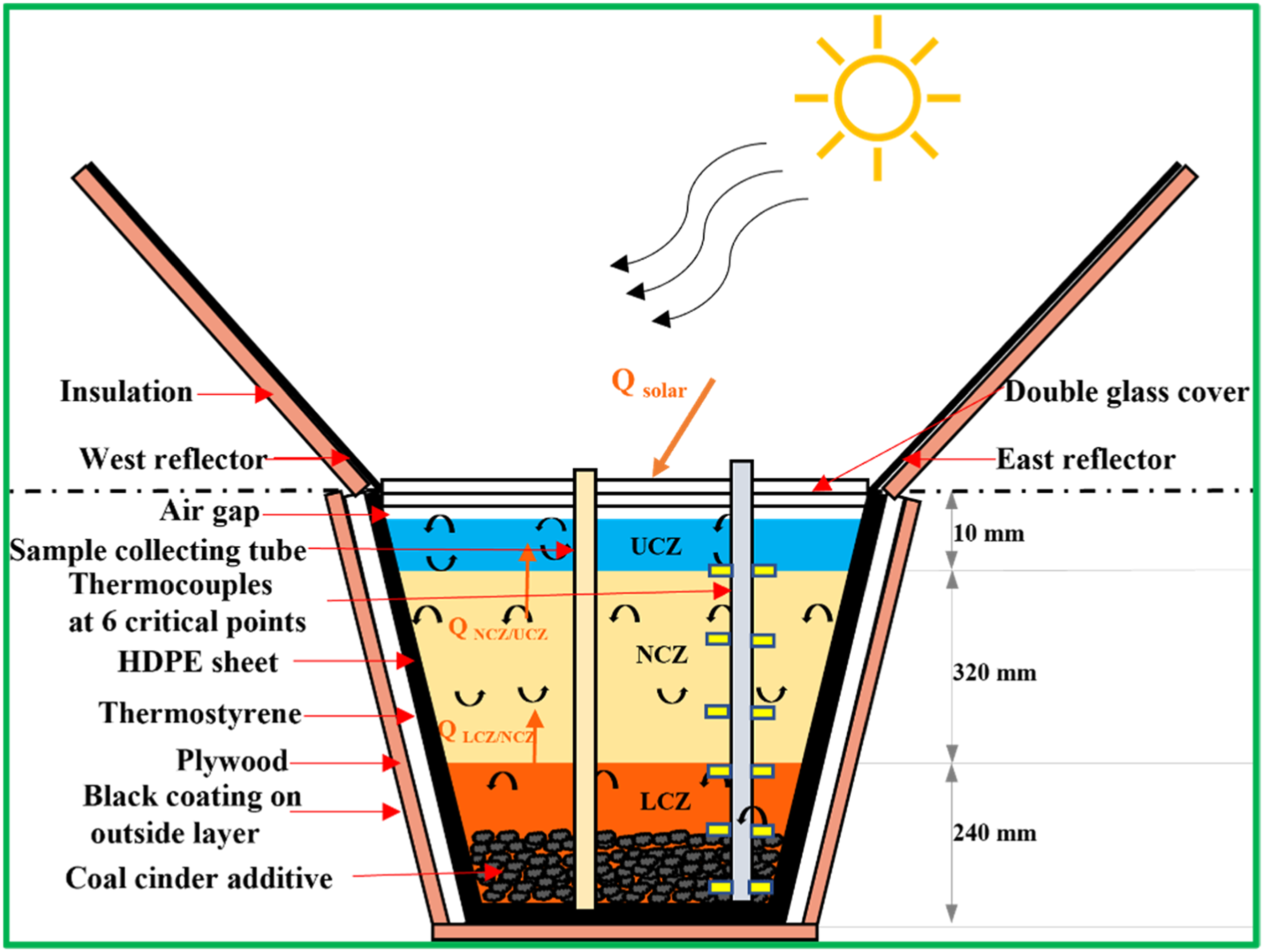
The ponds’ construction involved utilizing 0.02 m thick plywood, which effectively functions as a thermal insulator. The ponds had different surface areas, with the top measuring 0.42 square meters and the bottom measuring 0.09 square meters. Additionally, the ponds had a datum of 0.76 m. Each pond’s internal layer comprised two distinct layers: thermo-styrene, boasting a thickness of 0.01 m, and polyurethane plastic coated with a bitumen layer measuring 0.002 m in thickness. The external walls of the solar ponds were painted in a black hue to facilitate maximum solar radiation absorption. 45 The double-layer crystal clear glass, measuring 0.005 m in thickness, encompassed within a wooden frame, and exhibiting a 0.01 m gap from the upper convective region, was utilized to minimize thermal loss. Reflective aluminum sheets with a thickness of 0.03 m of rock wool insulation were installed at the rear end of the pond in the East and West direction, equivalent to the top surface area of the pond. During the nocturnal period, the same sheets were employed as a closure section of the system. Additionally, coal cinder was added to the bottom layer of LCZ with 50% of its volume to enhance the potential retention of energy.
Specifications and accuracy of measuring devices.

Mathematical modelling
Orientation and optimum tilt angle of the reflector
The orientation of a solar pond is typically determined based on the movement of the sun and the desired energy output. Solar ponds are usually oriented to maximize solar energy absorption by allowing maximum sunlight exposure throughout the day. The ideal orientation of a solar pond depends on the geographical location of the installation site. In the northern hemisphere, for example, a solar pond is generally oriented towards the south to receive the maximum amount of sunlight. By facing south, the solar pond can capture the most sunlight during the day as the sun moves from east to west.
The reflector angle was determined by analyzing the solar altitude and azimuth angles at the specific location of the installation. By aligning the reflector at an optimal angle, we aimed to maximize the direct solar radiation captured by the reflector surface throughout the day. The equation model proposed by Dhindsa et al.
16
was used to calculate the optimum tilt angle of the reflector through trial and error for a particular day to harvest the maximum potential from the reflector towards the pond, as given below.

Stability analysis of SGTSP systems
Thermal diffusion
The thermal diffusion within the pond is simplified as one-dimensional, unsteady heat conduction with a heat source. The thermal diffusion is calculated using the expressions (3),
12
respectively.
Salt diffusion
The salt diffusion (4) is calculated using the expressions (4),
12
respectively.
Thermal stability coefficient and criterion
The temperature and salinity directly impact the stability of a solar pond. This stability is commonly quantified using the heat stability coefficient (F), which can be expressed as follows:
The assumed thermal(a) and solutal(b) expansion coefficients indicate the fluid’s temperature and salinity changes per degree Celsius variation. In the case of F>0, the temperature gradient-induced reaction cannot reverse the salinity distribution. This indicates a stable state for the interface, resulting in increased solar pond stability with higher heat stability coefficient values. Conversely, if F<0, it signifies an unstable state. A value of F = 0 represents a critical state.
Energy analysis
This section comprehensively summarizes all energy fluxes calculated within the system. The governing equation utilized for the computation of the thermal performance of pond zones was represented by equation (6):
48

The energy efficiency of UCZ was computed using equations (7)–(10).
15
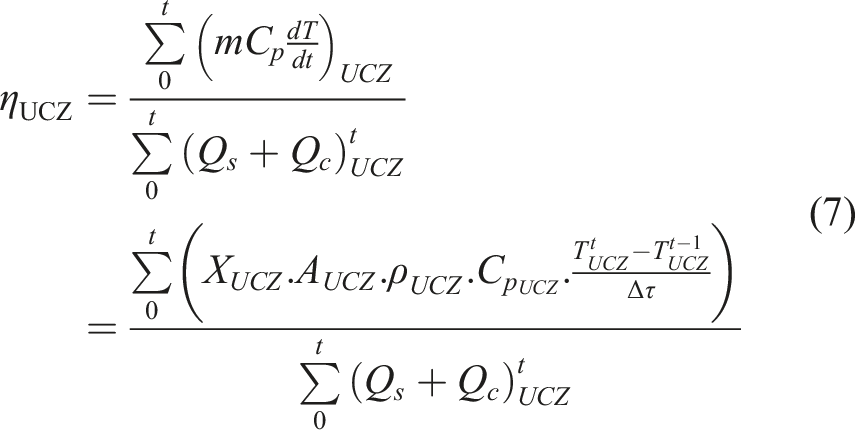
The calculation of the radiation energy entered and absorbed 
The calculation of the radiation energy entered and absorbed 
The transfer of heat through conduction from the NCZ to the UCZ is as follows:
The energy efficiency of NCZ was computed using the equations (11)–(14).
15
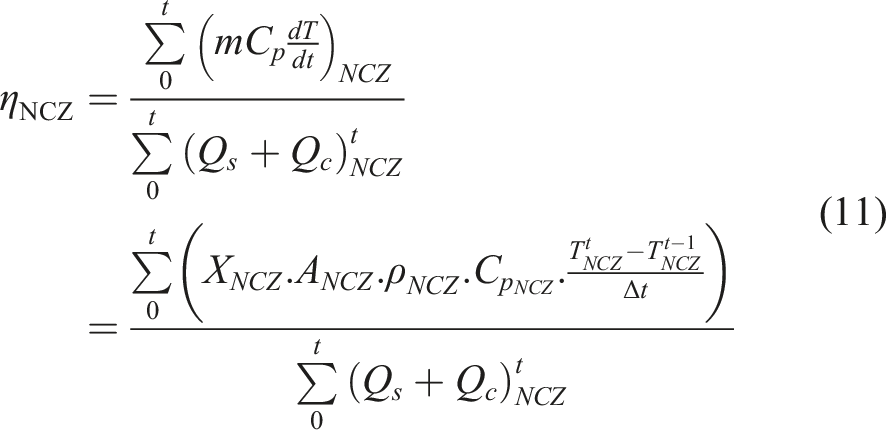
The calculation of the radiation energy entered and absorbed 
The calculation of the radiation energy entered and absorbed 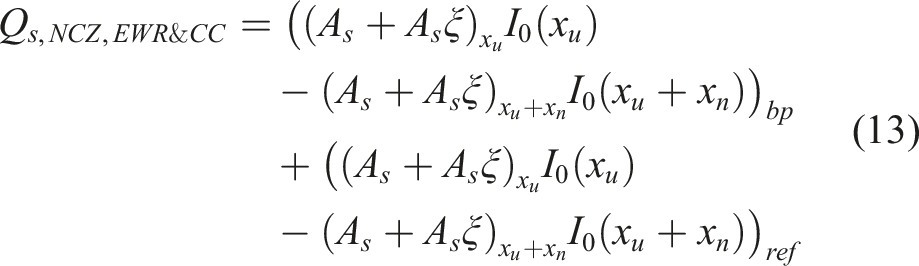
The transfer of heat through conduction from the LCZ to the NCZ is as follows:
Energy efficiency of LCZ was computed using the equations (15)–(19).15,25
The efficiency of LCZ of SGTSP-C is calculated as follows: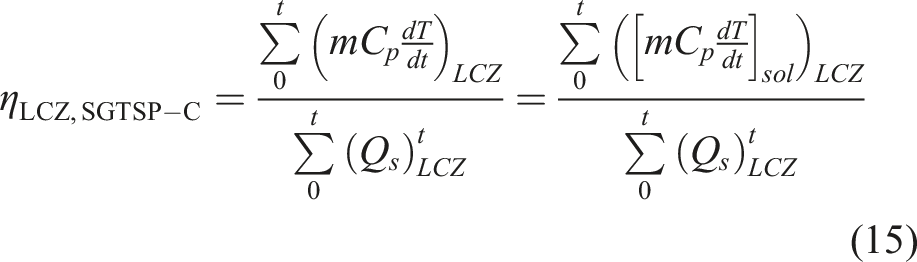
The calculation of the radiation energy entered and absorbed 
The efficiency of LCZ of SGTSP-EWR&CC is calculated as follows: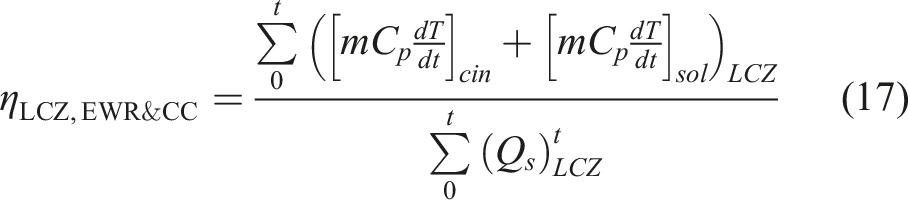

The calculation of the radiation energy entered and absorbed 
Uncertainty analysis
Uncertainties may arise during an experiment’s selection, instrumentation, measurement, standardization, interpretation, and error reading stages. Following Holman’s uncertainty concept 49 verifying the accuracy and stability of experimental data is crucial. In this study, the accuracy of measuring instruments employed during the experimentation was assessed to determine the uncertainty of the parameters involved in the performance analysis of the solar pond. Table 1 presents the uncertainties of temperature, and energy efficiency, which were evaluated as ±0.42% and ±2.79%, respectively.
Results and discussion
The ambient conditions of experimented locations are outlined in Figure 3. The subsequent sections present a summary and discussion of the analysis results. The impact of SGTSP’s slant angle, coal cinder additive, EW-reflector, and ambient conditions on the performance parameters of SGTSP-C and SGTSP-EWR&CC systems are as follows. Monthly average ambient conditions of the experimental location.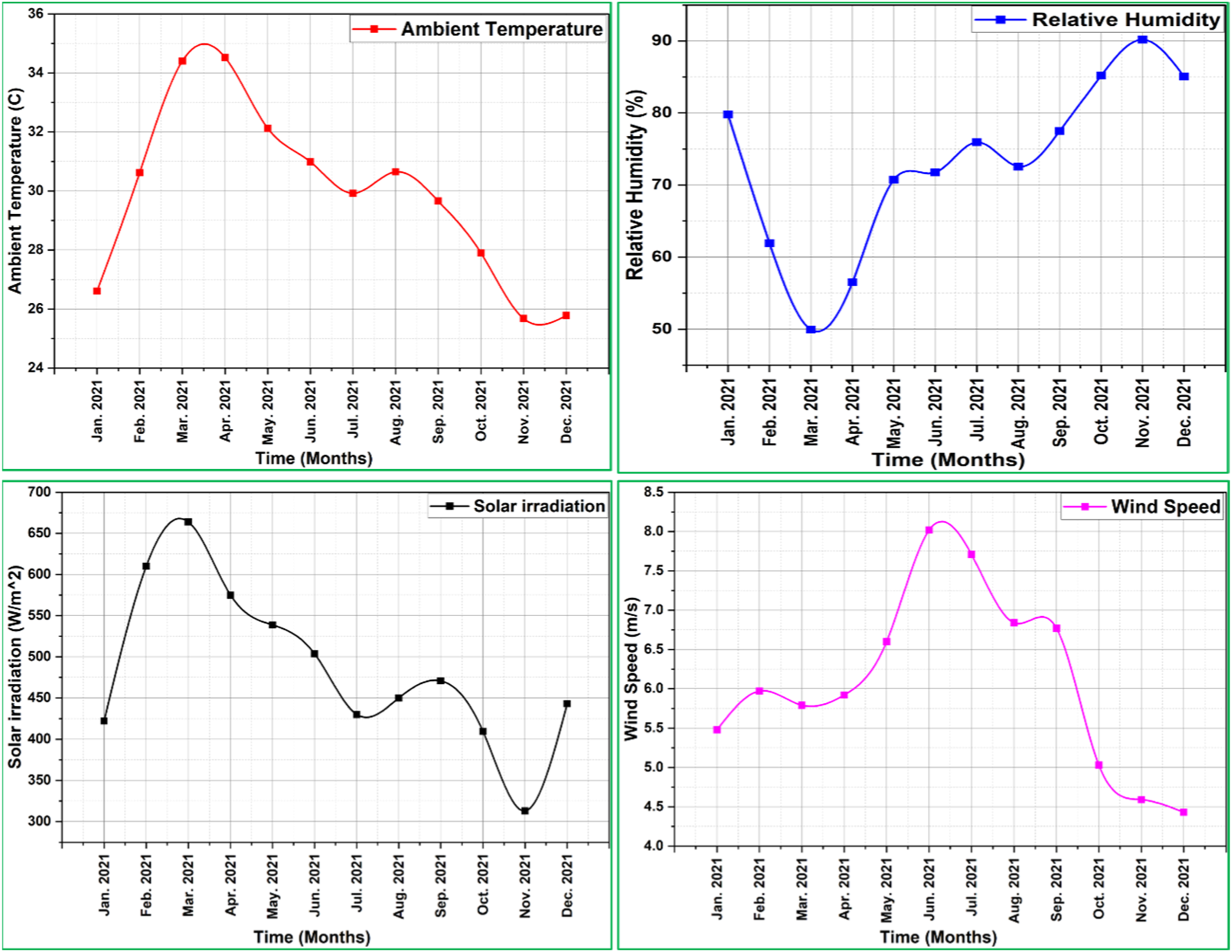
Impact of coal cinder on the performance of SGTSP
The present study aimed to empirically investigate the impact of coal cinder additives on the thermal energy of a trapezoidal SGSP. In this regard, the temperature increase in the LCZ of SGTSP with coal cinder (SGTSP-CC) was compared with that of SGTSP-C on 2 January 2021, as depicted in Figure 4(a) The experimental findings revealed that SGTSP- (a) Variation of temperature in LCZ of SGTSP&SGTSP-CC and (b) Variation of solar radiation intensity in the top layer of SGTSP-C & SGTSP-EWR.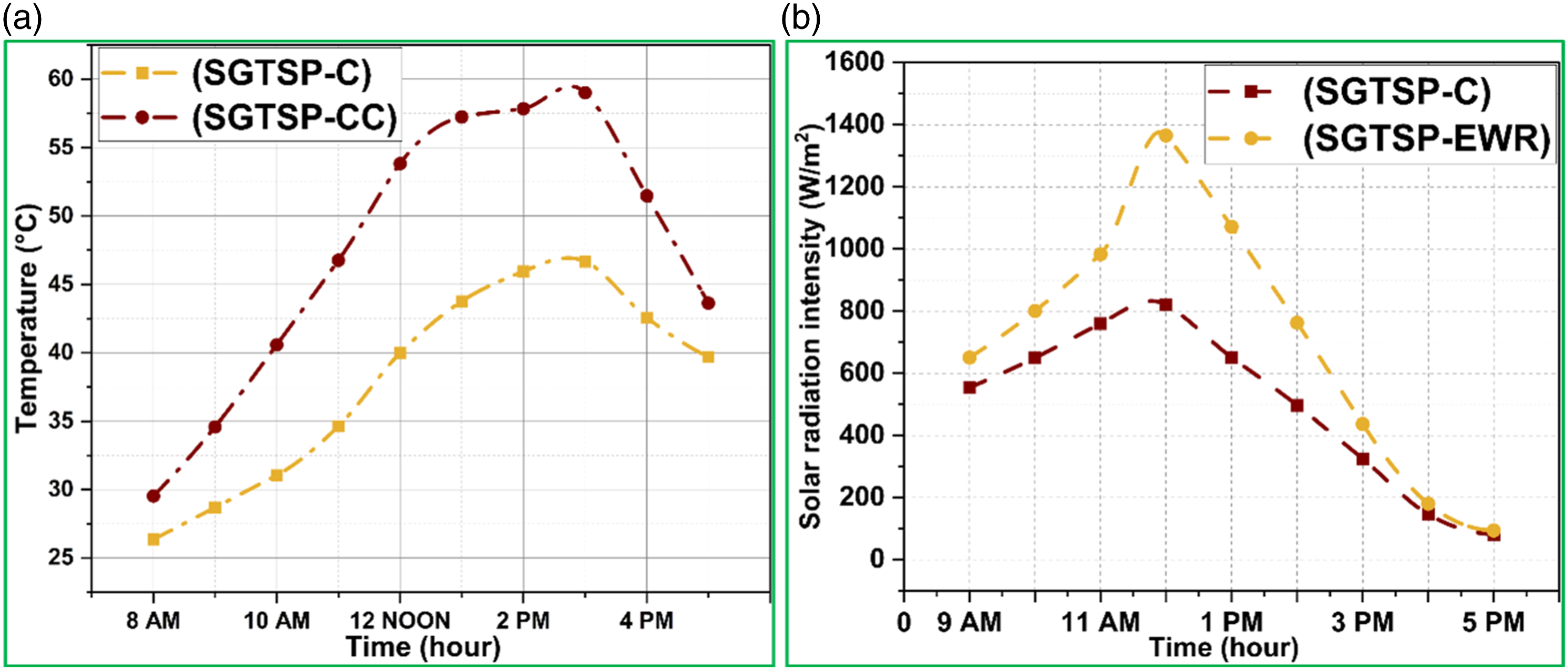
Impact of east-west reflector on the performance of solar pond
Experimental findings demonstrate that an optimized south reflector significantly impacts the temperature rise of a solar pond. Figure 4(b) showcases the experimental values of solar radiation input into the SGTSP-C and SGTSP with EW reflector (SGTSP-EWR) systems on 3 January 2021. The optimum tilt angle of the reflector for that day, which was found to be 53.67°. 16 The highest solar radiation intensity registered by SGTSP-C and SGTSP-EWR was 1365 W/m2 and 819 W/m2, respectively. The efficacy of the West and East reflectors in optimizing the performance of the solar pond system was found that the West reflector was particularly effective in improving system performance during the period from 9:00 a.m. to 12 noon, while the East reflector was utilized from 1:00 p.m. to 5:00 p.m. due to the synchronous falling of solar rays into the solar pond during this time. 51 These results highlight the importance of using reflectors to enhance the efficiency of solar pond systems, particularly during specific periods when solar radiation is most abundant. Moreover, the input solar radiation intensity was improved by an average of 41.49% with the aid of the reflector.
Impact of solar radiation (I) and ambient temperature (T-amb) on the performance of SGTSP-C & SGTSP-EWR&CC
In Figure 5, the effect of solar radiation (I) and ambient temperature (T-amb) on the performance of SGTSP-C and in Figure 6, the effect of solar radiation (I) and ambient temperature (T-amb) on the performance of SGTSP-EWR&CC were depicted, respectively. During the initial 6 days of operation, it was observed that the temperature difference between the LCZ and NCZ, denoted as T-LCZ over T-NCZ, was not significant for both SGTSP-C and SGTSP-EWR&CC, with an increment of only 0.01% for SGTSP-C and 0.03% for SGTSP-EWR&CC. This minor difference was attributed to the charging and stabilization of the systems. However, in the later stage of operation, the temperature increment of LCZ over NCZ was much higher, reaching 15.5% for SGTSP-C and 21.3% for SGTSP-EWR&CC. Notably, the temperature increment rate for SGTSP-EWR&CC was higher than that for SGTSP-C by 26.64% and 14.24% for NCZ and LCZ, respectively, due to the confluence of a reflector and coal cinder. Impact of solar radiation and ambient temperature on the performance of SGTSP-C. Impact of solar radiation and ambient temperature on the performance of SGTSP-EWR&CC.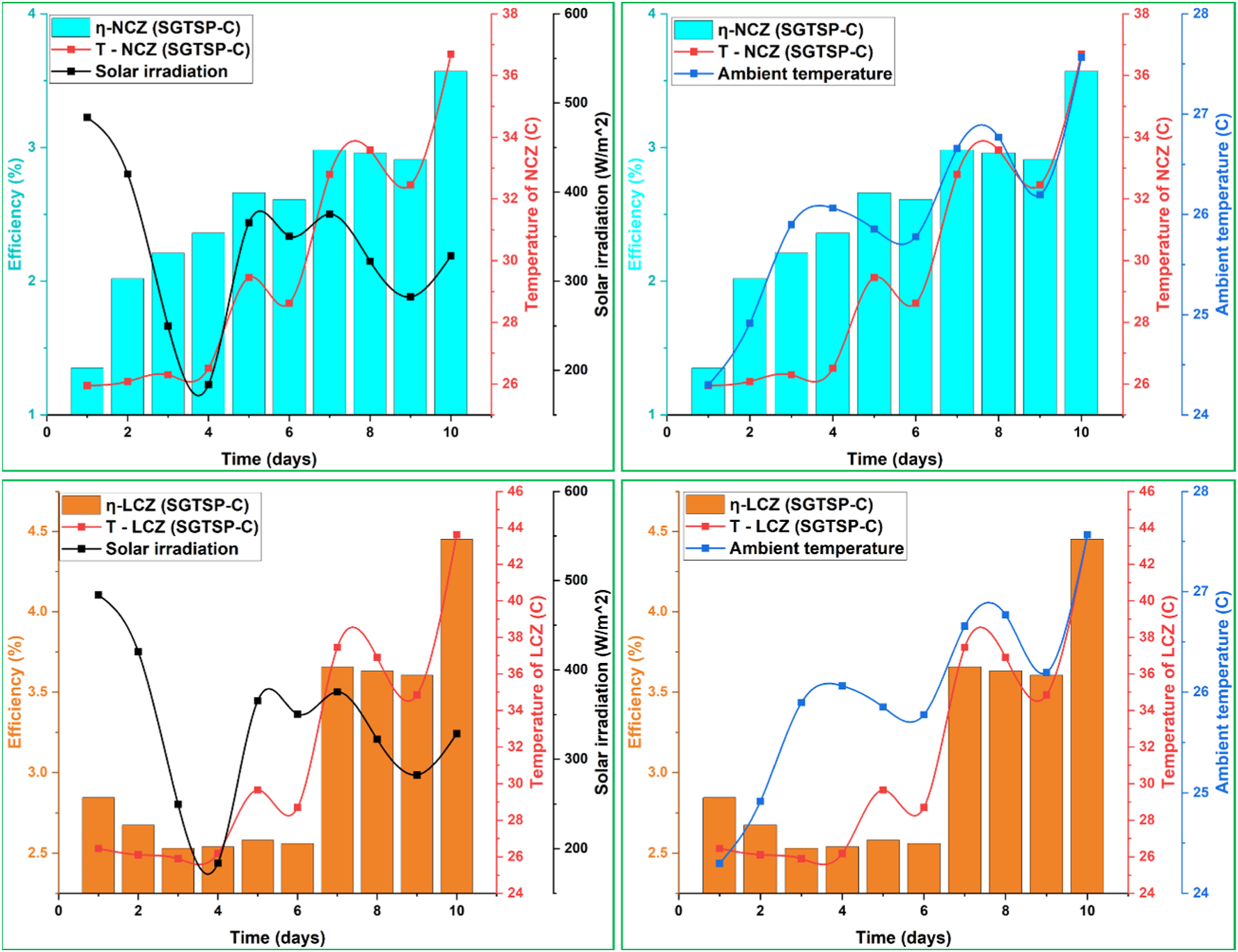
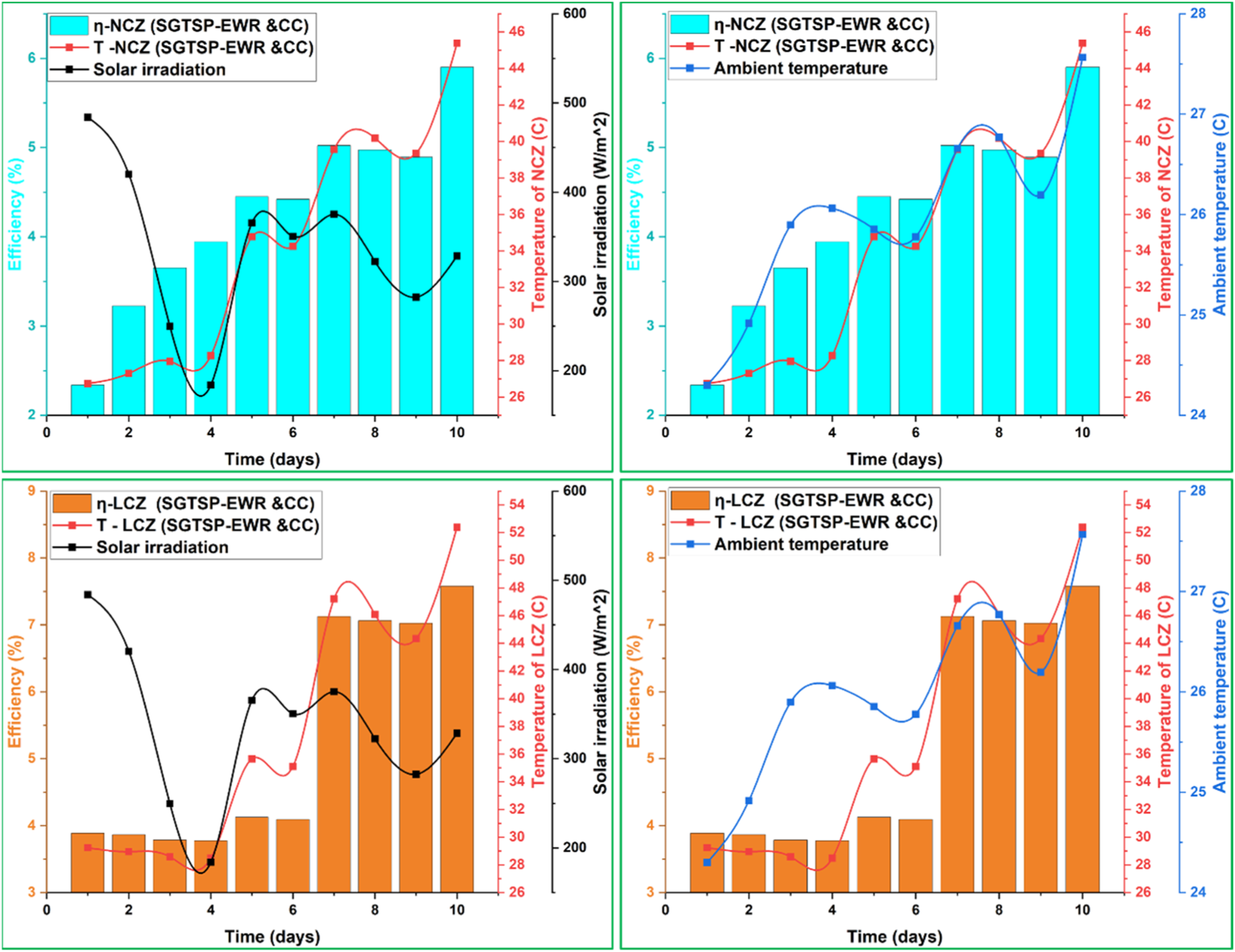
Furthermore, the increase in I and T-amb resulted in higher temperatures and efficiency of NCZ and LCZ for both SGTSP-C and SGTSP-EWR&CC, but the improvement was more significant in the latter system. Conversely, the decrease in I and T-amb led to lower temperatures and efficiency in NCZ and LCZ for both SGTSP-C and SGTSP-EWR&CC, but the decrement was more prominent in the earlier system. Additionally, when I increased, and T-amb decreased, there was only a nominal increment in temperature and efficiency of NCZ for both SGTSP-C and SGTSP-EWR&CC. However, for LCZ of SGTSP-C, the temperature decreased due to the influence of the nocturnal period, while for SGTSP-EWR&CC, the temperature remained nearly unchanged due to the heat retention capacity of coal cinder additives. On the other hand, when I decreased, and T-amb increased, there was a minimal increment in temperature and efficiency of NCZ for both SGTSP-C and SGTSP-EWR&CC. However, for LCZ, temperature and efficiency registered a significant decrement, mainly due to conductive heat transfer from LCZ to NCZ. 15
Stability of SGTSP-C & SGTSP-EWR&CC
The stability of SGSP is correlated with variations in temperature and salinity, which are measured using the heat stability coefficient (F).
12
Figure 7 shows the heat stability coefficient (F) over time between the interfaces of UCZ-NCZ (UN) and NCZ-LCZ (NL) for SGTSP-C and SGTSP-EWR&CC. The F-UN and F-NL values for both systems are always in the stable region. For SGTSP-C, the average F-NL and T-NL values were higher than the average F-UN and T-UN values by 1.12 and 3.81, respectively. For SGTSP-EWR&CC, the average F-NL and T-NL values were higher than the average F-UN and T-UN values by 1.45 and 7.66, respectively. The fluctuations of T-UN, T-NL, F-UN, and F-NL were synchronous and showed an increasing trend for both systems. This is mainly due to the dependence of F on temperature gradient rather than absolute temperature value.
12
The average fluctuation percentage of F-UN and F-NL for SGTSP-C was 14.28% and 6.41% higher than the value for SGTSP-EWR&CC, respectively. These values indicate that SGTSP-EWR&CC is bound to have minimal fluctuation in thermal stability even at higher temperatures compared to SGTSP-C due to the shielding of reflectors during the nocturnal period. Stability of (a) SGSTP-C and (b) SGTSP-EWR&CC.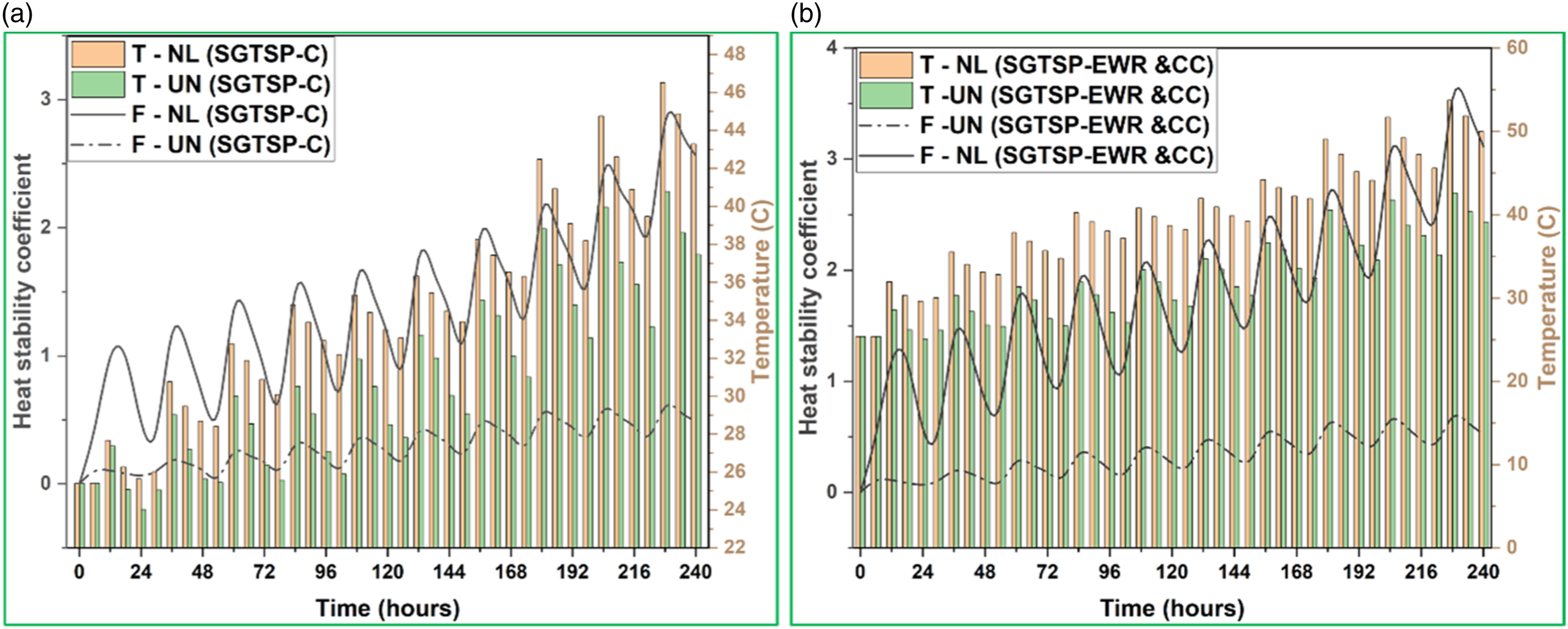
Annual performance of SGTSP
The effectiveness of the SGTSP was contingent on its ability to operate efficiently under varying climatic conditions at the designated geographical location.52,53 Therefore, the following sections will elaborate on the bimonthly temperature profile along the depth of the SGTSPs, the bimonthly salinity profile along the depth of the SGTSPs, the monthly average temperature distribution, and the energy distribution and efficiency of different zones within the SGTSP’s.
Bimonthly temperature profile along the depth of SGTSPs
Figure 8 Illustrates the bimonthly temperature profile along the depth of SGTSP-C and SGTSP-EWR&CC. It is worth noting that all bimonthly temperature profiles indicate a decreasing trend for both systems, indicating their stability. The percentage of temperature variation for a 0.1 m depth variation in UCZ, NCZ, and LCZ of SGTSP-C and SGTSP-EWR&CC was found to be 29.85%, 9.78%, and 5.45% and 40.82%, 15.66%, and 7.94%, respectively. The profile slopes were steeper in SGTSP-EWR&CC than in SGTSP-C. The bimonthly temperature profile variation of both systems followed the trend of the climatic conditions. However, it occurred due to the cumulative heat trapped by the salt particles in the pores of the coal cinder in LCZ of SGTSP-EWR&CC.
50
Temperature distribution along the depth of (a) SGTSP-C & (b) SGTSP-EWR&CC.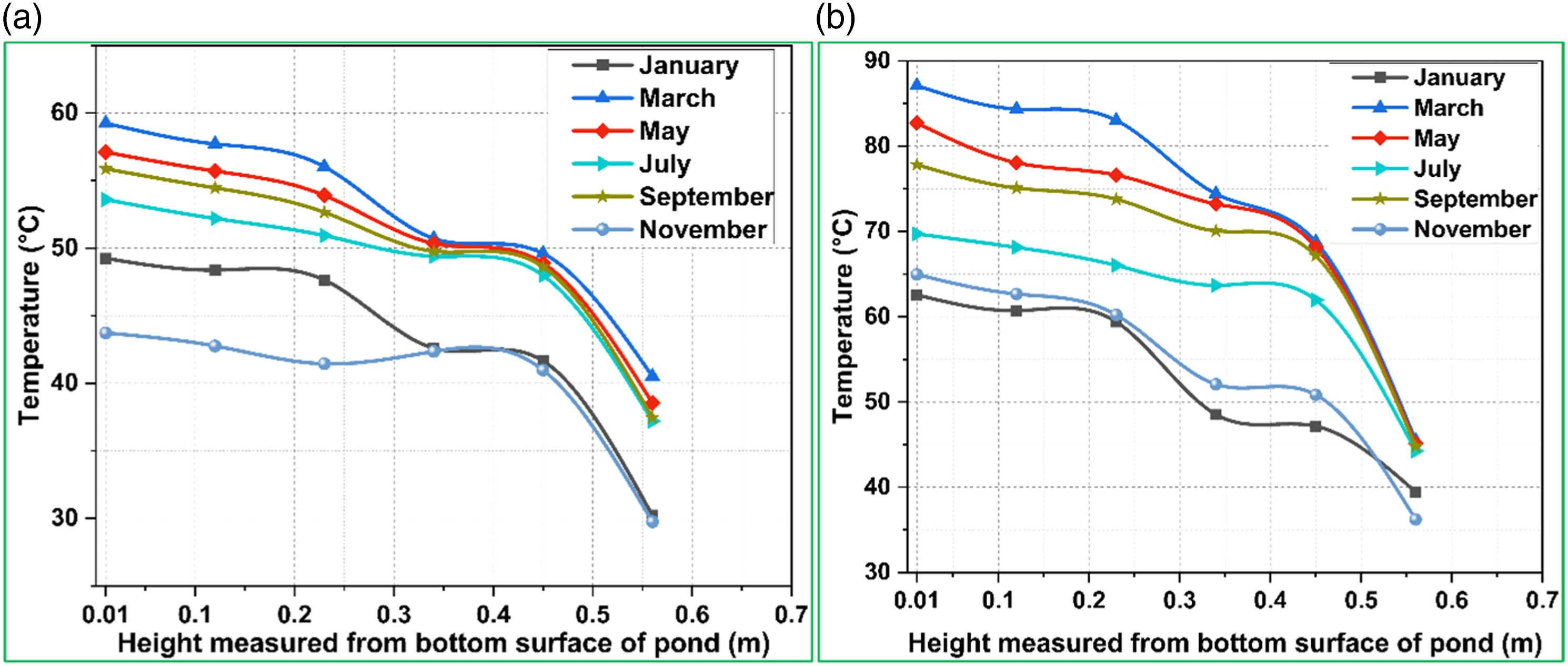
Bimonthly salinity profile along the depth of SGTSPs
Figure 9 illustrates the bimonthly salinity profiles along the depth of SGTSP-C and SGTSP-EWR&CC. It is worth noting that all bimonthly salinity profiles indicate a decreasing trend for both systems, indicating their stability. The percentage of salinity variation for UCZ, NCZ, and LCZ of SGTSP-C and SGTSP-EWR&CC was found to be minimum, caused by the change in climatic conditions. The density of SGTSP-EWR&CC in NCZ and LCZ was lower than that of SGTSP-C due to its higher system fluid temperature caused by the energy trapped by the additives. Salinity distribution along the depth of (a) SGTSP-C & (b) SGTSP-EWR&CC.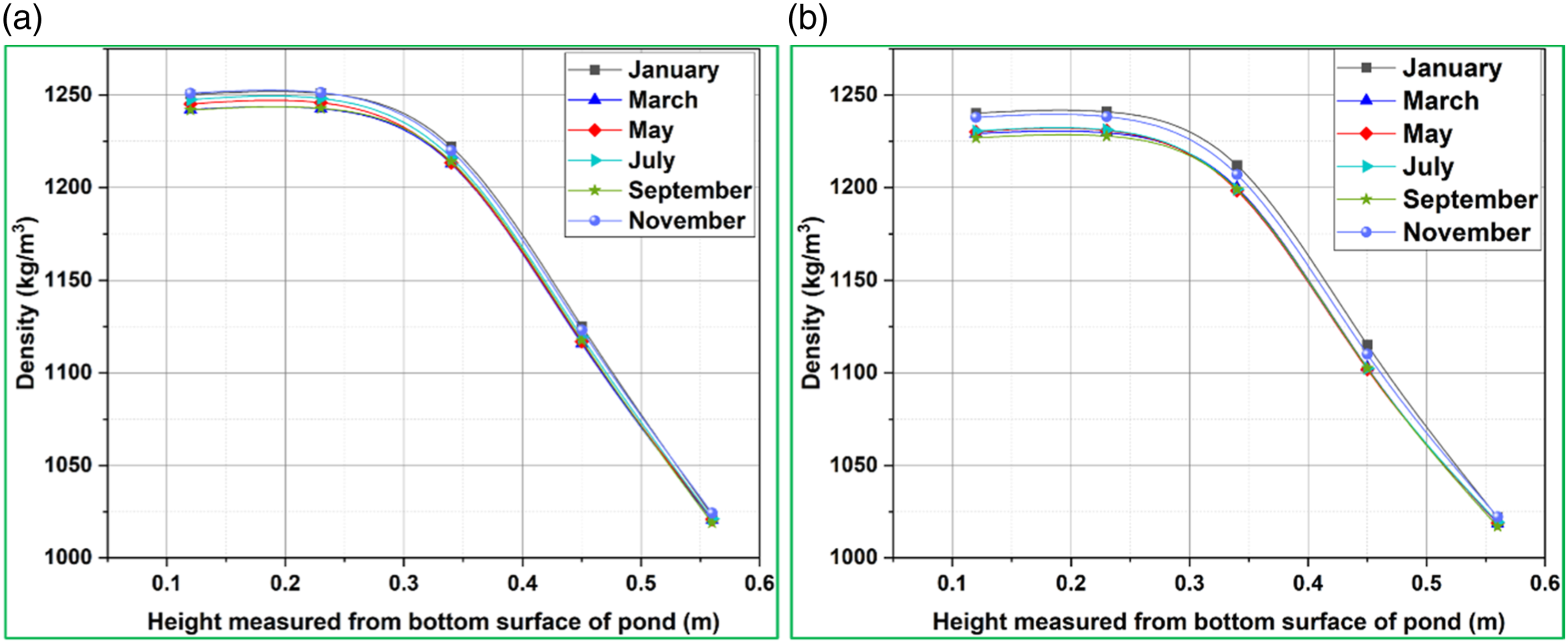
Distribution of energy in UCZ, NCZ, LCZ for SGTSP-C and SGTSP-EWR&CC
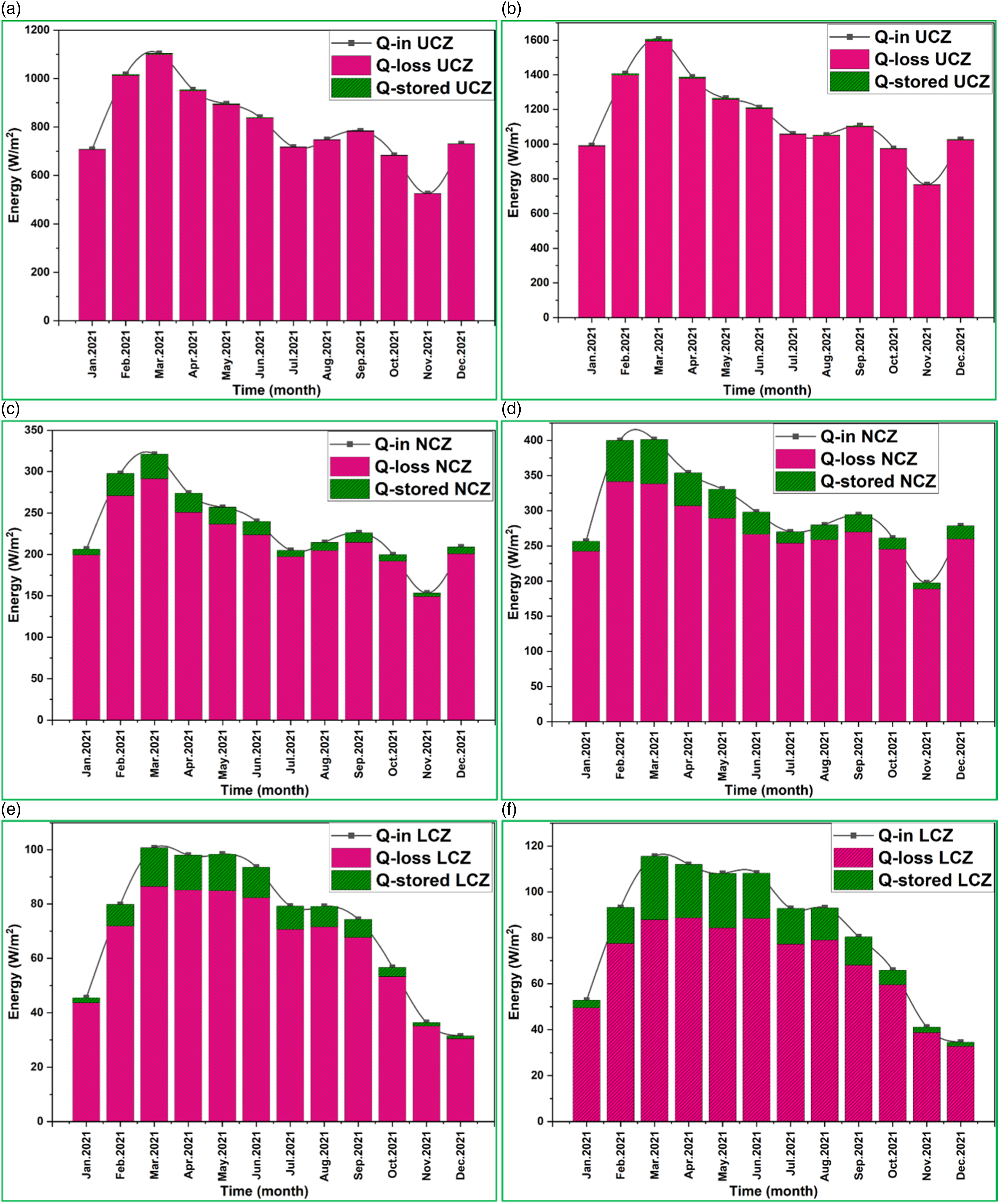
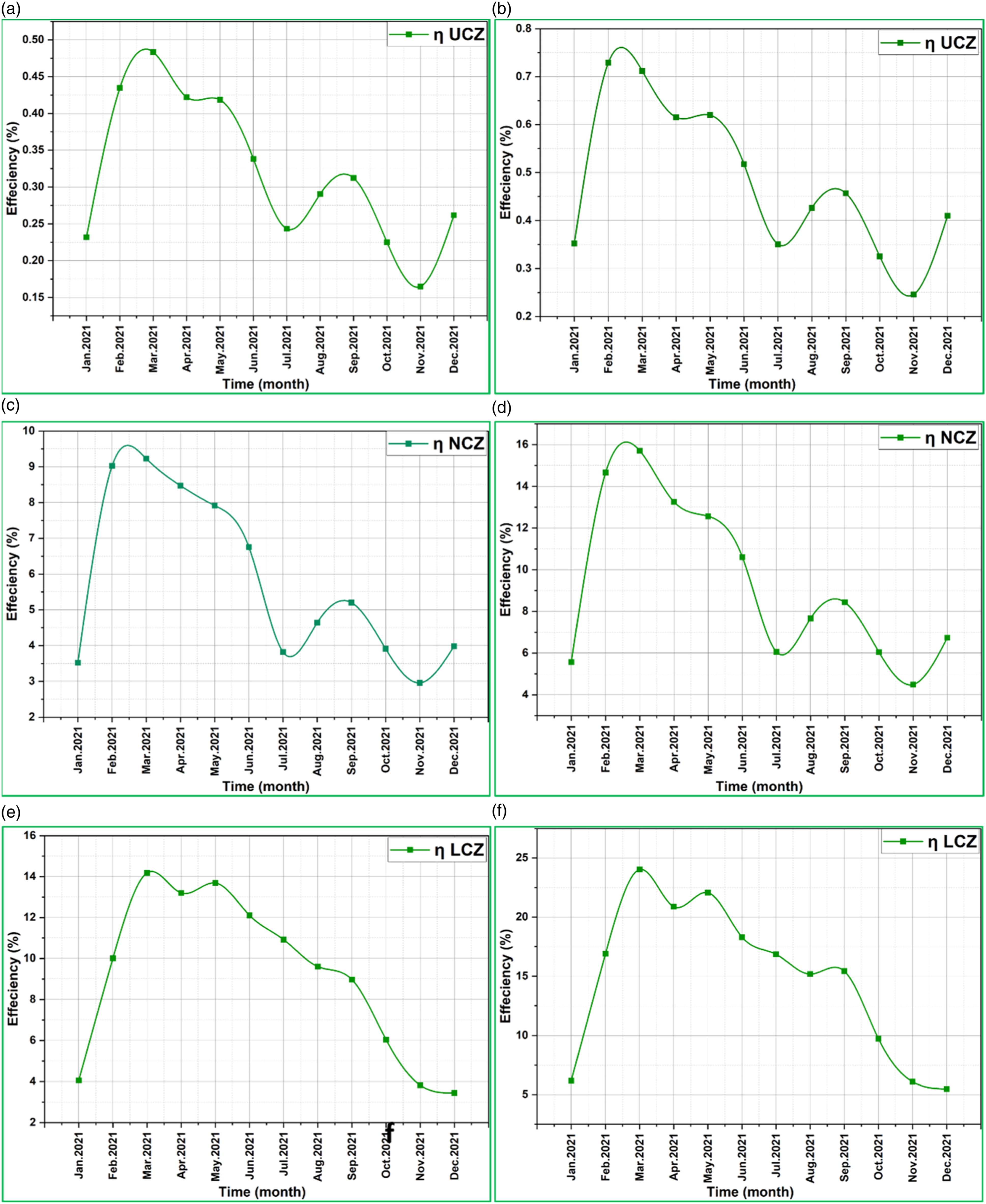
Figures 10–12 Illustrates the temperature(T), energy distribution, and efficiency (η) of different zones for SGTSP-C and SGTSP-EWR&CC. The SGTSP-EWR&CC showed an increase in the average UCZ, NCZ, and LCZ temperature by 20.45%, 29.06%, and 35.8% compared to SGTSP-C. Similarly, it was 50.3%, 59.1%, and 60.9% for average efficiency. Although the η of NCZ and LCZ did not differ significantly for all months, it displayed an upward trend during summer and a downward trend during winter. The temperature and efficiency of LCZ were higher than NCZ's in all conditions for both systems. That was due to the insulating properties of NCZ and the maximum energy storage capacity of LCZ. It was observed that the recorded average maximum and minimum monthly T and η values of LCZ of SGTSP-C exhibited 57.66°C and 14.18% and 42.65°C and 3.45%, respectively, during March 2021 and November 2021. The mean temperature of SGTSP-C was 52.6°C, which increased to 71.54°C for SGTSP-EWR&CC. Finally, the thermal energy stored in the pond reaches its peak values during the highest ambient temperature or global horizontal irradiance. Further, it was minimal when the ambient temperature and global horizontal irradiance were at their lowest. Temperature of (a) UCZ for SGTSP-C, (b) UCZ for SGTSP-EWR&CC, (c) NCZ for SGTSP-C, (d) NCZ for SGTSP-EWR&CC, (e) LCZ for SGTSP-C and (f) LCZ for SGTSP-EWR&CC. Energy distribution of (a) UCZ for SGTSP-C, (b) UCZ for SGTSP-EWR&CC, (c) NCZ for SGTSP-C, (d) NCZ for SGTSP-EWR&CC, (e) LCZ for SGTSP-C and (f) LCZ for SGTSP-EWR&CC. Efficiency of (a) UCZ for SGTSP-C, (b) UCZ for SGTSP-EWR&CC, (c) NCZ for SGTSP-C, (d) NCZ for SGTSP-EWR&CC, (e) LCZ for SGTSP-C and (f) LCZ for SGTSP-EWR&CC.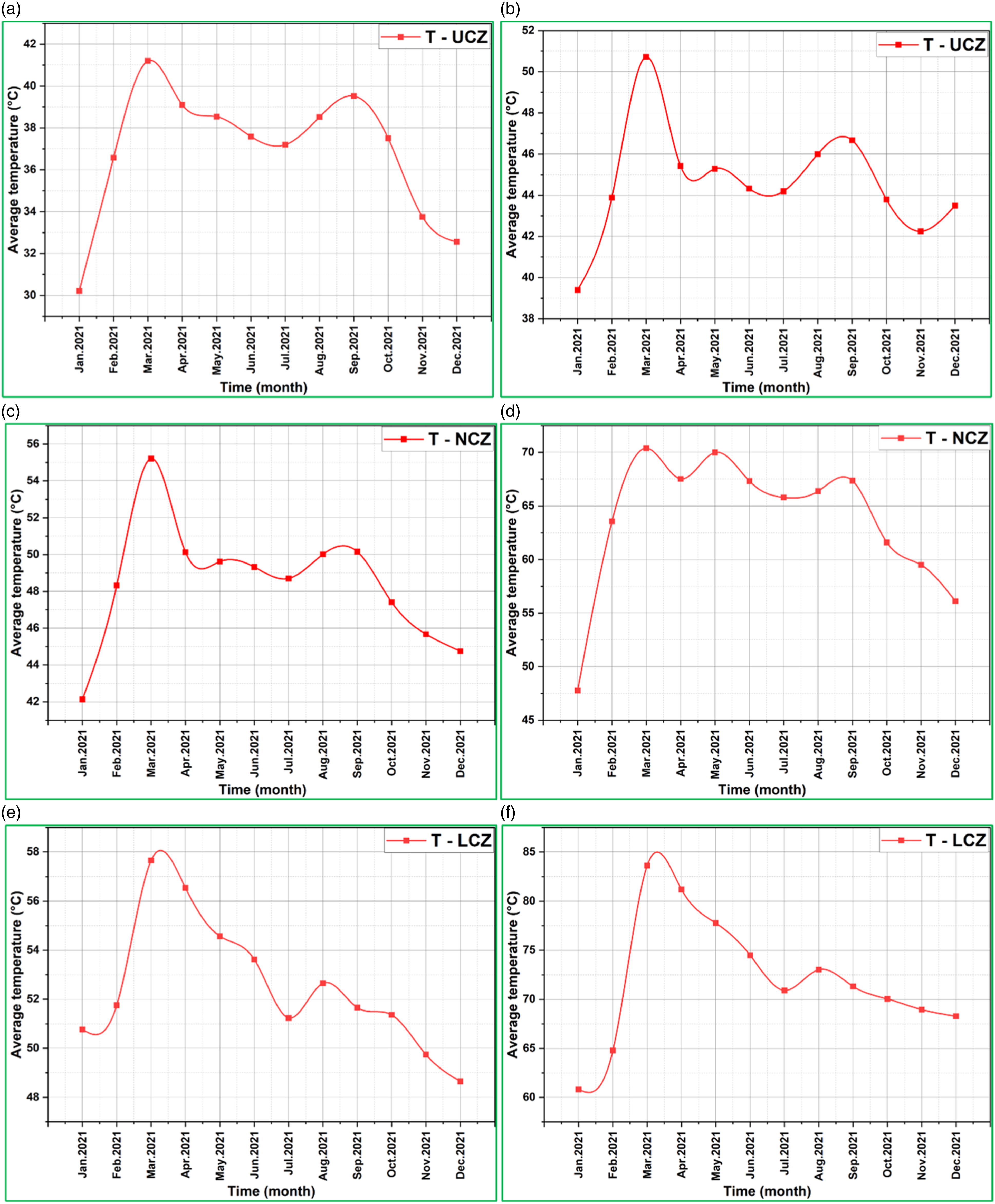
Conclusion
The current study investigated and compared the energy performance characteristics of two distinct solar pond systems, namely SGTSP-C, and SGTSP-EWR&CC, in terms of temperature and energy efficiency throughout the year. The findings of the study are as follows: 1. The proposed novel trapezoidal solar pond showed a maximal sunny area ratio between January and April 2021, with an optimized SGTSP reaching a peak sunny region ratio of 94.6% in April 2021. 2. The findings showed that using a double glass cover significantly improved the performance of the SGTSP-C and SGTSP-EWR&CC systems across all zones. The latter system showed greater significance, exhibiting faster stability attainment and temperature increase than the former. 3. Incorporating coal cinder as an additive has yielded a significant enhancement of 23.9% in the thermal energy storage capacity compared to the reference system. Additionally, using an EW-reflector has amplified the input solar radiation by 41.4%, again compared to the reference system. 4. In both SGTSP-C and SGTSP-EWR, the LN region exhibited higher heat stability than the UN region. Furthermore, SGTSP-EWR showed minimal stability fluctuation compared to the conventional system, even when functioning at higher temperatures. 5. The maximum temperature and thermal efficiency of SGTSP-EWR were 82.86°C and 24.03%, respectively. In comparison, for SGTSP-C, the values were 57.66°C and 14.18%. Thus, it can be inferred that the modified system is more favorable, given its superior temperature and thermal efficiency performance.
Future research will be necessary to improve solar pond technology. More research can be conducted on the combined effect of various additives on SGTSP output and the stability of various composite salt combinations. Environmentally friendly chemicals and reflectors have received little attention as well. Closing these gaps could result in more sustainable and effective solar pond systems, propelling solar pond technology forward as a renewable energy source.
Footnotes
Declaration of conflicting interests
The author(s) declared no potential conflicts of interest with respect to the research, authorship, and/or publication of this article.
Funding
The author(s) received no financial support for the research, authorship, and/or publication of this article.
