




Abstract
A significant part of energy of fuel supplied is lost in internal combustion engines in the form of atmospheric discharge of engine exhaust gases which are considered as a big source of engine inefficiency and formation of pollutant emissions. To address this issue, a bottoming cycle combining the transcritical CO2 (T-CO2) refrigeration cycle and the supercritical CO2 (sCO2) power cycle is employed, aiming to produce cooling for food preservation by utilizing the exhaust heat of homogeneous charge compression ignition (HCCI) engine powering the refrigerated truck. The operative variables and their effect on thermal and exergetic efficiency of HCCI engine and the combined system are investigated. At the base case operative conditions, the thermal and exergy efficiencies of natural gas fueled HCCI engine are improved significantly from 48.69% to 61.28% and from 41.14% to 42.79%, respectively, after employing the sCO2 powered T-CO2 refrigeration cycle. Promotion of equivalence ratio from 0.3 to 0.9 enhances the thermal and exergy efficiencies of HCCI engine from 47.44% to 49.54% and from 40.14% to 42.12%, respectively. Increasing of engine speed from 1400 r.p.m to 2200 r.p.m provides marginal improvement in HCCI engine efficiencies but the efficiencies of combined cycle are significantly improved from 57.67% to 65.18% and from 40.64% to 45.06%, respectively. Finally, exergy analysis applied to determine the sources of non-idealities within the system revealed that out 361 kW (100%) fuel exergy supplied to the system, HCCI engine destroys 93.31 kW (25.85%), catalytic convertor destroys15.49 kW (4.29%), and the in-cylinder heat transfer losses and system exhaust losses are found as 35.72 kW (9.91%) and 16.61 kW (4.61%), respectively.
Introduction
Demand for establishment of an environment friendly sustainable society has been increasing since a couple of decades because of the rapid combustion of fossil fuels and their adverse effect of increasing the level of pollutant emissions in the environment. This motivate the researchers for increasing the thermo-environmental performance of internal combustion engines which are considered as potential energy sources for transportation and the major source of environment degradation through vehicular pollution.1,2 In general, in the internal combustion engines nearly two-thirds of the input energy is wasted through the exhaust gas and cooling water of these engines. 3 Hence, it is required to generate concepts for recovering the engine waste heat which is for producing the useful energetic outputs such as electricity generation, process heat, and cold production which will improve the overall system efficiency and quality of atmospheric air. Among the waste heat recovery techniques, organic Rankine cycle (ORC) has been found promising and has shown its potential to be employed widely.4,5 Many examples are found in the published literature where ORCs have been successfully applied for electricity generation based on temperature difference between the engine exhaust gases and the environment. For instance, Seyedkavoosi 6 performed an exergy analysis of an ORC applied for engine waste heat recovery. In their investigation, a comprehensive thermodynamic modeling of the cycle was performed and the impact of key design parameters was examined on the system performance. Valencia et al. 7 presented the energy and exergy of different exhaust waste heat recovery systems for natural gas engine based on ORC. Their findings revealed that application of toluene as working fluid improves the operational performance of ORC by achieving an enhanced power output and the thermal efficiency. Ge et al. 8 utilized a dual loop ORC system with zeotropic mixtures as working fluids for waste heat recovery of an internal combustion engine. Based on their results, the net power output of the system was increased by about 9% by using zeotropic mixtures compared to pure fluids. Reported investigations revealed that application of ORC shows mis-matching of temperature between the working fluid and source/sink of the cycle which results in increasing of thermodynamic irreversibility and the decreased exergy efficiency. Production of refrigeration is much expensive than electric power and heating because in most of the applications it requires refrigeration machine and electricity. Therefore, conversion of engine’s waste energy into power and cold production could provide economic advantages.9,10
Food preservation to maintain its quality during transportation using buses with comfortable road journey demand cooling for space conditioning and refrigeration. The buses and trucks used for land transportation employs diesel engine which reject a significant amount of fuel energy to environment in the form of high temperature exhaust gases occupying 400°C and 600°C.11,12 Therefore, system development which can directly convert the engine waste heat into cooling at different temperatures provide the effective means for meeting the demand of cooling of road transportation vehicles. Cooling systems driven by engine exhaust heat have been investigated widely in the last couple of decades and majority of such systems which are of absorption refrigeration type where heat source is utilized to split the (strong solution) into the absorbent and refrigerant. The refrigerant while flowing the evaporator absorb heat from the space to be cooled. Commonly applied absorbent-refrigerant pairs in the absorption refrigeration systems (ARS) are LiBr-H2O and NH3-H2O which produces cold at desired temperatures. The ARS employing LiBr-H2O, utilize water as the refrigerant and the machine becomes un-functional in the situation of evaporator temperature falls below than 0°C. For refrigerating the thermal load of less than 0°C,
To our knowledge, many of the researches on engine exhaust heat recovery dealt with the application of ORC, absorption refrigeration cycle, and an ejector refrigeration cycle29,30,31 whose limitations in use of waste heat recovery are described above. Only a few studies are mentioned on the proposal and analysis of CO2 based refrigeration cycle applied for the recovery of engine waste heat.32,33,34 Sahu et al.
35
presented a parametric study for both the simple transcritical CO2 refrigeration cycle and the combined refrigeration-power cycle. It was reported that the COP and second law-efficiency of the combined refrigeration-power cycle is significantly higher than those of the simple refrigeration cycle. Ouyang et al.
36
developed model of engines exhaust waste heat recovery system to drive the refrigeration system of the vehicle based on CO2 performance optimization and the adjustment of the operating condition for higher power output. Shi et al.
37
proposed three operating modes for the CO2 cycle used for refrigeration and power generation in a refrigerated trucks operated by the waste heat recovery of exhaust gases. They found that the proposed system showed considerable potential for energy saving and it can provide greater refrigeration and power loads. Vashisht and Rakshit
38
reviewed and compared the different air conditioning systems used in automobile for a sustainable solution and reducing the specific fuel consumption of the engine and it was recommended to move the environment friendly refrigerant system like CO2. Elattar and Nada
39
presented a study showing two modifications by insertion of two heat exchangers in bottom and top CO2 compound cycles driven by engine exhaust gases. Their parametric investigation showed that the proposed system has the highest refrigeration capacity, energy efficiency, and fuel consumption cost saving with optimal values of 20.4%, 0.1819 kg/kWh, 7.1%, respectively. It is revealed from the surveying of literature that exergetic evaluations as regards engine waste energy driven sCO2 Brayton power cycles combined with the CO2 refrigeration cycles for simultaneous production cooling and power are scarce but needed to better understand such systems for their wider employment in engine waste heat recovery applications. Therefore, the objective of this work was to fulfill this lack of information and to reveal the real sources of irreversibilities and real potential of improvements in the CO2 refrigeration cycle used for the recovery of engine exhaust heat. A homogeneous charge compression ignition (HCCI) engine was considered and its exhaust gas heat was captured to power a cooling system based on a sCO2 power cycle combined with the transcritical CO2 (T-CO2) refrigeration cycle with the aim to find an option to replace the traditionally used waste heat operated refrigeration cycles. HCCI involves a new combustion technique which is developed to increase the engine productivity and to wider the flexibility in using alternative fuels. Moreover, in HCCI engine due to the use of premixed fuel-air mixture under lean operating conditions at higher compression ratio oxides of nitrogen and soot emissions are drastically reduced while maintaining a higher thermal efficiency of the engine,40,41,42 the benefits not obtained from diesel (CI) engine. The novelty of the system designed in this study can be briefly presented as: 1. The sCO2 Brayton power cycle combined with the transcritical CO2 refrigeration cycle is designed for the effective exploitation of exhaust gases of a natural gas fired HCCI engine through simultaneous generation of electricity and refrigeration to fulfill the diverse type of energy needs of a transportation vehicle in a climate friendly manner. 2. A model based on mathematical formulation is proposed and an analysis is conducted by employing an Engineering Equation Solver (EES)
43
software to assess the best possible design variables and configuration to obtain the maximum energetic and exergetic performance of the proposed system. 3. All outputs related to energy and exergy are compared to the natural gas fired HCCI engine to reveal the feasibility and effectiveness of proposed bottoming cycle for the use of high-grade heat discharges to atmosphere.
This study includes the parametric evaluation that brings out the impacts of engine speed, fuel-air equivalence ratio, expander entry pressure, and an evaporator temperature on the system efficiencies pertaining to natural gas fueled HCCI engine coupled to sCO2 power cycle driving the transcritical CO2 refrigeration cycle. The effects of changing the above operative conditions have also been examined on the power output of proposed system as well as on cooling capacity and the cold exergy.
System description
Atmospheric air (1) entering the compressor (C1) where its pressure is increased (2) and then it enters to regenerator (Reg) for increasing the temperature (3). The air at high pressure and temperature mixes with natural gas (4) supplied as fuel. In the fuel mixer (FM), a homogeneous mixture of air and gas is formed (5) which then enter in HCCI engine. Mixing of homogeneous mixture and residual gases occurs in the cylinder from where the exhaust gases leaving (6) to catalytic convertor (CC). The species such as unburned hydrocarbon (UHC) and carbon monoxide (CO) which escape the combustion process combust in the convertor (CC) resulted in the increase of exhaust gas temperature because of heat releasing. The gases leaving the catalytic convertor (CC) directed (7) to turbine (T) for generating power to drive the turbocharger. The turbine (T) exhaust enters (8) the regenerator (Reg) to transfer heat to compressed air leaving the compressor (C1). The turbine exhaust is then delivered to boiler of S-CO2 cycle (9) for heating the high-pressure CO2 at the exit (15) of compressor which is passed through the recuperator and boiler (16) in turn to absorb heat, and then enter (11) to the sCO2 expander and generated power to drive the compressors of both SCO2 power cycle and transcritical CO2 refrigeration cycle. Since the CO2 stream temperature at the expander exit (12) remains high, a recuperator is applied to further use the energy to enhance the cycle efficiency. The sCO2 expander outlet enter (14) to the compressor after releasing heat through the recuperator and the common cooler (13). The CO2 leaving the compressor (18) of T-CO2 cycle enter the common cooler to cool down through the use of ambient air. The CO2 from the common cooler enters the expansion valve (19) and then to evaporator (20) to refrigerate the thermal load of cooling customers. Such a refrigeration cycle is aimed to generate enough cooling for the cabinet of refrigerated truck cabinet to preserve food quality or other goods during transportation.
Thermodynamic properties evaluation and assumptions
The following is the manner for developing a model of the system: 1. A new combined power and refrigeration system consists of sCO2 power cycle and T-CO2 refrigeration cycle which is driven by a natural gas operated HCCI engine. 2. Thermodynamic modelling for the performance investigation of sCO2 power cycle. 3. Thermodynamic modeling of the T-CO2 refrigeration cycle employed for the preservation of fresh, frozen, and perishable products. 4. The thermophysical properties of CO2 for the sCO2 power cycle, and T-CO2 refrigeration cycle are derived from REFPROP 9.1 database.
44
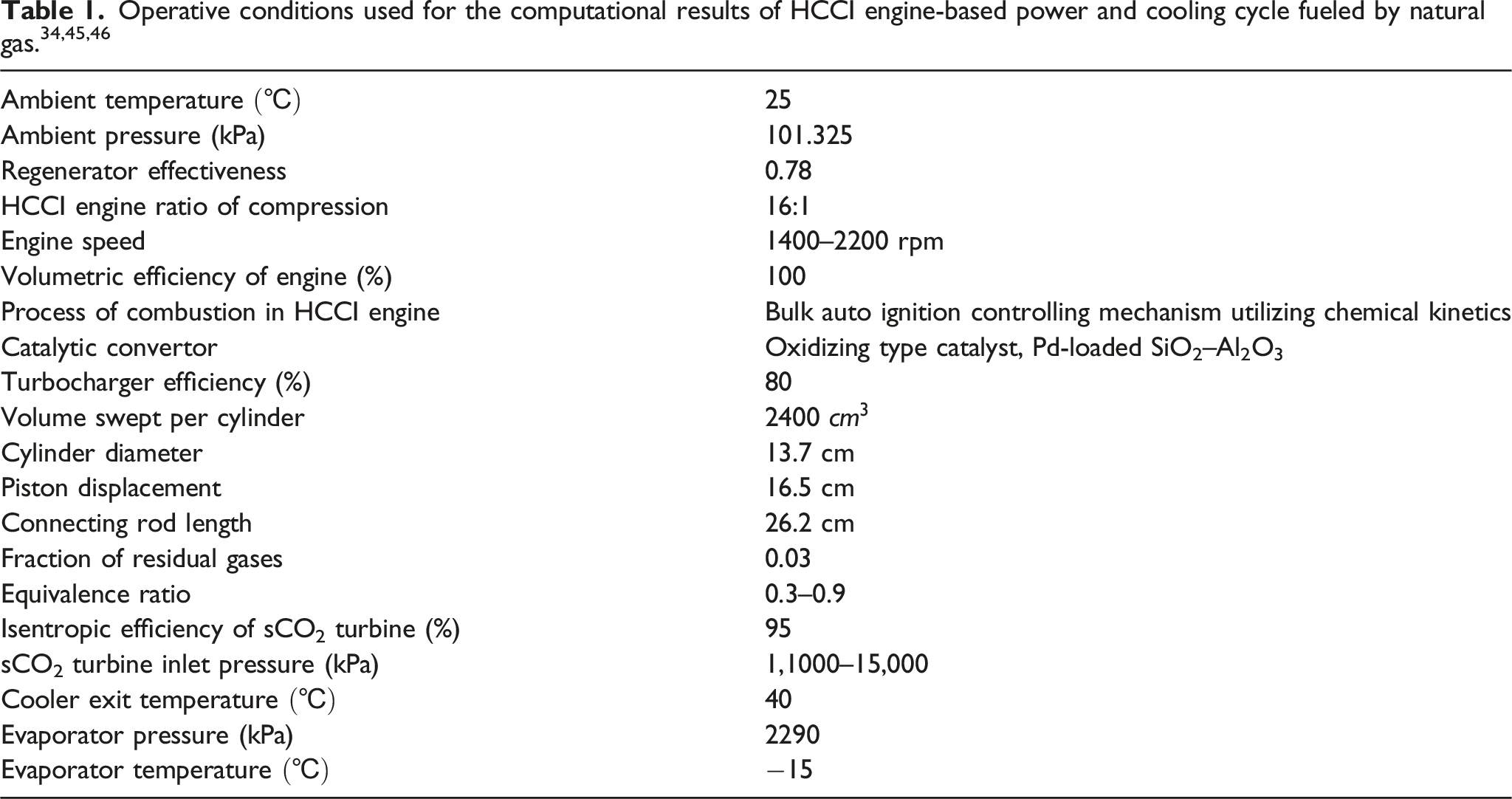
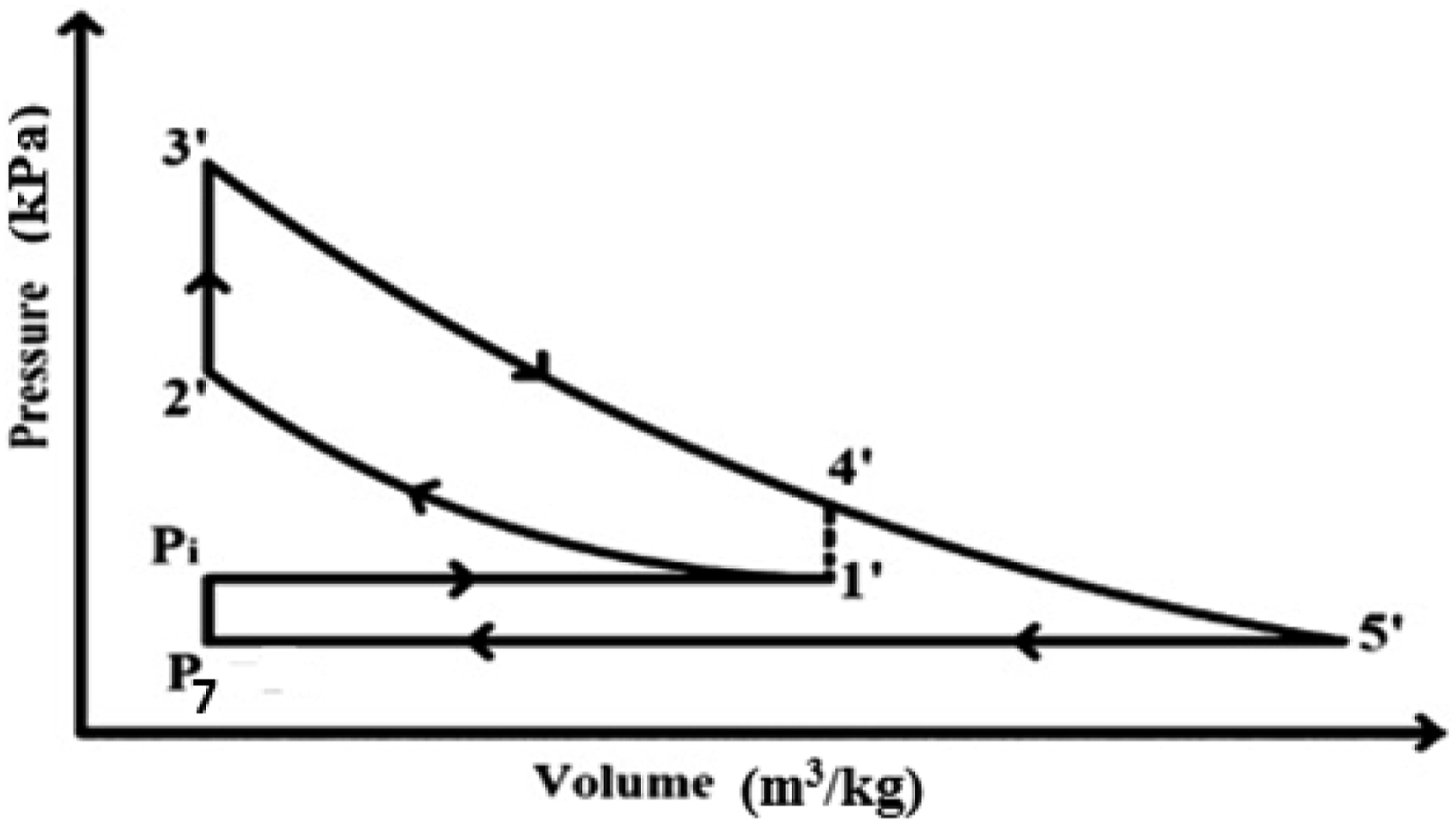
Input data for modeling of the developed system are given in Table 1. The following operative conditions were considered while modeling the proposed combined S-CO2 power and T-CO2 refrigeration cycles:27,34,40 1. The combustion process of HCCI is assumed as time dependent along with the consideration of a mixed reactor of variable volume. 2. HCCI combustion is having the typically fast burning rates and if phasing out correctly in the cycle could approximate the ideal Otto cycle. Figure 2 represents the PV diagram for the HCCI operating under ideal condition. 3. In the heat exchanger and duct, loss of pressure is not considered. 4. Elevated compression ratio leads to consider the lower value of residual gas fraction (f = 0.03). 5. Processes such as steady state and steady-flow are considered in all the components of the integrated cycle. Variations in kinetic and potential energies are not considered. 6. A pinch point 30°C is taken in the boiler and in remaining of the heat exchangers it was assumed 5°C to ensure the feasible design of economical heat exchanger. 7. No consideration of pressure drops and heat loss in the pipes and system components. 8. The dead state to be considered 25°C and 101.325 kPa.
Air is considered as the working substance for cylinder of the internal combustion engines undergoing the ideal cycle operation. However, in the actual engine cycle operation the working fluid consists of many gaseous species.
For the actual cycle operation, variation of specific heat of gases with temperature is commonly considered in the analysis. The molar specific heat model applied in present investigation taken 
The specific heat formulation for two most promising thermodynamic properties such as enthalpy and entropy of species i of the gaseous mixture can be expressed as below


In the actual process of combustion in addition to H2O, CO2 and N2, several other compounds are found in the exhaust gases of engine. The following combustion species CO, H2O, CO2, O2, H2, and N2 are assumed to form in the HCCI engine fueled by natural gas. Assuming natural gas majorly contain methane, its combustion with air leads to the equation shown below
46

The mole fractions,
Use of Pd-loaded 
On consideration the polytropic efficiency fixed at a given pressure, the compressor exited stream (air) temperature, air temperature at the exit of regenerator, and the temperature of stream exiting the fuel-air mixer can be determined after employing the formulations whose details can be found in the Ref. 46
HCCI engine
Leaving the fuel-air mixer, the mixture of gaseous species enters the HCCI engine and its thermodynamic cycle is modeled by a turbocharged Otto cycle as depicted in Figure 2 which is shown below.
The relation applied to compute the mixture temperature that consists of fresh charge and residual gases after the intake process 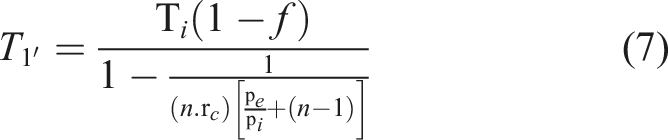
The gaseous mixture reaches to the point of ignition following the process of compression
Properties of working fluid at the end of heat addition process (2’-3’) are determined by applying an inversion numerical method to the equation

The losses pertaining to inner of combustion chamber are estimated by taking into account the combustion efficiency
46

The losses of heat from the combustion zone to cylinder walls, 



The working fluid properties at the outlet of expansion process (3’-4’) are calculated on the pattern of method employed for compression stroke (1’-2’).
For an engine with the turbocharger, the exhaust process (4’-1’) is replaced by an expansion process (4’-5’). The properties at outlet of blowdown process are computed using:




The heat released due to friction is calculated by using the relation
46

The heat of exhaust gases can be determined after employing the equation below
The net power generated by HCCI engine is evaluated by applying the expression:
The net output power of sCO2 power cycle is determined by
Analysis based on energy and exergy
Following the description of proposed system reported in section 2, combined second law and first law method was applied to conduct the analysis which reveal the performance insights pertaining to proposed combined cycle.7,13
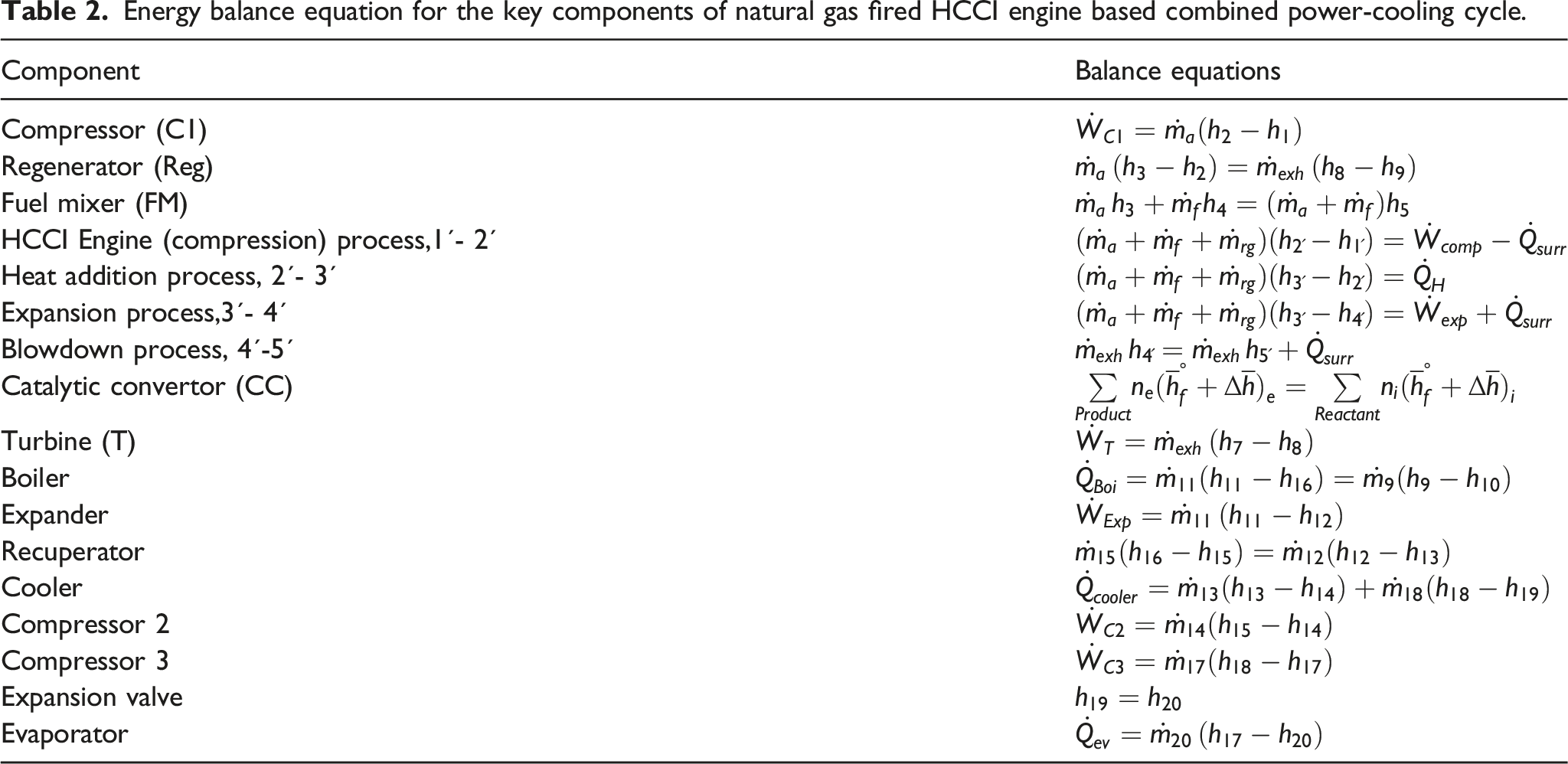
The formulations entailed after considering the principle of energy conservation and the conservation of mass with the assumptions ignoring the change of kinetic and potential energies of flowing stream entering/leaving the system operating under steady can be shown as

Energy balance equation for the key components of natural gas fired HCCI engine based combined power-cooling cycle.
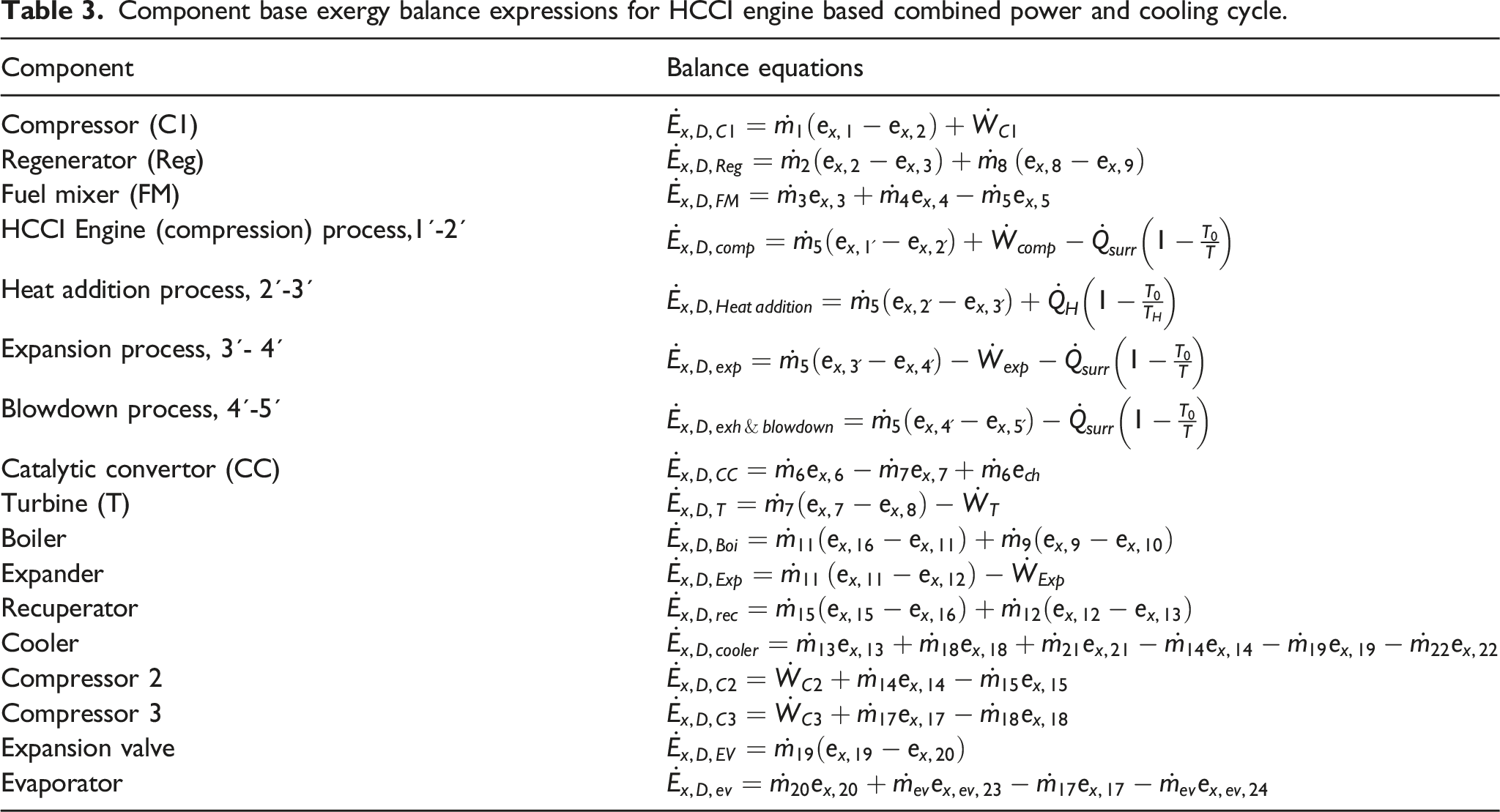
Exergy is the maximum amount of theoretical work which a system produces while undergoing a reversible transition from the considered state to dead state. Majorly it has two components; chemical exergy and physical exergy and its balance for any steady state steady flow process is governed by



Component base exergy balance expressions for HCCI engine based combined power and cooling cycle.
Criteria for the overall performance evaluation of the cycle
Traditionally, energy conversion cycle performances are evaluated considering the efficiency based on first law and this measures the percentage of energy supplied which convert into the energetic output. The thermal efficiency pertaining to proposed combined power and cooling cycle can be estimated by using the first law and it is defined as:
Efficiency defined from exergy application expressing an effective assessment of the system performance, and is computed, by employing the first and second laws of thermodynamics simultaneously, and it is presented as
Considering that refrigeration is distinct from power generation in the grade of exergy, the refrigeration exergy may be determined by using the equation
14

Results and discussion
Performance evaluation of HCCI engine-based cycle producing the power and refrigeration, simultaneously, are presented in this communication. An HCCI engine operated on natural gas containing 100% methane as fuel and combined with sCO2 power cycle and T-CO2 refrigeration cycle is considered and analyzed parametrically. Exergy analysis which is widely accepted as a thermodynamic tool to assess and improve the performance of combustion and refrigeration processes is applied along with the balance of energy approach. Each component of the proposed cycle is examined by considering it as the control volume operating under steady state conditions, further the component is modeled by applying the equations derived from energy and exergy balances and they are analyzed by employing the Engineering Equation Solver (EES) which is a software to solve algebraic expressions. The effects of changing the equivalence ratio, engine speed, expander inlet pressure, and evaporator temperature is ascertained on system efficiencies and on the energy and exergy associated with the power, and thermal load of refrigeration.
Validation of thermodynamic model
The model developed for the thermodynamic performance evaluation of a transcritical CO2 refrigeration cycle combined with the HCCI engine running on natural gas is validated. Since there was a lack in experimental data in the literature for a similar exhaust heat recovery system employed to HCCI engine, an alternative approach was adopted, in which the results derived from the present model are compared to the theoretical results obtained from the existing technologies and are available in the Ref. 31 . Some of the preliminary results considering the integration of supercritical CO2 (S-CO2) power cycle and the transcritical CO2 (T-CO2) refrigeration cycle combined with the natural gas fuelled HCCI engine are validated by comparing with the reported results 31 where two-phase ejector cooling cycle is combined with the natural gas fuelled HCCI engine. The thermal efficiency of the proposed system is found to vary from 59.67% to 62.88% compared to variation in thermal efficiency of the system reported in Ref. 31 (R600a is employed as ejector cooling cycle working fluid) from 60.05% to 63.26% when the equivalence ratio is raised from 0.3 to 0.9. The comparison of results clearly shows that the proposed system performance matches well with the performance of system reported in Ref. 31 . The thermal efficiency of system reported in Ref. 31 is little higher because of the integration of two-phase ejector cooling cycle which provides cooling for both refrigeration and air conditioning. Similar trends are found for the variation in the exergy efficiency and for the proposed system it varies from 41.75% to 43.82% compared to its variation for the system reported in the Ref. 31 from 38.02% to 39.89%. Exergy efficiency of the proposed combined system is higher because the exergy accompanied by refrigeration produced at lower temperature (proposed system) is higher than the exergy produced at the temperature close to environment temperature (system reported in Ref. 31 Effect of engine speed on the thermal and exergy efficiencies of the proposed system and the system reported in the Ref. 31 was also observed and a suitable comparison is found. The thermal efficiency of the proposed system is found to vary from 57.67% to 65.18% compared to variation in thermal efficiency of the system reported in Ref. 31 from 58.02% to 65.58%, and the exergy efficiency of the proposed system and reported system found to vary from 40.64% to 45.06% and from 37.02% to 41.03%, respectively when the engine speed is increased from 1400 to 2200 r.p.m. The type and range of operative conditions of HCCI engine considered in the present study and in the source of literature 31 are same. They are as follows; equivalence ratio (0.3 to 0.9), engine speed (1400 to 2200 r.p.m.). In sum, the findings of present study make a solid accept to carry out further research in the area of the exploitation of exhaust heat from alternative fuelled HCCI engine to promote sustainability further.
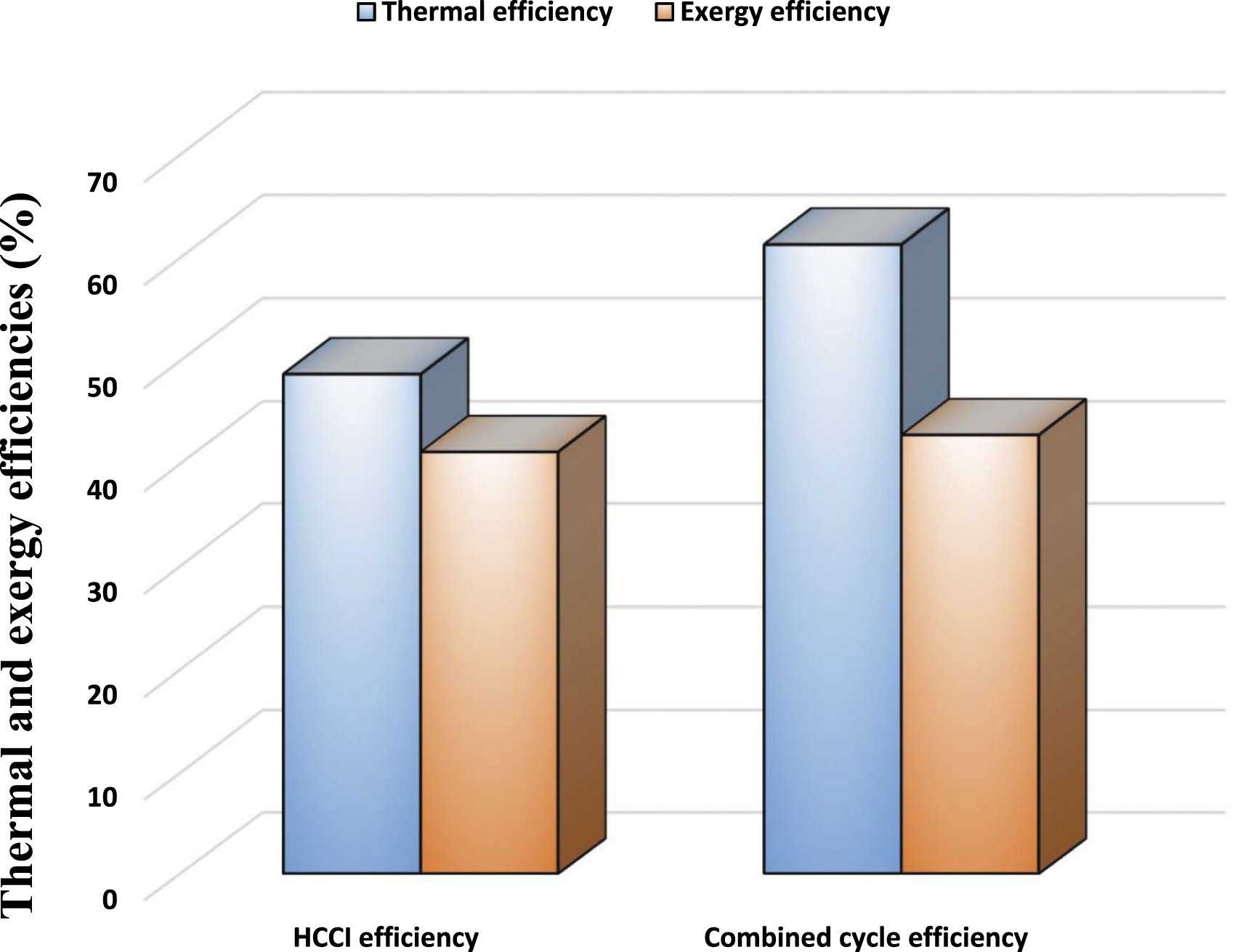
Figure 1 shows the properties corresponding to state point of the proposed combined cycle, after computation. The energetic and exergetic assessment of the developed combined system are carried out for the selected operative conditions. For conducting the exergy evaluation, the reference state is considered as pressure P0 = 101.325 kPa and temperature T0 = 298K. The burn rates considered in the engine are fast as displayed in Figure 2 and they are approximated as the processes of the turbocharged ideal Otto cycle. Figure 3 displays the efficiencies evaluated after applying the concepts of energy and exergy for the HCCI engine with and without the bottoming of sCO2-T-CO2 refrigeration cycle. It is notable to mention that the HCCI engine without bottoming cycle have energy and exergy efficiencies of 48.69% and 41.14%, respectively, whereas employment of sCO2-T-CO2 cycle raised the system efficiencies to 61.28% and 42.79%, respectively. The increment of 12.59% and 1.65% in the system’s energy efficiency and exergy efficiency are mainly because of the effective use of exhaust heat discharges from HCCI engine and due to the efficient operation of bottoming cycle because of employing CO2 as its working fluid. Enhancement in the exergy efficiency is significantly lower because the exergy accompanied by produced refrigeration is much lower than the refrigeration effect and the power output represents the power exergy. Schematic of a natural gas fueled HCCI engine based combined power and cooling system. P-V diagram showing the basic processes of turbocharged HCCI engine [46]. Energy and exergy efficiencies of HCCI engine and the combined cycle at base case operating conditions (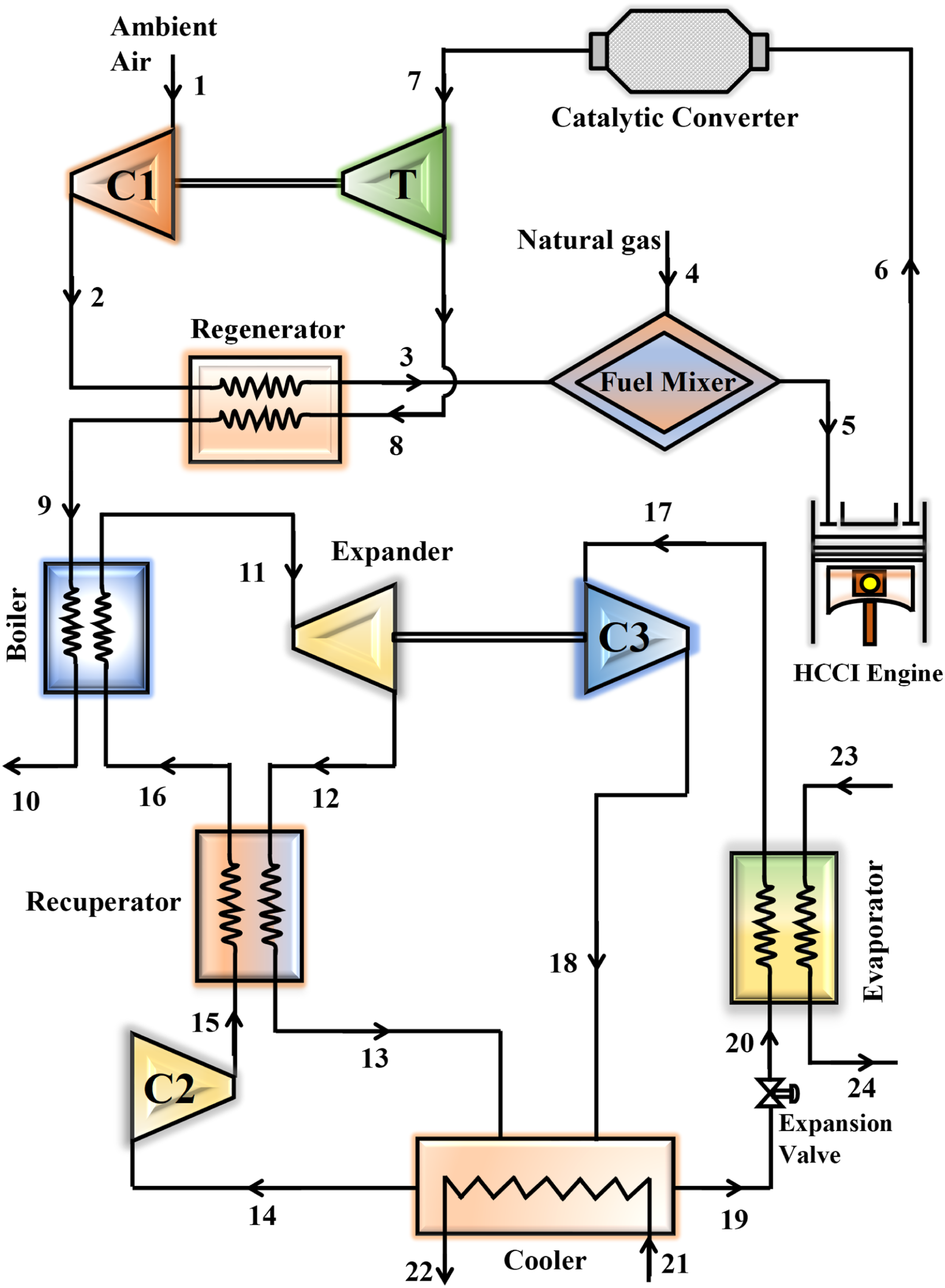
The discretization of chemical energy of fuel added to the engine is evaluated after applying the energy balance approach. The engine exhaust heat is utilized to raise the temperature of carbon dioxide, the working fluid of the bottoming cycle that consists of the power cycle the T-CO2 operated refrigeration cycle. Overall, the fuel supplied energy divides into the power generated, energy loss via heat transfer in the cylinder, heat loss at the cooler, heat lost to environment via engine exhaust, and the refrigeration produced. All these computations are made at the mean operating conditions of the combined cycle and illustrated in Figure 4. The energy balance investigation reveals that from 305 kW of energy accompanied by the supplied fuel, 148.5 kW is the power generated by HCCI engine which is considerably high due to the generation of high temperature and pressure because of the combustion of a higher calorific value fuel, natural gas (50 MJ/kg), refrigeration produced by the of evaporator of T-CO2 cycle is 38.41 kW. The loss of heat from the in-cylinder gas to walls of HCCI engine, exhaust heat loss, and heat loss via cooler are 107.26 kW, 50.56 kW and 37.09 kW, respectively. The in-cylinder heat transfer losses are high because combustion of higher calorific value fuel (natural gas) allow more energy release which results in an increase in gas temperature obtained in-cylinder and in turn the heat losses from the combustion gas to cylinder walls increased. Since the engine exhaust and cooling fluid applies to cooler leaves to environment at the higher temperature, therefore, exhaust heat losses and heat loss at cooler are also found considerably high. Distribution of fuel energy in the natural gas operated HCCI engine based combined power and cooling cycle.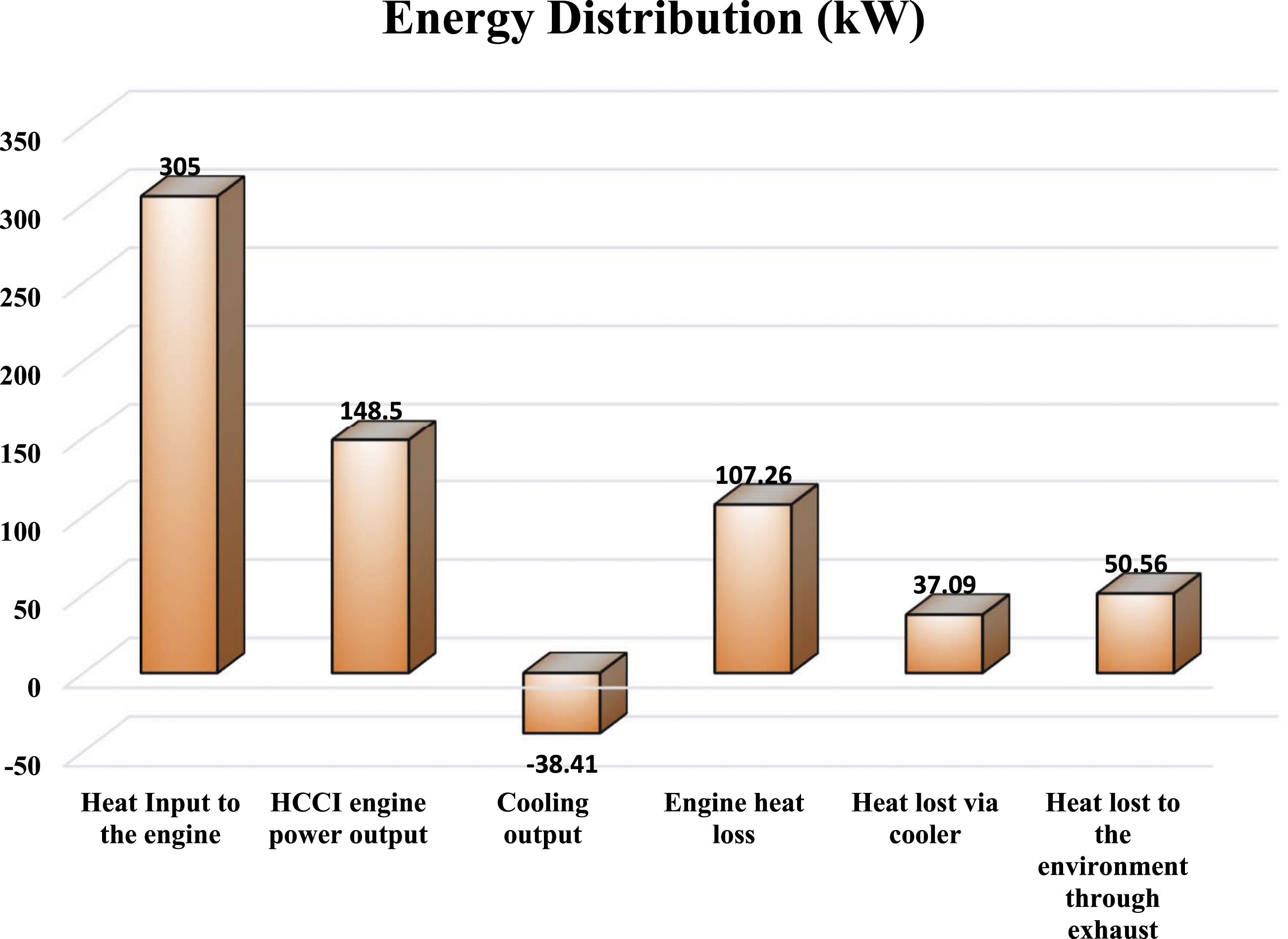
Figure 5 presents the distribution of supplied fuel exergy in the combined system at its base case operation. With a fraction of supplied fuel exergy converted to exergy accompanied by power and refrigeration loads, the remaining fuel exergy is lost in varying proportions through the in-cylinder heat transfer from gas to surrounding walls, engine exhaust and other thermal discharges to the environment, or destroyed due to the presence of various irreversible processes, such as combustion, mixing, and friction. Fuel exergy of 361 kW (100%) is added as input exergy to the combined system. Broad description of the fuel exergy discretization reveal that out of 100% exergy input, 154.45 kW (42.78%) is the engine power exergy and the exergy accompanied by the refrigeration produced. Exergy dissipation and the loss of exergy are determined as 150.68 kW (41.74%) and 55.87 kW (15.48%), respectively. Fuel exergy dissipated in the system components is determined signicantly higher than the exergy losses because exergy destruction in the HCCI engine originate mainly from the irreversible combustion process which creates the highest contribution to the total exergy destruction. This can be explained by the fact that chemical reaction occuring during the combustion process increases the entropy of resulted gases. Presence of catalytic convertor which is employed to convert the more harmful pollutant species to less harmful species is accompanied by chemical reaction which leads to larger generation of entropy and hence more exergy is destroyed. Power exergy contributes significantly towards the total exergetic output of the system (power exergy plus refrigeration exergy) and power exergy is the engine power output. In accordance to the Figure 5, the produced exergy is little higher than the destroyed exergy due to having the larger generation of power by HCCI engine. This large power output is seen because high pressure and temperature are generated due to combustion in power stroke. Further, combustion of high caloric value fuel (natural gas) release more energy during combustion which increase the temperature of combustion products, and the employment of turbocharger in the engine supports the generation of high pressure. Due to this combined effect, power exergy is considerably high. Distribution of fuel exergy input in the produced, exergy destroyed and exergy loss in the combined power and cooling cycle.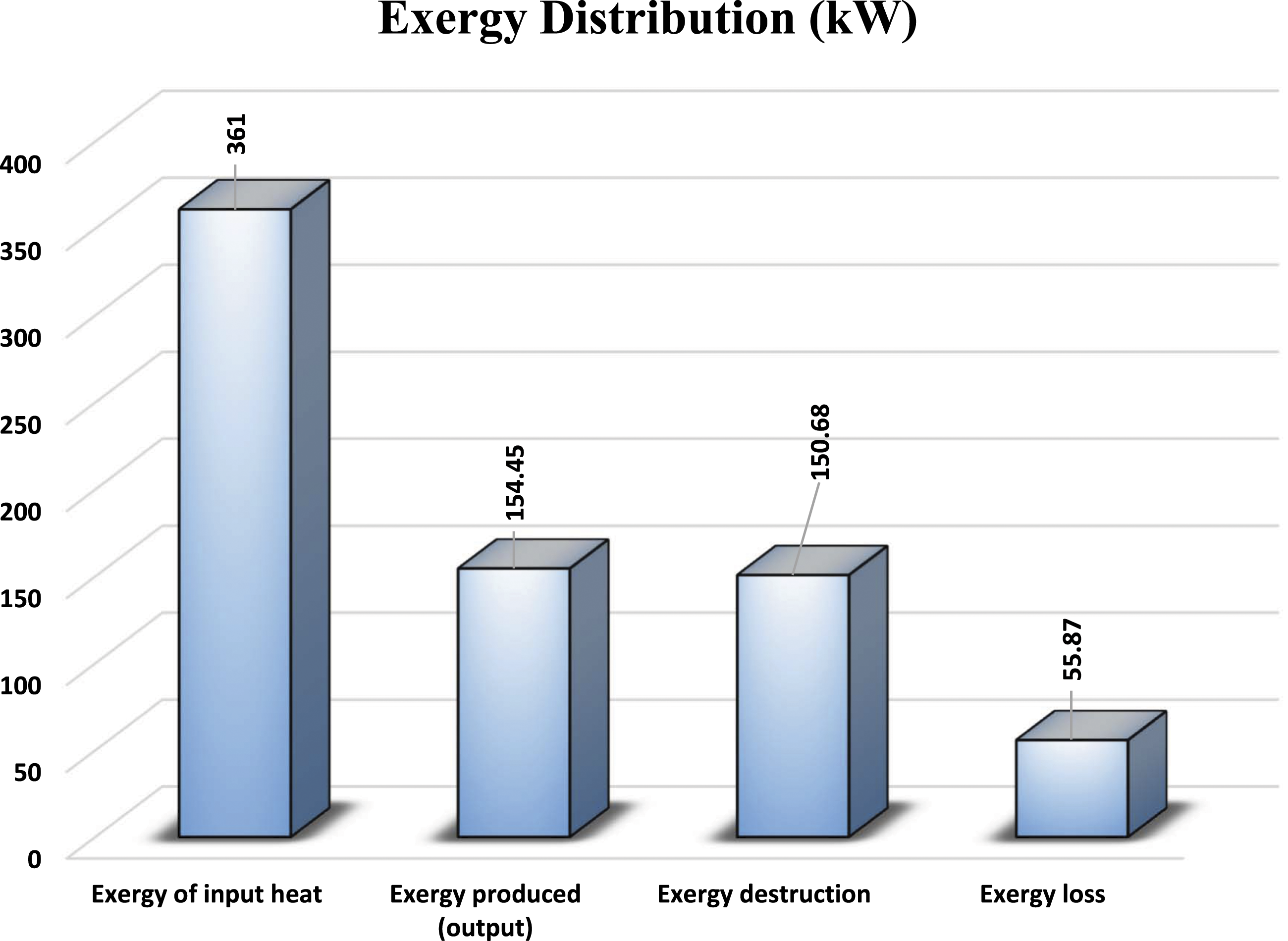
To assess the system’s detailed exergetic performance further, mapping of exergy destruction in major components of the combined system was framed and displayed in Figure 6. The exergy computations reveal that out of 361 kW of fuel exergy (input exergy) 93.31 kW (25.85%) exergy which is highest in the system is destroyed by the HCCI engine followed by the catalytic convertor with 15.49 kW (4.29%). High exergy destruction in the engine cylinder is found because combustion process is involved which is a highly irreversible phenomena because during the process of combustion entropy is generated via three main routes; (i) heat transfer at a finite temperature difference (ii) chemical reaction, and (iii) viscous dissipation. Exergy destruction in the catalytic convertor is high because of the involvement of a chemical reaction converting the more harmful pollutant emissions to less harmful emissions. Next largest exergy destruction is taking place in the recuperator 9.964 kW (2.76%). This is due to the greater amount of entropy transfer accompanied by significant exchange of heat between the cold and hot fluid streams. In the cooler, and boiler, the exergy destruction is found as 6.05 kW, and 4.1 kW, respectively, because of the significant temperature difference between the two streams. The exergy destroyed by turbine is found to be 4.21 kW and this little higher because of the large temperature and pressure difference which contributes to greater change of physical exergy across the turbine expansion process. The exergy destruction in remaining components of the system is found much lesser compared to above components. Computation of exergy losses reveals that significant amount of fuel exergy 35.72 kW (9.91%) is lost via in-cylinder heat transfer from the flame zone to cylinder walls because of obtaining the high temperature of combustion gases. Exhaust temperature is the key indicator for determining the exhaust losses which is found 16.61 kW (4.61%) much lesser than the in-cylinder heat transfer losses owing to its low exhaust temperature because of the bottoming of sCO2-T-CO2 combined cycle for engine exhaust recovery. Exergy loss at remaining components of the combined system is much lower and hence not listed. Mapping of exergy destruction in the major components of combined power and cooling cycle.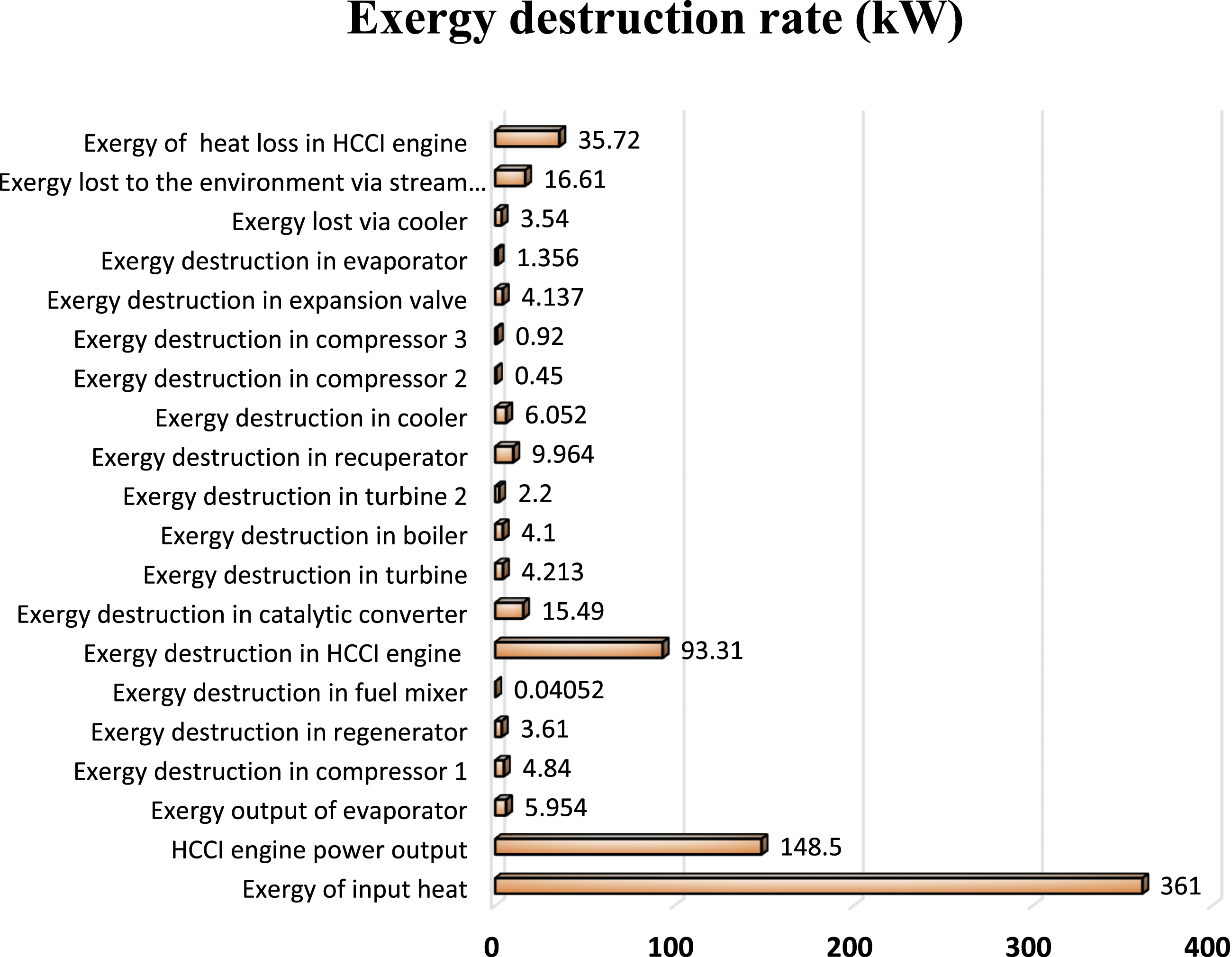
Effect of fuel-air equivalence ratio on system efficiencies
Figure 7 presents the impact of changing the fuel-air equivalence ratio on the energetic and exergetic efficiencies of combined system and of HCCI engine. The energy input to the engine is calculated by the equivalence ratio and hence its promotion allows the release of more energy resulting in the increase of in-cylinder pressure and temperature, use of high calorific value fuel (natural gas 50 MJ/kg) further contributes in this increment which in turn increase the engine power generation. Increase in in-cylinder temperature leads to the rise of engine exhaust energy that is received by the boiler of sCO2 power cycle that results in the increase of expander power which results in enhancing the cooling capacity of evaporator of T-CO2 cycle. Increment in HCCI engine power output along with the cooling capacity of cycle contributes towards a larger increase in the combined system efficiency. HCCI engine and the combined system’s energy efficiency are found to increase from 47.44% to 49.94% and from 59.67% to 62.88%, respectively, at the increase of the equivalence ratio from 0.3 to 0.9. Engine exergy efficiency is termed as the ratio of power exergy to the fuel exergy input and it is found lesser than the engine thermal efficiency due to the reason fuel exergy is higher than fuel energy. The exergy possessed by refrigeration capacity is much lower than the produced refrigeration and hence, the exergetic efficiency of combined system is little larger than of HCCI engine. Increase in equivalence ratio from 0.3 to 0.9 results in the rise of exergy efficiency of HCCI engine from 40.15% to 42.12%, and for combined cycle it is promoted from 41.75% to 43.82%, respectively. Both thermal and exergy efficiencies of HCCI engine are improved because higher equivalence ratio allow more energy release resulting in an increase of in-cylinder pressures and temperatures which lead to increased power produced by the engine and thereby improve both efficiencies. Effect of equivalence ratio on the thermal and exergy efficiency of HCCI engine and combined power and cooling cycle.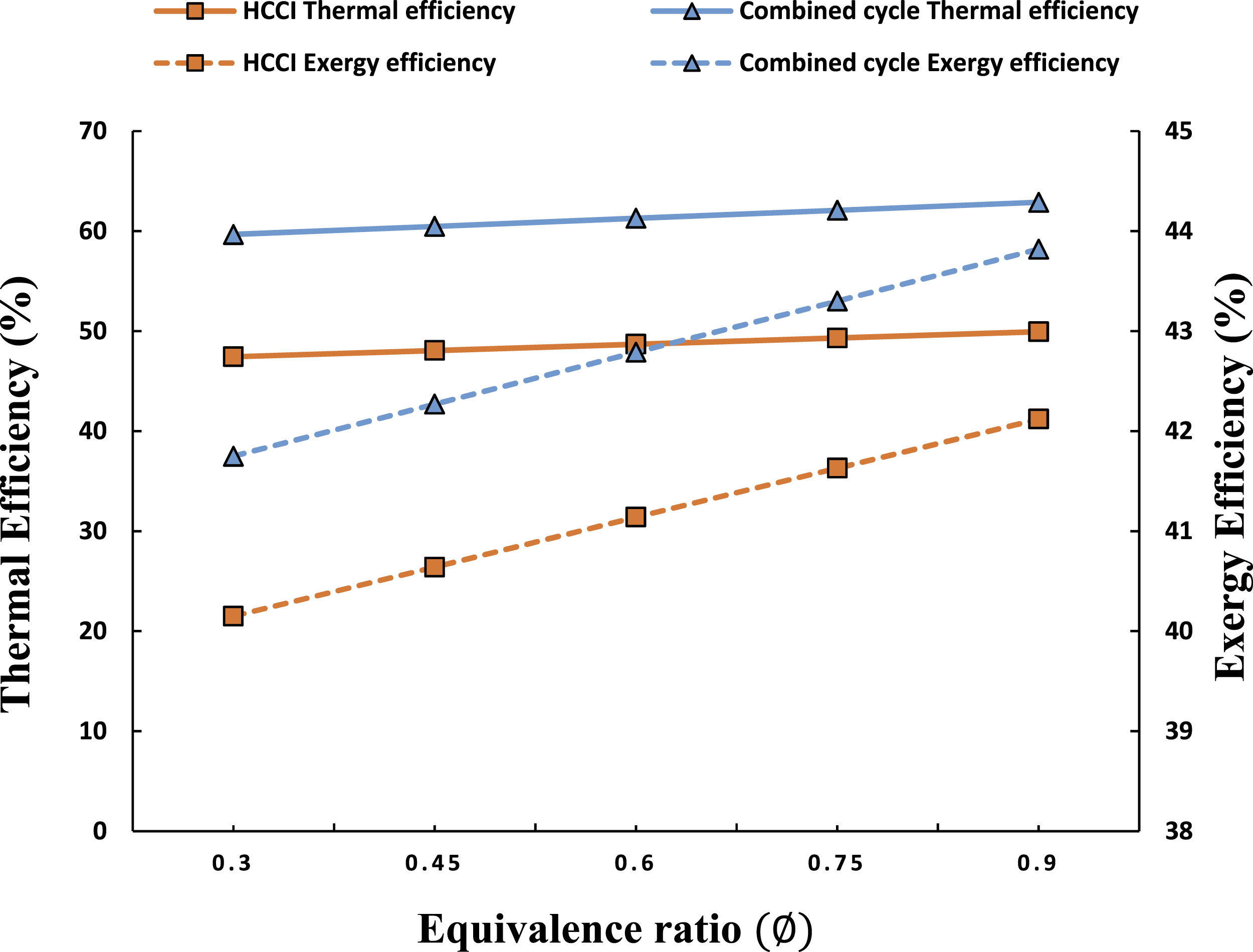
Effect of engine speed on system efficiencies
Figure 8 depicts the influence of varying the engine speed on the efficiencies evaluated after applying the theory of exergy and energy for HCCI engine and the combined cycle. It is observed that promotion of engine speed increases the intensity of charge flow of the higher heating value fuel natural gas and this improve the fuel-air mixing and a steady rise in efficiency is observed due to increase in power output. Since rise of engine speed decrease the duration of cycle evolution that results in the decline of heat loss to cylinder wall, with a corresponding increase in the proportion of the fuel energy leaving combustion zone as exhaust energy which is an inlet enthalpy of the bottoming cycle which refrigerate the desired thermal load. Due to the combined increase of power and cooling effect with the rise of engine speed, the thermal efficiency of combined cycle increases considerably. Since power output is same as the power exergy and the exergy accompanied by in-cylinder heat transfer losses from combustion zone to cylinder wall decreases with engine speed which gives a corresponding rise in exergy efficiency. Thermal and exergy efficiencies of the overall system with and without the bottoming cycle are on the rise with the promotion of engine speed. Promoting the engine speed from 1400 r.p.m. to 2200 r.p.m entails a rise in HCCI engine thermal efficiency from 45.82% to 51.79% and exergy efficiency from 39.07% to 43.33%, respectively. A significant rise in thermal and exergy efficiency from 57.67% to 65.18% and from 40.64% to 45.06%, respectively is also observed. Because of the considerably large production of cooling energy and exergy by sCO2-TCO2 refrigeration cycle, combined cycle efficiencies are observed to be higher than of HCCI engine. Effect of change in engine speed on the thermal and exergy efficiency of HCCI engine and combined power and cooling cycle.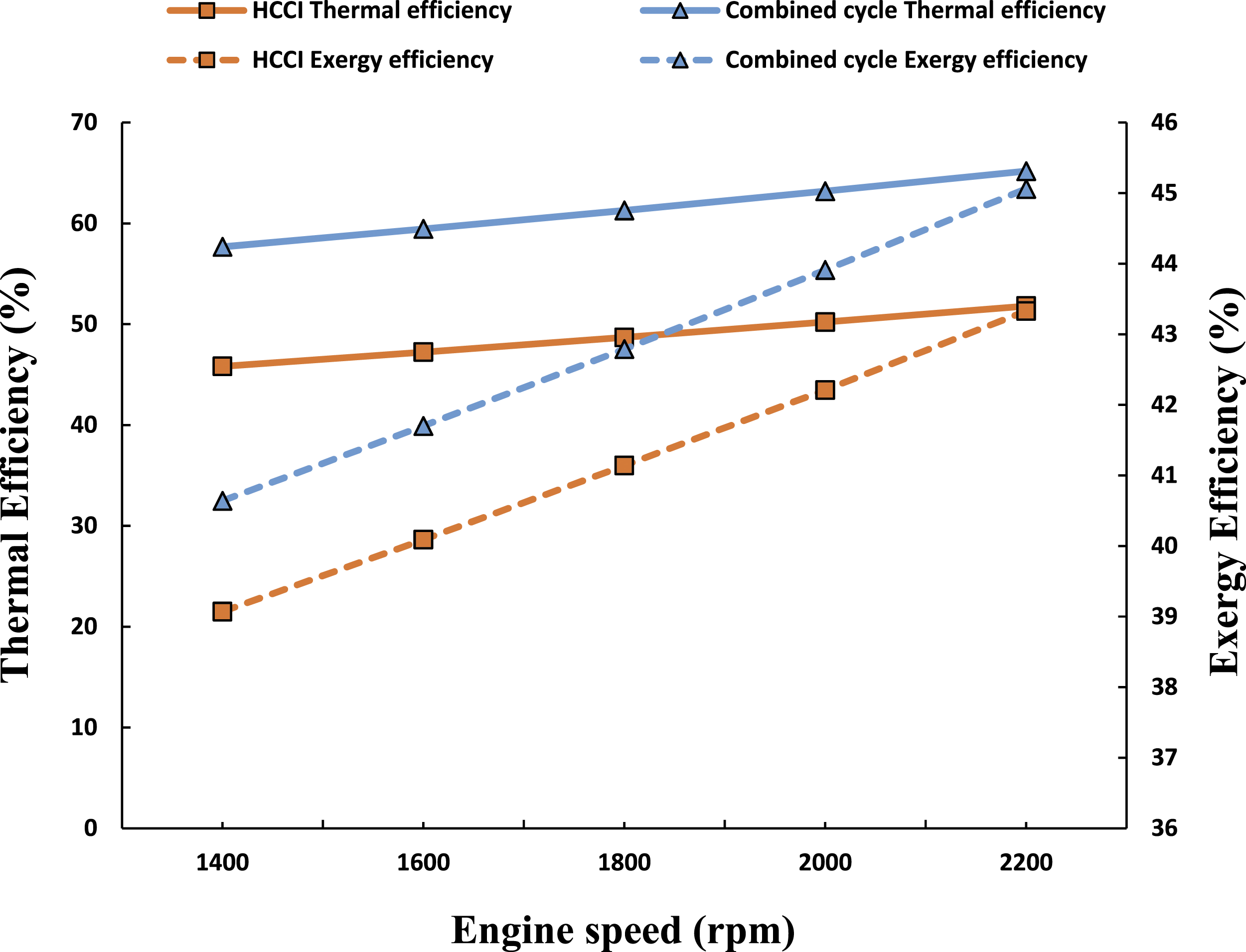
Figure 9 depicts the influence of expander entry pressure on the power output of sCO2 cycle and the cooling capacity of T-CO2 cycle as well as energetic and exergetic outputs of combined cycle. It is observed that the curves show an increasing trend as the expander entry pressure rises. It is known that the enthalpy difference across the expander increases as the expander entry pressure increases (for a given outlet pressure of 7500 kPa), the power output of the expander increases. Meanwhile, a higher compressor power input will be required for a higher pressure difference across the compressor. By subtracting compressor power input from the expander power output, the net power output of the s-co2 power cycle is still increasing. It is shown that expander power is increased from 17.98 kW to 31.21 kW which runs the compressor of refrigeration cycle which in turn increase the cooling output of T-CO2 cycle from 22.07 kW to 51.76 kW when the expander entry pressure is raised from 1000 kPa to 15,000 kPa. Because of the significant increase in cooling output of T-CO2 refrigeration cycle, the energetic and exergetic outputs of combined system are found increasing from 170.6 kW to 200.3 kW and from 151.9 kW to 156.5 kW respectively. Since the exergy of cooling output is less than cooling capacity of evaporator, therefore, the exergy accompanied by the output of combined cycle is determined to be smaller than its energetic output. Effect of expander inlet pressure on the output of the proposed cycle power and cooling cycle.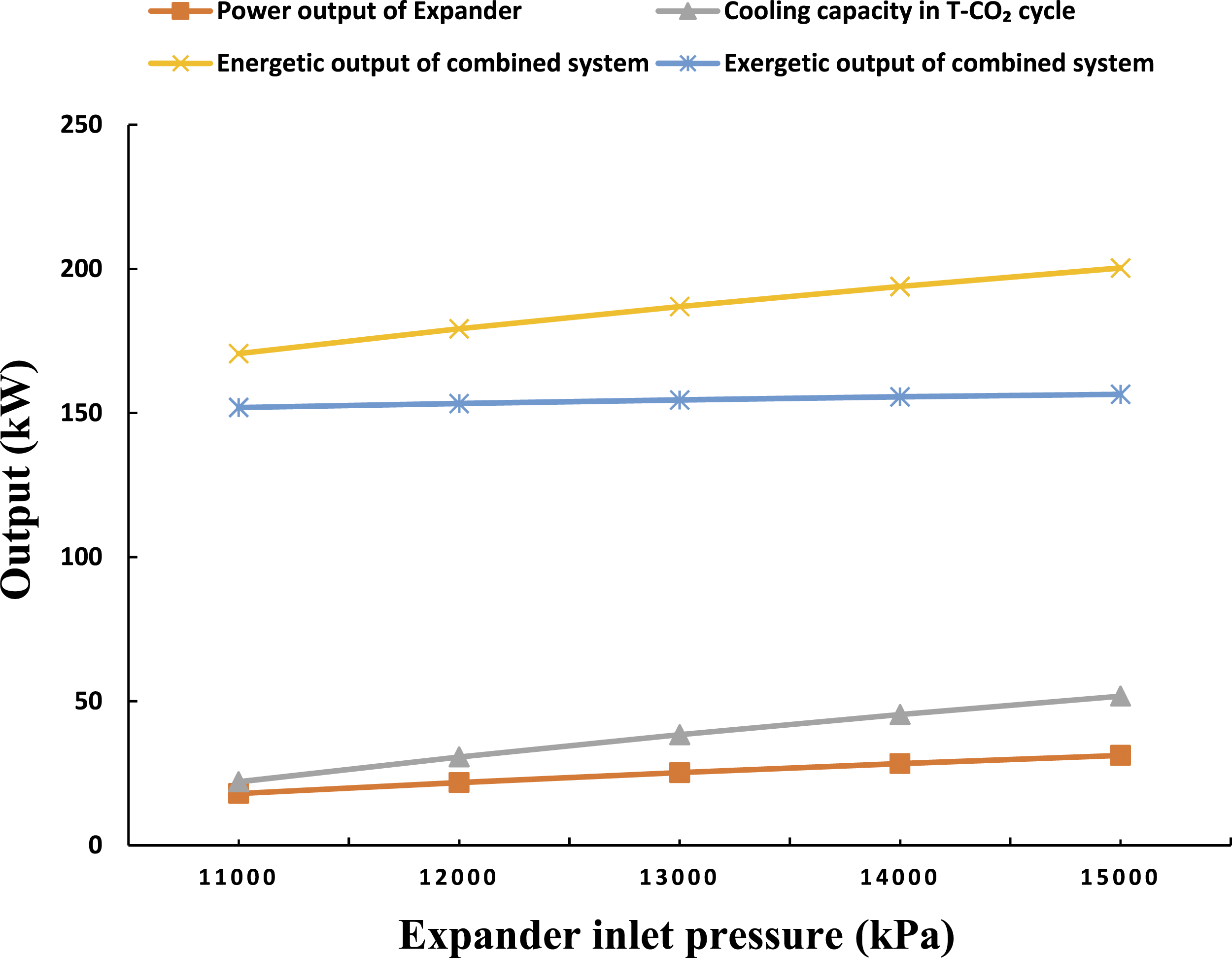
Figure 10 depicts the impact of varying the evaporator temperature on system efficiencies. The evaporator temperature is unrelated to power produced by HCCI engine. Thus, power generated by engine and the power exergy are unaltered. Promotion of evaporator temperature increase the refrigeration capacity. This is due to the increase in latent heat value of the refrigerant. A very high latent heat value is desirable since the mass flow rate per unit of capacity is less. When the latent heat value is high, the efficiency and capacity of the compressor are greatly increased and this decreases the power consumption. Since the refrigeration capacity is increasing which is one of the key outputs of the system, therefore, system’s energetic output and thermal efficiency are found increased with the promotion of evaporator temperature. On other side, exergy-based efficiency of the combined system decreases because of the decrease of exergy accompanied by cooling capacity of T-CO2 refrigeration cycle which declines when evaporator temperature is raised. Since the exergy of refrigeration is defined as the ratio of cooling capacity to the COP of a Carnot refrigerator operates between the evaporator temperature and the ambient temperature, therefore, any increase in the evaporator temperature of refrigeration cycle results in the decrease of the exergy of refrigeration. Because of the decrease of the refrigeration exergy which is one of the key exergetic output of the system, the exergy efficiency of the combined cycle decreases with the rise of evaporator temperature. It is found that the thermal and exergy efficiency of the combine cycle increases from 57.7% to 65.76% and from 44.11% to 40.17% respectively, with the increase in evaporator temperature from −25°C to −5°C. Effect of change of evaporator temperature on the thermal and exergy efficiencies of combined cycle.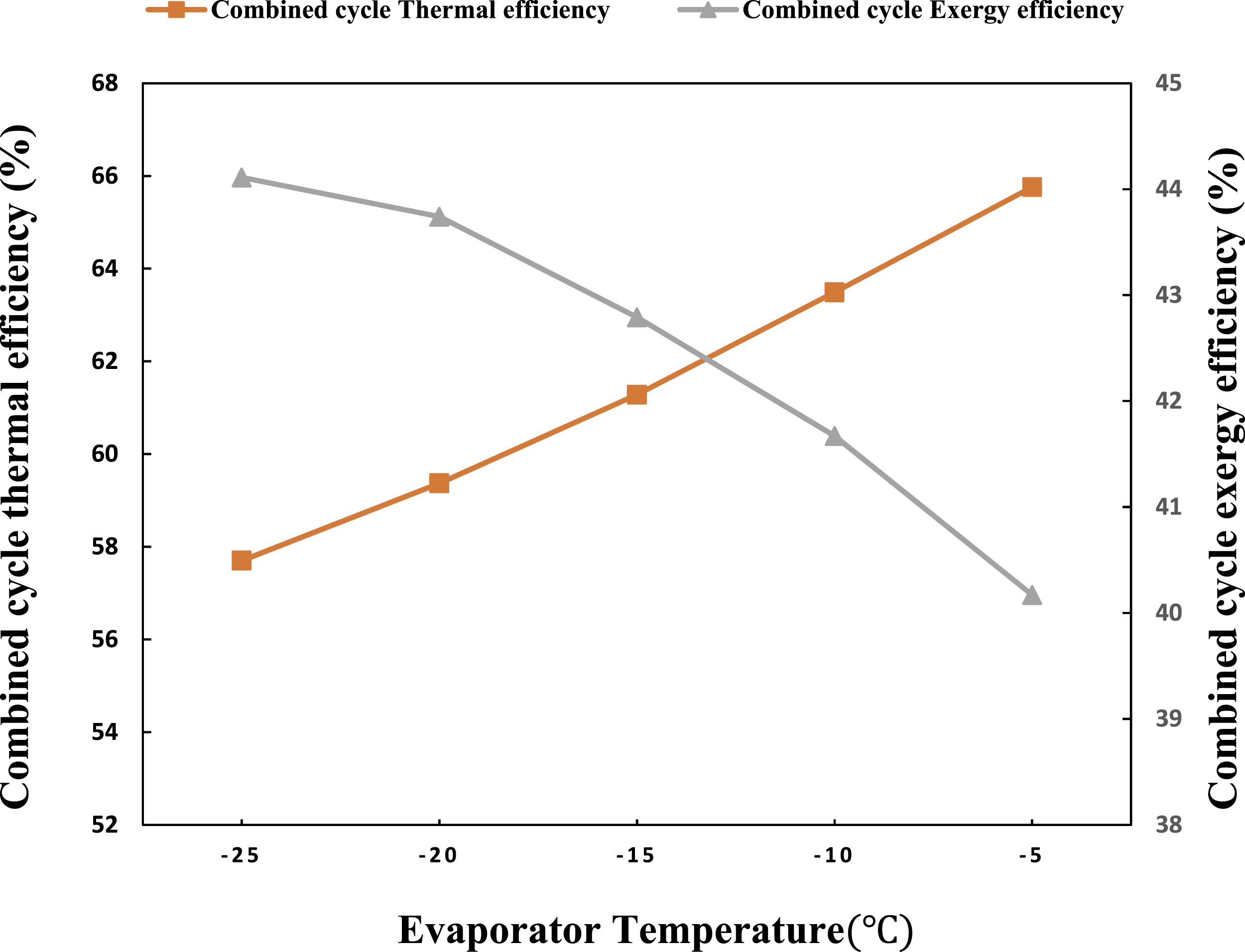
Conclusion
This study proposes a refrigeration system that essentially integrates a S-CO2 power cycle and a T-CO2 refrigeration cycle by waste heat recovery of a natural gas fuelled HCCI engine. The thermal energy of exhaust gas is recovered by S-CO2 power cycle which drives the two compressors. Energetic and exergetic analyses are performed in detail for the proposed system of cooling-power cogeneration operating at various operating conditions. It is revealed that thermal efficiency of HCCI engine is increased by 20.54% and the exergy efficiency by 3.85% following its integration with the proposed CO2 refrigeration cycle. The major findings of this investigation can be listed as below: 1. Investigation carried out in this study identified the areas of improvement through which fuel’s energy and exergy-utilization efficiencies can be enhanced. 2. Determination of the sources of non-idealities within the system revealed that out of 361 kW (100%) fuel exergy supplied to the system, HCCI engine destroys 93.31 kW (25.85%), catalytic convertor destroys 15.49 kW (4.29%), and recuperator destroys 9.964 kW (2.76%). 3. It is shown that in-cylinder heat transfer losses are dominated over the system exhaust losses and were determined as 35.72 kW (9.91%) and 16.61 kW (4.61%), respectively. 4. It is demonstrated that by the increase of equivalence ratio from 0.3 to 0.9, thermal and exergy efficiency of HCCI engine can be increased by 4.24% and 4.67%, respectively. 5. Increasing of engine speed from 1400 r.p.m to 2200 r.p.m provides marginal improvement in HCCI engine efficiencies but the efficiencies of cooling-power cogeneration cycle are significantly improved from 57.67% to 65.18% and from 40.64% to 45.06%, respectively. 6. Increasing the expander inlet pressure from 11,000 kPa to 15,000 kPa improves the expander power, cooling capacity, energetic and exergetic output of combined cycle from 17.98 kw to 31.21 kW, from 22.07 kw to 51.76 kW, from 170.6 kw to 200.3 kW, and from 151.3 kW to 156.5 kW, respectively. 7. Elevation of evaporator temperature from −25°C to −5°C is resulted in the increase of system’s thermal efficiency from 57.7% to 65.76% whereas decrease in exergy efficiency of the system from 44.11% to 40.17%, respectively.
The results clearly show that employment of proposed system of cooling has proven potentials of energy recovery and fuel consumption saving compared to HCCI engine + stand-alone refrigerator. Detailed exergy analysis of the system reveals that the HCCI engine represents a potential component that can be improved in order to enhance the overall system efficiency. It is further shown that within the range of operating parameters considered, system exergy efficiency exhibits a distinct behavior than its corresponding thermal efficiency. The developed system performance is compared with the theoretically obtained data by previous investigation and a suitable match is found between the computed results of present study and the reported data.
With the assistance of the computational results this study, the same or similar system can be built by engine manufacturing industry to provide cabin cooling by recovering the exhaust heat of renewable fueled engines to achieve the target of sustainable transportation to some extent. In order to have a better view in a system’s thermal design the laws of thermodynamics (energy and exergy) can be combined with principles of economics for the further study of this work, and this type of analysis will assist in justifying the investment and cost increase of the system.
Footnotes
Acknowledgements
The authors acknowledge the Deanship of Scientific Research, Vice Presidency for Graduate Studies and Scientific Research at King Faisal University, Saudi Arabia, for financial support under the annual funding track [GRANT874].
Declaration of conflicting interests
The author(s) declared no potential conflicts of interest with respect to the research, authorship, and/or publication of this article.
Funding
The author(s) disclosed receipt of the following financial support for the research, authorship, and/or publication of this article: This work was supported by the Deanship of Scientific Research, King Faisal University (GRANT874).
