




Abstract
Human thought is prone to biases. Some biases serve as beneficial heuristics to free up limited cognitive resources or improve well-being, but their neurocognitive basis is unclear. One such bias is a tendency to construe events in the distant future in abstract, general terms and events in the near future in concrete, detailed terms. Temporal construal may rely on our capacity to orient toward and/or imagine context-rich future events. We tested 21 individuals with impaired episodic future thinking resulting from lesions to the hippocampus or ventromedial prefrontal cortex (vmPFC) and 57 control participants (aged 45–76 years) from Canada and Italy on measures sensitive to temporal construal. We found that temporal construal persisted in most patients, even those with impaired episodic future thinking, but was abolished in some vmPFC cases, possibly in relation to difficulties forming and maintaining future intentions. The results confirm the fractionation of future thinking and that parts of vmPFC might critically support our ability to flexibly conceive and orient ourselves toward future events.
Keywords
As scientists have embraced interdisciplinary approaches to studying brain–behavior relations, there has been a shift from viewing episodic memory as a distinct system to viewing it as a fluid set of processes that share properties with episodic future thinking (Craver et al., 2014; Tulving, 2002). This is supported by evidence that individuals with damage to the hippocampus (HC; including the extended hippocampal system) or to ventromedial prefrontal cortex (vmPFC) who have difficulties reconstructing past personal experiences in episodic memory also have difficulties imagining personal events that were never experienced (i.e., difficulty engaging in episodic future thinking; Bertossi, Aleo, et al., 2016; Bertossi, Tesini, et al., 2016; Gao et al., 2020; Klein et al., 2002; Kwan et al., 2015). The ability to think about the future is unlikely to be a unitary construct, however, and the structures that mediate episodic future thinking might not be needed for all forms of future thinking (Craver et al., 2014; Kwan et al., 2015; Klein et al., 2002). Here, we examined whether individuals with impaired episodic future thinking imagine and reason about future events in the same way that control participants do. We used tests that require orienting to the future but that do not require the construction of rich and personal imaginings of those events.
Typical biases in thinking about events framed in the near versus distant future have been seen in individuals with HC damage. Like control participants, these individuals produce more detailed descriptions of temporally close than temporally distant events, even though they generate fewer details than control participants overall (Race et al., 2011). Temporal biases have also been measured empirically using tests that do not require construction of details, such as intertemporal choice (Kwan et al., 2012, 2013). Individuals with HC lesions are able to forgo smaller, immediate rewards for a larger future payoff at a rate similar to that of healthy control participants, suggesting that the ability to value the future does not require HC integrity and can persist in the absence of the ability to construct imagined future events (Kwan et al., 2012, 2013). Other types of biases in future-oriented thinking that are typically seen in neurotypical adults are expected in individuals with HC lesions as long as the tests do not involve constructing personal details into narratives.
Like HC lesions, lesions to vmPFC can result in impaired construction of details into event narratives (Bertossi, Aleo, et al., 2016; but see Kurczek et al., 2015), but unlike HC lesions, vmPFC lesions might also result in impaired temporal orientation (i.e., appreciation of one’s perceived location within time, especially toward the future). Consistent with this idea, results of a recent study requiring temporal orientation but not detail construction revealed that vmPFC patients were impaired in orienting themselves toward the future but not to the past or the present (Ciaramelli, Anelli, & Frassinetti, 2021), whereas a single case study of an individual with HC lesions using the same paradigm found no impairment (Arzy et al., 2009). An earlier neuroimaging (positron emission tomography) study showed that an anterior-medial region of the frontal pole may be more sensitive to close future events (Okuda et al., 2003), perhaps because of the greater salience of events and actions imagined in close temporal proximity. Involvement of vmPFC in temporal orientation is also suggested by abnormally steep delay discounting in individuals with vmPFC lesions (Ciaramelli, De Luca, et al., 2021; Mok et al., 2021; Sellitto et al., 2010), although it is unclear whether this deficit is due to an inability to orient toward the future and consider the future consequences of one’s decisions (“prospection”) or to compute the value of those consequences (“valuation”; Ciaramelli, De Luca, et al., 2021; Peters & D’Esposito, 2016; Vaidya et al., 2018; Vaidya & Fellows, 2015). These deficits may be symptomatic of an overriding difficulty in using existing knowledge (schemas) to organize and assimilate details of one’s episodic past and future (Hebscher & Gilboa, 2016; Sommer, 2017; Spalding et al., 2015). It follows that at least some individuals with lesions to vmPFC would have difficulties on other tests that require future orientation.
Other decisions are influenced by temporal orientation without placing obvious demands on detail construction or appreciation of reward value. According to construal-level theory (Gilead et al., 2020; Trope & Liberman, 2010), descriptions of near- versus distant-future events and actions systematically vary in terms of level of abstraction: Events in the near future are construed in more concrete, detailed terms (low-level construal), whereas those in the distant future are thought of in more abstract, decontextualized terms (high-level construal). For example, in thinking about near-future activities, individuals tend to focus on the how, whereas for distant-future activities, they tend to focus on the why or overall goal (e.g., thinking of studying in terms of reading a textbook if the activity were to take place tomorrow vs. doing well in school if the activity were to take place next year; Vallacher & Wegner, 1989). Individuals also tend to have greater confidence in their ability to perform an activity (i.e., self-efficacy) if they believe that it will occur in the distant future than if they believe it will occur in the near future (Gilovich et al., 1993; Nussbaum et al., 2006).
Statement of Relevance
An important discovery in humans is that the ability to imagine future events critically depends on the ability to recollect past events in episodic memory. Humans also exhibit temporal construal effects, a tendency or bias to construe sooner events in concrete, detailed terms and distant events in abstract, general terms. Here, we asked whether these biases in future-oriented thought depend on episodic future thinking. Patients with deficits in episodic future thinking resulting from lesions to the hippocampus or to ventromedial prefrontal cortex (vmPFC) and control participants were tested on measures of personal agency and self-efficacy, which are sensitive to manipulations of temporal orientation. Results indicate that future-oriented temporal construal effects do not require preserved episodic future thinking following hippocampal or vmPFC damage but do depend on the integrity of vmPFC in some cases. The results bolster the thesis that, like memory, future thinking is not a unitary cognitive faculty.
Thinking about events and actions in an abstract, noncontextual way, which is characteristic of distant-future events according to construal-level theory, resembles findings in individuals with HC damage who appear to retain the gist of an event but are unable to recollect or generate contextual details of the event independently of its temporal orientation (Hassabis et al., 2007; Kwan et al., 2015; Race et al., 2013; Rosenbaum et al., 2009; Schacter et al., 2012; Verfaellie et al., 2014).This pattern leads to the prediction that HC lesions would result in high-level, abstract construal of both the near and distant future, and consequently reduced temporal construal effects. Individuals with vmPFC lesions are believed to be unable to instantiate contextually relevant schemata to organize details into a constructed event relative to a specific moment in time (Ciaramelli et al., 2019; Hebscher & Gilboa, 2016) and to orient in time (Ciaramelli, Anelli, & Frassinetti, 2021; Ciaramelli, De Luca, et al., 2021; Mok et al., 2021; Sellitto et al., 2010). This would lead to the prediction that vmPFC patients will not construe close and distant-future events differently, and so they will fail to show typical temporal construal effects. This is in line with functional MRI findings that distant-future thinking and high-level construals of actions commonly activate regions of medial prefrontal cortex (Stillman et al., 2017). Alternatively, temporal construal effects may be largely independent of HC and vmPFC systems when constructing and assimilating details into narratives is not required (Kwan et al., 2012, 2013; Mok et al., 2021) and in the absence of reward contingencies (Peters & D’Esposito, 2016; Vaidya et al., 2018; Vaidya & Fellows, 2015). This leads to the prediction that both lesion groups will show typical temporal construal effects. Findings that some aspects of future-oriented thinking are preserved despite an inability to imagine detailed experiences would indicate that there are multiple forms of future thinking involving distinct processes that may have evolved for different purposes.
Open Practices
The study reported in this article was not preregistered. Deidentified control data for both tasks have been made publicly available on OSF and can be accessed at https://osf.io/3ftvk/; access to the data is limited to qualified researchers. The patient data have not been made available on a permanent third-party archive because of participant privacy concerns; requests for the data can be sent to the corresponding author. The materials used in these studies are widely available.
Method
Participants
Twenty-one individuals with varying degrees of impaired episodic memory and future imagining were included in the study. Eight cases had damage to the HC and/or extended hippocampal system (fornix, mammillary bodies, and/or anterior nucleus of the thalamus), and 13 cases had damage to vmPFC (Fig. 1). Eight of the vmPFC cases were recruited in Toronto, Canada, and the other five were recruited in Cesena, Italy. Demographic, neurological, and neuropsychological information for all cases is summarized in Table 1, and performance on the Galton-Crovitz cue-word test (Crovitz & Schiffman, 1974), adapted to episodic future imagining (Addis et al., 2008), is presented in Table 2 (see the Supplemental Material available online for detailed test description). All of the lesion cases have been documented in previous studies, with the exception of vmPFC case TA (reported in Table 1). Details of the HC cases are provided by Keven et al., 2018; Kwan et al., 2013, 2015, 2016; Mok et al., 2021; Rosenbaum et al., 2008; details of the vmPFC cases are provided by Bertossi, Aleo, et al., 2016; Ciaramelli, De Luca, et al., 2021; Giuliano et al., 2021; Sellitto et al., 2010 (summarized in the Supplemental Material).
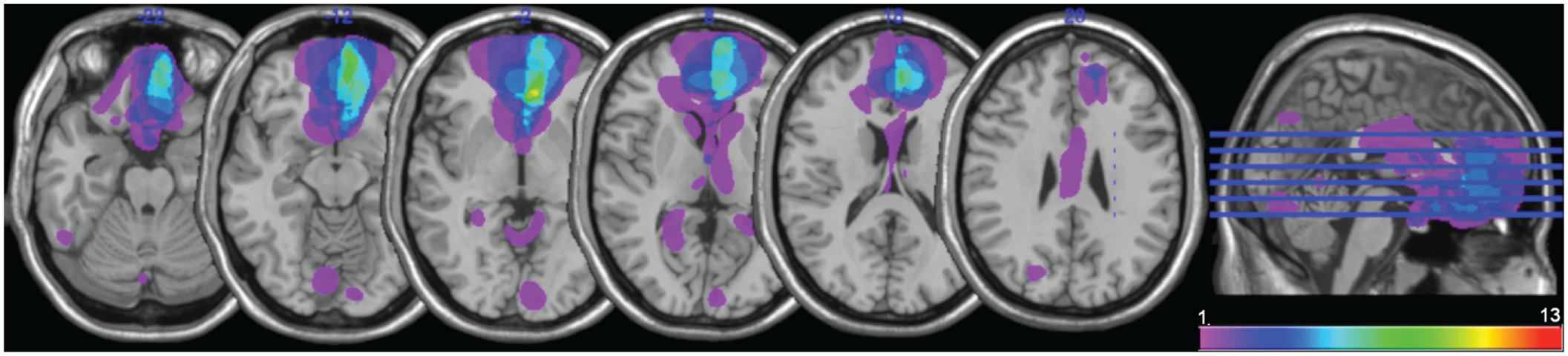
Lesion overlap in 13 individuals with ventromedial prefrontal cortex (vmPFC) damage superimposed on an averaged structural MRI scan. Slices are 8-mm apart (z = −30, –22, –14, –6, +2, and +10). The color bar indicates the number of individuals with damage to a particular area: Purple represents regions damaged in only one individual, and red represents regions damaged in all 13 individuals. The image was created using MRIcro software (Rorden & Brett, 2000). See Table S1 for lesion locations in each vmPFC case.
Demographic Information and Performance on Neuropsychological Tests in Individuals With Hippocampal and Ventromedial Prefrontal Cortex (vmPFC) Damage
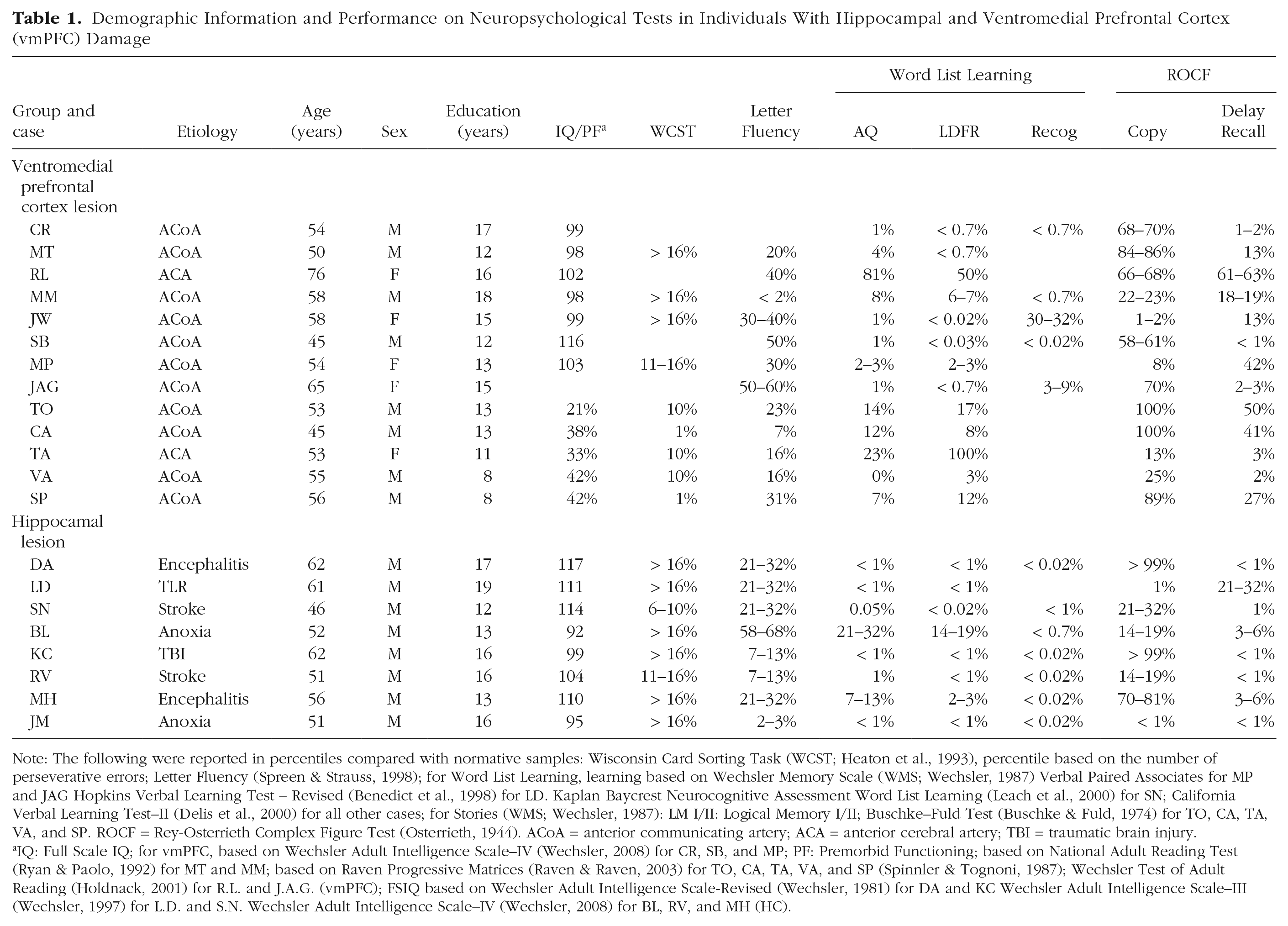
Note: The following were reported in percentiles compared with normative samples: Wisconsin Card Sorting Task (WCST; Heaton et al., 1993), percentile based on the number of perseverative errors; Letter Fluency (Spreen & Strauss, 1998); for Word List Learning, learning based on Wechsler Memory Scale (WMS; Wechsler, 1987) Verbal Paired Associates for MP and JAG Hopkins Verbal Learning Test – Revised (Benedict et al., 1998) for LD. Kaplan Baycrest Neurocognitive Assessment Word List Learning (Leach et al., 2000) for SN; California Verbal Learning Test–II (Delis et al., 2000) for all other cases; for Stories (WMS; Wechsler, 1987): LM I/II: Logical Memory I/II; Buschke–Fuld Test (Buschke & Fuld, 1974) for TO, CA, TA, VA, and SP. ROCF = Rey-Osterrieth Complex Figure Test (Osterrieth, 1944). ACoA = anterior communicating artery; ACA = anterior cerebral artery; TBI = traumatic brain injury.
IQ: Full Scale IQ; for vmPFC, based on Wechsler Adult Intelligence Scale–IV (Wechsler, 2008) for CR, SB, and MP; PF: Premorbid Functioning; based on National Adult Reading Test (Ryan & Paolo, 1992) for MT and MM; based on Raven Progressive Matrices (Raven & Raven, 2003) for TO, CA, TA, VA, and SP (Spinnler & Tognoni, 1987); Wechsler Test of Adult Reading (Holdnack, 2001) for R.L. and J.A.G. (vmPFC); FSIQ based on Wechsler Adult Intelligence Scale-Revised (Wechsler, 1981) for DA and KC Wechsler Adult Intelligence Scale–III (Wechsler, 1997) for L.D. and S.N. Wechsler Adult Intelligence Scale–IV (Wechsler, 2008) for BL, RV, and MH (HC).
Performance on a Galton-Crovitz Cue-Word Test of Episodic Prospection in Individuals With Hippocampal and Ventromedial Prefrontal Cortex (vmPFC) Damage
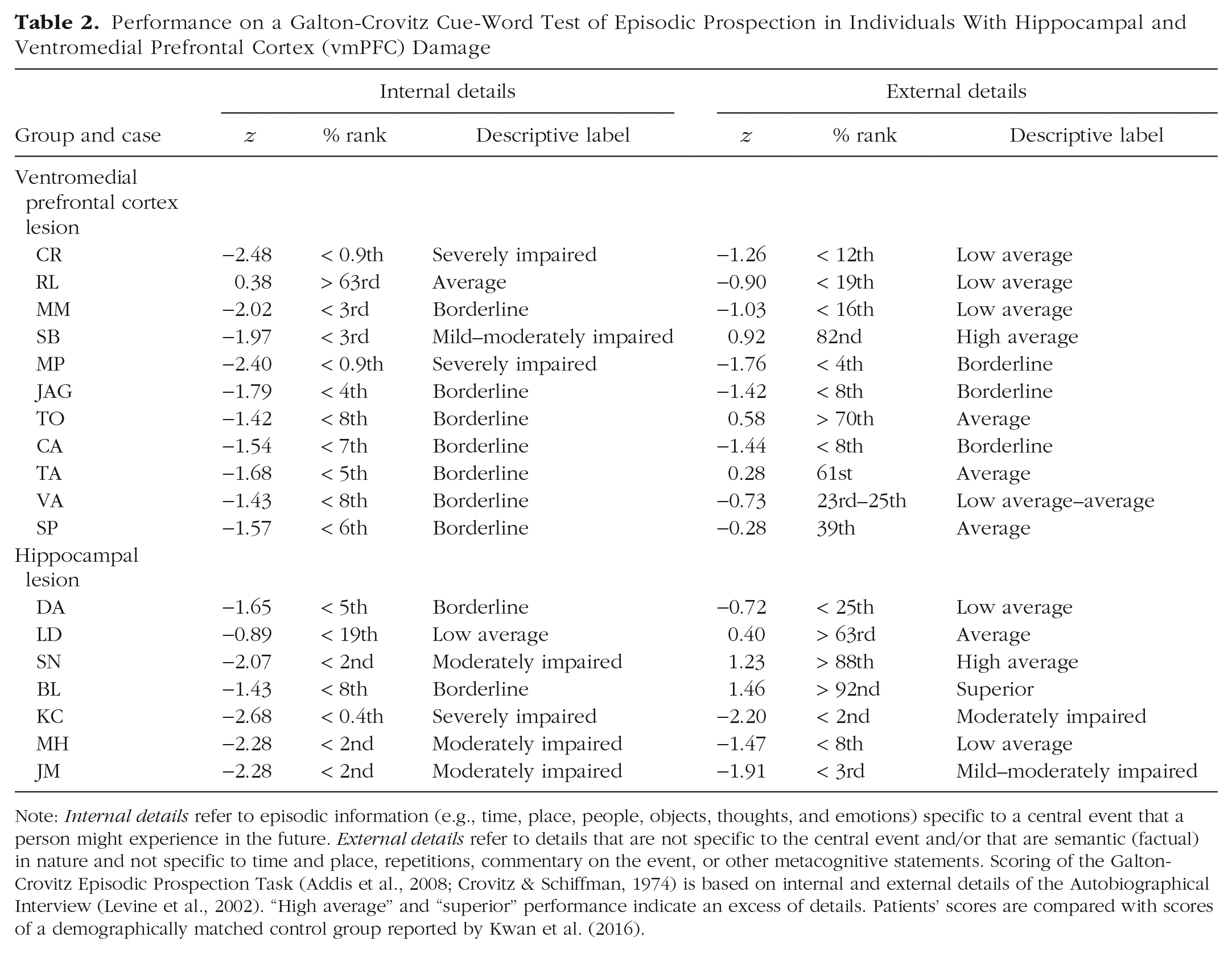
Note: Internal details refer to episodic information (e.g., time, place, people, objects, thoughts, and emotions) specific to a central event that a person might experience in the future. External details refer to details that are not specific to the central event and/or that are semantic (factual) in nature and not specific to time and place, repetitions, commentary on the event, or other metacognitive statements. Scoring of the Galton-Crovitz Episodic Prospection Task (Addis et al., 2008; Crovitz & Schiffman, 1974) is based on internal and external details of the Autobiographical Interview (Levine et al., 2002). “High average” and “superior” performance indicate an excess of details. Patients’ scores are compared with scores of a demographically matched control group reported by Kwan et al. (2016).
The performance of individuals with either HC or vmPFC lesions was compared with that of a carefully matched, convenience sample of 37 control participants from Toronto, Canada (21 female; age: M = 69.65 years, SD = 7.5) and 20 control participants from Cesena, Italy (nine female; age: M = 49.80 years, SD = 6.03). All participants gave informed written consent in accordance with the Human Research Ethics Committees of York University, Baycrest, the University of Bologna, and the Emilia Romagna Regional Health Service, Italy, and all received monetary compensation for their time.
Materials
Participants were presented with two tests—personal agency and self-efficacy—that have been used in past studies to reliably demonstrate the effects of temporal distance on construal level (e.g., Gilovich et al., 1993; Stillman et al., 2017; Vallacher & Wegner, 1989). Importantly, these measures do not require participants to construct details into a narrative, an ability that has been shown to be compromised in individuals both with HC lesions (Race et al., 2011, 2013; Rosenbaum et al., 2008, 2009) and with vmPFC lesions (Bertossi, Aleo, et al., 2016). In effect, using these measures allowed us to assess biases in future-oriented thought in the absence of detail construction.
Personal agency
This test assesses the tendency to think about distant-future events in more abstract terms relative to thinking about near-future events (Vallacher & Wegner, 1989). Participants were presented with 22 activities that could occur in the near or distant future, followed by two restatements differing in level of abstraction (concrete or abstract). For each item, participants were asked to indicate their preferred restatement. For example, for the activity, “making a list,” participants were given the choice between (a) “writing things down” (concrete, or how) or (b) “getting organized” (abstract, or why). On each binary choice, an abstract option was coded as 1, and a concrete option was coded as 0. We obtained participants’ scores by summing together scores for all 22 items; a higher score indicates a higher level of abstraction.
Self-efficacy
The two-part self-efficacy test, based on the work of Gilovich et al. (1993), assesses whether individuals show the normal tendency to feel more confident in their ability to perform a task if it is in the distant future relative to the near future. Participants were presented with 16 tasks (trials) that they believed would need to be performed within the experimental session or at a later time and were asked to estimate their likely percentile standing among all research participants who would perform the task. Hypothetical tasks included solving anagrams, completing pictures in which an item is missing, estimating distances between popular geographical destinations, identifying famous faces, and catching a ball in a cup. Self-efficacy ratings were averaged across all 16 tasks for each participant.
Procedure
Participants were tested on two conditions, near future and distant future, of both tests described above. Following the procedure described by Liberman and Trope (1998), in the near-future condition, participants were asked to think about each event or activity taking place “tomorrow,” whereas in the distant-future condition, participants were asked to think about the same event or activity as occurring “1 year from now.” The conditions were administered in person across two separate sessions at least 1 week apart. The order of conditions was counterbalanced across participants.
Results
Both the Canadian and Italian control groups showed an increase in level of agency and in self-efficacy ratings from the near to the distant future, although the numerical difference was significantly greater in the Italian control group (agency: M = 8.20, SD = 5.16; self-efficacy: M = 8.06, SD = 6.34) than in the Canadian control group (agency: M = 1.16, SD = 3.57; self-efficacy: M = 3.08, SD = 8.54), b = 7.04, SE = 1.16, t(55) = 6.06, p < .001 and b = 4.98, SE = 2.18, t(55) = 2.29, p = .03, for agency and self-efficacy, respectively. Because the two control groups showed the expected effect of construal level in both tests, and age is not a significant predictor of construal (Kwan et al., 2022), they were combined into a single group of 57 control participants (age: M = 59.73 years, SD = 6.77).
Replicating previous temporal construal findings, results showed that participants in the control, HC, and vmPFC groups had a significantly higher level of agency in the distant-future condition relative to the near-future condition, t(77) = 6.13, p < .001, 95% confidence interval (CI) for the mean difference = [2.26, 4.43] (Table 3, Fig. 2). The difference in the level-of-agency scores between the near-future and distant-future conditions was regressed on group. The regression analysis was conducted following Muth et al.’s (2018) guidelines for fitting Bayesian regression models using the R packages rstanarm (Gabry & Goodrich, 2017) and shinystan (Gabry, 2017). The default weakly informative priors were used for the parameters of the regression model. The default prior for the regression coefficients for group was normal (M = 0, SD = 2.5). After adjustment to create weakly informative prior, the scale used for the predictor was 12.06. Four Markov chains with 2,000 iterations (1,000 warm-up iterations) were used to estimate the model parameters. The model converged, with
Descriptive Statistics for the Three Groups
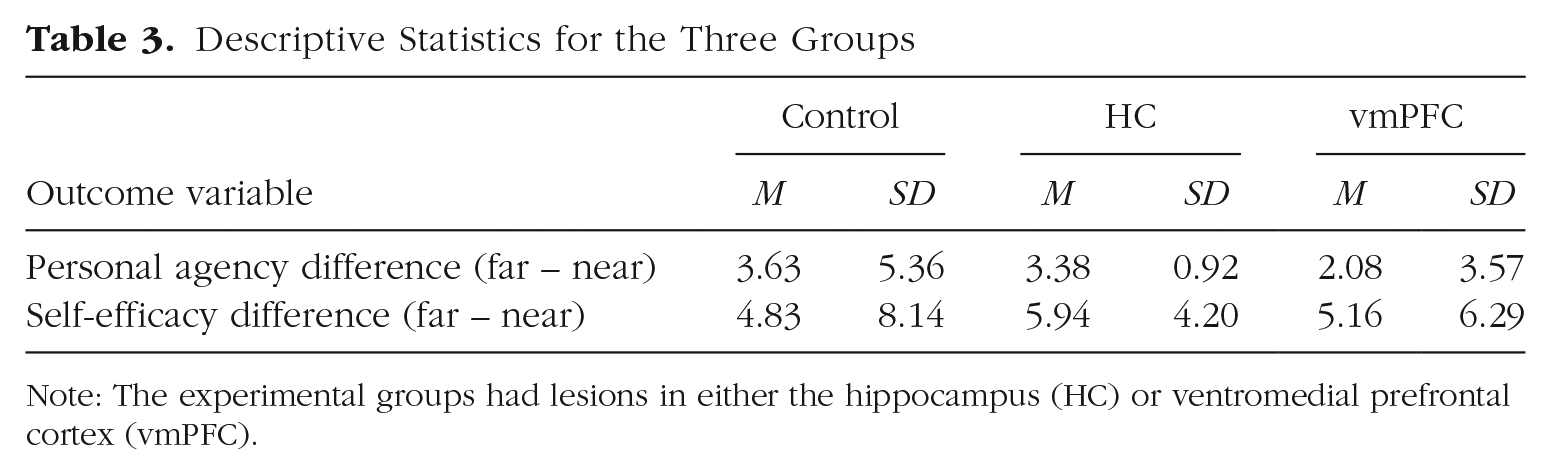
Note: The experimental groups had lesions in either the hippocampus (HC) or ventromedial prefrontal cortex (vmPFC).
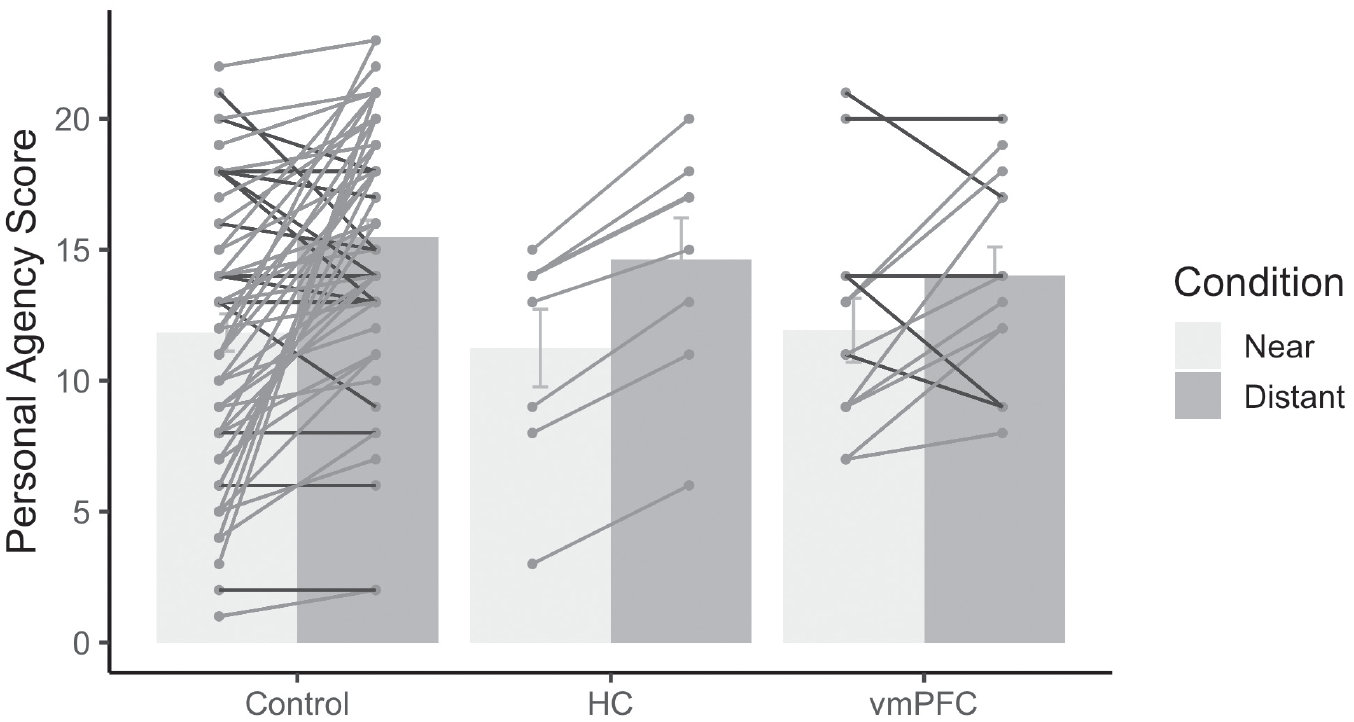
Performance on the personal agency test in individuals with lesions to the hippocampus (HC; n = 8) or to the ventromedial prefrontal cortex (vmPFC; n = 13) and in demographically matched control participants (n = 57), broken down by condition. Each individual in the HC group showed an effect of temporal construal, indicated by gray lines; abstract construals were greater for the distant-future relative to the near-future condition. Five of 13 individuals with vmPFC lesions and 14 of 57 control participants (i.e., 38% vs. 25%, respectively) showed no effect or the opposite effect, indicated by black lines.
Posterior Summary Statistics of the Model With the Difference Between Near- and Distant-Future Agency Scores Regressed on Group
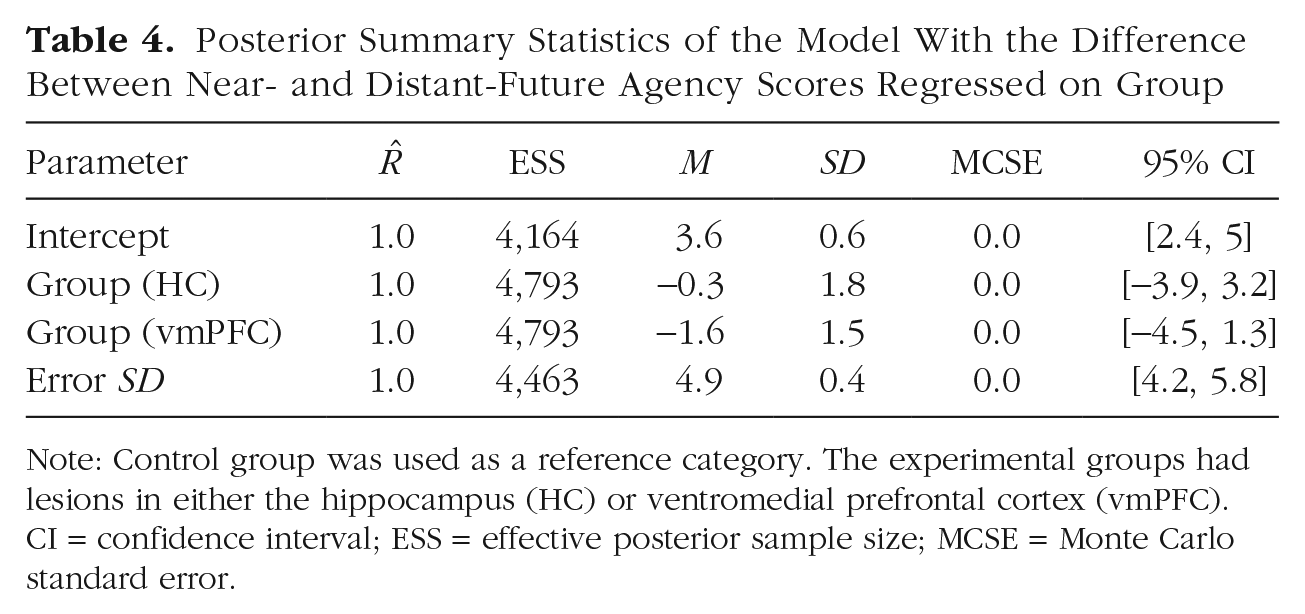
Note: Control group was used as a reference category. The experimental groups had lesions in either the hippocampus (HC) or ventromedial prefrontal cortex (vmPFC). CI = confidence interval; ESS = effective posterior sample size; MCSE = Monte Carlo standard error.
The same approach was used to determine the effect of group on the difference in self-efficacy ratings in the near and distant future. Participants reported significantly greater self-efficacy in their performance on tasks to be completed in the distant future relative to completing the same tasks in the near future, t(77) = 5.89, p < .001, 95% CI for the mean difference = [3.31, 6.69] (Table 3, Fig. 3). The Bayesian regression model was fitted with the difference in self-efficacy ratings regressed on group (control, HC, vmPFC). The weakly informative prior for the regression coefficients was used to fit the model (M = 0, adjusted scale of 18.73). Four Markov chains with 2,000 iterations (1,000 warm-up iterations) were used to estimate the model parameters. The model converged, with
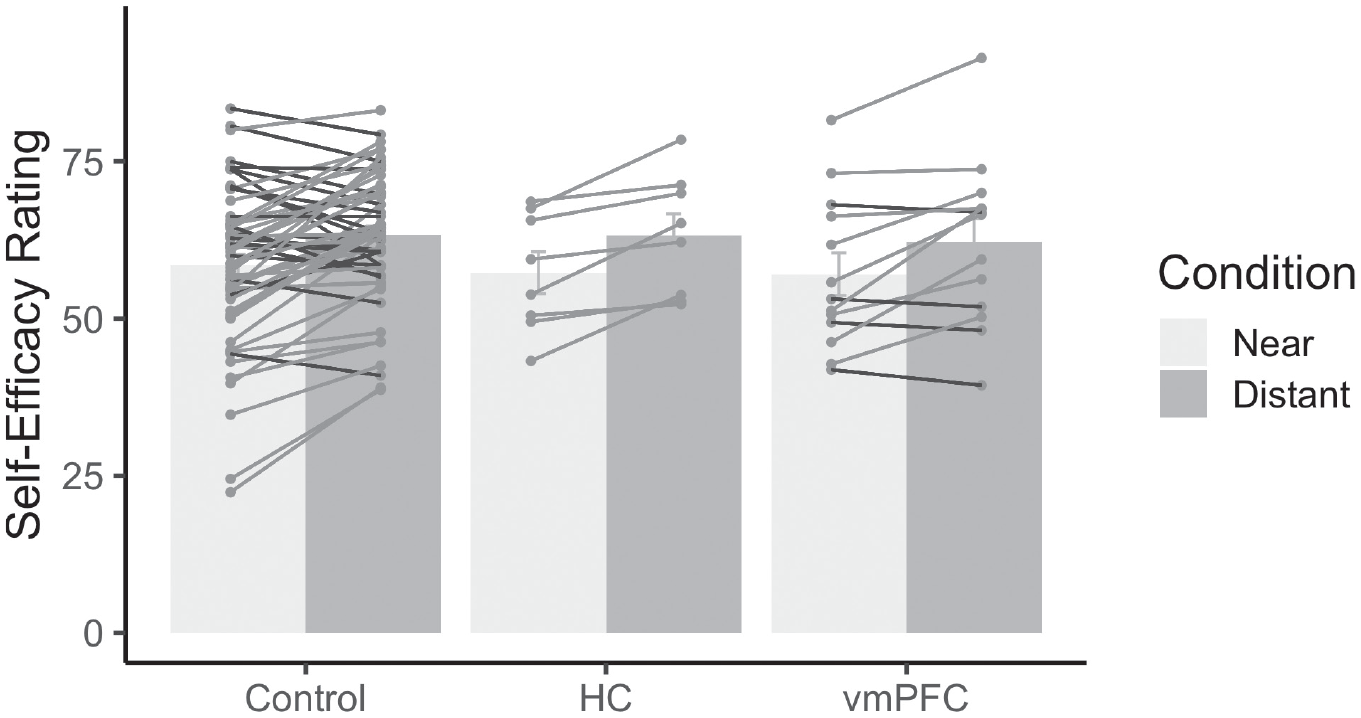
Performance on the self-efficacy test in individuals with lesions to the hippocampus (HC; n = 8) or to the ventromedial prefrontal cortex (vmPFC; n = 13) and in demographically matched control participants (n = 57), broken down by condition. Each individual in the HC group showed an effect of temporal construal, indicated by gray lines; abstract construals were greater for the distant-future relative to the near-future condition. Four of 13 individuals with vmPFC lesions and 15 of 57 control participants (i.e., 31% vs. 26%) showed no effect or the opposite effect, indicated by black lines.
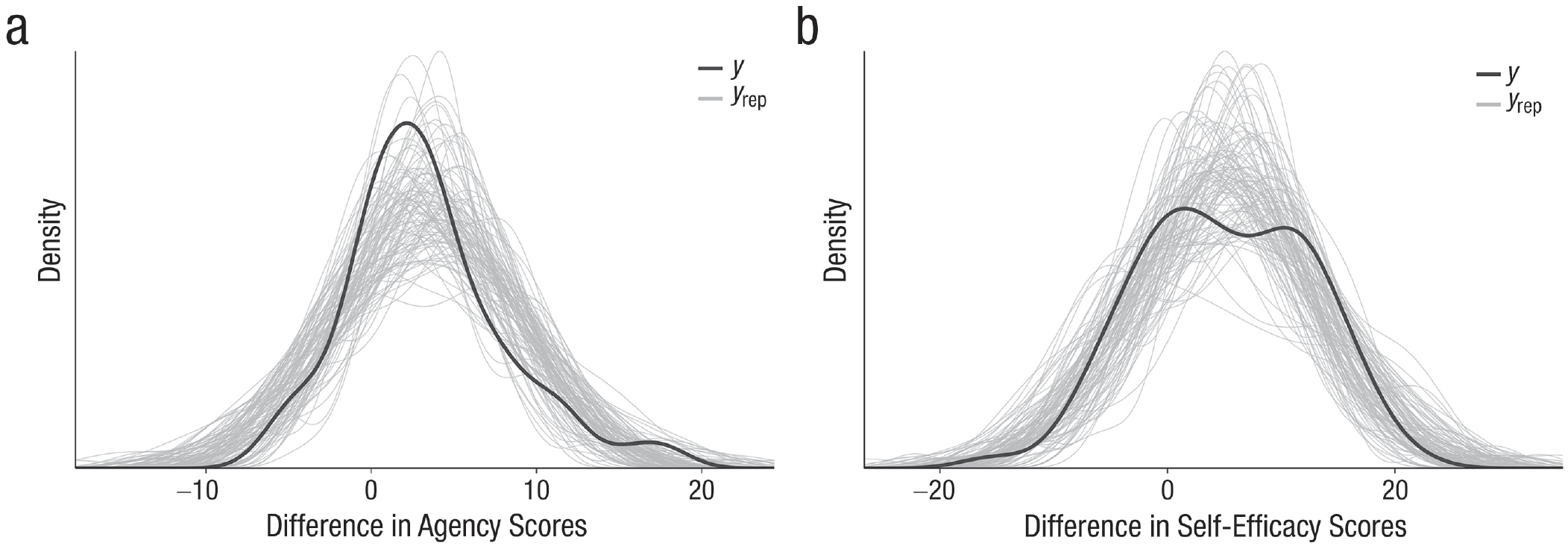
Graphical posterior predictive check comparing the observed distribution of difference in agency scores (dark gray) and difference in self-efficacy scores (dark gray) to 100 simulated data sets from posterior predictive distributions (light gray).
Posterior Summary Statistics of the Model With the Difference Between Near- and Distant-Future Self-Efficacy Scores Regressed on Group
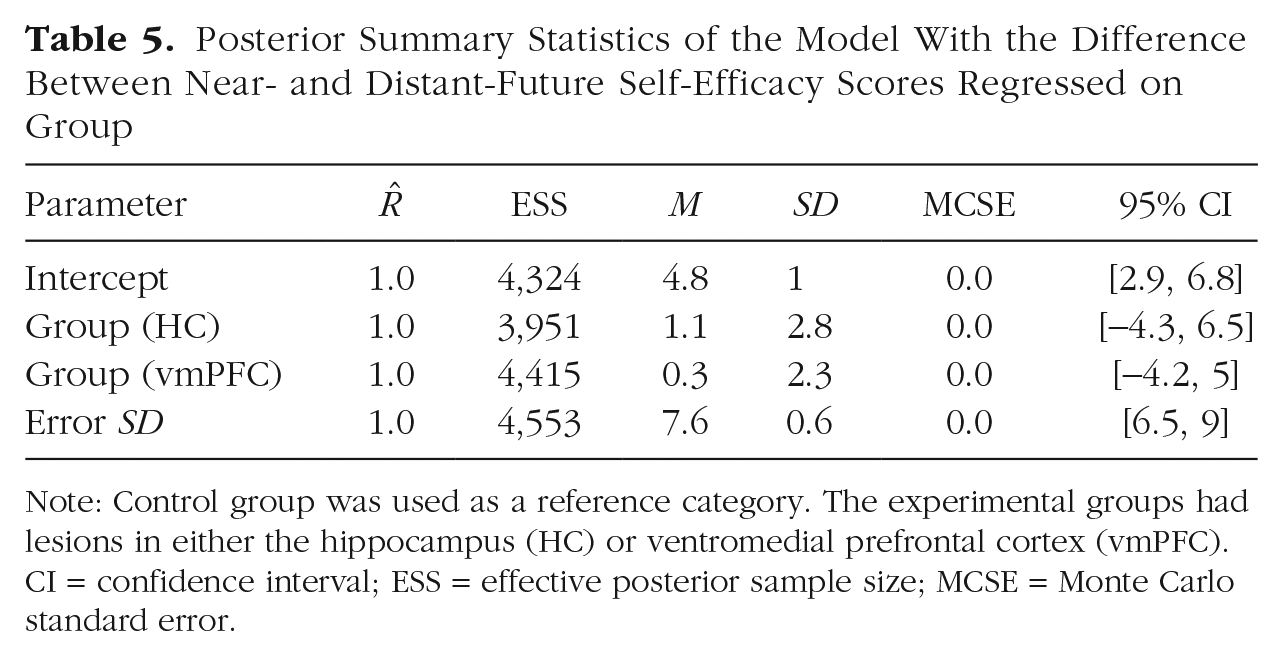
Note: Control group was used as a reference category. The experimental groups had lesions in either the hippocampus (HC) or ventromedial prefrontal cortex (vmPFC). CI = confidence interval; ESS = effective posterior sample size; MCSE = Monte Carlo standard error.
Whereas all participants with HC lesions showed the expected increase in level of agency and in self-efficacy ratings from the near- to distant-future conditions (i.e., temporal construal effect), this was true of eight of 13 individuals with vmPFC damage on the personal agency test and nine of 13 individuals with vmPFC damage on the self-efficacy test. Of the individuals with vmPFC lesions who showed the same or a higher level of agency in the near- versus distant-future conditions, four of five had lesions to Brodmann’s area (BA) 10 (RL, JAG, VA, SP). Of the individuals with vmPFC lesions who showed a higher level of self-efficacy in the near- versus distant-future conditions, three of four had lesions to BA 10 (JAG, VA, SP). Because of insufficient numbers of cases with lesions to different regions of vmPFC, it was not possible to conduct formal anatomical mapping of deficits.
Discussion
The current study provides compelling evidence that the episodic memory system, and episodic future thinking in particular, is not necessary for differential construal of future events. Individuals with lesions to the HC or to vmPFC, many of whom are impaired in the ability to imagine future episodes, nevertheless show the same biases as control participants in future-oriented thinking on tests requiring future orientation but not construction of details. Consistent with predictions of construal-level theory, results showed that low-level construals were associated with thinking about the near future, and high-level construals were associated with thinking about the distant future in all of the individuals with HC damage, over half of the vmPFC patients, and most of the control participants. The evidence suggests that temporal construal effects are not mediated by the capacity to imagine future events and actions in rich episodic detail.
The current study clarifies the role of the HC in future thinking. Other types of future-regarding decisions and behaviors do not appear to be affected by episodic amnesia, including delay discounting (Kwan et al., 2012, 2013; Mok et al., 2021), anticipated future regret (Craver et al., 2014), advantageous decision-making on gambling tests (Rosenbaum et al., 2016), and temporal self-appraisal (Halilova et al., 2020). None of these tests require construction of details into narratives. Separate work shows that delay discounting can be modulated by cuing specific personal events (Benoit et al., 2011; Mok et al., 2020; Peters & Büchel, 2010), whereas very few amnesic cases have been found to show a benefit (Kwan et al., 2015; Palombo et al., 2015). These findings provide further evidence that the future can be conceived via episodic and nonepisodic routes, such as generic or semantic knowledge (Craver et al., 2014), and that HC integrity is necessary to conceive the future only through the episodic route or when conceiving the future requires detailed semantic future simulation (Race et al., 2013).
The results also help to clarify the role of vmPFC in future thinking. Most, but not all, individuals with vmPFC lesions showed a typical pattern of temporal construal, suggesting that the tests were nevertheless sensitive to frontal lobe impairment. In particular, we found that some of the vmPFC cases, most with lesions to the left inferior frontal pole (BA 10), showed little difference in agency and self-efficacy between the near- and distant-future conditions or showed greater agency and self-efficacy (i.e., higher construal) for the near-future compared with the distant-future condition, the opposite of what is reliably found in young adults on this test (Gilead et al., 2014; Stillman et al., 2017; Vallacher & Wegner, 1989). This pattern also differs from what was found in the other focal lesion cases tested in the current study and in most control participants. These findings are compatible with those reported in a rich literature pointing to polar BA 10’s role in forming and maintaining future intentions (Burgess et al., 2007; Volle et al., 2011), especially details of what the action is and when it is to be performed (Uretzky & Gilboa, 2010). This is in line with findings from a positron emission tomography study by Okuda et al. (2003), which found that patients may be projecting close events further into the future, they may not be able to orient to a time other than the present, or both. In other words, they may be processing near-future and distant-future events in similar ways.
The suggestion that part of vmPFC is implicated in the high-level construal of far versus near-future events corresponds to previous findings that vmPFC is involved in future-time orientation. Indeed, vmPFC patients (Ciaramelli, Anelli, & Frassinetti, 2021), but not HC patients (Arzy et al., 2009), are impaired in orienting attention toward future perspectives and events, even on tests that do not require the construction of context-rich narratives. Moreover, unlike individuals with HC pathology, individuals with vmPFC damage have steep discounting of future rewards, which also requires (future) time orientation but not event construction (Noonan et al., 2017; Peters & D’Esposito, 2016; Pujara et al., 2015; Vaidya & Fellows, 2015). It remains unclear whether steep delay discounting observed in individuals with vmPFC damage is due to impaired temporally oriented thought or to impaired reward valuation. Recent findings that individuals with vmPFC lesions are impaired in reward discounting, even when the test involves probabilistic outcomes without a delay (Mok et al., 2021; Peters & D’Esposito, 2020), as well as the finding that episodic cues modulate delay discounting normally in individuals with vmPFC lesions (Ciaramelli, De Luca, et al., 2021) support the latter possibility. It is possible, however, that personally relevant episodic cues reduce delay discounting in people with vmPFC lesions by externally promoting the activation of future self-schemata that these individuals fail to activate endogenously (Ciaramelli, De Luca, et al., 2021).
Episodic future thinking was not significantly correlated with temporal construal on the personal agency and self-efficacy tests (see the Supplemental Material). This is further reflected by findings that vmPFC cases with and without atypical temporal construal biases showed a range of performance on the Galton-Crovitz cue word test of episodic prospection (from severely impaired to average; Table 2). Taken together, these findings provide evidence for a dissociation between the effects of episodic future thinking and the effects of temporal orientation on temporal construal tests that do not require construction of details into narratives. Nevertheless, the percentage of vmPFC-lesioned cases who did not show a typical construal effect was similar to that of control participants, leaving open the possibility that atypical performance reflected individual differences rather than the effects of a specific lesion site. Moreover, generalizability of the data is limited in terms of lack of geographical diversity, given that all participants were recruited from Toronto and Cesena, as well as anatomical diversity in the vmPFC cases, most of whom experienced lesions resulting from a ruptured anterior communicating artery aneurysm (Table 1). Future studies including more diverse samples of patients and control participants, including a control group of brain-damaged patients, would help confirm these findings and possibly relate them to specific subregions within vmPFC.
By its very nature, episodic future thinking is a cognitive faculty by which humans orient themselves practically in time. Yet episodic future thinking is likely not the only cognitive faculty that serves this function. The current findings build on seminal research in the amnesic cases KC (Tulving, 1985) and DB (Klein et al., 2002), providing additional strong evidence to suggest that distinctive aspects of human cognition about the future can be preserved in individuals with deficits in the ability to episodically imagine future experiences (Craver et al., 2014). Perceiving the future in more concrete or abstract terms as a function of temporal orientation appears to critically depend on the integrity of the frontal pole, an area associated with temporal orientation and future intentions. Future thought is not a unitary capacity but, rather, the product of many distinct mechanisms that contribute in their own way to our adaptive orientation to the past and future.
Supplemental Material
sj-docx-1-pss-10.1177_09567976221120001 – Supplemental material for Temporal Construal Effects Are Independent of Episodic Future Thought
Supplemental material, sj-docx-1-pss-10.1177_09567976221120001 for Temporal Construal Effects Are Independent of Episodic Future Thought by R. Shayna Rosenbaum, J. G. Halilova, D. Kwan, S. Beneventi, C. F. Craver, A. Gilboa and E. Ciaramelli in Psychological Science
Footnotes
Transparency
Action Editor: Natasha M. Rajah
Editor: Patricia J. Bauer
Author Contributions

References
Supplementary Material
Please find the following supplemental material available below.
For Open Access articles published under a Creative Commons License, all supplemental material carries the same license as the article it is associated with.
For non-Open Access articles published, all supplemental material carries a non-exclusive license, and permission requests for re-use of supplemental material or any part of supplemental material shall be sent directly to the copyright owner as specified in the copyright notice associated with the article.
