




Abstract
Fetal adaptations to prenatal maternal stress may confer high risk for childhood behavior problems, potentially operating via dynamic fluctuations in infants’ emotions during mother–infant interactions. These fluctuations over time may give rise to behavior problems. Among a sample of 210 low-income mothers of Mexican origin and their 24-week-old infants, dynamic structural equation modeling was used to examine whether within-infant second-by-second emotion processes were predicted by maternal prenatal stress and predicted behavior problems at 36 and 54 months. The mean level around which infant negative affect fluctuated was related to prenatal stress, but not to childhood behavior problems. The volatility in infant negative affect, reflecting greater ebb and flow in infant negative affect during playful interaction, was predicted by prenatal stress and predicted enduring behavior problems in childhood. Results highlight a potential child-driven pathway linking prenatal exposure with childhood behavior problems via infant negative emotional volatility.
According to the prenatal-programming hypothesis, maternal prenatal stress can result in enduring structural and functional changes in the fetus—changes that are thought to maximize survival in the expected postnatal world but may place the offspring at risk for future disease (Barker, 1995; Davis et al., 2018; Glover, 2011; Sandman et al., 2012). Prenatal stress is a broad construct encompassing exposure to objectively stressful life events, stress appraisals, subjective distress, and psychobiological stress responses (Bush et al., 2017). Exposure to stressful life events in utero increases the risk of behavioral problems in childhood and adolescence, independent of postnatal exposures and other potential confounders (Huizink et al., 2004; Robinson et al., 2011). Relative to more advantaged women in the majority culture, low-income women of Mexican origin face more stressors as well as qualitatively different exposures, reflecting in part experiences of discrimination and culturally relevant stressors (e.g., separation from family because of immigration; Roubinov et al., 2021). Yet ethnic-minority families facing sociodemographic risk are relatively overlooked in the prenatal-programming literature (Bush et al., 2017; Roubinov et al., 2021). Guided by a broader developmental psychopathology framework (e.g., Cicchetti & Richters, 1993), we set out to evaluate prenatal-programming pathways among high-risk populations in order to elucidate mechanisms evident early in development that confer risk for child behavior problems.
Infant emotion dynamics may be an important pathway that originates before birth and links exposure to prenatal stressful life events (that is, prenatal stress) to enduring behavioral sequelae (e.g., Davis et al., 2018; Lin et al., 2017; McLean et al., 2018; Sandman et al., 2012). Increasingly, researchers have acknowledged the mother–child relationship as a dyadic system in which the infant’s and the mother’s emotions influence and are influenced by each other (Somers et al., 2021), and this conclusion is consistent with transactional models of emotional development (e.g., Sameroff, 2010). Despite the historical prioritization of parent-driven effects (even within bidirectional models; e.g., Belsky, 1984), fetal neurodevelopment appears to prepare the infant for the emotional communication required to actively engage in caregiver-child interactions (Cole, 2016; Gingras et al., 2005; Reissland et al., 2011).
Infant Emotion Dynamics During Mother–Infant Interactions
Prenatal stress may shape infants’ emotion dynamics to maximize survival and fitness by enabling infants to readily scan and explore their environments, cuing the infants to threat and danger cues, and programming the infants to draw on internal resources rather than caregiver support (for reviews, see Glover, 2011; Monk et al., 2019). From an evolutionary perspective, greater threat sensitivity, as well as increased distractibility and exploration of novel (e.g., nonmaternal) environments, could be a successful adaptation to a stressful environment presaged by prenatal stress (Glover, 2011; Monk et al., 2019). Among neonates, elevated maternal prenatal stress is associated with heightened physiological and behavioral reactivity to stress as well as slower behavioral recovery from a mild stressor (the heel-stick procedure) 24 hr after birth (Davis et al., 2011). In infancy, salient adaptations to prenatal stress may be captured during mother–infant free play, which is distinguished by social-engagement goals and longer periods of mutual gaze, vocalizations, imitations, and affective sharing (Feldman et al., 1997; Lunkenheimer et al., 2011). Moment-to-moment emotion dynamics that unfold during an interaction may shed light on the subtle ways that infants have been programmed to adjust their behavior to autonomously meet their momentary needs, while maintaining heightened vigilance to threat cues and more exploration. Though programmed emotion dynamics may help promote survival during stressful moments, over time these dynamics may compromise children’s psychological adjustment (Glover, 2011; Monk et al., 2019).
Within-person moment-to-moment variability in emotions reveals meaningful emotion dynamics. In addition to between-person differences in emotional equilibrium (mean level of positive or negative affect), the amplitude of momentary fluctuations in affect varies: Some infants show greater emotional volatility, or the extent to which they deviate from their emotional equilibrium, than others do (Somers et al., 2021; for illustration, see Fig. S1 in the Supplemental Material available online). Momentary changes in infant emotional expression may reflect infant signaling of rapid changes in their internal state, yet greater emotional volatility may compromise caregivers’ ability to read those signals and provide for the child’s needs and in turn undermine the dyadic foundation of children’s emotion-regulation abilities (Cole, 2016). Studies relying on maternal report and observational measures demonstrate that prenatal stress is positively associated with infant negativity (Davis & Sandman, 2010; Huizink et al., 2002, 2003; Lin et al., 2014, 2017; McLean et al., 2018; Van den Bergh et al., 2005) and with emotional reactivity to challenge (e.g., Davis et al., 2004, 2011; Werner et al., 2007) across broad timescales (e.g., spanning entire interactions or even months). Extending this work, Huizink et al. (2002) found that prenatal stress may predispose infants to have a general susceptibility to higher equilibrium of negative affect and heightened emotional volatility. Infants whose mothers experienced more stress during pregnancy may exhibit more negative affect and affect lability when interacting with their mothers, which may help infants recruit the external resources (e.g., maternal attention) required to meet immediate needs (Glover, 2011) but may also pose longer-term costs for the dyad and for child developmental outcomes (Cole, 2016).
Statement of Relevance
Among low-income ethnic-minority families, women experience greater stress during pregnancy and bear offspring who exhibit more behavior problems. Prenatal-programming theories suggest that these associations are not merely coincidental: Rather, prenatal stress programs fetal adaptation in ways that may promote survival but bear costs for behavioral health. Despite recognizing the active roles both parents and children play in child development, prenatal-programming research prioritizes parent-driven processes. Here, we challenge this dominant perspective by examining how second-by-second changes in infants’ emotions are influenced by prenatal stress and influence childhood behavior problems. Among low-income families of Mexican origin, we found that prenatal stress predicted greater volatility in infant negative affect during playful interactions with the mother, which in turn predicted later behavior problems. This work suggests that we can improve child health by not merely focusing on parent behavior, but also by considering the impact of infant emotional volatility on development.
The management of emotional experience, reflected in the timing and degree of change in infant affect, offers compelling evidence of ongoing emotion self-regulatory processes (Crockenberg & Leerkes, 2003; Somers et al., 2021). Following a disturbance to the equilibrium, the rate at which an infant returns to equilibrium is referred to as carryover (e.g., Kuppens et al., 2010; see Fig. S2 in the Supplemental Material). In addition, infant affect at one time point may dampen or amplify subsequent affect, revealing intrapersonal feedback loops between infants’ positive and negative affect that serve to maintain stable emotional equilibria (Hollenstein, 2015). Prolonged expressions of negative affect (e.g., high carryover of negative affect and feedback loops that amplify or fail to dampen negative affect) may reflect stress-exposed infants’ sustained vigilance to internal or external distress, which hinders successful self-regulation of negative emotions. By contrast, sustained and activated positive affect (e.g., high carryover of positive affect and feedback loops that amplify positive affect) may reflect adaptive infant self-regulatory processes (Lunkenheimer et al., 2011; Somers et al., 2021). There is evidence among low-income families of Mexican origin that prenatal exposures shape dynamic mother–infant interactions (Coburn et al., 2015) and that infants’ biological predispositions account for differences in concurrent emotion dynamics (Somers et al., 2021); there is convergent evidence of heightened negative affectivity among prenatal-stress-exposed infants (Glover, 2011; Monk et al., 2019). Drawing on this, we speculated that prenatal-stress exposure may hinder infant self-regulatory processes that restore emotional equilibrium and instead may be associated with prolonged negative affect.
Current Aims
Our first aim was to evaluate whether maternal prenatal stress predicts between-dyad variability in within-infant emotion dynamics at 24 weeks. We expected that higher maternal prenatal stress would predict more infant negative emotionality and emotion regulatory processes characterized by (a) lower equilibrium of infant positive affect and higher equilibrium of negative affect, (b) more volatility in positive and negative affect, (c) less carryover in positive affect but more carryover in negative affect, and (d) feedback loops that failed to amplify positive affect and failed to dampen (or amplify) negative affect. Our second aim was to evaluate whether higher infant (24-week) negative emotionality and the emotion-regulatory processes described above predicted more behavior problems at 36 and 54 months old. Our third aim was to evaluate whether second-by-second infant emotion dynamics during mother–infant interaction at 24 weeks were influenced by maternal prenatal stress and in turn influenced behavior problems in early childhood (54 months) among low-income families of Mexican origin.
Method
Participants
The sample consists of 210 women and their children who participated in a 24-week postpartum home visit as part of a broader study, Las Madres Nuevas. Women were eligible for participation in the larger study if they were (a) Mexican or Mexican American, (b) fluent in English or Spanish, (c) 18 years of age or older, (d) from low-income families, and (e) pregnant, with an anticipated delivery of a singleton birth. “Low income” was defined as a family income below $25,000 or eligibility for Medicaid or Federal Emergency Services coverage for childbirth. The Arizona State University Institutional Review Board (IRB) and the Maricopa Integrated Health System IRB approved all study procedures prior to recruitment and data collection. Sample characteristics are presented in Table 1.
Sample demographics
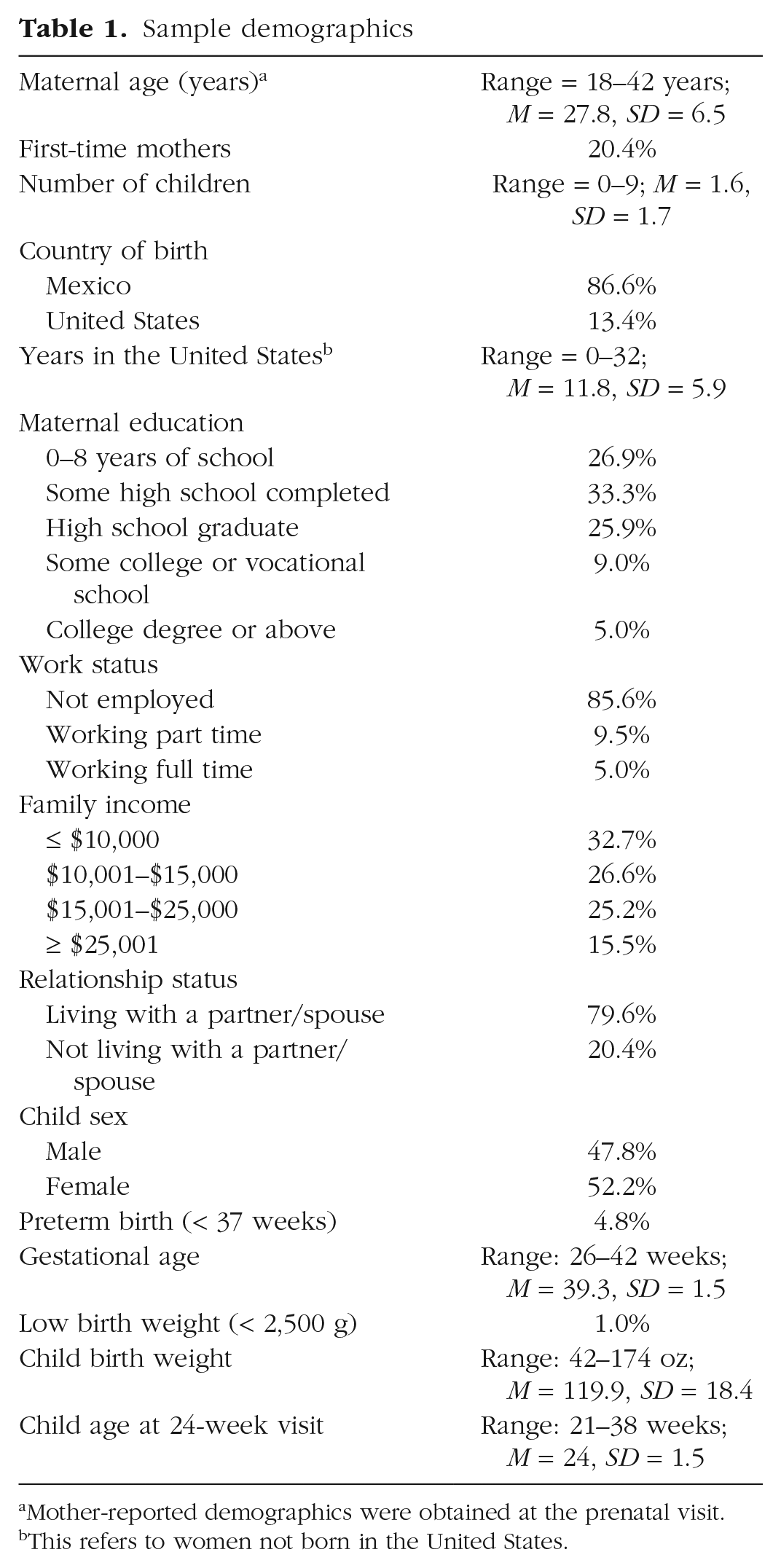
Mother-reported demographics were obtained at the prenatal visit. bThis refers to women not born in the United States.
Recruitment
A bilingual interviewer from the research team recruited pregnant women from hospital-based prenatal clinics that serve low-income and uninsured patients. A bilingual interviewer from the research team obtained informed consent in the women’s homes when the expected infants were between 26 and 39 weeks gestation. Data for the present study come from the prenatal home visit, the home visit at 24 weeks postpartum, and lab visits at 36 months and 54 months at Arizona State University. Data were collected from March 2010 to November 2017.
Missingness
The broader study employed a planned-missing design to reduce participant burden. One third of the original sample of 226 women were randomly assigned to miss the 24-week postpartum visit. Of the 226 women who met inclusion criteria and consented to participate in the study, 210 (93% of the randomly assigned women) completed the 24-week assessment. Of women who completed the 24-week assessment, 139 women (66%) completed the 36-month lab visit and 147 women (70%) completed the 54-month lab visit.
Procedure
The prenatal and 24-week visits were conducted in participants’ homes. Women completed questionnaires and structured interaction tasks in the laboratory at Arizona State University for the 36- and 54-month visits. Interviewers read survey questions aloud to mothers. Interviews were conducted in either Spanish or English, depending on participant preference at each time point; most were conducted in Spanish (> 80%). The 24-week visit (age-corrected on the basis of expected date of delivery) lasted between 2 and 3 hr and included survey questions and mother–infant interaction tasks. The interaction tasks started with a 5-min free play in which study team members provided mothers with a basket of toys and instructed them to play with their infants as they normally would. Women were compensated $75 for the prenatal interview; $50 for the 24-week interview, along with small gifts for the child (e.g., bibs, rattles); and $100 for the 36- and 54-month lab visits. Transportation was either provided or reimbursed (if the latter, women were reimbursed $50 for travel costs for each lab visit).
Measures
Maternal prenatal stress
Mothers’ self-reports of negative life events during pregnancy (at 26–39 weeks’ gestation) were obtained using 13 items from the Pregnancy Risk Assessment Monitoring System (PRAMS; Centers for Disease Control and Prevention, 2009–2011). A negative life-events total was obtained by summing endorsed events; possible scores ranged from 0 to 13. These items have demonstrated good concurrent and predictive validity (e.g., Nkansah-Amankra et al., 2010).
Microcoded affect during 24-week mother–infant play
Mother and infant affect throughout the 5-min mother–infant play were coded using adapted versions of the Infant Regulatory Scoring System and the Maternal Regulatory Scoring System (IRSS and MRSS; Tronick & Weinberg, 1990). The IRSS and MRSS are microcoding systems used to capture mothers’ and infants’ behavior and facial expressions during dyadic interactions and were adapted for the present study. Four teams of two independent coders were instructed to begin rating facial and vocal affect and social-engagement behaviors as soon as the task began, using event-based coding, which was subsequently transformed into a second-by-second affect and engagement time series using the time stamp (recorded to the millisecond). Coders achieved acceptable agreement (κ > .60) with master coders during training; 20% of each coder’s videos were checked against master coders to continually assess reliability and minimize drift over time (average κ = .62 for infant behaviors and average κ = .66 for mother behaviors).
Consistent with the perspective that affect is expressed in multiple modalities (e.g., Beebe et al., 2010; Cohn et al., 1990; Feldman, 2003; Weinberg et al., 1999), positive- and negative-affect time series of approximately 300 observations were assessed by combining ratings of facial and vocal affect and social-engagement behaviors. Positive affect was rated on a scale ranging from 0 to 4 (0 = no positive affect; 2 = neutral, passive engaged; 4 = positive, active engaged). Negative affect was also rated on a scale ranging from 0 to 4 (0 = no negative affect; 2 = negative affect, disengaged; 4 = negative, active engaged; see Table S1 in the Supplemental Material for a full description of affect codes). Overall, maternal negative affect was extremely infrequent during free play, occurring less than 1% of the time during these tasks. Therefore, maternal negative affect was not included in the analyses. More information on the affect coding can be found in Somers et al. (2021).
Child behavior problems at 36 and 54 months
Mothers reported on their child’s total behavior problems (internalizing, externalizing, sleep, and other problems) using the Child Behavior Checklist (CBCL 1.5-5; Achenbach & Rescorla, 2000; Rubio-Stipec et al., 1990; α for total problems at 36 months = .86; α for total problems at 54 months = .87). Total scores were used in primary analyses. Possible total scores ranged from 0 to 200; higher scores indicated more severe behavior problems.
Covariates
Prenatal perceived stress
Mothers’ report of perceived stress during pregnancy was included as an a priori covariate to account for the unique influences of prenatal stressful life events, given that mothers may vary in their subjective experience of stressful life events (Monk et al., 2019). Mothers reported on their perceived stress using an abbreviated, Spanish-language-validated four-item version of the Perceived Stress Scale (PSS; Cohen et al., 1983; Gonzales Ramirez & Landero Hernandez, 2007). Respondents rate four general questions regarding how often they have experienced stress in the past month, using a 4-point scale (0 = never, 4 = very often). A total score was computed by summing scores on the four items (α = .65).
Concurrent maternal stress
Mothers’ report of negative life events at 54 months of child age was assessed with the same items as the prenatal assessment (PRAMS; Centers for Disease Control and Prevention, 2009–2011). The sum score was included as an a priori covariate to account for the unique influences of prenatal stress, given potential continuity of prenatal negative life events across childhood or the influence of current stress exposures on maternal reports of child behavior.
Potential covariates
Potential covariates included factors that may influence maternal prenatal stress, infants’ emotion dynamics, or child behavior problems. Child birth outcomes (birth weight, gestational age at birth, Apgar score), biological sex, and age (in days) at the time of the postnatal home visit (based on child’s date of birth) were obtained through medical-record review. Mother’s country of origin, age (years), and parity (number of biological children) were obtained by mother report at the prenatal visit. Variables that were significantly associated with primary observed outcomes or latent emotion dynamics and remained nonnull covariates in the primary analyses were retained. Potential covariates that were related to missingness on primary outcome variables were also retained in primary analyses to inclusively account for missing data and to adhere to the assumption of data missing at random (Graham, 2009).
Data-analysis plan
Dynamic structural equation modeling (Asparouhov et al., 2018) was used to evaluate between-dyad predictors and outcomes of within-infant emotion dynamics. Primary analyses were conducted using Mplus (Version 8.4; Muthén & Muthén, 1998–2017). At the within-dyad level, infants’ and mothers’ affect were both predicted by their own and each other’s affect during the prior second. In addition, infants’ positive affect was predicted by and predicted infants’ negative affect, from one second to the next. In other words, all autoregressive and cross-lagged paths in the within-level model were estimated. Lagged variables of mothers’ and infants’ affect were created in Mplus. The lag-1 variables were latent centered to yield pure within effects, as desired (Hamaker et al., 2015).
Random effects were placed on intercepts, slopes, and residual variances of mothers’ and infants’ affect at the within level, which allowed these effects to differ at the between level. Random intercepts were allowed to covary, but no other possible covariances between random effects were included given the large sample-size requirements for reliably estimating random-effects covariances (Schultzberg & Muthén, 2018). Between-level predictors (maternal prenatal stress and covariates) were grand mean centered and included as predictors of all random effects. These random effects were specified as predictors of child behavior problems at 36 months and at 54 months. Prenatal stress and covariates were also specified as predictors of child behavior problems at 36 and 54 months, and child behavior problems at 36 months were predictors of child behavior problems at 54 months.
Unstandardized estimates are presented for all models. Similar to a frequentist framework, the effects were considered nonnull if the 95% credible intervals (CIs) did not contain zero. Post hoc probing of nonnull effects of prenatal stress on within-infant emotion dynamics was conducted using a multilevel moderation Web utility (http://quantpsy.org/interact/hlm2.htm; Preacher et al., 2006). Using their posterior distributions, we applied the joint significance test to primary results, because it has the most power and most accurate Type I error rates relative to other tests of three-path mediated effects (MacKinnon et al., 2002; Taylor et al., 2008). The joint significance test finds evidence for an indirect effect if each of the individual paths in the mediated effect (from prenatal stress to within-infant emotion dynamics at 24 weeks and to 36- and 54-month behavior problems) is nonnull or statistically significant.
Results
Preliminary analyses
Table 2 presents descriptive statistics and bivariate correlations of maternal prenatal stress, 36-month child behavior problems, 54-month child behavior problems, and 54-month maternal stress. Sample items of prenatal stress and the percentage of women who endorsed them included, “Someone very close to you died” (23.0%), “You were homeless” (9.2%), “Husband/partner lost his job” (36.2%), “You moved to a new address” (42.9%), and “Someone close to you had a bad problem with drinking or drugs” (14.8%). We found that 5.8% of the sample had atypical child behavior problems (T-score > 65) at 36 months and 11.5% had atypical child behavior problems at 54 months. There were three potential outliers (> 3 SD from the mean) on 54-month maternal stress. Because the pattern of results did not change when potential outliers were excluded from the data set, results of analyses with all available data are presented. Skewness and kurtosis of primary study variables met assumptions of normality (Brown, 2006).
Descriptive Statistics and Correlations
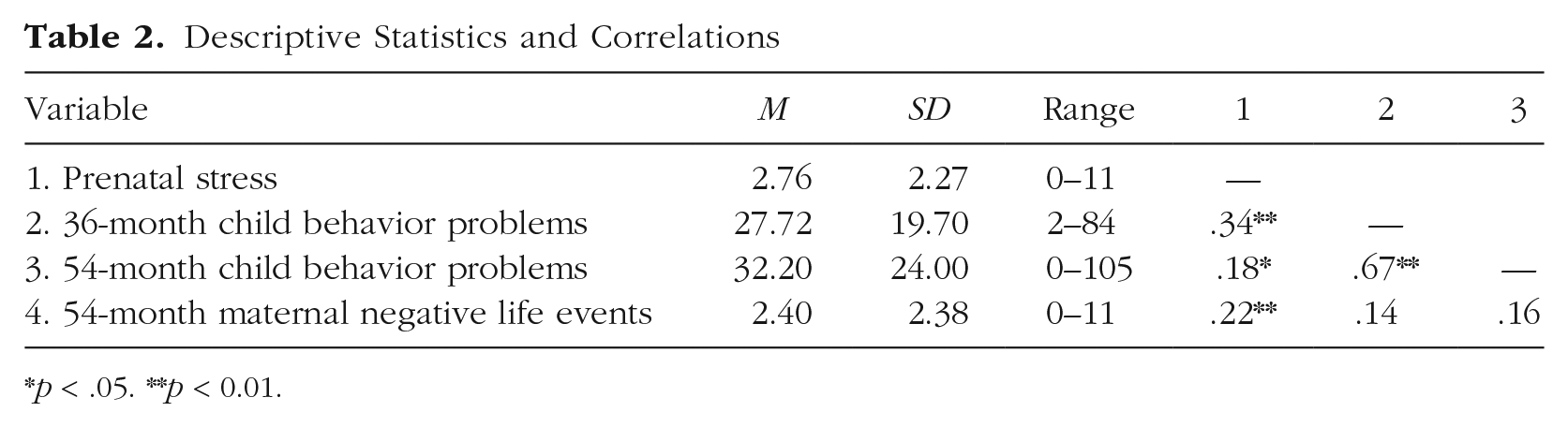
*p < .05. **p < 0.01.
Maternal prenatal perceived stress and concurrent 54-month stress were included as a priori covariates. Of the remaining potential covariates, only maternal country of origin was retained because of its relation to maternal prenatal negative life events and child behavior problems at 36 and 54 months and to missingness on infant negative-affect time series and child behavior problems at 36 months (see the Supplemental Material for more information regarding covariate selection). The pattern of results was consistent when covariates were not included; therefore, only results from the final model, which adjusts for covariates, are presented in the text. Model results without covariates are shown in Tables S2, S3, and S4 in the Supplemental Material.
Primary analyses
The full model is shown in Figure 1. Estimates of within-level intercepts and regression-path intercepts are shown in Table 3. Estimates of the effects of prenatal stress and covariates on within-level random effects are shown in Table 4. Estimates of the effects of infant emotion dynamics (i.e., within-level random effects) and between-level covariates on child behavior problems at 36 and 54 months are shown in Table 5.
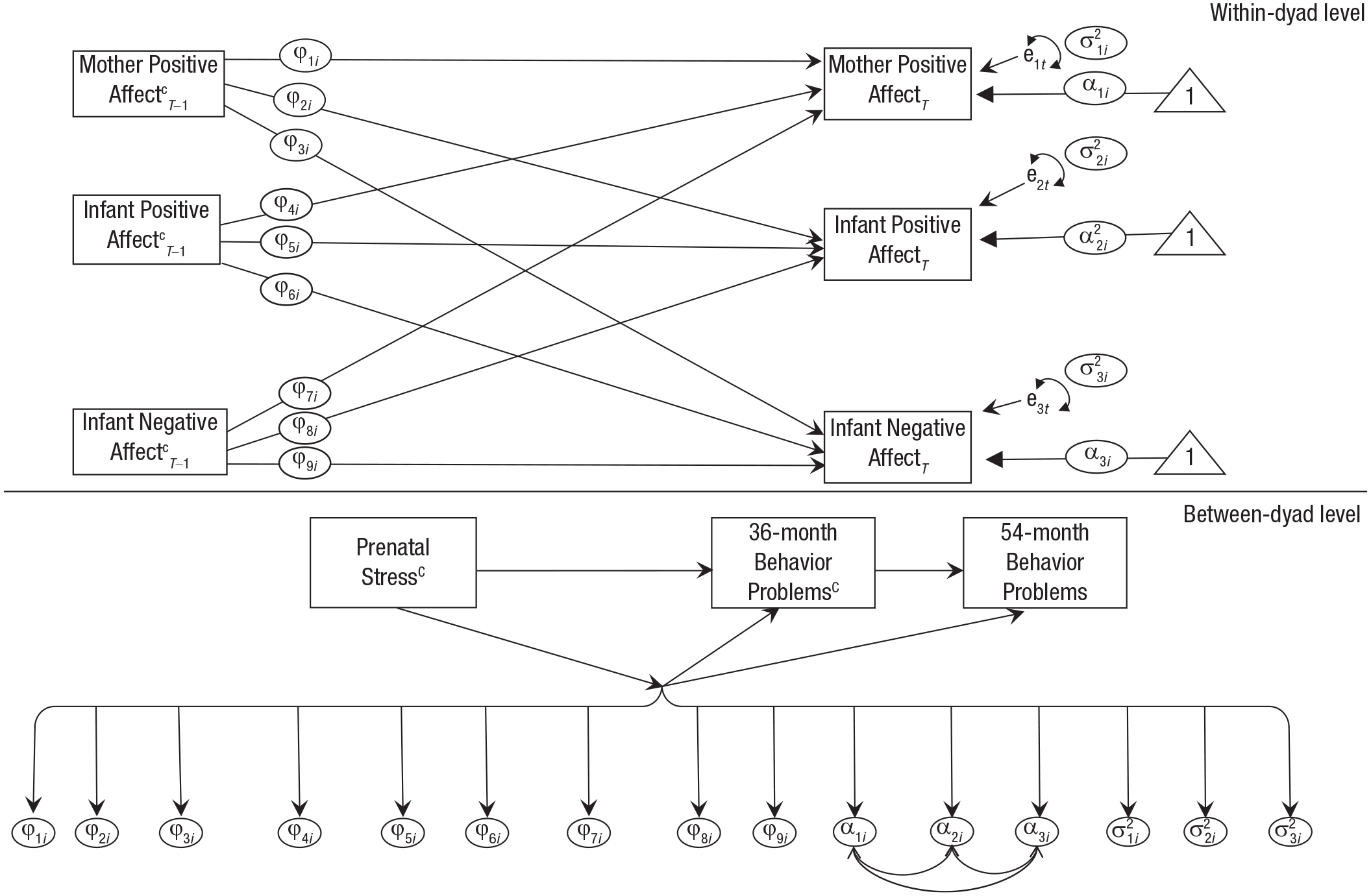
Model of between-dyad differences in within-dyad emotion dynamics when the child was 24 weeks old.
Within-Level Intercepts and Regression Paths
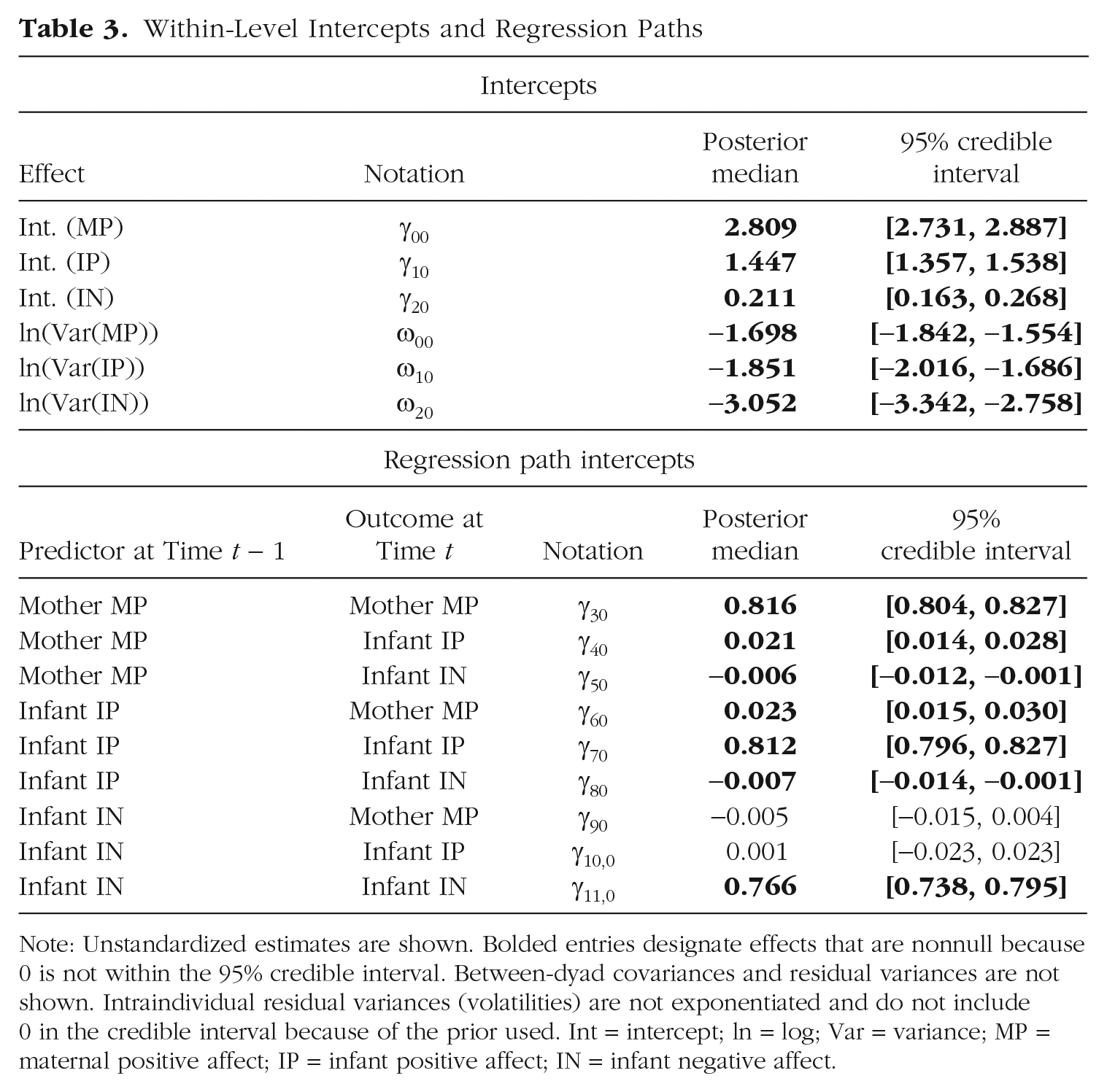
Note: Unstandardized estimates are shown. Bolded entries designate effects that are nonnull because 0 is not within the 95% credible interval. Between-dyad covariances and residual variances are not shown. Intraindividual residual variances (volatilities) are not exponentiated and do not include 0 in the credible interval because of the prior used. Int = intercept; ln = log; Var = variance; MP = maternal positive affect; IP = infant positive affect; IN = infant negative affect.
Between-Dyad Effects of Prenatal Stress
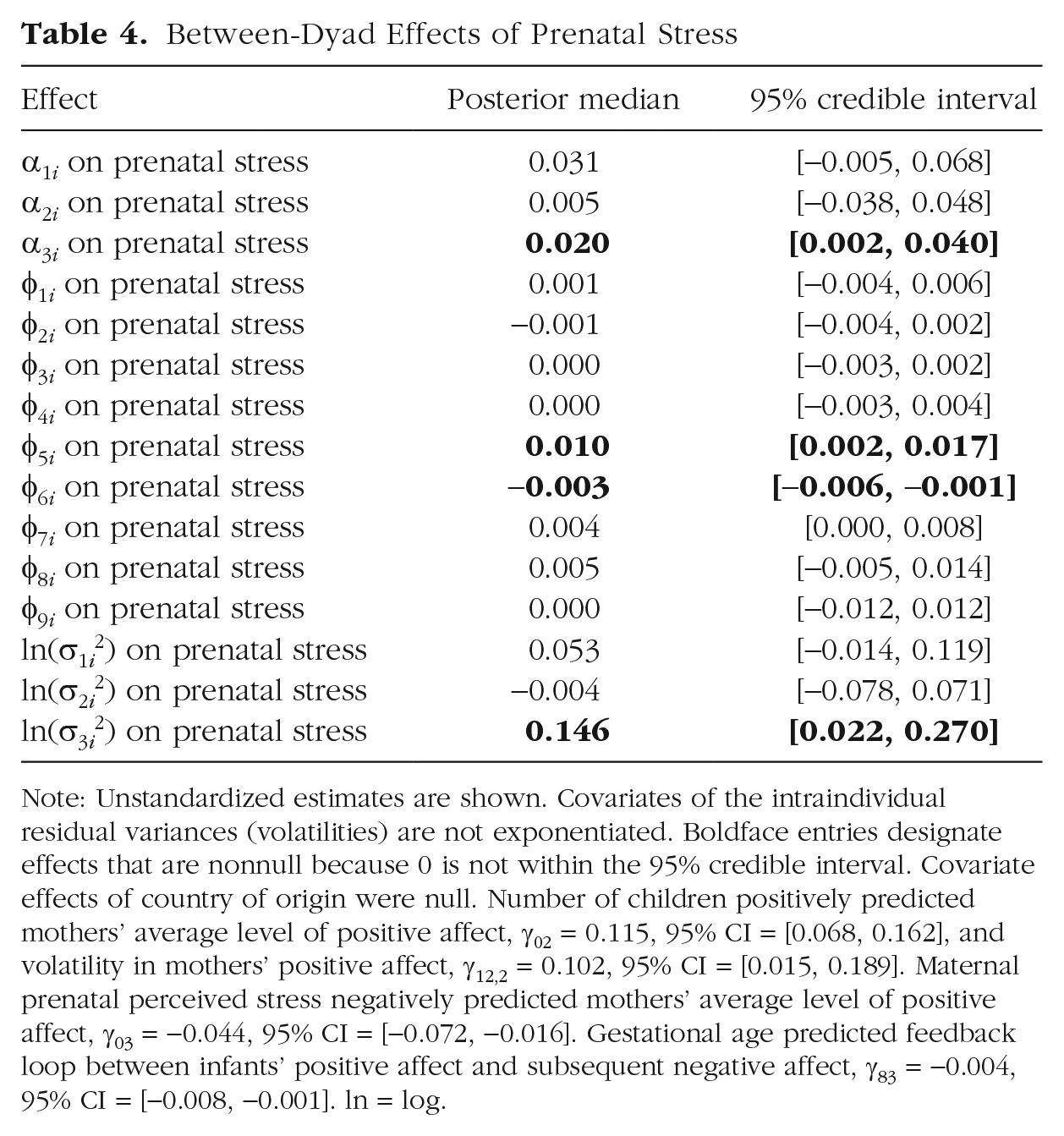
Note: Unstandardized estimates are shown. Covariates of the intraindividual residual variances (volatilities) are not exponentiated. Boldface entries designate effects that are nonnull because 0 is not within the 95% credible interval. Covariate effects of country of origin were null. Number of children positively predicted mothers’ average level of positive affect, γ02 = 0.115, 95% CI = [0.068, 0.162], and volatility in mothers’ positive affect, γ12,2 = 0.102, 95% CI = [0.015, 0.189]. Maternal prenatal perceived stress negatively predicted mothers’ average level of positive affect, γ03 = −0.044, 95% CI = [−0.072, −0.016]. Gestational age predicted feedback loop between infants’ positive affect and subsequent negative affect, γ83 = −0.004, 95% CI = [−0.008, −0.001]. ln = log.
Between-Dyad Covariate Effects
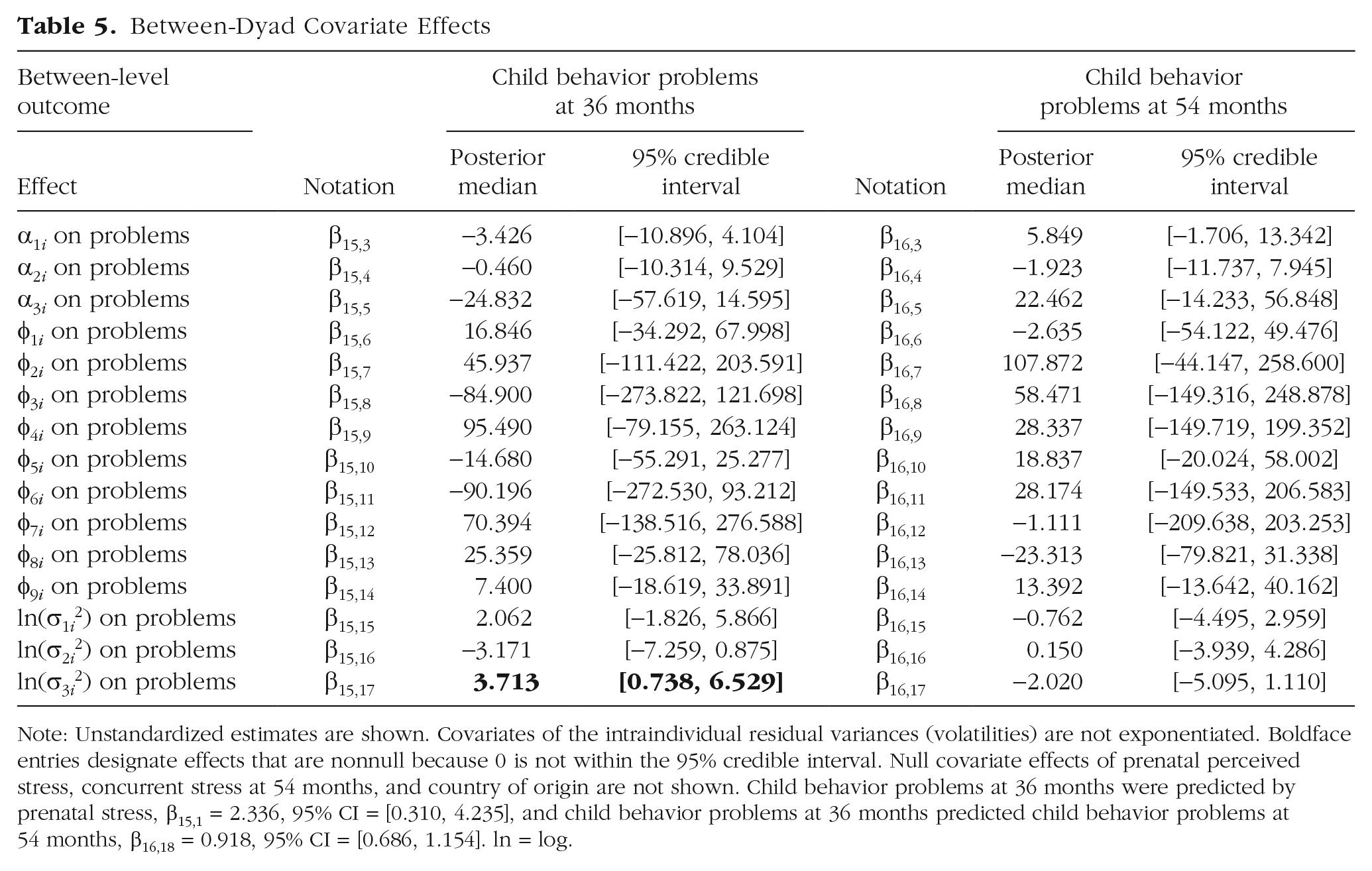
Note: Unstandardized estimates are shown. Covariates of the intraindividual residual variances (volatilities) are not exponentiated. Boldface entries designate effects that are nonnull because 0 is not within the 95% credible interval. Null covariate effects of prenatal perceived stress, concurrent stress at 54 months, and country of origin are not shown. Child behavior problems at 36 months were predicted by prenatal stress, β15,1 = 2.336, 95% CI = [0.310, 4.235], and child behavior problems at 36 months predicted child behavior problems at 54 months, β16,18 = 0.918, 95% CI = [0.686, 1.154]. ln = log.
Aim 1: maternal prenatal stress as a predictor of infant emotion dynamics at 24 weeks
Equilibria
Prenatal stress did not predict infants’ average level of positive affect. However, prenatal stress positively predicted infants’ average level of negative affect, γ21 = 0.020, 95% CI = [0.002, 0.040].
Volatility
Prenatal stress did not predict the volatility in infants’ positive affect. However, prenatal stress positively predicted the volatility in infant negative affect, γ14,1 = 0.146, 95% CI = [0.022, 0.270].
Carryover
Prenatal stress predicted carryover in infants’ positive affect, γ71 = 0.010, 95% CI = [0.002, 0.017]. Post hoc probing indicated that carryover in infant positive affect was positive and significant across all plausible levels of prenatal stress. Prenatal stress did not predict carryover in infants’ negative affect.
Feedback loops
Prenatal stress also predicted feedback loops between infants’ positive affect and their subsequent negative affect, γ81 = −0.003, 95% CI = [−0.006, −0.001]. Post hoc probing indicated that for infants whose mothers reported low to average levels of prenatal stress (i.e., between 0 and 2.40 negative life events), there was no effect of infant positive affect on subsequent negative affect. In contrast, for infants whose mothers reported average or above-average levels of prenatal stress (
Prenatal stress did not predict within-infant feedback loops between negative affect and subsequent positive affect.
Aim 2: infant emotion dynamics at 24 weeks as a predictor of child behavior problems at 36 and 54 months
Equilibria
As shown in Table 5, the average level of infant positive affect and the average level of infant negative affect did not predict 36-month behavior problems or 54-month behavior problems.
Volatility
Volatility in infant positive affect did not predict 36-month child behavior problems. However, volatility in infant negative affect positively predicted 36-month behavior problems, β15,17 = 3.713, 95% CI = [0.738, 6.529]. Volatility in infant positive affect and in infant negative affect did not predict 54-month behavior problems.
Carryover
Carryover in infant positive affect and in infant negative affect did not predict 36-month child behavior problems or 54-month child behavior problems.
Feedback loops
The feedback loop between infant positive affect and subsequent negative affect, and the feedback loop between negative affect and subsequent positive affect, did not predict 36-month child behavior problems or 54-month child behavior problems.
Aim 3: indirect effects of maternal prenatal stress on child behavior problems via infant emotion dynamics and earlier child behavior problems
According to the joint significance test (MacKinnon et al., 2002), because each individual path in the model was nonnull, there is evidence for an indirect effect of maternal prenatal stress on children’s 54-month behavior problems via 24-week volatility in infant negative affect and 36-month behavior problems. There was no evidence for mediation of the effect of maternal prenatal stress on children’s behavior problems via any other aspects of infant emotion dynamics at 24 weeks.
Discussion
Extending recent theoretical advances in prenatal-programming research, which recognize the parent–child relationship as the context in which development unfolds (e.g., Monk et al., 2019; Roubinov et al., 2021), the current study evaluated a novel child-driven pathway via infant emotion dynamics linking prenatal maternal stress to child behavior problems among low-income families of Mexican origin. As expected, mothers who reported experiencing more prenatal stress had infants who exhibited greater volatility in their negative affect during play at 24 weeks, which was associated with more behavior problems when children reached 36 months of age and in turn more behavior problems at 54 months. Our results illustrate that examining infant emotion dynamics uncovers potential mechanisms of prenatal programming and suggests that heightened infant negative-affect volatility may be a salient source of risk following prenatal-stress exposure among low-income ethnic-minority families.
Though maternal prenatal stress positively predicted the equilibrium and volatility in infant negative affect, only the volatility was related to childhood behavior problems. Heightened second-by-second volatility in brief play interactions between infants and their mothers may reflect a fetal adaptation that maximizes infant attunement to internal and external distress cues (and is designed to ensure maternal attention) but that is incongruent with the demands of play interactions. This extends evidence that prenatal stress is associated with slower behavioral recovery to stress (Davis et al., 2011), as well as difficult temperament (Glover, 2011). In the generally supportive context of playful interactions, volatility in infant negative affect may undermine harmonious dyadic functioning and tax developing self-regulatory systems (Cole, 2016). Emotional volatility may also undermine infants’ communication of their emotional needs, disrupt daily interaction patterns, and undermine parents’ perceptions of self-efficacy and use of supportive emotion coregulation strategies, giving rise to broader patterns of maladaptive emotional responding (Cole, 2016; Kiff et al., 2011).
Hypothesized indirect effects of prenatal stress on child behavior problems via self-regulatory aspects of infant emotion dynamics (i.e., carryover and feedback loops in infant positive and negative affect) were not supported. Prenatal stress predicted feedback loops in infant affect, though in an unanticipated direction. Only infants whose mothers were exposed to more stress during pregnancy exhibited intrapersonal feedback loops in which positive affect dampened subsequent negative affect, which may reflect early-emerging, autonomous self-regulation among infants who may not anticipate effective or consistent caregiver support. Nevertheless, the adaptive value of feedback loops in infancy, which were not directly related to subsequent behavior problems, may be dependent on postnatal influences. Sensitive caregiving during “serve-and-return” interactions, including play, facilitates children’s regulatory development (e.g., Bernard et al., 2013), warranting examination of lawful patterns of continuity and discontinuity in stress-exposed children’s emotion dynamics.
Strengths and limitations
Our design capitalized on rich longitudinal data, with repeated assessments of maternal stress and child behavior problems across development, as well as intensive longitudinal data collected by independent coders who observed mother–infant interactions occurring in the home. This approach offers advantages over widely used mother-report measures of infant temperament (e.g., reducing shared method and reporting biases). Further, our multidomain assessment of infant affect offers a comprehensive view consistent with functionalist perspectives that highlight the social and communicative nature of emotions, especially in infancy (e.g., Cole, 2016; Cole et al., 1994). Moreover, our analytic methods afford novel examination of discrete components of infant emotion dynamics, distinguishing stable trait-like affect equilibrium from dynamic processes unfolding during playful interactions. Our focus on low-income families of Mexican origin addresses a critical gap in the prenatal-programming literature, which contains very few studies with diverse or low-income samples (see Lin et al., 2017, and Bush et al., 2017, for exceptions), despite the higher likelihood of more severe exposure to prenatal stress among low-income pregnant women from ethnic minorities (Knight et al., 2016), which may be due to racial discrimination and to inequalities in access to neighborhood resources (Krieger, 2008), with associated risks for both mothers and subsequent generations (Bush et al., 2017; Conradt et al., 2020).
However, the results must be understood in the context of our study’s limitations. Our results are specific to the sample and context in which they were obtained and may not generalize to other social interactions, different developmental periods, children whose mothers had greater obstetric risk, or families from other socioeconomic or ethnic backgrounds. Prenatal stress may impact development differently for males and females (e.g., Sandman et al., 2013), and the mediational chain linking stress to infant emotion dynamics to behavior problems may be stronger among females, who are thought to adopt a placental development strategy in accordance with the prenatal environment (Sandman et al., 2013) and whose behavior problems are more closely tied to negativity (Olson & Hoza, 1993; Shaw et al., 1994). Future work with multiple assessments of maternal stress, along with psychobiological assessments of maternal stress responses and placental and fetal functioning, would advance our understanding of the specific fetal adaptations that give rise to later infant emotion dynamics, which may vary depending on the type and timing of stress (e.g., Huizink & de Rooij, 2018; Robinson et al., 2011).
Conclusions
Drawing upon dynamic, transactional models of child development, the current study extends traditional mother-driven perspectives on prenatal programming by demonstrating child-driven processes linking maternal prenatal stress and child behavior problems. Prenatal maternal stress may render infants more emotionally volatile when playing with their mothers, which in turn may portend childhood behavior problems. Given that parenting begins before birth (Monk et al., 2019), both prenatal psychotherapy and societal policies affecting pregnant women should also encompass the future child; multiple types of resources are needed to support women in coping with stressors during pregnancy and new challenges in the perinatal period, which may include caring for an emotionally labile child. Our results suggest that attention to moment-to-moment affect fluctuations and their impact on subsequent parenting and dyadic interactions is warranted if prevention and intervention efforts are to promote resilience starting from birth.
Supplemental Material
sj-docx-1-pss-10.1177_09567976221116816 – Supplemental material for Prenatal Programming of Behavior Problems via Second-by-Second Infant Emotion Dynamics
Supplemental material, sj-docx-1-pss-10.1177_09567976221116816 for Prenatal Programming of Behavior Problems via Second-by-Second Infant Emotion Dynamics by Jennifer A. Somers and Linda J. Luecken in Psychological Science
Footnotes
Acknowledgements
We thank the mothers and infants for their participation; Kirsten Letham, Monica Gutierrez, Elizabeth Nelson, and Jody Southworth-Brown for their assistance with data collection and management; Dr. Dean Coonrod and the Maricopa Integrated Health System for their assistance with recruitment; and the interviewers for their commitment and dedication to this project.
Transparency
Action Editor: Daniela Schiller
Editor: Patricia J. Bauer
Author Contributions

References
Supplementary Material
Please find the following supplemental material available below.
For Open Access articles published under a Creative Commons License, all supplemental material carries the same license as the article it is associated with.
For non-Open Access articles published, all supplemental material carries a non-exclusive license, and permission requests for re-use of supplemental material or any part of supplemental material shall be sent directly to the copyright owner as specified in the copyright notice associated with the article.
