




Abstract
Deceptive self-presentation on social-media platforms appears to be common. However, its prevalence and determinants are still largely unknown, partly because admitting such behavior is socially sensitive and hard to study. We investigated deceptive self-presentation from the perspective of mating theories in two key domains: physical attractiveness and personal achievement. A truth-telling technique was used to measure deceptive self-presentation in a survey of 12,257 adults (51% female) across 25 countries. As hypothesized, men and women reported more deceptive self-presentation in the domain traditionally most relevant for their gender in a mating context. However, contrary to lay beliefs (N = 790), results showed larger gender differences in deceptive self-presentation in countries with higher gender equality because there is less gender-atypical (relative to gender-typical) deceptive self-presentation in these countries. Higher gender equality was also associated with less deceptive self-presentation for men and women worldwide.
Social-media platforms such as Facebook, Twitter, and Instagram are prominent communication channels for people worldwide. Although people generally seem to present a realistic image of themselves on these platforms, Back and colleagues (2010, p. 374) have called for further study of specific forms of impression management and individual differences in such behavior. Responding to this early call, we investigated gender differences in deceptive self-presentation on social-media platforms. We defined deceptive self-presentation as impression-management behavior aimed at enhancing the image that others have of oneself by means of deliberate, incorrect disclosures about oneself in any form, including text, images, videos, and location tags. The prevalence and determinants of such deceptive behavior are still largely unknown because the issue is socially sensitive and hard to study. Prior studies had to rely on comparatively small (Hancock et al., 2007; Toma & Hancock, 2010) or specific (e.g., Wilson et al., 2012) samples and did not study the social context in which genders interact. Social contexts and, in particular, situations of gender inequality are known to affect well-being and behavior of men and women (Batz-Barbarich et al., 2018; Elson & Seth, 2019). How differences in such social contexts affect social-media disclosures by men and women is mostly unknown.
The present research used truth-telling techniques (De Jong et al., 2012; John et al., 2012) to elicit self-reported disclosures on social-media platforms from more than 12,000 participants in 25 countries in order to address two questions. First, to what extent do men and women differ in deceptive self-presentation practices on social-media platforms in the domains of physical attractiveness and personal achievement? Mating theories suggest that these domains are differentially important for men and women (Buss, 2016; Gangestad, 1993). Deceptive self-presentation in these domains can be used with the goal of attracting the opposite gender or of signaling superiority to same-sex competitors (Tooke & Camire, 1991). Both goals could be pursued via social-media platforms. Second, this research examined how gender equality in society (i.e., equality in access to resources and opportunities irrespective of gender) affects deceptive self-presentation and how, if at all, gender differences in deceptive self-presentation depend on gender equality.
Gender Differences in Deceptive Self-Presentation
According to evolutionary theories, in primal environments, men most valued women’s physical attractiveness (a signal of health and fertility). Conversely, women most valued men’s ability to acquire resources (which increased the probability of offspring’s survival; Buss, 1989; Buss & Schmitt, 1993; Symons, 1979). According to sexual-selection theory, mate preferences define domains in which intrasexual competition is most fierce (Buss, 1988). Therefore, deceptive self-presentation in these domains could be productive in attracting better mates and in providing an advantage in intrasexual competition. Thus, men should be more prone to deceptive self-presentation in the domain of personal achievement, and women should be more prone in the domain of physical attractiveness. If such tendencies persist today and are reflected on social-media platforms, men are more likely than women to misrepresent themselves as having achieved personal success, whereas women are more likely than men to misrepresent themselves as physically attractive (Hypothesis 1).
The societal contexts in which behavior takes place can moderate the expression of gender predispositions (Eagly & Wood, 1999). Gender equality in a society is a likely moderator of mating-associated behavior. Gender equality refers to “equal rights, responsibilities and opportunities of women and men” (UN Women, n.d.). Countries differ widely in terms of gender equality, many still favoring opportunities for men over opportunities for women (UN Women, 2018). Societies with high gender equality impose fewer requirements for men and women to fit into specific gender roles in order to be valued. Women in such societies typically do not need a partner for financial security, and men are able to dedicate more time to family instead of focusing primarily on acquiring financial resources.
Statement of Relevance
Deceptive self-presentation on social-media platforms appears to be common. Yet it is largely unknown to what extent people engage in deceptive self-presentation in such mating-relevant domains as physical attractiveness and personal achievement and how this behavior differs between men and women. In this research, we asked more than 12,000 individuals across 25 countries to report on their deceptive behavior using a privacy-protection mechanism so they could give more honest answers. Using these cross-cultural data, we studied how differences in gender equality across countries could enhance or attenuate deceptive self-presentation. We found evidence that gender equality might attenuate deceptive behavior, at least for the domain of physical attractiveness. We also found that differences in deception rates between men and women were larger in gender-equal than in non-gender-equal countries, which is counterintuitive. This study sheds light on mating behavior online and contributes to the body of knowledge on gender theories.
Strategic-pluralism theory suggests that although physical attractiveness and financial resources remain central to mating choices, more trade-offs can be made in nondemanding gender-equal environments (Gangestad, 1993; Gangestad & Simpson, 2000; Schmitt, 2005). For instance, a man who lacks financial resources might be chosen for his kindness or handsomeness. If people can succeed in mating by capitalizing on additional valuable traits they possess, they do not need to resort to deception about traits that are not their strongest point. In both domains, deceptive self-presentation on social-media platforms would therefore be lower in countries with high gender equality than low gender equality (Hypothesis 2). We had no reason to predict that gender equality affects the two domains differently.
The first two hypotheses specified main effects, respectively, for differences between genders (Hypothesis 1) and between societies that differ in gender equality (Hypothesis 2). How will gender and society interact, if at all, in their effects on deceptive self-presentation? There are two competing predictions, which we label, respectively, the attenuation hypothesis and the amplification hypothesis.
The attenuation hypothesis
An intuitive prediction is that gender differences in deceptive self-presentation should be smaller when men and women have more equal opportunities (Schmitt, 2005). For instance, in contrast with societies with low gender equality, in societies characterized by high gender equality, a partner’s ability to earn money is equally important for men and women (Zentner & Mitura, 2012). In gender-equal societies, women are less likely to see marriage as a source of financial security (Eagly & Wood, 1999; Isen & Stevenson, 2010), whereas men attach more importance to their appearance (Mellor et al., 2010). Possibly, the reduced pressure of gender-equal societies removes constraints for trade-offs primarily between beauty and resources, without other traits (e.g., kindness) being taken into consideration. Consequently, gender differences should be smaller in gender-equal societies.
The amplification hypothesis
In contrast to the aforementioned evidence, other mating-related gender differences have been found to be larger in more egalitarian societies. It is possible that the reduced pressure not only enables more flexibility in trading off traits but also increases the pool of relevant traits. For instance, if kindness instead of financial resources can match a man with a beautiful woman, then evolutionarily formed preferences for beautiful women can be successfully pursued by more men. In line with this reasoning, findings have shown that gender differences in sociosexual orientation and preference for attractive mates are larger with higher gender equality (Schmitt, 2005, 2015). Evolutionary-mismatch theories offer a potential explanation for such larger gender differences. These theories explain cross-cultural variations in gender differences as a function of the extent to which contemporary social environments mismatch ancestral environments in which gender differences were shaped (Li et al., 2018). Ancestral environments with higher mating freedom may mismatch contemporary less gender-equal societies more than contemporary more gender-equal societies (Crawford, 1998; Korotayev & Kazankov, 2003; Schmitt et al., 2008). Consequently, gender differences in deceptive self-presentation should be larger in societies with higher gender equality.
Empirical support for both the attenuation and amplification hypotheses in mating-related behavior does not yet favor one hypothesis over the other (Schmitt, 2015). Therefore, and before turning to the main study, we examined people’s lay beliefs about gender differences in deceptive self-presentation on social-media platforms, both for physical attractiveness and personal achievement.
Pilot Study: Lay Beliefs About Gender Differences
A sample of U.S. adult residents recruited from Amazon Mechanical Turk (MTurk) participated in an online study on lay beliefs about gender differences in deceptive self-presentation (N = 790; 1 60% male, median age = 30 years, SD = 11). Participants read a description of deceptive self-presentation along with examples of such behavior in the two domains, and each was then randomly assigned to a neutral-, low-, or high-gender-equality condition. In the low- and high-gender-equality conditions, participants read a brief definition of low or high gender equality at the country level, whereas in the neutral condition, gender equality was not mentioned at all. Then participants answered two questions about which gender they believed would engage in more deceptive self-presentation on social-media platforms in each of the domains. Response options were “men,” “women,” or “no difference between men and women (‘same’).” Exact instructions and questions are in the Supplemental Material available online.
In the neutral condition, 54% of participants (n = 144) believed that men engage in more deceptive self-presentation on social-media platforms about their personal achievement than women do, whereas only 33% (n = 89) believed that women engage in such behavior more than men do, and 28% (n = 33) expected no gender differences (see Table 1). The three percentages were significantly different from each other—likelihood-ratio test = 27.18, df = 1, p < .001. Lay beliefs for physical appearance were less pronounced. Similar proportions of participants believed that women engage in deceptive self-presentation more (41%, n = 110) and that both genders deceive equally about physical appearance (39%, n = 103). However, only 20% (n = 53) believed that men engage in deceptive self-presentation more in this domain (Table 1). The percentages for “women lie more” and “no difference between men and women” were not statistically different from each other, according to a comparison of a model that contained three different probabilities with a model in which two parameters were constrained to be equal—likelihood-ratio test = 1.48 df = 1, p = .223. Thus, lay beliefs do not offer a clear prediction with respect to physical attractiveness; that is, lay beliefs are not fully in line with Hypothesis 1 for deceptive self-presentation about physical attractiveness, but they are consistent with Hypothesis 1 for deceptive self-presentation about professional achievement.
Number of Participants Who Selected Each Response Option in the Pilot Study
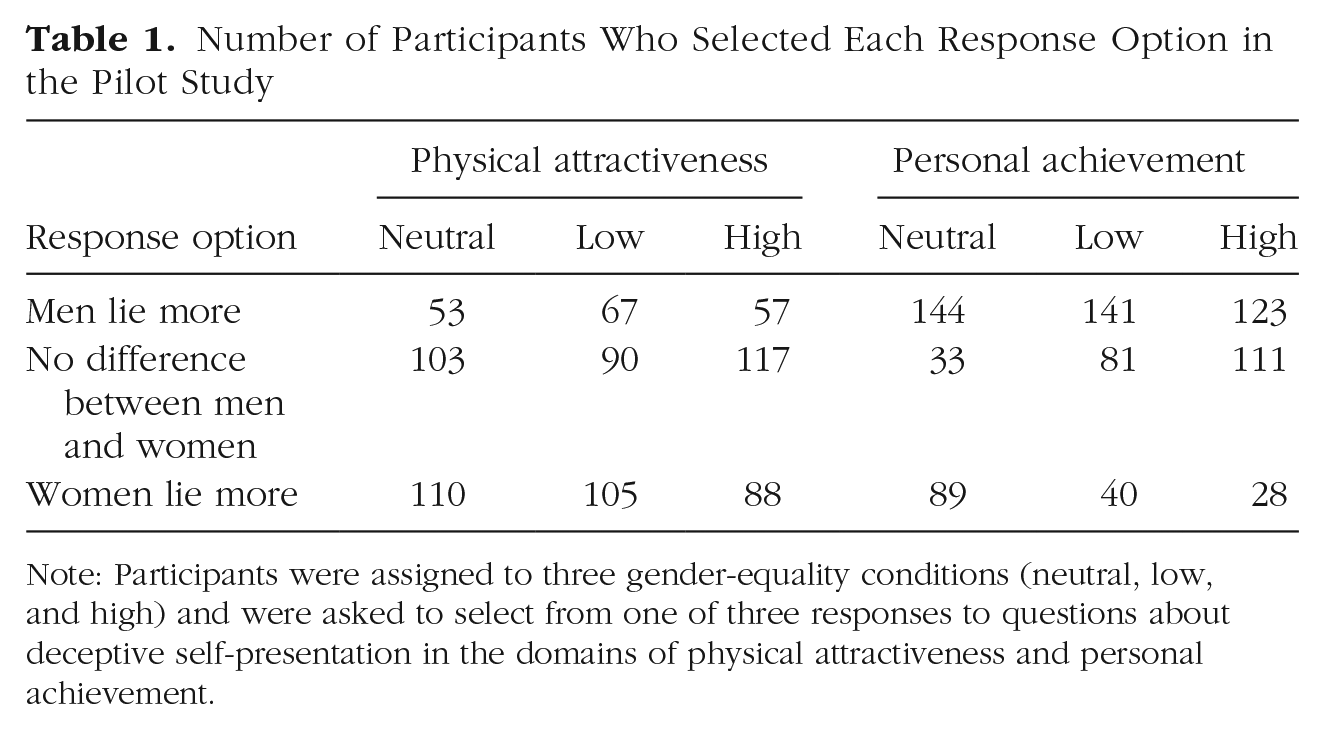
Note: Participants were assigned to three gender-equality conditions (neutral, low, and high) and were asked to select from one of three responses to questions about deceptive self-presentation in the domains of physical attractiveness and personal achievement.
Importantly, lay beliefs favored the attenuation hypothesis that the gender gap in deceptive self-presentation on social-media platforms is smaller in societies with more gender equality. Table 2 shows the results of the multinomial regressions. For physical attractiveness, χ(2, N = 524) = 5.84, p = .054, participants in the high-gender-equality condition were less likely than those in the low-gender-equality condition to believe that either men or women engage in deceptive self-presentation more and favor the option that both genders lie equally. The same held for the domain of personal achievement, χ(2, N = 524) = 8.06, p < .05. The main study tested the veracity of these lay beliefs.
Results of a Multinomial Regression Predicting Participants’ Beliefs From Gender-Equality Condition (Low vs. High) in the Pilot Study
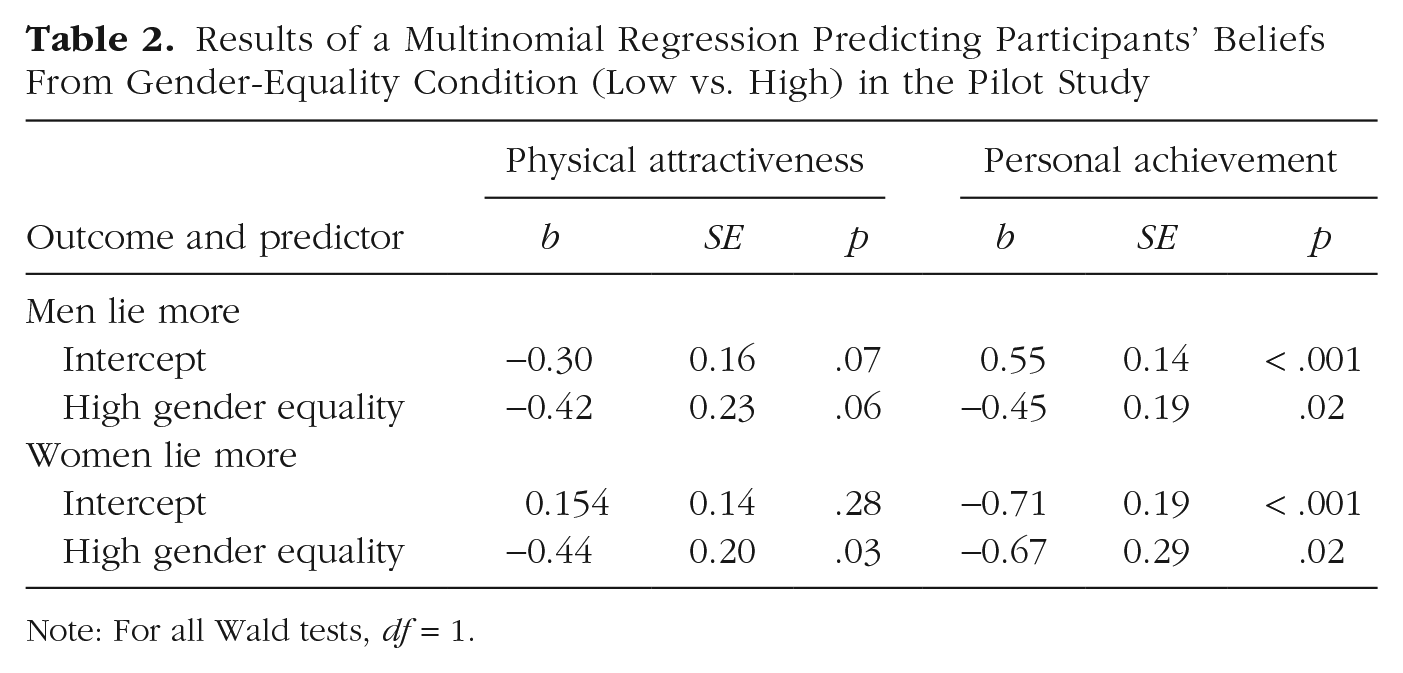
Note: For all Wald tests, df = 1.
Main Study
Cross-national sample
The data used in the main study were part of a larger project on cross-cultural differences and similarities designed by researchers from several European universities. Kantar Media group approved the study in accordance with international ethical standards of survey research. The company collected the data in 2016 through an online survey accessing participants from national panels in 25 countries. The full questionnaire, originally designed in English, was translated and back-translated into 19 languages and dialects (items with translations are in the Supplemental Material). In Australia, India, Singapore, South Africa, the United Kingdom, and the United States, the questionnaire was in English. The total sample comprised 12,257 adult participants (51% female) ranging in age from 18 to 90 years (M = 40.5 years). Participants completed the questionnaire online on a device of their own (computer, laptop, tablet, or smartphone).
Measures
Eight items measured deceptive self-presentation on social-media platforms. Items were selected from an initial pool of 29 items through a series of pretests with three distinct samples (Pretest Sample 1: 51 culturally diverse university students, Pretest Sample 2: 510 culturally diverse university students, Pretest Sample 3: 1,005 Amazon MTurk recruits who were residents of the United States). Criteria for selection were item clarity, comprehensiveness, sensitivity, frequency of occurrence, domain coverage, and face validity. Details about questionnaire construction and the item-selection process are in the Supplemental Material. Responses were made on a binary scale (yes/no) to facilitate comprehension and implementation across countries. Binary response scales prevent the common extremity and midpoint biases in cross-cultural research and minimize interpretational differences between countries (Smith & Schwartz, 1997). Table 3 lists the items.
Items Used to Measure Deceptive Self-Presentation on Social-Media Platforms in the Main Study
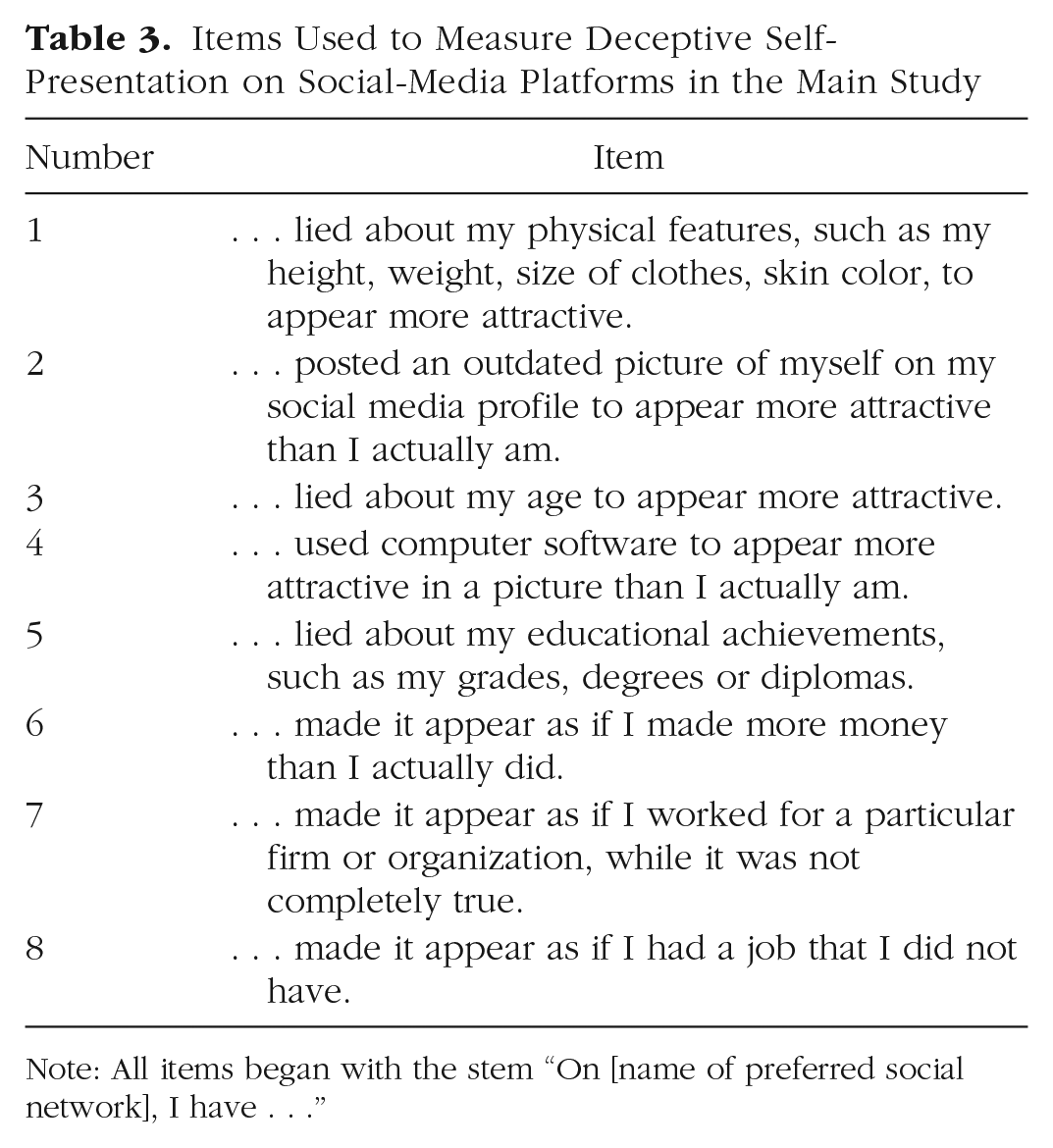
Note: All items began with the stem “On [name of preferred social network], I have . . .”
Truth-telling mechanism
Answering questions about one’s deceptive self-presentation behavior is sensitive, which might promote participants to lie when they complete the survey items. Therefore, we used the randomized-response technique (RRT; Fox & Tracy, 1986; Warner, 1965) to administer the questionnaire. RRT is a technique to encourage truthful responses. It protects people’s privacy by introducing an element of randomness in the response process, which masks the participant’s true answer to a sensitive question. The randomness is known, so the prevalence of affirming the sensitive question can be identified at the level of the sample and the population from which it is drawn. RRT has been used successfully across the social sciences and various countries (e.g., De Jong et al., 2012; Himmelfarb & Lickteig, 1982).
The RRT in our study used an electronic randomization device (an electronic spinner). Participants provided their answer to a question depending on one of two possible outcomes: The randomization device could instruct participants either to give a truthful response to a question or to give a forced “yes” answer regardless of what participants’ truthful response would be. The researcher does not know the outcomes of the randomization device but only the probability that the participant has to give a truthful response. Thus, the proportion of observed “yes” scores is equal to p1μ + (1 − p1), where μ is the true proportion of “yes” answers, p1 is the known probability that the participant has to answer the question honestly (e.g., 50%), and (1 − p1) is the known probability of a forced “yes” response (e.g., 50%). To prevent nonadherence to the response procedure, the survey software automatically selected the answer “yes” for the participant if the electronic spinner indicated a forced “yes” answer.
Items administered with randomized response constituted a block in the questionnaire, which contained item blocks for unrelated other research. At the beginning of the block, participants read a definition of social-media platforms and indicated which ones they used (if any). If they listed multiple social-media platforms, participants indicated their preferred platform (on which they posted most often). Target questions were for the preferred social-media platform. Participants without a social-media account or who never shared content on their social-media profile were excluded. Instructions for the RRT are in the Supplemental Material.
Items for the physical-attractiveness and personal-achievement domains appeared consecutively on the screen in the order shown in Table 3. The instruction was, “Please indicate which of the behaviors below you have done at least once on your preferred social network.” Participants used the electronic spinner before answering each item on the screen. Items started with the stem “On [name of preferred social network] I have . . .” and the software piped in the name of the preferred social-media platform that the participant had indicated earlier in the questionnaire.
Gender equality
We obtained a nation-level measure of gender equality from Schwartz and Rubel-Lifschitz (2009). The measure is a standardized index of three indicators of gender equality: one indicator based on averages of women’s health, education, employment, and social equality; a second indicator based on differences between men and women in income, education, and representation in government; and a third indicator based on the average number of children in families (which is believed to limit women’s resources and to be negatively correlated with women’s career opportunities). We imputed the score for United Arab Emirates, as it was unavailable in the original publication, by taking the average (−2.25) of two available scores for countries in the region (Egypt = −1.74 and Yemen = −2.75). The average score of the gender-equality measure in our sample of 25 countries was 0.02 (SD = 1.06, minimum = −2.25, maximum = 2.02); negative scores indicate larger differences in opportunities between men and women, and positive scores indicate more equal opportunities between men and women.
Control variables
We included the following control measures for participants: age, employment status (1 when employed more than 8 hr per week, 0 otherwise), relationship status (1 when in a committed relationship, 0 otherwise), education level (1 when higher education was completed, 0 otherwise), preferred social-media platform (1 when Facebook was the preferred social-media platform, 0 otherwise), and number of years using the preferred social-media platform. Facebook was the most popular platform at the time of data collection. For each of the 25 countries, we included a dummy variable indicating whether its per capita gross domestic product (GDP) was in the top 33%. Data were for 2015 in current U.S. dollars and were obtained from The World Bank (2020). Statistically controlling for this variable ensured that potential gender-equality effects were not due to GDP differences between countries.
Statistical analyses
We estimated a regression model that accounted for the specific characteristics of our data. That is, the data had a multilevel structure because individual participants in the survey (Level 1: N = 12,257) were nested in countries (Level 2: N = 25). Also, the response data were binary, because participants answered each of eight questions with “yes” or “no.” Finally, the data had a random component imposed by the RRT.
First, we used Equation 1 to infer the true proportion of deceptive self-presentation behaviors in each of the 25 countries:

where λ kj is the observed “yes” score and µ kj the true proportion of “yes” answers for item k in country j.
Second, we computed gender differences in each country, averaged across the four items within each of the two domains:

and

where λd,j,male represents the average observed proportion of deceptive self-presentation for men in country j across the items in domain d (physical attractiveness or personal achievement), whereas λd,j,female represents this value for women.
Third, we estimated a multilevel logistic RRT model to obtain gender effects and the variation in these across countries as a function of gender equality. The probability of an observed “yes” response by individual i in country j to item k is

where




The model assumes the effects of predictors to be equivalent across the four items for deceptive self-presentation in each domain d and uses the notation d(k) to indicate the domain that item k belongs to. That is, d(k) = 1 for Items 1 to 4, and d(k) = 2 for Items 5 to 8. The Level 1 model includes an intercept, individual-level variable gender, and the vector Zij with the individual-level control variables described earlier.
The Level 2 model specifies that the intercept and the gender coefficient vary across countries, whereas the coefficients for the control variables do not vary across countries. The variable GE j captures the level of gender equality in country j. The variable GDP j captures whether country j is above the sample 33rd quantile on GDP per capita in 2015. Equation 6 specifies the intercept as a function of gender equality and per capita GDP. Equation 7 specifies that the gender effect can vary as a function of gender equality. Finally, Equation 8 specifies the fixed effects of the control variables. We estimated the multilevel model simultaneously for all items within each domain.
Results
Descriptive statistics
Table 4 presents the prevalence of each of the deceptive self-presentation behaviors per country. These prevalence estimates were obtained by correcting the observed proportions (which contain added noise) for the randomized-response mechanism (Equation 1). The estimated proportion of participants who reported engaging in such behaviors ranged from a low of 5% (misrepresenting education [Item 5] or workplace [Item 7] in The Netherlands) to a high of 58% (using an outdated picture [Item 2] in China).
Prevalence of Deceptive Self-Presentation on Social-Media Platforms in the 25 Countries Analyzed in the Main Study
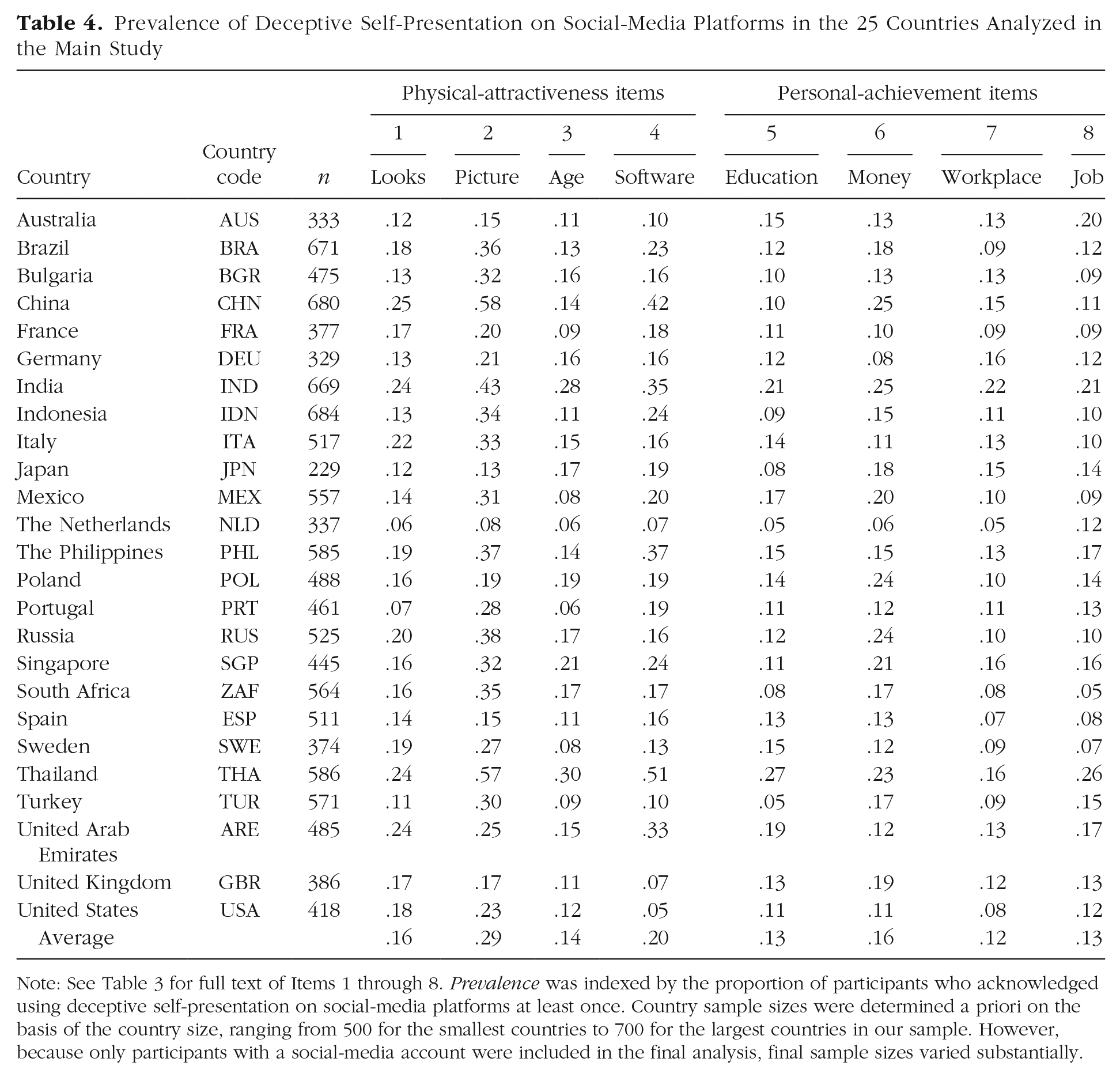
Note: See Table 3 for full text of Items 1 through 8. Prevalence was indexed by the proportion of participants who acknowledged using deceptive self-presentation on social-media platforms at least once. Country sample sizes were determined a priori on the basis of the country size, ranging from 500 for the smallest countries to 700 for the largest countries in our sample. However, because only participants with a social-media account were included in the final analysis, final sample sizes varied substantially.
The lowest level of deceptive self-presentation concerns the workplace (Item 7), for which around 12% of participants across all 25 countries reported that they deceived the employer they work for. The highest level of deceptive self-presentation globally—29%—concerns the use of an outdated picture in order to look better. Across the 25 countries, about 17% of participants in the sample reported performing each of the behaviors at least once.
To facilitate interpretation of the similarities and differences among countries, we plot average prevalence in Figure 1 across the behaviors in the two domains. In countries below the diagonal line, participants engaged in more deceptive self-presentation about physical attractiveness on social-media platforms, whereas in countries above the diagonal, deceptive self-presentation about personal achievement prevailed. The further a country is located from the diagonal, the higher the ratio of deception about physical attractiveness to deception about personal achievement. Most countries fell below the diagonal. The only two countries above the diagonal, where people practiced deception about personal achievement more than about physical attractiveness, were Australia and the United Kingdom. In The Netherlands (at the diagonal), the prevalence of deceptive self-presentation in both domains was approximately even (~7%).
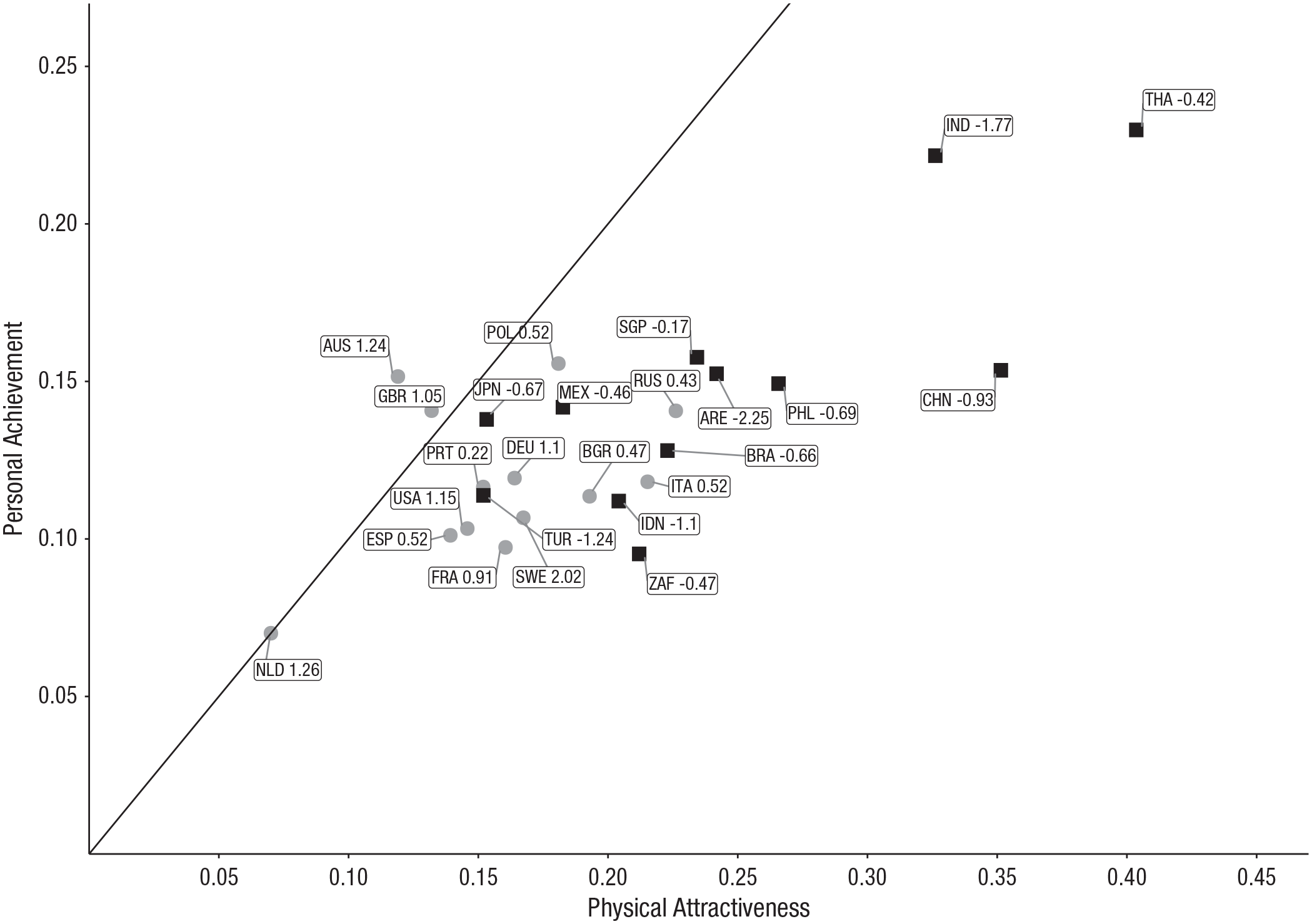
Association between average deceptive self-presentation of physical attractiveness and personal achievement across 25 countries in the main study. Each domain score is an average across the prevalence rate of the four behaviors in that domain. Countries with gender equality above the mean are designated by light-gray circles, and countries with gender equality below the mean are designated by black squares. The diagonal is the equality line where prevalence of deceptive self-presentation in the two domains is the same. For explanations of the country codes, see Table 4.
Prevalence estimates for each gender in each of the two domains (averaged across the four items per domain) are shown in Table 5. On average, the prevalence of deceptive self-presentation about physical attractiveness on social-media platforms was higher among women than men (20% vs. 18%), whereas deceptive self-presentation about personal achievement on average was higher among men than women (14% vs. 10%). However, the gender gap varied substantially across countries and ranged from 0% to 12%.
Gender Equality and Estimated Prevalence of Deceptive Self-Presentation on Social-Media Platforms in the Main Study (Averaged Across the Four Items Within Each Domain)
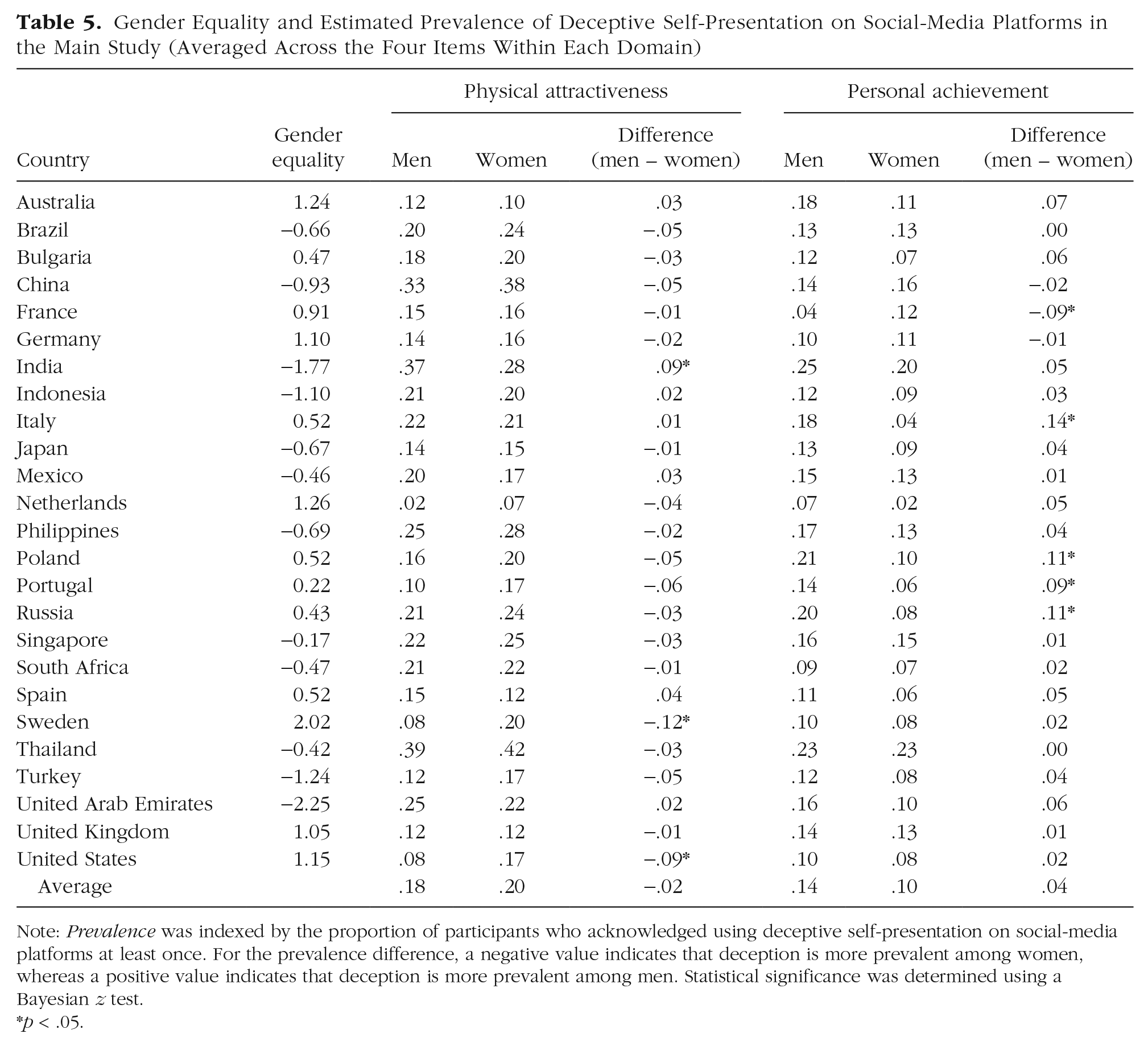
Note: Prevalence was indexed by the proportion of participants who acknowledged using deceptive self-presentation on social-media platforms at least once. For the prevalence difference, a negative value indicates that deception is more prevalent among women, whereas a positive value indicates that deception is more prevalent among men. Statistical significance was determined using a Bayesian z test.
p < .05.
If lay beliefs would be supported, gender differences should be larger for personal achievement than for physical attractiveness. In absolute values, this was indeed the case. That is, averaged across the countries, the gender gap in deceptive self-presentation about physical attractiveness on average was 2%, whereas it was 4% for deception about personal achievement (Z = 15.81, p < .001, two-tailed).
Multilevel logistic RRT model
We then formally tested our hypotheses using the model from Equations 5 to 8. Because the model likelihood is too complex to evaluate in the presence of the randomized-response mechanism, we relied on Bayesian estimation routines. We used WinBUGS software (Version 1.4.3; Lunn et al., 2000) to estimate the posterior means of the model parameters (5,000 burn-in iterations and 15,000 iterations for inference). The annotated code used in the data analysis is in the Supplemental Material. Table 6 summarizes the results.
Results of Multilevel Logistic Randomized-Response-Technique Regression for Physical Attractiveness and Personal Achievement in the Main Study
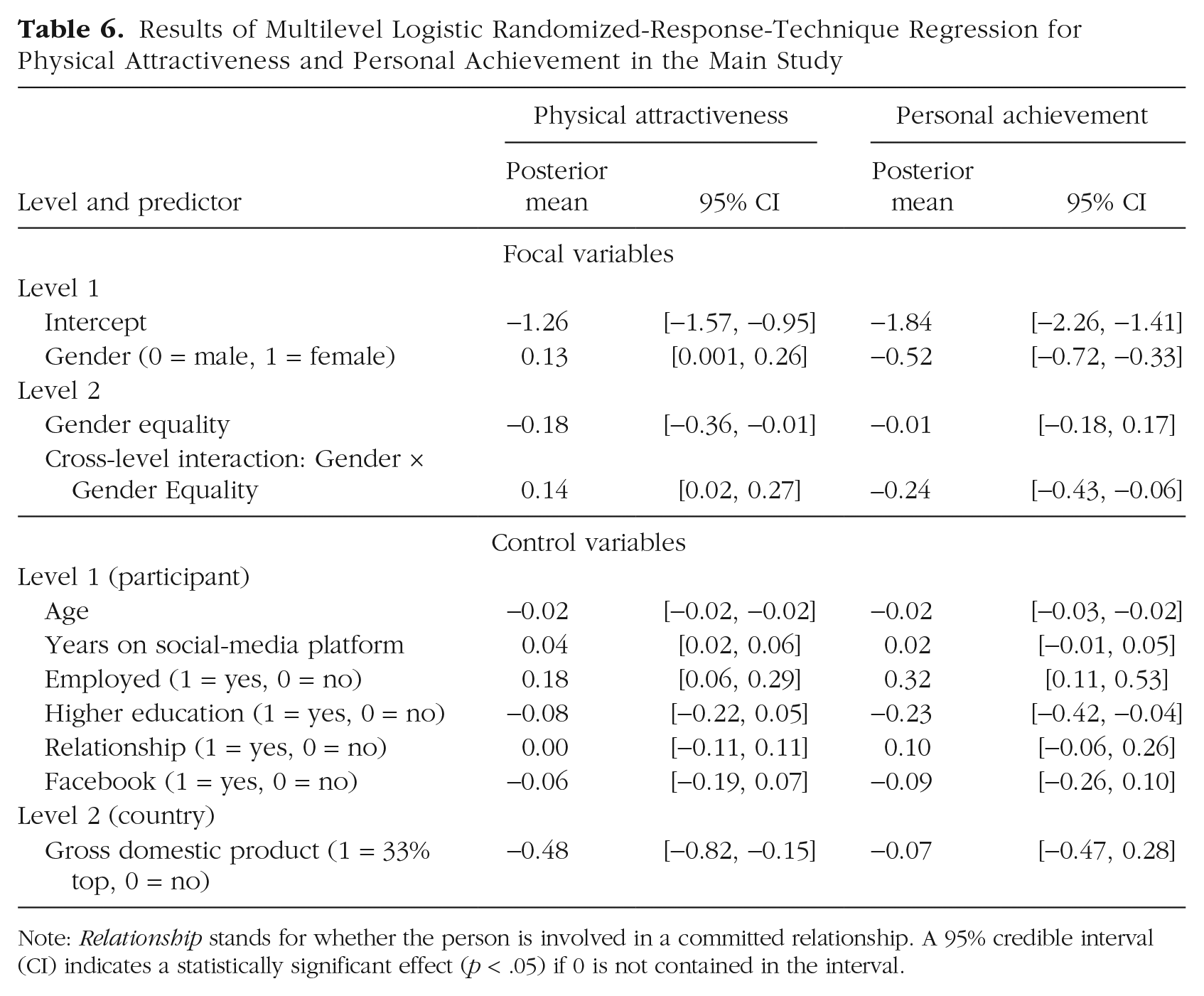
Note: Relationship stands for whether the person is involved in a committed relationship. A 95% credible interval (CI) indicates a statistically significant effect (p < .05) if 0 is not contained in the interval.
In support of Hypothesis 1, results showed that men across the 25 countries in the sample reported engaging more in deceptive self-presentation about their personal achievement than women did, whereas women reported engaging more in deceptive self-presentation about their physical attractiveness than men did.
Hypothesis 2 was supported for the physical-attractiveness domain but, surprisingly, not for the personal-achievement domain. That is, deceptive self-presentation for physical attractiveness was lower overall in countries with more gender equality, as indicated by the negative effect (−0.18). Yet the main effect of gender equality on deceptive self-presentation about personal achievement was not statistically significant.
Turning to the control variables, we found that younger and employed participants reported more deceptive self-presentation in both domains compared with older participants and those who work less than 8 hr per week. Having a social-media account for a longer period of time was associated with more deceptive self-presentation in the domain of physical attractiveness but was not associated with deceptive self-presentation in the domain of personal achievement. Participants with a higher level of education reported less deceptive self-presentation for personal achievement but reported just as much deceptive self-presentation as participants without higher education for physical attractiveness. Participants who use Facebook as their main social-media platform reported as much deceptive self-presentation as did participants who prefer other platforms. Finally, participants in a committed relationship reported as much deceptive self-presentation as single participants did.
The statistically significant positive cross-level interaction between gender equality and gender indicates that the gender gap (female–male) was in fact larger—not smaller—in countries with higher gender equality, which supports the amplification hypothesis. Zooming in on the cross-level interaction between gender and gender equality in the domain of personal achievement, we found that whereas women’s deceptive self-presentation behavior dropped with higher levels of gender equality, men’s levels of deceptive self-presentation behavior about personal achievement actually remained unchanged.
Figure 2 presents the estimates of gender differences in prevalence of deceptive self-presentation in the two domains. To facilitate interpretation, we plot the predicted values of the model for gender-equality level at 1 standard deviation above and below the sample mean. At higher levels of gender equality and for physical attractiveness, there was a larger drop for men than for women, whereas for personal achievement, there was a drop for women but not for men.
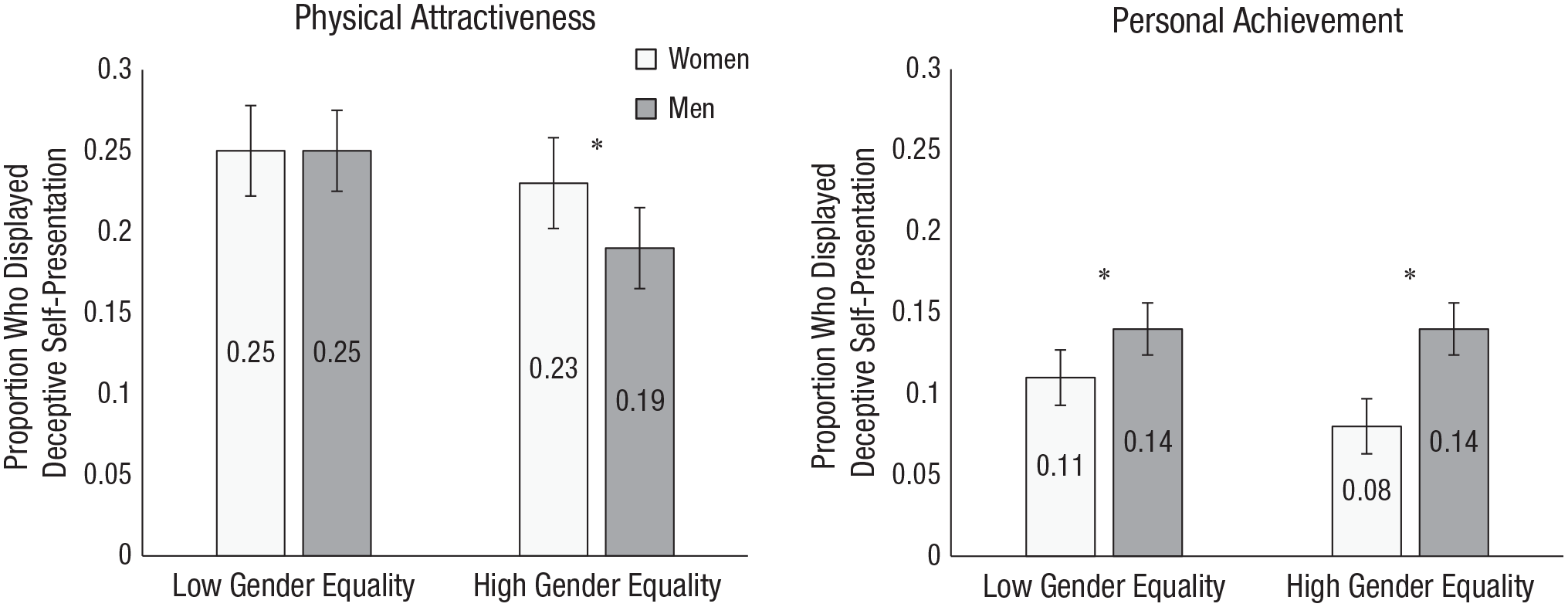
Estimated gender differences in deceptive self-presentation on social-media platforms for countries low (−1 SD) and high (+1 SD) in gender equality in the main study. Results are shown separately for the domains of physical attractiveness and personal achievement. All other variables were set to zero. An asterisk denotes a statistically significant difference between genders (p < .05). Error bars represent standard errors.
Taken together, the results provide support for Hypothesis 1—that women tend to deceive more about physical attractiveness on social-media platforms, whereas men tend to deceive more about personal achievement. The results partially support Hypothesis 2—that gender equality is associated with lower levels of deceptive self-presentation on social-media platforms. This is true for both genders in the domain of physical attractiveness and for women (but not for men) in the domain of personal achievement. In addition, the results partially support the evolutionary-mismatch perspective that in societal contexts with higher gender equality, primal gender dispositions become amplified, thereby widening the gender gap. Plots of all effect sizes are in the Supplemental Material.
Discussion
This study is the first to assess the universality of gender differences in deceptive self-presentation on social-media platforms across countries using a truth-telling mechanism to add to the veracity of participants’ responses. Data from 25 countries (N = 12,257) revealed that men and women engaged in deceptive self-presentation primarily about qualities that are traditionally important for evaluations by the opposite sex. Specifically, women were more likely to practice deception about their physical appearance on social-media platforms than men were: Average prevalence rates were 18% for men and 20% for women. In contrast, men were more likely to practice deception about their personal achievement on social-media platforms than women were: Average prevalence rates were 14% for men and 10% for women. These gender differences were partially consistent with lay beliefs and with previous research on the deceptive self-presentation strategies used by genders in mating contexts (Toma et al., 2008; Toma & Hancock, 2010; Tooke & Camire, 1991), but they went beyond these as well.
Across countries, we expected higher levels of countries’ gender equality to be associated with lower deceptive self-presentation in both domains (Hypothesis 2). Mating perspectives agree that gender differences in mating preferences, and thus in mating strategies, are contingent on the social context (Buss & Schmitt, 2019; Eagly & Wood, 2013). Our expectation was based on the idea that because gender equality is associated with more freedom in mating choices (Schmitt, 2005), the overall motivation to engage in deceptive self-presentation is reduced. Higher gender equality indeed led to lower deceptive self-presentation in the domain of physical appearance, but gender equality did not affect deceptive self-presentation in the domain of personal achievement. This is consistent with the notion that women’s preference for a partner with equal or higher access to resources remains even when women’s socioeconomic status increases (Townsend, 1989).
Further, the magnitude of gender differences in deceptive self-presentation varied with the level of gender equality in countries. Prior research has found that higher levels of gender equality and country development can sometimes amplify and sometimes attenuate gender differences in mating behavior and preferences (Schmitt, 2015). In our first study, people’s lay beliefs favored the attenuation hypothesis. In contrast, our large-scale cross-national study supported the amplification of gender differences because of higher levels of national gender equality. Specifically, our data indicated that with higher gender equality, the prevalence of gender-atypical deceptive self-presentation dropped more sharply than the prevalence of gender-typical deceptive self-presentation did. That is, the drop in deceptive self-presentation about physical attractiveness associated with gender equality was significantly larger for men than for women. The reverse pattern emerged for deceptive self-presentation about personal achievement: The drop in countries with high gender equality was large for women, but there was no significant drop for men.
The findings are consistent with the notion that gender equality does not make gender differences larger or smaller but that it facilitates the expression of ingrained gender predispositions (Schmitt et al., 2008; Schwartz & Rubel-Lifschitz, 2009). That is, whether gender differences are larger or smaller depends on whether lack of gender equality suppresses or enhances gender differences for a specific behavior. In the case of deceptive self-presentation on social-media platforms about one’s physical attractiveness and personal achievement, it appears that lack of gender equality enhances gender-atypical lies. In other words, a more restrictive mating environment forces people to engage in deceptive self-presentation even in the domains that are less central for them in mating competition from an evolutionary perspective, and gender gaps are attenuated. Further research could examine whether the same pattern holds for other deceptive self-presentation strategies (Tooke & Camire, 1991) specific to either intrasexual or intersexual competition, such as deceptive self-presentation about one’s promiscuity as opposed to one’s committed relationships.
It is important to note that higher gender equality was associated with lower deceptive self-presentation on social-media platforms in the domain of physical attractiveness for men and women worldwide, potentially decreasing the negative effects of social-media consumption on body satisfaction and body image (Fardouly & Vartanian, 2015). Furthermore, gender differences in the prevalence of deceptive self-presentation across the globe were statistically significant but not very large in an absolute sense (2% difference for physical attractiveness and 4% difference for personal achievement). This might be due to changes in labor division worldwide. Eagly and Wood (2013) proposed that because of higher involvement of women in the workforce, men in recent years have been placing more value on their mate’s financial prospects, whereas women find the mate’s physical appearance more important.
Our study addressed calls to examine how the Internet and online behavior in general shape social life and “may change our mating psychology in many ways” (Buss & Schmitt, 2019, p. 104). Future cross-national research could compare our estimates of deceptive self-presentation on social-media platforms with the deceptive self-presentation rates of comparable off-line behaviors, such as résumé tampering or the purchase of imitation brands. Higher deceptive self-presentation rates on online social-media platforms than in off-line behavior could support the prediction of matching theories that exposure to a larger number of successful and attractive peers on social-media platforms can decrease satisfaction with oneself (Li et al., 2018) and thereby stimulate a need to engage in deceptive self-presentation.
Supplemental Material
sj-docx-1-pss-10.1177_09567976211016395 – Supplemental material for Gender Gaps in Deceptive Self-Presentation on Social-Media Platforms Vary With Gender Equality: A Multinational Investigation
Supplemental material, sj-docx-1-pss-10.1177_09567976211016395 for Gender Gaps in Deceptive Self-Presentation on Social-Media Platforms Vary With Gender Equality: A Multinational Investigation by Dasha Kolesnyk, Martijn G. de Jong and Rik Pieters in Psychological Science
Footnotes
Acknowledgements
We thank two anonymous reviewers for their insightful comments and suggestions, which helped us to improve this article.
Transparency
Action Editor: Steven W. Gangestad
Editor: Patricia J. Bauer
Author Contributions
All the authors jointly developed the study concept and study design. Data collection was supervised by D. Kolesnyk and M. G. de Jong. D. Kolesnyk analyzed the data under the supervision of M. G. de Jong. D. Kolesnyk wrote the manuscript with input from both M. G. de Jong and R. Pieters. All authors approved the final version of the manuscript for submission.

Notes
References
Supplementary Material
Please find the following supplemental material available below.
For Open Access articles published under a Creative Commons License, all supplemental material carries the same license as the article it is associated with.
For non-Open Access articles published, all supplemental material carries a non-exclusive license, and permission requests for re-use of supplemental material or any part of supplemental material shall be sent directly to the copyright owner as specified in the copyright notice associated with the article.
