




Abstract
Adverse effects following acute stress are traditionally thought to reflect functional impairments of central executive-dependent cognitive-control processes. However, recent evidence demonstrates that cognitive-control application is perceived as effortful and aversive, indicating that stress-related decrements in cognitive performance could denote decreased motivation to expend effort instead. To investigate this hypothesis, we tested 40 young, healthy individuals (20 female, 20 male) under both stress and control conditions in a 2-day study that had a within-subjects design. Cognitive-effort avoidance was assessed using the demand-selection task, in which participants chose between performing low-demand and high-demand variants of a task-switching paradigm. We found that acute stress indeed increased participants’ preference for less demanding behavior, whereas task-switching performance remained intact. Additional Bayesian and multiverse analyses confirmed the robustness of this effect. Our findings provide novel insights into how stressful experiences shape behavior by modulating our motivation to employ cognitive control.
Under stressful circumstances, people often fall short of their cognitive capabilities, which, of course, can carry numerous adverse consequences, such as being unable to maintain healthy lifestyle choices (Schneiderman et al., 2005) or underperforming in the decisive moment of an important competition (Yu, 2015). Indeed, a large body of work reveals that important cognitive capacities such as learning, memory, and decision-making are diminished by acute stress (Nitschke et al., 2020; Porcelli & Delgado, 2017; Schwabe & Wolf, 2013; Wirz et al., 2018), possibly because of a more fundamental stress-induced impairment to constituent cognitive processes, including working memory and set shifting (Bogdanov & Schwabe, 2016; Shields et al., 2016). Integrating these observations across behavioral repertoires, recent accounts have proposed that acute stress results in a shift away from flexible, effortful behavior toward more primitive and rigid, but less cognitively demanding, forms of control (Otto et al., 2013; Schwabe & Wolf, 2013; Wirz et al., 2018). Relatedly, it has been argued that, neurally, acute stress triggers a reallocation of resources from the executive control network to the salience network, which (temporarily) impairs cognitive performance (Hermans et al., 2014). By and large, these accounts emphasize the direct effect of stress on executive-dependent cognitive processing.
Interestingly, the burgeoning cognitive-effort literature suggests that cognitive performance is a function not only of processing ability but also of our decision to exert cognitive effort, which is in turn governed by a cost-benefit analysis that weighs the perceived costs of allocating—or intensifying—cognitively demanding processing against its anticipated benefits (Inzlicht et al., 2018; Kool & Botvinick, 2018). Highlighting this point, prior work indicates that when given the choice, individuals typically prefer to avoid cognitively effortful courses of action (Kool et al., 2010) and will even forgo monetary rewards to avoid expending effort (Chong et al., 2017; Westbrook et al., 2013). This research points to the intriguing possibility that acute stress might prompt a withdrawal of cognitively effortful processing, over and above any stress-evoked impairments to cognitive processing itself. This could explain why stress reduces our reliance on costly, central executive-dependent forms of behavior (Otto et al., 2013; Shields et al., 2016).
Indeed, the idea that stress reduces the perceived value of cognitive-resource expenditure has received attention in past influential accounts of human performance under stressful circumstances (Hockey, 1997) and dovetails with animal work revealing that rodents, when stressed, choose to forgo larger rewards in order to avoid physically effortful behavior (Bryce & Floresco, 2016; Shafiei et al., 2012). Although compelling, the idea that acute psychosocial stress could diminish people’s motivation to exert cognitive effort has not been directly tested. This may be because of the difficulty of empirically distinguishing between a stress-evoked processing impairment and a stress-evoked withdrawal of processing resources, given that task performance in many cases reflects not only an individual’s cognitive ability but also the—possibly volitional—decision to allocate effort in the first place (Shenhav et al., 2017).
Here, we sought to directly test the hypothesis that stress increases our aversion to cognitively demanding behaviors by manipulating acute psychosocial stress using the Trier Social Stress Test (TSST; Kirschbaum et al., 1993) and subsequently measuring participants’ tendency to avoid cognitively effortful courses of action using a well-characterized effort-preference task termed the demand-selection task (DST; Kool et al., 2010). In the DST, participants make recurring choices between two options associated with two different cognitive-demand levels (see Fig. 1a), operationalized as higher versus lower probability of switching between two simple tasks. More frequent switches of the to-be-performed task require participants to flexibly alternate between task rules, so they demand greater sustained investment of cognitive effort (Liu & Yeung, 2020). Under normal circumstances, individuals reliably gravitate to the low-demand option in the DST (Kool et al., 2010; Patzelt et al., 2019), indicating a general or default preference for less cognitively effortful courses of action.
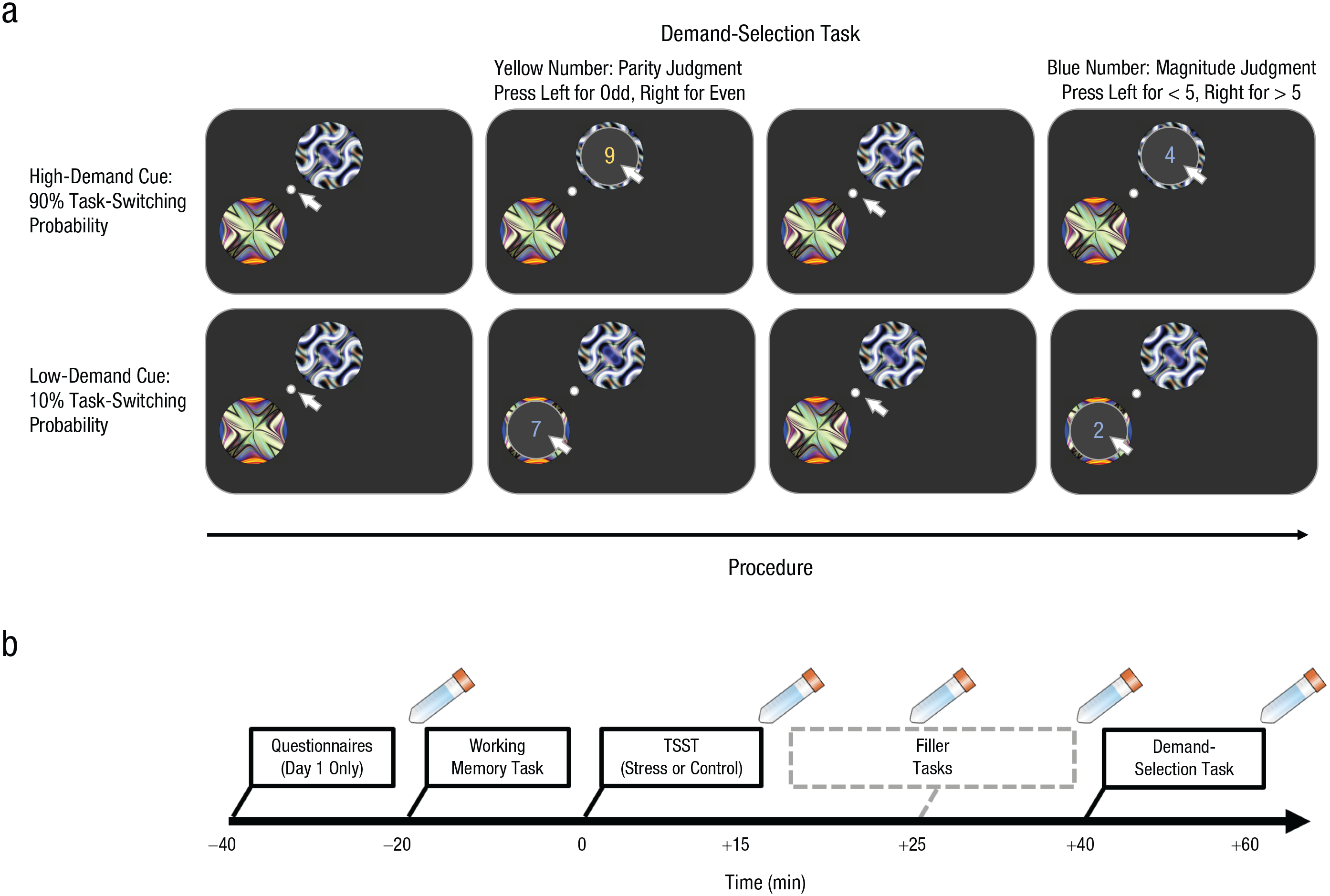
Demand-selection task and experimental procedure. In each trial of the demand-selection task (a), participants choose one of two pattern cues. Selecting a cue reveals a random number (range = 1–4 and 6–9) presented in either yellow or blue. Participants then judge the number’s parity (yellow: whether the number is odd or even) or magnitude (blue: whether the number is larger or smaller than 5). The pattern cues differ in the probability with which participants must switch subtasks. Choosing the high-demand cue will result in a task-switching probability of .9, whereas choosing the low-demand cue will result in a task-switching probability of .1. The experimental procedure (b) was identical across both testing days, except that questionnaires were administered only on Day 1. Stress measurements were taken at baseline and at several time points throughout the experiment (timings are relative to stress onset). An additional measurement of blood pressure and heart rate was taken during the Trier Social Stress Test (TSST).
Accordingly, we predicted that if stress engenders a withdrawal of effort—either by increasing the subjective costs or decreasing the perceived benefits of exerting cognitive effort—we should observe an even stronger demand-avoidance effect in the stress condition relative to the control condition. Importantly, because there are no reward incentives tied to choices or performance, the DST affords a relatively pure assessment of the effects of stress on effort avoidance, independently of its documented effects on reward sensitivity (Porcelli & Delgado, 2017; Raio et al., 2020). Finally, given the small number and overall heterogeneous findings of studies investigating stress effects on cognitive flexibility in general and task switching in particular (Goldfarb et al., 2017; Kofman et al., 2006; Plessow et al., 2012; Shields et al., 2016), we made no strong prediction concerning the effect of stress on performance under either demand level in the task-switching part of the DST. However, the task-switching measures collected allowed for fine-grained exploratory analyses of how measures of task performance (e.g., response times and accuracy rates) relate to individual levels of effort-avoidant preferences.
Statement of Relevance
Stressful experiences are ubiquitous and play a prominent role in our daily lives. Previous research has shown that acute psychosocial stress may reduce our ability to act in a flexible, goal-directed manner. Although this is often attributed to stress-related functional impairments of fundamental cognitive-control processes, here we examined the possibility that these presumed stress-evoked deficits might also reflect aversion to expenditure of mental effort. Letting participants choose between performing a high- or low-demand task-switching paradigm under both stress and control conditions, we found that stress indeed increased effort avoidance, demonstrated by a stronger preference for the low-demand task. To ensure the validity of this result, we performed additional analyses, which revealed that the results were unaffected by changes in the analytical procedures. Our findings further our understanding of how stress affects motivated behavior, which may inform novel approaches to mitigating its debilitating consequences in both health and disease.
Method
Participants
Forty young, healthy volunteers from the McGill University community participated in this study (20 female; age: M = 23.47 years, SD = 2.93, range = 18–30 years). Given lack of prior work investigating effects of stress (or other within-subjects manipulations) on effort avoidance in the DST, we had little basis for computing an expected effect size, and accordingly, our sample size was selected to mirror those used in previous within-subjects studies investigating stress-induced changes in related cognitive functions (Goldfarb et al., 2017; Luettgau et al., 2018; Radenbach et al., 2015). Data collection terminated when we had reached our prespecified target of 40 participants.
Individuals were excluded from participation if they met any of the following criteria: any acute illnesses or a lifetime history of psychiatric or neurological conditions, current use of medication, drug abuse, smoking, extreme body mass index (in this sample: M = 22.52, SD = 2.88, range = 17.6–29), and the presence of current stressful life events. Female participants were not tested during their menses and excluded from participation if they took hormonal contraceptives or were pregnant. Participants were asked to refrain from physical exercise and from consuming food or caffeinated drinks 2 hr before testing. All participants provided written informed consent prior to the study and received monetary compensation ($53.00 Canadian) on completion of both testing days. The experiment was carried out in accordance with the Declaration of Helsinki and was approved by the McGill Research Ethics Board.
After evaluating participants’ task-switching performance in the DST in both the stress and control conditions, we found that two participants demonstrated accuracy rates around chance level on both testing days (control: 53% and 48%, stress: 48% and 49%). These individuals were thus excluded from all subsequent analyses involving the DST, leaving a total sample of 38 participants.
Stress induction
We used a 2-day, crossover within-subjects design in which all participants experienced both stress and control conditions. The order of the experimental conditions was pseudorandomized across participants, so that 20 participants (10 female) underwent the stress manipulation on Day 1, whereas the other 20 participants experienced stress on Day 2, allowing us to mitigate the influence of interindividual differences in stress reactivity and cognitive performance that might occur in between-subjects designs. We induced acute stress using the TSST (Kirschbaum et al., 1993), a stress-induction technique shown to reliably increase subjective, physiological, and neuroendocrine stress markers. The stress condition of the TSST mimics a job interview in which participants give an impromptu speech about personal characteristics qualifying them for a self-chosen profession and perform a difficult arithmetic task in front of a panel of two neutral, nonreinforcing confederates (for more details, see Kirschbaum et al., 1993). In the control condition, participants speak about a self-chosen topic and perform a simple counting task in an otherwise empty room. Both conditions are matched with respect to timing and take participants 15 min to complete.
The effectiveness of the TSST was evaluated by several physiological and subjective stress measures. To obtain salivary cortisol concentrations, we collected saliva samples using Salivette collection devices (Sarstedt, Nümbrecht, Germany), which were then stored at −18° C and analyzed at the laboratory for Biological and Clinical Psychology at the University of Trier using a luminescence immunoassay. Additionally, we measured systolic and diastolic blood pressure as well as heart rate using a digital blood pressure monitor (Sejoy BP-103H, Hangzhou, China). Measurements were taken from the left arm with participants standing upright to ensure comparability across time points. Finally, subjective stress experience was assessed with the Positive and Negative Affect Schedule (Watson et al., 1988) and a short questionnaire in which participants rated the unpleasantness, difficulty, and stressfulness of the TSST on a scale from 0 (not at all) to 100 (very much) immediately after completing the respective condition. Stress measurements were taken at several time points over the course of the experiment: at baseline (before the working memory task), immediately after TSST completion, and 15, 25, 40, and 60 min after stress onset. An additional blood pressure measurement was taken during the TSST between the oral presentation and the arithmetic task (see Fig. 1b).
Demand-selection task
In the DST, which closely followed the setup of Experiment 3 in the study by Kool et al. (2010), participants are presented with two visually distinct patterned cues on a computer screen (see Fig. 1a). Selecting a cue will reveal a random number (range = 1–4 and 6–9) presented in either yellow or blue. Depending on its color, participants then judge the number’s parity (yellow: whether the number is odd or even) or magnitude (blue: whether the number is larger or smaller than 5). Unbeknownst to participants, the cues differ in their likelihood with which they require participants to switch between magnitude and parity judgments: One cue corresponds to a task-switching probability of .9, whereas the other cue corresponds to a switch probability of .1. Participants are neither rewarded for good performance nor receive any potentially rewarding performance-related feedback during the task. Thus, preferences for the low-demand cue should primarily result from aversion to cognitive effort (Patzelt et al., 2019). Here, the mapping of visual cue to demand level remained constant within participants but was counterbalanced across participants. Participants selected their preferred cue by moving the mouse cursor and judged parity or magnitude by pressing the left or right mouse button. The DST was programmed using the Psychophysics Toolbox (Kleiner et al., 2007) for MATLAB (The MathWorks, Natick, MA). Overall, it took participants roughly 20 min to complete the 300 trials of the task.
Procedure
Participants visited the lab on 2 days, 7 days apart. To reduce the influence of circadian fluctuations on cortisol levels, we conducted testing exclusively between 1:30 p.m. and 6:30 p.m. Apart from participants providing informed consent and completing several questionnaires on Day 1 (see the Supplemental Material available online), the overall procedures were identical on both testing days. First, participants completed an automated operation-span task (Unsworth et al., 2005) to assess baseline working memory capacity before they were exposed to either the stress or control condition of the TSST in a separate room. To ensure elevated cortisol levels at the time of the DST, we had participants complete a filler task unrelated to the current study. The DST was administered approximately 40 min after the start of the TSST. At the end of their second session, participants were thoroughly debriefed and compensated for their participation.
Data analysis
Subjective and physiological stress parameters were analyzed using a mixed-design analysis of variance with time point of measurement and TSST condition as within-subjects factors and session order (i.e., whether participants experienced stress on Day 1 or on Day 2) as a between-subjects factor. Significant interactions were pursued using Bonferroni-corrected post hoc tests. We analyzed DST choices using mixed-effects logistic regression with the lme4 package (Version 0.999375-32; Bates & Maechler, 2009) in the R programming environment (Version 3.6.2; R Core Team, 2019). These regressions predicted low-demand choices as a function of stress condition, block number, and session order, all taken as both fixed and random effects (across participants). We analyzed performance in the task-switching component of the DST using mixed-effects regressions to predict accuracy and correct reaction times (RTs) as a function of trial type (switch vs. repeat), demand level (low vs. high), stress condition, block number, and session order, all taken as fixed and random effects. RTs were log-transformed prior to analysis, and trials with outlier RTs (outside ±3 SD) in the task-switching paradigm were excluded, resulting in an average of 9.5 excluded trials per participant across both days (1.4% of all trials).
Results
Physiological and subjective response to stress
Both subjective and physiological data confirmed that the TSST successfully induced acute stress: Participants rated the stress condition to be significantly more difficult, t(38) = 7.86, p < .001, d = 1.26; more unpleasant, t(38) = 8.26, p < .001, d = 1.32; and more stressful, t(38) = 9.17, p < .001, d = 1.47, than the control condition. More importantly, we found that the TSST increased participants’ cortisol response selectively in the stress condition—Stress × Time interaction: F(4, 152) = 9.56, p < .001, ηG² = 0.027 (see Fig. 2). As expected, salivary cortisol levels were comparable across both days at baseline (post hoc test: p = .69) and immediately after the TSST (post hoc test: p = .63) but significantly higher in the stress condition compared with the control condition at 25 min (post hoc test: p = .002), 40 min (post hoc test: p < .001), and 60 min (post hoc test: p < .001) after stress onset. Successful stress induction was further corroborated by changes in cardiovascular responses and self-reported affect. Critically, we did not find any effects of session order on these measures, suggesting that the stress-inducing effects of the TSST were independent of whether participants experienced the control or stress condition first (with the exception of the positive-affect scale in the Positive and Negative Affect Schedule; see the Supplemental Material).
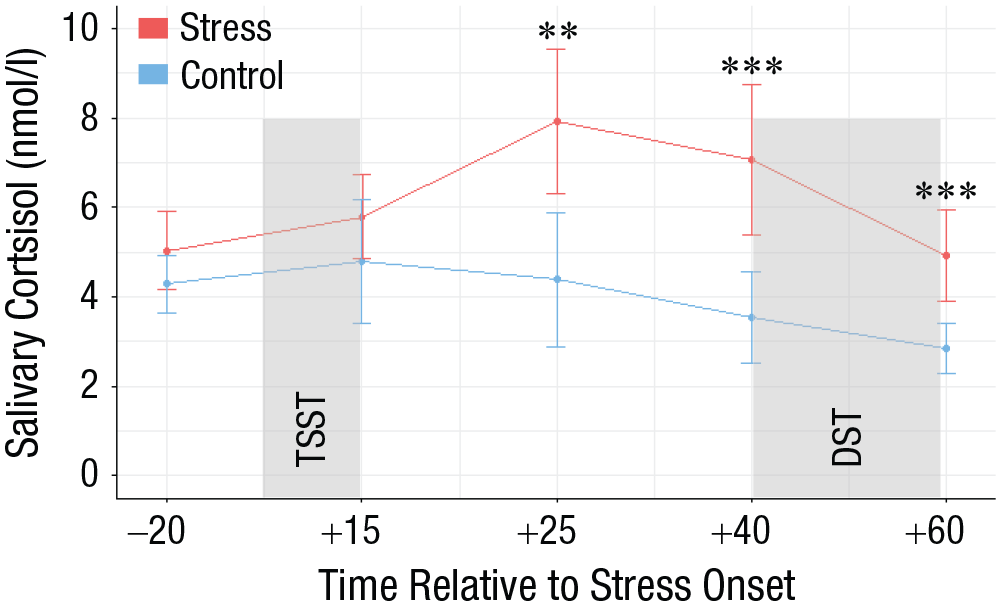
Mean salivary cortisol level at each time point (relative to stress onset), separately for the stress and control conditions. The time frames during which the Trier Social Stress Test (TSST) and the demand-selection task (DST) were administered are highlighted in gray. Error bars indicate 95% confidence intervals. Asterisks indicate time points at which between-conditions differences were significant (**p < .01, ***p < .001).
Acute stress and demand avoidance
Echoing previous work (Kool et al., 2010; Patzelt et al., 2019), results showed that, overall, participants preferred the low-demand option on both sessions, but more interestingly, acute stress increased participants’ preferences for effort avoidance (see Fig. 3), as evidenced by a larger percentage of low-demand choices in the stress condition (M = 61.53%, SD = 16.47) than in the control condition (M = 56.16%, SD = 16.30). Statistically, a mixed-effects logistic regression revealed a significant main effect of stress on low-demand choice rates (p = .034; for full coefficient estimates, see Table 1). This preference persisted over the course of the experiment (main effect of block: p = .858; Condition × Block interaction: p = .072), after analyses controlled for session order.
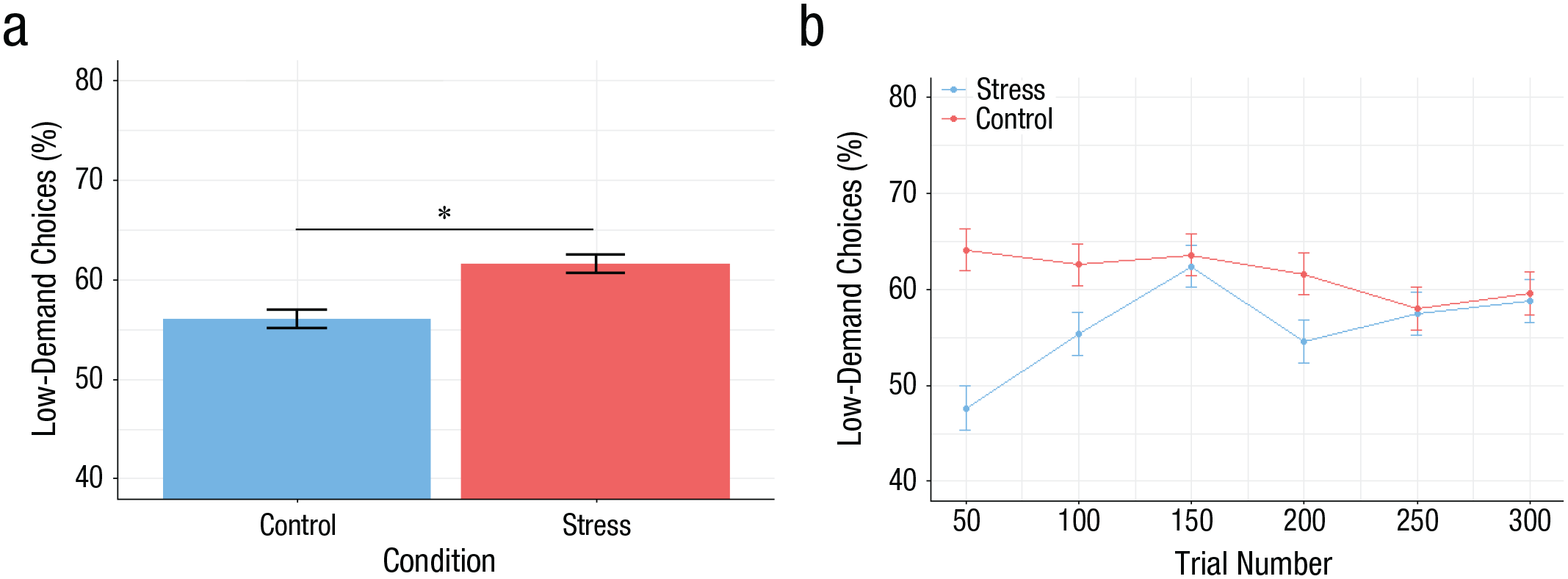
Percentage of participants in the stress and control conditions who made low-demand choices in the demand-selection task, both (a) collapsed across all trials and (b) as a function of trial number. The asterisk indicates a significant between-conditions difference (p < .05). Error bars indicate 95% confidence intervals.
Results of a Mixed-Effects Logistic Regression Predicting Low-Demand Choices in the Demand-Selection Task From Experimental Condition, Block, and Session Order
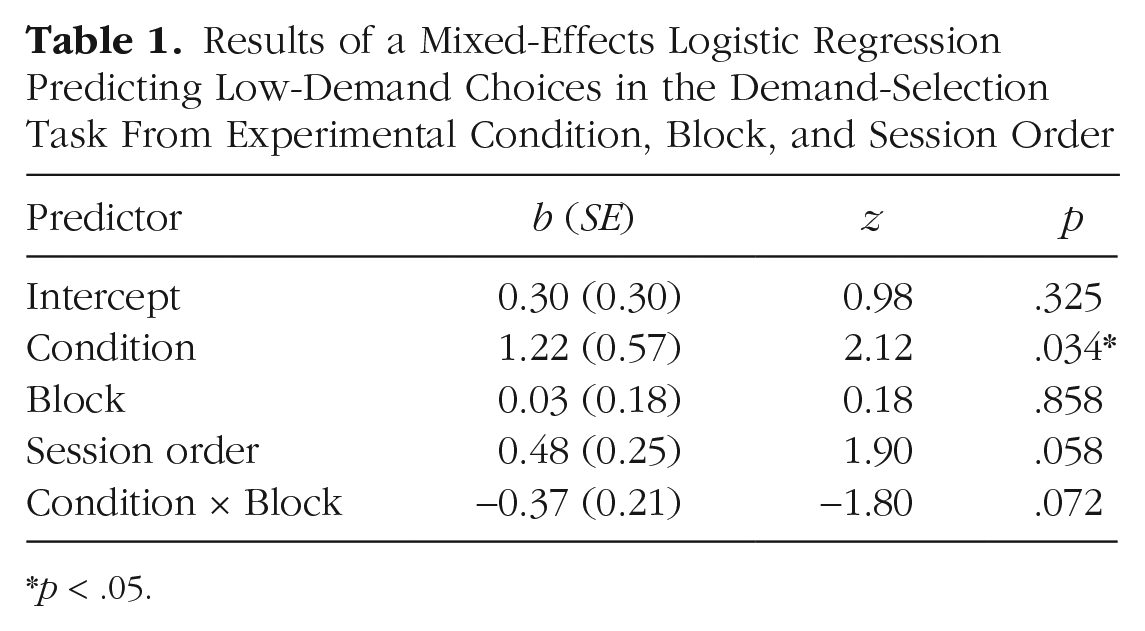
p < .05.
Given the modest statistical support for the main effect of stress, we conducted a number of additional analyses to confirm the robustness of this effect (we summarize the results of these additional measures here; for a more detailed account, see the Supplemental Material). First, to assess the extent to which the statistical significance of the stress effect depended on analysis decisions such as exclusion criteria and regression-model specifications, we estimated a total of 207 unique mixed-effects logistic regressions, systematically varying participant-level and trial-level exclusion criteria as well as the fixed- and random-effects structure of the model (for a full overview, see Table S2 in the Supplemental Material). Importantly, across these resultant models, p values for the main effect of condition (i.e., stress) ranged from less than .001 to .090 (median p = .040), suggesting that the observed stress effect is robust to analysis choices.
Second, using Bayesian regression to estimate the posterior distributions for the stress effect, we found that the vast majority of the effect estimates fell above 0 (βcondition: M = 0.88, 95% confidence interval = [0.05, 1.70]; for full posterior estimates, see Table S1 in the Supplemental Material), further lending credence to the relationship between stress and effort aversion. Further, we calculated an evidence ratio indicating the relative likelihood of two possible hypotheses (here, alternative hypothesis: βcondition > 0 and null hypothesis: βcondition < 0), finding an evidence ratio of 53.790, which we take as strong evidence in favor of a stress-induced increase in effort avoidance. Taken together, these additional analyses further bolster our key result: Acute psychosocial stress appeared to intensify participants’ aversion to cognitively effortful activity in this study.
Relationships between acute stress, task-switching performance, and demand avoidance
We also examined the possibility that stress impaired cognitive flexibility more generally, which would manifest in worse task-switching performance. As expected, participants were more accurate on repeat trials compared with switch trials (p = .032; repeat: M = 91.40%, SE = 0.24; switch: M = 89.60%, SE = 0.31; for full regression coefficients, see Table 2), but overall accuracy did not differ significantly between stress and control conditions (p = .743; control: M = 90.30%, SE = 0.28; stress: M = 90.90%, SE = 0.27) or between demand levels (p = .394; low demand: M = 91.30%, SE = 0.25; high demand: M = 89.60%, SE = 0.32). Importantly, stress did not modulate the accuracy difference between repeat and switch trials (Condition × Trial Type: p = .192), which provides evidence against the possibility that increased effort aversion under stress was simply caused by a desire to avoid more errors.
Results of a Mixed-Effects Logistic Regression Predicting Task-Switching Accuracy in the Demand-Selection Task From Experimental Condition, Trial Type, Demand Level, Block, and Session Order
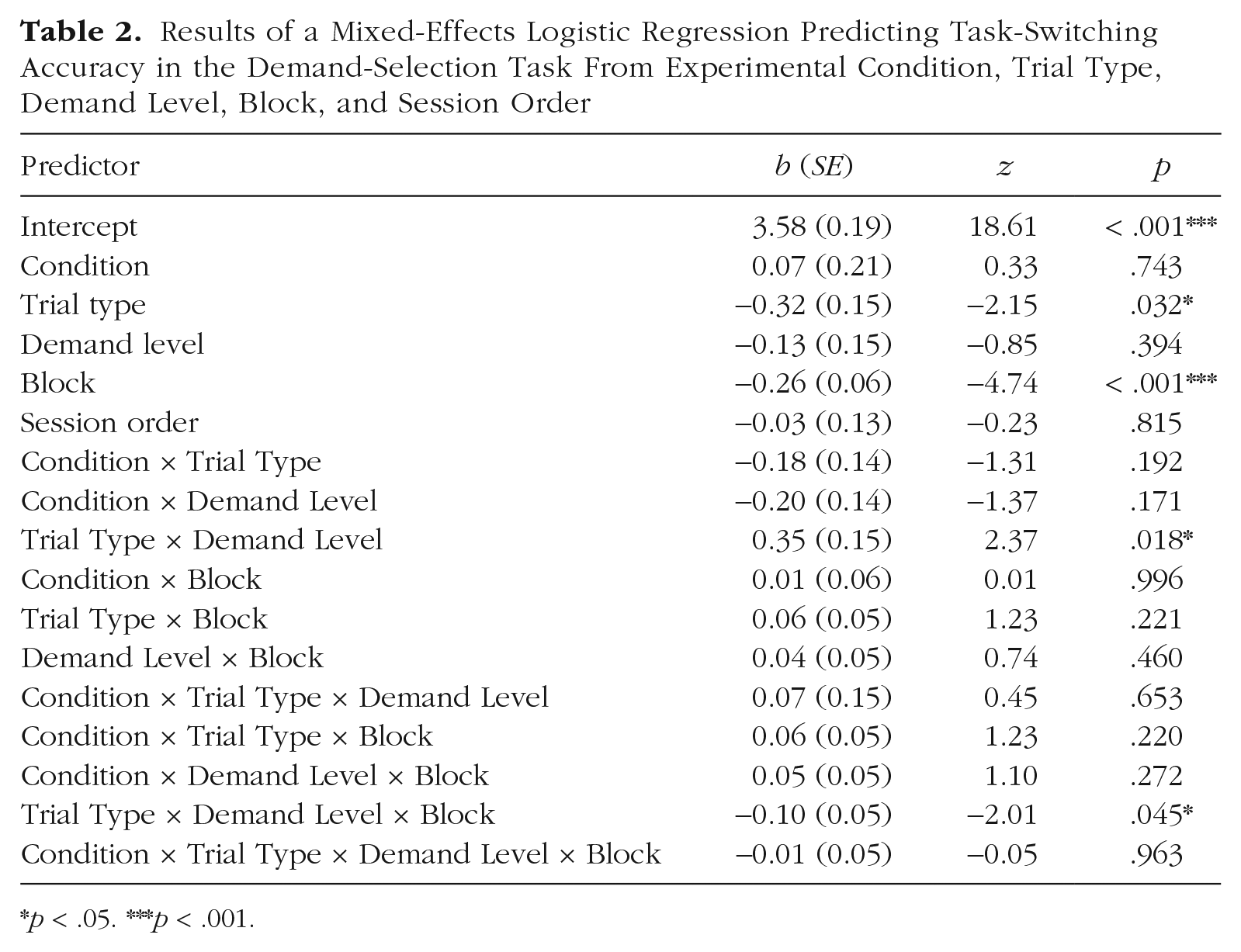
p < .05. ***p < .001.
Examining correct RTs (see Fig. 4), we found that across demand levels, participants were slower overall on task switches compared with task repetitions (main effect of trial type: p < .001; repeat: M = 978.00 ms, SE = 7.66; switch: M = 1,270.00 ms, SE = 10.80; see Table 3), echoing typical task-switching costs (Monsell, 2003). Overall RTs were slower in high-demand trials compared with low-demand trials (main effect of demand level: p = .034), and we also observed a significant Trial Type × Demand Level interaction (p = .005), indicating that RT switch costs were smaller in high- than in low-demand trials. This overall slowing was driven chiefly by RTs in repeat trials (low demand: M = 982.27 ms, SE = 47.98; high demand: M = 1,215.58 ms, SE = 85.48), t(74) = 2.38, p = .020, d = 0.53, mirroring work finding that higher task-switch probabilities engender slower RTs, particularly on task repetitions (Dreisbach & Haider, 2006), owing to an increased demand for effortful-control processes required when switches are expected to be frequent as opposed to rare (Liu & Yeung, 2020; Monsell & Mizon, 2006).
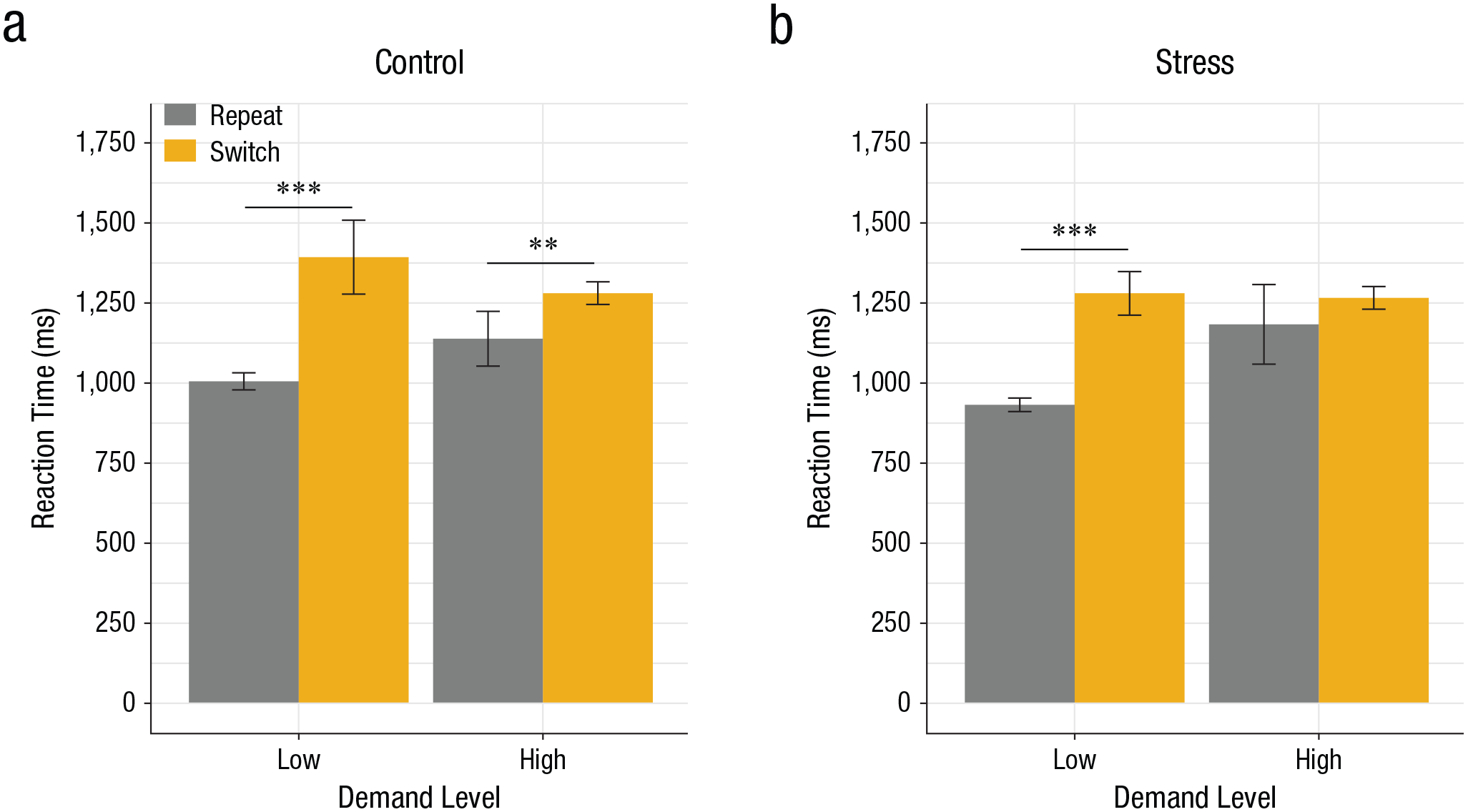
Mean reaction time in repeat and switch trials at each demand level in the task-switching paradigm, separately for the (a) control and (b) stress conditions. Asterisks indicate significant differences between reaction times in the two trial types (**p < .01, ***p < .001). Error bars indicate 95% confidence intervals.
Results of a Mixed-Effects Linear Regression Predicting Task-Switching Reaction Time in the Demand-Selection Task From Experimental Condition, Trial Type, Demand Level, Block, and Session Order
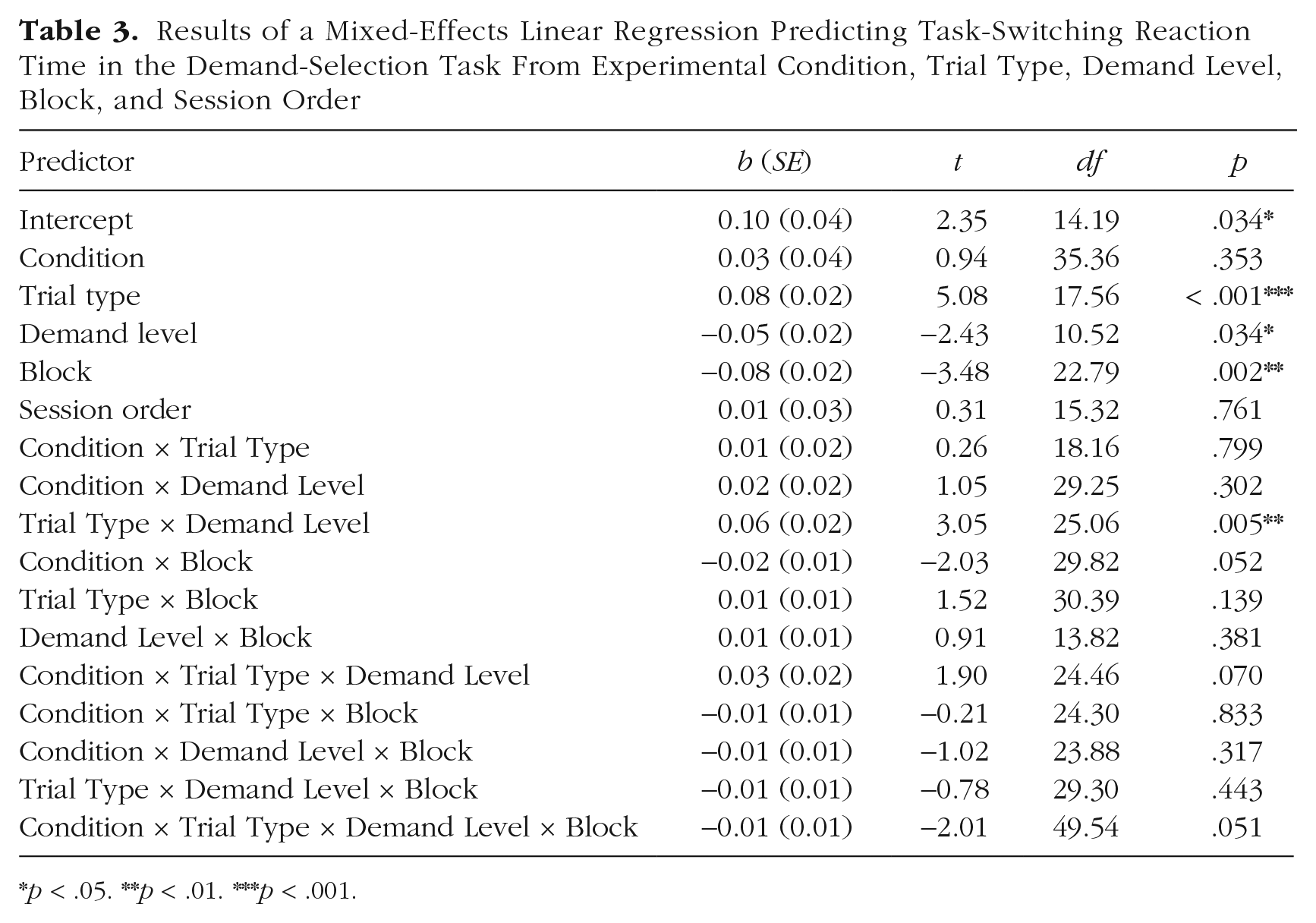
p < .05. **p < .01. ***p < .001.
Accordingly, we sought to explore a possible relationship between RTs in high-demand repeat trials and participants’ preference for the low-demand option. Visual inspection suggested that participants with slower RTs in high-demand repeat trials were more likely to choose the low-demand option in the control condition than in the stress condition (see Fig. 5).
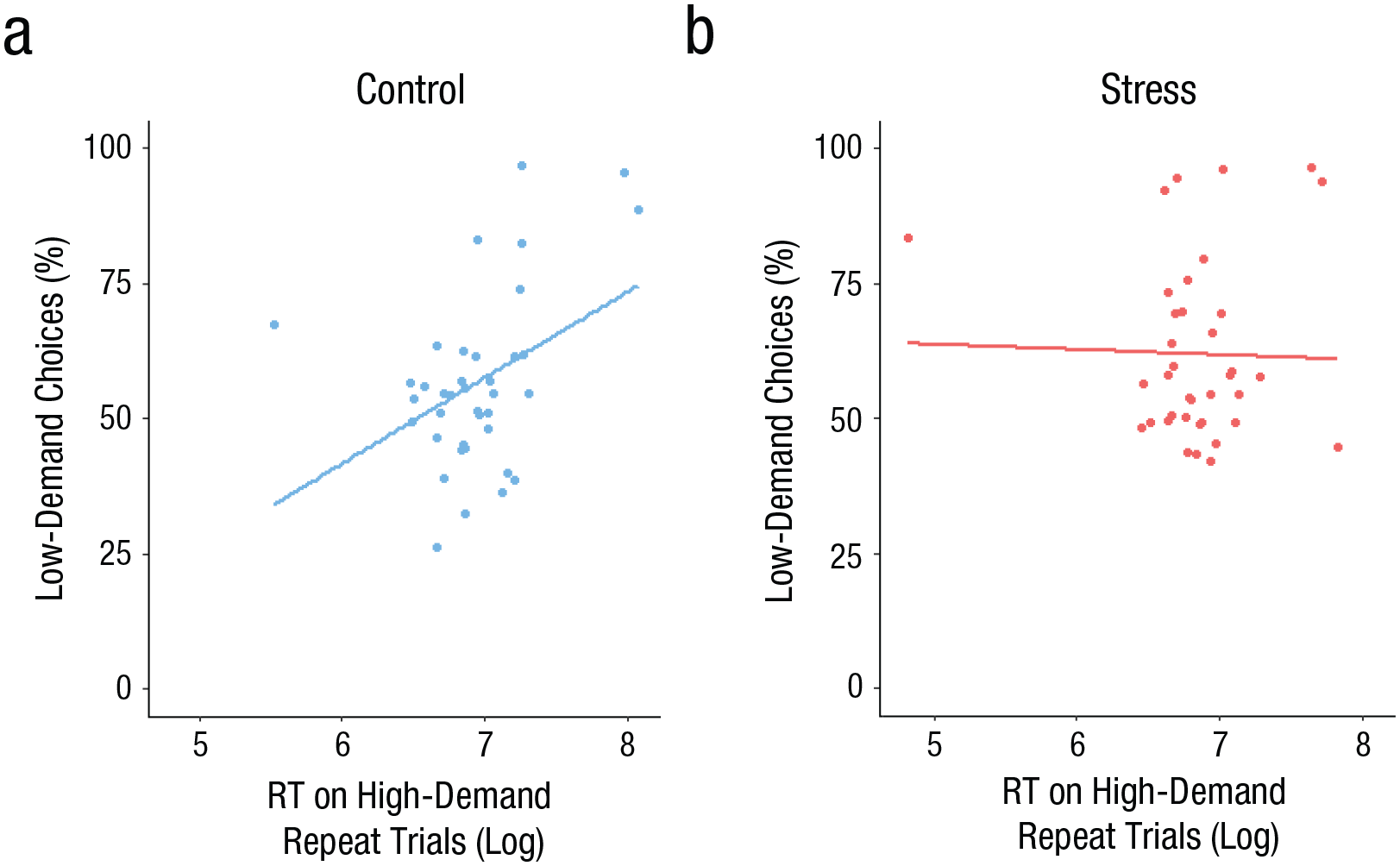
Scatterplots (with best-fitting regression lines) showing the relation between reaction time (RT) on high-demand repeat trials and the percentage of trials on which participants made low-demand choices (avoided effort). Results are shown separately for the (a) control condition and (b) stress condition.
Extending the choice-predicting logistic regression model to include participants’ mean RT on repeat trials for each demand level, we observed a significant interaction between stress condition and RTs (p = .017) over and above the still-significant main effect of stress on the rate of low-demand choices (p = .002; for full coefficient estimates, see Table 4). This confirmed that the relationship between RTs in high-demand repetition trials and choice behavior was evident only in the control condition.
Results of a Mixed-Effects Logistic Regression Predicting Choice Behavior in the Demand-Selection Task From Experimental Condition, Block, Session Order, and Log Reaction Time (RT) on High-Demand Repeat Trials
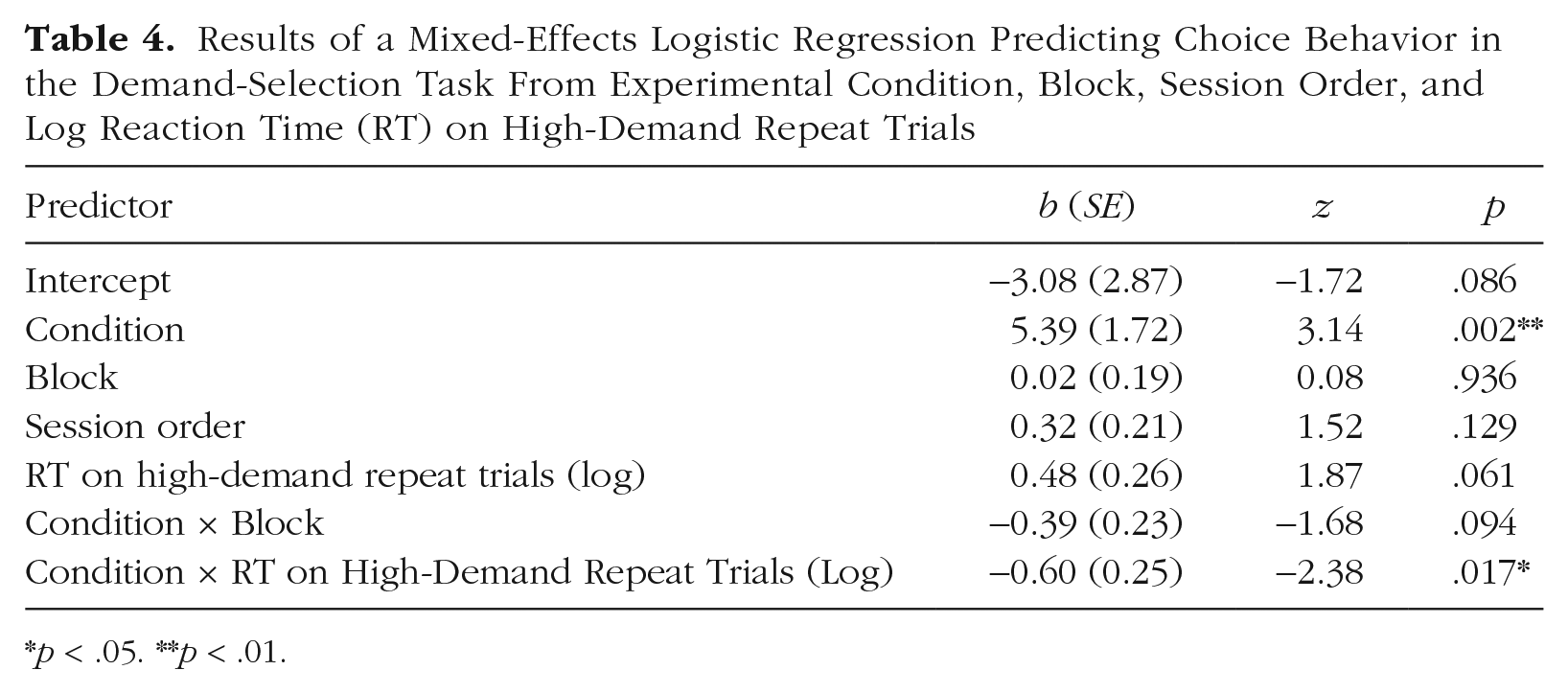
p < .05. **p < .01.
Finally, we examined whether stress would affect the speed of participants’ choices between the cues signaling task demand levels. We found that although participants became faster over time on both days (main effect of block: p = .012), stress had no impact on these choice RTs (main effect of condition: p = .712; Condition × Block interaction: p = .823; for full coefficient estimates, see Table 5).
Results of a Mixed-Effects Linear Regression Predicting Log-Transformed Choice Reaction Times in the Demand-Selection Task From Experimental Condition, Block, and Session Order
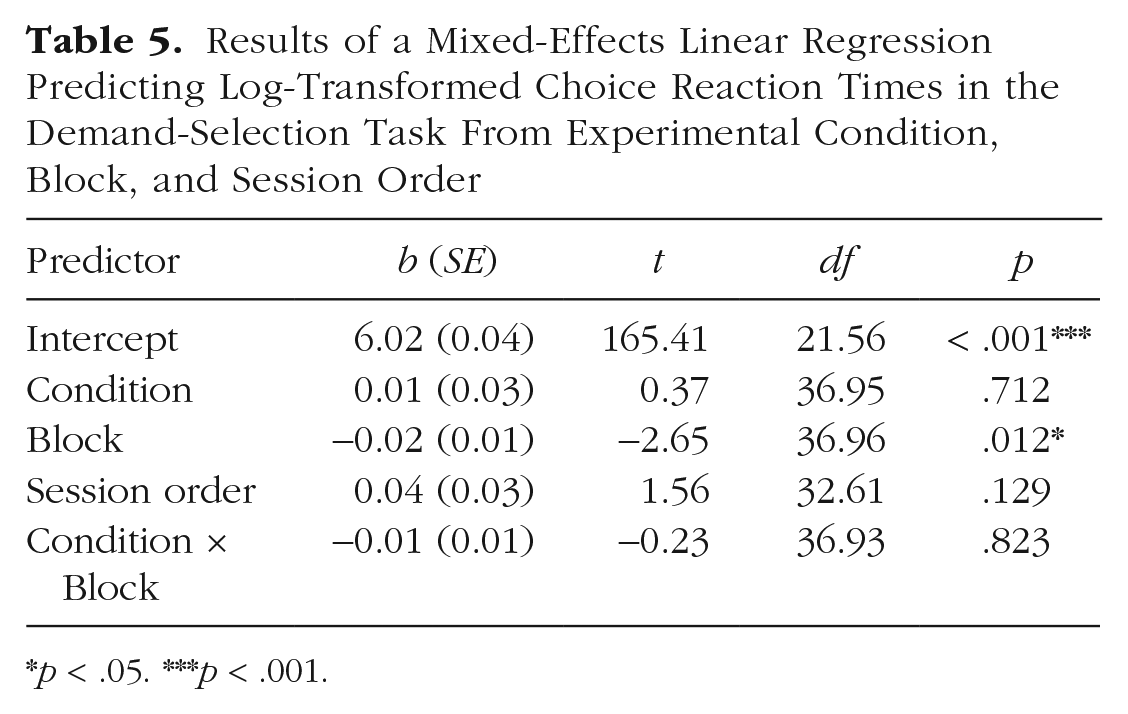
p < .05. ***p < .001.
Individual-differences measures and stress responsivity
Exploratory analyses examining the influence of personality traits and baseline cognitive performance on low-demand choices did not yield significant main effects or interactions with stress (all ps ≥ .105; see Tables S4 and S5 in the Supplemental Material). We also examined whether individual differences in stress reactivity—specifically, the increased salivary cortisol—predicted low-demand choices in the DST but found no significant predictive relationship (main effect: p = .141; Condition × Cortisol interaction: p = .207; see Table S6 in the Supplemental Material).
Discussion
Acute stress is widely observed to impair cognitive abilities across a number of central executive-dependent cognitive tasks, an effect that is often attributed to fundamental impairments to executive-dependent cognitive processing (Hermans et al., 2014; Shields et al., 2016). Here, we considered the possibility that these shifts in performance might also reflect a stress-induced reduction in inclination to expend cognitive effort. Using a well-characterized demand-selection paradigm, we investigated the possibility that acute psychosocial stress would increase individuals’ tendency to avoid cognitively demanding courses of action. As predicted, we found that stress engendered a stronger preference to avoid the cognitive demands of frequent switches between tasks in favor of less frequent task switches. Importantly, these stress-induced shifts in effort preferences were not accompanied by performance deficits in the constituent task-switching paradigm, suggesting that the effects of stress acted chiefly on effort preferences rather than impairing underlying cognitive abilities per se.
According to contemporary neuroeconomic accounts of effort allocation, our decision to expend cognitive effort is governed by a cost-benefit calculation, in which the costs of effort are weighed against its expected benefits (Kool & Botvinick, 2018; Shenhav et al., 2017). In principle, stress could exert effects on either side of the trade-off—for example, by amplifying perceived effort costs (Hockey, 1997) or by increasing sensitivity to reward (Porcelli & Delgado, 2017). Because no extrinsic rewards are provided for increased effort expenditure in the DST, we presume that the stress-induced changes in preferences observed in our study stem from individuals’ level of preferred mental-effort expenditure (or, equivalently, subjective-effort costs) rather than a change to the perceived benefits tied to effort exertion (Patzelt et al., 2019). It is important to note, however, that our results do not speak directly to the question of how potential stress-induced changes in reward processing might impact demand avoidance—costs vis-à-vis benefits—an open question that warrants future research. Such studies could also link our findings of stress effects on cognitive-effort avoidance to previous work investigating effort discounting in rodents, which suggests that acute stress may specifically impact computations of physical-effort costs (Bryce & Floresco, 2016; Shafiei et al., 2012).
The fact that we did not observe any differences in task-switching performance between the stress and control conditions might reflect specific characteristics of the DST. Earlier cognitive-energetic accounts suggested that stressed individuals might maintain performance levels comparable with those in nonstressed conditions at the cost of increased subjective-effort exertion (Hockey, 1997). In contrast, participants in our study might have achieved comparable performance under stress by avoiding higher subjective-effort demands through increased engagement with the low-demand cue in the DST instead. Given that conventional cognitive tasks used in the stress literature usually do not provide lower-demand alternatives to the participants, individual differences in choosing whether to invest more effort to meet task demands might explain the heterogeneous evidence regarding stress effects on cognitive flexibility (Kofman et al., 2006; Plessow et al., 2012; Shields et al., 2016).
Importantly, however, we do not claim that stress-related cognitive-control deficits stem purely from reduced motivation. Rather, the idea that stress prompts withdrawal of effort dovetails well with current neurobiological proposals suggesting that stress reduces resources available for costly forms of controlled processing in favor of attentional processes better suited to deal with the stressor (Hermans et al., 2014). This reallocation, in turn, may render the remaining controlled processing resources subjectively more costly, resulting in an apparent preference for less effortful behavior, as observed in the present study. A related and compatible explanation of our results might be provided by the concept of fatigue (or “ego depletion”; Baumeister & Vohs, 2007). This prevalent, although recently criticized (Inzlicht & Friese, 2019), account posits that instead of a shift in mental resources, coping with stressful experiences would consume the individual’s self-control capacities, leaving participants unable or less willing to exert cognitive control in subsequent tasks (Baumeister et al., 1999). Assuming that the stress condition of the TSST might have led to stronger ego depletion than the control condition, this could explain why these participants showed increased effort avoidance, particularly in early blocks of the DST. On the other hand, if participants were more fatigued under stress, one might expect a slowing of responses, particularly in RTs related to choosing between demand cues in the DST. We did not find a slowing of choice RTs over time—if anything, participants became faster in their decision-making on both days. We thus argue that it is less likely that this stress-induced increase in effort avoidance was due to ego depletion, or fatigue. However, because we did not directly measure subjective fatigue (or related constructs), it is difficult to conclusively rule out this possibility.
Yet another potential explanation for alterations in effort preferences due to stress is a change in the subjective opportunity costs of effort expenditure. Deploying cognitive effort—as in any expenditure of limited resource—also carries an inherent opportunity cost because allocating processing resources in the service of a particular task forgoes the benefits that could be obtained by using those resources for another goal (Kurzban et al., 2013; Otto & Daw, 2019). Because recent work suggests that stress can alter an individual’s appraisal of the opportunity cost of time (Lenow et al., 2017), it is possible that the stress-induced effort preference for low-demand levels observed here results, in part, from a heightened salience of opportunity costs. Accordingly, future work should directly assess potential changes to subjective effort and/or opportunity costs that accompany the increased demand avoidance observed here under stress. Relatedly, acute stress in our study might not have directly affected effort preferences but instead increased participants’ ability to detect and learn the contingencies between the pattern cues and task-switching demand in the DST. If this were the case, one would expect little difference in choice behavior between the stress and control conditions on the second day of the experiment because participants would have previously learned the task structure—in particular, that the two options are associated with different demand levels—on Day 1. Thus, participants who underwent stress on Day 1 would, accordingly, be able to use their knowledge on Day 2 to quickly establish demand-avoidant behavior. Instead, however, we found that choices in both conditions were similar on both days, that is, stressed participants made more low-demand choices, especially in earlier blocks of the DST (irrespective of condition), also evidenced by the lack of a significant three-way interaction of condition, block, and session order (see Table 1). Nonetheless, future work is needed to conclusively evaluate this possibility.
When interpreting the results of this study, readers should note that the p value reported for the main effect of condition on choice behavior in the DST was relatively modest. Although we have taken additional measures—that is, Bayesian regression and a multiverse-type analysis—to assess the robustness of the effect of acute stress on demand avoidance, both direct and conceptual replications of our findings are critical, especially with respect to the exploratory findings regarding the relationship of stress and repeat-trial RTs on participants’ choices. These future studies should make use of independent measures of task-switching ability separate from the DST, following Kool et al. (2010), and include participants from a broader population than our sample of mostly young, university-educated participants.
In conclusion, this study provides initial evidence that acute psychosocial stress can decrease one’s willingness to engage in cognitively effortful behavior. This effect occurred in the absence of performance detriments and was independent of individual differences in executive function (operationalized as working memory capacity) and intrinsic motivation to exert effort. Although more work is necessary to fully characterize the effects of stress on cost-benefit effort-allocation decisions, these findings advance our understanding of the fundamental mechanisms by which stress affects motivation and behavior and may also inform novel approaches to mitigating the potentially debilitating consequences of acute stress in both health and disease.
Supplemental Material
sj-docx-1-pss-10.1177_09567976211005465 – Supplemental material for Acute Psychosocial Stress Increases Cognitive-Effort Avoidance
Supplemental material, sj-docx-1-pss-10.1177_09567976211005465 for Acute Psychosocial Stress Increases Cognitive-Effort Avoidance by Mario Bogdanov, Jonas P. Nitschke, Sophia LoParco, Jennifer A. Bartz and A. Ross Otto in Psychological Science
Footnotes
Acknowledgements
We thank Laïna Benjamin, Ana Eliza Bonihla, Harshadaa Deshpande, Sasha Elbaz, Noa Givon, Peipei Guan, Ruksana Kazi, Hugo Moulin, Ivey Norton, and Cassie Peng for their help with data collection as well as Talya Azrieli for help with handling the salivary samples.
Transparency
Action Editor: Daniela Schiller
Editor: Patricia J. Bauer
Author Contributions
M. Bogdanov and A. R. Otto developed the study concept. All the authors contributed to the study design. Testing and data collection were performed by M. Bogdanov, who also analyzed and interpreted the data under the supervision of A. R. Otto. M. Bogdanov drafted the manuscript; A. R. Otto and J. A. Bartz provided critical revisions. All the authors approved the final manuscript for submission.

References
Supplementary Material
Please find the following supplemental material available below.
For Open Access articles published under a Creative Commons License, all supplemental material carries the same license as the article it is associated with.
For non-Open Access articles published, all supplemental material carries a non-exclusive license, and permission requests for re-use of supplemental material or any part of supplemental material shall be sent directly to the copyright owner as specified in the copyright notice associated with the article.
