




Abstract
Background
Persistent inguinal lymphadenopathy can range from benign to malignant causes. Lymphogranuloma venereum (LGV), a sexually transmitted infection (STI), is a possible cause, particularly in individuals engaged in sexual practices associated with a higher likelihood of transmitting STIs. This case series outlines the diagnostic challenges of LGV.
Case Presentation
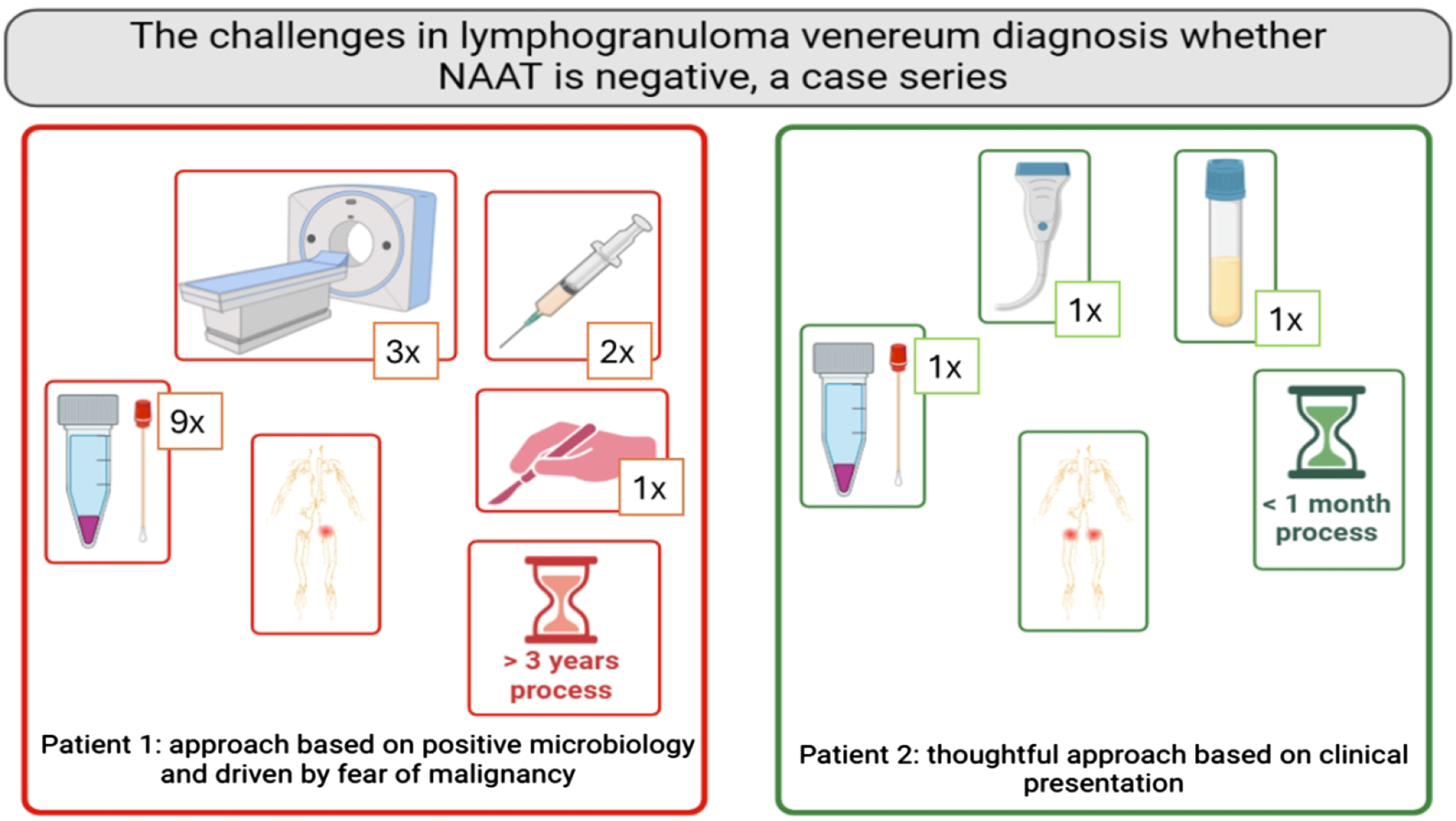
Two male patients, aged 36 and 48, with sexual practices associated with an elevated risk of STI transmission, presented with inguinal lymphadenopathy. Initial investigations, including rectal and genital nucleic acid amplification tests (NAATs) for STIs, were negative. Patient one underwent two fine-needle aspirations, both inconclusive. An excisional biopsy later confirmed LGV through a positive NAAT for Chlamydia trachomatis and consistent pathology. The diagnosis took several years, included three PET scans, and was complicated by a surgical site infection with Staphylococcus aureus. Patient 2, despite negative NAAT results, was empirically treated for LGV based on clinical suspicion, with resolution after doxycycline.
Intervention and Outcome
Both patients improved significantly with doxycycline. Retrospective serology showed elevated Chlamydia trachomatis IgG titers, supporting this diagnosis.
Conclusion
This case series emphasizes the need to consider LGV in patients with persistent lymphadenopathy and sexual practices that may increase the likelihood of STIs.
Keywords
Get full access to this article
View all access options for this article.
References
Supplementary Material
Please find the following supplemental material available below.
For Open Access articles published under a Creative Commons License, all supplemental material carries the same license as the article it is associated with.
For non-Open Access articles published, all supplemental material carries a non-exclusive license, and permission requests for re-use of supplemental material or any part of supplemental material shall be sent directly to the copyright owner as specified in the copyright notice associated with the article.
