



Abstract
Within global debates, decentralization with respect to renewable electricity is positioned as pivotal in overlapping calls for decarbonization, energy access and just transitions. The promise is that technologies that are smaller and distributed will deliver a range of benefits, including enabling infrastructural innovations and expanding sustainable access, notably by empowering local authorities. While shifting to low-carbon systems is imperative, in this paper we call for attention to the complexity, opportunities and risks of commonly celebrated experiments in distributed electricity technologies when applied to African contexts. We draw on the case of Uganda, unpacking a series of four innovative electricity projects currently under way. For each case, we look at the actors involved and the imagined relationship between the projects and the incumbent grid. From these cases, we argue that, in this African context characterized by contested urban governance and fragmented networks, careful attention to supporting urban scale institutional and infrastructural development is necessary, although in many cases bypassed.
I. Introduction
As global systems respond to the existential threat of climate change, the transition to renewable energy is positioned as a lever for development, decarbonization and urban futures for Africa. The potential urban impact arises from the promise and promotion of ‘decentralization’, which is often identified as an essential component of this energy transition.(1) The promise, apparent in much of the discourse on power system decentralization – academic, policy and popular – is that technologies that have materially smaller components overcome the myriad challenges associated with large network expansion.(2) Moreover, the material reconfiguration towards smaller, modular, distributed and hybrid systems and technologies is purported to enable – or even compel – a rescaling of the governance configurations, away from national and towards sub-national and sub-urban levels, with a wide range of administrative, political and economic benefits.(3) The rise of municipal authorities as critical actors in decarbonization and energy policy(4) is a concrete instantiation of this discourse. The motivation – as advanced by decentralization proponents internationally – clearly links distributed technologies and systems to improved governance and urban outcomes.
As a result of this promise in the sub-Saharan African context, the rescaling of energy systems is positioned at the intersection of urban development and the sustainable energy transition.(5) A plethora of external and local actors operate in this space, driving agendas, producing policies and plans, financing projects and capacitating various modalities of implementation. For example, in recent years a wide range of mayoral programmes have been developed related to the just transition. However, as we show in this paper, celebratory narratives about the benefits of distributed technology, and the concomitant programmes for developing capacity and infrastructure, require considered engagement with Africa’s empirical conditions and potential futures.(6) In this context, the assumption that distributed technology will strengthen urban governance and development in Africa needs further interrogation.
Interrogating this proposition with grounded insights, this paper draws specifically on the case of Uganda. The country has seen a significant rise in the deployment of distributed solar photovoltaic (PV) technologies, under the auspices of the energy transition. This has resulted in increasing energy access, as well as a range of other new opportunities for public infrastructure, such as street lighting and the electrification of transport. The empirical contribution of this paper hinges on a set of four distinct illustrative examples of distributed energy technologies. While these are specific to Uganda, similar initiatives are being implemented in other African countries. The first two examples discussed are mini-grids, one of which (the Kiwumu example) is extending the urban network of the capital city of Kampala; and the other (Lolwe Island) is creating a standalone network. The other two examples explored are embedded within the urban context of Kampala. The first of these examines e-mobility efforts driven by start-ups, and the second focuses on how the Kampala Capital City Authority (KCCA) is attempting to utilize new technologies to support its operations. These illustrations are not a comprehensive characterization of the country’s electricity sector, nor do we aim to provide a normative assessment of the most appropriate interventions in Uganda or elsewhere. Instead, we focus on the relationship between distributed technologies and centralized networks; the actors involved in the projects; and the risks and potential that live in these projects.
Although these are important projects with good intentions, we show overall that there is a tendency with distributed technology to bypass local governments, and by extension to reduce their ability to contribute to the energy transition or to plan infrastructure effectively at the urban scale. In contrast to discourses that celebrate city leadership, urban and local governance systems in Uganda (and much of Africa) are not empowered to significantly shape the emerging infrastructure configurations, nor to harness its purported benefits. Instead, a network of foreign governments, private sector and national actors are driving these hyper-local projects. These projects have a mixed relationship with the grid, some supporting it while others may undermine it. Opting for an approach which acknowledges that Africa’s urban energy transitions are deeply uncertain, we draw attention to the multiple, unfolding and complex potential of technologies in African contexts.
II. Methodology: A Situated, Multi-Case Study of Technological Distribution
This research formed part of a three-year project which focused on the relationship between on- and off-grid energy and water in Uganda and Sierra Leone.(7) The insights for this paper, while contextualized within the wider project, are specifically focused on electricity in Uganda, and reflect the focused efforts of the authors to understand the governance dimensions of distributed technological innovations. This approach is inspired by Science and Technology Studies (STS) with its attention to the ways that technologies are political and embody particular future imaginaries.(8) The empirical content for the paper draws heavily on a more descriptive and policy-focused working paper entitled ‘The Cable is Coming: Distributed energy technologies, decentralizing systems, and the future of African cities’, written by the authors.(9) Similar to the working paper, the overarching methodology deployed for this research is a multi-case study, drawing on four unique instances of technological innovation in energy provision. The cases are not intended to be comparative in nature (and thus are not ‘like for like’). Rather, each case is treated as a unique example, shedding light on the overall phenomenon of electricity technology in Uganda.
The paper is empirically driven, and the authors conducted field research in Uganda in January 2022. This included 15 interviews and two focus groups with experts and practitioners involved in the electricity sector. They included representatives of donor groups, mini-grid companies, non-governmental organizations (NGOs), start-up companies and the distribution utility, as well as city officials. For each of the case study projects, field trips were undertaken to the project sites to better understand the technology and engage with its materiality and uses. In the case of Lolwe, the authors attended the launch of the mini-grid on the island as participants, documenting the experience and analysing the event. During field visits to the four case study sites, end users were selectively engaged (for example, by speaking informally to people who took loans to purchase electrical appliances, motorcycle drivers using electric vehicles, and local community members who were waiting to be connected to recent electricity access projects).
In terms of data analysis, the interview transcripts, photos, field notes and supplemental material (for example, project reports, promotional material, monitoring and evaluation documents) were analysed within the conceptual framework and key questions specific to this paper. In this analysis, the paper departs from the approach of the working paper and incorporates more scholarly insights and contributions. The focus here was on identifying the impulses behind the innovations, the imagined energy futures that each technological experiment held within it, and finally the prefigurative implications of such approaches to solving energy challenges.
To place these cases in the context of Africa’s sustainable energy transitions and debates, insights from the Ugandan case were triangulated with the authors’ experience.(10) This triangulation is further bolstered with a selective review of policy and institutional work related to the energy sector, urban governance, sub-national finance and distributed infrastructures over the past 10 years. The authors recognize that, since the time of conducting this research (2022), the Ugandan context – and the wider African energy landscape – has evolved, and many of these projects and processes may look different today. However, the specific illustrations that anchor this paper reflect common expressions of the decentralization transition in the urban African context, thus retaining their conceptual and empirical utility.
III. Framing the Energy Transition in (Urban) Africa
Across the African continent, electricity poverty is a persistent problem; close to 600 million people lack electricity and energy access remains a chronic challenge.(11) Starting from a low base of only 0.6 per cent of global renewable energy investment (US$ 434 billion in 2021), there are various estimates of the investment requirements needed to address infrastructure and access deficits. Among them, the International Energy Agency (IEA) estimates a need for US$ 190 billion annually from 2026 to 2030 for all climate finance, with two-thirds going to sustainable energy.(12)
Networked infrastructure is a critical enabler of electricity access for households, as well as for commercial and industrial users. However, investment in strengthening and expanding electricity networks has been limited, particularly for transmission and distribution infrastructure. As a result, transmission and distribution networks are often limited and fail to adequately support the economic development aims of governments. In African countries, limited distribution networks (many unable to keep up with urban expansion, and excluding peri-urban and informal settlements) prevent households and businesses from accessing expanded electricity generation, and even in areas that are network connected, the age and state of networks may present challenges such as blackouts and surges. Combined with the need to decarbonize generation, this is the ‘problem’ that modular, small-scale renewable energy options aim to solve. Descriptors such as ‘sustainable’, ‘low-carbon’, ‘climate-compatible’, ‘resilient’ and ‘green’ all and often interchangeably characterize this localization of global sustainable energy agendas in Africa.(13) Added to this, there is increasing interest in the ‘justness’ of this energy transition, with attention to equitable energy access, the ownership of industrial value chains and networks, global geopolitics of finance and development, job creation and local democratization.(14)
Literature on the global sustainable energy transition foregrounds cities around the world as critical to this multi-pronged effort.(15) Within this, the potentially concomitant rescaling of electricity infrastructure and its governance, ownership, operation and financing is characterized as ‘decentralized’, ‘polycentric’ or ‘localized’ governance.(16) Africa’s accelerating urbanization and persistent energy need provide an enticing context onto which this potential is projected. However, since much of the empirical and speculative work to characterize and shape the energy transition emanates from the global North,(17) it often overlooks fundamental differences that require attention and consideration.(18)
To more accurately understand the relationship between distributed technologies (particularly with respect to small-scale renewable generation), decentralized governance and the role of cities in African contexts, it is important to understand existing urban governance arrangements in Africa.(19) Despite attempts at strengthening local government though decades of decentralization reforms,(20) local government remains institutionally and fiscally weakly capacitated in many if not most African countries. Exceptions do exist, for example South African metros. A wide range of diverse actors – from centralized authorities to multilateral lenders – are at play in African urban spaces, creating complex and hybrid governance arrangements.(21) In terms of energy, city authorities in most African countries, with a notable exception of South African local governments, often have minimal capacity to shape urban systems, lacking as they do the mandate or finances to invest in infrastructure networks. Local governments in Africa most commonly also have no electricity-related mandates beyond the provision of street lighting, and often play a minimal role in national electricity systems. Power sectors on the continent are mostly centralized national utilities and agencies, international finance actors and private companies in global supply chains,(22) and national power generation has tended to take the form of very large projects, facilitated by these networks of actors. Enduring underdevelopment of and underinvestment in national energy systems, and the electricity systems that constitute part of these systems, across the majority of African countries are the result of various interconnected dynamics, including extractivist investment strategies by foreign public and private actors (for example, power generation to support mining for the export of unprocessed commodities), and blanket characterization of the continent as a whole as high-risk for investment. With pressure on national governments to nonetheless attract investment, drive national development projects and interact with global markets, development and financial actors and interests, urban networks can, as a result, suffer from perpetual underinvestment. Additionally, the centralization of governance and interface with external actors often means that there is limited capacity for local authorities to support just transitions.
On the ground, many African urban energy systems reflect what Jaglin(23) and others refer to as “electrical hybridity” (or “heterogenous configurations” in other texts).(24) These phrases capture the diverse material practices, networks and arrangements that animate this space. Practically, deficits in electricity access, affordability and reliability are supplemented by users with biomass and liquid fuels, acquired through formal and informal markets. There is also an increasing penetration of private generation (large- and small-scale) and energy intermediaries in some countries, as well as donor-driven distributed renewable energy access projects. Small-scale renewable energy options include very small equipment like clean cook stoves and solar lamps. They also cover solar home and micro- and mini-grids; the latter combining generation and distribution (and possibly storage) to serve a group of energy users. Some operate where networked infrastructure is not in place at all (for example the use of mini-grids in rural areas); others supplement intermittent, insufficient or unaffordable electricity.(25) Most of the funding for off-grid energy in sub-Saharan Africa is still flowing into the more basic solar options like lamps and very basic home systems.(26) These technologies contribute to energy hybridization, allowing overlapping and multiple pathways to energy access. These land in contested urban governance contexts, which shape their adoption and impacts.(27) With this context in mind, we take a closer look at Uganda’s systems.
IV. Uganda’s Electricity System
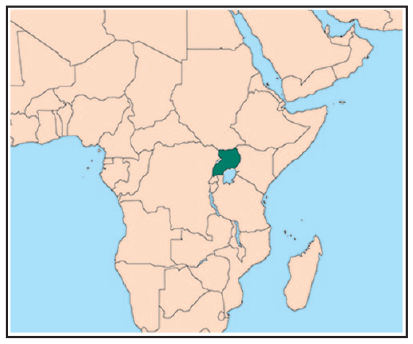
Uganda provides an interesting context to explore issues of rescaling electricity and the relationship between decentralized governance and distributed technology. The East African country is landlocked, but it includes large lakes, or sections of lakes, such as Lake Victoria, and a number of inhabited islands within them. The country has had the same president, Yoweri Kaguta Tibuhaburwa Museveni, since 1986, and is classified as a ‘Least Developed Country’ (LDC), enabling it to access various forms of aid and concessional finance. According to the World Bank,(28) Uganda is urbanizing at a rate of just over 5.3 per cent per year. Its urban population is over 12 million, around 25 per cent of the total population. Kampala, the capital city, is upward of five times larger than the next largest city, Jinja. In 2011 the affairs of Kampala were brought under the direct supervision of the central government through the Ministry for Kampala Capital City and Metropolitan Affairs. The Kampala Capital City Authority (KCCA) was also established as a separate corporate entity in charge of the management and development of Kampala. It has no significant electricity mandate.
Uganda’s Vision 2040 national plan asserts the critical role of electricity in the socioeconomic transformation of the country. Uganda is one of a minority of African countries to have liberalized and reformed its electricity sector in the 1990s.(29) The Uganda Electricity Board (UEB) was unbundled, creating separate generation, transmission and distribution industries: Uganda Electricity Generation Company Ltd (UEGC), Uganda Electricity Transmission Company Ltd (UETCL) and Uganda Electricity Distribution Company Ltd (UEDCL). Generation and distribution have been liberalized. The Ministry of Energy and Mineral Development (MEMD) sets the sector policy agenda, and all actors are regulated by the Electricity Regulatory Authority. This concession is not being renewed, however, and generation, transmission and distribution are being reintegrated.
Between 2000 and 2020, the sector’s generation capacity expanded from 400 megawatts (MW) serving 180,000 grid-connected customers, to 1237.49 MW serving more than 1.5 million customers.(30) Currently, total electricity demand on the grid, including residential, commercial and industrial use, peaks at 650 MW. There are several factors limiting Ugandan electricity demand, including relatively limited industrialization, affordability barriers and limited distribution networks. Distribution infrastructure is concentrated in and near the capital, with the urban network operated by Umeme, the largest of eight private distribution players, under a concession agreement.
Until recently, extending the distribution network was the main mechanism for driving electricity access. Alongside biofuels, various distributed technologies are being developed to fill the gaps in the network, attending to areas that are yet to be reached, and supplementing grid access where it is unable to deliver a consistent supply. A household survey by the Uganda Bureau of Statistics indicates that 38 per cent of households are connected to off-grid electricity solutions.(31) This uptake has been supported through central master planning, which identifies some areas as suitable for grid extension and others where mini-grids will be deployed instead.(32) Despite many challenging dynamics, investment in off-grid renewables, including mini-grids, reached US$ 39.3 million between 2007 and 2019.(33) By 2019, the number of mini-grids reached 34, with generation capacity totalling 56.8 MW.(34) It is against this backdrop that we look at a range of innovations in this space.
V. From Mini-Grids to e-Mobility: Four Examples of Distributed Energy Projects
This section explores several cases of distributed energy services in the context of Uganda’s centrally planned national electricity system. The first two cases are mini-grids, aimed at extending the urban network (Kiwumu) or creating a standalone network in the absence of distribution network connectivity (Lolwe Island). The third looks at the creation by start-ups of distributed energy solutions in the city, and the fourth at how the city government itself is engaging with distributed energy solutions (KCCA). Together, these cases show the wide diversity of ways in which material reconfiguration is taking place, and the absence of an urban scale of governance for this reconfiguration.
a. Peri-urban connectivity: The Utilities 2.0 Twaake Project at Kiwumu
Umeme faces a critical challenge in expanding the grid to peri-urban areas. Not only are there the challenges of covering grid extension costs and last-mile connections,(35) but also in facilitating electricity use and payment for this service. In new extension areas, people most often do not own electricity-consuming appliances (such as kettles or washing machines). This creates risks for the utility when extending to new areas, as the costs are high and the demand, at least in the short term, is low. Umeme’s expansion risks cannot be mitigated with increased tariffs, as high capital costs mean that a cost-reflective tariff would be well beyond affordable for most peri-urban residents and businesses and would further disincentivize off-take. As one Umeme official noted “we can ask the government to assist to invest in these areas, but people won’t even be able to use this electricity without some preparations.”
The Kiwumu mini-grid has attempted to solve these problems, mobilizing a range of actors to both develop the project and support the ‘productive use’ of this power (creating both demand and ability to pay). In Mukono District in Kiwumu, just beyond the municipal boundary of Kampala, the 40 kilowatts peak (kWp) solar PV mini-grid is a short walk from the peri-urban residential area. The town has some small businesses, including small shops and private pharmacies. At the time of this research, in January 2022, the project was seven months old, and was the sole electricity option for the 300 local households and 60 micro-enterprises. Its first ‘anchor’ customer was a maize mill with the ability to mill five tonnes of maize a day, which accounted for around 60 per cent of the electricity consumption.
The Kiwumu project, like most mini-grids, is driven by foreign non-profit and for-profit actors. It is being implemented as part of the Twaake Pilot under the Utilities 2.0 project. The Twaake Pilot is an initiative of Power for All, a not-for-profit and NGO registered in the United States of America. This NGO focuses on distributed renewable energy solutions to the global energy access challenge and is funded by the Rockefeller Foundation. Project partners include the Africa Minigrid Developers Association; the Collaborative Labeling and Appliance Standards Program (CLASP); CrossBoundary Energy Limited, an investment company that invests in renewable energy projects in Africa; East African Power; EnerGrow (a green energy tech start-up); Equatorial Power; NXT Grid (a Dutch solar energy equipment supplier); the Rocky Mountain Institute, the University of Massachusetts Amherst; Duke University; and Makerere University. This wider pilot has two sites in Uganda.
The ambition of the project (still not realized at the time of writing) is to be the country’s first successful mini-grid interconnection with the national grid, linking the network in Kampala to the surrounding districts. A wide range of measures – from tariffing design to mechanism alignment – aim to ensure that there will be no compatibility issues between the two systems. At the same time, EnerGrow – the ‘productive use’ partner – is tasked with stimulating electricity demand in the area by providing access to appliances, such as televisions or refrigerators, which could be used for income-generation. The start-up provides financing, awareness-building and training that focuses on customers who will use the appliances to improve their business operations – such as clinics, food shops, micro-industries and entertainment spaces. “We assess the business potential, source the product, manage transportation to the community, and track repayments . . . over time, the community will become more financially viable”, noted an enthusiastic EnerGrow employee. These customers are necessary for ensuring the viability of the expansion. Given the low capacity to pay in the area, more than half the appliances purchased are bought on credit (notably increasing by a significant degree the overall cost of productive electricity use). Microfinance in Uganda is expensive, and EnerGrow reports interest rates around 35 per cent (reportedly only achievable because of donor support to the operations of the company). EnerGrow, and many other project partners, have received grants to support this pilot, on the assumption that the project will provide a viable model for future mini-grids.
As the current phase of the Kiwumu project draws to a close, the practicability of the pilot as a replicable model for demand stimulation and grid extension is being tested. In an interview with the Uganda Director of Power for All, she explained the complexity of the project and the incredible work that went into navigating a complex institutional environment, working through unclear energy and mini-grid regulations, convening disparate partners and mobilizing research partners to develop an evidence-base for the oft-recited ‘energy-for-development’ narrative motivating much of the donor involvement. She explained that the future of the project is also uncertain. As she shared with us in the interview, the project team identified four options: (1) all the infrastructure is handed over to the utility, with compensation for future anticipated income, and the developer starts again in the next location; (2) the developer hands over the distribution network and applies for a small power producer licence and keeps generating and selling power; (3) the developer hands over generation and operates the distribution under a licence; or (4) the developer keeps generating and distributing power under two licences. Under the first option – and here the modularity and mobility of this solution come into play – the developer works with Umeme to physically move the small power plant to the next spot on the utility’s long list of unserved areas. The fragmented institutional landscape is changing again with the president’s pronouncement of power sector reforms. Consequently, Umeme’s future is unclear and thus the implementation mechanisms for Uganda’s electrification strategies are too.
At the time of this research, the future of the project was unclear. However, the Kiwumu mini-grid is a compelling example of a peri-urban project that works as a supplement and complement to distribution grid extension, preparing the local residential and business community, and convening a range of both global and local actors in the project. Local government authorities are engaged as project stakeholders and must provide land-use permissions, but they do not play a steering role. Neither the KCCA nor the Mukono District authorities play significant a role in the project. While a metropolitan vision for Kampala underpins these expansion projects, the absence of the local government in the configuration of relevant actors is notable and important. However, this case shows how, even where networked infrastructure is prioritized and strengthened in an energy access project, local governance may be functionally bypassed in its execution.
b. Isolated mini-grid: Lolwe Island
While the previous illustration showcased the option for grid interconnection, the Lolwe Island mini-grid is an example of the more commonly implemented ‘isolated’ grid for areas where the likelihood of grid connectivity is very low. Lolwe Island is situated in Lake Victoria, off the coast of Jinja, the second largest city in Uganda. Lolwe is inextricably connected to Jinja’s urban economy and governed by cascading levels of local authority, few of which hold significant power in the development of the island. The island is one of nine that can support people within Namayingo District, and 15,000 people live on it. Sixteen islands on the lake together comprise three-quarters of the district’s land. Until 2022, Namayingo’s geography had kept it beyond the reach of the country’s expanding electricity distribution networks.
Lolwe Island’s future changed dramatically between 2021 and 2022 with the construction of the solar PV mini-grid – or “a fully integrated multi-utility, going beyond electricity towards holistic service delivery” (a quote from slides presented at the launch event). The Lolwe Island mini-grid is the result of a partnership between the foreign-owned Equatorial Power and the French multinational utility company Engie. The two companies have formed a joint venture – Engie Equatorial – to undertake this project, the first of its scale and design. At the launch of the mini-grid on a sunny January day, the CEO of Equatorial Power assured everyone present that there are more than 20 other sites that can look forward to similar electricity generation projects across Uganda and other parts of Africa. “I will work directly with the president and the Ministry of Energy to make this possible, there will be light on the islands”, he announced to the crowd, before breaking into dance and song on the crowded stage. (Notably, he references his relationship with the president.) While the local government representatives were present at the launch, their speeches demonstrated little knowledge of the project (and some even rejected or questioned the project publicly, citing a catalogue of other pressing issues, such as the rising sea levels and the child-eating crocodiles in Lake Victoria).
At the time of the research, none of the 3,783 potential electricity users (3,026 households and 757 businesses) was connected to power. Instead, showcased at the launch was the medium- and low-voltage distribution network that connects the power plant (600 kWp solar PV and 600 kilowatt hours [kWh] battery storage) to a productive use off-taker. The core off-taker is an anchor consumer and an ‘integrated productive hub’. Developed by the mini-grid company itself, this core consumer comprises an ice-making and fish-drying facility. Fishers pay a fee for the ice and the drying. In addition to the ice and fish, EnerGrow, also the productive use partner at the Kiwumu site, planned to support 200 entrepreneurs to develop local ‘productive usages of energy’, providing loans for small-scale appliances which could support the growth of local businesses. The stated intention of the project was to extend electricity access to all households and businesses; however, there was no clarity on how this could be funded. At the time of the research, and evident in many of the interviews and speeches, there remained considerable confusion in terms of how the last mile of residential connection would be covered for households and small businesses, the structuring of the tariff that people would pay, and the future of grid extension. While the much-anticipated network is live, the social and economic impacts are yet to be seen.
The Lolwe case, while specifically bringing electricity to an island off the coast of Jinja, provides unique insights into the sorts of energy futures imagined by global companies involved in the development of mini-grids. Unlike in the case of Kiwumu, where collaboration is with the private distribution utility, Umeme, to extend the network, Lolwe, with its project partners and electricity supply-side group of international investors and developers, imagines a future where communities are served by isolated systems, even in the absence of a funded and clear plan to ensure affordable access. In developing both the local network and the related economic centres, the mini-grid comes to be more than just an energy provider, but also drives a particular kind of economic development based on its business model and projected financial return.
c. E-mobility: Urban service retrofit
Mini-grids are not the only place where the promises of the green transition in Africa are driving distributed electricity technologies. A key frontier of this transition is the movement of vehicles from diesel to electric batteries – also called e-mobility. In the context of Kampala, these calls for electrification of urban mobility centre around the (in)famous motorcycle taxi (boda boda) sector, mirroring efforts in other East African cities, such as Nairobi. Motorcycles dominate movement in Kampala, particularly for shorter trips around the city, and last-mile logistics. Several companies are attempting to shift boda bodas from diesel dependence towards rechargeable batteries. These companies argue that such a shift would not only improve the livelihoods of motorcycle taxi operators (lowering the operational cost of providing their services), but also contribute to a range of climate objectives.
There are two important and complementary Kampala-based companies that have made it their mission to transition the boda boda sector: Bodawerk is a Ugandan start-up that focuses on developing rechargeable lithium-ion ‘smart’ batteries. These batteries can be installed into the existing motorcycles used by the vast majority of Kampala taxi operators. A modified Bajaj Boxer – an Indian-designed, Chinese-manufactured, and now Ugandan-retrofitted – motorcycle enables riders to reduce both their emissions and operational costs. Bodawerk is complemented by another start-up, Zembo, with headquarters in France. Zembo imports electric motorcycles (frames and batteries) and establishes charging stations where riders can exchange batteries for a fee. Zembo’s vision is to develop charging stations all over Kampala, using solar charging wherever possible, to supplement the energy provided by the utility. The digital mobility debates across Africa include ongoing discussion about the most viable ‘model’; a plethora of variations have been developed to test different ownership, finance and management configurations. Both Bodawerk and Zembo have attracted the attention of international donor organizations using pitch decks that estimate the future value and impact of e-mobility innovations. Donors have funded much of the research and development of both organizations, hoping that the programmes will grow to attract larger funding from venture capital or development finance institutions.
Both organizations have also attempted to partner with the government: Zembo has sold four bikes to the KCCA, and Bodawerk has been allocated a share in one of Kampala’s industrial parks. However, working with the state is not the primary aim. Instead, they have ambitious hopes of scaling their operations. For Zembo, scale would mean a city full of charging stations, with riders able to recharge (at an affordable rate). Despite its name, Bodawerk’s scalable innovation is not limited to (or even focused on) the boda boda sector. They are focused on the development of batteries, which can be used not only in bikes, but for many other systems (such as home solar systems). As the director articulated “getting batteries right is so important for getting people off fuel . . . for bikes, but also home generators. Ideally, we can also localize production and create jobs.”
Both Zembo and Bodawerk are working to expand the ways in which the existing electricity grid is used, creating a new consumer base for the existing system. The electrification of mobility increases local electricity applications and demand within the dense networked areas of urban agglomeration. While aiming to attract green finance under the banner of decarbonization, their real value for end users lies in the (hopefully) lower operational costs (with electricity more affordable than fuel). With smart batteries capturing the data of riders – to be used for their own planning and risk management – there is further value for the companies involved in these ‘start-ups’. These companies in Kampala, and many more across the continent, challenge linear notions and concepts of decentralization.
While they have little engagement with local government, these innovations do not seek to weaken the centralized grid or diminish its importance. Rather, these companies rework the grid, through materiality extensions, network supplementation and augmentation of demand. Without romanticizing e-mobility or ignoring the profit-driven competition between companies, the case showcases yet another way in which the electricity system (on supply and demand sides) is being transformed, and how such transformations may enrol informal economies in large technical systems in new and unexpected ways.
d. KCCA: Moving city buildings off the grid
Focusing even more closely on the city, the last illustration we look at enrols city authorities in the development of embedded generation, largely for their own consumption. These projects, common in Africa, aim to ‘green’ city authorities, by making their own operations less reliant on the national grid (see, for example, the municipal building retrofit programme under the Covenant of Mayors in sub-Saharan Africa). In terms of electricity, the majority of Kampala is covered by the Umeme-operated distribution network. However, as the city has grown and densified, funding for upgrades to and maintenance of transmission and distribution investments has not been consistent. Many parts of the city experience regular power failures. Consequently, households and business that can afford it create backup systems to supplement their reliance on the grid. The same is true for the city authority.
As discussed earlier, Kampala is under the jurisdiction of the KCCA. The KCCA interfaces with the electricity system as a consumer. While some energy-intensive urban functions (such as water treatment) are not managed by the KCCA, the infrastructure which the KCCA does operate requires energy. For example, the KCCA office and government buildings, the street lighting, the traffic lights that mediate intersections and crossings, and the schools and clinics that fall under city jurisdiction, all require electricity services. As new projects come online (such as the proposed Bus Rapid Transit system), the authorities may find themselves requiring more energy to run and manage these services. The KCCA’s functions are subject to the prevailing grid conditions. According to interviews with KCCA engineers, the expenditure on electricity is also an operational burden at more than US$ 50,000 per year, and delayed transfers from the national government have contributed to large outstanding debts to the utility company.
An expressed desire to lower the cost of electricity to the city, improve the consistency of services, and work with enthusiastic French funding partners has resulted in a series of interventions in the city, supported by a € 70 million loan from the Agence Française de Développement (French Development Agency). These include installing solar-powered streetlights; upgrading school buildings to support rooftop solar panels; and purchasing the four Zembo motorcycles to be used by the KCCA (discussed earlier in the e-mobility case). The hope is that these minor improvements will reduce the operational costs carried by the city, creating savings that go towards repaying the loan that funds the project. Interviews with the KCCA indicate some challenges. Not only has it been hard to get the programme moving, but the quality of the solar panels initially installed was sub-par, and they functioned only minimally. Pointing to the panels on the building, officials told us “these were meant to last many years, but just a few years in they are already not working well. Supplying us little.” Officials bemoaned the lack of regulation related to solar products (a concern which not only impacts the KCCA, but all households and firms that decide to supplement grid connectivity with panels, lamps and other hyper-local technologies). Lack of regulation leads to faulty products and unnecessary costs for cash-strapped local governments or already strained households.
While the KCCA, and some of the political actors involved in urban governance, are indeed interested in the energy transitions under way, the role they play in transforming the city’s electricity system is minimal. Even as a relatively powerful African urban authority, the KCCA is implementing small-scale projects, largely focused on changing its own electricity use. This begs the question: if the KCCA is not a key player shaping the energy transitions in Africa, what does this mean for other (less supported and resourced) city governments? What of the global North narrative and the development agency plans that place cities at the centre of interconnected climate and energy planning and mobilize various forms of technical assistance to further this external agenda? This final illustration takes us full circle, reminding us that city authorities, while central to the just energy transition in the global North, are currently not positioned to play a direct and energy-specific role in a meaningful way in many African cities. This does not rule out any role, but requires particular context-specific engagement and locally-driven, demand-led support for city governments, which is at odds with much in the current sustainable energy transition development modalities.
VI. Reflections and Conclusion: Conceptual and Policy Implications
In this paper we offered four vignettes examining differing distributed electricity projects in Uganda that were being implemented during 2022. These projects are still in the making, unfolding as we write. We looked at innovations within Kampala’s dense urban fabric, its meandering peripheries, and in spaces noticeably disconnected from urban infrastructure and economy. These cases challenge us to engage critically with distributed electricity infrastructure in relation to the governance of urban spaces and the future of urban networks in African contexts, and more broadly.
From a governance perspective, the projects display distinct relationships between project leads, their funders (whether donors or commercial backers/employers), project teams, different government actors, utility staff and other international development, foreign government, non-governmental and commercial actors. The international sustainable energy transition community of actors in Uganda notably includes a host of foreign for-profit energy companies of different sizes that operate, access donor funding and mobilize public spending. What is notably evident across the cases is that the local government is often excluded or plays a marginal role in these governance configurations. This absence challenges many of the prevailing discourses related to the central role of African cities and local government in just transitions.
In terms of the material network, each project has a different relationship to existing networks of distribution, transmission and generation infrastructure. These vignettes clearly illustrate how distributed investments can extend the grid (Kiwumu), supplement the grid (KCCA and e-mobility projects) and create new grids (Lolwe). These cases suggest that a complex relationship is emerging between existing and new technology. There are many cases that cannot be easily grouped as on- or off-grid but reflect heterogeneity. Additionally, the extension, supplementation, supplanting and ‘operating in place of’ existing networks will not necessarily add up to long-term viable configuration, especially when implemented in an ad hoc way. Thus, the incipient electricity infrastructural palimpsest may lock in particular path dependencies and exclude other trajectories without being able to predict where the transition will lead.
From a policy perspective, more attention is needed to chart alternative urban transition pathways and planning, combining growing evidence-based sense-making with explicit speculative reasoning. Programmes related to energy access, industrial development, climate mitigation and climate adaptation are growing in the portfolios of development finance institutions (DFIs) and multilaterals.(36) They remain, much like the global development agenda at large, informed by inappropriate framing and are commonly formatted to serve the epistemic, economic and geopolitical interests of global North actors, rather than attend directly to the needs and risks of African contexts.(37) The argument that distributed renewable energy technologies will produce a rescaling of electricity governance, with multiple associated benefits, does not match the reality of electricity governance, nor of urban governance, in Uganda and many other African countries. As we have shown, a proliferation of spatially and time-bound energy projects may have significant upsides, but – in the absence of strong local authority and clear energy mandates – relationships formed between foreign partners almost exclusively from the global North, national agencies and hyper-local communities are a testament to the risk of institutional bypassing.
Footnotes
Acknowledgements
This project was funded by the EPSRC – Institutional Sponsorship 2021/22: International Partnerships scheme. The project forms part of a bigger research initiative hosted by the University of Bristol entitled ‘Beyond the Networked City’ led by Guy Howard (ESRC REF: ES/T007656/1). A special thank you to Sumaya Mahomed, Charlotte Ray and Sam Williamson for their support with this research project. Additional thanks to all those who agreed to share their experiences with us.
1.
Goldthau, A (2014), “Rethinking the governance of energy infrastructure: scale, decentralization and polycentrism”, Energy Research and Social Science Vol 1, pages 134–140; Burke, M J and J C Stephens (2017), “Energy democracy: goals and policy instruments for sociotechnical transitions”, Energy Research and Social Science Vol 33, pages 35–48;
De Pascali, P and A Bagaini (2019), “Energy transition and urban planning for local development: a critical review of the evolution of integrated spatial and energy planning”, Energies Vol 12, No 1, pages 1–21; Brisbois, M C (2020), “Decentralized energy, decentralized accountability? Lessons on how to govern decentralized electricity transitions from multi-level natural resource governance”, Global Transitions Vol 2, pages 16–25.
2.
Jaglin, S (2019), “Electricity autonomy and power grids in Africa: from rural experiments to urban hybridizations”, in F Lopez, M Pellegrino and O Coutard (editors), Local Energy Autonomy: Spaces, Scales, Politics, Volume 1, Wiley, Chichester, pages 291–314; Günel, G. (2021), “Leapfrogging to solar”, South Atlantic Quarterly Vol 120, No 1, pages 163–175; Chmutina, K, B Wiersma, C I Goodier and P Devine-Wright ( ), “Concern or compliance? Drivers of urban decentralised energy initiatives”, Sustainable Cities and Society Vol 10, pages 122–129.
3.
Cirolia, L R (), “Fractured fiscal authority and fragmented infrastructures: financing sustainable urban development in Sub-Saharan Africa”, Habitat International Vol 104, 102233; Croese, S, C Green and G Morgan (2020), “Localizing the sustainable development goals through the lens of urban resilience: lessons and learnings from 100 resilient cities and Cape Town”, Sustainability Vol 12, No 2, 550.
4.
Hughes, S and M Hoffmann (2020), “Just urban transitions: toward a research agenda”, WIREs Climate Change Vol 11, No 3, pages 1–11; Sanjay S, R Srivastava, Z Osho and S Harper (2023), “From planning to action: rethinking the role of cities in accelerating net-zero transitions”, T20 Policy Brief, available at .
5.
6.
Perry, K (2021), “The new ‘bond-age’, climate crisis and the case for climate reparations: unpicking old/new colonialities of finance for development within the SDGs”, Geoforum Vol 126, pages 361–371; Castán Broto, V (2017), “Urban governance and the politics of climate change”, World Development Vol 93, pages 1–15.
7.
See acknowledgements for details on the project.
8.
9.
Hermanus, L and L R Cirolia (2022), ‘‘The Cable is Coming: Distributed Energy Technologies, Decentralising Systems, and the Future of African Cities’’, Report prepared for African Centre for Cities, Cape Town, 25 pages, available at .
10.
The lead author has more than 13 years of experience in sustainable development, energy – particularly but not only electricity – sector governance and just transitions in Africa and the second author has 10 years of experience on decentralized infrastructure and technology in the context of African cities.
11.
International Energy Agency (2023), “Africa Energy Outlook 2022”, available at .
12.
International Energy Agency (2023), “Africa Energy Outlook 2022”, available at .
13.
Haddaoui, C and M Gulati (2021), ‘‘Financing Africa’s Urban Opportunity: The “Why, What and How” of Financing Africa’s Green Cities’’, Report prepared for Coalition for Urban Transitions, 104 pages, available at .
14.
Sokona Y, Y Mulugetta, M Tesfamichael, F Kaboub, N Hallstrom, M Sitwell et al. (2023), ‘‘Just Transition: A Climate, Energy and Development Vision for Africa’’, Just Transition Africa, Nairobi, available at https://www.powershiftafrica.org/storage/publications/Just-Transition-Africa-report-ENG_single-pages_1685021139.pdf.; Hughes, S and M Hoffmann (2020), “Just urban transitions: toward a research agenda”, WIREs Climate Change Vol 11, No 3, pages 1–11; Meidan, M, M Hafner and S Tagliapietra (2020), ‘‘The Geopolitics of the Global Energy Transition’’, Springer, Cham; , ‘‘Geopolitics of the Energy Transition: Critical Materials’’, International Renewable Energy Agency, Abu Dhabi.
15.
Burke, M J and J C Stephens (2017), “Energy democracy: goals and policy instruments for sociotechnical transitions”, Energy Research and Social Science Vol 33, pages 35–48; De Pascali, P and A Bagaini (2019), “Energy transition and urban planning for local development: a critical review of the evolution of integrated spatial and energy planning”, Energies Vol 12, No 1, pages 1–21; Brisbois, M C (2020), “Decentralized energy, decentralized accountability? Lessons on how to govern decentralized electricity transitions from multi-level natural resource governance”, Global Transitions Vol 2, pages 16–25; Rutherford, J and O Coutard (2014), “Urban energy transitions: places, processes and politics of socio-technical change”, Urban Studies Vol 51, No 7, pages 1353–1377; Becker, S, J Angel and M Naumann (2020), “Energy democracy as the right to the city: urban energy struggles in Berlin and London”, Environment and Planning A: Economy and Space, Vol 52, No 6, pages 1093–1111; Droege, P (editor) (), The Great Transformation: Cities and Regions Embracing Renewable Energy, 2nd edition, Elsevier, Amsterdam, 691 pages.
16.
Goldthau, A (2014), “Rethinking the governance of energy infrastructure: scale, decentralization and polycentrism”, Energy Research and Social Science Vol 1, pages 134–140; Brisbois, M C (), “Decentralized energy, decentralized accountability? Lessons on how to govern decentralized electricity transitions from multi-level natural resource governance”, Global Transitions Vol 2, pages 16–25.
17.
Croese, S and J Duminy (2023), “Co-producing urban expertise for SDG localization: the history and practices of urban knowledge production in South Africa”, Urban Geography Vol 44, No 3, pages 538–557; Tandon, A (2021), “Analysis: the lack of diversity in climate-science research”, Carbon Brief, available at .
18.
Silver, J and S Marvin (), “Powering sub-Saharan Africa’s urban revolution: an energy transitions approach”, Urban Studies Vol 54, No 4, pages 847–861; Tait, L and M Euston-Brown (2017), “What role can African cities play in low-carbon development? A multilevel governance perspective of Ghana, Uganda and South Africa”, Journal of Energy in Southern Africa Vol 28, No 3, pages 43–53.
19.
20.
21.
Cirolia, L R and J Harber (2022), “Urban statecraft: the governance of transport infrastructures in African cities”, Urban Studies Vol 59, No 12, pages 2431–2450; Silver, J and S Marvin (2017), “Powering sub-Saharan Africa’s urban revolution: an energy transitions approach”, Urban Studies Vol 54, No 4, pages 847–861; Goodfellow, T (), “Finance, infrastructure and urban capital: the political economy of African ‘gap-filling’”, Review of African Political Economy Vol 47, No 164, pages 256–274.
22.
International Energy Agency (2020), ‘‘Electricity Market Report – December 2020’’, Report prepared for International Energy Agency, Paris, 103 pages, available at: ; Silver, J and S Marvin (2017), “Powering sub-Saharan Africa’s urban revolution: an energy transitions approach”, Urban Studies Vol 54, No 4, pages 847–861.
23.
24.
Silver, J and S Marvin (2017), “Powering sub-Saharan Africa’s urban revolution: an energy transitions approach”, Urban Studies Vol 54, No 4, pages 847–861; Kasper, M and S Schramm (2023), “Storage city: water tanks, jerry cans, and batteries as infrastructure in Nairobi”, Urban Studies Vol 60, No 12, pages 2400–2417; Cirolia, L R (), “Fractured fiscal authority and fragmented infrastructures: financing sustainable urban development in Sub-Saharan Africa”, Habitat International Vol 104, 102233; Goodfellow, T (2020), “Finance, infrastructure and urban capital: the political economy of African ‘gap-filling’”, Review of African Political Economy Vol 47, No 164, pages 256–274.
25.
Jaglin, S (2019), “Electricity autonomy and power grids in Africa: from rural experiments to urban hybridizations”, in F Lopez, M Pellegrino and O Coutard (editors), Local Energy Autonomy: Spaces, Scales, Politics, Volume 1, Wiley, Chichester, pages 291–314; Jaglin, S (2023), “Urban electric hybridization: exploring the politics of a just transition in the Western Cape (South Africa)” Journal of Urban Technology Vol 30, No 2, pages 11–33; BloombergNEF (2020), ‘‘State of the Global Mini-grids Market Report 2020’’, BloombergNEF, New York, 196 pages, available at .
26.
IRENA and CPI (2020), ‘‘Global Landscape of Renewable Energy Finance, 2020’’, International Renewable Energy Agency, Abu Dhabi, available at .
27.
Jaglin, S (2023), “Urban electric hybridization: exploring the politics of a just transition in the Western Cape (South Africa)”, Journal of Urban Technology Vol 30, No 2, pages 11–33.
28.
World Bank (2022), “Uganda”, [cited 1 June 2022], available at .
29.
Electricity Regulatory Authority (2020), “Uganda’s electricity sector overview”, available at .
30.
Umeme Limited (2021), ‘‘Annual Report and Audited Financial Statements for the year ended 31 December 2020’’, Kampala, available at .
31.
African Development Bank Group (2021), “Uganda launches last-mile connectivity to increase electricity access to rural communities”, available at .
33.
IRENA and CPI (2020), ‘‘Global Landscape of Renewable Energy Finance, 2020’’, International Renewable Energy Agency, Abu Dhabi, available at .
34.
BloombergNEF (2021), “Energy transition investment trends”, BloombergNEF, New York, 19 pages, available at .
35.
African Development Bank Group (2021), “Uganda launches last-mile connectivity to increase electricity access to rural communities”, available at .
36.
Meidan, M, M Hafner and S Tagliapietra (2020), The Geopolitics of the Global Energy Transition, Springer, Cham.
37.
Perry, K (2021), “The new ‘bond-age’, climate crisis and the case for climate reparations: unpicking old/new colonialities of finance for development within the SDGs”, Geoforum Vol 126, pages 361–371.