




Abstract
Informal rental housing is growing rapidly in cities of the global South. Changing needs and circumstances of diverse urban populations produce new forms of rental accommodation and landlord–tenant relations. Focusing on the case of backyard renting in South Africa, this paper illustrates how informal rental is undergoing a dynamic process of expansion and upgrading that both reflects and contributes to improved socioeconomic conditions. Commercialization is transforming the material quality and social dynamics of informal rental housing. While there are signs of formalization and professionalization, the government’s neglect of this sector has contributed to the strong persistence of informality, with its associated risks. This paper argues that the informal rental sector deserves more government attention to augment the public benefits and mitigate the costs. The paper ends with suggestions of how a developmental approach by the government could help to convert the negative externalities into a positive dynamic with more equitable and sustainable outcomes.
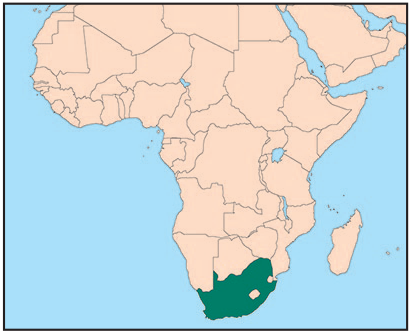
I. Introduction
Informal rented housing plays a vital role in many growing cities in the global South. Millions of people rely on its flexibility and affordability. Informal renting is one of the few options available to marginalized households, including migrants, informal workers and female-headed families. It often affords better access to jobs and amenities than do new squatter settlements or state housing schemes. For young adults, the greater mobility it permits may be preferable to homeownership. The location, character and quality of this accommodation can vary widely from a room in an inner-city building to a backyard shack. In fact, different forms of rental housing are emerging in response to the needs and circumstances of diverse urban populations.(1)
The proliferation of informal rentals reflects the critical shortage of affordable housing in a context of rapid urbanization. Formal property markets and public housing programmes cannot keep pace with accelerating demand from low-income groups. Although squatting is a common response,(2) the scarcity of well-located land parcels, coupled with rising land values and threats of eviction, have contributed to informal rentals as an alternative. The rising demand has encouraged enterprising homeowners, many of them poor themselves and seeking extra income, to convert part of their properties into rental units.(3) Yet operating outside the formal regulatory framework creates risks and uncertainties, which constrain conventional forms of investment. Most governments and established financial institutions, preoccupied with expanding homeownership, tend to disparage renting as inferior.(4)
Official indifference to informal rental housing has implications for sustainable urban development. It means the potential negative externalities (health and safety risks, unfair landlord–tenant relations, overloaded public infrastructure) can be neglected. It also misses an opportunity to improve the quantity and quality of affordable housing. This paper argues that the informal rental sector deserves more government attention to augment the benefits and mitigate the costs. This requires a better understanding of the sector’s drivers and dynamics, paradoxes and contradictions. Focusing on backyard renting in South Africa, this paper examines the historical and current processes underpinning its changing physical form and new types of landlordism. It argues that commercial tendencies are transforming the material quality and social dynamics of informal rental housing, which both reflect and contribute to improved socioeconomic conditions. Furthermore, informal renting is changing from a small-scale, private matter into an urban force that demands policy innovation in the interests of fairness and sustainability.
II. Informal Renting in the Urban South
Although most urban residents in the South are homeowners, every country and city has a sizeable share of renters.(5) The true extent of informal renting is unknown because of its unauthorized and unregistered nature. However, it is clearly a vital component of the housing market, providing affordable shelter to many poor households.(6) The ratio of tenants to homeowners varies greatly across and within cities because of their different historical, sociopolitical and economic contexts. In Accra and Bogotá, for instance, tenants comprise approximately half of all urban residents, and are most prevalent in low-income settlements.(7) In Nairobi, among 1,755 surveyed low-income households, 92 per cent were rent-paying tenants.(8) In Metro Manila, Philippines, a study of informal settlements found that 80 per cent of residents were tenants.(9) Several Latin American countries have recorded a sizeable increase in renting in recent years. According to Gilbert, “Increasing house prices relative to incomes, government discouragement of land invasions and a growing shortage of accessible urban land largely explain this tendency”.(10)
Research on informal renting began in the 1980s(11) and has since attracted growing scholarly and policy interest.(12) An important early insight was that generalizations are difficult as the sector comprises a variety of distinctive submarkets.(13) These vary in terms of the quality and location of the shelter provided, the access to public services, the cost and the way landlord–tenant relationships are structured. It is essential that this diversity be recognized if appropriate government responses are to be formulated.
Much of the early research focused on the demand side of these submarkets – on why, for instance, households sought certain forms of accommodation over others.(14) The supply side was neglected, and landlordism was treated almost as an automatic response to demand, or part of a home consolidation process.(15) Little was known of the conditions and motives behind the production of rental housing, or the role of human agency, particularly the enterprise, effort and creative energy that goes into identifying opportunities and mobilizing resources to convert physical structures into income-generating assets. There was also little awareness shown of progressive improvements in the quality of rental provision over time as the production process became better organized and better resourced.
Kumar began to explore and develop new analytical frameworks to understand how rental accommodation is produced and why some homeowners become landlords while others do not.(16) He went beyond the prevailing views of landlordism “either as simple response to demand or the need to supplement existing incomes”(17) and limited categorizations by the size of their operation (small or large) or residency status (in-house versus absentee). In an effort to question implicit assumptions, he proposed an alternative schema involving three types of landlord on a continuum – “subsistence”, “petty bourgeois” and “petty capitalist”. Landlords move across and between these categories depending on changing internal and external circumstances.(18) Kumar’s framework goes beyond superficial characteristics to disentangle landlords’ economic motivations and conditions, and conceptualize how they organize the production process, including the acquisition and management of land, finance, building materials and labour.
Although one might question Kumar’s terminology, his structure is a useful starting point.(19) In reality, of course, boundaries are much more blurred than his schema suggests, and neat classification is impossible. In addition, other non-economic factors may influence landlordism, which his analysis tends to neglect (e.g. gender, ethnicity and culture). Despite such limitations, his framework helps to make sense of the evidence presented below and to distil significant differences from the messy complexities of reality on the ground. The following paragraphs outline the basic concepts and propositions used in subsequent sections.
First, subsistence landlords out of sheer necessity subdivide their properties to generate some income for basic household needs. Renting is part of their hand-to-mouth survival strategy. They cannot access external finance to maintain or improve their dwelling, and draw on a mixture of other resources instead. The rental income they receive is used for essential items of consumption or for maintenance, with nothing to spare for upgrading or expanding their property. Subsistence landlords are most common in low-income settlements where households have irregular and low-paid jobs.
Second, petty bourgeois landlords also possess only one property but are slightly better off and choose to rent out space to supplement their income. The rent they generate is not essential for their day-to-day survival and may be used to make improvements and extensions to their dwellings, or to enhance the material quality of their lives. Such improvements enable them to charge slightly higher rents.
Third, petty capitalist landlords operate on a larger scale and the rent they collect may become their main source of income. They set out to buy, build and rent out accommodation in order to accumulate wealth, and have the capabilities and networks to invest in and manage multiple rental units. However, they are not fully fledged capitalist producers because they have restricted access to finance, gaps in technical and managerial skills, and limitations in how they organize the production process.
Drawing on more recent work by McGaffin et al.,(20) we use the terms “homeowner landlords” and “entrepreneurial landlords” as alternatives to “petty bourgeois landlords” and “petty capitalist landlords” respectively. The ultimate form of rental accommodation is influenced by the income, employment status and education of landlords. More resources and capabilities make more options available. Wider factors are also important, including the types of property available, access to external finance, and the forms of state support and regulation.(21) The different forms of landlordism reflect prevailing social and economic conditions in particular places and at specific points in time.(22)
III. Informal Backyard Renting in South Africa
a. The origins and growth of backyard renting
Informal renting has long been an important feature of the South African housing system. Poor urban residents have rented various forms of informal accommodation, including makeshift structures or rooms in houses in low-income suburbs, inner-city tenement buildings, informal settlements or other people’s backyards. Backyard dwellings have become the dominant, fastest-growing type of informal rental housing.(23) These are structures, typically rudimentary and made from corrugated iron or zinc sheets and wooden frames, in the yards of formal houses, often in townships. Townships are settlements created specifically for black people during apartheid, separated from the majority-white urban core and suburbs, and provided with minimal basic infrastructure. The term township is also used to refer to post-apartheid settlements developed for low-income groups. Both types of township have experienced the proliferation of backyard structures.(24)
Backyard shacks developed from the 1920s,(25) although they became more widespread after the 1960s when the apartheid government stopped building houses for black urban residents as part of an attempted clampdown on rural–urban migration. The state simultaneously repressed land occupations and informal settlements.(26) Though illegal, backyard dwellings became a common housing option for growing black populations. Legal occupants of the limited council housing stock provided rental space, first inside the house and then in the yards, to relatives and paying lodgers.
“Backyard accommodation was the only option during the 1970s and early 1980s because the state was still able to prevent land invasions. Although subletting was illegal, it seems that officials turned a blind eye to the presence of backyard shacks.”(27)
The demise of apartheid and its stringent controls on informal settlements resulted in many backyard tenants moving out and occupying new squatter camps. Yet the number of backyard shacks continued to escalate because of the insatiable demand for urban accommodation. For example, by the 1990s there was a structure in virtually every backyard in Soweto, accommodating nearly 30 per cent of the local population.(28)
Backyarding has since snowballed across the country. The government’s main housing programme, commonly referred to as the Reconstruction and Development Programme/Breaking New Ground (RDP/BNG) housing, has been a major contributor to this.(29) Since 1994, the government has provided approximately 3.5 million free houses to low-income households. While an important objective was to eradicate informality, ironically the programme encouraged it in the form of backyard shacks – a kind of “augmented informality”.(30) The RDP/BNG programme targeted the poorest households, with incomes of less than R 3,500 (approx. US$ 135 in 1994) per month, who rented out the space behind and in front of their houses to generate money. RDP/BNG beneficiaries, asset-rich but cash-poor,(31) can therefore be viewed as “subsistence landlords”.
According to the official 2016 Community Survey, approximately one million households live in backyard shacks, twice as many as in 1996. Nearly one-fifth of the Gauteng city–region population live in backyard dwellings, more than in informal settlements. Using satellite imagery, Hamann et al.(32) show that backyard structures (formal and informal) increased by 205 per cent between 2001 and 2016, compared to the 38 per cent growth in formal houses. Such statistics confirm that “backyarding is a viable and thriving housing sub-market providing necessary and affordable rental accommodation for large numbers of households across a wide, yet mostly low, income spectrum”.(33)
b. Backyarding as social practice
Several studies of backyarding in the early 1990s found that most landlords were not charging rent or trying to maximize their income. In Cape Town, Watson(34) found that only 24 per cent and 31 per cent of landlords in “coloured” (multiracial) and black African areas respectively sublet their properties to generate income. Where rent was paid in cash, it was just enough to cover the landlord’s costs – indicating subsistence landlordism. Most tenants paid no regular rent, although some made payments in kind. There were more cash-paying tenants in better-located areas than in peripheral locations.
Another survey in two townships in Cape Town and Johannesburg found rents were so low that few landlords could survive on them, despite most tenants being unrelated or unknown to them beforehand.(35) Almost all tenants built their own shelter, so they were really renting only the space. Few owners mentioned money as a motive, but were more inclined to express solidarity with the poor and homeless – reflecting a widespread expectation that people with properties should support the homeless and excluded black population. Street committees and civil society organizations in the townships played an important role in encouraging and managing backyard rental structures.(36) In two townships in Port Elizabeth in the late 1990s, Morange(37) observed similar non-commercial practices. Rent was collected to offset the cost of municipal services, not for income.
c. The commercialization of backyarding
Subsequent studies suggest increasing commercialization of the sector. Lemanski found that most tenants in a new RDP/BNG settlement in Cape Town paid market rents (R 200–R 250 per month [approx. US$ 14–17]) plus contributions (R 50 [approx. US$ 3] per month) to cover electricity and other service charges. Most homeowners were poor and unemployed, and used their backyards for income. Although landlords might empathize with backyard dwellers, it was primarily a financial relationship.(38) This can still be described as subsistence landlordism, because rents were charged to cover basic household costs. Backyarders expressed “indifference towards their landlord” and landlords “demonstrated willingness to evict tenants for non-payment”.(39) Relations, more clinical and arm’s-length, suggested a “more permanent and market-based form of housing” than before.(40)
Based on their study in the Alexandra township of Johannesburg, Shapurjee and Charlton(41) confirmed that income was the main motivation for renting out backyard space, driven by the poverty and unemployment of RDP/BNG homeowners. Other studies have reinforced the finding that increasing numbers of hard-pressed landlords are driven by commercial objectives.(42) Some have more shacks on their plots than was common before, creating a perception that they are seeking to extract as much rent as possible.(43)
d. The impact of increasing commercialization
The boom in backyard shacks has had several adverse effects, including overcrowding, social discontent, health and safety risks, and pressure on public infrastructure.(44) Backyarders have begun to protest over rising rents, placing demands on government to provide alternative land and more housing.(45) In 2018–2019, in a spate of incidents across Cape Town, backyarders occupied vacant land to establish new informal settlements.(46) Municipalities have shown little sympathy and generally evicted the occupiers.(47) In 2016 about a thousand backyarders from DuNoon near Milnerton invaded adjacent fields and erected makeshift shelter. They were soon forcibly evicted by the City, which sparked an outbreak of violence. Some protesters set fire to a public bus station, community hall and ward councillor’s office, obstructed roads, threw stones at motorists and looted foreign-owned shops.(48) The conflict stemmed from frustration at their squalid living conditions, their inability to afford backyard rents and slow progress in addressing their housing problems. One backyarder explained: “I don’t have a place to stay any more. The lack of housing in the area has forced us to become victims of landlords. We can’t live like that.”(49)
Similar social pressures in the Alexandra township spilled into surrounding areas in 2019. The density of backyard shacks there is exceptional because of Alexandra’s favourable location in relation to jobs. But it has overloaded infrastructure, causing sewage spillages, electricity breakdowns and failures in water supply.(50) Backyarders responded to the overcrowding and rising rents by invading nearby vacant land parcels earmarked for residential development and a new fire station, which provoked an angry backlash from property owners and caused the City of Johannesburg to forcibly evict the squatters. The resulting conflicts saw surrounding roads barricaded and key transport arteries grinding to a halt. A public inquiry has since been set up to investigate the causes of the deteriorating conditions. One complaint referenced the City’s inability to enforce its bylaws, which include restrictions on backyarding and the occupation of public spaces reserved for circulation and infrastructure.(51)
A positive dimension has been the progressive improvement taking place in the quality of backyard dwellings. The prospect of higher landlord incomes has contributed to the diversification and upgrading of backyard structures.(52) Bolosha(53) and Shapurjee and Charlton(54) found significant reinvestment of rental incomes by some landlords to construct rooms made of bricks and mortar. Others hoped to replicate this process if they could find the money. This suggests that a class of homeowner landlords is emerging, raising the standard of backyarding. Similar processes have been observed in Cape Town, where enterprising landlords are constructing two-storey flats and houses for rent.(55) These offer safer, more dignified living conditions than shacks. This also affects landlord–tenant relationships and has wider effects on the neighbourhood. There has been little research on the actors involved in this upgrading, so there are many knowledge gaps, some of which this paper aims to fill.
IV. Study Context and Methods
Primary research was conducted on backyard rental housing in Cape Town between October 2018 and May 2019 to gain a better understanding of the phenomenon and ways of addressing the challenges faced. Trends underway in Cape Town seem similar to those in other major cities in South Africa. Methods included interviews with government officials and other stakeholders, coupled with analysis of secondary data, official reports and formal regulations. Detailed semi-structured interviews were held with 19 landlords/micro-developers, 17 tenants and three other local actors (a builder, plumber and member of a business association) in the townships of Delft South and Masiphumelele, which are quite typical of other townships in the city in many ways. We selected these townships because they offered the variety of backyard structures that we wanted to study, including two-storey flats. Purposeful and snowball sampling were used to access respondents. The sensitive and informal nature of backyarding made it difficult to access landlords, but local fieldwork assistants helped identify respondents and connected them to the researchers. It was still difficult to obtain information on their socioeconomic circumstances, methods of financing, rental income, and such touchy topics as gangs and crime. Although there were signs of gang presence in the property investments, the study did not explore these issues because of their delicacy. Most of the evidence was collected in Delft South (one of seven Delft localities), the focus of this paper.
Of the 19 landlords, 13 rent out accommodation in Delft and six in Masiphumelele. Nine were born in the Eastern Cape, four in Cape Town, and one in the Democratic Republic of Congo, while five refused to say. Twelve landlords were female and seven male, although some co-owned the property with their spouse. Interviews were conducted during the day, when men were more likely to be at work. Most landlords had only one property, but aspired to build more. Owners of the larger rented units lived outside the settlement on another property. Among the 17 tenants, 12 rented a room in one of these “boarding houses”, three lived in one- or two-storey flats, and two in backyard shacks. Most of the flats were complete, although three tenants lived in places still under construction.
Cape Town’s population grew from 2.6 million in 1996 to 4 million in 2016 − a 56 per cent increase.(56) This has put considerable pressure on the housing stock and public infrastructure. There are only 10 formal houses in the city for every 17 households.(57) The City Council estimates that 35,000 housing units need to be built each year for the next 20 years to meet the backlog of 350,000 units and new demand. However, only 7,000–10,000 formal houses have actually been built each year over the last decade.(58) The outstanding need is being met by the efforts of small-scale landlords and micro-developers to provide cheap rental structures. One of the most dynamic areas of such activity is Delft, a low-income neighbourhood about 30 kilometres southeast of the city centre, just beyond the airport (Map 1).
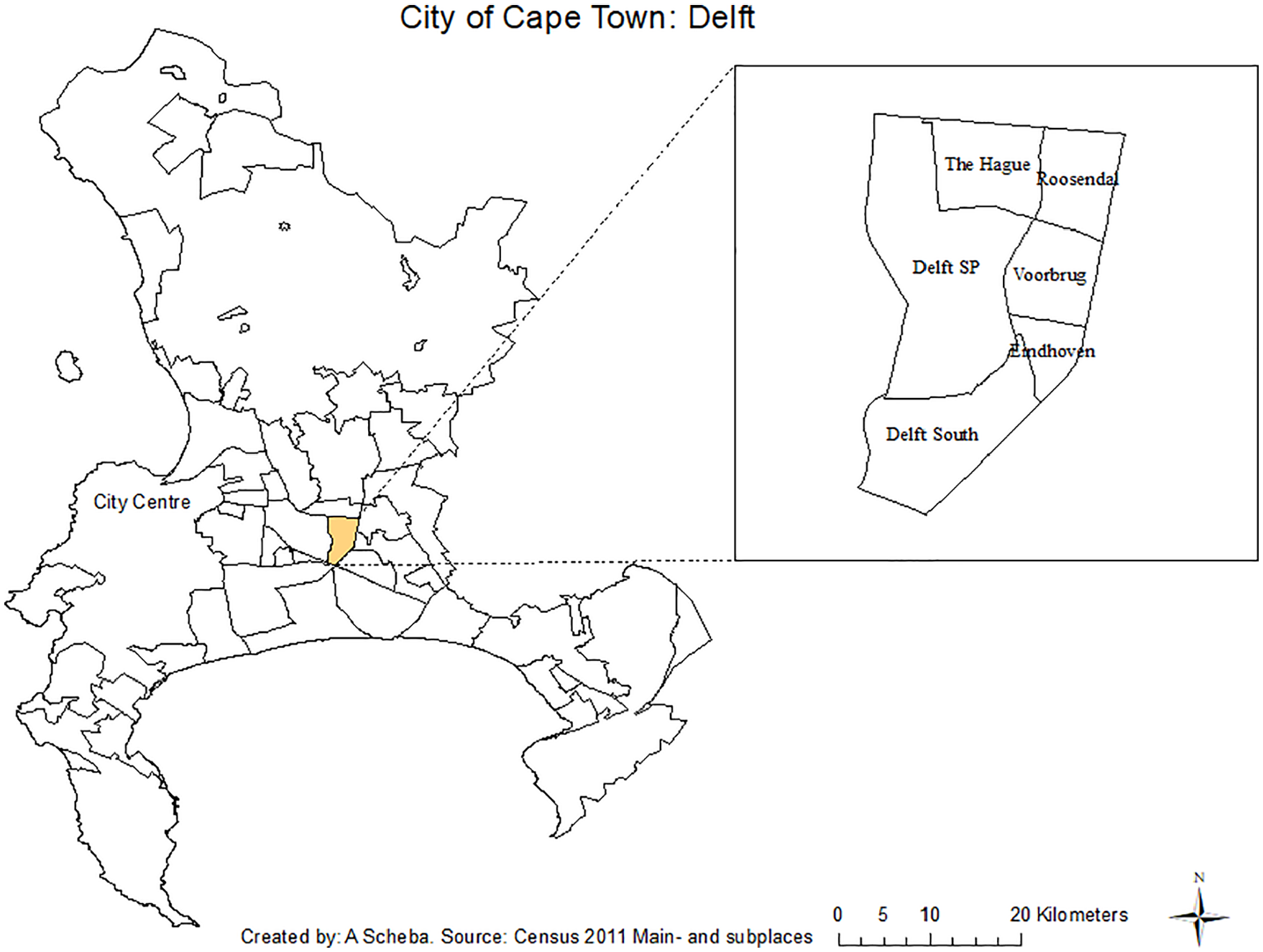
Cape Town, including Delft
Delft was formally established between 1989 and 1994 (towards the end of apartheid) as a mixed township for coloureds and black Africans. The population has grown strongly since then, supported by government housing projects and people’s own building efforts, which have changed the neighbourhood form considerably, mainly through backyarding.(59) The 2011 Census counted 152,030 people in 39,576 households, an unusual combination of black Africans and coloureds, mostly (67.9 per cent) of working age (15–64). Current population density is 13,715 persons/square kilometres, nine times higher than Cape Town’s average. Satellite images (Photos 1A and 1B) illustrate the densification over the past two decades.
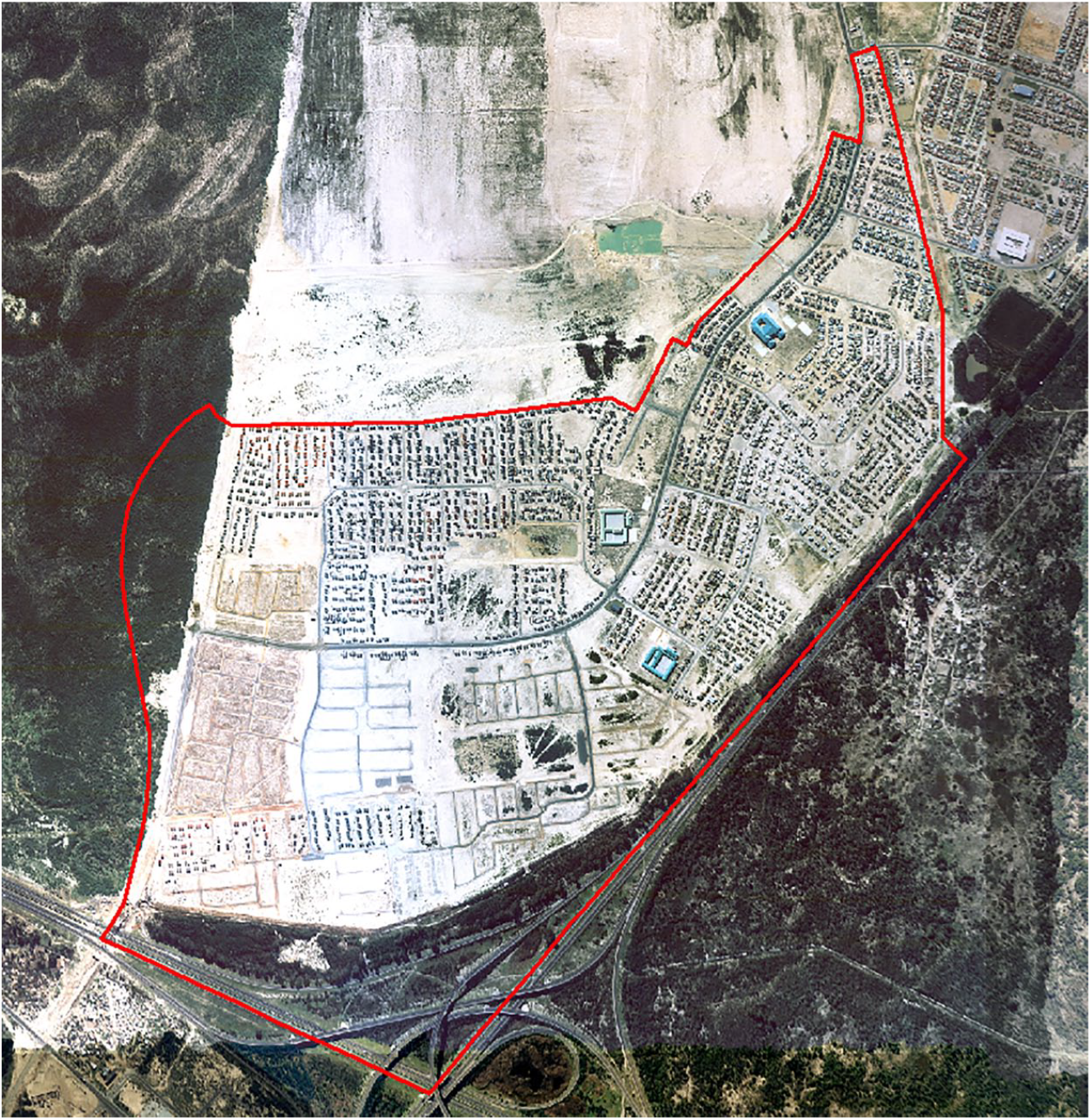
Aerial image of Delft South in 1998
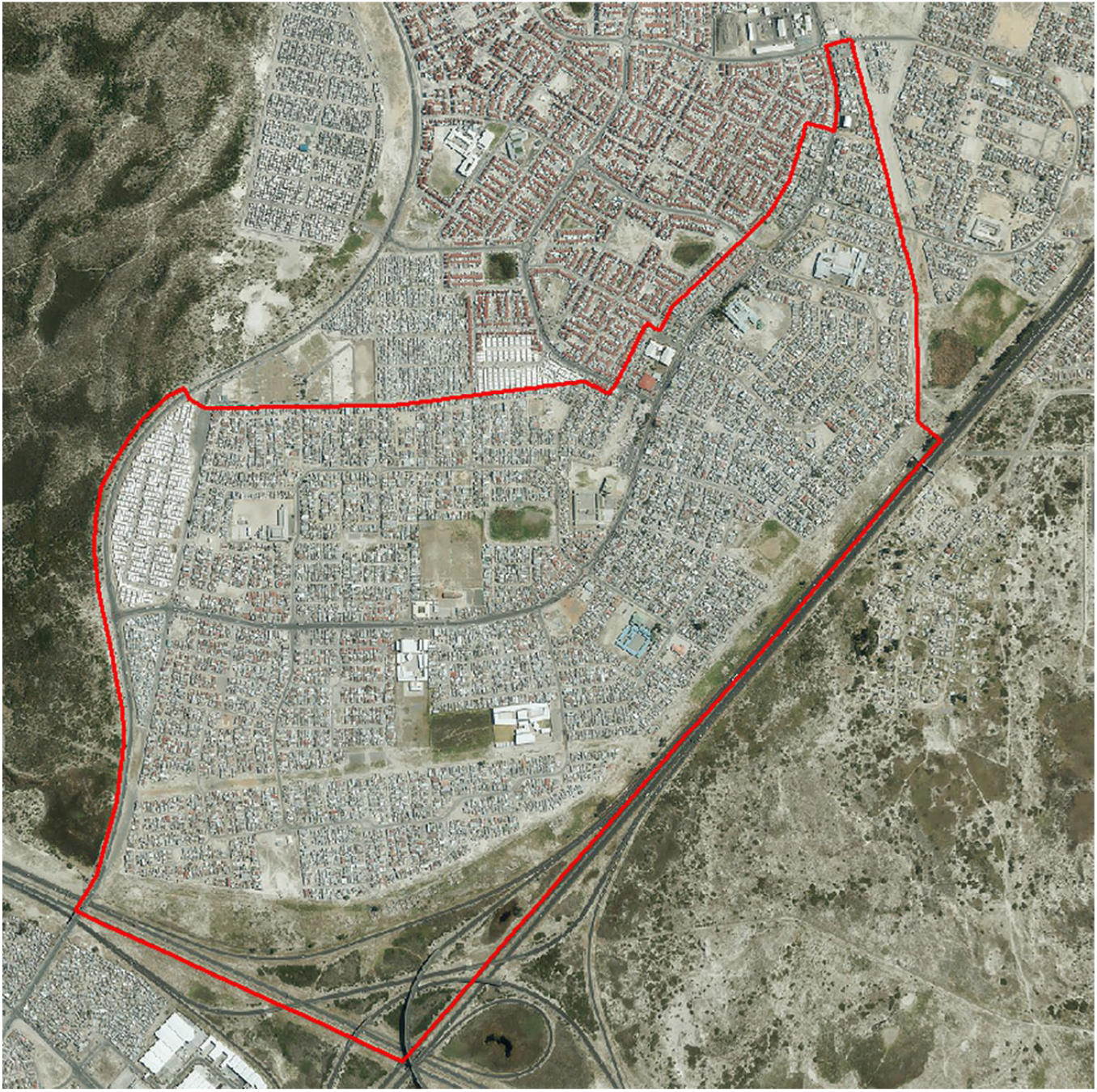
Aerial image of Delft South in 2018
Delft South experiences high demand because of its good transport connections. Several interviewees said that it is possible to get anywhere in the city from Delft. There has been a range of public and private investments in recent years, including a shopping mall, a public hospital and schools.(60) Foreign nationals appreciate the racial mix and relatively tolerant attitudes. Yet Delft is also a hotspot for gangs and related criminal activities, reflecting the high rates of poverty and unemployment. At over 40 per cent, unemployment is far higher than Cape Town’s average of 23 per cent.(61)
The nature of backyarding is changing rapidly in Delft. Solid rooms of bricks and mortar and self-contained apartments of higher quality have multiplied in recent years. We counted more than 300 two-storey buildings in Delft South in December 2018, and every month more seem to appear. Several interviewees stated that there were only a handful of such structures as recently as 2015. The provision of backyard rental housing has contributed to the emergence of a largely informal local property market.(62)
V. The Dynamics of Backyard Renting in Delft South
a. Landlordism and backyard rental accommodation
Subsistence landlords: backyard shacks
Shacks are the most common and cheapest form of backyard accommodation. The original house is retained and the yard space is rented to tenants, who often erect their own shacks to the front, rear or side of the house. The landlord’s investment is minimal. There is usually one entrance gate and up to eight shacks squeezed onto the plot (Figure 1). Most of these owners can be considered subsistence landlords, although having more shacks suggests movement towards homeowner landlords. This depends on whether the landlord generates a surplus that is used to upgrade or build new structures on the property.
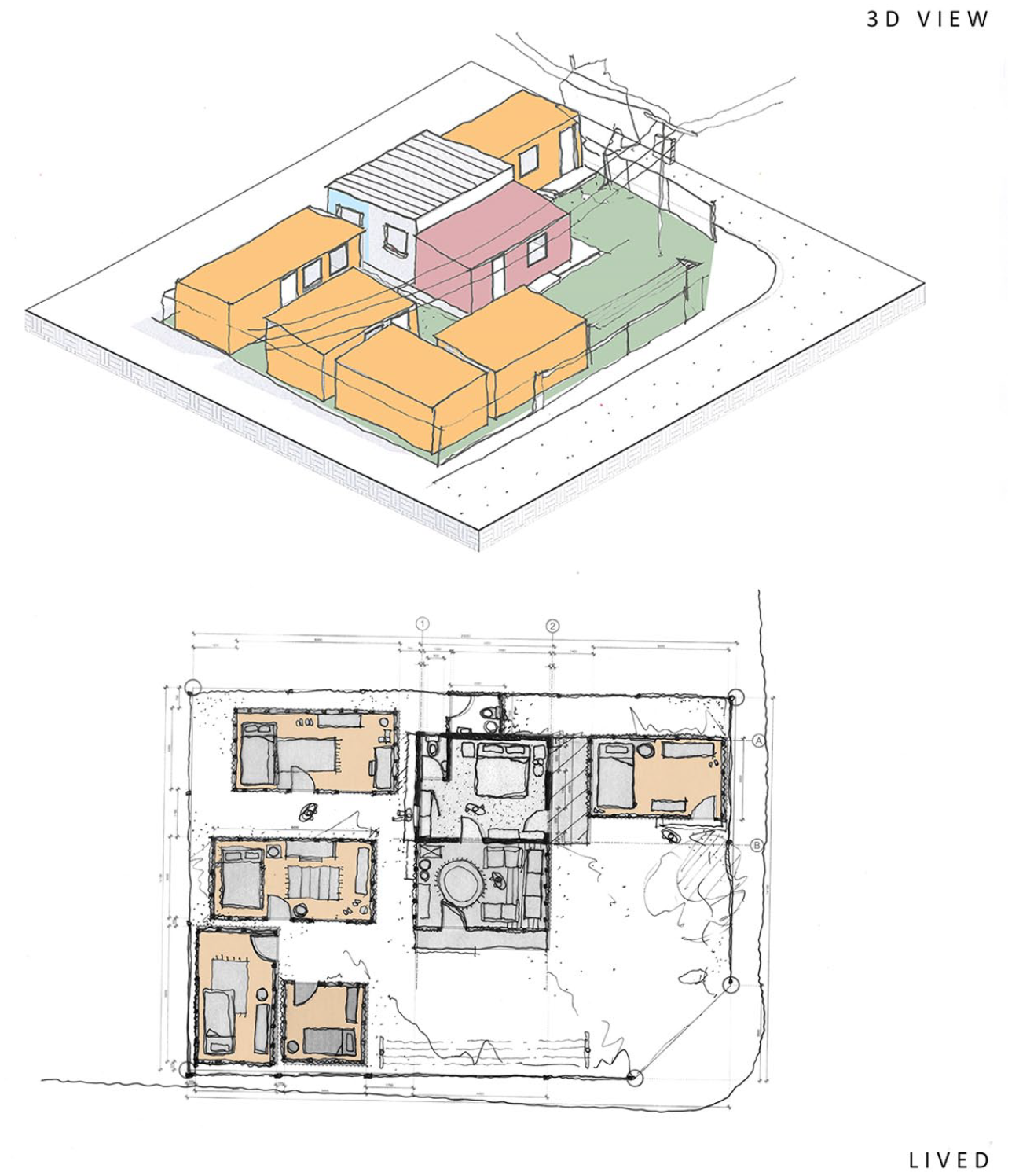
Architectural drawings of backyard shacks
Interviewees said that the cost of renting a site for a shack is about R 500 (approx. US$ 35) per month on average, varying depending on location and access to services. The quality of materials used to build the shacks varies depending on the tenant’s income and capabilities. Most have a cheap timber frame clad with new or recycled iron/zinc sheets or timber planks. Gypsum board, cardboard or masonite is sometimes used to clad the interior. Doors and windows are usually secondhand. Shacks can be self-made or bought prefabricated from informal entrepreneurs for about R 3,000 (approx. US$ 200). “Wendy” houses (simple timber sheds) are also quite common. The makeshift character of backyard shacks exposes residents to serious risks of fire, flooding, electrocution and indoor pollution from the lack of ventilation.
Subsistence landlords usually provide limited access to basic services because they cannot afford the extra infrastructure. Tenants share toilets and water taps, accessible only in the main house, except where the owner has installed a shared toilet or tap in the yard. Electricity comes from the main house through an extension cable, and supply trips frequently because of the overload. To avoid this, tenants negotiate specific time slots. Tenants usually pay the owner a fixed amount for electricity – commonly R 100–150 (approx. US$ 7–10) per month. This is a source of discontent because it is unrelated to the amount actually consumed. The crowding together of households within a confined space creates other tensions that sometimes boil over into conflict. There are no written lease agreements, but some house rules usually exist and relations are governed informally. Infrastructure connections and building extensions are generally made without formal approvals from the municipality.
Homeowner landlords: micro-flats
Simple micro-flats are steadily replacing shacks. Homeowner landlords construct a small freestanding block or blocks of rental units next to the original house, usually containing two to six rooms, depending on whether the unit has one or two storeys. Micro-flats offer better living conditions than shacks because materials are more durable, facilities are provided, and walls are plastered inside and out. Landlords build standalone rooms with shared bathing facilities outside, or apartment-style rooms with an en-suite shower and toilet. Each room has a door, window, artificial light and at least one socket for electricity, which is paid for separately (via a prepaid meter) or collectively by all tenants. Electricity is usually supplied informally by connecting a power plug to the main house or a nearby utility pole, although there are exceptions where the formal procedures have been followed. Water comes from the main pipe of the property and is accessed in the room or via shared taps outside. Some flats have a hot water geyser with a solar panel on the roof. Floors are tiled or covered with carpet. Some rooms contain a sink and small kitchen unit, and most flats are let unfurnished (Figures 2A and 2B).
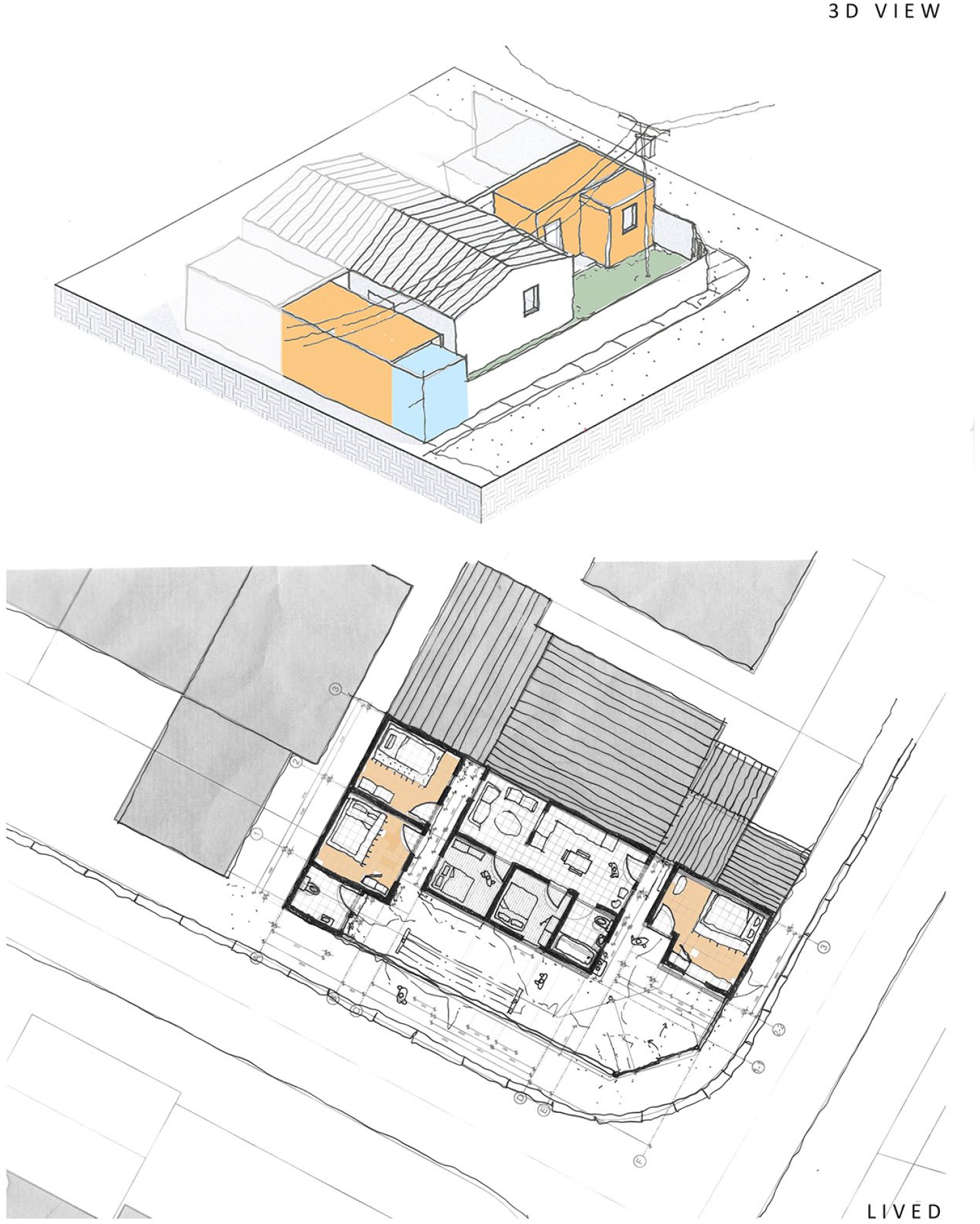
Architectural drawings of one-storey micro-flats
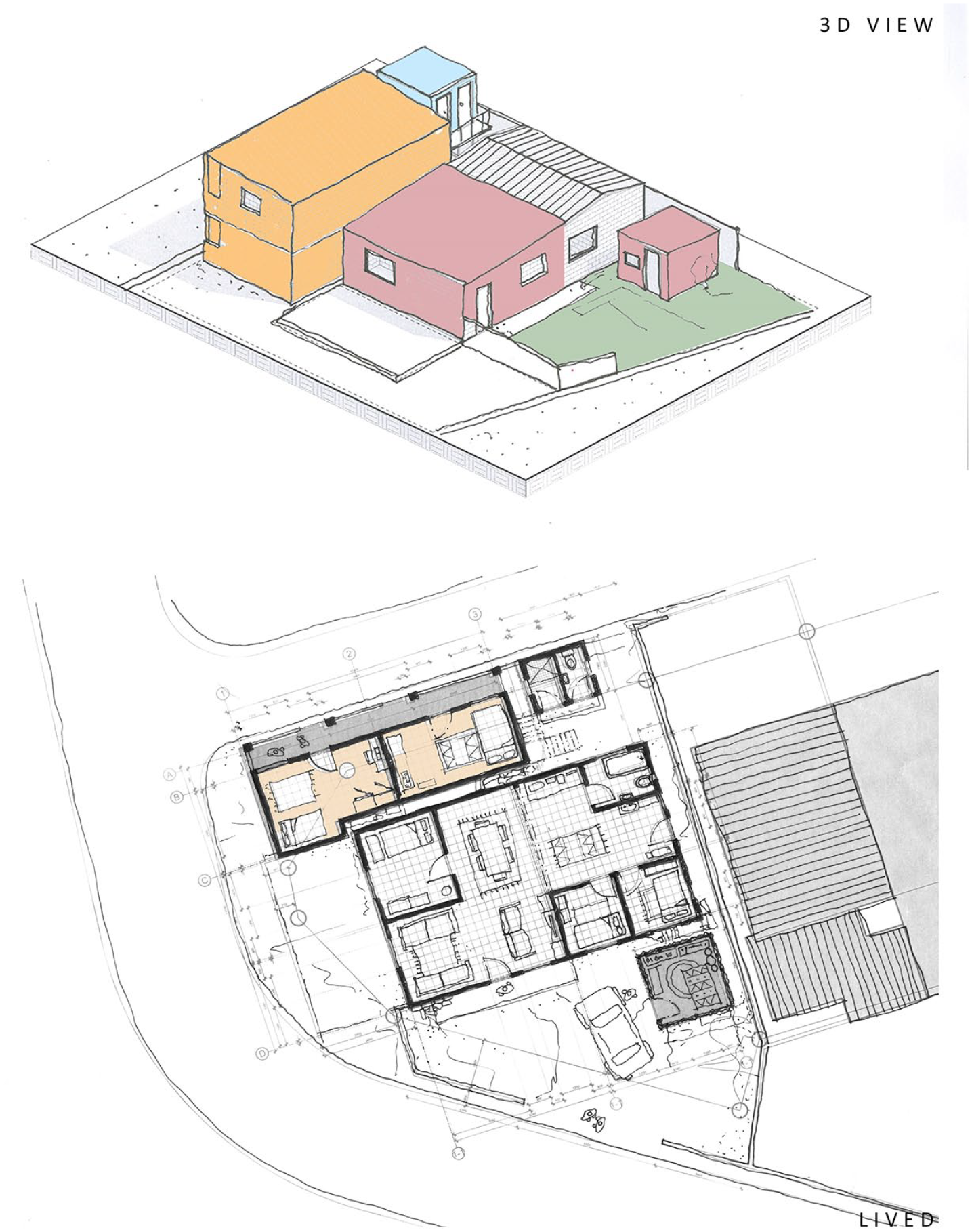
Architectural drawings of two-storey micro-flats
Landlords can charge much more for rooms than for shacks. Rents vary from about R 1,500 (approx. US$ 102) for a 12–15-square-metre room with a shared toilet and shower, excluding water and electricity, to about R 2,200 (approx. US$ 150) for a room of 18 square metres, including water and en-suite facilities. Landlords often let rooms before they are completely finished because they need to start collecting rent. They build incrementally, one room at a time, as the rental income is used to extend first horizontally and then vertically. This can give the final structure a very irregular appearance – walls may be misaligned and different building materials used. Yet most buildings look solid and secure.
These landlord–tenant interactions are different from those involving shacks because households in flats operate more independently from the main house. Tenants have their own keys to the main gate and lock their individual doors when away or at night. The landlord manages the building or appoints someone else to do so. Upfront deposits of one or two months’ rent are common. Interviewed tenants expressed a strong sense of dignity and upward mobility from living in vastly superior conditions compared with shacks.
Entrepreneurial landlords: boarding houses
The third typology identified in Delft South is the boarding house, a larger building with multiple rental rooms, usually of two storeys, although there is at least one three-storey building in the area. The entrepreneurial landlord buys and demolishes the original house to build a completely new rental structure with four to six rooms per floor. Some units are self-contained with one bedroom, a small kitchenette and a toilet/shower. Other rooms share bathrooms on each floor and sometimes a kitchen or living area. Tenants enjoy greater security because the buildings are usually fenced off and access is only possible through the main gate. Some plots are almost completely built over, leaving little open space for recreation or clotheslines. Rooms are generally let unfurnished, although some landlords provide a kitchenette or small cupboard (Figure 3).
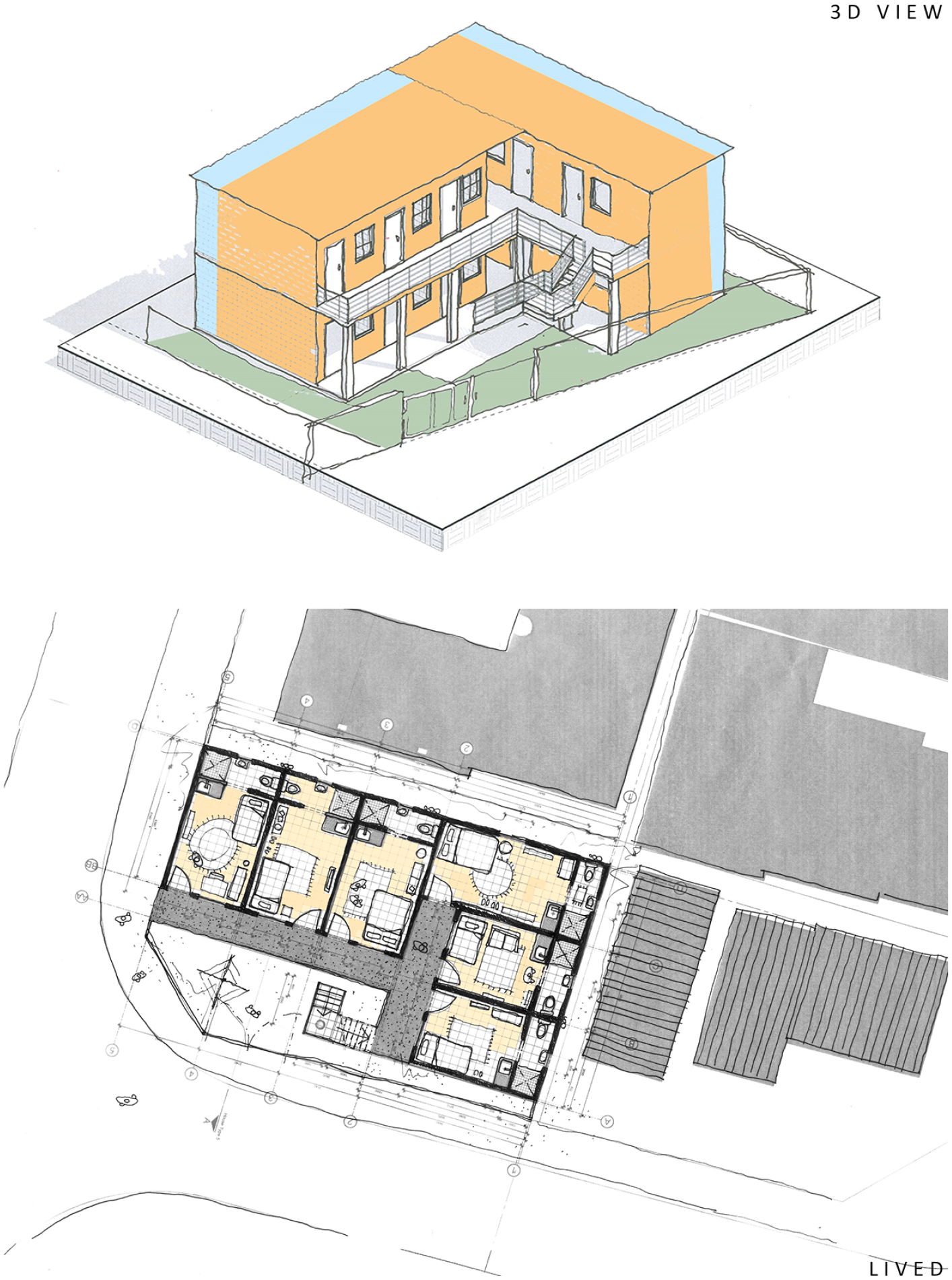
Architectural drawings of a boarding house
Boarding houses offer similar facilities to the micro-flats – at least one socket and lighting fixture per room, with floors generally tiled and walls painted. Many owners install prepaid electricity meters and many landlords are forced to upgrade their electricity connection to prevent overload. Water is usually included in the rent, and the plot’s original water and sewer connections are generally used. Some landlords also install hot water geysers, for which they charge higher rentals. The rents, like those for micro-flats, vary from about R 1,500 to R 2,500 (approx. US$ 100–170) depending on the location, size of the room and facilities available.
b. Changing landlord–tenant relations
These new forms of backyarding have important implications for landlord–tenant relationships. Shack tenants are usually responsible for their own structures. They negotiate the provision of basic services with the subsistence landlord and become very familiar through their daily contact. In the micro-flats and boarding houses, the construction and maintenance of the dwellings are undertaken by the homeowner or entrepreneurial landlords respectively, which means more of an arm’s-length, commercial arrangement, with much more money involved. There are also differences between the micro-flats and boarding houses. In the former, the homeowner landlord often lives in the original house and takes responsibility for the upkeep of the rented units. Boarding houses are never occupied by the entrepreneurial landlord. Instead the landlord appoints a caretaker, who typically resides in one of the units. Tenants usually use mobile phones to communicate with the landlord, so relationships are more formal.
The commercialization accompanies greater professionalization, apparent in the growing use of written lease agreements between the landlords and tenants in the micro-flats and boarding houses. This is unheard of in the backyard shacks. Some landlords obtain leasing templates from the internet or stationery shops and adapt them accordingly. Written agreements sometimes include annual rent increases, a three-month notice period, and a description of roles and responsibilities. Rent is usually paid by cash or bank transfer.
Despite more commercialized landlord–tenant relationships, aspects of solidarity and informality persist. Tenants reported good, respectful relationships with landlords and fellow tenants, and conflicts are rare. When problems do arise, meetings are arranged with the landlord to resolve the issues. Messaging apps such as WhatsApp are used for everyday communication. Landlords appear to show some leniency towards tenants who are unable to pay their rent, but within strict limits. They explain that they have to recover their investment. One tenant explained (Interview D15): “If you don’t have money to pay the rent, you can negotiate with the landlord to delay for a month. But no longer.” There seems to be a shared understanding that defaulting tenants have to leave after a grace period of one or two months. Given that all interviewees reported timely rent payments by the tenants, the issue of eviction was not discussed.
VI. Determinants of New Forms of Landlordism
It is clear that both the physical form of rental housing and the nature of landlordism are changing in Delft South. This is part of the commercialization observed in backyarding more generally. The dynamic process of expansion and upgrading is intimately bound up with shifting socioeconomic conditions, which influence landlords’ ability to participate in the process of transformation and to progress from subsistence towards more entrepreneurial forms of housing production.
a. Personal attributes
Economic hopes and aspirations
The prevalence of homeowner and entrepreneurial landlords clearly demonstrates that social aspirations and associated conditions in Delft are changing. It remains a predominantly poor neighbourhood with high unemployment, but it also has a thriving informal economy, a growing black middle class, and rising investment in housing and other physical assets. According to the chairman of the Delft Business Chamber: “Circumstances are changing in Delft. You have millionaires in Delft. People are trying to penetrate the rental market. There is a lot of demand. People from all over the Western Cape come to Delft [. . .] There are many good entrepreneurs out there. They have built up capital over the years. Most of them use money from their own pockets. Others have so called ‘angel investors’ who finance them.” (Interview D24)
The recent opening of a local shopping mall illustrates the increasing collective spending power of Delft residents. A growing cohort of enterprising individuals have recognized the commercial opportunities available in the area and are investing in property as a means of rent collection and wealth creation. They are using their own agency, assets and initiative to advance their economic position.
Education, skills and learning
Education and skill levels in the community are generally low. Only 23.7 per cent of adults have completed secondary school and only 3 per cent have a tertiary degree, according to the 2011 Census. Residents have little access to formal information about construction techniques, municipal regulations and external financing options. Landlords rely on word of mouth and informal communication to learn about property development and management. Most landlords said they got the idea of building flats from other community members: “You follow others. You learn from people who have already done it. You search for information. You speak to people who are currently building and ask for help” (Interview D8). There was no shortage of potential informants and role models because of the scale of backyarding. No one mentioned assistance from public bodies or civil society organizations.
Several landlords paid other people to provide professional support for particular tasks. Two-thirds hired experts to do architectural drawings or to register the title deeds and transfer ownership. These services are becoming more widely available in Delft because of the rising number of property transactions and informal construction activities. Small service providers, many of whom operate informally, have recognized the opportunities in the burgeoning rental market. This in turn spurs further activity through property-related value chains.
b. Wider factors and forces
Shifting norms and expectations
Landlords can charge higher rents partly because social norms and expectations have changed. In the 1990s many residents were expected by street committees and civic organizations to accommodate other people in their backyards with little or no rent. Circumstances have changed, and there is now greater acceptance of commercial arrangements, accompanied by higher standards of accommodation. Landlords confirmed that they were motivated above all by the prospect of financial gain. Residents and community organizations do not resist the upgrading process because they recognize the benefits of more durable structures. Some landlords explained that they are keen to reduce the risk of devastating shack fires and improve local living conditions and perceptions of the neighbourhood. Some landlords in Delft are foreign nationals, which suggests a certain tolerance of “outsiders” making money locally, although local gangs are likely to demand protection money.
Growing black middle class
Higher-quality backyard renting is emerging in places like Delft because of the growing demand from young black professionals and white-collar workers. One of the tenants interviewed was a nurse from Durban who had managed to get a job in Cape Town. With superior skills and purchasing power, such people can afford to move into areas better connected to economic opportunities. They seek rentals because they do not intend to stay forever. Many fall into the lower end of the so-called “gap market”.(63) They earn between R 3,500 and R 10,000 (approx. US$ 235–680) – too much to qualify for a free government house, but too little to buy their own property or to rent in the formal sector. Their demand for affordable yet decent accommodation has transformed the backyard sector. Every landlord interviewed expressed some version of this sentiment: “You don’t have to look for tenants. The moment you build they come to inquire.”
Informal land market
The property market emerging in Delft allows aspiring landlords to buy in the area with the intention to develop rental units.(64) Many transactions are informal because the owners of RDP/BNG houses are not supposed to sell within eight years of occupation. Entrepreneurial landlords usually contact local sales agents, who connect them to residents eager to sell. Houses for sale are also listed on the Gumtree website or on posters stuck on streetlights or local advertisement boards. Properties cost approximately R 180,000 (approx. US$ 12,200) on average, including any structures on the site. Prices vary depending on size, situation, desperation of owners to sell, and competition between buyers.
Some landlords say they possess formal title deeds to their properties; others have an affidavit or authorized receipt to document their acquisition, even if it was transferred informally. Landlords recognize the value of the title deed as it registers an indisputable legal claim to the property and reduces the risk of losing their investment. One owner explained: “I am aware of people who did not bother to get the formal title deed, and they lost out. They paid the money, but later they realized that this was not the real owner of the place. The owner shows up, then you are the loser. We are foreigners. We can’t follow up accordingly. If you follow up, you might lose your life in that situation. So you let it go.” (Interview D8)
Access to finance
Finding the capital to purchase property and pay the sizeable upfront cost of building rental units is the biggest barrier facing landlords. Interviewees overcame this in multiple ways. All had regular income from employment or self-employment, essential for the initial investment. Many accumulated savings from their earnings. One received a payout from a retirement fund. Others sold off particular assets, such as a car or taxi, to get the building started. These initial lump sums ranged widely from R 10,000 to R 150,000 (approx. US$ 680–10,170). Three landlords raised funds from participation in savings clubs (stokvels). In one instance the house was completed with R 200,000 (approx. US$ 13,600) from a stokvel, half the total construction cost.
Some landlords borrowed from family members. Three people took personal loans from banks, typically between R 20,000 and 30,000 (approx. US$ 1,356 and 2,035). Another obtained credit from his supplier of building materials, and one received a construction loan from the microlender iBuild. The interest rates charged by these organizations are typically over 22 per cent, which means the cost of repayment is high and there is added pressure to generate rent. Consequently, debt is not the preferred method of financing these structures and is used as little as possible, and often only towards the end of a project for expensive fixtures and fittings, such as plumbing and sanitary ware. None of the interviewees mentioned having (longer-term and cheaper) mortgage financing.
The building process
The construction process is replete with risks and uncertainties. Most landlords employ a contractor to manage the procedure, including recruiting the workforce. Some possess the requisite skills and build the flats themselves using local labourers. Employing workers from the locality is important to get support and protection from the community, given the high unemployment. According to one landlord: “If you don’t employ locals, they can vandalise your building” (Interview D5). To reduce costs, landlords almost always purchase the building materials themselves from local hardware suppliers or wholesalers. Constructing the flats can take anything between two months and several years, depending on the owner’s financial situation.
Employing a contractor under the prevailing informal arrangements can be hazardous. A few landlords said they lost money when their builder “ran away without finishing the job”. Some builders disappeared after being paid for drawing up the building plan and layout. Others took the money prior to finishing such jobs as roofing or tiling. Owners also experienced the theft of materials. Most said they did not trust their builders and spent as much time as possible on site, even arranging for a family member or close friend to stay there at night to protect their investment and materials.
Official regulations and procedures
House-building is closely regulated by the City Council through a series of land-use planning controls, municipal bylaws and building standards. Landlords in Delft do not comply with most of these requirements because of their cost and complexity. They are also unaware of the risks of failing to comply. Only four of the developers said they had formally approved building plans. Others prepared architectural drawings to guide the construction, but did not submit them to the municipality for approval. Some tried to submit formal applications but withdrew them when they discovered a fee was to be paid. Several proceeded with their applications but received an initial rejection from the municipality and decided not to submit revisions. Most landlords were clearly unwilling to spend time and money complying with procedures they had doubts about.
The City has tried to make it easier for homeowners to build an additional dwelling on their plot by amending the relevant bylaw. It does not allow multiple units to be built. Local planning officials in some parts of the city (especially Khayelitsha) have also provided practical advice and support to help residents prepare better building plans and guide them through the procedures. This has resulted in more plans being approved in these localities, but elsewhere in the city this practice is not seen as a priority. The municipality also lacks the capacity to enforce its own bylaws and regulations. Residents are aware of this, and it reinforces their scepticism of the formal rules and procedures. According to the chairman of Delft Business Chamber (Interview D24): “Municipal officials turn a blind eye to it. Every household has illegal structures on their plot.” In other words, there is widespread indifference to government regulations and the drawbacks of non-compliance. Obvious risks are that their buildings may be unsafe or may infringe upon their neighbours’ privacy and amenities.
VII. Discussion and Conclusions
The supply of informal rented housing in many South African townships is undergoing a dynamic process of upgrading and intensification, with substantial impacts on household living conditions, neighbourhood environments and social relationships within communities. Homeowner and entrepreneurial landlords are building better-quality units predominantly for young white-collar workers, who are willing to pay higher rents for the residential improvements. Considerable benefits can be derived from expanding the stock of decent affordable accommodation and providing people with a greater choice of places to stay. Yet there are also costs associated with higher rents, unauthorized building techniques, and sheer pressure on public infrastructure and community services. Structural instability, service breakdowns and loss of amenities can pose health and safety risks to the public.
All spheres of the government currently have a hands-off approach to backyard housing. Having installed the physical infrastructure and built the original housing units, the government expects to manage these neighbourhoods through established regulatory procedures and conventional municipal services. But many of the rules and procedures supposedly governing the area were devised in a different context and are unrealistic and inappropriate in the prevailing circumstances. There is a risk of a downward spiral as population densities rise, services get overburdened, infrastructure decays, environmental conditions deteriorate and the state’s capacity to implement essential safeguards diminishes. Furthermore, cities generally raise very little revenue from property taxes in townships, despite the sizeable rents collected by some landlords. This affects the attitudes of civic leaders towards continued public investment in these areas.
It is possible to envisage a more positive scenario that could offer broader benefits. The public sector could strive to contain the negative externalities and create a positive dynamic with better outcomes. There are various elements to this, whose relative importance and sequencing require further investigation. For instance, the system of land registration needs simplification so that landlords have greater security of tenure and can exchange property safely with less risk to their investments. The transfer process could be made easier and cheaper to encourage people to go the formal route rather than selling property informally. This would reduce uncertainty, opportunism and contestation, and support longer-term decision-making. Having collateral would help property owners to raise external finance to construct better buildings. An up-to-date land registration system would also assist property valuation, and the City Council could start collecting taxes on properties above a certain threshold. More tax collection would help pay for enlarged infrastructure to accommodate the growing population.
In addition, regulatory reforms are required to improve the operating environment for investment in rental housing. Systems governing the built environment should be simplified and streamlined to ensure that standards are appropriate for low-income housing and that procedures can accommodate inexperienced applicants. Health and safety considerations should take precedence over secondary and cosmetic factors, such as external finishes. The mindset of officials needs to shift from indifference or enforcement towards a hands-on, enabling approach. Local advice centres could offer people technical support to help them reach minimum building standards and guidance to obtain the necessary approvals. Simplified systems to oversee landlord–tenant relationships are also worth considering to protect tenants from exploitation. The fundamental principle is to create more responsive institutions and systems that facilitate the progressive upgrading and regularization of informal rental housing so as to safeguard the interests of different groups and develop the sector into a viable, enduring part of the urban housing system. A gradual approach in line with rising household incomes (rather than a sudden, wholesale replacement of shacks by formal dwellings) should enable people to adjust to the steadily improving conditions with far less risk of displacement. A developmental approach means working with rather than against informality to encourage actors to invest in and enhance backyard rental structures and practices.
Footnotes
Acknowledgements
We acknowledge the constructive feedback from two anonymous reviewers that contributed to strengthening the paper. We are grateful to Sebastian Hitchcock and Luphiwo Tanda for the architectural drawings provided. Finally, we thank our fieldwork assistants and all interviewees for their participation in our research.
Funding
We would like to thank the Department of Human Settlements, Western Cape Government, South Africa for financial support for our study.
1.
UN-Habitat (2003), Rental Housing: An Essential Option for the Urban Poor in Developing Countries, Nairobi; also Peppercorn, I G and C Taffin (2013), Rental Housing: Lessons from International Experience and Policies for Emerging Markets, World Bank, Washington, DC; and Gilbert, A (2016), “Rental housing: the international experience”, Habitat International Vol 54, pages 173–181.
2.
Deboulet, A (2016), Rethinking Precarious Neighbourhoods, Agence Française de Développement; also Rocco, R and J van Ballegooijen (editors) ( ), The Routledge Handbook on Informal Urbanization, Routledge, New York.
3.
See reference 1, Peppercorn and Taffin (2013); also , Rental Housing: A Much Neglected Housing Option for the Poor, Housing the Poor in African Cities Quick Guide 7.
4.
See reference 1, Peppercorn and Taffin (2013) and Gilbert (2016); also see reference 3, UN-Habitat (2011); Gilbert, A (2008), “Viewpoint: Slums, tenants and home-ownership: on blindness to the obvious”, International Development Planning Review Vol 30, No 2, pages i–x; Kumar, S (2011a), “The research–policy dialectic”, City Vol 15, No 6, pages 662–673; and King, R, M Orloff, T Virsilas and T Pande (2017), Confronting the Urban Housing Crisis in the Global South: Adequate, Secure, and Affordable Housing, World Resources Institute, Washington, DC.
6.
See reference 1, UN-Habitat (2003) and Peppercorn and Taffin (2013); also see reference 3, .
8.
Gulyani, S and D Talukdar (2008), “Slum real estate: the low-quality high-price puzzle in Nairobi’s slum rental market and its implications for theory and practice”, World Development Vol 36, No 10, pages 1916–1937.
9.
Ballesteros, M M (2004), Rental Housing for Urban Low-Income Households in the Philippines, Philippine Institute for Development Studies, available at .
11.
Amis, P (1984), “Squatters or tenants: the commercialization of unauthorized housing in Nairobi”, World Development Vol 12, No 1, pages 87–96; also Gilbert, A (1983), “The tenants of self-help housing: choice and constraint in the housing markets of less developed countries”, Development and Change Vol 14, pages 449–477; and Kalim, I (1988), “The inner city tenant: the missing category in housing policy”, Working Paper 19, East-West Center Association, Honolulu.
12.
See reference 4, Kumar (2011a); also see reference 9; Edwards, M (1990), “Rental housing and the urban poor: Africa and Latin America compared”, in P Amis and P Lloyd (editors), Housing Africa’s Urban Poor, Manchester University Press, Manchester; Gilbert, A (1993), In Search of a Home: Rental and Shared Housing in Latin America, UCL Press, London; Lonardoni, F and J-C Bolay (2016), “Rental housing and the urban poor: understanding the growth and production of rental housing in Brazilian favelas”, International Journal of Urban Sustainable Development Vol 8, No 1, pages 49–67; and Smith, S (2017), “Landlordism and landlord–tenant relations in Kisumu and Kitale’s low-income settlements”, International Journal of Urban Sustainable Development Vol 9, No 1, pages 46–63.
13.
Hardoy, J E and D Satterthwaite (1986), “Shelter, infrastructure and services in third world cities”, Habitat International Vol 10, No 3, pages 245–284; also Kumar, S (1996a), “Landlordism in Third World urban low-income settlements: a case for further research”, Urban Studies Vol 33, Nos 4–5, pages 753–782.
15.
See reference 13, Kumar (1996a); also Kumar, S (1996b), “Subsistence and petty capitalist landlords: a theoretical framework for the analysis of landlordism in Third World urban low income settlements*”, International Journal of Urban and Regional Research Vol 20, No 2, pages 317–329.
16.
See reference 13, Kumar (1996a); also see reference 15, .
19.
See reference 4, Kumar (2011a); also Kumar, S (2011b), Social Relations, Rental Housing Markets & the Poor in Urban India, LSE, London.
20.
McGaffin, R, J Spiropoulous and L Boyle (2019), “Micro-developers in South Africa: a case study of micro-property developers in Delft South and Ilitha Park, Cape Town”, Urban Forum Vol 30, pages 153–169.
22.
See reference 12, Lonardoni and Bolay (2016) and .
23.
Turok, I and J Borel-Saladin (2016), “Backyard shacks, informality and the urban housing crisis in South Africa: stopgap or prototype solution?”, Housing Studies Vol 31, No 4, pages 384–409.
24.
See reference 23; also Crankshaw, O, A Gilbert and A Morris (2000), “Backyard Soweto”, International Journal of Urban and Regional Research Vol 24, No 4, pages 841–857; Bank, L (2007), “The rhythms of the yards: urbanism, backyards and housing policy in South Africa”, Journal of Contemporary African Studies Vol 25, No 2, pages 205–228; and Lemanski, C (2009), “Augmented informality: South Africa’s backyard dwellings as a by-product of formal housing policies”, Habitat International Vol 33, pages 472–484.
28.
Sapire, H (1992), “Politics and protest in shack settlements of the Pretoria-Witwatersrand-Vereeniging region, South Africa, 1980–1990”, Journal of Southern African Studies Vol 18, No 3, pages 670–697; also Beall, J, O Crankshaw and S Parnell (2002), Uniting a Divided City: Governance and Social Exclusion in Johannesburg, Routledge, available at .
32.
Hamann, C, T Mkhize and G Gotz (2018), “Backyard and informal dwellings (2001-2016)”, Gauteng City Region Observatory Map of the Month.
33.
Gardner, D and M Rubin (2016), “The other half of the backlog: (re)considering the role of backyarding in South Africa”, in L R Cirolia (editor), Upgrading Informal Settlements in South Africa: A Partnership-Based Approach, UCT Press, Cape Town, pages 77–95, page 78.
34.
Watson, V (1994), “Housing policy, subletting and the urban poor”, Urban Forum Vol 5, No 2, pages 27–43.
35.
Gilbert, A, A Mabin, M McCarthy and V Watson (1997), “Low-income rental housing: Are South African cities different?”, Environment and Urbanization Vol 9, No 1, pages 133–148.
37.
Morange, M (2002), “Backyard shacks: the relative success of this housing option in Port Elizabeth”, Urban Forum Vol 13, No 2, pages 3–25.
41.
Shapurjee, Y and S Charlton (2013), “Transforming South Africa’s low-income housing projects through backyard dwellings: intersections with households and the state in Alexandra, Johannesburg”, Journal of Housing and the Built Environment Vol 28, No 4, pages 653–666.
42.
See reference 33.
43.
Watson, V (2009), “Strategic literature assessment for informal rental research project”, report for the Social Housing Foundation and Urban LandMark, Johannesburg.
44.
See reference 33.
45.
Maregele, B (2018), “Why families occupied land in Parkwood”, GroundUp, 19 June, available at https://www.groundup.org.za/article/why-families-occupied-land-parkwood; also Evans, J (2018), “ ‘2019 is coming, and you’re going to lose’, angry Cape Town backyarders tell minister”, News24, 22 June, available at https://www.news24.com/SouthAfrica/News/2019-is-coming-and-youre-going-to-lose-angry-cape-town-backyarders-tell-minister-20180622; and Smith, G L (2018), “Madikizela: Siqalo residents, Mitchells Plain backyard dwellers will get houses”, EWN, 7 May, available at .
46.
GroundUp Editors (2018), “Why are there so many land occupations in Cape Town?” GroundUp, 27 March, available at https://www.groundup.org.za/article/why-are-there-so-many-land-occupations-cape-town; also , “Sound housing policy needed”, 28 March.
47.
Langa, M and D Hartford (2018), Urban Land and the Genesis of Violence, Centre for the Study of Violence and Reconciliation, Johannesburg.
48.
Mian, N and A Furlong (2016), “Immigrant-owned shops looted in Dunoon”, GroundUp, 18 April, available at .
49.
Kelly, S (2016), “Timeline of protest and violence in Dunoon”, GroundUp, 20 April, available at .
50.
Postman, Z (2019), “City of Johannesburg can’t cope with Alexandra land occupations, inquiry told”, GroundUp, 14 May, available at .
51.
See reference 50.
52.
See reference 20; also Bolosha, A U (2018), “The development process of backyard shacks on RDP stands in Gauteng South Africa - towards sound urban development”, Master’s thesis, Tokyo University, Tokyo; and , Affordable Rental Housing, Development Action Group, Cape Town.
54.
See reference 41.
56.
57.
58.
See reference 56.
59.
Cirolia, L R and S Scheba (2019), “Towards a multi-scalar reading of informality in Delft, South Africa: weaving the ‘everyday’ with wider structural tracings”, Urban Studies Vol 56, No 4, pages 594–611.
60.
See reference 57.
61.
See reference 56.
62.
See references 57 and 59.
63.
See reference 57.
64.
See references 57 and 59.