




Abstract
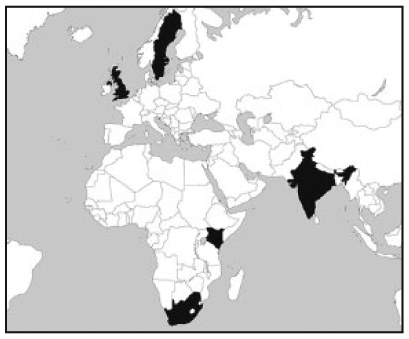
The campaign for the inclusion of a specifically urban goal within the United Nations’ Sustainable Development Goals (SDGs) was challenging. Numerous divergent interests were involved, while urban areas worldwide are also extremely heterogeneous. It was essential to minimize the number of targets and indicators while still capturing critical urban dimensions relevant to human development. It was also essential to test the targets and indicators. This paper reports the findings of a unique comparative pilot project involving co-production between researchers and local authority officials in five diverse secondary and intermediate cities: Bangalore (Bengaluru), India; Cape Town, South Africa; Gothenburg, Sweden; Greater Manchester, United Kingdom; and Kisumu, Kenya. Each city faced problems in providing all the data required, and each also proposed various changes to maximize the local relevance of particular targets and indicators. This reality check provided invaluable inputs to the process of finalizing the urban SDG prior to the formal announcement of the entire SDG set by the UN Secretary-General in late September 2015.
Keywords
I. Introduction
Since 2013, the global Campaign for an Urban SDG has worked to secure a standalone urban goal within the Sustainable Development Goals (SDGs), intended to replace the Millennium Development Goals (MDGs) from 2016. This was ultimately successful, and Goal 11, ‘‘Make cities and human settlements inclusive, safe, resilient and sustainable’’, was confirmed as one of the 17 SDGs at the UN General Assembly in September 2015 (see Appendix). With support from the worldwide Compact of Mayors, and a range of organizations, including the Sustainable Development Solutions Network (SDSN), UN-Habitat, the World Urban Campaign, Communitas, Local Governments for Sustainability (ICLEI), United Cities and Local Governments (UCLG), the Indian Institute for Human Settlements (IIHS) and Mistra Urban Futures, this effort has addressed the crucial importance and strategic influence of cities with respect to sustainable development.
The Campaign undertook the challenge in the belief that special attention to the structure and dynamics of urban areas is essential and potentially transformational, given their social, environmental and economic impact. Gaining consensus on what to include in an urban-focused goal proved demanding and time-consuming in view of the diverse views, disciplinary/professional perspectives and great complexities involved. After all, there is no globally accepted definition of an urban area, and urban characteristics differ markedly. Central to this task has been the challenge of determining how to benchmark and measure performance according to the SMART criteria (i.e. specific, measurable, assignable, realistic and time-specific), based on specialist scholarship, the existing literature(1) and practical experience.
At the session of the UN Open Working Group on Sustainable Development Goals in June 2014, when the 17 draft SDGs were confirmed, a standalone urban goal was included as Goal 11. Following two further intensive workshops to refine the proposed set of targets and indicators for this goal, Mistra Urban Futures – a Gothenburg-based international research centre on urban sustainability(2) – undertook a pilot study from March to June 2015 to test the relevance and feasibility of measuring the proposed targets and indicators in five cities across three continents. It achieved this by working through the established transdisciplinary co-production research partnerships of its four local platforms in Cape Town, Kisumu, Greater Manchester and Gothenburg, and with the Indian Institute for Human Settlements in Bangalore (Bengaluru), another of the Urban SDG Campaign partners. In each city, academic and/or consultant researchers worked with local authority counterparts to assess data availability there; the relevance of the proposed indicators and the feasibility of their measurement; and any recommendations for improvement to particular targets and indicators.
These five cities provide a reasonably representative sample of the diversity of urban contexts and conditions around the world. They are neither capitals nor megacities, and several are secondary or intermediate cities in their respective national urban systems. Importantly, in view of the universal application of the SDGs (in contrast to the MDGs, which applied only to the global South), these cities are located in both the global South and North. They possess very different local authority institutional capacities, and experience diverse levels of poverty, un- and underemployment, economic dynamism or stagnation, and social and environmental conditions. Hence, the rationale for the project was that if the draft Goal 11 targets and indicators are perceived as relevant and can be demonstrated to be practicable in these cities, or if we know what modifications are needed to make them so, then the prospects of Goal 11 becoming a useful tool for national and urban local authorities will be greatly enhanced.
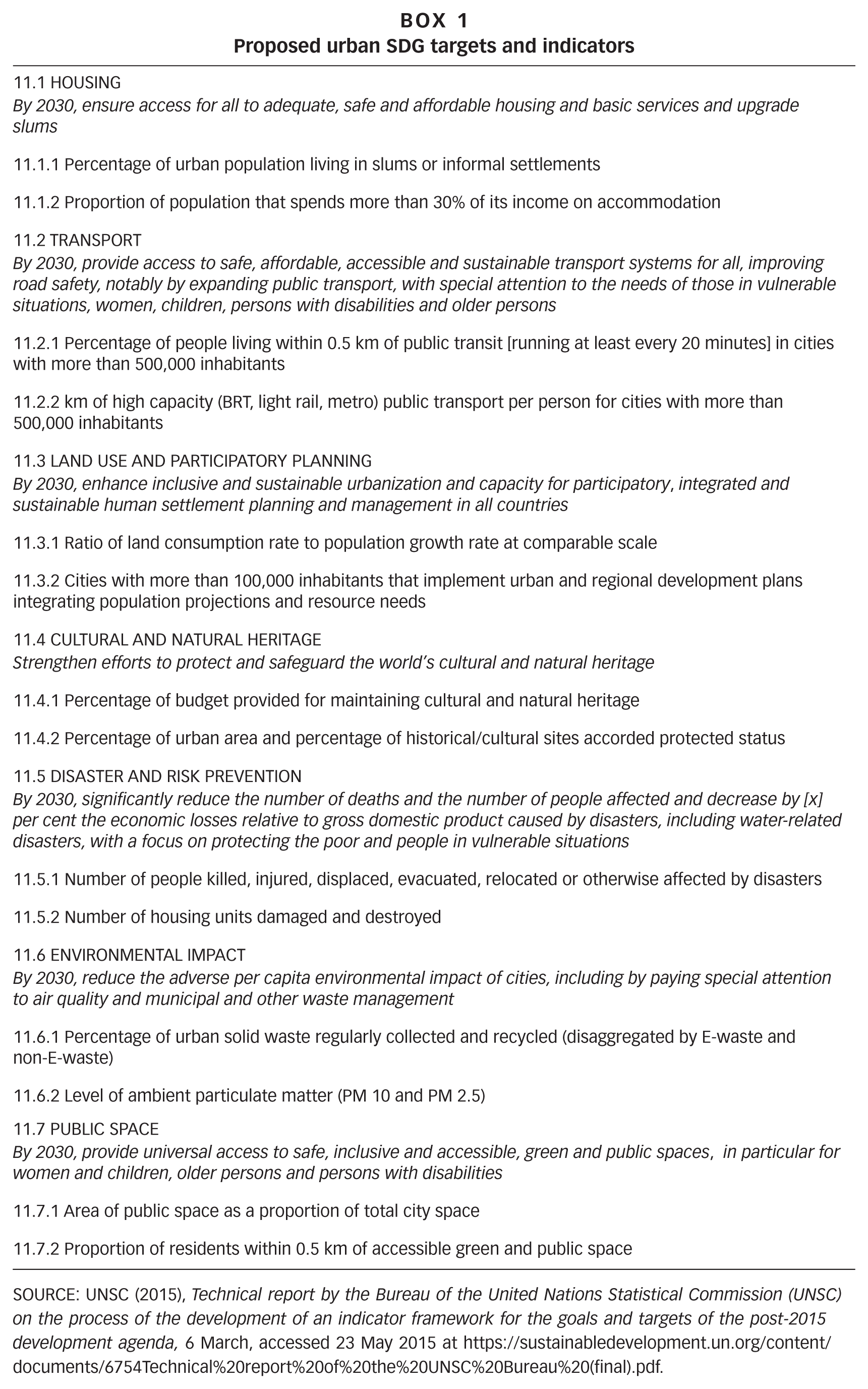
Box 1 lists the seven draft targets and 14 indicators utilized in this study, as referred to selectively below. In pursuit of practicability, the number of targets and indicators deemed necessary to capture the most important relevant issues globally was minimized. Indicators on issues that are not uniquely urban but nevertheless highly relevant, such as health and education, can be drawn from other goals dedicated to these sectors. The Campaign for an Urban SDG expended considerable effort to provide such cross-referencing among the SDGs and recommended appropriate variables and units to facilitate this. Nevertheless, concerns remain that Goal 11 is too ambitious for smaller and many urban areas in the global South.
In order for the SDGs to become effective policy tools for ensuring and monitoring sustainable development, reliable and robust data at comparable scales are crucial. The UN Secretary-General’s Independent Expert Advisory Group (IEAG) has called for a data revolution through which statistical systems are strengthened at local, national and international levels and new means of collecting data of high quality and coverage are promoted.(3) The UN-affiliated Sustainable Development Solutions Network subsequently proposed 10 principles for the indicators, informed by lessons from the MDGs, comments from national statistical offices (NSOs), and principles laid out in various reports on the proposed SDGs.(4)
Our findings show that current local authority statistical capacity is indeed highly variable and often inadequate for the purpose of fulfilling the urban SDG reporting requirements, while the draft targets and indicators comply with these 10 principles to varying extents. Since the precise targets and indicators changed at each stage of the SDSN process, the most recent comprehensive compilation available at the inception of the pilot study was utilized, namely the Bangalore Outcome Document.(5) This reflected the Urban SDG Campaign Bangalore workshop in January 2015, later substituted with the UN Statistical Commission report on the SDGs from March 2015.(6)
II. Principal findings and implications
The 10 SDSN principles referred to above have been used to structure the following discussion on the indicators for each target in order to demonstrate the extent to which they are currently complied with in our sample of cities. The complexities involved in developing a universally applicable set of targets and indicators for the SDGs are well illustrated through this pilot study. Finding indicators that sufficiently reflect the targets and are comparable across a range of settings is no easy task. The overall findings from this pilot study demonstrate these complexities and those of integrating the targets and indicators into already existing practices of policy making. This article gives an overview of the findings and lessons that have emerged through this project.
Principle 1: Indicators that are limited in number and globally harmonized
The first principle calls for a set number of 100 indicators across the 17 targets and in addition a set of complementary national indicators.(7)
The SDG indicators will describe current conditions, set the international agenda for the next 15 years, and help identify problems and goals of sustainable development that all countries should address and report on. They are thus both technical and scientific and also constitutive. In order to measure urban sustainable development, too limited a set of indicators in Goal 11 will not be sufficient. This illustrates the obvious dilemma of striking a balance between minimizing the number of indicators and ensuring their policy relevance. The pilot study showed a generally positive engagement on the part of local authorities, who are for the most part keen to include a set of SDG indicators in their already existing frameworks, but only as long as they are deemed relevant and of value to the monitoring and development of their respective cities.
Principle 2: Simple, single-variable indicators with straightforward policy implications
The second principle suggests that the indicators need to be simple to compile, interpret and communicate, as well as having clear policy implications.(8)
Our findings suggest that the balance between the indicators being simple and single-variable on the one hand, and their policy implications on the other, is far from being as straightforward as desired. The availability of data for the proposed indicators varied considerably from target to target and among cities. These findings reflect several lessons learned from the MDGs. Despite the considerable achievement of the MDGs in terms of strengthening statistical systems and bringing stakeholders together to eradicate poverty, the agenda remains unfinished and challenges remain.(9) Data gaps, data quality, compliance with methodological standards, and non-availability of disaggregated data are among the major challenges identified, and these are all more or less present in our pilot study.
Although some trends emerged among Bangalore, Cape Town and Kisumu on the one hand, and Greater Manchester and Gothenburg on the other, these divisions are inconsistent across targets and indicators and do not reflect a systematic North–South divide. The findings also reveal that the targets and respective indicators are not always well aligned and are at times considered difficult to operationalize. There is accordingly a danger of measuring what is readily measurable rather than what is actually relevant and important. This is evident in most of the targets, but particularly in 11.1 on informal settlements, 11.4 on cultural heritage, 11.5 on disaster and risk prevention, and 11.7 on public space, due to infrequently collected data, unclear or differing units of measurements, and generally poor quality of data availability and comparability.
A key difficulty with Goal 11 is that there are no standardized metrics for measuring the huge and complex domain of urban development, in which states are only one of many actors alongside local authorities, the private sector, non-governmental organizations and citizens.(10) A major concern was, therefore, how to ensure meaningful translation into policy and planning. The Greater Manchester team, for instance, suggested that linking data with analysis and implementational capacity is critical, but with diverse local stakeholders and contexts it is not always straightforward to do so.(11) The Bangalore and Kisumu teams highlighted a lack of coordination as well as a reluctance to share data among various local authority departments and between the local and national levels, as well as between public and private actors. In part, this reflects the inherent risk in tying performance and evaluation to numerical targets and the potential for manipulating the numbers to look better.
For the IEAG’s proposed post-2015 ‘‘data revolution’’(12) to achieve its objective of better, faster and more accessible data, the policy implications cannot be underestimated. Besides the significant efforts required to fill the data gaps and to invest in capacity to collect and analyse the data, there is also a need to enhance the policy relevance for local authorities. For instance, all five city teams agreed that indicators in tick-box format are not very relevant for planning and policy making. Such indicators are perhaps easy to compare across cities, but they add little or no value to ongoing planning processes by the respective city authorities.
Principle 3: Allow for high-frequency (annual) monitoring
The third principle emphasizes that timeliness is crucial for data to be a useful management and policy tool and that, in order to align with national planning and budgetary processes, SDG monitoring should operate on an annual cycle.(13)
This call for annual reporting is not entirely supported by the findings of the study. Data required for several of the indicators are currently not produced on an annual basis, and annual reporting would therefore be based on estimations and projections of varying and unverifiable degrees of accuracy. This is particularly the case for data collected through national household surveys, which proved to be a substantial source for cities in our pilot study. These data are generally limited in scope and reach at the city level due to the formulation of the questions or limited sample sizes. In some cases, for instance in Gothenburg, a general household survey is conducted every fourth year; to change this to annual reporting would be costly and would not be deemed relevant by the local authorities. Annual surveys and reporting would put too much strain on the willingness to participate, a problem that is growing in scale due to a general increase in the reporting burdens and the surveys being conducted. This is the case, for instance, for indicator 11.1.2 on the proportion of income spent on accommodation, and the secondary indicator 11.2 on income spent on transport. Furthermore, the Cape Town team questioned the reliability of self-reported income in these surveys.
For indicators based primarily on population data from national censuses conducted every decade, concerns were expressed about the reliability of the estimates in the intervening years. For the indicators 11.1.1 on informal settlements, 11.2.1 on distance to public transit, 11.3.1 on the land use ratio, and 11.7.1 on public space, the general assumption is that data will not necessarily change significantly on an annual basis, and less frequent reporting is recommended. Additional reporting on these indicators is therefore seen as a potential burden, rather than adding value to planning and policy-making processes.
Principle 4: Consensus-based, in line with international standards and information already collected by national and environmental–economic information systems
The fourth principle suggests that indicators be based on international standards, recommendations and best practices to facilitate international comparison.(14)
The general findings of this pilot study are in line with this principle. It is clear that the relevance and feasibility of the proposed indicators depend partly on their alignment with existing international standards and global benchmarks to facilitate the comparison of data across cities. Nevertheless, such standards are often not met, and the recommendations for each indicator called for the harmonization and standardization to be more explicit.
Two examples are particularly relevant. The first has to do with the different forms of measurement used in different places, which make comparisons difficult. This is apparent for the secondary indicator in target 11.2, on the shares of trips by walking, bicycling and public transport. In Gothenburg, this indicator is measured differently at local, regional and national levels in various surveys and reports. Some focus on distance travelled, others on the number of trips made. The trips that are included also vary. Although the lack of comparability poses a great limitation in making the indicator useful internationally, the methods used cannot simply be changed. Instead, a system of parallel measurements might be required, using old and new methods simultaneously in order to guarantee reporting continuity. It is also crucial, in this particular case, to be more specific about what is meant by ‘‘share of trips’’: does this refer to the number of trips or the distance travelled? Are all trips to be included, and how should the complexity of multi-modal trips be dealt with?
The other example has to do with a lack of explicit rationales and definitions. For target 11.4 on cultural and natural heritage, for instance, this resulted in cities struggling with the proposed indicators 11.4.1 and 11.4.2 since they are considered very difficult to define and measure. Each city had different definitions for cultural and natural heritage, thus raising questions over comparability and relevance. Our main recommendations in this case include the separation of cultural and natural heritage and the need for clear definitions of each. This target should focus exclusively on cultural heritage, with targeting of accessibility and impact added, and intangible cultural practices taken into consideration. For the focus on natural heritage, the proposed indicator on biodiversity in target 11.6, the much-too-complex Singapore City Index, should be reworked to encompass such aspects.
Principle 5: Constructed from well-established data sources
This fifth principle highlights the need for indicators to draw on well-established sources of public and private data, and to be consistent to enable measurement over time. (15)
This principle seeks to ensure that data collection is both transparent and accountable. The SDSN report suggests that monitoring the SDGs will require many different types of data, which together will set in motion the data revolution.(16) However, the findings from this pilot study demonstrate clearly that drawing on well-established sources is not necessarily straightforward.
First, there are not always ‘‘well-established’’ data sources or the capacity to deal with the data available. The data are unevenly distributed, and the capacity to engage with non-traditional data beyond censuses and surveys is frequently limited. Local authorities in Bangalore and Kisumu drew attention to the lack of geographical information system (GIS) expertise within their local authorities, while the city of Cape Town, which has good GIS capacity, highlighted challenges related to data availability and the type and volume of analysis required. There are questions around the institutional capacity to operationalize several of the indicators that require GIS work. There are also other challenges when using geospatial data. Distinguishing, for instance, between built-up and non-built-up land use, water bodies and rural areas, for targets 11.3 on land use and 11.7 on public space, can be relatively straightforward, but it is time-consuming and requires a trained eye. Satellite image interpretation needs field verifications to improve data accuracy.(17) These tasks are resource-intensive and not always a priority, which then challenges the reliability and robustness of the datasets produced.
Second, it is not always possible to aggregate data collected from various sources, including from public and private actors. In relation to target 11.1 on housing and target 11.6 on waste management and air quality, the Greater Manchester team pointed out, for instance, that fragmentation between public and private providers complicates data collection. There is an associated risk of data becoming increasingly privatized and limited in access and applicability as service contracts expire and the data held are no longer accessible, or as publicly owned data are combined with privately collected data and sold as a service to local authorities, using evolving methodologies.
Third, the focus on well-established sources also risks undermining a much-needed focus on openly sourced data. There is a somewhat complicated trade-off between drawing from existing statistical frameworks and the need for new and improved data sources.(18) The data collected for this pilot study are drawn primarily from existing censuses, surveys and other readily available local authority data. This can raise a crucial dilemma, since these sources frequently distinguish simplistically between formal and informal sectors, as in the requirements for the Goal 11 targets on housing, transportation and waste management. This helps perpetuate a dichotomy between the two and reiterates a problematic valorization of formal public transportation and formal waste management practices relative to other modes of provision, for instance. To avoid the perpetuation of a binary approach, openly sourced data should be introduced and the relationship between formal and informal practices should be reconsidered.(19)
Fourth, both the Gothenburg and Kisumu teams highlighted the need for better checks and balances for the data produced. The Kisumu report emphasizes the need to strengthen accountability and monitoring practices in relation to data collected on waste management, while the Gothenburg report recommends using pedigree scores (i.e. information regarding the reliability of indicators such as a quality score or an uncertainty level) to help evaluate the quality of the data collected for target 11.5 on disasters. It also refers to the work being done by the Joint Research Centre (JCR) and the European Commission on producing operational indicators for the Sendai Framework for Disaster Risk Reduction 2015-2030 and the necessity of linking these to the SDG process. According to one such study,
‘‘The current practice in disaster loss data recording across the EU shows that there are hardly any comparable disaster damage and loss data: differences exist in the methods of data recording as well as in the governance approaches to managing disaster damage and loss data.’’(20)
These findings indicate that substantial work is still necessary to make even well-established sources available and applicable to Goal 11, while the coherence of recording processes needs to be improved and harmonized in order to close data gaps.
Principle 6: Disaggregated
The sixth principle implies giving preference to indicators that lend themselves to disaggregation in order to track smaller-scale inequalities in SDG achievement. (21)
This pilot study raised several concerns in relation to the feasibility of disaggregation to highlight intra-urban inequalities and track any changes. The most crucial is the uncertainty of the reporting levels and geographical units to be used. The units in the draft indicators do not always indicate which spatial area should be used, and several different units appear across the proposed indicator set. The unit of urban agglomeration has long been advocated by UN-Habitat(22) as the standard since it deals with the problem of varying national definitions of urban areas and the associated political/cultural sensitivities. For the sake of comparison, the built-up area comprising the city centre, the suburbs, and parts of the peri-urban fringe or interface forming a continuous settlement should be included in this unit. This could be either smaller or larger than the administrative boundaries of the city in question. It nonetheless proved very difficult to collect and compare data across municipal boundaries in this study. There were also concerns about the difficulties in aggregating certain small-area data since the unit of urban agglomeration is not widely used by local authorities. Instead the data have been collected according to existing administrative divisions. Since these differ among the cities, the comparability of the data collected is often compromised.
Although certain geospatial data can be made available for the unit of urban agglomeration, it is frequently a challenge to match them with census-based population data(23) without access to detailed GIS datasets, capacity and expertise. In this pilot study, very few reliable data were therefore collected for the unit of urban agglomeration, and issues of both aggregating and disaggregating data are significant across all cities.
Principle 7: Universal
The seventh principle suggests that the indicators be applicable at the global, regional, national and local levels. The ability of indicators to be localized is particularly important to encourage active implementation of the agenda within sub-national levels of government, including cities. (24)
This principle was not validated in the pilot study due to a range of definitional issues as well as discrepancies between local realities, varying data collection practices and local definitions, which greatly complicate cross-city comparison. One of several reports on how to localize the SDG targets and indicators suggests that data constraints are more pronounced at the sub-national than at the national level.(25) The standalone urban Goal 11 is intended to mobilize and empower local and regional authorities and other urban actors through local ownership.(26) However, the significance of this local ownership is unclear and at times problematic since relationships between NSOs and local authorities are often complicated. In both Bangalore and Kisumu, for instance, data are at times withheld by the respective NSOs for alleged political reasons. Goal 11 therefore faces political and operational challenges due to conflicts of interest, but also since the level of reporting will be hard to identify and coordinate across multiple scales of government.(27)
Although Goal 11 requires multi-sectoral, multi-scale and multi-actor involvement,(28) it became apparent in our pilot study that local authorities need to be directly involved in the implementation and reporting processes for the targets and indicators if the process is to have real impact on policy making. Still, this is far from straightforward due to a wide variety of challenges including frequent top-down reporting practices, limited survey samples, and the lack of local coordination, capacities and funds.
Principle 8: Mainly outcome-focused
This eighth principle suggests that indicators be used to track outcomes rather than means. Yet the choice between input and outcome measures must be handled pragmatically. In some cases, input metrics can play a critical role in driving and tracking the changes needed for sustainable development. (29)
There is agreement among the cities that outcome-focused indicators should be prioritized. Several indicators were criticized for not being outcome-focused, particularly the indicators for targets 11.2 and 11.4.
Although the two main indicators for target 11.2 on transport are considered feasible, they are not deemed the most useful. The main recommendation is to replace them with a more outcome-focused indicator on commuter time and/or the ratio between the use of private and public transportation. This would enable use of travel time as a better measure of overall city efficiency since it reflects the actual use of services rather than simply the existence of infrastructure. The Kisumu team pointed out that an indicator measuring the average travel time between home and work would better encompass the status of the roads, the congestion and the waiting time involved. In Gothenburg the travel time ratio between private and public transportation use would be the most crucial indicator to include since this is already a useful policy tool in the city. When travel times are comparable, people often choose public transport; when it takes three times as long by public transport, people tend to choose the car.
All city teams stressed the importance of separating cultural and natural heritage in target 11.4 since combining the two has little practical relevance. The poor data availability illustrates how difficult it is to codify cultural heritage into a budget percentage and to distinguish which budget posts to include due to multi-level spending on culture. The indicator as formulated is therefore not considered relevant and it should be replaced by a more outcome-focused indicator that addresses participation and access. For instance, the Greater Manchester team suggested citizen-based surveys to include alternative means of data collection. A focus on intangible aspects of cultural heritage is also stressed for Gothenburg, where there is a gradual change towards more people-centred, functional approaches to cultural heritage, as well as more purposeful preservation and sustainable use.(30)
Principle 9: Science-based and forward-looking
This ninth principle states that since the SDGs are expected to cover a 15-year period, the indicators must be designed in a way that accounts for these changing global dynamics and that anticipates future changes. (31)
The evidence from this study fully supports the importance of this principle. The indicators that are not considered outcome-focused are not necessarily considered future-oriented. For instance, the focus is on measuring the existence of infrastructure for target 11.2 and budget allocation for target 11.4, rather than the use of these services or public goods by different social groups, or their accessibility. For several of the indicators, the rationale needs to be more explicit in terms of the scientific evidence supporting specific units. This includes, for example, specifying the rationale and scientific evidence for measuring the distance of 0.5 kilometres to public transit in indicator 11.2.1 and the same distance to green and public space in 11.7.2.
Principle 10: A proxy for broader issues or conditions
This final principle refers to the fact that a single indicator cannot measure every aspect of a complex issue but that a well-chosen Global Monitoring Indicator can still be used to track broader concepts. (32)
Although indicators may only serve as proxies for tracking broader issues, and both urban and national priorities may differ, thematic monitoring offers the possibility for countries to compare performance and share lessons. In our findings, this principle is challenged in some ways. As already suggested in relation to the first principle, the overall consensus of the participating urban local authorities suggests that these targets and indicators must be made relevant to policy agendas if they are to become useful, integrated and implemented. For this to be possible, they cannot be too few and general in scope and range, hence they cannot only be used as proxies for measuring broader issues. Instead, these proposed indicators can be made more relevant for tracking broader developments by integrating them into existing frameworks as additional tools. Otherwise they risk becoming a reporting burden rather than being helpful in promoting transitions to more sustainable urban development.
III. Conclusions
The evidence collected during this pilot project demonstrates unequivocally the importance of ‘‘live’’ testing of the draft targets and indicators for Goal 11, the urban SDG, in a set of diverse cities. Despite the vast experience of the Campaign membership and UN system statisticians, until this project their extensive and detailed work had been undertaken in isolation from the daily pressures and realities of urban local authorities and other agencies that will be required to collect, compute and report on the indicators.
Compared with world cities or megacities, for instance, the five cities that were the testbeds for this study – namely Bangalore, Cape Town, Gothenburg, Greater Manchester and Kisumu – constitute a reasonably representative sample of the multitude of urban areas worldwide that will be faced with the new challenges of annual urban SDG reporting from 2016. The precise extent of these responsibilities will vary by country in terms of how national reporting agencies allocate roles, but the specifically urban focus of these indicators makes some urban involvement both desirable and inescapable. Indeed, part of the novelty and added value of Goal 11 is that, for the first time, a sub-national unit has been included in an official UN statistical reporting framework. This implies a recognition of the essential role of urban areas in regional and national development and hence in a transition to greater societal sustainability.
Three of the draft indicators, namely 11.3.2 on the existence of urban and regional development plans, the secondary indicator for 11.3 on legislation that promotes participatory mechanisms, and 11.B.1 on implementing risk reduction and resilience strategies, are straightforward to report on. These require each urban area simply to give a yes/no answer to the existence of strategies or legislation, which the national reporting agency will then collate and report to the UN as a percentage of urban areas. However, although such tick-box indicators are easy to compare across cities, the local authorities themselves consider them to add little or no value to their ongoing planning processes.
If the urban SDG is to prove useful as a tool as intended for encouraging local and national authorities alike to make positive investments in the various components of urban sustainability transitions, then it must be widely relevant, acceptable and practicable. Failure to meet these criteria will make reporting an undue and resented burden on the generally overstretched and under-resourced local authorities. Reporting is then likely to become piecemeal or irregular, and data are likely to be fabricated to suit perceived political advantages. Instead of using reporting as a stimulus to promote positive change towards urban sustainability, authorities are likely to see compliance with reporting obligations as the principal objective.
Accordingly, the key objectives of this project were to examine the extent to which 1) the required data already exist in accessible forms in the five cities, thus allowing for straightforward reporting; 2) the variables could be obtained or computed with relative ease, hence imposing only a small new burden; and 3) the data were unavailable without purposive primary data collection exercises.
It is noteworthy that not one draft indicator was regarded as both important or relevant and easy to report on in terms of data availability in all five cities. Even indicator 11.1.1, on the extent of ‘‘slum’’/informal housing prevalence, which is a carry-over from the MDGs insisted on by UN-Habitat, received diverse responses, not least regarding the problematic and non-universal nature of the term ‘‘slum’’ itself.(33)
Since the targets and indicators are supposed to be forward-looking and to set the agenda for the next 15 years, this study suggests that these indicators must be relevant for local policymakers if they are to become useful at a city level. Thus sufficient breadth and specificity are needed. The balance is tricky: the number of indicators needs to be high enough for policy relevance but low enough for feasibility in terms of cost and effort.
In terms of universality, common international standards and coherence of reporting mechanisms, our findings illustrate great gaps and concerns. The principle of universality was shown to be difficult to achieve due to a range of definitional issues as well as discrepancies among local realities, varying practices of data collection and local definitions used. Taken together, these concerns greatly complicate cross-city comparison. This highlights the difficulties involved in finding a balance between universal and locally appropriate definitions, and the fact that the desired outcome of comparable and disaggregated data does not necessarily match the sensitivity of and need for local priorities and contexts. In other words, there is a clear discrepancy between the call for international standards on the one hand, and local realities on the other, which is not easily bridged.
The project’s findings were fed directly into the Urban SDG Campaign process through discussion at the Campaign workshop held at Mistra Urban Futures in Gothenburg, from 8–10 June 2015. The positive impact of the empirical evidence was substantial, triggering strong interest and providing a ‘‘reality check’’ for its work. The importance of the live testing of the draft targets and indicators was universally appreciated, and the Campaign leadership made a commitment to ensuring as much uptake as possible of the findings in the final modifications to the variables and requirements for the indicators within the UN statistical system.
Finally, this multi-faceted project produced co-benefits beyond its immediate purpose. The project proved valuable in helping most of the participating local authorities to understand what Urban SDG reporting will require and to gain some experience that should assist them in this process from 2016. This, in turn, pointed to the kinds of targeted capacity-building assistance likely to be necessary for many urban local authorities in addressing Goal 11. The complexities of finalizing a coherent and acceptable set of targets and indicators across all 17 SDGs precluded their announcement along with the goals themselves at the UN General Assembly in September 2015, as originally intended. This work will continue for several more months. For Mistra Urban Futures, the project also provided experience in working from the local to the global in a focused and intense way, building new research partnerships and sharing local lessons in a comparative framework that will benefit its future work programmes.
Footnotes
Appendix
Acknowledgements
The project would not have been possible without the generous financial support to augment Mistra Urban Futures’ existing funds from Mistra (the Swedish Foundation for Strategic Environmental Research) and Sida (the Swedish International Development Cooperation Agency). Similarly, the active engagement and collaboration by the Indian Institute for Human Settlements (IIHS) in Bangalore, especially Arindam Jana, Andaleeb Rehman, Ravi Chopra and Priyadarshini Shetty, and by Mistra Urban Futures’ Local Interaction Platforms in Gothenburg, Greater Manchester, Cape Town and Kisumu were essential for the success of the research. This paper constitutes a summary of the final technical report, which draws on the five individual city team reports.(34)
1.
An example is the work undertaken by Eugenie Birch and others for the US Sustainable Communities Indicator Catalog (http://www.sustainablecommunities.gov/indicators). See also Birch, E L (2015), ‘‘Measuring U.S. sustainable development’’, Cityscape: A Journal of Policy Development and Research Vol 17, No 1, pages 223–232. Other relevant sources include Satterthwaite, D (2014), ‘‘Guiding the Goals: Empowering Local Actors’’, SAIS Review of International Affairs Vol 34, No 2, pages 51–61, accessed 8 September 2015 at https://www.academia.edu/9632558/Guiding_the_MDG_and_SDG_goals_Empowering_Local_Actors; Holman, N (2009), ‘‘Incorporating local sustainability indicators into structures of local governance: a review of the literature’’, Local Environment Vol 14, No 4, pages 365–375, accessed 8 September 2015 at http://eprints.lse.ac.uk/30803/; and Bell, S and S Morse (2008) Sustainability Indicators: measuring the immeasurable?, Second edition, Earthscan, London.
3.
IEAG (2014), A World That Counts: Mobilising the Data Revolution for Sustainable Development, accessed 23 May 2015 at  .
.
4.
SDSN (2015), Indicators and a Monitoring Framework for the Sustainable Development Goals: Launching a data revolution for the SDGs, 15 May, accessed 23 May 2015 at .
5.
Urban SDG Campaign (2015), Second Urban Sustainable Development Goal Campaign Consultation on Targets and Indicators: Bangalore Outcome Document, accessed 23 May 2015 at .
6.
UNSC (2015), Technical report by the Bureau of the United Nations Statistical Commission (UNSC) on the process of the development of an indicator framework for the goals and targets of the post-2015 development agenda, 6 March, accessed 23 May 2015 at .
7.
See reference 4, page 17. For each principle, our italicized text summarizes its description in this report.
8.
See reference 4, page 17.
9.
UN (2014), The Millennium Development Goals Report 2014, accessed 23 May 2015 at .
10.
ICSU (2015), Review of Targets for the Sustainable Development Goals: The Science Perspective, accessed 23 May 2015 at .
11.
Perry, B and T May (2010), ‘‘Urban knowledge exchange: devilish dichotomies and active intermediation’’, International Journal of Knowledge-Based Development Vol 1, pages 6–24.
12.
See reference 4.
13.
See reference 4, page 18.
14.
See reference 4, page 18.
15.
See reference 4, page 18.
16.
See reference 4, page 22.
17.
UN-Habitat (2015), Understanding Urbanisation: Monitoring urban dynamics in a fragile and resource-constrained context, accessed 23 May 2015 at .
18.
See reference 6; also see reference 4, page 22.
19.
Arfvidsson, H, D Simon, M Oloko and N Moodley (forthcoming, 2016), ‘‘Engaging with and measuring informality in the proposed Urban Sustainable Development Goal’’, African Geographical Review.
20.
JRC, European Commission (2015), Guidance for Recording and Sharing Disaster Damage and Loss Data, JRC Science and Policy Reports, page 3, accessed 23 May 2015 at .
21.
See reference 4, page 18.
22.
UN-Habitat (2013), Streets as Public Spaces and Drivers of Urban Prosperity, accessed 23 May 2015 at .
23.
Census-based population data are normally reported for small enumeration districts.
24.
See reference 4, page 18.
25.
UCLG (2014), How to Localize Targets and Indicators for the Post-2015 Agenda, accessed 23 May 2015 at .
26.
See reference 25, page 7.
27.
See reference 10, page 55.
28.
See reference 10, page 58.
29.
See reference 4, page 19.
30.
Loulanski, T (2006), ‘‘Revising the Concept of Cultural Heritage: The Argument for a Functional Approach’’, International Journal of Cultural Property Vol 13, No 2, pages 207–233, page 207.
31.
See reference 4, page 19.
32.
See reference 4, page 19.
33.
See reference 19.
34.
Simon, D and H Arfvidsson (2015), Pilot Project to Test Potential Targets and Indicators for the Urban Sustainable Goal 11: Final Report; also Hansson, S (2015), Pilot Project to Test Potential Targets and Indicators for the Urban Sustainable Development Goal, Final Report Gothenburg; Marix Evans, L, G Fenna, B Perry and A Wharton (2015), Urban Sustainable Development Goal Pilot Project, Greater Manchester; Moodley, N, B van Niekerk and K Foster (2015), UN Sustainable Development Goals Target 11: Urban Indicators Pilot, City of Cape Town Report; Ombara, D, C Nyambuga and M Oloko (2015), Urban Sustainable Development Goals (USDGs) Targets and Indicators: The Case of Kisumu; and Revi, A, G Jain, A Bazaz, G Anand, R Chopra, P Shetty, A Rehman and A Jana (2014), Final Report Operationalising Urban Sustainable Development Goals for Bangalore, all accessed 4 September 2015 at .