




Abstract
This article deals with the transformation of urban environmental policies since the emergence of the concept of urban sustainability. It explores how the discursive frame of “sustainability” has favoured a hybrid neoliberalization of urban environmental policies in Manchester (UK) and Nantes (France). First, the paper describes the rise of entrepreneurial framing of the environment in the 1990s and 2000s. Second, it shows – with the example of eco-neighbourhood projects – how this new way of dealing with the environment led to specific and selective urban policies going hand in hand with the neoliberal restructuring of European cities. Third, it questions whether the notion of neoliberalization could be used to understand contemporary urban environmental strategies. It concludes by highlighting the heuristic potential of this notion when it goes along with careful case studies sensitive to contextual issues.
Keywords
Over the last 10 years or so, the issue of the neoliberalization of urban policy has come to take centre stage in academic debate.(1) The research agenda associated with this focus aims to make sense of a series of politico-institutional and socio-spatial transformations that have been affecting cities since the 1980s. The post-Fordist transition has in fact put unprecedented pressure on urban areas.(2) With the crisis in Fordism, cities – particularly the largest ones – have been obliged to enter the era of urban entrepreneurialism and exchange their redistributive role (provision of a “social wage”, production of collective goods and services, rent control, etc.) for supply-side urban policies aimed at creating the conditions needed to attract investors, businesses and privileged social classes.(3)
The main attraction of this research agenda lies in the concern with going beyond the traditional definition of neoliberalism and trying to construct “neoliberalization” as a genuine analysis category. Indeed, it seeks to understand the (incomplete and ambiguous) restructuring of the state and local governments in the extension of market-like rules.(4) According to the work done in this field, the notion of neoliberalization can be understood not only as an ideology favouring laissez faire and the dismantling of the state, but above all as a process of creative destruction whereby modes of action, public policies and forms of regulation are partially, gradually and selectively challenged and replaced. While this work has highlighted the growing influence of private actors and market dynamics in producing urban policies, it has also stressed the selective strengthening of the state’s ability to intervene in society, with a view to establishing cities and city regions as key arenas in the adaptation to the new logic of capital accumulation.(5)
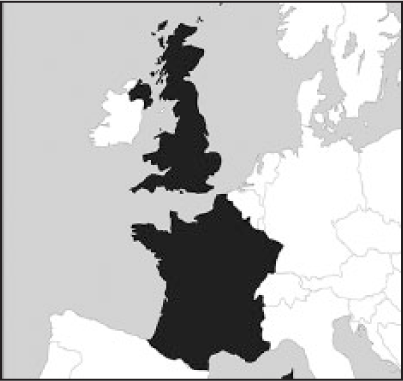
The purpose of this paper is to question the contribution of the research agenda on neoliberalization to the understanding of urban environmental policies. Through two case studies of urban sustainability policies in Nantes and Manchester,(6) this paper seeks to understand in what way the emergence of the notion of urban sustainability has been involved in the neoliberalization of urban environmental policies. Sustainability is seen here as a vague slogan designed to “modernize” the treatment of environmental issues from both a substantive perspective (attempting to reconcile ecological and economic imperatives) and a procedural perspective (promoting more horizontal, less top-down methods).
Taking a critical look at the neoliberalization of urban policies through the lens of the environment is not an obvious choice. Indeed, environmental policies adopted in cities have long been seen as completely disconnected from the neoliberal influence on urban policy. It is true that Marxist works have shown, at a very early stage, that the environment has operated both as an “ideological mystification”(7) and as a powerful marker of social and racial inequalities.(8) Nevertheless, until the 1990s, most urban environmental policies tended to counter rather than support the new imperatives of competitiveness and economic growth.(9) With the emergence of urban sustainability, the situation has become much more ambiguous.(10) While many experts still view urban sustainability policies as among the main opponents of neoliberalism, critical urban research has often seen this as one of the key areas for deepening and reinventing the processes of neoliberalization.(11)
In addition, within the environmental field, justification has to be supplied for choosing urban sustainability, as it has become an ambiguous slogan with a meaning that has varied considerably depending on the time, space, actors and interests involved.(12) In European cities, it has been used in many different ways, giving rise to a wide variety of urban policies. There is no question here of neglecting the diversity of local situations and developing a monolithic approach to urban sustainability policies, but rather of stressing that this slogan has operated since the 1990s as a powerful discursive frame for environmental public policies.(13) In this regard, one might consider that it represents a policy “emblem”(14) that prescribes specific modes of action and above all legitimizes – or, conversely, delegitimizes – certain types of actors, issues, strategies, policy tools and, more widely, certain ways of looking at the environment that are close to those described in work dealing with ecological modernization.(15)
The paper is divided into two main sections. The first looks back at the emergence of sustainability in urban policies to show that although this slogan may have been driven onto the agenda by grassroots actors, its spread and rapid success owe a great deal to a context of neoliberalization, characterized by both a very clear drive to make cities competitive and a concern with building local coalitions capable of producing urban policies. The second section discusses the selectiveness of urban sustainability policies by reference to two eco-neighbourhood projects: Ile de Nantes in Nantes and New Islington in Manchester. The paper concludes with a call for more empirically driven use of the notion of neoliberalization, which, despite certain limitations, provides vital tools for understanding the transformation of urban environmental policies.
I. The Emergence of Urban Sustainability: Environmentalism, Competitiveness and Coalition-Building
As with other urban policies, environmental policies really changed in the 1990s and early 2000s. Seen as a marginal issue tackled through grassroots policies in the 1970s and 1980s, the environment burst onto urban agendas when the sustainability slogan emerged. While everyone now agrees that sustainability has become a priority for urban policy, interpretation of what it actually means varies considerably depending on perspective. Most work considers that its emergence can essentially be put down to grassroots or transnational players that have been able to push sustainability onto urban agendas and gradually build up a policy “sector”, with its own experts and professionals, around that slogan.(16) While this reading is relevant, it does not help us to understand how the framing of sustainability has been able to spread so successfully through urban policies and take hold so quickly. In other words, it struggles to decode the dynamic processes that fostered the acclimatization to sustainability in urban policy. On the other hand, work on neoliberalization offers useful avenues for understanding these processes. By focusing on macro-economic disruption and state rescaling, this work sheds light on the transformations underlying the emergence of sustainability as a top-priority policy objective: the rise of urban entrepreneurialism and the need to build local coalitions of actors and interests in a context of increasing influence of cities in economic regulations.
a. Manchester: making the city competitive
In Manchester, the emergence of urban sustainability as a slogan is closely linked to the transformation of the urban agenda, which, as of the early 1990s, gave priority to issues of economic development and international positioning. From the end of the 1980s, the team headed by Graham Stringer, the Labour leader of the council – under the influence of the central Conservative government and local economic operators – converted to a new ethos. This was characterized by a refusal to mourn the city’s glorious industrial past and a fierce desire to take advantage of the opportunity offered by redevelopment on the basis of services and major urban projects in a post-industrial society marked by economic globalization.(17) While sustainability initially came into conflict with this vision of urban development, it was to become one of the pillars of the city’s entrepreneurial strategy as of 2000.
The trigger event that put sustainability on the agenda and made the environment an issue once again was the hosting of the Global Forum in 1994,(18) an event of particular significance for local political elites. The purposes were to project an image of the city other than the picture of industrial decline with which it had usually been associated since the early 1970s and to strengthen the city’s bid to host the Olympic Games in 2000 by adding an environmental component. As a result, from a symbolic perspective, hosting an environmental summit served to showcase the city’s recent post-industrial transition. This aim of enhancing the city’s environmental image is stressed by the former deputy in charge of environmental matters:
“I was very disappointed because to Graham Stringer’s mind holding the Summit in Manchester should have boosted the city’s reputation and got people talking about it […]. He saw the Summit as an opportunity to advertise the city, show that Manchester was capable of organizing international events and highlight the environmental component of its bid for the Olympic Games, which was not very highly developed.” (Interview, 17/11/06)
Although concern for the city’s external positioning was central, urban sustainability policies stand in sharp contrast to the entrepreneurial strategy. In actual fact, a few elected officials and members of the technical staff, relying primarily on the local voluntary sector, were responsible for integrating sustainability into urban policy and planning approaches, particularly through the preparation of a local Agenda 21. In 1995, this disconnect from the city’s aggressive redevelopment strategy led to a major conflict between the leader of the council and his followers (the region’s economic operators and government agencies), on the one hand, and grassroots environmental movements supported by the planning department and the councillor for the environment, on the other. In a context marked by fierce controversy surrounding the extension of the airport,(19) a statement concerning restrictions on air traffic and increased taxes on airline fuel was included in the local Agenda 21. While this measure had neither legal value nor any concrete effect, it was seen by the political elites as a signal that could shatter economic operators’ confidence in the Mancunian pro-growth vision. As a result, the local Agenda 21 was shelved before it was even published. The councillor for the environment was relieved of his duties, the head of the planning department was marginalized and the links with environmental associations were abruptly terminated.
It was not until the early 2000s that sustainability reappeared on the urban agenda in the shape of the Manchester Greenest City programme, which aimed to turn the city into a British model of sustainability. Unlike the policies adopted in the 1990s, this new strategy did not come into conflict with the entrepreneurial spirit of urban policies. Driven by a few councillors and influential members of the council’s technical staff, semi-public agencies and some private operators, it made sustainability a central plank of the city’s medium- to long-term competitiveness. This new strategy was built around three themes: improving the city’s environmental performance, particularly in the waste recycling and air quality sectors, which were coming under further pressure from central government; establishing an aggressive environmental marketing strategy; and implementing several eco-neighbourhood projects on the northern and eastern fringes of the city centre. It had a twofold rationale. First, it allowed local players to keep pace with the “urban renaissance” discourse put out by the New Labour government as of 1999. This was not the same as the discourse promoted by Conservative governments in the 1980s and early 1990s. In particular, it stressed environmental issues, regarded as a tool to attract the traditionally anti-urban British middle classes.(20) In this respect, the sustainability strategy worked out in Manchester in the 2000s was a perfect fit with the vision of the city enshrined in the main planning documents produced by the national government, which could be considered nothing less than “gentrification charters”.(21) Second, local players needed to consolidate the city’s status as a model of urban regeneration – vital to bringing in national and European funding. In this way, the urban political elites strengthened their sustainability strategy to place themselves in the forefront of environmental innovation and thereby attempt to gain a competitive advantage in the race for grants.
b. Nantes: boosting attractiveness and fostering partnership
In Nantes, the dynamics behind the emergence of sustainability discourses are twofold. As in Manchester, there is no doubt that the appearance of this slogan on the urban agenda reflects the rise of the imperatives of competitiveness in urban policies. However, in Nantes, it is also related to the desire to create collaborative spaces with the potential to stimulate local partnerships against a background of declining forms of state regulation.
The sustainability discourse made its appearance in Nantes in 1995, when the socialist Jean-Marc Ayrault was re-elected as leader of the council. Initially no more than an all-encompassing label placed on discourse, it quickly gained ground. Unlike Manchester, where local authorities had weak involvement in European networks in the 1990s, the emergence of attention to sustainability in Nantes owes much to the presence of some members of council technical staff in transnational city networks and European programmes. As a result of this European involvement, Nantes instigated the organization in 1996 of the preparatory meeting for French cities ahead of the second UN Conference on Human Settlements (Habitat II) in Istanbul. It was decided to set up a local Agenda 21 and drafting began the following year. Urban sustainability took on increased significance as the environment gained ground in the city’s attractiveness strategy. This was evident first in the reorientation of marketing strategies toward ecology and the environment in the early 1990s.(22) Second, the growing importance of competitiveness and attractiveness in environmental matters could be seen in the first debates provoked by plans to develop the Loire estuary. In 1993, the French government gave ACEL(23) responsibility for planning the economic development of the estuary area. The first report produced by that organization referred to environmental quality and the living environment as key assets enhancing the estuary’s attractiveness. This vision was subsequently confirmed by the Planning, Development and Protection Programme for the Loire Estuary (Programme Concerté d’Aménagement, de Développement et de Protection de l’Estuaire de la Loire – PCADPEL), the inter-municipal “Project 2005” strategy and the Territorial Development Directive (Directive Territoriale d’Aménagement – DTA) of 1999, which identified environmental protection as an objective of economic development. In the 2000s, this link between sustainability and competitiveness was reaffirmed when the establishment of an eco-city was under discussion at a strategy forum on the future of the Nantes/Saint-Nazaire territory, as indicated by this extract from the speech by the mayor of Nantes:
“If in the next twenty years we do not play the environmental card as added economic and social value, we shall lose our influence and go backwards, because no one will want to live or work here anymore. […] We have pretty good quality of life, right through from the resort of La Baule to the borders of the Loire area, but we can’t just keep to ourselves and never change anything; we have to continue developing, gaining inhabitants and gaining jobs without seeing that as a constraint but instead as an advantage and an opportunity.”(24)
Against a background of significant demographic growth,(25) the city has made sustainability and particularly the fight against urban sprawl one of its key objectives. Its ambition in the medium term is to prevent the negative impacts on quality of life of urban growth (air pollution, congestion, increased size of built-up areas, etc.) from undermining the attractiveness of Nantes.
While sustainability strategies in Nantes may make sense in view of the entrepreneurial shift in urban policies, they also reflect a desire to create local partnerships. From the end of the 1990s, sustainability was used to stimulate the involvement of a disparate set of players. This strategy needs to be understood in relation to the restructuring of the relationship between central government and cities. As state regulation came under increasing challenge, local players found themselves with more direct responsibility for defining and implementing urban policies.(26) With its ability to intervene in local areas restricted, central government turned its attention to incentives designed to encourage the creation of collective action capacity in cities.(27) As a vague, consensual, catch-all term, sustainability was key to this strategy, as shown by the 1999 blueprint law on regional planning and sustainable development.(28)
The examples of the Nantes/Saint-Nazaire CCI and Autonomous Port Authority are particularly revealing. At the end of the 1990s, these two organizations became involved in preparing a local Agenda 21 and producing sustainability strategies.(29) With regard to certain themes, they were able gradually to draw in the particularly solid urban coalition forming around Jean-Marc Ayrault. This logic was seen again a few years later in the further deepening of urban sustainability policies – the implementation of several eco-neighbourhood projects, the establishment of a strategy to combat urban sprawl, an eco-metropolis project and the launch of an ambitious policy to mitigate carbon emissions. These were in pursuit of the same objective to generate involvement first at city level, with the gradual integration of the Greens into the urban coalition, and then at metropolitan level, with a concern with forging links with estuary stakeholders and more especially with the actors of Saint-Nazaire, the surrounding city.
In the end, these two case studies demonstrate that work on neoliberalization offers a particularly stimulating perspective on the dynamics of the spread of sustainability in urban policies. While this body of work may struggle to identify the political factors at work in the emergence of sustainability, it does open up avenues for thought that go beyond analysis along the lines of the creation of a specific “sector” of urban policies. Using neoliberalization as an entry point reveals the transformation of urban environmental policies essentially marked by a concern with making cities competitive by developing new “softer” entrepreneurial strategies; these strategies see the non-economic factors in urban growth as vital leverage to ensure the attractiveness of cities. However, this reading of the spread of urban sustainability, which is particularly apt in the case of Manchester, should not mask the importance of political and coalitional considerations. Whether in Nantes, where the vagueness of the notion of sustainability has served as a catalyst for the construction of a stable network of public and private actors, or to a lesser extent in Manchester, where the recent positioning of the city as an environmental “model” has reinforced its status as a “grant coalition”, the spread of sustainability in urban policies also owes much to the transformation of relationships between the central government and local authorities and the new pressure to establish local partnerships.
II. The Selectiveness of Urban Sustainability: The Case of Eco-Neighbourhood Projects
Work on urban political economy considers neoliberalization as characterized by spatial selectiveness whereby “distinct spaces, locations and scales within each national territory are privileged, whereas others are neglected, marginalized or excluded”.(30) It takes the form of a restructuring of state intervention, marked by the combined dynamic processes of selective withdrawals and reinforcement. This matter of selectiveness lies at the heart of urban sustainability policies.(31) Three different forms can be identified – spatial, thematic and social selectiveness – which come through more or less intensely in urban sustainability policies.(32) Despite their heterogeneous nature, these policies often have in common their foundation on an experimental rationale. In many cases, they aim to bring out innovative experiences that can be raised to the status of “exemplary” practice capable of being reproduced and rolled out widely.(33) Although this feature is explained partly by the wish to “lead by example” to encourage socio-environmental transition and partly by the budgetary constraints of local and central government players, it often plays a part in increasing the selectiveness of sustainability policies as regards both the issues handled and the areas and social groups targeted. In this second section, we will look at the eco-neighbourhood projects in Manchester and Nantes.
a. New Islington: producing the environment via the market
In the United Kingdom, the first initiatives to promote the implementation of eco-neighbourhood projects were launched at the very end of the 1990s. The New Labour government was concerned with both following the recommendations of the Urban Task Force of Richard Rogers on enhancing urban and architectural quality and strengthening its environmental policies against a background of hardening European and international constraints. The Millennium Communities programme, launched in 1999, laid the foundations for British eco-neighbourhoods by selecting seven projects regarded as emblematic.(34) The aim of this programme was to encourage property developers to “turn green” their practices and “show that disadvantaged, neglected areas can be used to make profits”.(35) The idea was to demonstrate that the environment can become a competitive advantage in urban projects.
Manchester was one of the cities selected for the Millennium Communities programme. Local stakeholders saw this as a way of supporting the regeneration efforts that, after targeting the city centre in the 1990s, had turned towards East Manchester – an area particularly affected by the crisis in Fordism and considered one of the most deprived in the city. Of these, the Cardroom estate(36) was quickly identified as a beneficiary of funding from the Millennium Communities programme to serve as the standard for regeneration of East Manchester. Not only was this a disadvantaged area with low property values, but above all it had genuine potential due to its proximity to the city centre, the heritage interest of the canals and former industrial buildings, and the planned extension of the tramway. Renamed New Islington, the district was the subject of an ambitious regeneration project run by the New East Manchester urban development agency and the urban developer Urban Splash. The plan involved demolition of detached houses from the late 1970s and the building of 1,400 new units. It also aimed to strengthen urban and environmental amenities by establishing a city park, creating new canals, building several blocks of flats using innovative architectural and environmental techniques,(37) and providing significant services (cafes and restaurants, a school, a hospital and even “city farms”). In the end, the stated objective of all these efforts was first to offer young working people a housing alternative in the city centre and, second, to stem the outflow of families attracted by the outlying middle-class suburbs, generally located beyond the administrative boundaries of the city. Although the project is not yet complete, particularly in view of the 2008 crisis that considerably slowed down the pace of operations, three conclusions can be drawn regarding the selectiveness of the eco-neighbourhood projects in Manchester.
First, these projects highlight the spatial selectiveness of urban sustainability policies. Whether in the case of the New Islington project or, more recently, the Green Quarter or Holt Town projects, the Mancunian eco-neighbourhoods – although variable in terms of size, features and the actors involved in their establishment – all reflect the same rationale. The aim is to target environmental improvements (increasing green spaces and environmental amenities, upgrading the waterfronts, setting environmental standards for buildings, etc.) in circumscribed urban areas usually located on the fringes of the city centre and with a profile combining advanced decline and significant redevelopment opportunities. New Islington is an emblematic example of this logic because it incorporates most of the environmental innovations proposed in connection with regeneration of East Manchester and stands as a flagship that, in the eyes of the urban elites, could transform the image of the whole area.
Second, this project highlights the thematic selectiveness of urban sustainability policies. Investments focus on certain issues – environmental standards for buildings, urban amenities, “green” marketing, etc. – with the potential to add value to the district and provide these new developments with a comparative advantage. In the discourse of the property developers and public authorities, this thematic selectiveness is justified on the basis that the environment should operate as a risk reducer for actors involved in urban production, particularly those in the building and property development sectors. As stressed by a representative of English Partnerships, the project is seen as a way of enhancing the “reputational value” of New Islington:
“The entrepreneurs tell us they don’t want to invest in these areas because they are too risky and the return on investment is uncertain. In view of this, we must therefore develop an overall view. East Manchester is close to the city centre, so we have to ask ourselves why no one wants to live there and what needs to be done to put it right? After that, when you start to put together new transport infrastructure, make the area pleasanter by replacing narrow streets with more open areas and parks and suggest visual amenities, you remove the area’s risk for the private sector. This means that the private sector has more opportunities to secure a return on its investment. […] Many people say that Thatcher did economic regeneration and Blair is doing more social and environmental regeneration. It’s actually more complicated. Economic regeneration is still the goal, but the economy has changed in the space of 15 years.” (Interview, 07/12/06)
The environment is used to limit the uncertainty inherent in any urban project. Not only does the desire to put forward innovative products, anticipating future demand, seem to offer protection from the vagaries of the market, but in addition, the exemplary nature of the project guarantees unstinting support from the public authorities.
Finally, social selectiveness is also a feature of the New Islington project. It feeds rather than attenuates the speculative dynamics that drive changes in urban spaces. The new housing seems to be essentially destined for the upper-middle classes, as suggested by the marketing campaigns (launching an annual festival, putting out videos showing new residents who have come from London cultural industry circles, etc.) and the name given to the district, which inevitably recalls that of the London borough where the first gentrification processes were seen in the 1960s. Along the same lines, no mechanism was provided for stabilizing property prices in the medium term. Former residents of the Cardroom estate who, when the project was announced, had expressed a wish to buy a house, found themselves faced not only with terms and conditions amounting to refusal but also with rehousing outside the district.(38) More generally, the surplus costs related to environmental objectives weigh on all property prices in the area. As environmental performance is not taken into account when setting the price of a building, its achievement can only be profitable in attractive areas or, alternatively, in difficult areas where potential property value is likely to increase strongly. The project manager on behalf of Urban Splash confirms that “the only way to get a return on investment is to make the area more attractive, so that an increase in property values can make the investment profitable” (Interview, 05/11/2008).
The corollary to the desire to offer innovative property products in terms of environmental protection is therefore the development of a very aggressive urban marketing approach capable of attracting the middle classes to the district and eventually leading to a very significant increase in property prices.(39) In this context, investing in areas related to the natural and living environment is incompatible with maintenance of the redistributive objectives traditionally involved in urban planning.
b. Eco-neighbourhoods in Nantes: between policy regulation and market regulation
Until very recently, eco-neighbourhoods were not a priority in French urban policies. Before the launch of the Sustainable City Plan in 2008 and its call for eco-neighbourhood projects, there had been no programme or specific funding to enshrine this notion in urban policies. Nevertheless, this slow start in France did not prevent the establishment of pioneering initiatives in a few cities regarded as particularly innovative in planning and urban development terms. This was the case in Nantes, which saw the development as of the early 2000s of several urban projects with ambitious environmental objectives. While the Ile de Nantes project(40) is undoubtedly the most emblematic, this strategy can also be identified in less widely publicized projects such as the Malakoff Pré Gauchet, Madeleine-Champ-de-Mars, Bottière Chénaie and Saint-Joseph de Porterie, which also made sustainability one of their main objectives.
Generally speaking, the inclusion of environmental targets in these various projects has a twofold objective: 1) to diversify urban housing provision in Nantes by increasing the amount of accommodation available in the central areas and adapting supply to the new ecological sensitivities of the middle classes, and 2) to satisfy the political interests of key political actors and groups such as the Green councillors in the ruling coalition and residents of certain electorally strategic districts. Unlike Manchester, where government funding had succeeded in convincing the local economic and political elites of the usefulness of at least a symbolic investment in an environmental approach to town planning, it was not until 2006 in Nantes that a consensus was reached concerning the strategic importance of sustainability in urban projects. Before that, despite the repeated exhortations of the Green councillors, the main actors in urban projects in Nantes seemed little inclined to integrate sustainability into their planning and regeneration policies. With regard to the Ile de Nantes project, SAMOA – the semi-public company acting as contracting authority – spared no effort in trying to limit the number of environmental constraints imposed on the property developers.
This situation echoes the conflicting pressures to which the Malakoff Pré Gauchet project is subject. On the one hand, the socialist councillors and particularly Jean-Marc Ayrault wanted Malakoff to be the emblem of a social approach to urban renewal so as to avoid alienating the local population(41) and counteract the emerging criticism that municipal and inter-municipal agendas were in thrall to the interests of the middle and upper classes. With this in mind, the agreement of ANRU (the French urban renewal agency) provides for a quota of social housing in excess of 30 per cent and low selling prices that developers considered to be below market rates. On the other hand, the growing involvement of the local authority’s environment arm and Green councillors prompted consideration of High Environmental Quality certification (HQE), which proved to have stricter requirements than the originally planned RT2000 and RT2005 standards. This choice enraged the sponsors and above all the developers, who argued that it was impossible to achieve a mix of social housing and high environmental performance while demanding very low selling prices. Finally, the decision was taken not only to increase exit prices by around 30 per cent but also to adopt less restrictive certification, replacing the HQE standard with the Qualitel certification.
As the 2008 local elections approached, the situation changed. With increasing numbers of European and national programmes and the inclusion of environmental criteria in ANRU’s calls for projects, sustainability became an integral part of all discourse. This new vision, construing the environment no longer as a constraint but rather as a clear opportunity for the city and the city region, can be seen to varying degrees in several planning operations. For example, environmental requirements were tightened in connection with the Bottière Chénaie project to take account of changes in the national context. The environmental dimension of the Malakoff Pré Gauchet operation was also strengthened with the putting in place of an Environmental Approach to Town Planning (Approche Environnementale de l’Urbanisme – AEU) and a plan to restore and develop Petite Amazonie – a natural area classified by the European Union as a Natura 2000 site. Finally, Ile de Nantes began to be presented as an “eco-neighbourhood” project and information was put out on the theme of sustainability. At the same time, the new thrust given to the project indicates a desire to bring in environmental considerations to a greater extent: more thought for energy saving, including the installation of solar panels and development of district heating using incinerated waste; increasing numbers of green areas with the aim of each home having a natural space available within 500 metres; and a new interest in preserving biodiversity with protection for rare species such as estuary angelica, etc.
All things considered, it is clear that three key factors explain the inclusion of the sustainability in urban policies for Nantes. First, this analysis has confirmed the important role played by the new entrepreneurial direction in the emergence and spread of urban sustainability in Nantes. Sustainable planning and regeneration is understood as a way of enhancing the city’s attractiveness and preventing urban growth from damaging its living environment. This logic is reflected in the remarks made by a senior council official:
“Nantes also cashes in and makes the most of its quality of life. There’s our living environment: sustainable city, compact city, high-quality city. That’s something that comes out very clearly in planning issues today where people say the city needs densification despite very strong demographic growth. Consequently, we see this idea of densification while maintaining quality of life, i.e. the famous 37 m2 of public space per inhabitant. How can this equation be solved?” (Interview, 07/07/09)
This means that reference to sustainability fits perfectly with the entrepreneurial dynamics at work in the Nantes area, by legitimizing programmes designed to help keep the middle classes in the city or encourage them to return.
Second, as in Manchester, we see differential treatment of the urban area that, although not specific to sustainable planning, seems to have intensified with its appearance. It is interesting to note the spatial selectiveness displayed by eco-neighbourhood projects: favourably located areas offering property development opportunities are chosen as sites for environmental innovations. In other words, “the strategy adopted by Nantes Métropole is to try out an urban sustainability approach in a place where it will be most visible”.(42) While this strategy may be justified by a desire to ensure that the first urban sustainability policies really work, so as to avoid exposure to criticism, it nevertheless raises two questions, relating first to whether such an investment can be rolled out more widely, and second to whether it can be replicated in areas that do not come with a buoyant housing market or property development opportunities.
Third and finally, a more political logic is also revealed, with the establishment of several eco-neighbourhoods serving to calm tensions within the coalition in Nantes by meeting the Greens’ expectations as regards investment in sustainability. This ability of sustainability to build an ambiguous consensus between entrepreneurial logic and environmental protection has been demonstrated in Nantes, where it was possible to establish a particularly solid urban coalition despite the presence of long-running conflicts such as that involving the abortive attempt to extend the industrial/port complex in Donges-Est or, more recently, the plan to establish an international airport at Notre-Dame-des-Landes. This political rationale can also be seen in the Malakoff Pré Gauchet eco-neighbourhood project, which was aimed less at enhancing attractiveness than at politically mobilizing residents in that strategic area. The choice of this district in the city’s sustainability strategy shows that the target social groups for eco-neighbourhoods are not systematically the privileged social classes wishing to return to the city and that, in certain specific contexts where political and electoral mobilization considerations are still important, sustainability can benefit social groups that are usually marginalized in urban policies.
III. Conclusions
Work on neoliberalization offers stimulating avenues for understanding the emergence of urban sustainability and transformations in urban environmental policies. By highlighting the importance of the transformations of capitalism and of state rescaling strategies, this work provides vital insights into sustainability policies. Discussion of the cases of Manchester and Nantes has helped to show the entrepreneurial tropism of sustainability policies aimed at enhancing the competitiveness of cities or controlling the factors (pollution, congestion, urban sprawl, etc.) likely to hinder that competitiveness. It also shows to what extent sustainability policies and eco-neighbourhood projects in particular are selective in their objectives. By choosing to pursue objectives considered win-win from environmental and economic perspectives and designed to meet the demands (or rather the expectations) of the middle and upper classes, these policies are notable for their thematic, social and spatial selectiveness, which backs up some of the hypotheses put forward in work on neoliberalization.
While this research agenda encourages a subtle reading of changes in the macro-economic and political/institutional contexts that affect cities and urban policies, together with many avenues helping to explain the successful penetration of sustainability in urban policies, it sometimes has trouble getting away from a unified, overall vision of sustainability policies that in fact form a mixed bag with rationales and effects that can vary considerably. This abstract, all-encompassing feature of the analytical perspective(43) is not a limitation specific to the neoliberalization research agenda but applies more generally to most ambitious theoretical frameworks. Work on neoliberalization undoubtedly does seem to pay significant attention to the variety of local and national institutional contexts(44) and warns against “the illusions of monolithic thought or convergence theories”.(45) However, these precautions only rarely result in careful analyses of local contexts(46) that clearly reveal the stakeholders and their interests.(47) In this way, as the case of Nantes demonstrates, neoliberalization of urban policies involves a set of complex processes that need to be studied taking the peculiarities of local setups into account and also tracing the mechanisms and social, economic and political interests that lie behind those processes.
Despite these limitations, it can be productive to use the the theoretical framework to understand relationship between cities and the environment. This helps first to bring out the structural dynamics (changes in capitalism, uneven development processes, new economic role of cities, etc.) at work in the transformation of urban environmental policies. In addition, the work helps to place at the heart of the analysis the spatial inequalities connected with modification of urban environments and the adoption of strategies designed to preserve the environment, unevenly, in cities. As a result, so long as more, contextualized analyses are produced that reintroduce agency, work on neoliberalization could represent an heuristic framework for research into urban environmental policies.
Footnotes
The paper was translated from the original (in French) by Jean Lubbock.
1.
Brenner, N and N Theodore (2002) (editors), Spaces of Neoliberalism. Urban Restructuring in North America and Western Europe, Blackwell, Oxford; also Peck, J and A Tickell (2002), “Neoliberalizing Space”, Antipode Vol 34, No 3, pages 380–404; Robinson, J (2011), “The Travels of Urban Neoliberalism: Taking Stock of the Internationalization of Urban Theory”, Urban Geography Vol 32, No 8, pages 1087–1109; Mayer, M and J Kunkel (editors) (2012), Neoliberal Urbanism and its Contestations: Crossing Theoretical Boundaries, Palgrave Macmillan, London; Tasan-Kok, T and G Baeten (editors) (2012), Contradictions of Neoliberal Planning, Springer, Dordrecht; Aalbers, M (2013), “Debate on Neoliberalism in and after the Neoliberal Crisis”, International Journal of Urban and Regional Research Vol 37, No 3, pages 1053–1057; and Peck, J, N Theodore and N Brenner (2013), “Neoliberal Urbanism Redux”, International Journal of Urban and Regional Research Vol 37, No 3, pages 1091–1099.
2.
Amin, A (editor) (1994), Post-Fordism: A Reader, Blackwell, Oxford.
3.
Harvey, D (1989), “From managerialism to entrepreneurialism: the transformation in urban governance in late capitalism”, Geographiska Annaler B Vol 71, No 1, pages 3–17.
5.
See reference 1, Brenner and Theodore (2002); also see reference 1, Peck and Tickell (2002); Moulaert, F, A Rodriguez and E Swyngedouw (editors) (2003), The Globalized City: Economic Restructuring and Social Polarization in European Cities, Oxford University Press, Oxford; Leitner, H, J Peck and E Sheppard (editors) (2007), Contesting Neoliberalism: Urban Frontiers, Guilford Press, New York; Ward, K and K England (2007) (editors), Neoliberalization: States, Networks, Peoples, Blackwell, London; and Brenner, N, J Peck and N Theodore (2010), “Variegated neoliberalization: geographies, modalities, pathways”, Global Networks Vol 10, No 2, pages 182–222.
6.
The empirical material on which this paper is based comes from a PhD dissertation in political science defended in December 2011 that deals with the urban environmental policies of four cities: Nantes and Saint-Etienne in France, and Leicester and Manchester in the UK. The two cases presented in this paper have each been the subject of research work primarily based on carrying out semi-structured interviews (20 in the case of Nantes and 59 in the case of Manchester). National reports and grey literature dealing with each of the cities have also been systematically read.
7.
Castells, M (1973), Luttes urbaines, Maspero, Paris, page 94.
8.
Bullard, R (1990), Dumping in Dixie. Race, Class and Environmental Quality, Westview Press, Boulder.
9.
Béal, V (2012), “Urban Governance, Sustainability and Environmental Movements: Post-democracy in French and British Cities”, European Urban and Regional Studies Vol 19, No 4, pages 404–419.
10.
McCarthy, S and J Prudham (2004), “Neoliberal Nature and the Nature of Neoliberalism”, Geoforum Vol 35, No 3, pages 275–283; also Castree, N (2007), “Neo-liberalising nature: processes, outcomes and effects”, Environment and Planning A Vol 40, No 1, pages 153–173; Heynen, N, J McCarthy, S Prudham and P Robbins (editors) (2007), Neoliberal environments, Routledge, London and New York; Krueger, R and D Gibbs (editors) (2007), The Sustainable Development Paradox: Urban Political Economy in the United States and Europe, Guilford Press, New York; Felli, R (2008), Les deux âmes de l’écologie. Une critique du développement durable, L’Harmattan, Paris; and Rosol, M (2012), “Community Volunteering as Neoliberal Strategy? Green Spaces Production in Berlin”, Antipode Vol 44, No 1, pages 239–257.
11.
See reference 9; also While, A, A Jonas and D Gibbs (2004), “The Environment and the Entrepreneurial City: Searching for the Urban ‘Sustainability Fix’ in Manchester and Leeds”, International Journal of Urban and Regional Research Vol 28, No 3, pages 549–569; Heynen, N, M Kaika and E Swyngedouw (editors) (2006), In the Nature of the City: Urban Political Ecology and the Politics of Urban Metabolism, Routledge, London; Raco, M (2005), “Sustainable Development, Rolled-out Neoliberalism and Sustainable Communities”, Antipode Vol 37, No 2, pages 324–347; Reigner, H, F Hernandez and T Brenac (2009), “Circuler dans la ville sûre et durable: des politiques publiques contemporaines ambiguës, consensuelle et insoutenables”, Métropole No 5, available at http://metropoles.revues.org/3808; Cook, I and E Swyngedouw (2012), “Cities, social cohesion and the environment”, Urban Studies Vol 9, No 9, pages 1959–1979; and While, A and M Whitehead (2013), “Cities, Urbanization and Climate Change”, Urban Studies Vol 50, No 7, pages 1325–1331.
12.
Harvey, D (1996), Justice, Nature and the Geography of Difference, Blackwell, Oxford.
13.
The weight of discursive policy frames seems to bear particularly heavily on the environmental field, which is notable for its vague and heterogeneous nature: “environmental regulation will always be selective in terms of objects, subjects, spaces and scales of environmental and ecological regulations. This is partly because there is no single object of environmental regulation, but rather a range of potential – and potentially competing – objects of environmental and ecological governance”; While, A, A Jonas and D Gibbs (2010), “From Sustainable Development to Carbon Control: Eco-state Restructuring and the Politics of Urban and Regional Development”, Transactions of the Institute of British Geographers Vol 35, No 1, pages 76–93, page 81.
14.
Hajer, M (1995), The Politics of Environmental Discourse, Oxford University Press, Oxford.
15.
See reference 11, While et al. (2004); also Desfor, G and R Keil (2004), Nature and the City: Making Environmental Policy in Toronto and Los Angeles, University of Arizona Press, Tucson.
16.
Bulkeley, H (2005), “Reconfiguring environmental governance: Towards a politics of scales and networks”, Political Geography Vol 24, pages 875–902; also Emelianoff, C (2007), “La ville durable: l’hypothèse d’un tournant urbanistique en Europe”, L’information Géographique No 71, pages 48–65.
17.
Peck, J and K Ward (editors) (2002), City of revolution: restructuring Manchester, Manchester University Press, Manchester.
18.
This conference followed on from the Earth Summit in Rio in 1992. The British central government chose the host city from among several competing cities.
19.
In July 1991, a plan was unveiled to build a second runway for Manchester Airport. Supported by the local authorities that owned the airport, the plan sought to triple the number of passengers by 2010. After two years of confusion, the decision was finally ratified by central government in 1993. Between 1994 and 1997, following a public inquiry with controversial results, the protest movement gathered strength. Driven by environmental activists and local communities, it gave rise to some particularly spectacular direct action campaigns. While this movement was unable to stop construction of the runway, it did cause the airport and local authorities to adopt compensatory environmental measures around noise management, pollution control and wildlife conservation.
20.
Colomb, C (2006), “Le New Labour et le discours de la ‘Renaissance Urbaine’ au Royaume-Uni. Vers une revitalisation durable ou une gentrification accélérée des centres-villes britanniques?”, Sociétés Contemporaines Vol 63, No 3, pages 15–37.
21.
Lees, L (2003), “Visions of ‘urban renaissance’: the Urban Task Force report and the Urban White Paper”, in M Raco and R Imrie (editors), Urban Renaissance? New Labour, Community and Urban Policy, London, Policy Press, pages 61–81.
22.
While urban marketing strategies in the early 1980s were focused on affirming a European metropolitan identity that put the emphasis on businesses, they rapidly turned towards lifestyle issues. In 1990, the “Made in Nantes” campaign was born. It was complemented the following year by the “Nantes: West Coast effect” campaign, which sang the praises of the city in the fields of diversity, openness towards the outside world, quality of life, environment and culture.
23.
Association Communautaire de l’Estuaire de la Loire is a local partnership focused on the development of the Loire estuary. Set up in 1985, its membership comprises the main public (departmental council and regional council, plus the Nantes urban authority, which joined in 2001), semi-public (Chambers of Commerce [CCI] of Nantes and Saint-Nazaire, as well as the Autonomous Port Authority) and private (Maritime de la Basse-Loire) stakeholders in the estuary area.
25.
The 1990s saw spectacular growth in Nantes and its suburbs. There had already been an average increase of 3,700 inhabitants per year in the population of the municipalities in the urban area in the 1980s. This demographic growth speeded up in the 1990s, with an average increase of 5,500 inhabitants per year. Between 1990 and 1999, Nantes had the second highest rate of demographic growth of any urban area in France, after Toulouse, with an increase of 50,000 inhabitants, i.e. 9.8 per cent. This development had a negative effect on “quality of life”, with the size of built-up areas experiencing a threefold increase in the space of 40 years, rising from 5,000 to 15,000 hectares, and with commuting increasing by more than 50 per cent in the urban area over the last 20 years; see  , Agglomération nantaise – Plan de déplacement urbain 2000-2010: concilier ville durable et ville mobile.
26.
Le Galès, P (2002), European Cities: Social Conflicts and Governance, Oxford University Press, New York and Oxford.
27.
Pinson, G (2009), Gouverner la ville par projets. Urbanisme et gouvernance des villes européennes, Presses de Sciences Po, Paris.
28.
Loi d’orientation pour l’aménagement et le développement durable du territoire (LOADDT) attempts to break with the centralizing tendencies of the 1995 Pasqua Law by instituting a “project approach”. In this regard, it takes sustainable development as one of its cornerstones and explicitly mentions local Agenda 21s as relevant frameworks for establishing new regional planning principles. This objective can be seen in the calls for projects launched by the Ministry for Regional Planning and the Environment as of 1997, as well as in European policies which seek above all to organize groups of local stakeholders around sustainable development.
29.
As of the mid-1990s, their environmental activities were stepped up. It was no longer so much a matter of responding to the protests and defiance of public opinion through compensatory actions as of developing proactive environmental policies. This shift can be seen in the “Banks of the Loire” operation, which focused on preserving the estuary environment and involved the main public, private and semi-public stakeholders. It is also reflected in the strategies of these organizations, with the CCI producing a new planning document in 2002 to replace the one drawn up in 1990. This new document (“Nantes 2002-2015: choosing your life”) focused on improving quality of life, making sustainable development its central theme. One year later, the Autonomous Port Authority got into gear by producing its own plan for sustainable development by 2015.
30.
Brenner, N (2004), “Urban governance and the production of new state spaces in western Europe, 1960-2000”, Review of International Political Economy Vol 11, No 3, pages 447–488, page 454.
32.
See reference 11, Heynen et al. (2006); also see reference 11, Reigner et al. (2009); Bickerstaff, K, H Bulkeley and J Painter (2009), “Justice, Nature and the City”, International Journal of Urban and Regional Research Vol 33, No 3; and Quastel, N (2009), “Political Ecologies of Gentrification”, Urban Geography Vol 30, No 7, pages 694–725.
33.
See reference 5, Moulaert et al. (2003); also Evans, J and A Karvonen (2014), “Give Me a Laboratory and I Will Lower Your Carbon Footprint!’ – Urban Laboratories and the Governance of Low-Carbon Futures”, International Journal of Urban and Regional Research Vol 38, No 2, pages 413–430.
34.
These seven districts were Greenwich Millennium Village (London), Allerton Bywater Millennium Community (Leeds), South Lynn Millennium Community (King’s Lynn), Telford Millennium Community (Telford), Oakgrove Millennium Community (Milton Keynes), Hastings Millennium Community (Hastings) and New Islington (Manchester). In the UK, this programme’s ambition to establish eco-neighbourhoods had been preceded by a few grassroots initiatives involving local authorities and NGOs, the best known being BedZED (Beddington Zero Energy Development) in the borough of Sutton (Greater London).
36.
The Cardroom estate was a residential development built in 1978 as part of efforts to regenerate East Manchester. As of the early 1980s, the situation deteriorated. Cardroom quickly entered a spiral of decline combining pauperization, a rise in the crime rate and degradation of the housing stock. In 2001, half the adult inhabitants of Cardroom had no qualifications and fewer than 40 per cent of them had a job. Moreover, only 100 or so of the 204 units in the complex were still occupied in 1999.
37.
Urban Splash pushed for the establishment of environmental standards exceeding the central government’s initial recommendations. The environmental requirement threshold set in 2002 for the construction of the buildings was the “excellent” rating of the Building Research Establishment Environmental Assessment Method (BREEAM) standard. Conversely, the social aims were much less ambitious as only 10 per cent of the new houses were counted as affordable.
38.
Béal, V, F Charvolin and C Morel Journel (2011), “La ville durable au risque des écoquartiers. Réflexions autour du projet New Islington à Manchester”, Espaces et Sociétés Vol 147, No 4, pages 77–97.
39.
In the last 10 years, the new developments have contributed to a vertiginous rise in property values in the district. While Cardroom was considered at the end of the 1990s to be amongst the areas with the lowest property prices, two-room flats in the Chips building – designed by the architect Will Alsop – now go for around £180,000. Conversely, in Miles Platting, a few hundred metres to the east, a three-room terraced house goes for around £70,000. See Ward, K (2003), “Entrepreneurial Urbanism, State Restructuring and Civilizing ‘New’ East Manchester”, Area Vol 35, No 2, pages 116–127.
40.
Launched in the late 1980s, strategic thinking about the area then still known as Ile Saint-Anne crystallized at the end of the 1990s in a particularly ambitious urban project. With well-known architects asked to design a diverse, high-quality development over an area of more than 350 hectares, Ile de Nantes quickly became one of the most widely publicized urban projects in France. Combining a concern with ensuring due regard for the history of the site and a fierce desire to allow market forces to prosper in the area, this project is a paradigmatic example of the new forms of entrepreneurialism that can usually help to repopulate central or peri-central urban areas.
41.
Malakoff is a strategic area due to both its lively voluntary sector and its political instability. Vital to the stabilization of Jean-Marc Ayrault’s fiefdom, this district had been the scene of a significant local political struggle between left and right since the 1980s. This struggle, which seems to have ended in 2007 with the defeat in the parliamentary elections of the leader of the local right-wing group, encouraged the persistence of clientelism and investment by the council, particularly in trying out an exemplary sustainable development scheme from both environmental and social perspectives.
42.
Barthel, P-A. (2009), “Faire la preuve de l’urbanisme durable: les enjeux de la régénération de l’île de Nantes”, Vertigo Vol 9, No 2, available at , page 2.
43.
Harding, A (2007), “Taking City Regions Seriously? Response to Debate on ‘City-Regions: New Geographies of Governance, Democracy and Social Reproduction’ ”, International Journal of Urban and Regional Research Vol 31, No 2, pages 443–458; also Cochrane, A (2008), Understanding Urban Policy. A Critical Approach, Blackwell, London; and Pickvance, C (2012), “The limits of neoliberalism: is the concept of neoliberalism helpful in the study of urban policy?”, in M Mayer and J Kunkel (editors) Neoliberal Urbanism and its Contestations: Crossing Theoretical Boundaries, Palgrave Macmillan, London.
45.
Peck, J (2004), “Geography and public policy: construction of neoliberalism”, Progress in Human Geography Vol 28, No 3, pages 392–405, page 403.
46.
Béal, V and M Rousseau (2008), “Néolibéraliser la ville fordiste. Politiques urbaines post-keynésiennes et re-développement économique au Royaume-Uni: une approche comparative”, Métropoles No 4, pages 160–202.
47.
For examples of recent works providing careful case studies highlighting local governance struggles and actors’ strategies, see Kaika, M and L Ruggiero (2014), “Land Financialization as a ‘lived’ process: The transformation of Milan’s Bicocca by Pirelli”, European Urban and Regional Studies, in press; and Halpern, C and J Pollard (2013), “Making up the neoliberal city. The role of urban market actors”, RC21 Conference on Resourceful Cities, 29–31 August, Berlin.