




Abstract
Ten years after the first Reclaim the Night marches in the late 1970s began to galvanize women around the right to move freely in public and private space without fear of violence, a local governance-based movement to promote women’s safety developed in European and Canadian cities and was later diffused to Africa, Asia and Latin America. This movement drew on urban planning and design as a means to promote women’s empowerment. Partnerships developed around a framework we have titled “four legs for a good table”: community advocates to push for change; local politicians to galvanize government resources; “femocrats” to capture local policies and programmes for emancipatory ends; and researchers to gather evidence around the problem and to document efforts around solutions. This paper traces the collective history of this loosely coordinated movement. Focusing on three case studies, we mark the advancements of theoretical frameworks and practical tools as the women’s safety movement internationalized, and reflect on achievements and challenges.
I. Introduction
The first Reclaim the Night marches in the 1970s galvanized feminist activists around the right to live and move freely in public and private space without fear of violence. Ten years later, a local governance-based movement to promote women’s safety developed in European and Canadian cities, and soon spread to Africa, Latin America and the Asia–Pacific. This paper maps the diffusion of this movement within the context of theoretical and practical debates on partnerships. We do this by focusing on a local initiative in Toronto in the 1980s and 1990s, another in Delhi that has been active since 2004, and a “bridging” international initiative, Women in Cities International, that has been active since 2002.
a. Partnerships for women’s safety
What do we mean by “partnerships”? They come in many forms, including those between researchers and local communities (either including or excluding local government) and those between women’s organizations and local government. In this paper, we are using a theoretical framework to understand partnerships that we have titled “four legs for a good table”. Through this metaphor, we focus on four categories of actors: elected officials who function as “champions”; public servants who can be valued as “enablers” (sometimes referred to in this context as “femocrats” or feminist bureaucrats); community-based groups as “advocates”; and finally, researchers as “information brokers”. We argue that this combination of actors has the potential to mobilize sufficient power, information and resources to create the kind of urban social change that can promote gender equity, diversity and inclusion.
When we think of “champions”, we must remember that the power of elected officials to create equitable, inclusive cities depends on the status of elected women. Sympathetic and supportive male-elected officials can also be champions; however, the literature suggests that women-elected officials are more likely to support women-centred projects. But women officials are also much less numerous across this world than male-elected representatives, and this imbalance tends to reduce the power of this particular category of actors.(1)
Civil servants or “enablers” also have power, but it comes from a different source than that of elected officials. It is the power of expert knowledge of government systems, legislation and “how to move things through the system”. We can see examples of civil servants exercising power in the very contextualized and specific sense that Huxham(2) talked about: moving easily between “inside” and “outside” government, between elected officials and community groups, taking on the role of “go-between” without a position to defend. In these situations, the more formally powerful elected officials are unable to step outside their formal position to engage with the community groups, and community groups can more easily accept the intermediary role of civil servants than the more polarized positions of elected officials.
The dimension of information is crucial to understanding the role of community-based groups or “advocates”, as they bring the equally expert voice of lived experience and the potential power of this voice to influence change. “Tacit knowledge”(3) is built on practice and experience and can be shared through social learning – people listen to the experiences of others and appreciate the challenges faced. Once acknowledged, this can become the basis of effective action. Moreover, when the expertise of experience is brought together with other forms of expertise held by partners, a “community of practice” can be built that both creates change and recursively learns from that change in a virtuous circle.
It is also in terms of information that researchers contribute to governance arrangements. They create information through their original research; they sometimes have access to information that others do not and can evaluate it in novel and productive ways; and finally, they can disseminate information, including stories of successful change, to both other researchers and to the general public. Indeed, the whole field of knowledge dissemination is in a period of exciting development and exploration. How can knowledge be conveyed to those people, who can use it not only to present information but also to show how it can influence positive action? This is a governance question and bears on the mechanisms of coordination used in different governance arrangements. Researchers are gatekeepers, but also promoters, of community voices of lived experience.
Some other introductory definitions are needed here. To begin with: what is meant by the term “women’s safety”? As Shaw et al.(4) suggest, the term is based on an acknowledgement of the impact of gender-based violence on “the right to the city”, as well as a belief in the responsibility of local authorities to work with women’s organizations to prevent this violence. An essential element is making explicit the impact of gender-based violence on women’s right to safety in both public and private space. Griffin’s famous formulation in 1986, for instance, made public the previously “privatized”, mis-represented and under-reported crime of sexual assault: “The fear of rape keeps women off the streets at night. Keeps women at home. Keeps women passive and modest for fear that they be thought provocative.”(5) Focusing on “women’s safety” from this perspective disrupts the patriarchal division between public and private life, public and private space. The 1993 UN Declaration on the Elimination of Violence Against Women formalized this understanding in its definition of gender-based violence as any act “… that results in, or is likely to result in, physical, sexual or psychological harm or suffering to women, including threats of such acts, coercion or arbitrary deprivation of liberty, whether occurring in public or private life.”(6)
A second essential element of our understanding of women’s safety is a reliance on local strategies to achieve the goal of reducing gender-based violence and fear of violence.(7) Local changes are, of course, not enough; women’s safety, like other human rights, requires action at the regional, national and supra-national scales. But what Harvey interprets as the right to the city entails “… far more than the individual liberty to access urban resources: it is a right to change ourselves by changing the city.” (8)
The World Charter on the Right to the City, developed by a coalition of non-government associations in 2005 and 2006,(9) sets out the importance of equal rights to transparent and effective management of municipal policies and budgets, social spaces of encounter, access to land and housing, services ranging from water and sewers to public education, education and health care, and employment and livelihoods. While not explicitly focused on gender, the charter uses a gender-mainstreaming lens, by which is meant “… assessing the implications for women and men of any planned action, including legislation, policies or programmes … with the ultimate goal … to achieve gender equality.”(10)
In terms of women’s safety, the right to the city means not only the absence of violence and fear; it is also about the positive right to effect change in the elements that engender well-being and gender equality. These include a place to live, access to livelihoods and active participation in all aspects of public life, from “loitering” in public space(11) to decision-making about public resources.
The remainder of this paper draws on these understandings to trace the history of this loosely coordinated movement. Through both an overview of this history and a specific focus on the three case studies, we reflect on achievements and challenges, considering how far we have come in the dissemination of women’s safety initiatives and in the kind of social learning from the past and from one another that will make women’s safety initiatives more effective.
II. An Overview of the Diffusion of Women’s Safety Initiatives
A major aspect of a resurgent feminist movement in the early 1970s was an emphasis on identifying and eradicating sexual and physical violence against women. One manifestation of the efforts to make hitherto privatized experiences of violence public were the Reclaim the Night (also known as Take Back the Night) marches. The first took place in Brussels in 1976 as part of the International Tribunal on Crimes against Women and they quickly diffused throughout Europe, Australia and North America.(12) Like the more recent emergence of SlutWalk and Hollaback! public protests, they were generally based in grassroots women’s groups, by which we mean women not affiliated with formal non-government organizations or governments, although there was often a connection with a university-based women’s centre or rape crisis centre.(13) Along with bringing attention to “rape culture” and the images and discourses that promoted violence against women, the Reclaim the Night marches were high profile cultural expressions of a movement that developed networks and services – from rape crisis centres to battered women’s shelters – that created safer spaces within communities.
Then in the 1980s, several councils in London, England began to focus on spatial planning as a means to women’s empowerment. The Greater London Council(14) provided advice to local councils on what would now be called “gender-mainstreaming”, and one of their emphases was on women’s safety from fear and violence. This included not only reviewing development applications and transport plans in order to avoid dark and isolated pathways and transport stops, but also reducing sexual and racial harassment on housing estates and explicitly including women’s safety concerns in research and public consultation strategies.
These strategies informed work in Toronto, Canada. In 1989, a Women’s Safety Audit Guide was developed by a non-profit organization affiliated with government, the Metropolitan Toronto Action Committee on Public Violence Against Women (METRAC). Although “safety by design” checklists had previously been developed by police officers and crime prevention through environmental design “experts”, the purpose of the Women’s Safety Audit Guide was to galvanize neighbourhood women’s groups to advocate effectively for changes, which might include media portrayals and provision of services as well as amelioration of public space. As Berglund(15) and others have pointed out, this tool was intended to be bottom-up rather than top-down, utilizing knowledge of local needs and contexts and empowering women to utilize their right to demand changes from local government. The women’s safety audit tool quickly disseminated throughout Canada and Europe. After the International Centre for the Prevention of Crime was established in 1994, and the Safer Cities programme was developed by the United Nations Human Settlements Programme (UN–Habitat) in 1996, the tool became widely promoted in Latin America, Africa and Australasia as well.(16) Influenced by the work of the Greater London Council, the city of Toronto also created safer design guidelines from a feminist perspective,(17) which also proved to be highly influential globally.
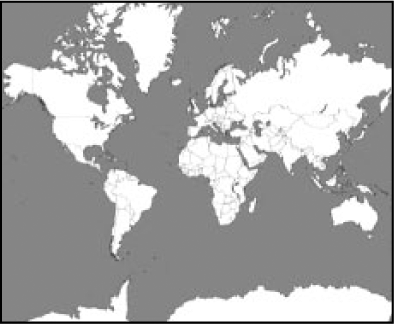
Particularly after the First International Seminar on Women’s Safety in 2002, the global focus of innovation began to shift to cities in the South. There were, of course, parallel feminist efforts throughout the 1970s and 1980s to develop services for victims of gender-based violence and to advocate for policy changes at all levels of government in low-income cities. These efforts became more viable, as both “public democracy” (the end of dictatorships of both right and left) and “democracy of everyday life” (waning of influence of patriarchal religions and growth of feminism and other equality-promoting ideologies) grew in regions such as Latin America.(18) They became more visible as researchers in these regions began to document grassroots and local government efforts.(19)
In 2002, UNIFEM (the United Nations Development Fund for Women, later UN–Women) developed a programme in Latin America called Cities without Violence against Women, Safe Cities for All, which began in Bogotá, Rosario and Santiago and quickly moved to other cities; and in 2004, Bogotá hosted the Second International Conference on Safer Cities for Women and Girls.(20) The Safer Cities programme in Africa, which began in Durban, Nairobi and Dar es Salaam, took a gender-mainstreaming approach that included the promotion of women’s safety audits and other participatory mechanisms, including the involvement of women’s groups in specific initiatives.(21) By 2011, there were more than 20 “good practice” initiatives identified in the Asia–Pacific region by a UN–Habitat-funded study,(22) many of which focused on gender-based violence. UN–Habitat and UN–Women also supported a four-city comparative study called Gender Inclusive Cities from 2009 to 2011, which sought to compare and build partnerships between initiatives in four cities in different continents: Delhi in India; Petrozavodsk in Russia; Rosario in Argentina; and Dar es Salaam in Tanzania.(23)
These initiatives from the global South forced a reconceptualization of women’s safety. Women in low-income cities gave priority to the basic needs of women, such as water, sewers and shelter. In this way, they made more complex the notion of women’s safety by focusing explicitly on low-income women and low-income areas, as well as other sources of marginalization and inequality such as refugee and migration status, disability and caste. This strengthened the cross-class potential of the women’s safety movement, which had been more aligned in its earlier advocacy efforts with middle-class lifestyles and aspirations. Activists in cities of the South reintroduced the centrality of cultural expression in the struggle against violence against women, as had earlier been displayed in Reclaim the Night marches. For instance, Raising Voices from Uganda generates murals, radio shows and games in their efforts to publicize positive anti-violence images;(24) many Latin American initiatives include artistic installations as part of individual and community “healing processes”;(25) and Blank Noise from India uses street theatre, stickers on subways and websites to question attitudes about street harassment.(26)
The role of partnerships, the move from generalized spatial planning approaches to more specific anti-poverty perspectives, the shift from North–South diffusion of tools to South–South diffusion, and the return to cultural expression as a tool in violence prevention are further explored in the following three case studies.
III. Partnership in Women’s Safety Initiatives – The Case of ToroNto’s Safe City Committee, 1989–1999
Toronto’s Safe City Committee arose from a report called The Safe City: Municipal Strategies for Preventing Public Violence against Women,(27) which was adopted before a municipal election in September 1988 by the Toronto City Council. (The city of Toronto was the jurisdiction representing the 650,000 residents of the central part of Canada’s largest city, while METRAC, which a year later developed the Women’s Safety Audit Guide, was funded by the metropolitan level of government, representing 2.5 million people.) The six left-leaning local councillors who produced the Safe City report consulted with a number of women’s groups, including METRAC, a women’s planning advocacy group called Women Plan Toronto, the Toronto Rape Crisis Centre and several ad hoc neighbourhood-based women’s groups concerned about sexual assault.
The report contained 37 recommendations, with almost half focusing on local planning initiatives such as safer design guidelines and underground parking garage standards. Six recommendations pertained to community development initiatives, such as free women’s self-defence courses in city-run recreation centres and the use of women’s safety audits in community planning. Many of the recommendations went outside the immediate jurisdiction of local government and were aimed at the public transportation authority and the police force (both reporting to the metropolitan level of government).
The Safe City Committee, which reported to the city council, was constituted of four local councillors and 12 representatives of local organizations. There was an effort to include councillors from different political perspectives (including those who had opposed the establishment of the Safe City Committee) and to include community organizations (such as the Toronto Rape Crisis Centre) that had also been hesitant about the reformist approach of the report. The committee met monthly to review implementation of the recommendations, and an interdepartmental working group, consisting of representatives from planning, building inspections, public health, parks and recreation, legal and communications functions of local government, met separately once a month to work through practical aspects of implementation.
Implementation of the recommendations relied on the involvement of specific individuals within the partnership model. For instance, the free women’s self-defence courses were enthusiastically supported by a feminist recreation manager, while the parking garage standards were equally enthusiastically implemented by a non-feminist building inspector whose concerns around safety and cleanliness in privately run parking garages in the central city would be addressed by this reform. The development and implementation of safer design guidelines was initially resisted by a senior female planner who was unhappy with the gender focus (she “wasn’t afraid on the street”) and who also predicted developer and architect resistance to this additional development control hurdle. However, the involvement of a respected planning researcher, Professor Gerda Wekerle of York University, in coordinating workshops with planners, architects and developers prior to the development of guidelines, helped allay concerns and increase “ownership” by both government planners and the private sector.
As the reputation of the Safe City Committee grew, leaders of other community organizations used the initiative as a fulcrum to support their own violence against women prevention initiatives. The head of the Metropolitan Toronto Labour Council, herself a feminist who had survived intimate-partner violence, inserted a recommendation in the 1991 follow-up report, A Safer City, to include “plain language” violence prevention information as part of English as a Second Language instruction delivered in workplaces (where union contracts demanded such instruction). After the Montreal massacre in 1989,(28) Toronto councillor Jack Layton and activist researcher Michael Kaufman formed the White Ribbon Campaign, building on networks already established at Toronto City Hall.
But the real power of the community organization partners was most evident during the stormy passage of the 1991 A Safer City report through Toronto City Council. The report recommended the creation of a new grants programme, Breaking the Cycle of Violence, with initial annual funding of 500,000 Canadian dollars, equivalent to the funding for AIDS and drug abuse prevention programmes already in place. The initial decision of the council sub-committee reviewing the report was to not take action on its recommendations. There were, at that point, 14 community representatives on the Safe City Committee, ranging from Men against Violence (an early version of the White Ribbon Campaign), four neighbourhood-based women’s groups, two “identity-based” groups (the DisAbled Women’s Network and Black Women for Progress), a feminist planning advocacy group (Women Plan Toronto) and two researchers. Each representative selected a city councillor and met with him or her. The objective was not to lobby the councillor directly but, rather, the committee member talked about his or her own experiences of successful violence prevention and asked about the councillor’s own experiences in relation to shaping their knowledge about violence and insecurity. When the report went to the city council two weeks later, the galleries were packed with more than 200 supporters. They heard some councillors who had originally opposed the report recount highly emotional stories of their own personal experiences of violence, unlocked by the personal approach taken by the community organization representatives. The report passed unanimously.
The Breaking the Cycle of Violence grants programme created opportunities for community organizations to innovate, and these new approaches opened up new partnerships and spaces for violence prevention. The Centre for Spanish-speaking People, concerned about inadequate responses to disclosures to medical professionals by female victims of violence, created a training package for Spanish-speaking doctors and nurses that was then translated and implemented in other languages, including English. The Working Women’s Community Centre created information on violence prevention resources that were translated into eight languages and disseminated through laundromats, grocery stores, hairdressers, bowling alleys and other spaces of encounter. The Safe City Committee itself became a model for the Comité action femmes et sécurité urbaine (CAFSU) in Montreal in 1992, which in turn became a model for other local community–government partnerships in Canadian cities, in Latin America, in Africa and in Europe.
The Safe City Committee changed its name (to the Task Force on Community Safety) and then, as part of a local government review of community-based committees, lost its community representatives in 1999–2000. However, the grants programme, planning guidelines, self-defence courses in local government-managed recreation centres and other legacies still remain. These initiatives drew on experience, knowledge of political and governmental systems, and passionate convictions developed through partnerships between political leaders, council staff members (whether “femocrat” or not), community representatives and researchers. The Safe City Committee had functioned as a “community of practice”,(29) a “safe space” where partners, whether they were politicians, representatives of community organizations, civil servants or researchers, could move out of their usual work practices and think together about the most effective ways of using local government mechanisms to prevent violence.
IV. Partnerships at the International Level – The Case of Women in Cities International
Women in Cities International (WICI) started as a coalition of women’s safety initiatives in the four largest cities in Canada. The coalition was eventually going to organize a national conference in Montreal in 2002, but when provincial and national fundraising efforts were combined with money from UN–Habitat, it was able to scale up to the First International Seminar on Women’s Safety. For many of the Canadians involved, it was exciting and empowering to see the international reach of this work, as delegates streamed into the conference auditorium from 27 different countries spanning the five continents, bringing together in one auditorium what we are describing as the “four legs for a good table”: local politicians as champions, feminist bureaucrats as enablers, community group representatives as advocates and researchers as informants.
One of the first projects funded by Status of Women Canada (a Canadian government department that has a funding programme for local, provincial and national projects) – the Women’s Safety Awards in 2003–2004 – illustrated many of the features that have continued to mark the work of WICI, including using partnerships; emphasizing the intersectionality of gender discrimination with poverty, disability and racialization; and disseminating ideas not only from North to South but also South–North and South–South. The panel of judges included representatives from the Huairou Commission (an international organization of grassroots feminist organizations), UN–Habitat, the International Council of the Prevention of Crime, the city of Vancouver, Red Mujer y Habitat – all of which continued to be partners with WICI. The projects came from all over the world, thanks to the newly hired executive director engaging successfully in skilful and persistent e-mailing across the world to identify the good practices, using the networks of all the partners and then building through the networks of all those who submitted projects. The safety awards gave recognition worldwide to a number of projects that focused clearly on poverty reduction. To name but two, safety awards were given to Raising Voices, for the project Mobilizing Communities to Prevent Domestic Violence (a participatory project in a slum(30) community near Kampala), and to a project by indigenous women in Bolivia titled Defensa, Seguridad y Derechos de la Mujer para la Ciudadania. The international winners were brought together to share ideas during the Second International Conference on Safer Cities for Women and Girls held in Bogotá, 22–25 November 2004.
Shortly after the safety awards had been published, WICI began another project, this one initiated by UN–Habitat and working in partnership with the Huairou Commission, WICI and Red Mujer y Habitat. The project was to conduct a global assessment of women’s safety, an extensive review of tools and strategies promoting women’s safety at the global, regional, national and local levels. The same methodology was used as for the safety awards. After developing a common questionnaire, major regional and international networks such as Red Mujer y Habitat in Latin America and the Huairou Commission sent out copies of the questionnaire to their member organizations, which included a “snowball” question at the end (please tell us about other great initiatives on women’s safety). This resulted in a database of more than 200 institutions, local authorities and grassroots initiatives working on women’s safety: 39 references from Africa, 21 from Asia, 37 from Central America and 54 from South America, as compared to 14 from Europe and 17 from North America. The resulting set of tools and strategies was published in 2008 by UN–Habitat in the same year that WICI published, again with UN–Habitat, Women’s Safety Audits: What Works and Where?,(31) which built on the data collected for the global assessment but focused on groups that had carried out safety audits.
Over the years, WICI has disseminated a variety of tools for the creation of safe and inclusive communities and presented these in practitioner publications, conferences and academic journals. It has also assisted in developing a framework for understanding the issue of public violence against the full diversity of women and girls. This combines a macro-level analysis of public policies, programmes and activities with a micro-level sensibility around individual and collective agency. WICI has remained committed to the importance of partnerships between local levels of the state, both with elected and bureaucratic champions, local community-based women’s groups and researchers. In this way, it has established itself as a bridging organization that works through partnerships to highlight good practices that have allowed practices from the South to be known in the South.
V. Partnership in a Southern Context – The Case of the Safe Delhi Initiative
In 2004, Jagori, a women’s resource centre in Delhi that had been working on issues related to violence against women since 1984, turned to the issue of violence faced by women in the public domain. While Jagori had focused on intimate-partner violence, their work with relocated informal communities in the city of Delhi brought to light the concerns of low-income women while negotiating public spaces. During this same period, the first Delhi Human Development report was being prepared and Jagori was asked to contribute to the chapter on safety. This chapter articulated women’s safety in the city as an urban problem requiring a local government response.
Jagori adapted the women’s safety audit tool to carry out safety audits around Delhi and map a range of public spaces. The report arising from the initial research, Is this Our City? Mapping Safety for Women in Delhi,(32) was presented as a series of “safety maps”. This highly accessible visual presentation made the document an effective tool for both local government and advocacy groups for the poor, as both print media and websites widely reproduced the maps. The safety audits were supplemented by focus group discussions, which led to clear identification of the concerns and kinds of public spaces that were perceived as unsafe by women – including streets, public transport, markets, parks and other spaces of everyday life. Jagori, being a rights-based organization, located this lack of safety within a rights perspective: “Lack of safety in fact prevents women from fully participating in the city. Thus, providing safety or finding solutions also need to be posited within a framework of rights. Women cannot be told to find their own solutions for their insecurity. Solutions like carrying pepper sprays or learning self-defence are individualized solutions that are not based on the notion of safety as a right. The solution has to come from the community and the state. The solutions have to emerge from consultative processes where the voices of all people, especially vulnerable populations, must be heard and given value. Only then can women access the full range of rights of being an urban citizen. For women, in fact the right to live, work, move around and participate in the city is premised on the right to safety.”(33)
This initial engagement led to a partnership with the local bus transport corporation, which was headed by a supportive bureaucrat. This partnership entailed training on gender and violence for almost 3,800 bus drivers and conductors employed by the public service. They were encouraged to take responsibility in dealing with sexual harassment on the bus by simple means such as warning harassers, off-loading them or even taking them to the police in more serious situations. This initiative was supported politically as well as financially and was launched by the Chief Minister of Delhi.
By early 2007, two members of WICI (Carolyn Whitzman and Caroline Andrew) separately visited Jagori in order to discuss collaborative research. Stimulated by the meetings with the WICI members, Jagori helped develop a UN-funded Gender Inclusive Cities programme between 2009 and 2011, in which four cities in four continents (Delhi in India; Dar es Salaam in Tanzania; Rosario in Argentina; Petrozavodsk in Russia), all of which had previously developed community–government partnerships, collaborated to develop research and advocacy tools. This gave a new lease of life and a new source of funding to the Safe Delhi campaign. A street survey was carried out in three areas of the city and there was a new round of focus group discussions as well as women’s safety audits.
This phase of Safe Delhi work ushered in new partnerships with local government as well as private sector urban planners. The first was with a group called INTACH, which had been awarded the contract for redesigning a major road in Delhi. They used the data collected by Jagori through the survey and safety audits in their road redesign project and included new bus stop designs, space for slower moving traffic, improved public toilets and more lively public spaces for all people to use.(34) While this inclusion of women’s safety in urban design was a big victory, in the end the Municipal Corporation of Delhi did not carry out all the recommendations in the report as their focus was on quick improvements in time for the Commonwealth Games. However, women’s safety concerns were eventually included in local urban planning design guidelines.
Media reports and public activism around women’s safety continued to grow, and in November 2009, the Delhi government launched a Safe Delhi initiative led by the Minister of the Department of Women and Child Development. This eventually led to a new partnership between local government, Jagori and two arms of the UN that did not routinely work together, namely UN–Women, working to promote gender equality, and UN–Habitat, whose emphasis is on urban planning and governance. As was the case with WICI and Status of Women Canada, interaction with funders led to mutual learning and new partnership arrangements, as well as funding.
As part of this initiative, a much more extensive baseline street survey of women’s urban safety examined the perceptions and incidence of violence in Delhi. The report was launched by the minister as a “champion”. The second achievement was the preparation of a strategic framework document that outlined the key strategies and areas of change for local government, including urban planning, delivery of key services, public transport, policing, legal framework, education and civic involvement, as keys to bringing about long-term and sustainable change. This framework was adopted by the Department of Women and Child Development, which set up a working group on women’s safety, including representatives from key departments such as transport, urban planning, public works, education, health and the police as “enablers”.
The fact that local government took on a document developed by a women’s organization echoes the experience of Toronto’s Safe City Committee two decades previously. Local politicians and femocrats were able to capitalize on this advocacy initiative to further their own emancipatory agendas, while the women’s organization gained relevance and empowerment through the partnership. The international funders also were able to point to a significant victory, which is important both for internal politicking about priorities and for UN fundraising from international aid organizations in developed countries.
The process of legitimization through partnership-building was strengthened by the hosting of the Third International Conference on Women’s Safety by Jagori, in collaboration with WICI, in Delhi in 2010. This saw the participation of more than 50 cities from almost 40 countries, with representatives from all levels of government, civil society, researchers and international agencies. The exhibition Transportraits: Women and Mobility in the City was launched on the conference’s first night, marking creative expression as a central keystone of women’s safety activism. It was also heartening to have a large number of young women and men attend the third conference, signifying the kind of generational change that would be necessary for this work to thrive.
Most recently, in 2013, the development of a downloadable mobile phone application called Safetipin aimed at getting larger numbers of people to undertake safety audits and engage in creating safer communities and cities.(35) By this time, Delhi had experienced negative international coverage of the case of a young woman who had been brutally gang raped and who subsequently died of her injuries. This incident led to widespread protests and increased the demand for change, not only in policing and legislation but also in patriarchal mindsets and attitudes. This has led to local government approaching Jagori and other feminist NGOs for training and collaboration. Strong partnerships have created a local political culture where entrenched violence against women is no longer seen simply as an issue for the police and the legal system to “solve”, but a legitimate arena for rights-based partnerships and innovative approaches.
VI. Conclusions
Common threads emerge from these three case studies. First, since the Reclaim the Night marches of the 1970s, there has been a political emphasis on furthering women’s safety through respecting experiences, drawing on local spatial expertise and promoting autonomous use of public space. Women’s safety is also about the right to take risks and thus to reclaim public space and decisions around it.(36) Safety audits, involvement in spatial planning and budgeting decisions, creative expressions such as photographic exhibits on transport safety concerns have all become mechanisms to transform women’s experiences into advocacy, acknowledging and publicizing the local experiences, generating social learning through sharing experiences and creating opportunities to interact with government planning. They act as collective responses to a societal injustice, and their proposed impacts are to shape cities to better meet women’s needs, whether it is for better access to water or public toilets or for better-designed train stations, housing or parks. These are all issues that affect women’s sense of safety, but also women’s right to transform public spaces and public goods in order to promote gender equality.
Sharing experiences and tools – at the neighbourhood, city, national and international scales – has allowed social learning to take place. Initially, in the 1980s and 1990s, learning primarily involved cities of the global North, but in the last dozen years, the primary focus has been South–South. Aligned with this has been a shift from focusing on simplistic notions of the gender category “woman”, to encompassing poverty, the social construction of disability and racialization. For instance, the women’s safety audit moved from dealing with issues such as bicycle paths to water and sanitation needs in informal settlements.
But maybe the key learning from this four-decade project is about the partnership model. There are many reasons for women’s organizations to avoid governments or to approach them with caution. While relationships between community organizations, governments, researchers and funders can be positive, they can also be passive, disempowering, dependency-promoting and sometimes deeply unjust. When local governments ignore women’s organizations or take actions that are harmful to women, such as tearing down “slums” or blaming victims of sexual assault, it is hard to imagine partnerships that can lead to improvements in equality. There are also reasons why local governments might approach women’s organizations with caution, including the desire not to raise unrealistic expectations of action after consultation. Similarly, there are good reasons why politicians would distrust bureaucrats and vice versa, and why both researchers and funders would avoid the maelstrom of community–government partnerships, including distrust of “unconventional” action-research outputs.
This article has shown that partnerships can generate new collaborative knowledge as well as unleashing collective power that goes far beyond any individual sector. In these three cases, partnerships have helped deliver new services and policies. They have allowed for the successful adaptation and sustainability of organizations beyond their initial project funding and have, through social learning, improved the capacity of both grassroots organizations and governments to implement change. Last, but certainly not least, these different sectors working together has allowed for the successful challenge of patriarchal and other marginalizing norms, and has, in a localized but global way, introduced new ideas about safer, more inclusive and more equal cities.
In these partnerships, women’s organizations have supplied local expertise, advocacy and political pressure. Local politicians have provided legitimacy and power. Bureaucrats, including national and international funding agencies, have taken ideas and turned them into entrenched policies and support streams. Researchers have documented both successes and failures, and through analysis of these stories, have added to our understanding of how positive change can take place. Together, the “four legs of the table” have provided a solid basis for action.
Footnotes
1.
Sawer, Marian, Manon Tremblay and Linda Trimble (editors) (2006), Representing Women in Parliament: A Comparative Study, Routledge, New York, 240 pages.
2.
Huxham, Chris (2003), “Theorizing collaboration practice”, Public Management Review Vol 5, No 3, pages 401–423.
3.
Gertler, Meric (2003), “Tacit knowledge and the economic geography of context or the undefinable tacitness of being (there)”, Journal of Economic Geography Vol 3, No 1, pages 75–99; also Amin, Ash and Patrick Cohendet (2004), Architectures of Knowledge: Forms, Capabilities, Communities, Oxford University Press, Oxford, 179 pages.
4.
Shaw, M, C Andrew, C Whitzman, F Klodawsky, K Viswanath and C Legacy (2013), “Introduction: Challenges, opportunities and tools”, in C Whitzman, C Legacy, C Andrew, F Klodawsky, M Shaw and K Viswanath (editors), Building Inclusive Cities: Women’s Safety and the Right to the City, Routledge, New York, pages 1–16.
5.
Griffin, Susan (1986), Rape: The Politics of Consciousness, Harper and Row, San Francisco, page 24.
7.
Shaw, Margaret and Caroline Andrew (2005), “Engendering crime prevention: international developments and the Canadian experience”, Canadian Journal of Criminology and Criminal Justice Vol 47, No 2, pages 293–316.
8.
Harvey, David (2003), “The right to the city”, International Journal of Urban and Regional Research Vol 27, No 4, page 939.
9.
Sugranyes, Ana and Charlotte Mathivet (2010), “Cities for all: articulating the social–urban capacities”, in Ana Sugranyes and Charlotte Mathivet (editors), Cities for All: Proposals and Experiences towards the Right to the City, Habitat International Coalition, Santiago, pages 13–20.
10.
United Nations Economic and Social Council (1997), Report of the Economic and Social Council for 1997, United Nations, New York, page 18, accessed 17 December 2013 at  .
.
11.
Phadke, Shilpa, Sameera Khan and Shilpa Ranade (2011), Why Loiter: Women and Risk in Mumbai Streets, Penguin, New Delhi, 200 pages.
12.
Carr, Joetta (2013), “The SlutWalk movement: a study in transnational feminist activism”, Journal of Feminist Scholarship Vol 4, pages 24–38.
13.
See reference 12; also Lambrick, Melanie (2013), “Safer discursive space: artistic interventions and online action-research”, in C Whitzman, C Legacy, C Andrew, F Klodawsky, M Shaw and K Viswanath (editors), Building Inclusive Cities: Women’s Safety and the Right to the City, Routledge, New York, pages 162–183.
14.
15.
Berglund, Eeva (2007), “Doing things differently: women’s design service at 20”, Women’s Design Service, London, 70 pages.
16.
Whitzman, Carolyn and Jana Perkovic (2010), “Women’s safety audits and walking school buses: the diffusion/de-fusion of two radical planning ideas”, in Patsy Healey and Robert Upton (editors), Crossing Borders: International Exchange and Planning Practices, Routledge, London, pages 219–236.
17.
Wekerle, Gerda and Carolyn Whitzman (1995), Safe Cities: Guidelines for Planning, Design and Management, Van Nostrand Reinhold, New York, 206 pages.
18.
Tozzini, Maria (2008), “Political context in the region: challenges and opportunities for gender politics”, in Ana Falu and Olga Segovia (editors), Living Together: Cities Free from Violence against Women, Red Mujer y Habitat/Habitat International Coalition, Santiago, pages 41–60.
19.
Falu, Ana and Olga Segovia (2008), “Presentation”, in Ana Falu and Olga Segovia (editors), Living Together: Cities Free from Violence against Women, Red Mujer y Habitat/Habitat International Coalition, Santiago, pages 13–22.
20.
UN–Habitat (2004), Second International Conference on Safer Cities for Women and Girls, accessed 2 April 2014 at .
22.
Legacy, Crystal, Carolyn Whitzman and Jennifer Day (2011), “Planning, urban governance, gender and poverty reduction: making the links in the Asia–Pacific region”, Paper presented at the 3rd World Planning Schools Congress, Perth, 4–8 July 2011.
23.
Viswanath, Kalpana (2013), “Gender Inclusive Cities programme: implementing change for women’s safety”, in C Whitzman, C Legacy, C Andrew, F Klodawsky, M Shaw and K Viswanath (editors), Building Inclusive Cities: Women’s Safety and the Right to the City, Routledge, New York, pages 75–89.
24.
Michau, Lori and Dipak Naker (2003), Mobilizing Communities to Prevent Domestic Violence. A Resource Guide for Organizations in East and Southern Africa, Raising Voices, Kampala, 338 pages.
25.
See reference 19.
28.
Fourteen women were murdered at the University of Montreal on 6 December 1989 by a gunman who claimed that feminists had ruined his life. This tragedy galvanized both a movement to control guns in Canada and feminist activism on violence against women.
29.
Hart, Angie and David Wolff (2006), “Developing local ‘communities of practice’ through local community–university partnerships”, Planning, Practice and Research Vol 21, No 1, pages 121–138.
30.
The term “slum” usually has derogatory connotations and can suggest that a settlement needs replacement or can legitimate the eviction of its residents. However, it is a difficult term to avoid for at least three reasons. First, some networks of neighbourhood organizations choose to identify themselves with a positive use of the term, partly to neutralize these negative connotations; one of the most successful is the National Slum Dwellers Federation in India. Second, the only global estimates for housing deficiencies, collected by the United Nations, are for what they term “slums”. And third, in some nations, there are advantages for residents of informal settlements if their settlement is recognized officially as a “slum”; indeed, the residents may lobby to get their settlement classified as a “notified slum”. Where the term is used in this journal, it refers to settlements characterized by at least some of the following features: a lack of formal recognition on the part of local government of the settlement and its residents; the absence of secure tenure for residents; inadequacies in provision for infrastructure and services; overcrowded and sub-standard dwellings; and location on land less than suitable for occupation. For a discussion of more precise ways to classify the range of housing sub-markets through which those with limited incomes buy, rent or build accommodation, see Environment and Urbanization Vol 1, No 2 (1989), available at .
33.
Viswanath, Kalpana and Surabhi Mehrotra (2008), “Safe in the city?”, Seminar No 583, page 24.
34.
35.
Developed by Kalpana Viswanath and Ashish Basu.