




Abstract
The relationship between the built environment and vulnerability and resilience is a little-studied area of research, and demands an exploration of constraints and windows of opportunity. Given gender roles and the division of labour between women and men within urban poor households, the impacts of climate extremes are likely to be gendered. But conceptualizing gender only in terms of the vulnerability of women can mean overlooking the complex and intersecting power relations that marginalize women and men differently. These power relations are manifested in spatial practices, while spatial relations are manifested in the construction of gender. Thus, the power to make decisions in the built environment based on gender roles, and the nature of gender subordination, rights and entitlements contribute significantly to the capacity to adapt to climate extremes.
I. Introduction
The relationship between the built environment and the capacity to cope with climate extremes is an under-studied area. In particular, few researchers study this relationship with specific reference to urban poor households, using systematic methodologies to understand vulnerability and poverty in urban areas and to explore the constraints and windows of opportunity to increase coping capacity.(1) Gender, in this context, has also received too little attention. Many policy level initiatives mention gender as one of the most important criteria for prioritizing adaptation needs and activities, but fail to address the complexity of the intersecting power relations that marginalize women and men differently.(2) It has been noted that these power relations are manifested in spaces in the built environment and that, similarly, spatial relations are manifested in the construction of gender.(3)
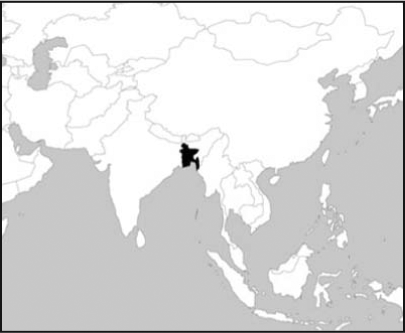
This paper draws on a study in an informal settlement in Dhaka, Bangladesh that explores the relationships between gender, the built environment and the capacity to respond to climate-related hazards. For poor households in urban areas, the impacts of any variability in climate are experienced in their everyday lives − in the houses people live in, the services they can access, the workloads they have to manage with restricted resources, their daily earnings from informal economic activities and their health-related expenditure. The focus here is on those climate-related hazards that are most commonly experienced in this settlement, namely the increasingly high summer temperatures, routinely nearing 40°C, and the intense rainfalls that usually follow the extreme heat and that result in flooding and water-logging.(4) The aim of the paper is to discuss evidence from the settlement that can contribute to developing frameworks that consider the role of gender in shaping resilience to climate extremes, especially in the built environment.
The paper is divided into five sections. The first describes the theoretical framework, which draws from published research and identifies the key considerations for measuring adaptive capacity in the built environment; the second section gives a description of the study site; the third provides a brief overview of the methodology used for the study; the fourth section describes and analyzes some of the empirical data gathered from the study community, illustrating the relationships between how spaces are produced and reproduced and the factors contributing to gender-based climate vulnerabilities and the capacity to adapt to them; and the paper concludes by arguing that gender roles and the nature of gender subordination, rights and entitlements contribute significantly to determining the capacity to adapt to climate risks within the built environment.
II. Theoretical Framework
a. The built environment, gender dynamics and vulnerability
Any discussion of the impacts of climate extremes on daily life must inevitably draw attention to the built environment of urban poor households. The concept of “built environment” goes beyond the usual understanding of human-built surroundings to include the more general ecology of human activity.(5) Although sometimes used interchangeably with the idea of “physical form”, the term “built environment” refers not only to buildings, streets and infrastructure but also to the people acting on them.(6) The emphasis here on the built environment arises from the argument that “natural disasters” are not as natural as they may first appear, as there are significant human-induced aspects to such events.(7) As Albala-Bertrand pointed out in 1993, the quality and design of housing and infrastructure are important elements in preventing or lessening the effects of disasters, but entitlement to them by social groups and individuals is essentially based on socio-political and economic considerations.(8) The research discussed in this paper took advantage of this perspective on the built environment and expanded the research variables beyond a simple consideration of physical form, to a more nuanced exploration of how and why people act within physical forms to address many stresses or factors arising from climate extremes.
Who is most at risk and how they are able to cope with climate hazards varies by location, income level, age and gender.(9) Women as a group are poorer and less powerful than men in many contexts, including that of climate vulnerability. Traditionally, men have used their privilege to access resources both within the household and in the wider public domain.(10) At the same time, the overestimation of men’s physical strength can actually increase their likelihood of fatality during disasters. Women, by virtue of their social location as managers of the domestic environment, are usually the first to notice the subtle and slowly apparent changes in the ordinary lived environment,(11) and therefore are arguably more environmentally conscious than men.(12) These are just a few examples of the variations in exposure and sensitivity between women and men, and they illustrate the fact that the impacts of climate extremes are likely to be gendered.(13)
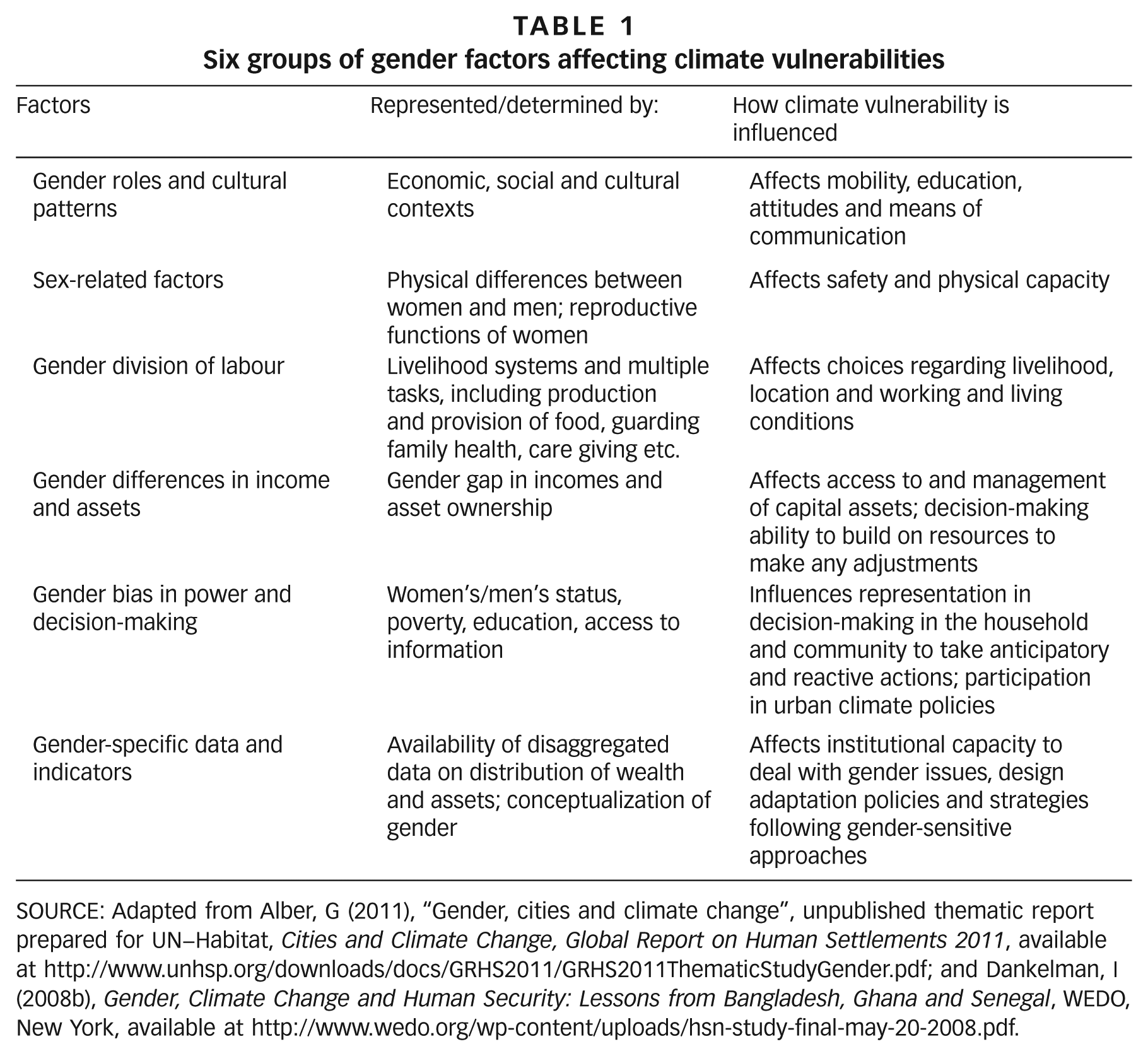
Recognizing the differences in the climate vulnerabilities experienced by women and men in a society points to the need to consider gender in any discussion of responses to climate extremes. “Gender” is often conceptualized simply to refer to “women”; Dankelman, in a discussion of gender and climate change, reminds us that “women” are a particular group of people, while “gender” is a social construct.(14) The concept of gender allows women’s social roles and positions to become more visible. Structured gender relations affect all aspects of life, including rights and access to and control over resources, levels of decision-making power, labour, cultural aspects and identities. Six groups of factors contribute to gender inequality in the context of climate vulnerabilities, as shown in Table 1.
Six groups of gender factors affecting climate vulnerabilities
SOURCE: Adapted from Alber, G (2011), “Gender, cities and climate change”, unpublished thematic report prepared for UN−Habitat, Cities and Climate Change, Global Report on Human Settlements 2011, available at http://www.unhsp.org/downloads/docs/GRHS2011/GRHS2011ThematicStudyGender.pdf; and Dankelman, I (2008b), Gender, Climate Change and Human Security: Lessons from Bangladesh, Ghana and Senegal, WEDO, New York, available at http://www.wedo.org/wp-content/uploads/hsn-study-final-may-20-2008.pdf.
When policy makers consider gender-related coping responses only in terms of the vulnerability of women (or sometimes with a view to their environmental sensitivity and responsiveness), they tend to ignore gender-based marginalization or vulnerability that result from inequalities.(15) Analyses that delve into decision-making and resource allocation processes within households are vital to an understanding of adaptation that ensures well-being and security.(16) This is because decision-making and resource allocation depend on established power relations and personal choices formulated through culture and accepted practices. Decision-making in the context of the built environment has implications for adaptive capacity as well, since it guides how spaces are designed, constructed, renovated and used.
b. Gendered space and adaptive capacity
Adaptive capacity is generally conceptualized in terms of potential exposure to hazards and the ability to anticipate, absorb, accommodate or recover from the effects of a hazardous event by resisting or changing.(17) In an urban context, Satterthwaite et al. define it as “… the inherent capacity of a system [e.g. a city government], population [e.g. a low-income community in a city] or individual/household to undertake actions that can help avoid loss and speed recovery from any impact of climate change.”(18) Physical vulnerability (for instance to increased heat or to water-logging) and the capacity to undertake anticipatory or reactive actions are influenced by the conditions and arrangements of spaces within houses and neighbourhoods.
Lefebvre argued in his book The Production of Space that space is socially produced.(19) Its production, conceptually and materially, involves three interactive processes, namely spatial practice, representations of space and representational spaces. Spatial practice consists of the projection onto a spatial field of all the aspects, elements and moments of social practice. For example, everyone knows what we mean when we speak of a “room” in a house or a “market place” − these terms correspond to the specific use of those spaces, and hence to the spatial practices that constitute and express their interrelationships in an ordered and specific way.(20) Representations of space refer to the models, plans, designs for space created by social bodies with the power to impose blueprints on the world, determining, for example, such spatial patterns as the width of streets or the amount of space allocated to different functions within housing. In addition, spaces are representational – they embody complex symbolisms linked to underlying values; for example, whether woman’s work space within the house is open or enclosed, visible to outsiders or not, is defined by gender relations and ideologies. Hence, space embraces a multitude of intersections and can be defined through various power relations.(21) These interactive processes, considered from a gender perspective, can result in “separate spheres” for men and women, where the public realm or the city is for men and the private domestic spaces of the home are for women.
However, this notion of “separate spheres” as an ideology, according to Rendell “… does not describe the full range of lived experience of all urban dwellers.”(22) In most cities of the South, structural adjustment policies and neoliberal governance have made women’s increased participation in the labour force pivotal to survival.(23) Thus, they often take on reproductive and productive roles as well as engaging in community activities, to ensure the provision of scare resources such as water and education.(24) In their capacity as workers, women may provide cheap labour in industries and houses outside their own home; and as consumers they buy items for themselves and commodities for the home. Thus, spatially, “woman’s place” becomes simultaneously both the home and the city.(25) But despite the changing dynamics of urban life, patterns of spatial segregation may continue to locate women and men in different spaces, determining who can inhabit which spaces. As a consequence, conflict can arise between established norms and emerging needs in urban poor households; they may modify spatial practices and the way space represents gender dynamics, which, in turn, influences and alters social processes as well.
These various dynamics and interactive processes collectively influence the adaptive capacity of individuals within a house or a neighbourhood. Domestic spaces, for instance, are planned, designed and constructed using different building materials and construction techniques. The space and form of a house is not the result of any single physical factor but, rather, the consequence of a whole range of sociocultural factors.(26) Investment in any space, whether for its construction or improvement, depends upon the importance ascribed to that space, which depends, in turn, on the decision-making power, awareness, knowledge and perception of members of the household, male and female. Accordingly, living spaces, working spaces or cooking spaces can be subject to different priorities depending on whether they are designed for the environmental comfort of female or male members. For instance, the greater the strictures laid on women by religion, kinship systems and social interactions, the more partitions there tend to be in the house in order to seclude women’s sphere of activity.(27) These kinds of decisions can affect the provision of lighting and ventilation that are essential to ensure comfort during periods of extreme temperature in a warm, humid climate.
The research described in this paper considers the various aspects of the social production of space and the ways in which they relate to the capacity to cope with climate extremes. Of the six factors identified in Table 1, gender roles and cultural patterns, gender division of labour, and gender bias in power and decision-making are expected to have the greatest influence on how and why people act within physical forms to address climate vulnerabilities.
III. The Study Site
This study focused on a specific informal settlement in Dhaka, developed and occupied by more than 18,000 urban poor households with no security of tenure. Access to economic opportunities, especially for women, and a strong social network make this community a critical case in Dhaka to study adaptation in the built environment and the gender dynamics influencing adaptive capacities. The settlement’s location near a water body makes it vulnerable to flooding and water-logging, and it was completely inundated in the floods of 1988 and 1998 and partially affected in 2004. Residents are also affected by increasingly high annual and seasonal mean temperatures, which have been more pronounced in recent decades and are compounded by the use of building materials that retain the heat. Temperatures nearing 40°C during the summer in the last few years have been followed by intense rains and increased risks of flooding. The extreme heat, together with repeated power cuts, acute water crises and mosquito infestations have affected the health and more general well-being of residents in recent years. However, over their three decades of residence, community members have constructed better houses, managed access to sanitation, water and electricity supplies, and developed some community facilities.
Most housing in the community consists of one-room-deep single-storey dwelling units arranged around a corridor or courtyard that is open to the sky. The linear structures are divided into multiple, same- or different-sized rooms occupied by separate households, many of them renters. There is no standard or common plot size for these houses and layout depends on the land initially occupied or purchased. Generally, however, they form an enclosed unit with a restricted entrance and no view of the interior (Figure 1). Often, the rooms that face the street are used as shops for small home-based businesses run by the house owner, or are rented out to other entrepreneurs. In most of these houses, external partitions are made of corrugated iron sheets supported by bamboo posts or timber structures. Internal partitions are made of bamboo mat/particle boards/corrugated iron sheets depending on what the house owner can afford. In many of these houses, there are no openings either for ventilation or to bring light into the rooms, as adjoining houses are built in such close proximity that there is no space to allow for these.
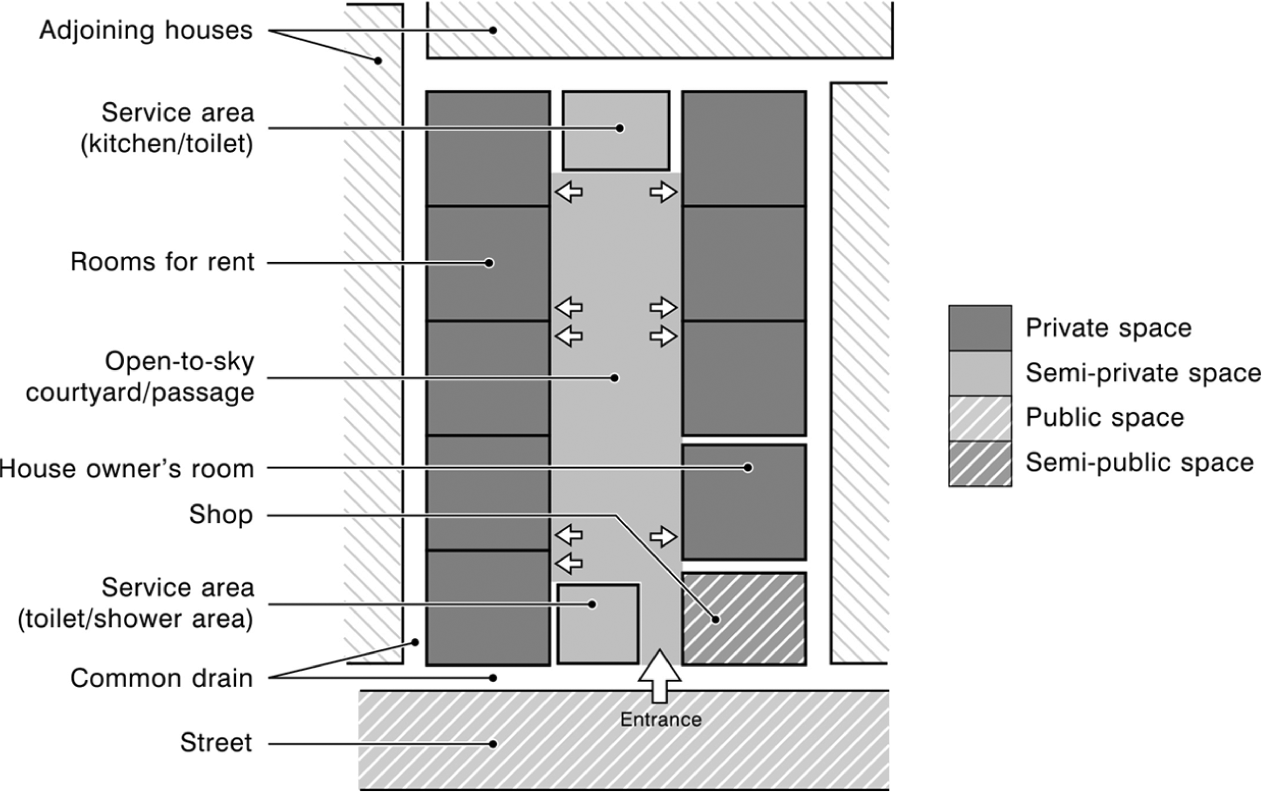
Spatial organization within most settlement housing
IV. Methodology
The study adopted qualitative research methods to consider a number of variables, namely urban poverty, climate extremes, adaptive capacity and gender dynamics within the complex reality of a Dhaka informal settlement. The study drew specifically on the Participatory Climate Change Adaptation Appraisal (PCCAA), which uses various participatory tools to explore household and community level adaptive strategies.(28) Some of these tools were modified where needed. Included among the tools used were a transect walk, participatory mapping, timelines and causal flow diagrams with which to investigate both extreme weather events and community assets.
Case studies were used to gain a more detailed understanding of households and their surroundings, and the 26 households involved were selected to ensure diversity as well as representativeness regarding such variables as house ownership, household headship, location and earnings. Semi-structured questionnaires and discussions were supplemented with visual documentation. Each dwelling was measured, sketched and photographed to capture the spaces and the activities. Some households provided details of the construction techniques and these were also documented visually. In addition, there were 21 focus group discussions with 180 respondents, representing a range of interests and situations within the community.
Two household surveys undertaken by a donor-funded project and an NGO with a major focus on infrastructure development in the area were useful in contributing to the community profile and in providing triangulation. The fieldwork took place from September 2010 until March 2011, in order to take best advantage of maximum seasonal variations. During September, towards the end the monsoon season, experiences of water-logging and flooding were still fresh in people’s minds; residents experienced acute winter in early January; and March was the critical period right before the monsoon, when people suffered most from the heat.
V. Gender and Coping with Extremes in the Built Environment
Although the study generated data on all aspects of community life, the focus in this paper is relatively narrow, looking primarily at housing and people’s behavioural activities and adjustments within the home setting, especially in the context of heat and the potential impacts of heavy rains. The home is an especially salient setting within which to understand the intersection of gender and coping practices.
a. “Living in a man-made world”
In this community, as in many others, construction activities are male dominated. Men plan, design and construct houses, schools, the mosque, shops, streets and drainage facilities, thereby contributing significantly to the production and reproduction of spaces and the built environment. Women may be involved in planning and management in some cases, but their overall involvement is limited. Most respondents in the study said that all the recognized mistri(29) in the area are men, who are traditionally responsible for constructing houses and infrastructure, with their knowledge of construction in the informal sector passed on through apprenticeships. Despite the fact that women sometimes do hard physical labour, including carrying construction materials, cultural norms around the physical differences between women and men mean that the occupation of mistri would not be acceptable for women.
However, times are changing in this informal settlement, as elsewhere. The research indicated a greater involvement of women in maintaining houses and infrastructure that required taking on some aspects of construction work. During construction, house owners may volunteer to work with the mistri to reduce the cost of hired labour. In many cases, women in the household work with them and apply this learning to the improvement of their houses. One woman noted that she had rebuilt her floor with her daughter, mixing brick chips and building debris with sand and cement in a proportion similar to the standard practice in concrete construction. The plinth of her house, previously made of earth, was sufficiently improved to reduce daily maintenance and thus her workload; and the increased water resilience greatly reduced their risk of water-logging.
Women also generally have limited involvement in decision-making. When women are not consulted, they can feel the effects in practical ways. In one male-headed household, for example, the mistri who constructed their two-storey house consulted only with the husband. A balcony built on the upper level created a comfortable space for the wife and reduced the overall risks from water-logging. However, the wife said that access to the upper level via a steep ladder was unsuitable for elderly or pregnant women. In her opinion, when men plan space they seldom consider the advantages and disadvantages to women. This can be reflected even among renter households, when men make decisions about where to live. One man said that he preferred to rent rooms without openings for ventilation. He was not comfortable with the idea that household activities could be visible to outsiders through any openings that gave onto the dense settlement. He was more concerned about the security of his wife and daughters than about their physical comfort when he was at work. Situations like this highlight the importance of incorporating women’s involvement in planning and decision-making.(30) Housing affects all household members, and when decisions are made by a single male member it may mean sub-standard shelter for all, with implications for vulnerability and adaptation to climate extremes.(31)
Even in female-headed households, where women have a clear influence on the planning and reconstruction of their own houses (using money borrowed from NGOs), they still have to negotiate with the male mistri and his assumptions about spatial practices. But here too, women are beginning to exert greater control. One respondent managed to rebuild the shop she owns and runs to better suit both her home-based enterprise and her domestic work. Her productive role within the household gave her some bargaining power and she was able to address her environmental concerns as well, creating a semi-open work area shaded from direct sun and rain, together with better ventilation to cope with the heat. The study found evidence of such vulnerability-reducing activities in most of the female-headed case study households – but also in a number of male-headed households where women, by virtue of their contribution had, as noted, gained bargaining power.
The increased bargaining power arising from involvement in economic activities is gradually being reflected in neighbourhood planning as well. The study revealed that women with regular earnings are interested in becoming members of different savings groups associated with NGOs or donor-funded projects that prefer to work predominantly with women. As group members, women get involved in planning and implementing project components that aim for either infrastructure development or negotiating access to services such as water and health care facilities. Such groups participate in mapping exercises (Photo 1), prioritizing beneficiary households to receive facilities such as toilets; planning the construction of drainage networks; negotiating with different households; and managing and supervising those developments (Photo 2). Savings group members can also access credit from their savings, which many use to rebuild and improve their houses. In the process, women have contributed to the development of better houses, access to sanitation, water and electricity supplies and community facilities, thus reducing their own vulnerability as well as that of their household members to the impacts of climate extremes.
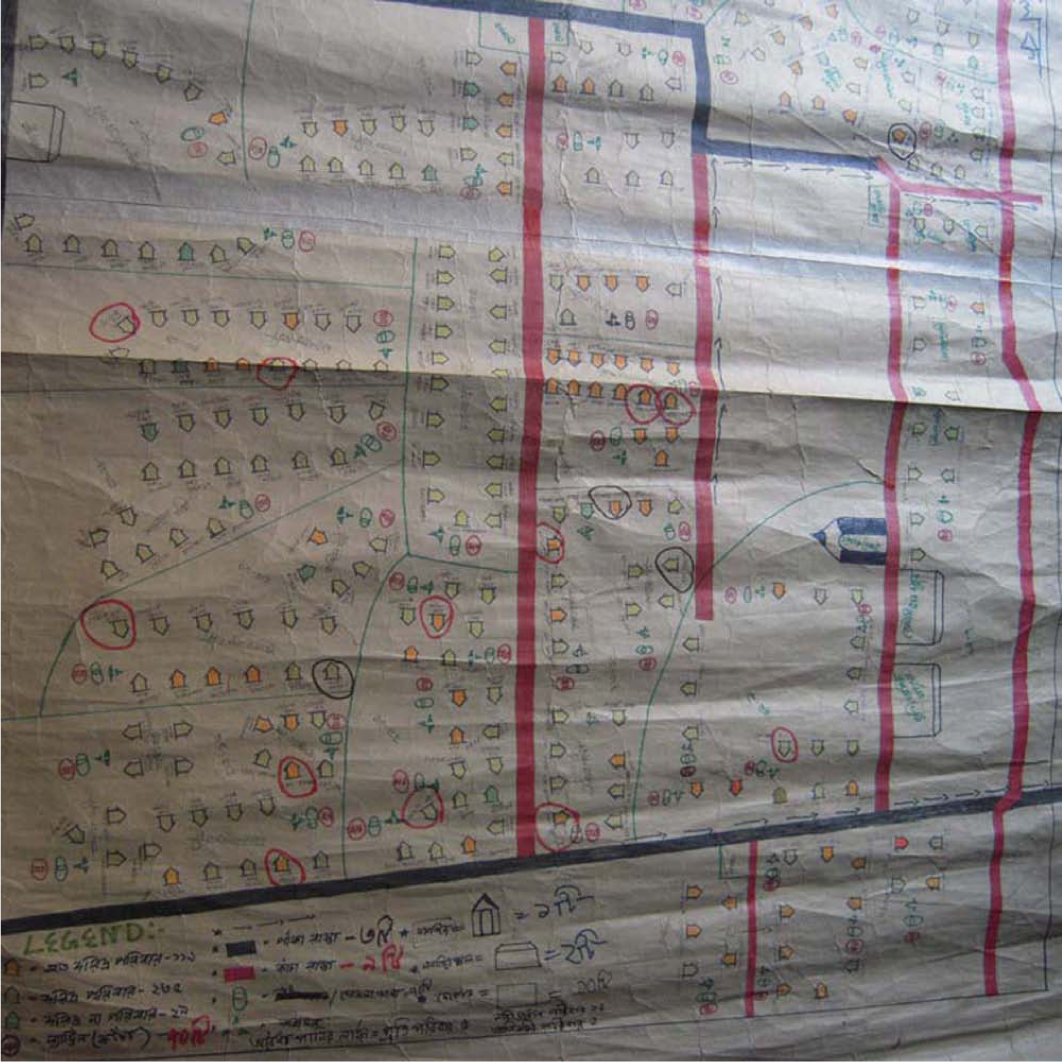
Community map of a neighbourhood
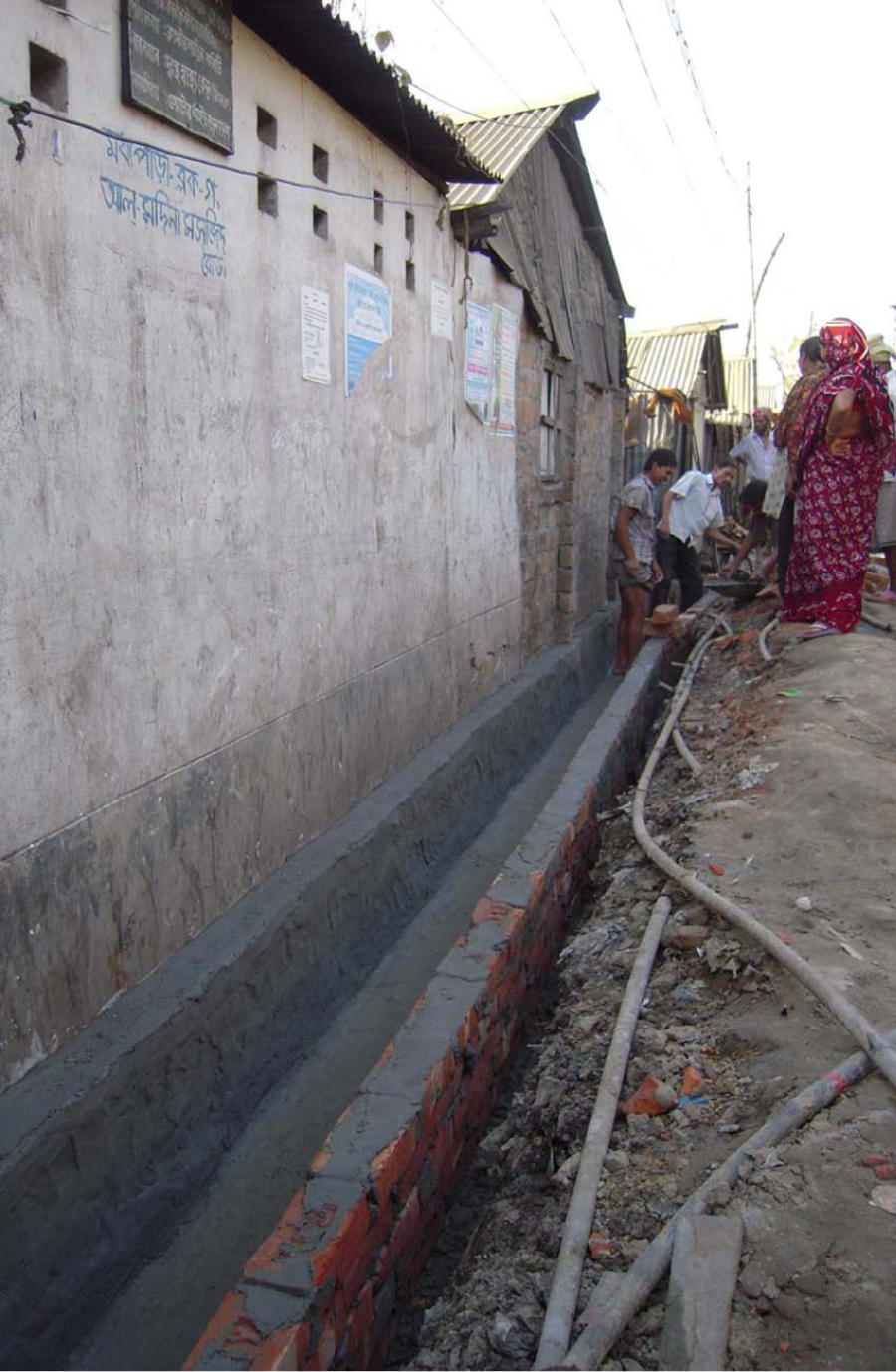
Drainage construction according to the community plan
b. Manifestations of gender in the organization and use of space
Male dominance in decision-making on construction and spatial organization in the community is significantly influenced by sociocultural concerns around privacy and security for women. The preference of the husband who rented the home with unventilated space, described above, is a common response in this regard, repeated throughout the settlement and reinforced both by spatial layout patterns and by daily spatial practices.
One of the case study households, for instance, owns and rents out more than five rooms. Long-term illness has forced the husband to stay at home and he depends on rents as a key source of income. He decided to live in the room adjoining the entry passage to the courtyard that provides access to the rented rooms. This way, he can monitor access to the house through its sole window, which provides some ventilation to his living space (Figure 2). He explained that this arrangement was driven more by the desire for security than by environmental concerns. Most men in his renter households work away from the home, while their wives and children stay at home and use the courtyard; by monitoring access to the house, he ensures their security. An added advantage to him is his capacity to protect his own economic interests. Some of these renters are very poor, and sometimes when they cannot pay their rent they try to flee during the night. The organization of rooms around the small courtyard and the common kitchen (Figure 2) was planned to allow access to the maximum number of rooms, and both the enclosed nature of the courtyard and its restricted access are expressions of the need for security and control in the context of a specific gender ideology.(32)
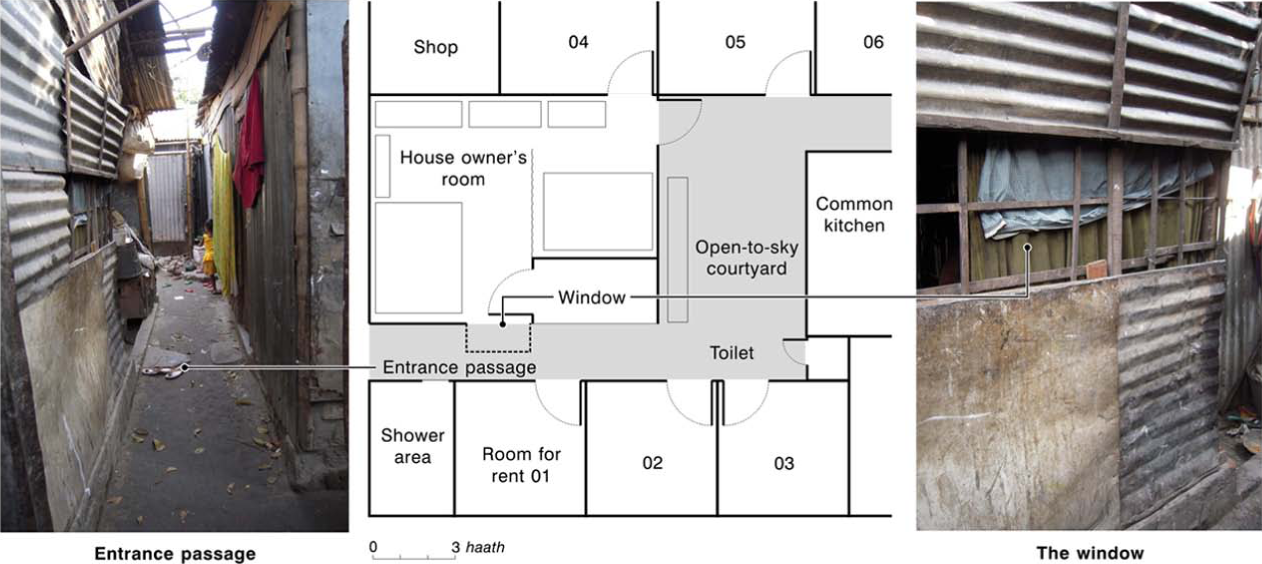
The location of the window in the entrance passage takes security into consideration
Although these arrangements increase privacy, they also increase vulnerability to heat for the renter households. None of the rented rooms have any opening for ventilation other than the door that gives onto the courtyard, a common practice in this settlement. The enclosed and unventilated rooms, constructed of highly heat absorbent materials (corrugated iron sheets), make the spaces inside intolerably hot on long sunny days. Smoke from the cooking ovens in the adjacent courtyard or corridor often penetrate the rooms, adding to the misery and increasing vulnerability to respiratory diseases. The small outdoor courtyard, primarily used by women and girls, also becomes uncomfortable in the absence of any airflow. This spatial pattern, an example of both represented and representational space, significantly challenges the capacity of women to cope with the heat that is an increasingly extreme reality in the settlement.
It is generally considered unusual to have windows in rooms, not only because of privacy concerns but also because of limited resources and efficiency in construction techniques; this is especially the case in rooms occupied by renters. Renters clearly have the least decision-making capacity with regard to these kinds of decisions. Of the 13 case study households who owned their houses, 10 had some form of window or opening for ventilation; of the other 13 renter households, only two enjoyed the comfort of windows to ensure some ventilation. Thus, female members of renter households, who spend the most time in these stifling rooms, have the least capacity to make any adjustments to their comfort. Men in these households experience this level of discomfort only at night.
Apart from reflecting sociocultural norms around privacy, spatial organization in the built environment is also influenced by gender roles and the gendered division of labour of the household members in this community. Not all women, as noted, restrict their daily activities to reproductive work within these secluded environments, and so are not equally confined within them. Many women are involved in earning an income, either outside of the home or in home-based enterprises. Of the 26 case study households, only in five did women members stay at home, performing only work associated with their reproductive role. Of the other 21 households, 10 included women who either ran home-based enterprises, such as shops or cooking food for catering, or maintained the house and its water supply for the renters when rent was their main source of income. Women from the remaining households worked outside the settlement, mostly as garment workers, household help, cleaners and day labourers.
One of the case study households reveals the complexity of the arrangements and decisions that can evolve in these situations. Both husband and wife work as tailors but in two different shops so as to attract both male and female customers. The wife’s shop is an integral part of her living space (Figure 3), and the storage shelves form a partition between her bed and the work area. The table fan in the room is positioned so that it can cool both her work area and the bed area where her seven-year-old son spends time. She uses the higher storage space to keep all the supplies for both shops, safe from the high water that has been experienced in recent years. In 2009, some of her fabrics were ruined after intense rain when 333 millimetres fell within 24 hours(33) and her shop, along with others in the neighbourhood, was inundated by knee-deep water. The shop front with her sewing machines has folded partitions that open onto the street and protect the space in front of the shop from rain and direct sun, providing a shady, defined space for her female clients. Having this comfortable space in front of the shop also allows her to be part of her clients’ discussions on community activities, such as getting water, health care and education for their children, and different NGO activities going on in the area. Although the shop makes effective use of the available space within the house and provides some shelter from heat and rain, it is not invulnerable, and in the past, as noted, has suffered from water-logging after heavy rains.
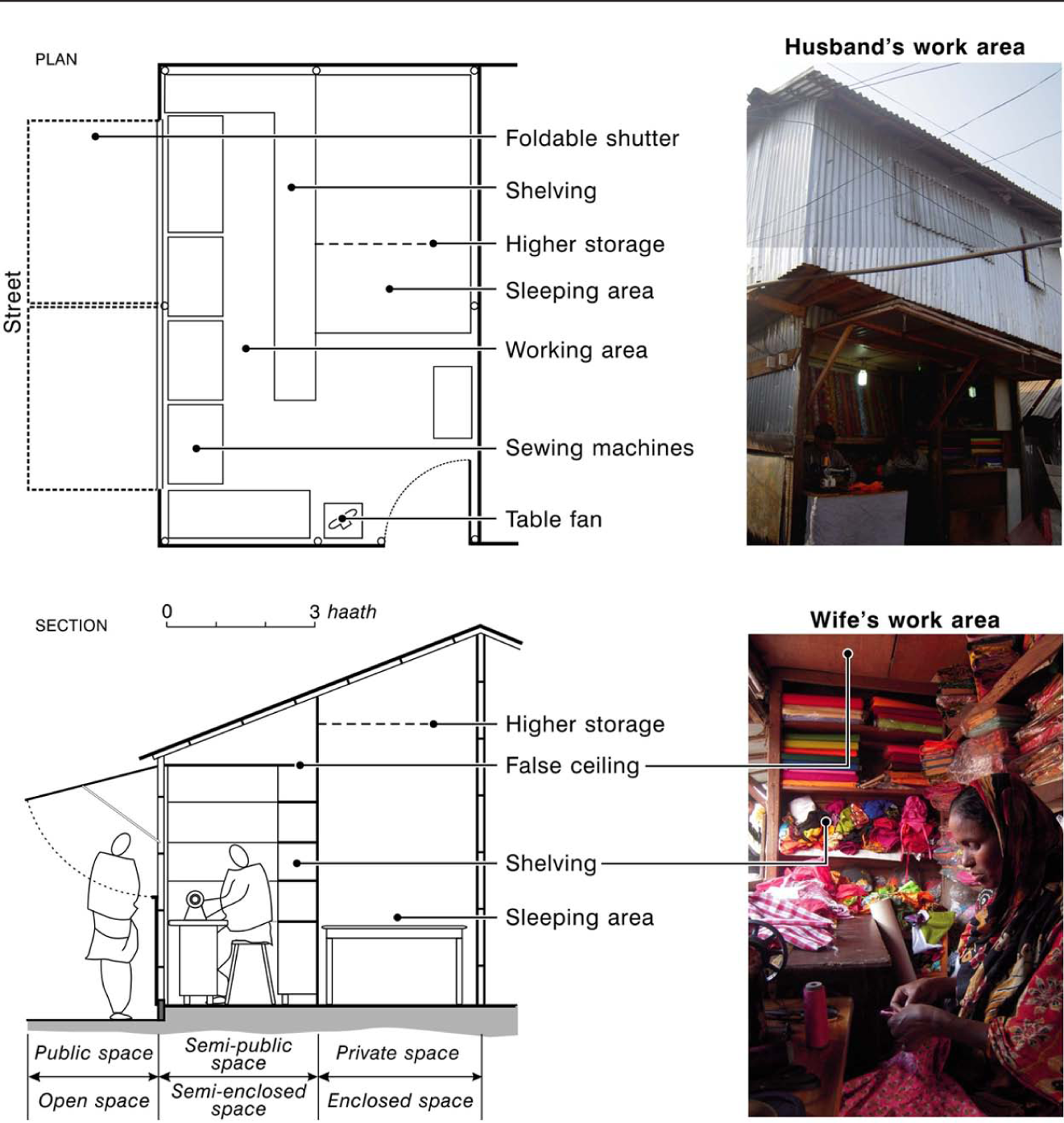
Combined work and living areas
Her husband’s workspace, which they bought six months ago, is located on the ground floor of a newly constructed two-storey building on a busy street. The plinth was recently raised above the road level with brick retaining walls and a neat cement-finished floor – influenced by their past experience of water-logging in the wife’s shop. His shop is airy and properly lit, and he uses the entire space only for sewing and displaying some fabrics. It was evident from interviewing both the wife and the husband that her skills and earnings have always given her more bargaining power than is customary regarding making household decisions. She trained her husband to work as a tailor after he lost his job as an auto-rickshaw driver and she took out a loan to buy the new shop through her membership of a savings group. Yet despite the balance of power in this household, gender roles and daily spatial practices made it important for her to accommodate both her productive and reproductive roles by making it possible to combine different activities in the same space – even if the inherent limitations in her domestic space meant compromising in terms of her enterprise’s overall resilience to climate hazards. Within the confines of her gender role, she has helped to ensure the stability of the household by investing in a climate-resilient shop for her husband. There was a time, certainly, when he operated as an auto-rickshaw driver when he was, if anything, more vulnerable than she to climate extremes.
c. Representational outdoor spaces influencing vulnerability
Neighbourhood spaces in the community manifest similar household dynamics. Despite women’s involvement in the world of work, neighbourhood space remains gendered, with implications for the capacity to cope with climate extremes. According to one woman respondent:
“In this community, streets are our only open spaces; they remain crowded with men and children on hot summer days. Women will feel embarrassed standing in the street. When it feels unbearable to stay inside, the narrow courtyards and corridors remain as our only relief.”
Most men in the area spend time after work in the local tea stalls, local clubs and shops (Photo 3). The open streets are primarily male spaces, and the semi-open spaces in front of the shops provide men some refuge from the heat and rainfall. Significant numbers of women work outside the area and use these streets regularly, and household responsibilities compel women to buy necessities from daily markets or from street-side shops on their way back from work. But they still tend to confine most of their activities to the courtyards or corridors adjoining the house (Photo 4). Even involvement in community-based activities associated with NGOs, which encourage more women to take part in social and organizational activities, usually takes place in someone’s courtyard.
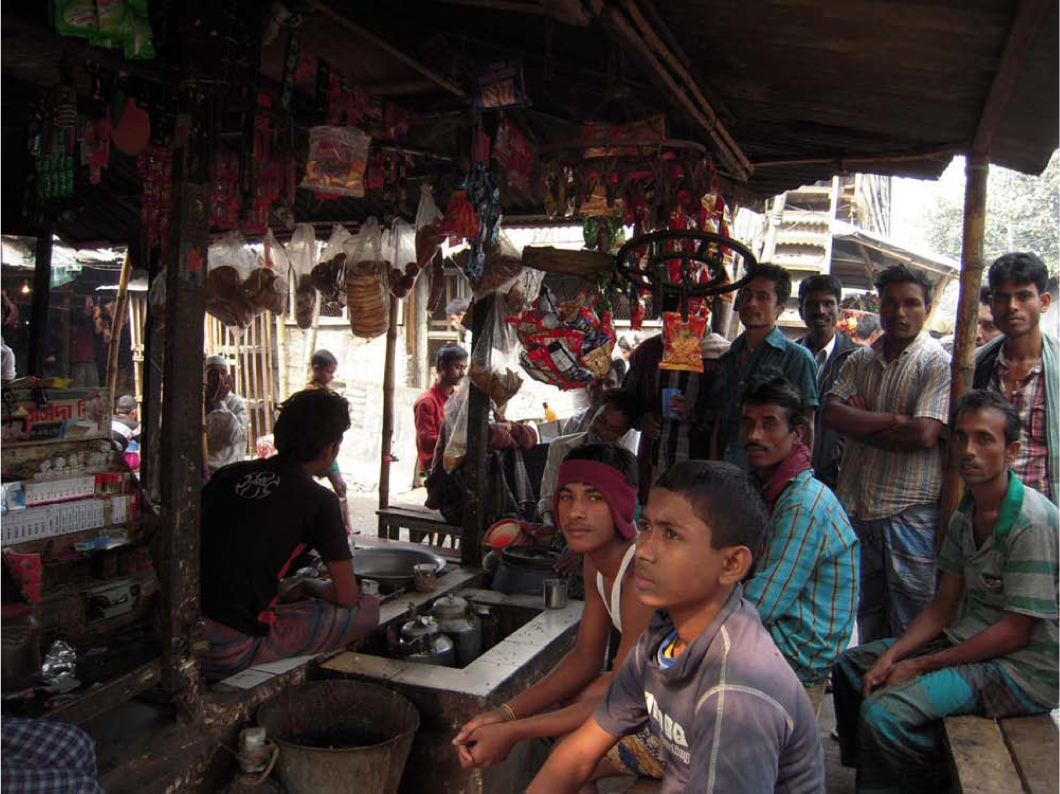
Men gathered at a tea stall
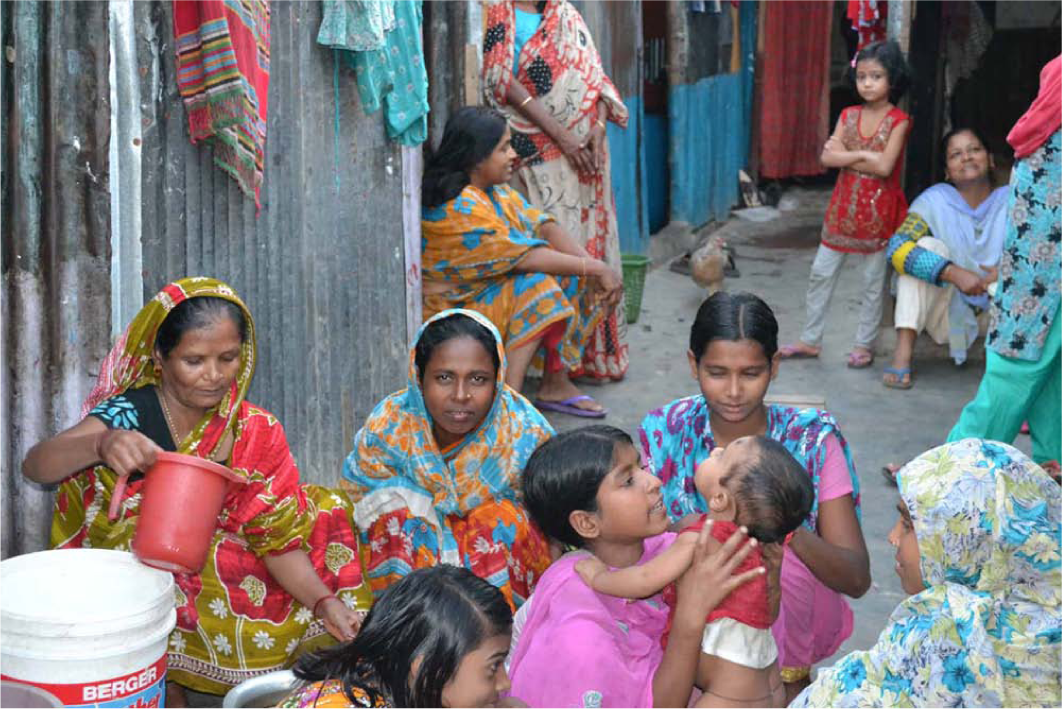
Women socializing in a courtyard
Outdoor spaces with airflow, shade and protection from the rain and heat provide far more comfortable conditions than interior spaces in a warm, humid climate such as Dhaka’s. If there are not enough openings within rooms, even with a strong wind outside there can be no effective air movement inside. Men’s presence in outdoor and public spaces can also mean increased exposure to hazardous conditions; this is especially the case for those in occupations such as rickshaw-driving or manual labour, which offer few ways to control exposure. Women can more easily and routinely take advantage of the refuge offered by their enclosed domestic spaces. However, the adaptive capacity to reduce their relative vulnerabilities depends significantly on the underlying social norms that define both power relations and the spaces that women and men can occupy.
VI. Conclusions
The built environment – both the quality and design of housing and infrastructure as well as entitlement to these by urban poor households and individuals within households – significantly influences the capacity to undertake actions that can help avoid loss and speed recovery from any extremes in climate. The physical discomfort that results from intense heat over long periods of time, as evident in Dhaka in the last few years, is very much a function of building materials, construction techniques, types of enclosure, provision for ventilation, and arrangement of the living and working spaces an individual inhabits. Vulnerability to water-logging and flooding within the informal settlement depends significantly on the availability and condition of infrastructure, for example drainage, water supply and sanitation, and streets and pavements.
Discussions of gender and space suggest that social norms guide what spaces women and men inhabit to live and work and the kind of activities they carry out in their houses and neighbourhoods. The social dynamics of gender can be traced in these representational spaces and are reflected in spatial practice. As a consequence of the social production of space, different individuals operate differently within a house or a neighbourhood and have different scope to cope with potential climate hazards. Although the gender dimension has been considered in many discussions of climate-related vulnerability and adaptation, in urban areas where the poor households usually have no choice but to live in informal settlements, the exploration of gender analyzes their adaptive capacity to climate extremes from a different perspective. Combining the concept of the social production of space with different factors affecting gender-based vulnerabilities can provide a framework that helps to expand our understanding of the varied capacity to respond to extremes.
Lessons can be drawn from the examples of spatial practice discussed in this paper. Gender roles and the division of labour in the studied settlement are dominated by a patriarchal system that influences women’s status within the household, as well as by inter-household poverty and access to education and knowledge. As a consequence, women are under-represented in decision-making, especially in the production of houses and infrastructure through planning and construction. However, given the increased responsibilities of women both for earning and in coping in a challenging environment, and in the recognition by men of women’s changed role, there is a gradual shift in the balance of power. Increasingly, women are taking a more active role in reproducing and managing their built environment, thus increasing their ability to anticipate and react to hazards.
Examples from this study show that space use patterns are mediated by gender roles. As shown in Figure 4, the characteristics of the built environment in combination with reproductive or productive roles can enhance or limit the capacity to cope with extremes. A woman’s reproductive role, in the absence of supportive resources, may locate her, in the interests of privacy and security, in an enclosed private space with limited light or ventilation and little capacity to cope with extremes of heat. On the other hand, a man or woman’s productive role may locate him or her in an outdoor space with high exposure to increased heat or intense rain. In both scenarios, they have limited ability to anticipate, absorb, accommodate or recover from the effects of extremes by resisting or changing the places where they live or work. In comparison, for a woman who spends her time in a well-ventilated, shaded space with access to a water supply, sanitation and the streets, being limited to a reproductive role may significantly reduce her exposure to hazards; at the same time, her community role can provide her with the capacity to undertake anticipatory or reactive actions with her neighbours. In fact, her better living conditions may give her the highest capacity to adjust to the impacts of climate extremes. On the other hand, a woman who has to combine a productive role with her reproductive and community roles may be more exposed to hazards, but her location within a work area adjacent to her home may give her more control over resources within the home, and her bargaining power through control of financial resources can give her more decision-making power with regard to making adjustments to her surroundings. Her gender roles may expose her to hazards but her ability to plan and make adjustments to her spaces and infrastructure may increase her overall resilience.
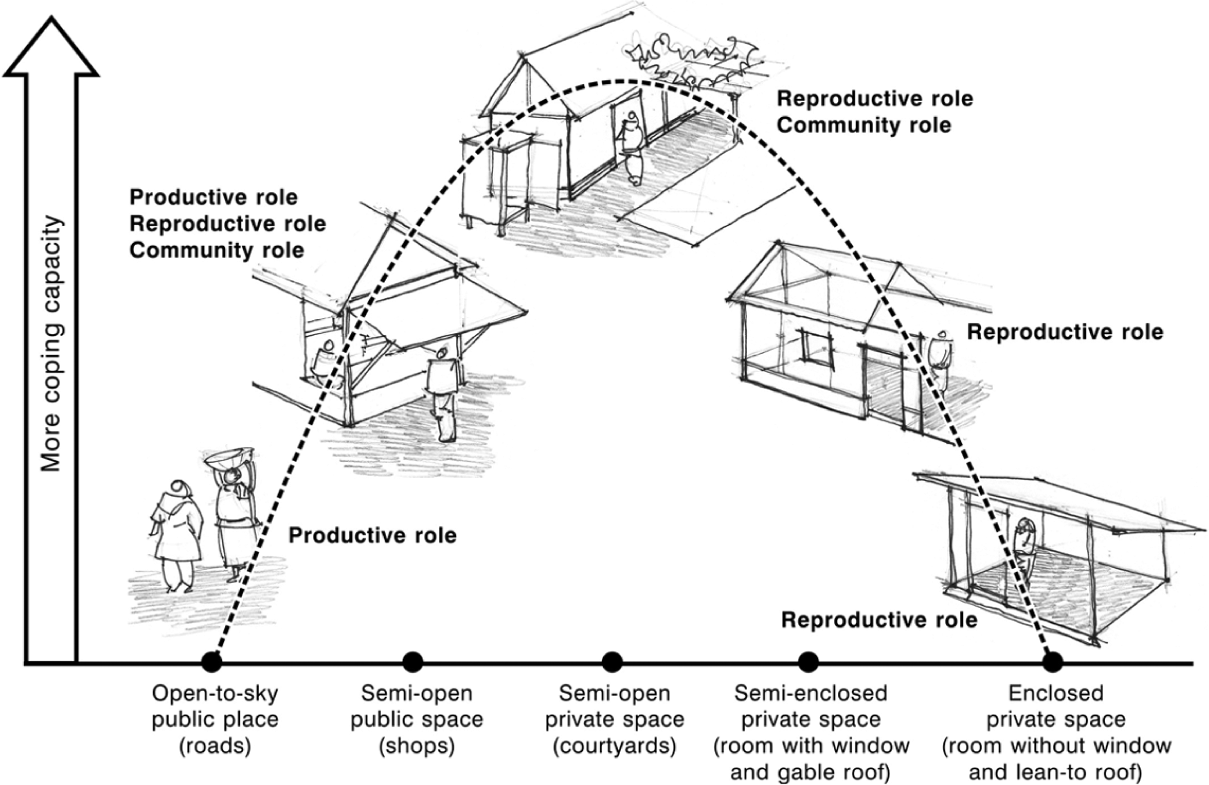
Gender roles, built environment and coping capacity
Housing and infrastructure are not only a physical concern; they are a combination of choices, negotiations, disagreements and compromises that are part of the construction, purchase, use, re-use, modification and disposal of material goods. Combining the material goods with negotiations and choices about investment influences how well risks are managed and how a household, or an individual within the household, is able to cope with unexpected hazards that negatively affect their incomes, assets or well-being. Analyzing representational spaces exposes the gender bias in power and decision-making in a community. Nevertheless, analysis of space also denotes the importance of gender dynamics in access to income and asset ownership. With increasing livelihood opportunities, women can make a greater economic contribution to the household. Thus, their ability to access and manage resources can create an environment where the household can aspire to accumulate physical, financial and human assets. With access to financial resources, knowledge about the causes of physical vulnerability within spaces and information about how to build weather-resilient houses, women can increase their adaptive capacity. Access to diversified and formal livelihood opportunities for men can also provide the support to better manage the uncertainties and risks. In the process, taking a gender lens for measuring coping capacity can guide us towards more equitable development.
Footnotes
1.
Hunt, A and P Watkiss (2011), “Climate change impacts and adaptation in cities: a review of the literature”, Climatic Change Vol 104, No 1, pages 13–49; also Satterthwaite, D, S Huq, H Reid, M Pelling and P Romero Lankao (2009), “Adapting to climate change in urban areas: the possibilities and constraints in low- and middle-income nations”, in J Bicknell, D Dodman and D Satterthwaite (editors), Adapting Cities to Climate Change: Understanding and Addressing the Development Challenges, Earthscan, London, pages 3–50.
2.
Arora-Jonsson, S (2011), “Virtue and vulnerability: discourses on women, gender and climate change”, Global Environmental Change Vol 21, No 2, pages 744–751.
3.
Rendell, J, B Penner and I Borden (2000), Gender Space Architecture: An Interdisciplinary Introduction, Routledge, London and New York, 432 pages.
4.
Alam, H (2009), “Dhaka gone crazy: heat, outage, water crisis cripple city life”, The Daily Star, 27 April, available at http://www.thedailystar.net/newDesign/news-details.php?nid=85811; also Staff Correspondent (2009), “Downpour halts life”, The Daily Star, 29 July, available at http://www.thedailystar.net/newDesign/news-details.php?nid=99057; and Staff Correspondent (2010), “Hit by heat-blistering summer makes Dhaka life unbearable”, The Daily Star, 13 May, available at  .
.
5.
Moffatt, S and N Kohler (2008), “Conceptualizing the built environment as a social-ecological system”, Building Research and Information Vol 36, No 3, June, pages 248–268.
6.
Habraken, N J (1998), The Structure of the Ordinary: Form and Control in the Built Environment, edited by J Teicher, MIT Press, Cambridge Mass, 359 pages; also Blanco, H, P McCarney, S Parnell, M Schmidt and K C Seto (2011), “The role of urban land in climate change”, in C Rosenzweig, W Solecki, S Hammer and S Mehrotra (editors), Climate Change and Cities: First Assessment Report of the Urban Climate Change Research Network, Cambridge University Press, UK, pages 218–248.
7.
Bosher, L (2008), Hazards and the Built Environment: Attaining Built-in Resilience, Taylor and Francis, London and New York, 382 pages.
8.
Albala-Bertrand, J M (1993), The Political Economy of Natural Disasters: With Special Reference to Developing Countries, Oxford University Press, UK, 259 pages.
9.
Alber, G (2011), “Gender, cities and climate change”, unpublished thematic report prepared for UN−Habitat, Cities and Climate Change, Global Report on Human Settlements 2011, available at http://www.unhsp.org/downloads/docs/GRHS2011/GRHS2011ThematicStudyGender.pdf; also see reference 5; Dankelman, I (2008a), “Gender in climate change adaptation”, Workshop for the Development of Policy Guidelines on Mainstreaming Gender into Disaster Risk Reduction, 28−30 January, Geneva; Brody, A, J Demetriades and E Esplen (2008), “Gender and climate change: mapping the linkages. A scoping study on knowledge and gaps”, BRIDGE, Institute of Development Studies, Brighton, Sussex, 27 pages; Denton, F (2002), “Climate change vulnerability, impacts and adaptation: why does gender matter?”, Gender and Development Vol 10, No 2, pages 10–20; and Nelson, V, K Meadows, T Cannon, J Morton and A Martin (2002), “Uncertain predictions, invisible impacts and the need to mainstream gender in climate change adaptations”, Gender and Development Vol 10, No 2, pages 51–59.
10.
Kabeer, N (2003), Gender Mainstreaming in Poverty Eradication and the Millennium Development Goals: A Handbook for Policy Makers and Other Stakeholders, Commonwealth Secretariat, International Development Research Centre, London and Ottawa, 245 pages.
11.
Momsen, J H (2010), Gender and Development, Routledge, Abingdon, 304 pages.
14.
Dankelman, I (2010), “Introduction: Exploring gender, environment and climate change”, in I Dankelman (editor), Gender and Climate Change: An Introduction, Earthscan, London, pages 1–20.
15.
See reference 2.
16.
Jarvis, H, P Kantor and J Cloke (2009), Cities and Gender, Routledge, London and New York, 364 pages.
17.
UNISDR (2004), Living with Risk: A Global Review of Disaster Reduction Initiatives, United Nations, Geneva, 429 pages; also Field, C B, V Barros, T F Stocker, D Qin, D J Dokken, K L Ebi, M D Mastrandrea, K J Mach, G-K Plattner, S K Allen, M Tignor and P M Midgley (editors) (2012), Managing the Risks of Extreme Events and Disasters to Advance Climate Change Adaptation, Special Report of Working Groups I and II of the Intergovernmental Panel on Climate Change (IPCC), Cambridge University Press, UK, 594 pages; and Adger, W N, S Agrawala, M M Q Mirza, C Conde, K O’Brien, J Pulhin, R Pulwarty, B Smit and K Takahashi (2007), “Assessment of adaptation practices, options, constraints and capacity”, in M L Parry, O F Canziani, J P Palutikof, P J van der Linden and C E Hanson (editors), Climate Change 2007: Impacts, Adaptation and Vulnerability, Contribution of Working Group II to the Fourth Assessment Report of the Intergovernmental Panel on Climate Change, Cambridge University Press, UK, page 727.
18.
Satterthwaite, D, S Huq, M Pelling and H Reid (2007), Adapting to Climate Change in Urban Areas: The Possibilities and Constraints in Low- and Middle-income Nations, Climate Change and Cities Series, Discussion Paper 1, IIED, London, page 5.
19.
Lefebvre, H (1991), The Production of Space, Blackwell, Oxford, 454 pages.
20.
See reference 19, page 16.
21.
Spain, D (1992), Gendered Spaces, University of North Carolina Press, USA, 294 pages.
22.
Rendell, J (2000), “Introduction: Gender, space”, in J Rendell, B Penner and I Borden (editors), Gender Space Architecture: An Interdisciplinary Introduction, Routledge, London, page 103.
23.
Peake, L (2009), “Gender in the city”, in R Kitchin and N Thrift (editors), International Encyclopaedia of Human Geography, Elsevier, Oxford, pages 320–327.
24.
Moser, C (1987), “Women, human settlement and housing: a conceptual analysis for policy-making”, in C Moser and L Peake (editors), Women, Human Settlements and Housing, Tavistock Publications, pages 12–33.
25.
See reference 22, page 106.
26.
Shrestha, G (2000), “Gender relations and housing: a cross-community analysis”, Gender, Technology and Development Vol 4, No 1, page 62.
27.
See reference 26, page 67.
28.
Moser, C and A Stein (2011), “Implementing urban participatory climate change adaptation appraisals: a methodological guideline,” Environment and Urbanization Vol 23, No 2, pages 463–485.
29.
Mistri is a Bangla term used to describe a person involved in construction work. This includes people employed in various trades such as masonry, carpentry, plumbing, roof construction etc.
30.
Chant, S (1987), “Domestic labour, decision-making and dwelling construction: the experience of women in Queretaro, Mexico”, in C Moser and L Peake (editors), Women, Human Settlements and Housing, Tavistock Publications, pages 33–54.
31.
See reference 30.
32.
Morgan, J (2010), The Classical Greek House, Bristol Phoenix Press, Exeter, 193 pages.