




Abstract
This paper examines the legal, political, technical, economic and financial implications of fitting commitments by cities into the post-2012 climate change agreement. It notes the widespread recognition of the importance of cities and local governments to this agreement and describes the many challenges to including these governments within it – technical, political and economic. There are also the difficulties in reaching agreement on how targets can take into account differences in capacity to act and differences in the sectors where city governments have jurisdiction. As the post-2012 climate change negotiations are already a highly complicated process, the inclusion of sub-national governments into the agreement needs to constitute a “solution” rather than a “new problem”. The objective of this paper is to offer a framework and to identify key elements that need to be taken into account when developing a roadmap that seeks empowerment of local governments in the UN post-2012 framework on climate change.
Keywords
I. Introduction
We can currently distinguish three significant and promising interrelated processes regarding the large and complex area of “cities and climate change” issues:
a growing awareness of the crucial role that urban territories must and can play in reducing greenhouse gas (GHG) emissions;
the emergence and consolidation of various urban territory networks providing benchmarking, exchange of best practices and decentralized cooperation; and
the growing power of a (still heterogeneous) lobby dedicated to supporting the voices of urban territories vis-à-vis national states in national, supranational and international arenas. The objective was summarized during the 2009 C40 meeting in Seoul by the formula “Engage, Empower and Resource”, which calls for clear and quantified commitments with a timetable for delivery; for additional power and competencies for cities to increase their capacity to act; and for substantial financial resources.
The current United Nations Framework Convention on Climate Change (UNFCCC) negotiations (AWG–LCA(1) and AWG–KP(2)) are crystallizing these three processes, and there are now multiple city and/or urban region networks that are lobbying for an acknowledgement of the role of local governments in achieving stringent GHG emissions reductions within a post-2012 climate change agreement.
To tackle climate change adaptation and mitigation challenges, the local level of organization and policy is indeed relevant for three main reasons. First, density and spatial organization are key factors that influence energy consumption in transport and buildings (the two key sectors that need to be tackled urgently). Second, some of the major potential for emissions abatement needs local coordination to overcome transaction costs. Finally, pervasive climate policies must involve other actors than states, enterprises and individuals, and the intermediate institutions have a particular role to play.
With regard to climate change negotiations, these networks essentially advocate three objectives:
This international acknowledgement of the role of local government is clearly viewed as a necessary step to give legitimacy to local authorities in their negotiations with national government.
However, as the post-2012 climate change negotiations are already a highly complicated process, the inclusion of sub-national governments into any form of post-2012 agreement needs to constitute a “solution” rather than a “new problem”. There is a consensus that a roadmap is needed to build this “solution”. The purpose is not to open the door to local government in post-Kyoto negotiations or to give them access to international climate instruments, but rather to accelerate GHG emissions abatement. Incorporating local authorities in an institutionalized way into the negotiations, especially to ensure their coordination, poses important economic, institutional as well as methodological challenges.
The objective of this paper is to offer a framework to consider how commitments by cities can fit into a post-2012 climate change agreement. The paper identifies key elements that need to be taken into account when developing a roadmap that seeks empowerment of local governments in the UN post-2012 framework on climate change. Five aspects of this question will be explored: legal, political, technical, economic and financial.
II. Legal and Political Aspects of Commitments by Cities in a Post-2012 Climate Change Agreement
a. Records of commitments of cities
What could be the legal nature and scope of commitments by cities towards a post-2012 climate change agreement? UNFCCC and the Kyoto Protocol are multilateral treaties involving states as contracting parties. Therefore, AWGs–LCA and the Kyoto Protocol are party-driven processes. Nevertheless, under the Kyoto Protocol, cities can participate in Clean Development Mechanism (CDM) projects or programmes of activities.
If to date there is no multilateral treaty placing binding obligations directly upon cities, a few examples do exist in international records. Under the auspices of UNESCO, a treaty (relating to commitments to fight against racism) recognizes cities’ voluntary commitments that can be achieved through “partnerships” (collaboration). At the European level, there is the Madrid Convention/Strasbourg Protocol on cross-border cooperation, but its implementation is subordinated to inter-state agreements; and of course, there is the Covenant of Mayors (whose role is discussed later in this paper).
b. Possible institutionalization of the contributions made by cities into a post-2012 climate change agreement
Different aspects must be stressed here:
c. Interlocutor’s identification issue
Cities have faced three types of difficulty in this task. First, we have seen a proliferation of city and/or urban regional networks that are lobbying for international acknowledgement of the crucial role of local government in achieving stringent reductions in GHG emissions. Therefore, it is particularly difficult for national, supra-national and international authorities to establish a productive dialogue to move ahead on these issues.
The first political issue was therefore to identify the relevant interlocutor(s) to establish a constructive dialogue between representatives of urban territories and national and international authorities. Three facets of this issue must be taken into account:
which level of “local government” is relevant in tackling territorial issues?; where is the strongest capacity to act? urban regions or cities?;
which level of sub-national government has the political and institutional legitimacy to hold discussions with national counterparts?; and
considering the large differences in the institutional frameworks between states, and also between the capacities of cities to take action according to their size, their rank within the national urban hierarchy and their wealth, how can a dialogue be established that works at both national, supranational (European Union notably) and international (UN) levels?
This was achieved progressively, and we can now say that the worldwide local government network United Cities and Local Governments (UCLG) and the advocacy group International Council for Local Environmental Initiatives (ICLEI Local Governments for Sustainability) have this legitimacy.
Second, they needed to build a common position. This is, of course, particularly tricky considering the high diversity of local situations: large, medium-size or small city; city from annex I or non-annex I countries; from capped or non-capped countries; from decentralized or non-decentralized countries, etc. This is still an ongoing process, but a powerful landmark in this long journey was the adoption in 2007 at COP13 in Bali of the Local Government Climate Roadmap.
The third issue relates to the difficulty these network and advocacy groups encountered in bringing their message to a very complex and moving arena: the UNFCCC negotiations. The political success in Cancún (see below) shows the rapid learning process that has been achieved.
d. Significant steps towards a full political acknowledgement
To gain this acknowledgement, the cities’ networks have made many political declarations at various summits of mayors and interventions in COP and MOP plenary sessions. They have organized informal meetings with the different chairs and co-chairs of the AWG–LCA and AWG–KP and with almost every national delegation. This lobbying effort was their main activity until and during the COP15/MOP5 in Copenhagen. When in 2009, nations at COP15 agreed upon the Copenhagen Accord, by which developed and developing nations were invited to publish their individual mitigation targets and actions, local government networks launched the Copenhagen Climate Catalogue. By now, more than 3,200 cities, among developed and developing countries throughout the world, have published their mitigation targets and actions. The Copenhagen Climate Catalogue is used as a supportive tool in global advocacy work conducted at the United Nations.
A new step forward was made at the World Mayors’ Summit on Climate that took place in Mexico City just a week before nations met in Cancún in 2010, whereby 138 cities – among them Bogotá, Johannesburg, Los Angeles, Buenos Aires, Rio de Janeiro, São Paolo, Paris, Istanbul, Barcelona, Nantes, Kyoto and Nagoya – signed the Mexico City Pact. A key component of this pact is the carbonn Cities Climate Registry (cCCR), which aims to be the global response of cities and local governments regarding measurable, reportable, verifiable climate actions, one of the trickiest points discussed by the UNFCCC. By being included in the cCCR, cities agree to enter their climate actions into the registry and to submit their official documentation as part of a regular reporting system on their GHG reduction commitments; also on the performance of their GHG emissions and their portfolio of mitigation and adaptation actions. This registry will support the global credibility of local climate action by promoting transparency, accountability and comparability of climate actions, performance and commitments. It will also serve as a platform for donors that seek measurable, reportable and verifiable (MRV) local actions to support. Among the Mexico City Pact signatories, five cities in five continents have already provided climate data for the registry: Calgary, Copenhagen, Cape Town, Mexico City and Nagpur.
In a press conference held in the middle of the second week at Cancún, the UNFCCC Executive Secretary, Christiana Figueres, explicitly supported the cities’ work on the implementation of local climate action on mitigation and adaptation and the cCCR. Moreover, local and sub-national governments are explicitly mentioned in several chapters of the Cancún Agreement (shared vision, adaptation and capacity building) and in the UNFCCC adopted text on “Further Guidance relating to the Clean Development Mechanism”.
e. Time line issue
For a new topic to be discussed in the UNFCCC negotiations process, it is necessary that at least one party officially makes a proposal for inclusion in the negotiating text through a submission to the Ad-Hoc Working Group on Long-term Cooperative Action under the Convention (AWG–LCA) and/or the Ad-Hoc Working Group on Long-term Cooperative Action under the Kyoto Protocol (AWG–KP).
For example, before Copenhagen (December 2009), the submissions by Senegal (22 April 2009) and Uruguay (17 April 2009) called for the recognition of “regional governments”. Therefore, the negotiating text that was discussed in the following negotiations session in Bonn (1–12 June 2009) made reference for the first time to “local, sub-national and regional levels” as “appropriate levels” to “ensure that adaptation action is implemented” (E Institutional arrangements §45 item d).
According to Article 17 of the UNFCCC, the text of any proposed protocol shall be communicated to the parties by the secretariat at least six months before the session where it is to be discussed for adoption. According to this procedural rule, also known as the “six months rule”, and which also applies to any proposed amendments to the UNFCCC (Article 15 §2 UNFCCC) or the Kyoto Protocol (Article 21 §3 KP), the time line issue is to be taken into account in the political lobbying effort.
However, let us remember that a roadmap seeking the empowerment of local governments in the UN post-2012 framework on climate change should not be confined by the negotiations timetable. It must define “how to start” and “where to go” and then discuss the path and the different steps that can be taken to reach this goal. The Qatar meeting will hopefully be an important milestone along this road, but it will remain only one step. We also need to look beyond Durban.
f. An interesting parallel with the European discussion: the Covenant of Mayors
Actions at the urban area level support bottom-up approaches as a complement to the traditional top-down approaches of setting targets or implementing EU-wide policies. On the other hand, the EU has a key role to play in local development and in assisting local actors to instrumentalize EU objectives. The role of the EU is laid out in Article 158 of the Lisbon Treaty, which has expanded the competencies of EU regional development and territorial cohesion.
In 2009, the European Commission, under the auspices of the former Directorate General Transport and Energy (now DG Energy), launched the Covenant of Mayors to serve as a catalyst for action and change, in recognition of the need to empower actions by local authorities – while fully respecting the subsidiarity principle. It brings together the mayors of more than 1,900 local authorities, representing some 126 million citizens, committed to contributing to the EU’s GHG reduction objectives by 2020. The covenant states that: “Signatories to the Covenant commit to submitting their local Sustainable Energy Action Plans (SEAPs) within the year following accession. These cities are then expected to provide periodic public reports outlining the progress of their action plans. Signatories accept termination of their involvement in the Covenant in the case of non-compliance.”(4) The Covenant of Mayors has received the endorsement of the Committee of the Regions and the European Parliament, where the first covenant was signed in February 2009.
Increasingly, non-EU countries are showing an interest in this approach and/or are exploring possibilities for cooperation. The Covenant of Mayors is operational in cities in 41 countries, 14 of them outside the EU. Several initiatives are under development to reflect the internationalization of this covenant. The commission is preparing a decision to allocate funds for an extension of the covenant in the ENP (European Neighbourhood Policy: ex-Soviet Union) countries. It is likely that the South Mediterranean area will be included. A Memorandum of Understanding between covenant cities and the US Conference of Mayors was signed on 15 June 2010. The so-called “Latin American” chapter of the covenant has been proposed by the state of Buenos Aires and is supported by several cities. The Chinese government expressed interest in the covenant and accepted the organization of a covenant event during the Shanghai WorldExpo in July 2010. An addendum to the covenant, including solidarity clauses with territories in African, Caribbean and Pacific (ACP) countries, is also under consideration
For the EU, the main challenge is to maintain the momentum and translate the initiatives as quickly as possible into “real and measurable” emissions reductions. This will depend to a large extent on local governments’ capacity to act, the coherence of EU and member state policies, and the ability to ensure that emissions reductions are measured, reported and verified in a consistent and transparent way.
However, a key issue to take into account is the compatibility of local climate policies with the other dimensions of an urban sustainable development: first of all, social equity and energy poverty and precariousness (see, for example, how the proposed French carbon tax failed on social equity and urban segregation issues), but also the competitiveness and economic dynamism of our cities (to be related to green growth strategy). These issues exist in other sectors, but are particularly tricky when considering urban areas and require policy designers from all levels to analyze and take into account the market-driven urban fabric processes. The need therefore is to shed light on urban fabric mechanisms and the conditions necessary for a path change, and thereby facilitate a shared understanding of the issues, put them into a global perspective and accompany the transition towards a sustainable path.
III. Technical Aspects of Cities’ Commitments in a Post-2012 Climate Change Agreement
There is an urgent need for harmonized methodologies of GHG emissions inventory, standardized for “measurable, reportable and verifiable” (MRV) procedures, at least in terms of a core set of parameters. This is a precondition for designing and implementing actions to involve businesses and to access international climate instruments.
a. Urban GHG emissions inventory
The many issues that methodologies of urban GHG emissions inventory raise can be summarized in three general questions: Whose emissions are measured? What is measured? How are emissions measured?
The question of whose emissions are measured relates to the perimeter issue and is highly debated: should emissions take into account scope 1, 2 or 3? Should the perimeter include the emissions of intensive industries and in particular ETS-capped industries? Answers to these questions should consider the social dimension and consistency with the national level. Data availability or the challenge posed by different administrative levels may force cities to refrain from pursuing certain options.
No international framework exists that requires measurements of city emissions or provides detailed methodological guidance for conducting an urban emissions inventory. Many advanced tools already exist, some being more advanced/and or used than others. In general, the methodologies underlying the different tools are relatively similar. However, results obtained with different tools are normally not comparable. If inventories are to produce results that are broadly comparable, this does not imply that all tools must be exactly the same. On the contrary, the analytical tools are normally geared towards a specific need and are therefore excellent solutions in the country specific context. However, the comparability or inter-operability between tools would ensure a relative comparability of results and thus facilitate the involvement of businesses and access to international climate instruments.
In Bader and Bleischwitz’s analysis, inter-operability could be achieved in three different ways: enabling communication between existing tools; development of an international standard; and adoption of a common tool.(5) These three options differ substantially with regard to the implementation process and their goal but they are nonetheless not mutually exclusive. A pre-requisite for any of these three perspectives is the involvement of the main actors, i.e. the users and developers of tools. There will never be a common tool, a common standard or communication between tools if the developers and users are not willing to support this process and are not involved in it.
b. Urban “measurable, reportable and verifiable” procedures (MRV)
MRV should be regarded as a medium of accountability and credibility, recognizing efforts as well as political credit. The UNFCCC and the Kyoto Protocol contain useful provisions on MRV, but this attainment should be expanded.
MRV of actions and MRV of support for actions have different objectives but are linked to each other. MRV requirements may vary by country, by action type and by whether support is requested or provided; also through market-based mechanisms. MRV should cover mitigation outcomes in terms of results and/or procedures. In effect, GHG mitigation actions in cities can have different variables (and related metrics) to indicate progress towards achieving full implementation, and not all actions will result in direct, immediately measurable emissions reductions.
MRV has long been a barrier to greater participation of urban areas and urban sectors in UNFCCC provisions. Urban professionals must therefore be active in the development of the UNFCCC’s MRV guidelines for domestic and international NAMAs to ensure that they are appropriate for the nature of urban interventions. This should include taking a proactive approach on the ground to find out what works, for example by conducting pilot studies, testing methodologies and different approaches and increasing awareness of key challenges that are faced, to generate discussion on how these could be overcome and to develop solutions. Various works are being undertaken on this issue.
c. GHG assignment and consequences for urban GHG inventories
As Hoornweg points out, statements have been made suggesting that up to 80 per cent of the world’s anthropogenic GHG emissions are attributable to cities.(6) On the other hand, arguments have also been made against blaming cities for climate change based on observations such as: most emissions can occur outside the specific legislative boundary of cities; and urban living is more environmentally efficient than suburban and rural living at similar levels of affluence. The conflict between these two perspectives represents the difference between production-based and consumption-based GHG attribution; that is, whether emissions are the “responsibility” of those who directly produce them or those whose consumption drives their production.(7)
As Satterthwaite points out, the type of methodology used to account for GHG emissions has both moral and practical implications.(8) Morally, a production-based system diverts attention and blame from the high consumption lifestyles that drive unsustainable levels of GHG emissions. Practically, this system fails to identify the areas in which interventions are required to reduce emissions, by focusing attention on only one part of multiple complex commodity chains.
d. Different perspectives from developing and developed countries
According to Dodman, analyses of urban GHG emissions for individual cities suggest that, per capita, urban residents tend to generate a substantially smaller volume of GHG emissions than residents elsewhere in the same country.(9) Moreover, Hoornweg highlights how average per capita GHG emissions for cities vary from more than 15 tonnes of carbon dioxide equivalent (tCO2e) (Sydney, Calgary, Stuttgart and several major US cities) to less than half a tonne (various cities in Nepal, India and Bangladesh).(10) It appears that, as Satterthwaite argues, most cities in low-income nations will have far lower levels of GHG emissions per person within their boundaries than cities in high-income nations, from both a production perspective and a consumption perspective.(11) Moreover, even though we know that hundreds of millions of urban dwellers in low-income countries are at risk from the direct and indirect impacts of climate change, there has been insufficient focus on appropriate methods and mechanisms for adaptation.
Therefore, even if the development trajectories chosen by cities in low-income countries are key to the future of our common climate, adaptation to climate change impacts cannot be forgotten.(12) As this key issue – adaptation to climate change – would require an article on its own, we will put it aside.
IV. Economic Aspects of Commitments by Cities in a Post-2012 Climate Change Agreement
a. Key questions to be addressed
Regarding economic aspects of “how commitments by cities can fit into a post-2012 climate change agreement”, there is a need to differentiate between:
cities of capped countries and cities of non-capped countries: there are differences between these two groups in terms of the untapped potential of GHG emissions abatement and the nature of supports that can be provided;
investment costs (for retrofitting or new construction) and maintenance and operational costs: there are differences with regard to both the nature of potential financial resources and of required incentives; and
medium-size cities and mega-cities, which do not have the same capacity to access climate instruments such as adaptation funds or carbon finance nor to implement GHG emissions reduction actions.
Once these differences have been taken into account, there are three key questions to consider when developing a roadmap that seeks the empowerment of local governments in the UN’s post-2012 framework on climate change:
what and where is the potential for significant urban GHG emissions reductions?
what are the costs, amounts and types of GHG emissions reductions? And
what do local authorities require (green technologies, funding, capacity building, etc.) to engage in these GHG emissions reductions?
It is acknowledged that while cities are systems with complex interrelationships and feedback between their multiple elements, a project-based approach is not sufficient to tackle the potential of urban GHG emissions abatement. We are facing the challenge of altering trajectories of urban development – of moving towards sustainable trajectories.
Three conclusions can be drawn from this observation:
local climate action plans have to combine consistently incremental changes – such as very low emission vehicles and buildings – with systemic innovations in urban design, spatial organization, networks and transport systems;
therefore, a coherent and systemic approach, addressing both incremental and systemic changes, is needed to tackle the issues of transition in the urban trajectory; and
support provided to cities should be specific to each step of the trajectory’s transition, and the required combination of policies and incentives will necessarily evolve during this transition.
Indeed, because we are facing a transition challenge – shifting from current to sustainable trajectories of urban development – the nature and volume of the required support varies for each stage of the transition, and this support must be adapted to the specificities of each city. Therefore, the required support should be a specific combination of financial resources, green technology transfer and capacity building.
As climate policies and measures would only be a part of a broader set of incentives and financial instruments, building a coherent framework remains the big issue. Indeed, one crucial challenge is to coordinate climate policies with other fields of public action at both the local level (land use planning, transport planning, energy deployment, etc.) and national and international levels (energy policies, industrial policies, recovery plans, regional policies, etc.). Without doubt, to be effective, climate policies targeting cities must be part of a coherent policy framework.
Consequently, the questions are:
what blend of policies and incentives will be required to foster urban GHG emissions reductions?; and
how will this mixture of policies and instruments evolve in relation to the successive stages of the transition towards sustainable trajectories of urban development?
b. Tools to untangle and understand urban fabric processes
It is necessary to untangle and understand urban fabric(13) processes to ensure that international and national policies match local needs. The aim is to shed light on urban fabric mechanisms and the conditions needed to achieve a change of direction. In doing so, a shared understanding of the issues will be facilitated, putting these issues into a global perspective and framing the discussion on the required policies for fostering urban GHG emissions reductions. In addition, it is important to take into account both the necessity of a coherent framework for different fields of public action and also the link between a city’s capacity to act and specific national institutional contexts.
There are various tools available to disentangle urban fabric processes. For example:
tools that make it possible to break down the drivers of GHG emissions, identify the categories of project to reduce them, and highlight the responsibilities of each stakeholder; and
tools that allow the assessment of the local capacity to act, which influences the policy options available to local authorities and the way in which they can be implemented.
i. Breaking down the drivers of GHG emissions
For example, the ASIF framework was developed to break down the drivers of GHG emissions that result from transportation, and so identify the categories of projects that can reduce them.(14)
ASIF describes the four basic components that drive transportation energy consumption and emissions:

The framework highlights the fact that there are multiple factors influencing each of the ASIF components, with many affecting more than one component.(15) It also allows the identification of the categories of projects to tackle each component and can highlight how policy can have contradictory effects on other components. And last but not least, it pinpoints the responsibilities and the key role of each stakeholder.(16)
The same approach can be developed for the building sector. The determinants of GHG emissions in residential and commercial buildings can be broken down into several factors, put simply as follows:

Ratio taking into account the emissions factor of the fuel (F), the share of fuel in the total fuel (S) and the fuel efficiency. As with urban transport, the identification of GHG emissions drivers in the building sector highlights the categories of projects that need to be developed and the implications for all stakeholders.
Two comments on building sector issues:
when designing climate policies that target the building sector, there is a need to differentiate between existing and new construction in relation to the rate of urbanization of a city and/or a country. Priorities are not the same everywhere; and
these issues need to be tackled through an integrated approach with (renewable) energy production capacity deployment.
ii. Local capacity to act: wedge analysis and map of stakeholders’ influences
Because local energy policy can have so many core drivers – economics, environment, etc. – the local capacity to act on climate issues may vary depending on the topic. For instance, cities with direct control of the local electricity or gas utility can have significant input into pricing policies or the fuels used to generate power. That same city, however, may have much more limited control over public transport planning or whether households or commercial buildings invest in energy efficient heating and cooling systems. In a world where local authorities increasingly seek to take steps to mitigate their city’s contribution to global climate change, local capacity to act is a critical concept. For instance, Kessides shows how little investment capacity there is in African countries and how this can limit local empowerment and action.(17)
Local capacity to act influences both the policy options that local authorities consider and the options they ultimately select. It cuts directly to the heart of whether a local authority can deliver on its ideas or plans, or whether it is primarily subject to decisions or actions by other stakeholders, such as regional, state or national government, the private sector or individual households.
Assessing capacity to act can be challenging but some cities are forging ahead. For instance, the Greater London Authority has assigned responsibility for different initiatives proposed in its climate action plan that it hopes will reduce citywide greenhouse gas emissions by 60 per cent by 2025. The plan specifically notes that local policy powers are capable of delivering a mere fraction of the total target:
“Under all scenarios considered in this action plan, the mayor and the [Greater London Authority] alone cannot deliver more than 15 per cent of the necessary reductions. Responsibility for tackling climate change must be shared between the mayor, the London boroughs (5–10 per cent of requirement), London’s companies and public sector organizations (35–40 per cent), Londoners (5–10 per cent) and national government (30 per cent)”.(18)
The GLA’s calculation comes from an in-house assessment of where the mayor has significant policy control and where these powers are weaker. For instance, looking at the GLA’s ability to influence the emissions associated with buildings around London, the mayor’s team developed an influence “hierarchy”, examining different factors that could potentially affect buildings-related emissions and the mayor’s influence over these factors.
Another way of assessing the local capacity to act is to map the nature and strength of all stakeholders’ influence, as shown in Figure 3 for the transportation sector of Bogotá (Colombia).
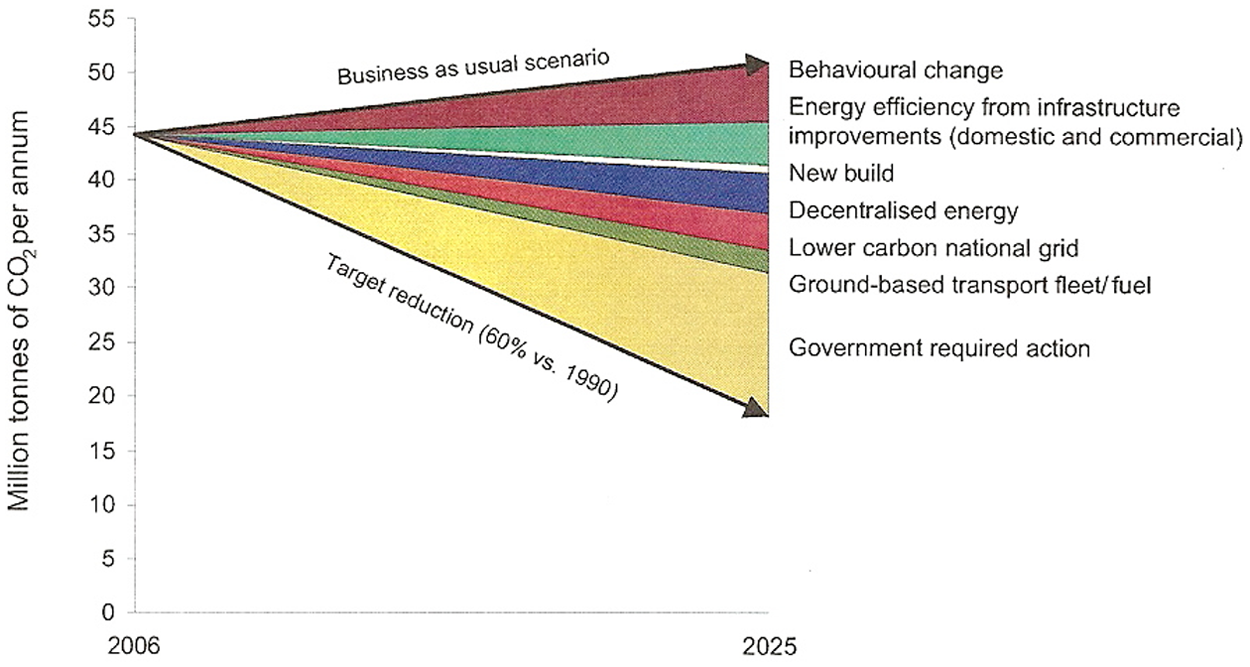
Implementation strategy of the GLA climate plan
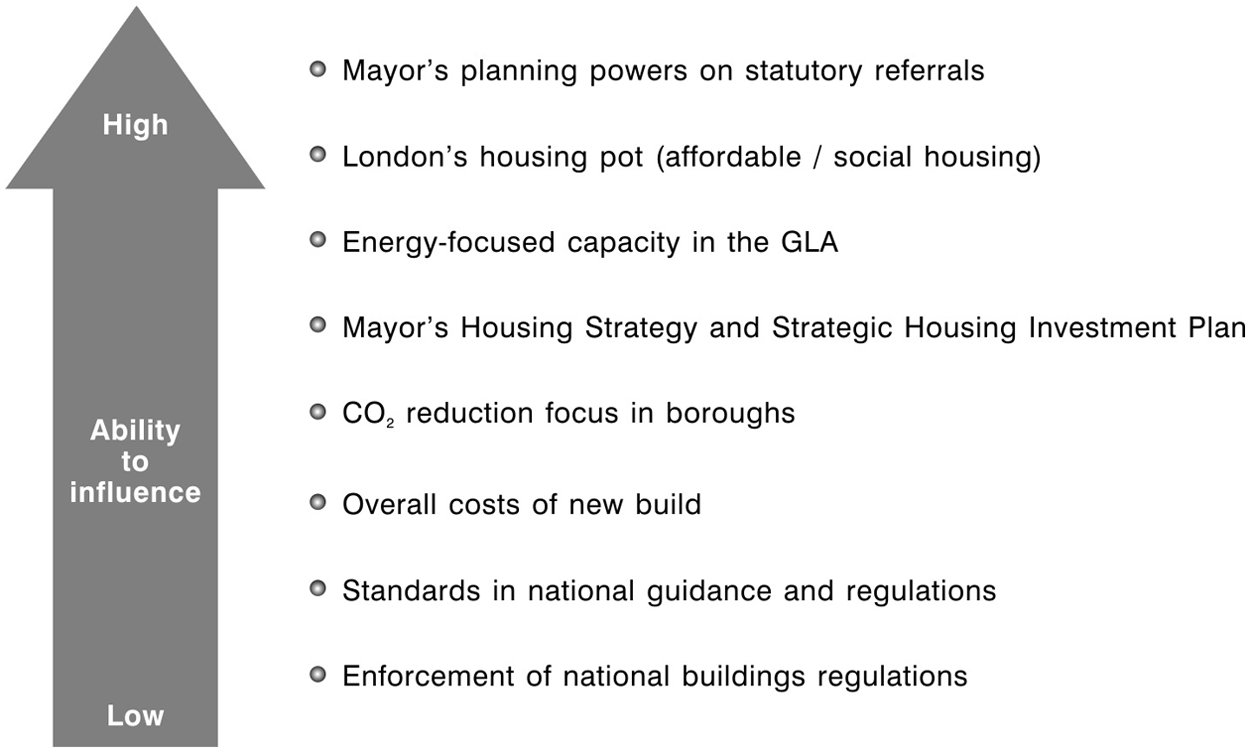
Assessment of the GLA capacity to act
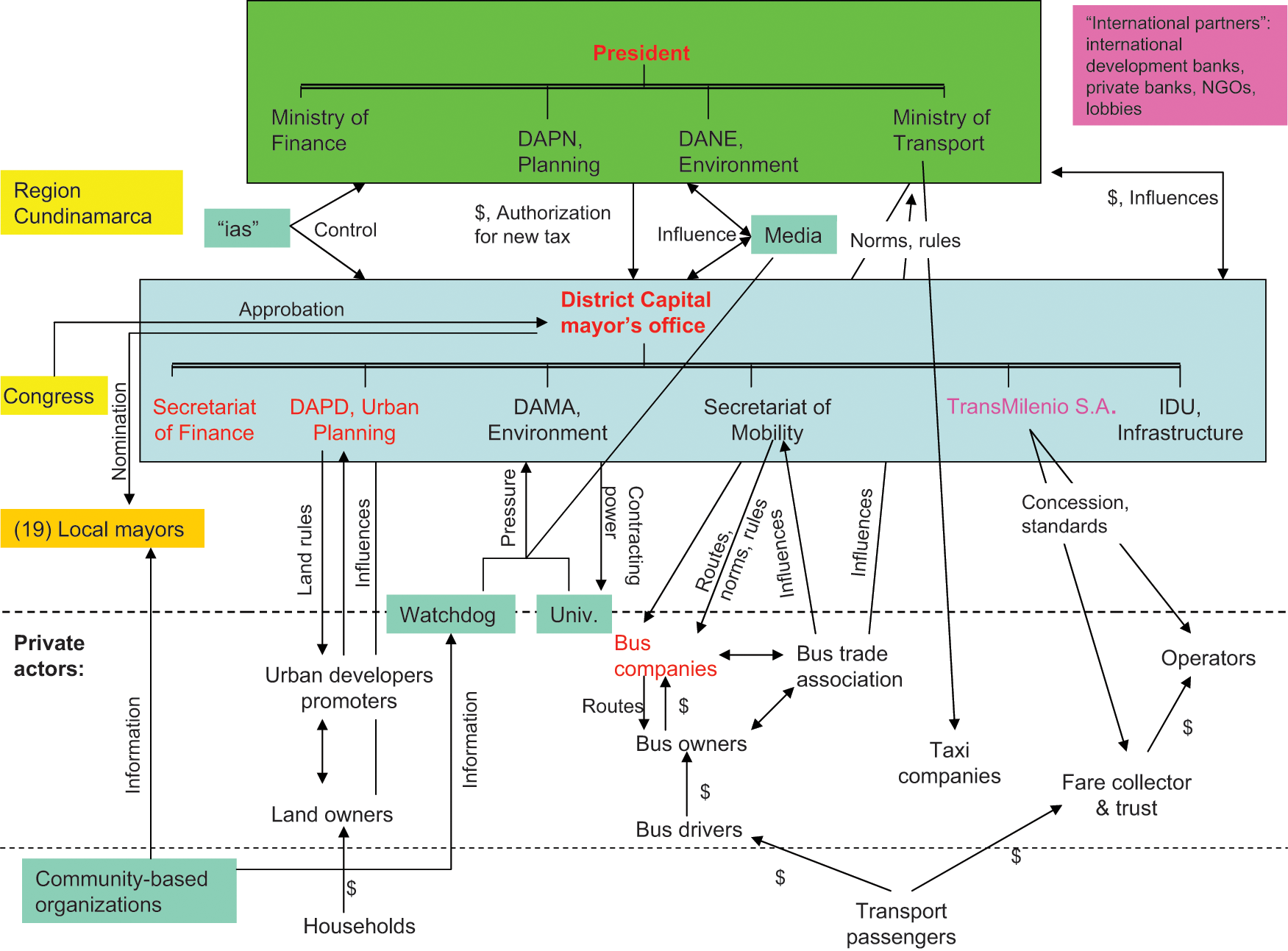
Stakeholders and distribution of capacity to act, Bogotá, Colombia
Finally, it is worth noting that the local capacity to act is also affected by the time constraints imposed as a result of the nature of political mandates, which are often linked to the cycle of elections. In most cases, measurable emissions reductions require a longer horizon and often depend on long-term investment. This, in turn, is likely to attract the private sector.
A review of local capacity to act can therefore be seen as a fundamental precursor to each city’s ultimate policy recommendations. It is impossible to speak generically about a municipality’s capacity to act because the key attributes of a local authority – its institutional structures, its responsibilities and its powers of taxation – are all derived from state or national government allocations of authority.
c. Cost-effectiveness of climate actions
While the requirement for cost-effectiveness should probably be proportional to the environmental ambition, few local climate action plans today consider the economic dimension of the problem.
Until now, the issue of cost-effectiveness has been successfully applied to international negotiations (European Emissions Trading Scheme: EU–ETS) and to national policies. Energy–economy or sectoral energy models have made it possible to simulate different policies and especially to build sets of Marginal Abatement Cost Curves (MACCs) (Figure 4). These mechanisms are highly efficient tools in seeking to reduce the global cost through a certain levelling of the marginal costs of sectoral initiatives. They can provide the necessary support to develop a methodology for defining and prioritizing the actions to be launched, based on technical–economic criteria, and then organizing the different actions required to build a cost-effective programme.
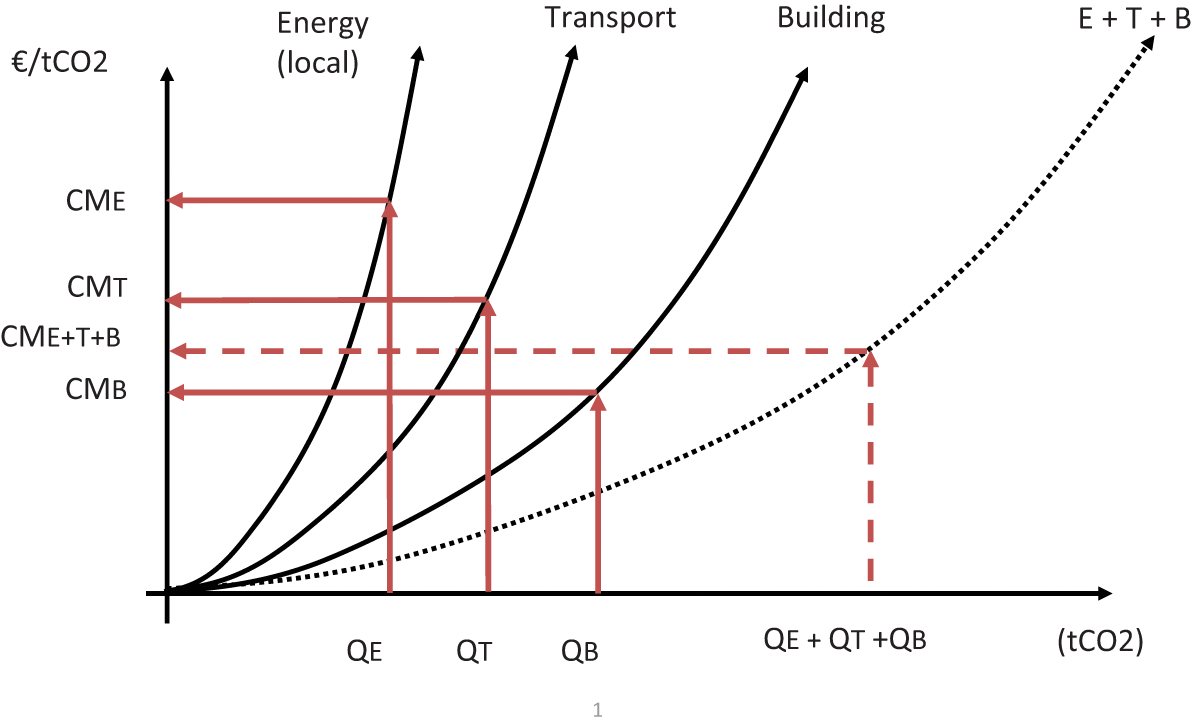
Systemic Marginal Abatement Cost Curves (MACCs)
Today, the challenge for the design of cost-effective local climate action plans is to develop the capability to combine the systemic and the incremental approaches. Indeed, this analysis cannot ignore the systemic functioning of cities. Given the complex interrelationships between various elements of the urban system, actions in one sector (road tolls, for example) are influencing the cost-effectiveness of other actions in the same sector (promotion of bicycle use) as well as in other sectors (building sector). To mobilize all potential emissions reductions, strategies cannot be limited to a series of incremental actions, that is to say actions that influence only one parameter of the urban system (for example, measures to improve the energy efficiency of buses and cars), but should also include a systemic dimension, integrating actions with a structuring effect on the state of the whole urban system (for example, the change of urban form through policies of land use, a new transport infrastructure). Some research projects(19) are addressing this issue but it is obvious that we are still in the initial stages.
As part of the local climate plans, MACCs should therefore be built for the different key emitting sectors – building, transport and local energy production. Then, the consolidation of the various sectoral curves would make it possible to build a MACC for all sectors and thus for the city. This integrated curve would enable us to calculate the marginal costs of reduction corresponding to the overall objective and to determine the package of actions that is the most cost-effective.
A second relevant step would be to get a far more precise understanding of whether and where there are synergies between poverty reduction in urban areas of the global South, building resilience to climate change impacts and contributing to a lower carbon urban development.
d. Funding and financing local climate actions
Finance is another pre-condition for action. This is a particular challenge in times of tight public budgets. While many potential options to obtain finance are available to local government – at least theoretically – finance options have in the past been constrained by a mismatch between existing local budget priorities and GHG reduction objectives, the inability to raise revenues, for example by local taxation, and a lack of capacity to access existing financial resources.
Because we are facing a transition challenge – shifting from current trajectories of urban development to sustainable trajectories – the nature of costs related to urban GHG emissions abatement vary along the transition, and cannot only be tackled through additional funding. Consequently, both the nature and the amount of required support vary according to each stage of the transition, and the support provided must be adapted to the specificities of each city. Therefore, two conclusions can be drawn from this:
the required support should be a specific and evolving combination of financial resources, green technology transfer and capacity building; and
there is an urgent need to assess and explicitly determine – for each city (or at least homogeneous groups of cities) and for each stage of the transition – the nature and the amount of the required support.
i. Financial and budgetary policies of local governments
While additional money will be needed, a first key action to finance local GHG reduction actions is the re-allocation of some national and local funds and budget money towards the “greening” of the economy. However, it should not be forgotten that discretion for setting new priorities with budgetary implications is limited because legal obligations will have to be met first. There is a role for national governments to examine and possibly revise, in conjunction with local governments, the competencies of local authorities in the areas of local taxation, such as local services, waste and wastewater management or road taxes.
At the same time, it is necessary that local governments understand their role and commit to integrating climate objectives efficiently in their planning and budgeting. This is mentioned repeatedly in a number of OECD reports,(20) and shows the need for greening local finances on both the revenue and the expenditure sides. These studies reveal how existing taxation mechanisms often run counter to environmental sustainability and emissions reductions, and point to the need to restructure the sub-national taxation systems that affect the environment of cities, for example those promoting urban sprawl.
ii. Leveraging public money and private finance
Because of the enormous investment requirements in infrastructure at a time of shrinking public funds, there will be a need to leverage public funds. Indeed, in the same vein as for the budgetary policy, before reaching for international climate instruments, it seems relevant to first mobilize resources from the private sector. Businesses – financial institutions including development banks, industries, equipment providers – are generally interested in participating in the urban GHG emissions abatement effort but there is a need to build the capacities of cities to enable these resources to be utilized. Among the many barriers, two points in particular can be stressed: the fragmentation of the urban GHG reductions project which results in transaction costs that are greater than the benefits; and concern over debt, which prevents cities from borrowing money.
Two issues need to be stressed regarding business involvement:
Avoidance of double regulation: in a similar way to the EU and its member states, many national or sub-national authorities have put in place a list of policies to reduce greenhouse gas emissions including, for example, market-based instruments, targets, regulations or subsidies. Additional constraints at the community level risk exposing companies to double regulation, which undermines the efficiency of climate change policy by increasing costs. A key challenge is therefore to identify the space where cities can add value and to set up a coherent framework.
Integrated public bids: to ensure transparency and equity and to increase competition in public markets, public bids tend to be extremely segmented. Urban service providers and consultant offices have therefore adapted their responses to these segmented public bids. This constitutes a counterproductive trend for environmental issues. Indeed, the necessary shift of the urban development trajectory requires a comprehensive approach, integrating at least building, energy and transport issues.
From this process follows the need to involve the private sector in the debate around project investment and to utilize its expertise wherever it can bring value. Also, in this time of budgetary caution, when public capital investment is not so freely available, the creation of a regulatory environment to stimulate private investment will be critical.
iii. Access to international climate instruments
Indeed, even if the global CDM market has been increasing rapidly and has attracted international financial institutions, fewer than one per cent of projects registered with the CDM are credited to urban areas.(22) Of those projects attributed to cities, the number of registered CDM projects in urban areas “…is approximately 150, of which more than 90 per cent are in the solid waste sector”, despite the fact that “…there are more than 40 approved methodologies that are relevant to urban areas.”(23)
In December 2005, the COP/MOP decided to include a Programmes of Activities (PoA) in the CDM. Under this model, many dispersed individual CDM projects offering small GHG emissions reductions can be aggregated, such that the activities can be replicated and per unit transaction costs lowered.(24) However, interviewed experts report that bundling CDM projects is feasible for multiple sites within a particular city but not between multiple cities.(25) Two reasons for this were put forward: first, the local context shapes differently each contract between the CDM international leaders and the local authorities – the owners of the CDM project; and second, the project management would become tricky if one city did not comply with its commitment while the others did.
The current climate negotiations aim to develop a new set of financial instruments for developing countries to support mitigation efforts. In particular, National Appropriate Mitigation Actions (NAMAs)(26) could provide a framework to support future activities towards low carbon development. The concept of NAMAs has still not been defined concretely under the UNFCCC, but they are understood to refer to voluntary emissions reduction measures that are reported by national governments to the United Nations Framework Convention on Climate Change (UNFCCC). They can be policies, programmes or projects at national, regional or local level. In contrast to the current instrument, CDM, with NAMAs the approach could be “upscaled” – in other words from a project-oriented application towards a sectoral or policy level (e.g. a public transport plan, or a transport master plan), so that cities and urban businesses could minimize their carbon footprint, increase the co-benefits and receive a larger amount of external funding. Therefore, it is believed that NAMAs are well suited to climate change mitigation activities in the urban area and sectors.
For instance, a growing number of countries, including Mexico, Brazil, Argentina and Chile are exploring the development of transport sector NAMAs, focused on low carbon growth strategies for urban development (e.g. Belo Horizonte’s sustainable mobility plan), the development of urban transport systems (e.g. Mexico’s Urban Transport Transformation Project) and railway systems modernization and adaptation to climate change (e.g. Argentina’s initiatives). To date, 26 of the 43 NAMA submissions made under the Copenhagen Accord make explicit reference to the land transport sector.
GEF’s funding usually serves to cover the incremental costs of projects with GHG benefits (the co-financing ratio is usually greater than four(28)). As shown in Figure 6, half of GEF’s funding has gone into renewable projects and one-third into energy efficiency (including the industry sector). In addition, projects that benefited from GEF funding are individually implemented and technology oriented. None has allowed the local authorities to scale up comprehensive financial and institutional capacities to address the energy performance of urban infrastructure in light of a change in their development pathways.
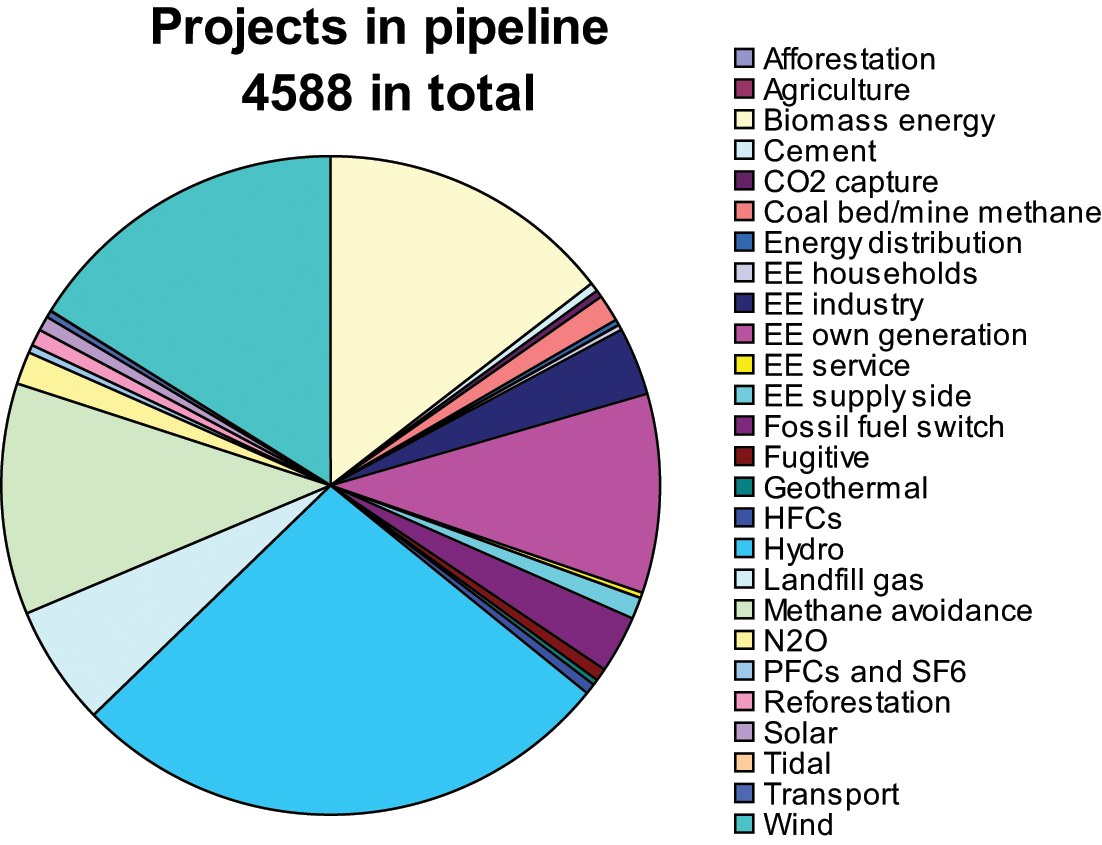
Pipeline projects and CERs breakdown of CDM
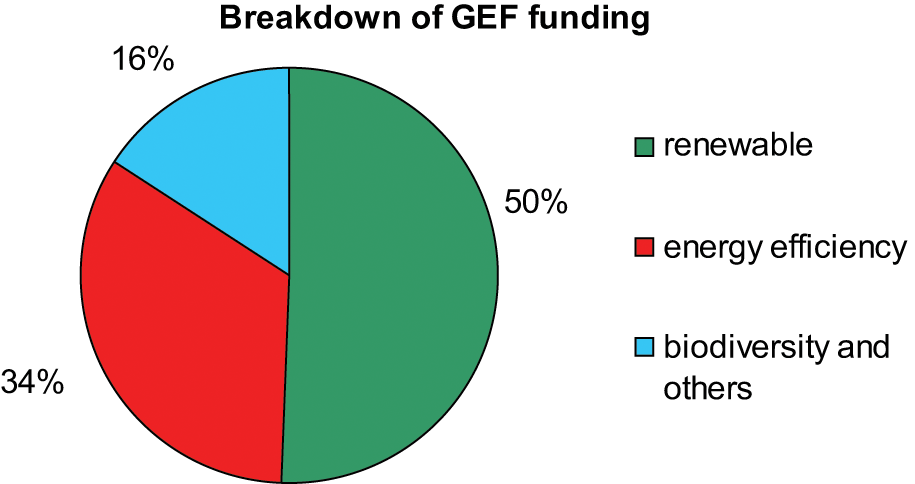
Breakdown of GEF funding in different focal areas, 1991–2005
More importantly, the current institutional arrangements of cities are not compatible with the financial resources allocation in the UNFCCC COP framework. The current GEF funding allocation is defined by country, and specific priorities by the council. Financial architecture needs to be reformed to broaden the scale and enhance the environmental integrity of UNFCCC financial mechanisms to address the mitigation in cities effectively.
In December 2010 in Cancùn (Mexico), the COP invited developed country parties to submit to the secretariat by May 2011, 2012 and 2013, information on resources provided to fulfil the commitment for fast-start finance of US$ 30 billion between 2010 and 2012 (paragraph 952). The AWG–LCA also decided that “…scaled-up, new and additional, predictable and adequate” long-term finance shall be provided to developing country parties (paragraph 972), recognizing commitments outlined in the Copenhagen Accord to mobilize US$ 100 billion a year by 2020 (paragraph 982). By taking an active role in related discussions and continuing to lobby for the need for the sector to have increased prominence, and preferably specific provisions, under the UNFCCC, urban stakeholders will need to ensure that there are criteria for obtaining funding from both fast-start and long-term financing support activities in urban areas and sectors.
The outcome of the work of the AWG–LCA detailed the decision to establish a Green Climate Fund (GCF) (paragraph 1022) to operate as the convention’s financial mechanism, with an independent secretariat (paragraph 1082) and with the World Bank as an interim trustee. It will support projects, programmes and other activities in developing countries using thematic funding windows. The transitional committee will develop recommendations for operational documents that address issues such as “funding windows and access modalities” for COP17 (paragraph 1c in Annex III2). There are no details about what the “thematic funding windows” will be and so the cities and urban sectors need to position themselves in this discussion.
V. Conclusions
Incorporating local authorities in an institutionalized way into the negotiations, especially to ensure their coordination, poses important economic and institutional as well as methodological challenges. However, there is a consensus that cities have a crucial role to play in the fight against climate change, and that international acknowledgement and support is therefore needed. As the post-2012 climate change negotiations are already a highly complicated process, the inclusion of sub-national governments into the agreement needs to constitute a “solution” rather than a “new problem”. There is a consensus to recognize that a roadmap is needed to build this “solution”. Promisingly, the wealth of expertise, initiatives and work being undertaken on these various issues is significant, and it therefore seems necessary to bring all these actors together on a common platform, or forum of exchange, in order to associate expertise, optimize the effectiveness of these initiatives, test different approaches and develop common approaches, positions and propositions. It is certainly relevant to build this based on what UCLG and ICLEI have successfully produced at the international level (the Copenhagen Climate Catalogue, the Carbonn Cities Climate Registry) and on successful regional initiatives such as the Covenant of Mayors. Coordination with and support from bi- and multi-lateral development banks is also needed.
Footnotes
1.
AWG–LCA: Ad-hoc Working Group on Long-term Cooperative Action under the Convention.
2
AWG–KP: Ad-hoc Working Group on Long-term Cooperative Action under the Kyoto Protocol.
3.
It is worth noting the Californian example, where regional targets for the urban transport sector are determined at the state level, following on from negotiations with local representatives grouped in a regional planning board.

5.
Bader, N and R Bleischwitz (2009), Comparative Analysis of Local GHG Inventory Tools, Study Report, Institut Veolia Environnement, College of Europe, Bruges, 34 pages.
6.
Hoornweg, D, L Sugar and C L Trejos Gomez (2011), “Cities and greenhouse gas emissions: moving forward”, Environment and Urbanization Vol 23, No 1, April, pages 207–228.
7.
See reference 6.
8.
Satterthwaite, D (2010), “The implications of population growth and urbanization for climate change”, Environment and Urbanization Vol 21, No 2, October, pages 545–568.
9.
Dodman, D (2009), “Blaming cities for climate change? An analysis of urban greenhouse gas emissions inventories”, Environment and Urbanization Vol 21, No 1, April, pages 105–202.
10.
See reference 6.
11.
See reference 8.
12.
Revi, Aromar (2008), “Climate change risk: a mitigation and adaptation agenda for Indian cities”, Environment and Urbanization Vol 20, No 1, April, pages 207–230; also Roberts, Debra (2010), “Prioritizing climate change adaptation and local level resiliency in Durban, South Africa”, Environment and Urbanization Vol 22, No 2, October, pages 397–413.
13.
We characterize the urban fabric as a complex set of actors and diffuse processes of production of the city, operating in a framework set by market mechanisms, technical trails (constraints and opportunities) and public interventions (regulations, economic incentives, investment, etc.).
14.
Schipper, L, C Marie-Lilliu and R Gorham (2000), “Flexing the link between transport and greenhouse gas emissions: a path for the World Bank”, International Energy Agency, Paris, 55 pages.
15.
For instance:
16.
17.
Kessides, Christine (2006), Urban Transition in Sub-Saharan Africa: Implications for Economic Growth and Poverty Reduction, Cities Alliance, Washington DC, 116 pages.
20.
See, for example, Kamal-Chaoui, Lamia and Alexis Robert (editors) (2009), Competitive Cities and Climate Change, OECD Regional Development Working Paper No 2, OECD Publishing, 172 pages; also Corfee-Morlot, J, L Kamal-Chaoui, M G Donovan, I Cochran, A Robert and P J Teasdale (2009), Cities, Climate Change and Multilevel Governance, OECD Environmental Working Paper No 14, OECD Publishing, 125 pages.
21.
We define “efficiency” as “cost-efficiency”: maximizing outputs (GHG emissions reductions) and minimizing inputs (GHG emissions reductions global cost).
23.
See reference 22, page 138.
24.
Cheng, C et al. (2008), The Kyoto Protocol, Clean Development Mechanism and the Building and Construction Sector, UNEP SBCI, Paris, 90 pages.
25.
Lefèvre, B (2008), “How does institutional environment shape urban policy decision? A new-institutionalist analysis of the decision-making process in Bogotá, Colombia”, Working Paper, Centre for Energy, Columbia University, New York, 39 pages.
26.
National Appropriate Mitigation Actions (NAMAs) refer to a set of policies and actions countries undertake as part of a commitment to reduce greenhouse gas emissions. The term recognizes that different countries may take different nationally appropriate action on the basis of equity and in accordance with common but differentiated responsibilities and respective capabilities. It also emphasizes financial assistance from developed countries to developing countries to reduce emissions. NAMAs can include: laws and regulations; standards; technology penetration programmes; financial instruments such as taxes, incentives and cap and trade programmes; energy efficiency measures; research and development; technology demonstration projects; sustainable development programmes and measures; capacity building; and data-gathering activities.
27.
28.
The GEF has approved 634 climate change projects with grants totalling US$ 2.3 billion and co-financing of US$ 14.6 billion; see Hennicke, P, S Borbonusand and C Woerlen (2007), “The GEF’s interventions in the climate change focal area: the contribution to strategies for climate change mitigation and sustainable development”, Energy for Sustainable Development Vol 11, No 1, pages 13–25.