




Abstract
This paper presents empirical material collected in the zonal capital town of kemise (population around 34,000) and three surrounding rural areas (peasant associations) in northeastern ethiopia. The study area is located in the oromiya zone of the large amhara region. The paper attempts to show how rural areas and the town of kemise are economically interdependent and demonstrates the role of migration and mobility in influencing and shaping the rural and urban economies. The town fulfils, inter alia, important administrative, marketing, service and retailing functions. The most successful rural households appear to be those that use non-farm and off-farm opportunities and assets (for example, trade opportunities and/or urban employment) to diversify income sources and thereby avoid the uncertainties of relying solely on crop production for household security. As a backdrop to the whole discussion, the issue of widespread rural landlessness in the study area is investigated.
Keywords
I. Introduction
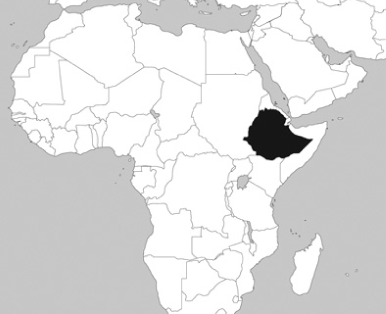
This paper presents material collected in the town of Kemise (population around 34,000) and three surrounding rural areas (peasant associations) in northeastern Ethiopia. The study area is located in the Oromiya zone, one of the 11 zones of the large Amhara region (Figure 1). The present government of Ethiopia, which has been in power since 1991, has very actively promoted and implemented a federal arrangement based on ethnicity. The Amhara are the second largest ethnic group in Ethiopia, and what is interesting in this context is that the zone that was investigated represented something of an “ethnic outlier”, and for historical reasons is home to a sizeable population of Oromo people who constitute the largest ethnic group in the country. In addition, 88 per cent of the surveyed population were Muslim.
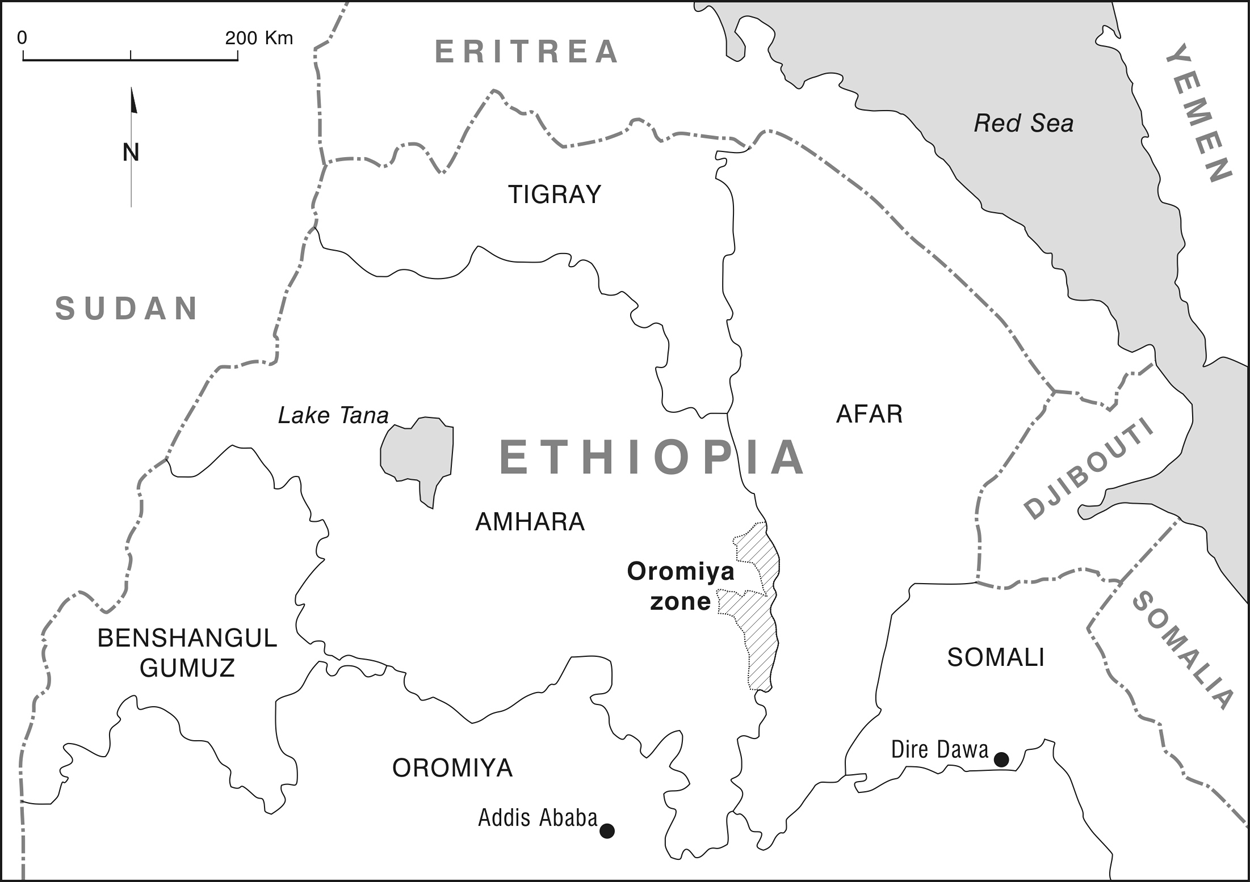
Location of Oromiya zone in the Amhara region
A central aim of the study (which was conducted in September and October 2003 and in April 2010) was to assess the degree to which the town of Kemise and surrounding rural areas are interdependent. The town fulfils a number of significant functions and is a woreda town, which is the most important administrative level of local government in Ethiopia. Woredas are comprised of peasant administrations, which formerly were known as peasant associations but increasingly are referred to as rural kebeles (rural neighbourhoods). For the purposes of this paper these terms are used interchangeably. In addition, Kemise is the capital town of the Oromiya zone and has responsibility for administering the lives of about 200,000 people.
In the three rural kebeles that were investigated (Kelo, Terefe and Ourene Selama) (Figure 2), households are characterized by great social and economic differentiation. A rural household is considered poor if it is without agricultural land and also without plough oxen. In short, the only asset that such a household has is labour power and this is dependent upon good health. According to data provided by the respective peasant association chairmen, the number of households without land is high: in Kelo, 65 per cent of all households had no farm land, while in Terefe the figure was 46 per cent and in Ourene Selama 33 per cent. These figures represent very high levels of landlessness and obviously reflect a critical problem.
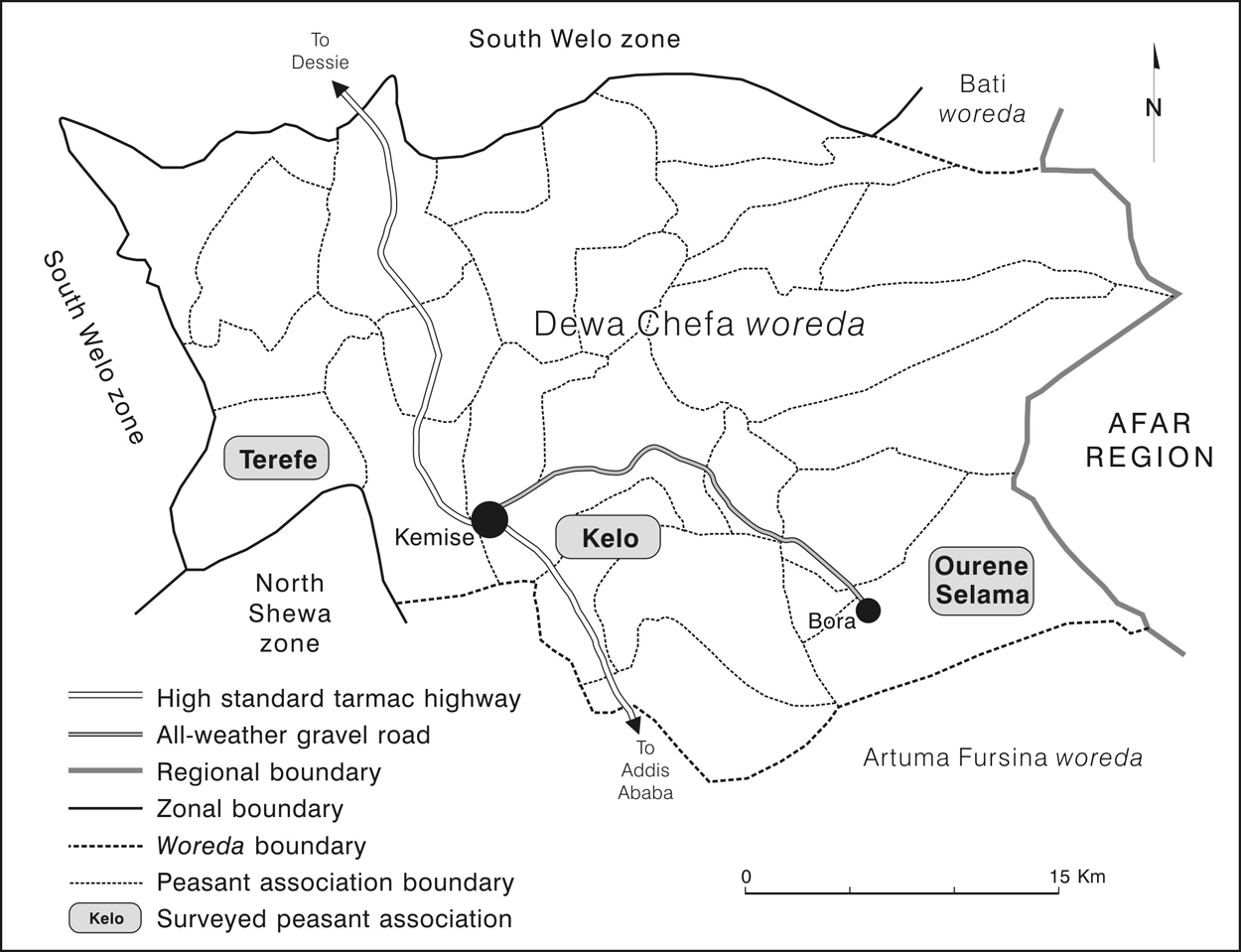
Dewa Chefa woreda (Oromiya zone)
Other households are wealthy, secure and sustainable and have a range of rural assets such as adequate amounts of land and sufficient oxen for ploughing to produce enough grain for household consumption, as well as a surplus for the market. Such households may also have access to urban assets such as a house in Kemise, which produces rental income.
II. The Impact of Land Reforms
In 1975, during the Mengistu regime (1974–1991), all rural land in Ethiopia was nationalized and those who wanted land were given user rights. As the number of farm families increased through population growth, existing farms could legally be sub-divided (“redistributed”), which resulted in increasingly smaller farms. Moreover, farmers were unwilling to invest in their farms since they could lose land in a redistribution. The present government – in power since 1991 – has maintained state control of agricultural land but has recently introduced legislation that allows for the abandonment of land redistribution. The caveat to this is that regional level parliaments can decide on many issues relating to the new land legislation. For example, in the Amhara region, land redistribution is allowed at the local level of the rural kebele if 80 per cent of the land-holding population in the kebele requests such a redistribution.(1) Moreover, a system of land certification that was introduced in 2004 means that farmers in possession of agricultural land are given what appears to be inalienable rights to “their” land.(2) These new land rights means that land is inheritable and can be leased but not sold or morgaged.(3) What this means is that, in theory, the landless can lease land from those with land. However, a likely scenario is that many landless people will become casual agricultural labourers for those with land – which further increases rural disparities.
The latest version of the poverty reduction strategy in Ethiopia, known as the Plan for Accelerated and Sustained Development to End Poverty (PASDEP), covers the period 2005/06–2009/10.(4) The main thrust of this strategy is to encourage agricultural change and development. The centrepiece of PASDEP is the so-called Agricultural Development-led Industrialization (ADLI), the broad aim of which is to move the agricultural sector away from subsistence production towards a more commercial base.
To transform peasant agriculture is a daunting task. This is especially the case since 96 per cent of the cultivated land is under smallholder farming – which is often confronted by a barrage of hindrances including poverty, lack of innovation, small farms and a lack of modern inputs such as fertilizers and pesticides. Futhermore, irrigated agriculture is limited in Ethiopia, although much more could be achieved. In many areas of the country (including the area under investigation), rainfall is often irregular and insufficient. According to the ADLI strategy, for areas like this, which are categorized as “moisture stress areas”, enhancing household food security can be helped by increasing the focus on off-farm and non-farm income opportunities.
Another significant component of the PASDEP strategy is the emphasis on urban development, which is to play a more central role in Ethiopia. The fact that an urban component has been largely missing in Ethiopia’s development plans is surprising for two reasons. First, Ethiopia’s total population is still increasing rapidly; and second, because of the problems associated with a diminishing rural land base, which is particularly associated with diminishing farm sizes as a result of high rural population increases.
In 2007, the population of Ethiopia was estimated at 81 million and was increasing by around two million annually; by 2050, it is anticipated it will reach 170 million. However, the fertility rate is falling, particularly in the larger urban centres. While the fertility rate in rural areas is estimated at 5.5, the rate for Addis Ababa is a mere 1.9 – a rate that is below the replacement rate of population.(5)
III. The Urban Network
The level of urbanization in Ethiopia is low and 17 per cent of the population is classified as urban. However, the 4.3 per cent annual rate of urban growth (implying a doubling time of 16.3 years) is high compared to many other countries in the South. The urban network is characterized by a high degree of primacy, whereby Addis Ababa (with a population in excess of three million people) is 10 times larger than Dire Dawa, the next largest city.(6)
However, the important point to stress here is not the size of Addis Ababa and a few other relatively large settlements, but rather the number of small and medium-sized settlements with populations of up to 20,000. In total, there are 925 settlements classified as “urban” in Ethiopia (Table 1) and of this number, 820 had populations of up to 20,000, representing 88.6 per cent of all settlements. The point that needs to be made here is that these settlements represent for rural populations the most common and frequent link they have with the “outside”, non-rural universe.
Size range of Ethiopian urban centres (2006)
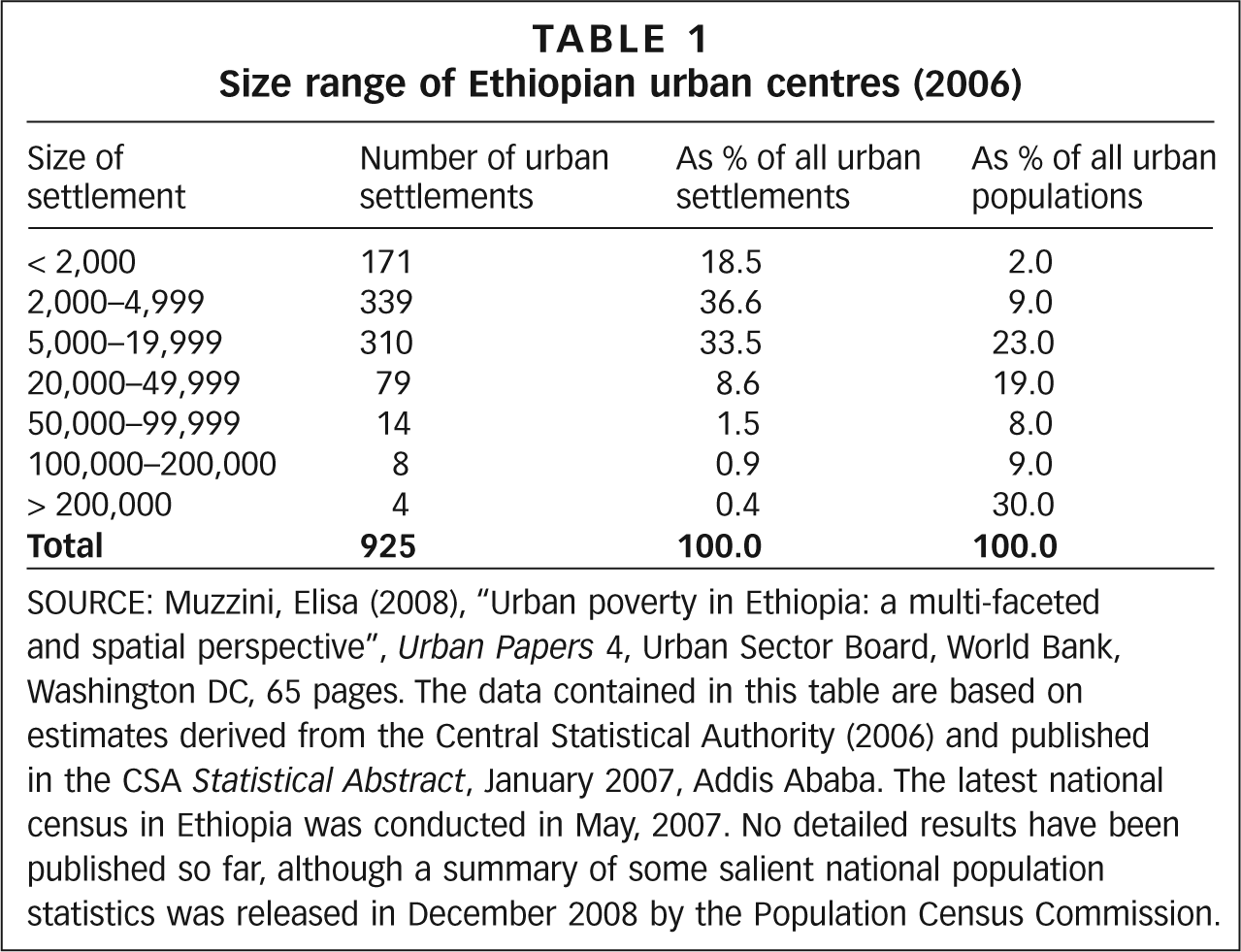
SOURCE: Muzzini, Elisa (2008), “Urban poverty in Ethiopia: a multi-faceted and spatial perspective”, Urban Papers 4, Urban Sector Board, World Bank, Washington DC, 65 pages. The data contained in this table are based on estimates derived from the Central Statistical Authority (2006) and published in the CSA Statistical Abstract, January 2007, Addis Ababa. The latest national census in Ethiopia was conducted in May, 2007. No detailed results have been published so far, although a summary of some salient national population statistics was released in December 2008 by the Population Census Commission.
IV. The Importance of the Town of Kemise
The growth of the town of Kemise has been rapid, with its population going from 4,721 in 1984 to 19,415 in 2007. However, in the period between the last national census in 2007 and 2010, its growth can only be described as phenomenal (Table 2). By 2010, the population stood at 34,566.(7)
Growth of Kemise town, 1984–2010
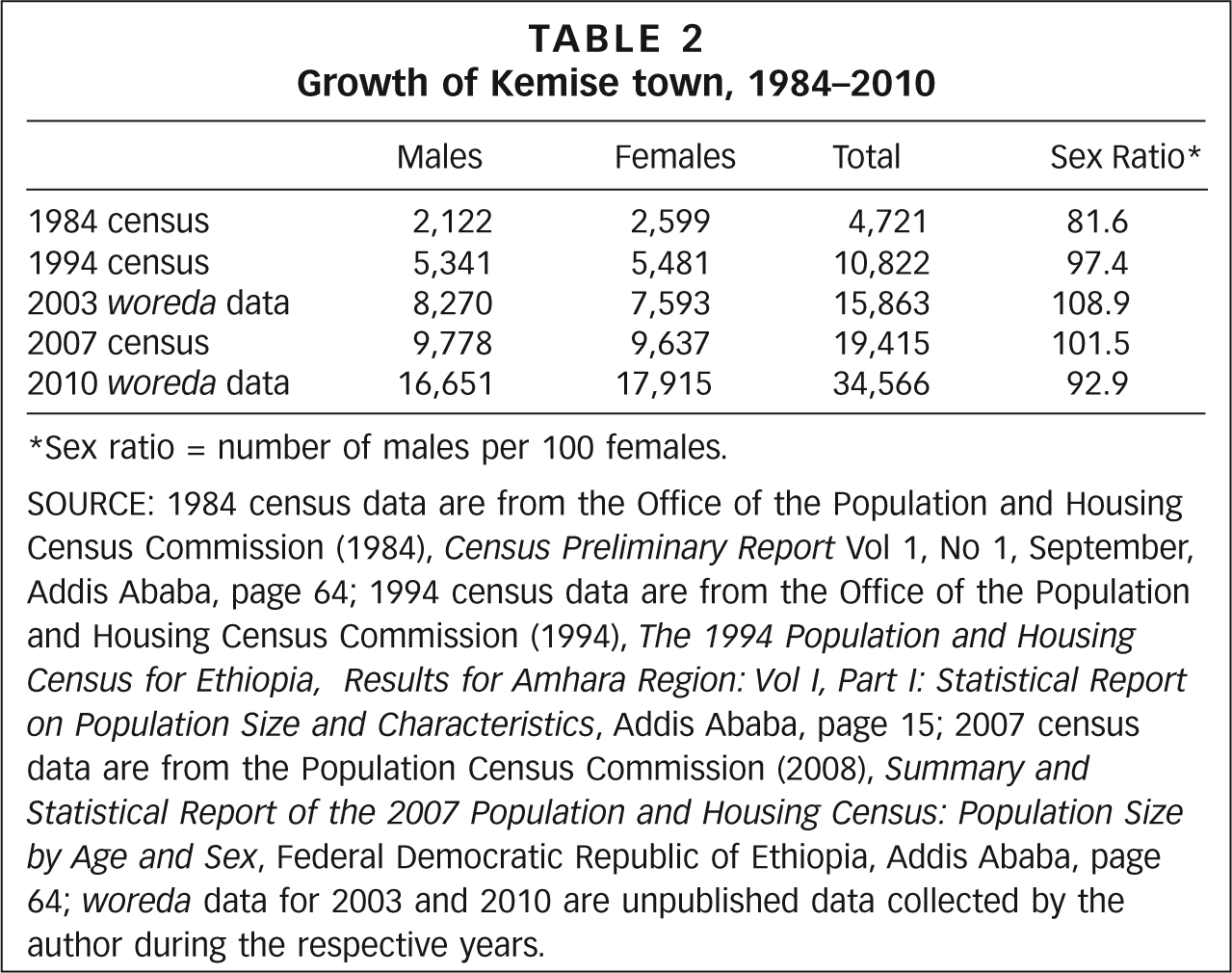
Sex ratio = number of males per 100 females.
SOURCE: 1984 census data are from the Office of the Population and Housing Census Commission (1984), Census Preliminary Report Vol 1, No 1, September, Addis Ababa, page 64; 1994 census data are from the Office of the Population and Housing Census Commission (1994), The 1994 Population and Housing Census for Ethiopia, Results for Amhara Region: Vol I, Part I: Statistical Report on Population Size and Characteristics, Addis Ababa, page 15; 2007 census data are from the Population Census Commission (2008), Summary and Statistical Report of the 2007 Population and Housing Census: Population Size by Age and Sex, Federal Democratic Republic of Ethiopia, Addis Ababa, page 64; woreda data for 2003 and 2010 are unpublished data collected by the author during the respective years.
This growth has been stimulated by two major factors. First, in 1994 Kemise became the capital of the new zone of Oromiya and simultaneously became the woreda (sub-zonal administration) town of the Dewa Chefa woreda. This administrative upgrading meant that the settlement attracted many new administrative functions and personnel, and in view of this, a number of good quality houses were built for higher level administrative government employees. Second, and very recently, the boundaries of the town of Kemise were greatly extended, which led to the incorporation of many rural kebeles as well as a sizeable rural population into a much larger Kemise in terms of area and population.
The main functions provided by the town of Kemise can be summarized as follows:
• as a centre of woreda administration for a large rural population;
• for the maintenance of law and order (police forces and woreda and kebele courts);
• as a tax collection point.
• providing locally produced goods such as cloth, ceramic pots and jugs, agricultural implements, foodstuffs, firewood, oil lamps, etc.;
• providing manufactured goods from Ethiopian factories, such as matches, cigarettes, kerosene, cloth, sugar, salt, bottled beer, etc.;
• providing imported goods such as razor blades, glass tumblers, cloth, spices, tinned foodstuffs, etc.;
• bulking centre for agricultural produce from the rural hinterlands for distribution locally and to regional and national markets.
• providing grain milling facilities;
• personal services such as cooked food, lodgings and entertainment;
• vehicle repair facilities and fuel (diesel and petrol) distribution outlets.
• providing bus, telephone and postal services.
• government-provided clinics and health centres;
• privately provided chemists and clinics.
• the education system is structured into three levels in Ethiopia: elementary schools (grades 1–6) and junior secondary schools (grades 7–8), where instruction is in the main vernacular of the Oromiya zone (Oromo); and secondary schools (grades 9–12), where instruction is in English.
• catering for the religious needs (churches and mosques) of Coptic Christian and Muslim adherents from both rural and urban areas.
• as a food aid storage and distribution centre when the need arises; in 2002, 73 per cent of surveyed households in Ourene Selama received food aid, 50 per cent in Kelo and 27 per cent in Terefe; in Kemise town, the figure was three households out of a sample of 50 households.
a. Marketing and mobility
Marketing is the central function linking the rural and urban sectors and is a major driver behind local mobility. Households from all three peasant associations visited the Kemise town market on a regular basis, usually weekly, in order to sell agricultural produce (mainly grains and livestock), firewood, chat (a mild narcotic) and tobacco, or to buy essential household items such as salt, sugar, coffee and paraffin. The purchase of expensive goods such as clothing usually took place on an annual basis, in preparation for important religious festivals such as Easter for Orthodox Christians or the feast of Id for Muslims.
The following figures give an indication of the significance of the Kemise market to households in all three peasant associations. Kelo is located six kilometres from Kemise on the main north–south highway, which facilitates easy access to the market. All sampled households (30) visited the market, with 24 (80 per cent) visiting weekly. The journey from Terefe to Kemise is 17 kilometres by road and often involves taxi transport, although during the dry season a “short cut” makes walking a more practical possibility. Ninety-three per cent of all respondents visited the market, with 53 per cent doing so weekly. Some householders did visit the smaller, but closer, market at Mekoy (in the adjacent zone of North Shewa). Ourene Selama is located 32 kilometres east of Kemise. It is a relatively isolated area and this situation is exacerbated by the poor condition of the only road linking it to Kemise. Moreover, it is the poorest peasant association in the whole woreda and the lack of rainfall means that only one growing season is possible. It should be emphasized that the widespread use of camel transport has helped overcome the problem of distance. Seventy-three per cent of respondents in Ourene Selama stated that they visited the Kemise market, although not many did so on a weekly basis. The small town of Bora (a former woreda town) in Ourene Selama has a significant Saturday market, which attracts visitors from the peasant association as well as Afar camel traders from the neighbouring Afar region. Approximately one-third of respondent households in Ourene Selama visited the Bora market on a weekly basis.
One very important reason for visiting a market in any Ethiopian town is the social aspect. It enables people to meet friends and acquaintances and to exchange news and information; such loose networks are a significant form of social capital.
V. The Dynamics of Migration
There is absolutely no doubt that the migration of people has had a dramatic influence on shaping the destinies of household livelihoods as well as the economic profile of Kemise and, to a lesser extent, on the rural areas. In Kemise, out of a sample of 50 households, 45 (90 per cent) were migrants to the town. In Ourene Selama, the most isolated and ethnically homogenous rural kebele in the rural sample, only five households (16.7 per cent) were migrants. In Terefe, eight households (26.7 per cent) were migrants, while in Kelo the corresponding figure was 19 households (63.3 per cent). In the context of the study area it is argued, not unreasonably, that the decision to migrate is often generated by opportunities elsewhere. However, migration rarely appears to involve a precipitous or sudden move to another location. Rather, it involves acquiring a detailed knowledge of a particular location over an extensive period of time through many visits to the market or health centre or to friends and relatives. Propinquity to one’s place of origin is often an important consideration, so the perception that a newly arrived migrant enters unarmed into an unknown arena or universe is misplaced. The data strongly support this assertion. In Kemise, a little over 80 per cent of migrants are classified as short distance migrants (Table 3) and for the rural samples 84 per cent were classified as such.
Origins of migrant householders to the town of Kemise
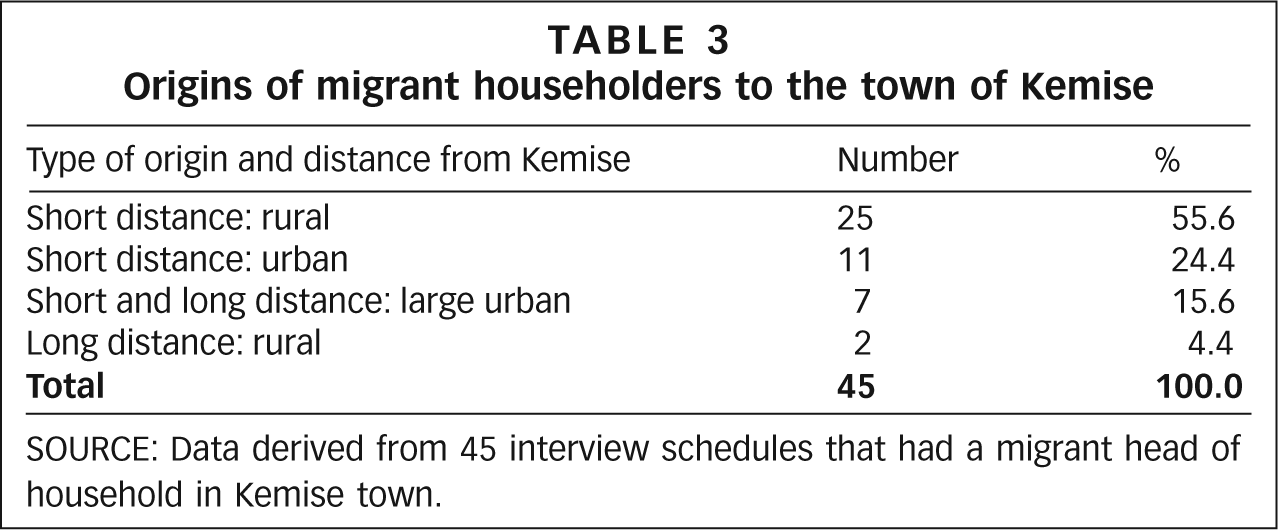
SOURCE: Data derived from 45 interview schedules that had a migrant head of household in Kemise town.
A short distance migration is considered to involve a walk of up to about five hours or a 2–3 hour bus or minibus trip. A small urban centre is designated as “urban” if it is classified as such in the population census of Ethiopia for 1994. In practice, it refers to urban centres with at least a minimum population size of 1,000. A large urban centre in the sample refers to the following locations: Addis Ababa, Debre Zeit, Shashemene, Jimma, Dessie and Kombolcha.
a. Migration to the three sampled rural kebeles
i. Ourene Selama
Only five households (16.7 per cent of the sample) were migrants to this peasant association. Three of them had migrated a short distance from the neighbouring peasant association of Gula, to acquire agricultural land in the case of two households, while the motive for the third was not revealed. The remaining two migrant householders had urban origins. One migrant (a single professional woman aged 32 working as a rural development agent ), who had lived in Ourene Selama for five years, had been transferred from the town of Bati (the capital of Bati woreda), a bus journey of less than two hours from Kemise. The other migrant (a young man aged 20) was from Kemise and had recently graduated as a teacher. This was his first employment assignment and he had been in Ourene Selama for only three months. Neither of these two respondents had a positive view regarding their postings and complained about the impure drinking water, the absence of electricity and the poor communications. This attitude is particularly surprising given that the development agent’s main responsibilities should focus on promoting a sanguine view about rural life and aspirations. However, the young school teacher conceded that he had “...gained an understanding of how the peasants live.”
ii. Terefe
Eight householders (26.7 per cent of the sample) were migrants to Terefe. Three were in Terefe because of job transfers, while five had migrated short distances primarily to obtain farmland. Of these, two female-headed householders were widows in their mid-50s – one had come with her husband to obtain land, while the other had migrated at the age of 15 for marriage to a farmer in Terefe. Each woman had one hectare of land that was share-cropped by other households.
The development agent in Terefe had been posted from the small roadside town of Shena, about a three-hour bus ride south of Kemise. He had been in Terefe for five years and had arrived when he was 21. He was a high school graduate and also had a one-year certificate in rural development. In common with the development agents in the other two rural kebeles, he saw few benefits to living in the countryside (his workplace!) because of malaria and poor infrastructure. Kemise, by contrast, had electricity, potable water supplies and TV. However, it was cheap for him to live in Terefe and he was provided with rent-free, good standard accommodation; from a salary of 403 Birr(8) per month he was able to save 100 Birr.
Two households comprised Oromo-speaking teachers who had been posted from towns in the West Shewa and East Wellega zones of the Oromiya region to the west of Addis Ababa. One household comprised a 26-year old unmarried female (from the town of Ginchi) who was a trained teacher and was earning 560 Birr a month. Fringe benefits included a rent-free, good standard house and free milk. She perceived malaria as a major problem in Terefe and bemoaned the lack of good quality drinking water and the absence of electricity. She visited Kemise every week for meetings at the woreda education office, which she said also provided her with the opportunity to meet other members of the Mekane Yesus Church in town. The other household comprised the householder (from the large town of Ambo), who was a teacher with a teacher training background (and who earned 550 Birr a month), and his wife, who was a secondary school graduate (from the small town of Shambu) and had further completed a six-month course on maternal and child health care issues and worked locally as a “frontline” midwife. Not surprisingly, negative attitudes about poor rural conditions prevailed, in contrast to the somewhat distorted perceptions of the subliminal qualities of Kemise; for example, malaria was also a major scourge in the town.
iii. Kelo
Nineteen households were migrants to Kelo (63.3 per cent of all households). Of these, 16 had migrated from other rural communities within the Dewa Chefa woreda or a short distance away in neighbouring woredas. The majority (13) came specifically for land – which they obtained – and three for non-specified reasons, summed up as “to find work”.
Of the total migrant cohort, three households had moved for job transfer reasons. One household comprised a married couple who were school teachers, transferred from a location about 300 kilometres away in the North Shewa zone in the Oromiya region. Another transferee was a young unmarried male of 24, who was employed as a health assistant and who had been posted from the Eastern Welega zone in the Oromiya region. According to this respondent there were no disadvantages to living in Kelo since accessibility to Kemise was good. The third job transfer householder was a 28-year old male development agent who was born within the Dewa Chefa woreda. He was married to a government employee and their economic status could be characterized as relatively good as they had a combined monthly income of 607 Birr (US$ 70). The development agent thought that Kemise was a “...comfortable place to live”, as Kelo lacked electricity and the local health facilities were not comparable to those in Kemise. He did acknowledge that it was possible “...to save money because village life is cheap, whereas living in Kemise is expensive.” However, accessibility to Kemise was not an issue and the development agent’s wife visited the town (where she was born) three times a week to see her family.
b. Migration to Kemise
Analyses and discussions surrounding migration are often concerned with aggregating data and producing typologies such as “type of move” or “reason for move”. While some useful information can be garnered in this way, nevertheless an incomplete picture is presented. Table 4 shows disaggregated data for 45 sampled migrant households in Kemise. It considers the outcomes of the migration journey with a focus on three variables:
the backdrop for the move at the place of origin;
an assessment of the outcome of the move for the migrant to Kemise; and
was the outcome a positive experience (leading to some improvement in the quality of life, at the least, or accumulation, at best) or a negative one, where no improvement, or even a deterioration, had occurred?
Migration outcomes: before and after the move to Kemise – data derived from 45 migrant heads of households

c. Unravelling the complexities of migrant trajectories
It is difficult to measure with much accuracy the kinds of quantitative improvements in income that have occurred as a result of the migration decision, since income status at the place of origin is unknown. What is clear, however, is that the primary reason for the move to town is economic and this can be glimpsed at through statements such as: “Kemise is a good place to do business” or “I am able to make a living here and care for my family” or “There is plenty of work in Kemise”. The town is also attractive because it may lead to an improvement in quality of life in terms of access to better schools and health facilities and improved housing.
i. The flexibility of labour
What is striking about the data presented in Table 4 is the flexibility of labour and the ability of migrants to adapt to conditions prevailing in an urban market. This requires the acquisition of new skills or the reshaping or modification of existing ones to meet urban demands. For example, of the 38 householders in all categories of migrants from rural areas and other small towns (HH 1–38), 27 (just over 70 per cent) had developed new skills to survive in town. Some of these changes are significant while some can be characterized as transformational. A number of examples are presented below, which show the variety of experiences.
Owner of a small general store:
HH 2 (Oromo–Muslim) arrived in Kemise 10 years previously, when he was 23. Before his arrival in town he was a farmer in Eyse Gola, a woreda in the South Welo zone. He confided that he had been obliged to flee his place of origin because he had killed a man there and had taken refuge in Kemise. This respondent had a successful business as the owner of a small general store. However, at the time of his arrival in town he had engaged in petty trading and then progressed into buying and selling grains, and consequently saved sufficient capital to finance his present business venture. He is married to a local woman from Kemise town and they have two young children. She has primary school education (grade 2), while he has no formal education and stated that he is illiterate, which is somewhat surprising given his success.
Kollo seller:
HH 7 (Amhara–Orthodox). Kollo is the name for roasted grains such as wheat or barley, and is purchased in small quantities and eaten as a snack, particularly by Christians, during the many fasting days in the Ethiopian calender.
The head of household is a 48-year old woman who moved to Kemise “looking for work”, following her divorce eight years earlier in the countryside of the South Welo zone. She is illiterate but her only child, a 17-year old son, is a seventh grade school student in Kemise. She is able to make a meagre living selling kollo because demand is always high. Her calculated monthly budget is low at around 100 Birr, and from this amount 30 Birr is paid in rent for a one-room dilapidated dwelling. Her major worry is that she may not be able to afford to continue sending her son to school.
Utilizing rural and urban resources:
HH 8 (Oromo–Muslim). The head of household grew up on the family farm in the Geneda Deweye peasant association, in fairly close proximity to town. He migrated when he was 21 and has been in town for 14 years. His 28-year old wife is from the Gula peasant association, which is also fairly close to town; she arrived at the age of 16. They met and married in Kemise. They have three children ranging in age from nine years to three months. This household represents an important category of successful migrant householders in that it has pursued a diversification strategy in order to achieve income security. They have three sources of income. First, they rent 2.5 hectares of farmland for 625 Birr annually (and pay an annual land tax of 20 Birr), and produce wheat, sorghum, teff and tobacco – the latter two are good cash crops, while sorghum is an important ingredient for making tela (the local beer) and a non-alcoholic drink (keribo) for Muslims. As he only has one plough ox, he has entered into an agreement (locally known as mekenajo) whereby he borrows an additional ox from another farmer, who also has only one ox, to form a team for ploughing. Second, his wife is an office cleaner supervisor for the woreda administration and earns 240 Birr a month. Third, they have a good standard, four-roomed house with a water pump in the compound and they earn income by renting out one room to a family of four. They obviously see no disadvantages to urban living and consider that the town has good health facilities and schools for their children. However, malaria is viewed as a problem and is considered by the majority of households in Kemise to be the most serious health threat.
Large shop owner:
HH 11 (Oromo–Muslim) This householder was born in the Geneda Deweye peasant association in the Dewa Chefa woreda and comes from a farming family. He arrived in Kemise at the age of 19 and has been in town for 18 years. He runs a thriving shop and this is reflected in a monthly household budget of just under 1,000 Birr. He has a grade 5 education, while his wife of 26 is illiterate. She is an Argobba – a small ethnic minority in Ethiopia – and was born in the roadside town of Shewa Robit in the south of the Amhara region. She arrived in Kemise at the age of 13. There are six children in the household; he has two children from an earlier marriage while he and his present spouse have four young children. Four of the children attend school – two are too young to do so. He sums up his contentment with life by stating: “There are good schools for our children and we live well”.
A horse-drawn taxi (gari) owner and operator:
HH 14 (Amhara–Muslim). Both the head of household (35 years old) and his wife (28 years old) were farmers in South Welo zone before their arrival in town. They have been in Kemise for seven years and migrated to find work. The business is successful and is evidence of a significant economic advancement. They have two horses, which allows for one animal to be rested while the other is working. Monthly feed costs are 180 Birr. Although he considers that it is expensive to live in town, he states that: “I am able to earn a living by driving my gari” and “I have my own house”. He is concerned that in the longer term his income may decline as more people are attracted by the good income derived from such a business. It should be noted, however, that this business can involve particular risks, should a horse become ill or die. Moreover, the passenger carriage requires maintenance to ensure the smooth operation of the business.
Biscuit maker:
HH 20 (Oromo–Muslim). The head of household is a 38-year old widow with four children ranging in age from five to 17, of whom three attend school. She is illiterate and never attended school. She was born in the countryside about 20 kilometres from Kemise and moved to town with her husband in 1973 when she was eight years old (see the discussion in the section on female migration), although she was 21 when her first child was born. No information is available on the kind of employment her husband had in town. She fills a successful niche by producing biscuits that she sells from her house and also at the weekly market in town. She is concerned about the future, particularly about possible competitors. The economy of the household appears fairly secure for the time being, however, as the only breadwinner for the household and without other assets (for example, the house is rented), reliance upon a fragile niche business such as this might be considered precarious.
A car mechanic:
HH 32 (Amhara–Orthodox). This householder came to town at the age of 26 from the small town of Efeson (43 kilometres south of Kemise). He has been in town for eight years where he developed skills as a car mechanic, which has obviously been a rewarding pursuit since he testifies that he has “...saved a good amount of money” during his stay in town. He has also managed to construct a good quality house built with durable materials. He is married and has two pre-school children; in addition, he cares for his brother’s 13-year old son who is in the fifth grade at school.
Tej -bet owner:
HH 37 (Tigrayan–Muslim). This householder is a long distance rural migrant from the Reya and Azebo area in the Tigray region. She provides a good example of how an apparently assetless and illiterate individual can achieve significant upward economic mobility. She arrived in town at the age of 23 “looking for work” and found employment as a housemaid on her arrival. She subsequently married and divorced an Oromo–Muslim and has two daughters (aged 12 and nine) who attend school. During her 15 years in Kemise she has managed to develop a successful establishment selling tej (a locally produced honey wine). Her sister, aged 25, arrived in Kemise when she was 13 and is divorced and illiterate; she has an eight-year old daughter who attends school. The sister assists in running the tej-bet and the monthly household budget is 610 Birr. She is obviously satisfied with her urban life because she states that: “I am very happy because I had my own house built and I meet the needs of my family.”
d. Influence of national language policies on migration
The government has implemented a number of policies that have strongly influenced and driven certain types of migration flows. Before the introduction of the ethnic political project in the early 1990s, which led to the administrative restructuring and division of the country on the basis of ethnic affiliation, Amharic was the national language. While Amharic is still used as the working language of Ethiopia, the promotion and use of the other major languages has been vigorously pursued. Consequently, while Amharic is the official language of the Amhara region, in the Oromiya zone the Oromo language is the official language in all areas of government activity, including administration, health and education (up to and including grade 8; in grades 9–12, teaching is in English).
Given the lack of highly competent Oromo speakers locally who have the required qualifications, it has been necessary to recruit staff from elsewhere, often from large urban centres in the Oromiya region in the south. Table 4 presents a number of highly paid households in the sub-category of migration from large urban centres (HH 40, 42, 43 and 45).
The data in Table 4 are illuminating in that for the overwhelming majority of migrants, the move to Kemise resulted in an improvement in overall household economic and material status, and in a number of cases in what might be considered a transformational impact resulting in processes of accumulation. Whether the outcome of migration is perceived as involving processes of accumulation or survival, the central feature that emerges from the study is that migration can be considered as a reaction to constraints (for example, lack of resources such as land, or insufficient employment, an unhappy marriage, a family conflict or a local feud) at the point of departure, and as a positive response to opportunities in Kemise.
e. Not all migrant households are successful
Of course, it would be incorrect to convey the impression that all migrants enjoy an easy and positive transition to urban life. There are individuals and households who do not succeed, but whether their plight would have been any different had they remained in their places of origin is debatable. In the context of the study area there are some indicators that might highlight which households are economically vulnerable. Household resource endowments are central considerations in determining whether a household is secure or not. Consequently, a diversified household with assets such as agricultural land, capital, labour and remittance flows is much more secure than one that is dependent only on labour power. The success of diversification was exemplified in the case study of HH 8 above. Other examples include HH 4, HH 10, HH 13, HH 19, HH 22 and HH 27.
Insecure households, by contrast, are likely to have a great reliance on labour power, and this is the case. Moreover, such households are also likely to be characterized by ill-health, poor housing and high levels of illiteracy and lack of schooling for all household members, including school-age children. In Kemise, four migrant households (HH 3, HH 9, HH 16 and HH 34) exemplify this characterization.
HH 3 comprises an Oromo–Muslim household where the head of household is 67 years old and his wife is 53. They have two children – a son of 20 and a daughter of 16. They have been in town for 15 years and originate from the countryside in Artuma woreda where they had farmland. No reasons are given for their move to town, but since the household head states that he is a Koranic teacher, presumably he came for that purpose. He has a small amount of farmland on the outskirts of town, where small quantities of sorghum are grown, but he has no oxen to plough this plot. His son is a casual labourer and his daughter is a petty trader. They have not attended school and are illiterate.
The head of household in HH 9 is a 37-year old Oromo–Orthodox divorcee. She came to Kemise from the countryside when she was 16 years old to find a marriage partner. She makes a living by making injera (a large pancake-shaped fermented bread) for other households. Her two sons (aged 10 and seven) do not attend school but help her to sell sugar cane in Kemise. The quality of life of this household is poor and she is one of the two migrant householders in Kemise who received food aid following the harvest failure in 2002–2003.
HH 16 is headed by an Amhara–Muslim man of 50 who was born on a farm in Worebabo woreda in the South Welo zone. He came to town at the age of 24 looking for work. He is married to a 30-year old Oromo–Muslim who is from Kemise and they have a four-year old son. It would not be an exaggeration to say that this is one of the most insecure households in the urban survey. They have no assets except their own labour power, and work as casual labourers. He can earn six Birr daily but to generate even a low income he is dependent upon regular work. They have no farmland and rent a poor standard house for two Birr a month from the kebele authorities. They received food aid in 2002–2003. Both are illiterate. In a positive vein, the wife did mention that they could depend upon her parents in Kemise for assistance.
HH 34 comprises a 35-year old Amhara–Orthodox widow who migrated to Kemise from the small town of Majete in the North Shewa zone following the death of her husband. When she arrived in town she lived with her uncle. No information is available regarding how long she has been in town. She is also without assets and makes a living as a tela seller. She lives in a poor standard one-room house. Her desperation is summed up thus: “I am sick – I fear death. If I had money I could get treated at a bigger hospital.”
f. The migration of women
A major feature to emerge from the migration data for Kemise is the fact that there are more women than men in the town as revealed by the low sex ratios (which measure the number of males per 100 females). What this gender selectivity indicates is that women have a greater propensity to migrate to town than men. This is not to suggest that men do not migrate to urban centres but rather that the flow of women is considerably greater.
There is nothing unusual, particularly in the context of northern Ethiopia, in women out-numbering men in towns and this has been an enduring feature of the urban landscape since the feudal period of Haile Selassie. For example, data for two small roadside towns in what is now North Gondar zone in the northwestern part of the Amhara region clearly reveal a very significant gender imbalance. In the town of Adi Arkai (population of 2,771 in 1968) the overall sex ratio was 86.3, while for Debark (population of 3,869 in 1970) the sex ratio was 67.7(9) The most recent data for Kemise town (2010) show a sex ratio of 92.9, while data from the latest national census of 2007 show sex ratios for the other five surveyed urban centres in the Oromiya zone ranging from 85.7 to 98.3.(10)
There are a number of reasons why women have traditionally migrated to town in Ethiopia. First, in rural areas of the country employment opportunities for women outside of agriculture are limited, and their participation in agriculture is restricted to weeding and harvesting. While women and men have equal land rights (guaranteed in the 1995 Constitution, article 34.7), capital and especially cultural constraints have prevented women from making full use of this resource. Ploughing is entirely the responsibility of men, since cultural constraints associated with the perceived polluting attributes of women, as well as the heavy nature of this activity, exclude women from the task. Consequently, women cannot be independent farmers, although they can hire labour to cultivate their land (if they own plough oxen) or they can let their land be cultivated by others under share-cropping agreements, whereby the output is divided equally.
There are a few non-agricultural low-income activities that rural women can engage in. Depending on the location, some rural women have access to small isolated urban markets – the example of Bora in Ourene Selama mentioned earlier is a case in point – where rural products such as firewood and rope made from wild sisal plants can be sold. It was reported that sisal rope was a commonly demanded product, particularly by Afar camel traders, and provided one of the few sources of cash income – albeit meagre – for many rural women in this peasant association.
A second factor that is linked to the above discussion relates to the extremely high divorce rates, which often obliges rural women to migrate to town in search of work given the limited options for them in the countryside. While divorce is a common phenomenon throughout Ethiopia, it is particularly prevalent in the north of the country. For example, very early marriage in the eastern part of Amhara region (which includes the Oromiya zone as well as the zones of North and South Welo) means that many young girls are married at a very early age – 12 is not uncommon – and this does not make for long-term stable marital relationships. It follows from this that if women lose the labour power of men in agriculture, their survival options in rural areas are limited. Consequently, many migrate to town in search of work. There are a range of economic activities that generally require little skill, training and capital and are easy to enter into, such as the production and selling of tela (locally brewed beer) and araki (locally distilled spirit), domestic service, petty trade (a ubiquitous activity for many women), the preparation and selling of food and snacks, firewood selling, casual labouring and prostitution.(11)
Undoubtedly, some independent women (and this includes those who are divorced, widowed and single) do migrate to town in search of a husband. However, the majority of rural women who have been married find their first partner in the countryside and move to his home upon marriage. It has been suggested that almost 40 per cent of internal migration in Ethiopia is rural-to-rural and much of this represents the movement of women for marriage.(12) One factor that should not be overlooked is that the migration of women to town can also be viewed as a “liberating experience”, in that many young women are able to escape the harshness and drudgery of rural life.
It would be misleading to portray the social and economic status of rural (and urban) migrant women as immutable. As discussed earlier, the present government has enacted legislation to enhance and protect the language rights of the various ethnic groups in the country, and this has, for example, attracted female Oromo speakers with skills and training to migrate to Kemise for employment from the large Oromiya region in the south. Although this is an under-researched theme, similar patterns of migration are most likely to occur in the other main language areas of the country.
More recent legislation regarding the registration and certification of agricultural land may very well have implications for the migration of rural women. Under the traditional system of share-cropping, whereby women provide their farmland to male farmers who share the harvest, often unscrupulous male relatives could exert pressure on their female landholding kin to surrender their land user rights to them. The new system of land registration provides a good deal of legal security to women with land. According to Proclamation 133 (2006),(13) all measured land shall be registered in a “rural land registration book”. Any person who has agricultural land is given a certificate in which details of the land are registered with the name of the holder and an attached photograph. This certificate is a legal document that provides details regarding the conditions of the holding, including the boundaries and the fertility level of the land. According to Holden et al., the system of issuing land certificates is “...likely to have strengthened the position and ability of female land possessors to rent out land without risking the loss of possession.”(14) Moreover, women also have the right to rent out their farmland to anyone they wish. Rental agreements of more than three years duration must be in writing and although the maximum rental period is limited to 25 years, leases can be renewed. An agreement between the lessor and lessee detemines the amount of rent to be paid.(15)
What this legislation may mean for the migration of women with land to rent is that since they have clear legal rights and protection of their land, including a written rental agreement, they can decide to live either in close proximity to their farmland (i.e. in the countryside) or in town, which may provide opportunities for them to supplement their incomes by engaging in additional income-generating activities.
g. Emigration as a strategy to enhance household security
Out-migration of household members to find work in Djibouti or the Middle East (particularly Saudi Arabia, Yemen, Syria, Lebanon, Kuwait and Qatar) was seen as an important accumulation strategy. According to the Ethiopian Minister for Labour and Human Resources, there are 97,315 Ethiopians working in the Middle East, of whom the overwhelming majority are women – numbering 76,060 or 78 per cent of the total. This particular flow of migration for work is controlled by government-accredited employment agencies.(16) It was reported by informants that Muslims from the Dewa Chefa woreda had migrated to Saudi Arabia for work as guards and housemaids. Indeed, three households (from the 50-household sample in Kemise) were benefitting economically from the “Saudi connection”, since some family members were employed in the Kingdom. The survey data give examples showing that remittances can enhance household security and incomes.
In the case of one particular household, five adult children (three daughters and two sons) were working in Jeddah and were earning between 1,000 and 1,200 Birr each per month. In another case, a disabled householder in Kemise was wholly dependent on remittances from his brother to ensure economic security. The Saudi-based brother not only provided a steady flow of money but had also built him a house.
The small Republic of Djibouti (population approximately 640,000) has been a significant destination for illegal (and many poor) immigrants from the Horn of Africa, particularly Ethiopia. Until recently, there were just over 100,000 illegal workers in Djibouti, of whom 60,000 came from Ethiopia. Traditionally, it has been relatively easy to cross into Djibouti, as the boundary has been rather porous.
Many people from the study sites have worked in Djibouti as, inter alia, gardeners, domestic workers, shepherds, guards and prostitutes – jobs that better-off Djiboutians do not want to do. Importantly, remittances have contributed to improving household welfare in Ethiopia. Indeed, out-migration for work in Djibouti has, in some cases, provided an important avenue for accumulation. For example, one well-known case concerns a man from Ourene Selama who saved sufficient money to purchase an Isuzu truck, which represented a very significant investment. The truck has now become one of the main forms of transportation between Kemise and Bora.
However, life for the 100,000 illegal workers who resided in Djibouti in early September 2003 was turned completely upside down when they were informed by the government of Djibouti that they would no longer be allowed to remain in the territory. The reasons for the expulsion of these illegal immigrants were said to be for “economic” and “security” considerations. It is said that 50 per cent of Djiboutians are unemployed and that immigrants are blamed for taking jobs and causing crime. More generally, the issue of the maltreatment of migrant workers, especially by employers, in a number of Middle Eastern countries can sometimes be of great concern.(17)
VI. Conclusions
In Ethiopia, the amount of agricultural land is obviously limited. Given the increase in rural populations and the creation of new farm families, there would appear to be little further land to redistribute. The present policy of land certification, whereby farmers are provided with a certificate guaranteeing their land rights, including the right to give land rights to heirs (but not to sell or morgage the land), is commendable as it provides some kind of security against losing land through redistribution (as was the case earlier) and does provide an incentive for farmers to invest in their farms.
Despite the fact that many of Ethiopia’s urban centres are characterized by poorly developed infrastructure and a narrow economic base, it would appear that an urban-based development strategy focusing on smaller urban settlements, whereby the rural landless and poor populations would have some economic opportunities, seems to be one of the few realistic ways forward in the long term.
Footnotes
1.
2.
Deininger, Klaus, Daniel Ayalew Ali and Tekie Alemu (2009), Impacts of Land Certification on Tenure Security, Investment and Land Markets: Evidence from Ethiopia, Environment for Development Discussion Paper Series 09-11, April, Washington DC and Gothenburg, 36 pages.
3.
Deininger, K, D Ayalew, S Holden and J Zevenbergen (2008), “Rural land certification in Ethiopia: process, initial impact and implications for other African countries”, World Development Vol 36, No 10, pages 1786–1812.
4.
5.
For a useful and interesting discussion of the population transition in Ethiopia, see  , Ethiopia – Capturing the Demographic Bonus in Ethiopia: Gender, Development and Demographic Actions, Report No 36434–ET, Poverty Reduction and Economic Management, Country Department for Ethiopia, Africa Region, World Bank, Washington DC, 172 pages.
6.
7.
Unpublished woreda data, April 2010.
8.
In October 2003, the exchange rate was US$ 1 = 8.6 Birr.
9.
Baker, Jonathan (1986), The Rural–Urban Dichotomy in the Developing World: A Case Study from Northern Ethiopia, Norwegian University Press, Oslo, page 223.
10.
11.
For a discussion of the role of women in non-farm activities in small towns in the Amhara region, see , Ethiopia – Diversifying the Rural Economy: An Assessment of the Investment Climate for Small and Informal Enterprises, Report No 49564–ET, Agriculture and Rural Development Unit, Sustainable Development Network, Africa Region, World Bank, Washington DC, pages 25–33.
12.
See reference 5, pages 14–15.
13.
See reference 1, page 25.
14.
Holden, Stein T, Klaus Deininger and Hosaena Ghebru (2011), “Tenure insecurity, gender, low-cost land certification and land rental market participation in Ethiopia”, Journal of Development Studies Vol 47, No 1, page 33.
15.
See reference 1, pages 19–20.