




Abstract
This paper examines the changes in the ways in which villagers have gained access to resources and services over time in what are now “villages in the city” within the city of Guangzhou. It compares and contrasts three periods: the clan-based traditional villages, the commune period and the period since the 1980s (which includes great economic success in many villages). It also discusses how migrants fit within this, as they have come to form a very large part of the population in these “villages in the city” but are largely excluded from state provision and from the benefits accruing to “villagership”.
I. Introduction
The “village in the city” (ViC) is a specific and new urban form in many Chinese cities. In the city of Guangzhou, ViCs were once traditional villages, well organized by clan authorities. With few interventions from the state, the clan organization played a key role in providing collective services for their members. From the 1950s, however, the socialist collective regime extended the state’s power to rural society. As members of a commune that combined political, economic and social functions, the villagers could gain access to all kinds of resources. As one of the 14 coastal cities open to overseas investment since the 1980s, Guangzhou has attracted a considerable amount of capital and migrants for its labour intensive industries and service sector. Consequently, the total area for the eight original districts(1) increased from 165 square kilometres in 1980 to 317 square kilometres in 2002.(2) In 1990, the “floating population” in Guangzhou was 466,812, which amounted to 8.9 per cent of the registered population, and in 2000, the figure had reached 2,981,999, or 46.7 per cent of the registered population.(3) As a result of rapid urbanization, a considerable number of villages in the suburbs of Guangzhou were swallowed up by urban areas to become ViCs, which are characterized by an anomalous dense and compact spatial structure and the presence of informal settlements. Deprived of their traditional agricultural resources, villagers, out of necessity, became “builders”. They “illegally” constructed houses to provide lodgings for rural migrants, who are recognized as the “floating population” and who are institutionally and economically excluded from the urban system. Consequently, by 2004, the 139 ViCs in Guanghzou housed 70 per cent of the floating population, which numbered 3.3 million.(4) Today, ViCs are organized by a new collection of stakeholders, each playing their part in a set of complex roles. The shareholder cooperation not only represents the interests of villagers, but also has connections to the state and the market. Owing to the lack of resources from the state, rural migrants self-organize in terms of housing, employment and education, based on social networks in ViCs.
In order to study the complex roles of key stakeholders as well as how residents of ViCs access resources, this paper uses a specific frame of analysis – three modes of economic integration, through which households and communities may or may not gain access to the resources necessary for a decent standard of living and for the reproduction of households.(5) The three modes of economic integration include market exchange, redistribution and the mechanism of reciprocity. Access to them is regulated, respectively, through “social utility”, “citizenship” and “affiliation”.
Market exchange is the dominant mode in contemporary society. Individuals and households must develop a “social utility” for market exchange. In other words, they must produce goods or services that are required by others and are therefore marketable. This provides an income, which in turn allows for the purchase of goods and services that the household needs but cannot produce for itself. However, the market generates unequal access to resources based on the strength or weakness of positions in the labour market. Therefore, redistribution and reciprocity play a role as countervailing forces to market exchange in the contemporary metropolis(6) Redistribution means that everyone contributes to a common stock of resources that are then redistributed according to agreed rules. Thus, redistribution implies a central collection system and a hierarchical organization. In most western countries, the slow but steady development of the welfare state from the end of the nineteenth century resulted in a massive redistribution system. Redistribution is a public affair and access to it is regulated through “citizenship”.
Reciprocity helps people obtain resources through mutual exchange. It implies a capacity by each of the participants to produce resources and also the existence of a social network with symmetric links between members. Goods and services brought into the system by one participant are reciprocated by the other members, usually in the form of different goods and services. This type of network relationship is referred to as “affiliation”.
As an agency of reciprocity and redistribution, civil society is “…the formal and informal institutions that mediate between the individual and the state.”(7) Many studies have reflected the fact that civil society (besides the state and the market) functions as a collective stakeholder in the construction of cities, in search of the good life.(8) However, the mode of three separated realms (the state, the market and civil society) in western literature does not fit well in the Chinese context. The “third realm”,(9) in which the state and society collide, also plays a key role in the transformation of traditional villages and ViCs. Rather than civil society, here we use a more comprehensive concept of “society” to indicate formal and informal associations, institutions of the “third realm” and households.(10)
In this paper, we illustrate the specific way in which the state, the market and society have interacted, and how this interplay has influenced changes in the ways in which householders have gained access to resources and services over time and the socio-spatial transformation of ViCs in Guangzhou.
The findings are based mainly on a general literature study and data collected during three periods of fieldwork (February to April 2007 and 2008; August to September 2009), which included in-depth interviews (with public authorities, developers, professionals, villagers, migrants, etc.), site observations and the collection of historical documents. First, membership was the pre-condition for access to resources via redistribution and reciprocity in the clan-based society. Second, as political, economic and social spheres combined during the commune period, access to resources through spheres of redistribution and market exchange were based on membership; reciprocity was also developed among members of the collective entities, especially the production team. Third, the new collective organization in the post-commune period is a new form of the “third realm”, which not only represents the interests of the villager households but also has strong connections to the state and the market. Membership (or “villagership”) is the main condition that leads villagers to access resources through redistribution, market exchange and reciprocity in ViCs. Finally, excluded from state redistribution and the benefits accruing to villagership, migrants are pushed into developing survival strategies and into self-organizing employment, housing and education based on reciprocity and market exchange. It seems that further access to resources in the redistribution sphere for migrants is essential to reduce social and spatial exclusion in ViCs and the city.
II. Clan-Based Collectivism and the Traditional Village
ViCs in Guangzhou were once traditional villages. Due to the autarkic and small peasant farming economy, rural society was immobile and comprised a few clans. Fei(11) established that the traditional village in China was self-organized by clan organizations, which used kinships to organize economic, political and religious activities. Fei also highlighted that rather than market and trade, which usually developed between different kinship groups, reciprocity based on kinships was essential for the daily lives of villagers. Similarly, Guo(12) pointed out that the traditional Chinese clan had always engaged in collective actions, which he called “clan-based collectivism”. Clansmen were mainly organized by the clan elder authority committee (zulaohui), which provided collective goods and services. This means that clan redistribution based on kinship was another important mode for villagers to access resources. In fact, the state did not intervene directly in the affairs of villages, but instead extended its power to villages via its agencies. According to surveys by Shun and Lan,(13) there were three power groups in the traditional villages of Guangzhou: the kinship group, the agencies of the state, and the common hobby group (Figure 1).
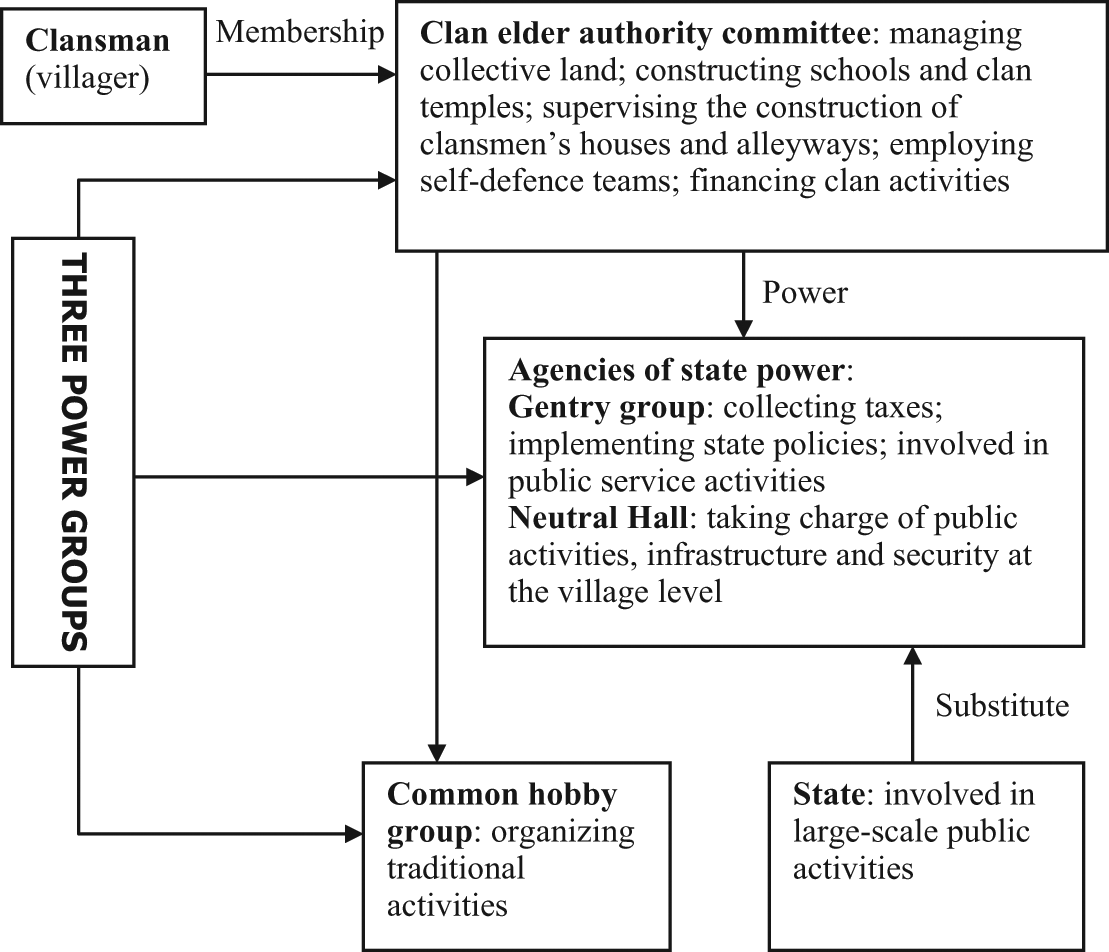
The three power groups and the substitution of state power
First, the kinship group was organized by the clan elder authority committee (zulaohui), which was responsible for the clan’s social, economic and political affairs.(14) The committee was involved in local planning and supervised the construction of clansmen’s houses and alleyways. It was also in charge of a considerable amount of collective land (taigongtian), which was exploited by the clan’s fathers and rented to villagers for cultivation and commercial uses. Income from the land was spent on clan activities, constructing schools and clan temples, employing self-defence teams, etc. Therefore, with a lack of redistribution by the state, the clan organization provided collective goods and services to its members.
Second, the gentry group (xiangshentuan), which comprised retired officials, officer candidates, and people with official titles, acted as mediators between the state and rural society. It collected taxes, implemented state policies and was involved in public service activities (such as water control and local defence). From the Qing Dynasty until the emancipation of P.R. China, a new quasi-government office called Neutral Hall (zhonglitang) became the new mediator between the state and the villages in Guangzhou. Neutral Hall was co-financed by the main clans of the village. It comprised secretaries, authorities from different clans and self-defence teams (gengfutuan). It took charge of public activities, infrastructure and security at the village level. Authorized by the public authorities, it held conversations between the state and the village. In addition, the common hobby group played an important role in organizing traditional activities during festivals, such as dancing lions and contesting dragon boats. It promoted cooperation between clans and villages in establishing schools. However, as the clan committee was the main power entity in the village, the common hobby group was inevitably “colonized” by the clan, while the substitution of state power often used the clan’s power to implement government policies.(15)
Therefore, the traditional village in Guangzhou was successfully self-maintained. Rather than imposing any direct intervention, the state extended its powers to rural society via its agencies. The clan organizations provided villagers with collective goods and the redistribution of resources, and membership of a clan or a village was the condition for access to resources via redistribution and reciprocity.
III. The integration of economic, political and social spheres during the commune period
Since the clan collective land was confiscated by the state and redistributed to poor peasants in the 1950s, the clan regime has declined in the villages of Guangzhou. The people’s commune (renmingongshe), launched by Mao between 1958 and 1983, radically broke up the super steady rural society in China for the first time.(16) Means of production, including land, enterprises, shops and schools, were owned at three levels: by the commune (the township) at the first level; by the brigade (the village) at the second level; and by the production team (a group of villagers) at the most basic level. The commune drew up the production plans for the brigade according to the state plan. It assisted the brigade with distribution, infrastructure construction and property management; it also took charge of enterprises and schools. According to the commune’s plan, the brigade then drew up plans for the production team, which was the basic unit of production: “self-organized”, “independent” and responsible for its profits and losses. It held and managed collective land and enterprises but could not sell or rent these out. It also organized the working and living arrangements of its members (peasants) and provided their collective goods. In other words, the new collective entities, which replaced the clan organizations, provided the redistribution of resources for villagers. However, they were seen as neither part of the state nor of civil society.
“The operative relationship between state and community was never the simple push-button one of the totalitarianism model, nor the simple state-versus-village one of the ‘moral economy’ model.(17) It is better understood as a process that entailed the co-involvement of state and community within the new institutions of the post-revolutionary third realm.”(18)
Politically, the collective regime extended the power of the state to the countryside and fostered the new elite: the communists. Administered by a combination of state and community cadres, the commune looked like a new form of the “third realm”, participated in by both state and society.(19) Furthermore, the cadres of administrative organizations were often the managers of collective enterprises. This meant that the political, social and economic spheres overlapped and inter-penetrated.
Economically, as the system was centrally planned and controlled by the state, there was no free market. The state and the market were actually merged together and there was no clean division between them. The production team did not actually function as an “independent” organization during the production process. First, primary production took place according to the brigade’s plan, and then it “sold” the surplus produce to the “uniform purchase office” at a fixed price set by the state. During this exchange process, the production team gained “records” rather than money, and then the state would allocate food and industrial production according to the number of records attained. However, in order to support heavy industrial development in cities, the state actually reduced the price of agricultural production while enhancing the price of industrial products, an approach known as jiandaocha. Therefore, it was impossible for peasants to bargain with the state, the trade object, which controlled the market.
Instead of the state, the collective entities were responsible for the redistribution of resources for villagers. After state taxes and compulsory production, the commune, the brigade and the production team respectively kept a definite proportion of their total incomes for the development of their collective properties. For instance, the brigade could keep 60 per cent of its total income for financing its collective enterprises, public affairs and social welfare. However, the property rights over collective land were fuzzy. According to national regulations, the commune and brigade only owned part of the mountains, forests and enterprises, while the production team held the majority of collective properties. However, as all three levels possessed production materials, the state did not actually deny that the commune and brigade partly owned the properties of the production team.(20) For example, the city and the commune could requisition the land of the production team, with or without compensation. These fuzzy property rights caused conflict between villages and cities over land during the post-commune period.
Socially, the commune organized the everyday lives of the peasants. It seems that there was a compromise between villager households and the collective to make the people’s commune last 20 years. In fact, the collective regime deferred to the rural society, which had a long history of autonomy; the production team, as the basic production unit, self-organized the working and living arrangements of the peasants, as well as providing their collective goods.
Therefore, the commune-based collectivism of this period actually replaced the clan-based collectivism and provided collective goods for villagers. Membership of the collective entities was the pre-condition for access to redistribution and market resources; and reciprocity was also developed among members of the collective entities, especially the production team.
IV. Socio-Spatial Restructuring During the Post-Commune Period
a. Villages as collective units
As even distribution without consideration of work quality and quantity reduced the productivity of peasants, the people’s commune was disaggregated at the beginning of 1980s.(21) A new system, called the “household responsibility system”, has since been introduced in rural areas. This system transfers responsibility for control over agricultural production from the production team to the villager household. The villager household can acquire a definite amount of collective land for cultivation from their collective entities. After paying state taxes and a fixed amount of money to the collective entities, they can deal freely in the market with any surplus produce they have. This suggests that market exchange has become an important area for peasants to access resources.
The village thus becomes the new collective unit that provides collective goods for villagers, such as upgraded infrastructure, water supply, sewage, security and education. It is administrated by both the Communist Party branch and the village committee (Figure 2). The village committee is not only responsible for social and political affairs, but it also manages collective land and other collective properties. It looks like a “civic organization”, as its members are elected by villagers. As an agency of the state, the party branch has a strong connection to upper level party branches and plays a leading role in supporting the autonomic activities of villagers. However, the cadres of the village committee are usually the cadres of the party branch. The state and “society” are institutionally integrated and their relationships become more complex with the impetus of the market.
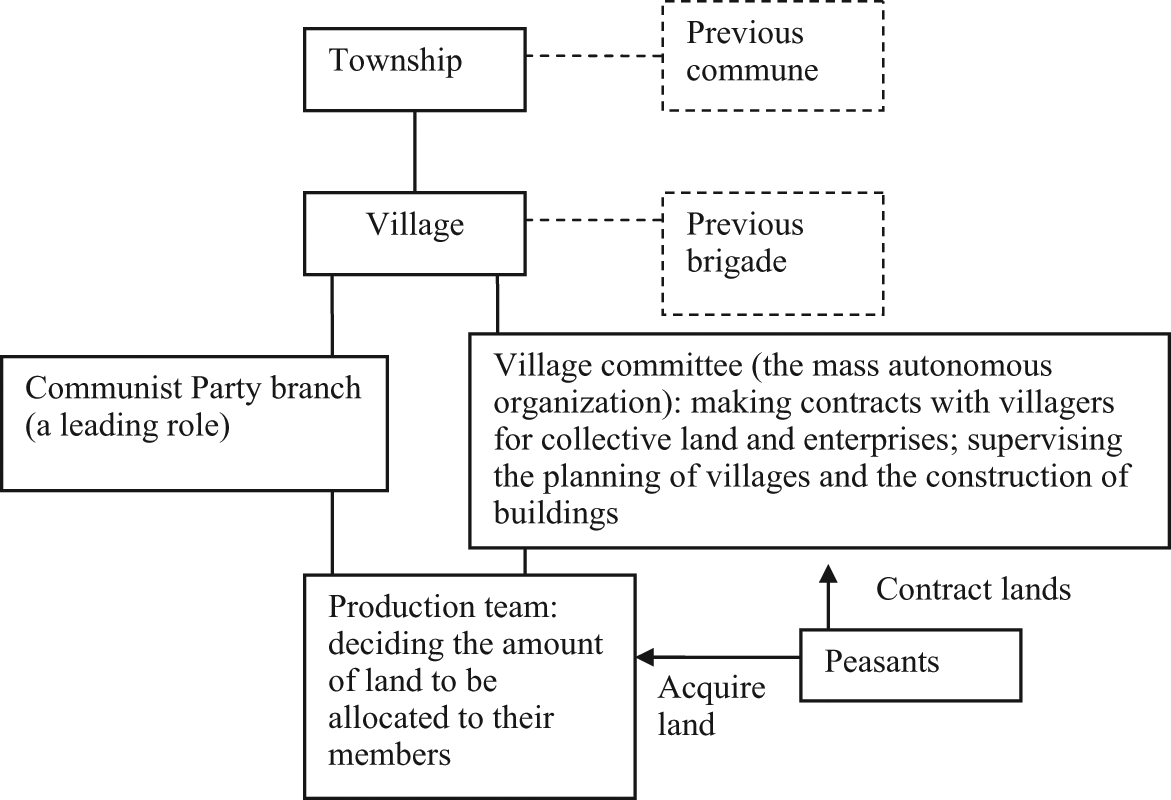
Villages as new collective units
b. Formation of “villages in the city”
Following the land reforms of the 1950s to the 1980s, collective land is now operated by the village, while urban land is owned by the state and managed by the municipality. The village can possess, use and benefit from the ownership of collective land, but does not have the right to dispose of it. The villager household can acquire an area of land for housing (zhaijidi) from the collective organizations for residential use, but cannot sell it on the market. However, the city can requisition collective land (including farmland, housing land, collective industrial areas, etc.) for new developments, against compensation. With the rapid urbanization of Guangzhou since the 1980s, the city has requisitioned a large proportion of farmland from its surrounding villages, but generally not the existing residential area of a village, mainly because it prefers to minimize the resistance of villagers and because the expropriation of residential areas entails higher compensation than for farmland.(22) In this way, many villages do not become fully fledged urban areas but are nevertheless swallowed up by the urban sprawl. It is at this point that they become recognizable as ViCs, characterized by their dual urban–rural structure.
Villager households that have lost their farmland due to urbanization then tend to “illegally” construct houses to meet the housing demands of migrant households that are economically and institutionally excluded from the urban system. Consequently, the number of migrants has greatly increased in many ViCs in Guangzhou. For example, there were only 8,000 migrants in Tangxia village in 1993 but this figure had risen to 30,000 by 2000, five times more than the number of villagers.(23) Continuous migration apparently brings with it pressure for many ViCs to increase in density, with villagers extending their small 1–3 storey houses into 4–5 storey ones, sometimes even to 7-storey properties, often adding cantilevered floors in order to maximize floor area. These market-oriented activities are supported by multi-social networks and reciprocity of villagers, as they borrow money from each other for construction.(24) As a result, many ViCs (particularly those located in the city centre) have very high physical densities (Photo 1). The “handshake and kissing buildings” street profile (epitomized by a tiny distance of about 50 centimetres between two facing balconies) becomes the typical new form (Photos 2 and 3). Many roads are blocked or made narrower by newly added constructions, and there is a high risk of fire. A large number of houses lack sufficient sunlight and ventilation, and due to a mixture of rainwater and sewage, there is usually “waterlog on the road”. The densification of ViCs reflects the lack of effective and legal planning regulation at the ViC level for the various stakeholders to follow.(25) It is driven by maximum profitability and the demand for migrant housing.(26)
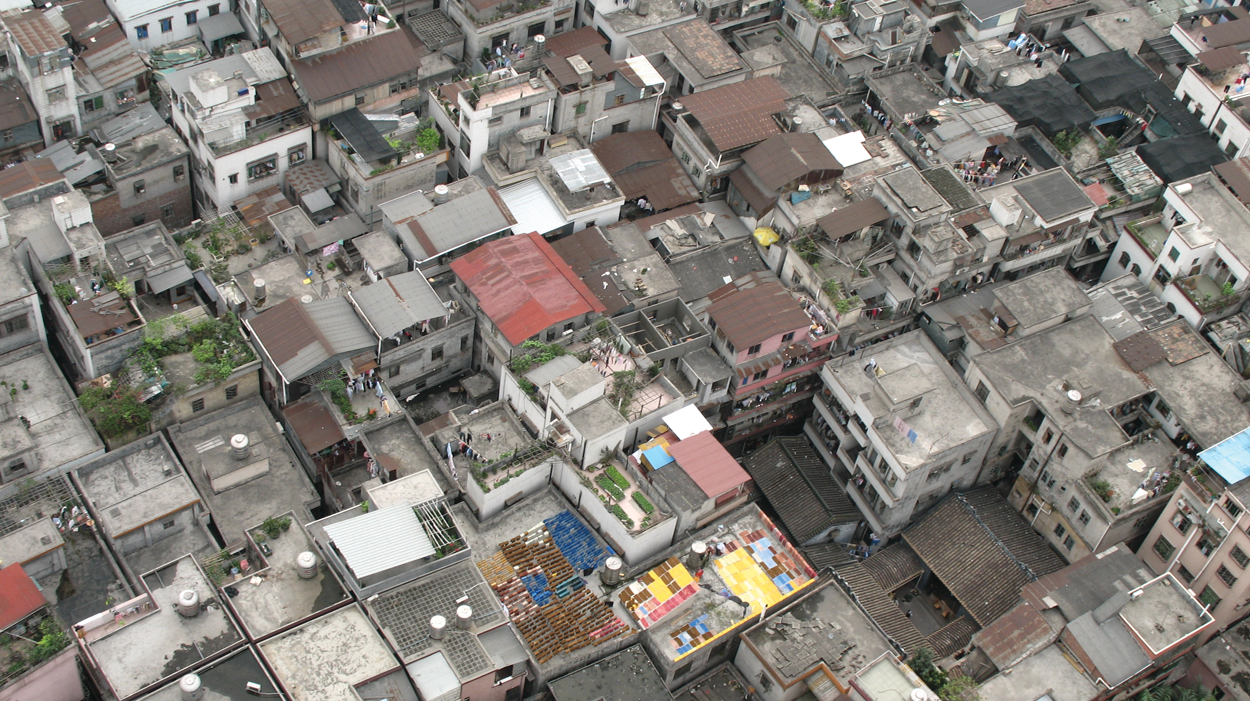
The high physical density of “villages in the city”
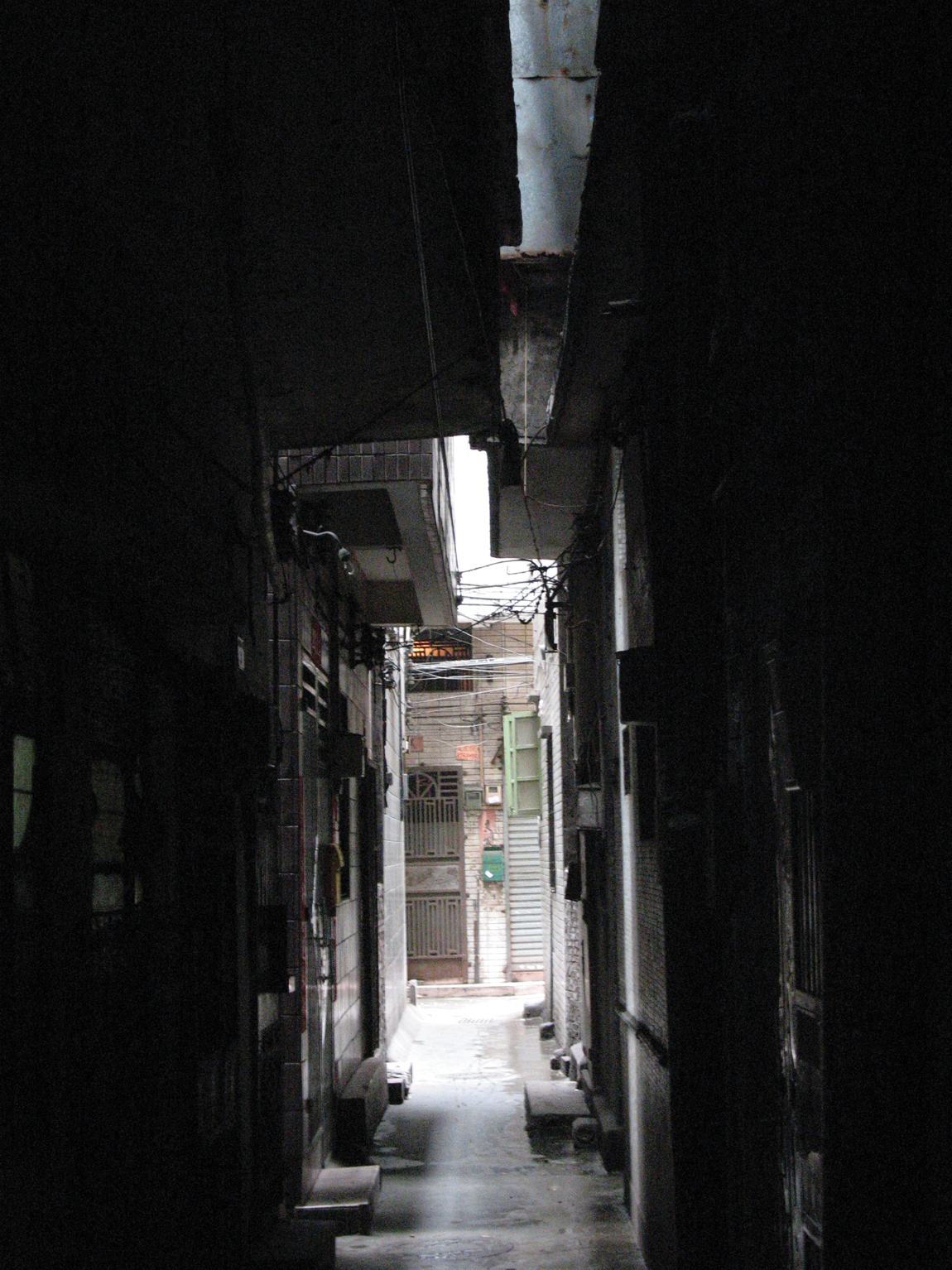
“Kissing housing”
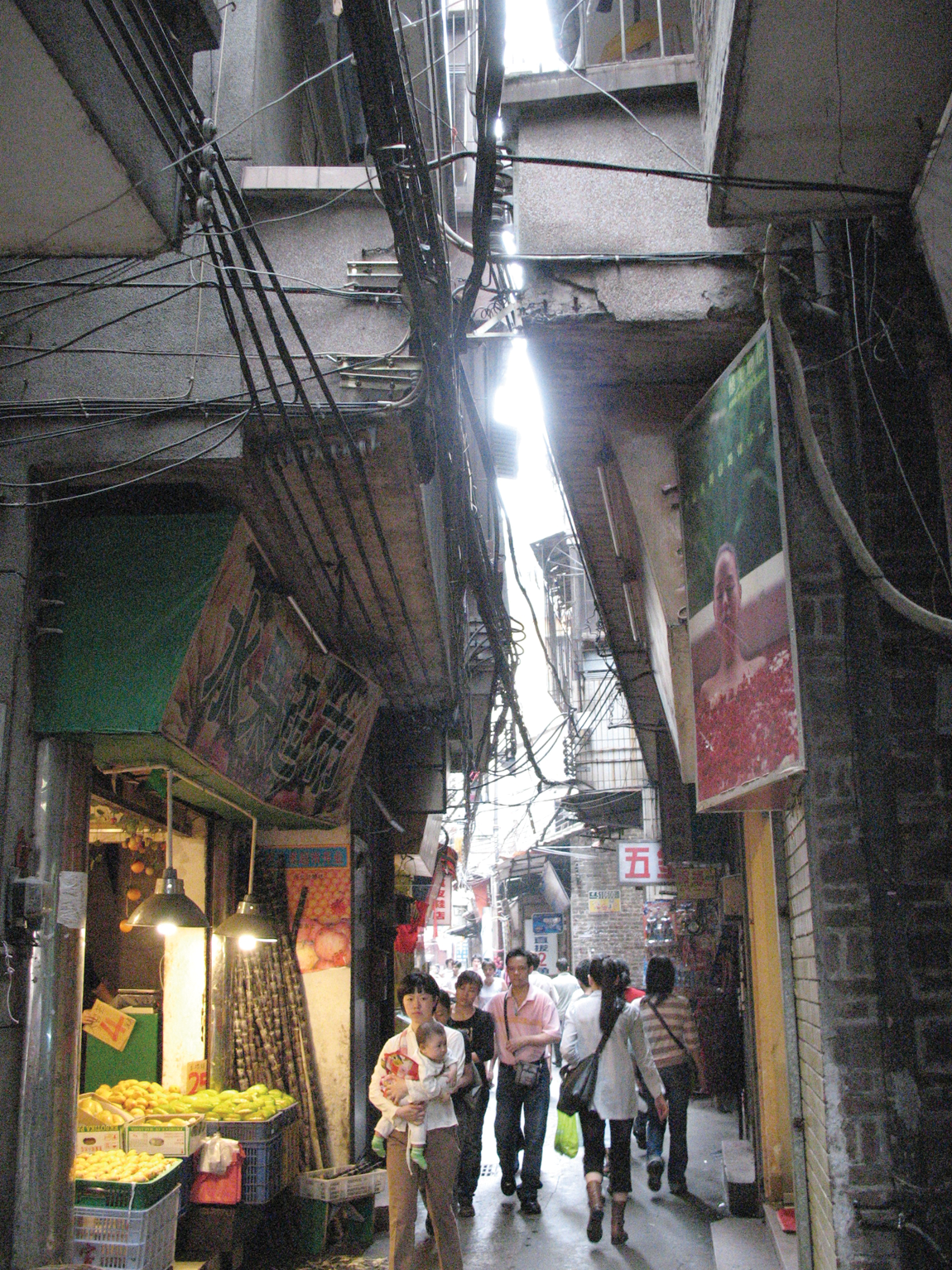
Narrow streets
In order to provide new job opportunities and income for villagers who had lost their agricultural resources, a special land policy was introduced in Guangzhou called the “reserved land policy”,(27) whereby a proportion of land was returned to the villages for collective industrial and commercial development. The reserved land, together with a considerable amount of land compensation,(28) formed the initial capital for the rapid development of ViCs in Guangzhou. Due to the limited capital and capacity to operate projects on reserved land, the collective organizations often partner foreign and domestic private enterprises in the investments they make, and there are three models used for this. First, the collective organizations rent land to these enterprises, while in return the enterprises invest in building factories and warehouses. In this case, the collective organizations carry less risk but receive less income. It is the most common model for ViCs at the periphery of the city, where the collective organizations have little investment capacity and thus development depends largely on external investment. A side-effect of this is that such projects usually result in sub-standard and temporary buildings at the periphery of ViCs. The second model involves the collective organizations transforming the ownership of land into shares and becoming the shareholders of enterprises. In this way, they earn annual dividends according to the number of shares and their involvement in the management. Finally, the third model, which is common in ViCs located in the centre of the CBD where there are higher levels of capital and a greater capacity for management, involves the collective organizations self-constructing high quality supermarkets, shops, commercial and office complexes, and then renting them out. All in all, these projects, which are based on partnerships between the collective organizations and the private sector, have resulted in modern constructions and new functions at the periphery of ViCs.
With the development of industrial and commercial projects, the number of collective properties has increased greatly. In order to redistribute the large number of collective properties to individual villagers, there has been a so-called “shareholding cooperation system” in operation since the 1980s. What used to be the production team of a group of peasants, which managed the collective properties (including returned land, small plots of farmland and constructions on those lands), has become the “economic union” (jinjishe). In addition, the “economic joint union” (jingji lianshe) was also established to operate the collective properties at the village level. This body held the majority of returned land, land compensations and collective enterprises. Both bodies converted their assets into stocks, held by their members (villagers). As a result, villagers could receive considerable cash dividends from their collective properties each year, and in this way, collective property rights were measured and redistributed to individual peasants.
c. The enterprise manages society
In order to promote the cooperation of different collective economic organizations and uniformly operate collective properties, shareholding cooperative companies were established. To illustrate this, we take the most typical ViC in Guangzhou – Shipai village – as an example. Shipai village is the densest ViC in Guangzhou, with a population density of more than 100,000 people per square kilometre. Although the total area of the village is only 0.7 square kilometres, 3,384 houses with a total floor area of 1,019,719 square metres provide dormitories for some 75,000 migrants and about 10,000 villagers.(29) In 1997, Sanjun Enterprise Group (SEG) (Figure 3) was set up and funded by 27 economic unions and the economic joint union in Shipai village. At the same time, the village committee was abolished and its members became cadres of SEG, although the village committee’s stamp(30) has been retained for some special affairs. The former leader of the party branch became the board chairman of SEG, who was also a member of one of the main ViC clans. This suggests that SEG is a new form of the “third realm”, which represents the interests of the villager households and has strong connections to the state and the market.
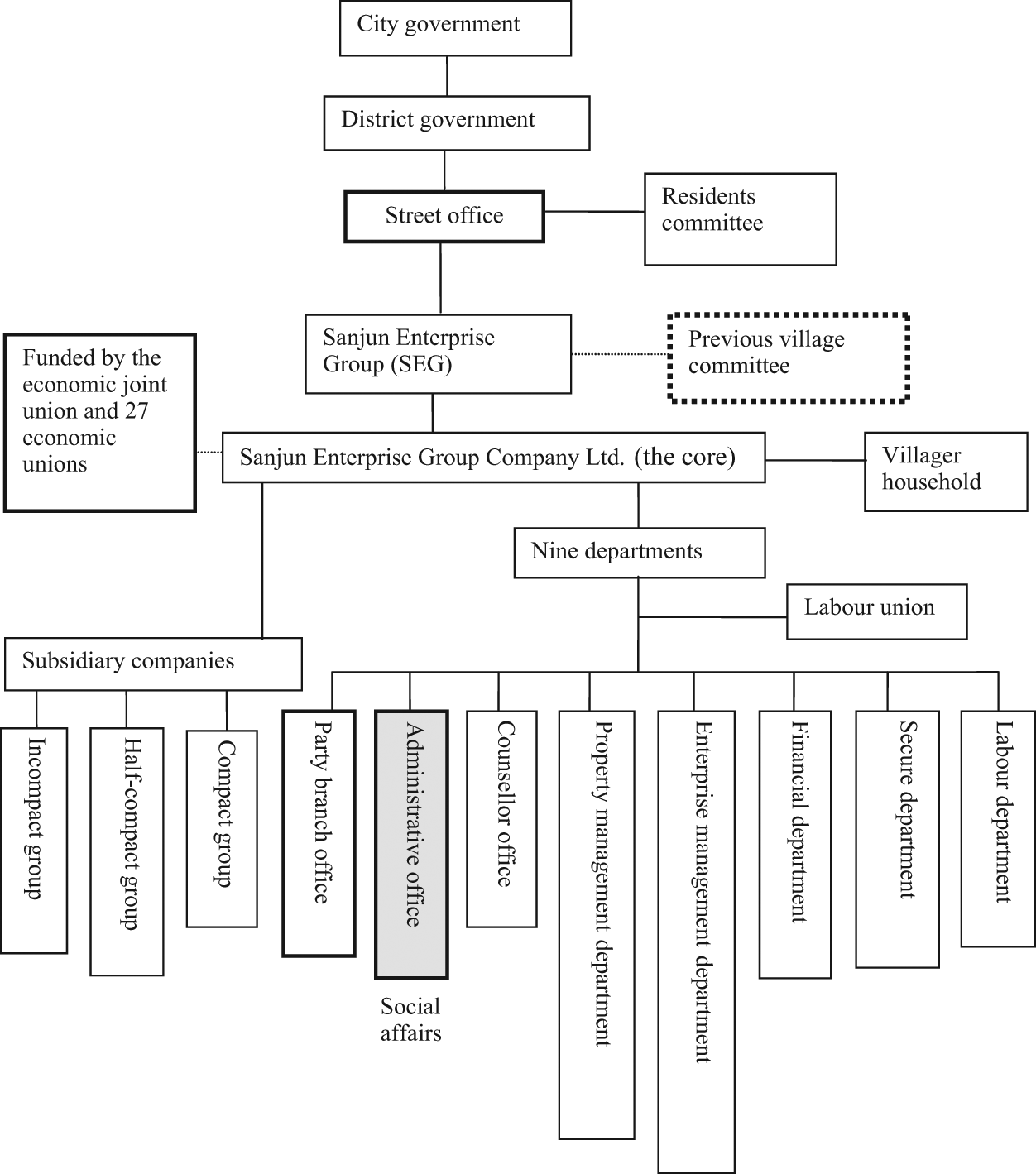
The shareholding cooperative company in Shipai village
SEG not only works as a company but also manages and finances social and political affairs. Its administrative department is in charge of land requisition, the upgrading of infrastructure, public security, education, sanitation, etc. Although it was expected to be a temporary department during the institutional transformation, it still functions to provide collective goods and deal with social affairs. In fact, five residents committees(31) (the basic mass autonomous organization of the city) were established to undertake the social and political functions of the village committee, and they are also responsible for the registration of migrants. However, they are indirectly financed by SEG instead of the upper level urban government,(32) and their tasks also often need the support of SEG.
So why does a corporation undertake social and political affairs? On the one hand, it seems that it is difficult for city governments to provide public goods for ViCs in the short term due to the historical separation of administration, social welfare, civil construction and finance between cities and villages.(33) While on the other hand, SEG also inherits the function of the traditional collective stakeholders in the village,(34) meaning it acts as the new collective organization, providing collective goods for villagers. Membership, or villagership, is the pre-condition for access to redistributed resources in ViCs (such as the cash dividends of collective properties and social welfare).
d. The challenge of state power and the reappearance of the “ancestral idea”
After economic and political restructuring, the role of the Communist Party branch in the ViC is challenged. If the manager of the shareholding cooperative company is not a member of the party branch, the party branch can no longer play a leading role in the ViC.(35) It seems that the status of the party branch is greatly influenced by its economic status.
Accompanying the retreat of state power, the “ancestral idea” has reappeared in ViCs. Guo(36) argues that the socialistic collective function has been reduced in the post-commune period, while cities have not yet opened their doors to peasants. As a result, peasants have not satisfied their collective needs, e.g. social welfare, safety and moral support, so they turn back to clan-based collectivism. However, clan-based collectivism has not simply reappeared in ViCs, but is instead interwoven with the formal institution. For example, the board chairmen of the shareholding cooperative company and leaders of the party branch are often from the main clans in the ViC. Many traditional activities are also subsidized by the shareholding cooperation and, furthermore, clan authorities still play key roles in dealing with clan affairs, as well as mediating between villagers and governments. Although the majority of buildings in ViCs have been constructed “illegally” by villagers, many clan temples are protected by villagers for clan activities and meetings (Photo 4).
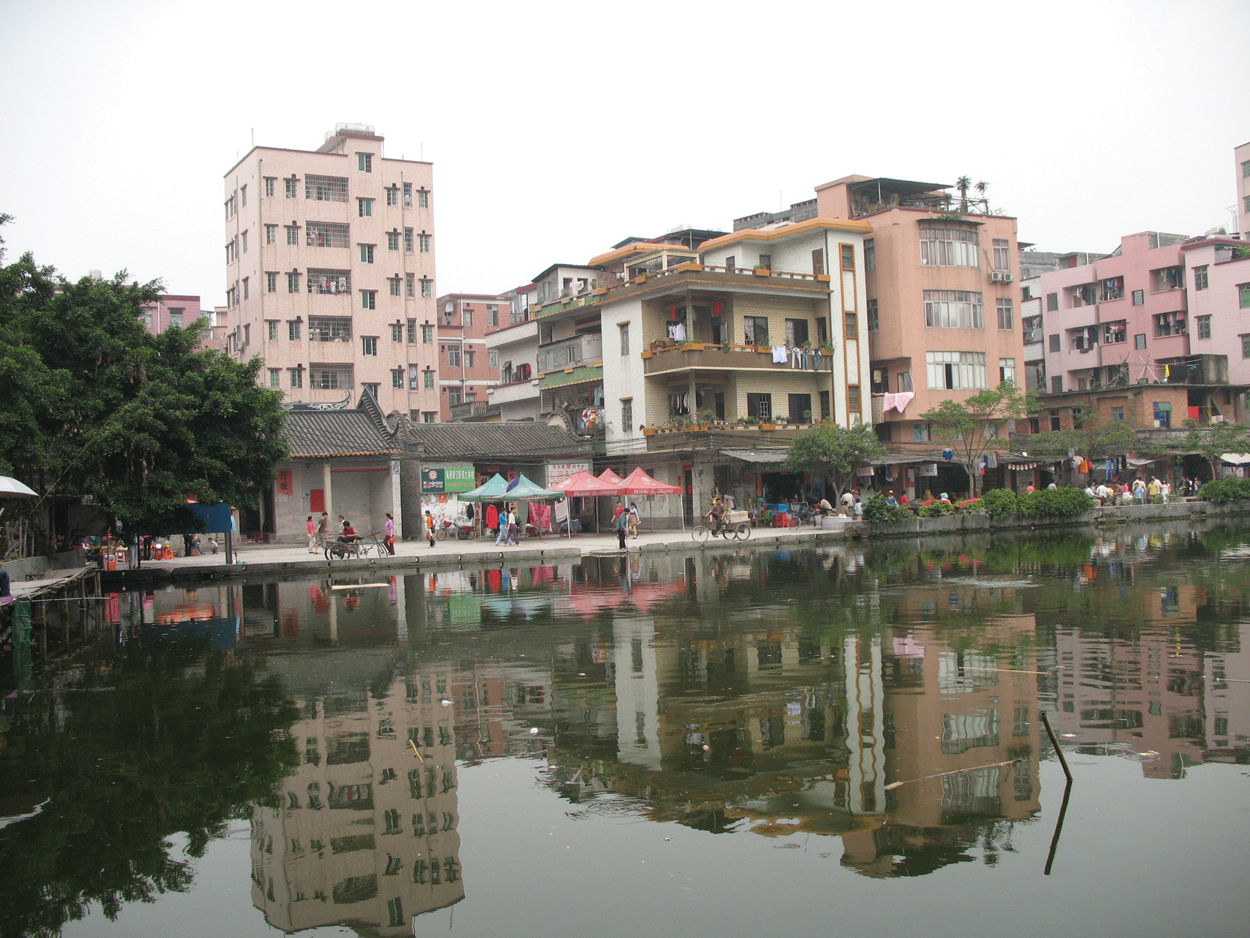
Old clan temples and new constructions
e. The absence of the state and the self-organization of migrants
Today, migrants are the main inhabitants in many of Guangzhou’s ViCs. As previously mentioned, in 2004, of the 3.3 million migrants in Guangzhou, 70 per cent were housed in 139 ViCs.(37) Although a very large number of migrants work in the city, they are institutionally and economically excluded by the urban system. Without urban hukou,(38) they cannot access subsidized housing, medical care, pensions, insurance, education, more qualified and stable job opportunities and social welfare in cities. Neither has the commercialization of urban housing helped, resulting in no provision of homes for the vast majority of rural migrants who are employed in urban low-paid positions.(39) As a result, ViCs have become enclaves for rural migrants in many Chinese cities, supplying affordable housing, job opportunities and education.(40) With poor access to redistribution and formal market exchange, they are pushed into developing survival strategies. They self-organize employment, housing and education based on traditional social networks (kinship and place-based networks).(41)
Our surveys in several ViCs show that rural migrants who are from the same province often live together and are involved in the same type of employment. For example, many taxi drivers in Guangzhou are from Hunan and Henan provinces, are organized by a taxi association and congregate in the same areas of two ViCs in Guangzhou. Their wives usually work together and are involved in various temporary jobs (such as doing handwork) (Photo 5). Many businessmen in ViCs are from the Chaozhou region and they are usually organized by townsmen associations or have strong personal relationships with each other. They set up small shops along village main roads and also booths in markets. New graduates and urban newcomers often concentrate in ViCs, which are close to their places of work. A considerable number of tenants in Shangshe village are graduate students and IT workers who have lived there for several years, and most of them work in a high-tech park near the ViC. They have even established a website for exchanging housing information and making friends.
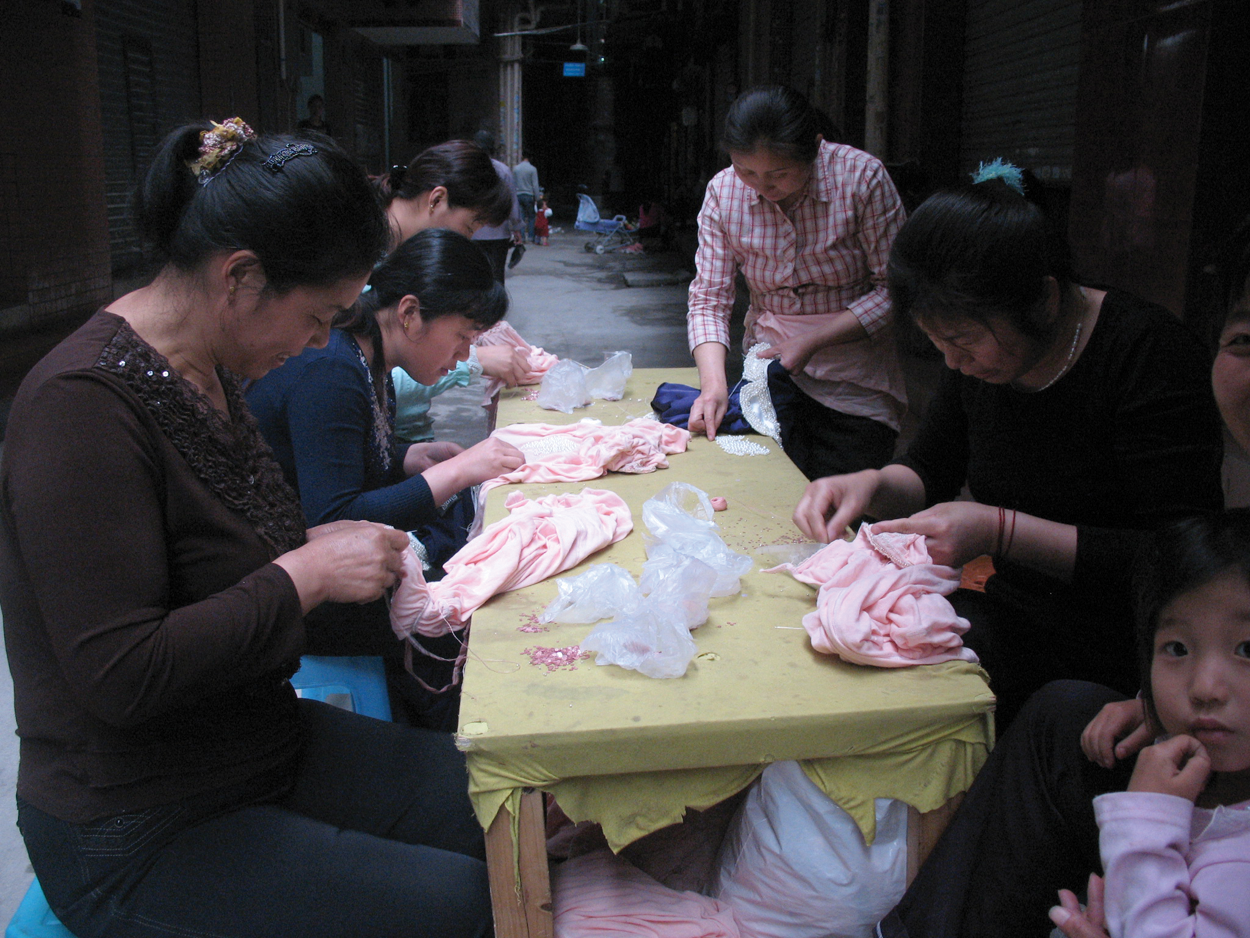
Taxi drivers’ wives doing handwork on the street
Without citizenship or villagership status in the city and ViC, respectively, migrant children have great difficulty gaining access to education through public schooling. Instead, they turn to formal or informal private migrant children schools, which rely on reciprocity and market mechanisms.(42) In Guangzhou, around 70 per cent of migrant children (300,000) study in 150 licenced private schools and many others in non-licenced schools(43) The schools are run by migrants, with few or no subsidies from state redistribution. Some might have started the schools for profit, while others are committed to the collective good of educating migrant children. They make “informal” contracts with villagers and the collective organizations, renting cheap peasant houses or collective buildings in which to teach. As a result, migrant schools tend to be scattered throughout the ViCs, in convenient proximity to the living and working places of the migrant residents. However, poor access to state redistribution causes many private migrant schools to fall into disrepair and be shut down by local governments. Consequently, many migrant children are forced to discontinue their schooling or go back to their hometown for education.
Marked by reciprocity and informal economic activities, informal property management companies play an important role in re-shaping space in several ViCs at the periphery of the city, such as Tangxia in Tianhe district and many villages in Baiyun district. These companies are informally organized. They have been established by groups of migrants (relatives and friends) from Hubei province. Due to the low profits from their projects, they pay administrative fees to street offices instead of paying taxes to the state. The companies start by renting clusters of houses from villagers and then they upgrade the houses and provide services (cleaning, security, etc.). Although this approach often results in an increase in the value of such properties, urban newcomers like the upgraded houses, which are safe and clean, and are therefore not put off by the cost. The informal associations embody some characteristics of “civil society” (such as beyond the realms of state control and based on social networks),(44) but we cannot deny the speculative purpose of these “companies”.(45) In order to maximize their profits from these ventures, and due to the lack of effective building regulations in ViCs, the companies often “illegally” construct houses, for example by adding an attic floor without considering whether the existing framework can support it. It also seems that these new communities, while tightly knit within themselves, are largely independent of one another, as is evident by the blocking of alleyways by fences and gates between them. Moreover, the vast majority of low-income migrants are excluded from the upgraded houses because of the increased prices.
To some extent, ViCs contribute to the self-organization of migrants. For example, they provide cheap land and houses for private migrant children schools. Some public spaces (particularly those co-financed by city governments) in ViCs are also open to migrants (Photo 6). Although these spaces are rare, they are very lively, full of children, the elderly and women. However, migrants are largely excluded from the majority of public facilities and service in ViCs, such as sports centres, cultural activity centres and activity centres for the elderly (Photo 7). One of the reasons is that there are inadequate facilities to serve the increased population. The other is that migrants are discriminated against by many villagers.
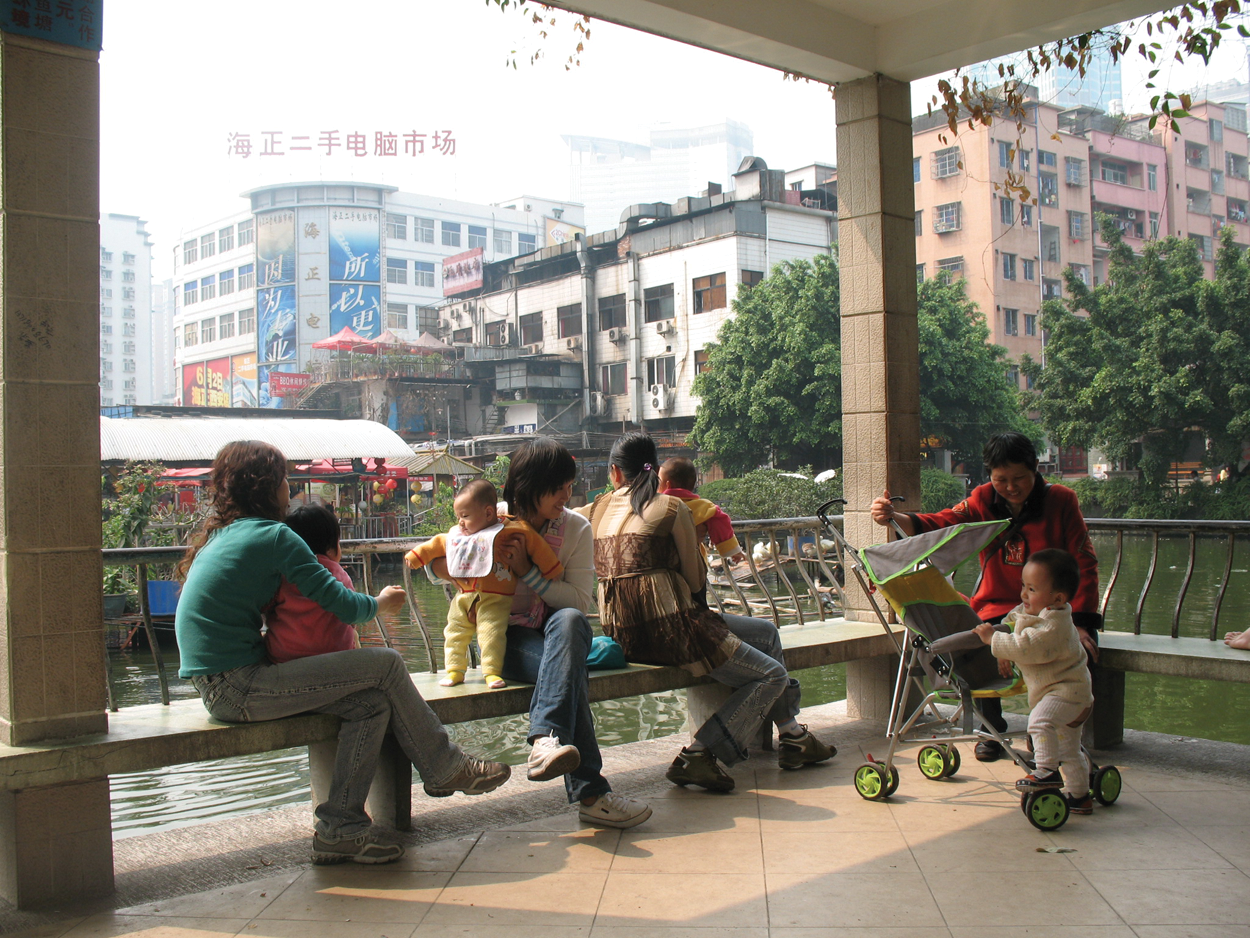
A lively space, open to both migrants and villagers
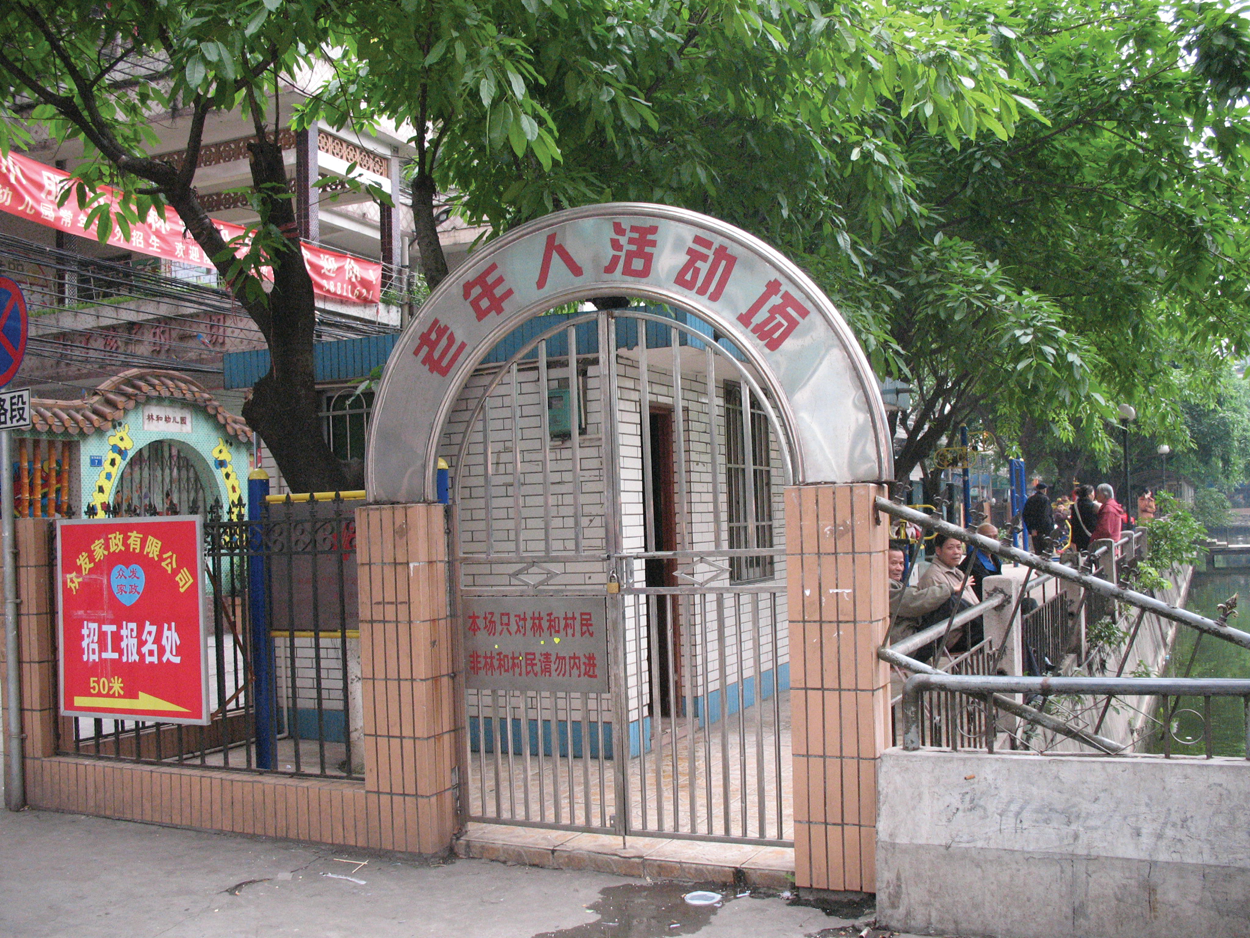
An activity centre for elderly villagers, excluding migrants
V. Conclusions
In this paper, we have reviewed the ways in which the state, the market and society interact, and how households gain access to resources via three modes of economic integration (redistribution, reciprocity and market exchange) in the socio-spatial transformation process of ViCs in Guangzhou (Figure 4). The findings show the limits of three modes of economic integration as a concept for understanding the socio-spatial transformation of ViCs in China. According to the theory, access to market exchange, redistribution and reciprocity is regulated, respectively, through “social utility”, “citizenship” and “affiliation”. However, this paper suggests that “membership” is the main condition that has enabled villagers to access resources via three modes of economic integration in the villages and ViCs of Guangzhou. Historically, in the clan-based society, the state did not intervene directly in the affairs of its surrounding villages, but instead extended its powers to these settlements through clan-based organizations. Villagers, as members of a clan and a village, could acquire resources via reciprocity from other members and via redistribution from the clan-based organizations. During the commune period, the commune combined political, social and economic functions and replaced the clan-based organizations to provide collective goods for villagers. Membership of a commune was a significant pre-condition for access to resources via the three modes of economic integration. In the post-commune period, the shareholder cooperation company not only represents the interests of villagers but also provides connections to the state and the market. Only members of a ViC can acquire resources via redistribution from the “company”. Villagers participate in the market sphere by renting their houses to migrants, and reciprocity is still an important area for villagers to access resources. Therefore, membership, or villagership, is the main condition that leads villagers to access resources through redistribution, market exchange and reciprocity in ViCs.
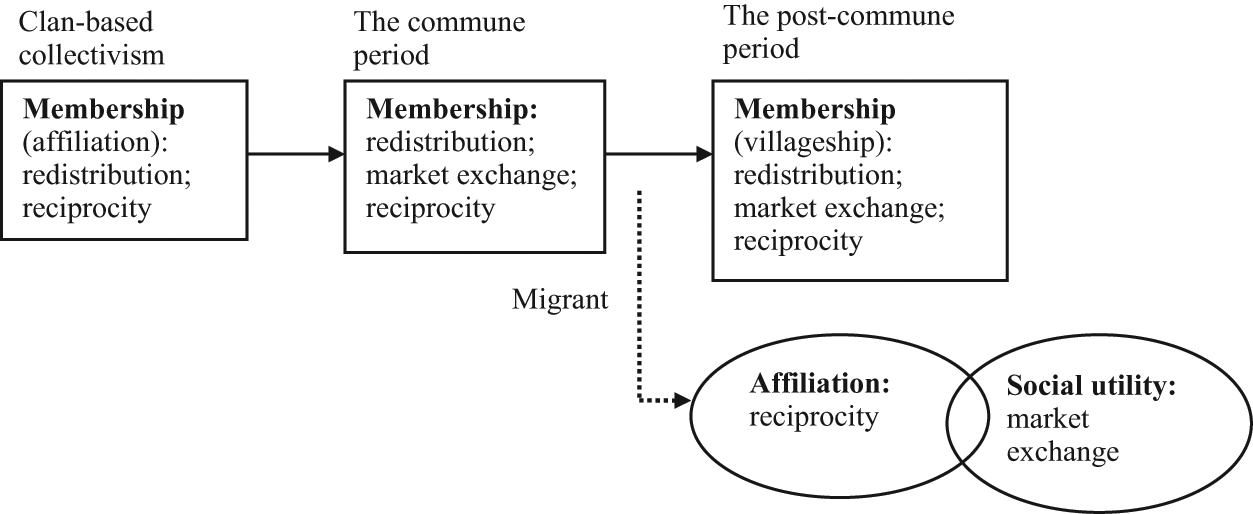
Access to resources via the three modes of economic integration in three historical periods
Without villagership, it is difficult for migrants to access resources via the redistribution sphere in ViCs (such as public facilities). Without citizenship, they are also largely excluded from urban housing, education, stable job opportunities and social welfare in the city. Through a lack of redistribution of resources, they are pushed into developing survival strategies, organizing their own housing, employment and education based on reciprocity and market exchange. Informal economic activities of migrants, which often rely on a supporting strategy within the sphere of reciprocity, become important survival mechanisms.(46) However, working in the informal sector in order to supplement the inadequate wages from a person’s labour will have an excluding effect in the long term, as it violates the rules and norms inherent in this sphere of integration.(47) It seems that further access to resources in the redistribution sphere for migrants is essential in order to reduce social and spatial exclusion in ViCs and the city.
Footnotes
Acknowledgements
This research was supported by the Nuffic Fellowship in the Netherlands. The authors appreciate the assistance of officials in the shareholding cooperative company and also colleagues at the School of Architecture, South China University of Technology. Many thanks to residents of “villages in the city”, who shared many of their living experiences. We are grateful to Professor Chris Kesteloot, also to the Editor of Environment & Urbanization and anonymous reviewers for their very constructive comments and assistance.
1.
These eight original districts of Guangzhou included Yuexiu, Dongshan, Liwan, Fangcun, Haizhu, Tianhe, Baiyun and Huangpu.
2.
Li, J F (2004), The Renewal of “Village in the City”, Science Press, Beijing, 277 pages.
3.
In 1990, Guangzhou City included eight original districts (see reference 1) and four towns (Panyu, Huadu, Zengcheng and Conghua). In 2000, Guangzhou City included 10 districts (Yuexiu, Dongshan, Liwan, Fangcun, Haizhu, Tianhe, Baiyun, Huangpu, Panyu and Huadu) and two towns (Zengcheng and Conghua); see Yao, H S, X Q Xu and D S Xue (2009), “Analysis on the backgrounds and characteristics of floating population in Guangzhou”, Tropical Geography Vol 29, No 4, pages 350–355.
4.
See reference 2.
5.
Polanyi, K (2001), The Great Transformation: The Political and Economic Origins of our Time, Beacon Press, Boston, 317 pages; also Harvey, D (1973), Social Justice and the City, Basil Blackwell, Oxford, 350 pages; Mingione, E (1991), Fragmented Societies: A Sociology of Economic Life beyond the Market Paradigm, Basil Blackwell, Oxford, 512 pages; Kesteloot, C and H Meert (1999), “Informal spaces: the geography of informal economic activities in Brussels”, International Journal of Urban and Regional Research Vol 23, No 2, pages 232–251; Meert, H (2000), “Rural community life and the importance of reciprocal survival strategies”, Sociologia Ruralis Vol 40, No 3, pages 319–338; and Lin, Y L, B de Meulder and S F Wang (2011a), “Understanding the ‘village in the city’ in Guangzhou: economic integration and development issues and their implications for the urban migrant”, Urban Studies, Vol 48 No 16, pages 3575–3590.
7.
White, G, J Howell and X Shang (1996), In Search of Civil Society in China: Market Reform and Social Change in Contemporary China, Clarendon Press, Oxford, 256 pages (n.p. for quote).
8.
UN–Habitat (2003), The Challenge of Slums: Global Report on Human Settlements 2003, Earthscan Publications Ltd., London, 344 pages; also de Meulder, B, A Loeckx and K Shannon (2004), “A project of projects”, in A Loeckx, K Shannon, R Tuts and H Verschure (editors), Urban Trialogues: Visions_Projects_Co-productions. Localizing Agenda 21, UN–Habitat/PGCHS University of Leuven, pages 187–197; and Douglass, M and J Friedmann (1998), Cities for Citizens, John Wiley & Sons, UK, 308 pages.
9.
According to Huang, the “third realm” is an intermediate sphere between state and society within which both participate. It is different to “civil society”, which opposes the state. By reviewing Chinese history, Huang argues that the realm was more ad-hoc and semi-formal during the Qing Dynasty (e.g. people with official titles in the village) but became increasingly institutionalized in the twentieth century (e.g. the commune, the collective company); see Huang, P C C ( ), “Public sphere/civil society in China? The third realm between state and society”, Modern China Vol 19, No 2, pages 216–240.
10.
See also Lin, Y L and B de Meulder (2011), “The role of key stakeholders in the bottom-up planning processes of Guangzhou, China”, Journal of Urbanism Vol 4, No 2, pages 175–190.
11.
Fei, X (1985), Earthbound China, Sanlian Bookstore, Beijing, 97 pages.
12.
Guo, Z (2006), “Clan-based collectivism: political and cultural identity in the rural society”, available at .
13.
Shun, Q (2001), “Village in the city: the anthropology research on Nanjing village of Guangzhou”, Doctoral thesis, Zhongshan University; also Lan, Y Y (2005), Village in the City: the Field Study on a New Village Community, SDX Joint Publishing Company, Beijing, 449 pages.
14.
See reference 13, Shun (2001); also see reference 13, .
16.
Zhang, L (1998), Say Goodbye to the Ideal – The Research on the Commune Regime, Dongfang Press Centre, 572 pages.
17.
Scott, J C (1976), The Moral Economy of the Peasant: Rebellion and Subsistence in Southeast Asia, Yale University Press, 254 pages.
20.
Liu, Q (2006), “The conflict of interest in a binary ownership: analysis on the contradiction in the brigade’s property right under the commune regime”, China’s Village Observation No 5, pages 26–33.
21.
See reference 16.
22.
Lin, Y L, B de Meulder and S F Wang (2011b), “From village to metropolis: a case of morphological transformation in Guangzhou, China”, Urban Morphology Vol 15, No 1, pages 5–20.
23.
Guangzhou Tianhe District, Tangxia Committee (editor) (2003), Annals of Tangxia Village, Guangdong People’s Press, Guangzhou, 328 pages.
24.
See reference 5, Lin, de Meulder and Wang (2011a).
25.
See reference 10.
26.
See reference 22.
27.
28.
29.
See reference 22.
30.
The “stamp” is used by the village committee to endorse approval of important decisions made on behalf of the village. It is a symbol of village authority.
31.
The residents committee undertakes many tasks, including public order, basic welfare provision, mediation of disputes, sanitation, education and cultural activities.
32.
SEG hands over a fixed amount of money to the street office before taxation, according to the residents committee’s expenditure. The street office then allocates the money to the residents committee. The street office is an agency of the city government and is responsible for local justice, community security, traffic control, fire protection, sanitation, street scoping, maintenance of open spaces, environmental protection, family planning, employment and labour force administration, day care services, disaster protection, collective-owned businesses, community services and farmers markets.
33.
Xie, Z (2005), The Transition from Village to Urban Community: A Study of Institution, Policy and the Urban Village Problem during Urbanization in China, China Social Sciences Publishing House, Beijing, 477 pages; also Zheng, M (2006) The Urbanization of Shipai Village, Social Sciences Academic Press, 477 pages.
36.
See reference 12.
37.
See reference 2.
38.
In order to restrict the movement of peasants to the cities, a dual urban–rural system was established in the 1950s. The hukou system registers people with urban or rural hukou status according to their birthplace.
39.
Zhang, L (2005), “Migrant enclaves and impact of redevelopment policy in Chinese cities“, in J C Ma and F L Wu (editors), Restructuring the Chinese City: Changing Society, Economy and Space, Routledge, UK, pages 218–234.
40.
Jie, F and W Taubmann (2002), “Migrant enclaves in large Chinese cities”, in J R Logan (editor), The New Chinese City: Globalization and Market Reform, Blackwell Publishers, Oxford, pages 183–197; also see reference 39; and Yu, X (2008), “Improve service management system and guide people to float orderly“, available at .
41.
See reference 5, Lin, de Meulder and Wang (2011a).
42.
See reference 5, Lin, de Meulder and Wang (2011a).
43.
Interview with Guangzhou Education Office, 5 March 2008.
44.
See reference 7.
45.
See reference 10.
46.
See reference 5, Lin, de Meulder and Wang (2011a).