




Abstract
It is estimated that older reinforced buildings represent almost 50% of the total number of existing buildings in Slovenia. It is further estimated that 1/3 of the population of Slovenia lives in areas where the PGA is 0.2g or more. Seismic resistance of such buildings in general is not sufficient and appropriate measures should be implemented. It is recommended that these are designed incorporating the findings of structural monitoring based on which useful information can be obtained. Structural monitoring aims to monitor the possible advancement of existing or formation of new damage due to various reasons, while strengthening measures aim to ensure structural integrity and adequate level of seismic resistance of building. The article describes the current practice in this field in Slovenia through practical examples. Additionally, suggestions that could help improve the current approach such as combining the global calculation model with local failure mechanisms and combining the activities of monitoring, investigations of structure and assessing seismic resistance are given. Usage of emerging technologies that are non-invasive both in monitoring, as well as investigation of structure is encouraged. It is recommended that reversible strengthening measures especially in the case of heritage buildings are used.
Keywords
Introduction
Older unreinforced masonry buildings which represent almost 50% of total number of existing buildings in Slovenia, in most cases do not meet today’s valid standards in the field of building constructions. This applies both to the requirements regarding static load-bearing capacity and above all to the requirements regarding seismic resistance. Also, inadequate design, poor building maintenance and deterioration of materials can often be a problem with such buildings. Furthermore, their structure may be weakened by past interventions or past damage due to earthquakes or other factors. Regarding their load-bearing capacity, shear failure mechanism and out-of-plane collapse of walls often dominate.
When such buildings are in proximity to building sites, especially when dynamic impact is expected due to the technology of the work process, certain level of damage may occur. Sometimes, such buildings are already damaged by past earthquakes. Therefore, the establishment of structural monitoring by means of which progression of already formed and possible new damage is registered is crucial. The methods used in the framework of monitoring can provide d signal either for a possible stoppage of work and strengthening of the most exposed parts of the building, or for the necessary adjustments of technology. In any case, the ascertained course of recorded damage provides useful guidelines in designing strengthening measures which aim to ensure structural integrity and improvement in seismic resistance of the monitored buildings. Methods such as measurement of vibrations, geodetic measurements, noise and dust measurements are often used in evaluating the impact on the observed building. An important tool for estimating the current condition of a structure and its possible changes, is dynamic identification, since it enables the characterization of its modal features (i.e. frequencies, modal shapes, and damping ratios), without applying invasive techniques. 1 However, the usage of this method in Slovenia is limited to a few research projects. In earthquake prone areas it is very important to conduct post-earthquake surveys by which one can predict vulnerability of buildings in possible future events. In this, empirical vulnerability functions developed from post-earthquake data can be very helpful. 2 Furthermore, accurate estimation of ground-shaking levels at the observed location is as important as the accurate evaluation of the observed damage on buildings. 3 One of the most innovative non-invasive monitoring approaches is the usage of Differential Interferometry Synthetic Aperture Radar (DInSAR) technique which can detect deformations induced by slowly evolving phenomena. Correlation between obtained data and observed damage is beneficial in preparing adequate numerical model and planning strengthening measures. 4 Results obtained through monitoring campaigns and investigations and/or assessment of seismic resistance can significantly improve knowledge level of the structure and consequently the credibility of vulnerability studies.
The numerical strategies for prediction and structural behavior of masonry buildings that can differ both in geometry as well as in structural details, can be subdivided into four classes: block-based models, continuum models, macro-elements models and geometry-based models. 5 In many cases seismic vulnerability of historic masonry buildings can be evaluated by incorporating Macro-Models 6 or Equivalent Frame Models which can be successfully combined with the linear kinematic approaches for the 2D out-of-plane response. 7 In the case of vaulted masonry structures which often represent floor structures in lower stories of historic masonry buildings, simplified approaches such as Membrane Equilibrium Analysis can be used to verify the influence of material deterioration and cracks on their structural behavior.8,9
In this article the current approach to structural monitoring and ensuring structural integrity of masonry buildings in Slovenia is described through practical examples. In the future research it would be beneficial to present the usage and analyze advantages/shortcomings of advanced methods listed in previous paragraphs compared to current procedures both in monitoring as well as in ensuring structural integrity of the buildings. Also, the effect of applying proposals for improvement of the current approach suggested in chapter 6 should be studied.
Building monitoring procedures
The first phase of monitoring is the identification of building (s) in the observed area. In certain cases, focus is on the individual building, however, by the renewal of old city centers, which was the case in the last decade in Slovenia, there is the need to monitor larger group of buildings in the immediate vicinity of the building site. Historical city centers are often characterized by narrow facades, different heights of buildings built in a row without structural expansions at the junction of buildings, and narrow streets with intermediate squares. Buildings can be built in stone and those with newer construction date also in brick, with the thickness of the walls gradually decreasing from the lowest to the highest floor. Floor structures above the basement or ground floors are most often represented by arches. Above the higher floors, in most cases, floors are wooden. Those as a rule, due to their flexibility and structural details, do not provide sufficient connections to load-bearing walls at floor levels, which makes such buildings sensitive to induced vibrations, as well as to horizontal loading. In old city centers it is also necessary to consider that older buildings often have inadequate or shallow foundations. In the first phase buildings are visually inspected by which their structural integrity, age and possible damage is assessed as accurately as possible. The aim of the visual inspection is primarily to prepare the scheme of existent cracks as well as to determine which buildings could be most vulnerable either due to the degree of damage or the weaknesses in their structural design. In inspecting and evaluating damage, the pattern of formed cracks, their age shape, age and course of propagation should be determined.
To assess their initial state, the monitored masonry buildings can be classified using the EMS-98 scale. 10 Considering years of experience in the field, the EMS-98 scale presented in Table 1 has been supplemented with approximate crack width which is helpful in classifying the damage.
Modified classification of visible damage (summarized and modified after 10 ).
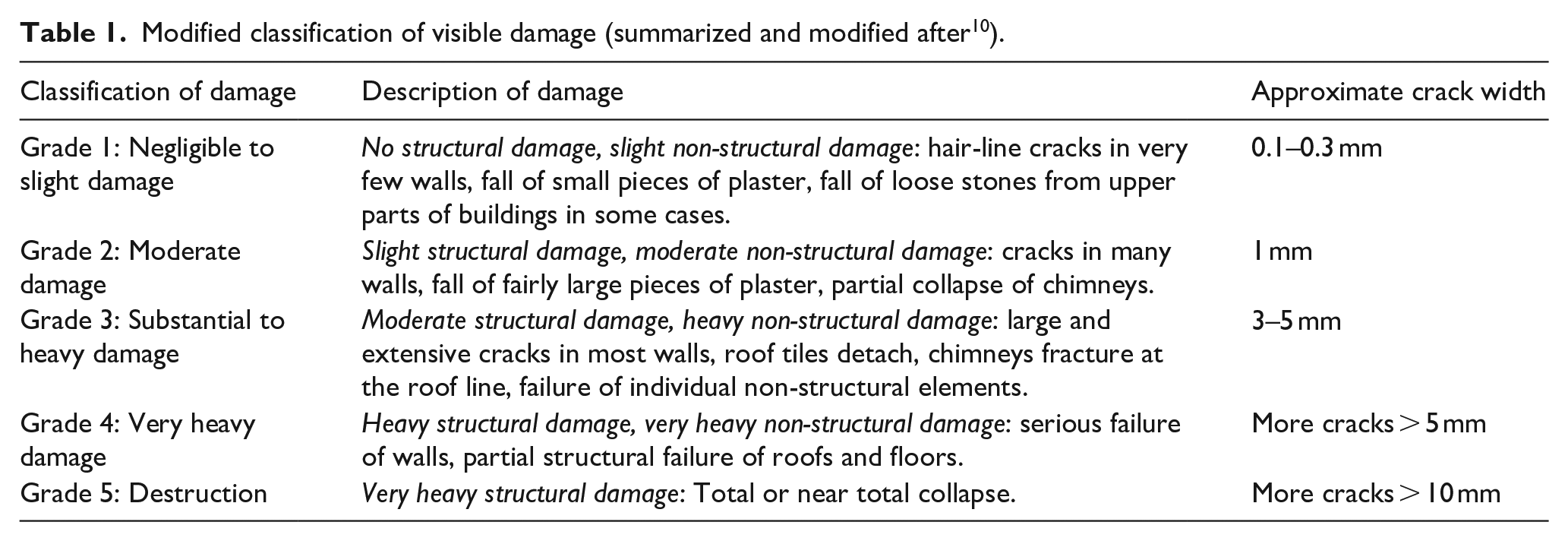
The damage described in the above table is mainly related to damage due to an earthquake which needs to be considered when monitoring a building exposed to other influences (e.g. vibration effects, differential settlement, damage due to lack of maintenance). In addition to description of damage the numerical values of recorded crack thicknesses are added as they can provide a useful toll in assessing the state of buildings.
In assessing the integrity of structure elements of the Rapid Visual Screening (RVS) are often used. 11 Parameters that are taken into account are: quality and condition of brick and mortar, contribution of load-bearing walls in each direction, irregularities in floor plan and height of the building, type and condition of floor construction, connection of individual structural elements (walls-floor structures), presence/absence of vertical and horizontal RC ties, homogeneity of load-bearing walls taking into account past reconstructions, degradation of materials, and number of floors.
When monitoring existing buildings in congested city centers, we are often dealing with vibrations caused by on-site or transit traffic or various means of demolishing concrete or compacting gravel layers. Due to the absence of Slovenian standards, the German standard DIN 4150 12 and the Austrian standard ÖNORM S 9020 13 are mostly used. The limit values according to those standards depend on the duration of the vibrations, the frequency, and the type of the building, and are given in relation to the largest of the three measured vibration components Vi 12 or the resultant of the swing speed VR. 13 The DIN 4150 standard distinguishes between short-term vibrations and permanent vibrations, but there is no precise description of what each type of vibration represents. Presumably short-term vibrations include those that occur at most a few times a day and are very limited in time (e.g. the consequences of explosions due to rock blasting), and all other types of vibrations are considered permanent (e.g. long-term demolition of concrete layers with a pneumatic hammer, compaction of gravel layers using vibration rollers, and the like).
In monitoring the state and possible propagation of existing cracks, two established and tested methods are used: installation of control seals using fine polymer-cement leveling mortar and installation of three-point anchors (Figure 1, left). Polymer-cement seals, after curing, become a fragile material that cracks even with a small increase in the crack over which it is placed. By installing control seals, possible expansion of existing cracks can be easily monitored.
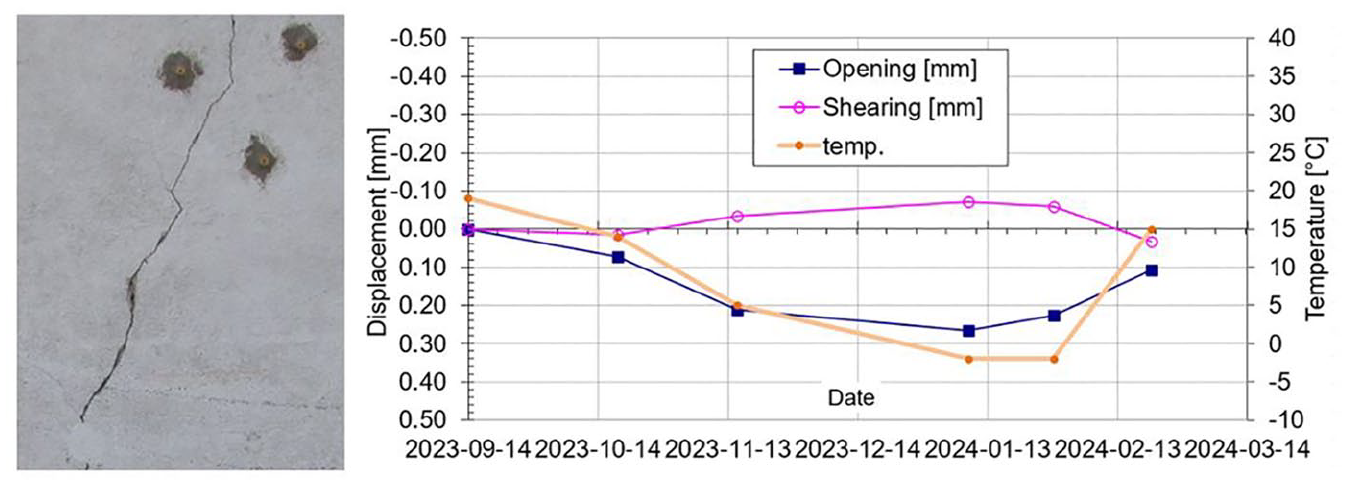
Control seal and three-point anchors installed across the crack (left), monitoring crack action over time (right).
Three-point anchors are used to accurately monitor possible changes in structural cracks. Brass anchors are placed around the crack in the shape of an triangle and distances are measured at different time intervals using a portable deformeter. From the measured distances, expansion, narrowing, or shearing action of the observed crack can be calculated, as an additional parameter, changes in temperature can also be monitored (Figure 1, right).
Where settlement of buildings could occur, for example in the vicinity of major construction excavations, there is often a need for geodetic monitoring. Changes in measured values can be a sign for the implementation of the necessary preventive measures before additional damage occurs. Geodetic measurement points should be placed mainly in corners, expansions, and along the long walls of the observed buildings.
An example of monitoring activities at Ducal court in Celje
The subject of monitoring was the north-east tower of the Ducal court in Celje, the fourth largest city in Slovenia. From the architectural point of view, this building belongs to the top profane feudal architecture of Central Europe. Overall Gothic design and the many partially rebuilt, but high-quality carved Gothic details are important in this view. The Ducal court is first mentioned in records as early as 1323, however, even the remains dating back to the period of Roman civilization were discovered in the court. Rebuilding in the middle of the 18th century and later did not change only the external image of the building, but also its structure. In the past, especially after the earthquake in neighboring Croatia in 2020, damage has formed on the monitored court, which could lead to more extensive damage or partial collapse even by possible smaller further earthquake shocks. Considering the severity and extent of damage and registered crack pattern, the building was classified as Grade 3: Substantial to heavy damage. In Figure 2 the photograph along with the crack pattern and installed geodetic points (GT1–GT4) and three-point measuring points (D1 and D2) across the cracks on the southern façade are shown. Most of the measuring points were installed on northern and southern facade in the vicinity of the contact with eastern facade. Namely, the formed crack pattern indicated the tendency of possible separation of eastern façade wall. Recorded crack pattern in lintel-parapet area of the wall with crack width from 1.0 to 10.0 mm can be mostly attributed to past seismic events. So far, only initial measurements have been made. Further measurements will indicate whether the damage is progressing. Unfortunately, due to financial and time constraints we were not able to apply other survey methods such as infrared thermography that would enable us to detect possible hidden cracks and anomalies.
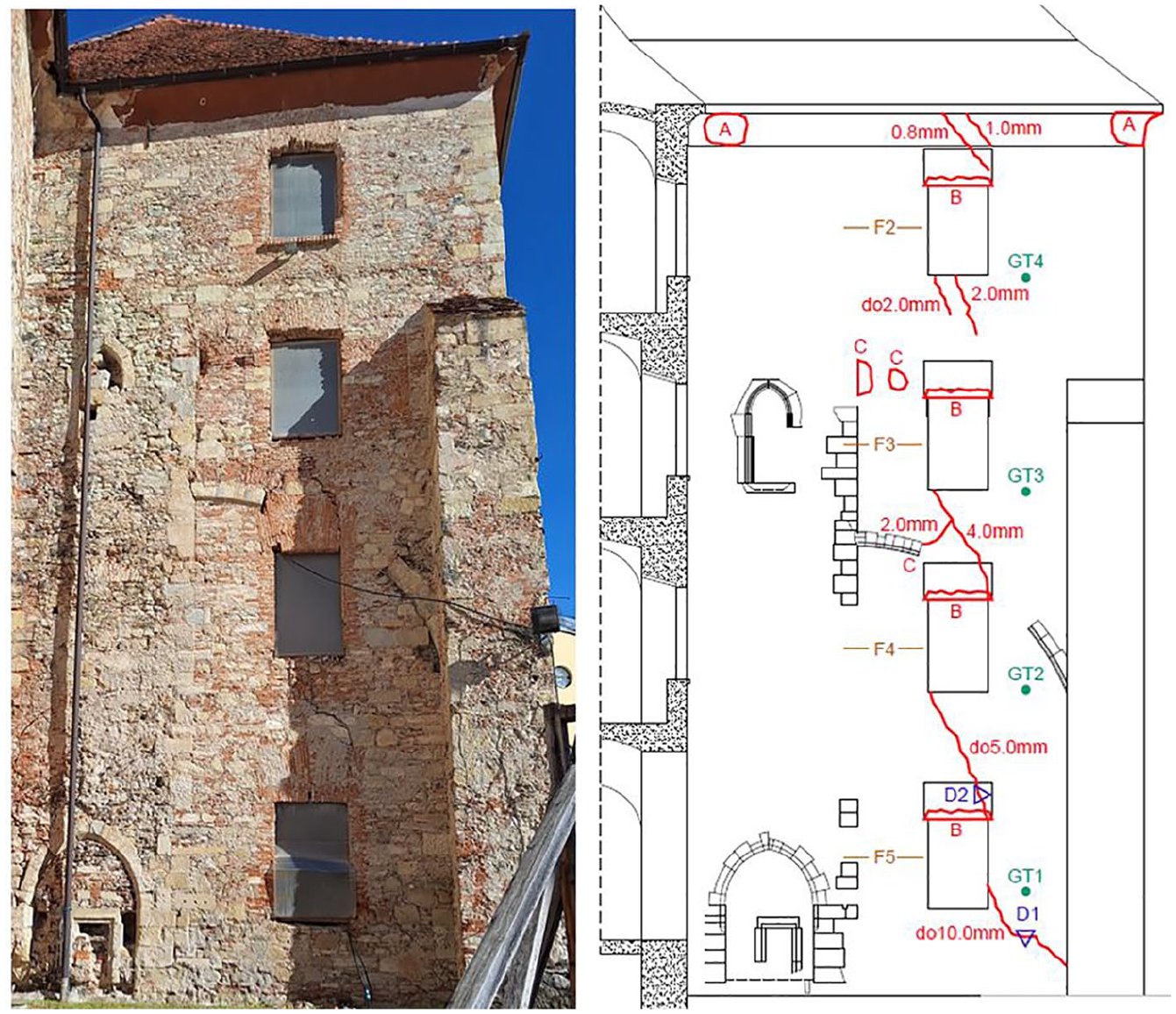
Photograph of the southern façade of investigated structure (left) and recorded crack pattern along with installed measuring points (Rec 1_2.).
In inspecting the building also other types of damage and shortcomings have been recorded based on which strengthening measures have been proposed to preserve structural integrity of the building. The walls of the building have been partly rebuilt through history using different materials and building techniques. Due to insufficient connections between areas from different periods, separation of walls occurs at their junctions (Figure 3).
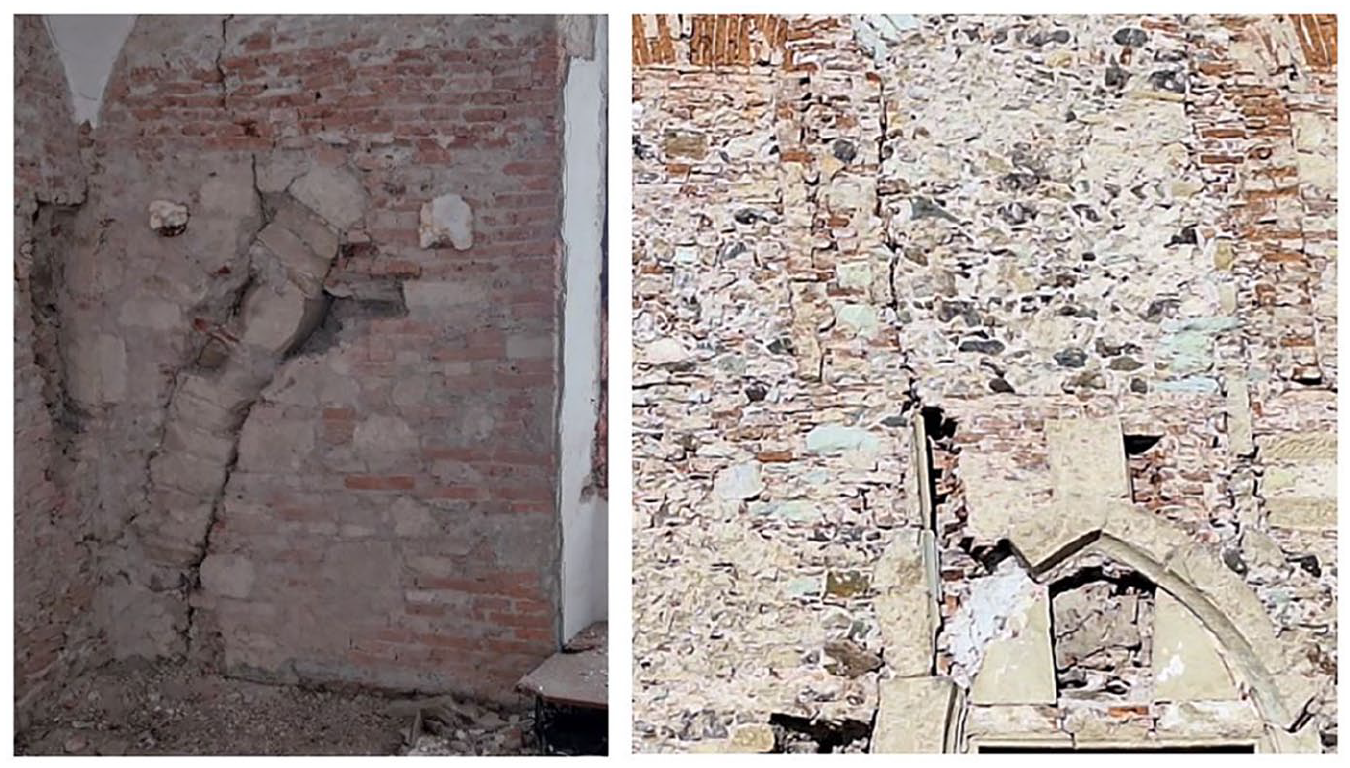
Cracks and separations of walls at the areas built in different periods.
As for the floor structures, there is damage to the wooden floors in upper levels of the building due to the local leaking through the roof. In lower levels of building, cracks of vaults and separations were recorded in the contact between vaults and walls (Figure 4) which indicate insufficient structural connection of these load-bearing elements.
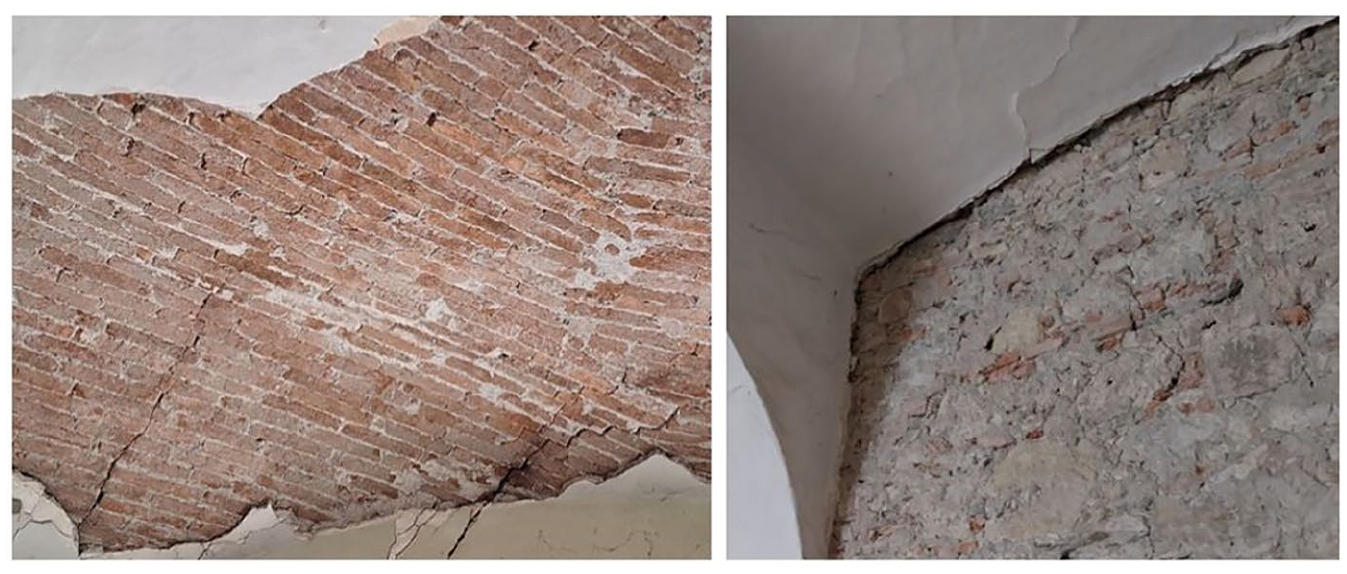
Cracks of vaults and separations of walls and vaults at their junctions.
Key findings of the preliminary inspection of the building were summarized as:
The general quality of construction is poor, the building was rebuilt several times in different historical periods and is locally heavily damaged. Therefore, caution and gradual implementation of strengthening measures and real-time monitoring of existing structure is necessary by reconstruction.
The most important types of recorded damage are pronounced cracks in the lintel-parapet area of the walls in south and north façade, cracks and separations of walls built in different periods, separations of walls and vaults at their junctions, cracks in brick vaults, and rotting and partial demolition of wooden floor.
Leaking occurs through the existing roofing which causes accelerated deterioration especially on the elements of the roof structure and wooden floor above third level of the building.
There are larger amounts of bulk material above the arches on the floors which increase the weight of the arches and reaction forces acting on the walls.
Considering the condition of the building and degree of structural damage, strengthening measures were proposed in the initial state of monitoring. The goal of proposed interventional strengthening measures is to establish structural integrity until a comprehensive static and seismic assessment and strengthening of the building is carried out. Following strengthening measures were proposed:
Tying of intersecting walls by application of tie steel bars at the floor levels
Strengthening of foundations on critical areas by RC beams
Removal of heavy gravel filling and bulk material above the vaults
Grout injection of stone and mixed stone-masonry walls
Rebuilding damaged parts of walls and corners
Removal of damaged vaults and wooden floor above third level and construction of new RC slabs anchored in existing walls
Procedures in investigation and assessment of seismic resistance of buildings
In assessing seismic resistance of the building, visual inspection during which structural and non-structural elements are examined for possible structural damage is the first step. Any available project documentation is reviewed and basic investigations of the built-in materials are carried out. As a part of preliminary investigations, several investigation techniques can be used in assessing the morphology and mechanical properties of the vertical and horizontal load-bearing elements. In everyday practice in Slovenia minor destructive investigation techniques (MDT) such as surface and in-depth probing of walls and floors and occasionally coring of the walls are used. Among non-destructive investigation techniques (NDT) ground penetrating radar measurements are sometimes used to assess the morphology of the structure, while other methods such as thermo-graphic measurements or sonic pulse test are used rarely. In Table 2 recommended probable strength parameters for lime/cement mortar in correlation with hardness of material are given, which can serve as a useful guide. 14 The descriptions in the table are based on the simple scratch test.
Probable strength parameters for lime/cement mortar (modified after 14 ).
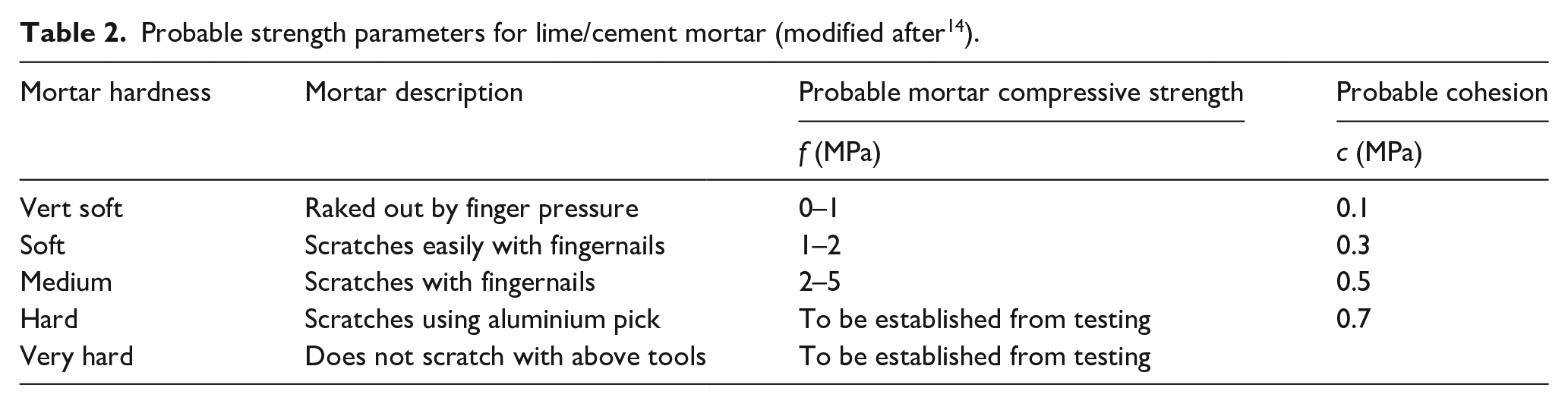
The values listed in the table above can serve as a guide when determining the mechanical characteristics of the mortar in the field. Sometimes, although less often, the activities of monitoring, investigations of structure and assessing seismic resistance are combined, which enables better knowledge of construction and more credible choice of strengthening measures.
In Slovenia Eurocode standards are applicable. 15 Seismic resistance of existing masonry buildings is often evaluated taking into consideration single storey building response with SREMB software, 16 which is not necessarily wrong, but is not suitable for all types of buildings. Such a model returns adequate results in the case of masonry buildings with rigid floors where most of the damage is expected to the ground floor walls. However, by older masonry buildings that have flexible wooden floors such an approach doesn’t give credible results. In those cases seismic evaluations should be carried out considering numerical models using equivalent frames such as 3MURI software. 17 In this case the response of entire building is considered, which in the case of older masonry with flexible floors, is more realistic. Furthermore, based on seismic evaluation of an actual building damaged in earthquake and comparison of obtained results with its damage pattern, it was found that the single-story mechanism approach can underestimate the seismic resistance. In the case of existing buildings, this can result in to invasive or inappropriate strengthening measures, which can be particularly harmful to heritage buildings with architectural and cultural assets and values such as fresco and stucco work. 18
For aforementioned masonry buildings with rigid floors that also have symmetrical loadbearing elements in height and floor plan, quick assessment of earthquake resistance can provide useful information about the structure. Based on the experimental results and according to the damage observed on buildings after the earthquake, the shear failure mechanism most often dominates on such buildings. If we assume that shear mechanism will be valid, the calculation of the seismic resistance of the building can be simplified. The maximum horizontal force that the building will be able to withstand, thus depends on the amount of walls (or area of their horizontal cross sections in a certain direction), the tensile strength of the walls and the constant weight acting on the load bearing walls. 19 The shear capacity of the building is calculated using the equation:

Where:
b—distribution of shear stresses across the wall section,
The seismic resistance coefficient for each direction is determined by the equation:

Where G is the weight of the building above the foundation.
Investigation and assessment of seismic resistance of an old masonry palace
The seismic resistance of the building was performed using nonlinear static (pushover) analysis and an equivalent frame numerical model considering Eurocode standards. 15 The analyzed building is located in center of Ljubljana, the capital of Slovenia where design ground acceleration of ag = 0.275g should be taken into account. This building with a neo-Renaissance facade was built in 1898. The typical layout has dimensions of approximately 26.30–30.17/16.67 m. It consists of a basement, a high ground floor, and an attic. The vertical load-bearing structure of the building is represented by old format solid brick walls built with lime mortar. The exception is the basement walls which are built of stone. The horizontal load-bearing structure above the basement is represented by brick vaults, above higher floors horizontal structures are wooden. In higher stories in-depth probing revealed different configurations of wooden floors. An example of wooden floors in story 1 is shown in Figure 5.
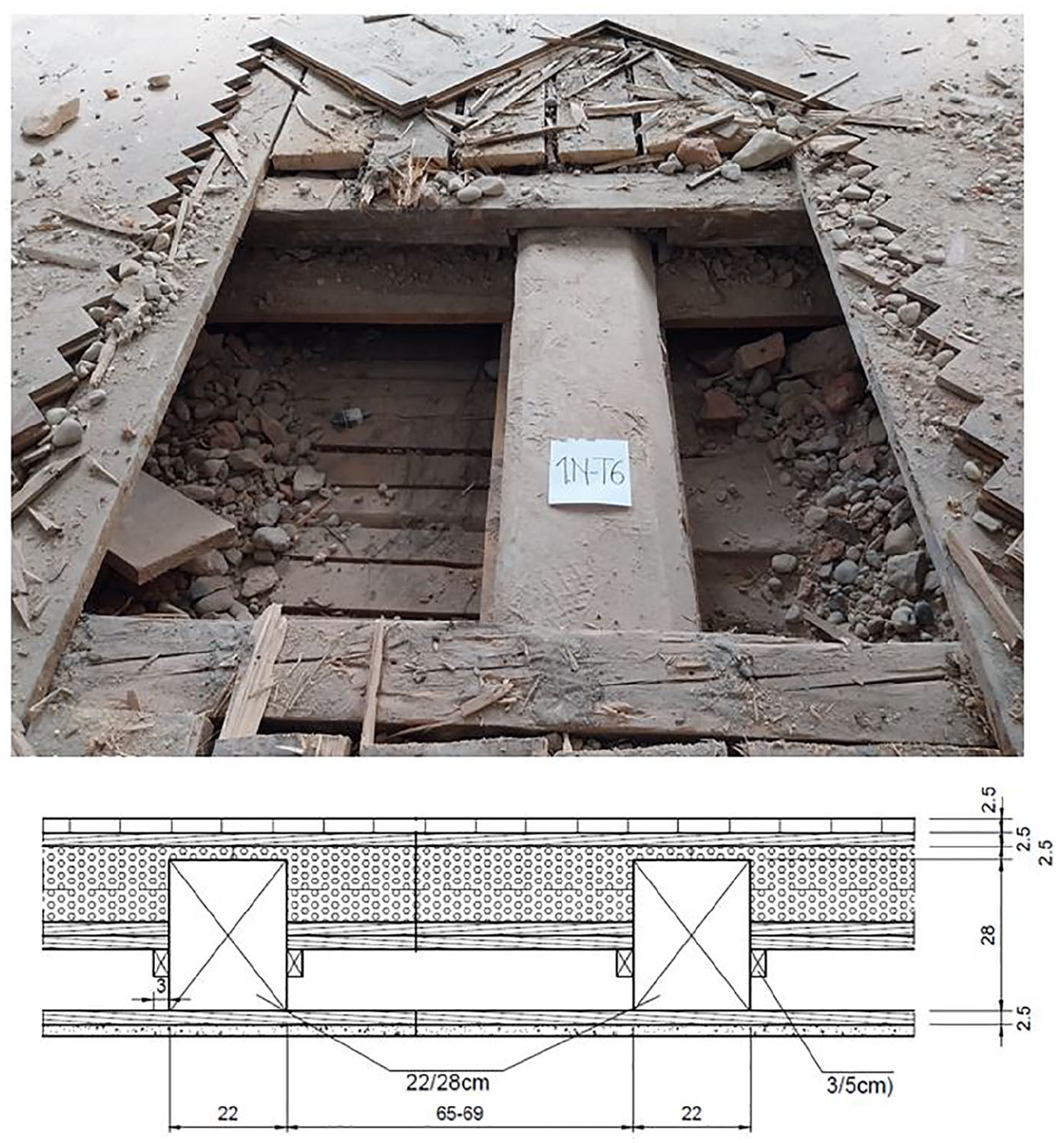
In-depth probing of the wooden floor in story 1.
Figure 6 shows the execution of probing and scheme in the area of vaulted floors. This type of design with steel beams installed between the brick arches, is called the Prussian cap.
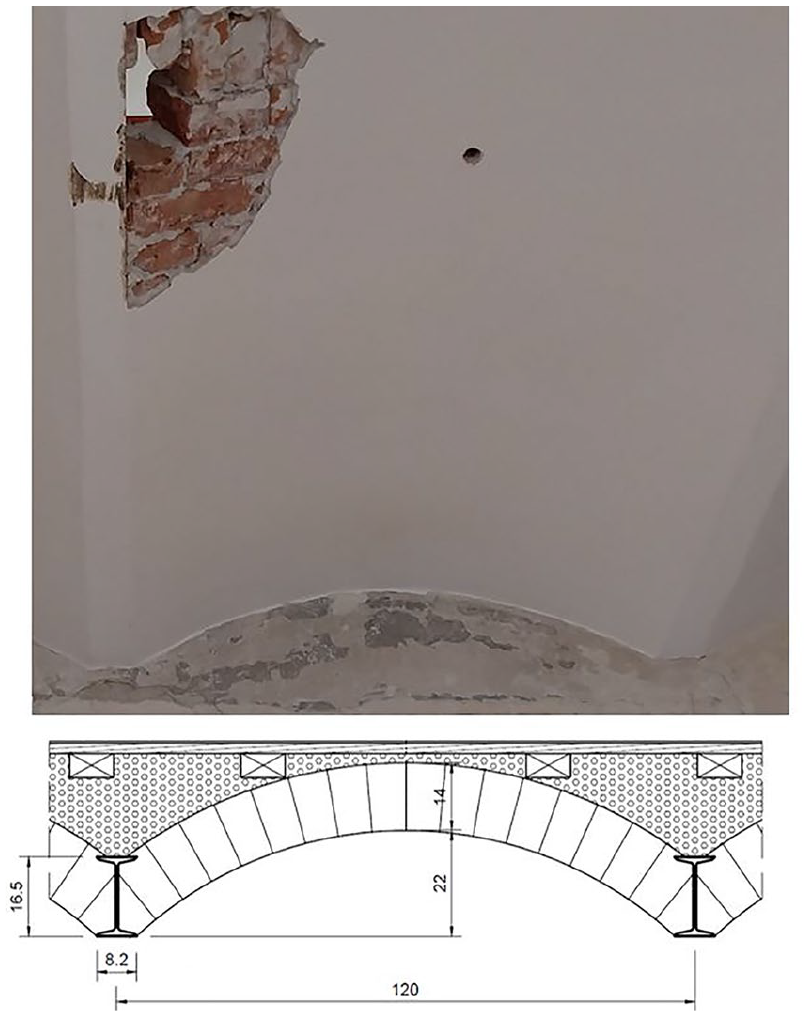
Results of probing and scheme of vaulted floor.
To determine the type, quality, and morphology of the brick masonry walls, surface probing was used by removing layers of plaster and thereby revealing the morphology of the wall. In the basement surface and in-depth probing of stone walls was executed to determine the state of inside portion of the wall. Results are presented in Figure 7.
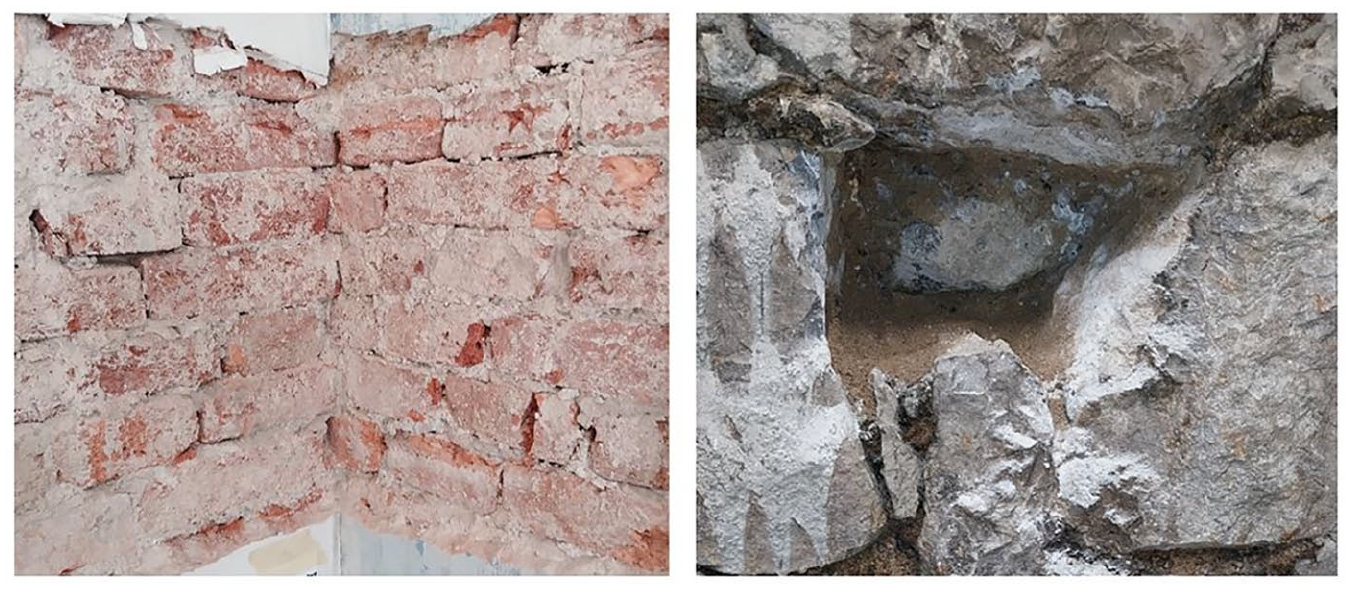
Surface probing of brick masonry wall in upper stories (left) and in-depth probing of stone masonry wall in the basement (right).
Surface probing of brick masonry walls showed that there are appropriate brick connections at the intersections of the walls. However, low strength lime mortar was used for construction and filling of mortar joints was uneven. Such a situation has been observed in most other probing points on brick masonry in the building. In-depth probing of stone masonry revealed a compact construction without voids, which means that injectability of this type of wall is rather low. Stones are connected by muddy low strength lime mortar. Consequently, strengthening measures should be designed accordingly.
In the longitudinal direction of the building (global X-axis), the load-bearing walls are relatively evenly distributed. In the transverse direction (global Y axis), in addition to the load-bearing walls, thinner partition walls are also installed. Seismic evaluation was carried out using 3MURI software, idealized 3D model is shown in Figure 8.
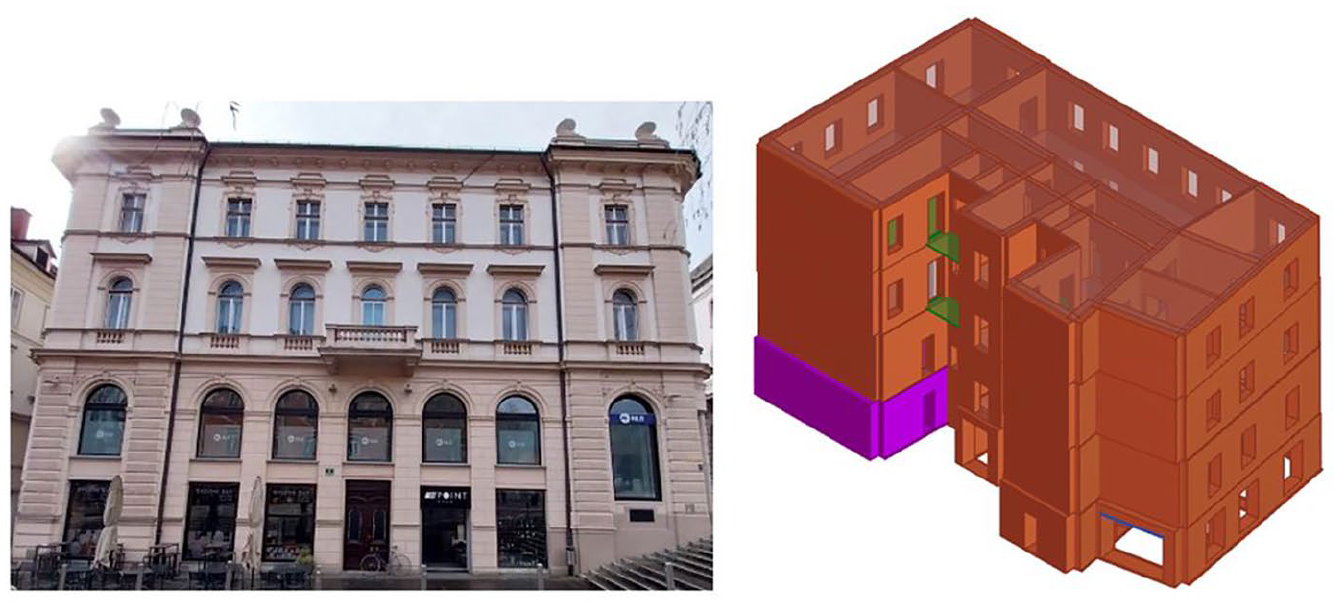
Northern façade of the building (left) and it’s idealized 3D numerical model (right).
The seismic analysis of the existing state showed that the seismic resistance of the building does not meet the requirements of the current regulations. Considering significant damage (SD) state 23.6% of the requirements were achieved in global X and 26.7% in global Y direction.
As for the serviceability limit state (DL) the values are 31.2%, in the global X direction and 38.0% in the global Y direction. Consequently, strengthening measures should be implemented to increase the earthquake resistance of the building.
In option 1 strengthening measures that enable achievement of 100% of regulation requirements were chosen:
Strengthening of walls by applying RC coating.
Stiffening of the floors with a rigid RC thin slab at all floor levels.
Implementation of RC frames in the ground floor.
In option 2 strengthening measures that enable achievement of 41%–48% of regulation requirements were proposed:
Strengthening of chosen walls by applying composite reinforced mortar coating (CRM).
Stiffening of the floors with a rigid RC thin slab at upper (wooden) floor levels.
Implementation of RC frames in the ground floor.
Possibilities for improvement of the current approach
There are many experts who deal with the issue of monitoring and strengthening of masonry structures in Slovenia professionally and scientifically. However, although implementation of the results of research projects into practice is progressing, it could be faster. This would result in improving the effectiveness of the approaches used in practice in terms of more appropriate strengthening solutions and financial savings. Some of the proposals that could help improve or optimize the current approach can be summarized as:
The use of additional investigations to more accurately determine the characteristics of the construction which in turn affects the results of the analysis and the extent and the costs planned for strengthening measures.
The use of advanced (innovative and possibly reversible) strengthening techniques especially in the case of heritage buildings.
Combining the global calculation model with local failure mechanisms would enable the determination of weak areas of the structure where damage can occur before the global resistance is activated, and which need to be strengthened accordingly.
By buildings with symmetrical floor layouts, a quick assessment of earthquake resistance would be useful, since it would provide basic information about the rank of earthquake resistance of the building in the existing state and the expected cost of strengthening measures.
Combining the activities of monitoring, investigations of structure and assessing seismic resistance would enable a more accurate and comprehensive insight into the condition of the structure and more credible choice of strengthening measures.
Conclusions
Seismic resistance of older masonry buildings is generally not sufficient, hence the need for ensuring their structural integrity and in some cases, where advancement of existing or formation of new damage due to various reasons is possible, also structural monitoring. In this paper main objectives and procedures in the framework of monitoring and also investigation and assessment of seismic resistance of older masonry buildings in Slovenia are presented. Current practice is described through practical examples and it’s able to provide fairly realistic assessment of the structure. However, improvements are possible both in the approach to monitoring as well as ensuring structural integrity. Since the described approach focuses on evaluation and influence of merely visible damage it is limited for example in detecting hidden cracks and anomalies, which needs to be improved. Besides, future research directions in monitoring and investigation of structure should concentrate and encourage the usage of emerging technologies that are non-invasive. It would be beneficial that global calculation model (depending on the type of structure) is supplemented by local failure mechanisms thus gaining better understanding of structural response. Especially in the case of heritage buildings a list of recommended established and advanced strengthening measures that are reversible should be created and implemented into national policies on building safety. Also, when dealing with buildings of high importance, activities of monitoring, structural investigations and assessing seismic resistance should be combined, thus enabling more accurate and comprehensive insight into the condition of the structure.
Footnotes
Declaration of conflicting interests
The author declared no potential conflicts of interest with respect to the research, authorship, and/or publication of this article.
Funding
The author received no financial support for the research, authorship, and/or publication of this article.
