




Abstract
Professor Tien T. Lan’s career spanned over six decades, and in his determination to contribute to both the scientific research and engineering development of spatial structures in China, he worked with a number of academics and researchers from across the globe.
Here, we hear from Seven individuals whose lives and careers were touched by Professor Lan in various ways. These memories offer some personal insights into Professor Lan’s work, and reflect upon the impact he had with colleagues in the field of spatial structures.
Editor’s Note: Photos have been reproduced with the permission of copyright holders.
Alireza Behnejad
Alireza is the current Director of the Spatial Structures Research Centre at the University of Surrey, and editor of both the International Journal of Space Structures, and the University of Surrey’s Spatial Structures; Movers & Shakers e-magazine. Here, Alireza details some of the contributions Professor Lan made to the field of spatial structures throughout his impressive career.
Professor Tien T. Lan’s relationship with the Spatial Structures Research Centre goes back several decades. He attended the third International Conference on Space Structures held at the University of Surrey, Guildford (UK), from 11th to 14th September 1984. His paper – entitled ‘Recent Trends and Developments of Space Trusses in China’ – was a state of the art review of the topic, which included several examples of medium to large span structures, with a particular emphasis on their special features. Shanghai Sports Arena, Liozhou Sports Stadium and the Capital Sports Hall were amongst the examples discussed in this paper.
He visited the University of Surrey again in 1988 (Figure 1) and attended the fourth conference in 1993 (Figure 2). One of the traditions of the Spatial Structures Research Centre is to recognise and honour those who have made significant and lasting contributions to the field of spatial structures. Since 1984, this has been achieved through the special presentation of the Pioneers’ Award, which Professor Lan received at the 1993 ceremony, during the fourth International Conference on Space Structures. (A full list of all award recipients can be found at: https://openresearch.surrey.ac.uk/esploro/outputs/conferenceProgram/International-Conference-on-Spatial-Structures-202021/99596223102346?institution=44SUR_INST)
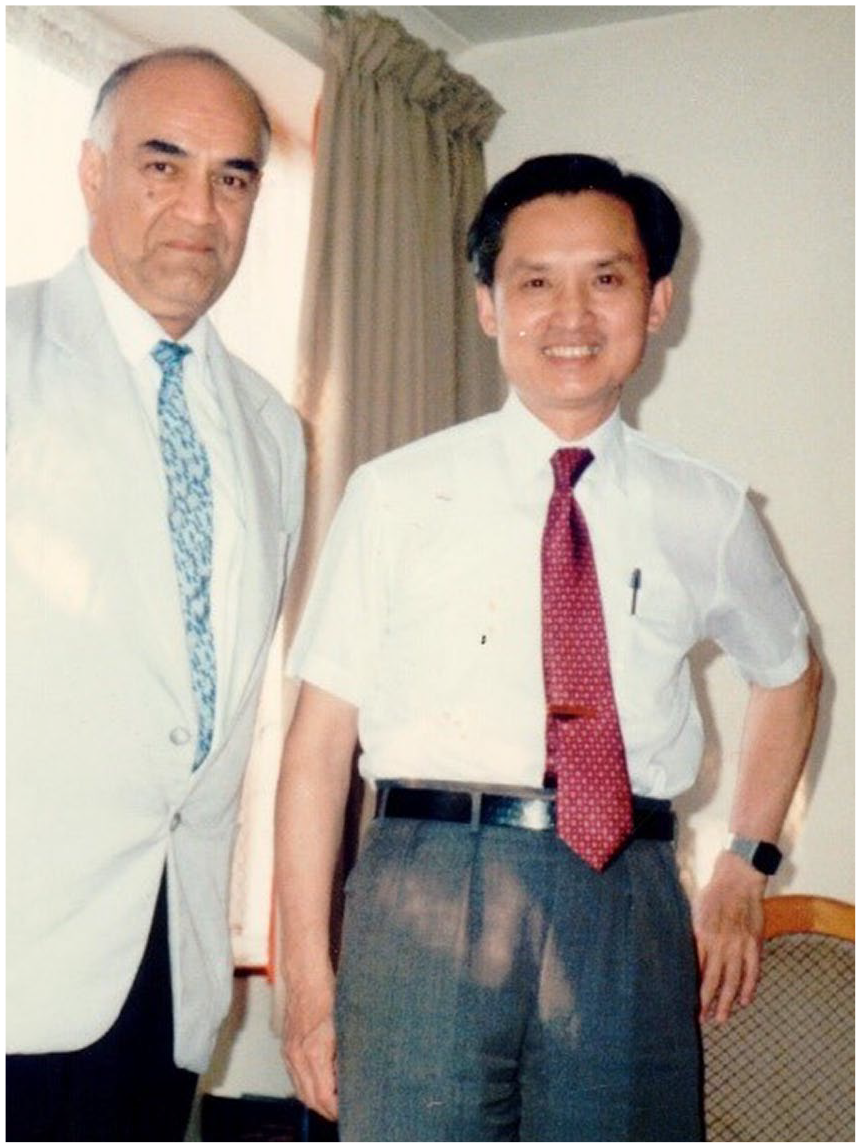
H. Nooshin and T. T. Lan during one of the latter’s visits to Surrey, 1988.
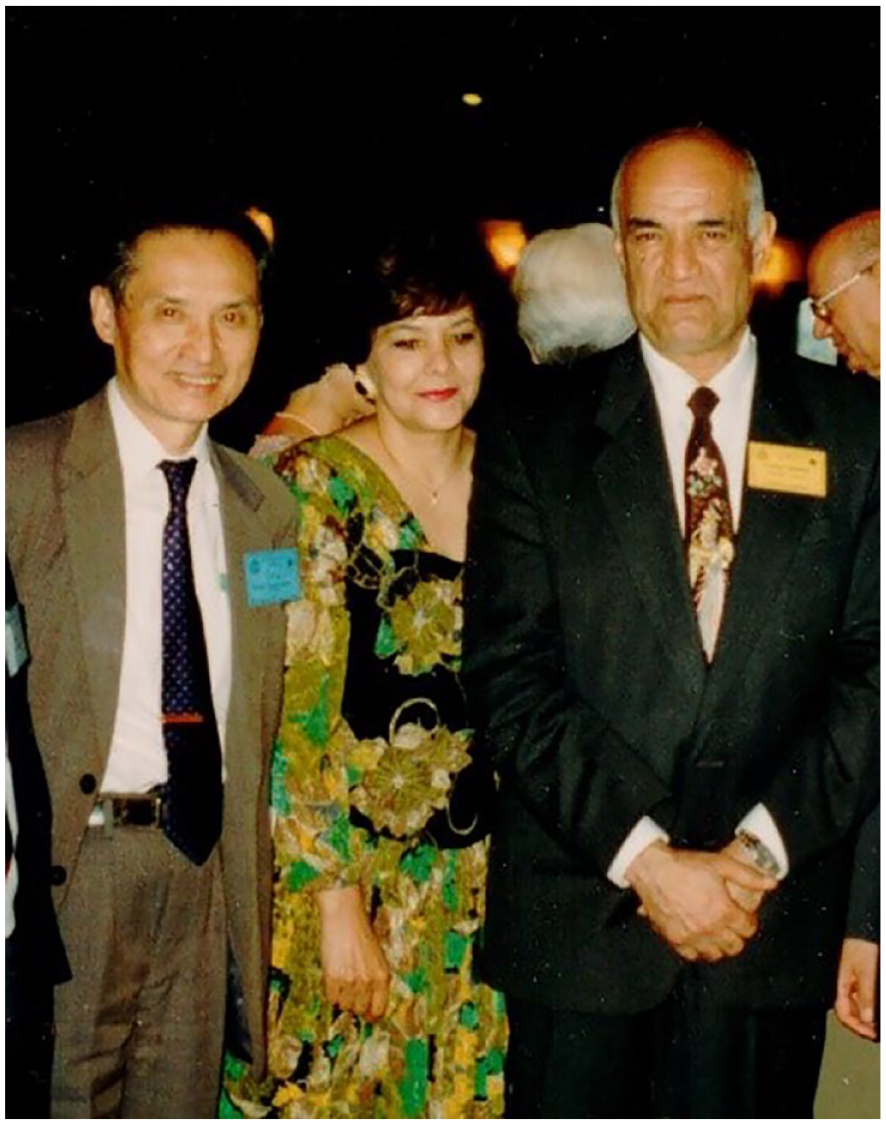
T. T. Lan, Mrs Nooshin and H. Nooshin at the Gala Dinner of the Spatial Structure Conference, 1993.
At this conference Professor Lan contributed several papers, including:
‘New Developments of Space Structures in China’, which assessed recent developments in space structure technology (including the development of space trusses for long-span, single-storey and multi-storey industrial buildings).
‘Hyperbolic Paraboloid Reticulated Shell Roof Structure for a Gymnasium’, which outlined the design, construction and structural layout of the Gymnasium of the Beijing Institute for Physical Education.
He also contributed a paper at the fifth International Conference on Space Structures (also in Guildford) in 2002, entitled ‘A Study of Tensegrity Cable Domes’. This consisted of an analysis and evaluation of a ‘Tensegrity System’, which was considered a feasible solution for reducing the weight and cost of designing long-span structures.
For the seventh Conference in 2021 (which was held online due to the impact of the COVID-19 pandemic), Professor Lan acted as a member of the International Advisory Board. He was also a member of the Editorial Board for the International Journal of Space Structures, having served in this role ever since the journal was first published back in 1985. In his capacity as a board member of IJSS, he edited the conference report for the international Colloquium on Space Structures for Sports Buildings (1987); contributed articles on the development of contemporary spatial structures in China (2000); published research findings (co-authored with Professor Yigang Zhang) on the dynamic characteristics and seismic responses of space frames (2000); and provided the foreword for a special edition of the journal on ‘Space Structures in China’ (2001). In 2020, he also wrote his own tribute to Professor Mamoru Kawaguchi (‘A great engineer and inspiring teacher’), the Dean of Hosei University who passed away the previous year.
I first had the pleasure of meeting Professor Lan in May 2007, during the second National Iranian Conference on Spatial Structures at the University of Tehran – where he delivered the keynote address of the conference (Figure 3).
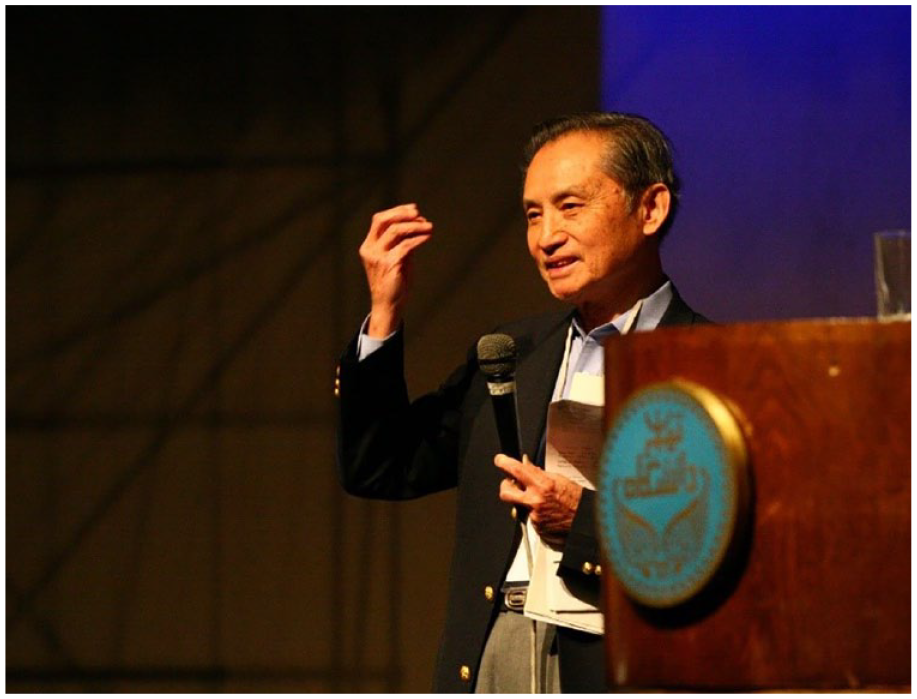
Professor Lan delivering the keynote lecture at the second National Iranian Conference on Spatial Structures at the University of Tehran, 2007.
Later, during the Annual Symposium of the International Association for Shell and Spatial Structures (IASS) in Shanghai in 2010, Professor Lan invited me to visit Beijing. In this visit, he introduced me to several Chinese scholars in the field of spatial structures and engineering technology, and we attended a tour of the Olympics Gymnasium at the Beijing University of Technology (BJUT) (Figure 4).
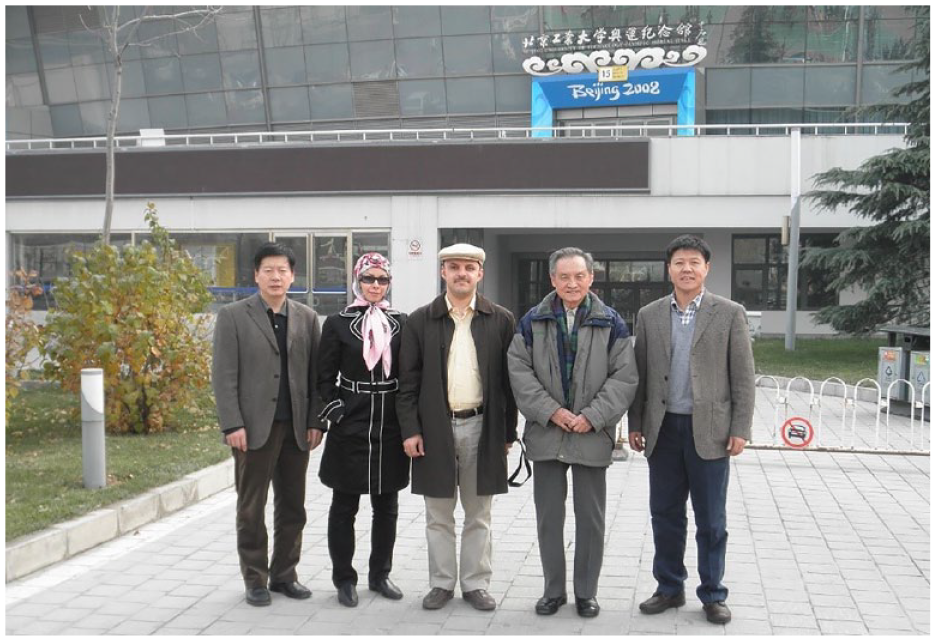
S. D. Xue, Mrs Behnejad, A. Behnejad, Professor T. T. Lan and J. Z. Wu at the Beijing University of Technology (BJUT), 2010.
Professor Lan was also one of the keynote speakers for the third National Iranian Conference on Spatial Structures, which was held in 2011 and organised by the Centre of Excellence in Architectural Technology (Figure 5). For this conference, I was also the Head of Organising Committee.
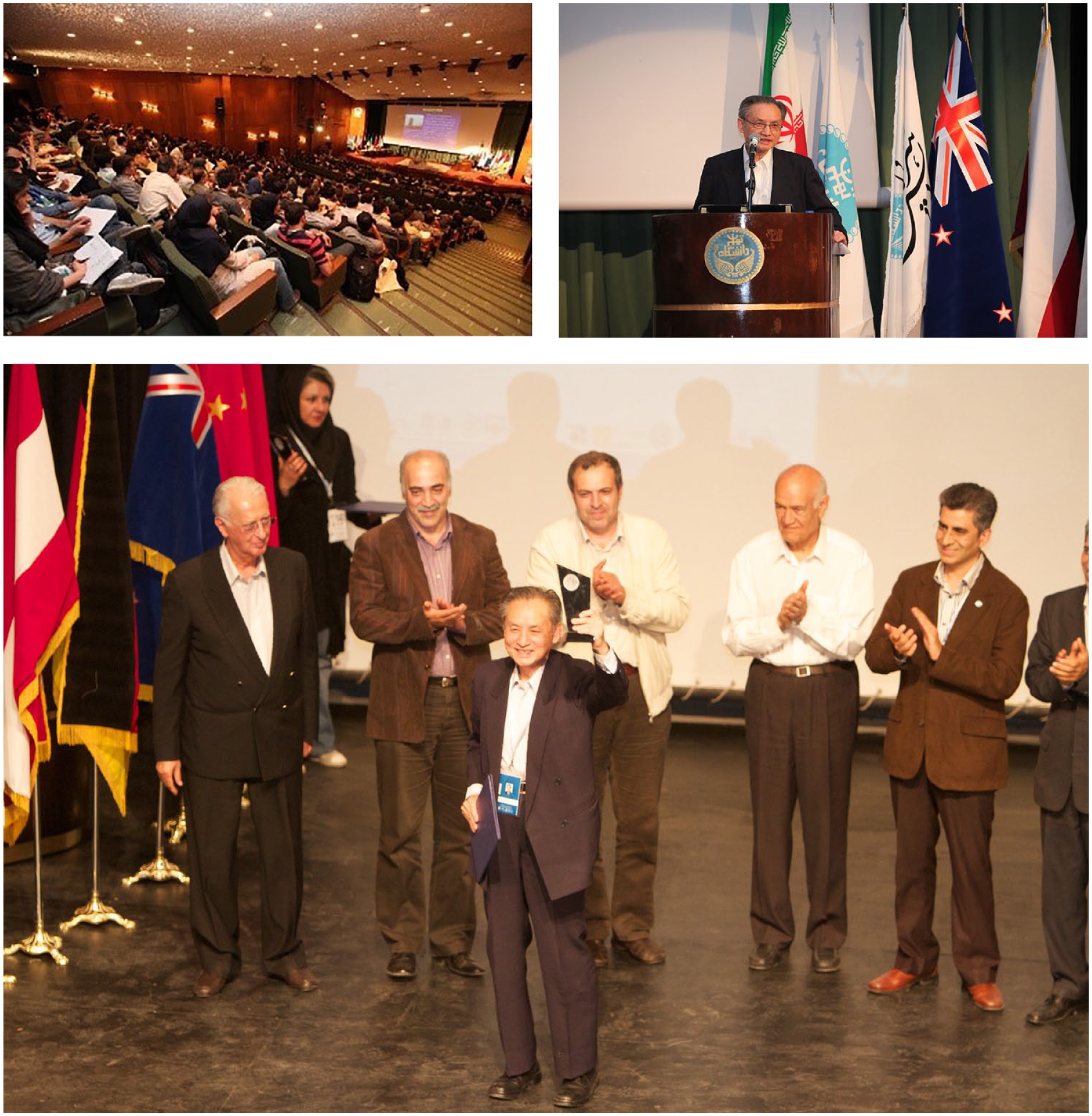
Images from the third International Iranian Conference on Spatial Structures. Top: During Professor Lan’s keynote lecture. Bottom: During the closing ceremony.
Since then, I had been in regular contact with Professor Lan. We have spent time discussing different approaches to the education of spatial structures in China, and met at several other conferences over the past decade – including the 2014 IASS Annual Symposium in Brasilia (Figure 6). He was full of positivity and always willing to discuss new ideas. In his last email to me in January 2022, he warmly invited me to meet in Beijing for the 2022 IASS Symposium, which I unfortunately missed due to the travel restrictions at the time.
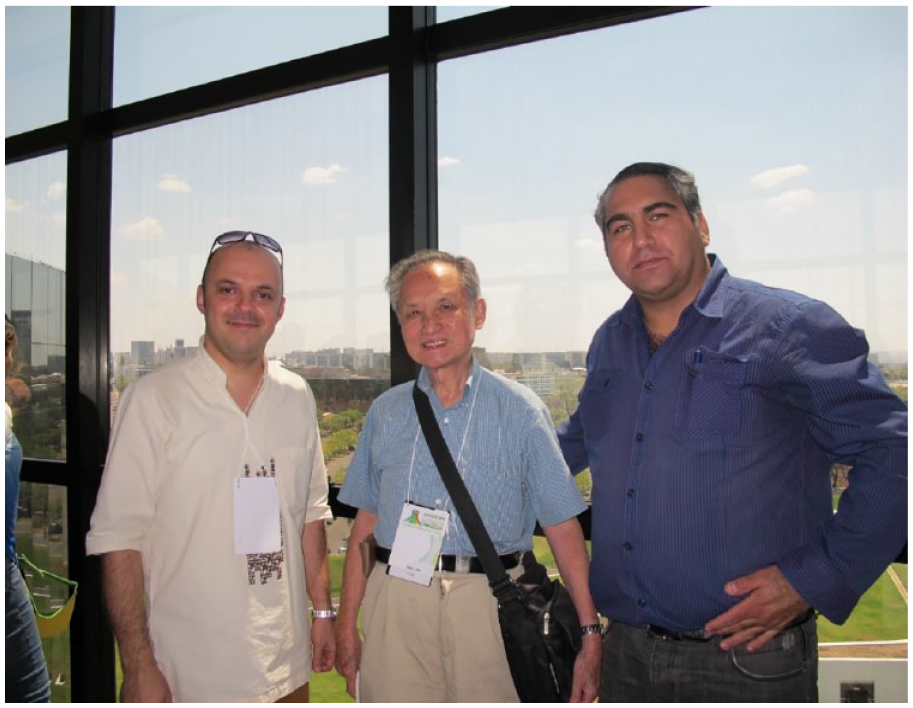
A. Behnejad, T. T. Lan and O. Samavati at Procuradoria Geral da República in Brasilia, during the technical tour of the IASS Annual Symposium, 2014.
John F. Abel
Former President and Distinguished Member of the IASS, John is now Professor Emeritus at Cornell University in Ithica, New York.
My interactions with Professor Lan have mainly been through the IASS and its associated activities (such as the annual symposiums and meetings of the Executive Council/Advisory Board). I long admired him as the ‘godfather’ of shell and spatial structures in China, and over the years our professional relationship developed into a warm and treasured friendship. I am saddened that we will no longer be seeing each other at these functions.
My earliest memories of Professor Lan are from the 1987 IASS Symposium – the International Colloquium on Space Structure for Sports Buildings. I was a newly elected member of the IASS Executive Council, and was invited to give a plenary lecture at this event. Highlights of the associated technical tours were the facilities being built for the 1990 Asian Games, and Professor Lan, as a member of the design team for some of these facilities (and the very first member of the IASS from China), helped lead the tours for the projects in which he was involved.
During this time, China was continuing to emerge from its isolated period of the Cultural Revolution. Despite this isolation, research, design and construction of modern spatial structures begun in the 1950s had continued, and Professor Lan played a significant role in these developments as Professor and Consultant Chief Engineer of the Structure Institute of the China Academy of Building Structures (a role he first took up in 1964). In 1982, he also co-founded the Chinese Committee on Spatial Structures.
While, during my visit in 1987, I was struck by the scope and scale of the spatial structures I saw, I still felt that their quality and elegance were not quite up to the same standards of developments in Japan and the west. This makes even more impressive the Chinese advances in the field of spatial structures over the subsequent two decades, which occurred alongside the remarkable growth of the Chinese economy and expansion of educational resources – which Professor Lan played a part in as well.
Evidence of these advances are outlined in the special issue of the Journal of the IASS, ‘Recent Spatial Structures in China’ (Vol. 47, No. 2, August 2006). As editor-in-chief of the journal at this time, I had the pleasure of working with Professor Lan, who was the senior guest editor of this issue (with co-editors S. D. Xue and B. B. Wang). The issue included technical surveys of Chinese progress for basic types of spatial structures, which were then published alongside a compilation of illustrated examples which indicated that, by 2006, Chinese spatial structures were both equalling and surpassing average western standards. This progress was also spotlighted at the 2006 IASS Symposium in Beijing (which Professor Lan co-organised), and I feel that many of the developments made in the field of spatial structures in China between 1987 and 2006 can be traced back to Professor Lan’s leadership.
Throughout his time on the Executive Council and Advisory Board of the IASS, Professor Lan was a frequent and faithful attendee – at least until the global COVID-19 pandemic intervened. I became more closely acquainted with him during both these meetings and the IASS symposia over the years, and admired how he frequently made presentations in technical sessions with younger colleagues whom he was mentoring.
We did also have some opportunities for meeting outside of IASS activities. We both, for instance, attended the 2005 Latin American Symposium on Tensile Structures in Caracas, Venezuela. Following the Colloquium, Professor Lan joined me and fellow IASS member Narendra Srivastava for a memorable day-long excursion to Los Roques, a beach-resort archipelago off Venezuela, reached by a shaky flight in an old DC-3 aircraft. Finally, he once visited me at my university and home, and I remember vividly having a congenial lunch together on the deck of my house.
The IASS often feels like a large family, where we make friendships with colleagues from around the world, and then re-unite in various venues across the globe. Professor Lan was one such friend, admired by myself and others, and he will be a much-missed member of the IASS family.
René Motro
René is Emeritus Professor of Civil Engineering and Mechanical Engineering at the University of Montpelier, and was IASS President from 2012 to 2015.
While my memories might be a little hazy, I believe I first met Professor Lan in Guildford in 1975 – during the second international conference on spatial structures. I then met him multiple times over the subsequent decades, and although our meetings were often brief, we had numerous opportunities to discuss our joint activities and work on lightweight structures.
One year I had the pleasure of welcoming him to my home in Montpellier, France, where we discussed our common interest in textile architecture. During that same stay, we visited Le Zénith Sud (the ‘Zenith’), an indoor arena of metallo-textile design, and I recall Professor Lan being very interested in the structure.
While Professor Lan often came across as humble and patient, he was also a very determined character. He was a good listener, and remained constant and persevering in his work. I am most impressed by how he maintained a constant dialogue with specialists from all over the world, regularly and repeatedly inviting them to come and give lectures in China. I was one of those who responded to such an invitation, and seeing him in his home country, I was struck by how respected and influential a character he was. By focussing on disseminating solutions to spatial structure and architectural problems in his home environment, he became the Chinese specialist in lightweight structures, probably the best known in the world.
(A short coda: I once asked Professor Lan what the ‘T’ in his name stood for. He replied saying that his parents had named after President Theodore ‘Teddy’ Roosevelt).
Matthys Levy
Matthys is a Fellow of the National Academy of Engineering, the Institution of Civil Engineers, and the American Society of Engineers. He also sits on the Executive Council of IASS, and is an Honorary Member of the American Institute of Architects.
Although I didn’t encounter Professor Tien Lan in person until 1989, our first meeting has its origins in a project I was working on 10 years previously. It was 1979, and I had been hired by the architectural firm I. M. Pei and Partners to design the structure for the Javits Convention Center in New York. I. M. Pei introduced me to his friend Jing Shuping – the president of a national bank who was visiting from China – and asked me to hire his son, Tien Fang Jing, as an engineer in my office. Years later, once the project was completed, the younger Mr Jing invited me to give a seminar in Beijing – and it was Professor Lan who acted as the local guide during my stay.
While I was in Beijing, I learned Professor Lan also had a son, who was based in the US – so I invited him to come and visit our offices in New York. During his stay, I learned more about Professor Lan’s career and his involvement in (and contributions to) the field of spatial structures – especially when we sat and discussed the engineering of the Javits Center and its space frame roof.
I met him again several times at IASS meetings, on an almost annual basis (Figure 7). Over time we became good friends, and I began to appreciate and admire Professor Lan’s work in his home country. I also spent some time working in China – including on the Bank of China in Beijing, and on a space frame canopy roof for the Shanghai Stadium. In both these cases Professor Lan was on hand to help source and arrange deals with local contractors.
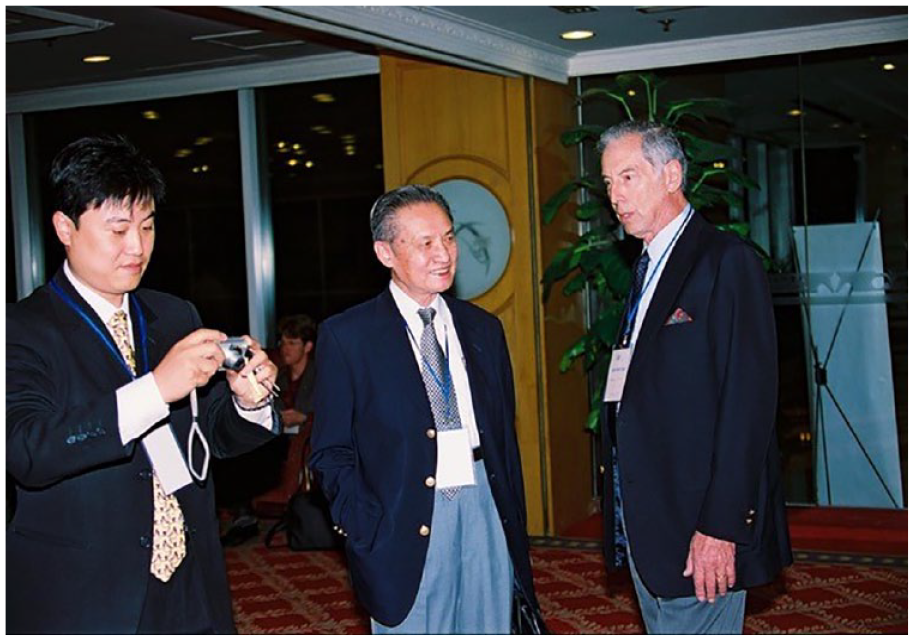
Professor Lan (centre) with Matthys (right).
From my many visits to China and interactions with Professor Lan, it was clear that he was a well-respected and influential leader in his field. Personally, I always admired his knowledge of spatial structures, and how he endeavoured to pass on this knowledge to a new generation of emerging engineers.
Ken’ichi Kawaguchi
Ken’ichi is a Professor in Spatial Structure Engineering at the Institute of Industrial Science at the University of Tokyo.
In 1986, back when I was a graduate student in Osaka, I was invited to support the IASS Annual Symposium. I saw this as an excellent opportunity to meet many renowned engineers, researchers and professors in the field of spatial structures – including the attending Professor Lan (Figure 8).
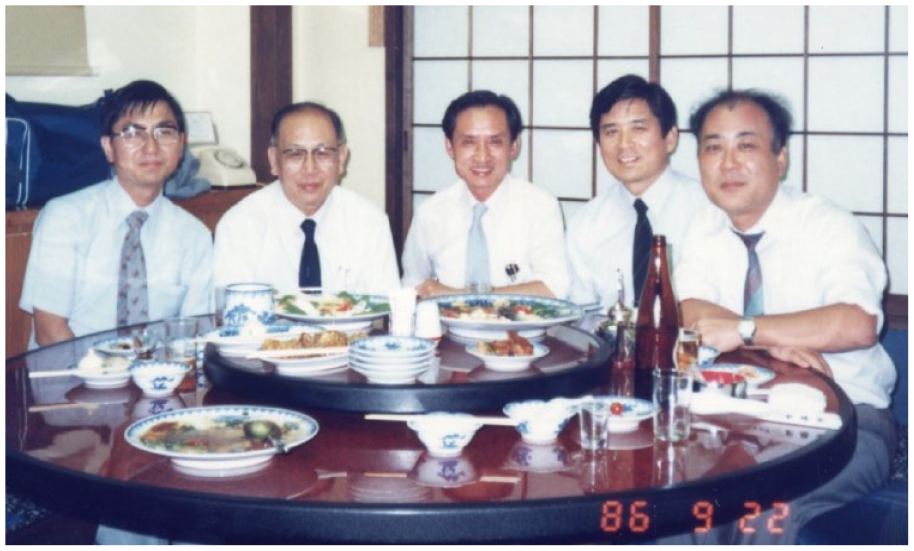
Professor Lan (middle) visited Tokyo in 1986 after IASS symposium at Osaka. (From far left: Yasuhiko Hangai, Guangqian He, Tien T. Lan, Take-Jin Kwun and Hideki Magara.)
It was only after the symposium, however, that I came into greater contact with Professor Lan, when he came to our laboratory in Tokyo. Along with my doctoral supervisor, Professor Yasuhio Hangai, my colleague Dr Hideki Magara acted as a tour guide during their visit.
After Professors Hangai and Take-Jin Kwun extended their bilateral colloquium on spatial structures between Japan and Korea into China (and other Asia/Pacific-rim regions) and established the Asian Pacific Conference on Spatial Structures (APCS), I began to see Professor Lan on a more frequent basis. Despite being several years my senior, he always spoke kindly to me, and was always happy to talk to younger academics in the fields.
Although he was not an overly expressive person, one particular memory of Professor Lan stands out. It was during the excursion day of APCS 1996 in Beijing, when he took some of us from the conference to see a portion of the Great Wall of China. We walked along one of the popular routes of the wall, and when we approached the end of the designated tourist route, he simply said aloud: ‘Young ones should go beyond the limit. Your supervisor’s have done it!’. Although it was said in jest, me and some of my colleagues decided to extend our journey slightly, and quite literally go across the wall, going beyond the limit of the available tourist path until it became too dangerous. We seemed keen to impress upon him that we understood his words.
During several discussions with Japanese colleagues on the leading names in spatial structures in China, Professor Lan’s name has since cropped up repeatedly. For me, it seems that he is most renowned for his international outlook: he attended many IASS symposia over the years, and always seemed to enjoy the friendly and collegiate atmosphere of these conferences.
Personally, I consider his role in connecting China with the wider global field of spatial structures during the 1970s–1990s as one of his greatest contributions to the field (Figure 9). He frequently reported not only on his own research, but also on the more general developments and progress of spatial structure engineering throughout China.
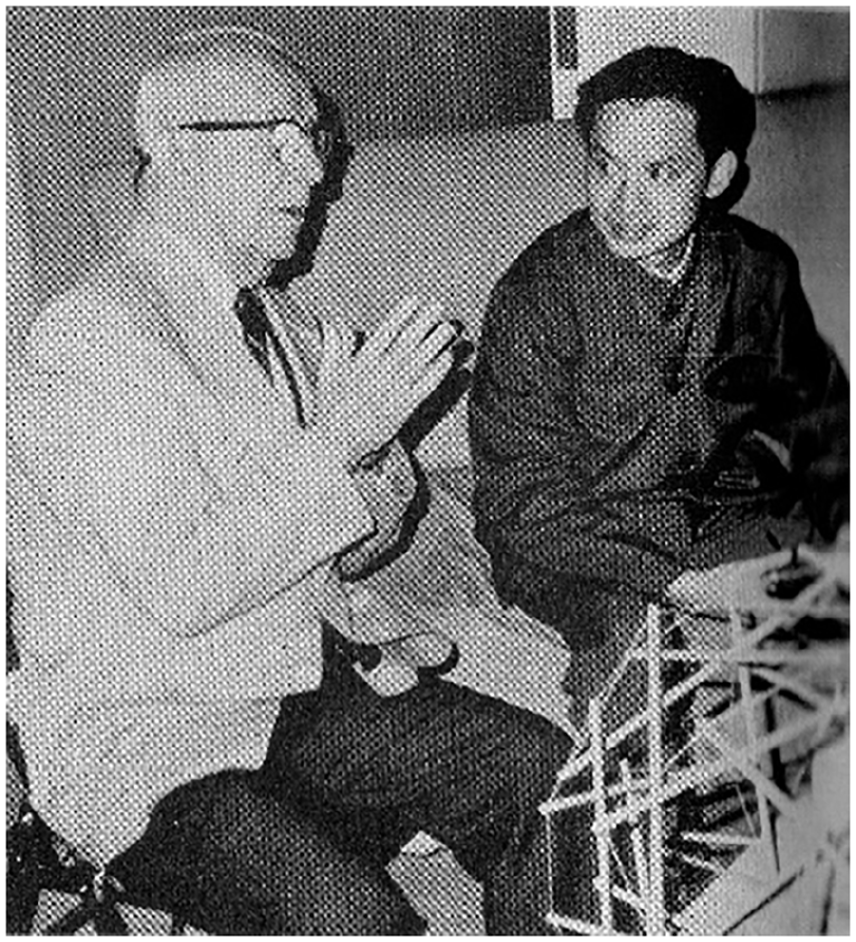
Professor Lan talking with Buckminster R. Fuller in Beijing, 1977.
Additionally, his role in organising the 1987 IASS International Colloquium on ‘Space Structures for Sports Buildings’, the 1996 APCS in Beijing, and the 2006 IASS Annual Symposium (also in Beijing) helped to connect Chinese academics and researchers with a number of international experts. These conferences were hugely successful, in large part to Professor Lan’s enthusiasm – and his eagerness to co-organise with younger colleagues in the field.
Although Professor Lan came across to many as having a quiet and gentle disposition, throughout our long friendship I was always attuned to his curiosity and intellectual vigour – which never faded, even in later years. He kept up with the changing pace of communication, and was adept at using WeChat and Chinese social media apps – exchanging messages with younger colleagues until just a few days before he passed away.
He also continued to make appearances at IASS symposiums and executive council meetings well into old age, and I remember that after the 2016 IASS Symposium in Tokyo, he extended his trip with a visit to Okinawa. During the 2018 APCS Conference in Penang, at 90 years old, he also enjoyed a long walk with colleagues through one of the city’s natural parks (Figures 10 and 11). I always felt he valued activity, curiosity and good health, and I think it was this – more than anything else – that enabled him to make such a prolonged and profound impact on the international community in the field of spatial structures.
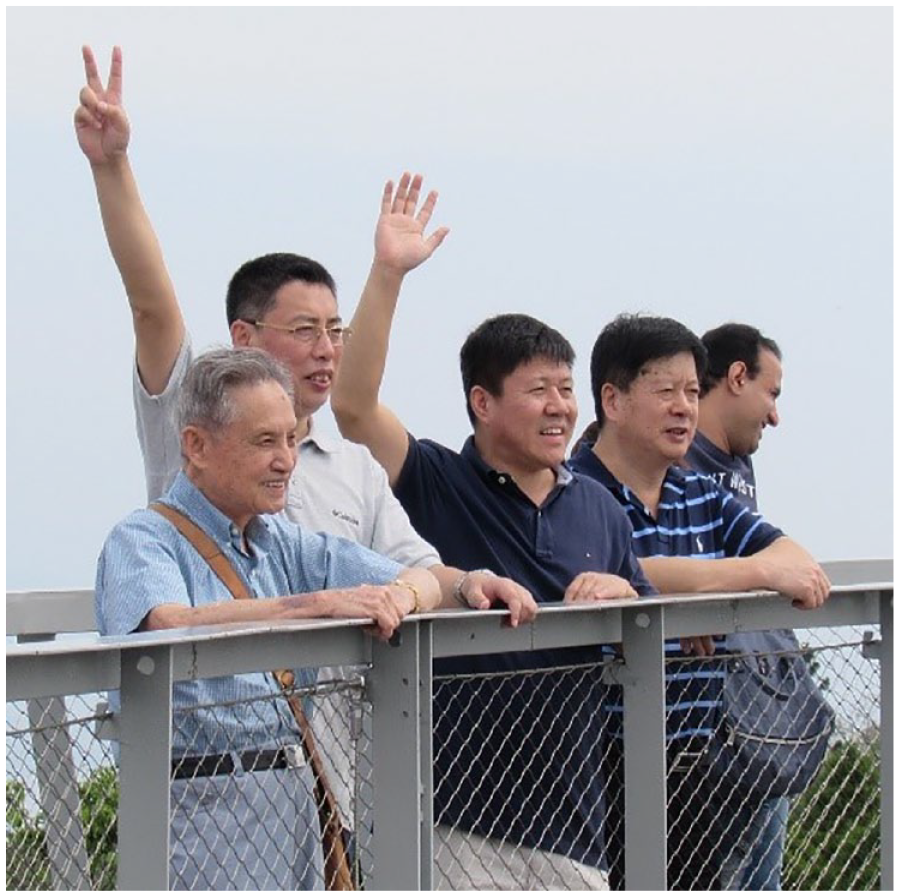
Professor Lan with his younger Chinese colleagues in Penang, Malaysia, 2018.
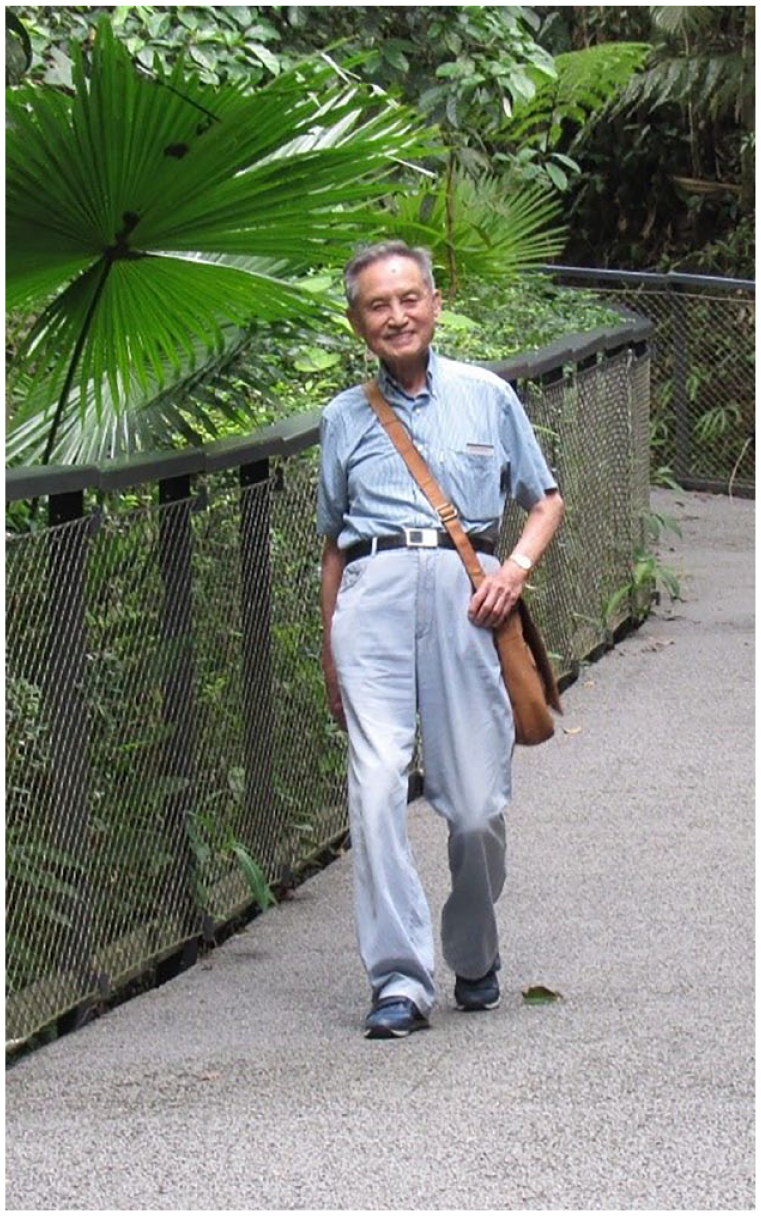
Professor Lan enjoying a stroll in a park in Penang, Malaysia, 2018.
Tianjian Ji
Tianjian is a Reader in Structural Engineering, in the School of Engineering at the University of Manchester.
I had the privilege of serving as Professor Lan’s only research assistant from January 1982 to September 1984. As one of the first graduates to receive a master’s degree after the Cultural Revolution in China, I was sent to the China Academy of Building Research (CABR), where I worked in the Section of Special Structures under Teacher Lan’s supervision (out of respect he was called Teacher rather than Professor in China). Although many of memories with Teacher Lan have faded over time, two experiences remain vivid in my mind.
The first is from the early 1980s, when China was opening up to the world and focussing on its economic, engineering and technological development. Around this time, Teacher Lan and the Director of the Section at CABR anticipated the need for new and innovative structures with longer spans. To prepare for this, they identified a number of new research directions, one of which was cable structures. I was tasked with investigating this further.
Their foresight was proven correct when, within a year, an architect and a structural engineer from the Anhui Provincial Architectural Design Institute approached us for help with the design and analysis of a cable-truss roof structure for the newly designed Anhui Provincial Gymnasium. The roof was unique, with cables suspended in one direction and continuous trusses placed on, and perpendicular to, the cables at equal intervals. With limited access to information outside of China, we were not aware of a similar roof structure anywhere in the world. I remember Teacher Lan developing a two-stage concept for the roof structure. Firstly, he suggested forcing the ends of the trusses downwards to establish prestress in the cables and create convex bending in the trusses before they were loaded. Secondly, he recommended applying the roof loads to the trusses, which would cause them to bend concavely to a similar magnitude of the previously established convex bending moments, resulting in a more economical roof structure.
The roof was modelled as a series of interactive beams on elastic foundations so we could develop an analytical solution. The static and dynamic behaviours of the roof structure were studied using theoretical analyses, experiments and computer simulations. Teacher Lan’s foresight ultimately put us in an advantageous position, as we were well-equipped to handle future challenges in the project. Other architectural design institutes soon sought our assistance with cable-net roof structures.
The second experiences continues directly on from the first. To address the rich variety of cable structures, Teacher Lan arranged for me to develop a Fortran computer programme for the geometrical nonlinear analysis of cable structures, based on a pre-existing programme for space-truss and grid structures. This programme had already been extensively developed and tested by Professor Ruojun Qian at Hohai University. This allowed me to start with a strong knowledge base, and save a lot of time. With Teacher Lan’s guidance, introduction and collaboration with Professor Qian, we were able to analyse and research advanced suspension structures and help designers solve practical, real-world problems.
The programming skills I gained while working with Teacher Lan and Professor Qian continued to benefit me in my future work. During my subsequent time at the University of Birmingham (in the UK) from 1987 to 1990, I studied the temperature fields in welded steel plates, which required extensive calculations. Based on my early programming experience – and ultimately thanks to Professor Lan’s earlier assistance – I was able to quickly write a programme to analyse the nonlinear transient temperature problem and effectively carry out the research.
I had the pleasure of welcoming Teacher Lan into my home on two separate occasions during his visits to England for conferences. During his first trip to Manchester in August 2002, I was delighted to show him around the Commonwealth Games 2002 venue (now known as the City of Manchester Stadium) and the Manchester United Stadium and Museum. He was enthusiastic about capturing memories through photography, displaying a keen interest in architectural structures. During his stay we visited Bramall Hall, a Tudor manor house with origins dating back to the Middle Ages (Figure 12). Additionally, Teacher Lan was incredibly gracious. When my wife and I invited him to dinner at a local Chinese restaurant, not wishing us to spend too much, he emphasised his love for simple tofu dishes. A decade later, when Teacher Lan was in his mid-80s, he stayed with us for one night before embarking alone on his travels to other European countries. We were amazed by his excellent health and energy.
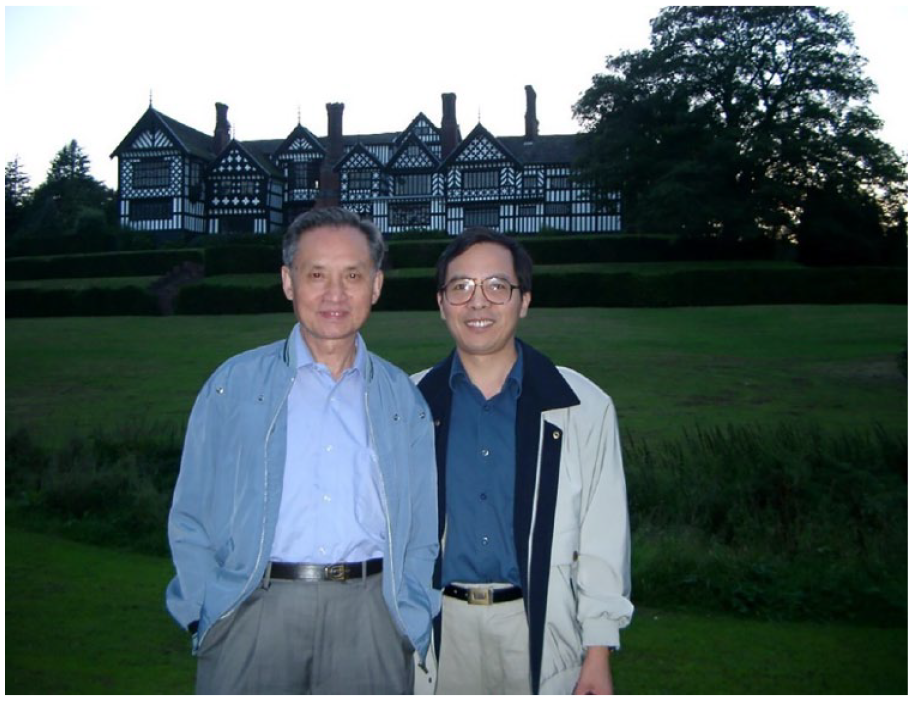
Professor Lan and Professor Ji outside Bramall Hall, UK (2002).
I also returned to China and took part in several national conferences on spatial structures, where I had the opportunity to meet with Teacher Lan. Our last meeting was at the 16th National Conference on Spatial Structures held in Hangzhou in October 2016.
Professor Mario Salvadori summarised the ‘professional development curve’ followed by most successful and high-level individuals, like Eduardo Torroja, in his forward for the book The Structures of Eduardo Torroja. According to Salvadori, the curve is formed by four phases. The first, the learning phase, consists of a focussed dedication to mastering the fundamentals of one’s field. The second stage is the development phase: applying these fundamentals to solve original problems, developing powerful skills and enlarging their scope beyond its original limits. The intuition phase (the third phase) is about synthesising the experiences accumulated in the second phase to form intuition that enables quick problem evaluation. Finally, the fourth part of the curve is known as the boundless phase, and refers simply to the ever-increasing enjoyment of work, which ultimately leads an individual to higher levels of achievement.
Spanning over 70 years, Professor Lan’s career seems to embody all of these phases, and it felt to me that he had been in the fourth phase for a prolonged period before his death. His strategic decisions and incredible foresight about the evolution of spatial structures helped me to be more productive and work in the right direction, and he will always be remembered in my heart.
Peter Lim
Peter is the director of Tensys, a specialist engineering consultancy undertaking the design and analysis of lightweight tension and tensile structures. He has worked with space frame geometries, complex structures and in the delivery of unique spatial structure projects over the past 35 years.
I first met Professor Tien Lan in Australia in July 1990 – little did I realise at the time how we would come to know each other as collaborators, fellows and dear friends over the following years. That month, Professor Lan had been invited as a keynote speaker for the Membrane Structures Association of Australasia (MSAA)’s biannual conference in Melbourne, and he had accepted my invitation to stay with me during the few days of the conference.
That night, after he dropped his bags at our home, we went out with some of my neighbours to a Thai restaurant for a meal of curries and crocodile meat. While not exactly the usual fare Professor Lan was used to, I recall how he overcame his initial shock and welcomed trying new things. Although he was proud of his home, he was just as delighted to experience new cultures and experiences.
At this time, Professor Lan’s research focussed on spatial structures, especially space frames – and in Melbourne, there were a number of architectural icons and examples of this for him to see. During that visit I showed him Coop’s Shot Tower (now known as Melbourne Central), and the tension structures covering the Shell Petrol Station next to the Westgate bridge. I was particularly keen to show off the space frame atrium of Collins Place, which was designed by I. M. Pei, an architect who, like Professor Lan himself, spent some of his early years in Shanghai.
Our shared admiration for these structures helped to strike up an intimate friendship that would last for decades. I explained to Professor Lan how I was developing and designing similar projects using the Oktalok Space Frame system, and as we chatted into the night, he shared stories about his youth – including his experience undertaking his master’s degree (in Civil Engineering) at the University of Minnesota.
Professor Lan also spoke with great hope for his country’s architectural and engineering future. It was this that led him to return to China in 1951, and I believe that it was this hope that fuelled his ambition throughout his career. He always maintained a keen and fervent desire to help build a strong and resilient environment for the spatial structures field of his homeland.
During the MSAA Conference itself, Professor Lan wowed the audience by outlining the scope and scale of the projects being built for the 11th Asian Games later that same year – including the Beijing Sports University Gymnasium and the Beijing Olympic Stadium. After he left, we kept in touch, catching up whenever we attended IASS Conferences and whenever I was in Beijing – and it was through Professor Lan that I met other dear friends, including Professor Jinzhi Wu and Dr Xiang Yang.
I will never forget the very last time I saw Professor Lan, on the first day of the 2019 IASS conference in Barcelona. Then, almost 30 years from when we first met, Professor Lan was already in his nineties – but his mental acuity and perceptiveness was still impeccable. He was wandering around, asking questions, still focussed on what lay beyond in the world of spatial structures – until the end, his eyes fixed on the horizon.
Professor Lan will be dearly missed – as a perceptive professor, a wondrous visionary – but most of all, as a very dear friend.