




Abstract
Space grid structures are widely used in the field of structural engineering due to their good mechanical properties and simple construction procedures. This paper reviews the development of space grid structures and mainly introduces the development of space grid structures in China in recent years. Some typical applications of space grid structures are introduced and the technical developments are summarized. It shows that China not only has a large number of engineering applications of space grid structures, but also a rapid development of related technologies. Finally, some prospects for space grid structures are discussed.
Introduction
Early development
Space grid structures are widely used in the field of structural engineering due to their lightweight, high strength, and easy construction procedures. The origins of space grid structures can be traced back to 1903 when Alexander Graham Bell used triangular cells to assemble space grids (Figure 1). 1 In 1943, the Mengeringhausen Rohrbauweise (MERO) system was proposed, allowing for the commercial use of space grid structures. 2 Subsequently, a range of products, including the UK’s Space Deck, the US’s Octet, and Canada’s Triodetic system, were proposed. 3 Form the 1950s, Richard Buckminster Fuller proposed the idea of synergetic geometry, establishing the theoretical basis for polyhedral dome structures. In 1967, a spherical dome designed by Fuller with a 76 m diameter was constructed for Expo 1967. In 1970, the Grand Roof of Expo 1970 was erected, presenting the impressive spanning abilities of space grid structures with dimensions of 292 m × 108 m. 3 Furthermore, the Toronto Skydome, constructed in 1989, employs a retractable roof spanning a maximum of 208 m, enabling switching between its indoor and outdoor modes as necessary. 3 In 1994, Mamoru Kawaguchi 4 invented the suspen-dome system, in which the upper single-layer lattice shell is supported by lower cable-strut systems, and first applied it to the Higarigaoka Dome. For more details on the development history of space grid structures, see Schlaich, 5 Mungan and Abel, 6 and Saitoh. 7
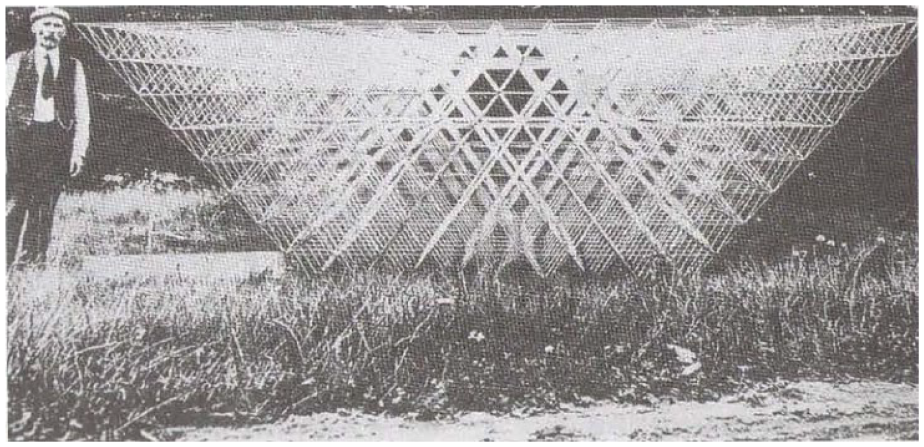
Space grid structure developed by Alexander Graham Bell. 3
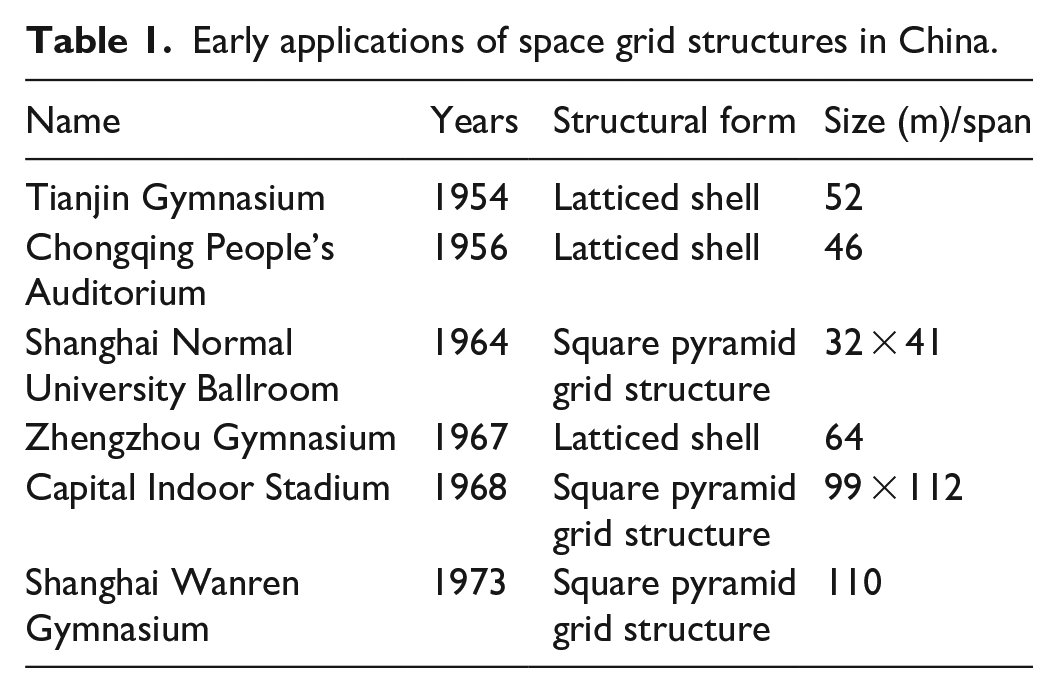
The development of the spatial grid structure in China started late compared to developed countries. The first space truss structure in China, i.e. the ballroom of Shanghai Normal University, 8 was built in 1964, covering an area of 32 m × 41 m. The first influential large-span space grid structure in China is the Capital Indoor Stadium, 9 which was built in 1968, covering a rectangular plan size of 99 m × 112 m. Some typical early applications (before 1980) of space grid structures in China are listed in Table 1.
Early applications of space grid structures in China.
Since the 1980s, China has undergone significant economic and industrial expansion. According to statistics (https://data.stats.gov.cn/easyquery.htm?cn=C01), China’s production of iron and steel grew by approximately 27 times from 1980 to 2022, which met the economic requirements for the development of space grid structures. On the other hand, the technology accumulation of space grid structures provided a sufficient technical basis for their development. The equivalent sandwich plate method was proposed and used to estimate the internal forces and deflections of space grid structures before computers became commonplace.10,11 The finite element method (FEM) provided effective ways for structural non-linear analysis, stability analysis, dynamic analysis, and construction process analysis. The development of computer-aided design software (e.g. MSTCAD 12 ) has reduced the design difficulty of space grid structures. The development in experimental techniques, including joint, member, model, and wind tunnel experiments, provided essential support for the design of complex space grid structures with intricate members, joints, or shapes. For example, the multi-directional loading device for spatial joints at Zhejiang University (Figure 2) provides an effective device for joint experiments subjected to complex loads. Furthermore, various industry standards13,14 covering the design, construction, and joint configurations have been published, providing effective technical guidance for the applications of space grid structures.
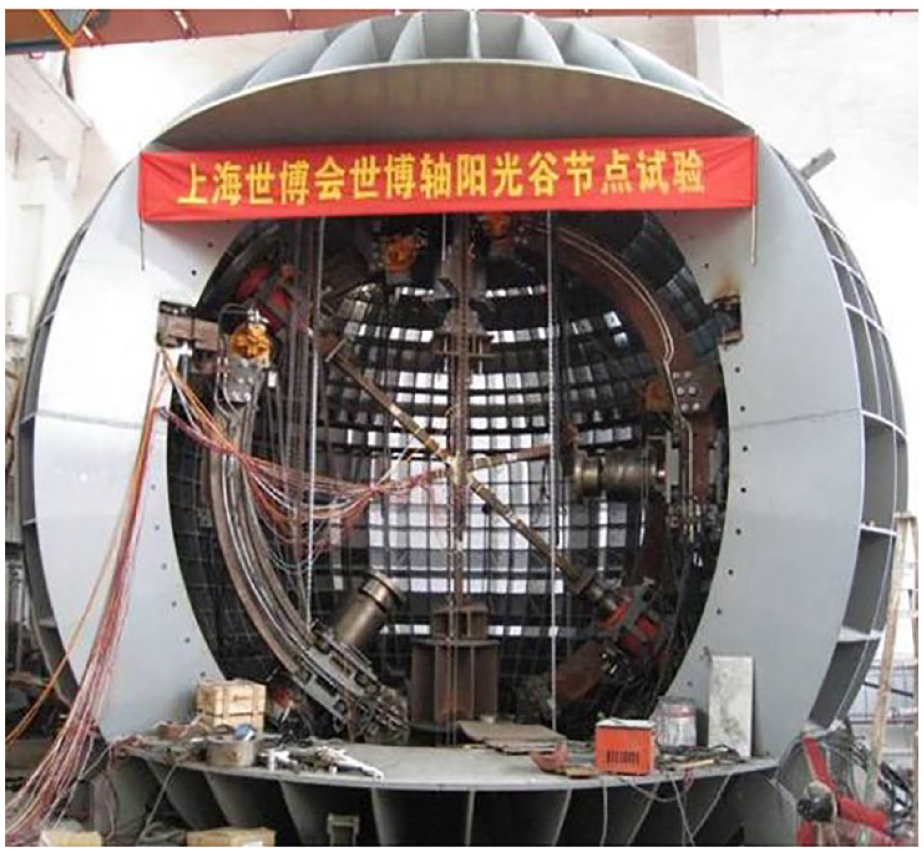
Multi-directional loading device for spatial joints in Zhejiang University (http://www.spacestructlab.org/yqsb.html).
Various structural forms
Traditional space grid structures mainly consist of space trusses and reticulated shells, usually composed of overlapping cells with regular geometry, and most of them used welded hollow spherical joints. With the technical improvements, China’s space grid structures entered a period of rapid development since the 1980s. Different joint types began to be used, 15 and some typical ones are shown in Figure 3. In particular, the bolted spherical joints became another one of the most widely-used joint types. Compared to the welded hollow spherical joints, its installation is much easier, which is more conducive to construction industrialization. Notable initial applications of bolted spherical joints include the Shenzhen Airport built in 1991 with an area of about 4000 m2, and the Guangdong Provincial People’s Stadium built in the same year covering an area of about 7000 m2. 16
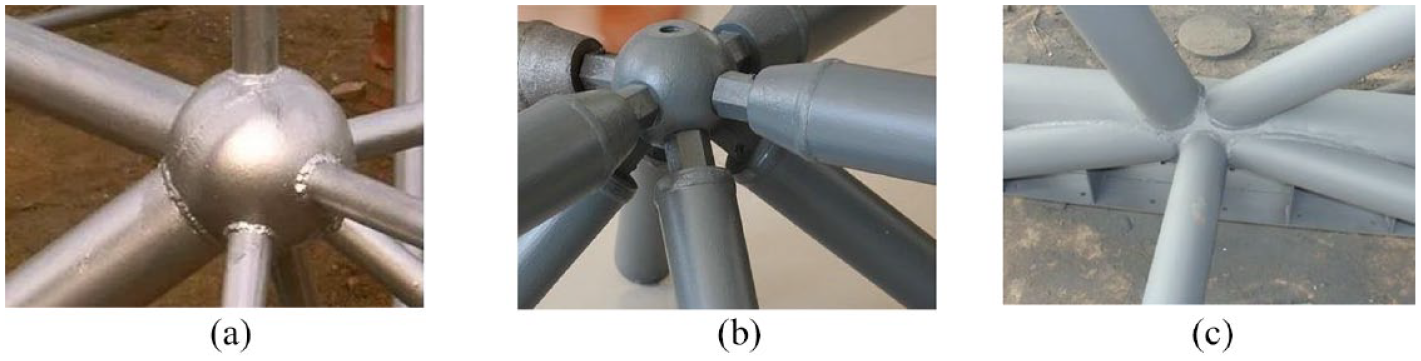
Typical joint types: (a) welded hollow spherical joint, (b) bolted spherical joint, and (c) Coherent welded joint.
Various structural forms have also been developed and applied. Composite space grid structures replace the upper steel bars with reinforced concrete slabs to reduce steel consumption. A typical application of composite space grid structures is the roof of the dining room in Jiahe Coal Mine, constructed in 1980 with a size of 21 m × 54 m. 17 Triple-layer space grid structures have the advantages of larger rigidity, larger load-carrying capacity, and smaller peak force compared to traditional double-layer ones. In the construction of Guangdong Provincial People’s Stadium, a partial triple-layer space grid structure was used, achieving a relatively low steel consumption (about 22 kg/m2) compared to similar structures of that time. 16 Similarly, the four-bay hangar at Beijing Capital Airport, built in 1996, used the triple-layer space grid structure to provide sufficient span and load capacity for the aircraft parking and maintenance requirements. 18 Prestressed space grid structures improve the structural mechanical properties by offsetting part of the load of the grid structure with high-strength prestressed cables. Based on different configurations of cables, they can be classified into four types of structures: prestressed grid structures (e.g. the Henan Xinxiang Power Plant Coal Shed built in 2003 19 ), cable-stayed grid structures (e.g. the Huanglong Sports Centre Stadium in Zhejiang province built in 2000 20 ), truss string structures (e.g. the canopy of the Beijing North Station built in 2009 21 ), and suspen-domes (e.g. the Beijing Olympic Badminton Hall built in 2008 22 ). Furthermore, a number of special forms of space grid structures have been developed to create special shapes, such as the flat trusses “bird’s nest” of the National Stadium and the polyhedral space lattice structure of the Water Cube of the National Aquatics Centre.
Growth trends
According to incomplete statistics, by the end of 1997, about 9000 space grid structures covering a total area of about 10 million m2 had been built in China. 17 By the end of 2002, the annual area of space structures reached about 2.5 million m2, of which space grid structures accounted for about 13%. 23 In particular, the 1992 Asian Games showed an intensive application of space grid structures in China, with 11 out of 13 new large-scale venues using space grid structures. 24 Lan et al. 25 outlined the development of space grid structures in China, noting its rapid growth in the decades leading up to 2006. Dong 26 provided an objective overview of the growth of China’s space structures until 2010, stating that China had become a “big country” of space structures. Liu 27 reviewed the applications of space grid structures in China in 2013 and pointed out that space grid structures had become commonly-used traditional structural forms after 30 years of development.
In the last decade, despite the innovation of structural forms of space structures, space grid structures are still the most widely-used structural forms in the design of long-span roofs in China. The size and span records have been constantly updated, and the architectural shapes are gradually enriched and the functions tend to be diversified. This paper mainly reviews the recent developments and applications of space grid structures in China in different application scenarios to show the technological developments. The application scenarios of space grid structures include, but are not limited to: industrial buildings, coal storage structures, transport hubs, stadiums, and culture and exhibition centers. It is worth noting that only a small part of the projects that are available in the literature are mentioned in this paper.
Industrial buildings
Industrial buildings are mostly single-storey planar structures with regular rectangular geometries, and are mostly assembled by simple circular hollow section members and ball joints. The roofs of industrial buildings are characterized by their large size, which is supported by column networks. Recently, some industrial buildings of more than 100,000 m2 have been built in China, and most of them are implemented by planer square pyramid grid structures (Figure 4). The departmental assembly factory of Commercial Aircraft Corporation of China (COMAC), built in 2015, where the C919 jet was assembled, covers an area of about 297 m × 96 m. The Great Wall Motor Xushui factory, built in 2016, has a total workshop area of about 440,000 m2. The Shanghai Automotive Industry Corp (SAIC) Ningde factory, which is completed in 2019, has a total workshop area of approximately 140,000 m2. The Tesla Super Factory in Shanghai, completed in 2019, has a total workshop area of approximately 157,000 m2. The Audi FAW new energy vehicle project in Changchun province, built in 2022, has a total workshop area of approximately 130,000 m2.
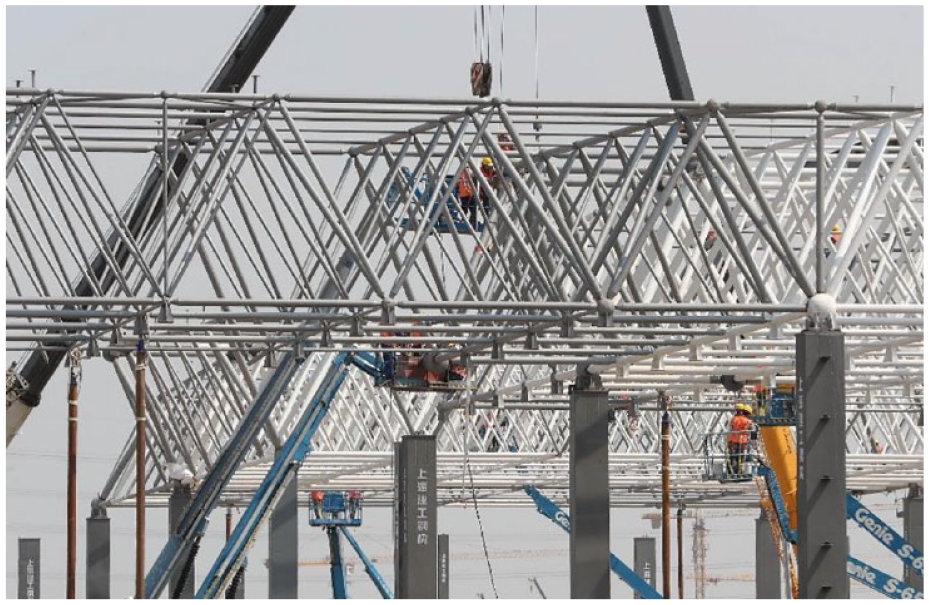
Planer square pyramid grid structures (Tesla Super Factory in Shanghai; https://www.jfdaily.com/wx/detail.do?id=140300).
Coal storage structures
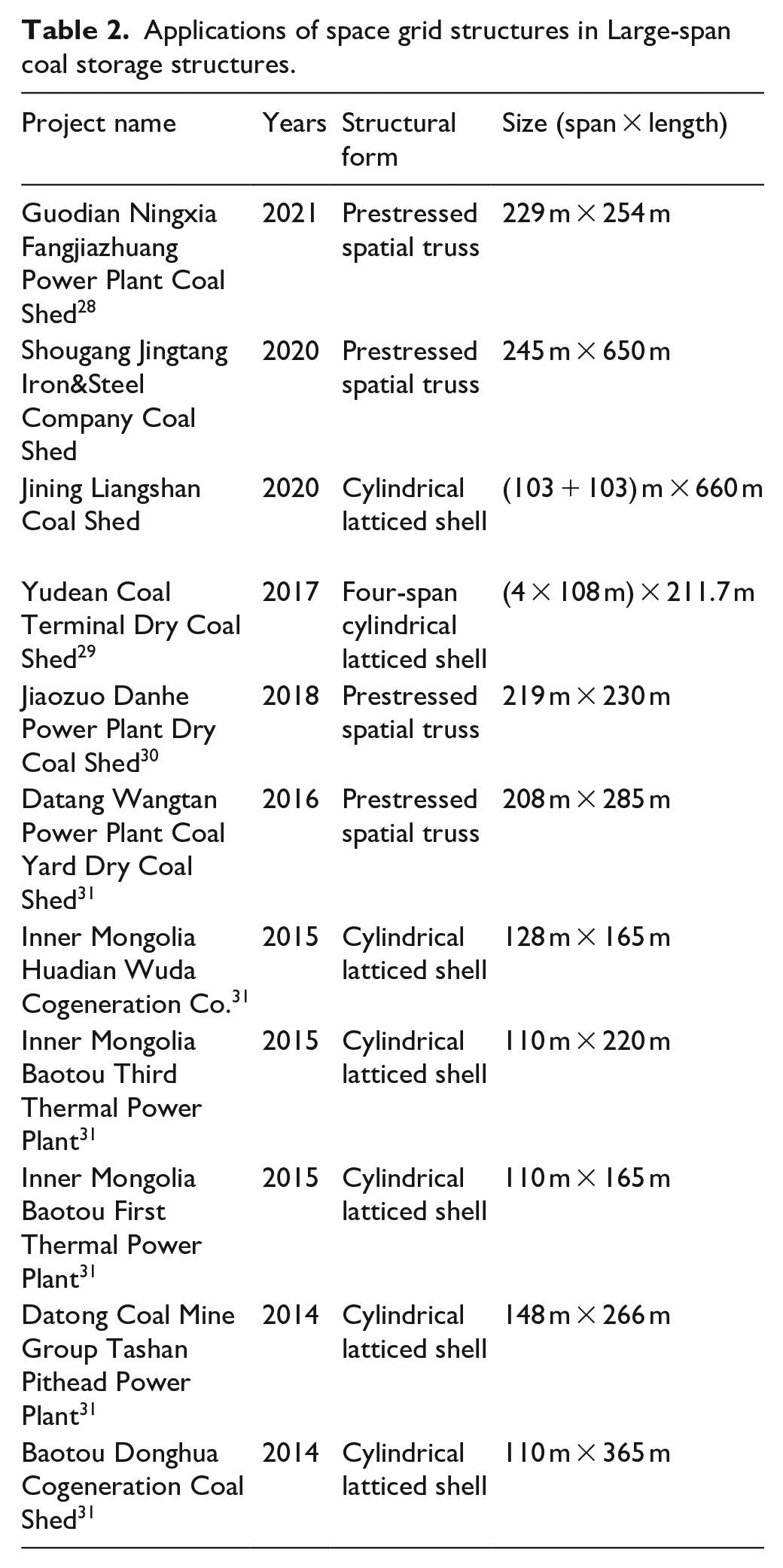
To avoid the wastage and environmental pollution caused by outdoor coal piles, a large number of coal storage structures have been built in China. To satisfy the space requirements of the long-arm coal piling and coal digging machinery, the general characteristics of coal storage structures are large spans, large areas, and large heights. 19 According to the summarized in Luo, 19 the spans of coal storage structures before 2006 are mostly within 120 m and were mostly implemented by two-layer space grid shells. Typical applications include the Henan Yadiankou power plant Coal Shed, built in 2001, using a three-center latticed shell measuring 108 m × 90 m (Figure 5), and the Henan Xinxiang power plant Coal Shed, using a pre-stressed latticed shell measuring 88 m × 108 m. The deployable integral lifting construction technology was adopted in the Henan Yadiankou power plant Coal Shed, which removes some of the structural components during the lifting process to make the structure deployable, so that the structure can be assembled on a lower platform. The spans of some coal storage structures in China have exceeded 200 m. To achieve such large spans, these structures are often constructed using tension truss structures. The largest coal storage structure in China until 2022 is the Shougang Jingtang iron&steel company Coal Shed built in 2020 (Figure 6). The span of the structure is 245 m, which is the largest in the world at the time when it is completed. Some recent large-span coal storage structures in China are listed in Table 2.
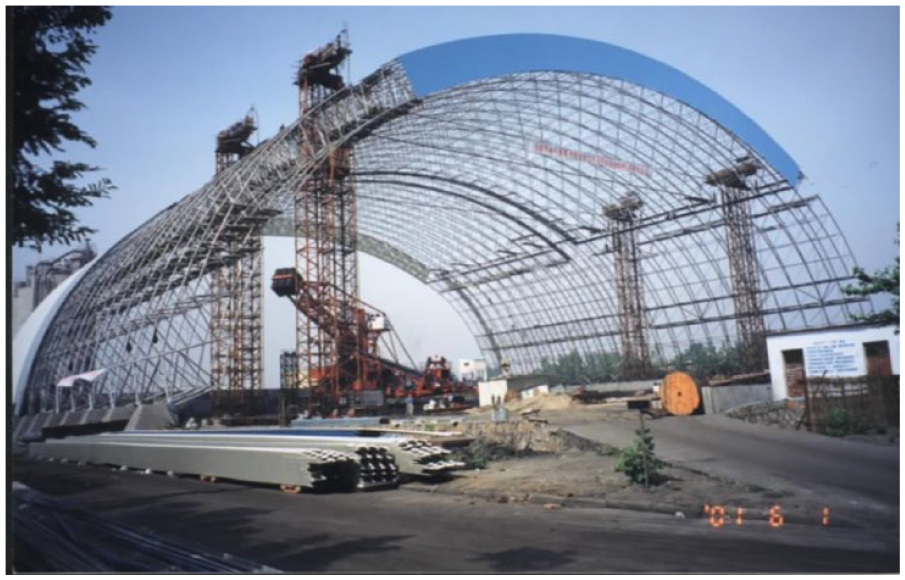
Henan Yadiankou power plant coal shed.
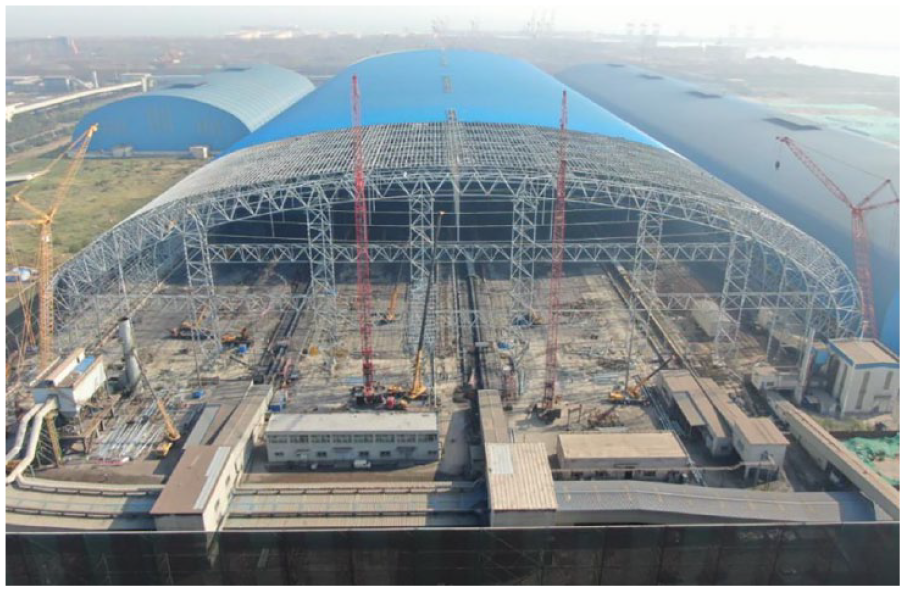
Shougang Jingtang Iron&Steel Company Coal Shed (http://ydyl.china.com.cn/2020-10/28/content_76851668.htm).
Applications of space grid structures in Large-span coal storage structures.
Terminals and railway stations
Airport terminals and railway stations are important transport hubs and often sever as city landmarks. They are characterized by large spans, vast areas, and novel shapes through free-form surfaces. Over the past few decades, the size of terminals and railway stations in China has continued to increase to meeting the growing demand for transport. In particular, some terminals have been built with lengths exceeding 1000 m. Typical large-scale terminals and railway stations with space grid structures built in China in the last decades are listed in Table 3. The Xiong’an High-Speed Railway Station (Figure 7), the largest railway station in Asia, completed in 2020, used a single-story orthogonal steel frame structure with a plan size of 355 m × 450 m and a maximum span of 78 m. 32 The ribbed H-beams are used as the main structural components to achieve a concise architectural appearance. The Beijing Daxing International Airport (Figure 8), completed in 2019, was the largest terminal in the world at the time. The roof is made up of a combination of irregular free-form surfaces, with a space grid structure supported by giant C-shaped columns. Specifically, the C-shaped columns and roofs form an integrated mega-grid structure to increase the load-bearing capacity. The terminal has a total area of approximately 800,000 m2 with a maximal column spacing of 188 m and a maximal cantilever of 47 m. 33
Applications of space grid structures in large-scale terminals and railway stations.
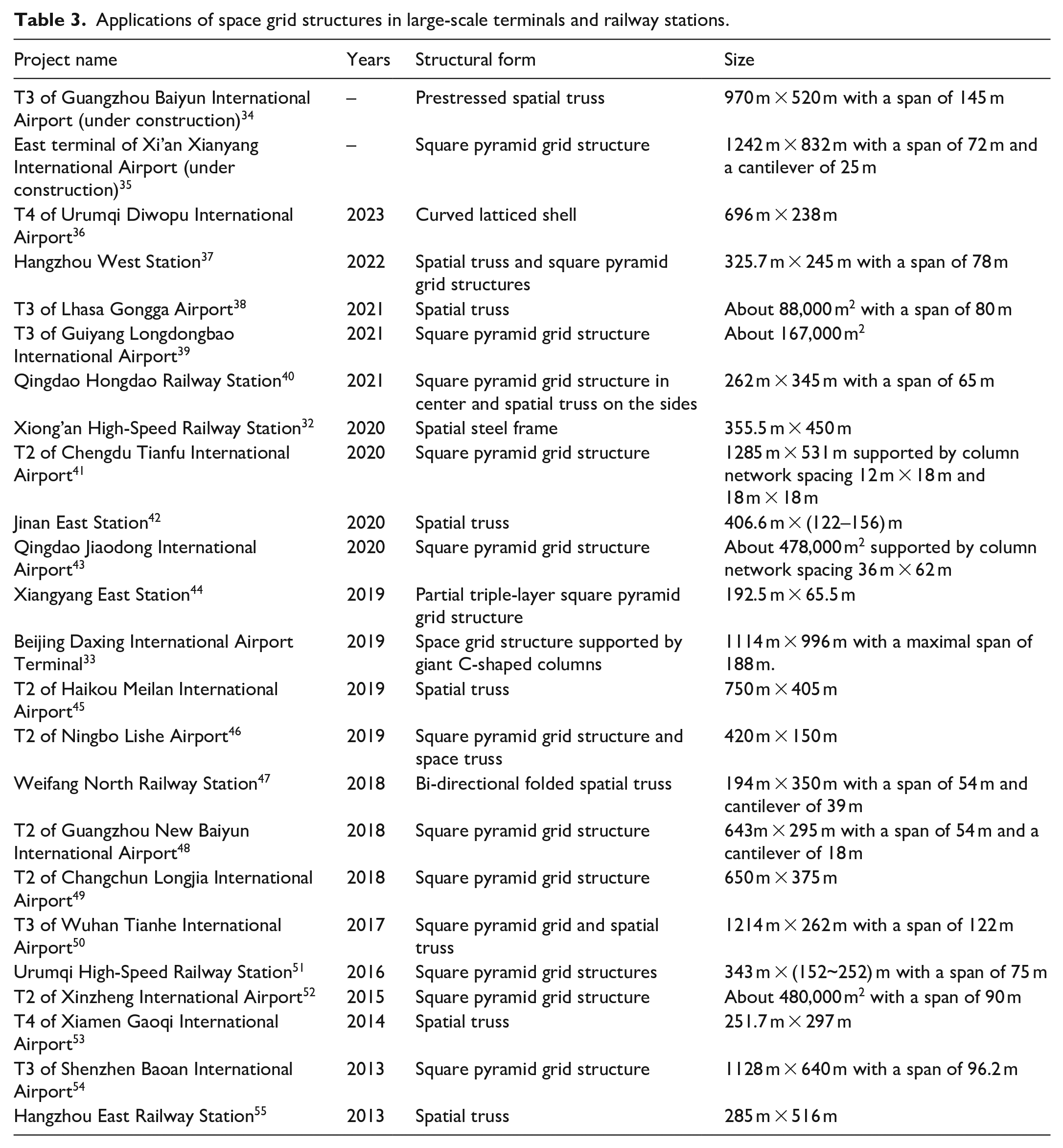
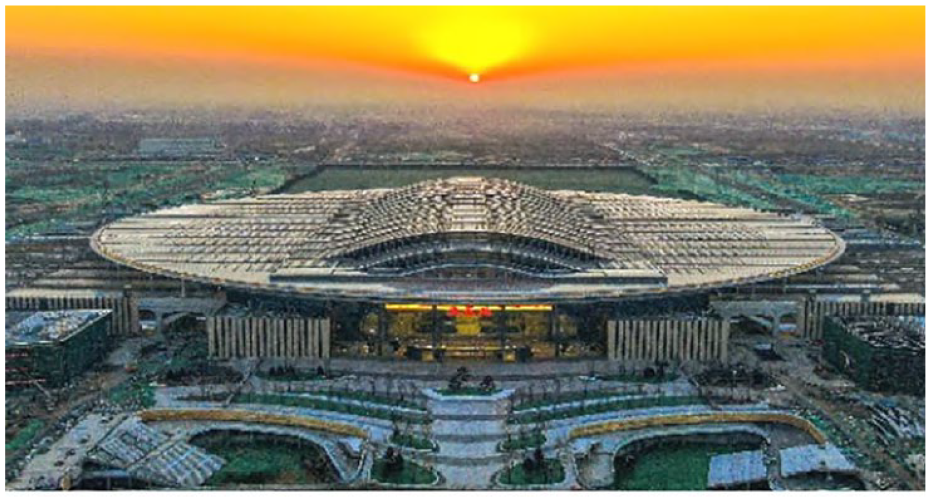
Xiong’an High-Speed Railway Station. 32
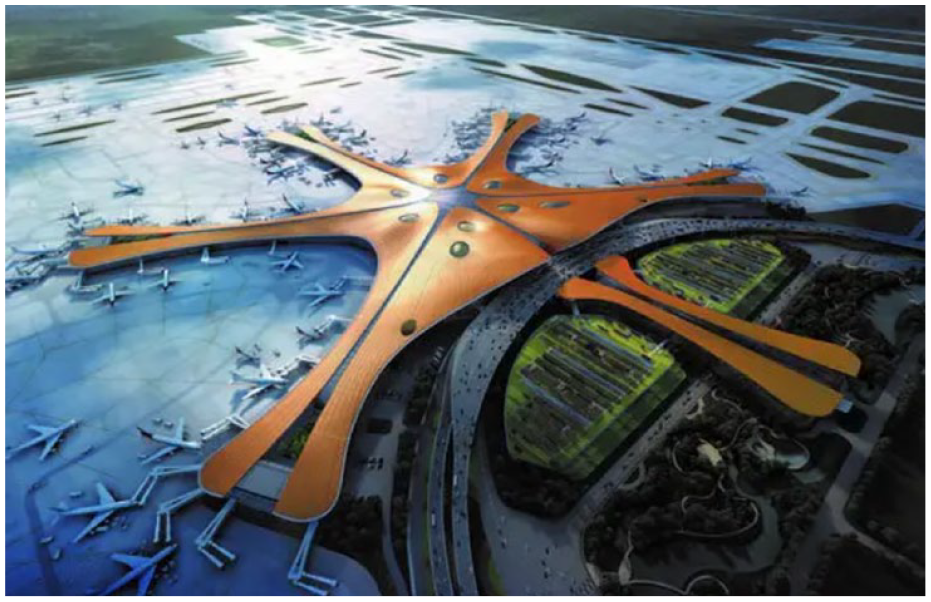
Beijing Daxing International Airport. 33
Hangars
As ancillary facilities to the airports, a large number of hangars have also been built in China with the construction of airports. Different from normal factories, hangars always need a large space that is sufficient for multiple aircraft parking, and also large load-bearing capacity to withstand the equipment in the aircraft maintenance process. The space grid structure is the most commonly used structural form in hangars. To improve the load-bearing capacity, the construction of the hangar grid structure has also been accompanied by innovations to the traditional double-layer grid structure. The A380 maintenance hangar at Capital Airport completed in 2008, used a three-story square pyramid grid structure which covered an area of 115.0 m × (176.3 + 176.3) m. 56 A notable recent application of space grid structures in hangers is the Southern Airline Hangar at Beijing Daxing International Airport, completed in 2019, which used a new structural form combining W-shaped trusses and space grid structure (Figure 9). Benefiting from innovations in structural forms, it achieved the largest hangar in Asia, with a remarkable span of 222 m and a size of 405 m × 100 m. 57
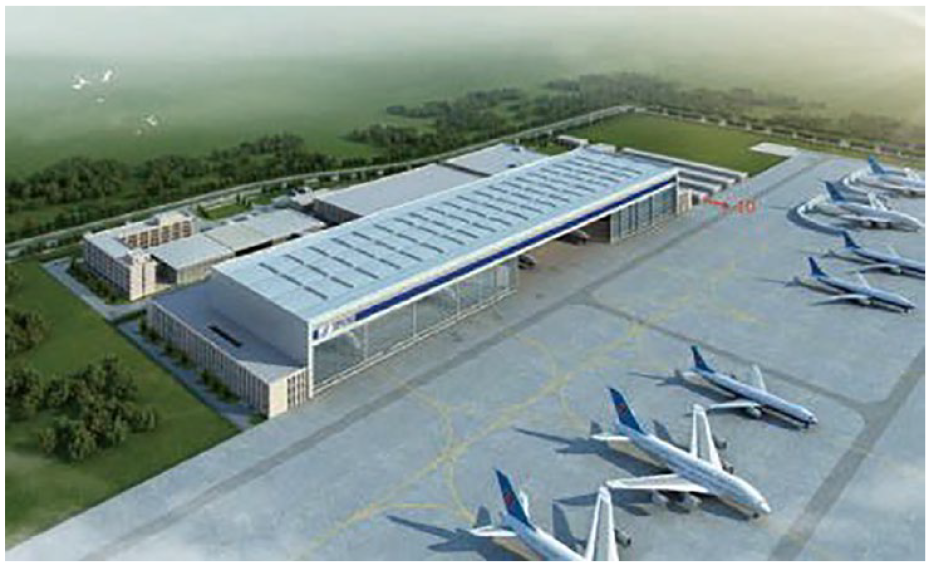
Southern Airline Hangar at Beijing Daxing International Airport. 57
Stadiums
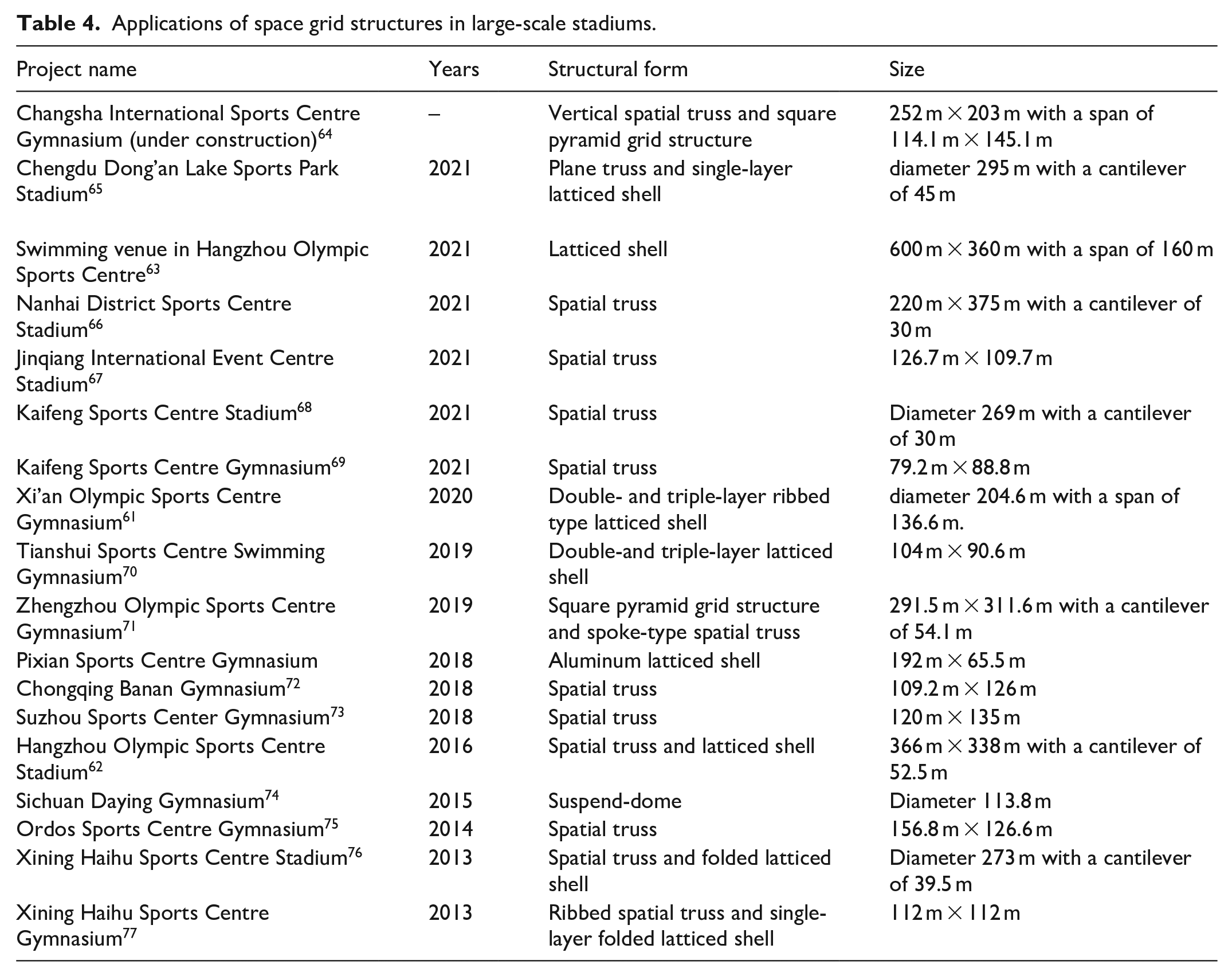
Since the 1990 Beijing Asian Games, China has hosted a series of international events, represented by the 2008 Beijing Olympic Games, the 2010 Guangzhou Asian Games, and the 2022 Beijing Winter Olympic Games. This has necessitated the construction of numerous large-scale outdoor stadiums and indoor gymnasiums throughout the country. Several outdoor stadiums with sizes over 200 m and indoor gymnasiums with spans over 100 m have been built. Some typical large-scale stadiums built in the last decade in China are listed in Table 4. One of the most significant structures was the National Stadium for the 2008 Beijing Olympics, which is designed as a bird’s nest-type grid and has a plan size of 332 m × 296 m. Q460 high-strength steel was employed for critical structural elements. 58 The Water Cube of the National Aquatics Centre adopts a new polyhedral space steel frame structure with a cube shape of 177 m × 177 m × 29 m. The ETFE membrane is used as the maintenance structure to achieve a light and transparent appearance. 59 The Shenzhen Universiade Sports Center Stadium, built in 2010, is a single-story folded space grid structure with an internal tensioned membrane, measuring 285 m × 270 m in plan and with a maximum cantilever of 68.4 m. 60 The Xi’an Olympic Sports Centre Gymnasium (Figure 10), built in 2020, used a combination of double- and triple-layer ribbed type latticed shells with a diameter of 204 m and a span of 136.6 m. 61 The 2023 Hangzhou Asian Games exemplifies an intensive application of space grid structures in stadiums. The Hangzhou Olympic Sports Centre Stadium (Figure 11), built in 2016, used a complicated space grid structure, presenting in the shape of a lotus flower, with a size of 333 m × 285 m and a cantilever of 52.5 m. 62 The swimming venue in Hangzhou Olympic Sports Centre (Figure 12), built in 2021, used a latticed shell with a size of 600 m × 360 m and a maximum span of 160 m, and twisted rectangular steel tubes were applied to form the free-form surface. 63
Applications of space grid structures in large-scale stadiums.
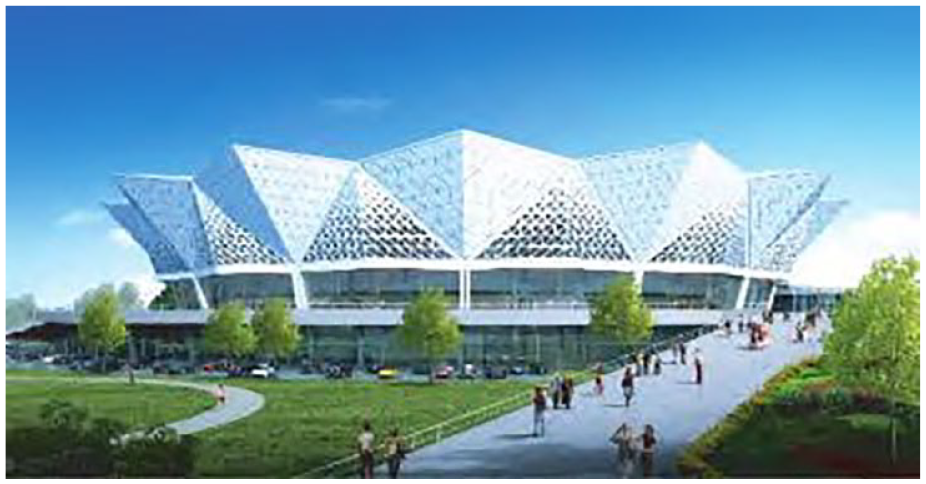
Xi’an Olympic Sports Centre Gymnasium. 61
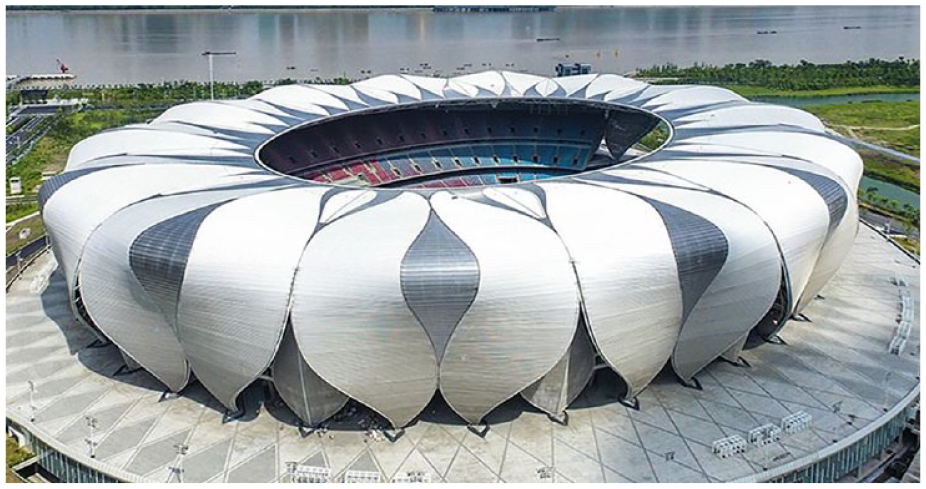
Hangzhou Olympic Sports Centre Stadium (http://www.hangzhou.gov.cn/art/2023/3/14/art_1229633982_59076475.html).
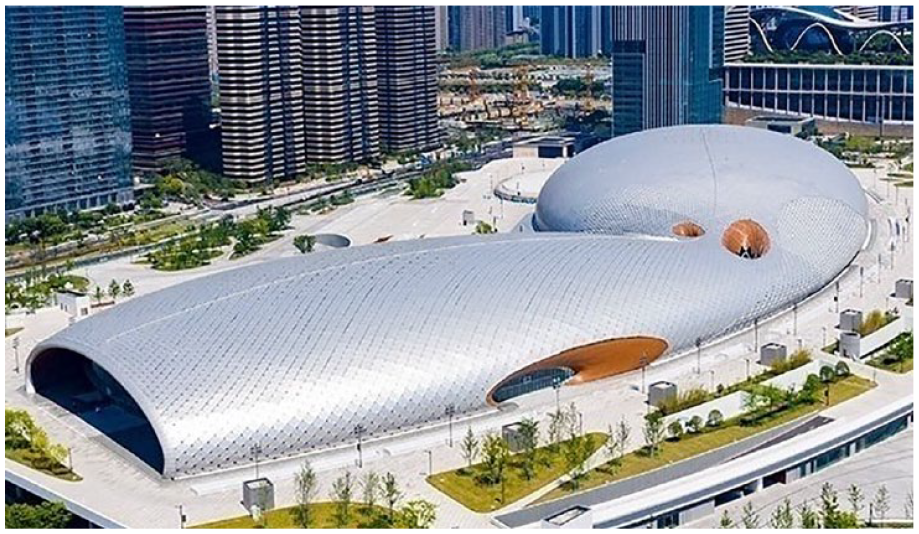
Swimming venue in Hangzhou Olympic Sports Centre (https://www.hangzhou.com.cn/hzyyh/content/content_8256738.html).
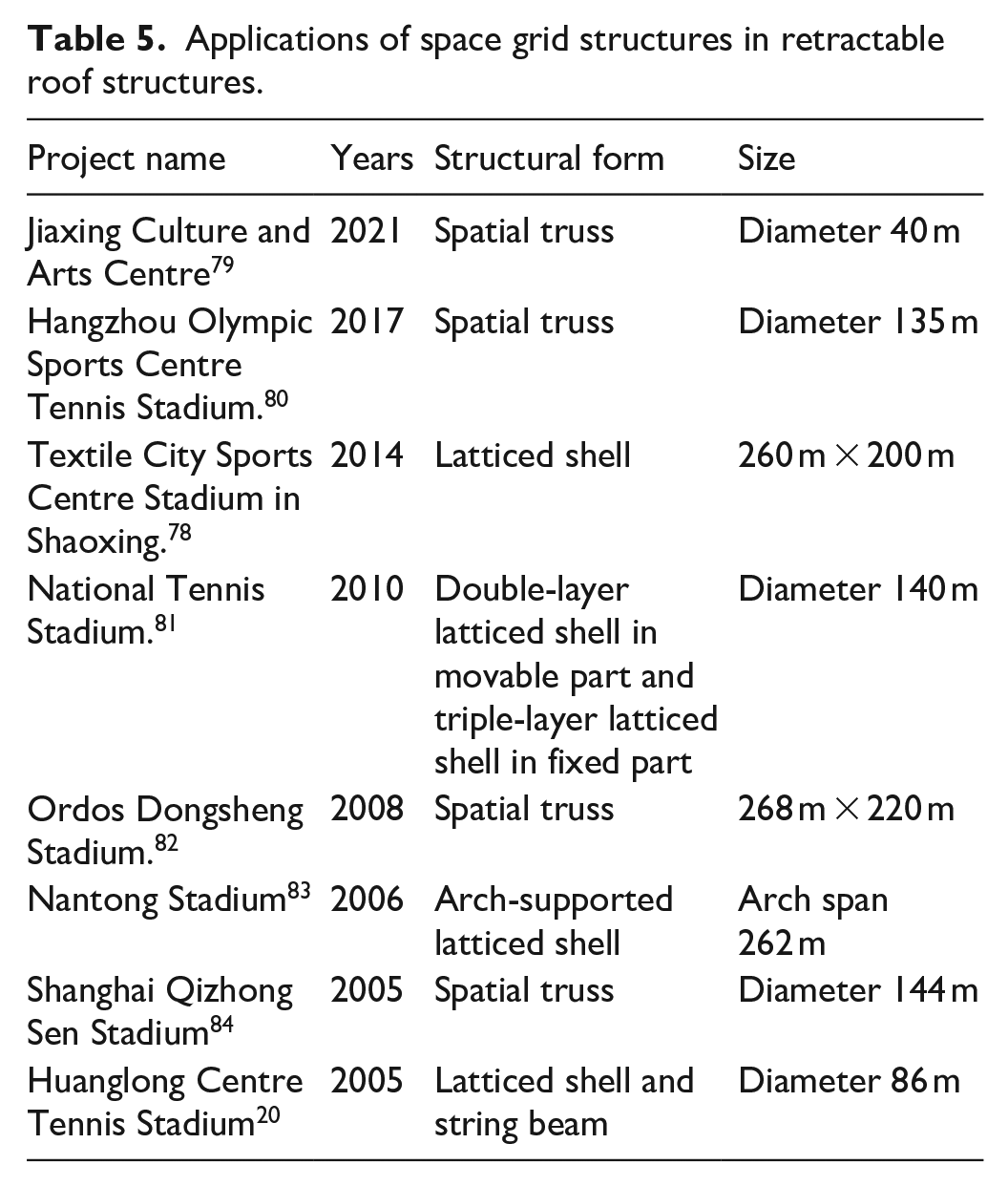
Sports stadiums sometimes need to meet the demand for “outdoor on sunny days and indoor on rainy days,” and retractable space grid structures have been developed in large sports stadiums. Typical applications of space grid structures in retractable roof structures in China are listed in Table 5. The earliest large-span retractable roof structure in China was the Huanglong Centre Tennis Stadium in Hangzhou, built in 2005, which used a hybrid system of single-layer grid shell and tensioned string beam, with a diameter of 86 m and a maximum open area of 21 m × 36 m. 20 The largest retractable roof structure in China is the Textile City Sports Centre Stadium in Shaoxing (Figure 13). Its size is 260 m × 200 m, with a retractable roof area of approximately 98.3 m × 119.4 m. 78 The Q650 high-strength steel was used for the low chord components of the fixed part of the roof, providing sufficient stiffness and load bearing capacity for the operation of the movable part.
Applications of space grid structures in retractable roof structures.
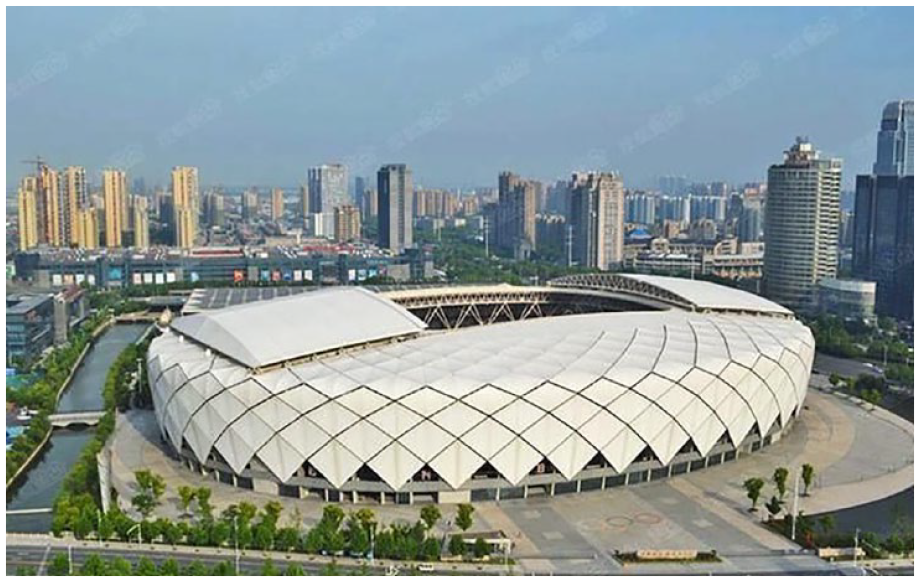
China Light Textile City Sports Centre Stadium in Shaoxing (https://www.szhzty.com/industry/146.html).
Culture and exhibition centers
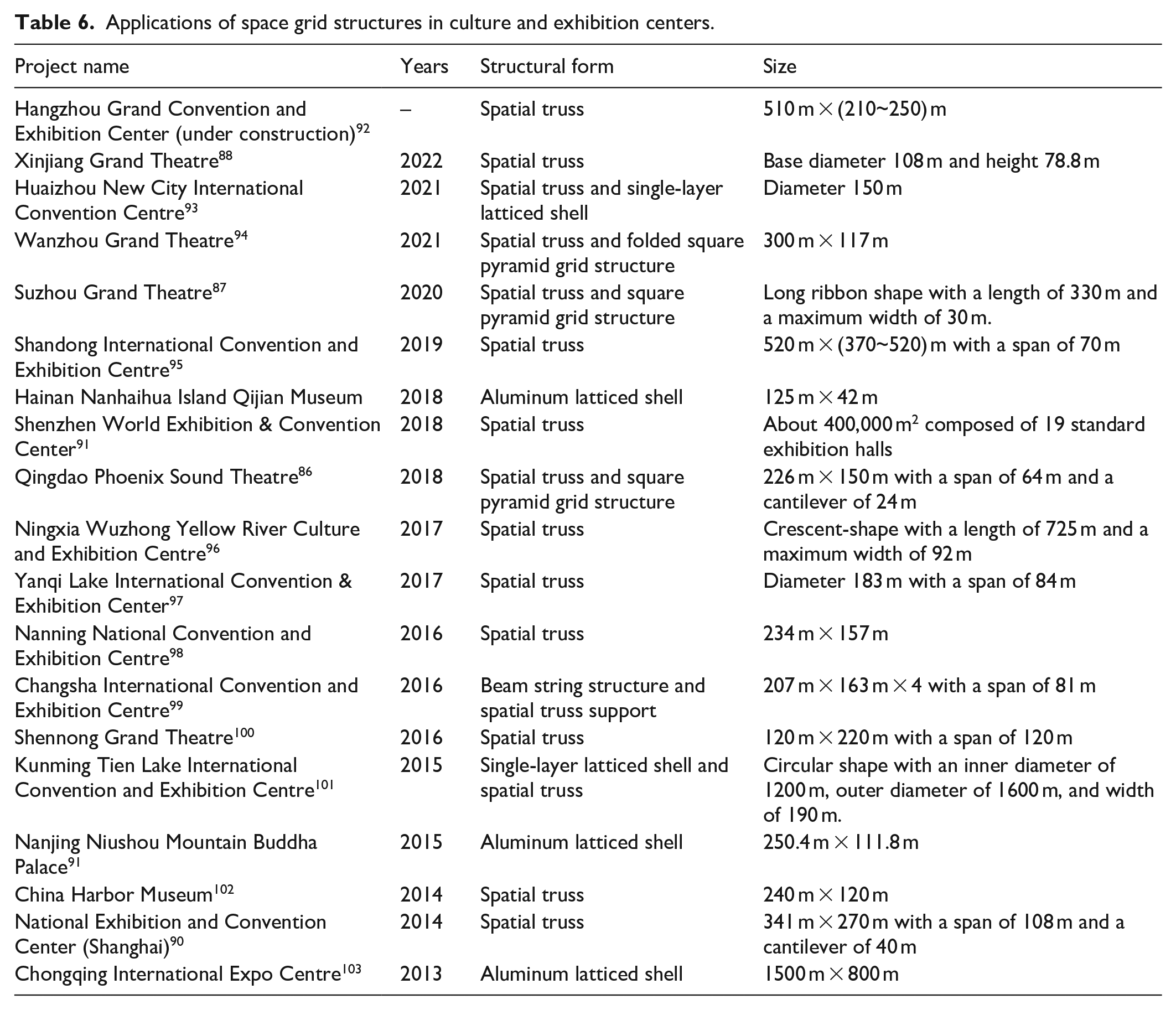
With the abundance of cultural and recreational activities, a large number of cultural and exhibition centers have been built in China in recent years, including theatres, museums, art galleries, and exhibition halls. The National Centre for the Performing Arts (NCPA), built in 2007, is now one of the landmarks in Beijing, using an elliptical latticed shell structure with elliptical dimensions of 142 m × 212 m and a maximum height of about 46 m. 85 Various cross-section forms, including H-type, T-type, and slab-type, were adopted in NCPA to achieve the architectural appearance. During the construction of NCPA, the bolted spherical joint grid structure was used as the temporary construction support system for its good mechanical properties and reusability. Some recent applications of space grid structures in culture and exhibition centers are listed in Table 6. Specifically, cultural and exhibition center buildings sometimes used irregular geometries to match specific themes, and space grid structures have shown the ability to create various complex shapes. For example, the Qingdao Phoenix Sound Theatre (Figure 14), completed in 2018, used a combination of tub truss and grid structures to construct the shape of a phoenix, with a plan size of 226 m × 115 m and a maximum span of 64 m 86 ; the Suzhou Grand Theatre, built in 2020, features a 330 m long irregular ribbon shape by a space grid 87 ; and the Xinjiang Grand Theatre (Figure 15), completed in 2022, used a tube truss structure to construct a complex shape modeled on the Saussurea involucrata, with a base diameter of 108 m and a height of 78.8 m. 88 The Nanjing Niushou Mountain Usnisa Palace built in 2015 is the largest aluminm alloy grid structure in China in terms of span (Figure 16), 89 with a free-form surface, a maximum span of 130 m, and a maximum cantilever of 53 m. Many large-scale international exhibition centers have also been built in recent years. The National Exhibition and Convention Center (Shanghai; Figure 17), built in 2014, used a spatial truss structure and formed a four-leaf clover shape by four monoliths of individual buildings. Each building has a planar size of 341 m × 270 m, and the largest span is 108 m. 90 The Shenzhen World Exhibition & Convention Center (Figure 18), completed in 2019, consists of 19 halls with a total exhibition area of approximately 400,000 m2. The halls are connected by an indoor corridor with about 1,800 m in length, creating a regional micro-environment of a super-large space. 91
Applications of space grid structures in culture and exhibition centers.
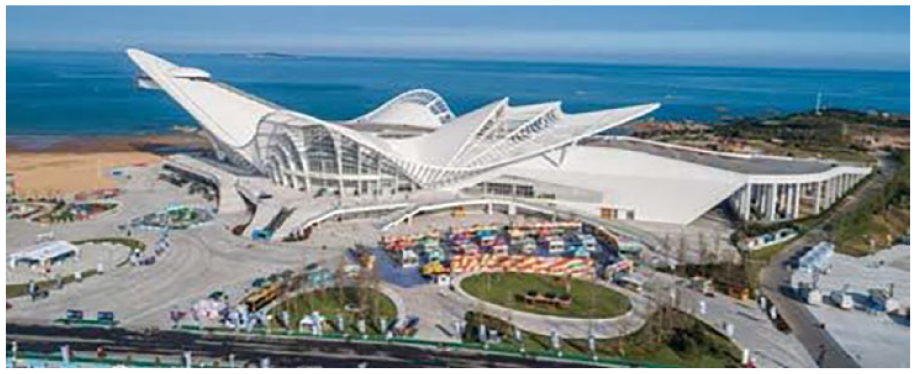
Qingdao Phoenix Sound Theatre. 86
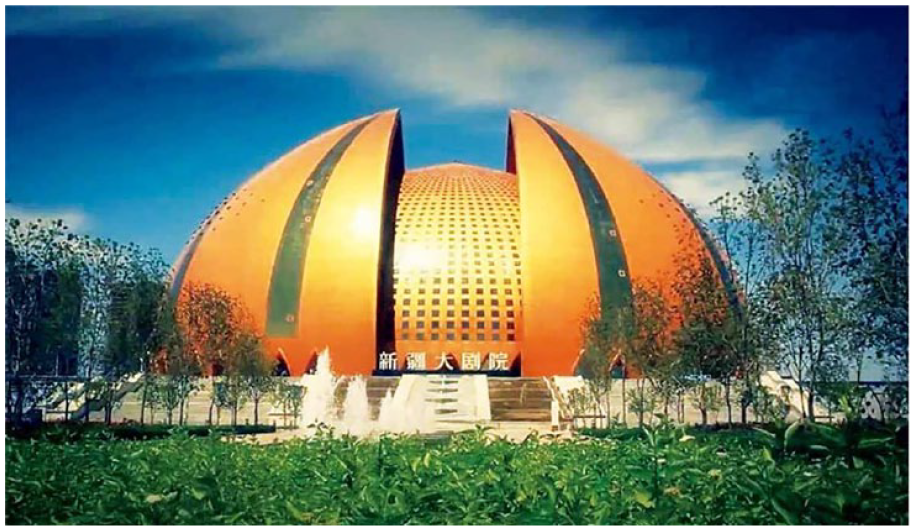
Xinjiang Grand Theatre (http://www.cces.net.cn/html/jjh/621/638/content/6446.html).
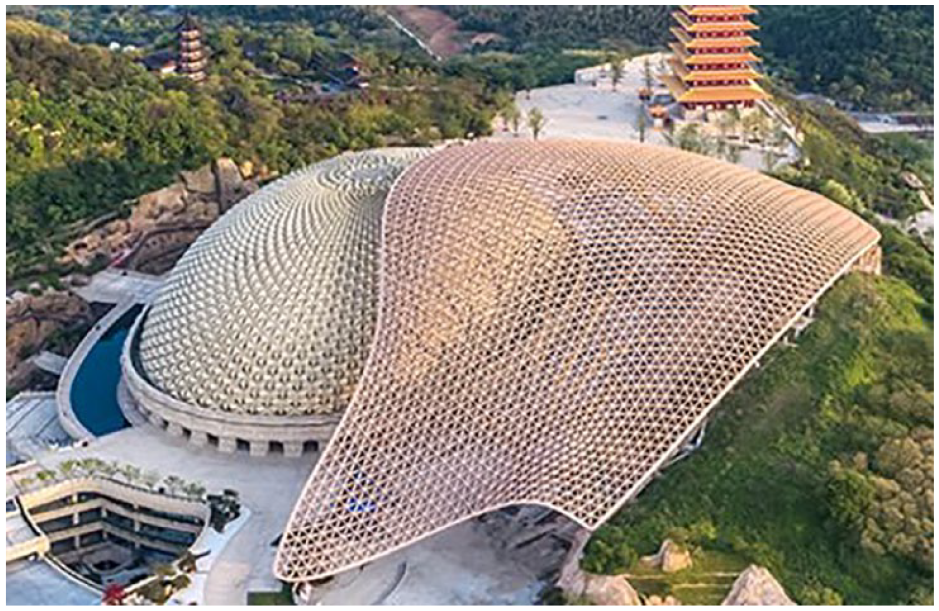
Nanjing Niushou Mountain Usnisa Palace. 103
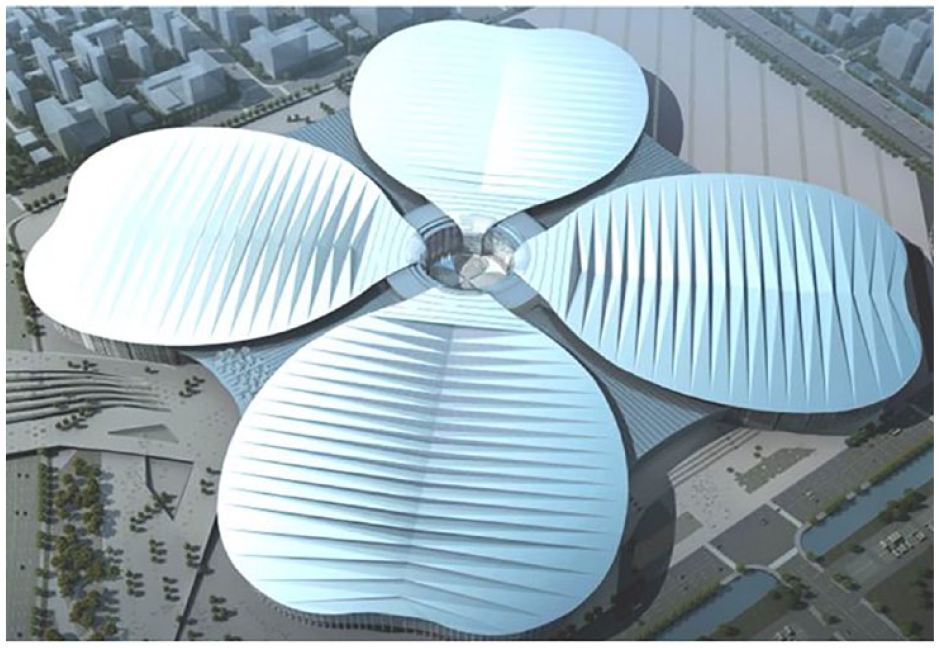
National Exhibition and Convention Center (Shanghai). 90
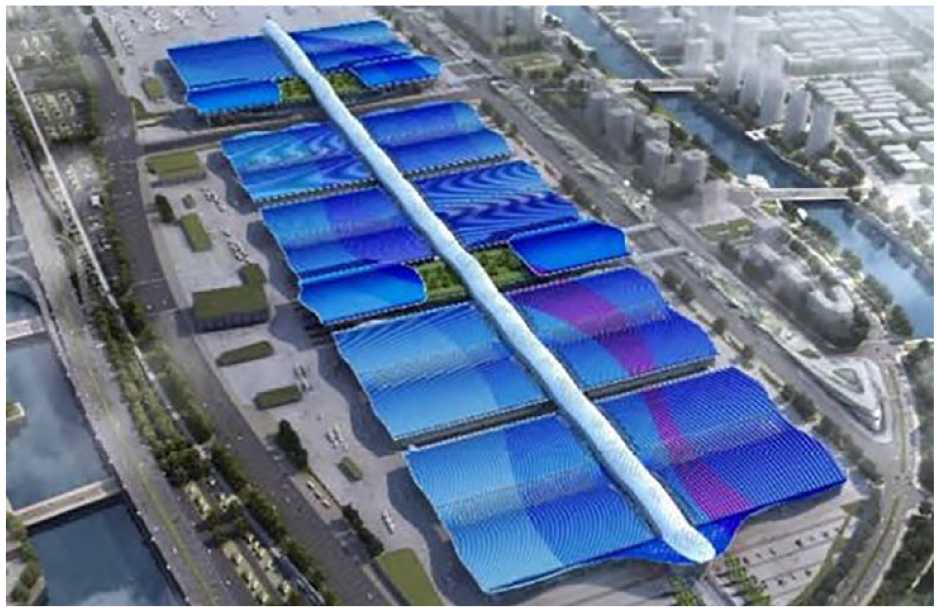
Shenzhen World Exhibition & Convention Center. 91
Applications in special structures
In recent years, in addition to the roofs of large-span structures, space grid structures have been applied in many special scenarios. The 697 m wide Cao’e River Gate used a double arch spatial truss (Figure 19). 104 It converted the bending forces in traditional flat gates into three-dimensional forces, saving over 30% in material consumption and over 40% in energy consumption. The Sun Valley steel structure for the Expo 2010 Shanghai used a tree-shaped single-layer latticed shell as the support for the upper cable and membrane structure, with a maximum upper dimension of 90 m × 70 m (Figure 20). 105 The Canton Tower, completed in 2011, is one of the tallest buildings in China with a total height of about 600 m. The external skeleton of the Guangzhou Tower adopted a hyperbolic space grid structure composed of concrete-filled steel tubes. 106 The Five-hundred-meter Aperture Spherical Telescope (FAST, Figure 21), built in 2016, is currently the largest single-aperture radio telescope in the world, with a diameter of 500 m and a total reflecting area of over 200,000 m2. The aluminm alloy grid structure is applied in FAST as one of the main components of the back support of its reflective surface. 107 The National Speed Skating Oval for the Beijing 2022 Winter Olympics Games used a giant spatial truss with a planer size of 226 m × 153 m as the support system of the pre-stressed cable net. 108 The Jiangmen Underground Neutrino Observatory (JUNO), expected to be completed in 2024, is a spherical structure with a diameter of 35.4 m located about 700 m underground. A single-layer latticed shell with stainless steel is used in the structure. 109
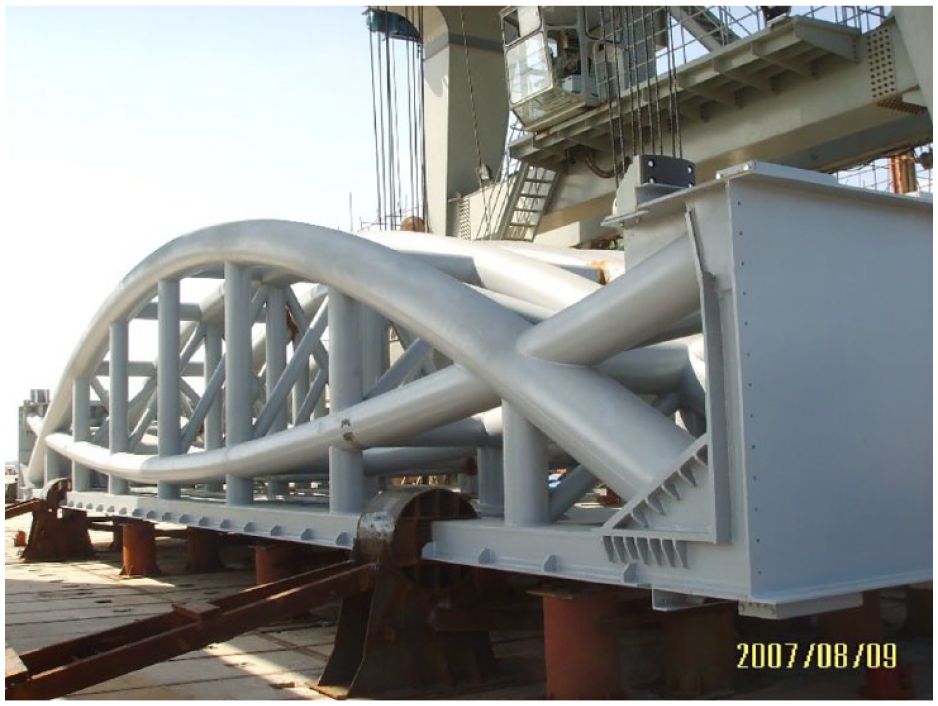
Double arch spatial truss structure used in Cao’e River Gate.
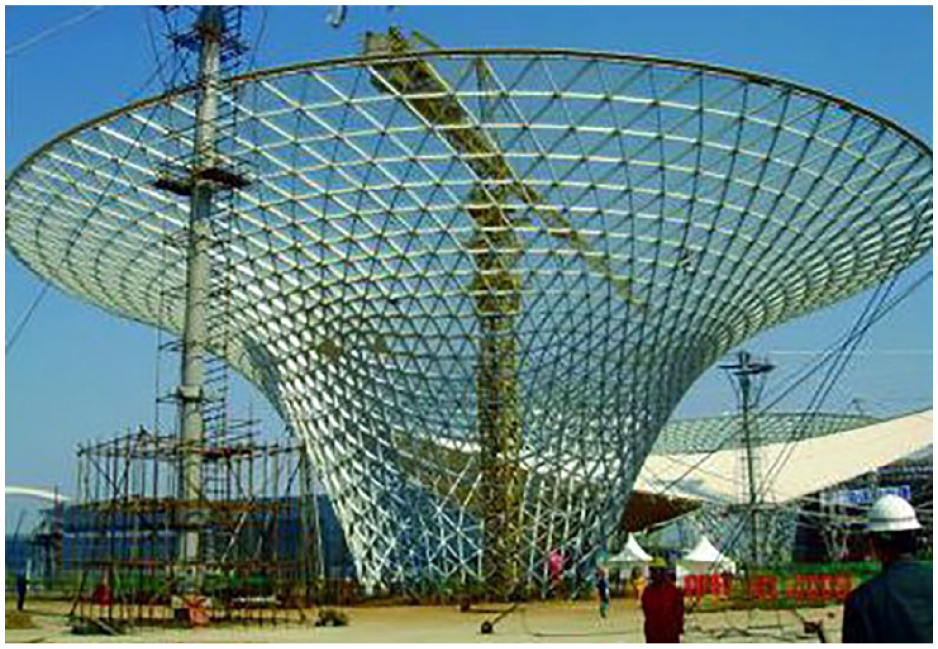
Sun Valley steel structure for the Expo 2010 Shanghai.
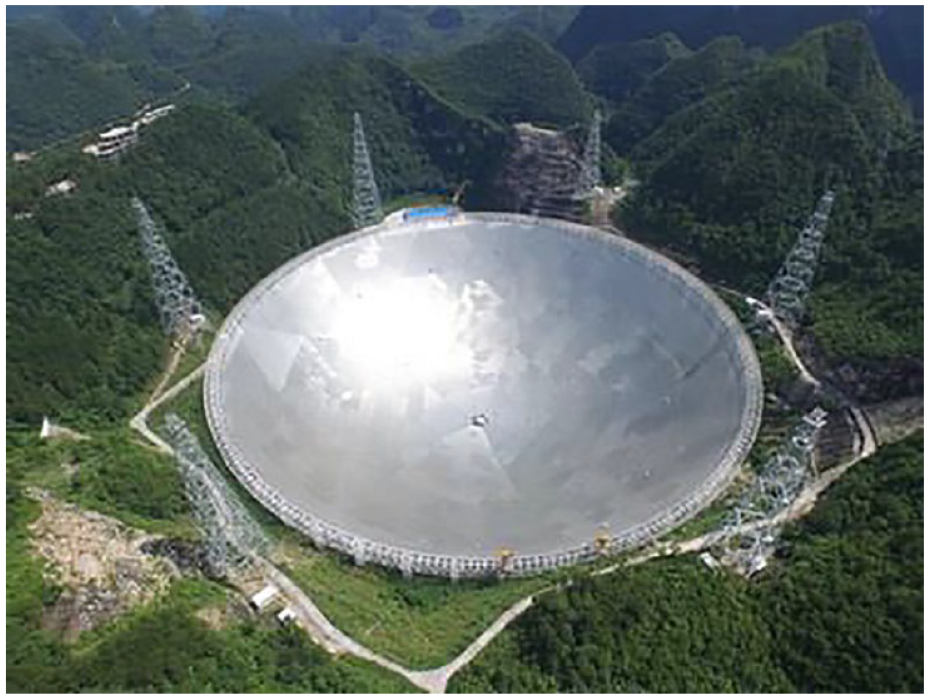
Five-hundred-meter Aperture Spherical Telescope (FAST). 107
Conclusions and prospects
Based on the above review of the development and application of spatial grid structures in China in recent years, the following conclusions can be drawn. First, there has been a more flexible application of space grid structures, which can be applied to various scenarios and can be used to achieve complex shapes. Second, the application of space grid structures in China has produced a number of firsts in Asia or the world in terms of size and span.
The following aspects can be considered in future studies. In terms of structural design, design concepts based on multi-scale refinement simulation, reverse engineering and artificial intelligence can be considered. In terms of structural form innovation, new space grid structures based on new materials and processes can be developed. In terms of manufacturing and construction, the standardization of grid structure products and the automation and intelligence of manufacturing can be further promoted. In terms of application scenarios, the concept of low-carbon development can be integrated by combining structural design and energy management, creating a comfortable ecosystem for human life.
Footnotes
Author’ note
Yu Xue is now affiliated to Beijing University of Technology.
Declaration of conflicting interests
The author(s) declared no potential conflicts of interest with respect to the research, authorship, and/or publication of this article.
Funding
The author(s) disclosed receipt of the following financial support for the research, authorship, and/or publication of this article: This work was supported by the Key Program of the National Natural Science Foundation of China (Grant No. 52238001) and National Natural Science Foundation of China (Grant No. 52108182).
