




Abstract
This article is dedicated to the memory of the late Professor Tien Lan, widely recognized as one of the key founders and pioneers of modern spatial structures in China. In addition to his significant contributions in research and design, this paper explores Professor Lan’s social initiatives and accomplishments, such as founding committees and associations related to spatial structures, organizing conferences, and contributing to the development of specifications for design and construction. Professor Lan’s contributions have been recognized by several prestigious awards and honors received.
Brief biography of Professor Lan
Professor Lan was born on 18 May 1927, in Shanghai, China. After he graduated from St. John’s University in 1948 in Shanghai with the major of civil engineering, he went to the United States and studied his Master’s degree at the University of Minnesota till 1950. After he worked as an engineer at the Wright Engineering Co., Ltd. in Los Angeles for several months, he came back to China in October 1951. From 1951 to 1964, he worked as an engineer in the Design Institutes of the First Ministry of Machinery Industry and the Third Ministry of Machinery Industry respectively, and the Design Institute of the Department of Construction Engineering of Yunnan Province. From March 1964 to his demise on November 23, 2022, he was a professor and Chief Consultant Engineer at the Institute of Structural Engineering, China Academy of Building Research (see Figure 1). 1
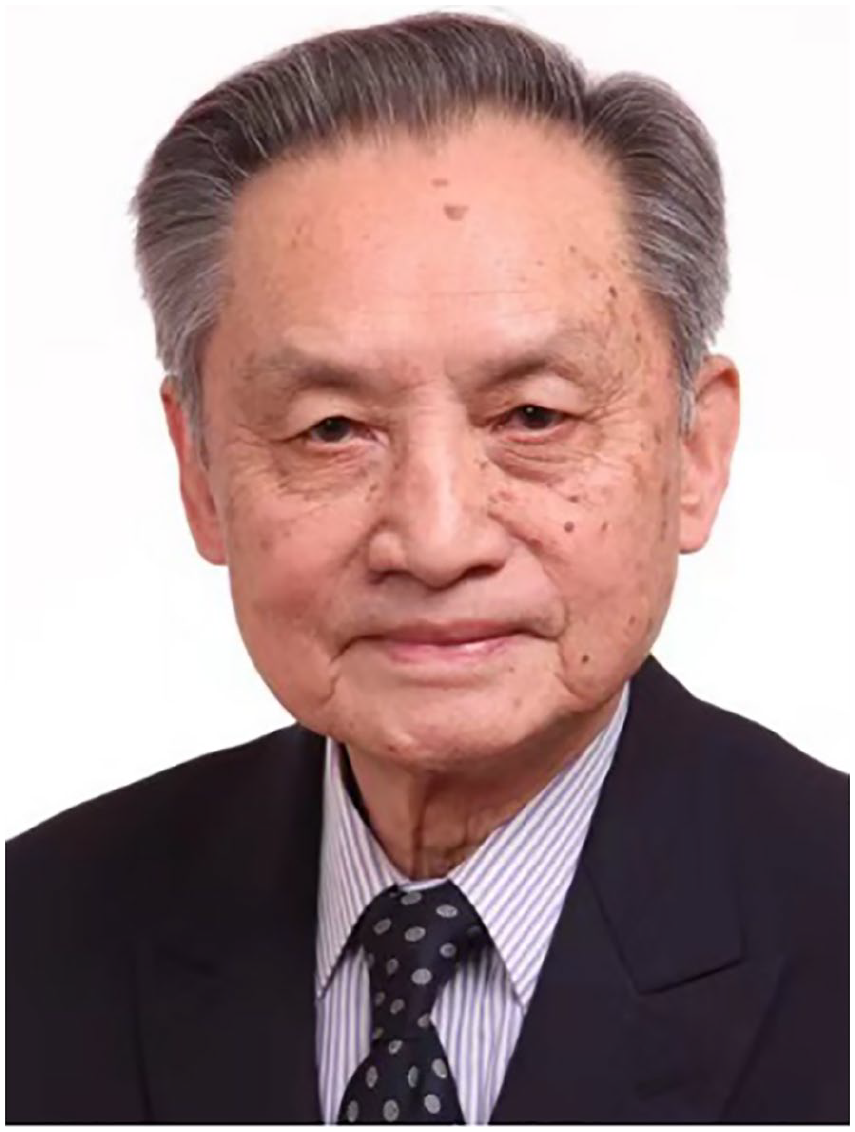
Professor Tien T Lan.
Professor Lan devoted his whole life to the scientific research, engineering practice, and association management of spatial structures in China. He made remarkable contributions to the development of spatial structures in China.
A successful researcher and engineer
After the founding of the People’s Republic of China in 1949, the government took measures to improve and prompt the development of its industry production. Large amount of industrial factory buildings were urgently needed to be built. After he came back to China in 1951, Professor Lan began to study and design the roof structures of industrial factories with larger span than the normal buildings. Due to the lack of steel in China at that time, the concrete shells and trusses were mostly studied and used. During this period time, Professor Lan had spent some time to study the better shapes of the roof structures.2,3
Leader of optimization and seismic design of spatial structures
In 1960s–1970s, Professor Lan began to study the optimization and seismic design of space frame structures, and participated in the design of some space frame projects, including the Pakistan Gymnasium (Figure 2).
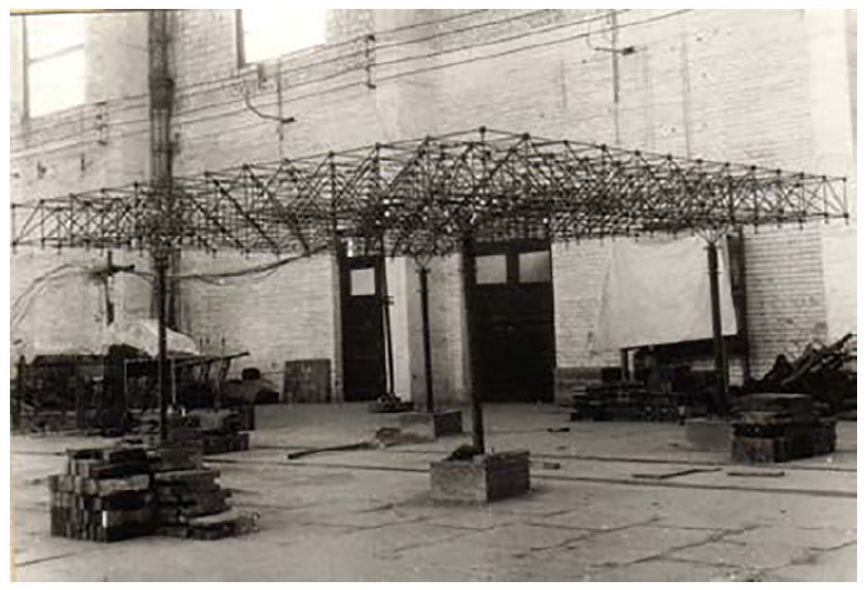
Model experiment of the space frame of Pakistan Gymnasium.
From 1980s, his research interest extended to various types of spatial structures. At that time, the economy was relatively backward in China, and the optimum design technics played an important role. He studied the optimum design technics for civil engineering, translated the book Optimum Design of Structures and applied them to the design of spatial structures.4,5 For grid structures, based on the summary of types of space frames and their characteristics, he studied the optimal grid and height of space frames, provided the optimum design methods and the fitting formulas, which could be easily used for engineers. 6 He studied the influence of the basic parameters of hyperbolic paraboloid latticed shells, including the number of grid, the height and rise of the shells, and provided the reasonable value ranges of them.7,8 Based on the above research, he took part in the analysis and design of the space frame roof of the Pit 2 of Terra Cotta Warriors in the Mausoleum of the First Qin Emperor, the hyperbolic paraboloid latticed shell of the Beijing Sports University Gymnasium 9 (Figure 3), and the cable-stayed hyperbolic composite lattice shell of the Beijing Olympic Stadium, which were used for the 11th Asian Games held in Beijing in 1990 (Figure 4).
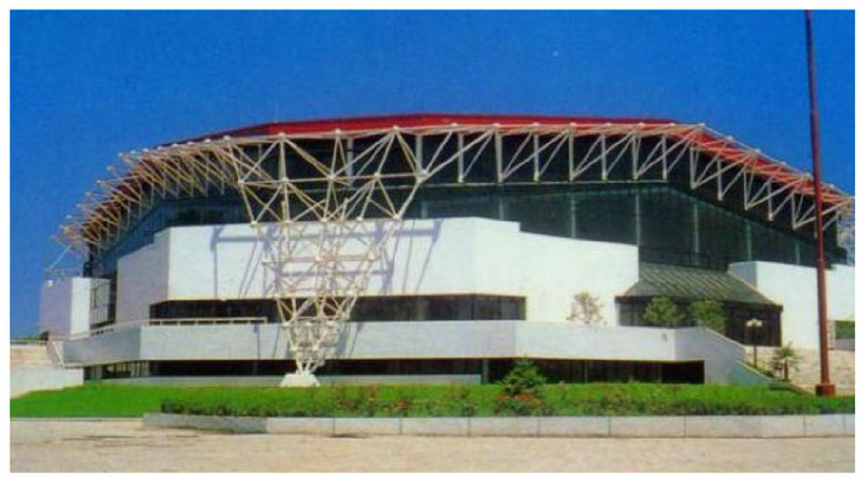
Space frame of Beijing Sports University Gymnasium.
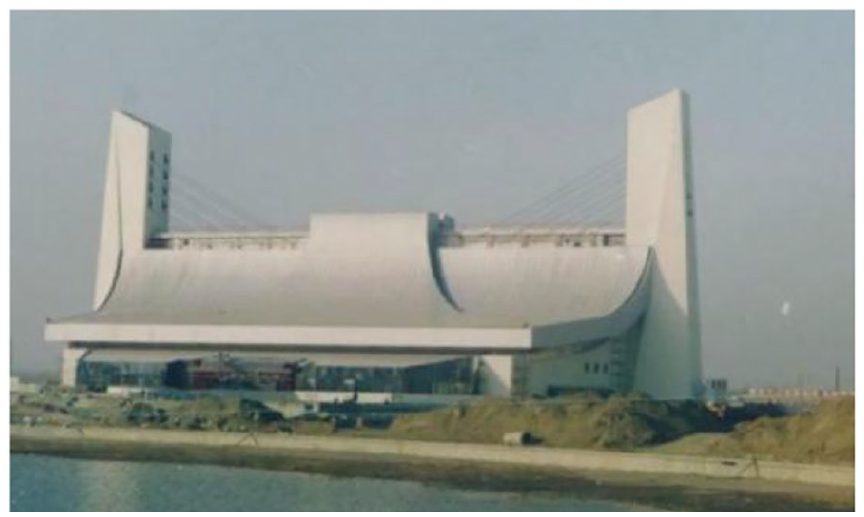
Beijing Olympic Stadium.
In the meantime, he realized that earthquake actions should be considered in the design of spatial structures. He translated the book of Fundamentals of Earthquake Engineering, 10 and studied the analysis methods for space frames under earth quakes. 11 Because the computer and analysis software had not been widely used at that time, it was difficult to calculate the earthquake effect accurately. Based on the seismic analysis of a number of rectangular space frames peripherally supported, they provided a method to calculate the earthquake effect by multiplying a factor to the static force of the members, together with the appropriate value of the factor. The method was so practical and could be easily used by the engineers, greatly improved the seismic design level and were adopted by design code for building structures. In 1985, there occurred the first seismic damage of space frame in China. Professor Lan investigated and analyzed the seismic damage of a 24 m × 27 m pyramid space frame caused by an earthquakes on August 23 and September 12 in Sinkiang Uygur Autonomous Region in China, and provided suggestions for the seismic design of space frames.12,13 Later, he published the book Seismic Design of Long-Span Roof Structures with Professor Yigang Zhang, which was the first book on seismic design for spatial structures in China. 14
Inventor of a new spatial structure system
Professor Lan introduced an innovative roof structure in 1983, naming it the Transversely Stiffened Single Curvature Cable-Suspended Roof Structure (TSSCCSRS; Figure 5). This roof design was distinctive, featuring cables suspended in one direction and continuous trusses placed on and perpendicular to the cables at regular intervals. Professor Lan devised a two-stage approach for this structure: (1) forcing the ends of the trusses downwards to establish prestress in the cables and create convex bending in the trusses before loading; (2) applying roof loads to the trusses, causing them to bend concavely and balance the previously established convex bending moments. This method resulted in a more cost-effective roof structure.
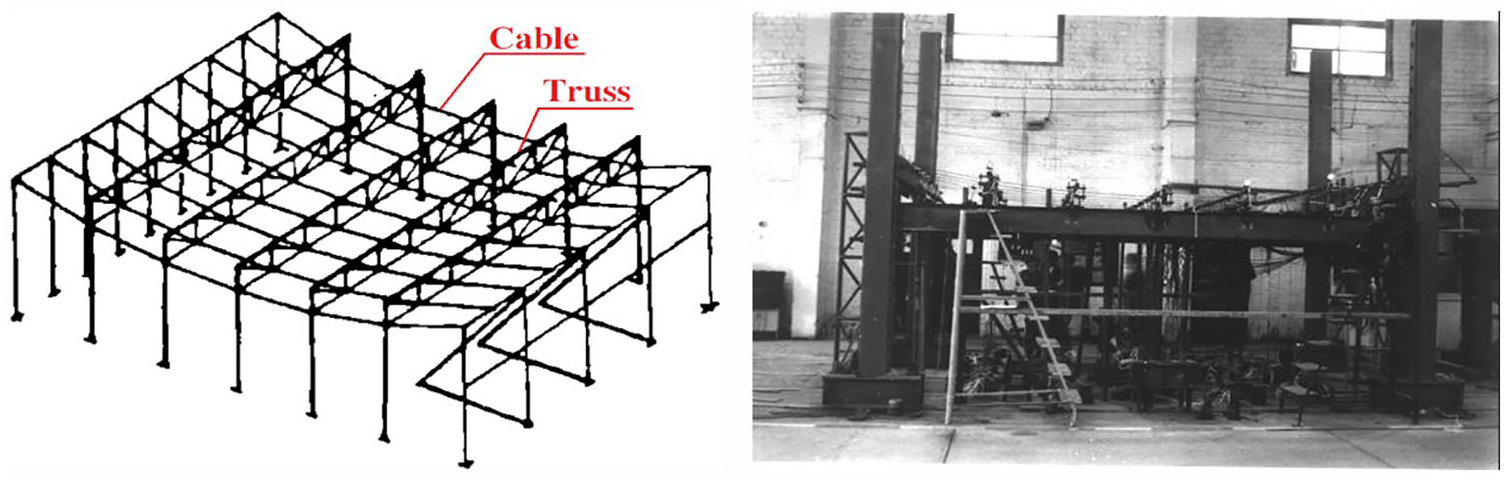
TSSCCSRS and the model experiment.
Thorough research preceded the practical application of TSSCCSRS was conducted:
(1) Proposing a simplified analysis and rational design method 15 : TSSCCRS was treated as a series of beams on interactive elastic foundations. An analytical solution was developed to calculate deflections and internal forces. The appropriate downward displacements of the truss ends were determined, ensuring that the convex bending moments at the first prestress stage closely matched the concave bending moments at the second full-loading stage.
(2) Studying the dynamics characteristics of TSSCCRS: An analytical solution was derived based on the above model, enabling easy determination of its natural frequencies and mode shapes.
(3) Developing a computer program 16 : This program facilitated geometrically nonlinear analysis of cable-type structures. The combined use of analytical and numerical methods provided valuable insights into the behavior of TSSCCRS.
(4) Conducting an experimental study of a model TSSCCRS 17 : A model measuring 4.8 m × 3.6 m was constructed (Figure 5), and both static and dynamic tests were performed. These tests not only explored practical challenges but also validated the feasibility of the proposed analytical methods.
The research findings were successfully applied in the design and analysis of the Anhui Gymnasium 18 (Figure 6) and the Shanghai Yangpu Gymnasium 19 (Figure 7) respectively. Professor Lan summarized the theoretical study and engineering practice of TSSCCSRS in 1991. 20
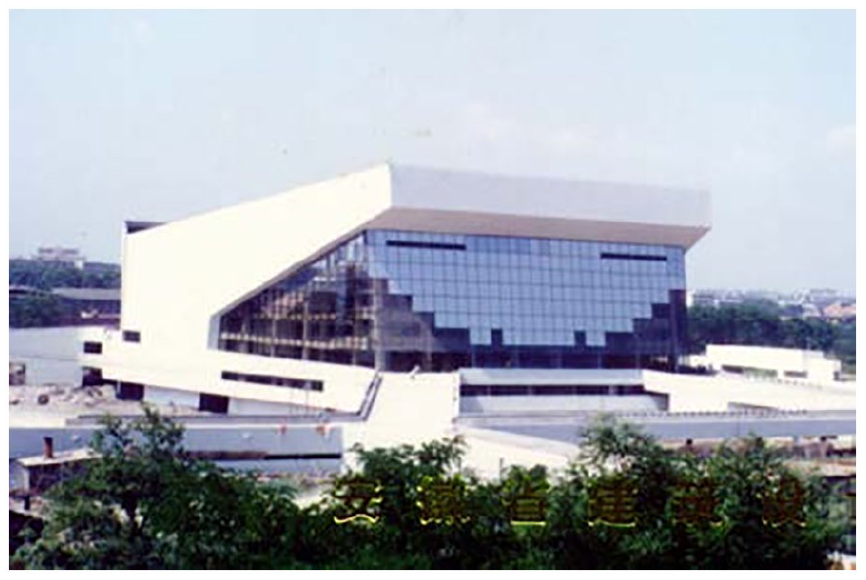
Anhui Gymnasium.
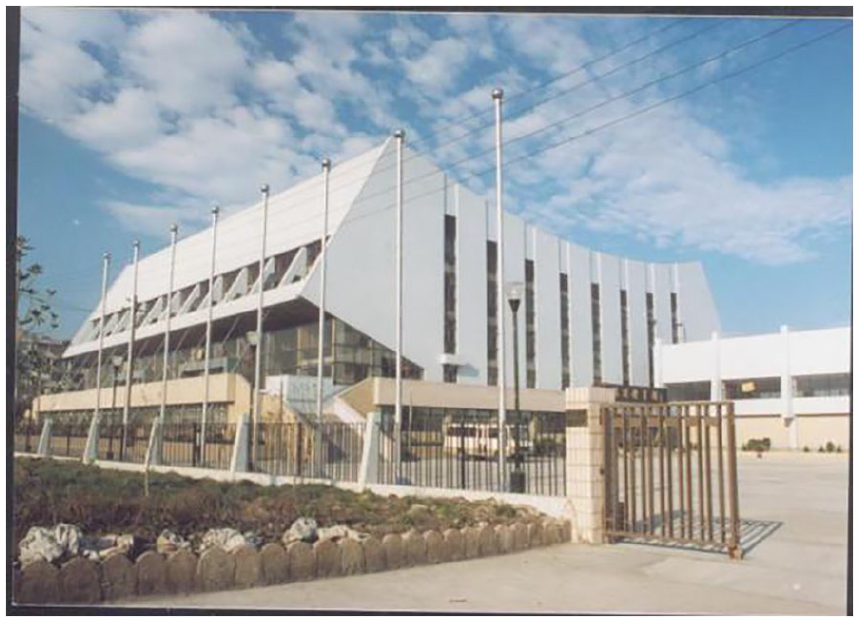
Shanghai Yangpu Gymnasium.
Leader of the research on membrane structures in China
Professor Lan attended the Third International Conference on Spatial structures held in Surrey, UK in 1984, and the 1986 symposium of International Association for Shell and Spatial Structures (IASS) held in Osaka of Japan. He realized that it was time for China to research membrane structures. In 1991, Professor Lan applied for and received the funding from the National Natural Science Foundation of China (NNSFC) with the project of ‘Study on the analysis, form design and experiment of tension structures’, which was the first research project on membrane structures funded by the NNSFC. His research included the initial geometry analysis, the full tension process analysis, cutting pattern analysis, the static performance and experiments, as well as the material properties of the membrane.21 –27
The fruitful and practical research results of professor Lan were adopted to the specifications of grid structures, cable structures and membrane structures.
A great pioneer in the development of spatial structures in China
Compared to his research work, Professor Lan spent more time on social work for developing spatial structures in China.
Founder of social organizations for spatial structures
Professor Lan was one of the main founders of three organizations for spatial structures.
Committee on Spatial Structures
Since 1949, a couple of shells, space frames, suspended-cable structures were built successfully in China. The theoretical analysis, design, manufacture and construction technics had been improved to a certain level for practical application. The reform and opening up policy from 1978 led to rapid economic development in China, and provided a great opportunity for the application of spatial structures. At this historic moment in 1981, Professor Lan together with other 10 experts proposed to establish a social organization for spatial structures to provide a platform for all the professors, researchers, and engineers to exchange idea and technics of spatial structures. After comprehensive preparatory work, with the objective of disseminating and promoting spatial structures in China, the Committee on Spatial Structures (CSS) under the Association for Bridge and Structural Engineering, China Civil Engineering Society was established in Fuzhou on March 7, 1982. 28 There were totally 16 members of the committee, and Professor Lan was elected as the deputy director of the committee. From then on, Professor Lan served as the chief organizer of the committee, and was elected as the director in 2002, when the number of members increased to 48 all over China.
The CSS has been organizing national conferences on spatial structures every 2 years. There were 79 attendants in the first conference, and there were more than 500 attendants in the 40th anniversary held in 2022.
From July 1982, the CSS began to publish the “Briefing of Spatial Structures,” a newsletter to provide information relating to spatial structures to researchers, designers, and manufacturers in China, including basic knowledge, recent achievements and applications, and information of conferences on spatial structures. At that time, there were no internet and no modern social media, and the information exchange is very inconvenient. The newsletters were all printed and mailed to hundreds of readers. This newsletter has played an important role in helping researchers and engineers understand spatial structures. The newsletter was published quarterly before 1993. And then it was published bimonthly with the newly established China Association for Spatial Structures (CASS). From 2016, it has been published electrically, and its readers have been increased to many thousands. The latest issue is No. 197, introducing the events of CASS and three newly built distinctive spatial structures.
Not only acted as an organizer, Professor Lan took all kind of opportunities and tried his best to introduce spatial structures, and called on the professors, researchers, and engineers to study spatial structures. He made many reports in the conferences and published many papers introducing the state-of-art, the advantages, and prospects of spatial structures.29 –32
The CSS and the conferences made so significant contributions to the development of spatial structures, that the committee has become a very successful and fruitful organization in China Civil Engineering Society.
China Association for Spatial Structures
From 1979, together with other professors, he went to factories to encourage them to manufacture the joints for space frames. And then China established the first specialized companies for space frames, including the welded hollow spherical nodes manufacture in Fenyang of Shanxi province and bolted spherical nodes manufacture in Xuzhou of Jiangsu province. The number of the specialized space frame companies increased rapidly from 1980s, and there were dozens of them in 1990s.
CSS is very successful in providing the platform for professors and engineers to exchange their achievements in theoretical research, analysis and design. As the space frame companies developed very fast in 1990s, they need another platform to share the technics and experience of the manufacture and management of space frames. In this situation, together with some CSS members and some founders of space frame companies, Professor Lan established the China Association for Spatial Structures (CASS), under China Steel Construction Society in 1993, and was elected as the president of CASS. 33 As Professor Lan proposed, the main tasks of the CASS have been to improve the technics of manufacture, management, and the quality of the products of spatial structures.
CASS have been organizing conferences every year on various topics, such as factory roof structures, tube structures, sports structures, and so on.
The association has been so successful, and its members has increased to more than 550 from 33 in 1993.
Committee on Membrane Structures
From late 1980s, Professor Lan began to introduce membrane structures to China and encourage professors to research membrane structures. He also encouraged the Chinese companies to design, manufacture and produce membrane structures.31,32,34,35 As the number of researchers and the companies interested in membrane structures increased rapidly, Professor Lan established the Committee on Membrane Structures (CMS) in 2002, under CASS, focusing on the activities of membrane structures. Professor Lan was elected as the director of the 12-member committee.
The CMS has done a very influential work for CASS, that is, the grading management of the membrane companies from 2005. Up to now, this work has greatly improved the ability of the membrane companies, as well as the technics of manufacture, level of management, and the quality of the products and project. There are more than 300 membrane structure companies in CASS now.
Leader of the international technical exchanges
Form 1980s, Professor Lan attend the International Conference on Space Structure and IASS symposia. He had made great effort to introduce timely the international information of spatial structures to China, and reported the development of spatial structure in China to the world.32,34 –39 He also organized groups of Chinese delegates to attend the international conferences from 2000. And he invited international experts to China to give lectures and share their experience.
Professor Lan had also organized three international conferences. 40 The first one was the International Colloquium on Space Structures for Sports Buildings, held in Beijing in 1987, supported by IASS. The second one was Asian Pacific Conference on Shell and Spatial Structures (APCS), held in 1996 in Beijing. The APCS was originated from a Korea–Japan colloquium co-organized by Professors Yasuhiko Hangai from Japan and Taek-Jin Kwun from Korea in 1984. The third one was IASS/APCS 2006 held in Beijing before the 2008 Olympic Games, for many new and large spatial structures were built for the Games. The subject was ‘New Olympics New Shell and Spatial Structures’, and there were more than 300 attendants to the conference. Professor Lan also helped to organize the APCS 2015 in Xi’an and the IASS/APCS 2022 in Beijing. He provided very constructive advices, including the topics, program, the plenary lectures, and the members of the conference committees.
Professor Lan also helped the cooperation between domestic and foreign companies. The following picture shows the meeting between delegates of Mero and Xuzhou Tower space frame company in 1993(Figure 8). 41
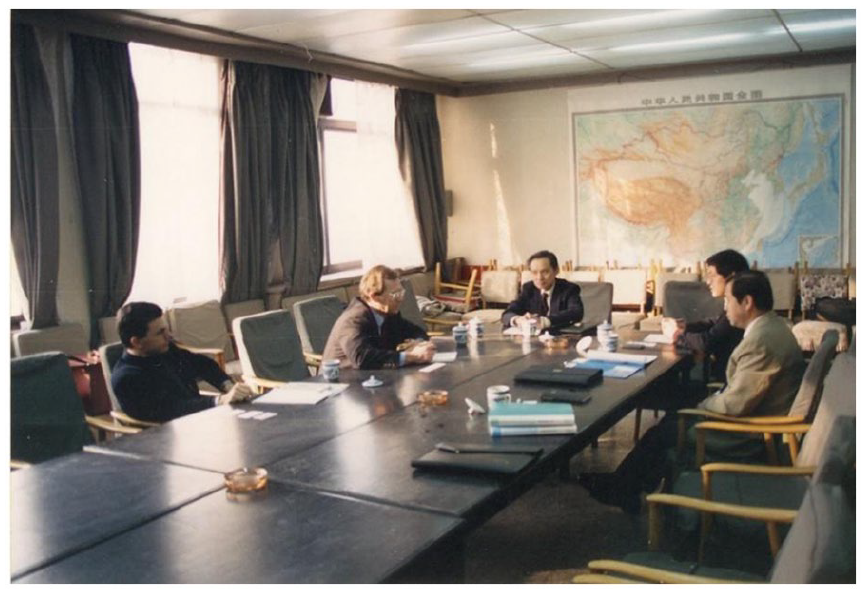
Organizing cooperation meeting between Mero and Tower Companies.
Founder of the specification system for spatial structures
The codes and specifications are necessary to ensure the quality of design, manufacture, and construction of building structures. Professor Lan had led the establishment of specification system for spatial structures in China.
In the early 1980s, Professor Lan led the compilation of the specification for space frames. 42 The contents included structural type selection, analysis and design, node details, component manufacturing, and installation. This was the first specification for spatial structures in China. Professor Lan presided over the revision of this specification in 1990. 43 In order to strengthen the quality assessment requirements for space frame structures in China, he led the development of standard for quality inspection and assessment of space frames. 44 Professor Lan also worked on the specifications for ball joints and high strength bolts. 45 In order to improve the understanding and application of the specification for space frames, Professor Lan published the book Application and Guidance for the Design and Construction of Space Frame Structures in 1995. 46
Due to the number of latticed shell projects increased rapidly with different types and different sizes, from 1995, Professor Lan began to establish specification for this kind of structures, which was issued in 2003 47 and combined to one with the JGJ 7. 48 From 2001, Professor Lan led the establishment of the specification for membrane structures, which was issued in 2004. 49
By 2012, when the specification for cable structures was issued, 50 Professor Lan had established the whole specification system for spatial structures, including grid structures, membrane structures, and cable structures, and the contents included structural type selection, analysis and design, manufacture and installation, as well as quality inspection, and acceptance requirements.
This set of technical specifications have greatly prompted the development of spatial structure industry in China.
Recognitions
Professor Lan was a very kind man with great personality. He had devoted himself to the spatial structure industry of China, and never forgot to encourage and inspire young men to thinking more about the future of spatial structures. He spent a lot of time on summarizing experience and looking forward to the future of the spatial structures in China.51 –53 He kept publishing papers until he was 92.54,55
Due to his excellent achievements in spatial structures, he received the Pioneer’s Award during the Fourth International Conference on Space Structure in 1993 (Figure 9). In 2002, he received the Outstanding Contribution Award for Spatial Structures of China by CSS and CASS, for his work on the research, design and the contributions to the management of the organizations of spatial structures. And in 2006, professor Lan was conferred the Honorary Membership of the IASS, in recognition of his long time outstanding service to the IASS (Figure 10).
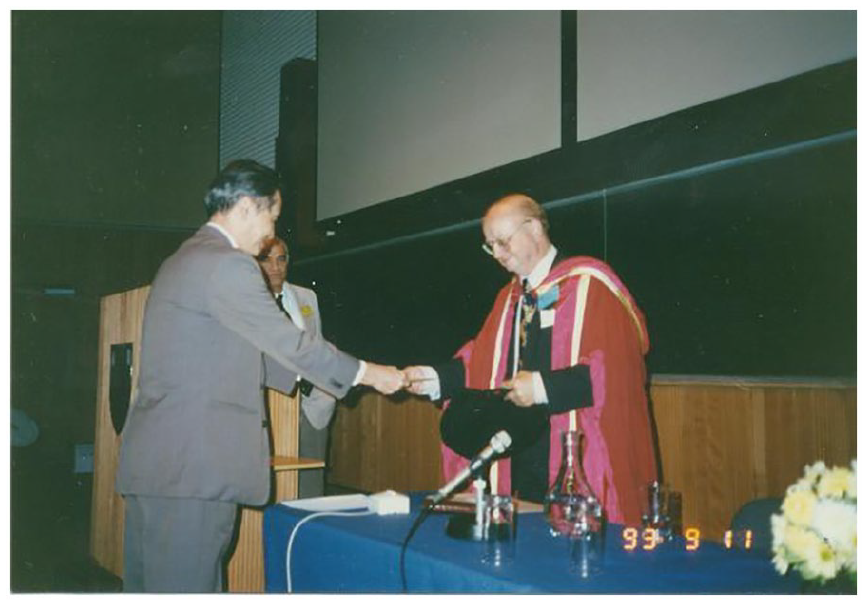
Lan received Pioneer’s Award in 1993.
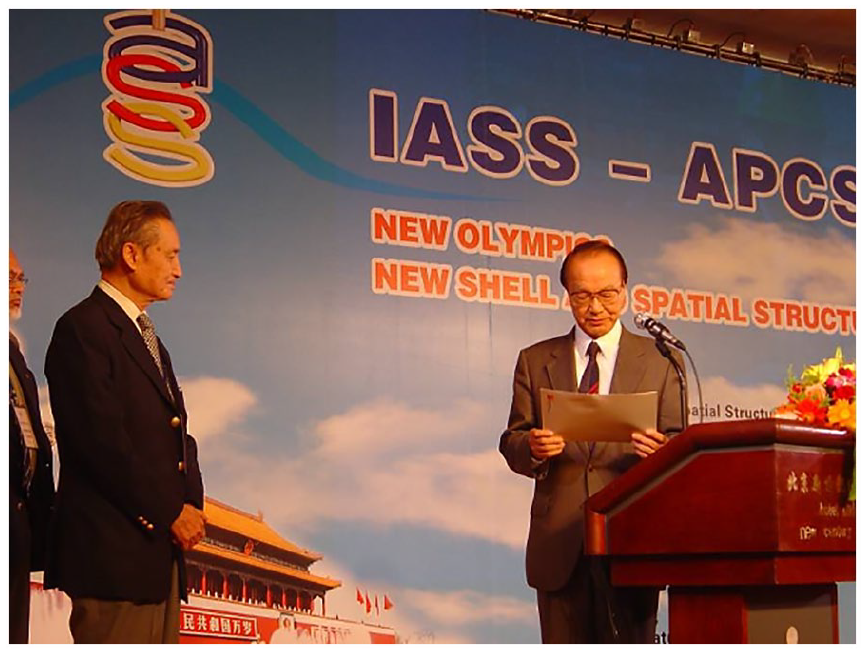
Lan was conferred HM of the IASS
Conclusion
We have highlighted the notable contributions of Professor Tien Lan, encompassing his significant research, design endeavors, and impactful social initiatives. However, these achievements merely scratch the surface of his immense influence on the development of spatial structures in China. Professor Lan garnered widespread recognition throughout China, yet, as Professor Shizhao Shen aptly stated, no amount of acclaim could ever truly encapsulate his legacy.
The academic philosophy and remarkable personality of Professor Tien Lan will forever remain ingrained in our hearts, serving as a timeless inspiration to all.
Footnotes
Declaration of conflicting interests
The author(s) declared no potential conflicts of interest with respect to the research, authorship, and/or publication of this article.
Funding
The author(s) received no financial support for the research, authorship, and/or publication of this article.
