




Abstract
This paper introduces the development process of building cable structures in China over the past 70 years according to three stages: the initial, slow, and rapid development. It also summarizes the types of cable components and joints of building cable structures. The structural characteristics and representative projects of suspension, cable membrane, beam string (cable-supported), and cable dome structures are reviewed in this paper. Finally, the achievements and prospects of cable structures in China are discussed.
Keywords
Introduction
Building cable structure is a prestressed building structure system formed by tension cables as the main load-bearing members. The building cable system gives full expression to the tensile properties of high-tensile cables. By applying a prestress to improve the internal force distribution and deformation characteristics of a structure, the structure becomes more economical and efficient. With improvement of cable system construction technology and the increasing maturity of cable prestressed tension construction technology, the building cable structure has become a preferred structural system for modern large-span building structures. The entire development process of building cable structures in China is divided into three stages. The classification and characteristics of cable members, cable joints, and structural systems in building cable structures are summarized, combining the representative building cable structure projects in China at various stages, presenting a clear lineage of the development of building cable structures, drawing a blueprint for the development of building cable structures in China, and helping China’s building cable structure step into the world’s leading ranks.1 –7
Development process of building cable structures
The development process of building cable structures in China is divided into three stages: starting, slow development, and rapid development, according to the law of building cable structure development.
Initial stage of building cable structures
In the early 1950s, the history of modern cable structures began with the American Dorton Arena, as shown in Figure 1. Subsequently, China’s building cable structure entered the initial stage. In 1961, the Beijing Workers’ Gymnasium used a double-layer suspended roof for the first time, as shown in Figure 2. It was a representative project of a suspension structure in the early stage of the founding of China; the stadium adopted a double-layer spoke cable structure, with a circular plan shape, and the span of the gymnasium was 94 m.
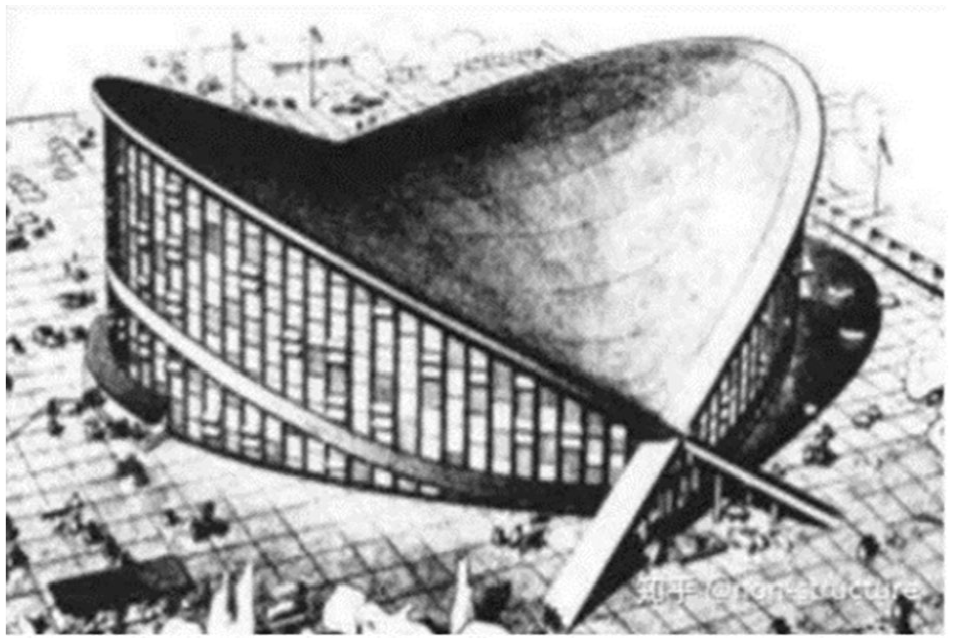
American Dorton Arena.
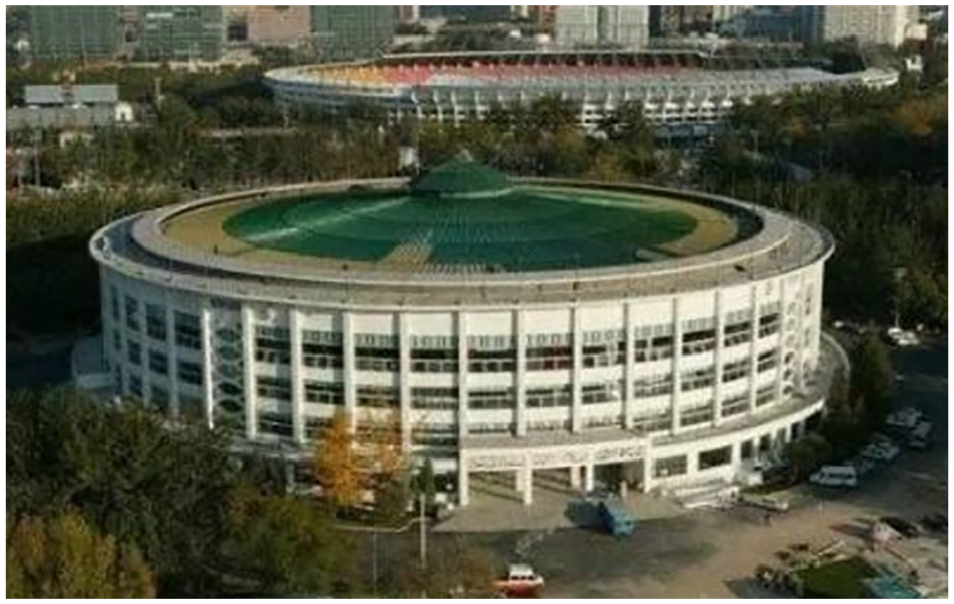
Beijing workers’ gymnasium. 4
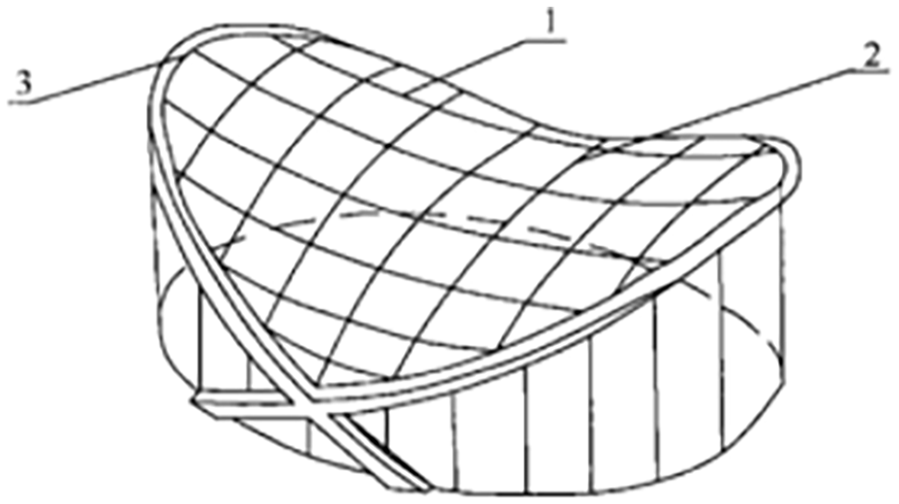
In 1962, the saddle-shaped hyperbolic paraboloid suspension roof of Tianjin University Gymnasium designed by Liu Xiliang was the first saddle-shaped suspension structure building in China, and research was conducted as an experimental building, laying the foundation for the construction of similar structures. 8 The plane of the roof was elliptical, as shown in Figure 3, with a long axis of 36.6 m and a short axis of 24.6 m. In 1969, Zhejiang People’s Gymnasium adopted a structural system combining an elliptical building plan and a saddle-shaped hyperbolic roof, as shown in Figure 4. Based on the Tianjin University Gymnasium, the structure changed to the form of a curved beam. The oval competition hall was 80 × 60 m, with a plan length of 125.24 m from north to south and 103.8 m from east to west.
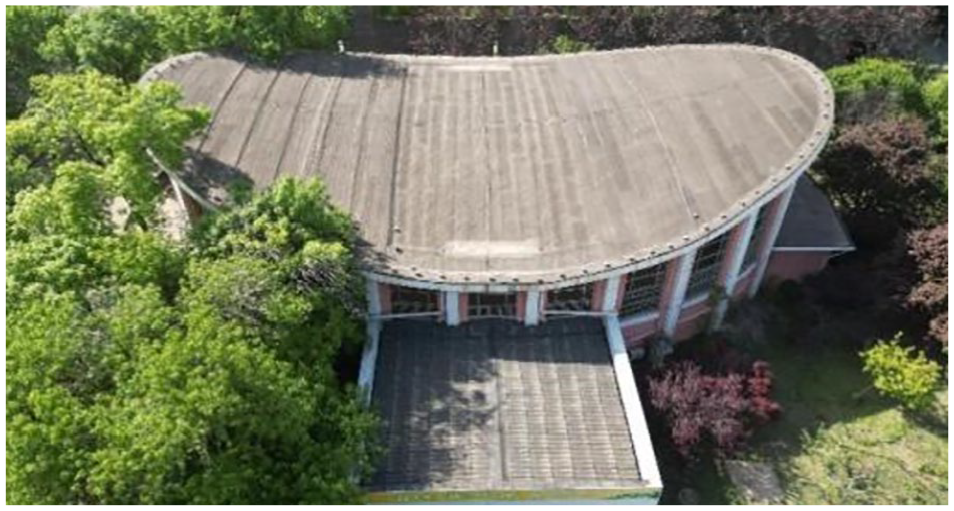
Tianjin University gymnasium.
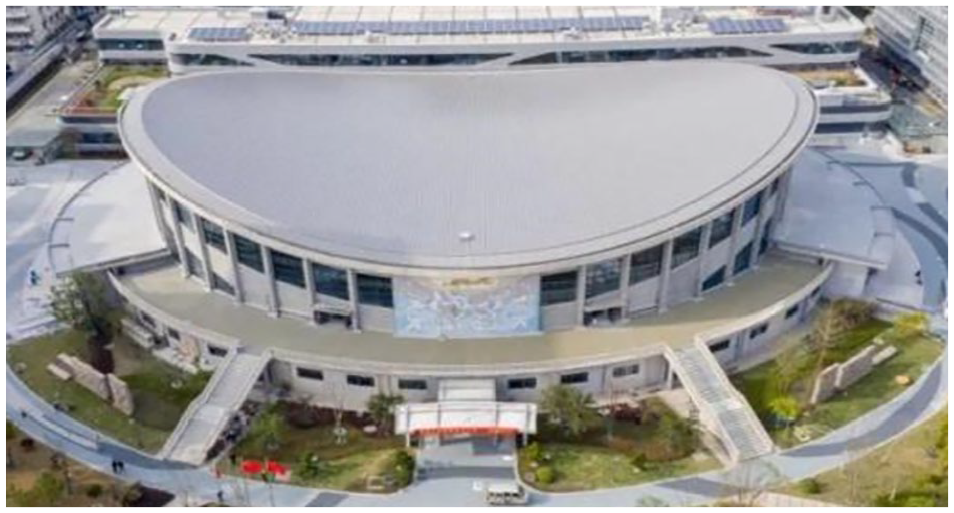
Zhejiang people’s gymnasium.
Slow development stage of building cable structures
In the 1980s, owing to the weak economic and technological foundation of China and the complex political situation worldwide, the application of building cable structure engineering entered a period of strength accumulation. At this stage, China’s building cable structure engineering had not been significantly developed in terms of quantity and scale and lagged behind the world in terms of the speed of development of building cable structures. However, at this stage, scientific research and engineering personnel for cable structures continuously analyzed theories and processed components and construction techniques, resulting in a small number of building cable structure projects, primarily owing to the demand for sports events.
Jilin Skating Hall (1987) was the ice sports venue for the 6th National Games, as shown in Figure 5. The project adopted the positive and negative curvature cable suspension roof and reinforced concrete support structure system, and the bottom floor profile size was 67.4 × 76.8 m. Beijing Chaoyang Gymnasium (1990) was the volleyball competition venue for the 11th Asian Games, with an olive-shaped pavilion plan and a saddle shape, as shown in Figure 6. The structure was cantilevered above the ground, with two 25.3-m-high cable arches on each side. In addition, a small number of building cable structure projects such as Jiangxi Gymnasium and Fujian Chaozhou Gymnasium were developed at this stage, and the Chinese building cable structure was slowly advancing with considerable difficulty.
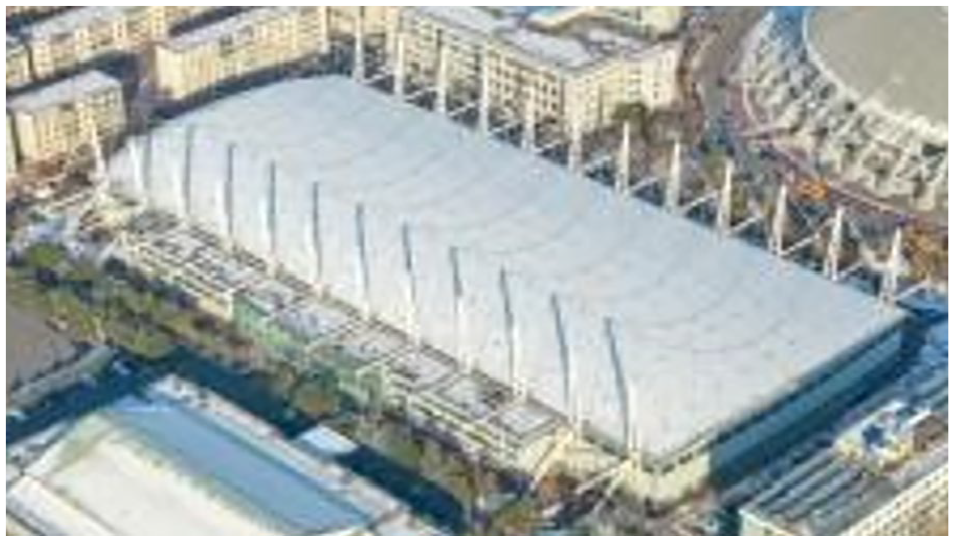
Jilin skating hall.
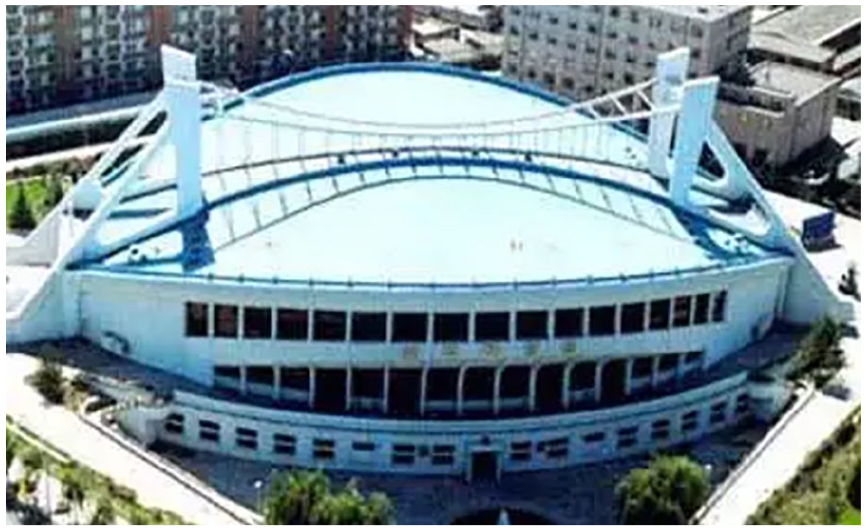
Beijing Chaoyang gymnasium.
Rapid development stage of building cable structures
Around year 2000, China’s economy rapidly developed, and the development of building cable structures entered a new stage. Composite cable structures, which are subjected to collaborative forces by rigid substructures and flexible cables, were rapidly developed and widely used. In 1998, Tianjin University began to conduct relevant research on beam string structures. 9 In 1999, the T1 terminal of Pudong Airport was the first large-scale public building project in China to use a beam string structure, as shown in Figure 7, with a maximum span of 82.6 m.
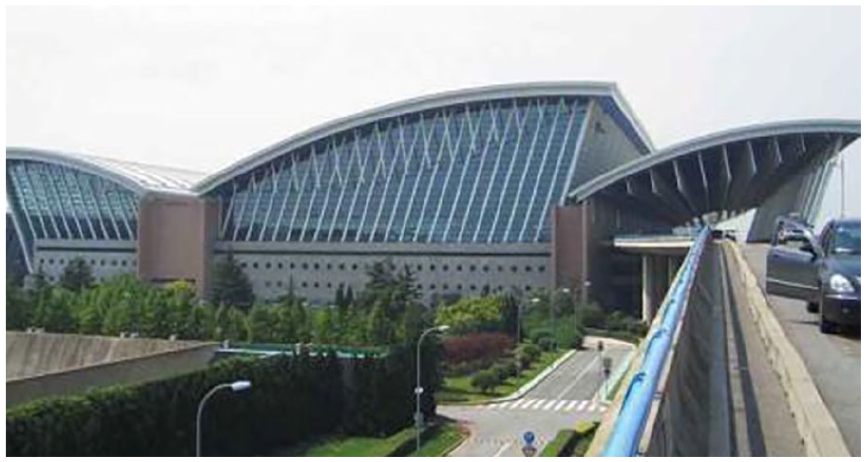
Pudong International Airport Terminal (T1).
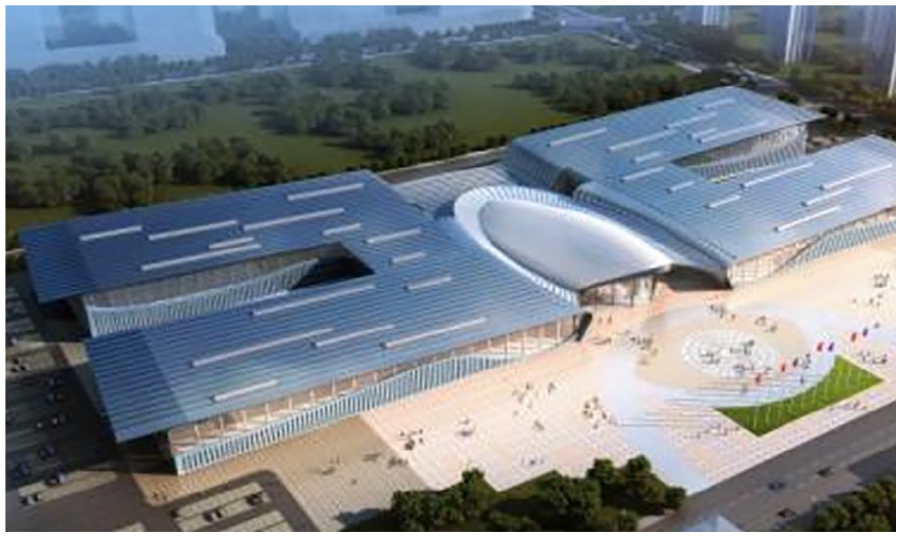
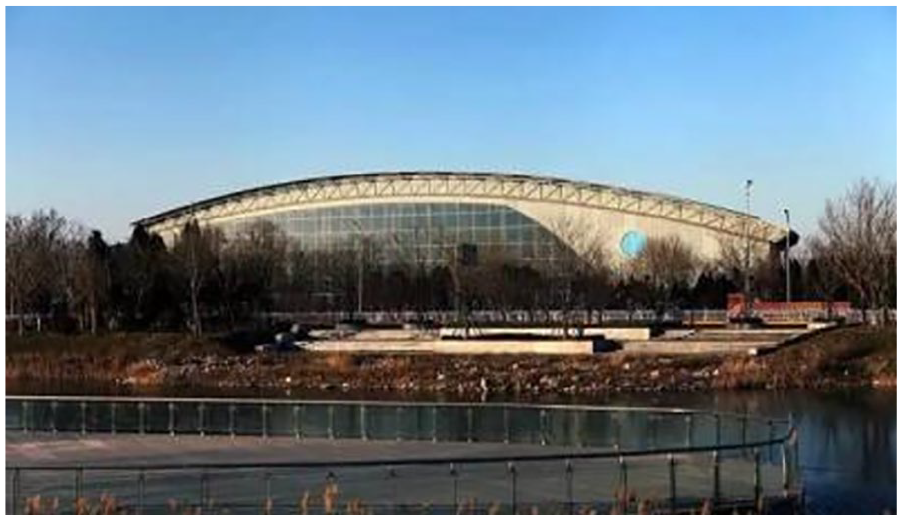
Since 2010, there was observed a new trend in the development of cable structures in China, with the transition from semi-rigid to flexible cable structures. Numerous large span cable dome, suspension, and cable net structures have been completed gradually. In 2010, the cable dome structure of Ejin Horo Banner Sports Center in Ordos (Figure 8) was the first large-span dome structure in China. In 2016, Tianjin University of Technology Gymnasium (Figure 9) was the first 100-m cable dome structure in China. In 2018, Shijiazhuang International Exhibition Center (Figure 10), the world’s largest suspension structure exhibition center, was completed. The Beijing National Speed Skating Oval (Figure 11), completed in 2020, was the cable net structure with the largest span and scale among similar structures in the world. At this stage, China’s building cable structure flourished, both in quantity and scale, achieving a qualitative breakthrough, and stepping into the ranks of world powers in the field of large-span building cable structures.
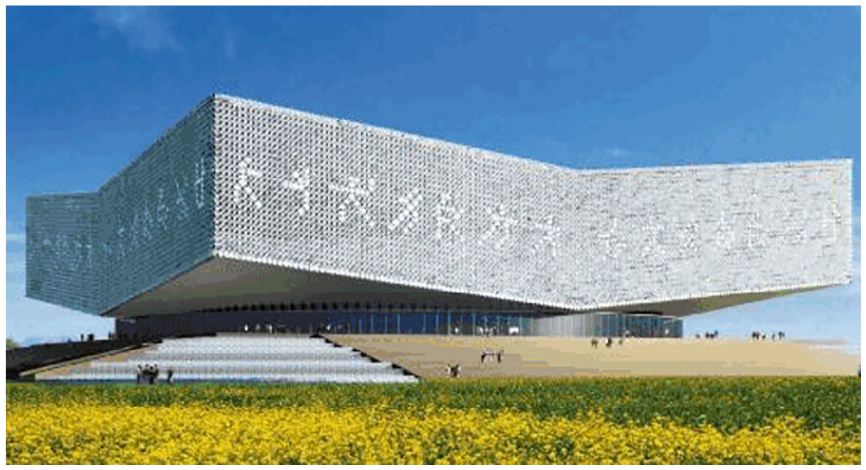
Ejin Horo Banner Sports Center in Ordos.
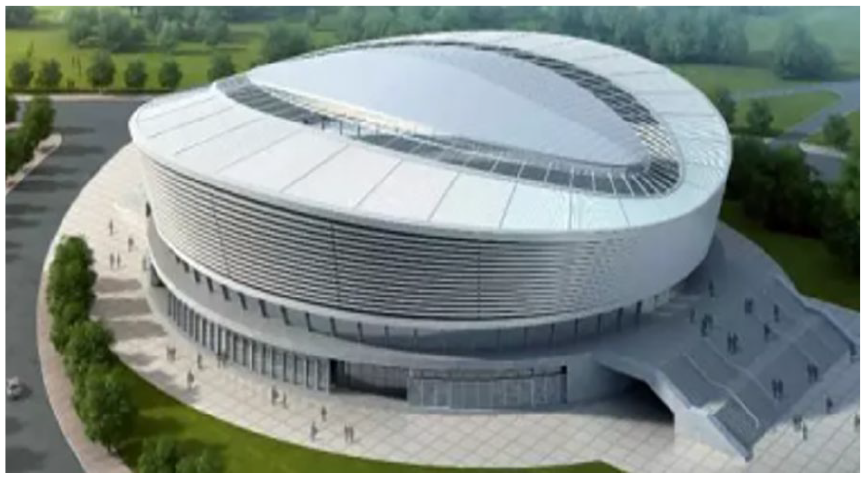
Tianjin University of Technology gymnasium.
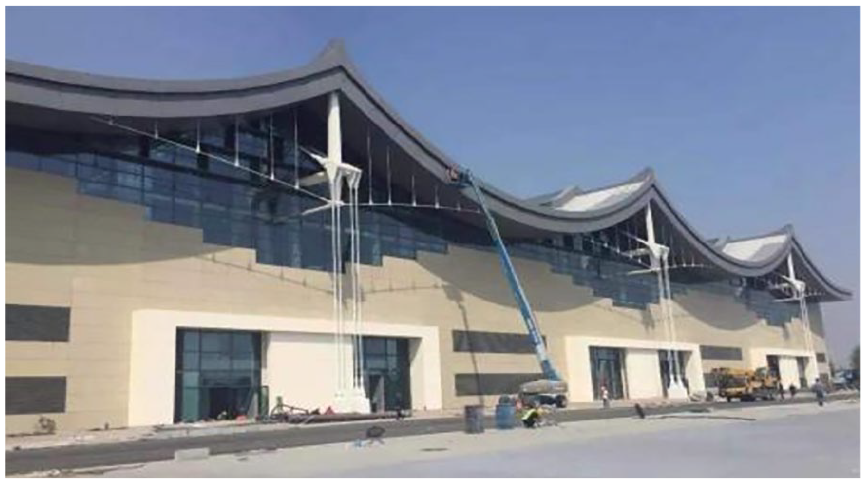
Shijiazhuang International Exhibition Center.
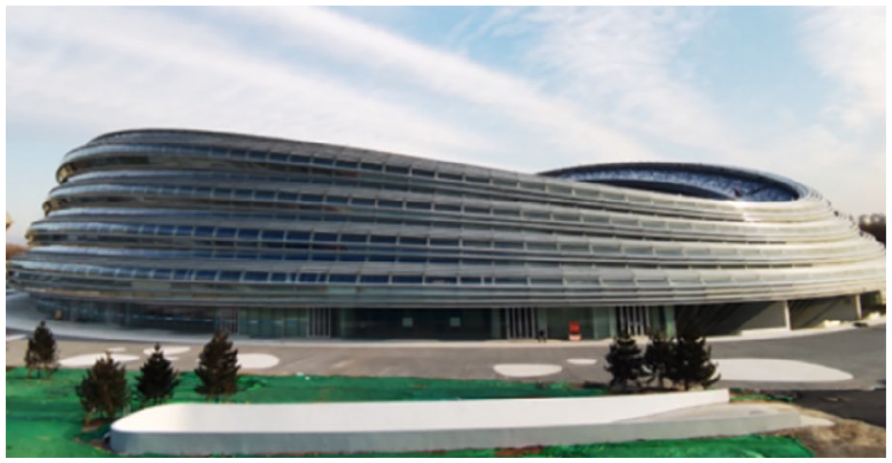
Beijing national speed skating oval.
Classification and development of cable components
Cable components are generally made of high-strength steel wires or steel strands that can completely utilize the tensile strength of steel and are key load-bearing components in building cable structures. The commonly used types of cables in building cable structures in China are steel rods, semi parallel steel wire cables, Galfan-coated steel cables, and full locked coil cables, as shown in Figures 12–15. In the early days, the cable components used in building cable structures in China were mainly imported. With the development of cable manufacturing technology in China, the localization of cable components has gradually been realized. In 2008, semi parallel steel wire cables were localized and applied to the badminton hall project of Beijing University of Technology. In 2010, Galfan-coated steel cables were localized and applied to the Yueqing Olympic Sports Center project. In 2016, the localization of airtight cables was achieved for the first time in Guizhou Tongren Olympic Sports Center Gymnasium. In 2018, relying on the Beijing National Speed Skating Oval project, China realized the complete localization of the full locked coil cable net and broke the foreign technical blockade and barriers. After 2010, the main types of cables used in building cable structures in China were semi parallel steel wire and Galfan-coated steel cables. In the past 5 years, full locked coil cables have been widely used in various types of building cable structures.
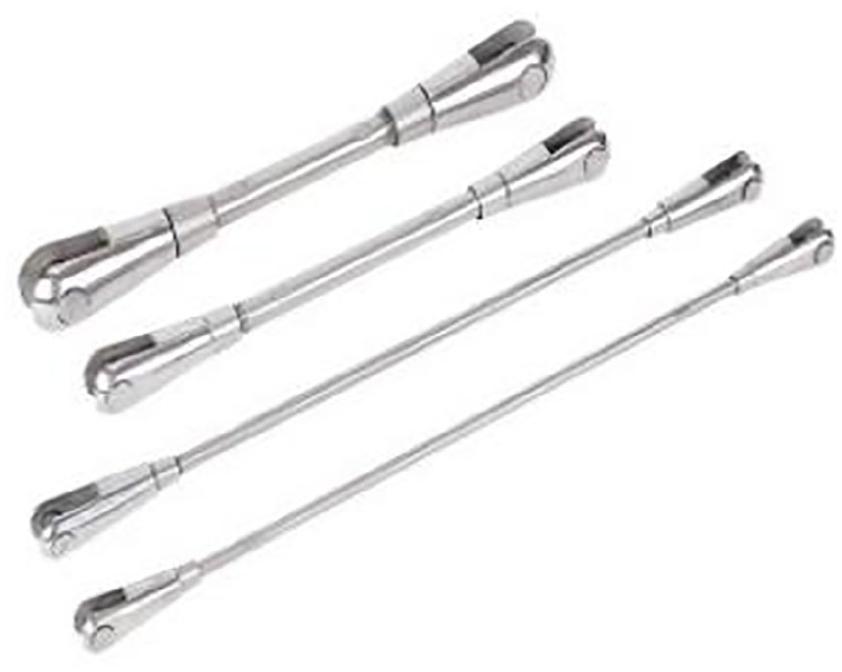
Steel rods.
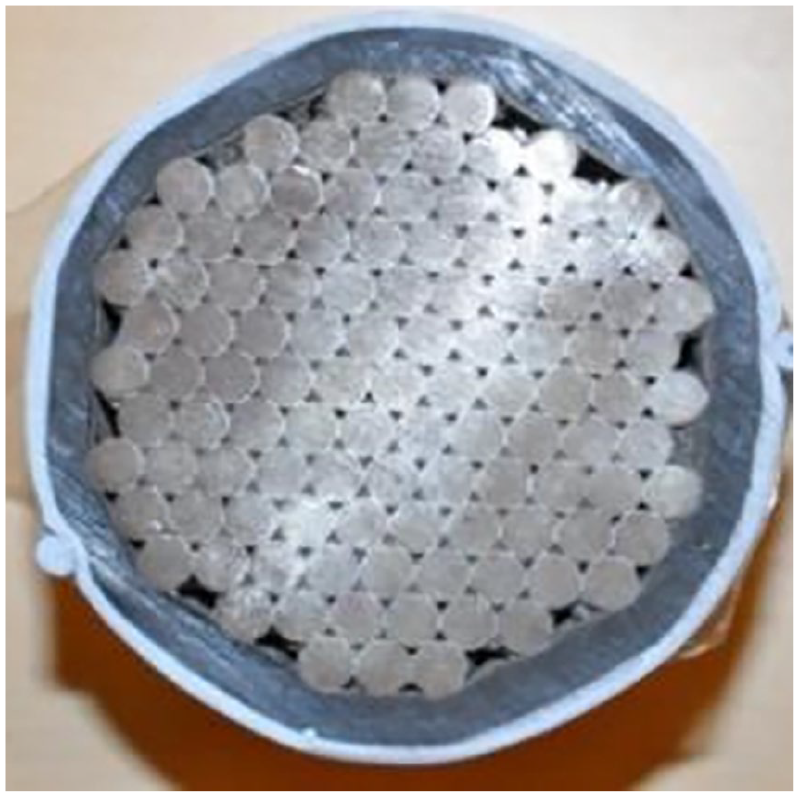
Semi parallel steel wire cable.
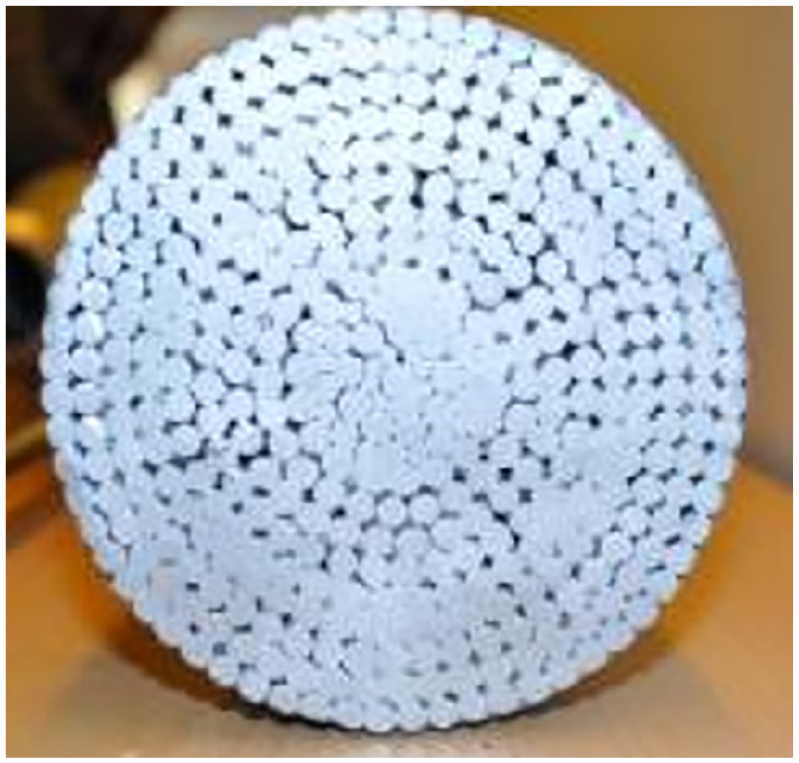
Galfan-coated steel cable.
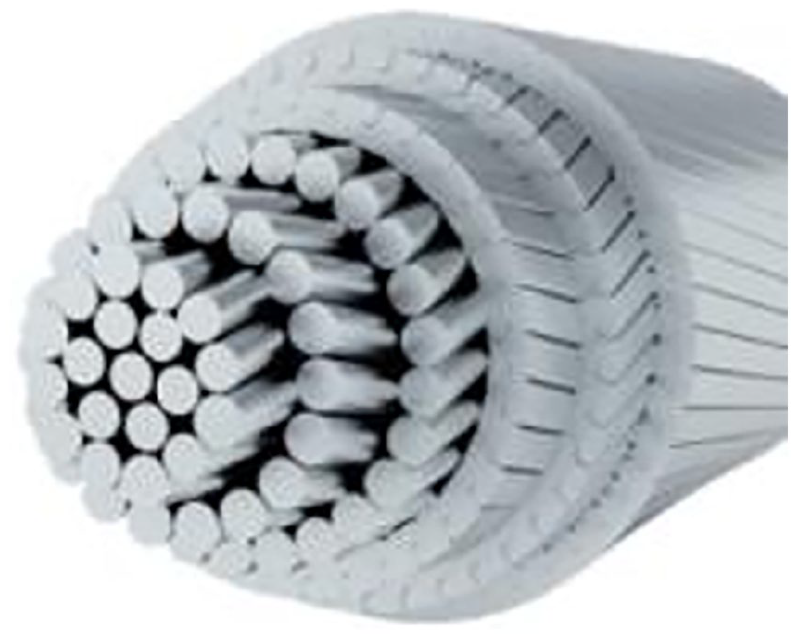
Full locked coil cable.
The cable coating evolved from an early galvanized coating to the current zinc–aluminum alloy coating, improving the corrosion resistance by 2–3 times. The strength of the cable increased from 1370 MPa, in the early stage, to current 2160 MPa. The commonly used cable grades in engineering are 1570, 1670, 1770, and 1860 MPa. With the development of building cable structures toward larger spans, more stringent requirements have been proposed for the strength and performance of cable components.
Classification and construction characteristics of cable structure joints
According to the cable structure characteristics, connection function, and structure of cable joints, the cable joints can be divided into threaded rod connection joints, cable clamp joints, ear plate joints with pin connections, and slidable joints. When joints are more complex, they can be formed by combining basic connection forms.10,11
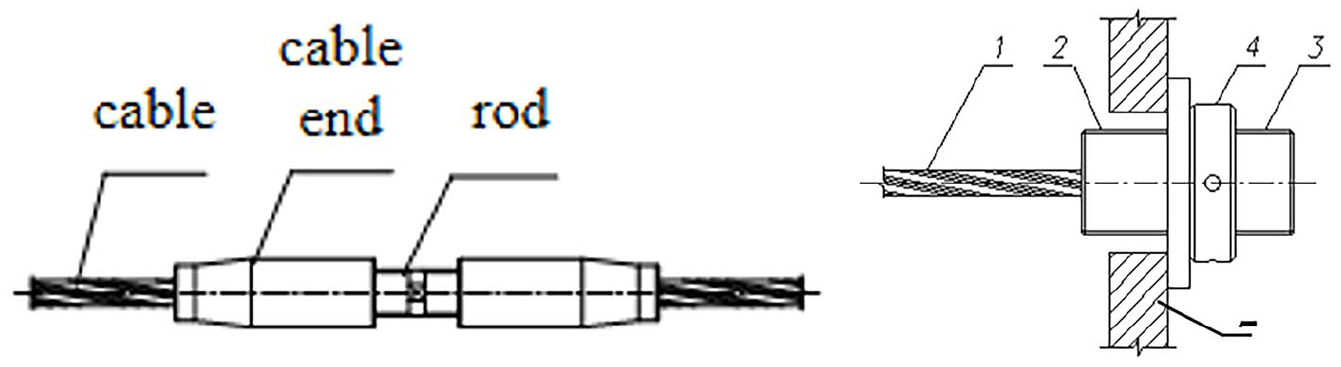
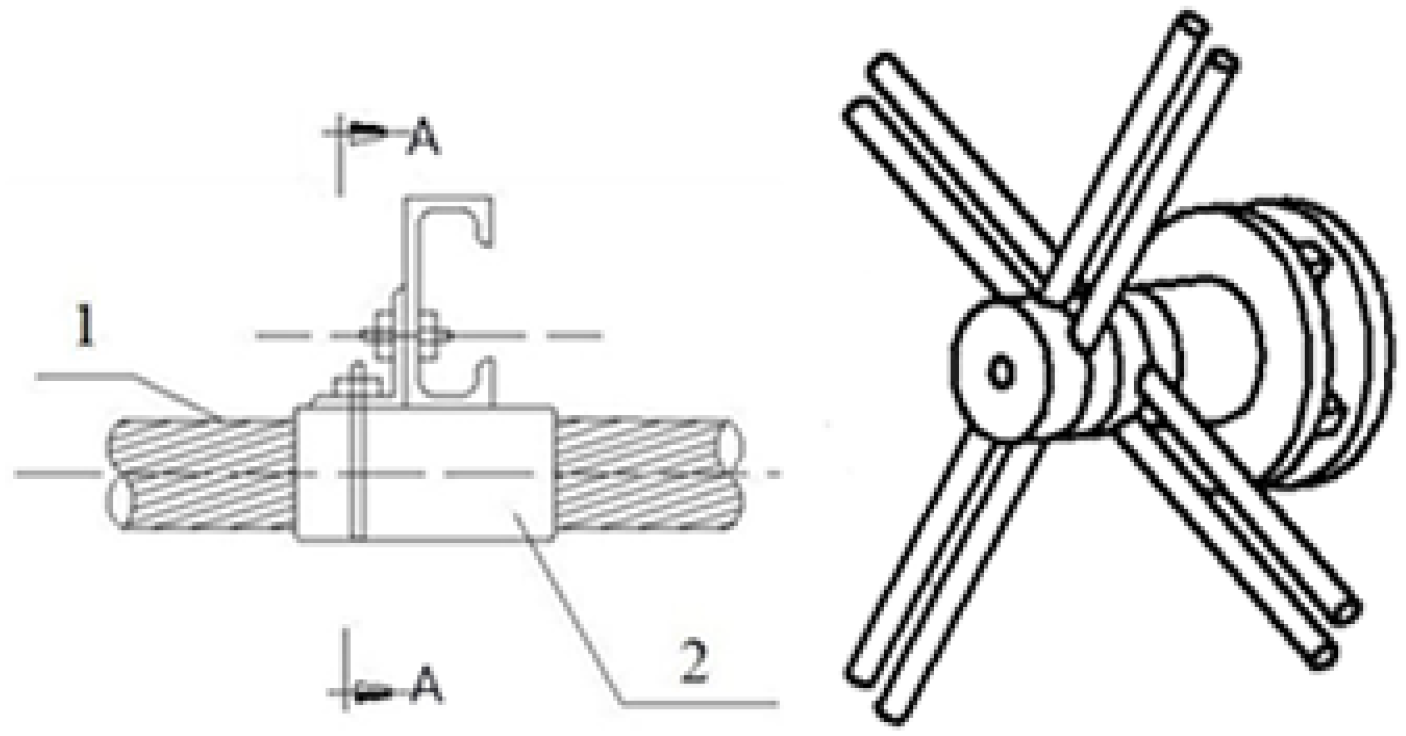
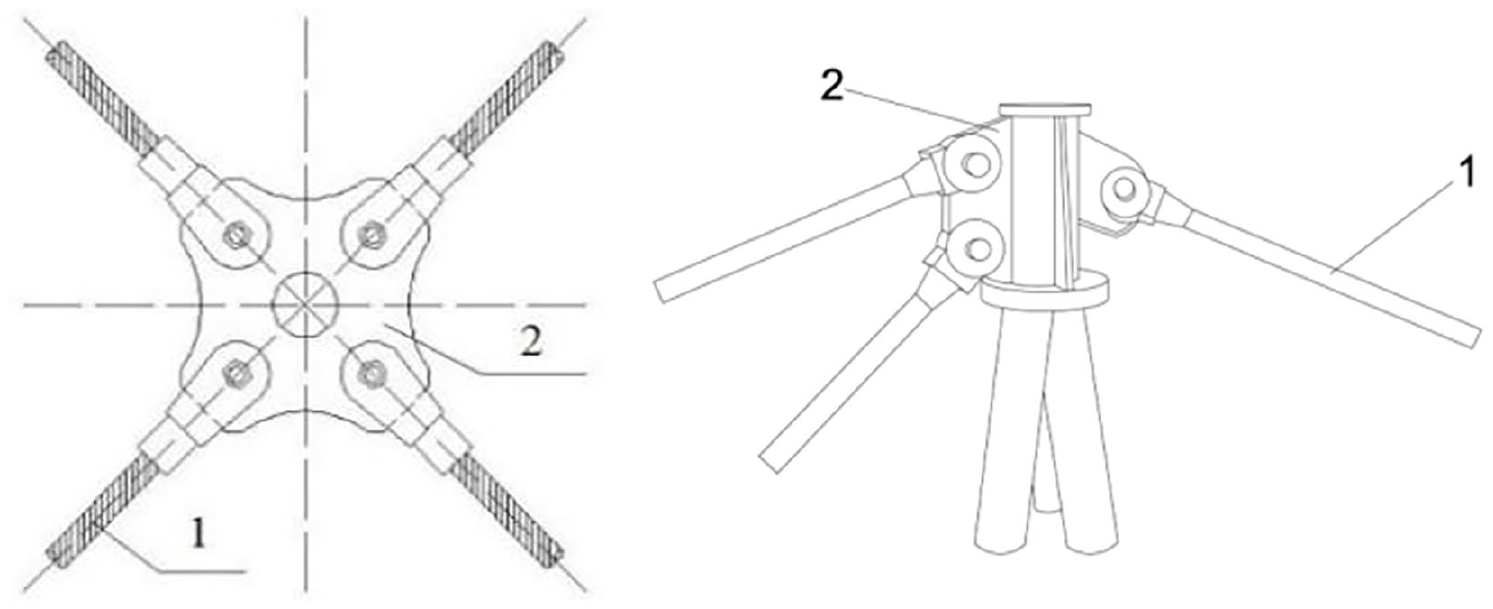
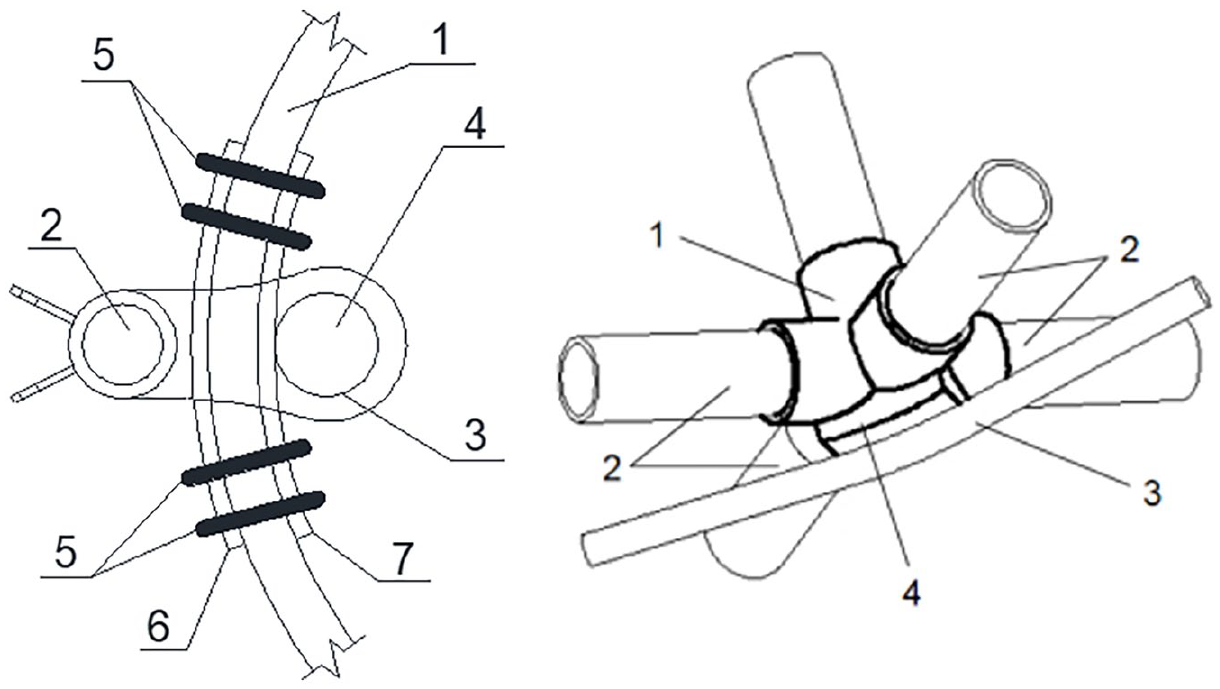
Threaded rod connection joints are used for connecting cables, connecting cables with other rigid members, and anchoring and fixing the cable ends. The common connection forms are shown in Figure 16. A cable clamp joint consists of a cable, main body, pressure plate, high-strength bolts, and other members connected to the joint. The main body and pressure plate are fastened with high-strength bolts to clamp the cable and ensure no relative slip between the cable and the clamp. Figure 17 shows a common form of a cable clamp joint. The ear plate joint with pin connection is connected to the trunnion lug through the pin that can effectively transmit the tension of the cable to the joint. It also achieves a hinge joint in the trunnion lug plane, thereby avoiding significant bending of the cable end. Certain common ear plate joints with pin connections are shown in Figure 18. A slidable joint is a joint in which the cable can slide at the joint position according to the design requirements. Generally, a sliding groove or pulley exists at the joint position for the cable to slide. A typical form of a sliding joint is shown in Figure 19. 11
In engineering, the basic connection forms are often combined based on the functions of the joints. The most common method is to combine the ear plate joint with pin connections with other connection forms such as suspendome systems, cable domes, and other structures that often use a combination of pin trunnion connections and cable clamp node joints. The combined joint forms are shown in Figure 20.
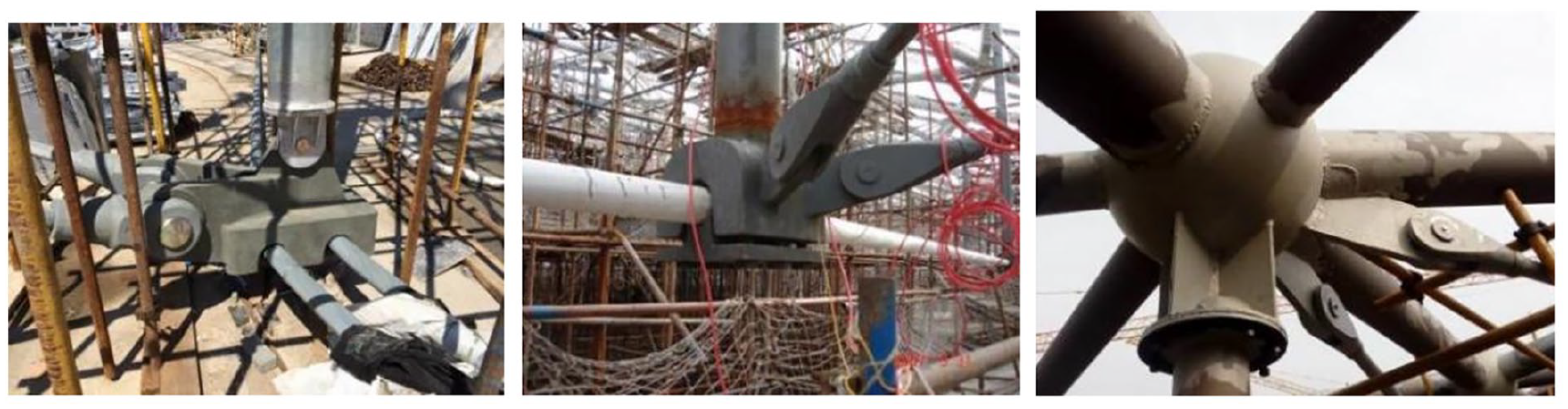
Forms of combined joints.
Types and engineering applications of building cable structures
Currently, the commonly used building cable structures in engineering mainly include suspension, cable membrane, beam string (cable-supported), and cable dome structures. 12 This section summarizes the classification, structural characteristics, and engineering applications of the four typical forms of building cable structures.
Suspension structures
Single suspension cables resist external loads through axial tension of the cables, without bending and shear effects in the structure, and can completely utilize the tensile strength of steel. A suspension structure is a spatial structure formed by the intersection of multiple suspension cables to form a cable net that is subjected to multi-directional forces. The schematics of single suspension cables and a cable net structure are shown in Figures 21 and 22, 13 respectively. Suspension structures have various forms and flexible layouts and can adapt to various building planes. Owing to the lightweight roof, installation does not require large lifting equipment. Therefore, a suspension structure is an ideal spatial structure type for large-span roofs. The first double-layer suspension roof structure used in China was in the Workers Indoor Arena built in 1961, as shown in Figure 2. Later, it was successively applied to the gymnasium of Tianjin University (Figure 3) and Zhejiang People’s Gymnasium (Fig.4). In 2018, the Shijiazhuang International Exhibition Center (Figure 10), which is the world’s largest suspension structure exhibition center, was completed. 14 All seven standard exhibition halls adopted bidirectional suspension structures, with a maximum span of 105 m for the main load-bearing structure and 108 m for the secondary load-bearing structure.
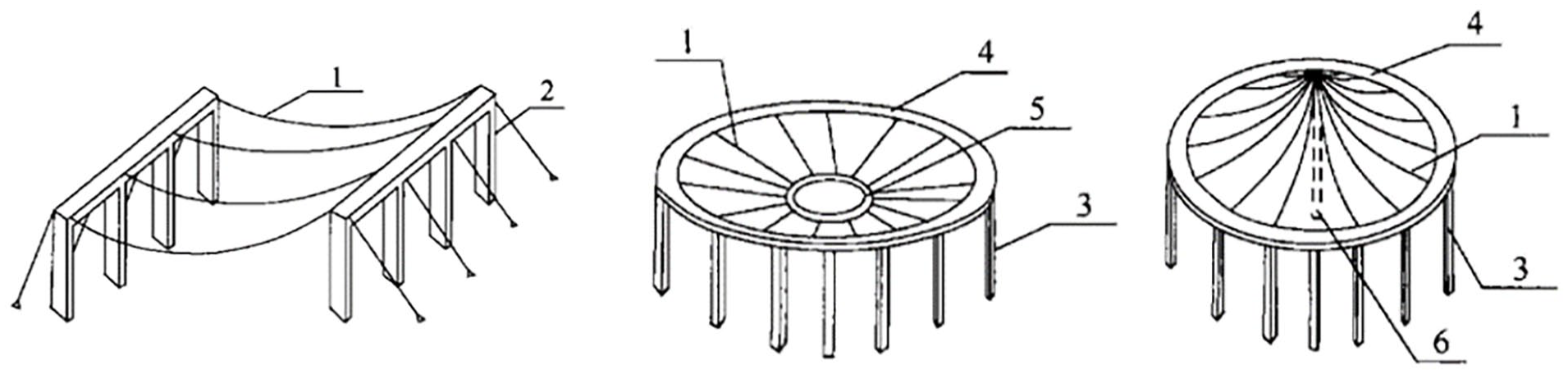
Single suspension cables. 13
Cable net structure. 13
Cable membrane structures
A cable membrane structure is a spatial overall tension system formed by applying prestress through various high-strength membranes and auxiliary structures in a certain way, with sufficient stiffness to resist external loads. In recent years, cable membrane structures, as a new type of structural form, have been increasingly applied in various buildings such as sports venues, exhibition halls, and tourism facilities. This is mainly owing to two reasons. First, the cable membrane structure is a unique, novel, and highly dynamic modern architectural form, allowing architects to completely unleash their artistic creativity and imagination. Second, from the perspective of structural performance, the main load-bearing components of the structure are high-strength tension cables and lightweight tension membranes. By applying prestress to cables and membranes, the overall resistance of the structure to external effects can be improved, making it easy for the structure to have large spans. 15 The following is a brief description of a typical project.
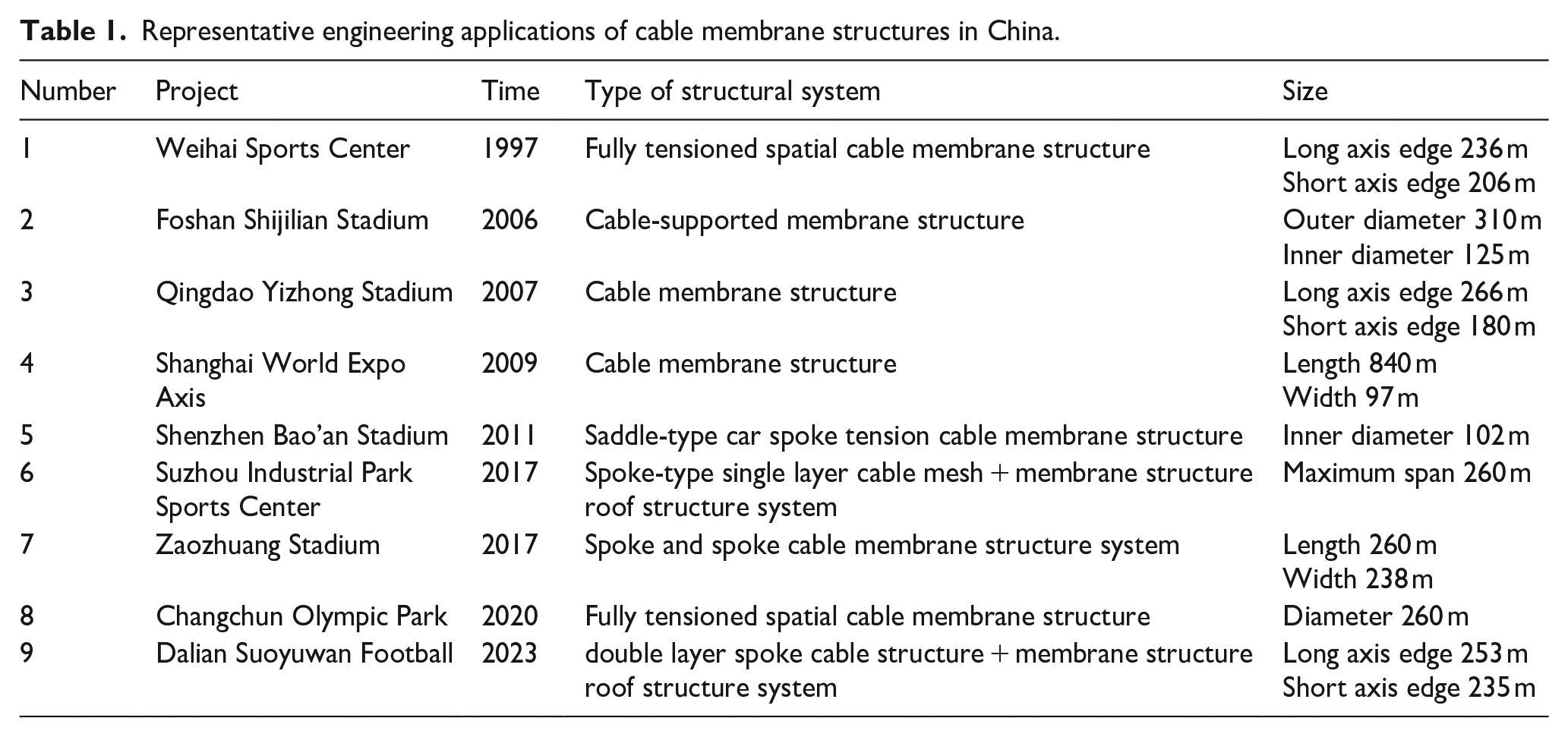
In 1997, the cantilevered roof of the Weihai Sports Center was a fully tensioned spatial cable membrane structure that was first used worldwide, as shown in Figure 23. In 2006, the Foshan Shijilian Stadium adopted a cable-supported membrane structure and built a super-large span, which was a significant milestone, as shown in Figure 24. The Qingdao Yizhong Stadium was the first large-scale stadium in China to be designed and constructed on its own, as shown in Figure 25. The building consisted of two parts: a lower reinforced concrete structure and an upper integral tensioned cable membrane structure roof. Later, the cable membrane structure has been successively used in representative long-span building structures such as the Shanghai World Expo Axis (Figure 26), Shenzhen Bao’an Stadium (Figure 27), Suzhou Industrial Park Sports Center (Figure 28), Zaozhuang Stadium (Figure 29), Changchun Olympic Park (Figure 30), and Dalian Suoyuwan Football Stadium (Figure 31). Representative engineering information for the aforementioned cable membrane structures is presented in Table 1.
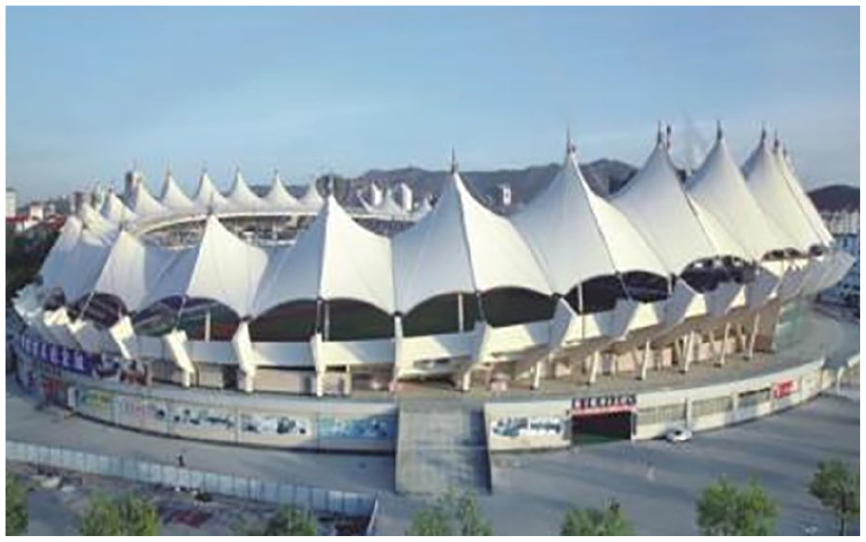
Weihai Sports Center.
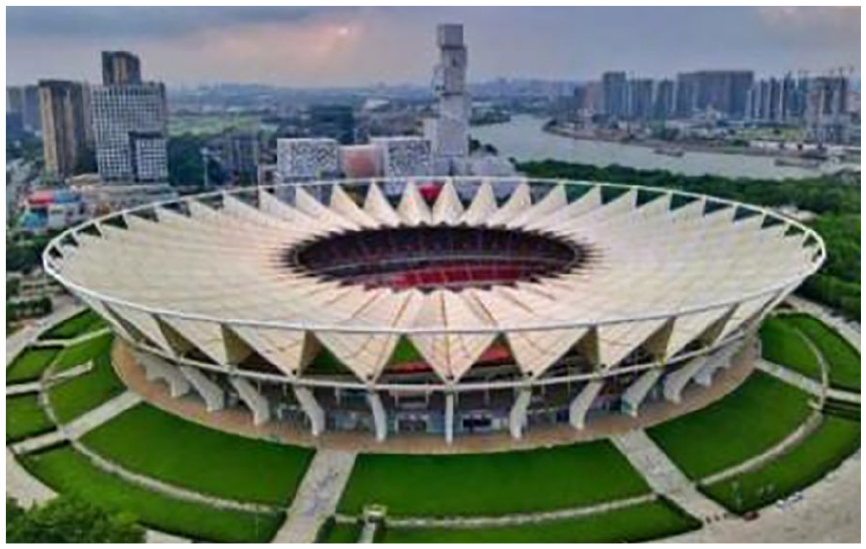
Foshan Shijilian stadium.
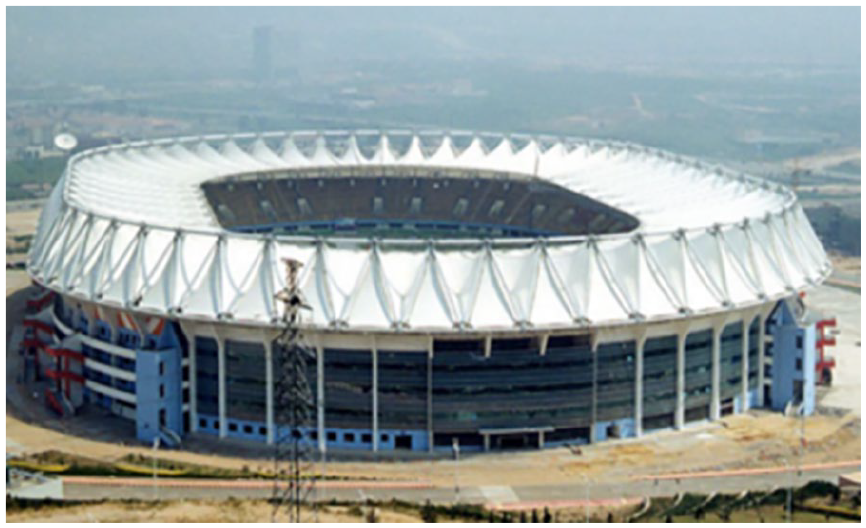
Qingdao Yizhong stadium.
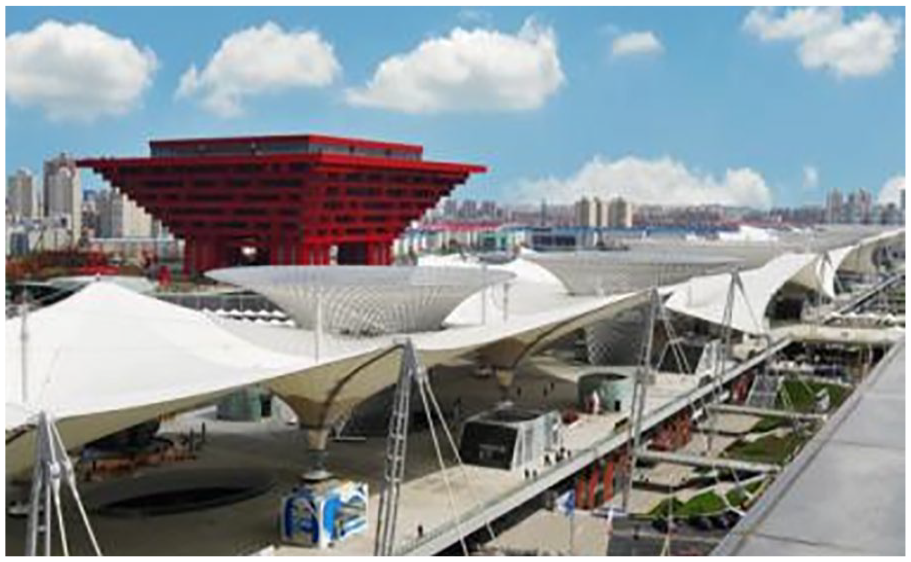
Shanghai world expo axis.
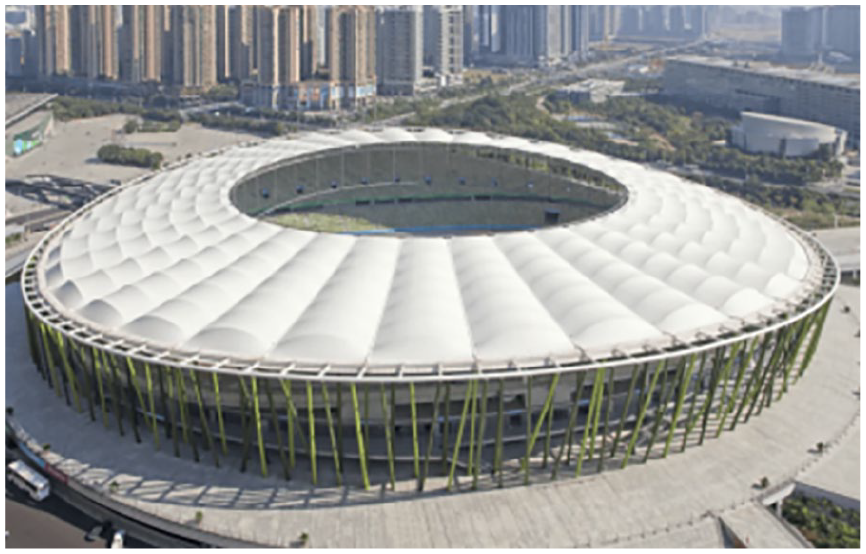
Shenzhen Bao’an stadium.
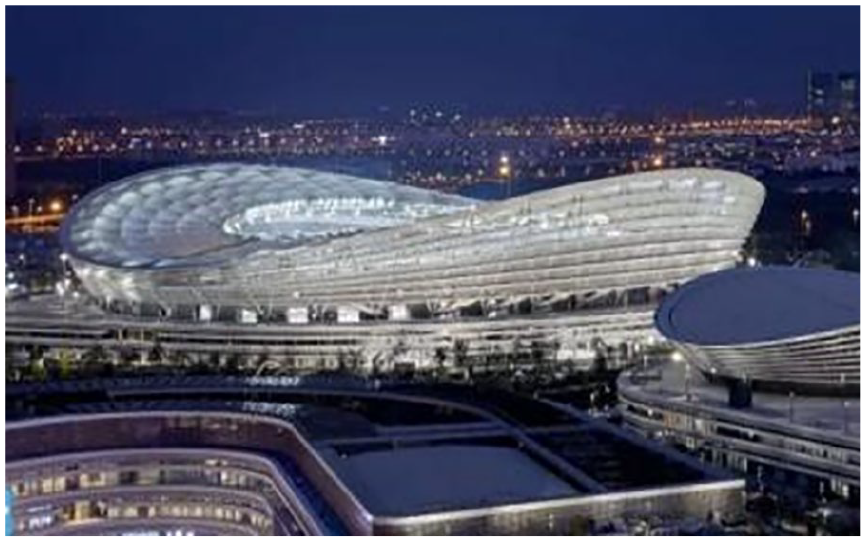
Suzhou Industrial Park Sports Center.
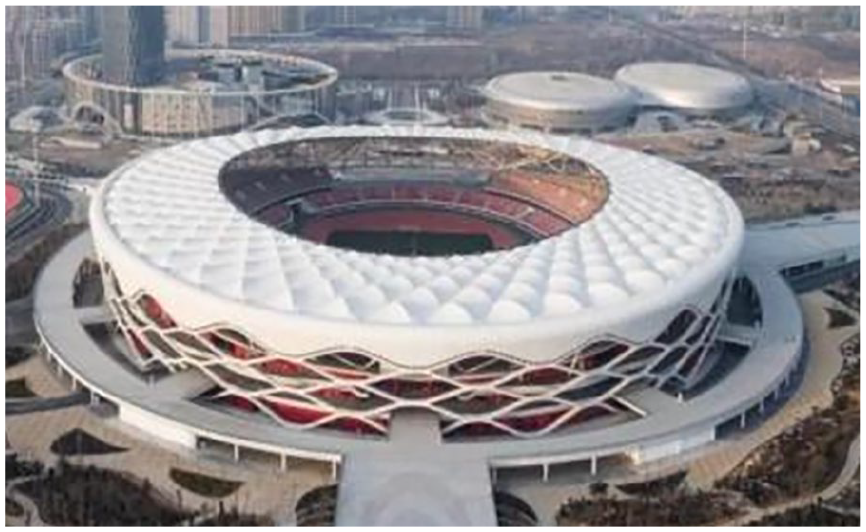
Zaozhuang stadium.
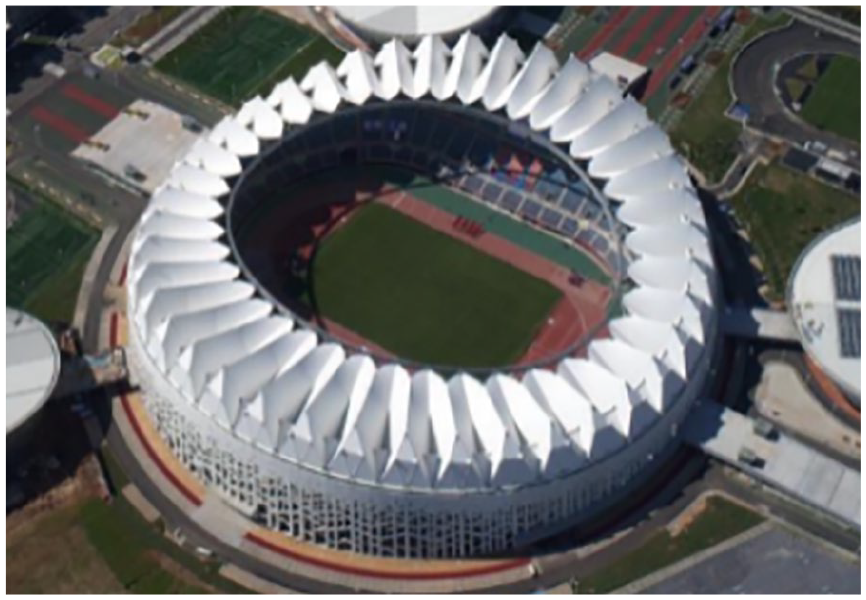
Changchun Olympic Park.
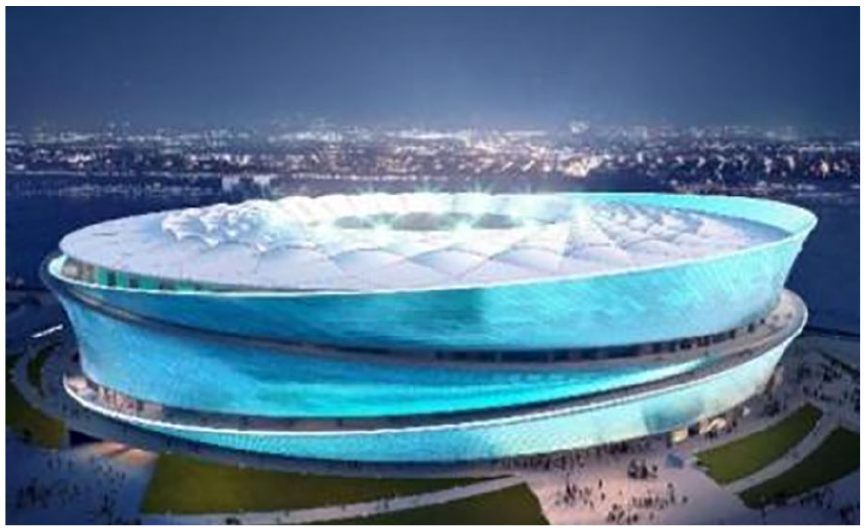
Dalian Suoyuwan football.
Representative engineering applications of cable membrane structures in China.
Beam string structures (cable-supported structures)
A beam string structure (cable-supported structure) is equipped with flexible steel cables below the traditional rigid structure, thereby combining rigidity and flexibility. Compared with traditional rigid structures, the stress is more reasonable, and the construction of structures such as cable nets, cable membranes, and cable domes is more convenient. A schematic of the beam string structure is shown in Figure 32. In China, after more than 20 years of continuous development, nearly 10 different structural forms of beam string structures have been developed. Based on the different forms of the upper rigid structures, the classification of the beam string structure mainly includes the beam string, truss string, suspendome, cable-supported barrel vault, cable-supported concrete roof, cable-supported arch dome, and cable-supported latticed shell. 16
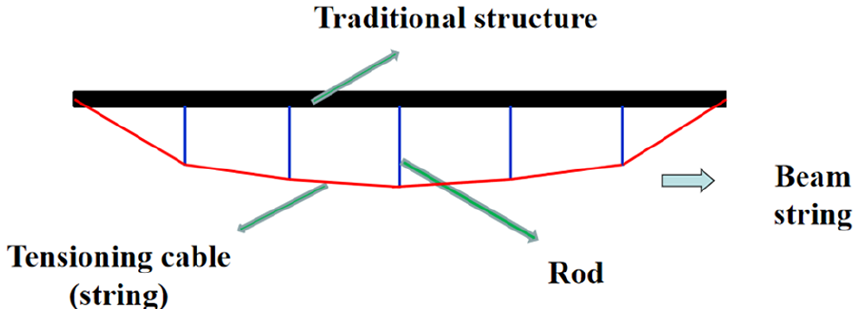
Schematic of the beam string structure. 16
In 1998, Professor Liu Xiliang of Tianjin University first conducted a systematic and in-depth research on beam string structures in China. In 1999, Shanghai Pudong International Airport Terminal (Figure 7) was the first to adopt beam string structures in China. The Harbin International Convention and Exhibition Center (Figure 33) was the first to adopt plane beam string structures with a span exceeding 100m in China. The actual project of the first bidirectional beam string structure in China was built in 2005, that is, the steel structure of the Shenzhen Futian Transportation Integrated Hub Transfer Center (Figure 34). The National Stadium included the largest span of the bidirectional beam string structure 17 (Figure 35). Currently, the beam string structures (cable-supported structures) are widely used in various large-scale cultural exhibition centers, stadiums, major transportation hubs, large factory buildings and warehouses, and other important national projects.
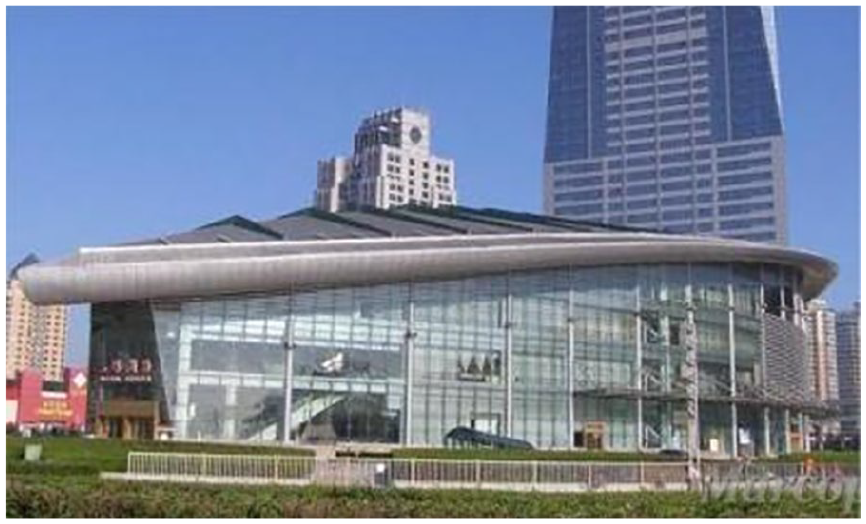
Harbin International Convention and Exhibition Center.
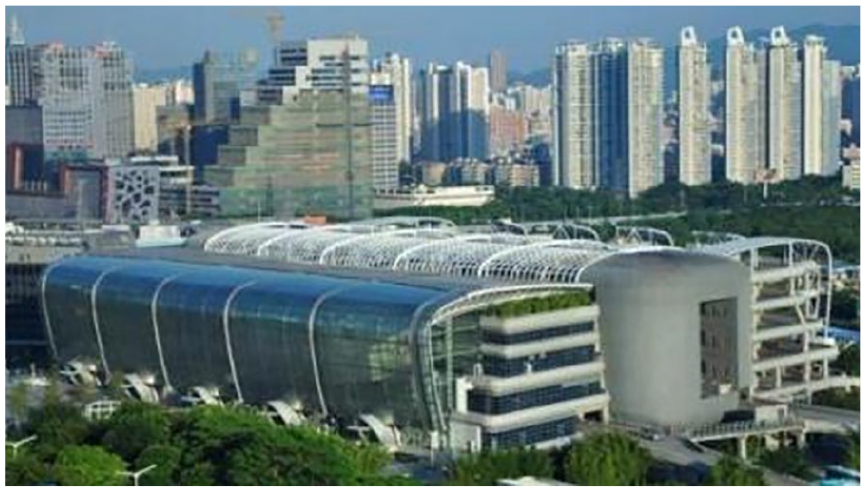
Shenzhen Futian Transportation Integrated Hub Transfer Center.
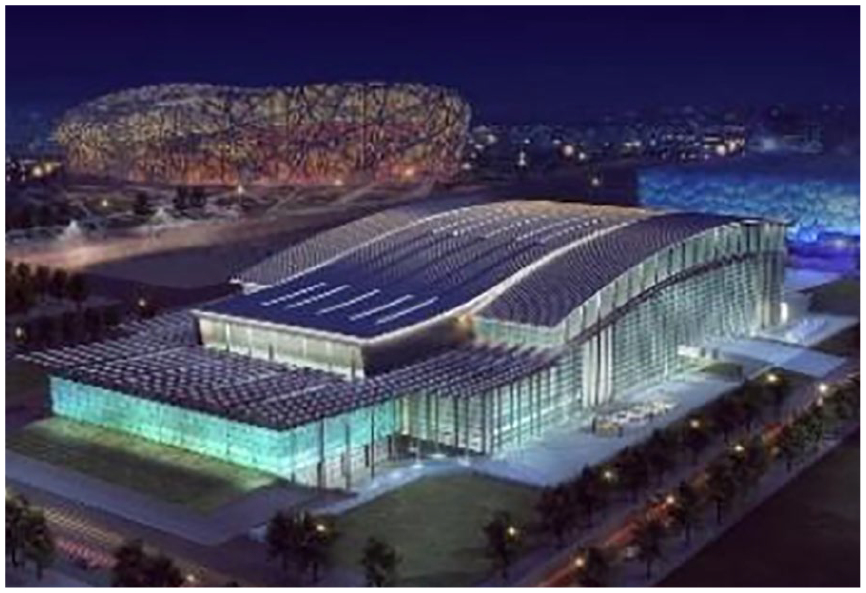
National stadium. 17
A suspendome is a new type of prestressed, large-span structure proposed by Professor M. Kawaguchi of Japan’s Law and Political University.18,19 The typical structural composition of this new composite structure includes an upper grid shell, intermediate support rods, radial pull rods, and a lower circumferential cable. A schematic of the suspendome structure is shown in Figure 36.
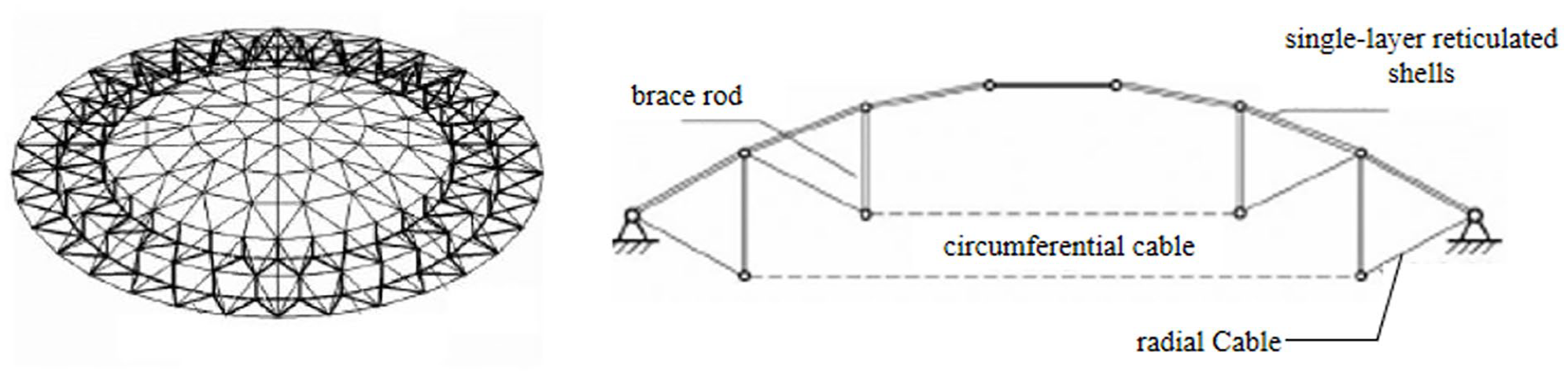
Schematic of a suspendome structure. 18
The first medium- and large-span suspendome structure in China was the lobby roof of the business center of Tianjin University in the Tianjin Free Trade Zone, as shown in Figure 37. The span of the dome was 35.4 m, and the rise height was 4.6 m. The successful engineering application of this system in China opened the prelude to its rapid promotion in China. The suspendome roofs gradually built subsequently include the Beijing Olympic Badminton Stadium (Figure 38), Shandong Chiping Stadium (Figure 39), Tianjin Baodi Stadium (Figure 40), Jinan Olympic Sports Center (Figure 41), and Hebei North University Stadium (Figure 42). With the continuous maturity of the calculation and analysis theories for suspendomes, their structural forms have also diversified. New forms of upper reticulated shells have emerged, such as ellipsoidal and sectioned spherical shapes, as well as double-layer and local double-layer reticulated shell forms. 20
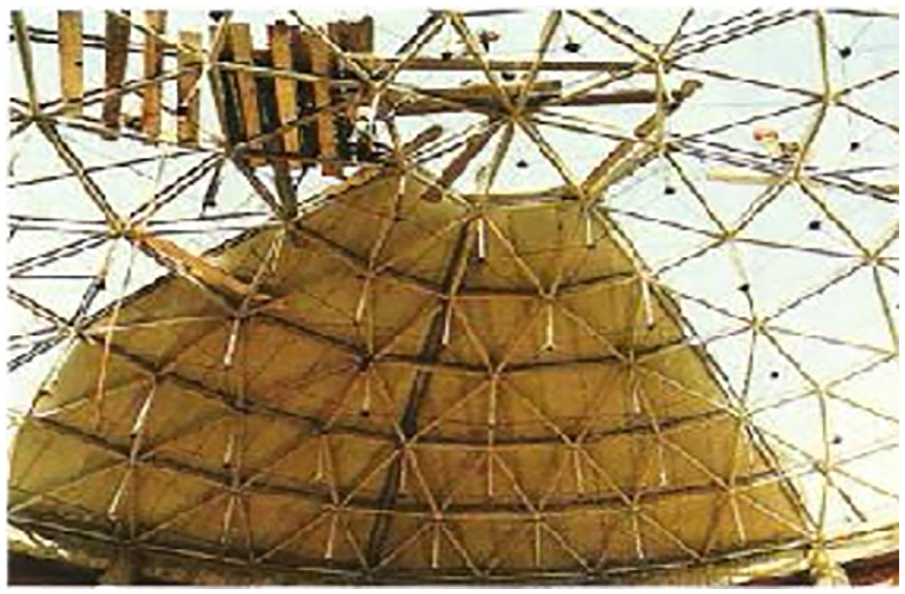
Tianjin free trade zone.
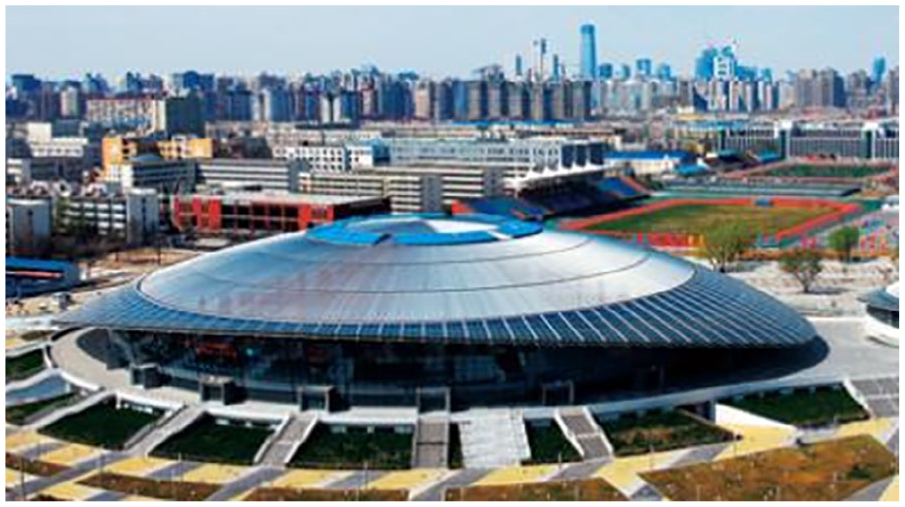
Beijing Olympic badminton stadium.
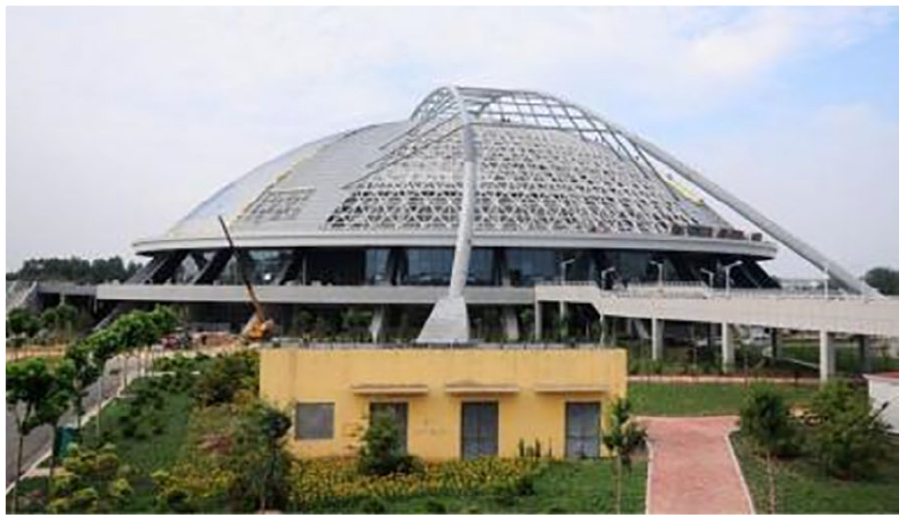
Shandong Chiping stadium.
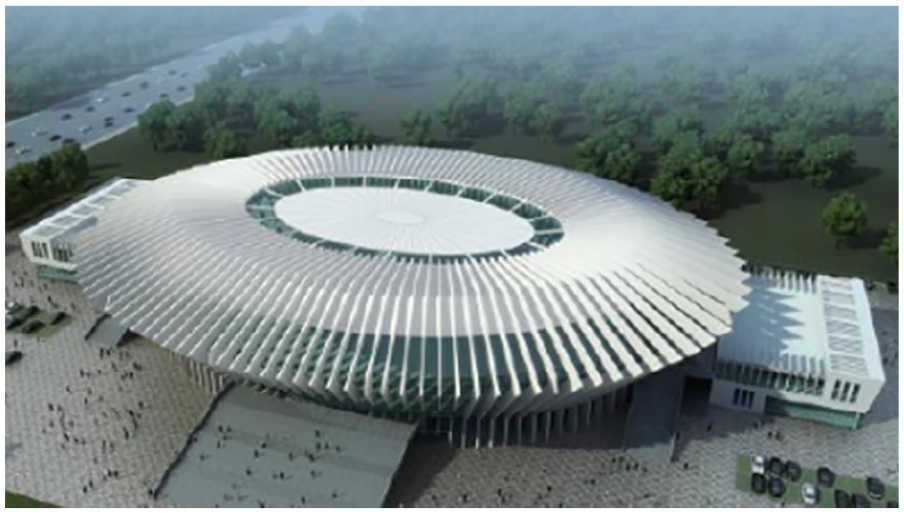
Tianjin Baodi stadium.
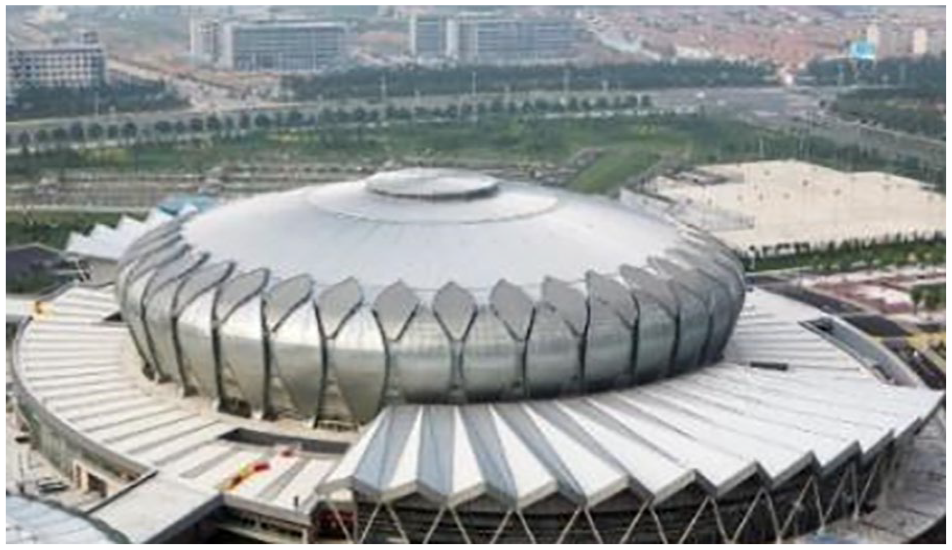
Jinan Olympic Sports Center.
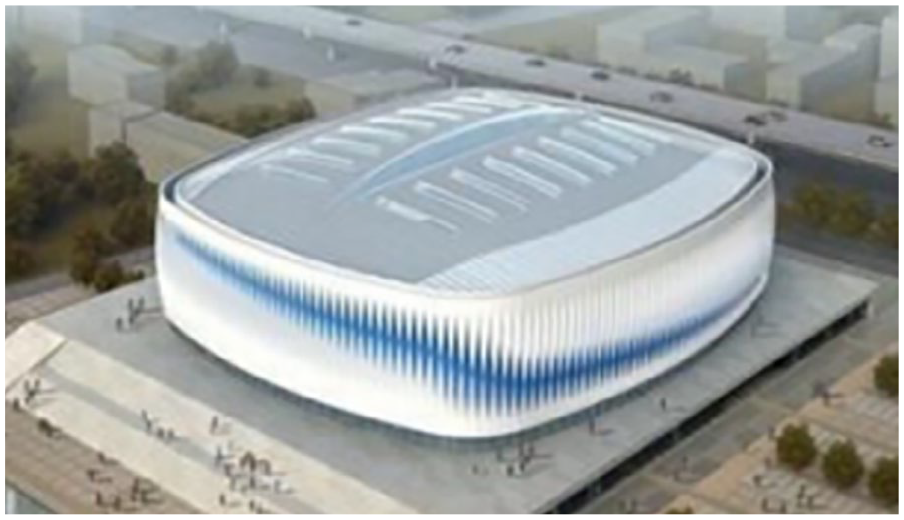
Hebei North University stadium.
In engineering practice, the concept of “cable support” has been further deepened. By combining the concept of “cable support” with other rigid bending structures, certain new types of cable support structures with convenient construction and reasonable structural stress can be obtained such as cable-supported barrel vault, cable-supported concrete roof, cable-supported arch-dome, and cable-supported latticed shell. The cable-supported barrel vault was applied to the roof project of the Qishi Museum in Liuzhou, Guangxi (Figure 43). The cable-supported space truss structure was promoted and applied to the Shandong Guangrao International Expo Center (Figure 44), Huanghekou Experimental Model Hall (Figure 45), and Yellow River estuary test model hall located in Dongying, Shandong Province, with an axis span of 148 m, which is the largest cable-supported truss structure in the world. A cable-supported concrete roof composite structure was applied to the floor of the Hebei Normal University Gymnasium (Figure 46).
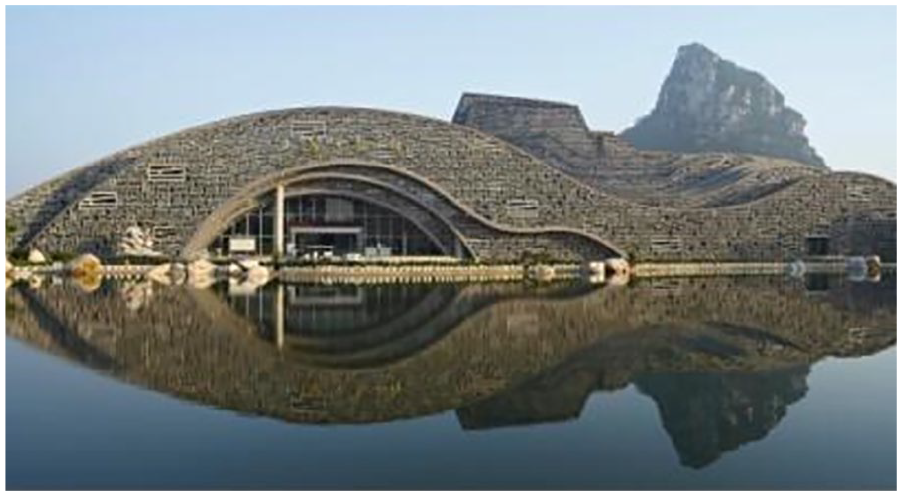
Guangxi Qishi Museum in Liuzhou.
Shandong Guangrao International Expo Center.
Huanghekou experimental model hall.
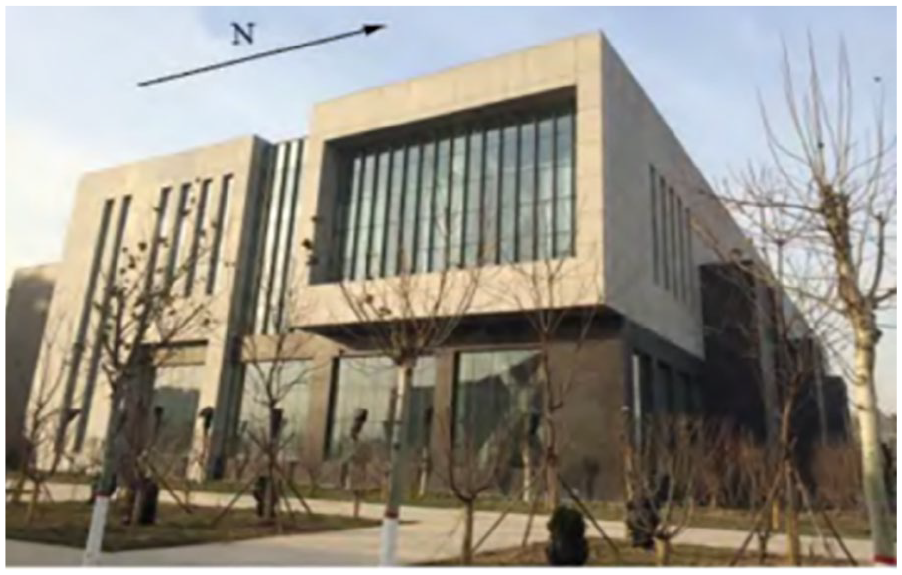
Hebei Normal University gymnasium.
Cable dome structures
The cable dome structure originated from the tensegrity concept proposed by American architect R.B. Fuller in 1962. 21 The cable dome mainly consists of ring cables, diagonal cables, spine cables, vertical braces, internal tension rings, and external compression rings. The overall structure gradually obtains stiffness during the process of applying pre-stress to the cables. During this process, the structure continuously self-balances the applied pre-stress, thereby continuously adjusting the internal pre-stress distribution state of the structure by changing its geometric shape to reach a predetermined shape. The schematic of the cable dome structure is shown in Figure 47. According to their different geometric and topological forms, cable dome structures can be divided into various forms such as Geiger, Levy, Kiewitt, bird’s nest, and mixed types.22 –28 Owing to their innovative design, reasonable stress, and lightweight structure, cable dome structures have been successfully applied in the roof design of certain large-span and ultra-large-span buildings.
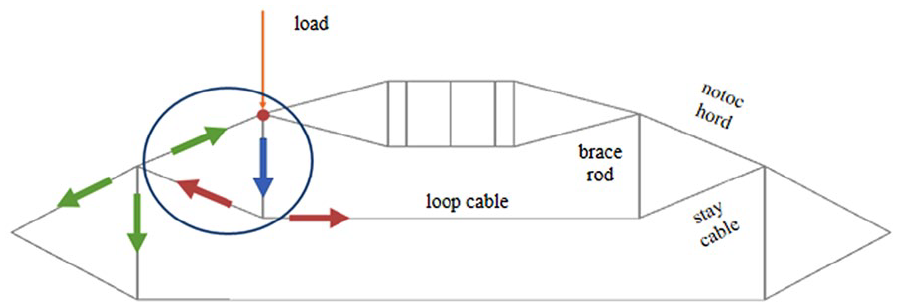
Schematic of a cable dome structure.
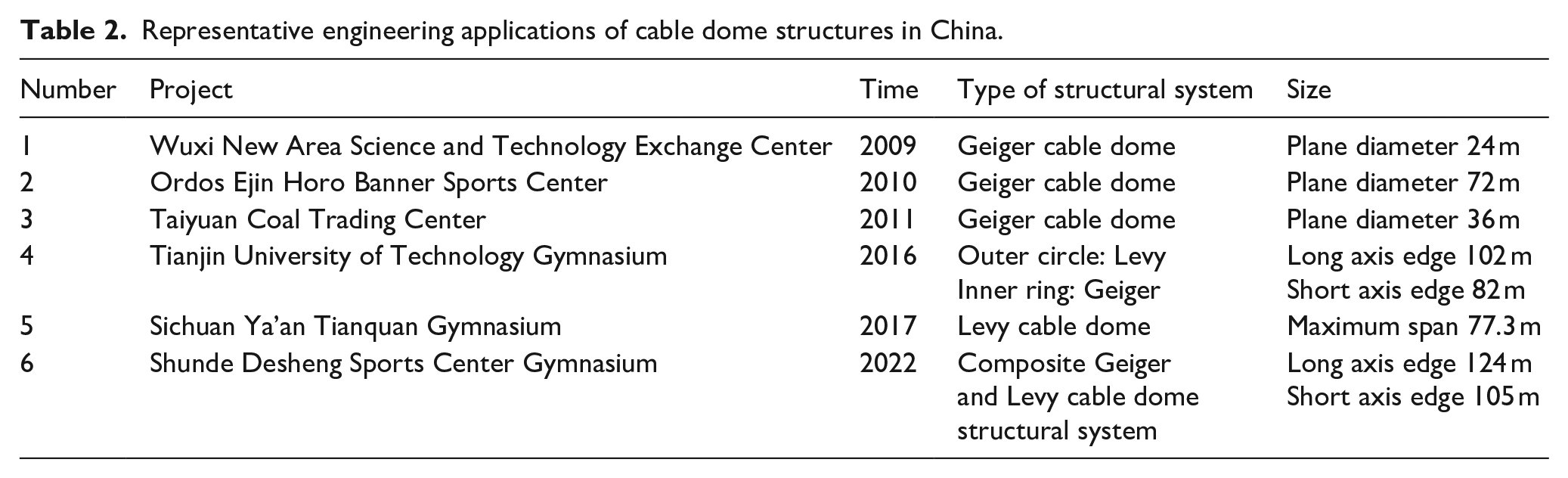
The cable dome structure system has been applied to large-span building structures such as the Wuxi New Area Science and Technology Exchange Center (Figure 48), Ordos Ejin Horo Banner Sports Center (Figure 8), Taiyuan Coal Trading Center, Tianjin University of Technology Gymnasium (Figure 9), Sichuan Ya’an Tianquan Gymnasium (Figure 49), and Shunde Desheng Sports Center Gymnasium (Figure 50), which is currently the largest cable dome structure system in China.29 –31 Representative engineering information for the aforementioned cable dome structures is presented in Table 2.
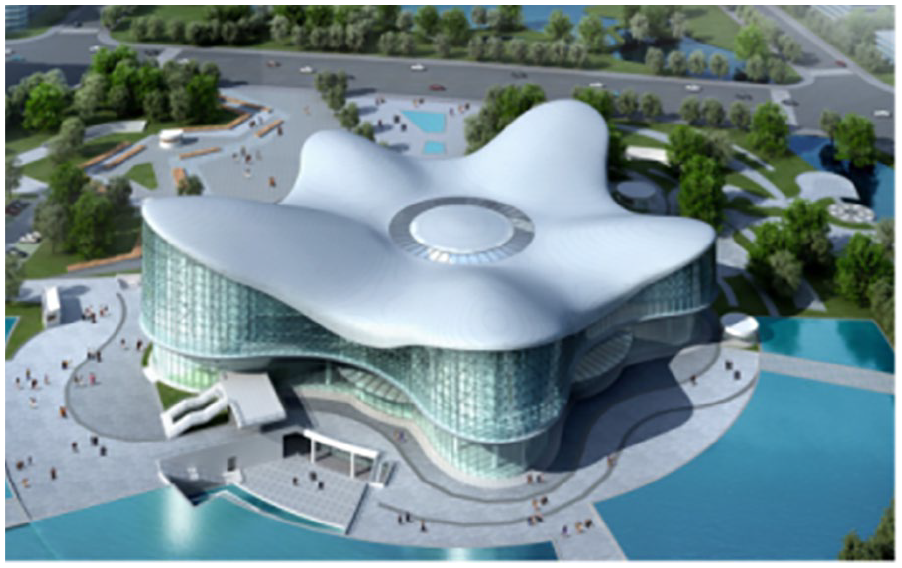
Wuxi New Area Science and Technology Exchange Center.
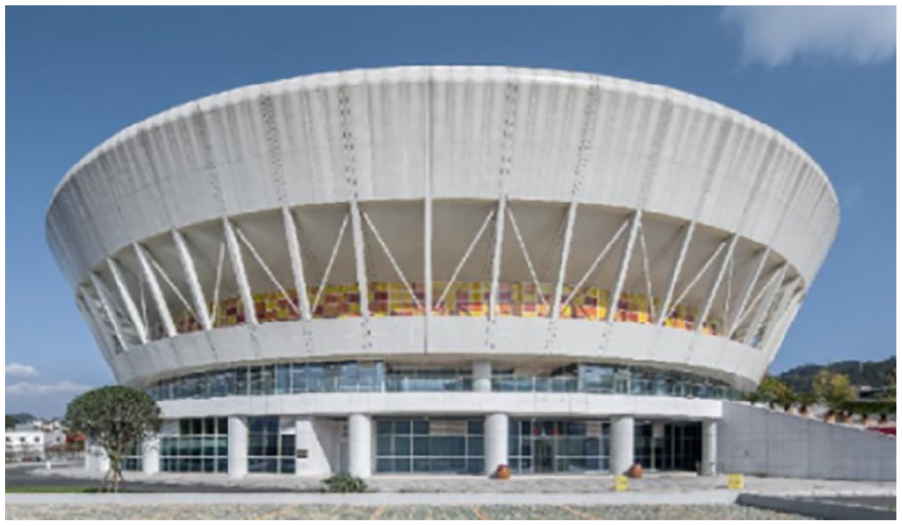
Sichuan Ya’an Tianquan gymnasium. 30
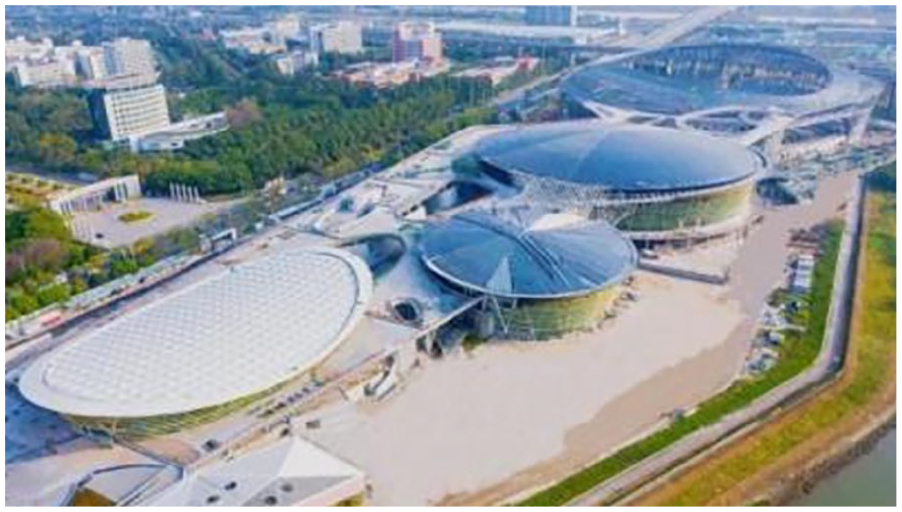
Shunde Desheng Sports Center gymnasium. 31
Representative engineering applications of cable dome structures in China.
Conclusion
In the development process of cable structures in China, with the progress in cable material manufacturing technology and the maturity of construction tensioning technology, building cable structures have rapidly developed, and their application scope and scale have continuously expanded. A cable structure system represented by various structural forms such as suspension, cable membrane, beam string (cable-supported), and cable dome structures has been formed, and a number of iconic and innovative engineering projects have been constructed. To standardize engineering applications, multiple technical specifications such as the “Standard for design of joint of cable structure in buildings” 32 and “Technical Specification for Prestressed Steel Structures” 33 have been issued to guide engineering practice and technological achievements have been accumulated, forming a full lifecycle technical system from design to construction and operation. In the past, the rapid development and engineering application of cable structures have proved that cable structures are progressive, economical, and scientific. In the future, in the context of sustainable green development, with the progress in analytical technology, improvement in building material performance, and development of construction technology, cable structures have broad application space and good prospects by integrating digital and information technology.
Footnotes
Declaration of conflicting interests
The author declared no potential conflicts of interest with respect to the research, authorship, and/or publication of this article.
Funding
The author received no financial support for the research, authorship, and/or publication of this article.
