




Abstract
This study assessed the contribution of the Tanzania Library Association in Enhancing the Librarianship Profession: Views from Under 40-Year-Olds librarians were gathered. The study adopted a quantitative approach with a case study design. Thirty-six respondents purposively selected from the Tanzania Librarian Forum and the Tanzania Library Association were involved in this study. Data were collected through a questionnaire created using a Google form. The questionnaire was shared with respondents and remained active for 2 weeks to allow them to fill it in. Data were analysed using the Statistical Package for Service Solutions (SPSS) Version 23 computer programme. The study found that 47.2% of participants were very familiar with TLA, which suggests that a substantial portion of the participants strongly understand the Tanzania Library and Information Association (TLA) and its objectives. Regarding the perceived contribution of TLA in advancing professional development opportunities for librarians under 40, results demonstrated that a majority, comprising 24 respondents (66.7%), agreed that TLA indeed fosters such opportunities. Furthermore, 41.7% reported that TLA enhances networking platforms for librarians under 40. However, another 30.6% said that TLA was essential in addressing the ever-evolving needs and issues faced by librarians under 40. Professional associations are vital for the career development of their members, and TLA is not left behind. From the findings, the study recommends that TLA continues to foster development in its members by utilising different strategies like preparation and conducting continuous professional training courses for its members and the library profession at large, publicity among different institutions within and outside the country and forging links with other international information professional associations.
Introduction
Tanzania Library Association (TLA) is one of the oldest professional associations in Tanzania, having existed for more than 50 years since its inception in 1973. It was established in 1973 after dissolving the East African Library Association (EALA). Since then, it has remained the only professional association that safeguards the interests of all library and information personnel in Tanzania (Tanzania Library Association, 2024). TLA functions have been but not limited to advising the Government and private organisations in matters related to quality in establishing and managing libraries and information services; organising meetings, seminars, workshops, and conferences and running courses to impart new knowledge and skills; collecting, collate and publishing Journals, bulletins, newsletters, etc. to inform members and promote the objectives of the association; compile, keep and regularly update information about each member and collaborate with national and international associations and institutions interested in the development of libraries and the information industry etc. Despite these notable functions, it is unclear how effective it has been in pushing the profession to younger professionals in the country who face various challenges like unemployment and lack of funds to establish and engage in infopreneurship activities (Mubofu and Malekani, 2023).
Literature review
Awareness and familiarity with library associations
The committee of the Library Association of Ireland, Health Sciences Libraries Group conducted an online survey about association and group membership and found that the importance of belonging to a professional group that not only provides comprehensive tangible support but also facilitates a network of stakeholders with whom they can engage, share and collaborate (Maryjane, 2022). Additionally, studies on road pricing reforms emphasise the importance of awareness and familiarity in shaping individuals’ preferences and behaviours, showcasing how these factors influence the acceptance of new schemes and the perception of benefits (Camila et al., 2017; Katherine, 2015).
Furthermore, the viability of professional associations, like the American Library Association, as quasi-unions has been explored, indicating that decisions regarding collective bargaining can impact membership and prestige, with implications for the organisation’s goals and purpose (Camila et al., 2015). The study by Adaora et al. (2019) established that Library associations like IFLA, AfLIA, and NLA play a crucial role in influencing and developing the library profession, enhancing awareness and familiarity among professionals in the field. The study by Nick (2001) argued that Library associations support information societies by promoting efficient library services, enhancing information management skills, and creating appropriate legislative structures. They emphasise vision, inclusivity, stakeholder interests, and international partnerships. Thus, the extent to which TLA is involved in such endeavours was necessary to uncover in the present study.
Perceptions and attitudes of librarians towards the role of library associations
Librarians’ perceptions and attitudes towards Library Associations vary based on factors like membership benefits, professional development opportunities, and support for critical issues like environmental sustainability and copyright education. Research highlights that librarians value quality programming, networking opportunities, and member engagement (Xiaoai and Jianliang, 2022). Furthermore, Raj (2014), who studied the role of library associations in updating the library profession and professionals, argued that librarians' perceptions and attitudes towards library associations are crucial for updating the profession and professionals, as discussed in the paper.
Additionally, studies emphasise the importance of library associations in enhancing expertise through professional development, supporting professional interests, and fostering a sense of community among librarians (Betty and Steve, 2021). Furthermore, there is a call for library associations to address gaps in environmental sustainability practices and copyright education initiatives to better align with global sustainable development goals and support the professional development needs of their members (Lisa et al., 2022; Maryjane, 2022). These findings emphasise the significance of Library Associations in shaping librarians’ perceptions and attitudes towards professional growth and community engagement. This is in line with the study by Joseph and Bilyson (2015), who conducted a study in order to know the level of awareness of the senior undergraduate students taking up Library and Information Science and those young career professionals ages 20-30 towards the numerous professional library associations established in the country and gauge the perceptions and attitudes of the young professionals in choosing which professional library association they would like to affiliate themselves. No studies have attempted to discover how librarians perceive this association towards its missions and vision in Tanzania. This called for the present study.
Perceived effectiveness of the Library Association’s programs, services, and advocacy efforts
The perceived effectiveness of library advocacy efforts is crucial for showcasing the impact of library programs and services. Studies emphasise the importance of advocating for school libraries to secure support and funding (Elizabeth, 2015; Gemma et al., 2022; Ken and Cheryl, 2015). Research highlights that advocacy involves deliberate, sustained efforts to influence key stakeholders positively towards libraries (Magnus, 2019). Advocacy activities are essential for demonstrating the value of libraries in decision-making processes and securing financial support. Effective advocacy strategies involve building relationships with various stakeholders to redefine perceptions of library programs. The success of advocacy is evident in the impact on clinical decision-making, patient care, and organisational governance, which emphasises the importance of advocating for library services.
Advocating for libraries is essential for highlighting their relevance and securing support for their continued success. The study by Elizabeth (2013) revealed the activities and practices of advocacy within the library programs of a group of practising librarians and found that successful strategies of advocacy follow three themes: building awareness for the school library program, engagement of the librarian in the school culture, and building an indispensable program. The study by Rachel (2012) emphasised using mobile tools for advocacy in libraries, emphasising the importance of utilising apps for photos, videos, databases, concept maps, and business intelligence to enhance advocacy efforts.
Despite the availability of relevant studies related to the topic under study, which have been conducted in different countries like Maryjane (2022) Xiaoai and Jianliang (2022), Gemma et al. (2022) Betty and Steve, 2021 Lisa et al. (2022) Joseph and Bilyson (2015). None of the studies has been conducted in Tanzania, hence creating a knowledge gap. Given that, this study has been designed to fill in the gap by assessing the role of the Tanzania Library Association in enhancing the librarianship profession with specific reference to the views of under-40-year-olds
Study objectives
i. To identify the level of awareness and familiarity among librarians under the age of 40 regarding the TLA and its initiatives aimed at enhancing the librarianship profession. ii. To find out the perceptions and attitudes of librarians under the age of 40 towards the role of the TLA in providing professional development opportunities, networking platforms, and resources to support career advancement within the librarianship profession. iii. To determine the perceived effectiveness of the TLA’s programs, services, and advocacy efforts in addressing the evolving needs and challenges faced by younger librarians in Tanzania and their impact on the development of the librarianship profession.
Methodology
Research approach, design and data collection
This study employed a quantitative research approach with a case study design, utilising a structured survey instrument to gather data from librarians under 40. A Google form was created with twelve closed-ended questions, four questions reflecting one specific objective, and shared in two social media platforms, “Tanzania Librarians Forum (TLF)” and the “TLA Official WhatsApp group”. The shared link remained active for 2 weeks to allow the participants to respond to the survey question, and after that, it was closed to allow the researchers to conduct an analysis.
Case studies
Tanzania librarians forum
This is a recently created communication platform where the majority of participants are young librarians who have recently completed their education at various levels, but the majority are unemployed. In an informal conversation the researcher made with some members of TLF, the majority of this group looked to be against the TLA, they always see that there is not enough to help young librarians with employment issues, scholarships, training, and resources. They see that TLA is there for the senior employees who are there for their benefit, and they do not trust young librarians. TLF had seventy-two (72) members until April 7th 2024, when the survey was shared. The forum is predominantly occupied by young librarians who call themselves hustlers, meaning fighters. Despite their excellent qualifications, they went to school and did all the required but no job.
TLA official WhatsApp group
This group had 548 members by April 7th, 2024, comprising government employees, private employees, and non-employed librarians. However, it was not established how many among them were under the age of 40 years. The majority being the employed ones it can be concluded that the most significant proportion was occupied by those older than 40. The researchers expected that this platform could have enough of the under 40 librarians who have the potential for this study, which was the reason for the selection of this platform. Although the researcher established that some of the librarians were in both groups, the Google form was designed so that the study participants had only one chance to respond and submit the responses. This was done purposely to limit the same respondents from submitting several responses.
Samples size and sampling procedure
The study involved thirty-six (36) respondents under the age of 40 who were present in the two social media platforms where the survey link was shared. Because the study targeted librarians under 40 years old, a purposive sampling procedure was adopted. Although the social media platforms had librarians who were more than 40 years of age, they were not allowed to take part in the study.
Data analysis and presentation
After closing the survey, the researchers transported the data into MS Excel. They were then cleaned, coded, and descriptively analysed. The results from the analysis were presented in figures and Tables for the reader to easily understand.
Results and discussion
Analysis of response rate
The data collection link was posted on two platforms: TLF and TLA, both of which targeted librarians under the age of 40. From the TLA platform, only 22 librarians responded to the survey out of the 548 available in the platform, confirming that the majority in this platform were older than 40 years of age and thus they were unfit for the survey, while 14 responses were received from the TLF platform. The low response rate from the TLF platform was probably due to the fact that the majority are unemployed and thus they were unable to buy the bundle during the data collection period, resulting in a total of 36 responses. The researcher proceeded with the data analysis stage, as 36 responses are a reasonable number for statistical analysis. The data collected are considered representative of librarians under 40 from both platforms.
Extent of awareness and familiarity with TLA
Under this objective, four questions were asked, as explained in the following subsections.
Familiarity with the TLA and its objectives
The study participants were surveyed regarding their familiarity with TLA and its objectives. Analysis of the responses revealed varying levels of familiarity among the participants. Specifically, 17 participants (47.2%) reported familiarity with TLA and its objectives. Additionally, nine participants (25%) indicated moderate familiarity, while six participants (17.7%) stated being somewhat familiar. Only four participants (11.1%) reported unfamiliarity with TLA and its objectives. These findings are summarised in Figure 1 Familiarity with TLA and its objectives.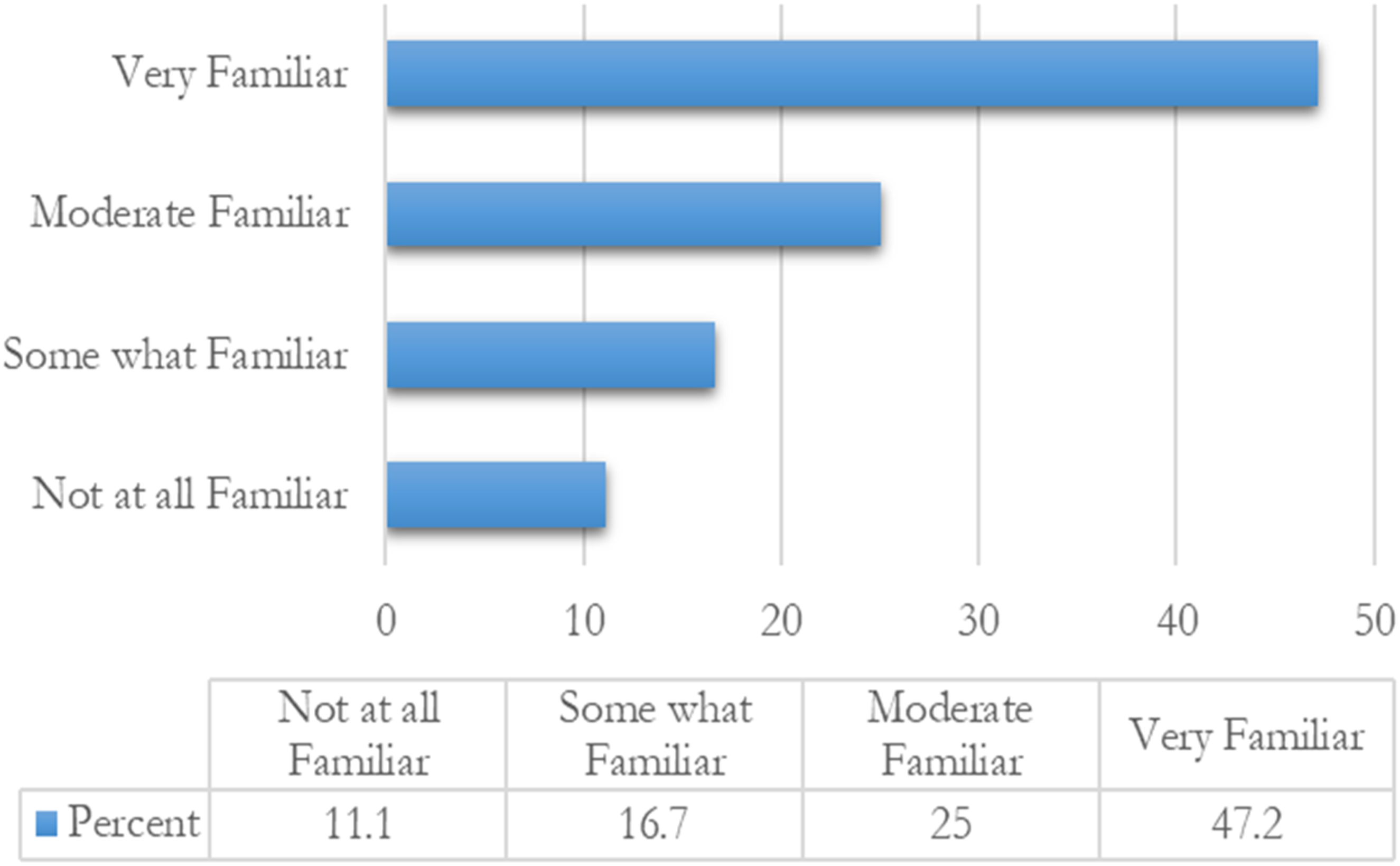
With 47.2% of participants reporting familiarity, a substantial portion strongly understand the Tanzania Library and Information Association (TLA) and its objectives. This could imply that TLA is a well-established concept within the context of the study or that there has been adequate communication and dissemination of TLA among the target audience. Additionally, the small percentage of participants (11.1%) who reported no familiarity with TLA and its objectives may indicate potential barriers to awareness or engagement, such as lack of access to information or limited communication channels. Addressing these barriers could be crucial for reaching a broader audience and increasing awareness.
Extent of TLA in promoting professional development
In the study, participants were queried regarding their perceptions of the role of TLA in advancing professional development opportunities for librarians under 40. The analysis demonstrated that a majority of 24 respondents (66.7%) agreed that TLA fosters such opportunities. Conversely, a notable portion, consisting of seven individuals (19.4%), expressed disagreement with this proposition. Additionally, three participants (8.3%) strongly dissented from the notion, while two respondents (5.6%) strongly affirmed it. These findings encapsulate the varying perspectives among participants regarding the Impact of TLA on the professional growth of librarians within the specified age bracket. As detailed in Figure 2 Extent of TLA in promoting professional development.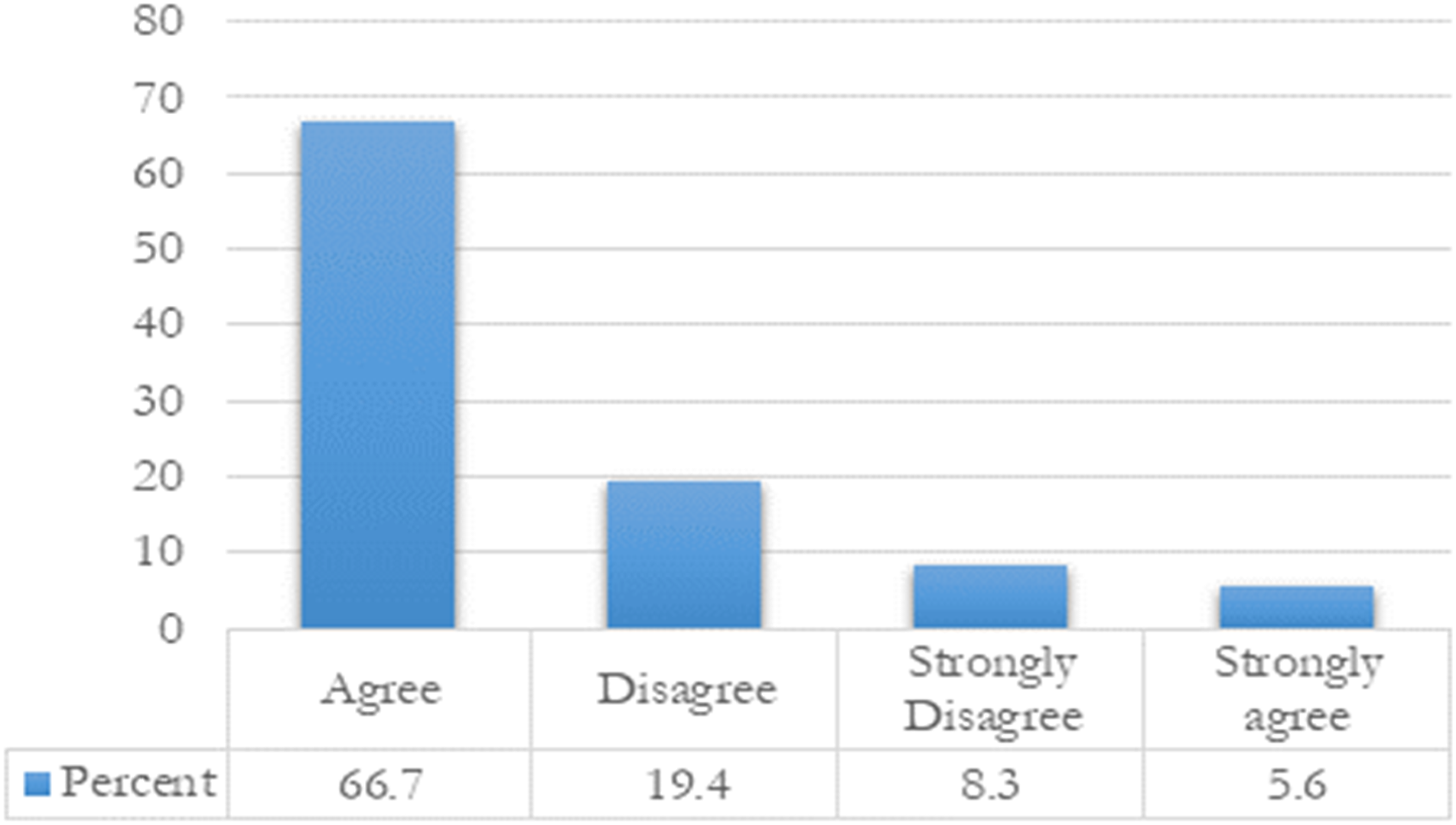
The results indicate a mixed perception regarding the role of TLA in promoting professional development opportunities for librarians under 40. While most respondents agree that TLA contributes positively to such advancement, a notable portion disagrees or strongly disagrees. This suggests varying perspectives within the librarian community regarding the effectiveness of TLA’s initiatives. The findings highlight the need for further investigation into the specific mechanisms and areas of improvement to address concerns raised by dissenting participants and ensure that TLA’s efforts align with the diverse needs of younger librarians.
Awareness of the specific initiatives and programs offered by the TLA
Respondents were requested to indicate their awareness of the specific initiatives and programmes offered by the TLA. After the analysis, the study revealed that 13 (36.1%) were moderately aware, 12 (33.3%) were slightly aware, 5 (13.9%) were not aware at all, while only 6 (16.7%) were fully aware of the initiatives and programmes offered by the TLA as summarised in Figure 3 Awareness of initiatives and programs offered by the TLA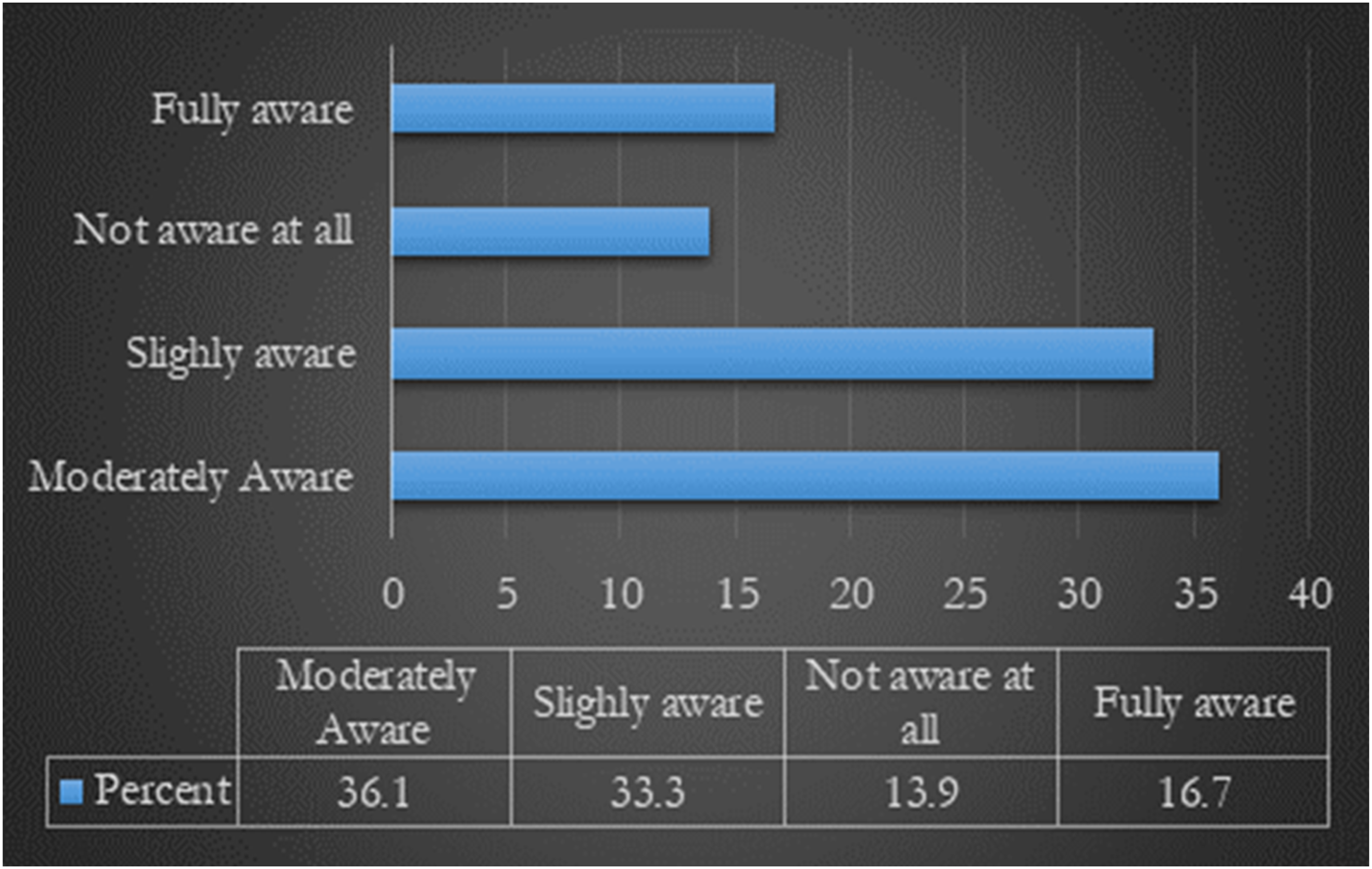
The study findings suggest a diverse range of awareness levels among respondents regarding the initiatives and programs provided by TLA. A significant portion, comprising 36.1% of participants, reported a moderate level of awareness, indicating a fair understanding of TLA’s offerings. Close behind, 33.3% indicated a slight awareness, suggesting some familiarity with the initiatives but perhaps lacking comprehensive knowledge. However, a notable 13.9% expressed no awareness whatsoever, indicating a gap in communication or outreach efforts by TLA. Conversely, only 16.7% of respondents reported being fully aware, indicating room for improvement in effectively communicating the breadth and depth of TLA’s initiatives and programs to the librarian community.
Engagement with the TLA’s resources and activities
The researcher also wanted to know the respondent’s engagement with the TLA resources and activities. Results from the analysis revealed that 13 (36.1%) occasionally, 13 (36.1%) rarely said, 5 (13.9%) frequently said, while other 5 (13.9%) said never engaged with the TLA’s resources and activities, as detailed in Figure 4 Engagement with the TLA’s resources and activities.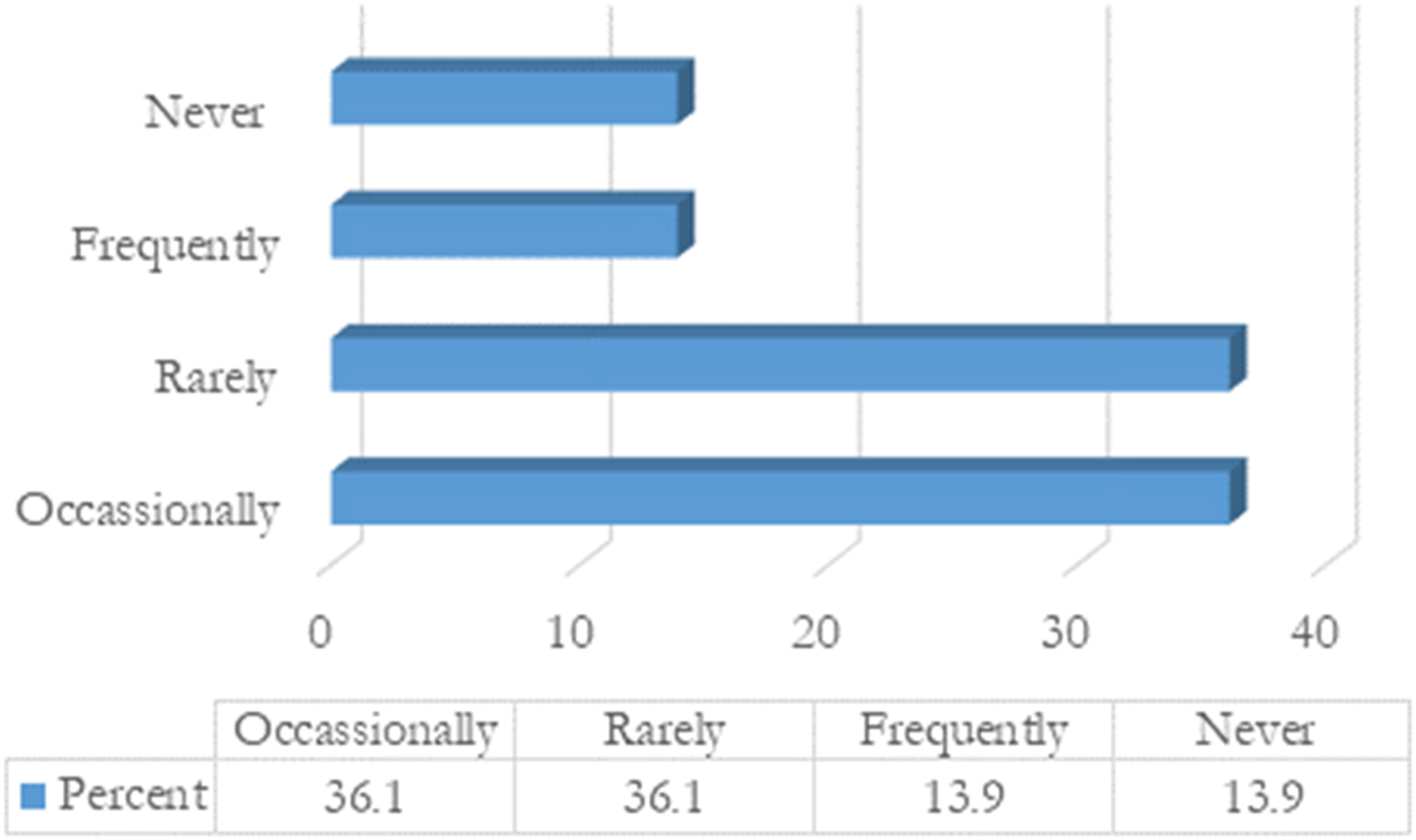
Examining respondents’ engagement with TLA resources and activities shows various involvement levels. A sizeable fraction—36.1% of each respondent—reported infrequent and occasional involvement, indicating irregular interaction with TLA products. On the other hand, a more minor but noteworthy 13.9% reported frequent engagement, indicating consistent use of TLA’s offerings. Remarkably, 13.9% of respondents said they had never used TLA’s services, indicating that some have not yet used TLA’s resources or events. In order to further tailor TLA’s activities to the needs and interests of the librarian community, it is essential to understand the factors that influence involvement, as these findings highlight the varied degrees of engagement among respondents.
Perceptions and attitudes of librarians under the age of 40 towards the role of TLA
To address this objective, four questions were asked, as discussed in the following subsections:
Importance of TLA’s role in providing networking platforms for librarians under the age of 40
Study participants were asked to state the role of TLA in providing networking platforms for librarians under the age of 40. Findings from the analysis revealed that 15 (41.7%) said very important, 10 (27.8%) said moderately important, 8 (22.2%) somewhat important and 3 (8.3%) said not important at all, as summarised in Figure 5 Importance of TLA’s in providing networking platforms for librarians under the age of 40.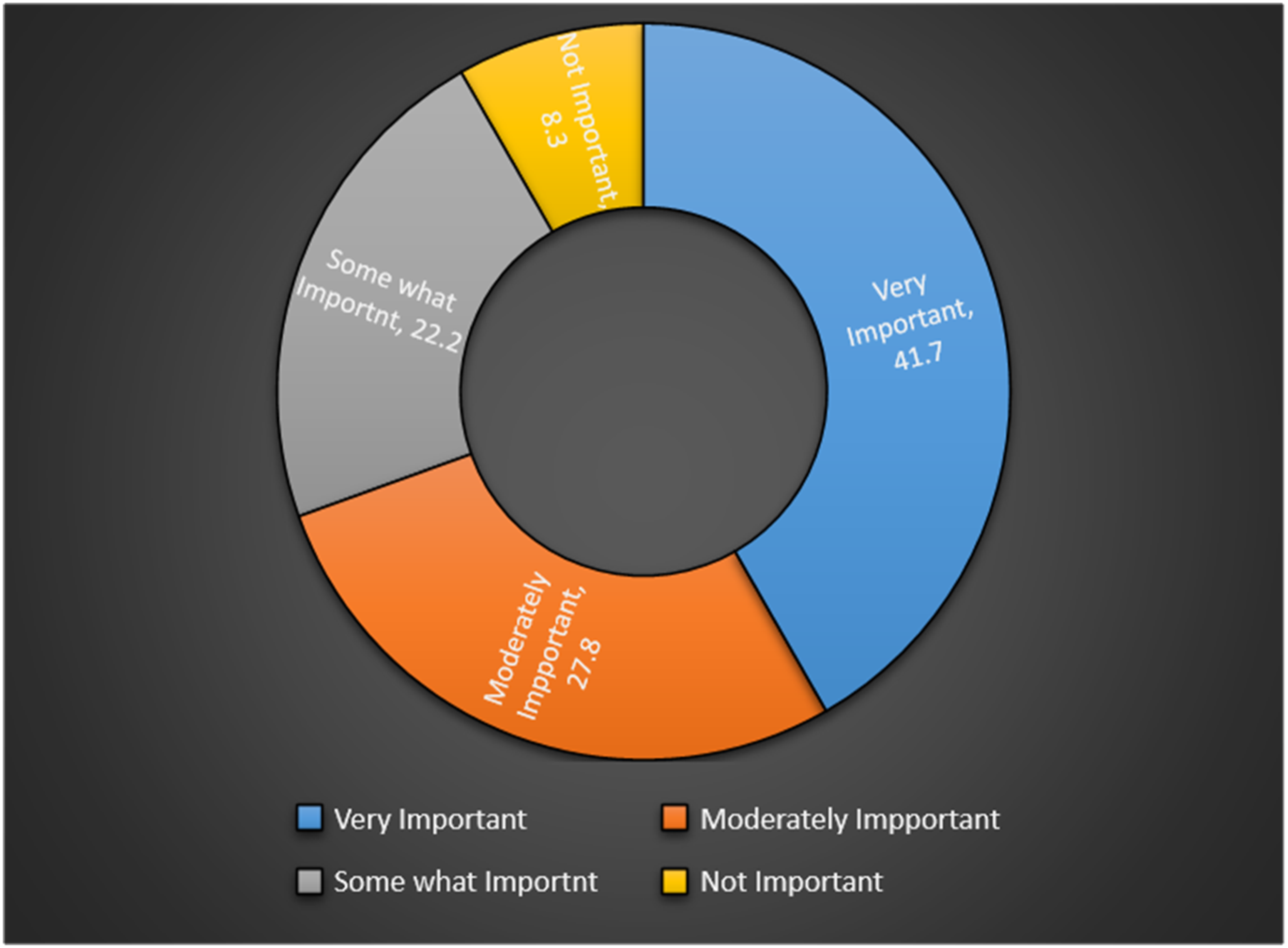
The analysis of participant responses regarding the role of TLA in providing networking platforms for librarians under the age of 40 demonstrates varying perceptions. A significant portion, comprising 41.7% of respondents, emphasised the importance of TLA’s role as “very important” in facilitating networking opportunities. Following closely, 27.8% considered it “moderately important,” indicating a significant but somewhat less critical role. Additionally, 22.2% described TLA’s role as “somewhat important,” suggesting recognition of its relevance but with reservations. Interestingly, 8.3% of respondents deemed TLA’s role “ unimportant at all,” indicating a dissenting perspective. These findings underscore the diversity of opinions regarding the significance of TLA’s role in providing networking platforms and highlight the need for further exploration to understand the underlying factors shaping these perceptions.
Provision of resources to support career advancement for younger librarians
Perception of TLA’s effectiveness in providing resources for career advancement for younger Librarians.
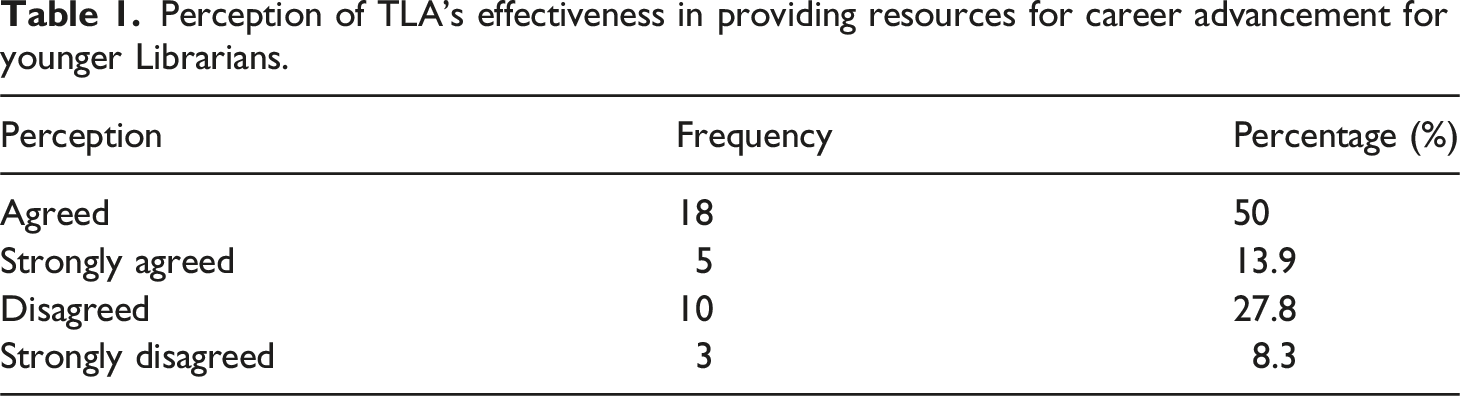
The findings indicate that a significant proportion of respondents (50%) agreed with the effectiveness of TLA in providing resources for career advancement. A notable percentage (13.9%) also strongly agreed with this assertion. However, a considerable portion of respondents (27.8%) disagreed with TLA’s effectiveness, with a smaller percentage (8.3%) expressing strong disagreement. These results highlight the diversity of opinions among participants regarding TLA’s role in supporting the career development of younger librarians, suggesting potential areas for improvement or further investigation.
Satisfaction with the professional development opportunities offered by the TLA
The researchers wanted to determine how satisfied the respondents were with the professional development chances provided by the TLA. According to the study’s findings, 16 (44.4%) were satisfied, 16 (44.4%) were unsatisfied, 3 (8.3%) were very dissatisfied, and 1 (2.8%) were delighted, as shown in Figure 6. Satisfaction with the professional development opportunities offered by the TLA.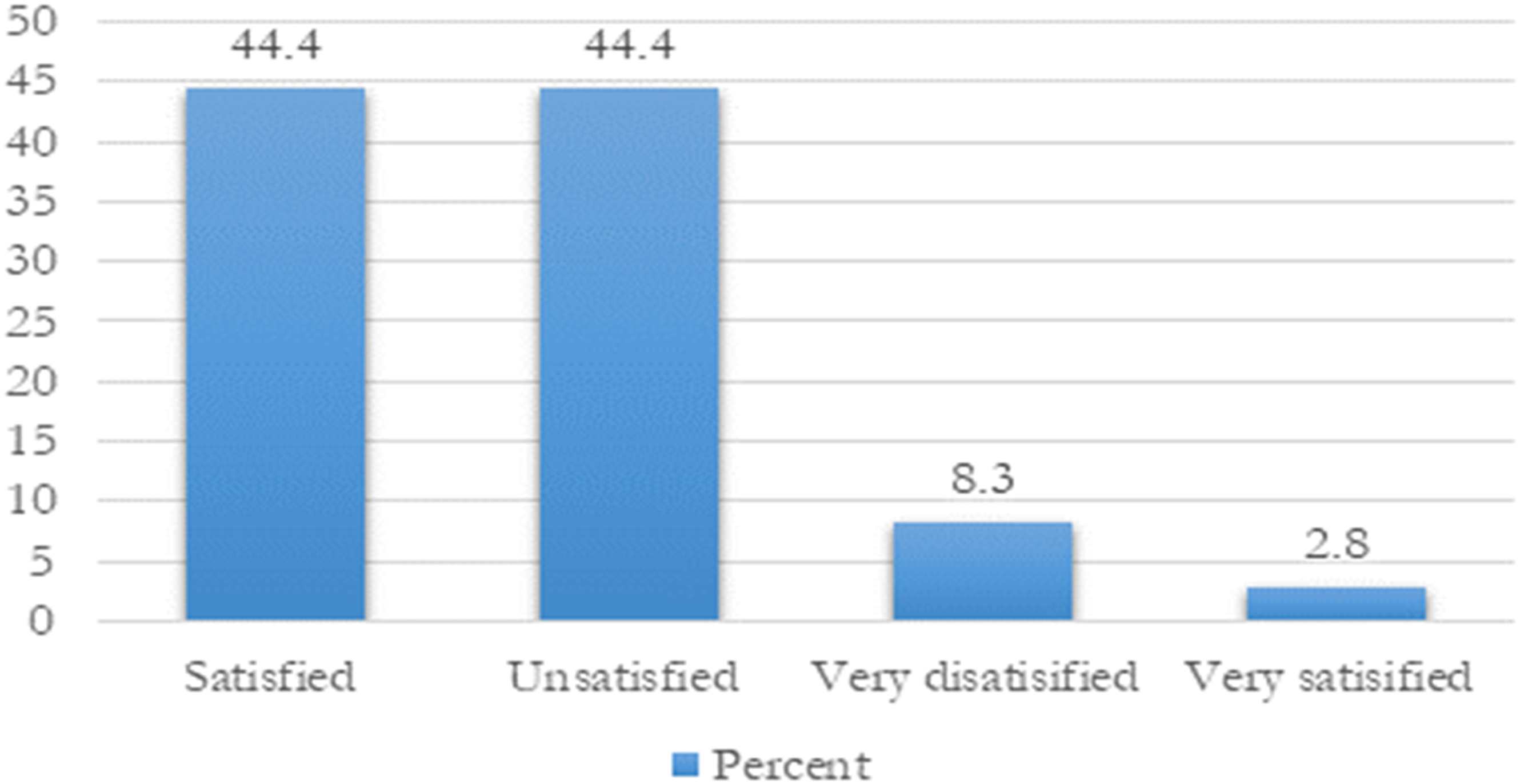
The implications of these findings are significant. Firstly, the equal distribution between satisfaction and dissatisfaction (44.4% each) indicates a polarised perception among respondents regarding the professional development chances provided by TLA. This suggests that while TLA’s efforts might be effective for some, they may not meet the expectations or needs of others. Secondly, the presence of both very satisfied and very dissatisfied respondents highlights the existence of extremes in satisfaction levels, indicating a broad spectrum of participant experiences. This highlights the importance of understanding the factors contributing to both satisfaction and dissatisfaction to address concerns and enhance the effectiveness of TLA’s professional development offerings. Additionally, a considerable proportion of unsatisfied respondents suggests room for improvement in TLA’s programs and initiatives to better cater to the needs and expectations of the librarian community. These findings stress the need to evaluate and refine TLA’s professional development strategies to ensure they align with the various needs and preferences of librarians.
Likelihood to recommend the TLA’s programs and services to librarians under the age of 40
The researchers asked respondents how likely they were to suggest TLA programs and services to other librarians under 40. The study found that 11 (30.6%) were moderately likely, 11 (30.6%) were very likely, 13 (36.1%) were somewhat likely, and 1 (2.8%) were not likely at all, as shown in Figure 7. Likelihood to recommend the TLA’s programs and services to librarians under the age of 40.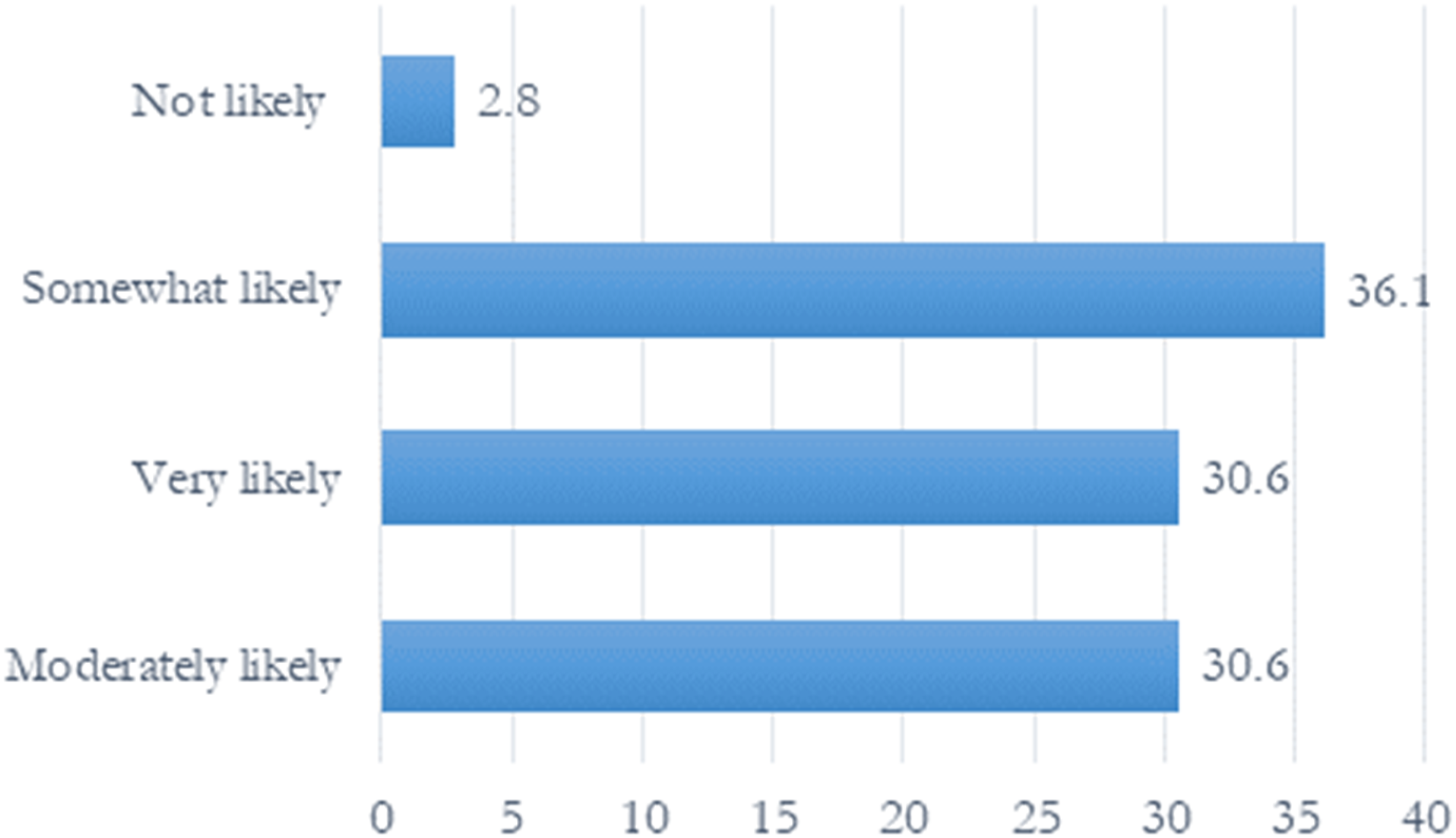
These results suggest a varied perception among respondents regarding recommending TLA’s programs and services to other librarians under the age of 40. While a significant portion express a positive inclination towards recommending them, indicated by responses such as moderately likely, very likely, and somewhat likely, there is also a tiny minority who are not likely to recommend them. This implies both strengths and areas for improvement in TLA’s offerings. Understanding the reasons behind these responses can provide valuable insights for refining TLA’s initiatives better to meet the needs and expectations of younger librarians. The findings highlight the importance of continuously assessing and adapting TLA’s programs and services to ensure they resonate effectively with the target audience.
Effectiveness of the TLA’s programs, services, and advocacy efforts in addressing the needs and challenges faced by younger librarians
Under this specific objective study, participants were asked four related questions to determine the effectiveness of the TLA’s programs, services, and advocacy efforts in addressing the needs and challenges of younger librarians.
Effectiveness of TLA in addressing the evolving needs and challenges
Respondents were asked how effectively TLA addresses the ever-evolving needs and issues faced by librarians under 40. The study found that 17 (47.2%) stated moderately effective, 11 (30.6%) said somewhat effective, 3 (8.3%) said not adequate, and 5 (13.9%) said very effective, as shown in Figure 8. Effectiveness of TLA in addressing the evolving needs and challenges.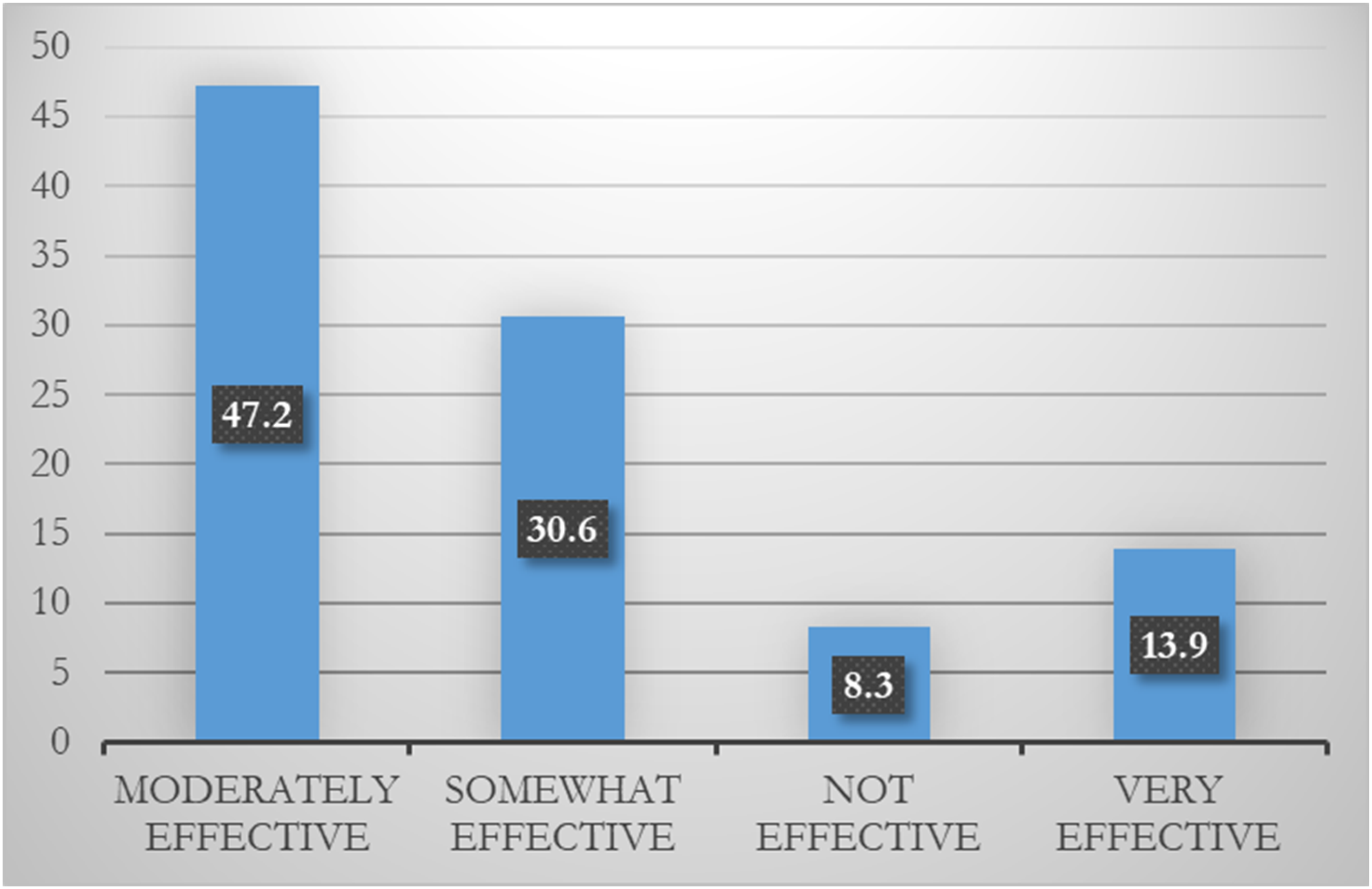
These findings imply that respondents have varying perspectives on the effectiveness of TLA in addressing the changing requirements and issues faced by librarians under the age of 40. While a sizable proportion of respondents consider TLA to be moderately effective, showing some effectiveness in resolving these concerns, others believe it is somewhat or highly effective. However, a small but significant percentage say TLA is ineffective in satisfying these needs. These findings demonstrate the complexities of meeting the diverse and ever-changing demands of younger librarians and the significance of continuously evaluating and adapting TLA programs to align with this demographic’s expectations and requirements.
TLA’s advocacy efforts in influencing the development of the Librarianship profession in Tanzania
Respondents were also asked to what extent they believe the TLA’s efforts favourably influence the development of the librarianship profession in Tanzania. According to the analysis results, 23 (63.9%) agreed that TLA’s advocacy activities positively influence the development of the librarianship profession in Tanzania, 6 (16.7%) disagreed, 3 (8.3%) strongly disagreed, and 4 (11.1%) strongly agreed, as shown in Figure 9. TLA’s advocacy efforts in influencing development of the librarianship profession.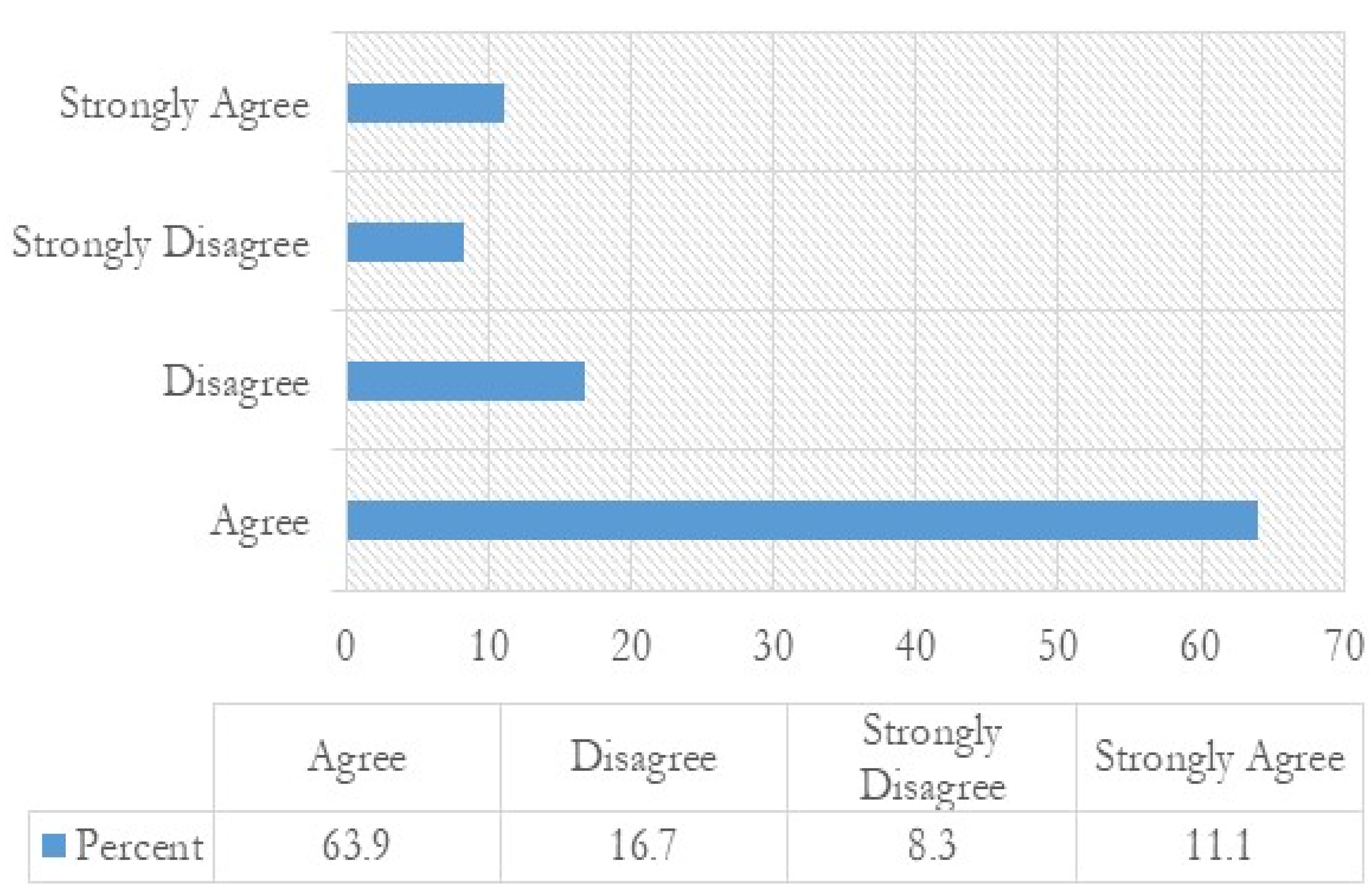
Results of the research show that respondents have a generally favourable impression of the Impact of TLA’s advocacy efforts on the development of the librarianship profession in Tanzania. A large majority of respondents (63.9%) believed that TLA’s lobbying efforts positively impact the profession’s development. Furthermore, 11.1% of respondents strongly agreed with this statement, highlighting the perceived success of TLA’s advocacy efforts. However, a minority of respondents (16.7%) disagreed with this view, with 8.3% strongly disagreeing. These findings indicate a wide range of responses, emphasising the significance of continually examining and modifying TLA’s advocacy efforts to ensure they effectively support the development of the librarianship profession in Tanzania.
Alignment of TLA’s programs with the professional development needs of younger librarians
Researchers also wanted to determine whether the TLA’s programs met the professional development demands of Tanzania’s younger librarians. According to the analysis’s findings, 17 (47.2%) highlighted that TLA programs correspond well with the professional development needs of younger librarians, 14 (38.9%) said pretty well, 2 (5.6%) stated poorly, and 3 (8.3%) said very well, as shown in Figure 10. Alignment of TLA’s programs with the professional development needs of younger librarians.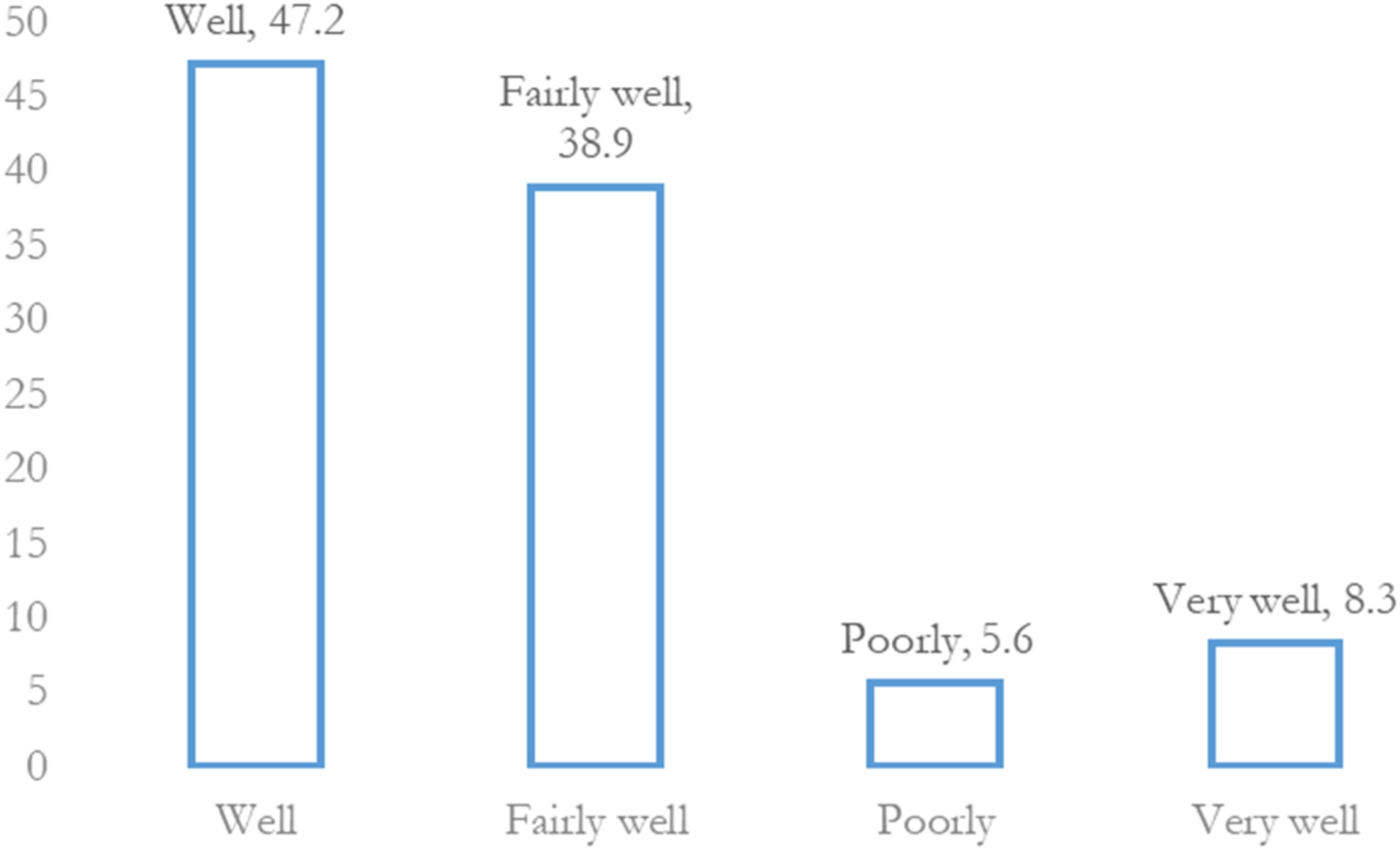
The analysis of respondents’ perceptions regarding aligning TLA’s programs with the professional development needs of younger librarians in Tanzania reveals varied perspectives. A significant majority, 47.2% of respondents, stated that TLA programs are well-suited to these needs, implying positive recognition of TLA’s efforts in addressing crucial developmental areas. Furthermore, 38.9% stated that TLA’s plans are moderately aligned, indicating a generally positive perception with some potential for improvement. However, a smaller number of respondents, 5.6%, stated that TLA’s programs do not meet the professional development goals of younger librarians, indicating areas where changes or upgrades are needed. Conversely, 8.3% of respondents stated that TLA’s programs are very well aligned with these needs, indicating great alignment and efficacy in meeting the developmental needs of younger librarians. These findings emphasise the significance of regularly analysing and developing TLA’s programs to ensure they effectively meet the changing needs of librarians in the country.
Perceived impact of the TLA’s initiatives in nurturing younger librarians
Perception of TLA’s initiatives in nurturing a sense of community and collaboration among younger Librarians in Tanzania.
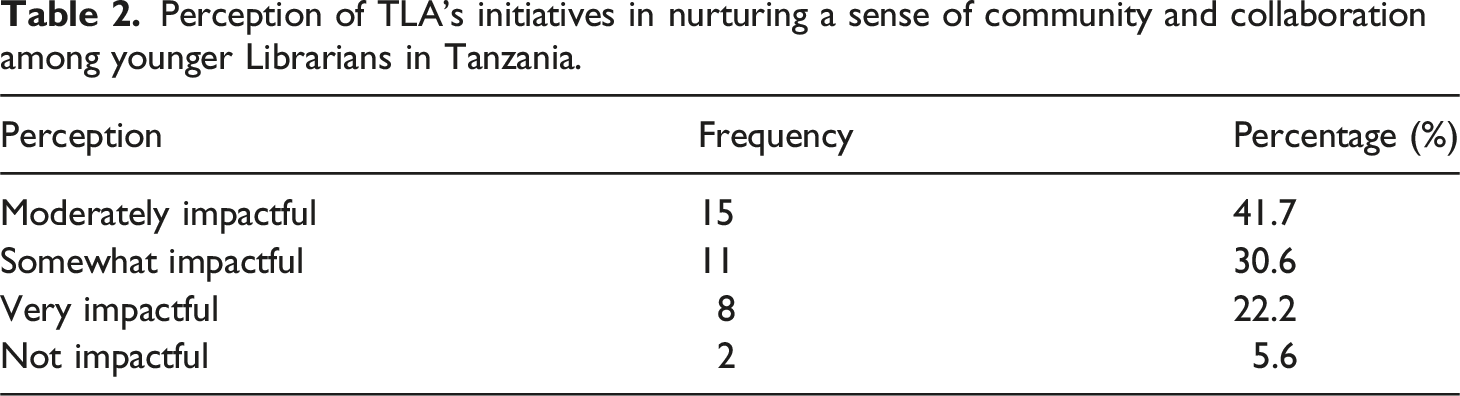
These findings reflect survey participants’ opinions on the impact of TLA efforts on building community and collaboration among Tanzania’s younger librarians. A significant percentage (41.7%) rated TLA’s programs as moderately effective, indicating a noticeable but not overwhelming impact on community and collaboration. Furthermore, 30.6% rated these programs as influential, indicating a favourable influence, but to a lower extent. Furthermore, 22.2% found TLA’s programs extremely effective, showing a considerable positive influence on establishing a feeling of community and teamwork. However, a small minority (5.6%) did not believe TLA’s actions were effective in this regard. These findings highlight the significance of reviewing and improving TLA’s programs, promoting community and collaboration among Tanzania’s younger librarians.
Conclusion and recommendation
Conclusion
This study assessed the contribution of the Tanzania Library Association in Enhancing the Librarianship Profession: Views from under-40-year-old librarians were gathered. The study found that 47.2% of participants were very familiar with TLA, suggesting that a substantial portion of the participants have a strong understanding of the TLA and its objectives.
In terms of their perceptions of the contribution of TLA in advancing professional development opportunities for librarians under 40. Results demonstrated that a majority, comprising 24 respondents (66.7%), agreed that TLA indeed fosters such opportunities. Study participants were asked to state the role of TLA in providing networking platforms for librarians under 40. Findings from the analysis revealed that 15 (41.7%) said very important, 10 (27.8%) said moderately important, 8 (22.2%) somewhat important and 3 (8.3%) said not necessary. Respondents were asked how effectively TLA addresses the ever-evolving needs and issues faced by librarians under 40. The study found that 17 (47.2%) stated moderately effective, 11 (30.6%) said somewhat effective, 3 (8.3%) said not adequate, and 5 (13.9%) said very effective, it can be concluded that this professional body has been exercising its roles as expected by the librarians. It is a vehicle for professional advancement, just like other information professional bodies worldwide.
Recommendations
Based on the findings, the study recommends that TLA continue to nurture development for its members by utilising different strategies, such as preparing and conducting continuous professional training courses for its members and the library profession at large, publicity among different institutions within and outside the country, and forging links with other international information professional associations.
Furthermore, researchers suggest that TLF continue to push TLA in order to effect significant changes in the country. TLA, the only nationally registered professional body for librarianship in the country, maintains enormous power and is trusted by the public. TLF’s initiatives could assist TLA remain responsive to the requirements of the profession and the larger community.
Footnotes
Declaration of conflicting interests
The author(s) declared no potential conflicts of interest with respect to the research, authorship, and/or publication of this article.
Funding
The author(s) received no financial support for the research, authorship, and/or publication of this article.
