




Abstract
Using a content analysis approach, this study assessed the application of theories in Library and Information Science (LIS) research in Tanzania. The study’s specific objectives encompassed the analysis of the utilization patterns of theories in LIS research conducted in Tanzania, the identification of predominant theories, the highlighting of specific areas within LIS research where theories have been extensively applied, and the assessment of the level of integration of theories into research. While Kalervo and Vakkari’s classification scheme of LIS research areas was used to identify specific research areas where theories have been applied most, seven categories of theory talk were utilized to evaluate the degree to which these theories have been incorporated into LIS research. The study’s findings reveal a growing inclination towards the use of theories among LIS researchers, albeit at a slow pace. The study has also shown that TAM and UTAUT theories are the most frequently utilized, with information-seeking research being the primary area incorporating theories among all identified research areas. The findings also suggest that while a significant portion of the analyzed articles fall under the major category of the Continuum of Theory Talk, implying substantial incorporation of theories, a small number of them encountered difficulties in effectively integrating theories. The study, therefore, suggests that LIS educators should also prioritize the theoretical aspect of research in their curriculum. This will help researchers improve their understanding of the subject matter, leading to more reliable and precise research.
Keywords
Introduction
In accordance with numerous other fields of study, the field of Library and Information Science (LIS) also necessitates a heightened utilization of theories as a foundational framework in its research endeavors. The validity of this assertion lies in the understanding that no academic discipline can be established solely on empirical grounds (Levine and Markowitz, 2023). As attested by Ukwoma and Ngulube (2021), even when there is a lack of internally developed theories within a particular discipline, researchers frequently resort to borrowing theories from other disciplines that are directly relevant to their studies. This practice underscores the importance of theories in advancing research. This is particularly true for disciplines like LIS, which need theories to establish their unique identity as a scientific field. To define its scope and develop a solid knowledge base, LIS requires a specific theoretical framework that can inform research inquiries, support compelling arguments, and analyze empirical findings (Pettigrew and McKechnie, 2001).
The importance of theories in research cannot be overstated. The deployment and development of theories are widely recognized as significant benchmarks of academic advancement in various fields of study, including LIS (Connaway and Powell, 2010; Pettigrew and McKechnie, 2001; Togia and Malliari, 2016). The academic realm necessitates the task of an academician to effectively explicate the underlying theory or principles that govern a phenomenon under investigation (Kumasi et al., 2013). Any researcher then who cannot articulate a theory may not have done the difficult task and essential work to unearth the deepest operating principles and preconceptions about the study under investigation (Collins and Stockton, 2018). Non-use of theories in research has, thus, been likened to flying a plane without essential instruments to ensure a safe and predictable flight (Mutula and Majinge, 2017; Ngulube and Ukwoma, 2019).
The significance of the application of theories in research has been exemplified by their capacity to consolidate existing knowledge, explain observed events and relationships, and forecast the emergence of unobserved events and relationships by drawing upon the explanatory principles inherent in them (Collins and Stockton, 2018; Kumasi et al., 2013; Levine and Markowitz, 2023). Theories have also been commended for their ability to help researchers clarify their thinking about a topic (Levine and Markowitz, 2023; Ukwoma and Ngulube, 2021), organize vast amounts of data, simplify the intricate nature of the social world (Kim and Jeong, 2006), ground their arguments, and position their studies in the appropriate context (Onyancha and Kwanya, 2019). Theories also enable researchers to attain external validity in their studies by explicitly outlining anticipated outcomes and the corresponding conditions, while also directing the focus of research, providing guidelines on how to conduct the study, and establishing expected results (Levine and Markowitz, 2023).
The application of theories in research have garnered the interest of numerous LIS researchers. In other words, numerous studies (Kumasi et al., 2013; Levine and Markowitz, 2023; McKechnie and Pettigrew, 2002; Park et al., 2022; Pettigrew and McKechnie, 2001; Roy and Mukhopadhyay, 2023; Ukwoma and Ngulube, 2021) have been carried out to examine the development and use of theories in LIS research. Nonetheless, it is important to acknowledge that these studies have been conducted elsewhere, thereby leaving the development and use of theories among LIS researchers in Tanzania unexplored. Thus far, no research has been conducted within Tanzania specifically to investigate the utilization of theories by LIS researchers in the country. Consequently, it is challenging to determine the level to which LIS researchers in the country have employed theories in their research work. This lack of understanding may have detrimental consequences in fostering theoretical advancement within the field of LIS in the country.
Using a content analysis approach, this study, therefore, aims to examine and thus provide an understanding of the utilization of theories in LIS research in Tanzania. As attested by Kumasi et al. (2013), an examination of theory use matters not only for a specific study but also for the development of a professional as a whole. The study seeks to accomplish four specific objectives: firstly, to examine the patterns of theory utilization in LIS research conducted in Tanzania; secondly, to identify the primary theories preferred by LIS researchers; thirdly, to highlight the particular areas of LIS research where theories have been predominantly utilized; and finally, to assess the extent to which Tanzanian LIS researchers have integrated theories into their research work.
Literature review
Theory development in LIS research
Theory development refers to a process of conducting research to construct a new theory by examining the generalizable relationships among variables (Kim and Jeong, 2006). Such a process serves the purpose of providing a foundation for logical reasoning and aiding researchers in comprehending the complex nature of reality (Dankasa, 2015). Despite the recognition by scholars of the significance of theories in research, it cannot be denied that the field of LIS suffers from a lack of explicit theories, as evidence from research (Hjørland, 2000; Lor, 2014; Roy and Mukhopadhyay, 2023) indicates. The available literature (Kim and Jeong, 2006; Park et al., 2022; Togia and Malliari, 2016) indicates that despite the existence of numerous theories developed by LIS scholars, there is a noticeable dearth of theoretical contributions in LIS research. Furthermore, while certain studies (Onyancha and Kwanya, 2019) have acknowledged the growth of theory in LIS research, alternative findings (Park et al., 2022) have demonstrated that this growth is relatively limited and potentially declining.
The lack of substantial theoretical advancements in the field of LIS has been attributed to its inherent nature. Scholars (Kim and Jeong, 2006; Togia and Malliari, 2016) agree that the foundation of LIS stems from practical applications aimed at resolving practical problems pertaining to the organization and management of information resources, documentation and information retrieval. Consequently, it is not surprising to see that there exists a scarcity of theoretical contributions among LIS scholars, which could potentially enrich the theoretical advancement of the LIS domain. The literature (Onyancha and Kwanya, 2019; Park et al., 2022; Ukwoma and Ngulube, 2021) further shows that the lack of substantial LIS theoretical advancement has compelled LIS researchers to rely on theories imported from other disciplines. It has been noted that theories from other disciplines such as psychology, sociology, and management are often used by LIS researchers (Lor, 2014). Overall, the reviewed studies provide evidence that the development of theories in LIS research remains insufficient.
The trend of theory use in LIS research
Numerous studies have been conducted to examine the trend of theory use in LIS research. Nonetheless, these studies have yielded diverse findings. An earlier study by Pettigrew and McKechnie (2001), for instance, noted from the literature review that the vast majority of information science research is atheoretical. Similarly, several recent studies (Kassim, 2023; Lor, 2014; Togia and Malliari, 2016) have established that a significant portion of LIS studies inadequately incorporate theories from both within and other disciplines. The findings from these studies demonstrate the limited use of theories in LIS research.
Some other studies (Kim and Jeong, 2006; Park et al., 2022; Ukwoma and Ngulube, 2021), however, have noted a rising trend in the use of theories in LIS research though at a low rate. This has been exemplified by the increasing use of theories in LIS research. Such an increase has been associated with the researchers’ attempts to cover both theory development and theory use, their efforts to construct a LIS theoretical base, their multidisciplinary background (Kim and Jeong, 2006), and their increasing awareness towards the use of theories in research (Park et al., 2022). Kim and Jeong (2006) further concluded that the overall rising trend in the proportion of theoretical articles demonstrates the closer relationship of LIS with theory. Overall, even though the literature shows diverse findings regarding the pattern of theory use in LIS research, it still demonstrates that there is a growing inclination among LIS researchers to incorporate theories in their work.
Frequently used theories in LIS research
The literature reveals a plethora of theories that are commonly utilized by LIS researchers. This is evidenced by a multitude of studies (Adbekhoda et al., 2018; Onyancha and Kwanya, 2019; Roy and Mukhopadhyay, 2023; Ukwoma and Ngulube, 2021) conducted to explore the application of theories in LIS research. In their study, for instance, Onyancha and Kwanya (2019) identified various theories that are frequently employed by LIS scholars in their research work. These theories encompass a wide range of topics, including information as a concept, information behaviour, information retrieval, information search process model, berry picking, information foraging, sense-making, information seeking and retrieval, everyday information seeking model, and abnormal states knowledge. Furthermore, in addition to the aforementioned theories, other studies (Roy and Mukhopadhyay, 2023; Ukwoma and Ngulube, 2021) have highlighted theories such as Grounded theory, Learning theory, Activity theory, Unified Theory of Acceptance and Use of Technology Model, Adult Learning Theory, Technology Acceptance Model (TAM)/theory, Everett Rogers’ diffusion of innovations theory, Fuzzy set theory, Critical Race Theory, Queer theory, Shannon’s theory of communication, and Social cognitive theory as commonly utilized theories by LIS researchers.
The literature further demonstrates that, among the aforementioned theories, the Unified Theory of Acceptance and Use of Technology (UTAUT) emerges as the most prevalent theory in LIS research (Onyancha and Kwanya, 2019). The widespread adoption of UTAUT is attributed to its comprehensive nature, which integrates various previous theories such as the theory of Reasoned Action (TRA), TAM, the Motivational Model, the Theory of Planned Behavior (TPB), a model combining TAM and TPB Model of PC Utilization, Diffusion of Innovation Theory (DoI), and the Social Cognitive Theory. According to Onyancha and Kwanya (2019), due to its broad scope and inclusivity, UTAUT is likely to continue to garner increased attention. Overall, although the list identified in the aforementioned studies is not exhaustive, it still highlights the existence of numerous theories that have either been utilized or developed by LIS scholars.
LIS research areas in which theories have been applied the most
Previous LIS studies have extensively utilized theories to explore various subjects. Notably, research conducted by Kim and Jeong (2006) and McKechnie and Pettigrew (2002) revealed that articles focusing on information behaviour, information management, information seeking and use, and information retrieval exhibited the highest application of theories compared to other articles. Recent studies in LIS, such as those conducted by Adbekhoda et al. (2018) and Onyancha and Kwanya (2019), have corroborated these findings. Moreover, besides the aforementioned topics, other areas that consistently incorporate theories include information needs, information literacy (Adbekhoda et al., 2018), information technology, structural equation modelling, knowledge management, mathematical models, the Internet, information resource management, technological innovations, the Internet in public administration, electronic commerce, factor analysis, information storage and retrieval systems, research, diffusion of innovations, information and communication technologies, self-efficacy, decision making, information sharing, information resources, consumer attitudes, and social media (Onyancha and Kwanya, 2019; Ukwoma and Ngulube, 2021).
The extent to which LIS researchers have used theories
The extent to which LIS researchers have employed theories in their research has also been a subject of investigation. Several studies, therefore, have been conducted on the same. Studies (Kumasi et al., 2013; Ukwoma and Ngulube, 2021) have noted that many LIS researchers have applied theories to help inform their study design, design the questionnaires, and interpret their data. However, while it was expected that the researchers could optimally use theories to enhance their research, the available evidence (Kumasi et al., 2013; Pettigrew and McKechnie, 2001; Ukwoma and Ngulube, 2021) seems to suggest that not all research substantially applied theories. In their studies, for instance, Pettigrew and McKechnie (2001) and Kumasi et al. (2013), highlighted a prevalent confusion regarding the application of theories in LIS research. According to these studies, researchers often label something as both a theory and a method, or a theory and a model, or even a theory and reported findings, thereby confusing their readers. It has also been observed that researchers fail to explore theories beyond a singular occurrence, and neglect to effectively communicate the essence of these theories to their readers (Kumasi et al., 2013). Additionally, they do not include bibliographic references for the theories that they mention and consistently assume that all readers possess a comprehensive understanding of the concepts presented in their studies (Pettigrew and McKechnie, 2001). According to Pettigrew and McKechnie (2001), this oversight among LIS researchers is because most of them are unsure about what constitutes theory and thus poorly apply them in their research work.
Research design and data
The present research employed a content analysis approach to examine the application of theories within the field of LIS in Tanzania. This approach has been extensively utilized by researchers in the LIS domain to analyze various data sources, including scholarly articles, interviews, and online platforms, to tackle issues both within and outside the scope of the discipline (Armann-Keown and Patterson, 2020), making it a suitable choice for the present research as well. The present research was conducted as a component of a larger study designed to evaluate the trend of LIS research in Tanzania from 1990 to 2023. A total of 616 articles about LIS, authored by researchers from Tanzania, were collected as part of the study. Out of these articles, only a small fraction, specifically 25% (see Figure 1), incorporated theories. Subsequently, these articles were analyzed to ascertain how the theories have been applied in them. The analysis primarily concentrated on the patterns of theory use, the prevalent theories employed, the research domains where theories were put into practice, and the extent to which theories guided the research procedure. Utilization of theories by LIS researchers in Tanzania.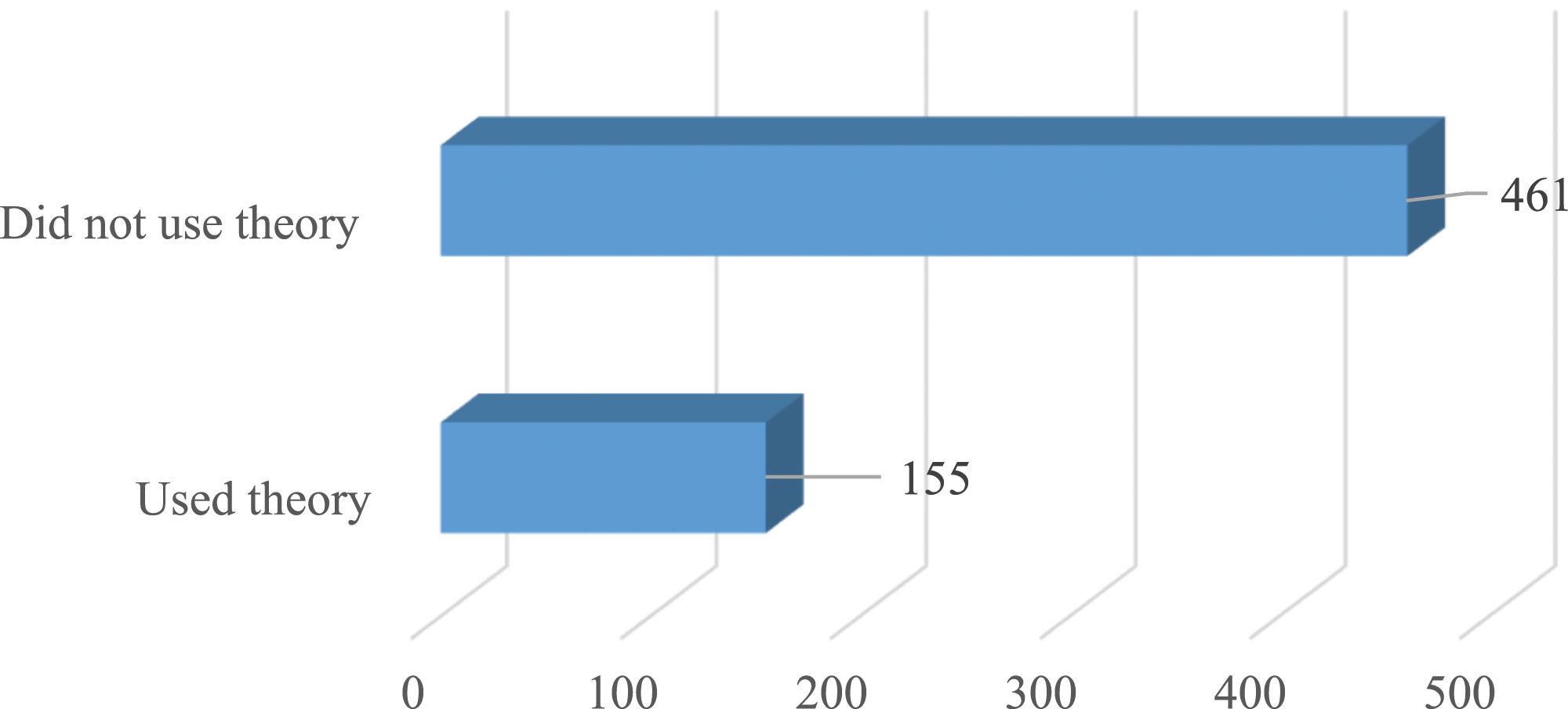
To determine the research domains where theories were put into practice, categories of LIS research areas identified by Kalervo and Vakkari (2022) were used. Kalervo and Vakkari categorized LIS research into eight dimensions namely LIS context, research on LIS studies, LIS service activities, information storage and retrieval, information seeking, scientific and professional communication, other aspects of LIS, and interdisciplinary studies involving LIS. These research areas were cross-referenced with the theories to determine the areas where theories have been most frequently applied.
To establish the extent to which theories have been applied in the analyzed articles, the revised version of seven categories of theory talk proposed by Kumasi et al. (2013) was used. These categories encompass various aspects such as theory dropping, where a theory is mentioned briefly during a literature review but not further explored; theory positioning, where a theory is introduced at the beginning or end of a study without any citation; and theory diversification, which involves the introduction of multiple theories whose relevance to the study may not be evident. Other aspects include theory conversation, which entails a scholarly discussion on the contribution of a specific theory; theory application, which involves consistent use of theory throughout the study to inform the research design and data analysis; theory testing, which focuses on empirically validating an existing theory; and theory generation, which involves the development, revision, or expansion of an existing theory to create a new one. Kumasi et al. (2013) also developed a continuum of theory talk with three levels namely minimal, moderate, and major to measure the intensity of theory utilization using the seven categories of theory talk. The minimal theory talk involves theory dropping and theory positioning, the moderate theory talk involves theory diversification and theory conversation, and the major theory talk involves theory application, theory generation, and theory testing. This continuum of theory talk as developed by Kumasi et al. (2013) was also used in the present study to further analyze the extent of theory application in the analyzed articles.
Results
The trend of theory use
As previously elucidated, this investigation constituted a component of an extensive study that assessed the patterns in LIS research in Tanzania. The observation that a mere one-fourth (25%) of all the articles (see Figure 1) obtained from the study incorporated theories implies a dearth in the application of theories in LIS research within the country.
Regarding the trend of theory use, results, as depicted in Figure 2, reveal a noticeable shift. Initially, there was a complete absence of theories in LIS articles published from 1990 to 2000. However, a discernible change emerged in articles published from 2001 onwards. The data presented in Figure 2 demonstrates a progressive inclination towards the application of theories in LIS articles from 2001 to 2023. Notably, a significant increase in the use of theories is observed in articles published between 2006 and 2023. Trend of theory use in LIS research.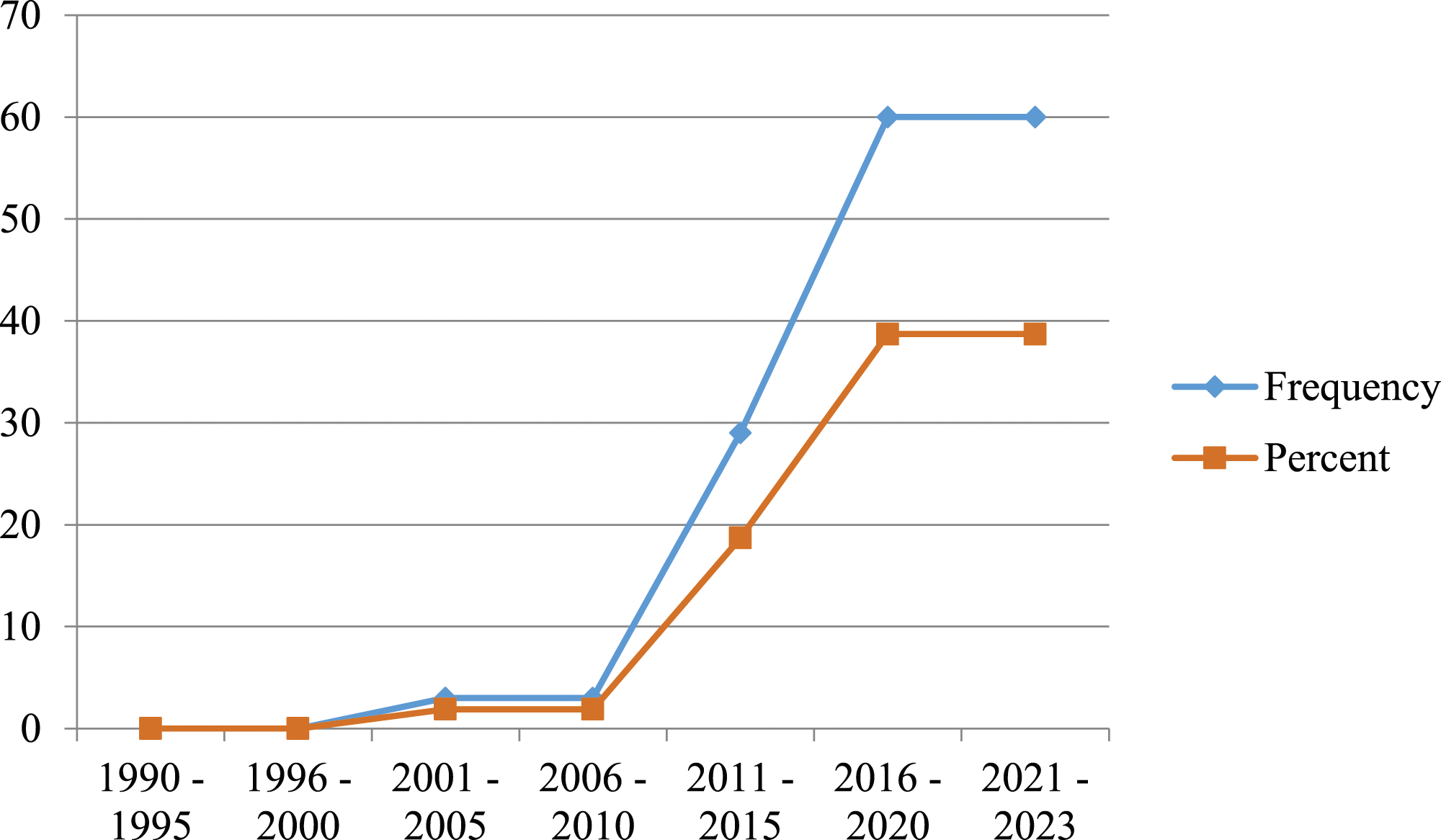
Frequently applied theories in LIS research
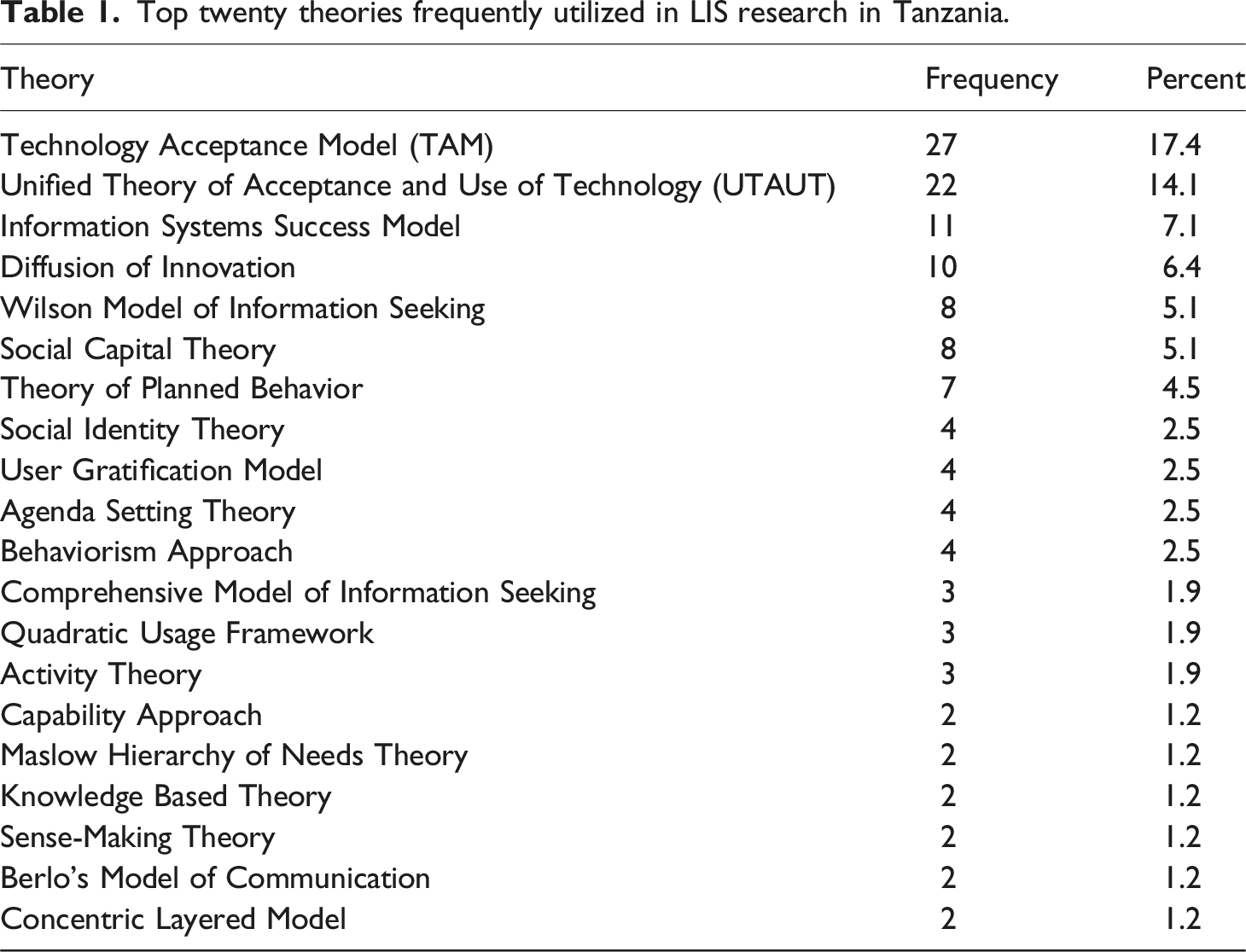
Top twenty theories frequently utilized in LIS research in Tanzania.
LIS research areas where theories have been predominantly utilized
LIS research areas where theories have been applied.
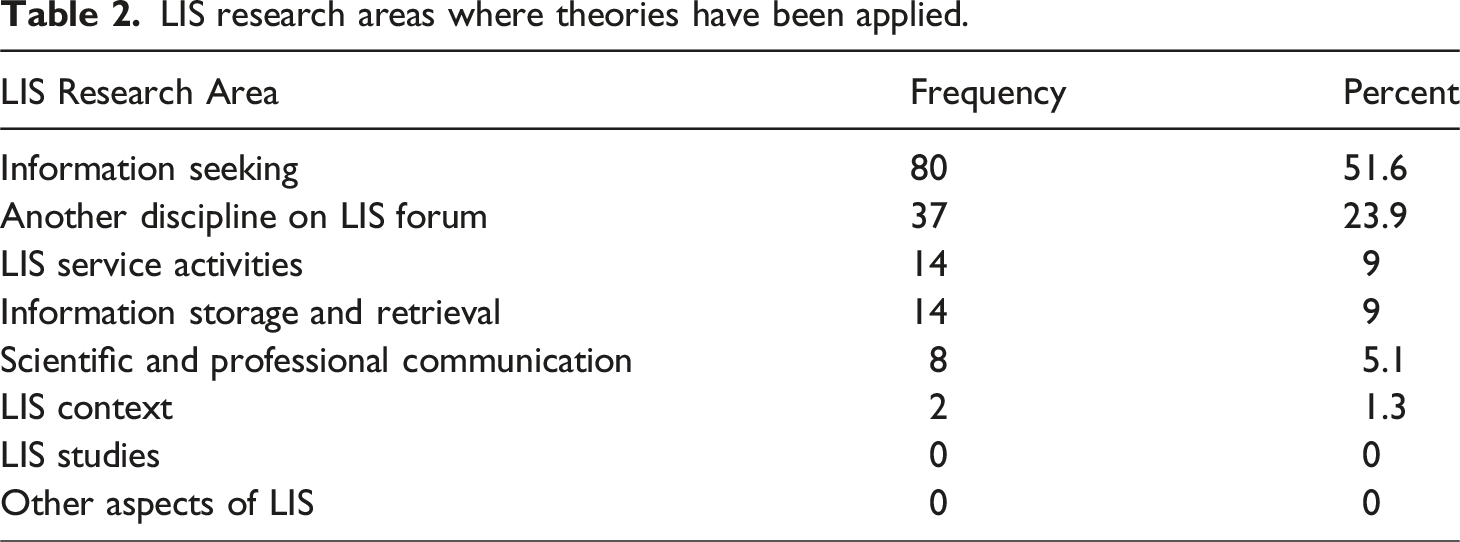
Table 2 presents the results, which indicate that theories have been employed in six out of the eight identified research areas. The data suggests that the field of information seeking research within LIS has predominantly utilized theories compared to other dimensions. Over half (51.6%) of all analyzed articles that have applied theories belong to this research area. Additionally, the findings reveal that a significant proportion (23.9%) of articles from diverse disciplines published in the LIS forum have also incorporated theories. In contrast, a minimal percentage (1.3%) of studies conducted within the LIS context have utilized theories.
The extent to which LIS researchers have used theories
Extent of theory use.
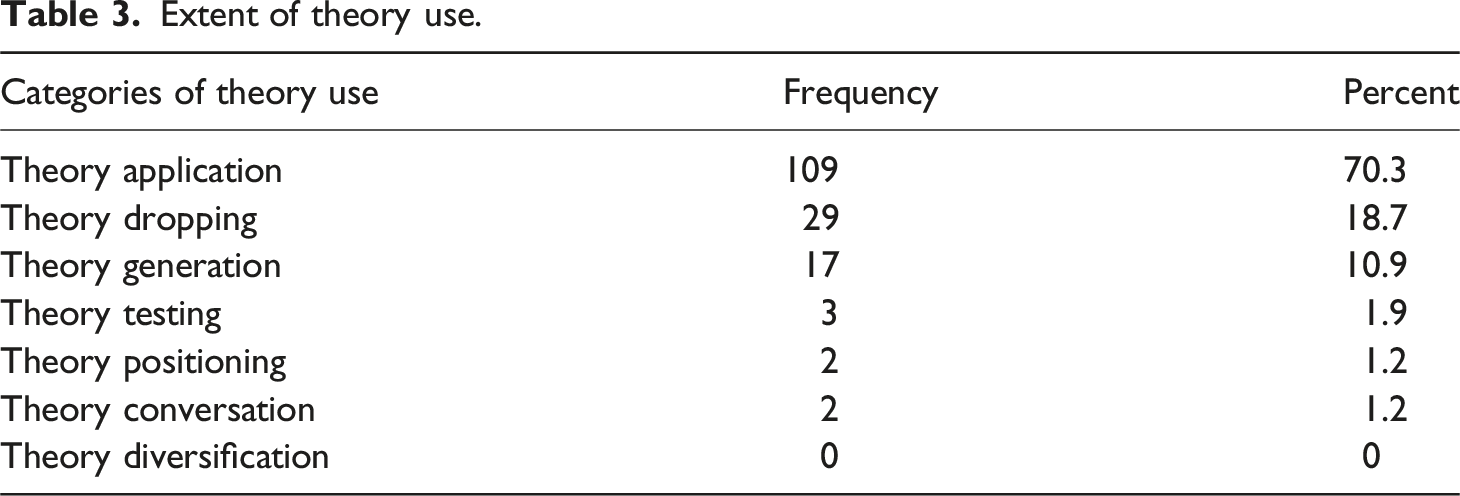
Findings also indicate that a considerable proportion (18.7%) of the analyzed articles did not sufficiently provide information of the theories they utilized. The articles merely presented the theories in the literature review and did not further explore them in the subsequent sections, thus suggesting minimal application of the theories. On the other hand, a somewhat moderate number of articles (10.9%) made efforts to develop and apply their own theories by modifying, augmenting, or creating new theories based on existing ones, implying major application of the theories. Only a small number of articles have majorly utilized theories through testing, thereby providing empirical validation for the existing theories.
Discussion
The study sought to analyze the application of theories by LIS researchers in Tanzania. The study reveals that although there is a growing inclination towards use of theories among LIS researchers in the country, still the pace at which the theories are applied is relatively low. This observation is supported by the abundance of published articles that lack theoretical frameworks. This finding aligns with previous research (Kassim, 2023; Togia and Malliari, 2016) indicating that a significant portion of LIS research is conducted without a theoretical basis. The absence of theories in these articles poses a challenge in comprehending the investigated phenomenon, considering the significance theories have in research. Nevertheless, the finding that there is a growing inclination towards application of theories by LIS researchers cannot be disregarded. Although the finding suggests minimal utilization of theories amongst LIS researchers, it also demonstrates that the researchers are incorporating theories in their research, albeit at a lower rate. The findings in this study are in concordance with those from other similar studies (Park et al., 2022; Ukwoma and Ngulube, 2021), further supporting the notion that theories are being incorporated into LIS research.
The findings of this study further demonstrate that LIS researchers in the country have employed a range of theories to inform their research work. It is worth noting, however, that despite the availability of numerous theories that could potentially guide research, only a select few theories, such as TAM, UTAUT, Information Systems Success Model, Diffusion of Innovation, Wilson Model of Information Seeking, Social Capital, and Theory of Planned Behavior were commonly utilized by LIS researchers in comparison to other theories. The study also observed that TAM and UTAUT were the most commonly employed theories among the ones mentioned. In contrast to the earlier study (Onyancha and Kwanya, 2019) which identified UTAUT as the most dominant theory, this study identified TAM as the most dominant theory among all the theories utilized by LIS researchers in Tanzania. Nevertheless, despite this minor distinction, the findings in the present study regarding the prevailing theories employed by LIS researchers exhibit a considerable resemblance to those derived from previous studies (Adbekhoda et al., 2018; Onyancha and Kwanya, 2019; Roy and Mukhopadhyay, 2023; Ukwoma and Ngulube, 2021). In essence, these findings substantiate the belief that LIS researchers within the country are actively incorporating theoretical frameworks into their research work.
It is also worth noting that LIS researchers have applied theories across various research areas. Nonetheless, the research on information seeking seems to be the foremost research area that incorporates theories amongst all the identified research areas in this study. The findings indicated that a considerable proportion of the analyzed articles, which applied theories, were associated with this particular research area. Both earlier (Kim and Jeong, 2006; McKechnie and Pettigrew, 2002) and recent studies (Adbekhoda et al., 2018; Onyancha and Kwanya, 2019) on LIS research trend have reported similar findings. Nevertheless, these findings can be attributed to the observation that this particular research area has been extensively researched in Tanzania in contrast to the other LIS research areas, which is evident from the findings of previous studies (Kassim, 2023; Ndenje-Sichalwe and Elia, 2022). It can also be inferred that research areas that have only marginally applied theories have garnered less interest from LIS researchers in the country. It is, therefore, unsurprising to find that theories have predominantly been applied in information seeking research area compared to the other LIS research areas.
Despite indications in the existing literature of inadequate application of theories in research (Kumasi et al., 2013; Ukwoma and Ngulube, 2021), the outcomes of the present study reveal contrasting findings. The findings reveal that a predominant number of the articles analyzed align with the major category within the continuum of theory talk, indicating a substantial incorporation of theories in research. A considerable proportion of articles analyzed in this study have demonstrated their ability to utilize theories effectively in guiding their research design and data analysis. Additionally, it is important to acknowledge that a considerable portion of the articles have generated and used new theories. While this finding may not hold great significance, it does highlight the researchers’ contribution to the theoretical advancement within the realm of LIS. The finding further demonstrates the growth of theories in LIS research, though at a more gradual rate. This observation has also been reported in a previous study (Onyancha and Kwanya, 2019).
In line with previous research (Kumasi et al., 2013; McKechnie and Pettigrew, 2002; Pettigrew and McKechnie, 2001), the present one also found some researchers facing challenges incorporating theories in their work as exemplified in their articles. The observation that these articles only touched upon theories at a minimal level of the continuum of theory talk (theory dropping and theory positioning) implies that these researchers may not possess a strong understanding of theoretical issues in research. Consequently, doubts may arise regarding the reliability of both the methodology and findings presented in their studies.
Conclusion
The main findings of the study indicate a growing inclination among LIS researchers in the nation to utilize theories. This positive development, along with the fact that a majority of LIS researchers are effectively employing theories in their research work and that a few have even formulated their own theories, is promising, considering the significance of theories in academic inquiries. Nevertheless, the discovery that certain researchers continue to encounter difficulties when it comes to incorporating theories into their research endeavors is a cause for worry. The incapacity to seamlessly incorporate theory into research work might hinder the understanding of the phenomenon being studied. Notwithstanding the fact that the present study did not specifically examine Tanzania’s LIS curriculum, the challenges faced in applying theories in LIS research may indicate a potential weakness in the said curriculum. It is, therefore, imperative for LIS educators to develop a curriculum that also prioritizes the theoretical dimension of LIS research. A thorough comprehension of theoretical aspects in research is essential for LIS researchers in order to augment the credibility and accuracy of their research work.
Footnotes
Declaration of conflicting interests
The author(s) declared no potential conflicts of interest with respect to the research, authorship, and/or publication of this article.
Funding
The author(s) received no financial support for the research, authorship, and/or publication of this article.
