




Abstract
During the various stages of the COVID-19 pandemic, numerous countries, including several in Africa, implemented lockdown measures. Unfortunately, libraries and information centres were not deemed essential services providers, resulting in partial operations or complete closures. Among the hardest-hit by the pandemic were developing economies, where libraries, typically non-profit organizations, play a crucial role. These institutions usually rely on funding from the government (in the case of public libraries) or parent institutions, which themselves often depend on government support (as is the case with academic libraries in government-owned institutions). With the economies of these countries suffering and experiencing a slow recovery, libraries in developing nations are likely to face further budgetary constraints. In addition to the economic impact on funding, there is a significant risk of a decline in the literacy rate among children due to the closure of libraries and schools during lockdowns. This paper employs a SWOT analysis to identify the challenges and benefits for libraries and information professionals from both societal and professional perspectives. Despite the obstacles that libraries in the developing world may encounter in the post-pandemic era, as well as during the fourth industrial revolution, there are also valuable opportunities that can be harnessed. One such opportunity is the provision of information services to digitally literate, yet informationally illiterate communities.
Keywords
Introduction
Librarians and information professionals have consistently positioned themselves as facilitators of access to reliable and authoritative information resources. However, in recent decades, the rapid advancement of technology and shifting user attitudes towards information access and utilization have significantly impacted the concept and physical structure of libraries (Ahmed and Al-Reyaee, 2017). While there is a nostalgic perception of libraries and information centres as sacred havens of knowledge, sheltered from the ephemeral nature of the digital era, the pervasive influence of technology in all aspects of modern life has necessitated a transformation. Libraries and librarians are transitioning from being confined to physical spaces to embracing borderless environments (Ebbitts, 2015). As a result, libraries have been proactive in preparing for information service provision during and after the COVID-19 pandemic.
The expansion of information resources is occurring at an unprecedented pace (Roetzel, 2019). Ahmed and Al-Reyaee (2017) highlight that libraries have made substantial investments in electronic resources such as journal databases and e-books to cater to the specific needs of users. These investments underscore the libraries’ commitment to keeping up with the evolving landscape of information provision (Figure 1). Library in physical spaces (Pinfield et al., 2017).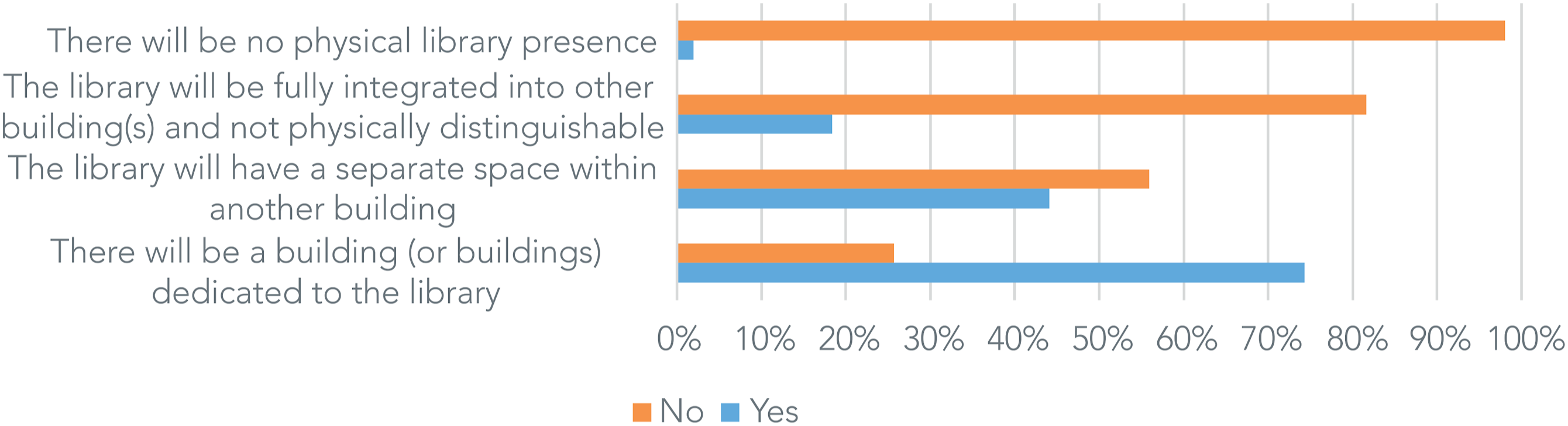
The shift to remotely accessible information resources is causing an identity crisis for libraries and information professionals in a post-Covid world. However, there is a caveat with regards to information users who lack the necessary skills to access and evaluate the accuracy and authority of online resources. Nonetheless, this presents incredible prospects for global learning outcomes, with digital repositories facilitating the sharing of information and knowledge at an amazing speed (Ebbitts, 2015).
Barnes (2020) underscores the importance of information and communication technologies in our daily lives, as the pandemic has impacted every aspect of our lives, from work to education, healthcare, and leisure. Moreover, the pandemic has created a “new normal,” and moving forward, information professionals will be crucial in expanding and understanding our new normal information needs and information services provisions.
The Covid-19 pandemic has led to an explosion of information or information overload. As more people turn to the internet as their primary source of information and strive to minimize physical engagement, there is a proliferation of misleading information available online (Hoq, 2016). This information overload can be chaotic, particularly given the increase in misinformation and disinformation on the internet and conventional media sources (Chakborty, et al., 2020).
Libraries now and hereafter: Identifying the trends
Libraries have traditionally served as vital community resources, offering accessible information and knowledge to diverse populations. Public libraries, in particular, have played a central role in providing extensive information resources to communities worldwide. However, the rapid advancement of technology has brought libraries to a turning point in the 21st century, fundamentally changing how information resources are consumed and accessed (Düren, 2013). This transformation presents both significant challenges and opportunities for libraries globally.
While new technologies have impacted our reading habits, our inherent need for shared, community-centered spaces to seek information and connect with others remains unchanged (Almeida et al., 2020). Libraries do not exist in isolation; they exist within a context. A report on the state of libraries in America in 2017 acknowledged that libraries of all types are adapting to the social, economic, and political changes brought about by living in a digital society (Rosa, 2017). Therefore, future-proofing libraries necessitates the adoption of both physical and virtual spaces. The evolving landscape of libraries and information professionals is influenced by various interconnected factors rather than a singular variable. These factors encompass digital scholarship as a valuable source for data-centered research and connected learning. They also include the reinforcement of distorted identities and the shift in libraries’ service focus from “just in case” to “just in time” (author cited, year). This convergence of trends highlights the multifaceted nature of the challenges faced by libraries and information professionals in adapting to the digital age.
Digital scholarship as a mine for data-centered research and connected learning
Pedagogies and research are increasingly being strengthened by large datasets supported by technology-enabled flexible learning, which involves open and algorithmically-driven systems. Libraries have played a pivotal role in democratizing knowledge by providing services to library users at no direct cost. They have advocated for open access and open science, contributing to the accessibility of knowledge (Borgman, 2015). Additionally, libraries and librarians have facilitated access to knowledge through open data and digital repositories. Librarians in academic research institutions have transitioned from being mere support staff to becoming collaborators in data-intensive research. They now offer research data management services and oversee digital artifacts, promoting open science and open data that can be further enhanced through artificial intelligence (Boulton, 2017). According to Gartner (2016), artificial intelligence and machine learning have reached a critical tipping point, augmenting and extending nearly all technology-enabled services, applications, and objects. Pinfield et al. (2017) suggest that scholarly networks are particularly well-suited for these developments, with increasing willingness among researchers, publishers, librarians, and others to operate with greater openness on a global scale.
University and large research libraries already serve as publishers of knowledge generated within their institutions, hosting research outputs, theses, and dissertations in institutional repositories. These developments represent significant early indications of a much larger transformative change in the future of libraries and the information profession. The Covid-19 pandemic has propelled higher education towards increasingly technology-enabled teaching and learning. Even beyond the pandemic, teaching has become a facilitation process, involving blended content delivery and often entirely online experiences. As a result, technologies such as virtual and augmented realities (V/AR) and haptic interfaces are expected to be in high demand in teaching and learning (Nagel, 2016). Furthermore, academic libraries have an exceptional opportunity to create virtual spaces that can accommodate students from various regions of the world. The current interest in “maker spaces” is a contemporary and positive indicator of connected learning, where the library serves as a platform (Curry, 2017; Weinberger, 2012).
Grove (2017) reported that these types of developments are already being implemented in certain higher education institutions in the United Kingdom, where campuses are being redeveloped to foster a more fluid approach to learning and teaching. As part of this transformation, separate buildings owned by different departments and services, including the library, are being eliminated. In this context, library and information services share spaces with other learning and teaching activities, representing a less drastic but integral aspect of connected learning (Pinfield et al., 2017).
Distorted identities
The exchange of ideas between professional groups, such as computer scientists and librarianship, has led to increased collaborations and the development of new skills. This collaboration is further fueled by a multitude of economic, political, and other pressures that place demands on higher education institutions and libraries. The Fourth Industrial Revolution (4IR) has significantly impacted society, resulting in changing labor market demands and the elimination of many current professions and trades, while simultaneously giving rise to new and unprecedented forms of employment (Lengyelné Molnár, 2020). The boundaries between academic libraries and other parts of university environments are becoming increasingly distorted and blurred, a trend that is expected to persist (Wolff and Schonfeld, 2017). This is evident in libraries’ growing inclination to hire staff from outside the traditional library/information profession, as they increasingly collaborate with other departments to design and deliver instructional services (Fenwick et al., 2021).
Libraries’ service focus from “just in case” to “just in time”
In recent years, the focus of library business operations has shifted significantly from building physical collections to prioritizing information services. The value of libraries is no longer solely measured by the volume of materials on their shelves, but rather by the contributions they make in supporting instruction, learning, and research within academic institutions (Wolff and Schonfeld, 2017). This change in emphasis also facilitates the transition of librarians from service providers to active collaborators, as researchers have the option to selectively share their research progress with colleagues and collaborators (Dempsey, 2016). However, the extent and ultimate outcome of this shift remain uncertain. Simultaneously, the traditional role of institutional libraries in content discovery faces uncertainty, as an increasing number of users turn to commercial network-level discovery systems like Google as their primary source for information-seeking (Pinfield et al., 2017; Wolff and Schonfeld, 2017). The implications of this trend for the future of library discovery services are still unclear.
Theoretical framework
A SWOT (strengths, weaknesses, opportunities, and threats) analysis is a widely used tool to identify internal and external factors that may affect a process or structure, such as libraries and librarians post-Covid-19. SWOT analysis has been utilized in numerous studies in the fields of business and marketing and has proven to be a popular and effective tool for developing business strategies (Ghazinoory et al., 2011; Helms and Nixon, 2010). For example, Dyson (2004) employed SWOT analysis to link resource-based planning with strategic development at the University of Warwick (UK), while Hai and Tsou (2009) used SWOT to devise a strategy for the Department of Information Management at Shih Chien University in Taiwan.
Strengths refer to special expertise or advantages, such as the ability of libraries and librarians to adapt to the current demands for new roles, including Data librarians, Digital scholarship librarians, and scholarly communications librarians. Weaknesses, on the other hand, pertain to limitations that could hinder the achievement of goals and objectives, such as inadequate skill sets or unpreparedness for the future of information services. Opportunities involve leveraging advantages, such as technologies, or addressing disadvantages, such as the digital divide, for better service provision to users. Threats, like opportunities, are external to libraries and librarians and can include limitations outside of their control, such as lack of funding.
In a typical SWOT analysis, institutions first consider internal strengths and weaknesses. For libraries and librarians, strengths such as being trusted sources of authoritative information, capacity to easily move into the publishing and dissemination of generated knowledge within institutions through repositories, and the ability of information professions to adapt to changing roles all work well as strengths. These are variables that can be leveraged for sustained societal relevance as they are internally controlled. Opportunities and threats (as shown in the second row of the SWOT in Figure 2) are external to libraries and librarians, including technological and social changes, the digital divide, and changes in information storage and consumption. SWOT analysis framework.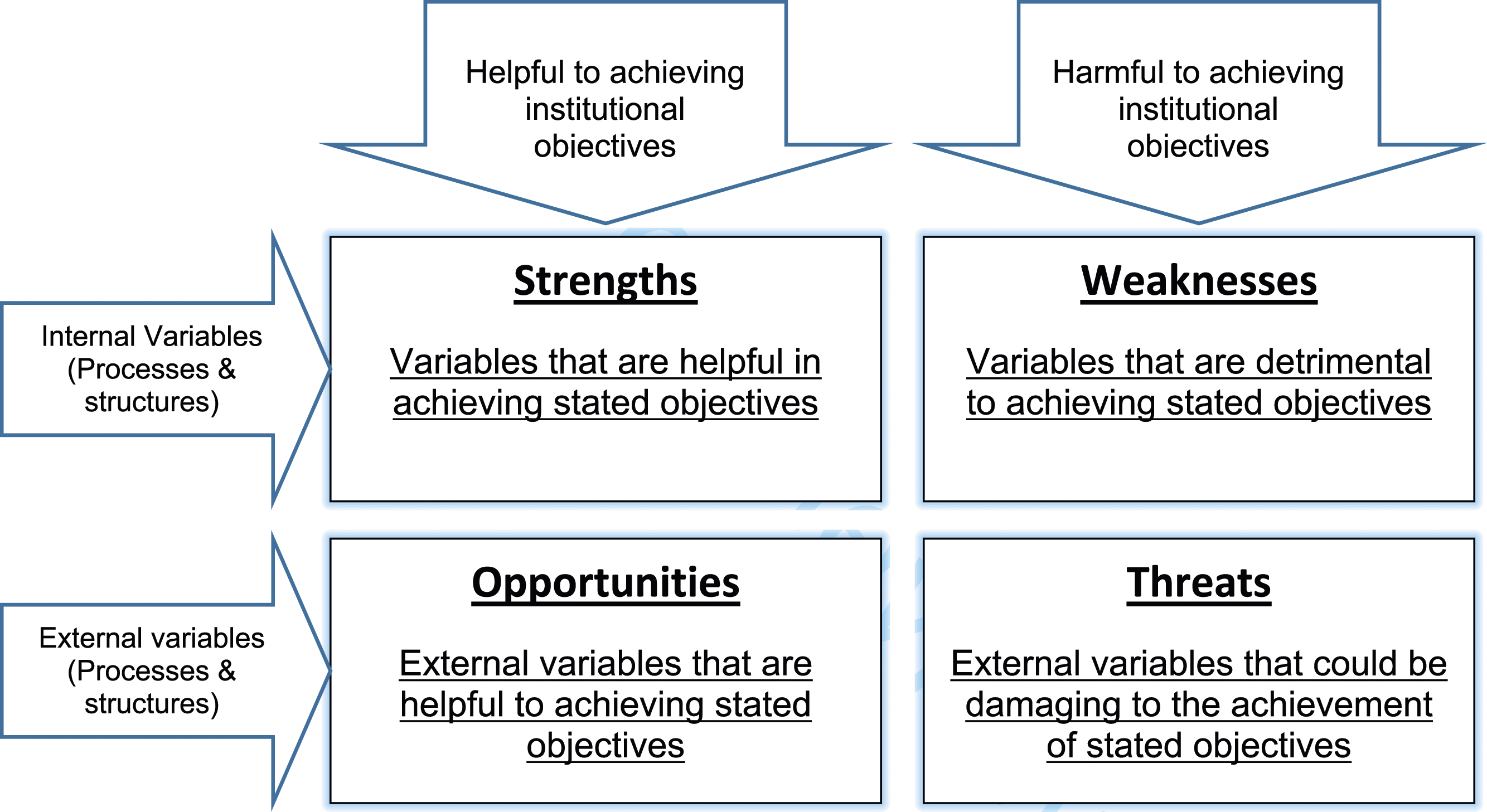
While strengths and opportunities (First Column in Figure 2) are helpful in reinforcing the future relevance of libraries, weaknesses and threats (Second Column in Figure 2) have harmful potentials of projecting libraries through the lens of non-essential societal institutions. SWOT analysis assists in the identification of environmental relationships as well as the development of suitable paths for institutions and businesses (Helms and Nixon, 2010). Dickson (2002) agrees the traditional SWOT analysis can be re-conceptualized in terms of the direction and momentum where the market can still be changed. This provides insight into teaching marketing strategy and competitive rationality skills (Helms and Nixon, 2010).
The objective of this paper is to discuss and analyse the current trajectories of libraries using literature and make a case for the continual relevance of libraries/information professionals using SWOT analysis with particular focus on developing countries. Two main focus objectives are to: 1. Identify the strengths, weaknesses, opportunities as well as threats to libraries/information professionals post Covid-19 and 4IR. 2. Assess the implications of the strengths, weaknesses, opportunities as well as threats for libraries/information professionals post Covid-19 and 4IR.
Libraries and information professionals post-Covid
The continued relevance of libraries and information professionals, along with the challenges they may face, are examined and deliberated upon utilizing the fundamental concepts of the SWOT analysis. This analysis considers two of the SWOT’s elements, namely weaknesses and threats. These elements comprise internal and external factors, respectively, that have been determined to impede the attainment of institutional goals. Consequently, we will explore them together.
Strengths
Libraries and information professionals continue to provide information services that distinguish them as vital contributors to the socio-economic and educational progress of both developed and developing countries. This significance is particularly pronounced in many developing nations where educational and literacy rates remain low (Schmid et al., 2017). Throughout generations, libraries have been regarded as trusted sources of authoritative information and resources (American Library Association, 2020). This trust will persist in the face of increasing misinformation and disinformation. Services that promote information awareness, fact-checking, and the preservation of accurate historical collections will play an ongoing and crucial role in fostering an informed society.
Advancements in technology have not only transformed information sharing and consumption but have also brought about changes in the roles and responsibilities within libraries and information centers (Chisita, 2020). Positions such as digital scholarship librarian, scholarly communications librarian, and data services librarian, which did not exist two decades ago, now contribute to the expanding landscape of library services. These roles, along with the existing services provided by information professionals, position libraries to seamlessly engage in publishing and disseminating knowledge through institutional repositories and electronic theses and dissertations.
External forces, such as technology, have consistently influenced the work practices of librarians and information professionals. Emerging roles and responsibilities, such as digital humanities librarian, digital asset librarian, and online instructional design librarian, reflect the relevance of information professionals in the fourth industrial revolution and beyond. Many academic libraries have already embraced these novel roles to meet the demands of scholarly research, including data librarianship, digital scholarship librarianship, and scholarly communications librarianship (American Library Association, 2020).
Weaknesses and threats
Weaknesses and threats encompass both internal and external factors that have the potential to impede the achievement of institutional objectives. These two constructs are discussed together due to their detrimental nature. Weaknesses possess the ability to restrict libraries and librarians from reaching their full potential (Helms and Nixon, 2010). They can also manifest as external threats, such as government policies, that negatively impact libraries and librarians.
An internal weakness that can pose harmful consequences for libraries and librarians is the inadequacy of skill sets required to provide effective information services to digital natives. According to Rosenzweig (2013), librarians must increasingly act as knowledgeable guides who possess the skills and leadership abilities to assist others in navigating the complexities of the digital landscape (p. 63). These skills and leadership abilities encompass information literacy, technological proficiencies like data analytics and digital scholarship. Makerspaces have been established in universities worldwide as interdisciplinary centers where learners can engage in experimentation, creation, and product innovation, benefiting not only science and engineering departments but also media and journalism schools, as well as other humanities and social science areas (Johnson et al., 2015). The notion of climbing, as described by Rosenzweig (2013), signifies the acquisition of new knowledge, which may involve initial failures. In this context, libraries and librarians require the necessary skills to guide users and learners in forging new paths of knowledge.
Budgetary constraints have long plagued libraries, and the economic aftermath of the Covid-19 pandemic could exacerbate the financial challenges faced by libraries and librarians. They must prioritize their expenditures and determine if the allocated resources will truly benefit their user patrons (Ashcroft et al., 2007). The strain of financial difficulties is compounded by the adoption of e-books, as libraries often have to pay significantly higher rates than the average patron for each e-book, and the reliance on digital infrastructure increases technology costs (Rosen, 2020).
The monetary challenges faced by libraries, if left unaddressed, can widen the digital divide. The digital divide and digital inequality have the potential to hinder efficient information service provision. This divide manifests in two ways: under-resourced libraries unable to provide efficient digital library services, and a growing gap in digital inclusion for library users who depend on the library for access to these technologies. Such disparities can have implications for social mobility, as those without access to technology and digital resources may be left behind in terms of education, employment, and overall advancement. This disparity can further perpetuate existing inequalities and limit opportunities for upward social mobility.
Users’ access to appropriate technology is crucial for gaining access to information resources (Almeida et al., 2020). The three levels of the digital divide - economic, usability, and empowerment divides - should be considered. The technology challenges highlight the evident digital divide and inequality among user communities. Those already disadvantaged due to lack of access, skills, age, or disability (Barnes, 2020). As information professionals, it is their responsibility to bridge this divide through initiatives such as online literacy classes, providing access to computers and the internet, and finding practical ways to assist the elderly and differently-abled individuals in accessing their information needs.
In many developing countries, frequent power cuts pose a significant challenge. The constant interruption of electricity can have a detrimental effect on effective service provision by libraries of the future. Some communities do not even have access to electricity. This poses a difficult situation, as many university students rely on computers and Wi-Fi available on campus (Jena, 2020). Limited access to electricity hampers the provision of digital library services in developing countries. Two possible solutions have emerged: the use of power generators or the adoption of renewable energy sources such as solar power. While generators offer a quick solution, they are not sustainable in the long term. Renewable energy sources provide a sustainable solution that reduces the institutions’ carbon footprint, supports a transition towards sustainability, and creates job opportunities.
Another weakness/threat to libraries and information professionals is the ongoing electronic/print debate. The changing nature of information storage and consumption suggests that libraries of the future will house more electronic resources than print materials. Cox (2020) observes that due to the spread of the coronavirus, the circulation of print information materials has become less relevant and may soon become a thing of the past in the post-COVID-19 world. Physical access has been restricted, and mass digitization has been introduced, providing “temporary emergency access” to members (Cox, 2020). Libraries have utilized this temporary emergency access to digitize portions of information materials that were previously available only in print, allowing users to access and utilize them for their studies. However, this temporary emergency access also raises concerns about copyright infringement on authors’ works (Figure 3). Preferred format of information resource (Mafela, 2021).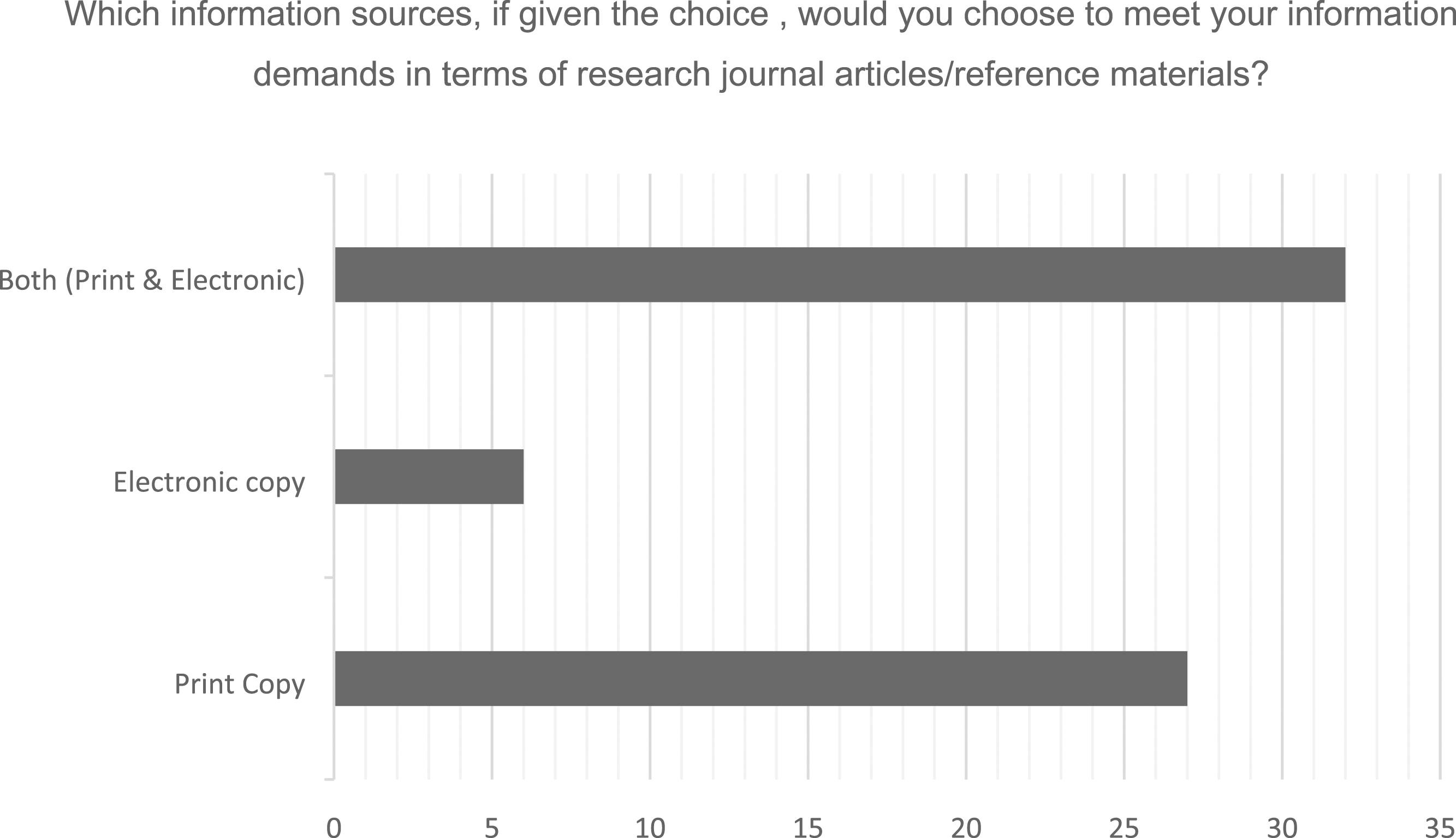
Apart from information resources published in both physical and electronic formats, printed materials are not available on the internet; they only exist in printed form. This poses a challenge for libraries. Although it is generally assumed that the demand for printed resources will continue to decrease, a survey of second-year Law students at the University of the Western Cape revealed that as many as 45% of the respondents still prefer printed resources (Mafela, 2021).
The current trend is the migration to electronic means of information dissemination, and this is a great opportunity for librarians: including areas of libraries as publishers, being a trusted source in the times of fake news, misinformation and disinformation. This could pose as a threat if the format of information consumption does not continue to grow with the trend.
Opportunities
The Internet and the increasing prevalence of online studying and remote working provide information professionals with opportunities to expand their resources and services. Palanee (2020) suggests that digital content streaming, entertainment, and gamification sectors are well-positioned to leverage technology and unlock new opportunities. These sectors will solidify their position in the digital world, resulting in permanent job opportunities for information professionals. The Organization for Economic Co-operation and Development (OECD, 2020) states that widespread telework may become a permanent feature of the future working environment, driven by experiences during the COVID-19 crisis. This presents an opportunity to provide full-time online learning and develop online courses. Palanee (2020) emphasizes the need to rethink traditional approaches and purposefully retrofit existing structures to meet the demands of the new reality. In this context, the pandemic can be seen as a catalyst for information professionals to create and implement innovative processes and systems.
Online information services create a dynamic communication channel between users and the provided information materials, as institutions implement digital opportunities to ensure easier access to authoritative and accurate information sources (Dwivedi et al., 2020). A study by Anderson et al. (2021) conducted in an academic library at a large public university reported that reference consultations became more challenging following the closure of physical library spaces during the pandemic. The rapid transition of information services from physical to virtual environments amidst the ongoing crisis has presented significant challenges. Effectively utilizing technology is one way for librarians and information professionals to meet the information needs of users during dynamic times when physical buildings are being closed or transformed into makerspaces (Flierl, 2021). A preliminary study by Li and Fleischmann (2020) reveals the interest among library and archives students in learning about digital systems, AI, machine learning, programming, and data science. However, some students expressed unease about these modules. As libraries continue to transform and evolve into technology spaces, users’ perception will be that of a community library promoting digital literacy and providing access to a world of limitless information resources.
According to Arora and Suri (2020), while the median age in developed countries will be 40.7 years by 2025, it will be only 29.7 years in less developed countries. This young population gives libraries and librarians in developing countries a significant advantage, as most users will be digital natives. Information service provision to these technologically literate groups will be more seamless. For academic libraries, digital natives already comprise a significant portion of the undergraduate user community. This demographic shift also facilitates the acquisition of new skills for information professionals, enabling them to leverage this advantage. As Uzohue and Yaya (2016) suggest, these skills encompass information resources, information access, technology management, research, and the ability to use knowledge as a basis for providing information services.
The global pandemic and the increase in Internet users have contributed to the emergence of a phenomenon known as “infodemic.” Infodemic refers to the overwhelming number of resources, to the point where the public struggles to distinguish between facts and misinformation (Ali and Gatiti, 2020). Online misinformation has witnessed a surge, particularly during the COVID-19 pandemic, with health-related topics being a prime target. A survey conducted in the UK by Bhatti and Naeem (2020) revealed that around 40% of adults find it challenging to discern false or misinformation from authentic information on the internet. Additionally, 46% of UK adults have encountered misinformation. The report further highlights that 64% of adults in the United States struggle to differentiate between fake news and facts due to the infodemic (Naeem and Bhatti, 2020). Libraries and library-related organizations have played a crucial role in combating infodemic and global misinformation. The International Federation for Library Associations and Institutions (IFLA, 2021) has developed an eight-step guideline to identify fake news and misinformation, demonstrating the proactive role of libraries in addressing this issue. Furthermore, many library patrons may not possess adequate digital literacy skills. Therefore, librarians play a vital role in providing information literacy education and programs to empower users for productive access and use of digital resources (Ali et al., 2021).
Libraries, especially public libraries, serve as trusted sources of information within local communities. They can contribute to countering disinformation and misinformation campaigns by sharing factual information. Libraries can also act as content creators, producing educational materials and short videos on various school subjects and topics that can be easily shared and accessed by local members and the wider community. This highlights the evolving role of information professionals, who now need to possess teaching skills in digital literacy to effectively engage and educate users.
Libraries of the future framework
Libraries/Librarians will be needed in the future albeit their existence will be in a form different from our current knowledge of libraries. As opined by Lengyelné Molnár (2020), the continual utilisation of the current name of the profession cannot be guaranteed, as in the 21st century the rate of information presented in the form of conventional books is expected to decrease. This will lead to a demand and desire for highly skilled and trained information professionals in the retrieval of information and the discipline of informatics. Libraries/librarians today are well-positioned for this future. The libraries of the future framework is developed to conceptualise the hypothesis (Figure 4). Libraries of the future framework.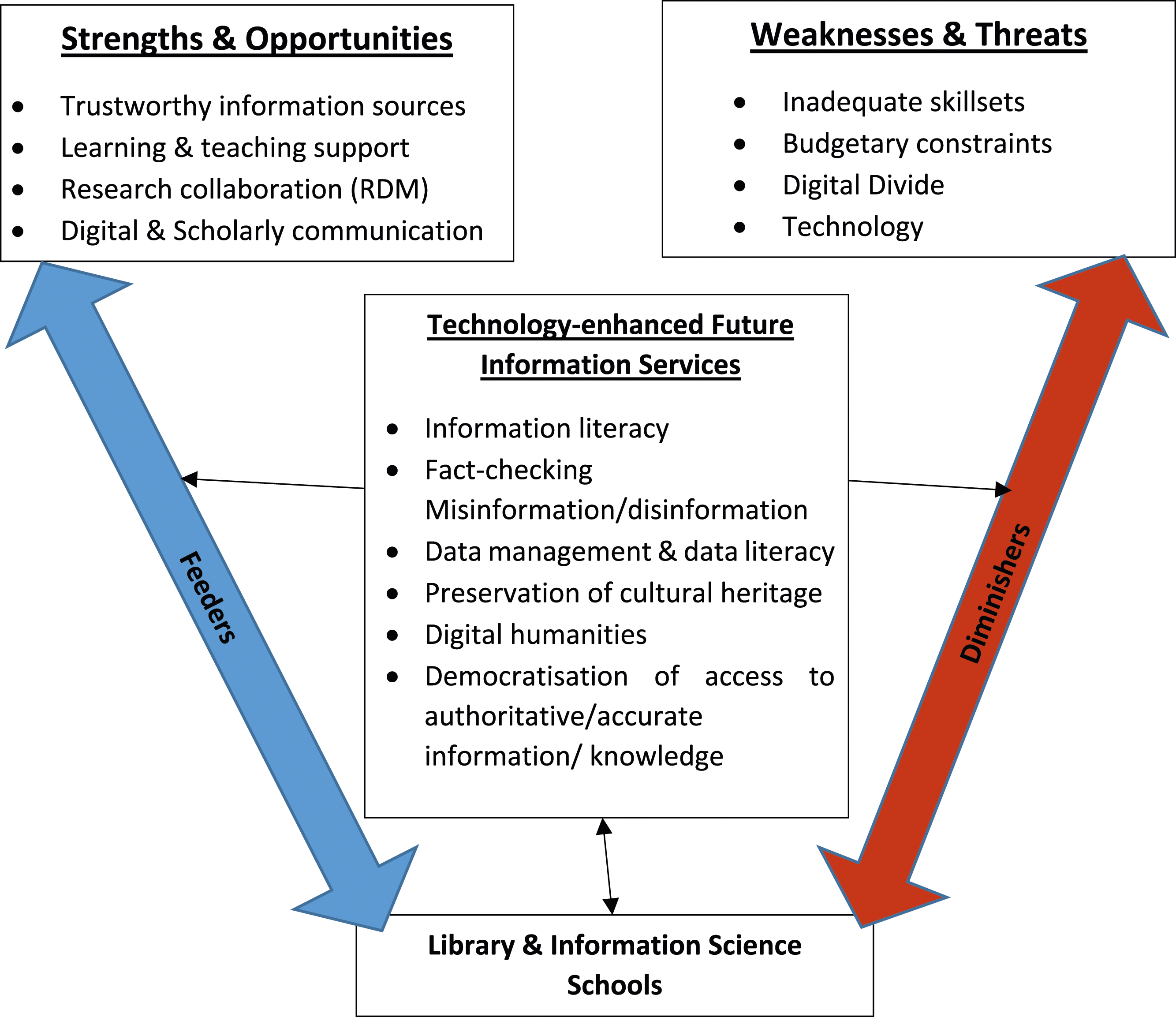
The strengths and opportunities that libraries and information professionals especially in developing countries could leverage upon can also be fed and supported by library schools. This can be done through the two-way interaction of library schools with the technology-enhanced future information services and a responsive curriculum tailored towards the skillsets that are in demand in the industry. At the same time, the trainings and continuing education/short training courses offered by library schools will serve to diminish both the internal/external weaknesses and threats respectively. The technology-enhanced future information services have counteracting effects on the weaknesses and threats via the Diminishers and at the same time as boosters for strengths and opportunities through the Feeders.
Conclusion
Technology continues to advance rapidly, and the 4IR is reshaping various sectors of society. Information consumption, entertainment, and social networking now predominantly occur in virtual spaces, reducing the demand for physical spaces. While libraries are transitioning from physical to virtual environments, successful virtual spaces that replicate the physical experience are still being developed. However, the Covid-19 pandemic has accelerated change, creating both opportunities and challenges for information professionals. With the expected decrease in conventional physical information resources and services, it’s important for libraries and librarians to embrace technology and digital resources. There should be engagement with technology-enhanced information services and stay updated on emerging trends and innovations with significant investments made in this regard by governments in developing economies.
The pervasive presence of misinformation, disinformation, and fake news has blurred the lines between fact and fiction, making it increasingly challenging for the information literate to discern the truth. In this context, the role of libraries and librarians as providers and facilitators of access to accurate and authoritative information remains indispensable. Despite the negative impact of the infodemic, it presents an excellent opportunity for information professionals to offer in-demand services such as online fact-checking. Information services that significantly contribute to promoting digital and information literacy should be prioritised by libraries/librarians.
Libraries have long played a crucial role in democratizing knowledge and providing access to information resources. They are inclusive spaces open to all members of society, regardless of their background or financial means. As the shift towards virtual consumption of information, entertainment, and social networking continues, it is essential to recognize that physical hardware and internet connectivity are necessary for accessing these virtual spaces. However, the digital divide is a reality, particularly in many developing countries, where inequalities in access to technology and digital resources persist. It is therefore imperative for libraries/librarians to utilise their unique advantage in the bridging these divides especially in underserved communities.
Footnotes
Declaration of conflicting interests
The author(s) declared no potential conflicts of interest with respect to the research, authorship, and/or publication of this article.
Funding
The author(s) received no financial support for the research, authorship, and/or publication of this article.
